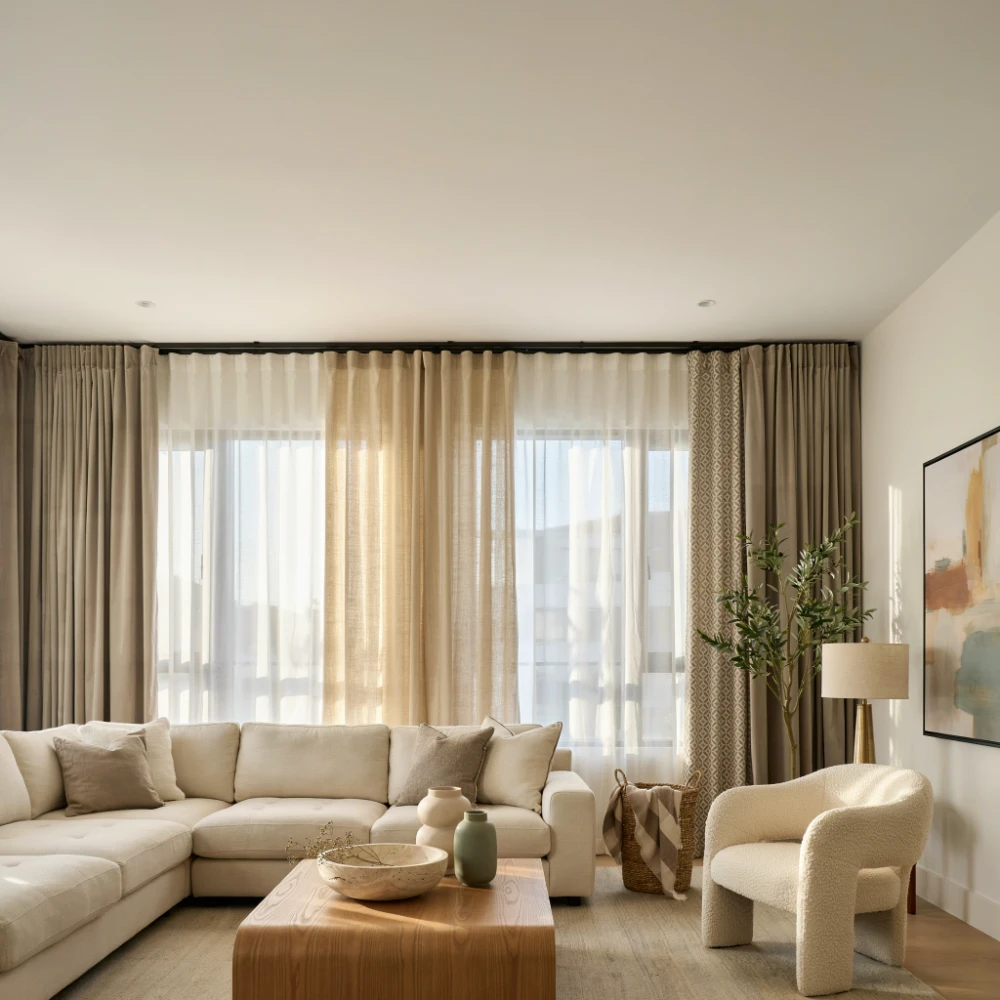
20 Living Room Curtain Ideas to Elevate Your Space
Bare windows make a living room feel unfinished, no matter how nice the sofa is. The wrong curtains do worse: too short and the room looks cut off at the knees, too thin and the afternoon sun bleaches everything. Most of us guess at fabric, hang the rod too low, and end up with panels that float six inches above the floor. The right living room curtain ideas fix all of that, and they do it without a designer’s budget or a single power tool you do not already own.
I have hung curtains in a dark rental, a sunny west-facing flat, and a drafty old house with nine-foot windows, and the lessons carried across all three. Length matters more than pattern. Height changes a room more than color. And layering, a sheer behind a heavier panel, solves the light problem nearly every living room has.
Below are 20 looks, each tied to a real room and a real reason it works, from soft blush drapes to deep olive velvet to crisp two-tone panels. You will see who each idea suits, what it costs in effort, and where it falls short, because no single curtain works for every window. Skim for the three that match your light, your ceiling height, and your style, then steal those. By the end you will know exactly what to buy and how high to hang it.
Quick Answer
The best living room curtain ideas start with two rules: hang the rod high and wide, and buy panels long enough to kiss the floor. Mount the rod 4 to 6 inches above the frame and let it extend past each side so the window looks bigger. Then layer a sheer behind a heavier panel for light you can actually control. Color and pattern come last; fit and height do the heavy lifting.
1. Soften the Light with Blush Drapes Over Sheers
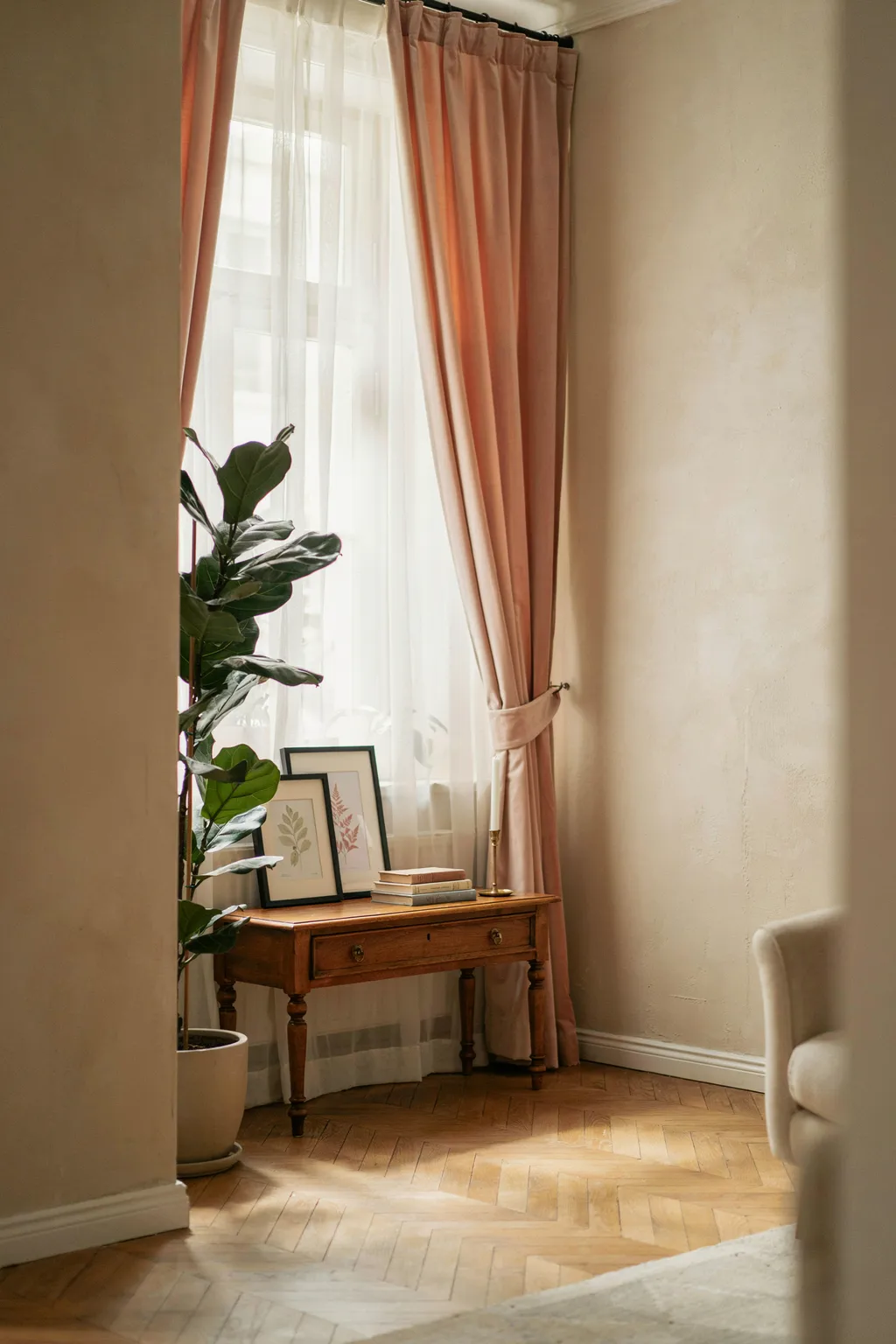
Dusty-rose panels layered over a crisp white sheer give a room a warm, golden glow without feeling fussy. The blush picks up afternoon light and throws a soft pink cast across the walls, while the sheer keeps the view private and the glare down. Tie the heavier panels back with a simple loop and the window frames the glass like a picture. This pairing suits high-ceilinged rooms with good natural light and warm wall colors like beige, terracotta, or cream.
The blush-over-sheer combo reads expensive because two layers always look more finished than one. A floor-length sheer in plain white costs little and instantly upgrades a flat single panel. One honest caveat: blush and dusty rose can skew juvenile in a room full of pastels, so anchor it with a darker floor, a patterned rug, or aged wood furniture to keep it grown-up. Skip this if your light is cold north-facing, where pink can turn slightly grey.
2. Hang Panels Floor to Ceiling for Instant Height
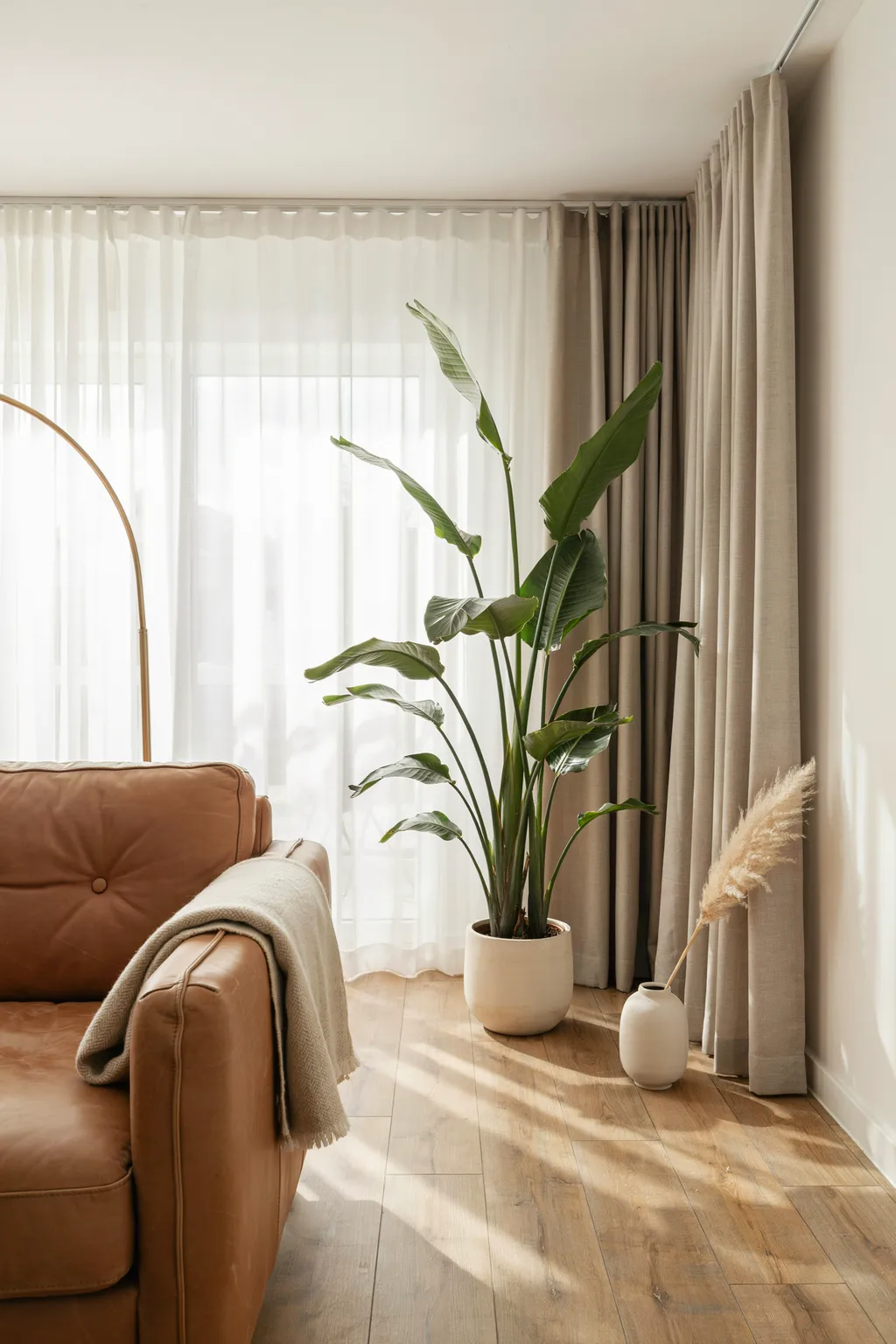
Running drapes from just below the ceiling all the way to the floor is the single fastest way to make a living room feel taller and more important. Take the rod almost to the crown molding, then let neutral taupe panels and a white sheer fall in one long sweep down the wall. The eye reads the whole height as window, even when the actual glass is much shorter. This is one of those living room curtain ideas that works in nearly any home, rented or owned.
A wall-to-wall run also hides an awkward window that sits off-center or too low, because the fabric, not the glass, becomes the focal line. Designers at Architectural Digest make the same point: mounting the rod close to the ceiling is the trick that fakes height in almost any room. Buy panels in the 96 to 108 inch range for standard ceilings and have them just brush the floor. The trade-off is fabric: covering a full wall takes more panels and a longer rod, so the cost climbs with the width. If your ceilings are already low, mounting tight to the ceiling can shrink them, so test the height before you drill.
3. Layer White Drapes Over Natural Woven Shades
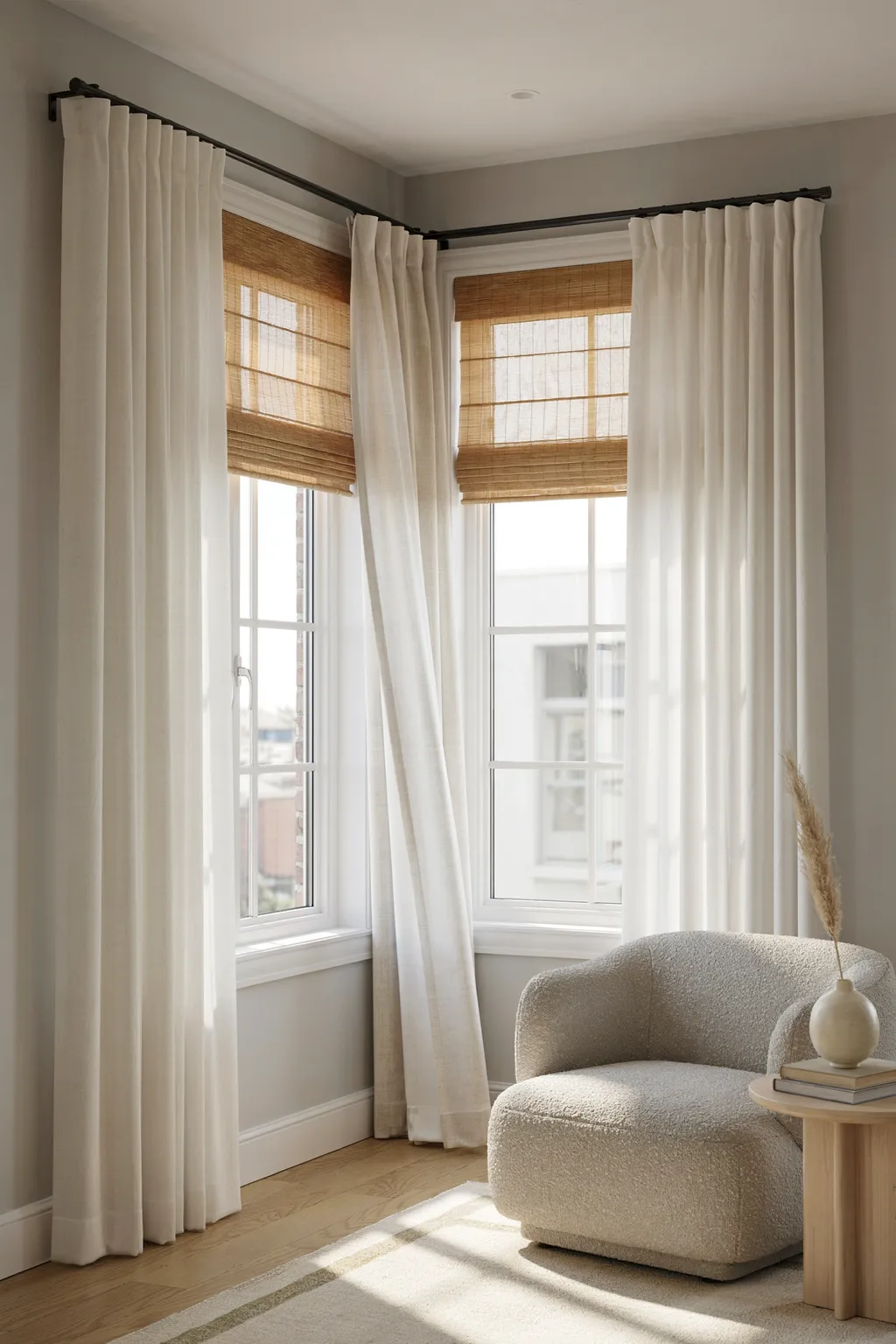
Pairing simple white drapes with a woven bamboo or matchstick shade gives you the best of both worlds: the crisp clean line of fabric and the warm texture of natural fiber. The shade handles privacy and blocks glare, while the white panels frame the window and soften the hard edges of the blind. The mix feels collected rather than matched, which is exactly what a living room wants. It suits coastal, farmhouse, and transitional rooms especially well.
Woven shades add a layer of insulation too, trapping a pocket of air against the glass that helps in both summer and winter. Order the shade to fit inside the frame and the drapes to hang outside it, so each does its job without bulk. The honest drawback: loose-weave natural shades let pinpricks of light through at the edges, so they are not true blackout. If you need a dark room for movie nights, add a blackout liner behind the woven shade.
4. Frame a Whole Wall of Windows in Light Linen
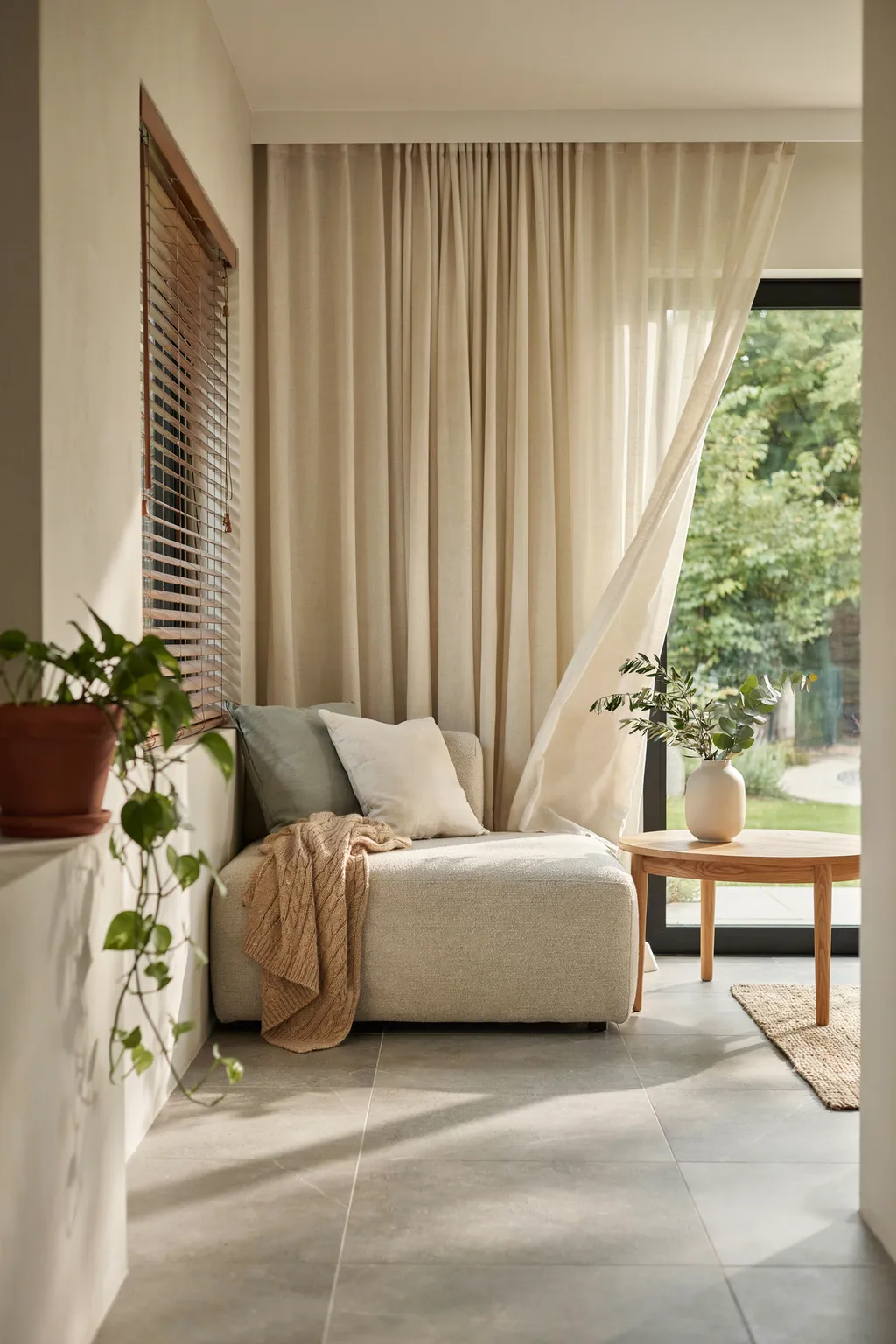
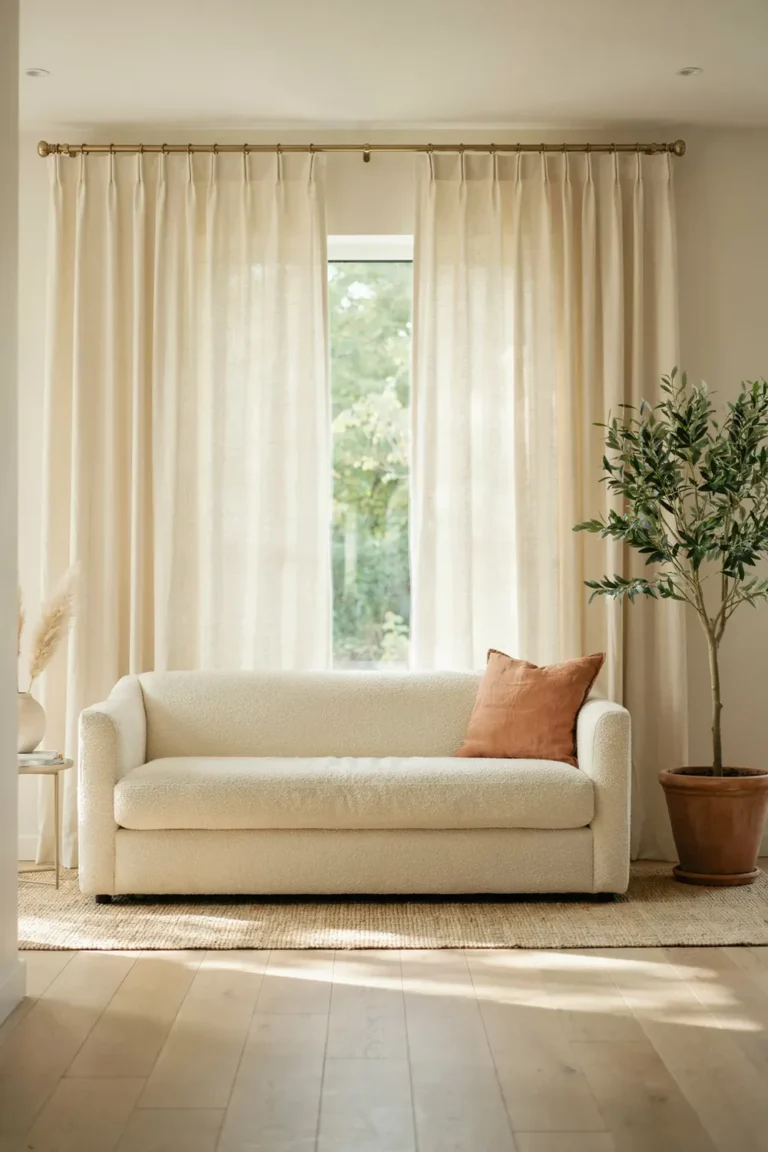
When a living room opens onto a wall of windows or a sliding door, light cream linen ties the whole run together and blurs the line between inside and out. Hang matching panels at every opening so the eye travels smoothly across the wall instead of stopping at each frame. Linen has a relaxed, slightly crinkled drape that looks lived-in and expensive at the same time, and it filters strong light into a soft wash. This is a favorite among organic-modern and indoor-outdoor rooms.
Light linen breathes, so a room that catches a breeze stays comfortable instead of stuffy behind heavy fabric. Choose an oatmeal or flax tone over stark white if your floors are warm wood, so the panels read intentional rather than builder-grade. The caveat with real linen is wrinkles: it never hangs perfectly crisp, and it relaxes over time. If you want a sharper look, a linen-blend with a little polyester holds its shape better and still drapes nicely.
5. Pair a Heavy Panel With a Sheer for Light Control
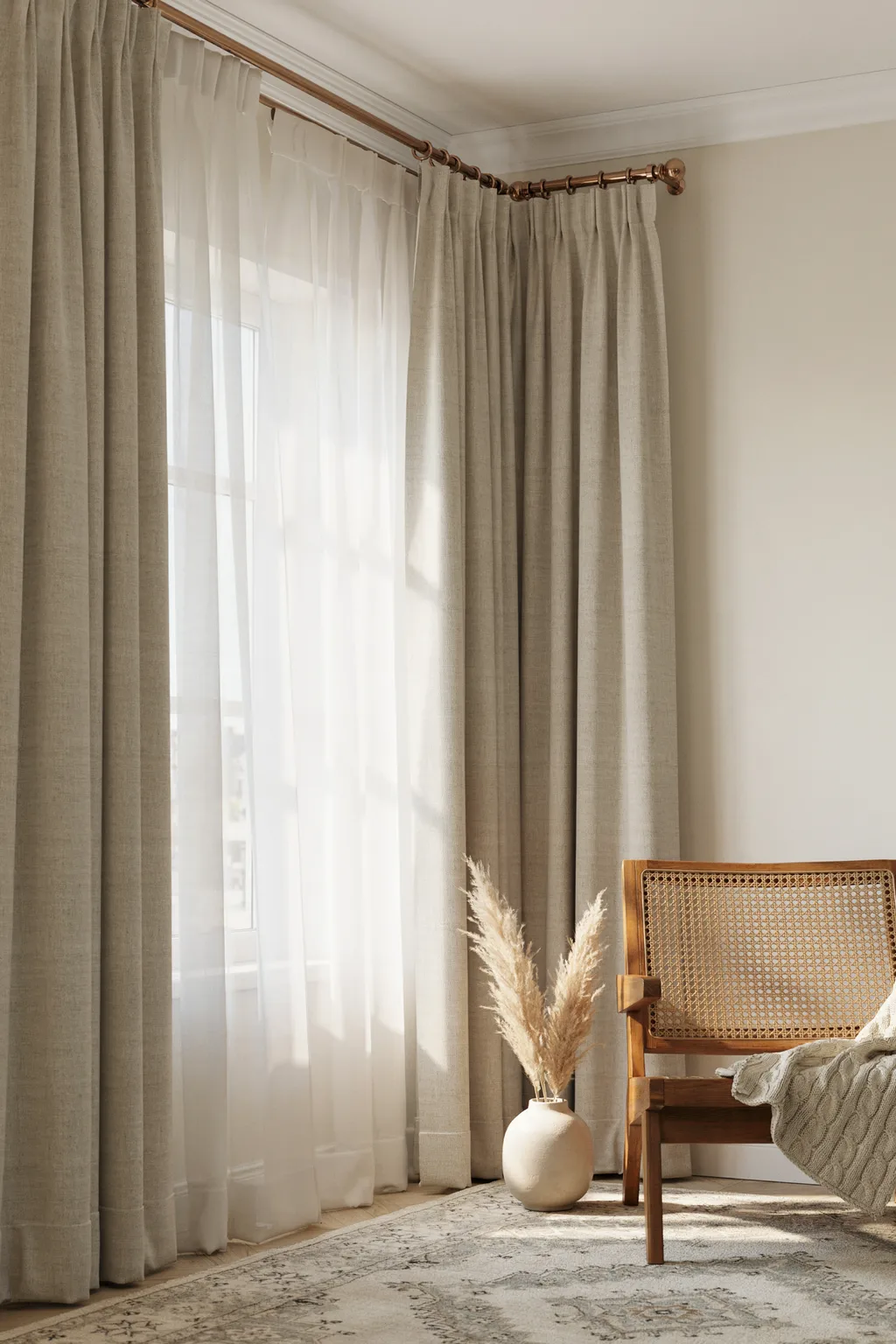
The most practical of all living room curtain ideas is the double layer: a textured greige drape on the outside and a white sheer underneath, both on a double rod. During the day you close the sheer for privacy and a soft glow. At night, or when the sun blazes, you draw the heavier panel for shade and warmth. You get full control over light and view from one window, which a single panel can never give you.
This setup earns its keep in rooms that face strong morning or evening sun, where glare on a screen or sofa is a daily annoyance. A double curtain rod costs a little more and takes a few extra minutes to mount, but it is the upgrade people notice most. The honest limit: two layers add visual weight, so in a tiny room they can feel heavy. Keep both layers in the same pale family to stop the window from dominating a small space.
6. Keep It Calm With Soft Grey Grommet Panels
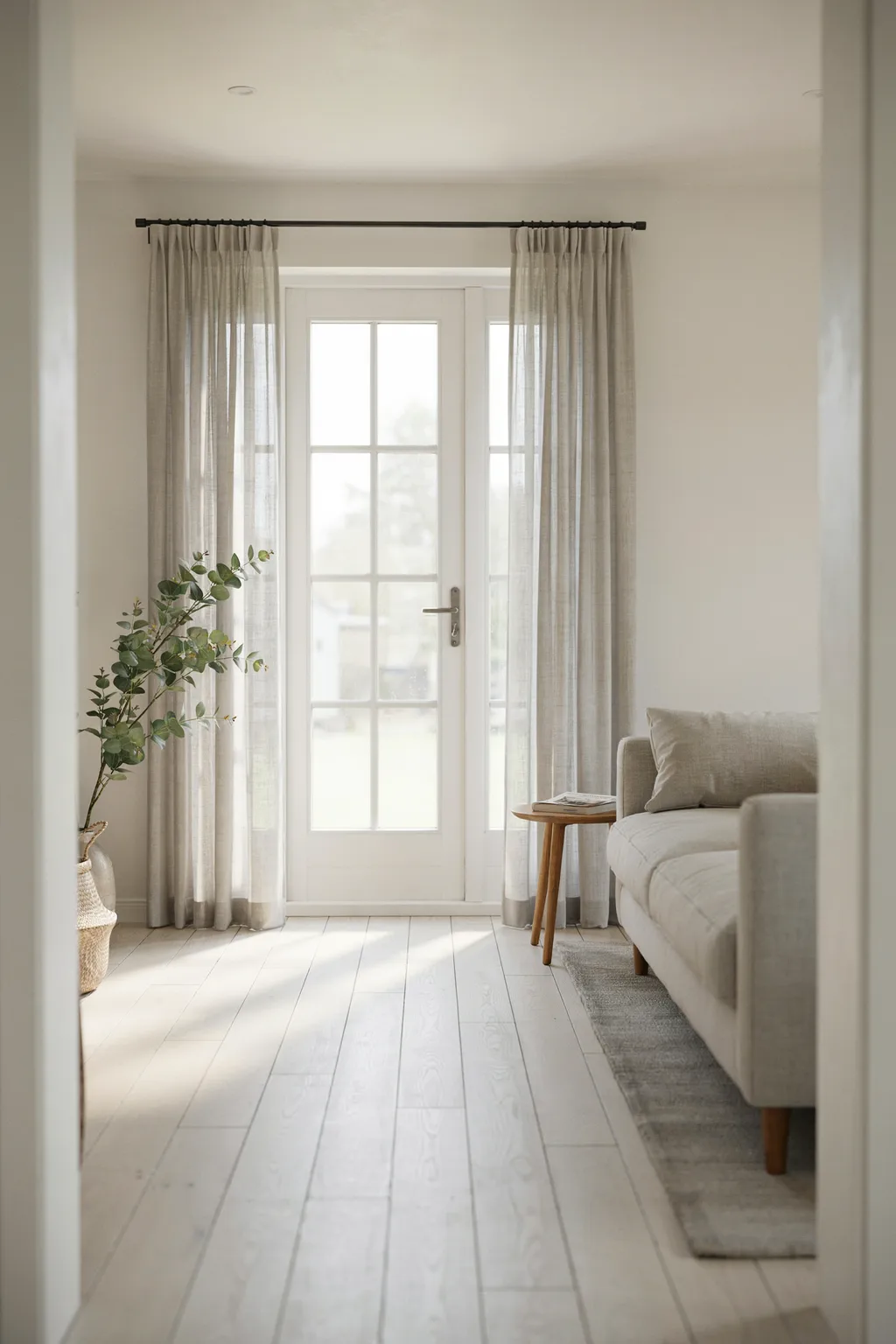
Soft grey grommet curtains are the quiet workhorse of a Scandinavian-leaning living room. The metal grommets slide easily and stack into clean, even folds, and a light heathered grey goes with almost any sofa or wall color you already own. The look is simple and uncluttered, which is the whole point: the curtains recede and let the furniture and light take over. This suits minimalists and anyone who wants a finished window without a strong statement.
Grommet panels are the easiest header to live with because they glide on the rod with no rings to fuss with and no pleats to train. Pick a grey with a subtle texture or weave so the fabric does not look flat or cheap under daylight. The drawback is that grommets always show a small gap of light at the top between each fold, so they are not ideal where you want total darkness. For a bright, calm everyday room, though, they are hard to beat.
7. Add Rope Tiebacks for an Easy Coastal Touch
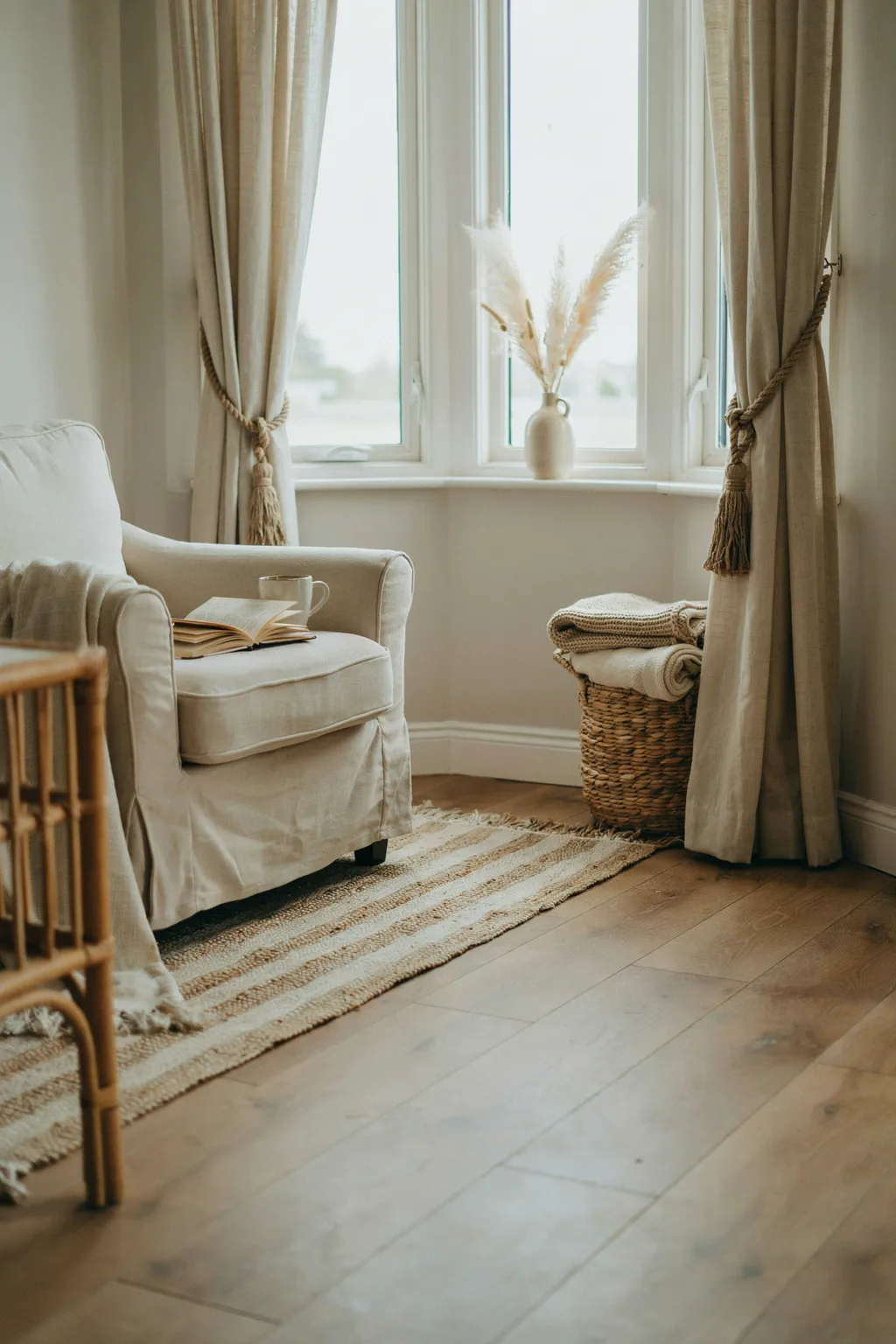
A pair of chunky rope or jute tiebacks turns plain beige linen curtains into something that feels coastal and collected. Looped low and knotted with a tassel, they pull the panels into a soft curve that lets in light and shows off the fabric’s fall. The natural fiber plays off woven baskets, jute rugs, and rattan, so the whole corner reads breezy and relaxed. This idea shines in bay windows and reading nooks where the curve of the fabric has room to show.
Tiebacks cost a few dollars and need only a small hook screwed into the wall, so they are one of the cheapest upgrades on this list. Hang the hook about two-thirds of the way down the panel for the most flattering drape. The honest note: tiebacks gather the fabric to the sides, so they reduce privacy and are best where you want light in during the day, not coverage at night. Pair them with a sheer behind if you need both.
8. Let Pure Sheer Voile Glow in the Afternoon Sun
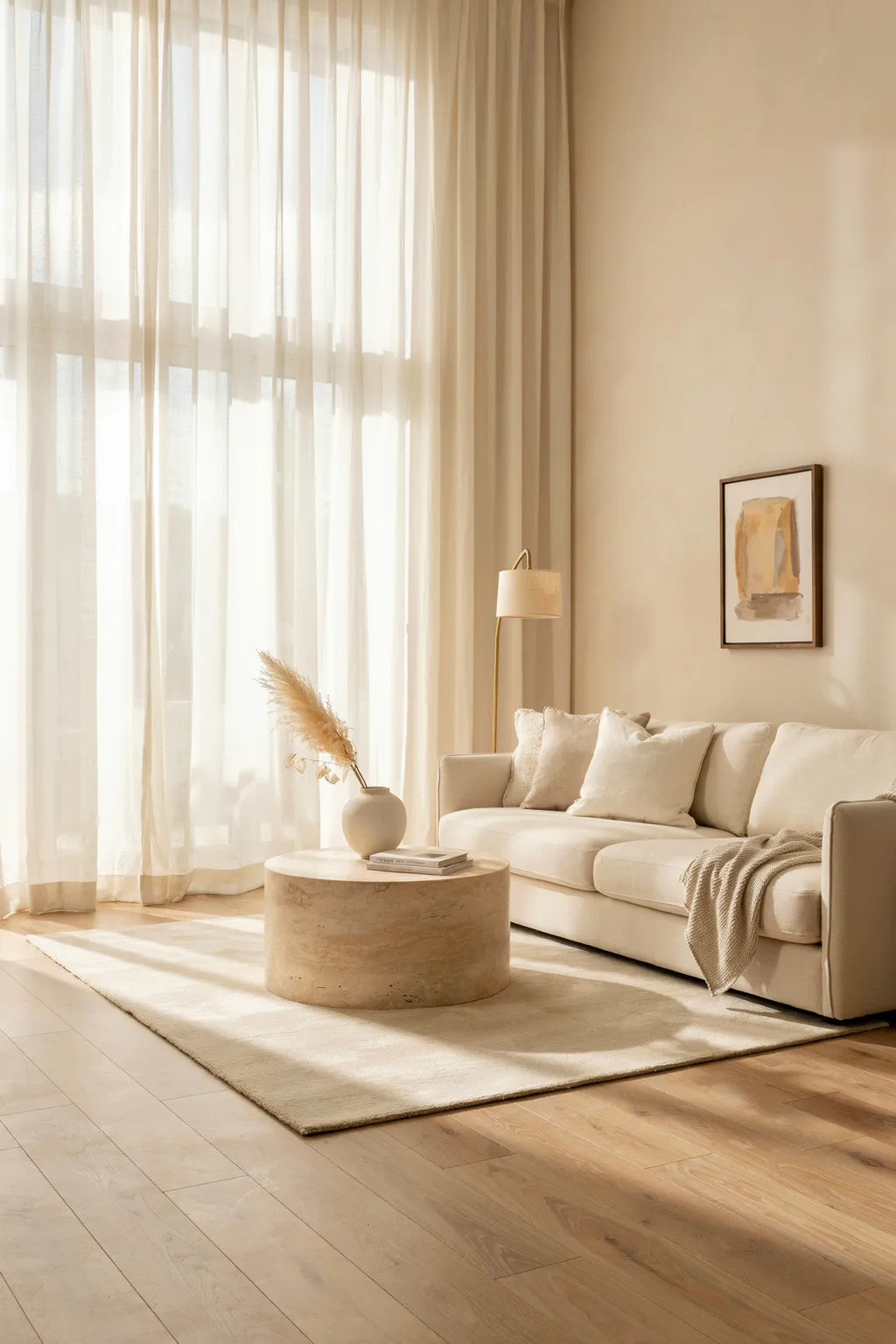
Sometimes the room only needs light, not coverage, and a single layer of white voile is the answer. Sheer voile catches the late sun and turns it into a soft, diffused glow that fills the whole room and flatters every surface. Floor-length panels that billow slightly in a draft add movement and a dreamy, hotel-suite calm. Among the airy living room curtain ideas here, this is the one that makes a space feel serene and bright at once.
Voile is light and cheap, so dressing a big window costs far less than with heavy drapery. It also keeps a small room from feeling closed in, since you can still sense the daylight and the outline of the view. The obvious caveat is privacy: sheer voile hides almost nothing after dark, when interior lights turn the glass into a window display. Use it alone only where privacy is not a concern, or layer it under a heavier panel you can close at night.
9. Bring Warmth With Block-Print Boho Curtains
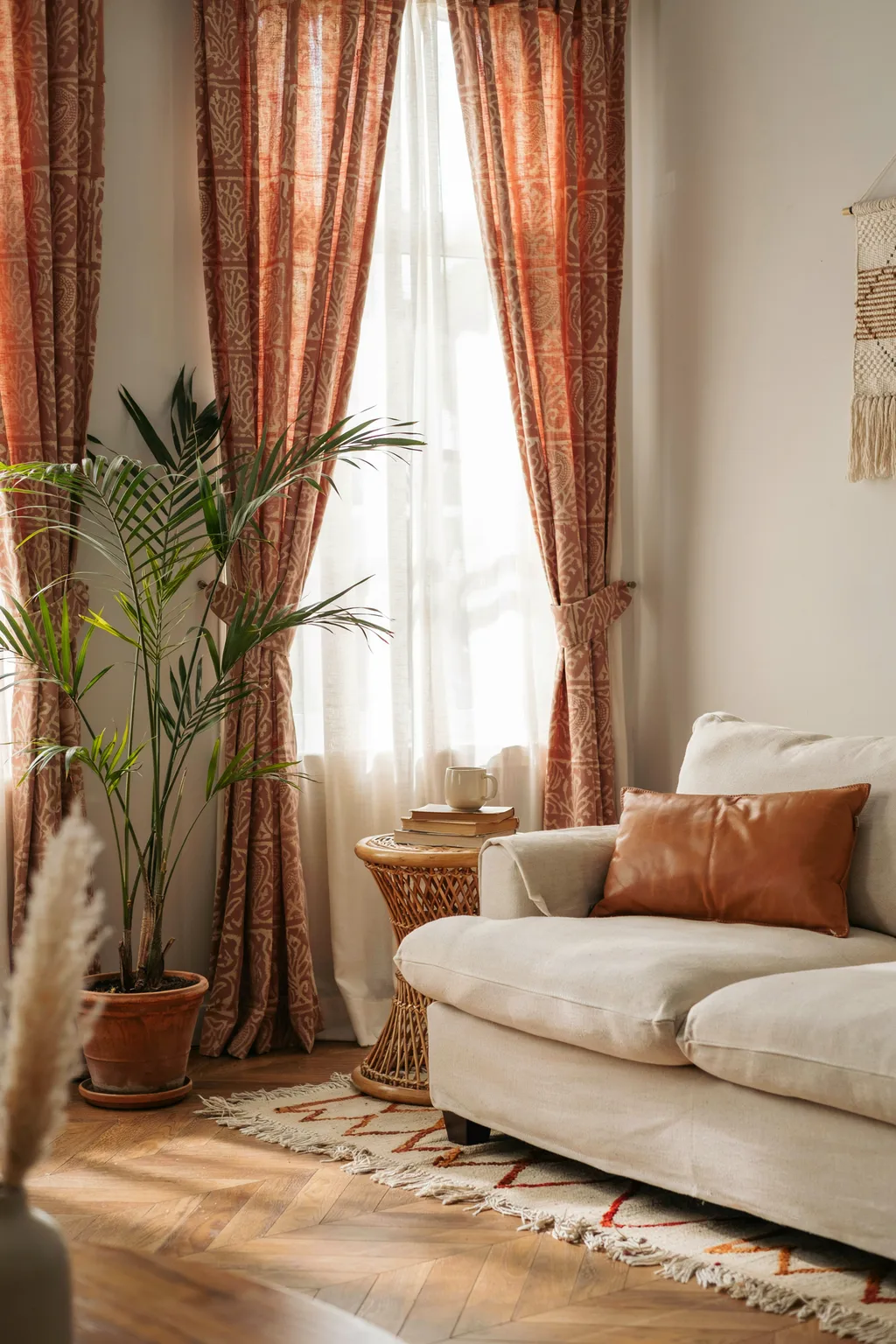
If your room leans plain, a block-print panel in terracotta and rust adds pattern and soul without repainting a thing. The hand-stamped motifs and earthy tones bring a global, collected feel that pairs beautifully with rattan, plants, and natural wood. Patterned curtains also hide everyday wear better than solids, so they are practical in busy family rooms. This is for decorators who love texture, color, and a bit of bohemian personality.
Bold pattern at the window lets you keep the big pieces, sofa and rug, neutral while still having a room full of character. Tie the panels back to show off both the print and the sheer behind for an easy layered look. The honest caveat: a strong repeating print can date faster than a solid and can fight a busy rug or wallpaper. Give pattern one job per area, so if the curtains are loud, keep the surrounding textiles calm.
10. Choose Embroidered Sheers for Quiet Drama
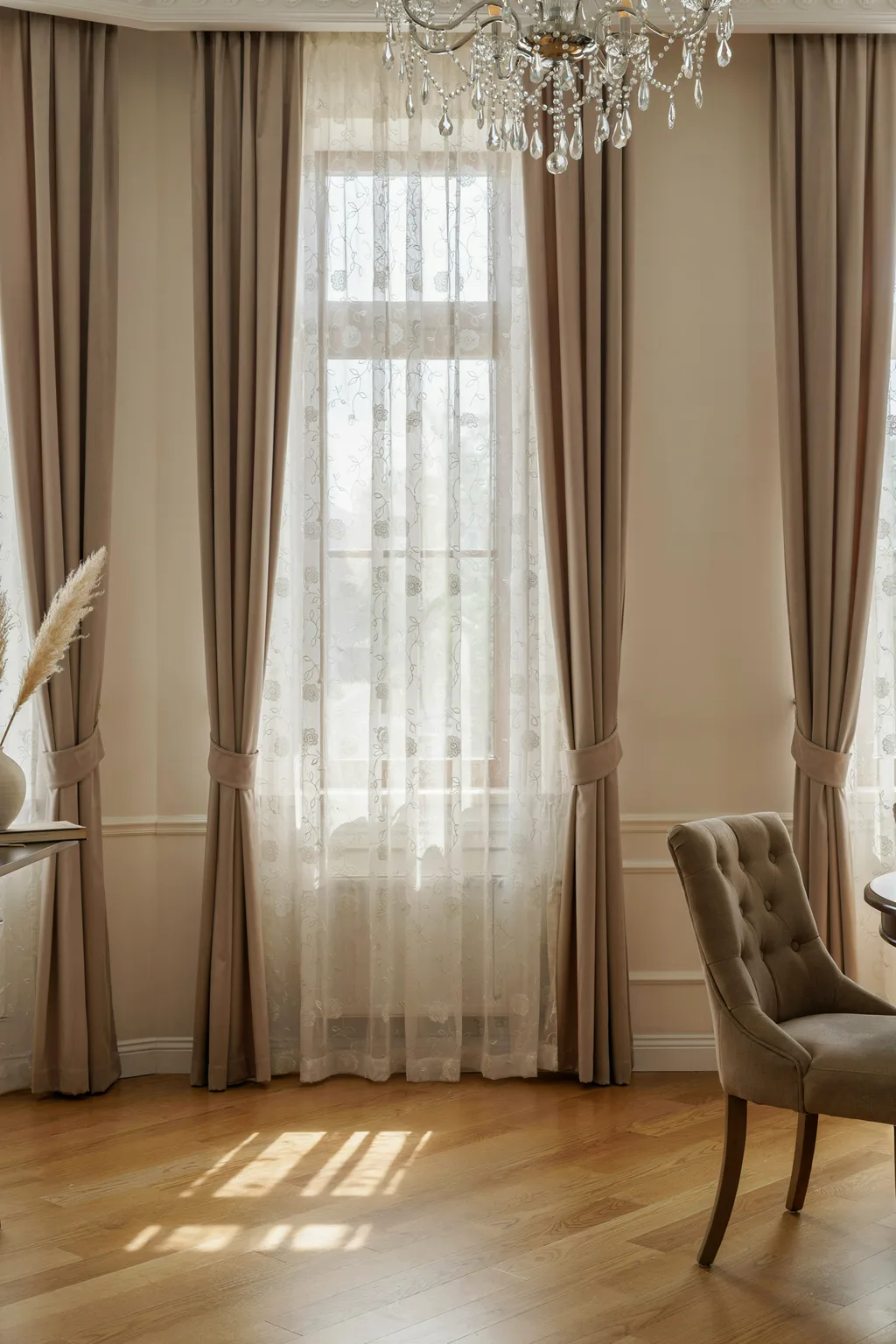
For a formal living or dining area, an embroidered sheer adds detail and richness while still letting light pour through. The subtle pattern stitched into the fabric catches the eye up close but reads as soft texture from across the room, flanked by plain taupe side panels for weight. The effect is elegant without going heavy or dark, which suits rooms with a chandelier or polished floors. Reach for this when you want refinement, not just function.
An embroidered sheer does the work of two layers in one panel: it filters light like a plain sheer but carries the visual interest of a patterned drape. Keep the side panels solid and neutral so the embroidery stays the star. The trade-off is cost, since detailed sheers run more than plain ones, and the pattern can compete with busy wallpaper or art. In a calm, monochrome room, though, that stitched detail is what makes the window feel custom.
11. Go Bold With Olive Velvet Against Dark Walls
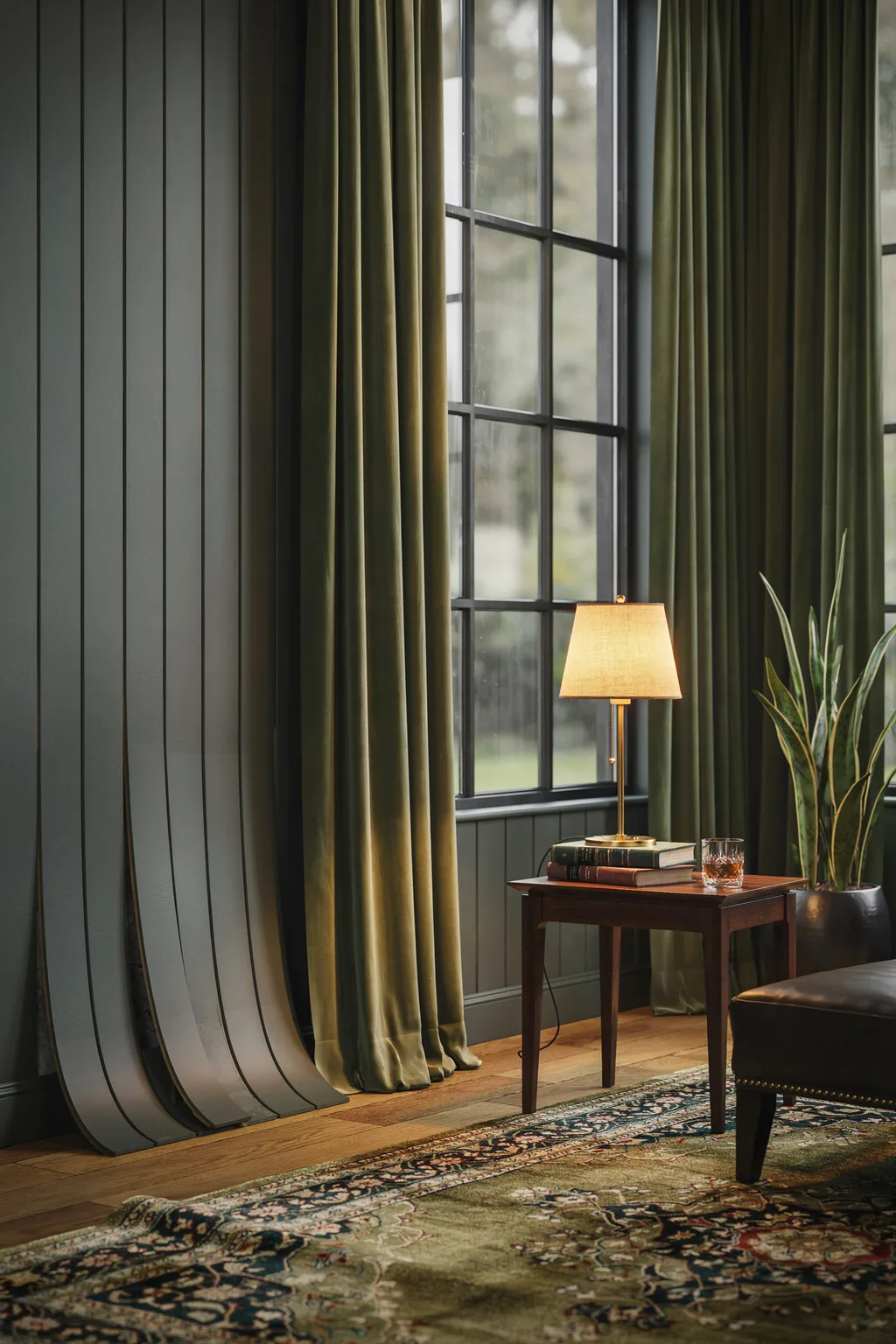
When you want a living room to feel moody and rich, deep olive velvet curtains against charcoal walls deliver instant drama. Velvet has a depth that flat cotton cannot match, soaking up light and showing subtle shifts of color as it folds. Floor-pooling panels in a jewel tone like olive, forest, or rust turn an ordinary window into the room’s centerpiece. This is for confident decorators who love a dark, cocooning, lounge-like feel.
Velvet also blocks light and muffles sound better than thin fabrics, so a thick panel doubles as insulation and a touch of quiet. Hang it high and full, with at least double the window width in fabric, so the folds look lush rather than skimpy. The honest caveat: velvet is heavy, holds dust, and needs a sturdy rod and a gentle vacuum now and then. In a small or low-light room, a very dark panel can feel closed in, so balance it with a few warm lamps.
12. Wrap a Corner in Ivory for a Seamless Look
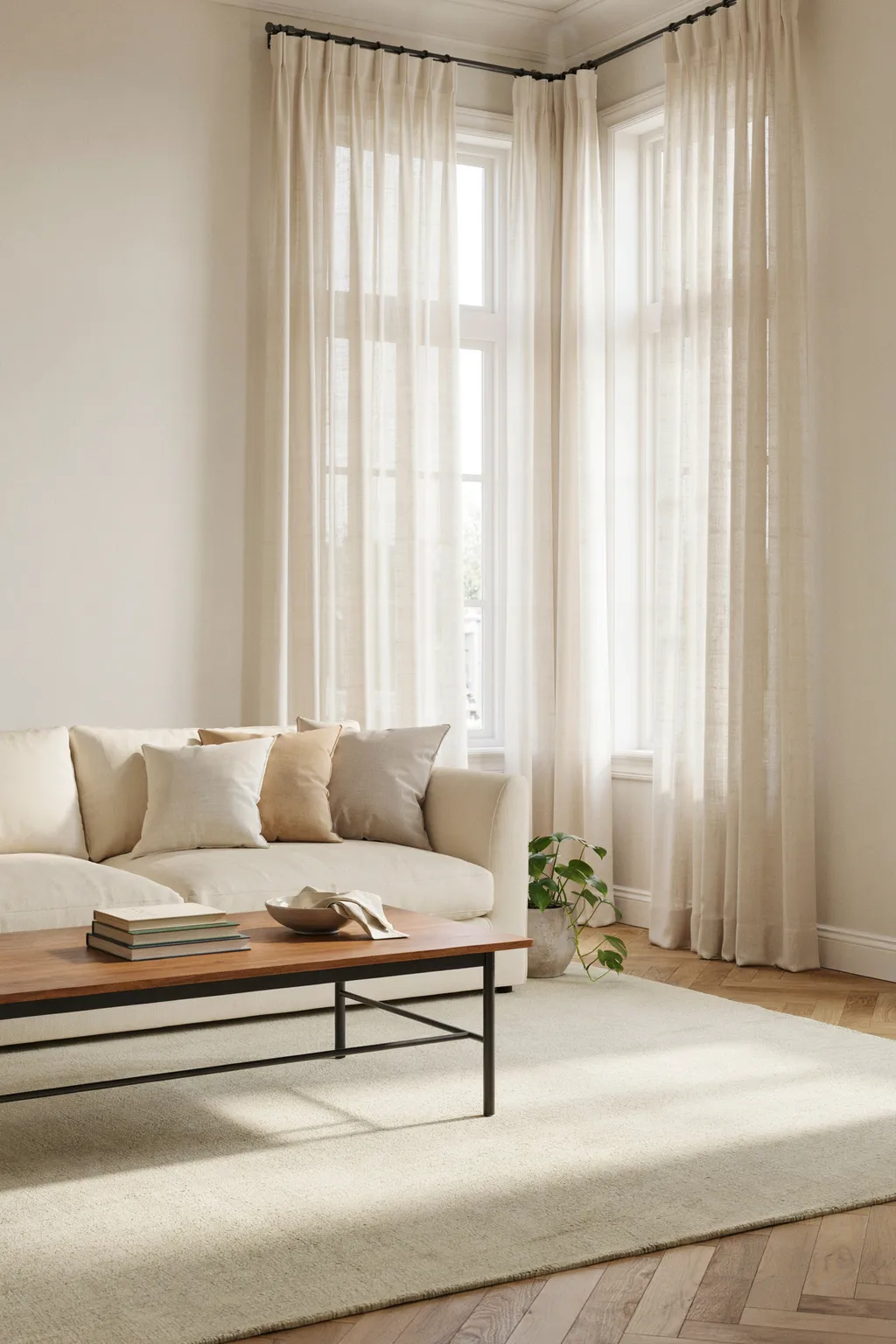
In a room with windows on two walls, running the same ivory grommet panels around the corner makes the space feel calm and continuous. Matching the curtains to a soft beige or cream sofa lets the whole corner melt together, so nothing competes and the light feels even. The look is restful and a little luxurious, the kind of neutral that photographs beautifully and never goes out of style. It suits open, sunny rooms with a relaxed, modern feel.
A monochrome corner reads larger because there is no hard color break to chop up the wall. Use one continuous rod or two that meet neatly at the corner, and keep the panels just off the floor so they hang clean. The trade-off with pale ivory is upkeep: light fabric shows dust, pet hair, and the odd splash, so it asks for a wash now and then. If you have muddy paws or sticky hands in the house, choose a machine-washable weave.
13. Dress Tall Windows in Traditional Damask
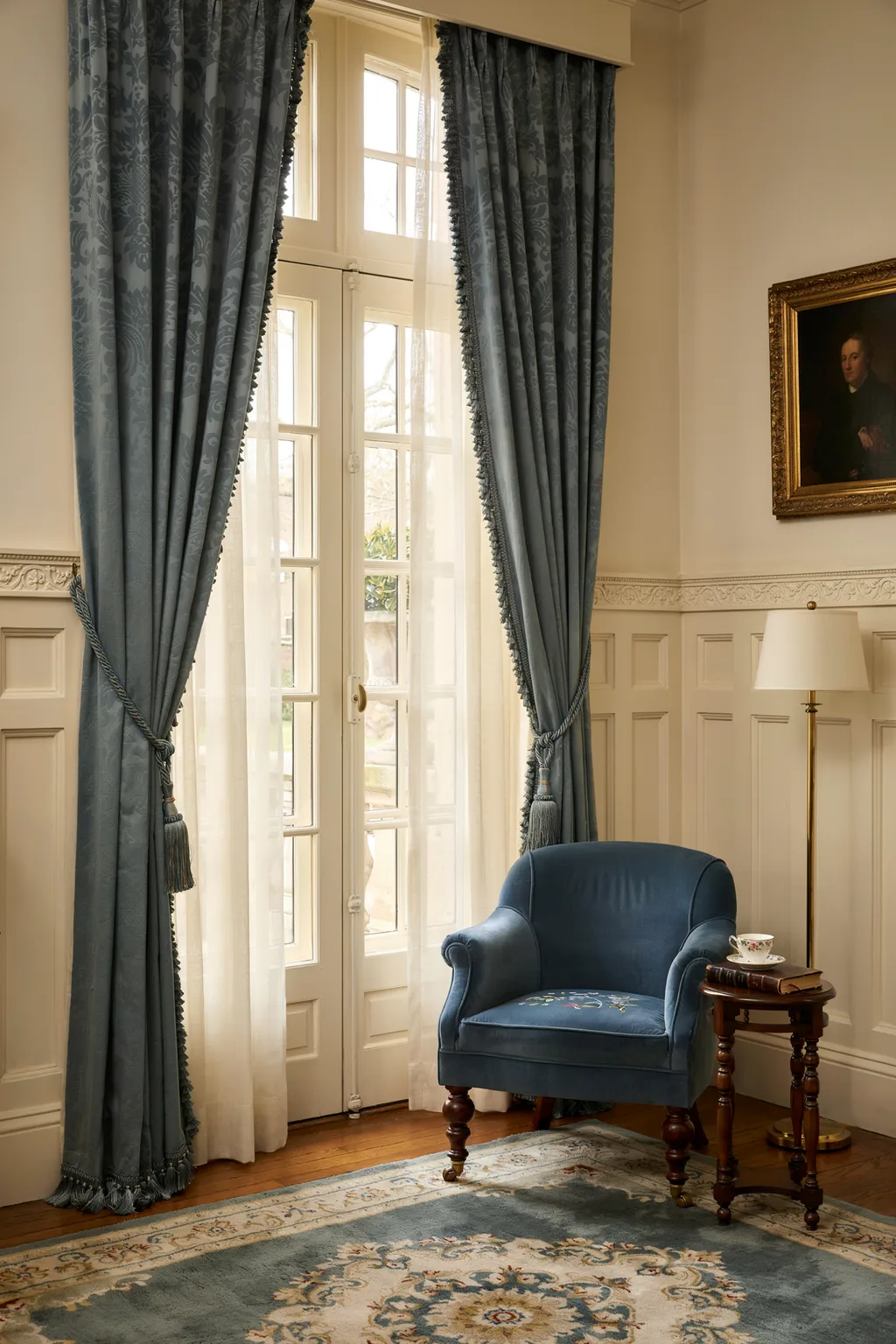
Slate-blue damask drapes with a beaded fringe and matching tiebacks bring old-world polish to a classic, grand living room. The woven pattern and rich color suit high windows, French doors, and rooms with ornate molding or antique furniture. Layered over a plain sheer and pulled into deep, sculpted folds with cord tiebacks, the panels look like they belong in a period home. This is for traditionalists who want their windows to feel formal and intentional.
Damask and other patterned weaves hide seams and creases well, so they keep looking crisp between cleanings. Choose a muted color like dusty blue, sage, or soft gold so the pattern feels heritage rather than heavy. The honest drawback: a strong traditional drape can overwhelm a small or modern room and costs more than a plain panel, especially with trim and lining. Save this look for a room with the ceiling height and furniture to carry it.
14. Use Sheer Linen for Daytime Privacy and Light
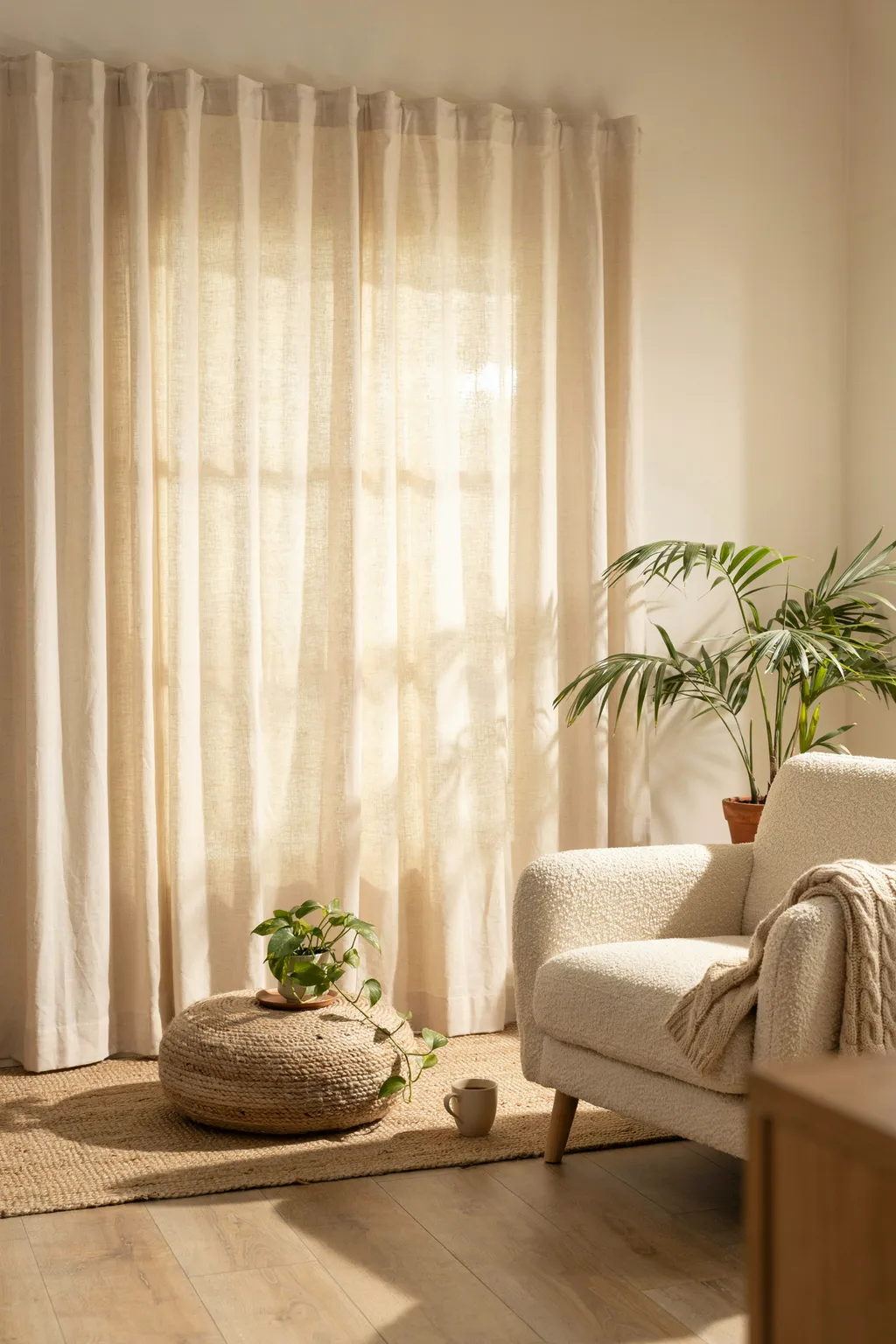
Sheer linen sits in the sweet spot between a flimsy voile and a solid drape: it softens the view from outside during the day while still letting plenty of warm light in. The slightly textured weave reads more substantial than plain sheer, so the window looks finished even with a single layer. In a relaxed, plant-filled room, sheer linen panels keep things bright and breezy without exposing your sofa to the street. These living room curtain ideas suit ground-floor rooms that crave both light and a little cover.
The natural slubs in linen catch the sun and give the fabric a quiet, organic texture that plastic-feeling sheers lack. Mount the rod wide so the panels can stack off the glass and flood the room when you want full sun. The caveat is the same as any sheer: privacy drops once it is dark inside and bright out, so this is a daytime solution. Add a blackout roller behind it if evening privacy matters.
15. Mind the Header: Pinch Pleats and the Right Rod
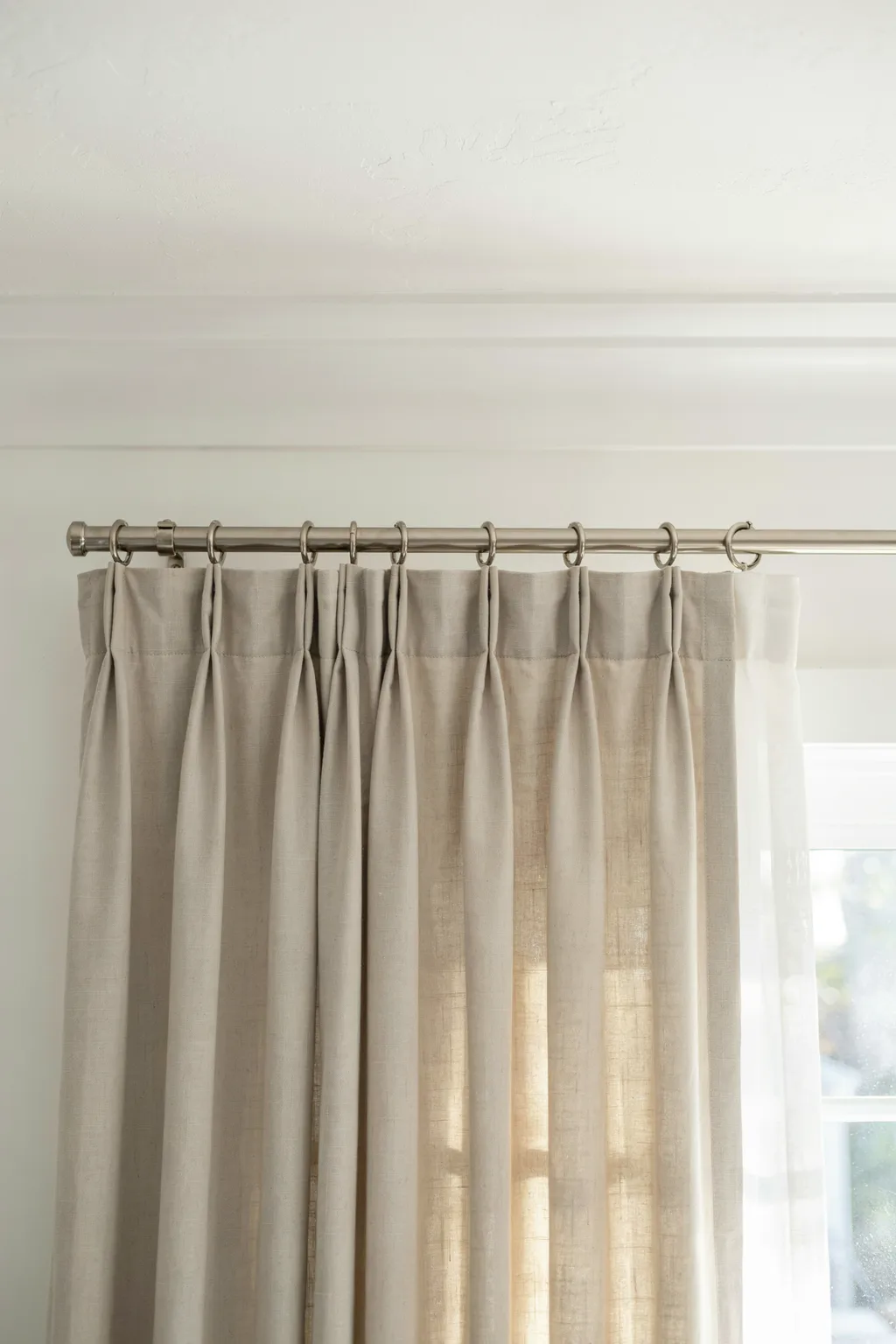
The detail most people skip is the top of the curtain, and it is what separates a custom look from a flat one. A pinch-pleat or pencil-pleat header makes the fabric fall in even, sculpted columns instead of bunching at random, and a slim brushed-nickel or matte-black rod finishes the line. Spend your attention here and even budget panels look made-to-measure. This matters most in modern and transitional rooms where clean lines carry the style. To go deeper on the header itself, our guide to curtain styles for living room windows walks through 22 of them, covering pinch and goblet pleats, tracks, panel systems and cornice boxes, with the fullness ratio and rod size for each.
Pleated headers train the fabric to fold the same way every time, so the panels always hang crisp without fussing. Match the rod finish to your other metals, nickel with chrome and steel, black with iron and dark hardware, so the window feels part of the room. The trade-off: pleated panels cost more than simple rod-pocket or grommet styles and need a few rings or hooks to hang. If the budget is tight, a grommet top still gives clean folds for less.
16. Style Curtains Beside Plants and Natural Textures
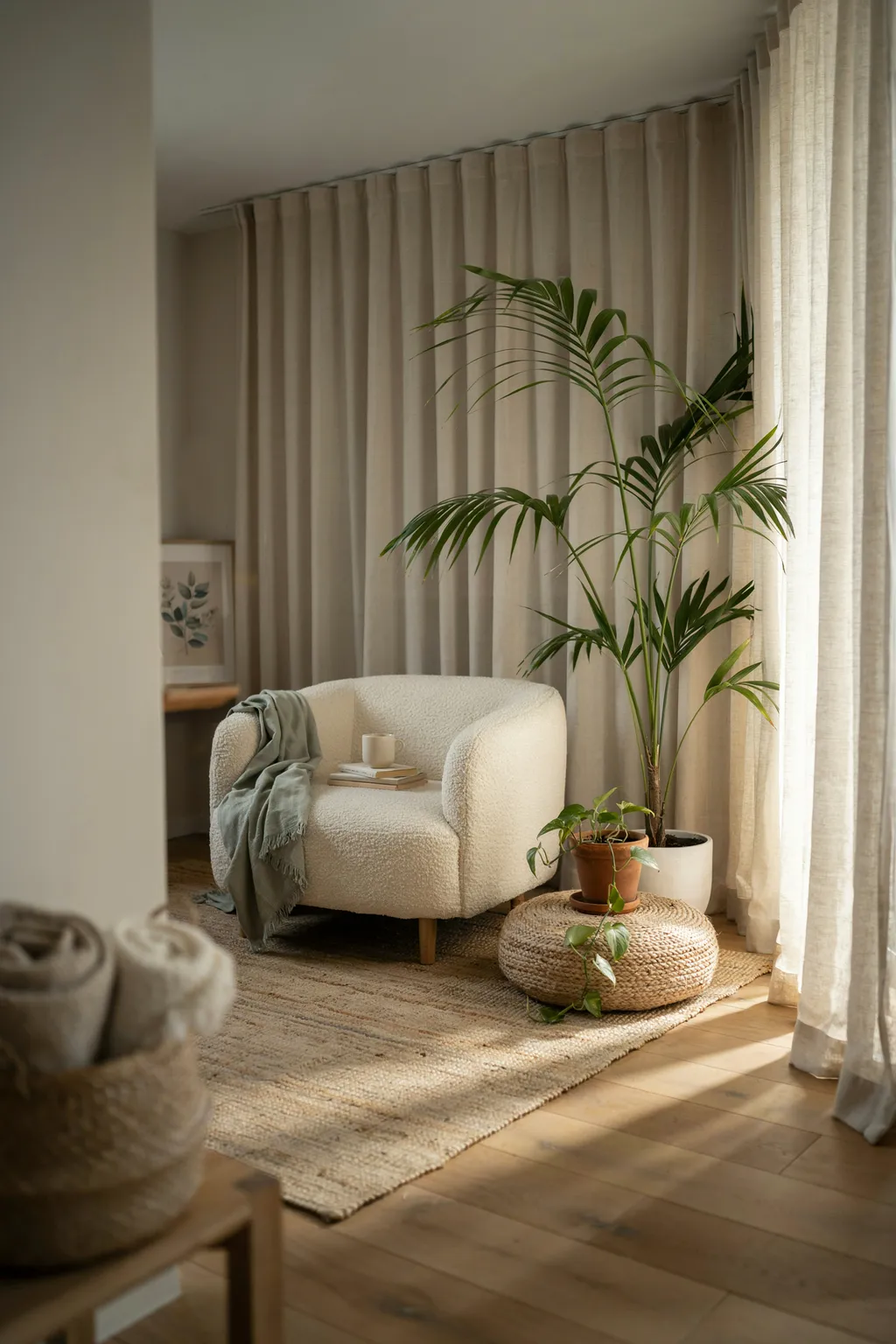
Curtains do not live alone; the things around them set the mood. Place soft sheer linen panels next to a tall leafy plant, a woven pouf, and a jute rug, and the window becomes part of a calm, natural corner rather than a flat backsplash of fabric. The greenery softens the straight lines of the drape, and the natural fibers echo the linen’s texture. This styling trick lifts almost any curtain, which is why it earns a spot among these living room curtain ideas.
Layering textures, fabric, foliage, and woven fiber, gives the eye several gentle things to land on, so the corner feels finished and intentional. Repeat one or two natural materials nearby to tie it together instead of adding ten random props. The honest caveat: real plants need the right light and a little care, and a sun-loving palm will sulk in a dark corner. If your light is low, a good faux plant or a hardy pothos keeps the look without the upkeep.
17. Add Blackout Lining Behind a Soft Sheer
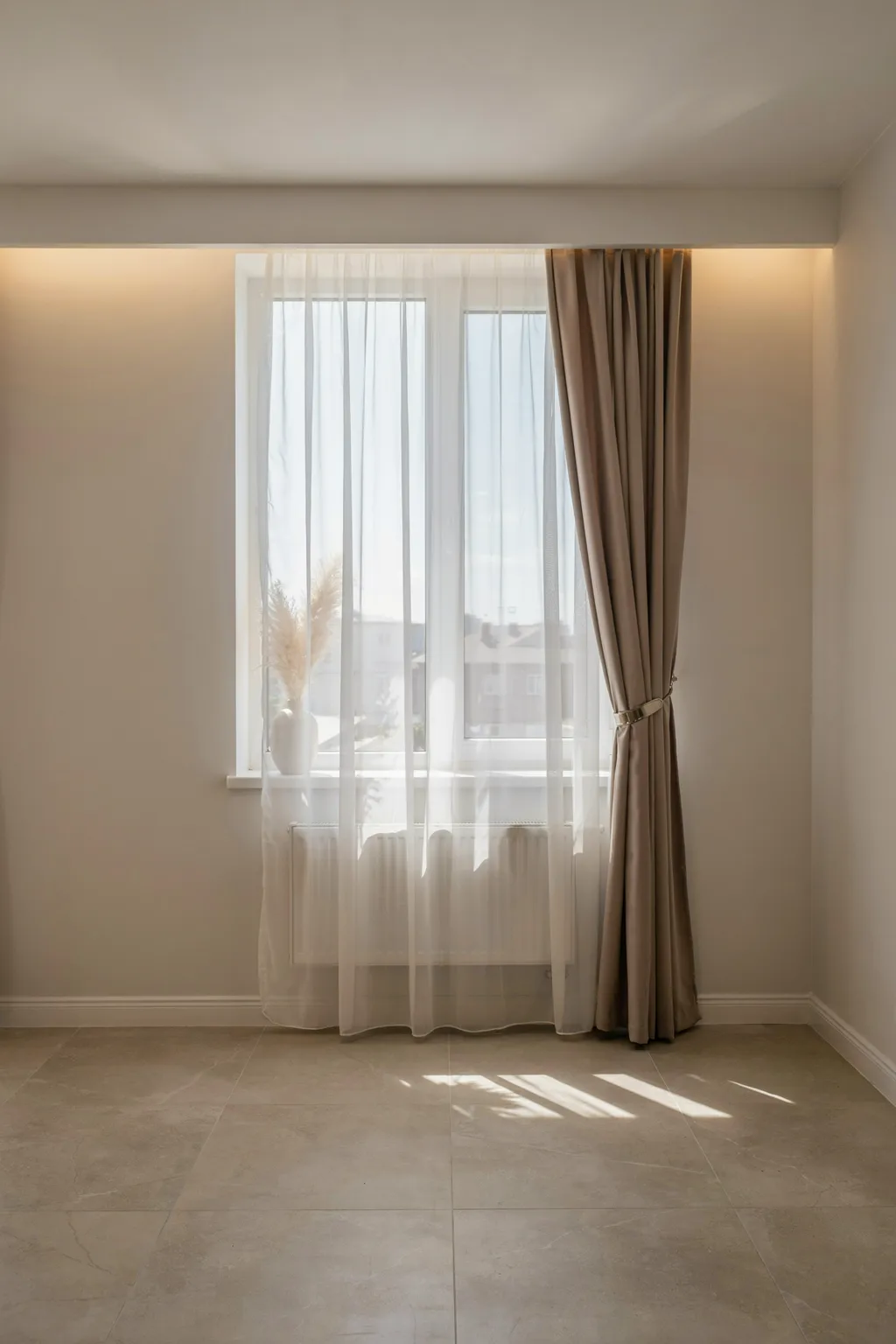
If sun, streetlights, or a TV glare are a problem, a blackout-lined drape paired with a white sheer fixes it without making the room feel like a cave. By day you close the sheer for soft light; at night you pull the lined panel across for real darkness. Tie one side back with a wall holdback during the day, and the room stays bright and open. This combination is one of the most useful living room curtain ideas for rooms that double as media spaces.
Blackout lining also cuts drafts and outside noise, so a lined panel quietly makes the room more comfortable year-round. Pick a lining sewn into the panel rather than a clip-in version for the cleanest look and best seal. The trade-off is weight and price: lined drapes cost more and need a stronger rod, and even good ones leak a little light at the edges unless they overlap the frame. Mount the rod wide and high so the panel covers fully when closed.
18. Let Drapes Puddle for Soft, Formal Drama
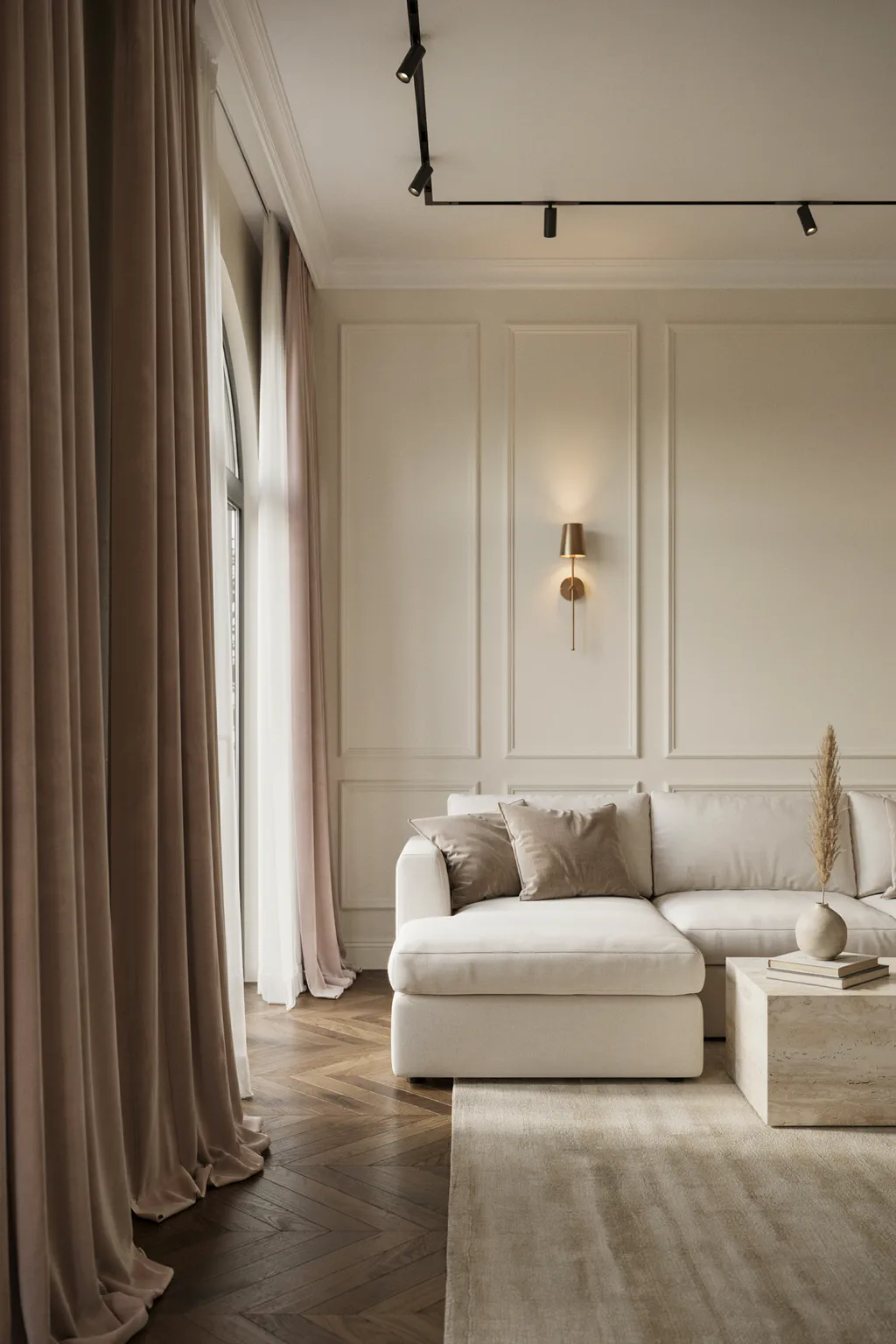
For a romantic, high-end look, let your panels run a few inches long so they pool gently on the floor. The puddle gives a relaxed, formal feel that suits panelled walls, herringbone floors, and a plush sectional. Paired with a sheer behind and soft track lighting, mauve or taupe drapes that break onto the floor read like a magazine room. This is for decorators who want drama and do not mind a little extra fuss with the fabric.
A puddled hem hides an uneven floor or a window that sits slightly off, since the fabric, not a crisp line, meets the ground. Allow two to four inches of extra length for a soft break, or up to eight for a full pool. The honest caveat: puddled curtains collect dust and pet hair and are not practical where you open and close them daily or where toddlers and pets roam. Keep this look for a formal window you rarely touch.
19. Filter Harsh Light With Layered Neutral Panels
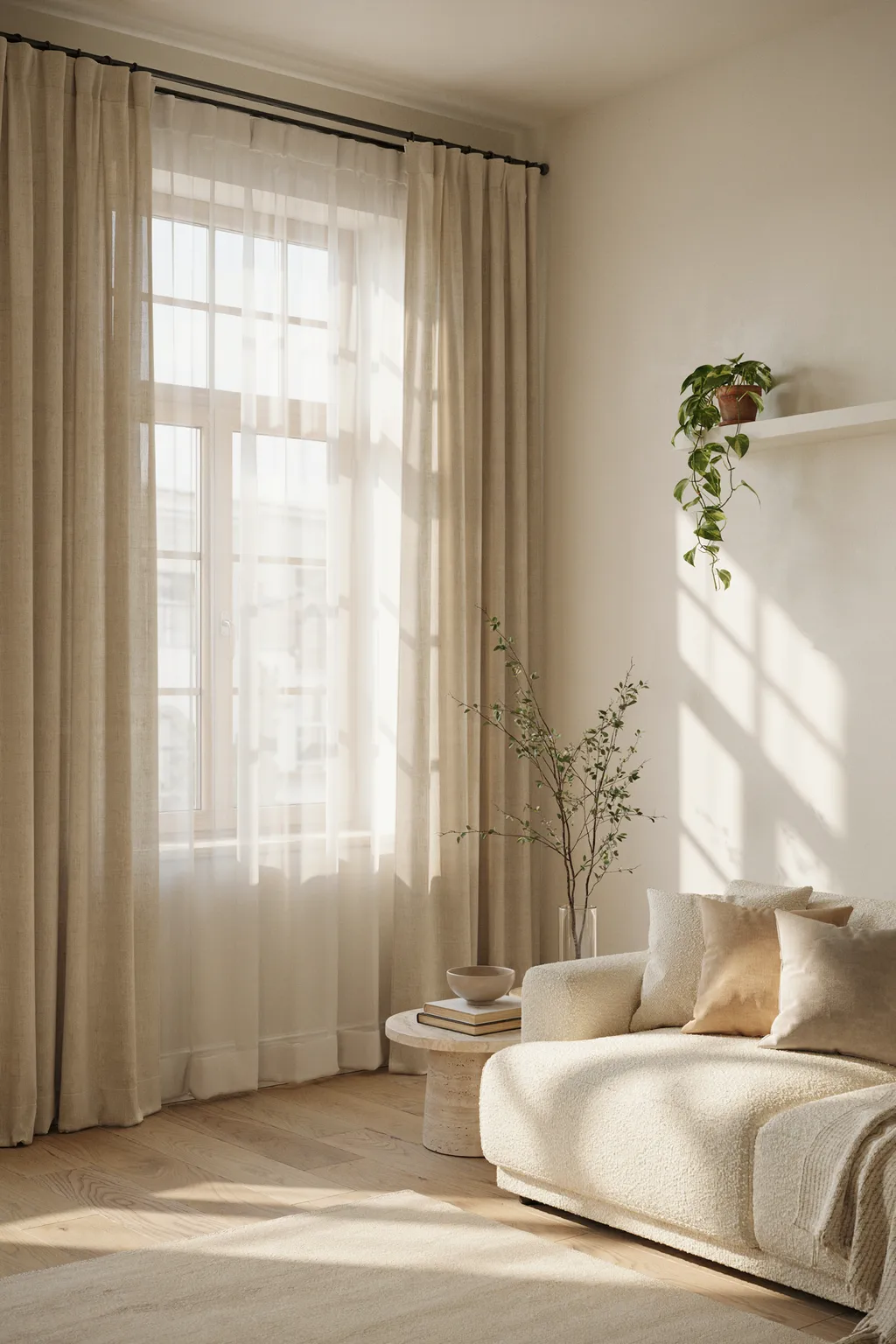
A west or south window that floods with hard afternoon light needs softening, and layered neutral panels do it gracefully. A beige drape beside a white sheer breaks the glare into a gentle, dappled light that moves across the floor as the sun shifts. The room stays bright and warm without the squint and the faded upholstery that bare glass causes. These living room curtain ideas suit sunny rooms where you want to keep the light but tame its edge.
Two pale layers diffuse light more evenly than one, spreading it instead of letting it blast through in a single hot stripe. Keep both layers within a shade or two of each other so the window stays quiet and the focus stays on the light itself. The caveat: very pale fabrics in direct, daily sun can fade over a few years, so choose a fade-resistant weave or rotate the panels. A lining on the drape also protects both the fabric and your furniture.
20. Try Two-Tone Panels for a Custom Contrast
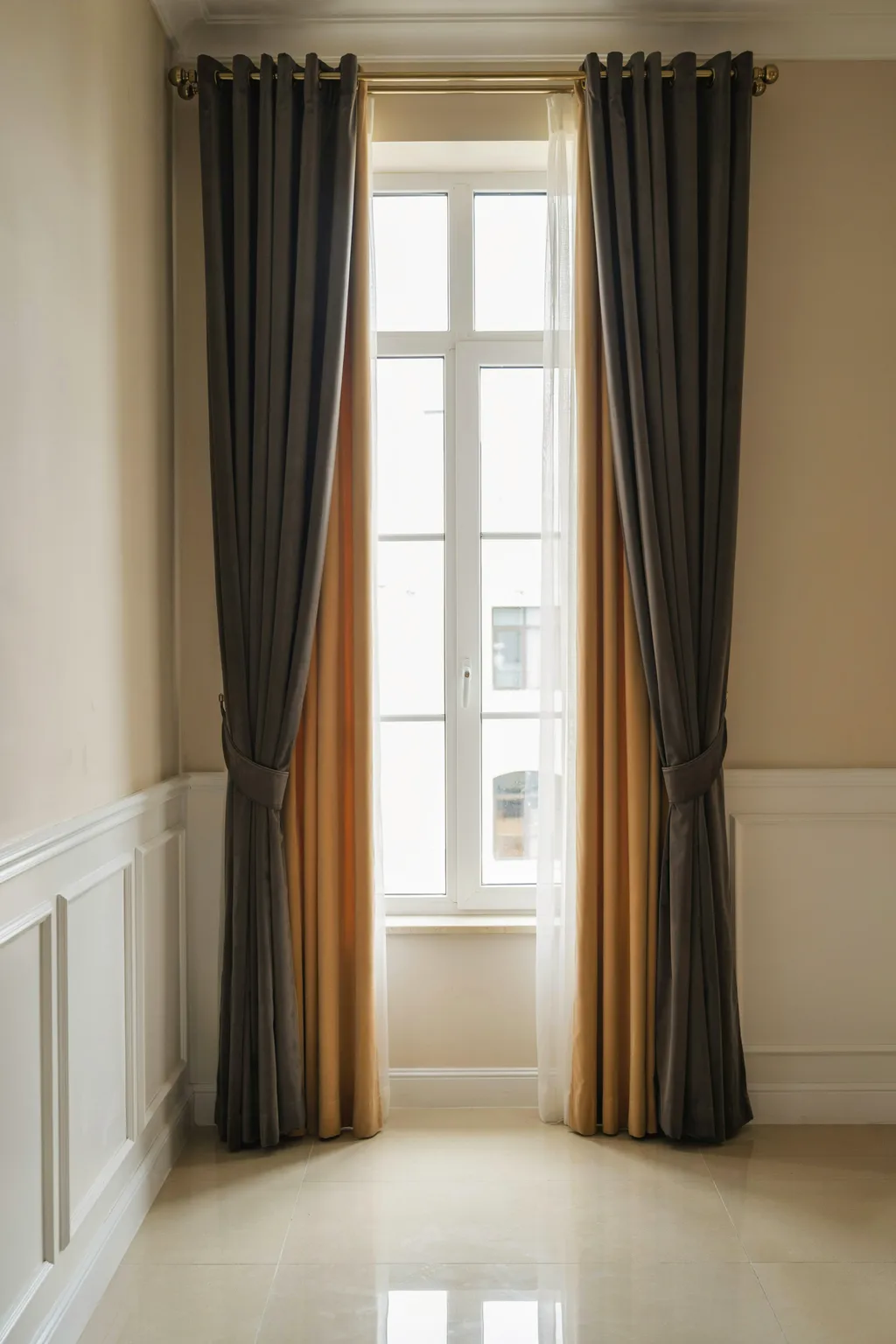
Two-tone panels make a window look intentional and a little bespoke: a deep grey on the outer edges and a warm caramel toward the center, with a white sheer between. The color-block effect frames the glass and draws the eye to the light in the middle, and the contrast feels designed rather than off-the-shelf. Symmetrical tiebacks finish the look with a tidy, hotel-like balance. This suits decorators who want something custom without a custom price.
Mixing two curtain colors lets you echo two tones already in the room, say a charcoal sofa and a tan leather chair, so the window ties the palette together. Keep the darker shade on the outside and the warmer one inside to frame the view and pull warmth toward the center. The honest drawback: two-tone setups need careful measuring and even spacing, or the symmetry looks off. If precise balance stresses you, a single well-chosen color is the safer route.
Common Mistakes to Avoid
Mistake 1: Hanging the Rod Too Low
Mounting the rod right on top of the window frame chops the wall and makes the ceiling feel lower. Hang it 4 to 6 inches above the frame, or higher in tall rooms, and the window looks grander instantly. This costs nothing and is the single biggest visual upgrade you can make.
Mistake 2: Buying Panels That Are Too Short
Curtains that stop above the floor look like high-water pants and shrink the whole wall. Measure from the rod to the floor and buy panels that just kiss it, or pool slightly. A floor-length panel makes even a small window feel finished and intentional.
Mistake 3: Skipping the Sheer Layer
A single heavy panel forces a choice between full light or full privacy, with nothing in between. Adding a sheer behind it on a double rod gives you soft daytime light and a private room at the same time. It is the upgrade people feel the most day to day.
Mistake 4: Choosing a Rod That Is Too Narrow
A rod the exact width of the frame leaves the panels covering the glass even when open, blocking light. Extend the rod 8 to 12 inches past each side so the open panels stack on the wall, not the window. The room gets brighter and the window looks wider.
Mistake 5: Ignoring Fabric Weight for the Room’s Light
Thin panels in a sun-blasted room fade and let glare through; heavy velvet in a dark room makes it gloomier. Match the fabric to the light you actually have: airy linen and sheers for bright rooms, lined or velvet panels where you need warmth and dark.
Mistake 6: Forgetting to Steam Out the Creases
New curtains arrive folded and hang with sharp wrinkles that scream out-of-the-package. A quick pass with a handheld steamer, or a low tumble with a damp cloth, drops the creases and lets the fabric fall properly. Skipping this makes even good panels look cheap.
Quick Start Checklist
- [ ] Measure from 4 to 6 inches above the frame down to the floor for panel length.
- [ ] Choose a rod that extends 8 to 12 inches past each side of the window.
- [ ] Decide if the room needs light control, privacy, or full blackout.
- [ ] Pick your layers: sheer alone, drape alone, or both on a double rod.
- [ ] Match the fabric weight to the room’s natural light.
- [ ] Choose a header style: grommet for easy, pinch-pleat for custom.
- [ ] Match the rod finish to the other metals in the room.
- [ ] Order panels wide enough to look full, about double the window width.
- [ ] Steam or hang the panels to drop factory creases before judging the look.
- [ ] Add tiebacks or holdbacks if you want to soften the daytime drape.
Frequently Asked Questions
How high should I hang living room curtains?
Hang the rod 4 to 6 inches above the window frame, and go higher, up toward the ceiling, in rooms with tall walls. Mounting high draws the eye up and makes both the window and the ceiling feel bigger. Pair that with floor-length panels so the fabric runs in one long line from near the ceiling to the floor.
What is the most popular living room curtain color?
Soft neutrals win for most rooms: cream, beige, greige, and light grey go with almost any furniture and never date. They keep a space calm and let your sofa, art, or rug be the star. If you want more personality, add it through one bolder panel, a pattern, or a jewel tone like olive or slate blue.
Should living room curtains touch the floor?
Yes, in almost every case. Panels that just brush the floor, or pool an inch or two, make a window look finished and a wall look taller. Short curtains that float above the floor make a room feel unfinished. The only exception is a radiator or a deep sill that physically blocks a full-length drop.
How do I make a small living room look bigger with curtains?
Use these living room curtain ideas: hang the rod high and wide, choose pale or sheer fabric, and keep the panels close in tone to the wall. That tricks the eye into reading the window as larger and the wall as taller, while the light color keeps the room open. Avoid heavy dark drapes, which close a small space in.
Sheer or blackout curtains for a living room?
It depends on the room’s job. Sheers are best for bright, daytime living rooms where you want light and a soft view. Blackout panels suit rooms that double as media or nap spaces, or windows that face streetlights. The flexible answer is both, layered on a double rod, so you can switch between soft light and full dark.
How wide should curtain panels be?
For a full, gathered look, the combined panel width should be about two to two-and-a-half times the width of the window or rod. Skimpy panels that barely cover the glass look flat and cheap, even in nice fabric. When in doubt, add another panel; fullness is what makes curtains look custom rather than rented.
Conclusion
Good curtains are less about the perfect fabric and more about getting a few basics right. Across all these living room curtain ideas, the same rules keep showing up: hang the rod high and wide, buy panels long enough to reach the floor, and layer a sheer behind a heavier drape so you control the light instead of fighting it. Nail those three things and almost any color or style will look intentional.
So pick your starting point. If your room is dark and cozy, reach for velvet or a lined drape. If it is bright and breezy, lean into linen or sheer voile. If you cannot decide, a soft neutral panel layered over a white sheer flatters nearly every room and budget. Then measure twice, mount that rod higher than feels natural, and steam the creases out before you judge the result.
This weekend, start with one window. Move the rod up, swap in a floor-length panel, and see how much taller and more finished the whole room feels. That one change usually sells you on doing the rest.
You Might Also Like
- ▸22 Curtain Styles for Living Room Windows That Look Custom
- ▸20 Space-Saving Long Living Room Ideas with a Stylish Touch
- ▸22 Cozy Small Living Room Ideas That Feel Airy
- ▸21 Modern Rococo Revival Living Room Ideas Defining 2026’s Maximalist Trend
- ▸25 Sunny Yellow Living Room Ideas for a Brighter Home
- ▸22 Cottage Living Room Ideas That Feel Warm and Earthy