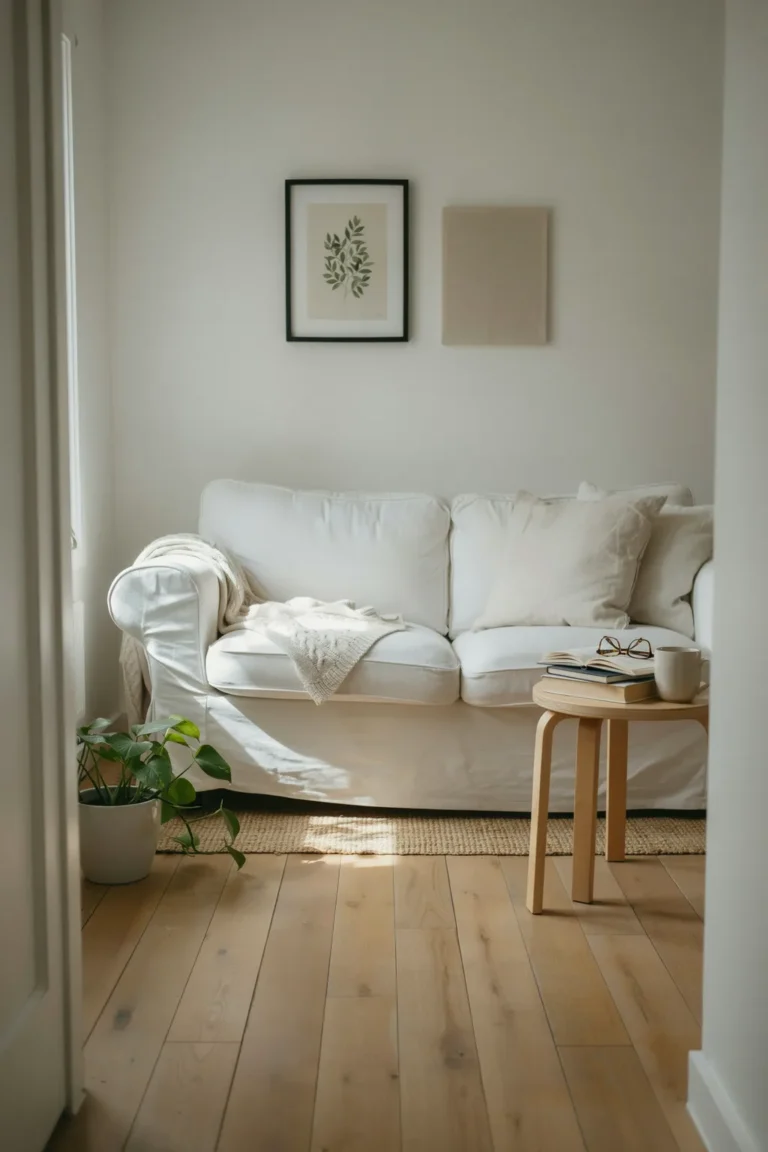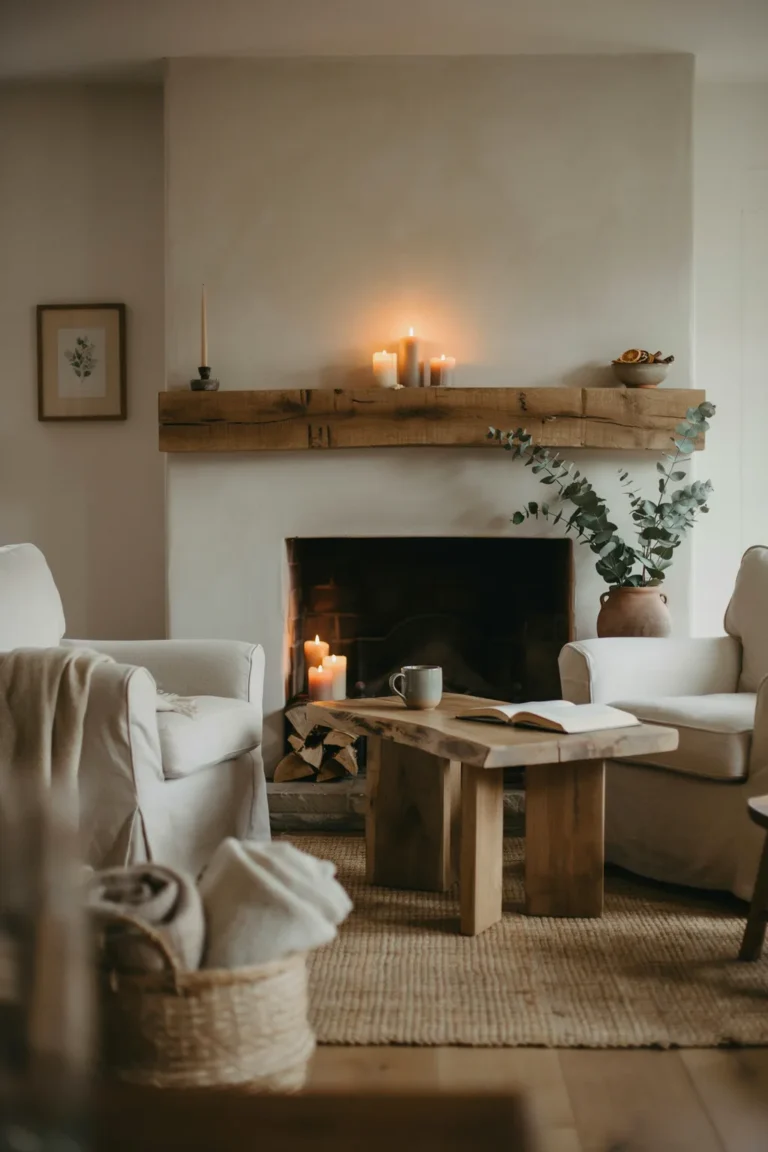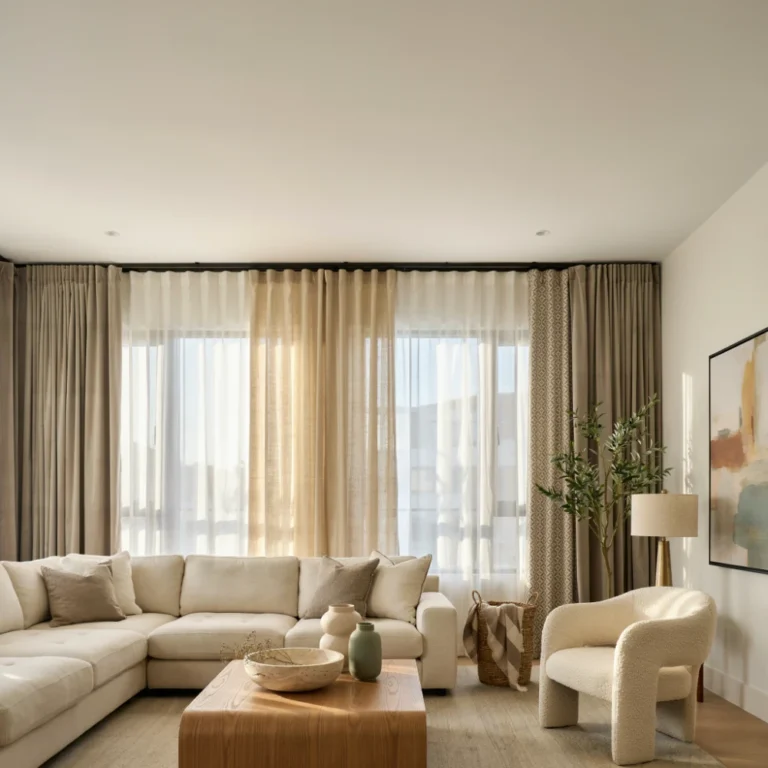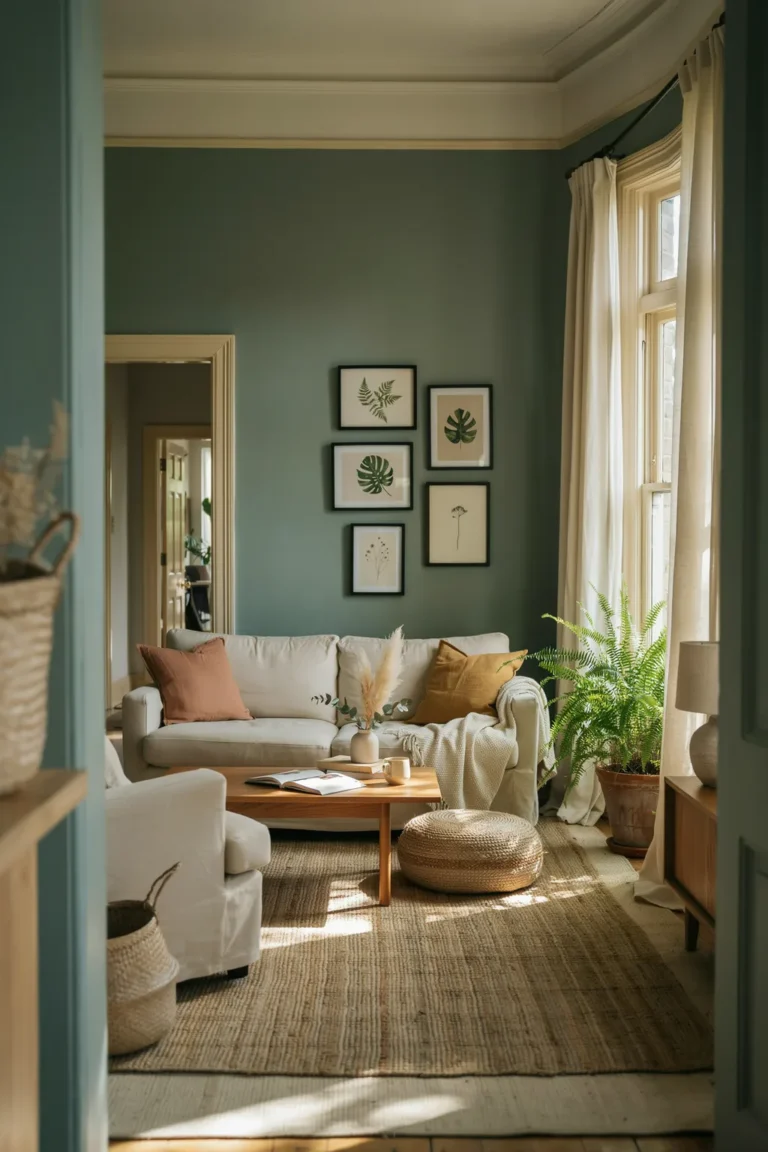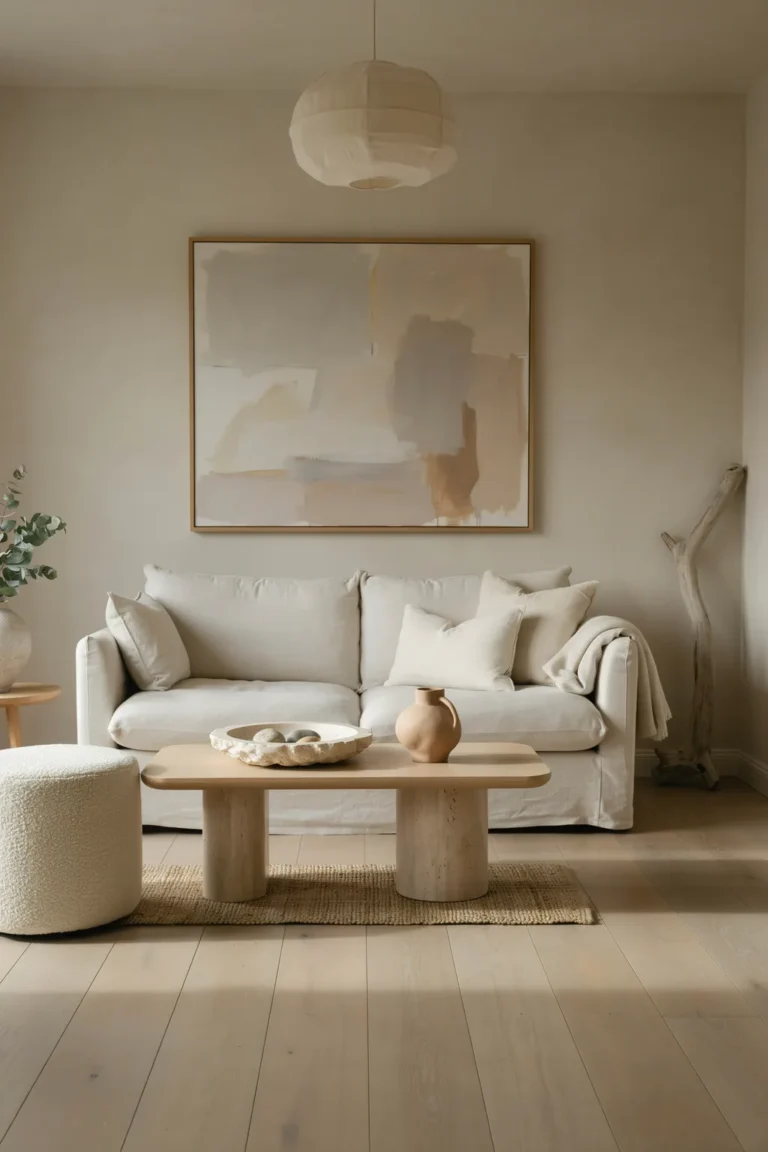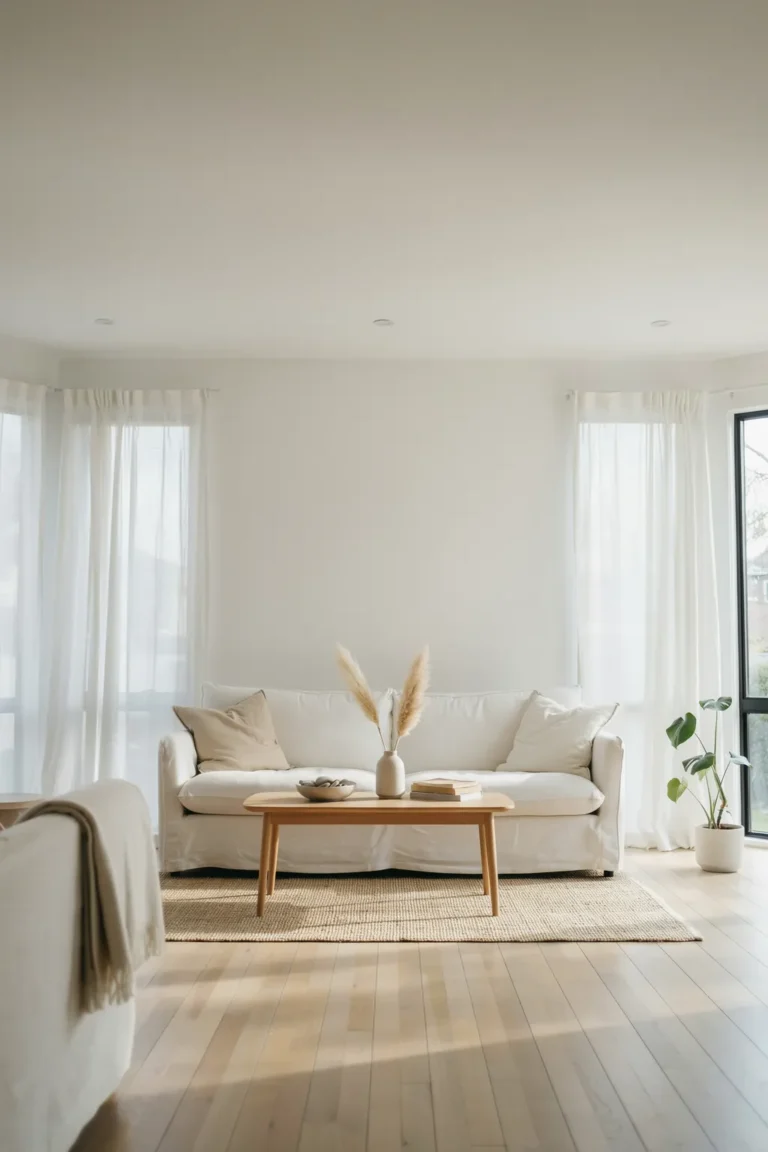
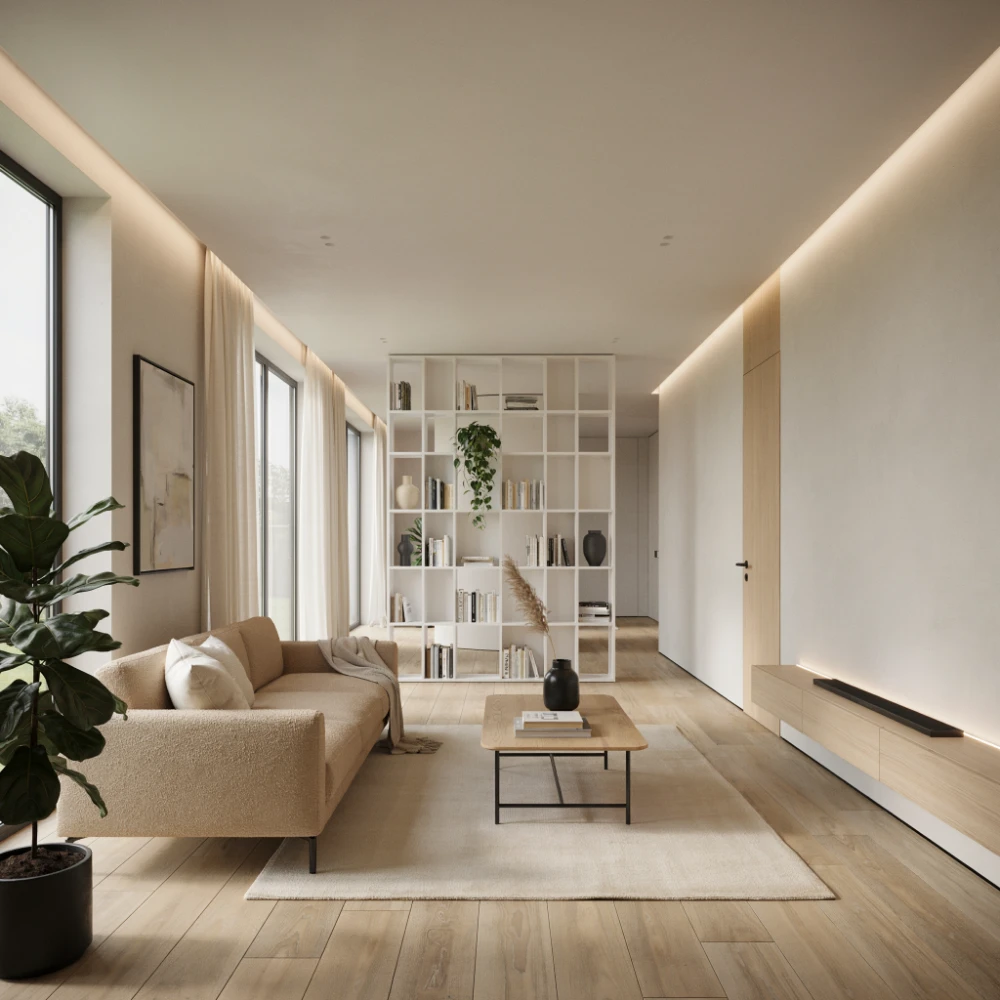
20 Space-Saving Long Living Room Ideas with a Stylish Touch
A long living room looks easy until you try to furnish it. Push everything against the walls and you get a bowling alley with a dead strip down the middle. Float the sofa and the room feels like a hallway someone abandoned. Most narrow rooms end up with one cramped seating huddle at one end and a no-man’s-land at the other. The best long living room ideas solve that by breaking the run into zones, so a single awkward rectangle starts working like two or three smaller, purposeful rooms.
I have lived with a true railroad living room, 9 feet wide and 24 feet long, and learned the hard way that the usual advice does not fit. You cannot just center a sofa and a coffee table and call it done. You have to think in sections: where you sit, where you walk, where the light lands.
Below are 20 layouts and looks, each tied to a real room, that show how to split the length, keep a clear path, and still make the space feel warm instead of stretched. You will see which idea suits a rental, which needs built-ins, and where each one falls short, because a trick that saves a 24-foot room can swamp a 14-foot one. Skim for the two or three that match your width, your light, and your budget, then steal those. By the end you will know exactly how to break up the run.
Quick Answer
The fix for almost every narrow room is the same: split the length into two zones and keep a clear walking path along one side. Use a rug, a sofa back, or a console to mark where one area ends and the next begins. The strongest long living room ideas pair a main seating group with a second use, a reading nook, a desk, or a dining spot, so the far end stops feeling like wasted floor. Light each zone on its own and the whole room reads balanced.
1. Float a Big Sectional and Carve Out a Walkway
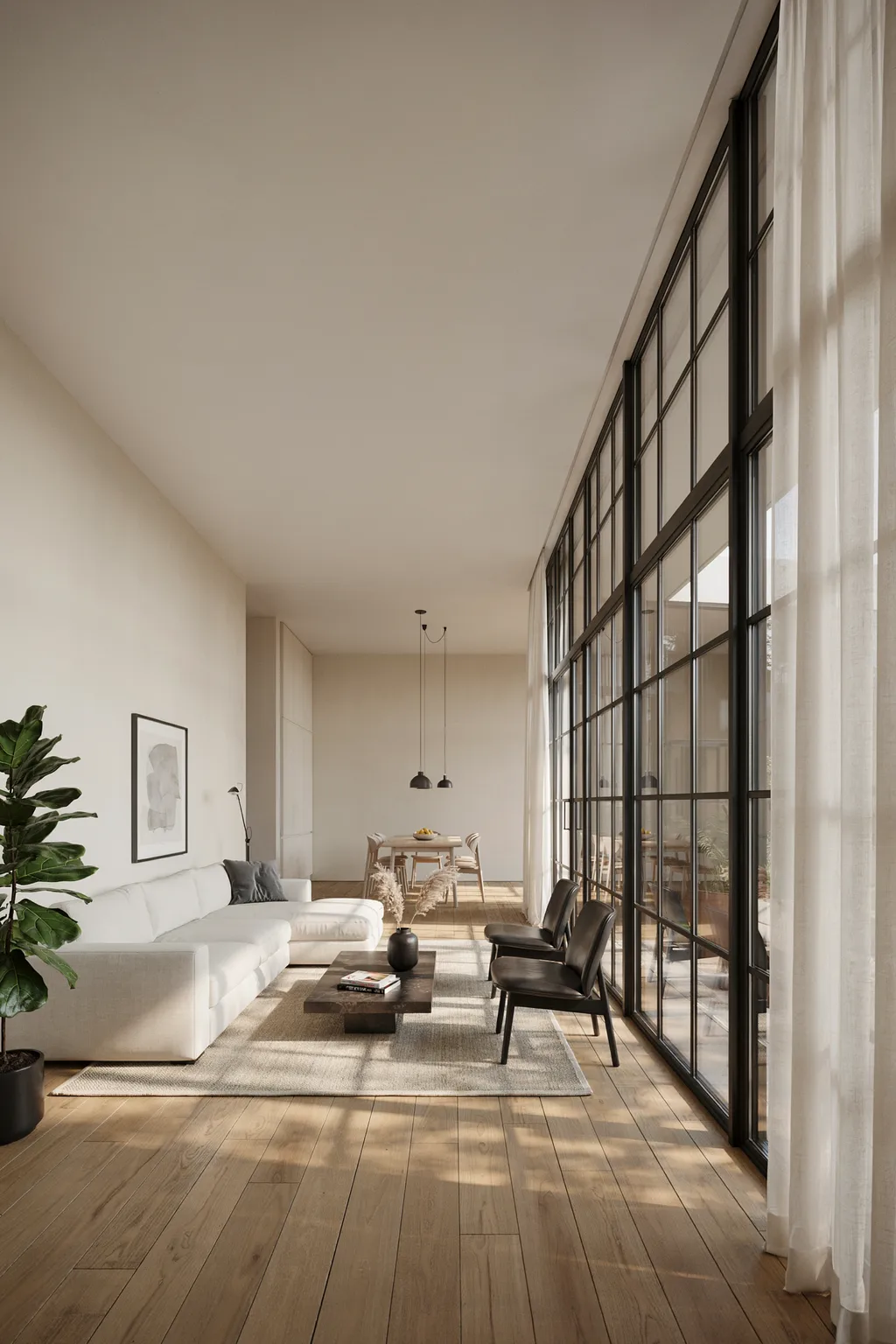
In a grand long room, the worst move is lining both walls with furniture. Instead, pull a large L-sectional into the space and let it claim the center, then keep one long side open as a clear walkway. A pair of accent chairs faces the sectional to close the conversation circle, while the far end holds a dining table. The result reads as two defined zones with an obvious path between them, not one endless strip.
A floated sectional works because its back becomes a natural divider, telling your eye where the lounge ends and the walkway begins. Anchor it on a large rug, at least 8 by 10 feet, so the front legs sit on the wool and the grouping feels intentional. This suits wide-and-long rooms with the square footage to spare. Skip it in a truly narrow room, under about 11 feet wide, where a big sectional plus a walkway leaves no breathing room.
2. Anchor the Room With a Fireplace and Bookshelf Wall
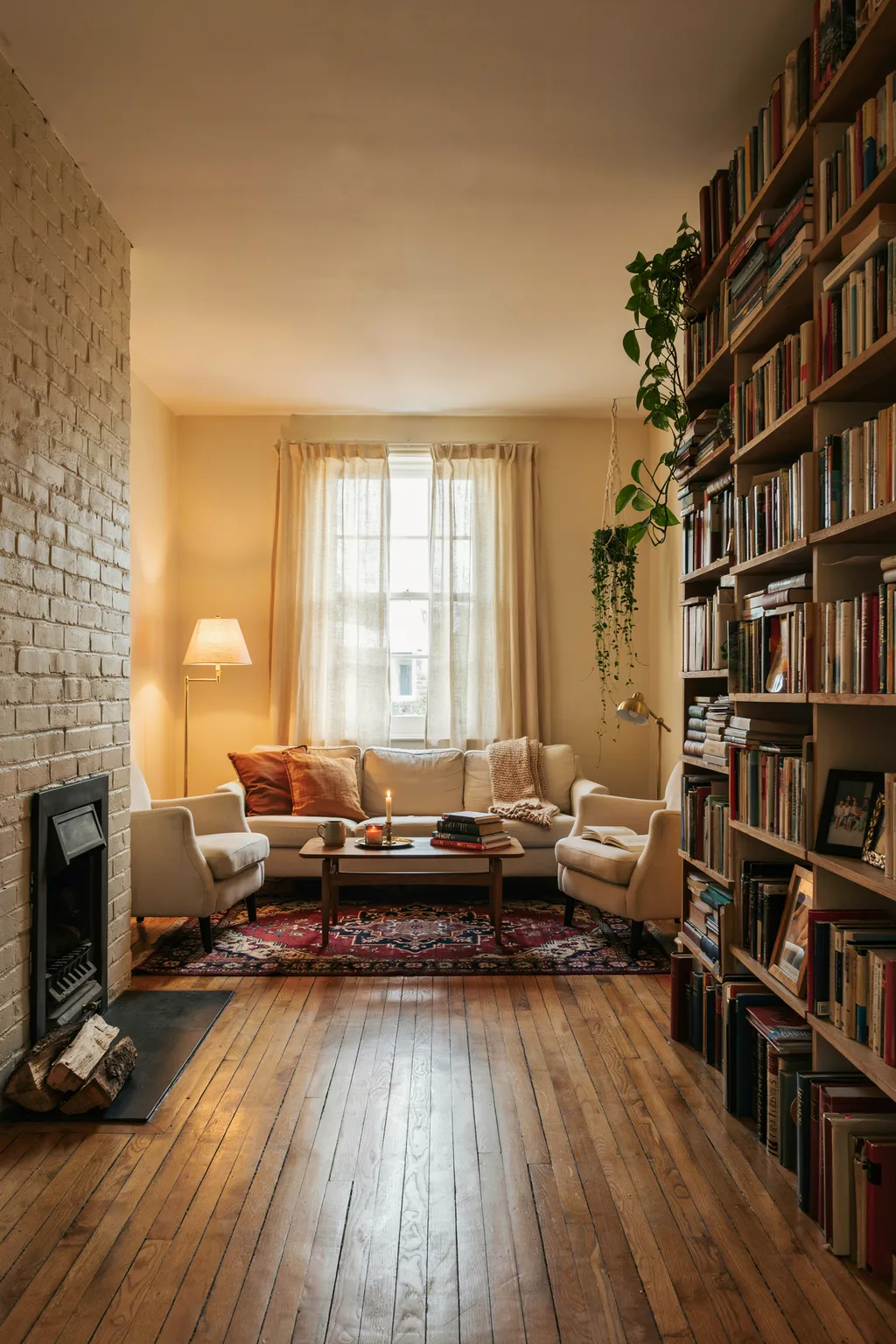
When a long room has a fireplace on one end, let it become the gravity for the whole layout. Pull a sofa and a pair of armchairs into a tight circle around the hearth, lay down a richly patterned rug, and line the adjoining wall with full-height bookshelves. The fire and the books give the seating a clear reason to cluster at that end, so the length feels cozy rather than stretched. Warm wall color seals the snug, lived-in feel.
This setup earns its keep because a fireplace is a built-in focal point, and people instinctively gather toward warmth and a view of the flames. Float the seating a foot off the walls so the grouping feels deliberate, not pushed back. A deep red or blue Persian-style rug hides traffic and ties mismatched chairs together. The honest caveat: a heavy book wall and dark rug can shrink an already narrow room, so balance them with a light ceiling and a big mirror or window opposite.
3. Keep It Airy With Pale Wood and Wall-Mounted Shelving
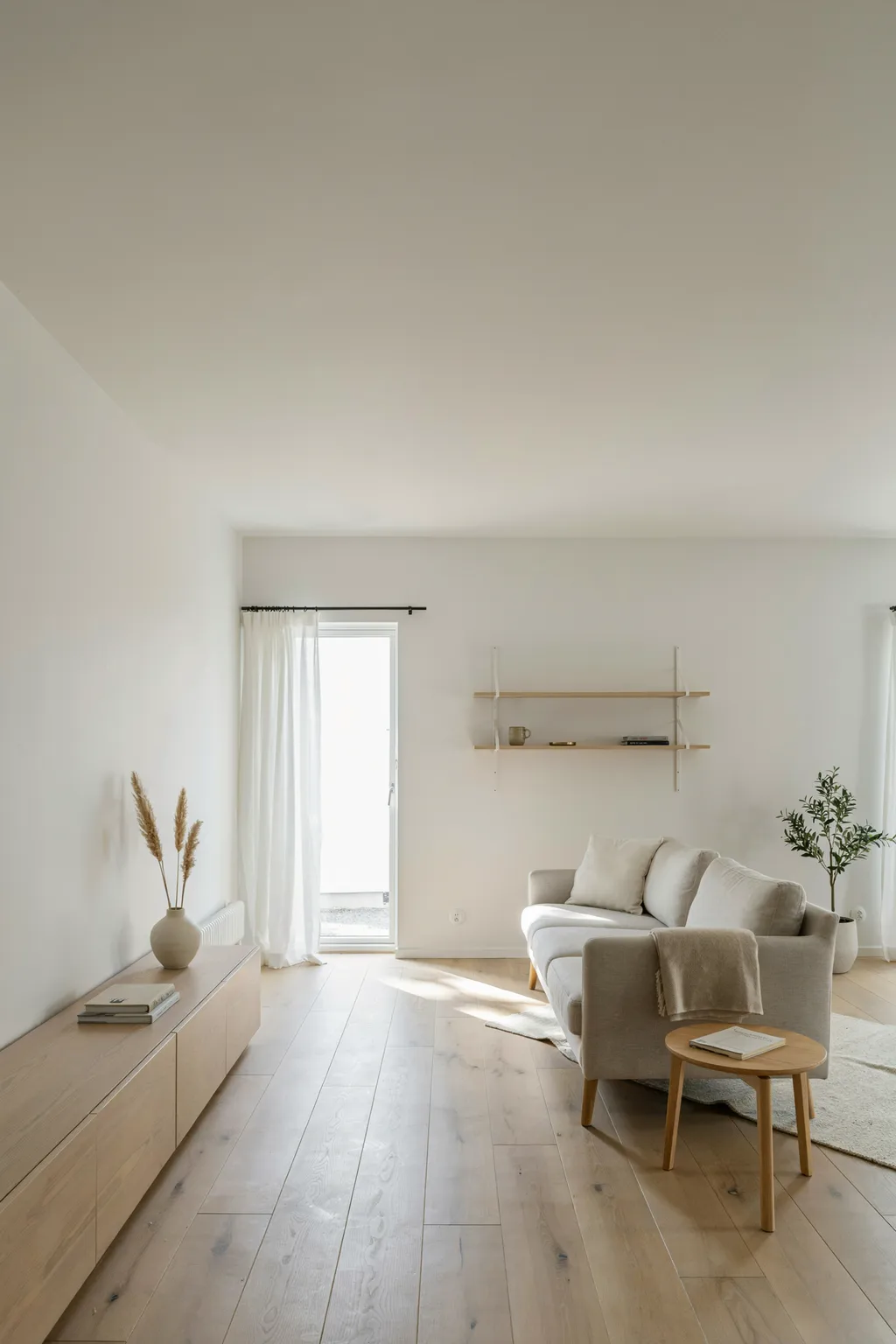
A long room can feel lighter the second you get furniture off the floor. Pick a pale wood and white Scandinavian scheme, mount slim shelves on a track system up the walls, and choose a low-slung sofa with raised legs so light passes underneath. The visible floor and open shelving trick the eye into reading the space as bigger and calmer. A single soft grey couch and a low wood console keep the whole run feeling uncluttered.
Wall-hung storage frees the floor, and an unbroken stretch of light flooring makes the length feel like an asset instead of a problem. Keep the palette to two or three pale tones, white walls, blond wood, soft grey, so nothing chops up the room. This is for minimalists and small-space renters who want calm over cozy. The trade-off: open shelves demand tidiness and show every speck of dust, so they suit people who keep a light, curated set of things on display.
4. Break the Length With a Dark Accent Wall
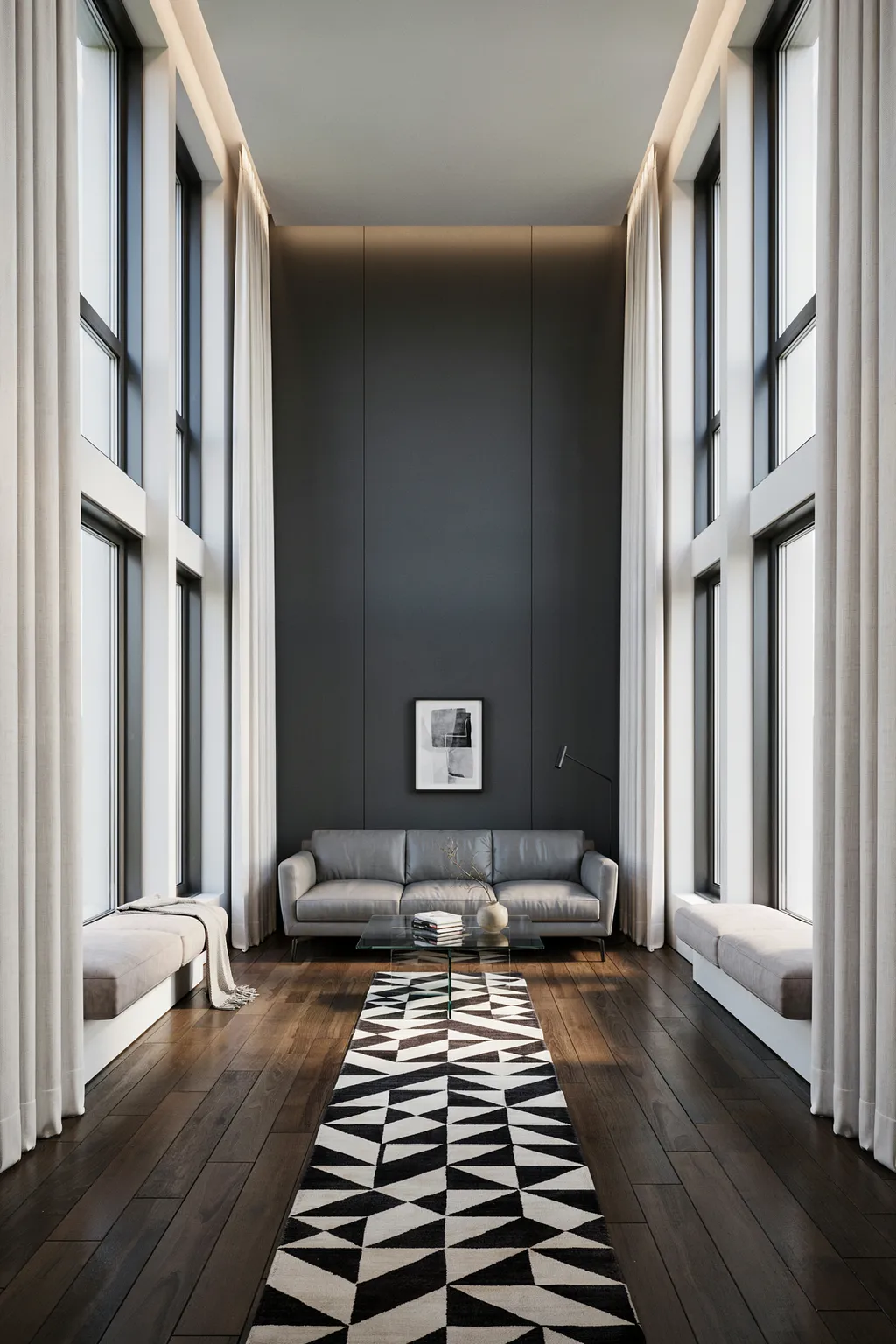
A long room with windows on both sides can feel like a glass corridor. Painting one short end or a center section in a deep charcoal stops the eye and gives the run a clear destination. Pair the dark wall with a window-seat banquette under each row of windows, a sleek grey leather sofa, and a bold black-and-white geometric rug. The contrast frames the seating and makes the middle of the room feel like the main event.
A dark accent wall works as a visual full stop, shortening a too-long room by giving your eye somewhere to land. Keep the rest of the surfaces light so the single dark plane reads as intentional drama, not gloom. Run the graphic rug lengthwise to lead the eye down the room on purpose. The caveat: very dark paint needs good light to look rich rather than flat, so reserve this for rooms with strong daylight or layered lamps, not a dim basement.
5. Fill a Long Wall With a Gallery Display
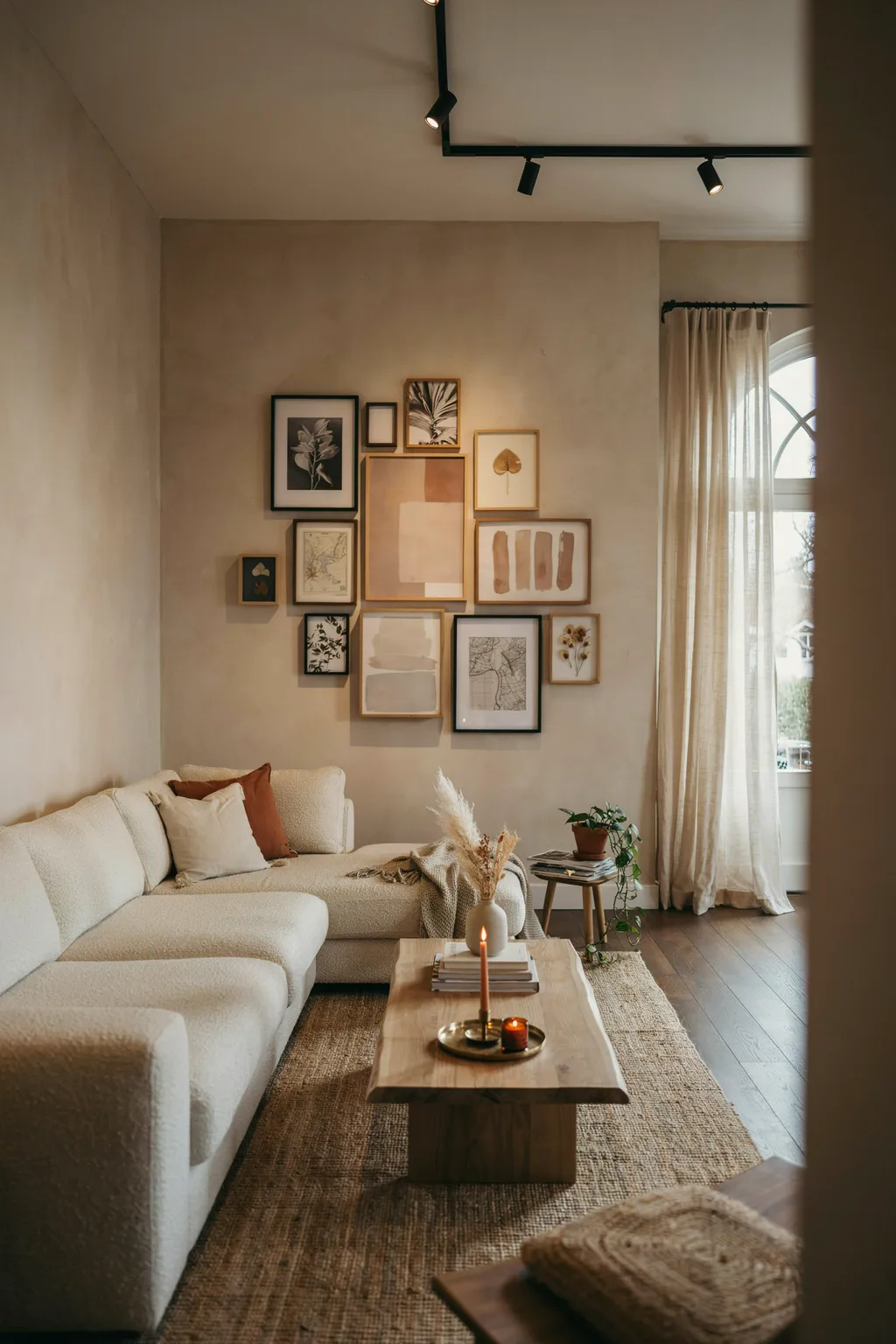
The longest wall in the room is free real estate, and a gallery of framed art turns it into the focal point. Hang a grid or loose cluster of frames the length of the wall above a deep neutral sectional, then wash it with track lighting so each piece glows. The art carries the eye down the room and gives the long wall a job, while a live-edge wood coffee table keeps the warm, collected feel grounded.
A gallery wall fills horizontal space that would otherwise read as empty, which is exactly what a long room has too much of. Keep frames in a consistent finish, all black or all wood, so the display feels curated rather than random. These long living room ideas reward anyone with prints, photos, or posters waiting in a closet. The honest limit: a giant gallery takes planning and a lot of nail holes, so lay it out on the floor first, and renters may prefer leaning frames on a long picture ledge instead.
6. Split a Narrow Room Into TV and Reading Zones
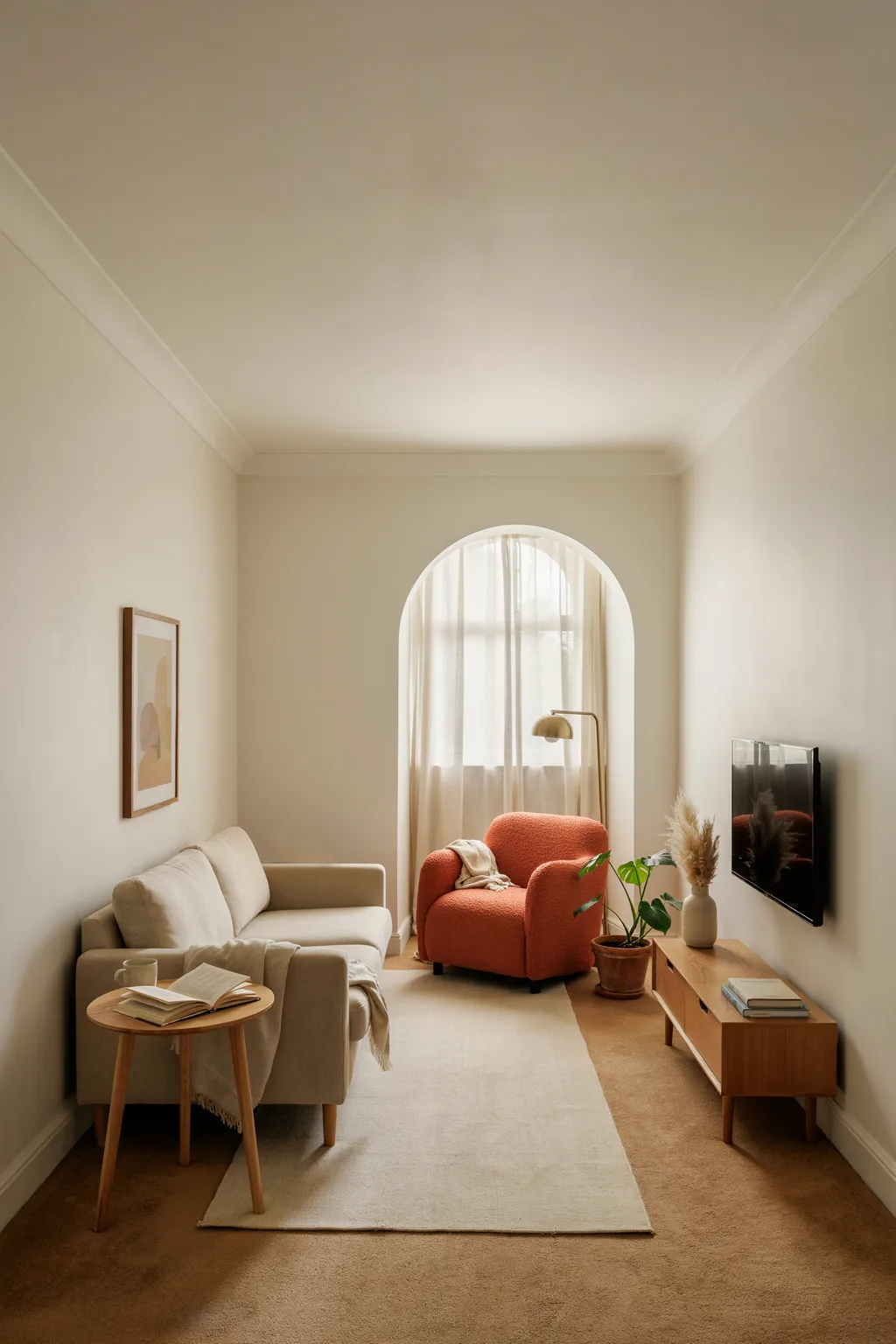
A skinny room works best when you give it two small jobs instead of one big one. Put the sofa and a wall-mounted TV at one end for everyday viewing, then tuck a single armchair and a lamp by the window at the other for reading. A slim console under the TV and a small side table keep the footprint tight. Two clear zones make a narrow strip feel purposeful, like a room with chapters rather than one cramped lounge.
Splitting the use works because a narrow room rarely fits a full conversation circle, but it easily fits a viewing spot and a quiet corner end to end. Mount the TV on the wall to save the floor for the console and walking room. This suits long-and-narrow rentals and apartments. The caveat: keep the walkway between the two zones at least 30 inches clear, or the room turns into an obstacle course every time someone crosses it.
7. Go Symmetrical and Classic in a Formal Room
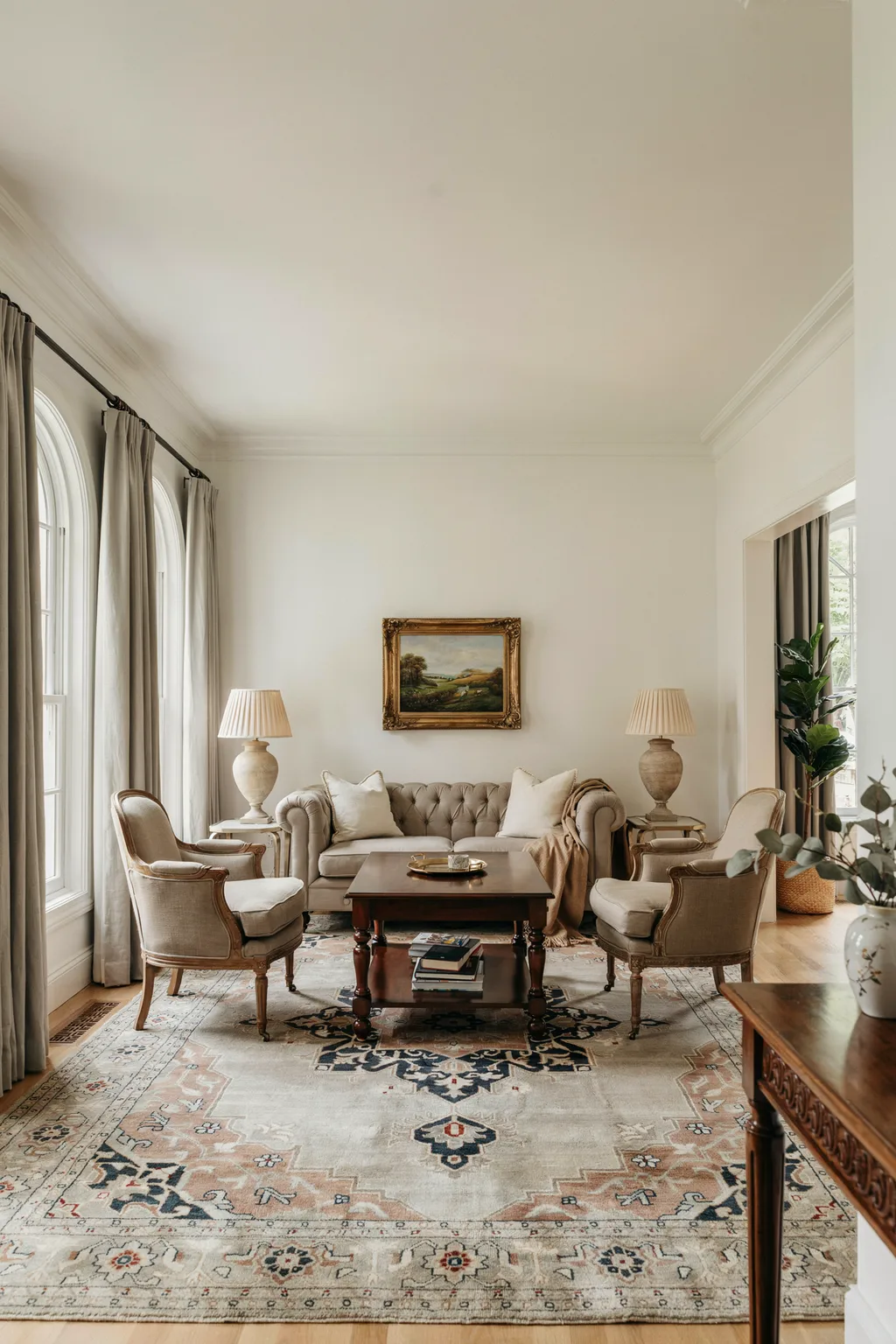
For a traditional long room, symmetry brings instant order. Place two facing armchairs and a sofa around a central coffee table, hang matching drapes on the tall windows, and ground it all on a large patterned Persian rug. The mirror-image layout feels calm and formal, and it handles a long room gracefully because the eye reads balance rather than length. Antique wood frames and a pair of table lamps finish the polished look.
Symmetry suits a long room because matched pairs on either side of a center line make the space feel composed and deliberate. Anchor the grouping with one big rug that runs the width of the seating, not a small one that floats. This is for traditionalists with the furniture and ceiling height to carry a formal scheme. The drawback: strict symmetry can feel stiff and is harder in a room with off-center doors or windows, so let one or two elements break the pattern to keep it from looking staged.
8. Lay Out Low Modular Benches in a Gallery Style
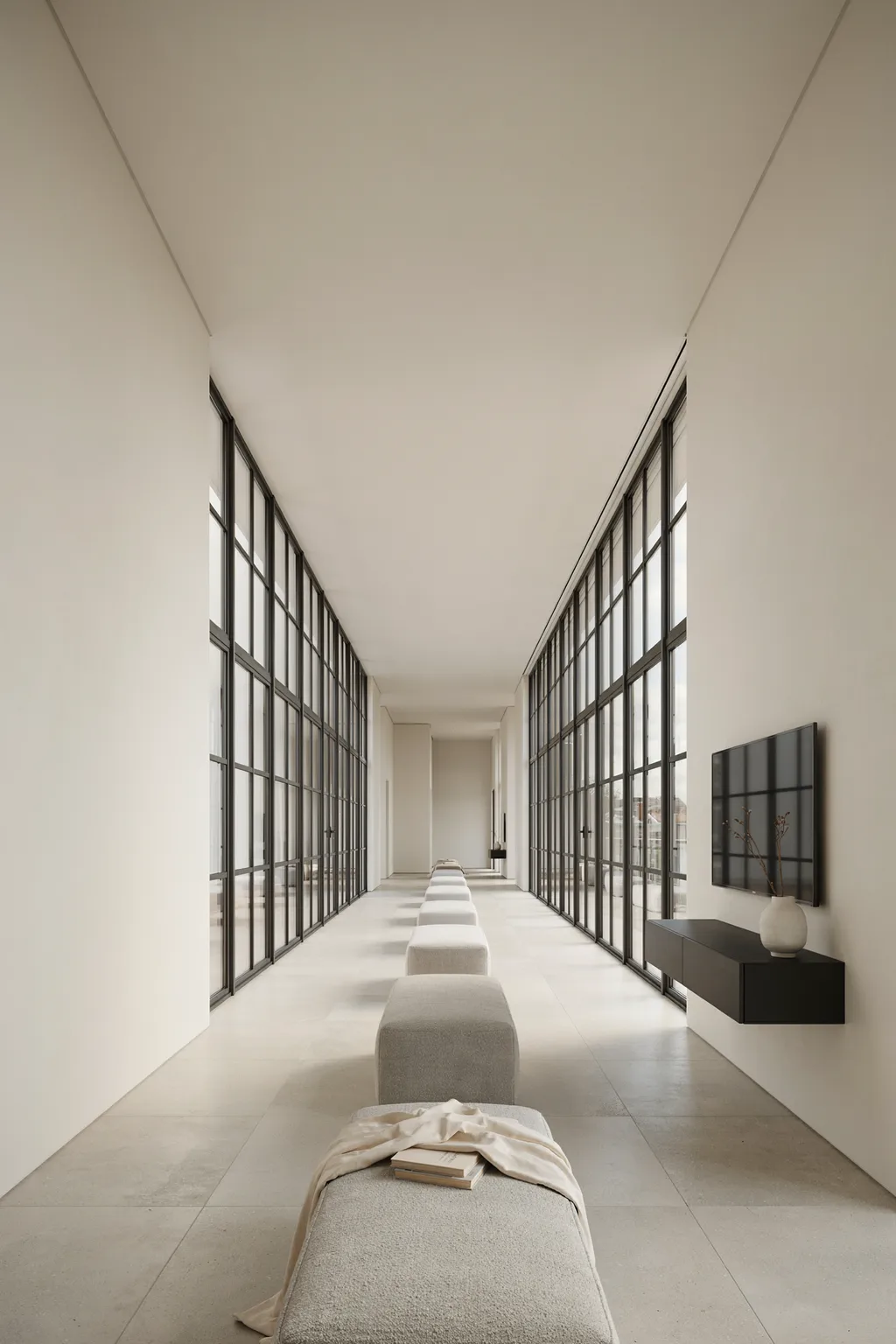
A very long, light-filled room can lean into its corridor shape instead of fighting it. Run a line of low modular bench seats down the center, mount the TV on a floating console on one wall, and leave the floor and windows largely bare. The pared-back, gallery-like layout makes the length feel like architecture, calm, museum-quiet, and deliberately spare. Black-grid windows on both sides keep it crisp and bright.
Low, backless benches work in a long narrow room because they seat people without the bulk and sight-line block of a tall sofa, so the eye travels the full length unbroken. Keep colors to white walls, concrete or pale floor, and grey upholstery for that quiet gallery feel. This is for committed minimalists who value space over softness. The honest caveat: backless benches are not comfortable for long lounging, so add a few floor cushions or a single soft chair if you actually want to relax there, not just admire it.
9. Layer Boho Texture With Rattan and Plants
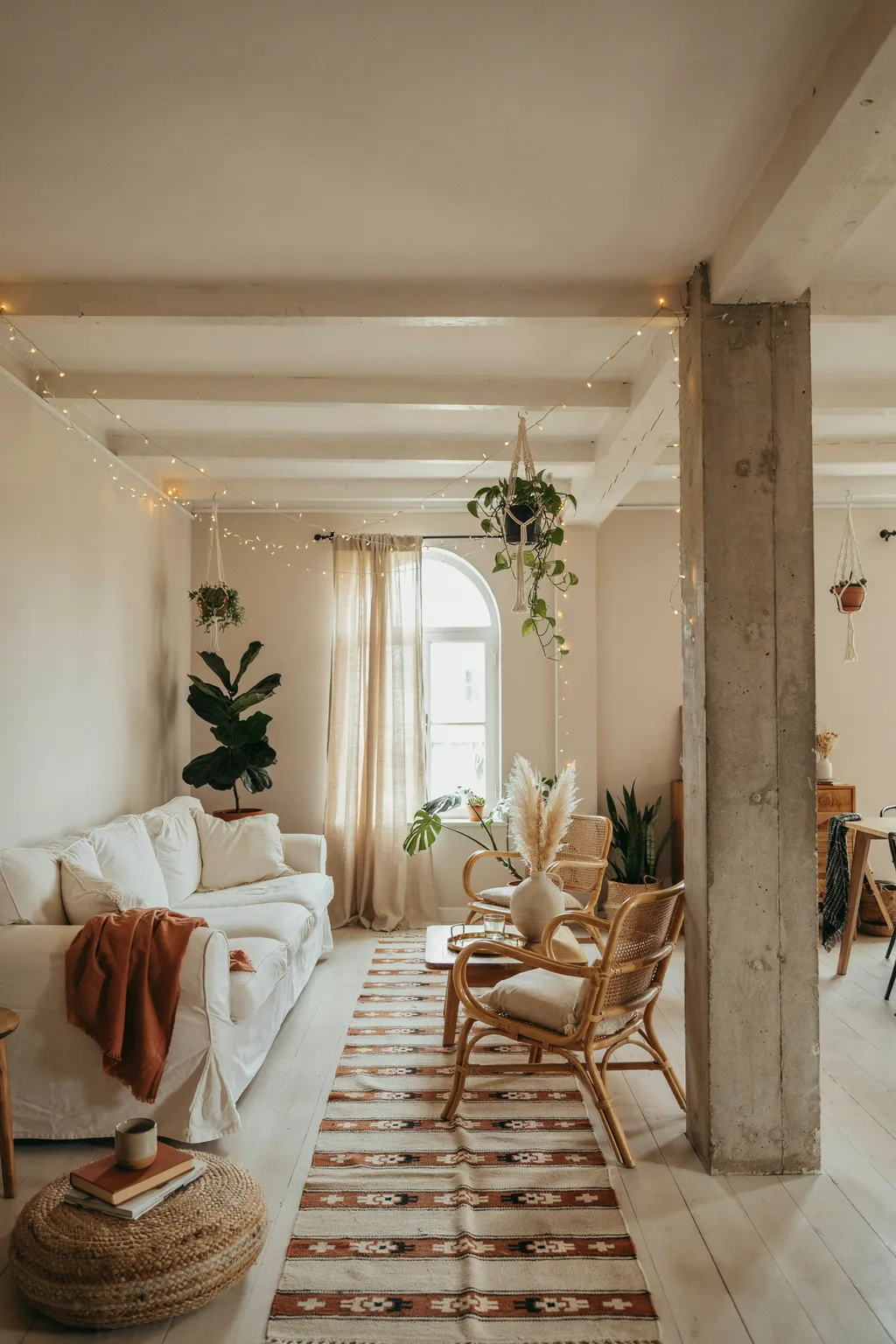
A long room turns warm and relaxed fast when you pile on natural texture. Mix a white slipcovered sofa with rattan chairs, a jute pouf, a striped kilim rug, and a crowd of leafy plants, then string a few cafe lights overhead. The layered materials and greenery soften the hard lines of a long box and make every corner feel inhabited. The look reads collected and easygoing, like a sunroom you never want to leave.
Boho texture works in a long room because varied surfaces, woven, leafy, soft, give the eye lots of gentle places to rest, which breaks up the length better than a single flat scheme. Spread the plants and seating along the run rather than bunching them at one end. This suits relaxed, plant-loving decorators. The trade-off: lots of real plants need light and watering, and a busy mix can tip into cluttered, so keep the big pieces, sofa and rug, fairly calm and let the accents do the talking.
10. Build In a Storage Wall With a Window Bench
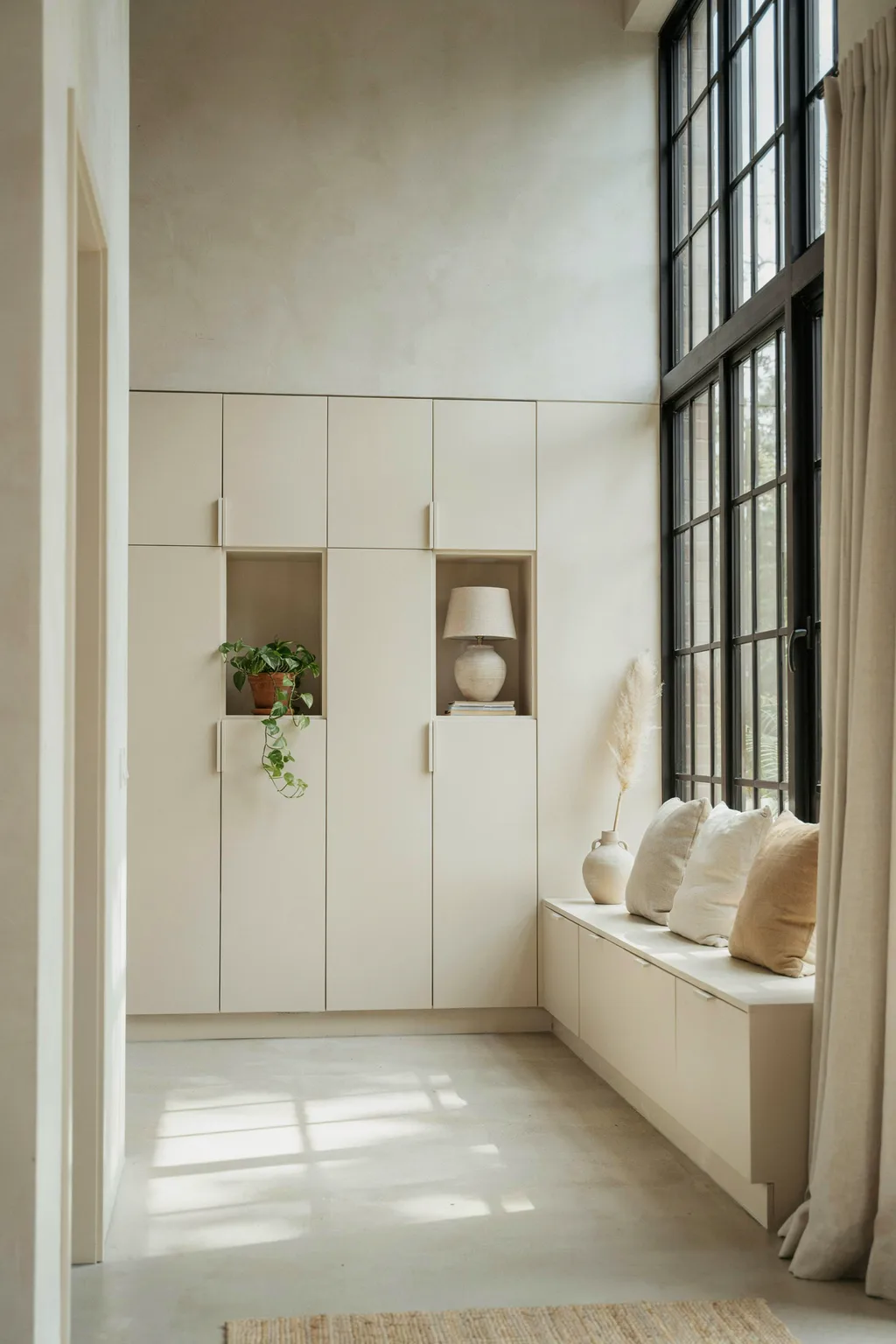
A long blank wall is the perfect spot for a full run of built-in storage. Line one side with floor-to-ceiling cabinets, add a few open shelves at eye level, and continue the cabinetry into a low bench under the window. The hidden storage swallows clutter while the bench and floor cushions add casual seating without bulky furniture. In a muted, calm palette, the whole wall reads as architecture rather than a row of boxes.
Built-ins use the length on purpose, turning dead wall into storage you actually need in a room that usually lacks closets. Keep the cabinet fronts flat and the color close to the wall so the run disappears instead of dominating. This is for owners, or long-term renters with permission, who want a clean, clutter-free look. The honest limit: custom built-ins cost real money and time, so for a budget version, line up flat-front flat-pack wardrobes and add a continuous wood top to fake the seamless look.
11. Run Lounge and Dining Zones Open-Plan
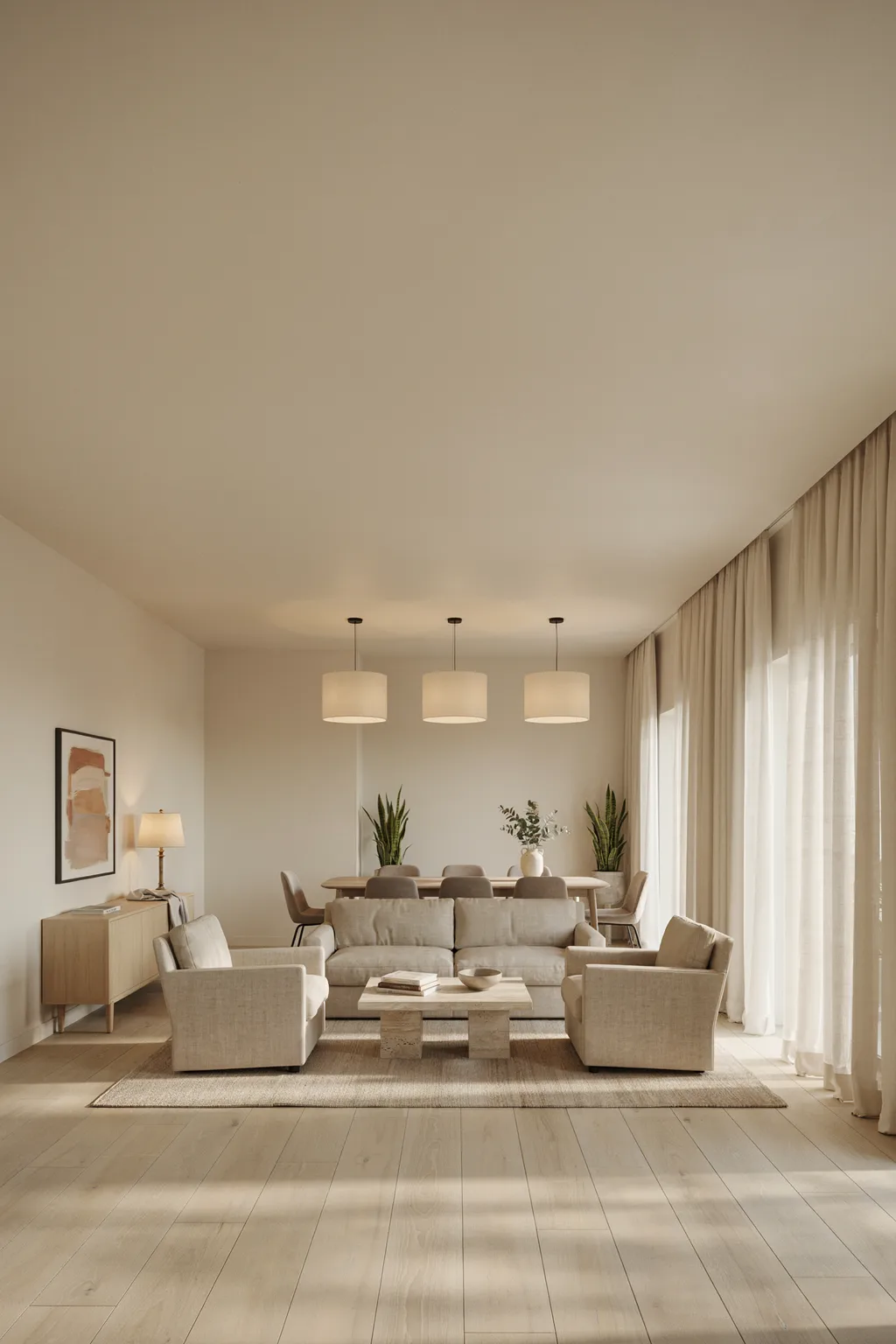
When a long room must hold both a lounge and a dining area, treat them as two clear stations along the run. Group sofas and chairs at one end, set a table with seating at the other, and let a row of pendant lights and a couple of tall plants mark the soft border between them. Each zone gets its own rug and light, so the space feels like two purposeful rooms sharing one footprint rather than a confused jumble.
Splitting an open-plan long room into stations works because defined zones tell everyone where to sit, eat, and walk, which a single open stretch never does. Use the lighting to draw the line: pendants over the table, a floor lamp over the lounge. According to the layout pros at Better Homes & Gardens, pulling furniture into distinct groupings is the key to making one big room feel like several usable ones. The caveat: leave a clear lane, ideally 36 inches, for the path between zones so traffic does not cut through the seating.
12. Make a Statement With Black-and-White Contrast
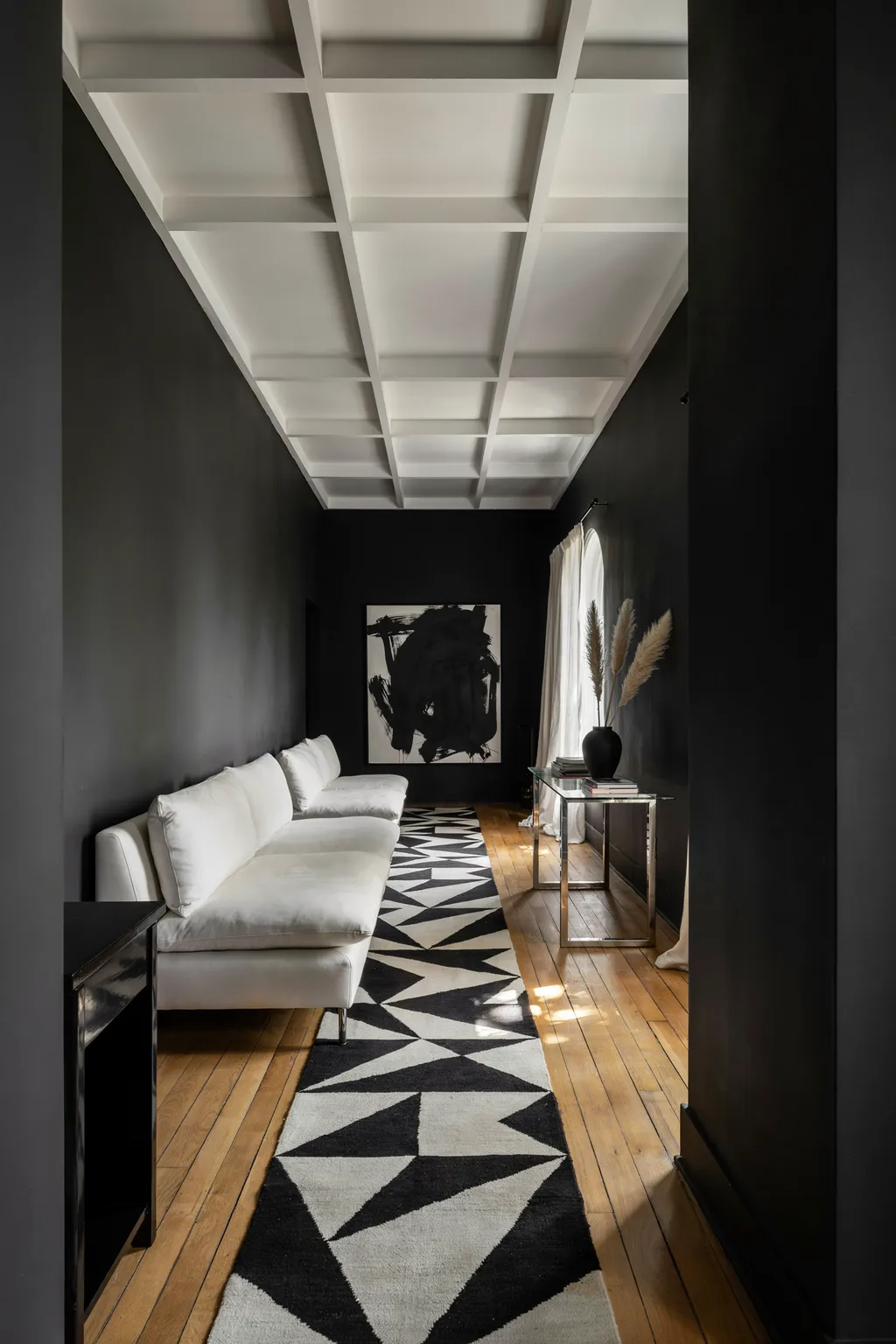
For drama in a long room, commit to a high-contrast black-and-white scheme. Paint the walls a deep matte black, float crisp white sofas, hang oversized graphic art, and add a chrome-and-glass console for shine. The bold contrast gives the length a gallery-like confidence, and the white furniture pops hard against the dark walls so the seating reads as the clear star. A geometric black-and-white rug pulls the whole look together.
High contrast works in a long room because the sharp light-against-dark edges create rhythm down the space, keeping the eye moving instead of drifting. Balance the heavy dark walls with plenty of white upholstery and metallic accents so the room feels rich, not cave-like. This is for confident decorators who like a strong, modern statement. The honest drawback: black walls show dust and fingerprints and can overwhelm a low-light room, so save this for a space with big windows or a serious lighting plan.
13. Light It in Layers With Sconces and Lamps
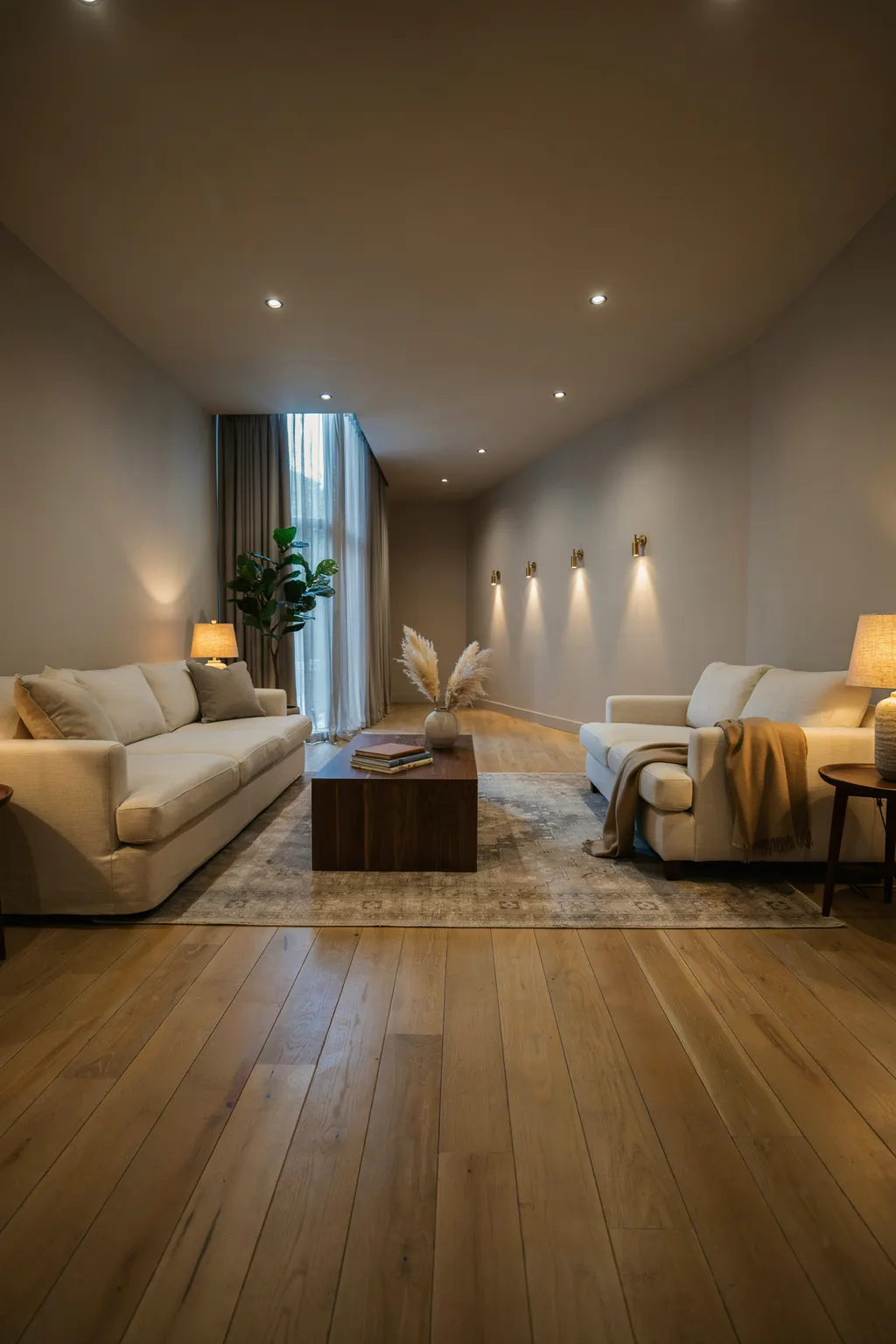
One ceiling light leaves a long room half in shadow, which always makes it feel longer and colder. The fix is layered lighting: space wall sconces evenly down the long wall, add table lamps at seating height, and tuck recessed downlights into the ceiling. Each layer fills a different part of the room with warm light, so the whole length glows evenly instead of fading into a dim far end. The effect is soft, even, and inviting.
Layered light works in a long room because several small sources at different heights erase the shadows that a single overhead fixture casts, making the space feel held together. Aim for warm 2700K bulbs and put the main layers on dimmers. Among all the long living room ideas here, layered lighting suits any long room, rented or owned, since lamps and plug-in sconces need no rewiring. The caveat: mixing too many finishes looks busy, so keep your sconces, lamps, and hardware in one or two metals for a calm, collected glow.
14. Double the Width With a Mirror Wall
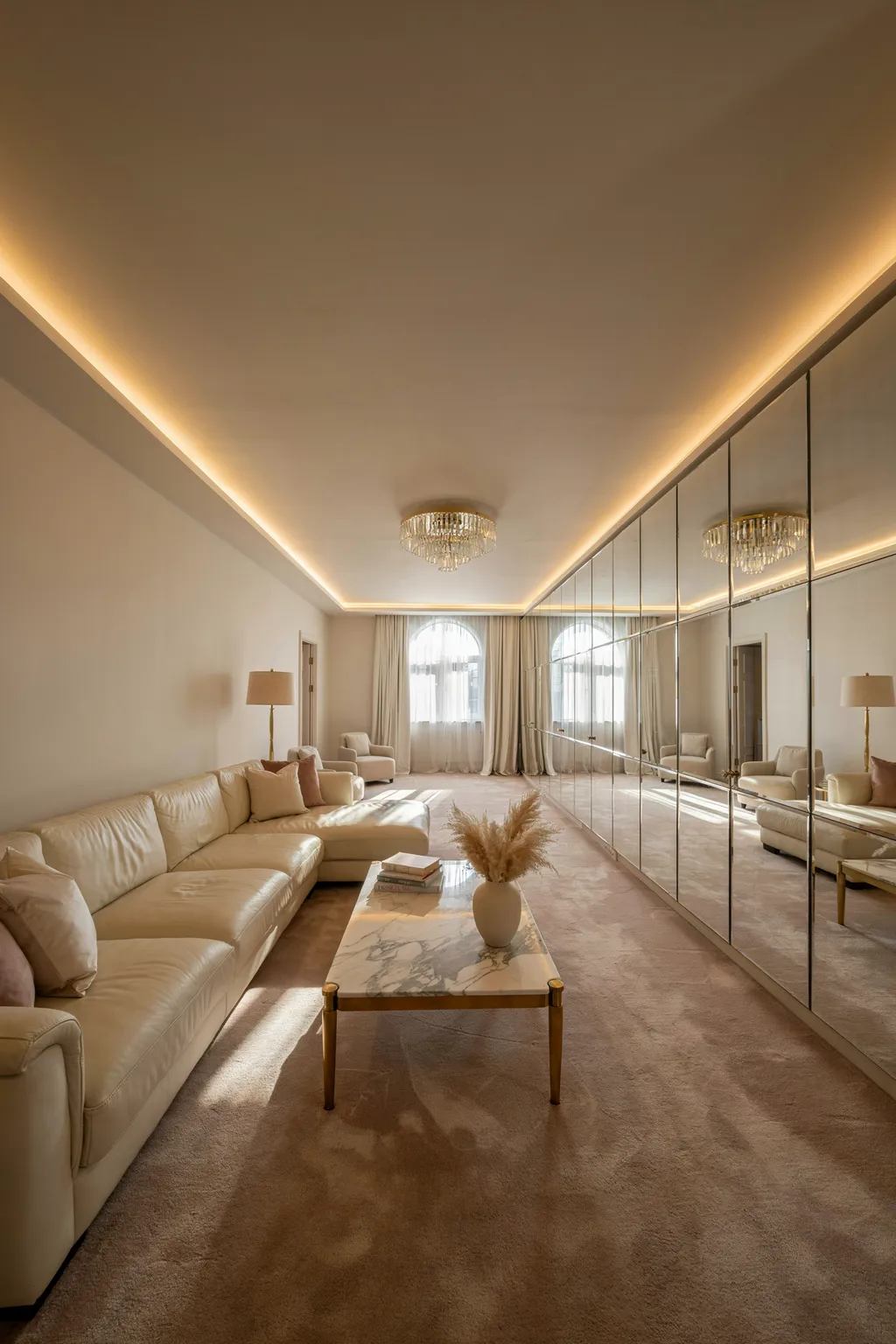
Mirrors are the oldest trick for a narrow room, and at full-wall scale they transform it. Cover one long wall in floor-to-ceiling mirror panels and the room appears to double in width, reflecting the seating, the light, and the opposite windows. Pair the glass with a glamorous cream leather sectional, a brass-and-marble coffee table, and a soft carpet for a polished, hotel-suite feel. The reflection makes a tight room read open and generous.
A mirror wall works because it bounces light and view back into the room, visually pushing the far wall away and erasing the boxed-in feeling. Run the mirror down the longest, most boring wall to get the biggest gain. This suits glam and contemporary rooms that want a luxe, expansive look. The honest caveat: a full mirror wall shows every fingerprint and reflects clutter right back at you, so it rewards a tidy room and means regular cleaning. Antiqued or panelled mirror hides smudges better than plain glass.
15. Warm It Up With Mid-Century Walnut and Graphic Color
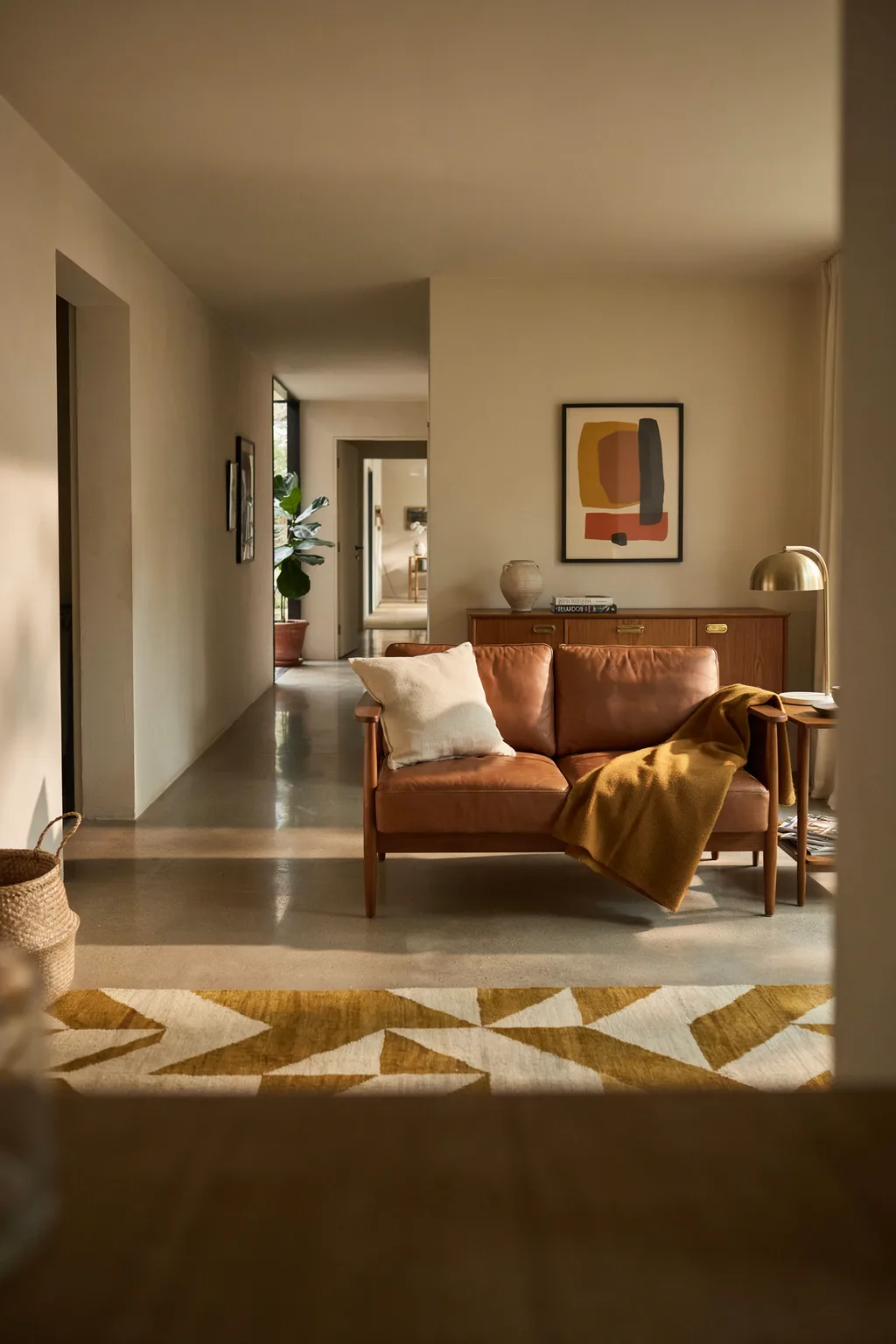
A long room takes well to mid-century modern because the style loves clean lines and low, leggy furniture that keeps sight lines open. Center a walnut credenza and a low wood-framed sofa, hang one bold abstract print, and ground the grouping on a graphic mustard-and-cream rug. The warm wood and retro geometry give the room personality without bulk, and the raised legs let the floor flow on underneath. The result is warm, characterful, and uncluttered.
Mid-century pieces suit a long room because their slim profiles and exposed legs take up visual space lightly, so even a packed grouping feels open. Stick to a warm walnut or teak tone and one or two punchy accent colors, like mustard or burnt orange, for that period feel. This is for fans of vintage and retro looks. The trade-off: genuine mid-century furniture can be pricey and pieces run small, so a long room may need two seating groups or a few reproductions to fill it without looking sparse.
16. Set Up Two Facing Seating Areas
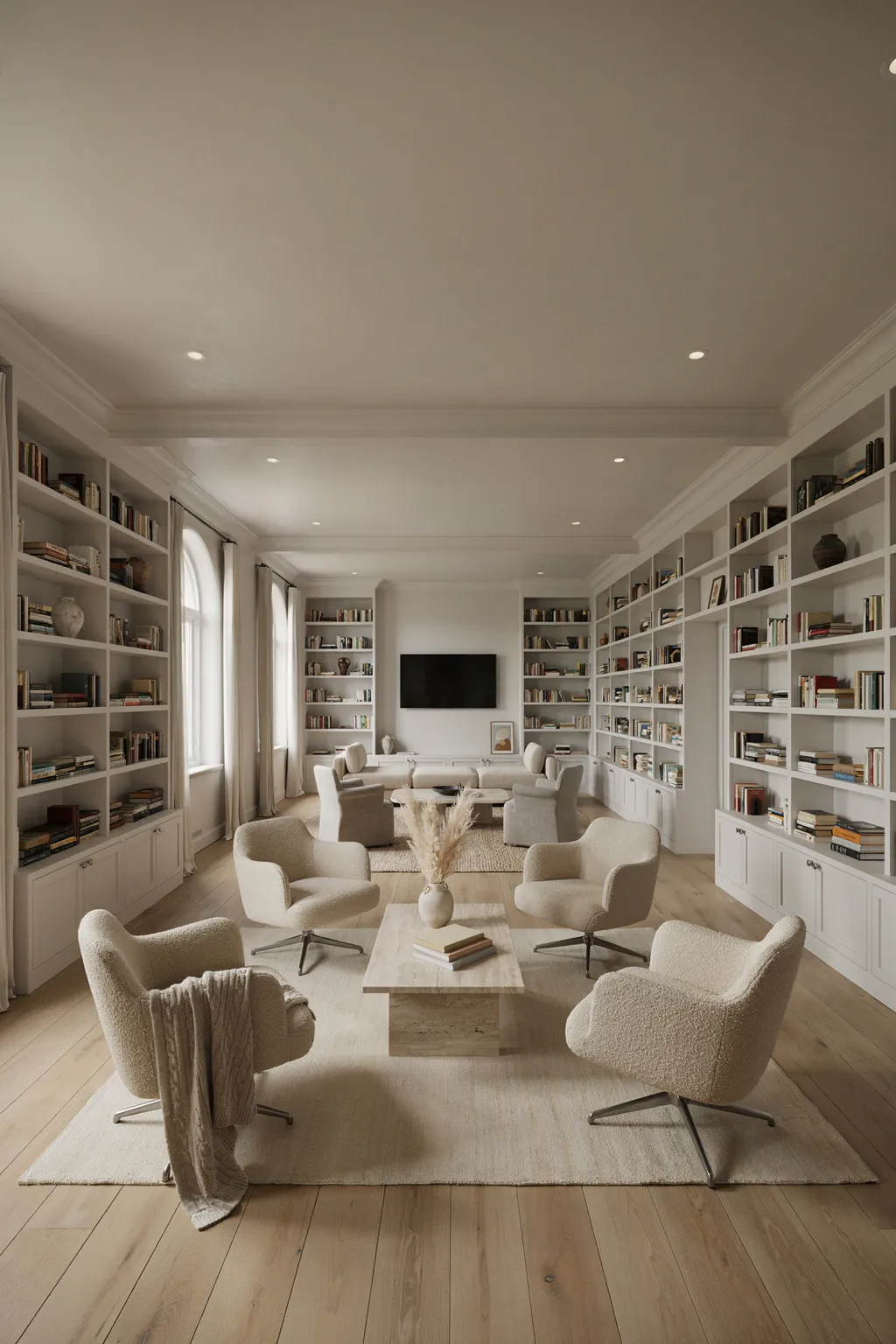
If your long room is wide enough, the most comfortable layout is two seating groups facing each other across the length. Place a quartet of swivel chairs around a low table at one end and a sofa-and-chairs group at the other, with built-in bookcases framing a TV in between. Two conversation circles double the seating and give the room two reasons to gather, so neither end feels like leftover space. A coffered ceiling and neutral palette keep it cohesive.
Some of the best long living room ideas simply cut the space into two balanced halves, each with its own purpose, instead of one stretched-out arrangement. Use a pair of matching rugs to mark each zone clearly. This suits big families and people who entertain, where extra seats earn their place. The honest caveat: two full seating groups need real width, around 13 feet or more, plus the budget for double the furniture, so it overwhelms a truly narrow room where one good group is plenty.
17. Bring in Rustic Stone, Beams, and Leather
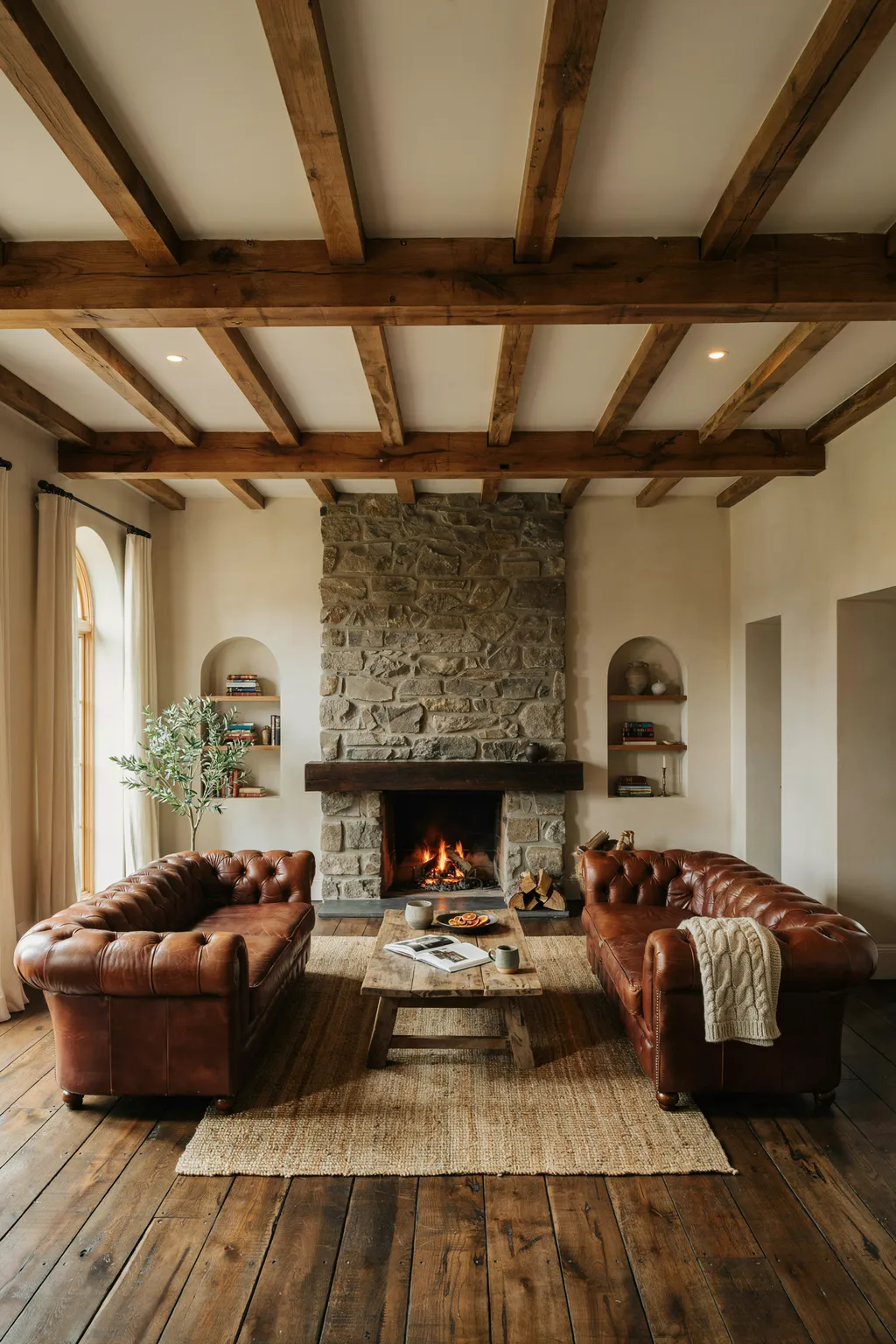
A long room feels grounded and cozy when you lean on rugged natural materials. Build the layout around a floor-to-ceiling stone fireplace, expose or add wood ceiling beams, and pull in a pair of deep brown leather sofas on a jute rug. Arched plaster niches with wood shelves break up the long wall and hold books and pottery. The stone, timber, and worn leather give the room warmth and weight that a long, empty box badly needs.
Rugged materials work in a long room because their texture and heft fill the space visually, so the length feels full and intentional rather than echoing. Anchor the seating on the fireplace and keep the walkway to one side. This suits farmhouse, lodge, and rustic-modern homes. The trade-off: stone, beams, and full-grain leather are an investment, and heavy dark materials can close in a narrow room, so balance them with white walls and a few lamps to keep the long space from feeling like a cave.
18. Open It Up With Big Windows and Light Decor
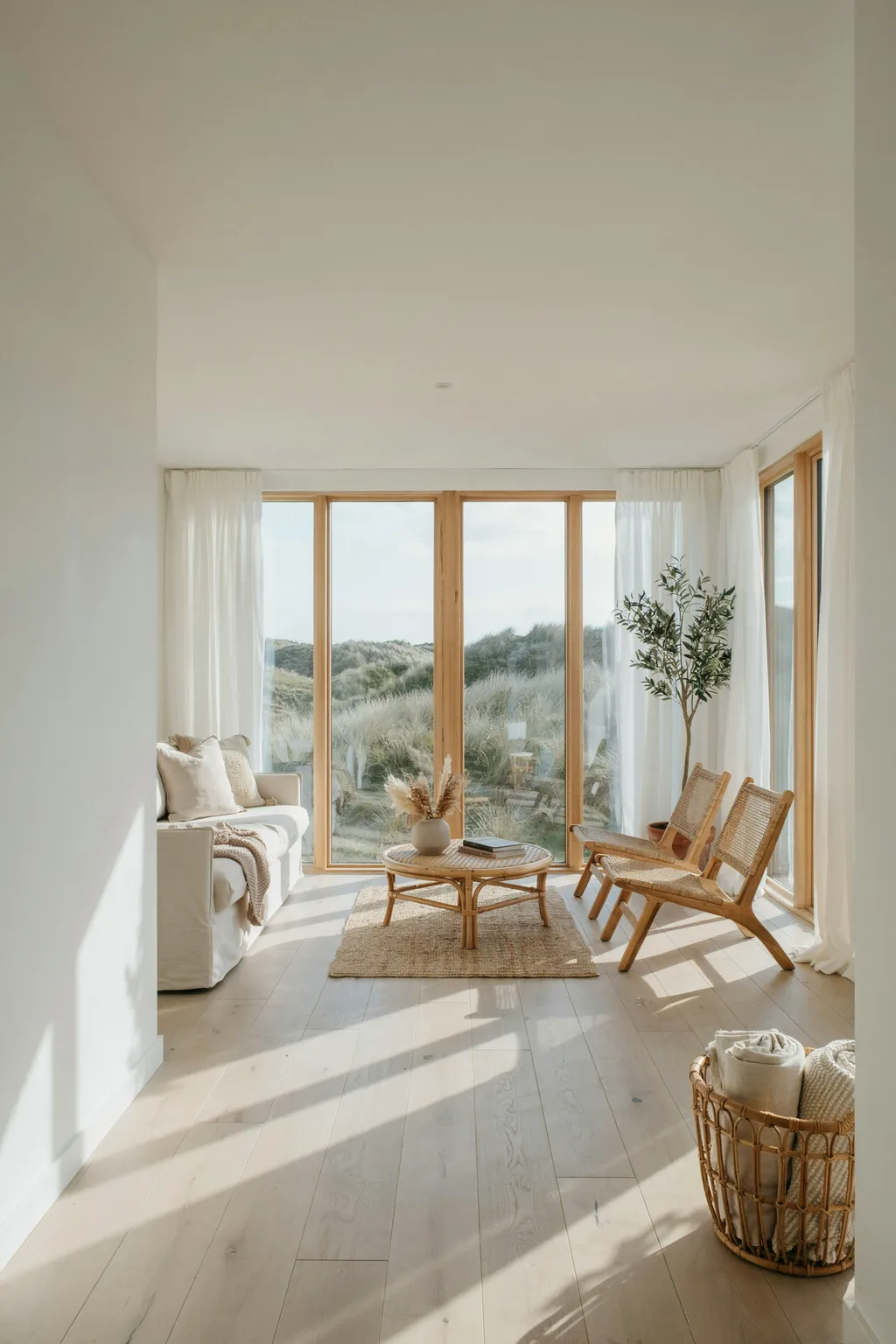
When a long room has good windows, lean all the way into light and air. Hang breezy white sheer curtains, choose a low cream daybed-style sofa, add rattan chairs and a round rattan table, and keep the palette soft and sun-bleached. The view and the daylight become the focal point, and the airy decor stops the length from feeling heavy. The room reads like a calm coastal porch, bright and restful end to end.
Light decor works in a long room because pale, low-profile pieces and sheer curtains let your eye and the daylight travel the whole length without obstruction. Pull the seating toward the windows so the best light lands where you sit. This suits sunny rooms and coastal or relaxed-modern styles. The caveat: very pale upholstery and sheer curtains show stains and offer little evening privacy, so add a heavier blind behind the sheers if the room faces the street or gets heavy use.
19. Center the Room on One Statement Light
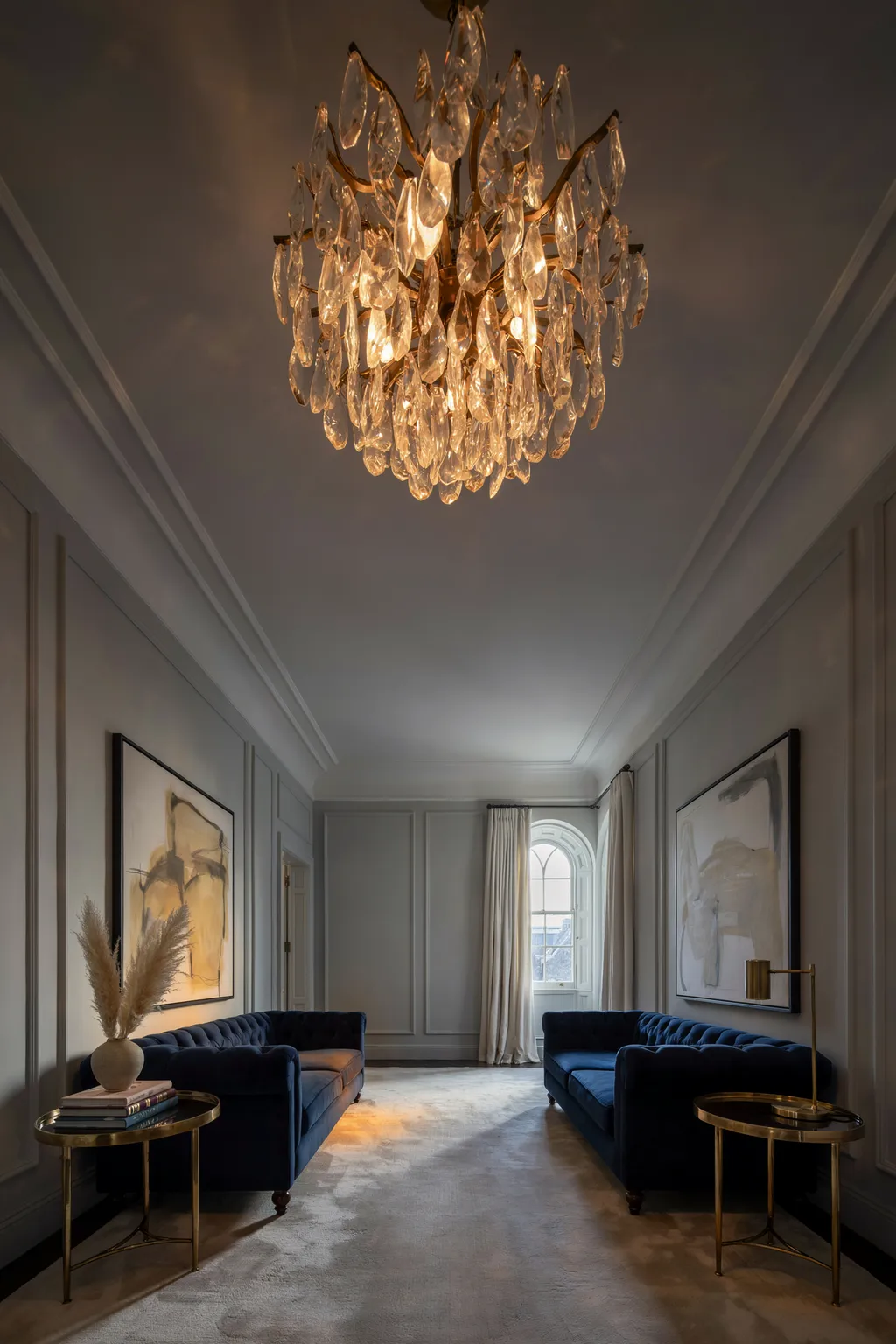
Sometimes a long room only needs one bold move, and an oversized statement light is it. Hang a dramatic chandelier or sculptural fixture over the main seating, then keep the rest of the room calm so all eyes go up. A pair of navy velvet sofas facing each other, soft grey panelled walls, and a few pieces of art let the light be the undisputed star. The single big gesture gives the long space a clear heart.
A statement fixture works because it pulls the eye up and to one spot, creating an instant focal point that organizes the whole room around it. Hang it low enough to feel present, with the bottom about 7 feet off the floor over seating, not lost near the ceiling. This suits high-ceilinged, formal rooms with the drama to match. The honest limit: a large chandelier is a real splurge and needs ceiling height to look right, so in a standard 8-foot room a single bold pendant or a cluster of smaller ones gives the same focal punch without crowding heads.
20. Carve Out a Workspace at One End
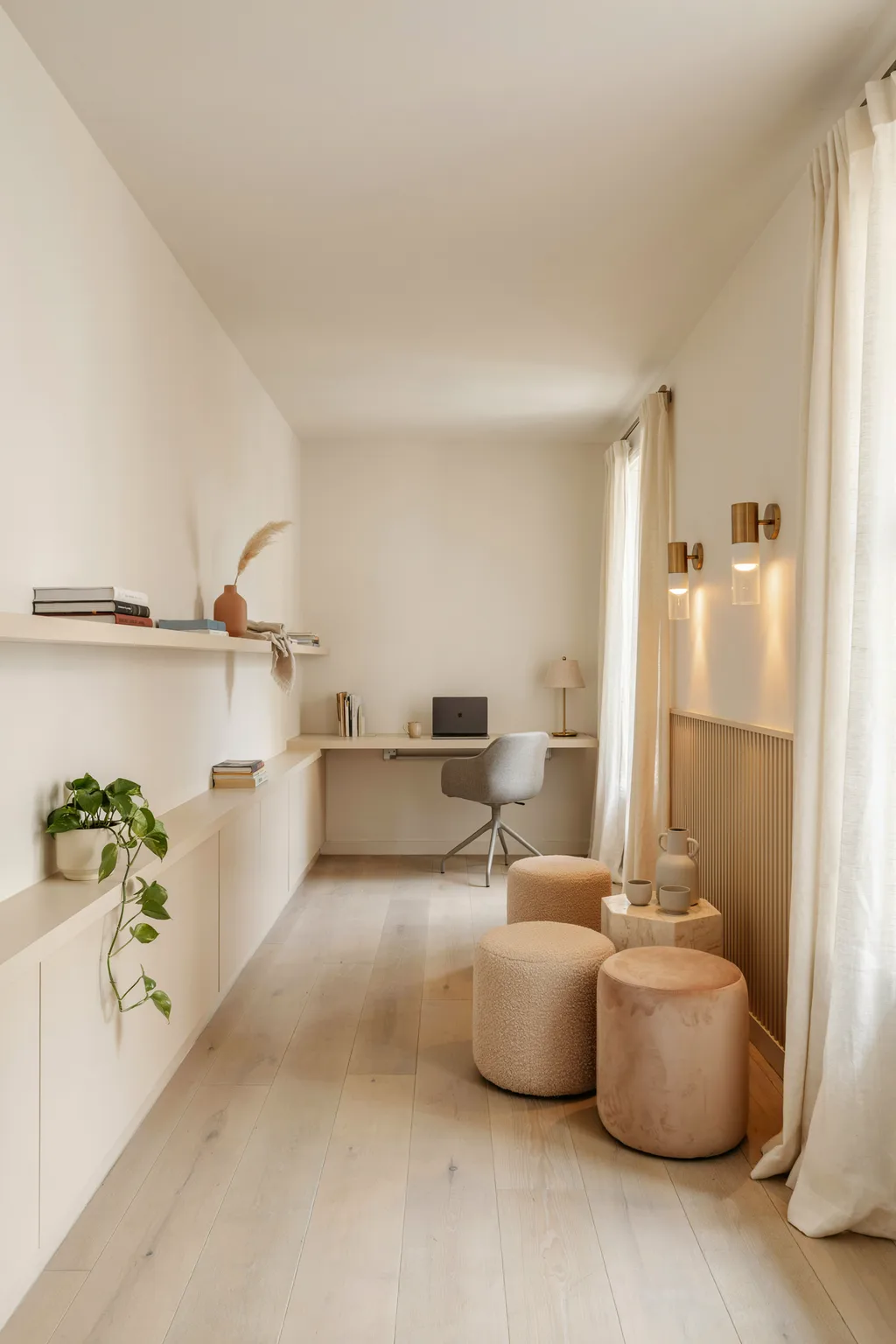
A long room has room for a desk that a square one does not, so claim one end as a small workspace. Fit a built-in or floating desk against the short wall, add a comfortable task chair and some shelving, then keep the seating and a soft round ottoman at the other end for downtime. The work zone and the lounge zone share the room without fighting, which makes the length genuinely useful for people working from home.
A dedicated desk nook works because the far end of a long room is often underused, and tucking the workspace there keeps it out of the main sight line when you relax. Use a slim desk and wall shelves so the work area stays light and does not eat the floor. These long living room ideas suit anyone short on a spare room for an office. The caveat: a visible desk can nag at you off the clock, so position the lounge seating to face away from it, or screen the nook with a plant or low shelf.
Common Mistakes to Avoid
Mistake 1: Pushing All the Furniture Against the Walls
Lining both long walls with furniture leaves a dead runway down the middle and makes the room feel even longer. Float at least the main sofa a foot off the wall and pull seating into a group. The room instantly reads as a place to sit, not a corridor to pass through.
Mistake 2: Using One Rug That Is Too Small
A single undersized rug floating in a long room looks like a postage stamp and exaggerates the empty floor. Use a large rug under each zone, with the front furniture legs on it, so each area feels anchored. Two well-sized rugs beat one lonely small one every time.
Mistake 3: Creating Only One Seating Zone
Cramming all the furniture into one end leaves the rest of a long room empty and awkward. Give the far end a real job: a reading chair, a desk, or a dining spot. Two purposeful zones make the whole length feel used and intentional.
Mistake 4: Blocking the Natural Walkway
Furniture that juts into the main path turns crossing the room into an obstacle course. Map your walking route first and keep it at least 30 to 36 inches clear. Arrange the seating so people move along one side, not straight through the conversation.
Mistake 5: Lighting the Room With a Single Overhead
One ceiling fixture leaves the ends of a long room in shadow and makes it feel cold and unfinished. Add table lamps, floor lamps, or sconces so light reaches every zone. Layered lighting is the cheapest way to make a long space feel warm and whole.
Mistake 6: Choosing Furniture That Is Too Small for the Length
Skimpy, low pieces get lost in a long room and make it look emptier. Scale up: a full-length sofa, a generous sectional, or a long console holds its own against the length. One or two substantial pieces ground the space better than several tiny ones.
Quick Start Checklist
- [ ] Measure the room and sketch the length, width, and every door and window.
- [ ] Map the main walkway and keep it 30 to 36 inches clear.
- [ ] Split the length into two zones with separate purposes.
- [ ] Give each zone its own large rug, sized to fit the seating.
- [ ] Float the main sofa off the wall to break the corridor feel.
- [ ] Pick one focal point per zone: a fireplace, a TV, a window, or art.
- [ ] Add layered lighting so every part of the room glows.
- [ ] Scale furniture up to match the length, not down.
- [ ] Use a console, sofa back, or shelf to mark the divide between zones.
- [ ] Leave some visible floor to keep the room feeling open.
Frequently Asked Questions
How do you arrange furniture in a long narrow living room?
Split the length into two zones and keep a clear walkway along one side. Float the main sofa off the wall, group chairs to face it, and give the far end a second use like reading or dining. Anchor each zone with its own rug and light. These long living room ideas stop a narrow room from feeling like a hallway.
How do you make a long room not feel like a hallway?
Break the run into separate areas instead of one long strip. Use a rug, a console table, or the back of a sofa to mark where one zone ends and the next begins. Add a focal point at each end, a fireplace, art, or a window, so the eye stops and rests rather than racing down the length.
Should a sofa go against the wall in a long living room?
Not always. In a wide-enough room, floating the sofa a foot off the wall and grouping chairs around it creates a real conversation area and breaks the corridor effect. In a truly narrow room, under about 11 feet wide, you may need the sofa against the long wall to keep the walkway clear. Let the width decide.
What size rug works in a long living room?
Use a rug large enough for the front legs of all the seating in a zone to rest on it, usually 8 by 10 feet or larger per group. In a long room, two appropriately sized rugs that define two zones look far better than one small rug stranded in the middle of the floor.
How do you divide a long living room into zones?
Use furniture and lighting as soft dividers. The back of a sofa, a console table, a bookshelf, or a pair of plants can mark the line between a lounge and a dining or work area. Give each zone its own rug and light source so the two areas feel separate but connected within the same room.
How can I make a long living room feel cozier?
The coziest long living room ideas cluster the seating into tight groups, add warm layered lighting, and bring in texture through rugs, throws, and natural materials. Anchor at least one zone on a fireplace or a strong focal point. Avoid spreading furniture thin along the walls, which makes the room feel empty and cold instead of snug.
Conclusion
A long living room is not a flaw to hide; it is extra space most people waste. Across all these long living room ideas, the same playbook keeps working: split the length into zones, keep a clear path along one side, give each area its own rug and light, and scale your furniture up to match the room. Do those four things and an awkward rectangle starts feeling like two or three rooms in one.
So start with the bones, not the throw pillows. Sketch the room, mark the walkway, and decide what each end is for: lounge and dining, TV and reading, seating and a desk. Then float the main sofa, drop a big rug under it, and add a lamp or sconce so the far end stops disappearing into shadow. Pick the style later, since the layout is what makes or breaks a long space.
This weekend, pull your sofa a foot off the wall and define one second zone at the empty end. That single change is usually the moment a long room stops feeling like a corridor and starts feeling like home.
You Might Also Like