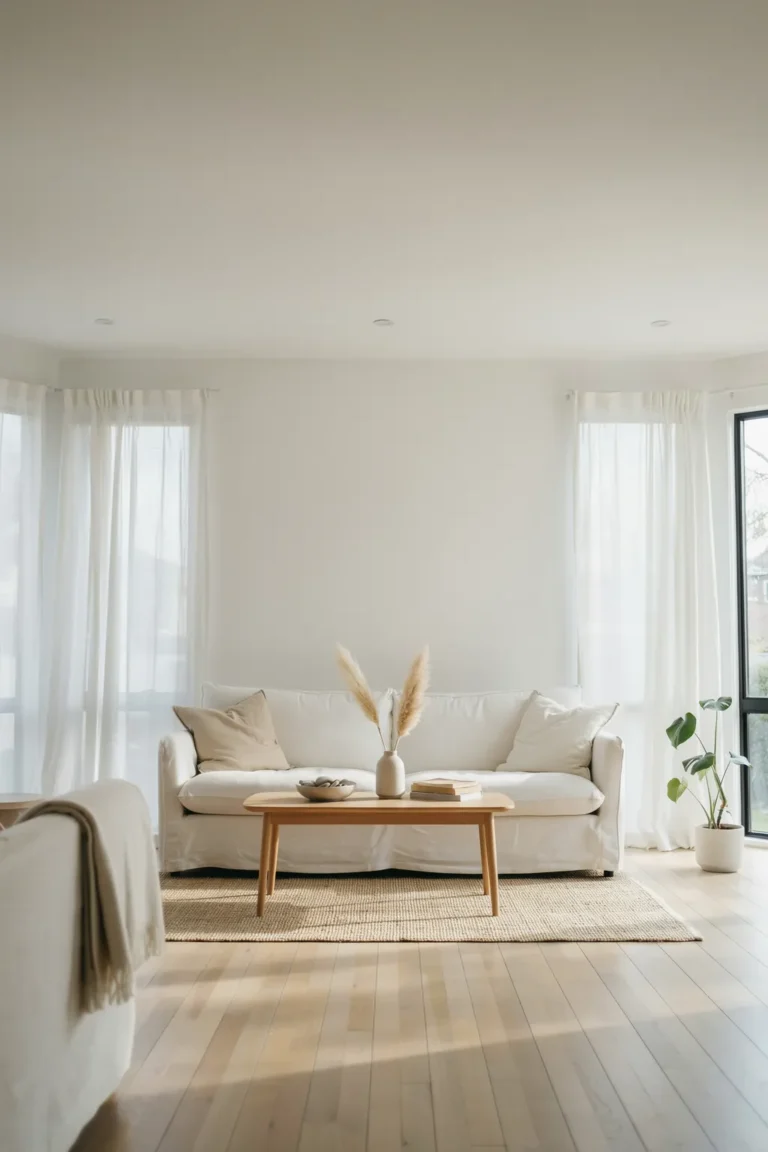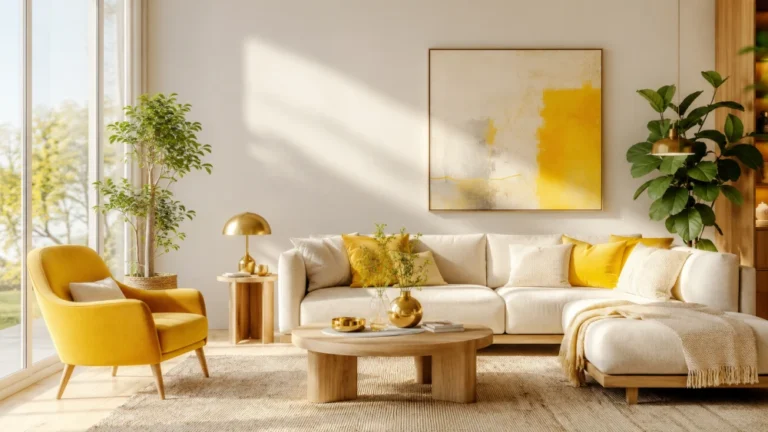
15 Inspiring Small White Living Room Ideas for a Cozy Space
Staring at a cramped, dark living area can feel incredibly discouraging, especially when you want a home that feels airy and welcoming. The most common advice is always the same: paint everything bright white. But when you actually roll that paint onto the walls, you often end up with a room that feels cold, clinical, and completely devoid of life. It looks more like an interrogation room than a cozy sanctuary.
The secret to mastering these designs is not just about choosing the right paint can. Even the perfect white from a range like Sherwin-Williams’ white paint colors falls flat without the right styling. It requires a handful of clever, intentional styling choices to make the layout feel both spacious and warm. If you are searching for practical small white living room ideas, you do not need a massive remodeling budget. You just need to know how to trick the eye, balance your textures, and arrange your furniture with purpose. Here is how to create a room that feels incredibly open without sacrificing that crucial feeling of home.
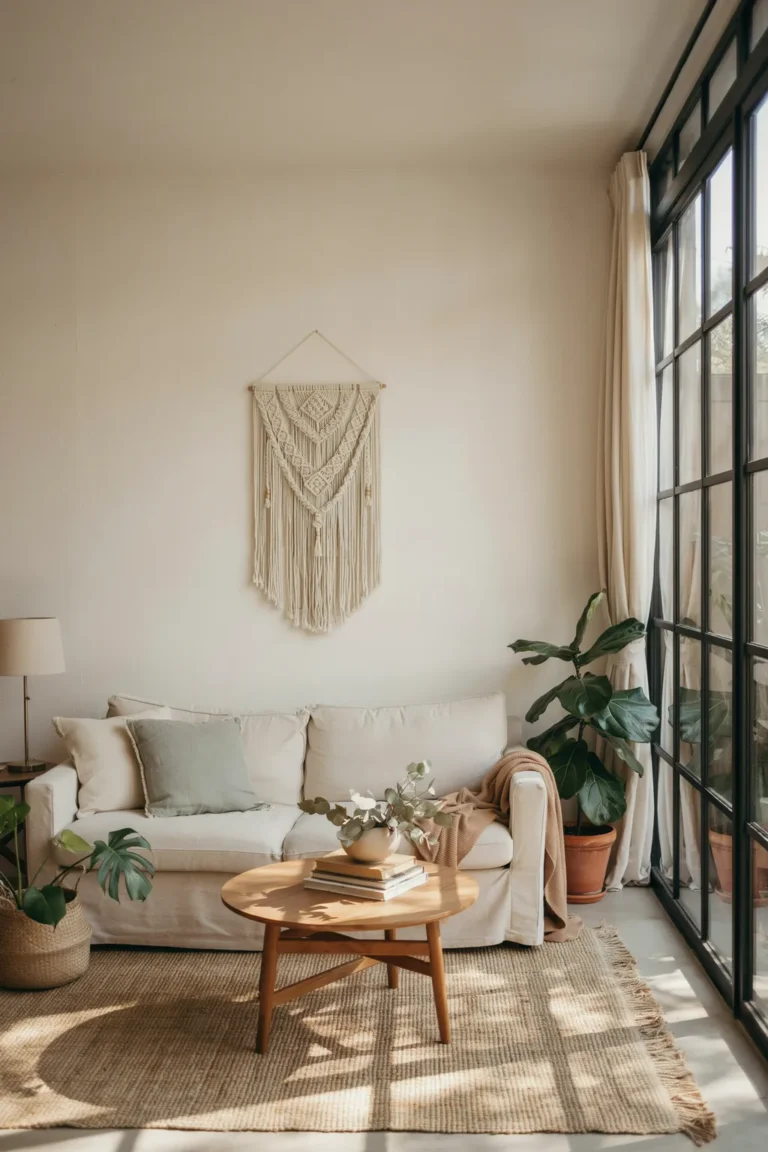
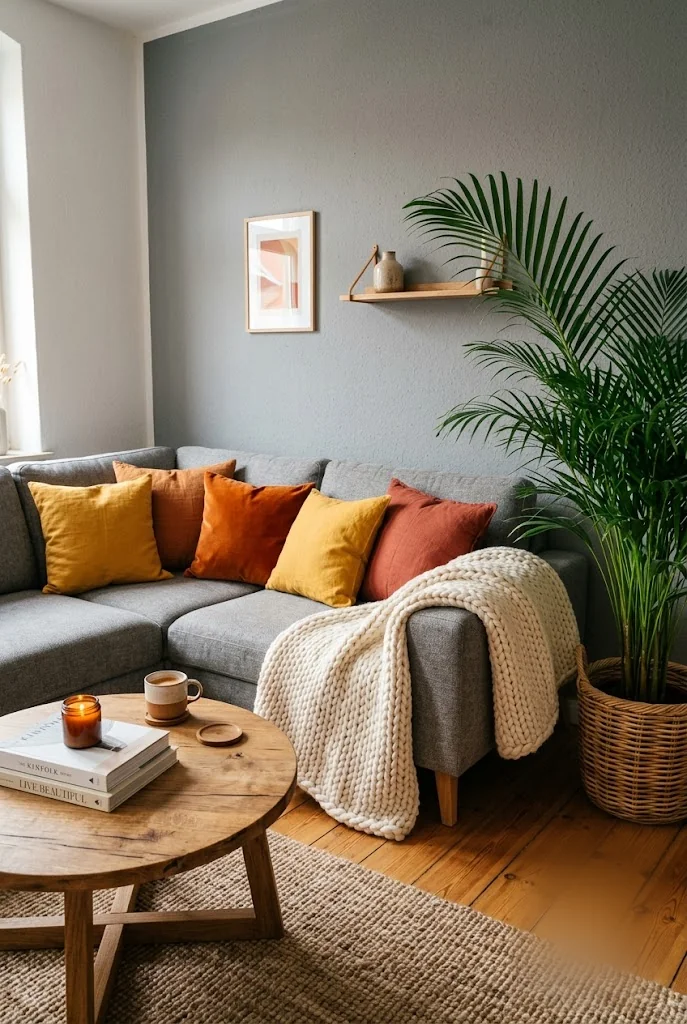
1. Layer Varied Textures to Keep the Space Warm
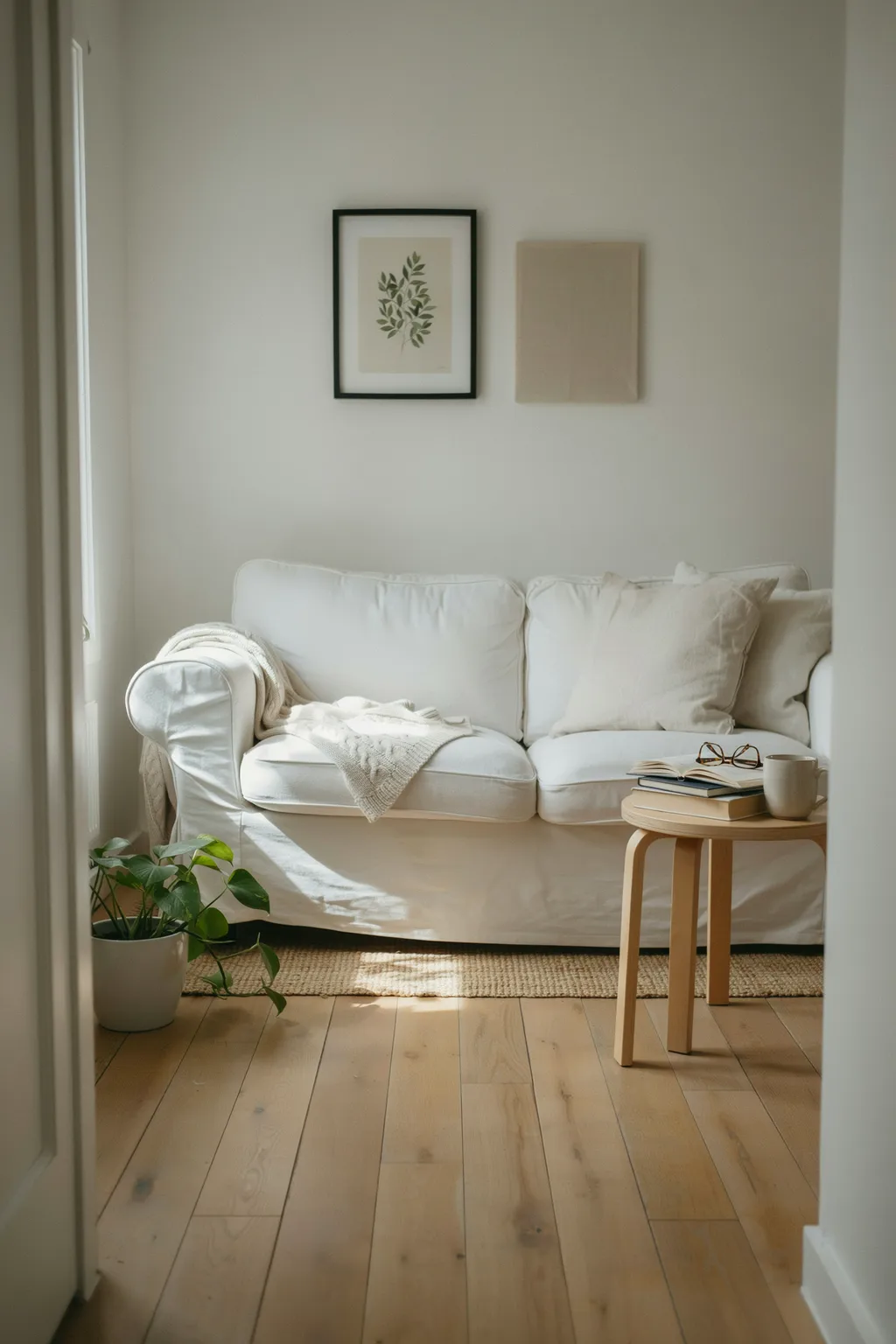
A flat white wall next to a flat white sofa is a recipe for a sterile room. To make white work, you have to play with how materials feel.
Try combining these elements:
- A chunky knit throw blanket tossed over a cotton sofa cushion.
- A rough jute or sisal rug placed on smooth wooden floors.
- A raw linen curtain catching the afternoon light.
These tactile contrasts create depth, making your eyes register shadows and highlights that bring the walls to life. Among small white living room ideas, this texture trick gives the biggest payoff for zero cost. It is the easiest way to make a pale color palette feel cozy and intentional rather than unfinished. These small white living room ideas lean on that contrast first.
Smooth white drywall, a basic polyester sofa, and synthetic blinds that feel cold and flat.
Linen drapes, a nubby bouclé armchair, and a woven rattan basket that bring warmth and shadow.
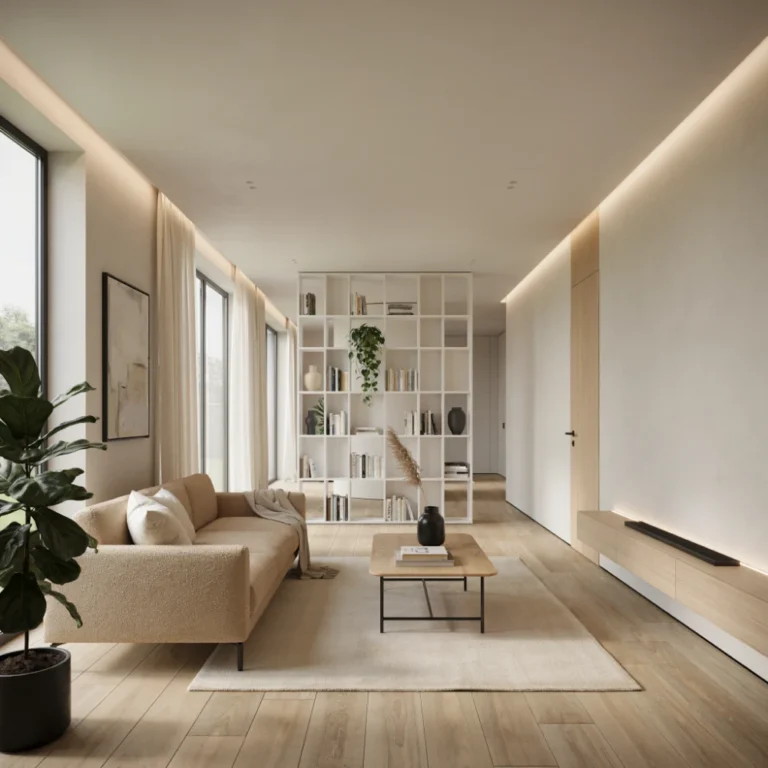
2. Pull Your Seating Out from the Walls
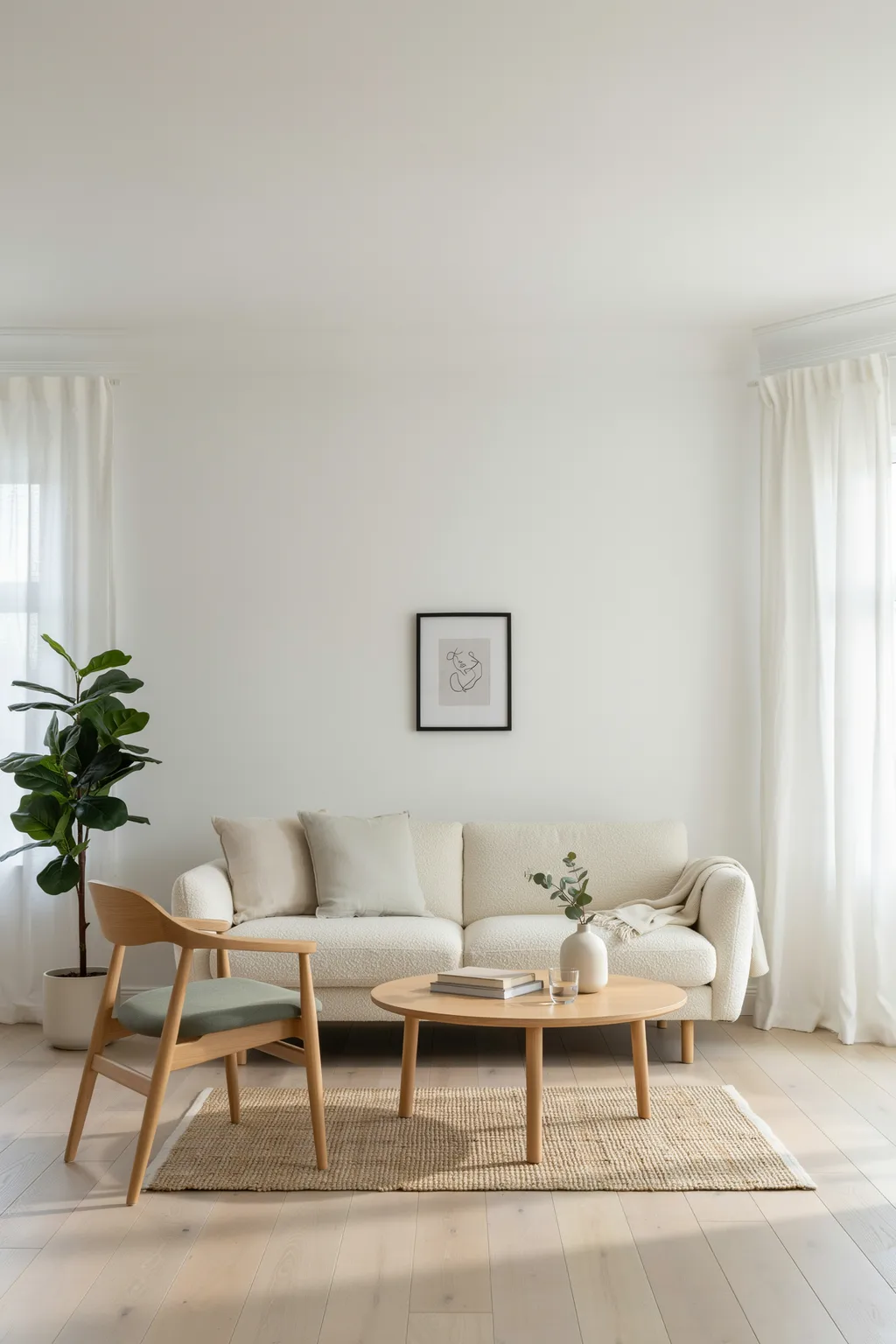
Instinct tells us to push every single chair and couch firmly against the plaster to save floor space. Doing this actually highlights the small borders of your room, making it feel boxy and cramped.
Instead, pull your sofa forward by just four to six inches. Leaving a sliver of breathing room behind the furniture tricks the brain into believing the room is wider than it is. It creates a sense of airiness that lets the light flow around your seating. You will instantly notice how much lighter the entire arrangement feels when the furniture is allowed to breathe.
💡 Quick Tip
Choose low-profile furniture with exposed legs. Seeing the floor continue underneath your sofa makes the entire living area feel significantly larger.
3. Blend in Brushed Metallic Accents
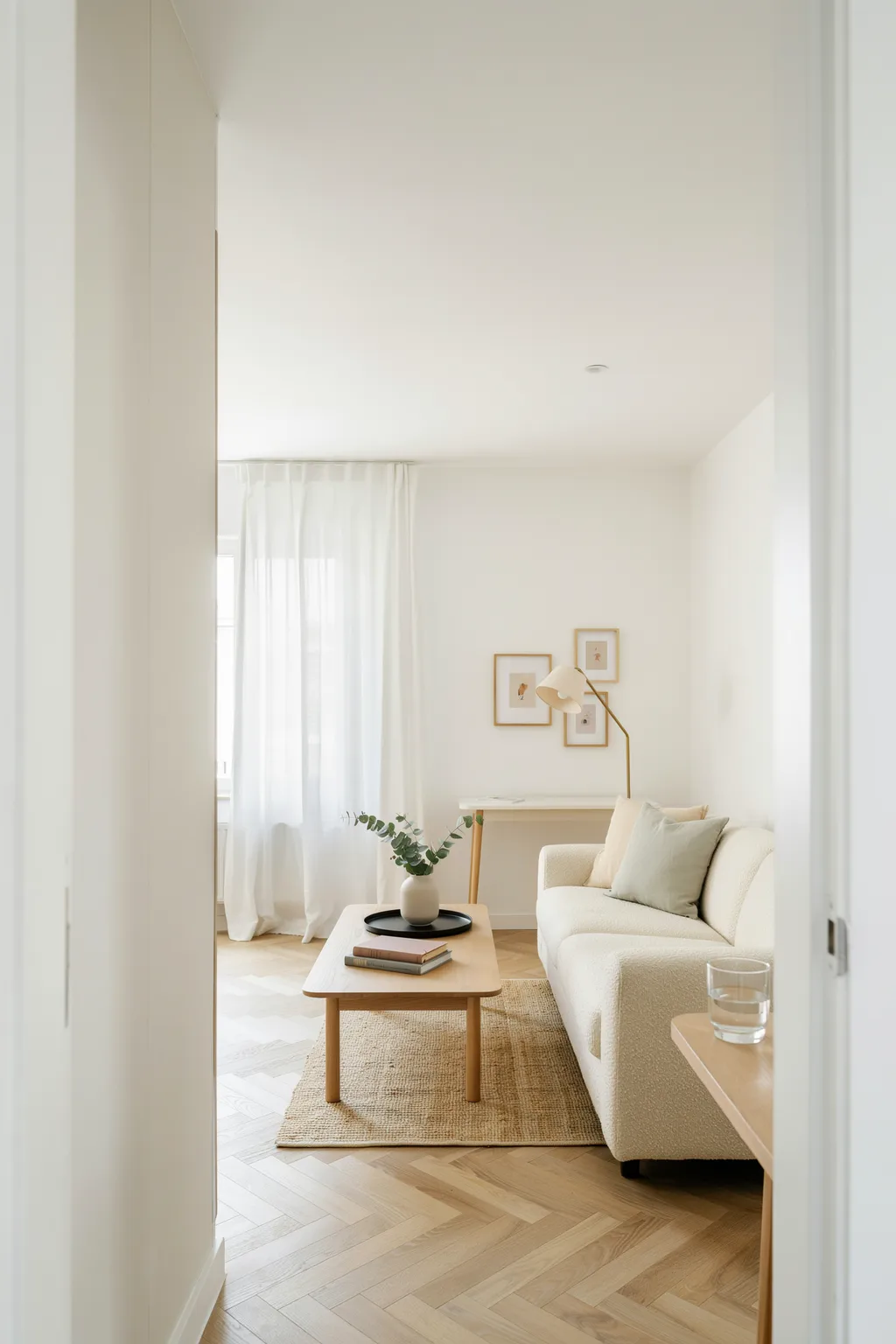
Metal details act like jewelry for a pale, monochromatic room. Without a few shiny surfaces, a white space can easily fall flat and look uninspired.
Brushed brass, matte black steel, or warm copper fixtures work beautifully by bouncing light around the dark corners of the room. The goal is not to create a flashy look, but rather to insert subtle points of interest that catch the sun. A thin-framed brass floor lamp or a copper tray on the table will break up the white walls without overwhelming your senses. Stick to just two metal finishes to keep the design cohesive and calm.
4. Hang Floor-to-Ceiling Sheer Drapery
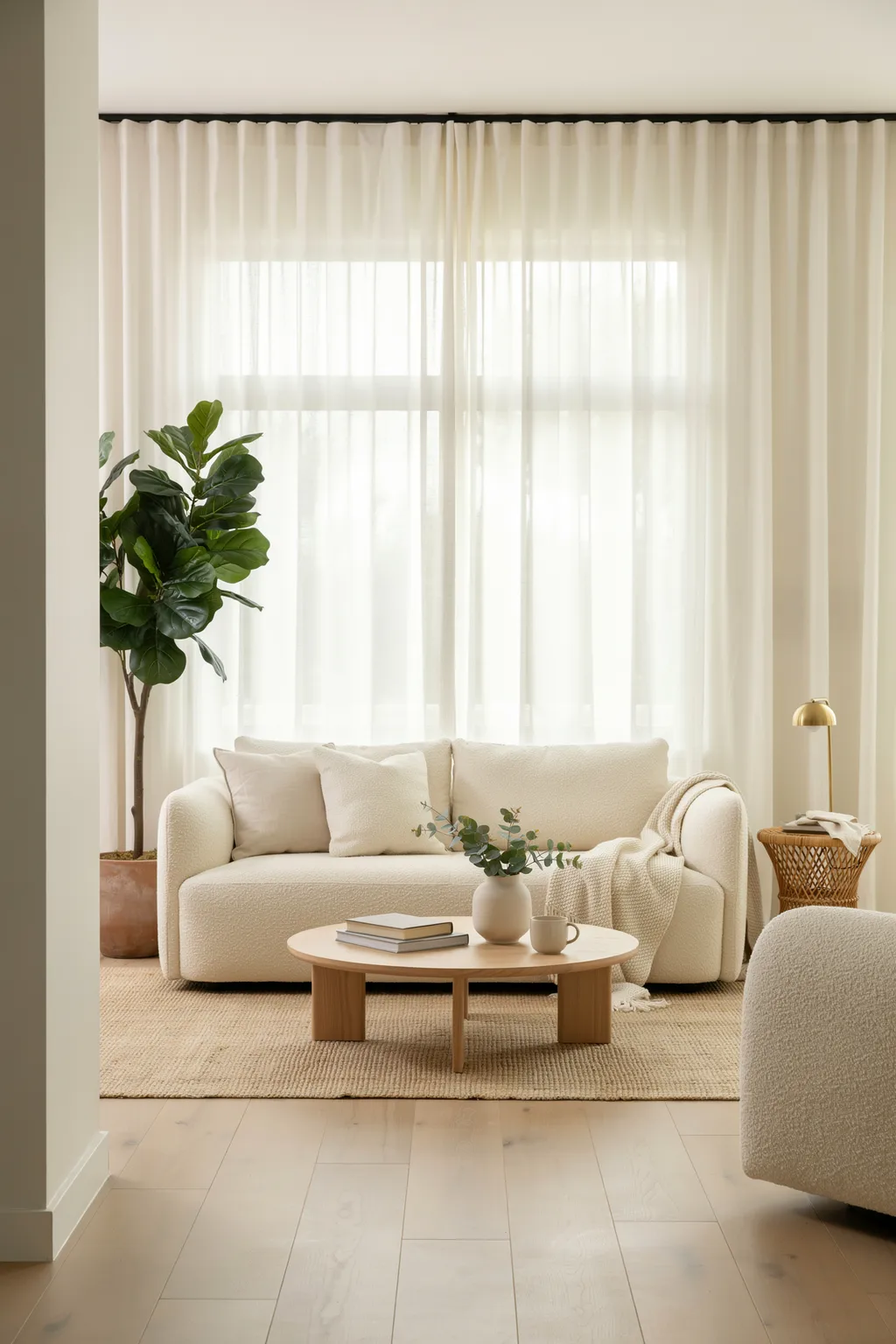
Windows are your best asset when space is tight, so do not block them with heavy fabrics. Heavy, dark curtains can instantly make a ceiling feel low and oppressive.
Instead, mount your curtain rods just an inch below the ceiling line and let sheers sweep all the way to the floor. This simple trick draws the eyes upward, making the room feel incredibly tall. Light sheers let the maximum amount of natural sunlight filter in while still giving you plenty of privacy from neighbors. It is a simple layout correction that can make even a low ceiling feel grand.
Mount the curtain rod high, placing it nearly touching the ceiling rather than right above the window frame.
Extend the rod outward past the window frame by six inches on each side to make the glass look wider.
Choose lightweight linen or sheer cotton fabrics that puddle slightly on the floor for an elegant look.
5. Anchor the Seating with a Large Textured Rug
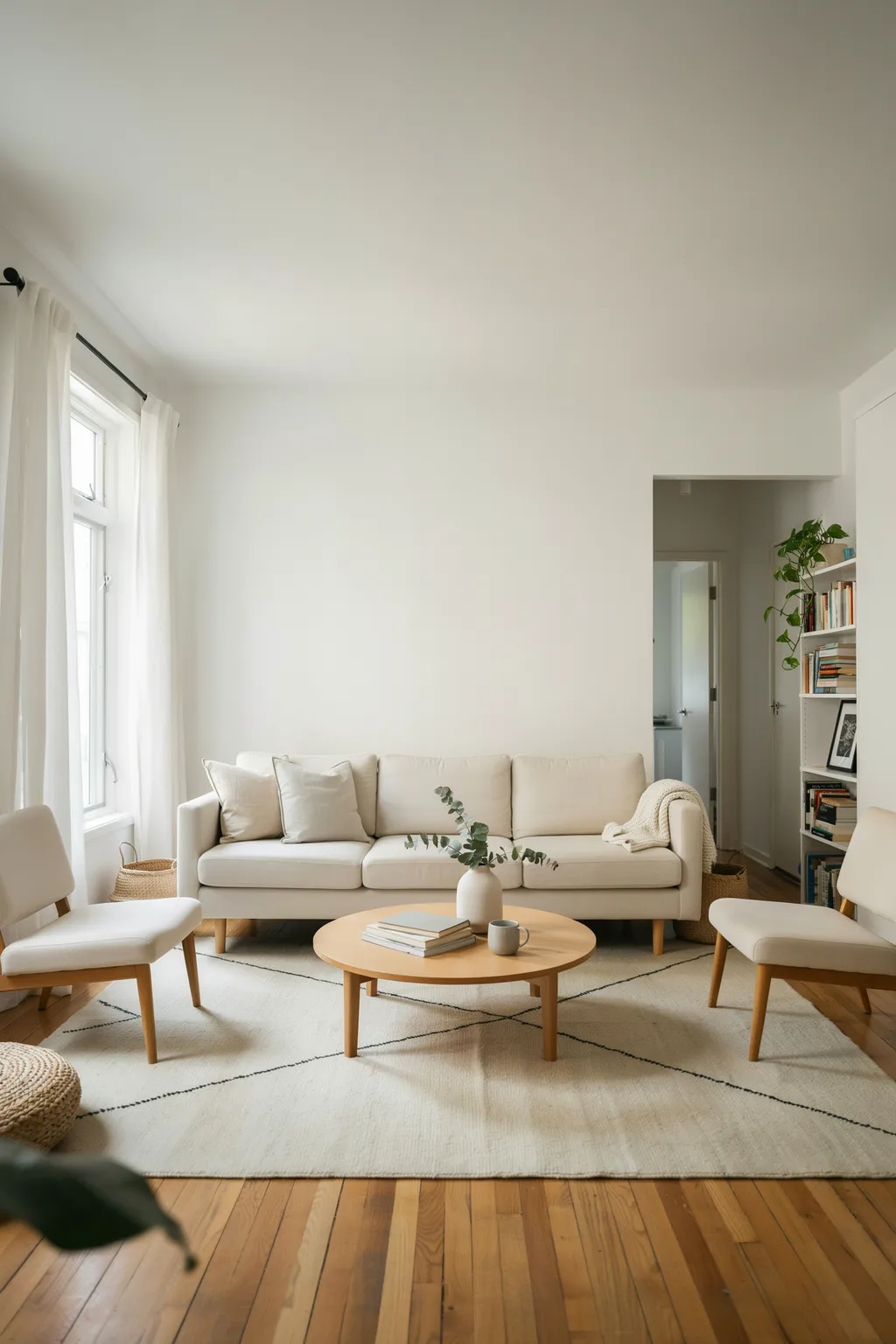
Buying a rug that is too small is the single most common mistake in compact rooms. A tiny rug floating in the center of the room makes the entire area feel disjointed and small, like a tiny island.
To fix this, choose a large rug where at least the front legs of all your main furniture pieces can sit comfortably on top of it. In an all-white room, a cream-colored wool rug with a dark, subtle geometric pattern adds contrast without cluttering the floor. The texture underfoot instantly makes the seating area feel cozy and defined. Make sure the rug leaves about twelve inches of bare floor exposed around the walls to keep the room proportional.
Choose an 8×10 rug that sits under the front legs of your sofa.
Opt for high-pile wool or woven jute for natural, grounding texture.
Do not use a tiny 4×6 rug that sits awkwardly under the coffee table.
Avoid thin, slippery synthetic rugs that offer no warmth underfoot.
6. Mount Slim Vertical Sconces to Clear Up Floor Space
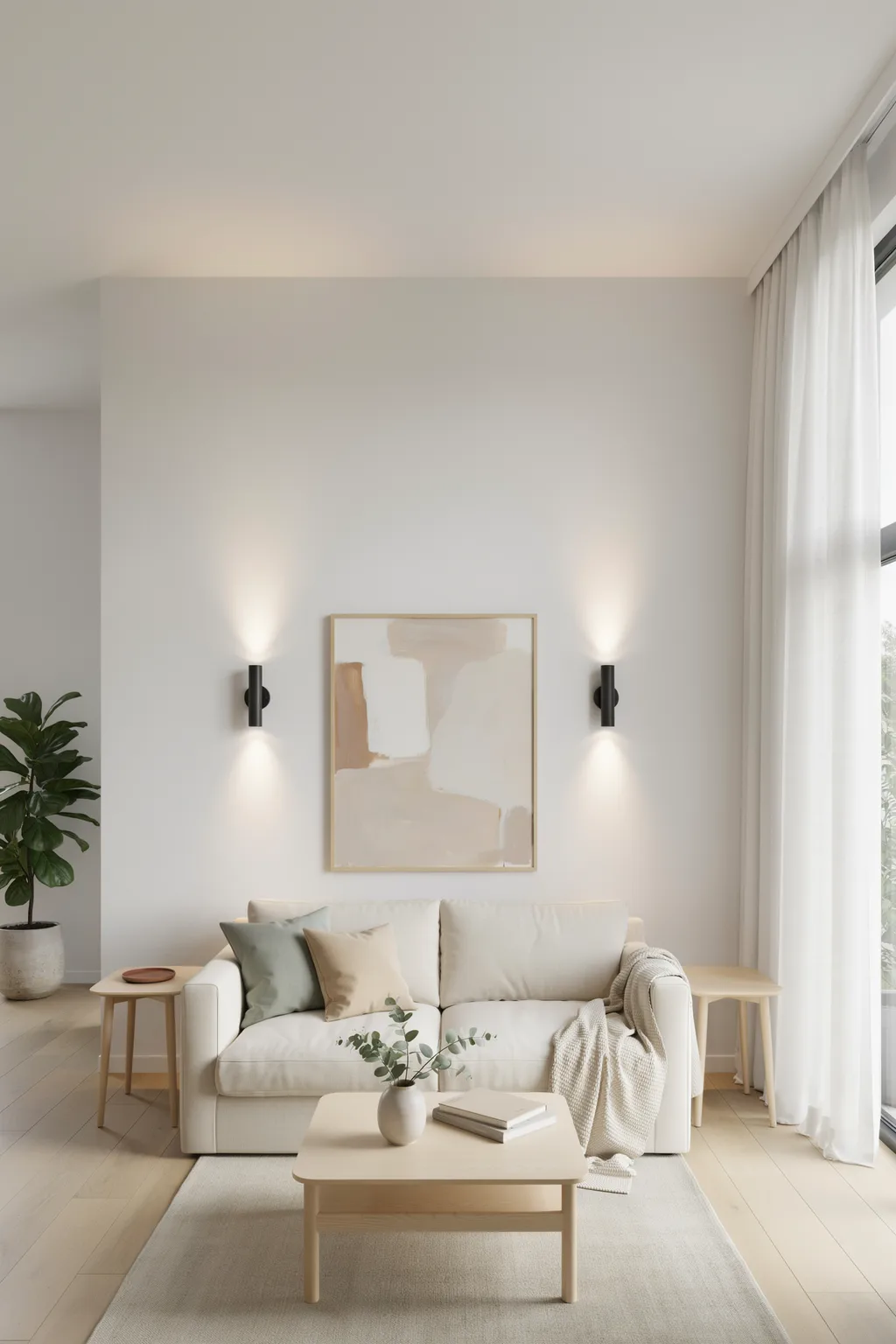
Floor lamps and bulky table bases quickly consume precious surface real estate in tight layouts. Instead, move your illumination directly onto the walls by using plug-in or hardwired vertical wall sconces.
Placing sconces on either side of your main seating setup draws the eye outward, highlighting the full width of the room. This layout move frees up the tops of your side tables for books or a warm mug of tea. Look for fixtures with adjustable swing arms so you can easily angle the light right where you need it most.
Lighting layers to prioritize
7. Swap Heavy Wood for Visual-Weightless Acrylic Tables
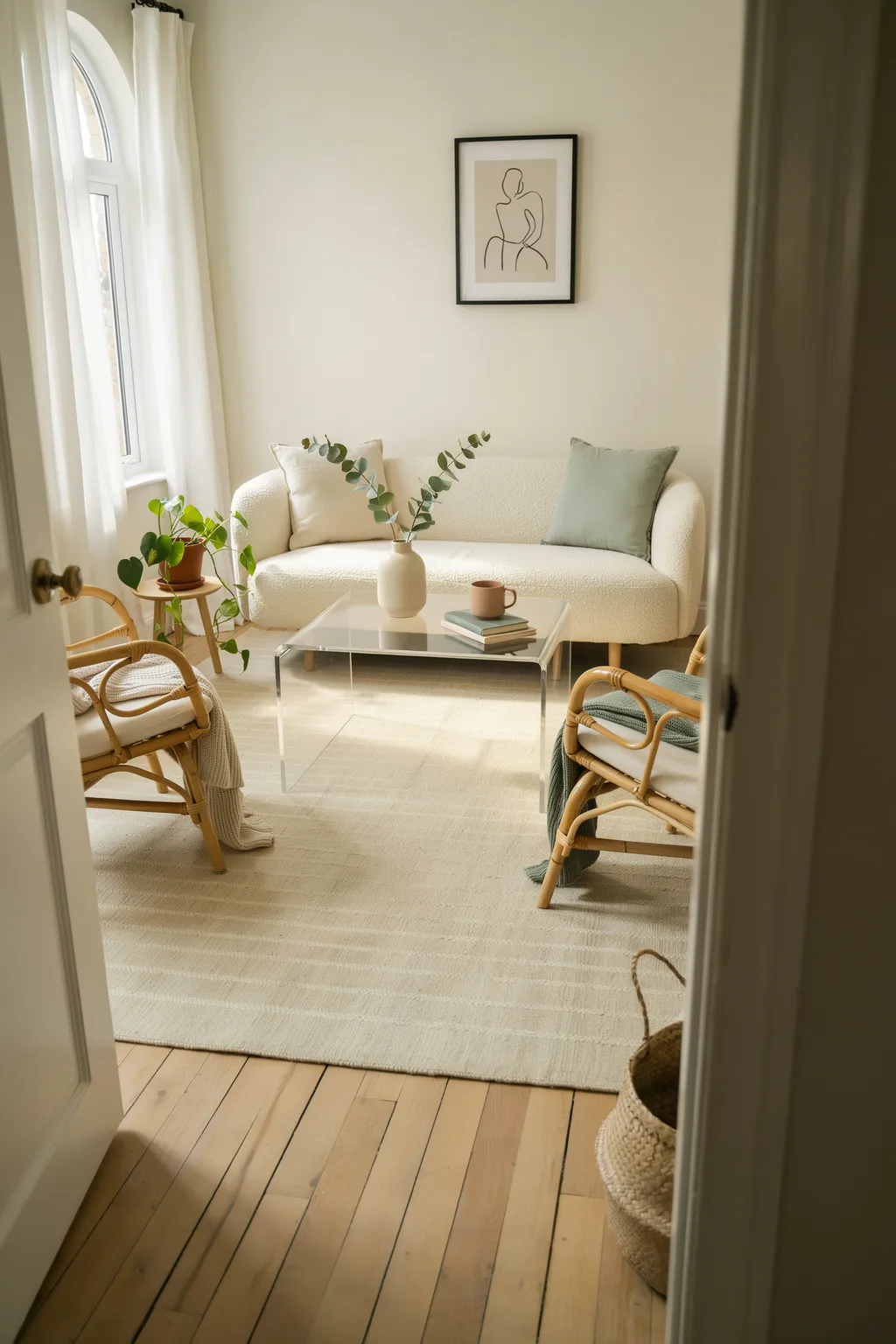
A thick, dark wooden coffee table can easily dominate a small seating arrangement, making the entire floor feel heavily congested. Clear acrylic or glass coffee tables offer a brilliant alternative because they practically disappear into the background.
Because you can see right through them, the floor looks continuous, tricking your mind into seeing an uninhibited, wide-open zone. They provide the exact same functionality as a solid wood piece without stealing an ounce of visual real estate. It keeps the center of your room feeling beautifully light, airy, and entirely unburdened.
8. Warm Up the Monochromatic Palette with Raw Oak Elements
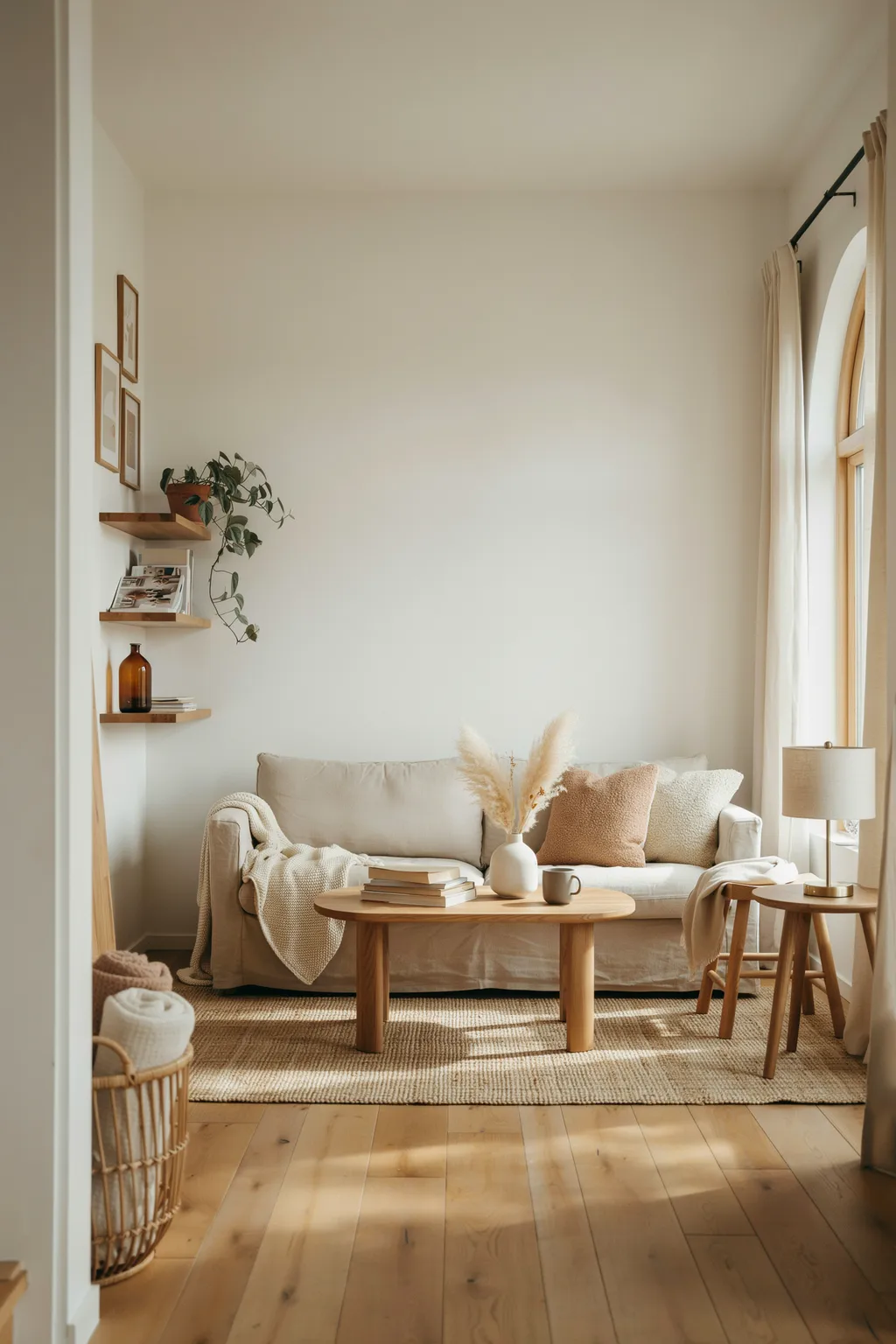
To prevent your all-white space from looking like a sterile laboratory, you need to introduce natural organic elements. Raw or lightly sealed oak wood tones provide the perfect grounding anchor for pale walls.
Consider bringing in wood through these accents:
- A small wooden stool used as a side table.
- Floating oak picture frames on the wall.
- A turned wooden bowl resting on your coffee table.
The earthy, honeyed undertones of light oak bounce off the pale plaster beautifully, adding instant warmth without introducing loud, chaotic colors that disrupt the calm environment.
| Honey-Toned Oak | Dark Espresso Walnut |
|---|---|
| Reflects natural sunlight to keep corners looking bright. | Absorbs sunlight, creating heavy shadows in small layouts. |
| Blends softly with a cream and white base color scheme. | Creates harsh contrast lines that chop up the visual flow. |
9. Dedicate One Corner to an Arched Floor Mirror
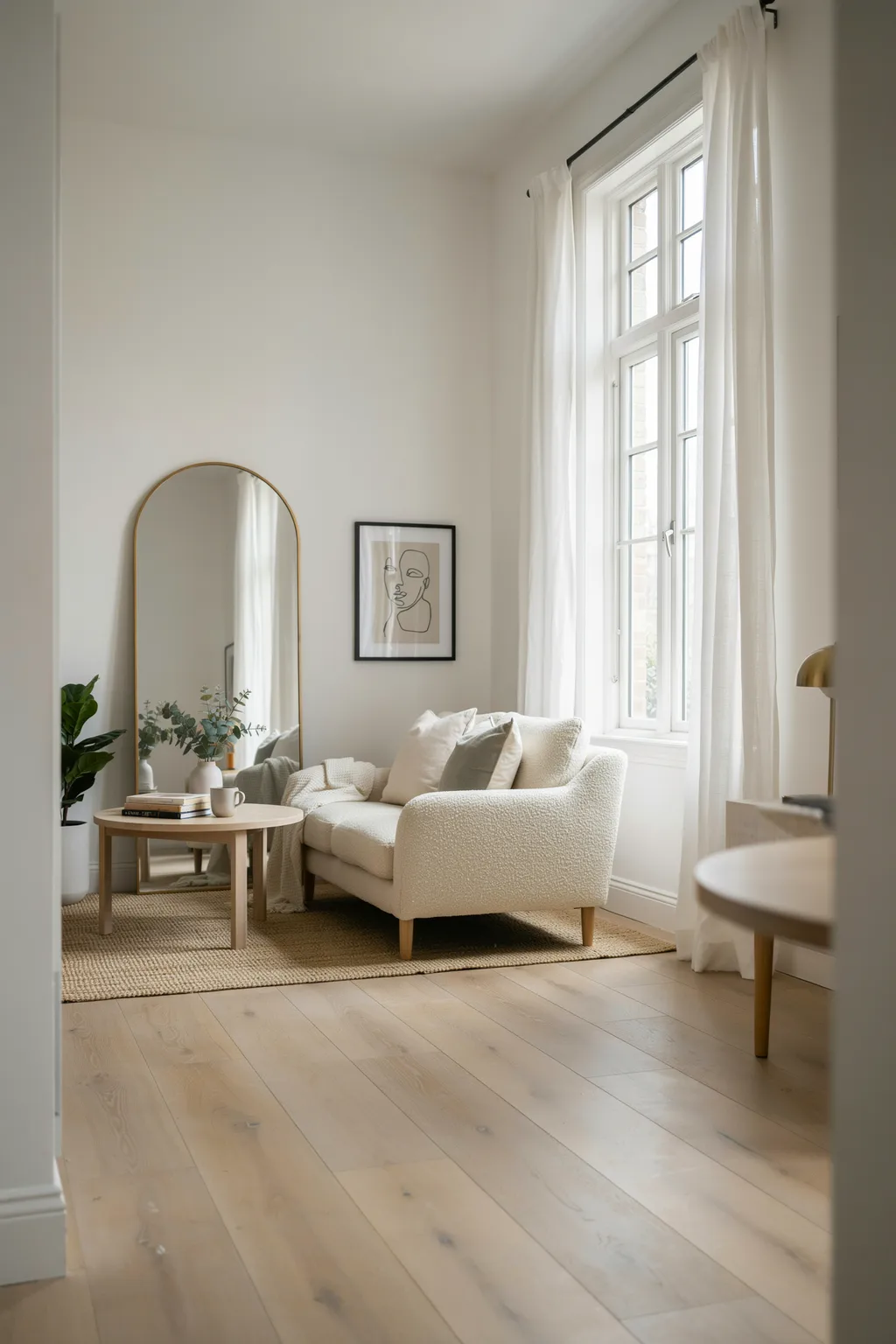
Every dark, neglected corner in a compact apartment has the potential to drag down the rest of the layout. Tucking a tall, arched floor mirror into one of these shadows instantly alters the entire atmosphere.
The reflective glass acts like an extra window, actively catching the daylight and scattering it across your pale walls. It breaks up the boundary lines of the room, creating an illusion of a deep, secondary space just beyond the glass. Choose a thin frame to keep the focus entirely on the expanded view.
Position your floor mirror directly opposite or adjacent to your largest window to double the amount of natural daylight in the room.
10. Display a Single Statement Piece of Minimalist Artwork
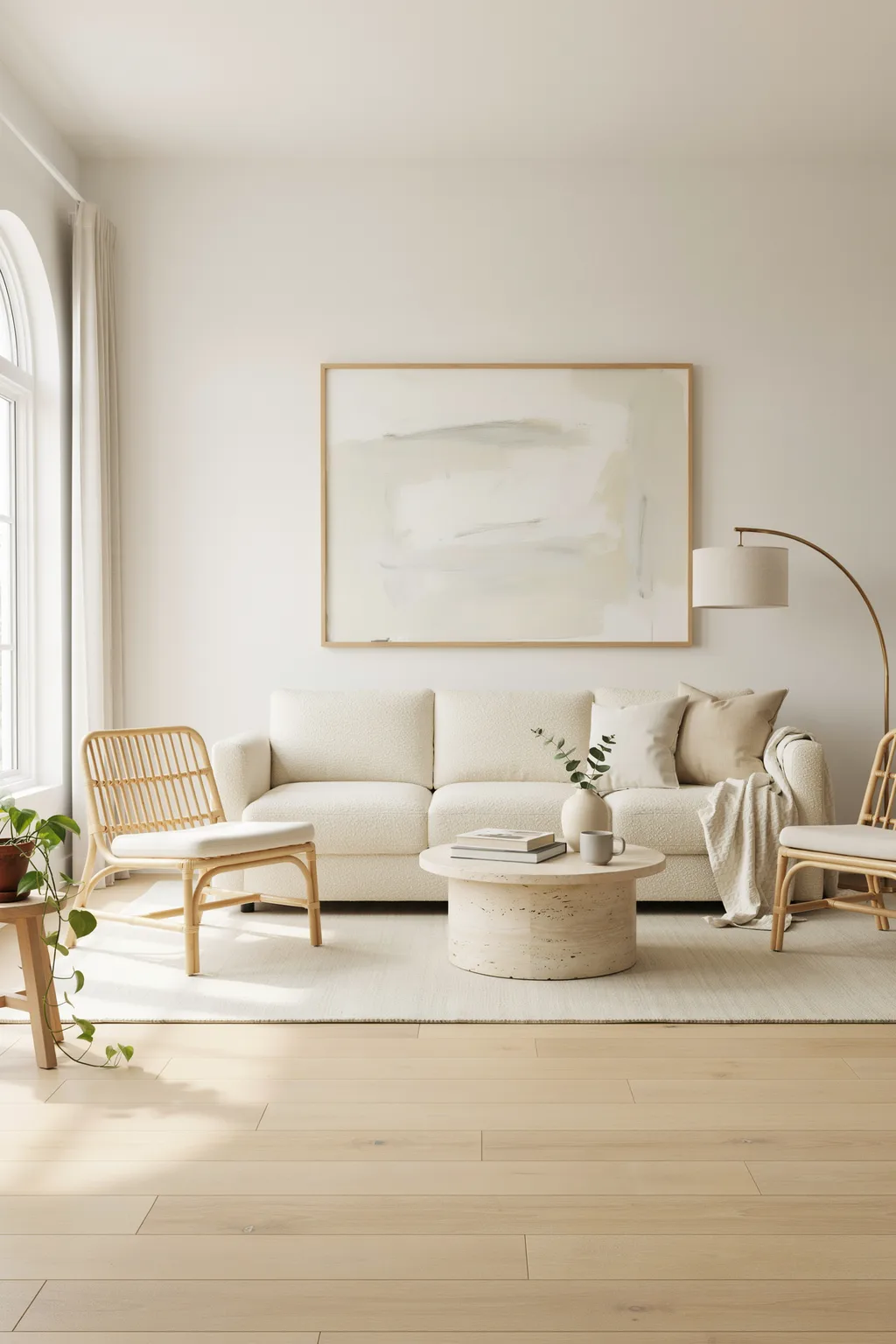
Cluttering your walls with a dozen tiny picture frames creates immediate visual noise that makes a room feel tight.
Instead, commit to one large canvas or framed print with a clean, minimalist design. A massive piece of art gives your eyes a singular, calming point to rest upon, which actually simplifies the room design. Opt for abstract lines, soft landscapes, or a black-and-white photograph framed with an extra-wide white mat board. This choice feels upscale, intentional, and lets your white walls frame the art like a personal gallery.
- ▸Select art that leaves at least 30 percent of the wall space empty around its frame.
- ▸Use lightweight wood or light metallic frames rather than heavy black resin borders.
- ▸Hang the center of the frame exactly at eye level, roughly 57 inches from the floor.
11. Build Built-In Bench Storage Under Window Frames
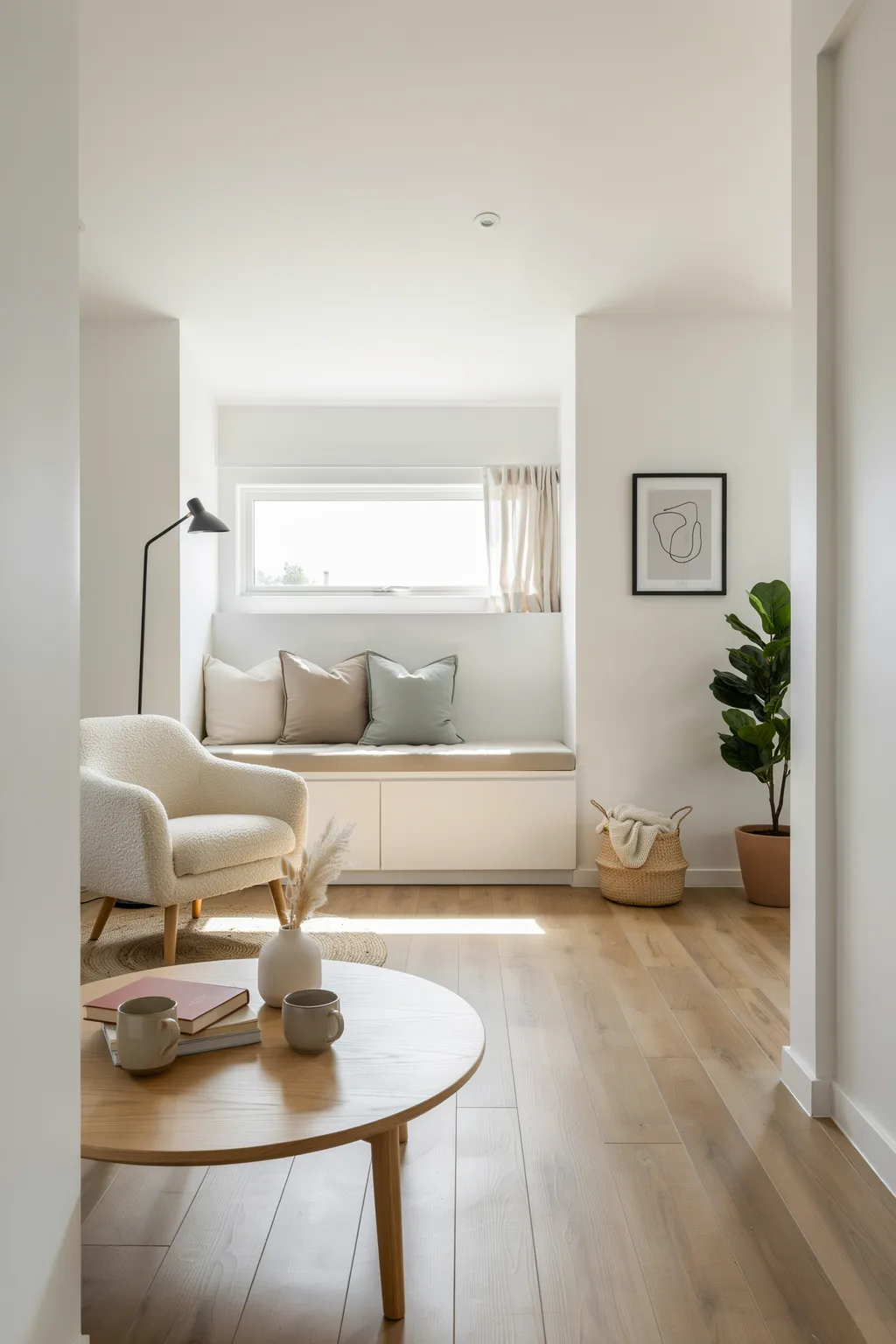
Windows are often wasted space. If you are struggling with clutter, look right below your window sill.
Adding a simple storage bench under the window glass provides a cozy window seat while hiding blankets and toys out of sight. You can buy pre-made cabinet boxes and top them with a custom linen cushion to create a sleek, built-in feel. It keeps your floor completely clear while giving you a quiet place to enjoy the sun.
Cluttered plastic storage bins sitting on the floor under the window, making the room look messy and small.
A custom-look white storage bench with a linen cushion that blends into the wall and stores pillows quietly.
12. Tuck a Tall Leafy Plant Into an Empty Corner
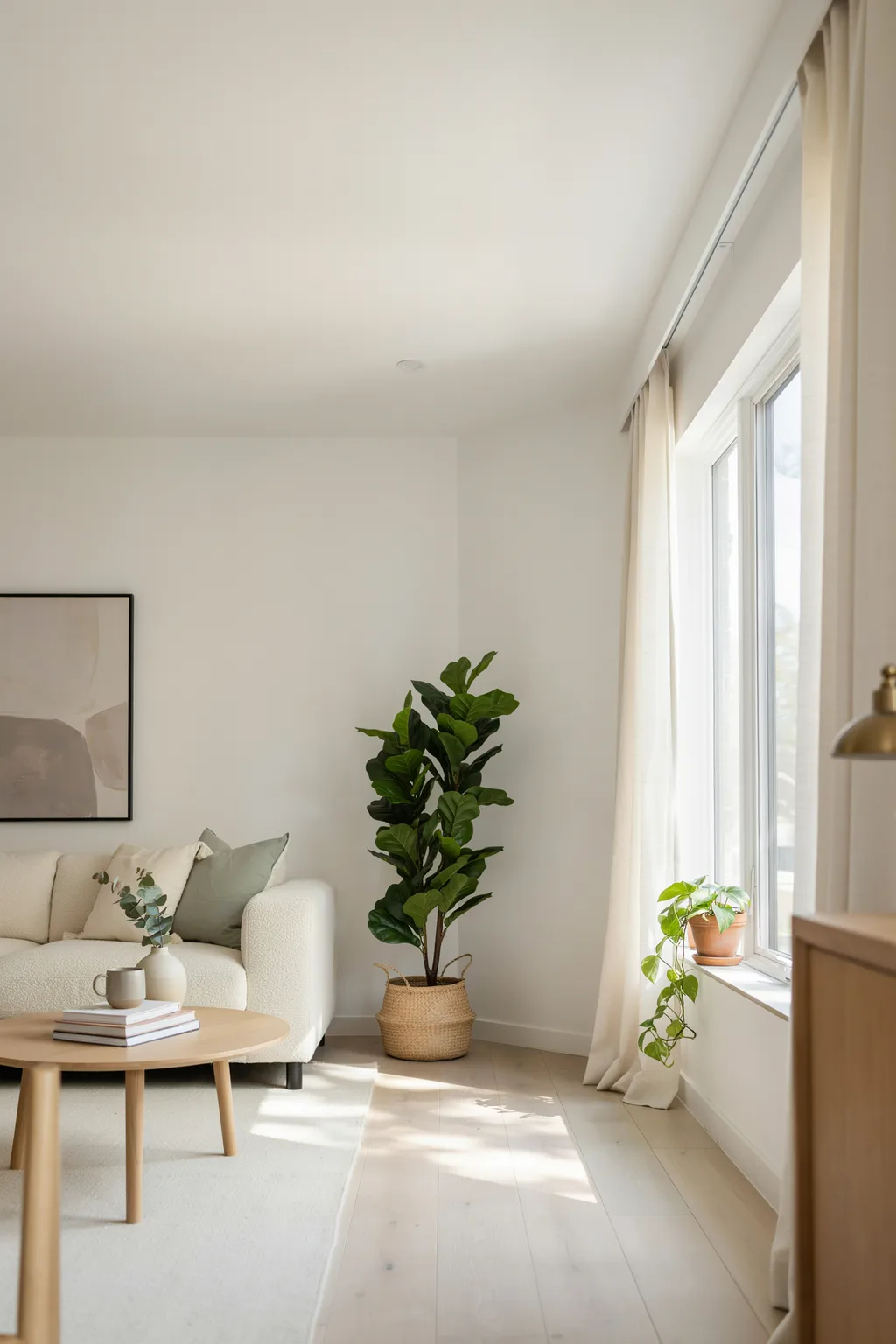
Introducing nature is the quickest way to make a pale color scheme feel lived-in and organic.
A single tall plant adds height and draws the eyes upward, breaking up the flat white walls:
- It softens sharp corner angles.
- It introduces a natural green element without paint.
- It adds structural interest to empty spaces.
⚠️ Watch Out
Avoid cluttering the room with dozens of tiny houseplants on window sills. It creates visual noise. One large, leafy plant like a Fiddle-Leaf Fig or Bird of Paradise works much better.
13. Paint Your Trim and Baseboards the Exact Shade of the Walls
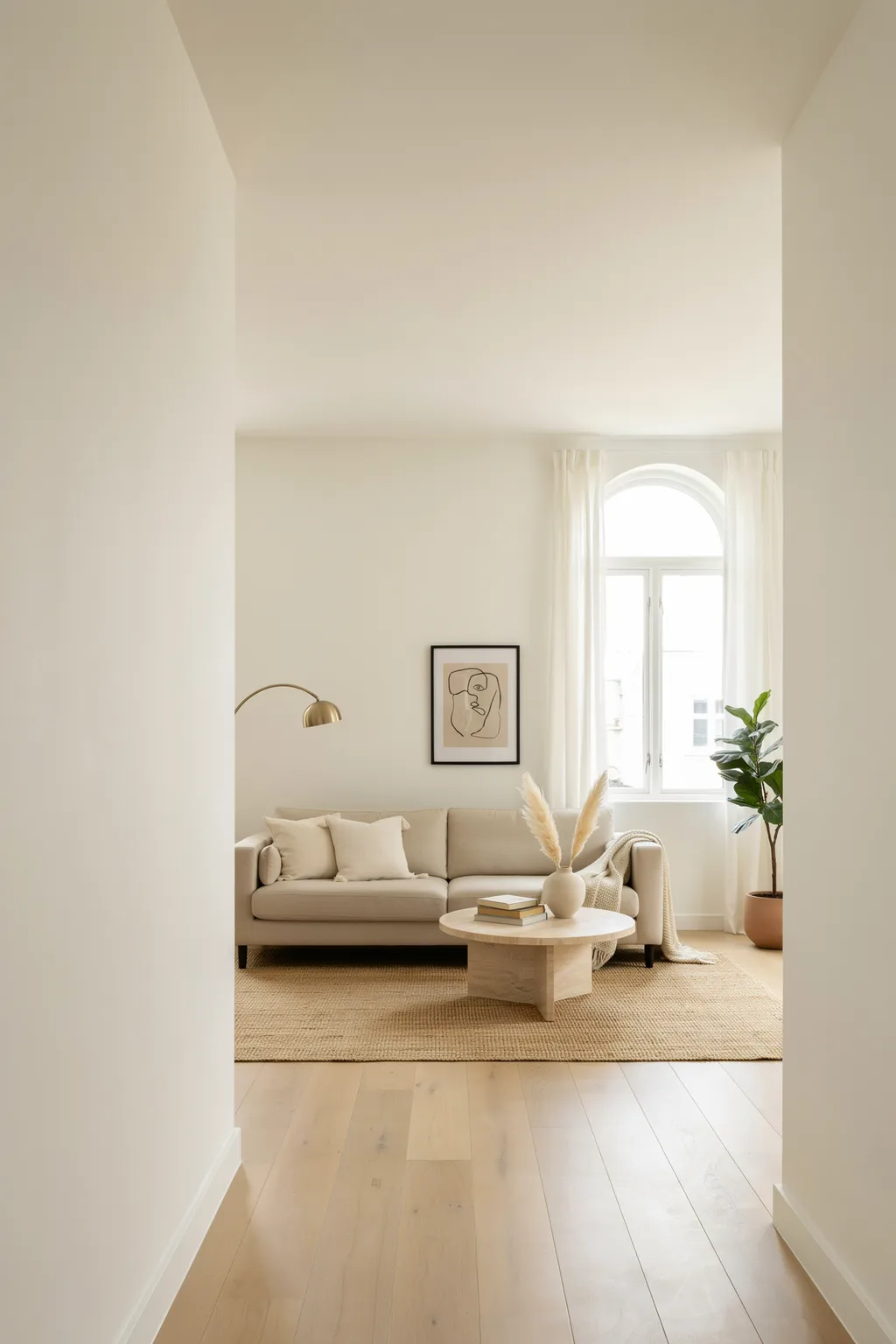
Most homes have bright white walls paired with stark, semi-gloss white trim. While it seems classic, these contrasting shades of white actually chop your walls into smaller sections.
To make your walls feel endless, paint your baseboards, crown molding, and window frames the exact same color and finish as your walls. This paint trick removes all visual breaks, letting the eye sweep from the floor right up to the ceiling. It makes a tiny room look instantly grand.
Paint the walls and trim the exact same warm white shade for a seamless, clean look.
Use a flat finish on walls and a satin or eggshell finish on the trim for a gentle texture contrast.
Do not use a cold, blue-white trim paint against warm, cream-white plaster walls.
Avoid painting the trim a dark color that frames the room and makes it feel smaller.
14. Pivot to Multi-Functional Nesting Tables
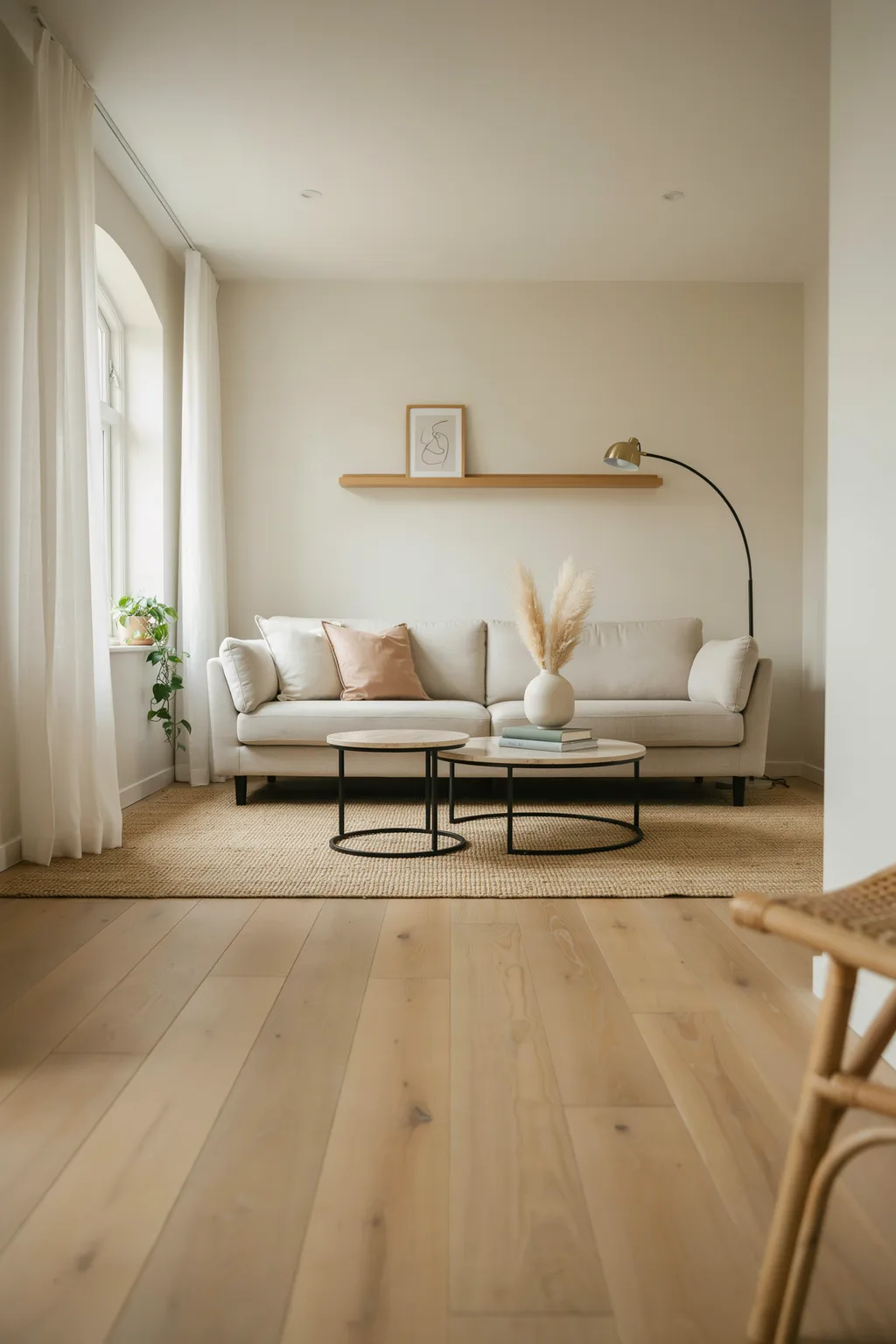
A giant coffee table can block your pathway and make walking through the room feel like an obstacle course.
Nesting tables are a brilliant solution for tight layouts. They sit stacked together most of the day, taking up the space of a single small side table, but expand easily when you need them.
- Pull them out when guests arrive to hold drinks.
- Separate them to use as temporary laptop desks.
- Slide them back together to open up the floor.
How to style nesting tables
15. Swap Your Coffee Table for Warm Plush Poufs
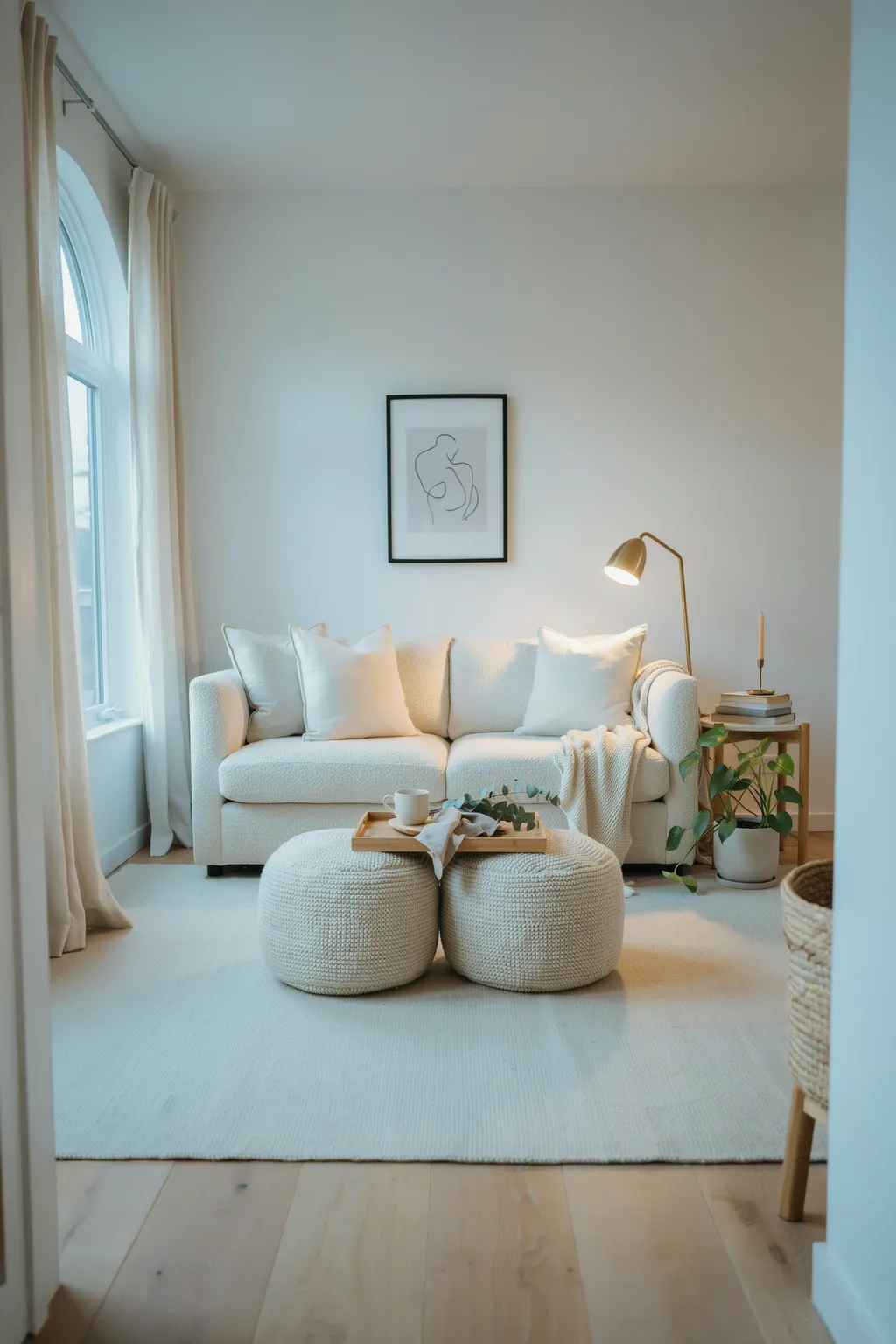
Look closely at your current layout and you might see a heavy wood block dominating the center of the rug.
Swapping that bulky coffee table for two small upholstered poufs can completely open up your floor plan. They are light, easy to move, and have soft edges that are highly forgiving in tight quarters. Toss a wooden tray on top when you need a flat surface for a cup of tea, or use them as extra seats when friends visit.
Conclusion & Pinterest CTA
Designing a small home does not mean you have to sacrifice comfort or personal style. By taking these intentional steps, you can easily turn a cold, cramped area into a bright and beautiful sanctuary. The small white living room ideas above all pull in the same direction: lighter, warmer, and more open. It all comes down to balancing your materials, clearing off your floor space, and letting the natural light move freely through your layout. Your home should feel like a peaceful retreat from the outside world, no matter its actual square footage.
Save this list of small white living room ideas to your favorite home decor board on Pinterest for the next time you want to refresh your space.