How to Paint a Room on a Budget: 17 Ideas That Look Expensive for Under $200
Nothing changes a room faster than paint. Not new furniture, not throw pillows, not a rug — one weekend and a couple of gallons and the whole space reads different. And here is the part most people get wrong: they assume it costs real money. A DIY bedroom repaint lands around $137–$174 in materials for a standard 12×12 room, while hiring a professional for that same room runs $400–$1,600. Labor is 70–80% of a pro paint job, which means the single biggest saving is simply doing it yourself.
The ideas in this guide go way beyond “pick a color and roll the walls.” We are talking accent walls for the price of one gallon, painted cabinets that look like a $5,000 kitchen update, renter-friendly tricks that need zero paint at all, and the 2026 color palettes that make everything look current. Every idea carries an honest USD cost band, and most come in under $75.
Quick-Start: Pick Your Budget Tier
$0 — The free layer. Use leftover paint from the garage, rearrange what you already own, or try the $5 tester-pot trick (idea #17) to test colors before you commit. Free, and it starts the project tonight.
$25–$60 — The accent tier. One gallon of paint ($20–$45 depending on brand) plus basic supplies covers an accent wall, a painted arch, a door makeover, or a furniture flip. This is the sweet spot — maximum visual change per dollar.
$60–$150 — The room refresh. Two gallons of mid-tier paint ($60–$80) plus rollers, tape, and drop cloths repaints a whole 12×12 bedroom in a new color. This is the classic full-room DIY budget.
$150–$300 — The transformation tier. Cabinet paint kits ($80–$150), a whole small kitchen’s cabinets, or a color-drenched room with ceiling and trim included. Still a fraction of the $400–$1,600 a pro would charge.
Start Smart: The Math Before the Color
1. Measure first — one gallon covers ~350 sq ft, and guessing wastes money — $0
A gallon of interior paint covers about 350–400 square feet per coat. A standard 12×12 bedroom with 8-foot ceilings has roughly 380 square feet of wall (perimeter × height, minus doors and windows), so you need 2 gallons minimum for a two-coat finish. The most common beginner mistake is buying one gallon, running out halfway through the second coat, and making an emergency store trip — where you inevitably overbuy and end up with three half-gallons drying out in the garage.
Quick tip: Double your net wall area for two coats, then divide by 350. Round up only if you are making a dramatic color change — dark-to-light often wants that third pass.
Do this: Measure every wall you plan to paint before you shop.
Skip this: “Eyeballing it” at the paint counter — the math takes two minutes and saves real money.
2. Buy the right tier of paint — the per-gallon ladder is steeper than you think — $20–$90/gallon
Not all paint is priced the same, and the spread is honest-to-goodness huge: budget lines like Glidden run $20–$25 per gallon, mid-tier Behr Premium Plus sits at $30–$40, Benjamin Moore Regal Select at $60–$75, and Sherwin-Williams Emerald at $80–$90. For most bedrooms and living rooms, the $30–$40 tier is the sweet spot — good coverage, washable, and you will not need the third coat a bargain gallon often demands.
Quick tip: A cheap gallon that needs three coats costs more than a mid-tier gallon that covers in two. Coverage is the real price.
Do this: Spend up on paint for kitchens, bathrooms, and kids’ rooms — scrubbable, moisture-resistant finishes earn their premium where walls take abuse.
Skip this: The $80–$90 premium lines for a low-traffic guest room. Eggshell in the $30s is plenty there.
3. Skip the primer — unless you are in one of the three situations that actually need it — save $25–$40
Primer is not a mandatory step; it is a situational one. You genuinely need it for bare or freshly patched drywall, for a major color change (especially going lighter over a dark color), or over stains like water marks or smoke. On a previously painted wall in good shape with a similar color going over it, a quality paint-and-primer-in-one does the job in two coats — and a dedicated gallon of primer runs $25–$40 you do not need to spend.
Quick tip: Spot-prime patches with a $5 sample pot instead of buying a full primer gallon for a handful of nail holes.
Wall Ideas: Big Impact, One Gallon
4. Paint a single accent wall — $30–$45
The original budget paint move, and it still works because the eye reads one strong wall as a “designed” room. One gallon covers a typical 12-foot accent wall with paint to spare, so the whole project is a gallon plus the supplies you may already own. In 2026, the colors doing the heavy lifting are warm neutrals, softened sage greens, pale terracotta, and earthy browns — calm, layered tones that flatter wood furniture and do not fight with what you own.
Quick tip: Pick the wall the room already faces — behind the sofa, behind the bed, the dining-room wall you see from the kitchen. Accent walls fail on side walls nobody looks at.
Do this: Sample three colors on the wall and live with them for 48 hours. Light changes everything.
Skip this: The old “red dining room” impulse. Deep colors need perfect edges and perfect lighting — muted tones are more forgiving and more current.
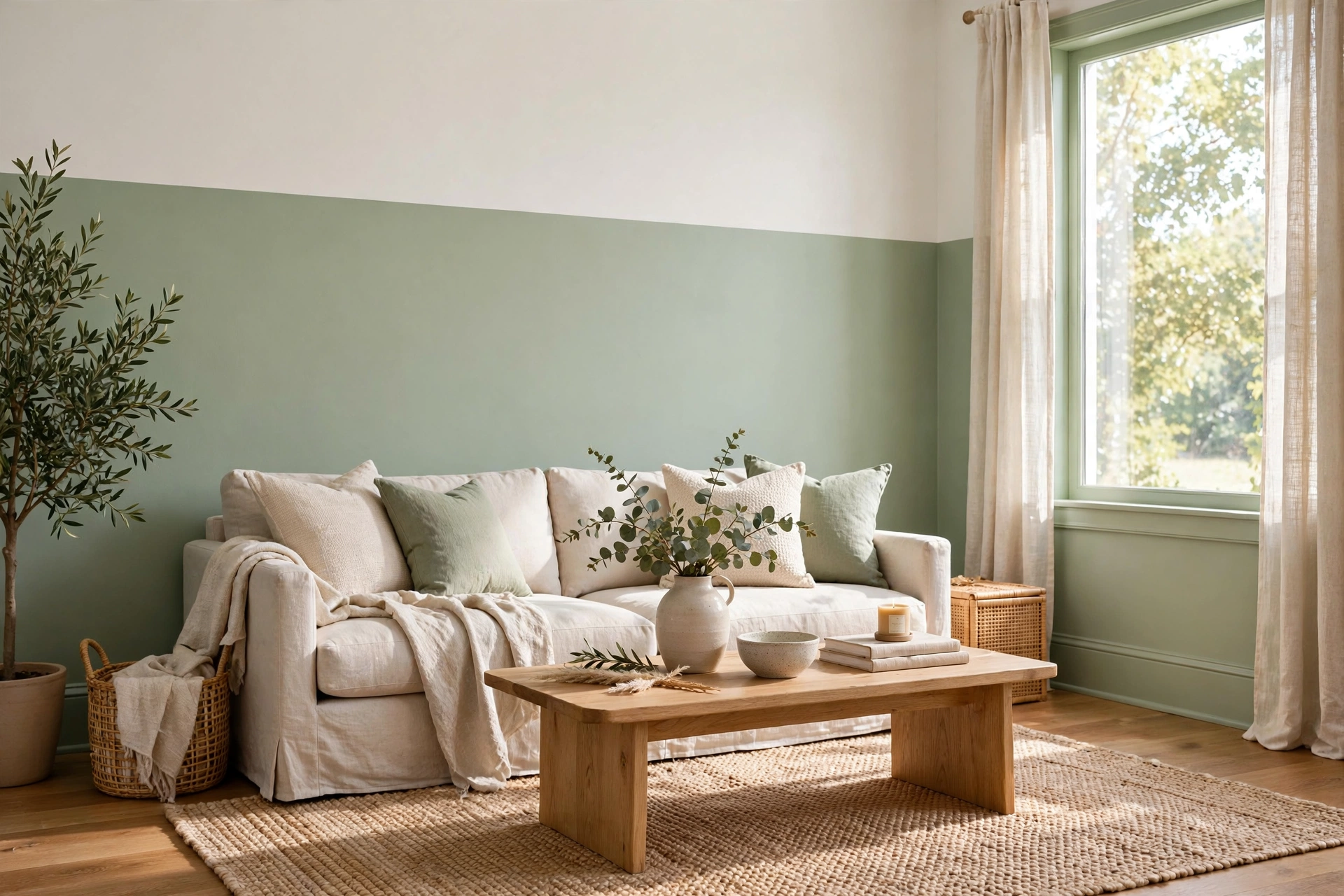
5. Try two-tone walls — darker below, lighter above — $45–$75
Paint the lower third (or half) of the wall a deeper tone and keep the upper part light. It reads like custom wainscoting, makes ceilings feel taller when the upper half is bright, and costs exactly the same as painting the room — you are just using two colors. No chair rail needed; a crisp taped line at 36 inches does the job.
Quick tip: Use two shades from the same paint strip (two steps apart). Tonal pairs never clash, and you can buy both in quarts or gallons as the math requires.
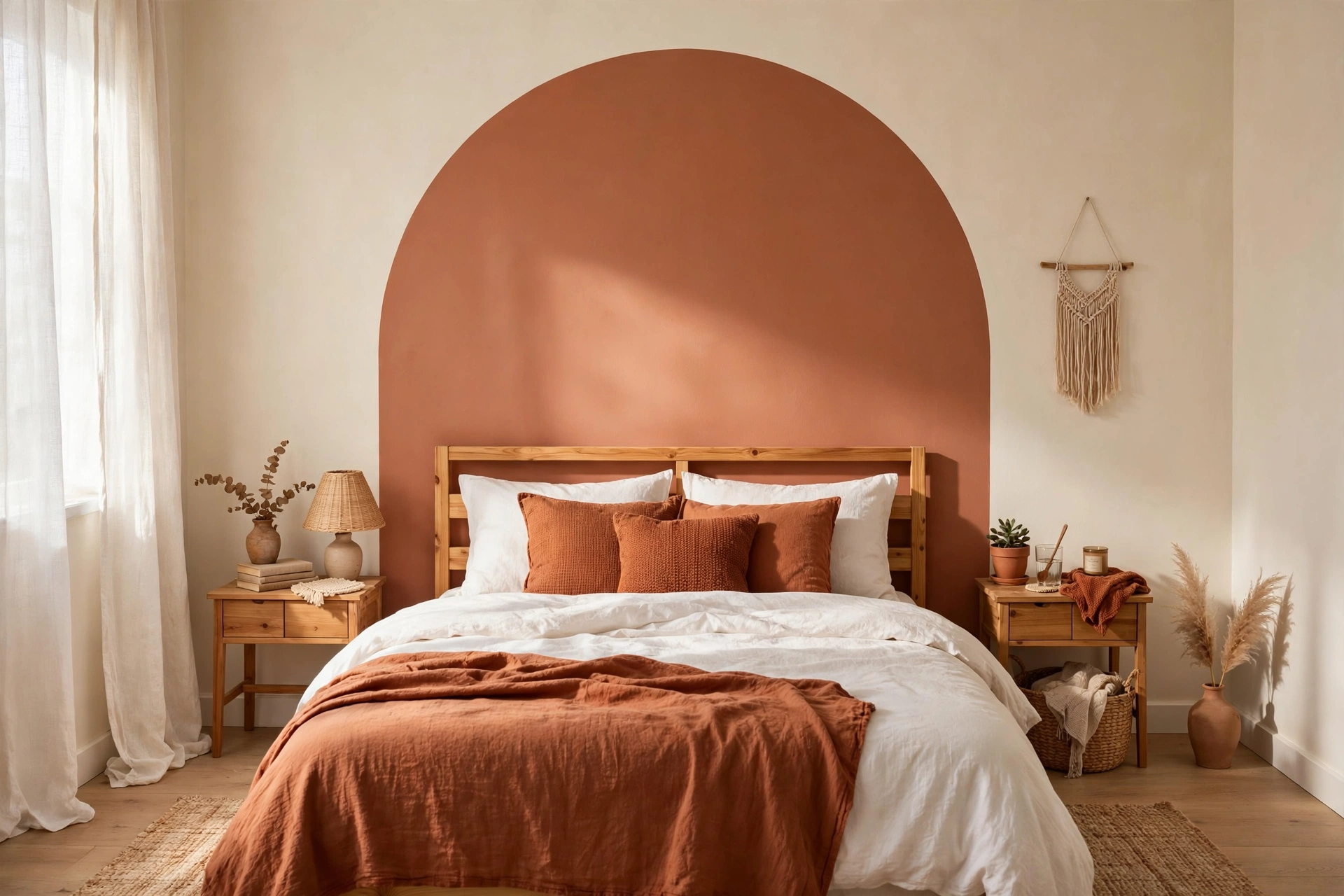
6. Paint an arch or color-blocked shape — $10–$25
The arch trend is the budget darling of 2026 for a reason: a large painted arch over a cream wall frames a bed, a desk, or a reading chair like a piece of architecture, and it takes one sample pot or quart ($5–$15), a pencil, a string for the curve, and painter’s tape. It also carves zones out of open-plan spaces without a single piece of furniture.
Quick tip: Trace the arch with a nail, string, and pencil for a perfect curve. Tape the outline, paint two thin coats, and pull the tape while the second coat is still slightly tacky for the cleanest line.
7. Fake a limewash wall with regular latex — $0–$15
Real limewash paint is a specialty product with a specialty price. The budget version: thin your regular matte latex with a little water and apply it in loose, crisscross brush strokes so the wall shows subtle movement and cloudiness. On a previously painted wall in a similar tone, it costs whatever is already in your garage. The effect is Mediterranean, textural, and looks far more expensive than it is.
Do this: Practice the stroke pattern on a piece of cardboard first. The look is all in the randomness.
Skip this: Limewash in a bathroom — it is not moisture-proof. Save it for bedrooms and living rooms.
8. Color-drench a small room — $75–$120
Color drenching — painting walls, trim, and ceiling the same color — sounds expensive but is cheapest in small rooms: powder rooms, reading nooks, home offices. One color means one paint purchase, no cutting between wall and trim colors, and the monochrome envelope makes a tiny room feel intentional instead of cramped. Keep the sheen consistent (eggshell walls, satin trim in the same color) for the tailored look.
Quick tip: Drenching works best in deep or moody tones — forest green, warm terracotta, inky blue. Light colors drenched just look like a normal paint job.
9. Tape off stripes or a half-wall — $35–$60
Wide horizontal or vertical stripes, painted with two tones of the same color family, read as wallpaper from across the room. The cost is paint plus one roll of quality painter’s tape ($8–$12 — do not cheap out here; bleed-through ruins the whole effect). Wide stripes (12–18 inches) are more forgiving and more current than skinny ones.
Quick tip: Seal tape edges by painting over them with the base color first, letting it dry, then painting the stripe color. Any bleed is base-colored and invisible.
Paint Beyond the Walls
10. Paint the trim, doors, and baseboards — $25–$50
Here is the secret designers will tell you for free: crisp freshly painted trim makes old walls look intentional. A gallon of satin white ($30–$40) covers every baseboard, door frame, and interior door in an average home’s main rooms, and the contrast against even tired walls is dramatic. Or go the 2026 route and paint trim the same color as the walls for that seamless, boutique look.
Do this: Caulk the gaps between trim and wall before painting. A $6 tube of paintable caulk is the difference between “fresh” and “professional.”
Skip this: Painting trim without sanding glossy old paint first. Satin over gloss with no prep peels within a year.
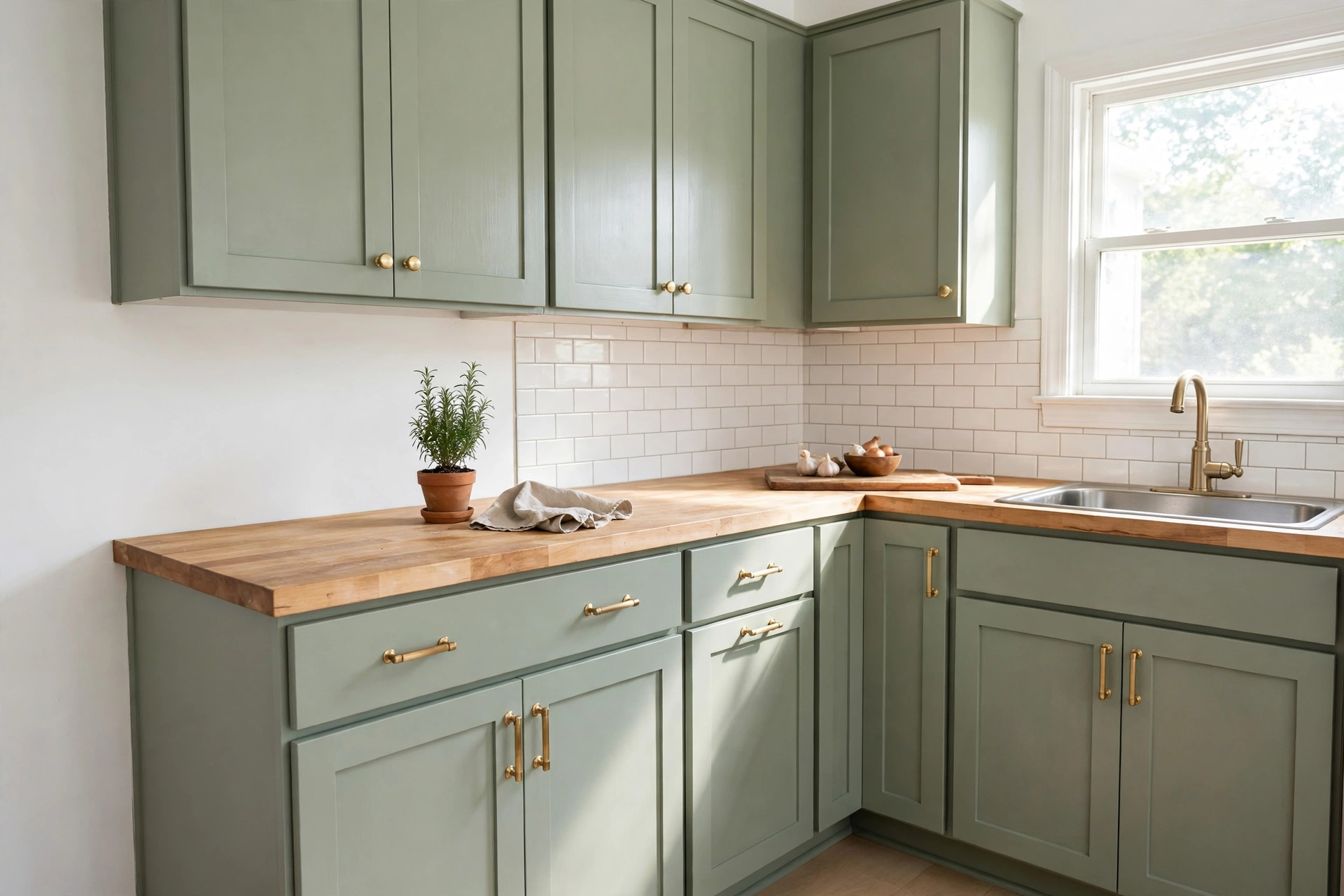
11. Paint the kitchen cabinets instead of replacing them — $80–$150
This is the highest-ROI paint project in the house. A cabinet paint kit or 1–2 gallons of quality cabinet-grade paint ($80–$150 total with primer and supplies) transforms a dated kitchen for roughly 2–3% of the cost of new cabinets. The 2026 move is soft sage, warm greige, or deep forest green with the existing hardware swapped for brushed brass ($2–$4 per pull).
Quick tip: The order is everything: degrease (kitchens are greasy — TSP substitute, $8), sand lightly, prime, two thin topcoats. Skipping degreasing is why cabinet paint jobs fail.
Skip this: Regular wall paint on cabinets. It chips. Cabinet-specific enamel or urethane-trim paint is non-negotiable.
12. Flip a thrifted furniture piece — $15–$30
A $10 dresser from the thrift store plus a quart of paint ($12–$18) and a $5 sample of a bold color is a designer-looking nightstand or entry console. Furniture is also the safest place to experiment with the deep, moody colors you are scared to put on walls — forest green, oxblood, inky navy.
Quick tip: Chalk-style paint skips the sanding step on most wood furniture, but seal it with wax or poly. Unsealed chalk paint marks if you look at it wrong.
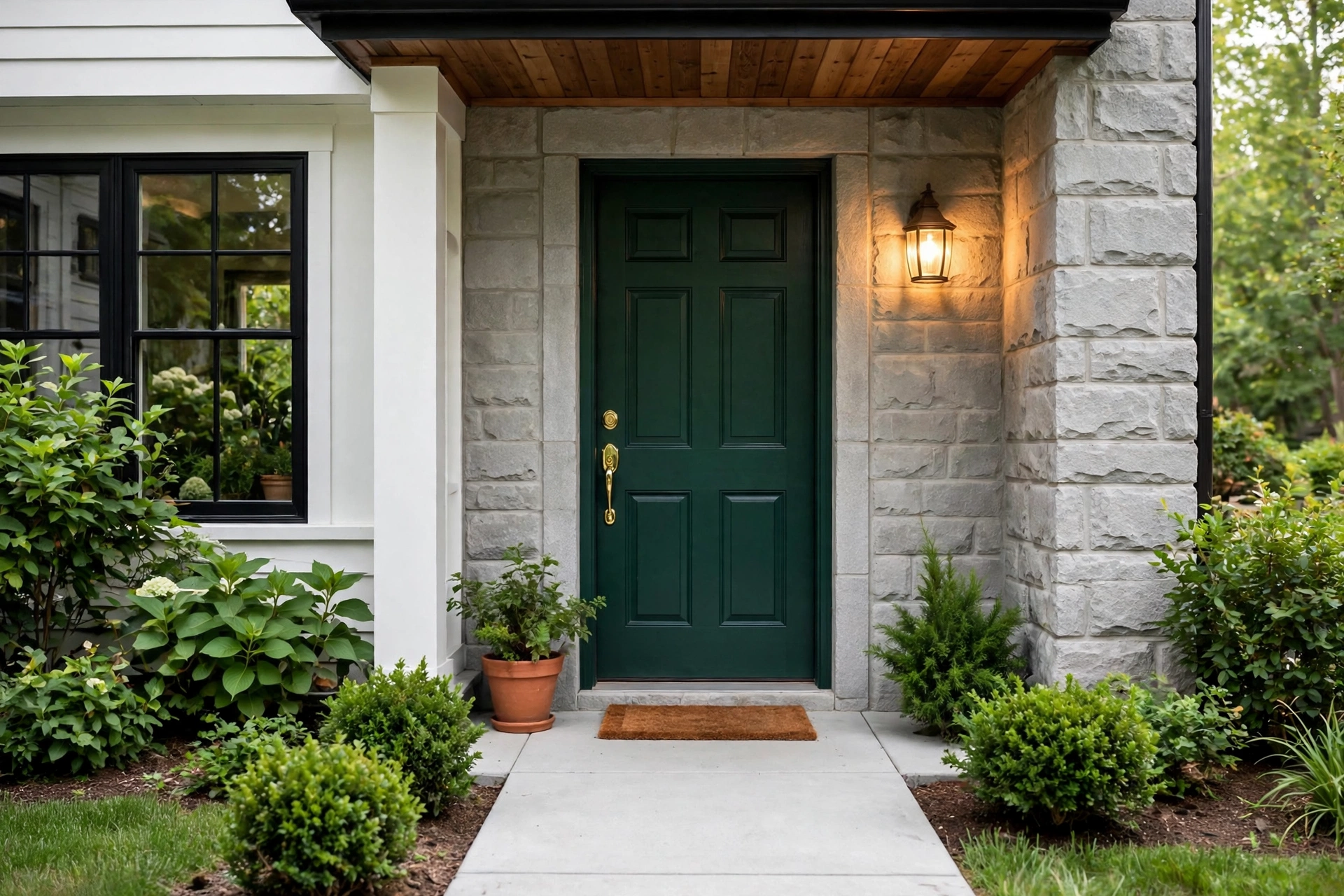
13. Paint the front door a bold color — $15–$25
Curb appeal’s cheapest upgrade: one quart of exterior paint ($12–$18) turns a forgettable front door into the thing people remember about your house. Deep forest green, classic navy, or warm terracotta with the existing brass or black hardware polished up — the whole project is an afternoon.
Do this: Remove the hardware instead of taping around it. Fifteen minutes of unscrewing beats an hour of fussy taping and looks ten times better.
14. Refresh a fireplace with heat-safe paint — $30–$60
Dated brick or brass-trimmed fireplaces drag a whole living room down. Heat-resistant paint ($25–$45 per quart/gallon) in matte black or warm white modernizes the surround in a weekend. This is strictly a cosmetic refresh of the surround and mantel — never paint inside the firebox.
Skip this: Regular latex on a fireplace surround. Heat and soot will yellow and peel it. The “heat-resistant” label is doing real work here.
Renter-Friendly and No-Paint Options
15. Ask the landlord — then paint anyway — $0–$60
The most underused renter trick: many landlords say yes to painting if you agree to repaint white on move-out, and some even reimburse the paint. One polite email can unlock the entire guide above. Get the yes in writing (a text counts), keep the original paint color name, and photograph everything before you start.
Quick tip: Offer to use the landlord’s preferred white for the move-out coat. It removes their only real objection.
16. Go paint-free with sample pots and peel-and-stick — $5–$40
If the answer is no, $5 sample pots become art supplies: paint abstract color-block canvases, paint the inside of a bookcase (usually allowed — it is furniture), or create a gallery wall of painted arches on poster board. Peel-and-stick wallpaper ($25–$40 per roll) covers one accent wall with zero permanence, and removable wall decals handle the rest.
Do this: Paint the inside back panel of a bookcase in your dream color. It is renter-safe, costs one sample pot, and looks custom.
17. The $5 tester-pot trick — test like a designer — $5–$15
Never choose a wall color from a phone screen or a two-inch swatch. Buy sample pots ($5–$8 each) of your top three contenders and paint big 2×2-foot squares on the actual wall, right next to the trim. Live with them for two days — morning light, evening lamplight, all of it. This $15 habit prevents the $150 mistake of painting a whole room the wrong color.
Quick tip: Paint samples on white poster board instead of the wall if you are nervous — then you can move the boards around the room to test every light.
Mistakes That Waste Your Money
The expensive errors in budget painting are almost never about the paint itself. Buying the wrong sheen (flat in a hallway that gets touched daily — it will mark), skipping the degrease on kitchen cabinets, painting over glossy trim without sanding, and the classic: starting at 4 PM on a Sunday and rushing the second coat before the first is dry. Paint has a recoat window printed on the can — usually 2–4 hours — and ignoring it is how you get peeling within months.
One more: do not buy every gadget at the paint store. You need a 2-inch angled brush for cutting in, a 9-inch roller with 3/8-inch nap covers, a tray with liners, quality painter’s tape, a drop cloth, and spackle for holes. That is the whole kit — about $25–$45 if you own nothing, and most of it is reusable for years.
Frequently Asked Questions
How much does it cost to paint a room yourself?
For a standard 12×12 bedroom, expect $137–$174 in materials using a mid-tier paint — two gallons of paint, tape, rollers, drop cloths, and patching supplies. Hiring a professional for the same room runs $400–$1,600, since labor makes up 70–80% of a pro job.
How many gallons of paint do I need for one room?
Buy 2 gallons minimum for a 12×12 room with 8-foot ceilings and a two-coat finish. The math: (perimeter × ceiling height, minus doors and windows) × 2 coats ÷ 350 sq ft per gallon. Accent walls usually need just one gallon.
Is primer necessary before painting interior walls?
Only in three cases: bare or freshly patched drywall, a major color change (especially dark to light), or stains like water marks. On previously painted walls in good shape, a quality paint-and-primer-in-one in two coats is fine — skipping unneeded primer saves $25–$40.
What is the cheapest way to make walls look expensive?
A single accent wall in a current color (soft sage, warm terracotta, muted clay) costs one gallon — $30–$45 — and reads as a designed room. Freshly painted white trim against existing walls is the runner-up at a similar price.
Can renters paint their walls?
Often, yes — many landlords approve painting if you agree to repaint white before moving out. Get permission in writing first. If the answer is no, sample-pot art, painted bookcase interiors, and peel-and-stick wallpaper ($25–$40 per roll) give you color with zero permanence.