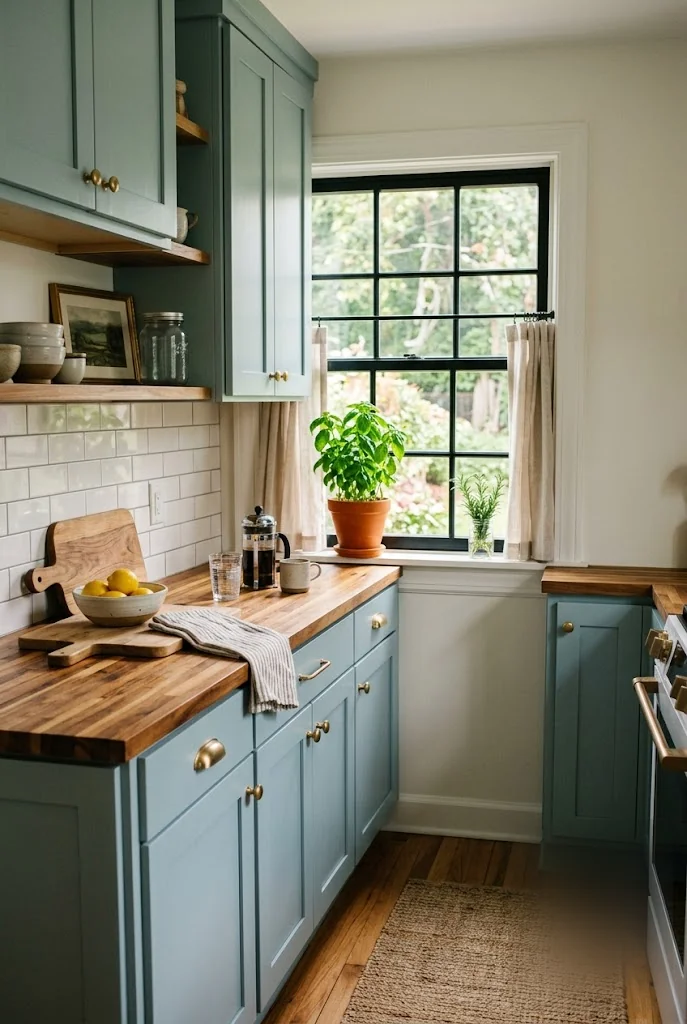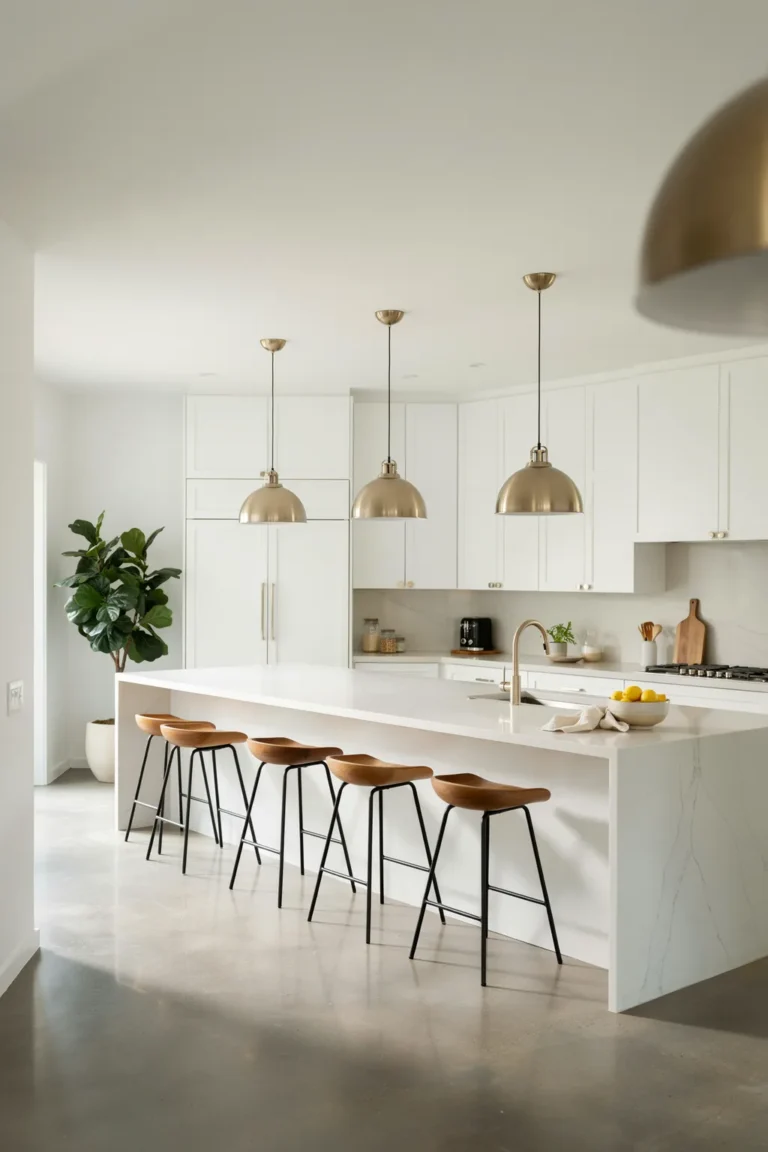
10 Practical Small Kitchen Ideas for a More Spacious Look
You open the cabinet and three lids slide out at you. The counter holds the toaster, the dish rack, and exactly zero room to chop an onion. A small kitchen punishes every wasted inch, and most of us are working with less than 100 square feet. The good news: you do not need to knock down a wall to fix it. The best small kitchen ideas work by changing how light moves, where things live, and how hard each surface works, not by adding square footage you do not have.
I have cooked in a galley so narrow two people could not pass, and in a rental where the “pantry” was one shelf. What follows is the stuff that actually moved the needle, room by room. Some of it costs a weekend and a trip to the hardware store. Some of it is free and just asks you to move things around.
You will see why each idea works, who it suits, and where it falls flat, because no single trick fits every floor plan. Pick the three that match your layout and skip the rest. By the end you will have a clear, copy-able plan to make a cramped cook space feel calmer, brighter, and a good deal bigger than the tape measure says it is.
Quick Answer
The fastest way to make a small kitchen feel bigger is to pull clutter off the counters and push storage up the walls. Add warm task lighting, keep the color palette light and consistent, and let one or two surfaces do double duty. These small kitchen ideas trade floor space for vertical space and visual calm, so the room reads open even when the footprint stays exactly the same.
1. Layer Warm Lighting So Corners Stop Disappearing
A dim small kitchen always looks smaller, because shadowed corners read as walls closing in. Hang two warm pendants over the sink or prep zone, then add a strip of under-cabinet light to wash the backsplash. The difference is immediate: the eye travels all the way to the back wall instead of stopping at the gloom. Aim for soft 2700K bulbs, not cold blue ones, so the room feels like a place you want to linger rather than a workshop.
The reason is simple: a single ceiling fixture casts one flat shadow over everything, while three small sources at different heights model the space and give it depth. Put the pendants on a dimmer and you get bright for chopping, low for coffee at 6 a.m. The honest caveat: warm pendants over a sink need a wired or plug-in junction box, so renters may have to use clamp lights or rechargeable puck lights instead. Among all the small kitchen ideas here, this is the one I would do first, because it costs under $80 and changes how every other fix looks.
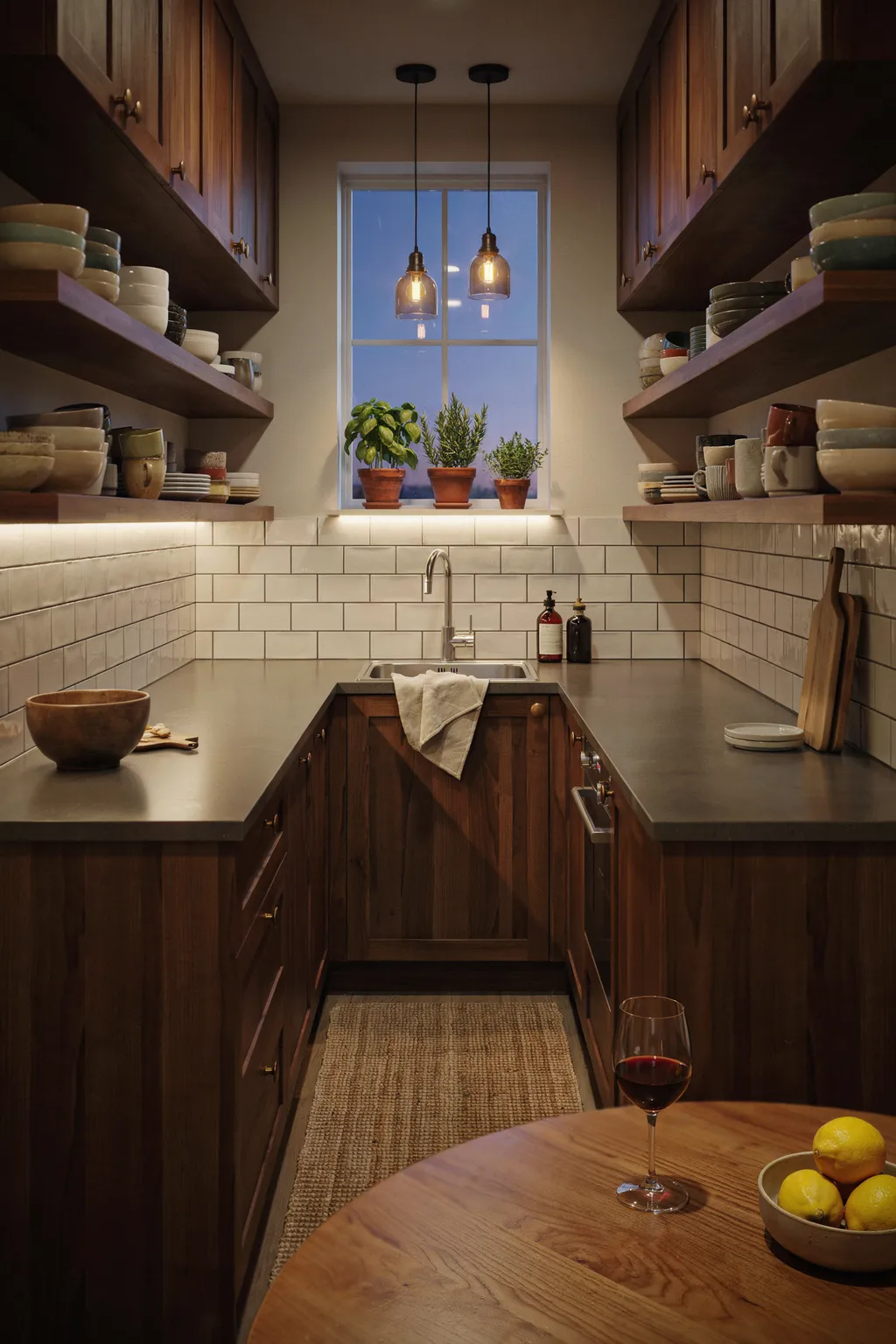
2. Streamline a Galley Layout So Nothing Blocks the Walk
In a galley, the enemy is the bottleneck. Keep the run clean and the workflow obvious: sink, then prep counter, then stove in a straight line, with the fridge at one end. A long uninterrupted butcher-block counter does more for a narrow room than any gadget, because an unbroken surface reads as one calm plane instead of five busy ones. Clear the counter to two or three daily-use items and let the wood do the talking.
Your hands move in a loop while you cook, so a tidy straight run shortens every trip between sink, stove, and fridge. The recognized kitchen “work triangle” guideline keeps sink, stove, and fridge within a comfortable few steps of one another; you can read the standards from the National Kitchen and Bath Association if you are planning a true remodel. Who should skip this: if your kitchen is U-shaped, force the triangle into the corner instead. A common mistake is lining the counter with appliances you use twice a year, which quietly steals the very prep space a galley needs most.
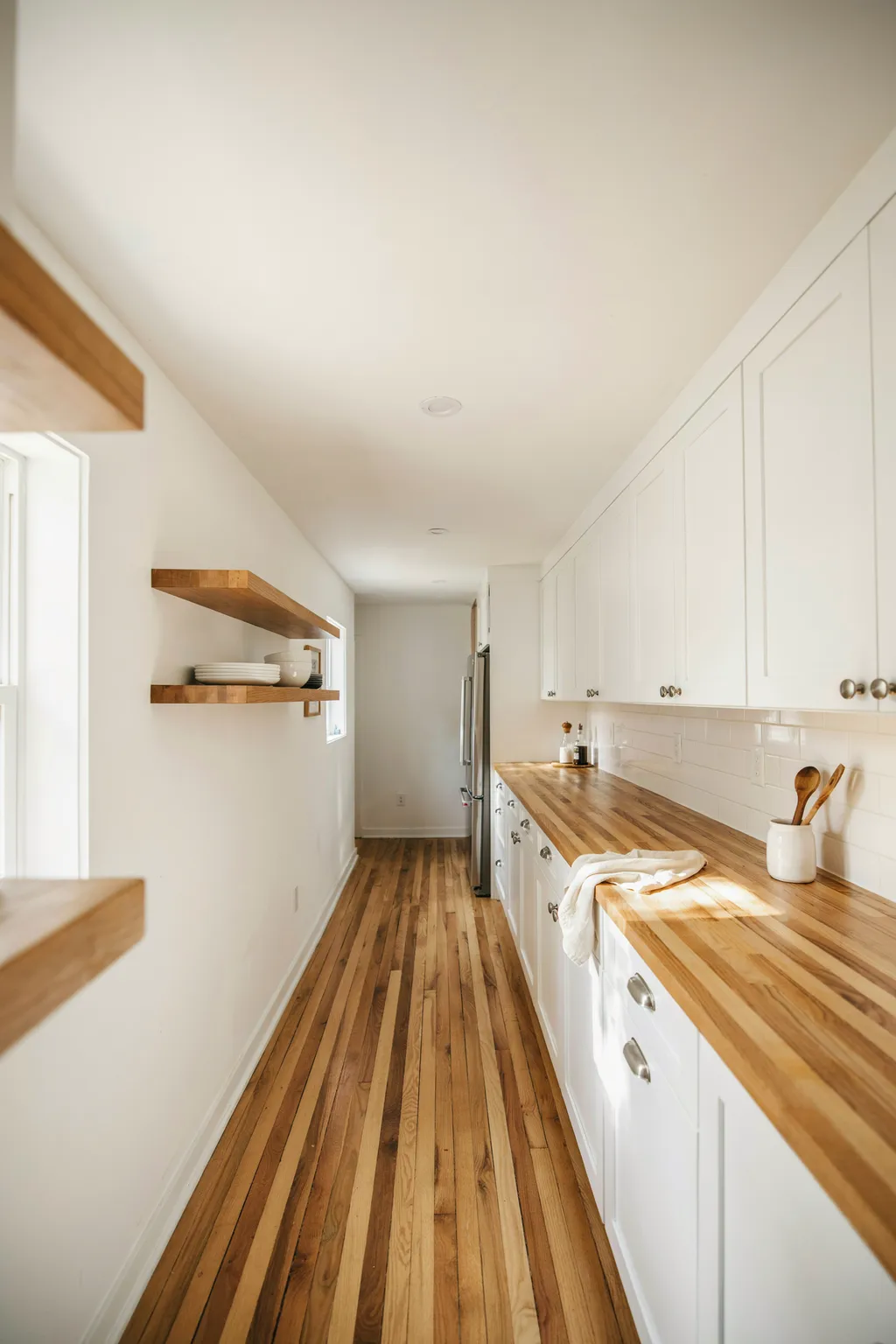
3. Mix Rustic Warmth With Modern Function
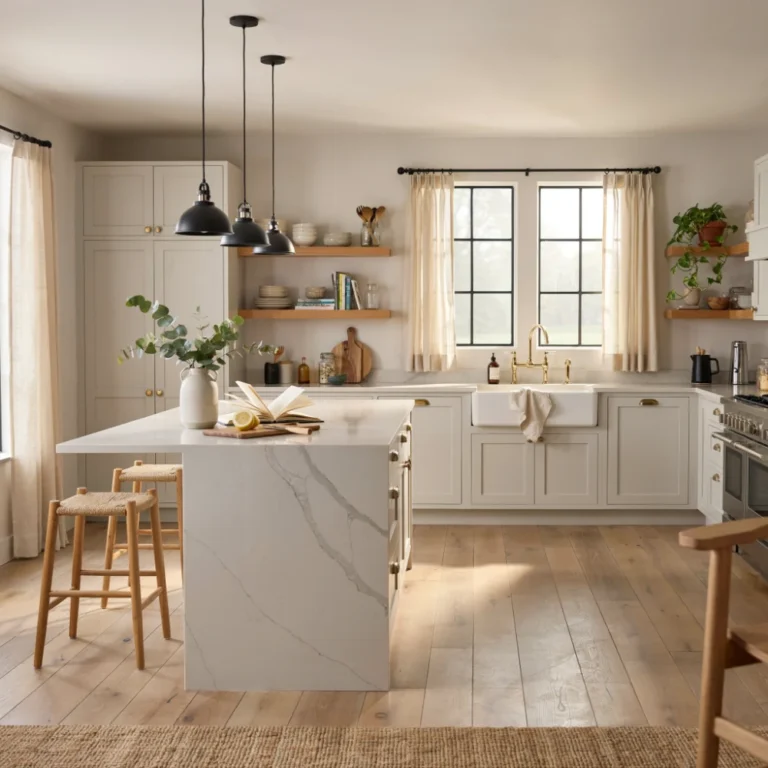
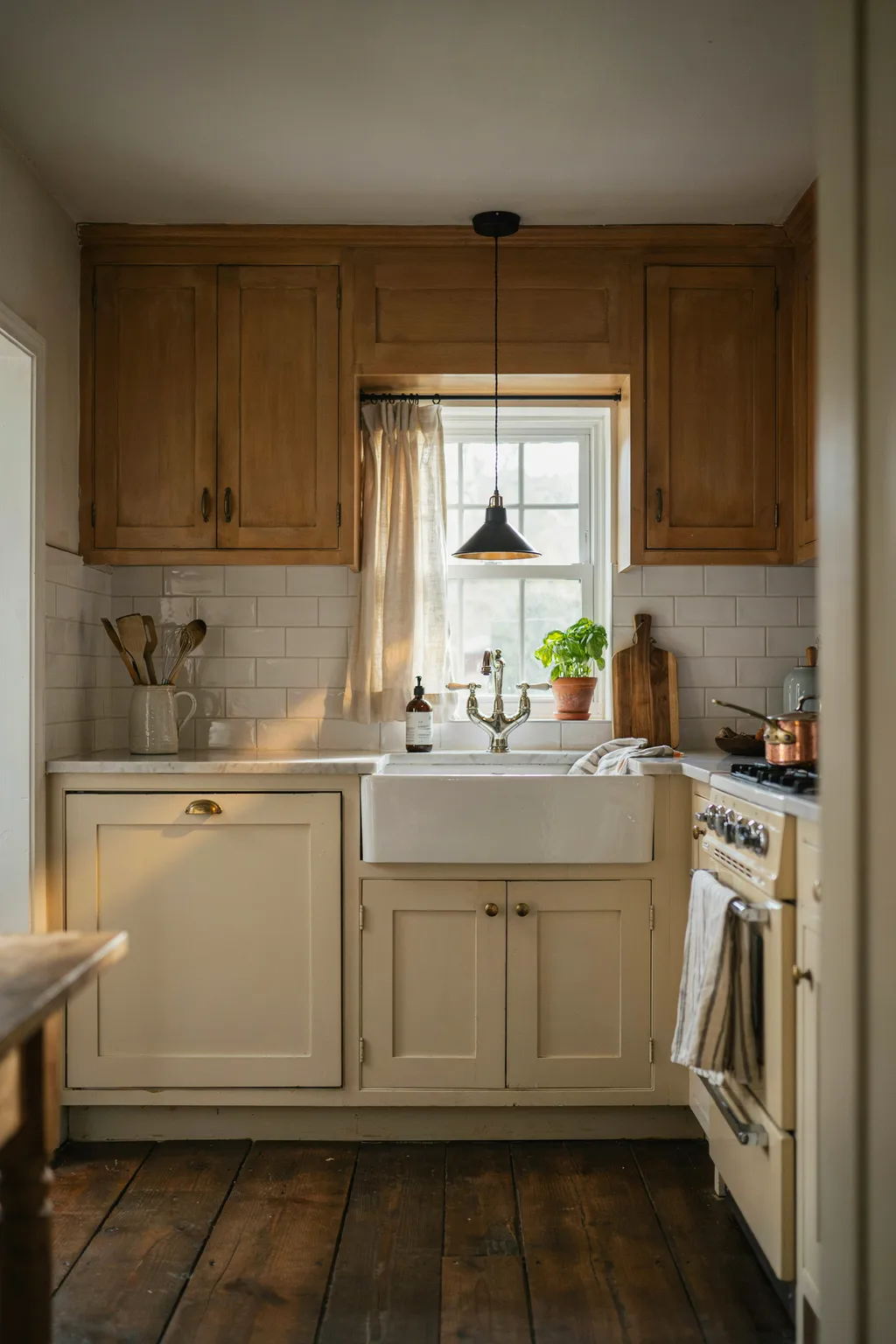
A small kitchen does not have to feel clinical to feel roomy. Pair warm wood cabinets with a creamy off-white wall, drop in a deep apron-front sink, and hang one black barn pendant. The warmth makes the room feel lived-in and generous, while the modern sink and gas range keep it working hard. Texture is the trick here: a wood-framed window and a few open shelves give the eye something to land on so the small footprint never feels bare or boxed in.
Warm matte materials reflect a softer light than glossy ones, which hides the tight dimensions instead of spotlighting them. A farmhouse apron sink, around 30 inches, also gives you one big basin instead of two cramped ones, which is easier in a small kitchen. This look suits older homes and cottages best. Who should skip it: if your kitchen gets almost no daylight, too much dark wood can tip cozy into cave, so balance it with a pale counter and light floor.
4. Trade Upper Cabinets for Open Shelves You Reach Fast
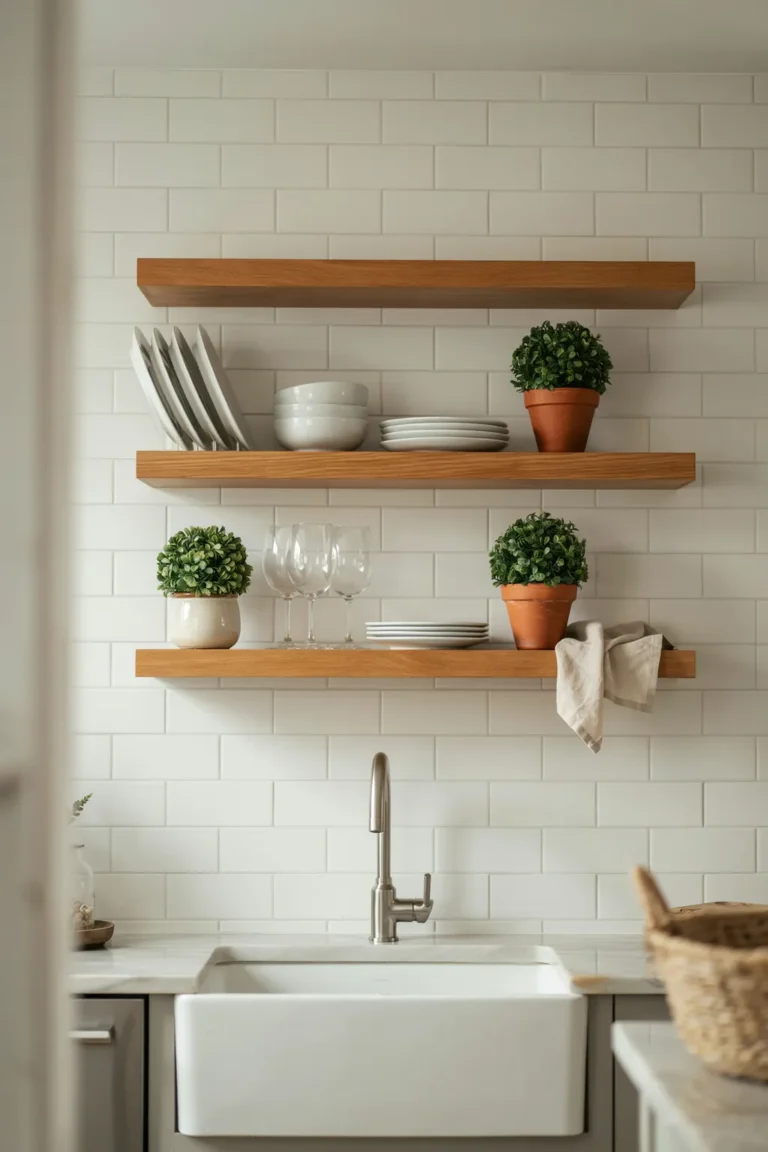
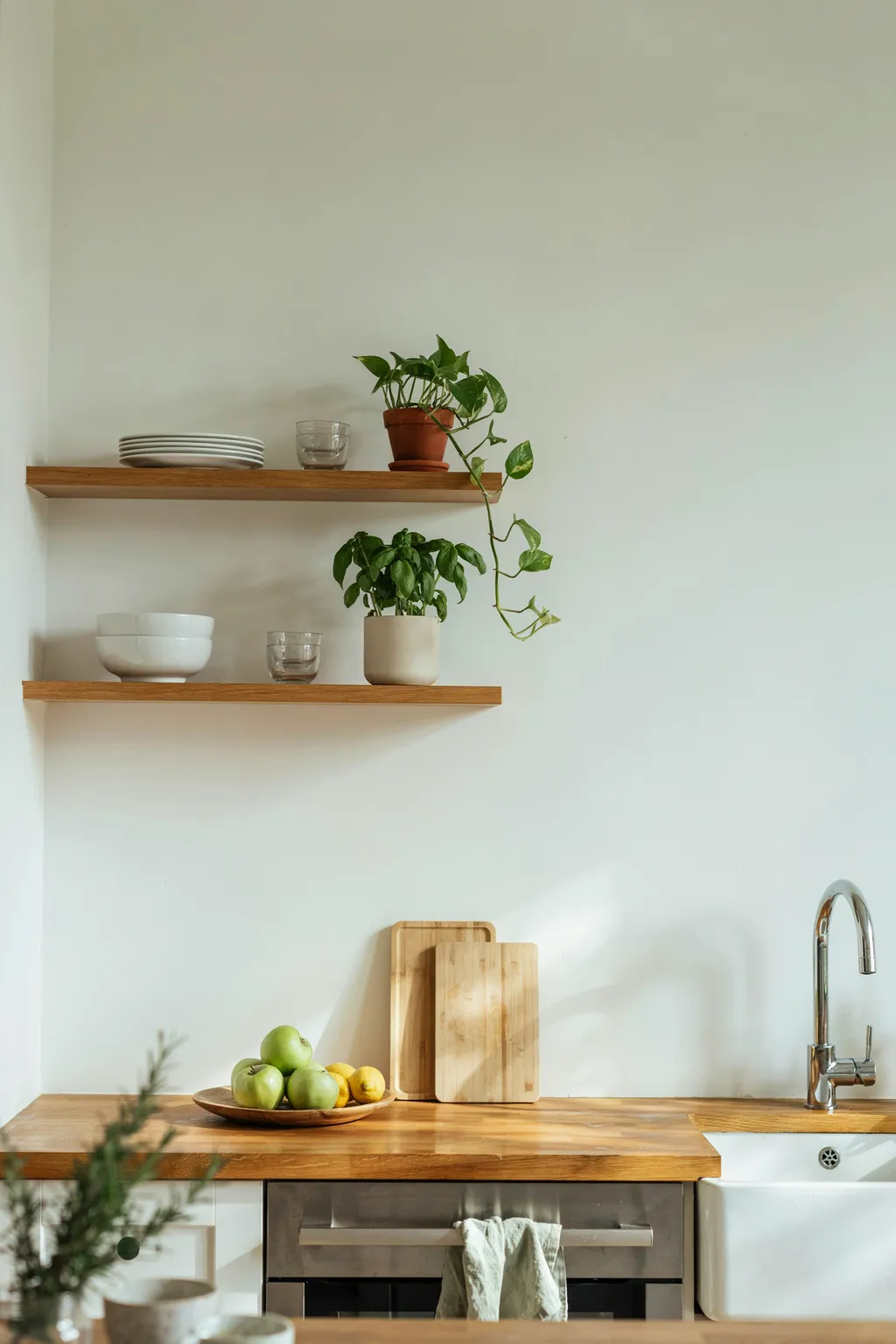
Bulky upper cabinets press down on a small room. Swap one run for two slim wood shelves and the wall suddenly breathes. Keep the everyday plates, a couple of plants, and a few mugs out where you grab them in one motion, and store the once-a-year stuff elsewhere. The room gains depth because your eye sees the wall behind the shelves instead of a flat cabinet face, and that extra visual inch matters when you are short on real ones. These small kitchen ideas reward anyone who actually uses their dishes daily.
Closed cabinet doors create a heavy grid that boxes a room in, while open shelves let light and air pass straight through. Mount them on sturdy brackets rated for real weight, since a shelf of stacked stoneware is heavier than it looks. The honest drawback: open shelves show dust and demand tidiness, so they suit people who keep a fairly curated set and skip those who stack 40 mismatched mugs. Style two of three shelves and leave one a little empty; the breathing room is the point.
5. Choose Compact Appliances That Give Back Counter Space
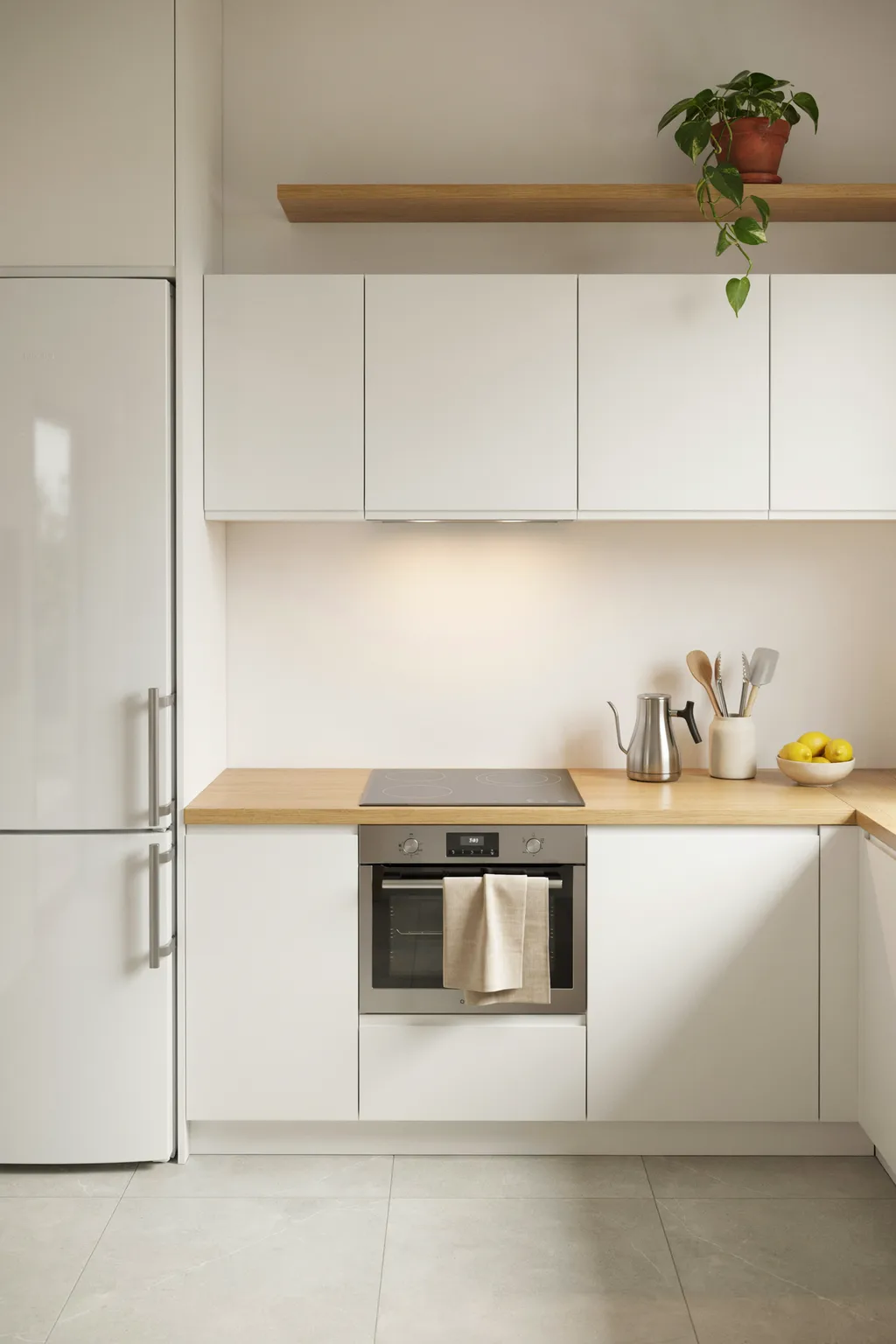
Standard appliances eat a small kitchen alive. A slim 24-inch fridge, a single wall oven tucked under an induction cooktop, and a narrow dishwasher can free up a full cabinet run. The payoff is real estate: every inch an appliance does not claim becomes prep space or storage. A built-in oven set below the counter, with the cooktop on top, stacks two functions into one footprint and keeps the wall above clear for a shelf.
Scaled-down appliances suit the one or two cooks a small kitchen usually serves, so the lost capacity rarely bites. Induction also stays cooler and wipes clean fast, a quiet bonus in a tight room. The caveat worth saying out loud: smaller capacity means a 24-inch fridge holds less, so a family of five may find it tight, and apartment-size units sometimes cost as much as full-size ones. Measure your doorway and turning radius before you buy, because a fridge that does not fit through the hall helps no one.
6. Keep the Color Palette Light to Push the Walls Back
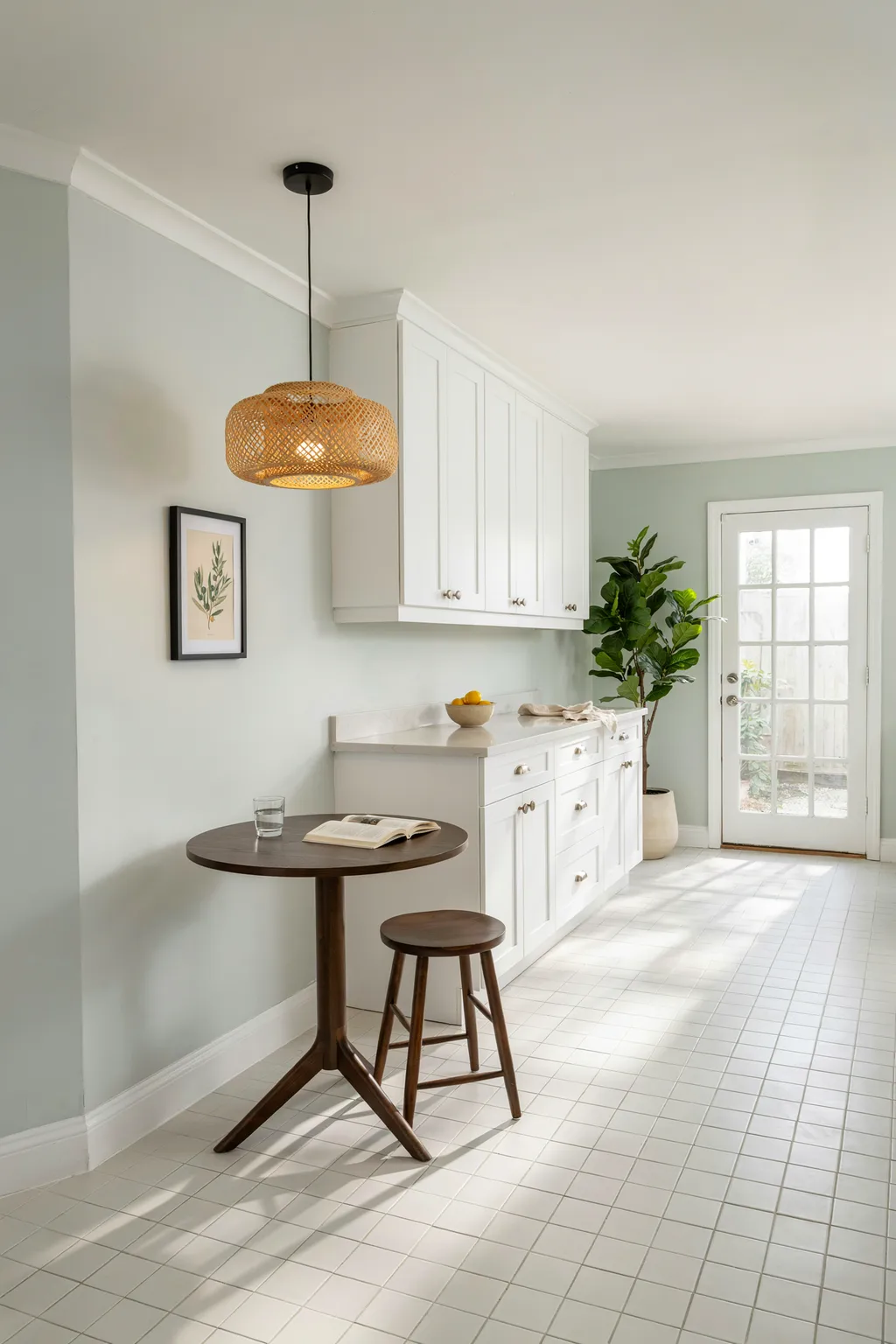
Color is the cheapest way to fake square footage. Paint walls, cabinets, and trim in the same soft white or warm greige and the corners blur, so the eye cannot find where one surface ends and the next begins. That missing edge is what makes a room feel larger. Add a woven pendant or one warm accent so the space reads inviting rather than sterile, and let daylight from any window bounce around the pale surfaces. Light, consistent color sits behind so many small kitchen ideas because it asks for paint and patience, nothing more.
Contrast chops a room into pieces; a single tone lets it flow as one calm volume, which is the whole point. Satin or eggshell finishes also bounce more light than flat paint, which helps a windowless galley. Who should skip an all-white scheme: anyone with messy young kids or a sauce-splattering cook, since pale surfaces show every mark. In that case keep walls light but choose a wipeable semi-gloss and a forgiving mid-tone floor.
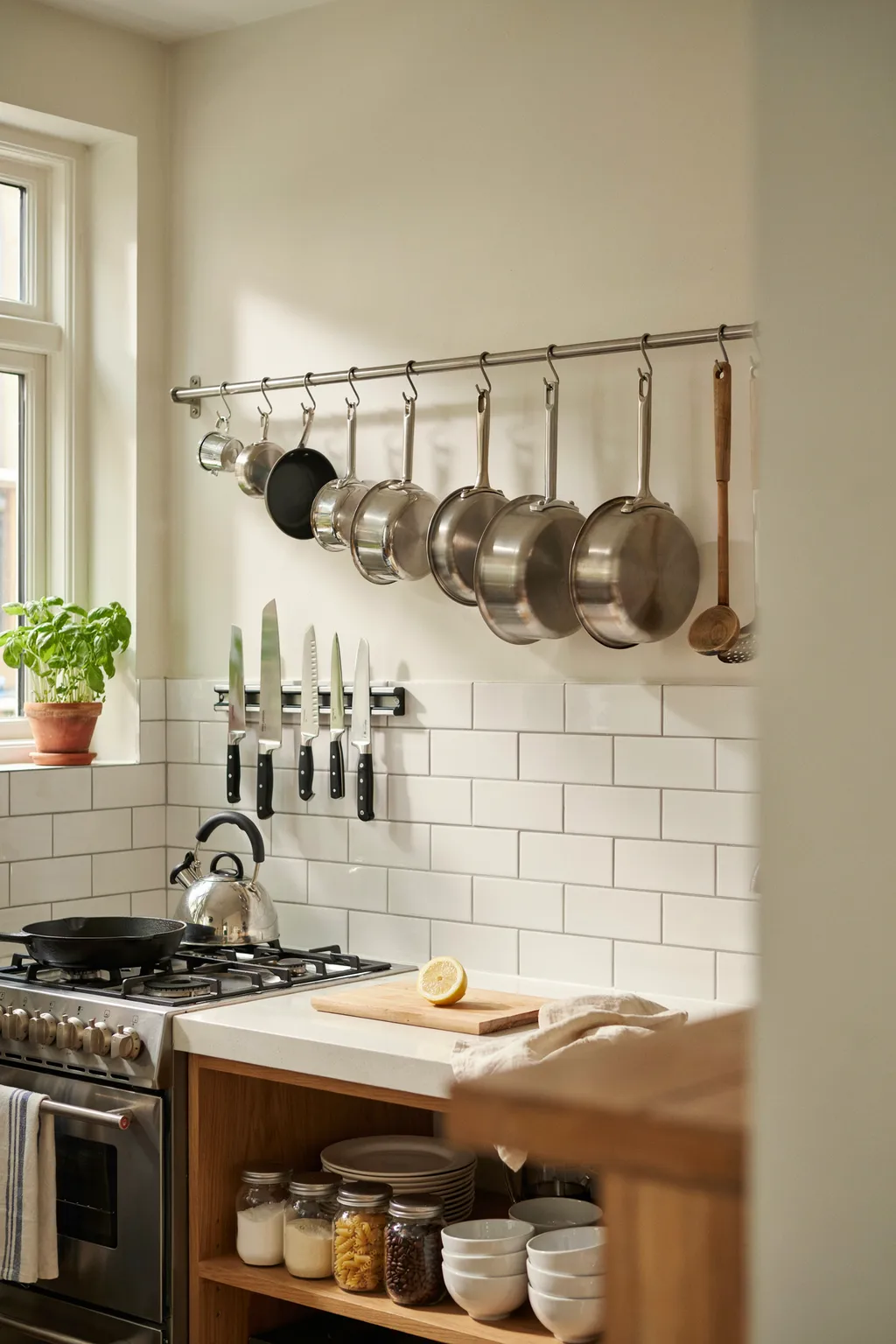
7. Hang Pots, Pans, and Tools on a Hardworking Wall
When the cabinets are full, the wall is your overflow drawer. Mount a steel rail above the counter and hang pans, ladles, and a knife strip from it, then add open lower shelves with labeled jars below. Everything you reach for daily sits in plain sight, which means you stop digging through a cupboard and stacking pans into a clattering tower. A busy wall sounds cluttered, but done in matching metal it reads as a deliberate, almost professional-kitchen look.
Pans hung flat take far less depth than pans nested in a base cabinet, and the cupboard you clear out swallows the bulky stuff instead. A rail system costs little and installs in an afternoon with a few anchors. The honest trade-off: hung pans gather a film of cooking grease over time and need an occasional wipe, and a chaotic mix of mismatched cookware will look messy, not curated. Hang the pieces you use, keep the colors tight, and the wall earns its keep.
8. Build a Tucked-In Dining Nook Instead of a Table
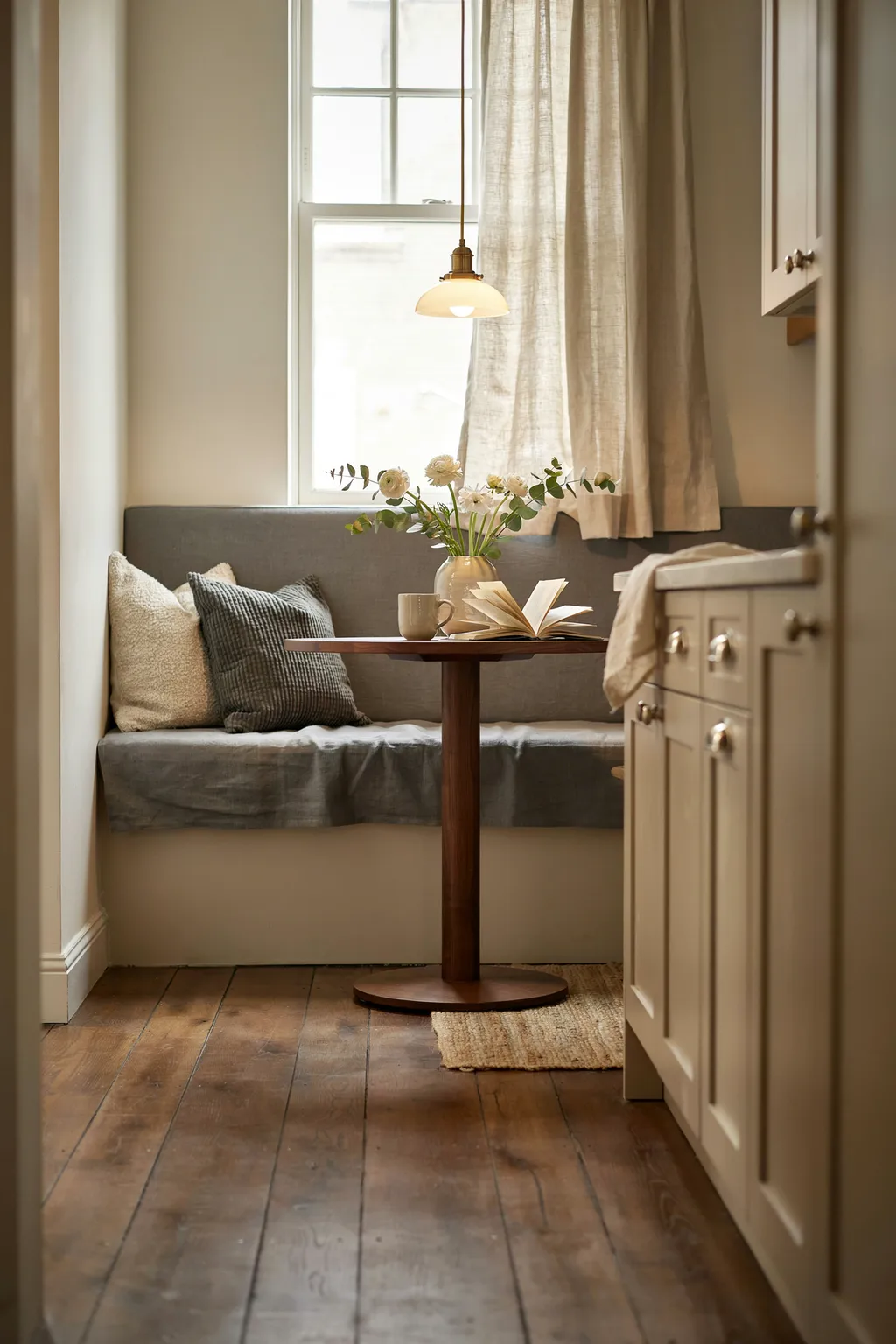
A freestanding table swallows floor space in a small kitchen. Build a banquette bench along one wall under the window, slide a slim pedestal table in front, and you seat three or four without blocking the walk. The bench seat lifts to reveal hidden storage, so the nook feeds two needs at once. Cushions and a pendant make the corner feel like the warmest spot in the home, which is a lot of payoff for a few square feet.
A bench pushes flat against the wall where a chair never could, reclaiming the swing room four pulled-out chairs would waste. A pedestal base also frees your knees from table legs, so the seats tuck in tighter. Who should skip it: if your only window sits over the sink, a banquette may not fit, and built-ins are harder to take with you when you move, so renters may prefer a drop-leaf table. For owners staying put, a nook is one of the most charming small kitchen ideas you can build in a weekend.
9. Climb the Vertical Space Above Eye Level
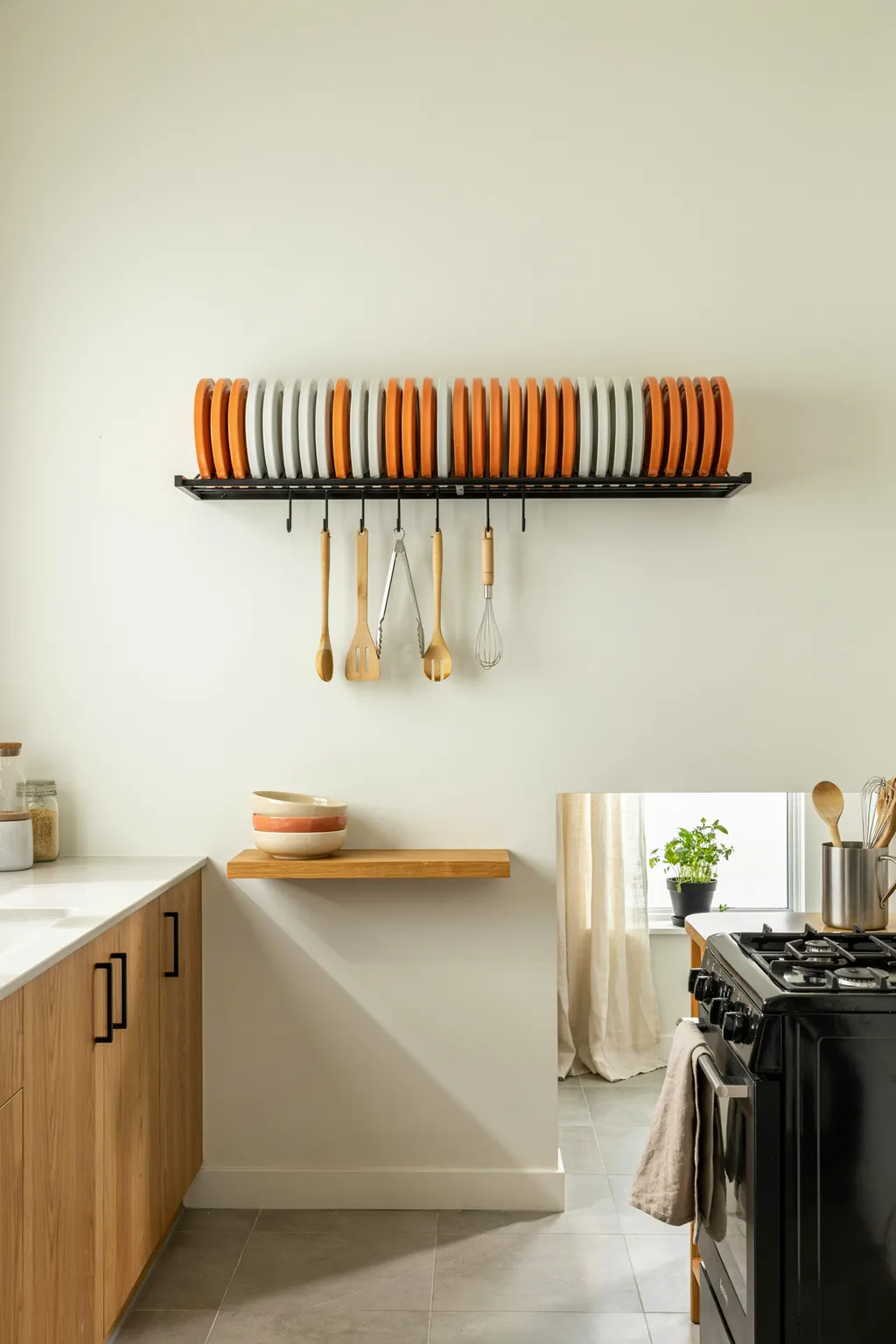
Most small kitchens waste the top third of every wall. Mount slim metal racks and brackets up high to hold plates, mugs, and the utensils you rarely need at arm’s reach, and the lower counter clears for actual cooking. Drawing the eye upward also makes the ceiling feel taller, which tricks the whole room into reading larger. These small kitchen ideas cost a few brackets and a drill, yet they free up storage you already own and never used.
Floor and counter space is finite, but wall height usually is not, and a rack at 60 inches holds what a base cabinet cannot spare room for. Matching black metal racks look intentional against a pale wall rather than busy. The caveat: anything stored above shoulder height is harder to reach safely, so keep heavy stockpots low and reserve the high spots for light, occasional items. A small step stool that slides under the counter solves the reach problem without taking floor space.
10. Let One Piece of Furniture Do Three Jobs
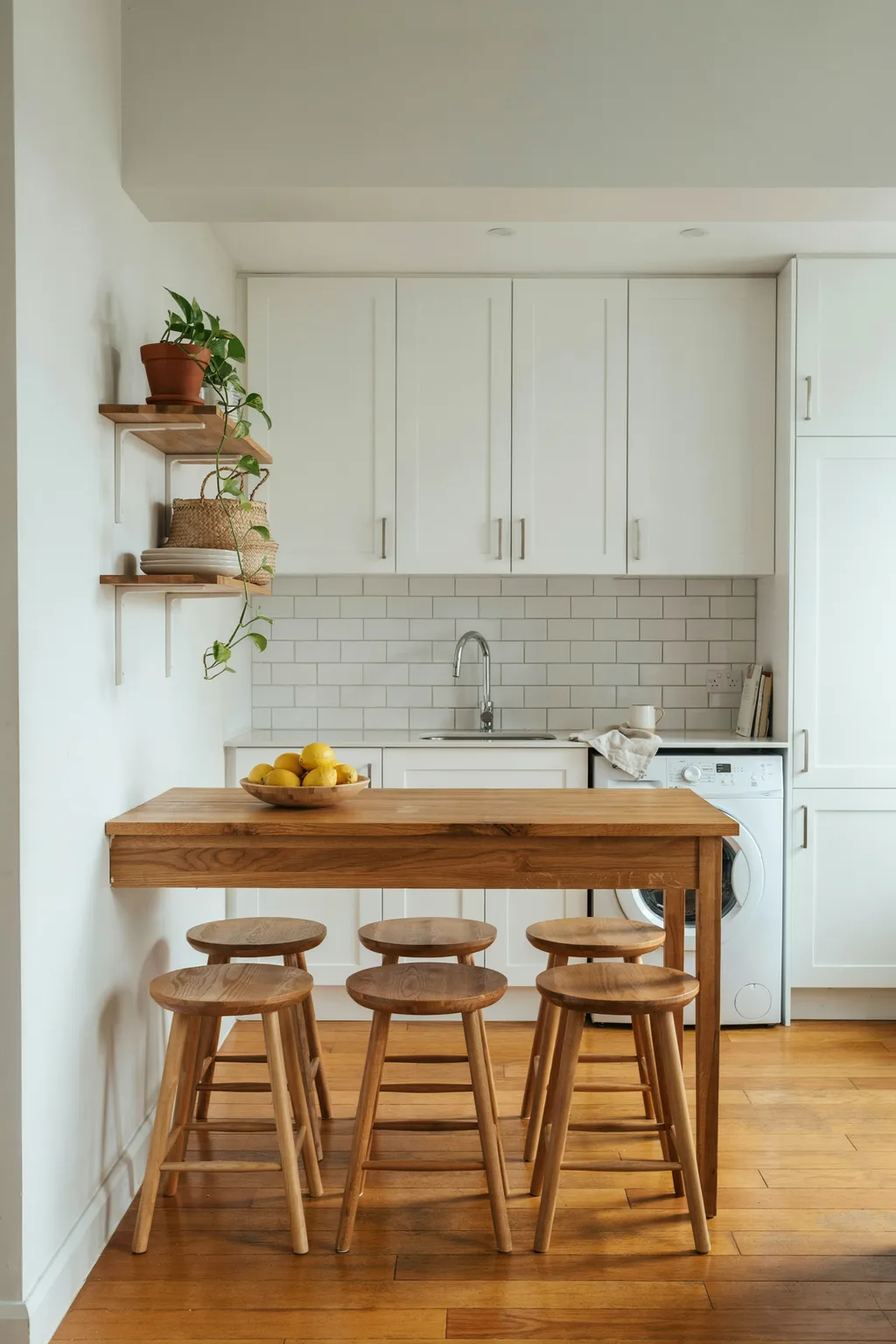
In the tightest kitchens, every piece should multitask. A wood-topped island that doubles as a prep counter, a dining table, and a laptop desk earns its footprint three times over, especially with a washer tucked beneath and stools that slide fully under. When one surface absorbs the jobs of three separate pieces, you reclaim the floor those extras would have claimed. That is the whole logic behind the smartest small kitchen ideas: subtract objects, keep functions.
A small room cannot afford single-use pieces, and a table you eat at, work at, and prep on never sits idle. Choose a height that splits the difference, around 36 inches, so it pairs with counter-height stools and lines up with the cabinets. The honest limit: a do-everything piece is a compromise at each job, so a serious home cook who also works from home may still want a separate spot. For most of us, though, one hardworking island beats three half-used pieces every time.
Common Mistakes to Avoid
Mistake 1: Leaving Everything on the Counter
A full counter is the single fastest way to shrink a small kitchen, both in looks and in usable prep room. Every appliance left out steals the space you actually cook on. Pick the two or three things you use daily, give the rest a home in a cabinet, and you reclaim a working surface without spending a cent.
Mistake 2: Using Cold, Blue-White Bulbs
High-kelvin bulbs make a tiny kitchen feel like a hospital corridor and flatten every texture. The fix is cheap: swap to 2700K warm bulbs and put them on a dimmer. Warm light hides tight dimensions and makes the same square footage feel softer and larger at night.
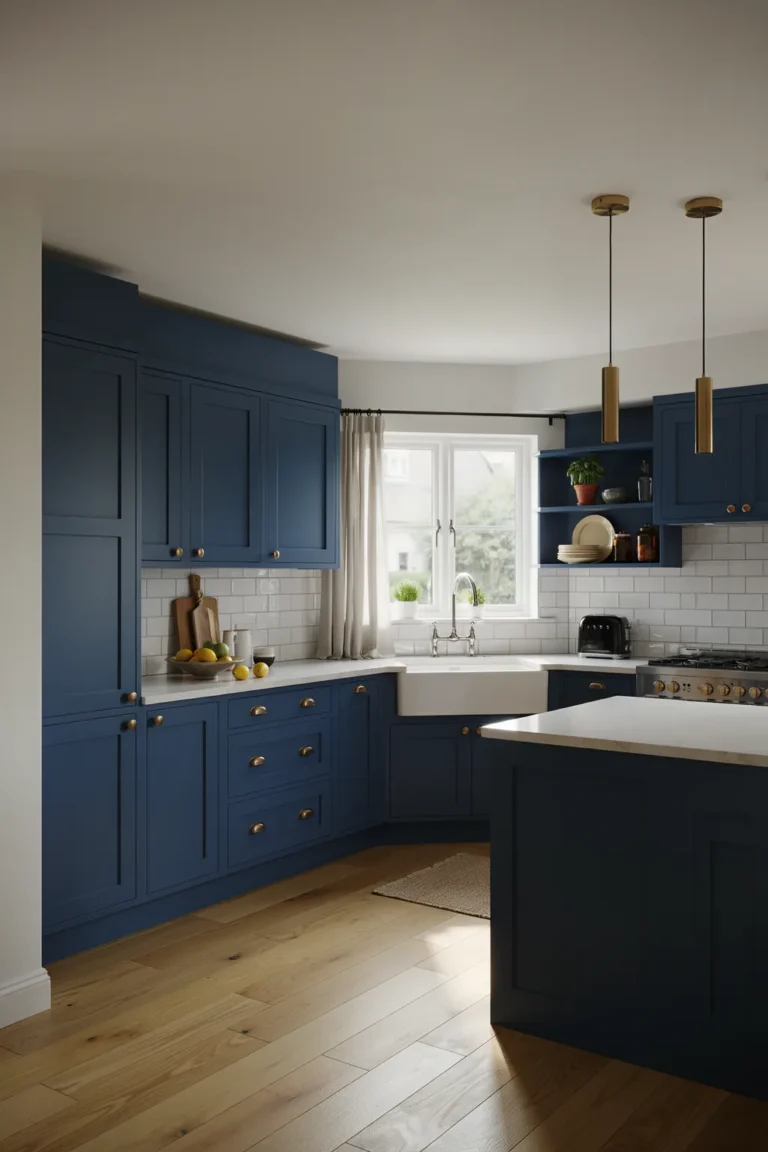
Mistake 3: Choosing High-Contrast Cabinets and Walls
Dark cabinets against pale walls chop a small room into segments and announce every boundary. That visual chopping makes the space feel smaller and busier. Keeping cabinets, walls, and trim in one light tone lets the room flow as a single calm volume.
Mistake 4: Buying Full-Size Appliances by Default
A standard 36-inch fridge can block a whole walkway in a galley. People buy big out of habit, then lose the counter and clearance they needed more. Measure first, then choose appliances scaled to one or two cooks; the lost capacity is rarely missed.
Mistake 5: Stacking Storage You Cannot Reach or See
Cramming a base cabinet into a dark tower of nested pans means you never find the one you want. Hidden, hard-to-reach storage is storage you stop using. Pull daily items onto open shelves or a wall rail and reserve deep cabinets for the bulky, occasional pieces.
Mistake 6: Forcing a Full Table Into the Room
A four-chair table with its pulled-out chairs can eat half a small kitchen’s floor. The swing room those chairs need is space you cannot walk through. A wall-mounted banquette or a drop-leaf table seats the same people while freeing the path.
Quick Start Checklist
- [ ] Clear the counters down to two or three daily-use items today.
- [ ] Swap every bulb to a warm 2700K and add one dimmer.
- [ ] Add under-cabinet light strips along your main prep run.
- [ ] Pick one cabinet run to replace with two load-rated open shelves.
- [ ] Paint walls, trim, and cabinets in one light, consistent tone.
- [ ] Mount a steel rail for pans and a strip for knives.
- [ ] Measure your doorway and clearance before buying any appliance.
- [ ] Install one high wall rack for plates and rarely-used tools.
- [ ] Choose a step stool that slides under the counter.
- [ ] Replace a freestanding table with a banquette or a multitasking island.
Frequently Asked Questions
How do I make a small kitchen look bigger without renovating?
Start with light and clutter, not construction. Clear the counters, switch to warm bulbs, and paint everything in one pale tone so the corners blur. Then push storage up the walls with shelves and rails. These no-build small kitchen ideas change how the room reads in a single weekend and cost far less than any remodel.
What is the best color for a small kitchen?
A soft, consistent light tone wins almost every time: warm white, pale greige, or a gentle cream across cabinets, walls, and trim. One tone erases the visual edges that make a room feel chopped up and small. If you want color, add it in a single accent, like a pendant or a runner, and keep the big surfaces pale.
Are open shelves a good idea in a small kitchen?
Yes, if you keep a fairly tidy, curated set of dishes. Open shelves let light and air pass where closed cabinets create a heavy, closed-in grid, so the wall feels deeper. The trade-off is dust and the need to stay neat. If you stack dozens of mismatched mugs, closed cabinets will look calmer.
How much does it cost to update a small kitchen?
You can do a lot for under $300: warm bulbs, a dimmer, a paint can, a rail system, and a pair of shelf brackets. Compact appliances and built-in nooks push the budget into the hundreds or low thousands. The cheapest wins, light, paint, and decluttering, often make the biggest visual difference.
What size fridge fits a small kitchen?
A 24-inch counter-depth refrigerator suits most small kitchens and one or two cooks, versus the standard 30 to 36 inches. It frees walkway and counter space and still holds a week of groceries for a couple. Measure your doorway, turning radius, and the gap to opposite cabinets before you commit, since clearance trips people up more than capacity does.
How do I add storage to a tiny kitchen with no room?
Look up and out, not down. Mount wall rails for pans, high racks for plates, and slim shelves for daily dishes, then reserve deep cabinets for bulky items. A bench with under-seat storage and an island with a hidden machine below add capacity without claiming new floor. The walls and the undersides of furniture are your unused storage.
Conclusion
A small kitchen is not a problem to renovate away; it is a puzzle to solve with light, color, and smarter storage. The strongest small kitchen ideas all do the same quiet thing: they take pressure off the floor and the counter and move it onto the walls and into the corners, so the room you already have starts to feel like more of it.
If you only do three things, do these. Clear the counters and switch to warm, dimmable light, because that costs almost nothing and changes how every surface looks. Paint the cabinets, walls, and trim one soft tone to blur the edges and stretch the corners. Then pick the storage move that fits your layout, open shelves, a pan rail, a high rack, or a multitasking island, and commit to it fully. Skip the ideas that fight your floor plan; a galley wants a clean straight run, a square room wants a corner nook.
Start this weekend with the counters and the bulbs. Take a photo before you begin and another when you finish, and the difference will tell you which of these moves your kitchen was waiting for.