10 Small Bedroom Nightstand Ideas That Maximize Space
Your bed barely fits, and there is no room left for a real nightstand. So your phone, glasses, and half-read book end up on the floor or piled on the windowsill. That daily clutter makes a small room feel even smaller. The fix is not a bigger bedroom. It is a smarter bedside piece, and the right small bedroom nightstand ideas can carve out a spot where you swore none existed.
A standard nightstand eats 18 to 24 inches of floor. In a room where the bed sits 10 inches from the wall, that math never works. The trick is to stop thinking of a nightstand as a box on legs. It can float off the wall, hang from the bed frame, lean in a corner, or slide away when you do not need it. Each of these keeps your essentials within arm’s reach without stealing the walking space you already lack.
This guide breaks down 10 real options, each with the rough size it needs, what it costs, and who it suits. Some mount to the wall for a clean, floor-free look. Some do double duty as a desk or a stool. A couple work even when the gap beside your bed is only a few inches. Pick the one that matches your wall, your budget, and how much you actually keep beside the bed, and the pile on the floor disappears for good.
Quick Answer
In a tight bedroom, mount your bedside storage on the wall or pick a piece with a footprint under 14 inches. The best small bedroom nightstand ideas trade the bulky floor box for a floating drawer, a wall shelf, a slim table, or a stool that pulls double duty. Aim for a surface 24 to 28 inches high (level with your mattress top), keep only the essentials on it, and choose wall-mounted or slide-away options when floor space is the real problem.
1. Float a Drawer Nightstand Off the Wall
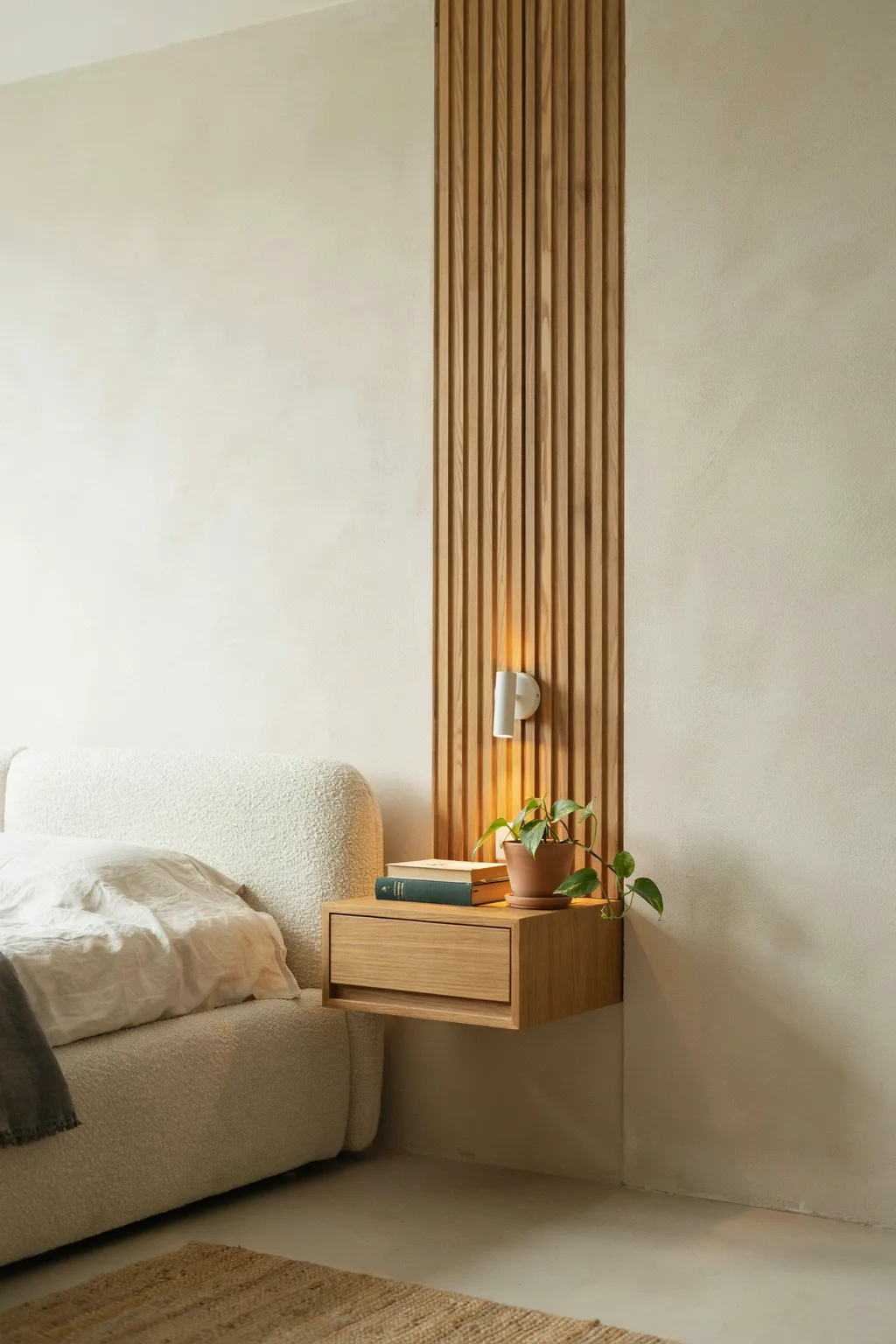
A floating nightstand mounts straight to the wall, so the floor beneath it stays open. That sliver of visible floor is what tricks the eye into reading the room as bigger. Add a single drawer and you still get hidden storage for chargers, meds, and clutter, without the bulk of legs. Pair it with a wall sconce instead of a table lamp and the whole surface stays clear. This is one of the most flexible small bedroom nightstand ideas because you set the exact height and position.
Mount it level with your mattress top, usually 24 to 28 inches off the floor, so grabbing your phone half-asleep is easy. Anchor it into wall studs, not just drywall plugs, since a loaded drawer plus a lamp can pull 25 pounds or more. If you are unsure how to find a stud, this guide from This Old House walks through it. Skip this idea if you rent and cannot drill, or if your wall is old plaster that will not hold a bracket.
2. Slip in a Slim-Profile Nightstand
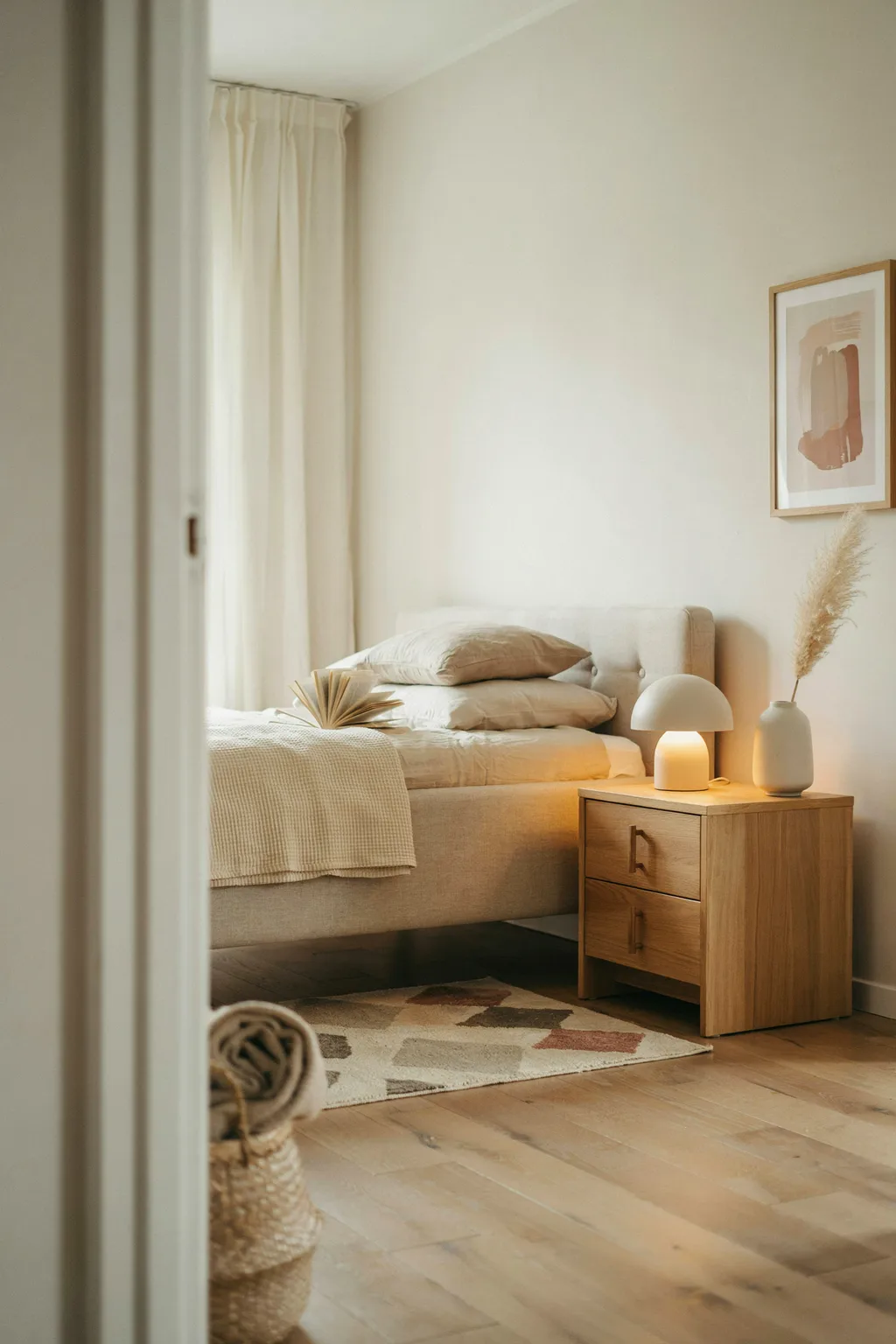
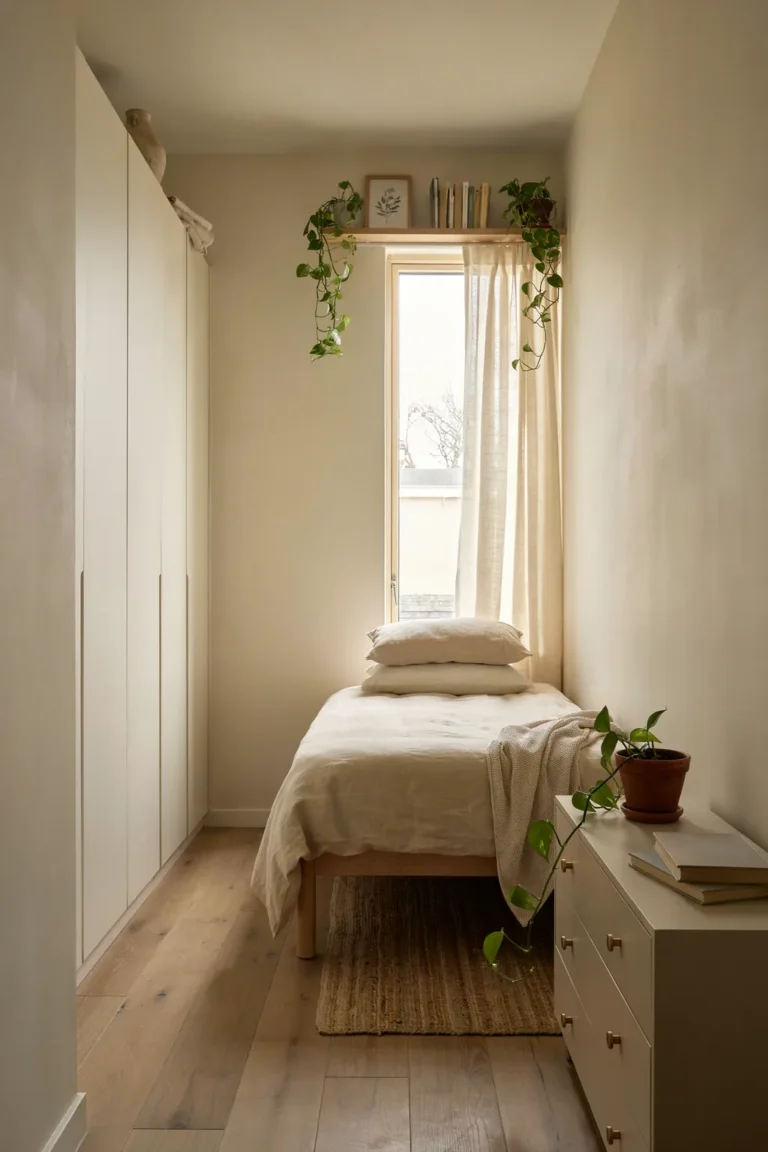
When you want real drawers but the floor gap is narrow, go slim. A nightstand under 16 inches wide and around 12 inches deep fits gaps that a standard 22-inch unit never could. You still get two drawers for socks, cables, and bedtime clutter, just in a tighter package. In warm wood or a soft neutral, it reads calm and intentional rather than crammed in. A small dome lamp on top finishes the look without hogging the surface.
The win here is proportion. A skinny nightstand next to a low platform bed keeps the sight lines low and open, so the room breathes. Measure your gap first and leave at least 2 inches on each side so the drawers actually open past the bed frame. Two shallow drawers beat one deep one in a small room, since you can see everything at a glance. This suits anyone who wants drawer storage but cannot spare the width for a full-size piece.
3. Mount a Single Wall Shelf as a Nightstand
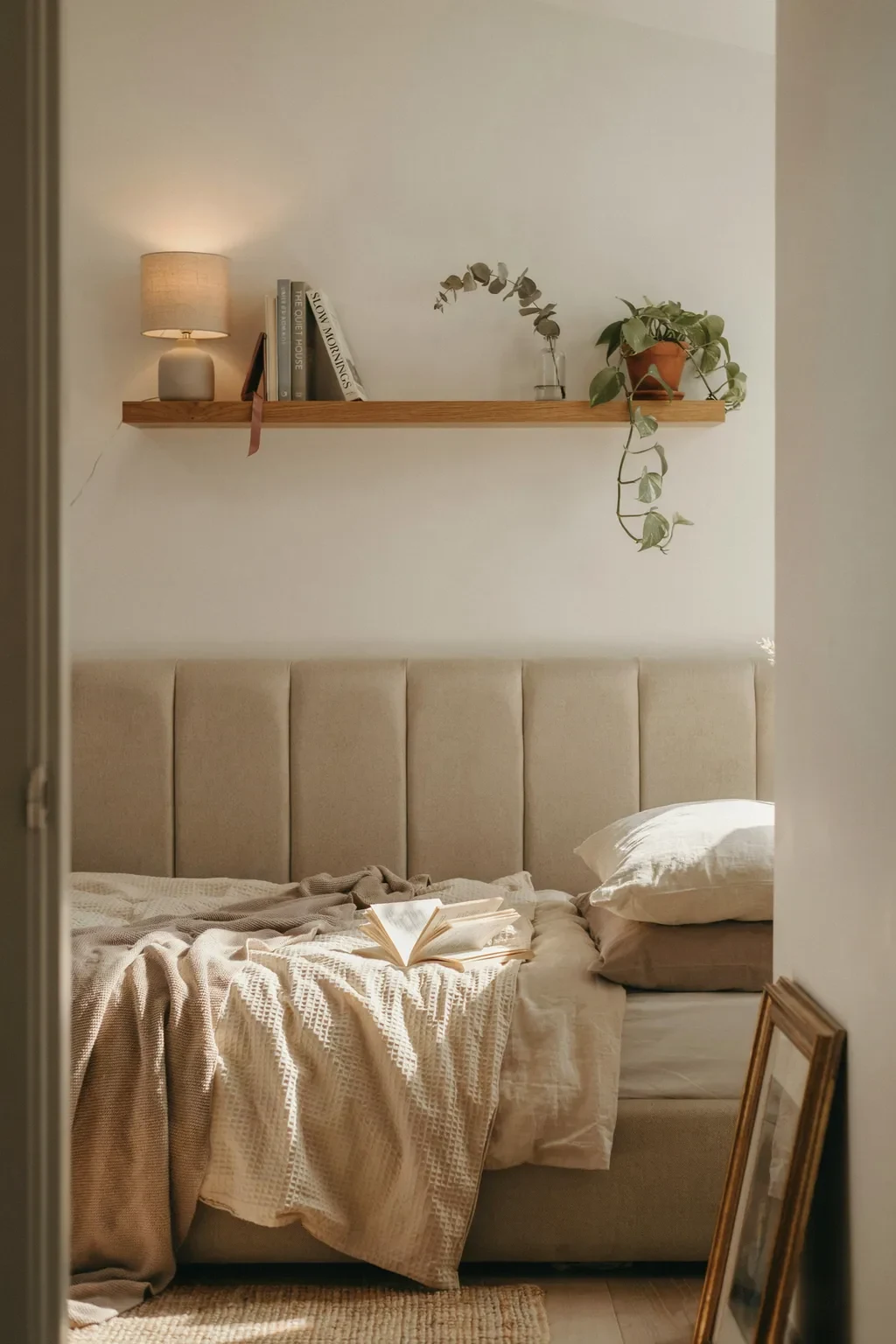
The leanest option of all is one floating shelf. No legs, no drawers, no floor contact at all. A shelf 8 to 10 inches deep holds a lamp, a phone, and a glass of water, which is everything most people actually need at night. Set a small swing-arm sconce above it and you have a full bedside station that takes up zero floor. In a rented studio or a bed pushed into a corner, this can be the only thing that fits.
Because it is so minimal, styling matters. A stacked pair of books, a short vase, and a small dish for jewelry keep it useful without looking cluttered. Keep the shelf shallow so you do not clip your shoulder walking past. The obvious trade-off is no hidden storage, so this works best for tidy sleepers who keep little at the bedside. If you pile up remotes, glasses, and lotion, a shelf alone will overflow fast.
4. Repurpose a Sculptural Stool
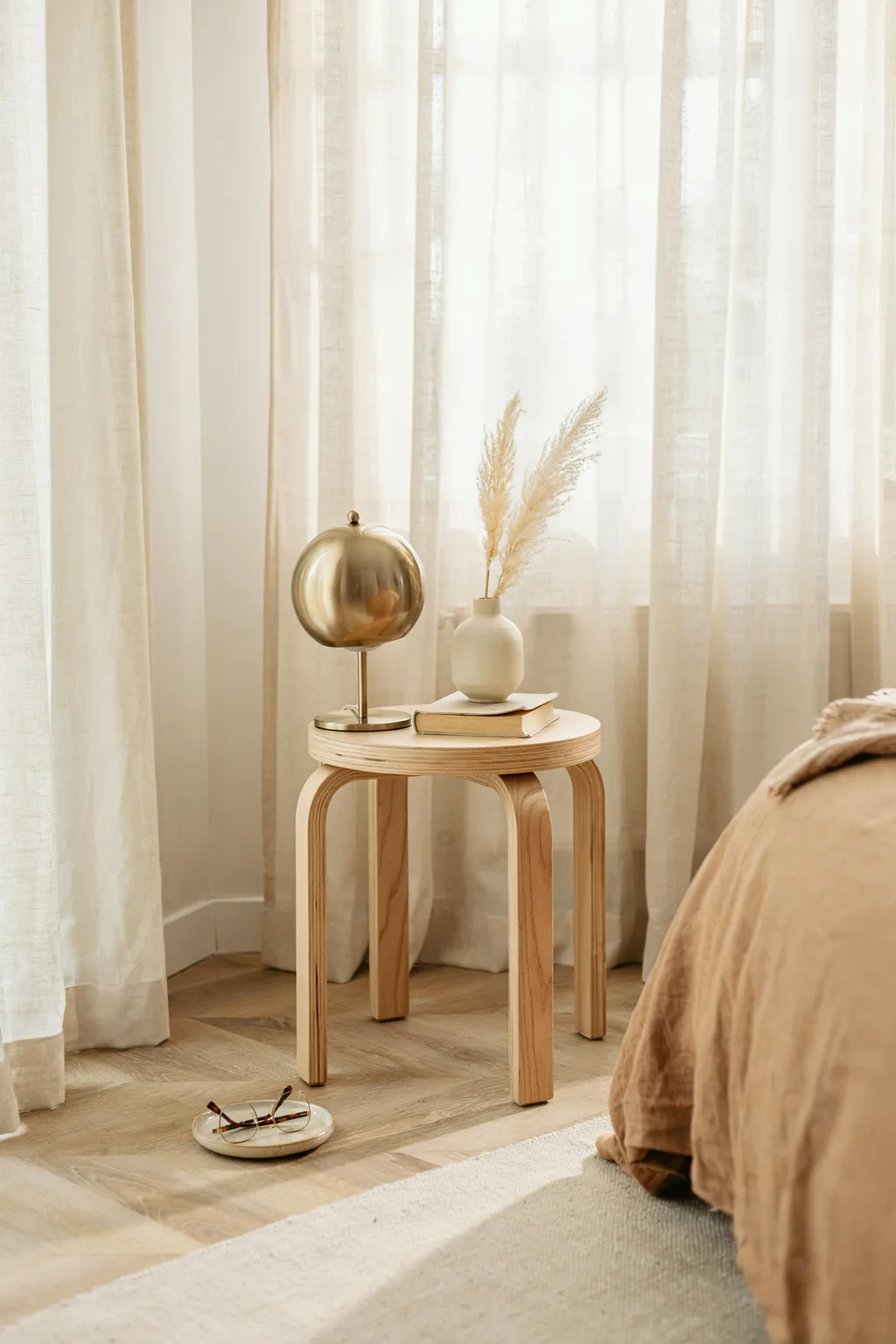
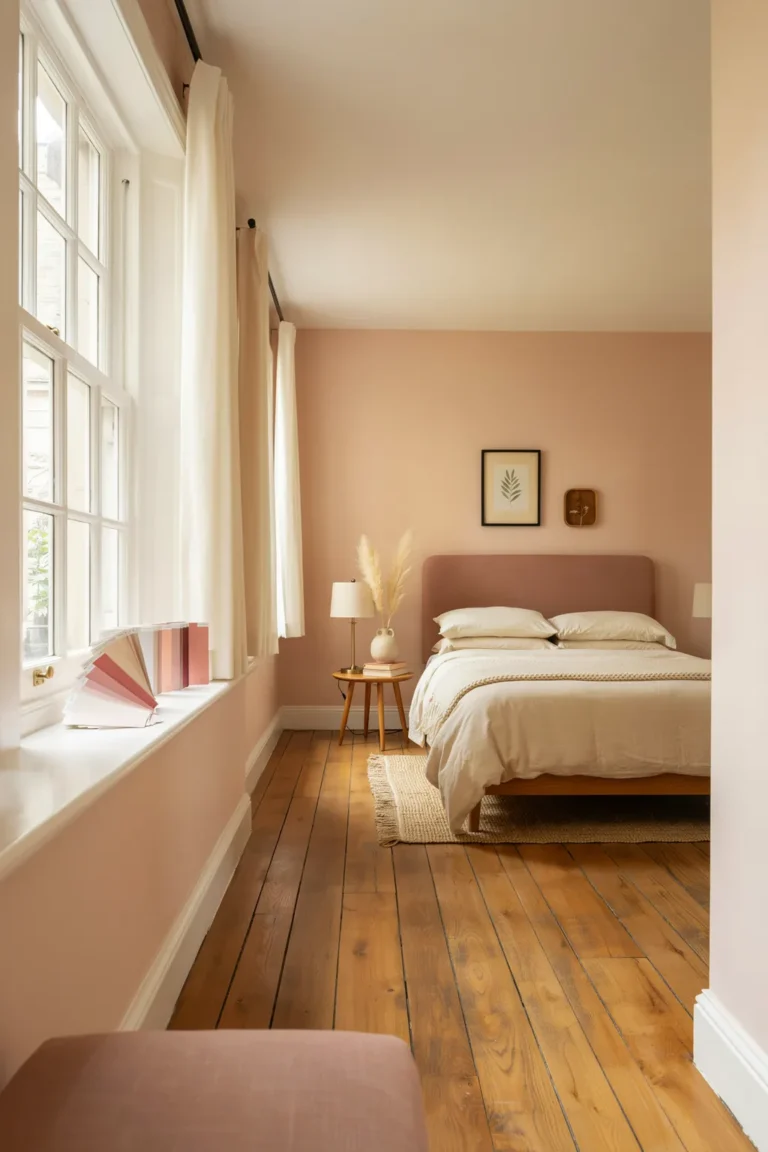
A stool beside the bed pulls double duty: nightstand tonight, extra seat when a friend visits. A solid wood stool with a sculptural, turned base adds real character while keeping the footprint small, usually 14 to 18 inches across. The flat top holds a lamp, a small vase, and a book with room to spare. Because it has no drawers or shelves, it never looks bulky, which is exactly why it works in a cramped corner.
Match the height to your mattress, roughly 18 to 22 inches, so the top sits near the bed surface. A stool in warm oak or teak brings texture that a plain box nightstand cannot. It is also easy to move, so you can pull it out for cleaning or slide it aside when you need the floor. The catch is storage: there is none. This one is for minimalists who keep only a lamp and a phone at the bedside, not for anyone who needs a drawer.
5. Build In Bedside Storage Around the Bed
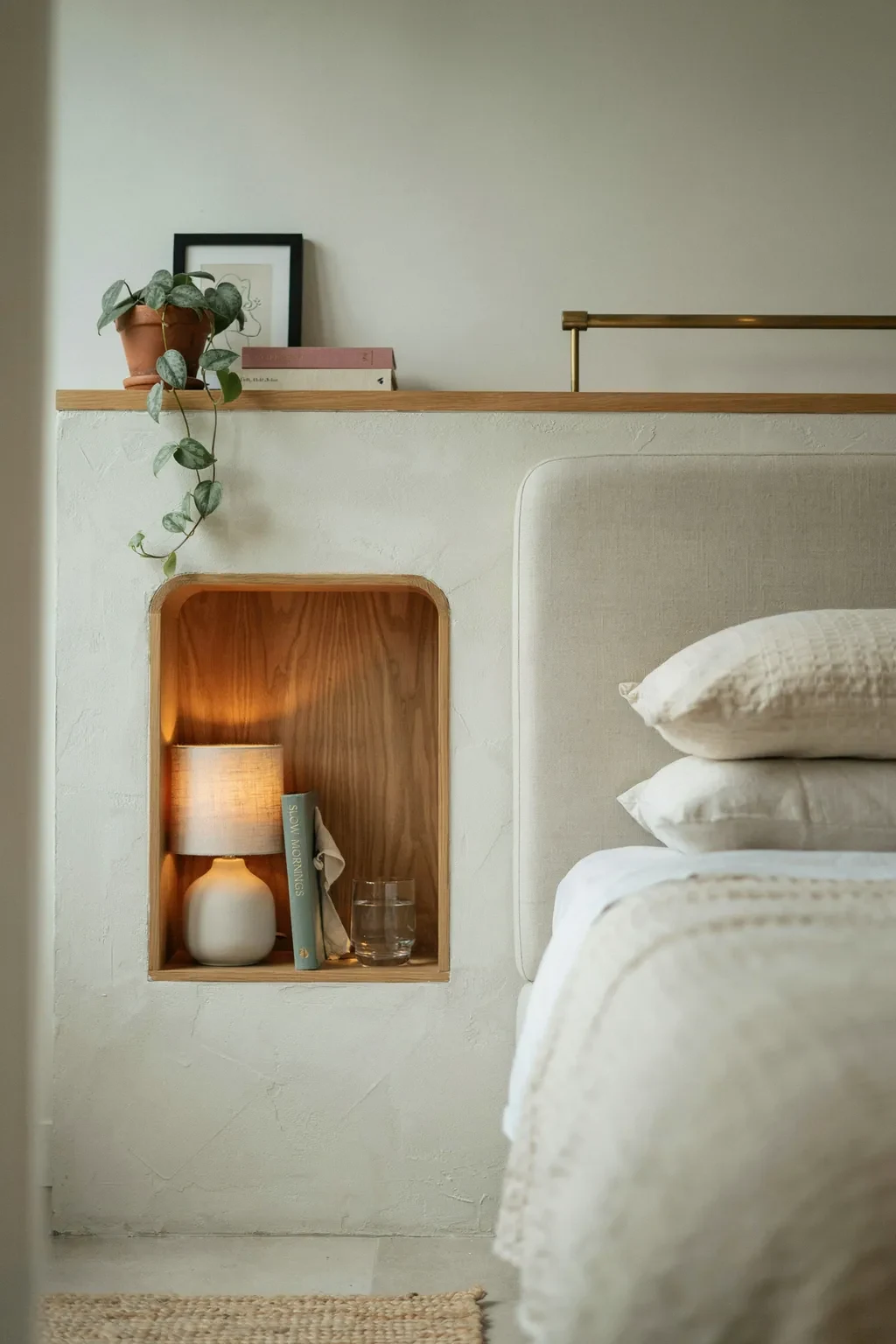
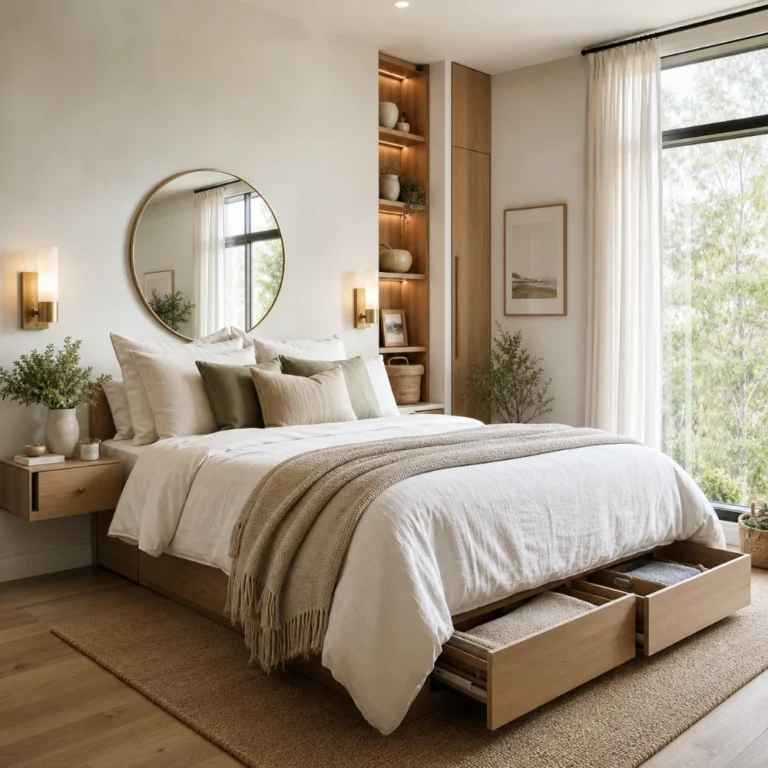
If the room is truly tight and you want maximum storage, build up and around the bed. Custom or flat-pack cabinetry that frames the headboard turns dead wall space into shelves, cabinets, and a low bedside surface all at once. Open niches hold books and decor, closed cabinets hide the mess, and a slim drawer at mattress height acts as the nightstand. This is the heavy-duty answer among small bedroom nightstand ideas, since it uses vertical space the floor plan cannot.
The reason it works so well is that it stops treating the nightstand as a separate object. Everything integrates into one wall, so the room reads calm and built-for-purpose. You can fake the custom look for less by combining stock cabinets, like IKEA units, with a floating shelf between them. Be honest about the commitment, though: this is the priciest and most permanent option, often running well into four figures with install, so it suits owners, not short-term renters.
6. Lean a Ladder Shelf by the Bed
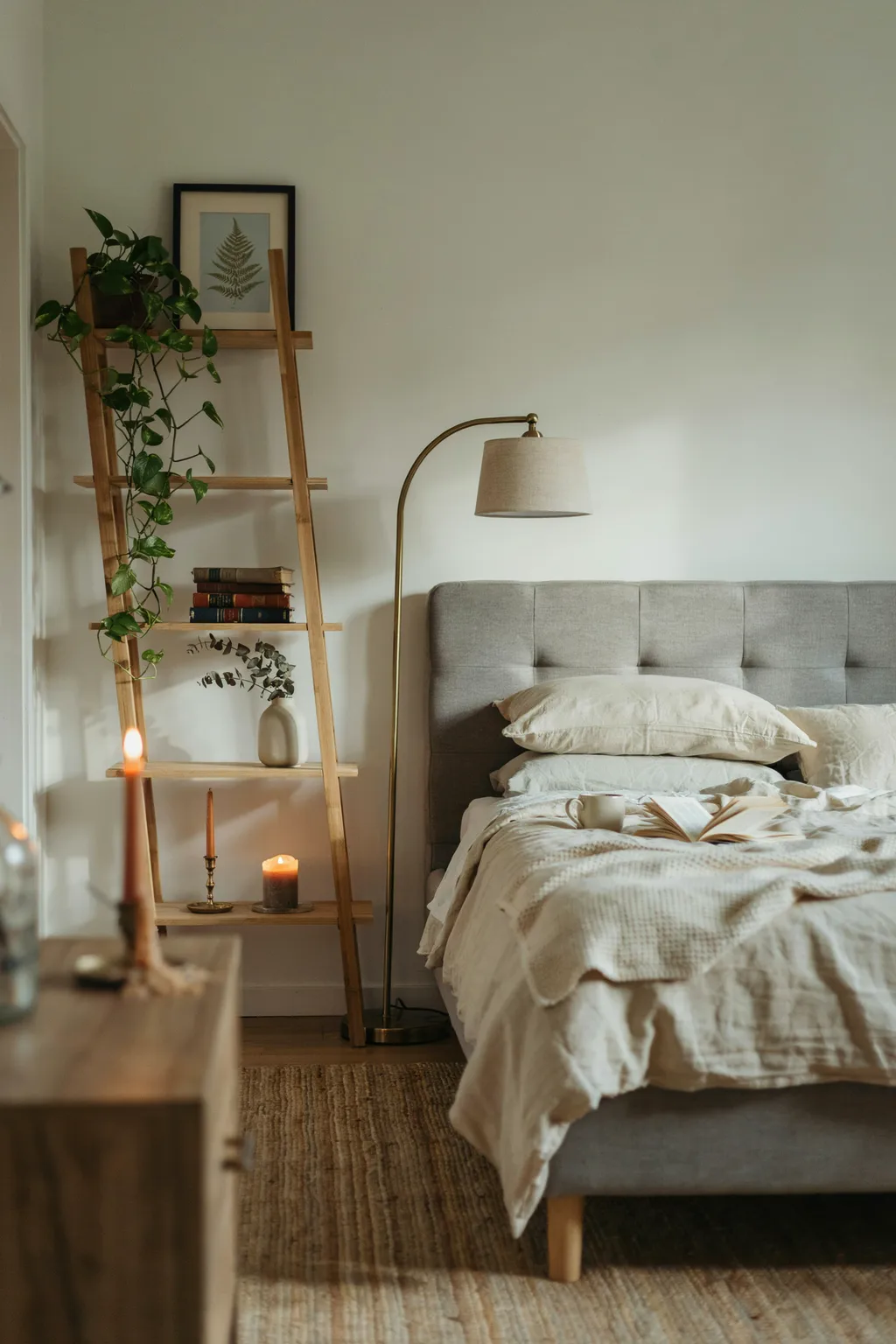
A leaning ladder shelf gives you vertical bedside storage on a tiny floor footprint. The bottom rungs sit close to the wall, so the base takes up little room, while the upper shelves hold plants, books, and decor that would never fit on a normal nightstand. The shelf nearest mattress height becomes your bedside surface for a lamp and a phone. It brings warmth and a styled, layered look that a single box just cannot match.
The magic is that it grows upward instead of outward, which is the whole game in a small room. A wood ladder shelf leaning at a slight angle draws the eye up and makes the ceiling feel higher. Anchor the top to the wall with a small bracket or strap, because a leaning shelf loaded with books is a genuine tip hazard, especially around kids or pets. Keep the heaviest items on the lowest shelves for stability. This suits renters too, since one small anchor screw is easy to patch later.
7. Combine a Nightstand With a Bedside Desk
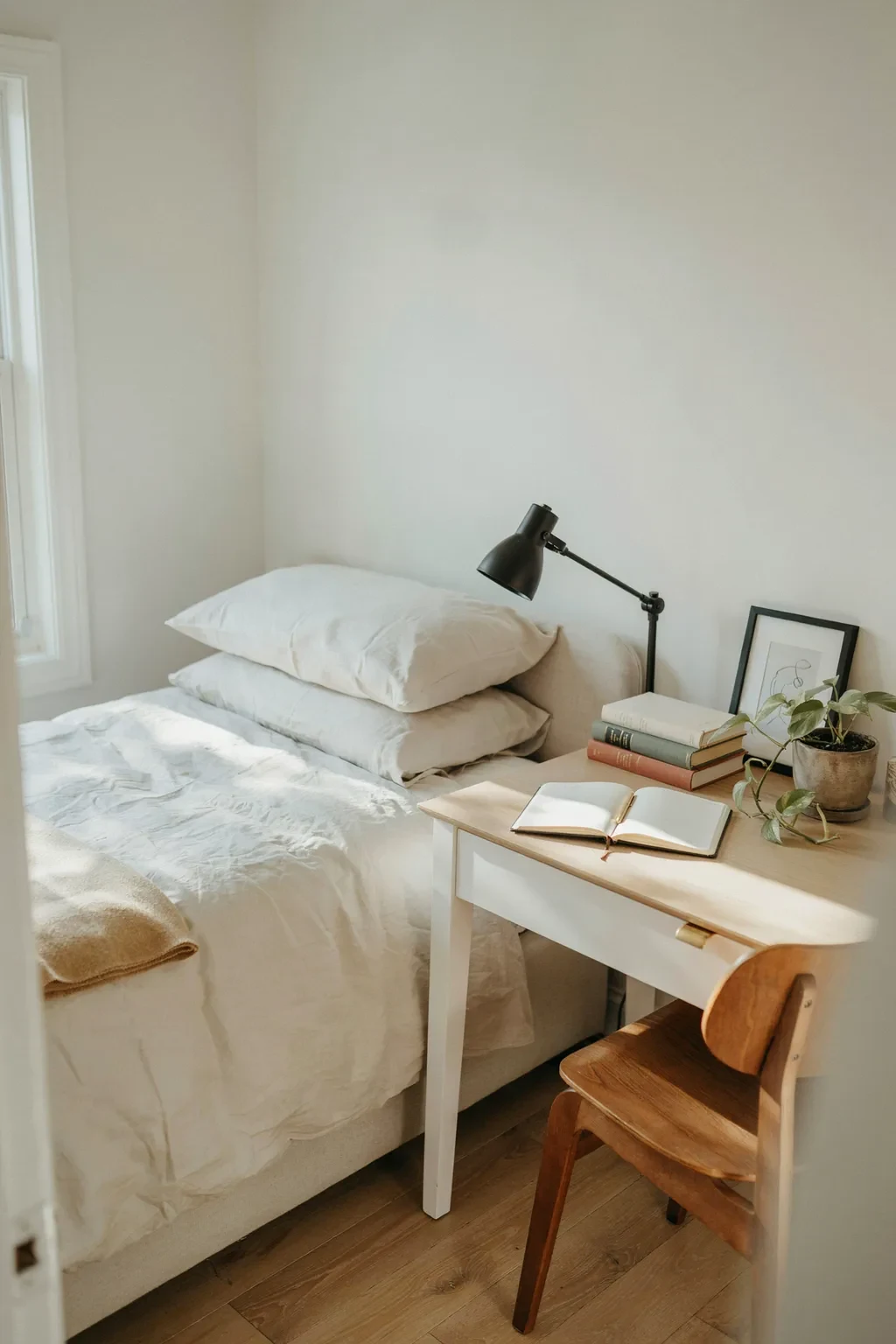
In a studio or a room that has to work as an office too, let one piece do both jobs. A compact desk placed at the head of the bed acts as your nightstand at night and your workspace by day. The desktop holds a lamp, a book, and your phone within reach of the pillow, then clears off for a laptop in the morning. This is one of the most efficient small bedroom nightstand ideas because it removes a whole separate piece of furniture from the room.
A desk this close to the bed keeps everything in one zone, so you are not furnishing two areas in a space that only fits one. Look for a desk around 29 to 30 inches tall with a shallow drawer for supplies. The honest downside is height: a desk sits taller than a typical nightstand, so a bulky lamp can feel looming over the pillow. Choose a slim lamp or a wall light, and tuck the chair fully under the desk so it never blocks the path to bed.
8. Choose a Minimalist Pedestal Table
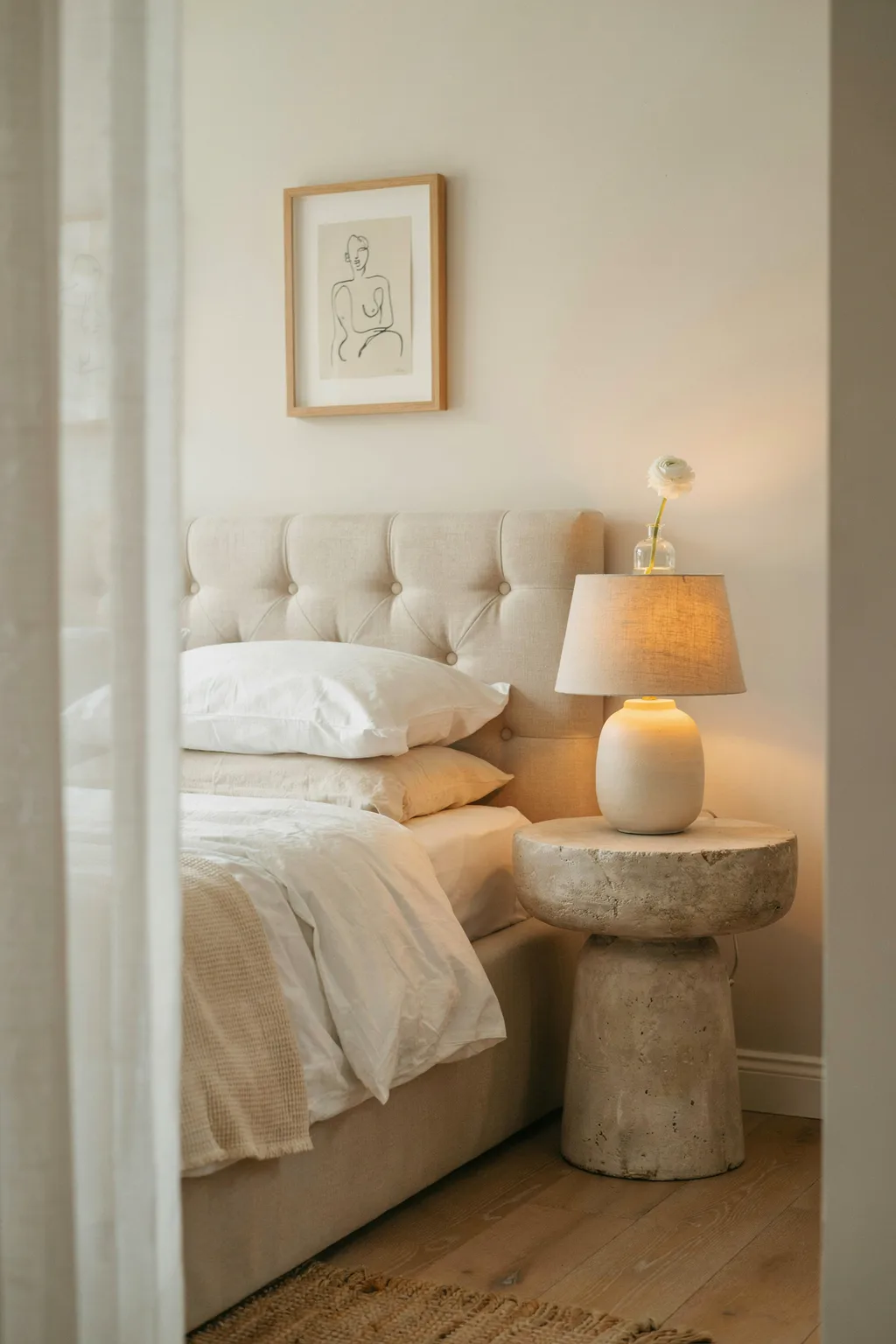
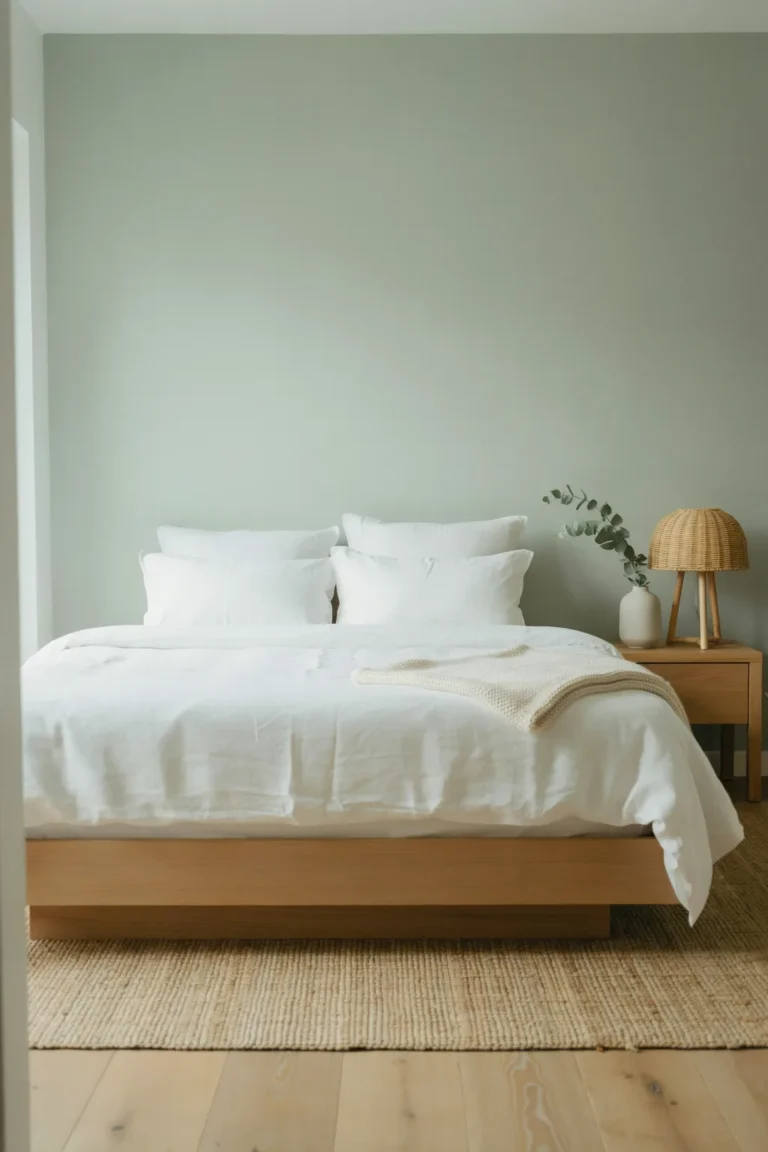
A round pedestal table is the quiet, elegant pick for a small room. With a single central base instead of four legs, it reads light and takes up minimal visual space, even though the top gives you a usable surface. A 14 to 16 inch diameter top holds a lamp and a small vase with ease. The rounded shape also means no sharp corner to bump in the dark, a small but real perk in a tight walkway beside the bed.
Curves soften a cramped room the way hard rectangles cannot, so a pedestal side table keeps the space feeling calm. A stone, concrete, or ceramic base adds a grounded, high-end touch that belies its small size. Because the base is narrow, do not top it with a heavy lamp that could make it tippy; match a lightweight lamp to a chunky base for balance. This one suits anyone chasing a serene, decor-forward look who does not need drawer storage at the bedside.
9. Hang a Caddy Off the Bed Frame
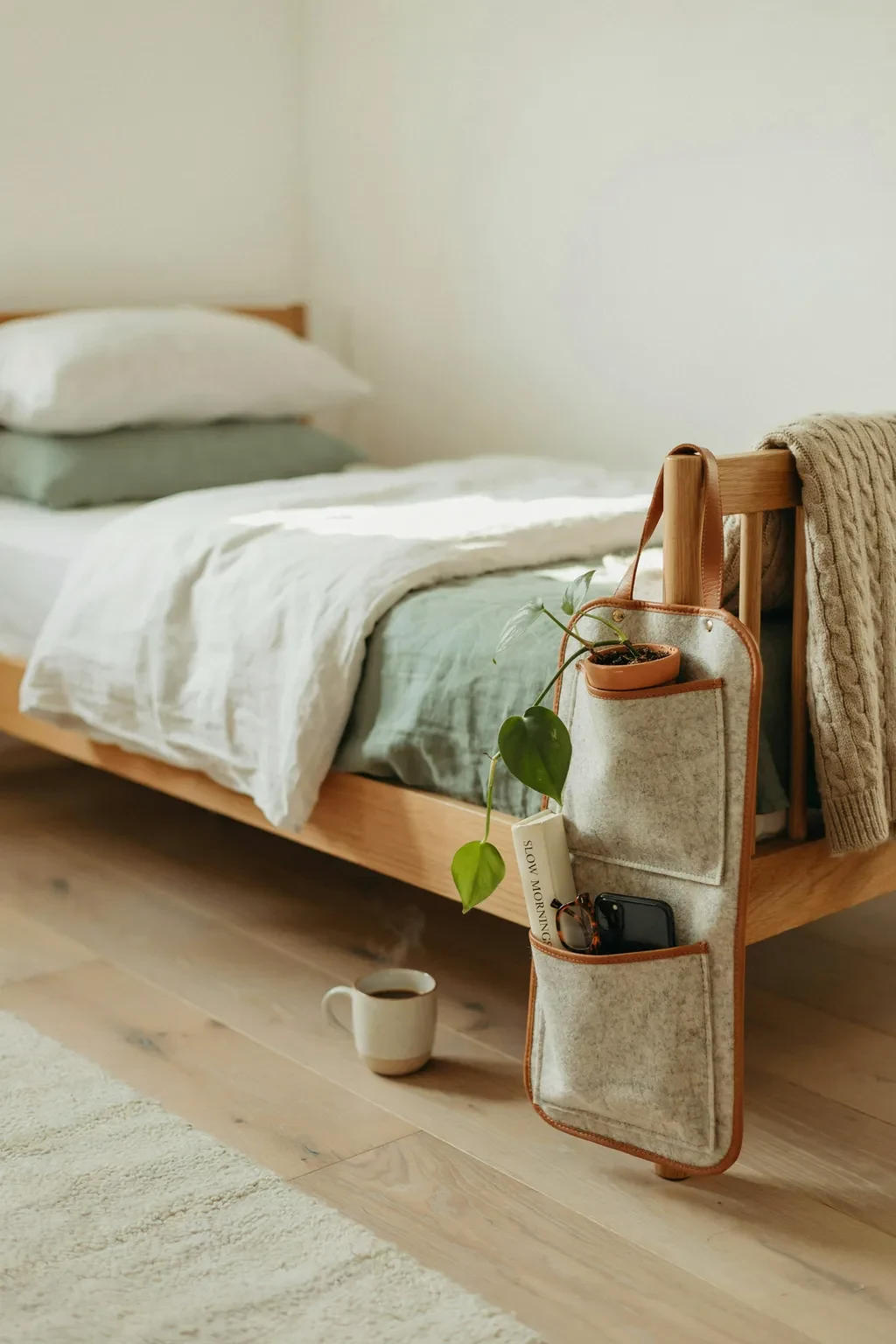
When the gap beside your bed is measured in inches, skip the furniture entirely and hang your essentials off the bed itself. A fabric or felt bedside caddy drapes over the mattress or clips to the frame, holding your phone, glasses, a book, and the remote. It has a truly zero floor footprint, which no table can claim. For a bunk bed, a loft, or a bed jammed against the wall, this is often the only thing that fits.
The appeal is how little it asks of the room. Nothing to assemble, nothing to anchor, and you can move it in a second. A caddy in canvas or wool blends in against neutral bedding and costs very little, often under 25 dollars. Be realistic about its limits, though: it is meant for light, flat items, not a lamp or a full glass of water that could spill into the sheets. Use it alongside a wall sconce so you still get light without needing a surface.
10. Slide a C-Shaped Table Over the Bed
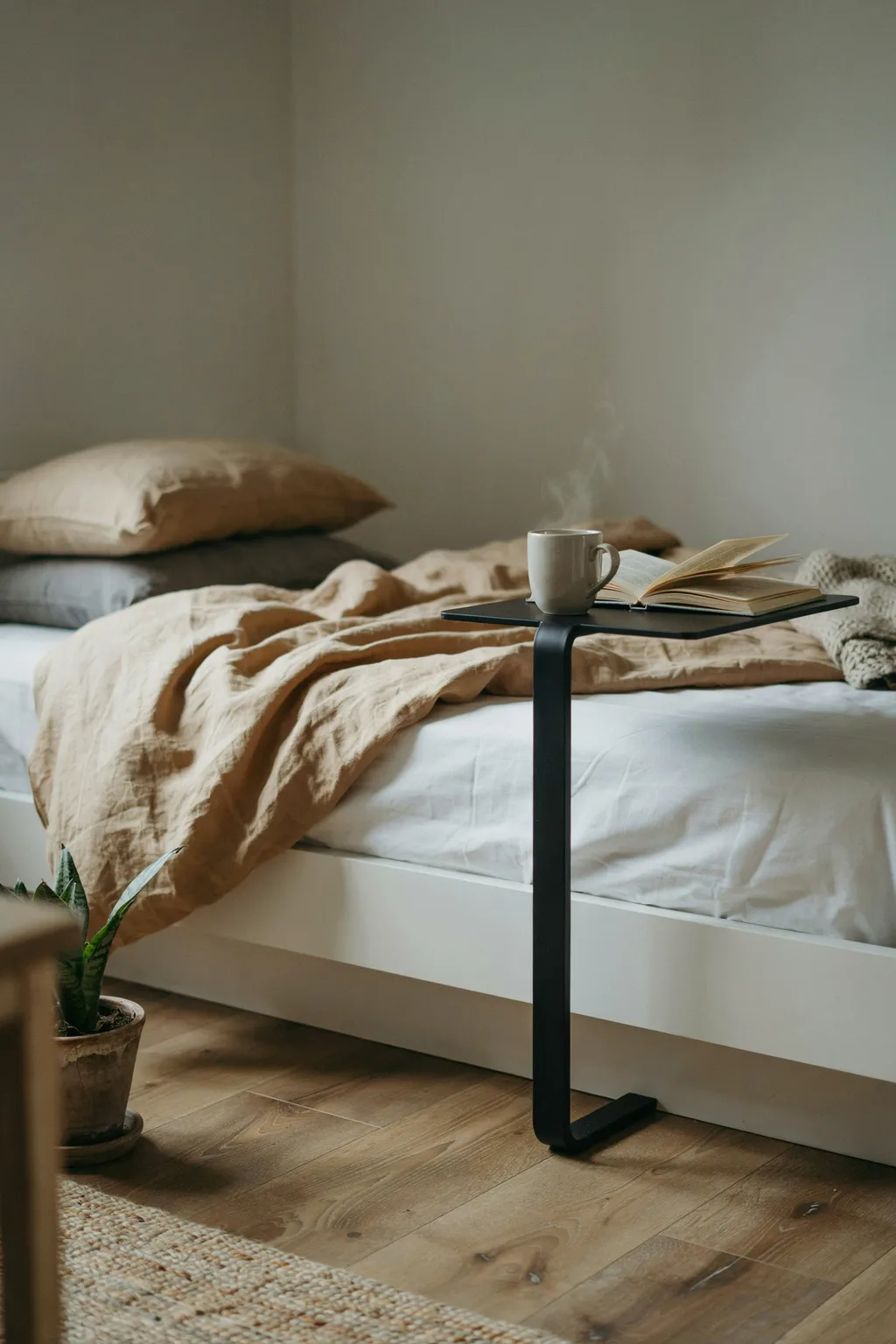
A C-shaped side table has a flat base that slides right under the bed or sofa, so the tabletop hovers over the mattress edge exactly where you want it. When you are done, it stays put or rolls away, using space that was already wasted under the bed. The surface sits close, so your laptop, tea, or book is always within reach without a bulky box taking permanent floor space beside you.
This design turns the unused inches under your bed into the table’s parking spot, which is why it feels like it takes up nothing. Check that your bed frame has at least a few inches of clearance underneath for the base to slide in; a platform bed flush to the floor will block it. A metal or wood C-table in a slim finish holds up to a laptop and a drink easily. It is ideal for people who read or work in bed and want the surface only when they need it.
Common Mistakes to Avoid
Even the smartest small bedroom nightstand ideas fall flat if you get the basics wrong. Here are the errors that quietly cost you space and how to fix each.
Mistake 1: Buying a nightstand that is too tall or too short
A surface far above or below the mattress makes grabbing your phone awkward and looks off-balance. Aim for a top 24 to 28 inches high, within a couple inches of your mattress surface. Measure your bed height first, then shop, not the other way around.
Mistake 2: Choosing a piece before measuring the gap
Guessing the bedside gap leads to a nightstand whose drawers hit the bed frame and never open. Measure the width between the bed and the wall, then subtract 4 inches for clearance. That number is your maximum nightstand width.
Mistake 3: Piling everything onto a tiny surface
A small top buried under lotion, cables, and mugs cancels out any space you saved. Keep only three or four essentials on display and move the rest into a drawer, a caddy, or a nearby shelf. A clear surface reads calm and larger.
Mistake 4: Skipping wall anchors on floating or leaning pieces
A floating nightstand or ladder shelf that is not anchored into a stud can rip loose or tip over. Always mount into framing, not just drywall, and strap leaning shelves at the top. This protects your wall, your gear, and anyone nearby.
Mistake 5: Forgetting the lamp in the plan
Choosing a tiny table and then topping it with a big lamp wastes the whole surface. Plan the light first: a wall sconce or a slim, tall lamp frees the tabletop for the things you actually use at night.
Mistake 6: Matching a pair when only one side fits
Forcing two nightstands into a room that fits one crowds the walkway and blocks a door or closet. In a small room, one bedside piece plus a wall shelf or sconce on the other side often works better than a matched pair.
Quick Start Checklist
- [ ] Measure the gap between your bed and the wall, then subtract 4 inches
- [ ] Measure your mattress-top height so the surface lands 24 to 28 inches up
- [ ] Decide if you need hidden storage (drawer) or just a surface (shelf, stool, pedestal)
- [ ] Check whether you can drill; if renting, favor freestanding or hanging options
- [ ] Pick your light source first: wall sconce, slim lamp, or clip light
- [ ] For wall-mounted picks, locate the studs and buy the right anchors
- [ ] For leaning or tall pieces, add a wall strap or anchor for safety
- [ ] Keep only 3 to 4 essentials at the bedside; store the rest
- [ ] Measure under-bed clearance if you want a slide-under C-table
- [ ] Order one piece, live with it a week, then adjust before buying a second
Frequently Asked Questions
What can I use instead of a nightstand in a small bedroom?
Plenty of things beat a bulky box. Try a floating wall shelf, a sculptural stool, a leaning ladder shelf, a round pedestal table, a hanging bed-rail caddy, or a slide-under C-table. The best small bedroom nightstand ideas match the piece to your gap and your storage needs, so a tidy sleeper might use just a shelf while a gadget lover picks a slim drawer unit.
How wide should a nightstand be for a small room?
Measure the gap between your bed and the wall, then leave about 2 inches of clearance on each side so drawers clear the frame. In most tight rooms that means a nightstand 12 to 16 inches wide. Going slimmer keeps the walkway open, and two shallow drawers usually beat one deep drawer for everyday access.
How tall should a nightstand be next to the bed?
The surface should sit within a couple inches of your mattress top, usually 24 to 28 inches off the floor. That height makes reaching your phone or a glass of water easy and keeps the look balanced. Measure your made bed first, since a thick mattress or topper raises the target height.
Do floating nightstands hold enough weight?
Yes, when mounted correctly. Anchored into wall studs, a floating nightstand easily holds a lamp, books, and daily items, often 25 pounds or more. The key is hitting framing, not relying on drywall plugs alone. If you cannot find studs, use heavy-duty toggle anchors rated for the load, and keep very heavy items off it.
What nightstand works if my bed is against the wall?
When one side is blocked, go vertical or hang it. A wall shelf with a sconce above the exposed side, a hanging bed-rail caddy on the blocked side, or a slim ladder shelf all work. These keep essentials reachable without needing floor space on both sides of the bed.
Are two nightstands necessary in a small bedroom?
No. A matched pair looks nice but often crowds a small room and blocks a path or door. One functional nightstand on the easier side, paired with a simple shelf, sconce, or caddy on the other, usually serves better and keeps the floor open. Symmetry is optional; a clear walkway is not.
Conclusion
A small bedroom does not mean giving up a proper bedside spot. It just means choosing a piece that respects your floor. Across these 10 options, the same moves keep working: mount it on the wall, shrink the footprint, or make one piece do two jobs. Get the height right, keep the surface clear, and anchor anything that floats or leans.
Start with the honest measurements. Note your bed-to-wall gap and your mattress height before you shop, because those two numbers rule out most of the pieces that would frustrate you later. If you rent, lean toward freestanding stools, pedestals, caddies, or slide-under tables that need no drilling.
Here is your one action for today: measure the gap beside your bed and the height of your mattress, then match those numbers to the single idea above that fits. Order just that one piece, live with it for a week, and see how much calmer the room feels once your phone, book, and lamp finally have a home. The floor stays clear, and the whole room breathes easier.
You Might Also Like