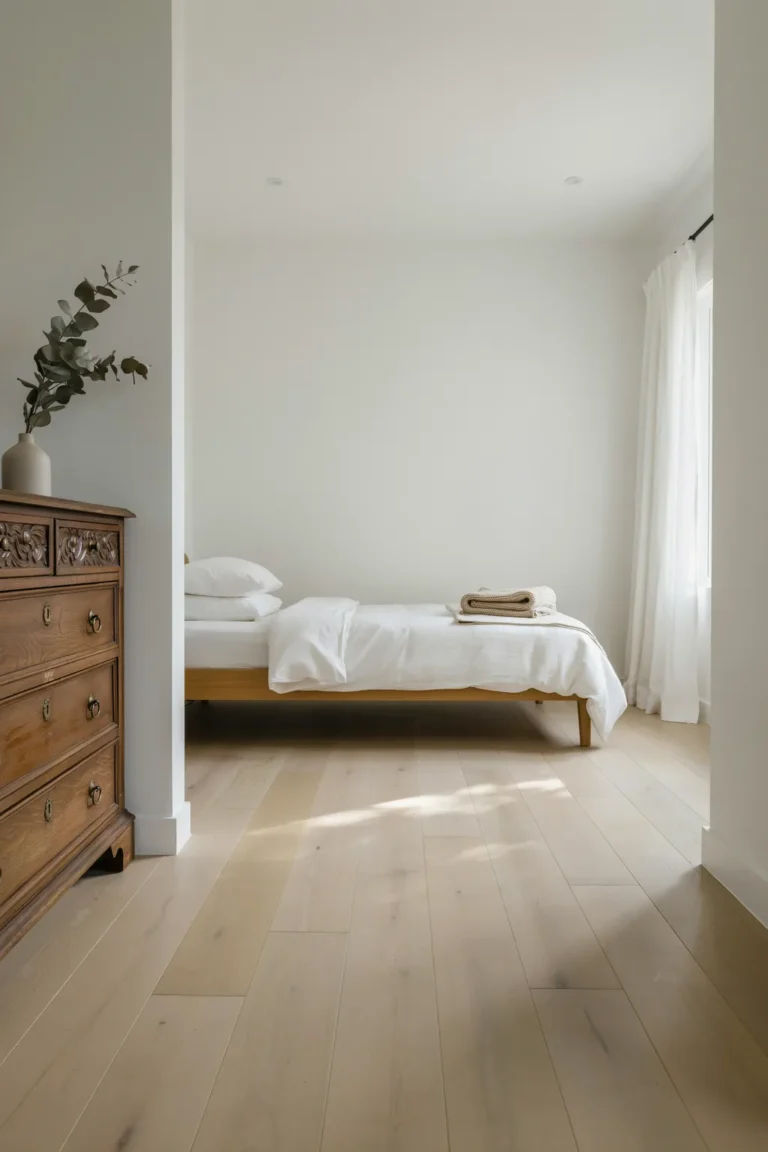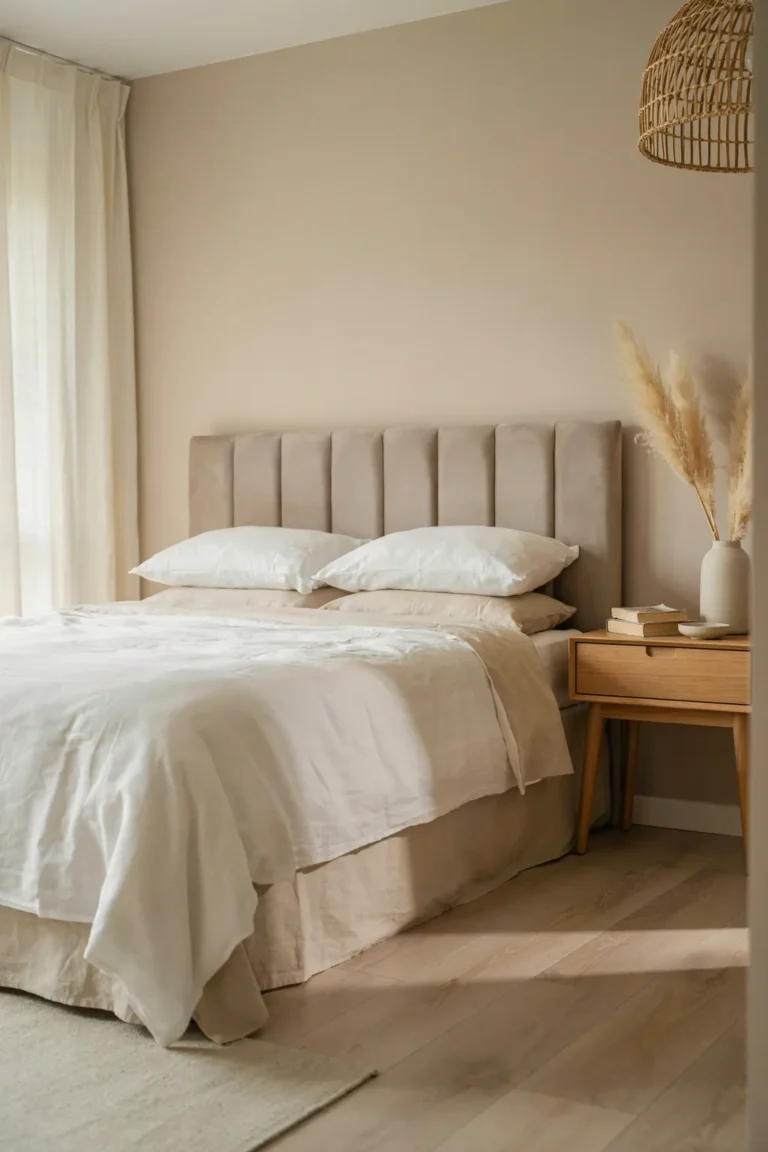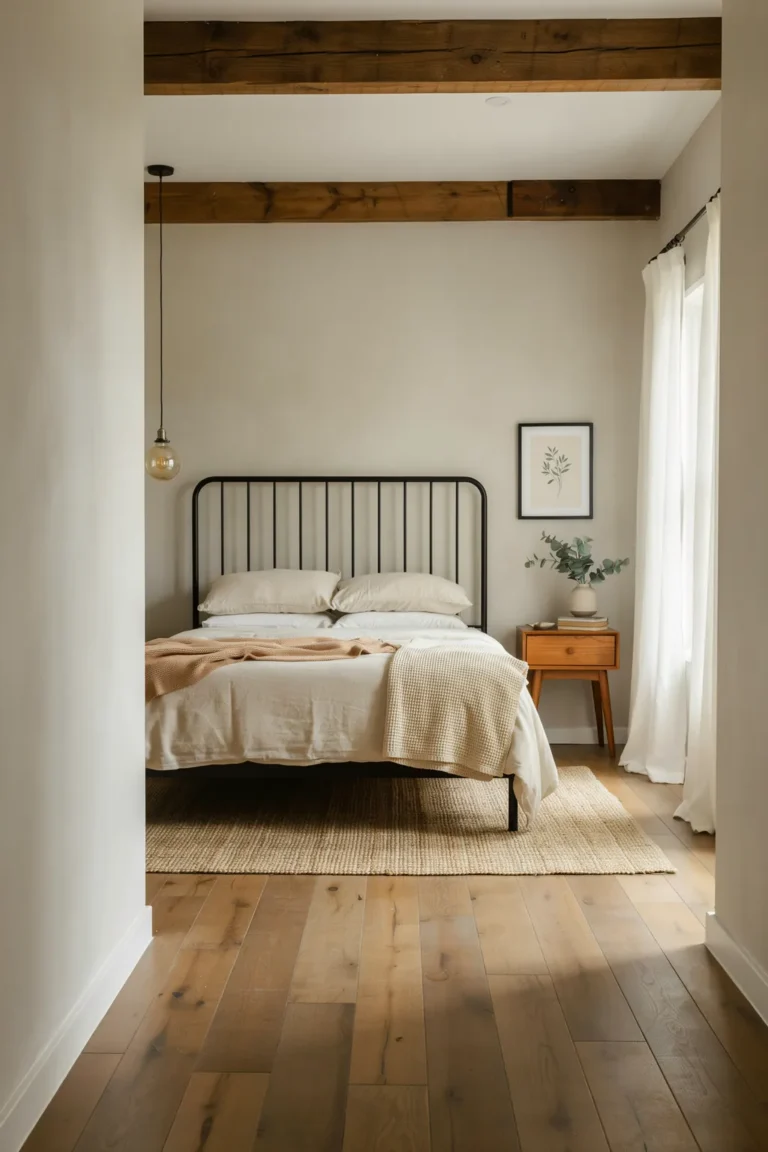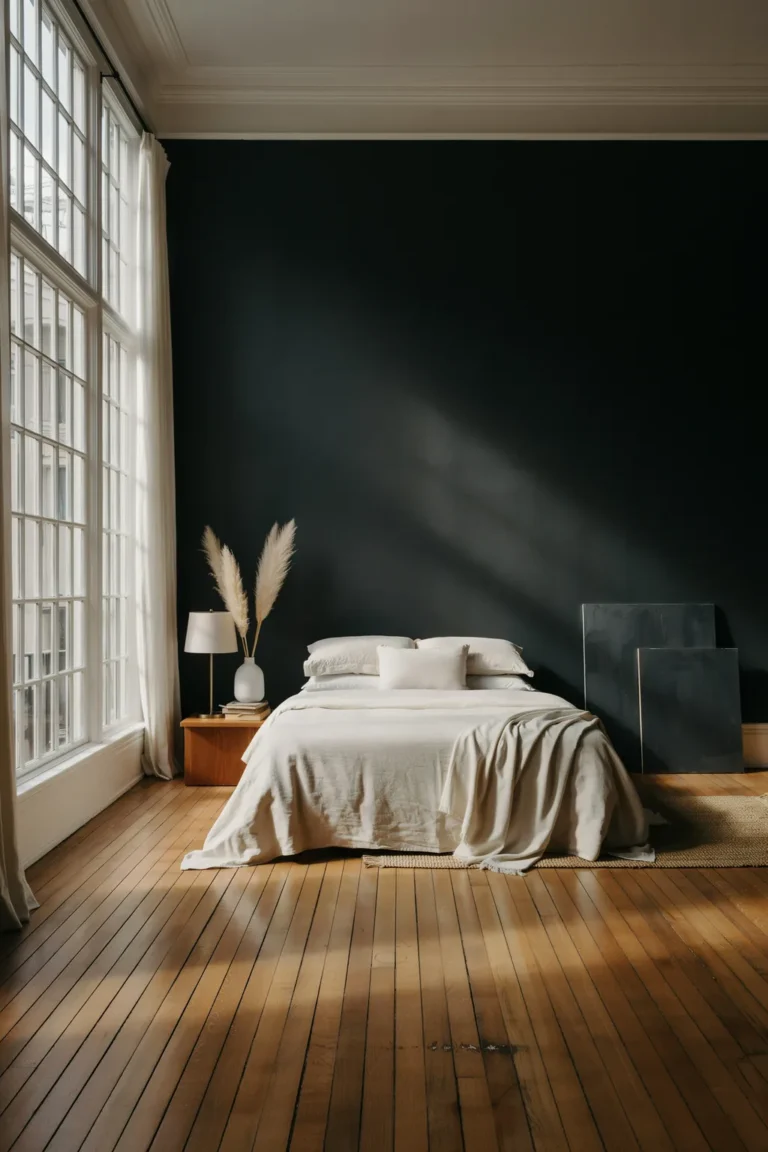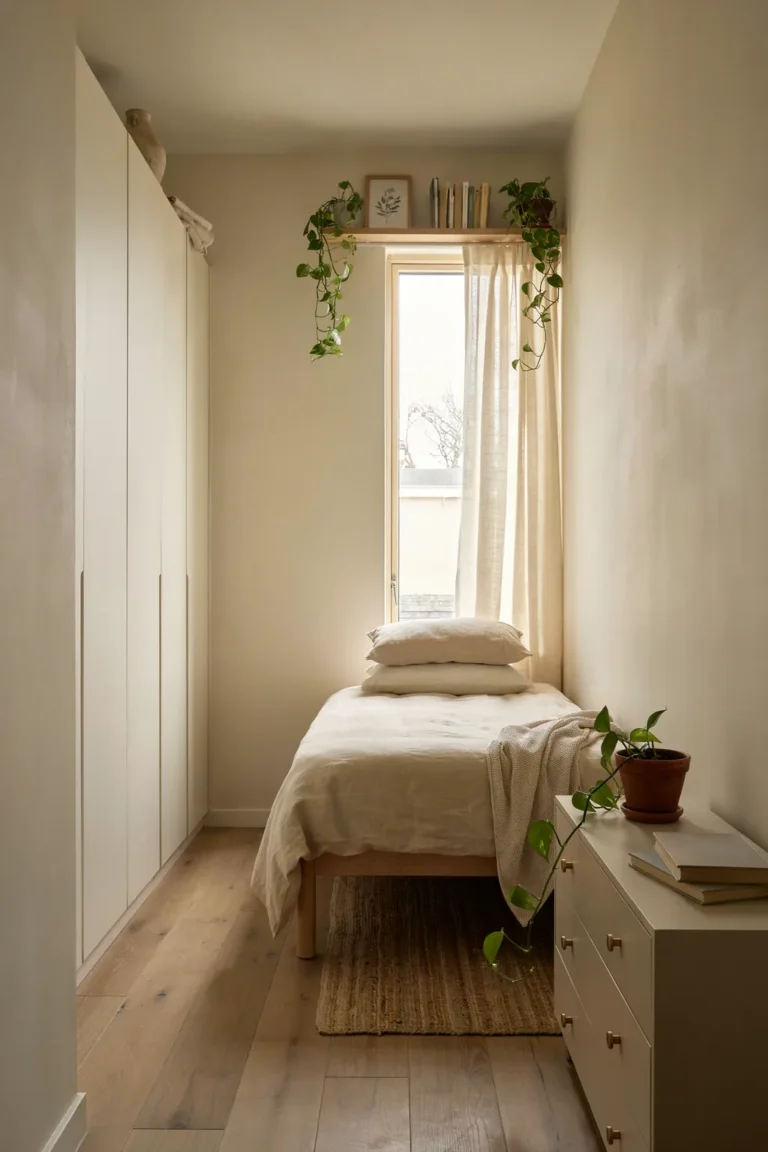
25 Cozy Bedroom Decor Ideas for Small Spaces That Feel Calm
Your small bedroom feels cramped, and falling asleep in it feels harder than it should. The bed eats half the floor. The lighting is harsh. There is stuff on every flat surface, and none of it makes you breathe easier at the end of a long day. You don’t need more square footage to fix that. You need the right cozy bedroom decor ideas working as a set, so the room finally feels like a soft place to land instead of a closet you happen to sleep in.
Here is what most “small bedroom” advice gets wrong. It tells you to declutter and add a plant, then stops. That is not enough to change how a room feels at 10 p.m. with the lights low. Calm comes from a stack of small, deliberate choices: the color on the walls, the warmth of your bulbs, the texture on the bed, the clear path your feet take to the bathroom at 3 a.m.
This guide gives you 25 cozy bedroom decor ideas in plain language, with real numbers. You will get exact curtain heights, bulb temperatures in Kelvin, rug sizes that actually fit, and rental-friendly swaps that leave no holes in the wall. Every idea names what it costs you, who it suits, and when to skip it. Pick five tonight. Add the rest over a few paychecks. By the end, your small room will feel warm, quiet, and a little bigger than it is.
Quick Answer
To make a small bedroom feel calm, build it in layers. Start with a warm neutral wall color, switch to 2700K bulbs on a dimmer, and layer the bed in three soft textures. Then clear your surfaces, hang curtains high, and add one mirror to bounce light. Calm is not one big purchase. It is several small, warm, quiet choices stacked on top of each other. The best cozy bedroom decor ideas work as a system, not a single purchase.
1. Start With a Warm Neutral Base
Cool stark white makes a small room feel like a waiting area. Swap it for a warm neutral with a light reflectance value around 60 to 70, think soft greige, warm oat, or a creamy off-white. These shades carry a touch of yellow or red, so they hold onto lamplight at night and glow instead of going grey. The walls recede, the corners soften, and the whole box feels calmer the second you walk in. A warm base is where the best cozy bedroom decor ideas begin.
A warm base also gives everything else a quiet stage. Your wood tones look richer, your linen reads softer, and your art pops without trying. Paint one test patch and look at it at night under your real bulbs, not at noon. Color shifts hard between daylight and lamplight, and the bedroom is a night room first.
Skip the icy greys and bright whites if your room faces north, since that light is already cool and blue. Warm it up instead, or the space will feel like a dentist’s office no matter what you put in it.
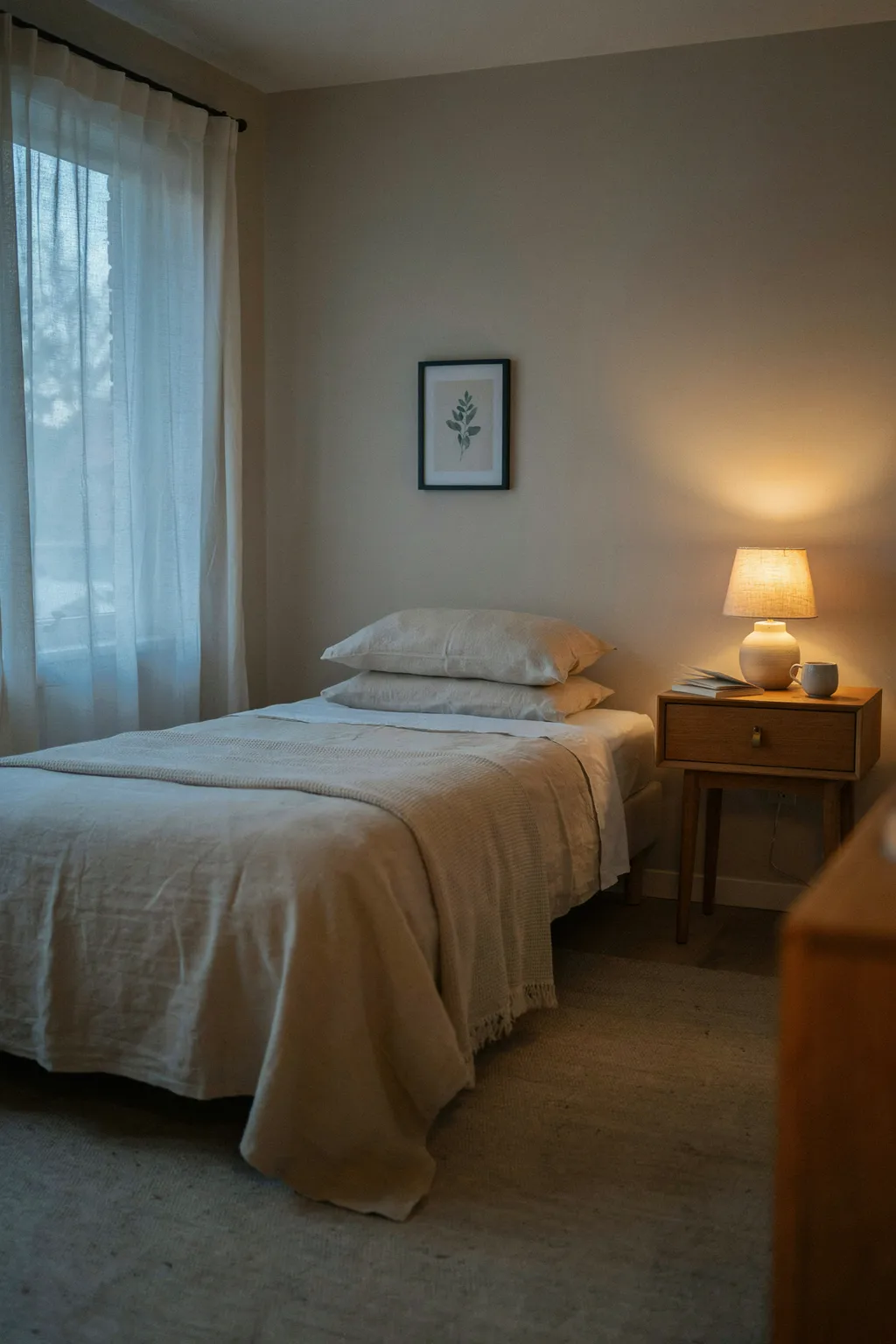
2. Pick One Calm Anchor Color
Once your base is warm, add a single anchor color and let it repeat around the room. Use the 60-30-10 split: 60 percent neutral walls and bedding, 30 percent a secondary tone like soft wood or oatmeal, and 10 percent your anchor in a throw, a lampshade, and one piece of art. Sage, dusty terracotta, and muted ocean blue all read calm because they are low in saturation. Loud, pure colors do the opposite in a small space.
Repetition is the trick that makes a room look designed instead of random. When your anchor shows up in three spots, your eye connects them and reads order, and order feels restful. One sage pillow alone looks like an accident. The same sage in a pillow, a candle, and a framed print looks intentional.
Be careful with deep, dark anchors in a windowless or tiny room. A heavy navy on too many surfaces can close the walls in and read gloomy rather than snug. Keep dark tones to that 10 percent unless you have real natural light to balance them.
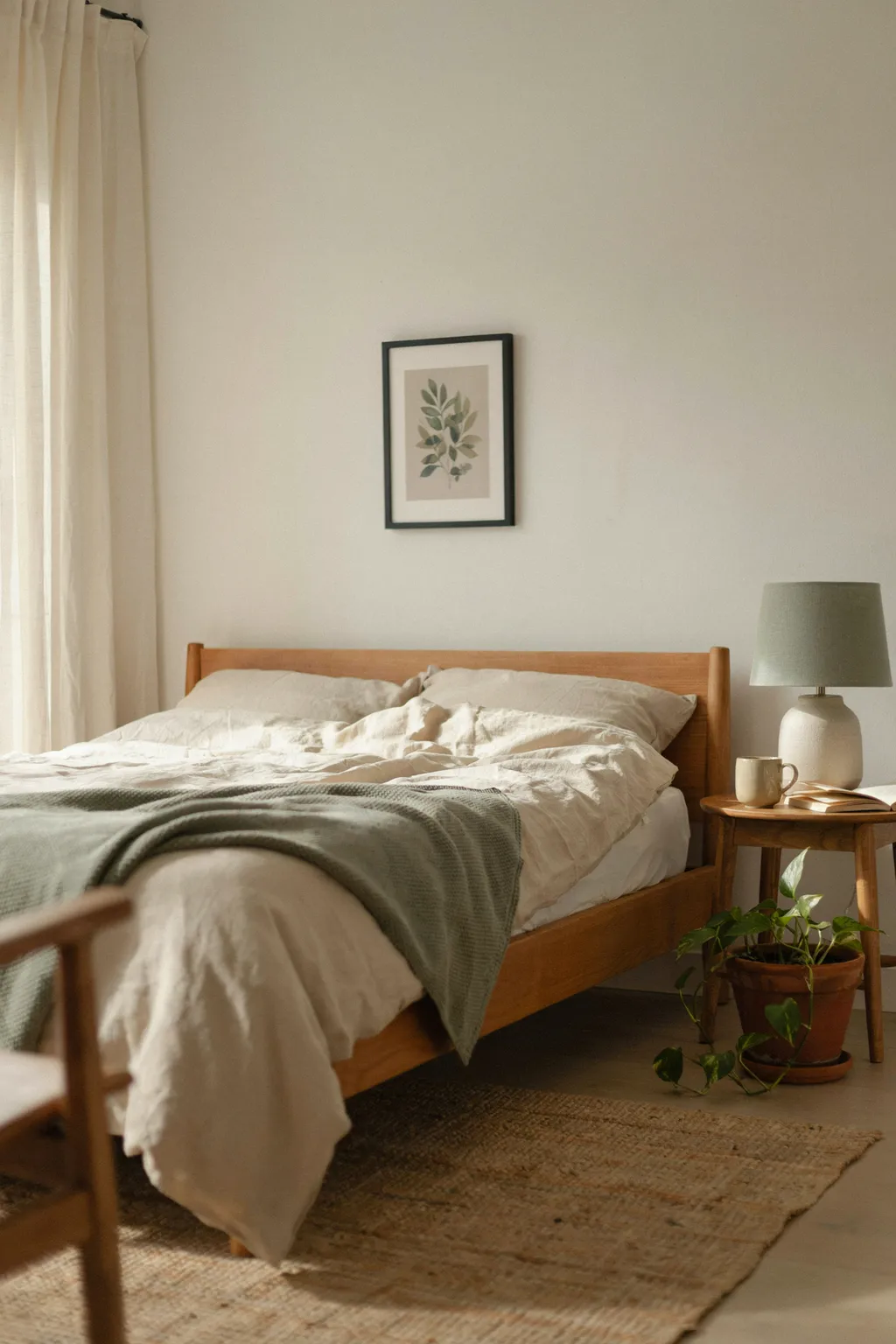
3. Layer the Bed in Three Textures
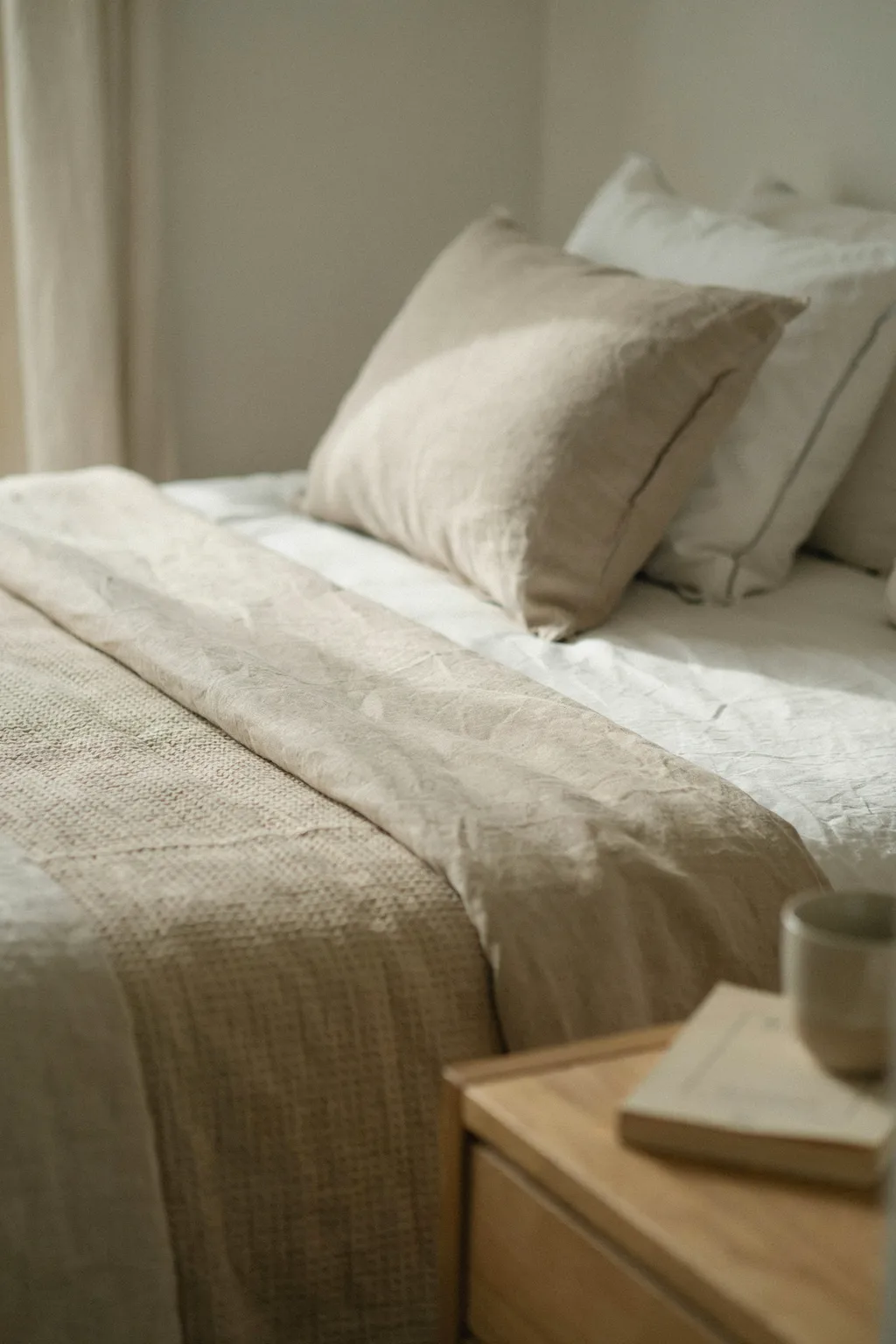
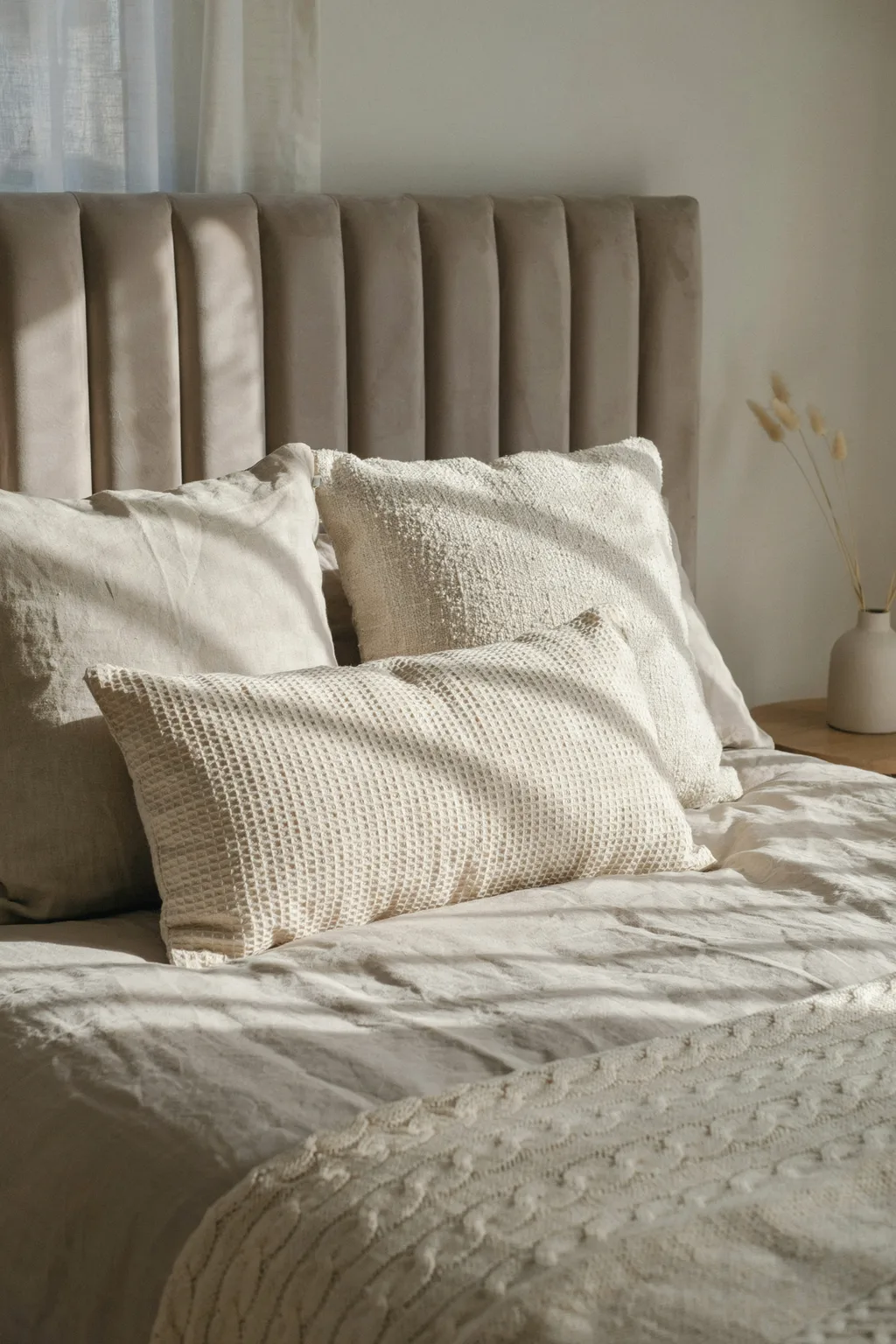
A flat, single-fabric bed looks cheap and feels cold. Build yours in three textures instead: crisp percale sheets, a waffle-weave cotton blanket, and a washed linen duvet folded back. Three layers give the eye somewhere to rest and the hand something to reach for. It is the single fastest way to make a small bedroom feel like a hotel suite rather than a dorm.
Texture matters more than pattern in a small room because pattern can get busy fast in a tight space. Mixing weaves keeps things calm and rich at the same time: smooth against nubby, matte against soft. Stick to one or two colors and let the fabrics do the work. A made bed also anchors the whole room, so it pays off every single morning.
If you run hot at night or hate laundry, three layers can be too much, since each one is another thing to wash and wrestle. Drop the blanket and keep just sheets plus a light duvet. Two good textures still beat one flat one.
4. Switch to Warm 2700K Bulbs
The fastest, cheapest calm upgrade is a bulb swap. Pull the cool daylight bulbs out of your bedroom and put in warm white ones rated 2700K, or even 2400K for an amber, candle-like glow. Color temperature is printed right on the box. Anything 3500K and up is office light, and it will keep a small bedroom feeling clinical no matter how soft the rest of the room is.
Warm light tells your brain the day is over. That amber tone mimics sunset, which is the cue your body uses to wind down, so the room feels restful before you have changed a single piece of furniture. A four-pack of 2700K LED bulbs runs about 12 to 15 dollars, which makes this the best dollar-for-calm trade in the whole list.
The one trade-off: 2700K is poor for tasks that need true color, like applying makeup or reading fine print. If you get ready in the bedroom, keep one cooler light at the mirror or vanity and leave everything else warm.
5. Put Every Light on a Dimmer
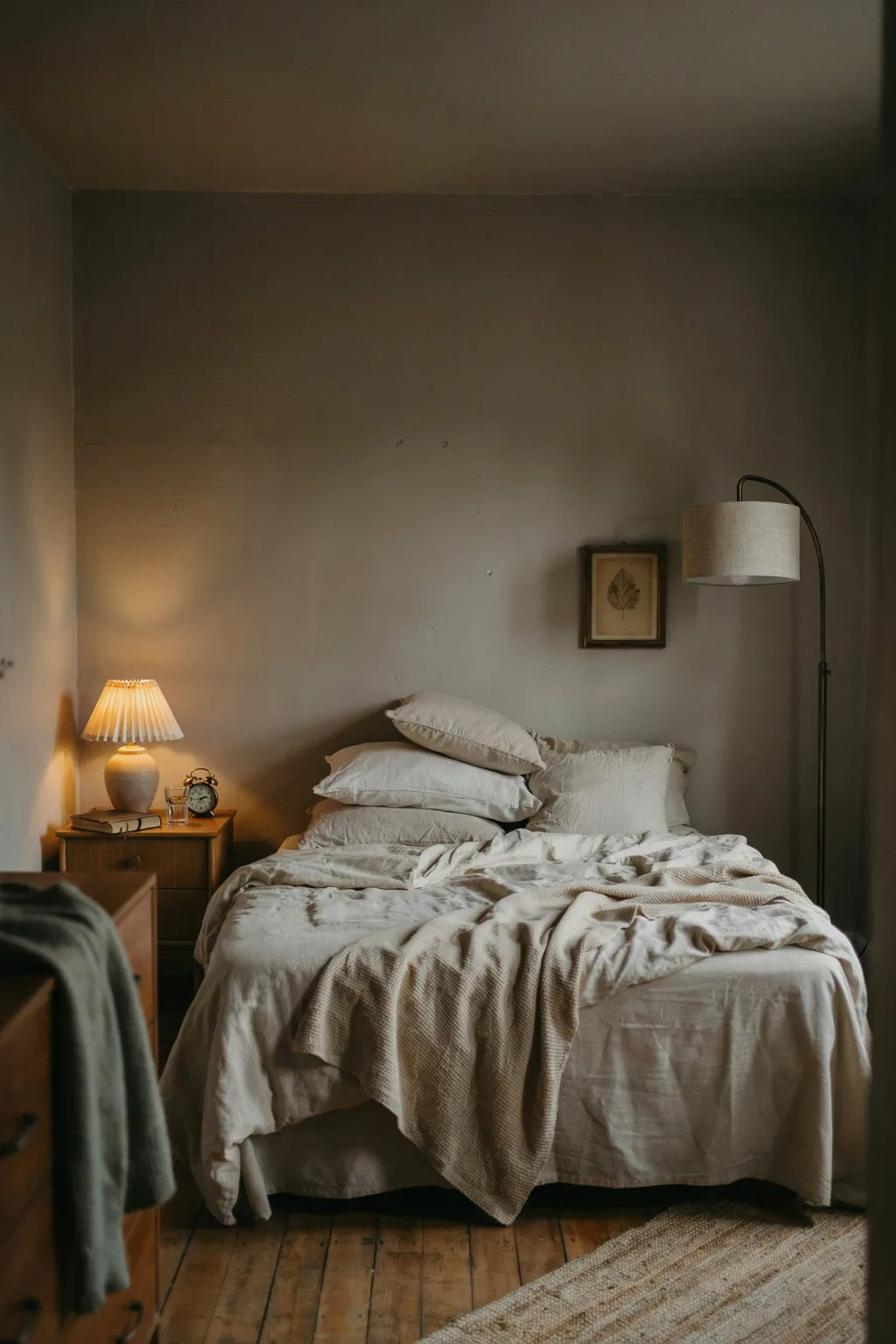
Calm is not just warm light, it is adjustable light. Bright overhead at 7 p.m., low and golden by 10. Put your bedside lamps and any overhead on dimmers so you can drop the room to 10 or 20 percent for the last hour before sleep. You can skip an electrician entirely with a plug-in dimmer or a smart bulb you control from your phone, often under 20 dollars.
Layered, dimmable light beats one bright ceiling fixture every time. A single overhead flattens a room and casts hard shadows on faces. Two or three low pools of light at different heights, a bedside lamp, a floor lamp, a sconce, wrap the space in a soft glow and make a small room feel deeper and more intimate.
Watch one snag: cheap LED bulbs and cheap dimmers buzz or flicker together. Buy bulbs that say “dimmable” on the package and pair them with a compatible dimmer, or you will trade calm for an annoying hum.
6. Mount Wall Sconces to Free the Nightstand
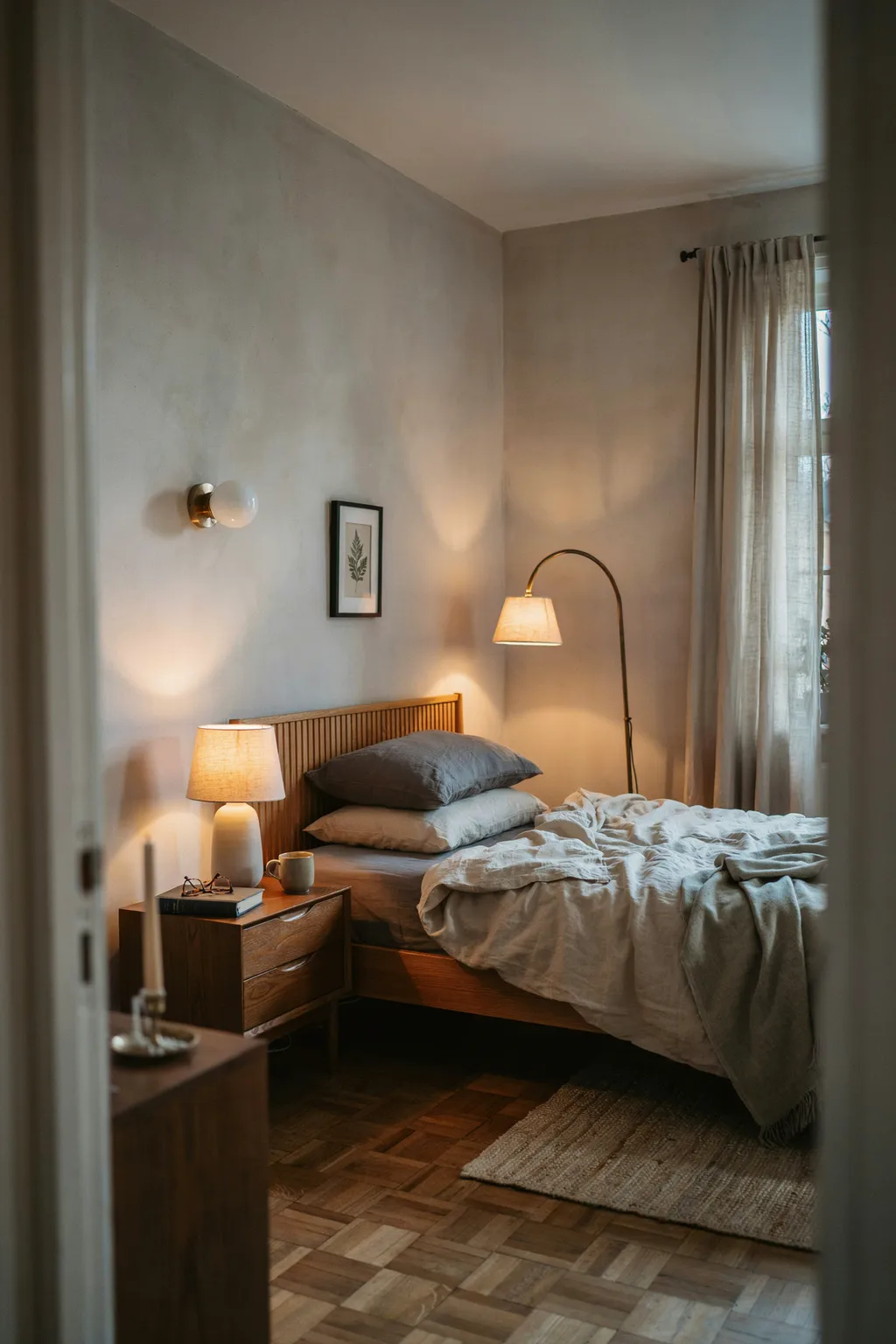
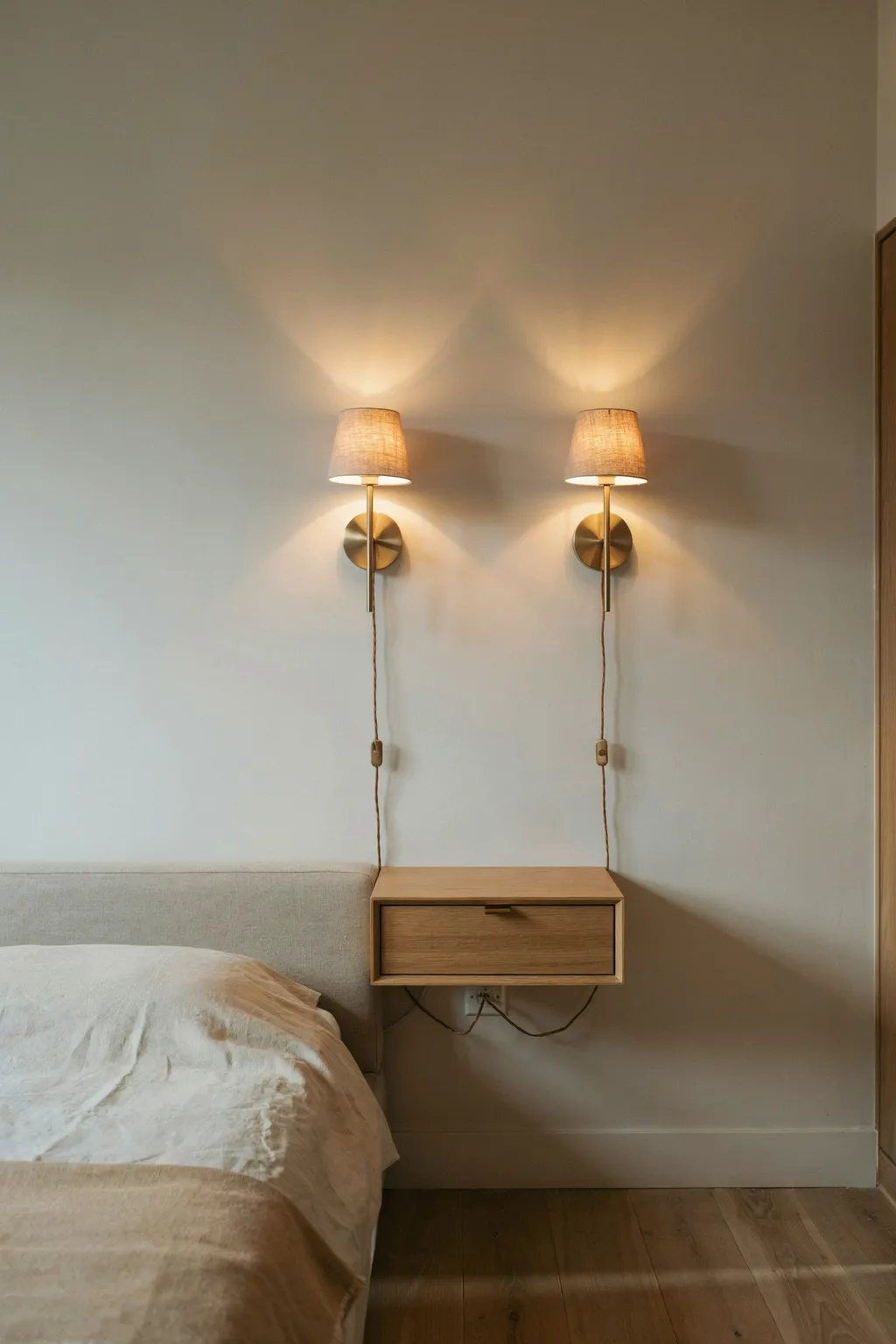
When the nightstand is the size of a dinner plate, a table lamp hogs all of it. Hang a plug-in wall sconce instead, mounted about 30 to 36 inches above the mattress, and suddenly the whole surface is free for a book, a glass of water, and your phone. Sconces also throw light up and out, which feels softer than a lamp glaring at face height.
This is one of those moves that buys back space you did not know you had. In a small room, every clear surface lowers the visual noise, and less visual noise reads as calm. Two matching sconces, one per side, also frame the bed and make it feel deliberate, like the centerpiece it should be.
For renters, skip the hardwired versions. Plug-in sconces with a cord you can tuck behind the headboard give you the same look without touching the wiring. Just plan to mount them with proper anchors, since the cheap plastic ones sag over time.
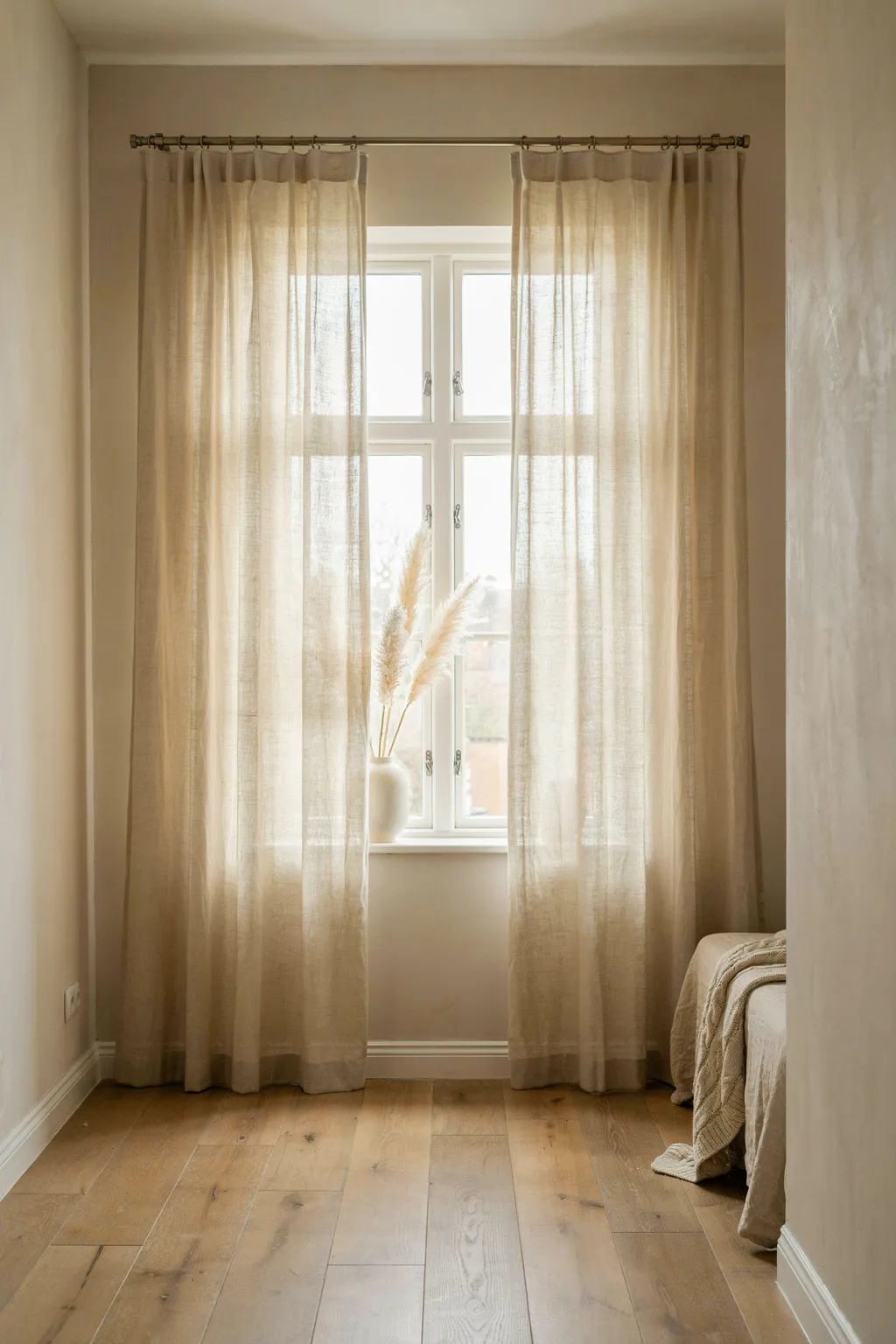
7. Hang Curtains High and Wide
Most people hang curtains too low and too narrow, right on the window frame, which chops the wall and shrinks the room. Do the opposite. Mount the rod 4 to 6 inches above the frame, or higher toward the ceiling, and extend it 8 to 12 inches past each side so the panels clear the glass when open. The eye reads the window as taller and wider than it is, and the ceiling feels lifted.
This single change does more for perceived height than any other cheap trick. Floor-length panels that just kiss the floor, or puddle half an inch, draw the eye up and down and stretch the whole wall. Pick a soft, light-filtering fabric in a tone close to your wall color so the curtains blend in rather than cutting the room into pieces.
The mistake to avoid: short panels that stop above the sill, like high-water pants. They make the ceiling feel lower and the window feel like an afterthought. Always go floor-length in a small room, even if you have to hem.
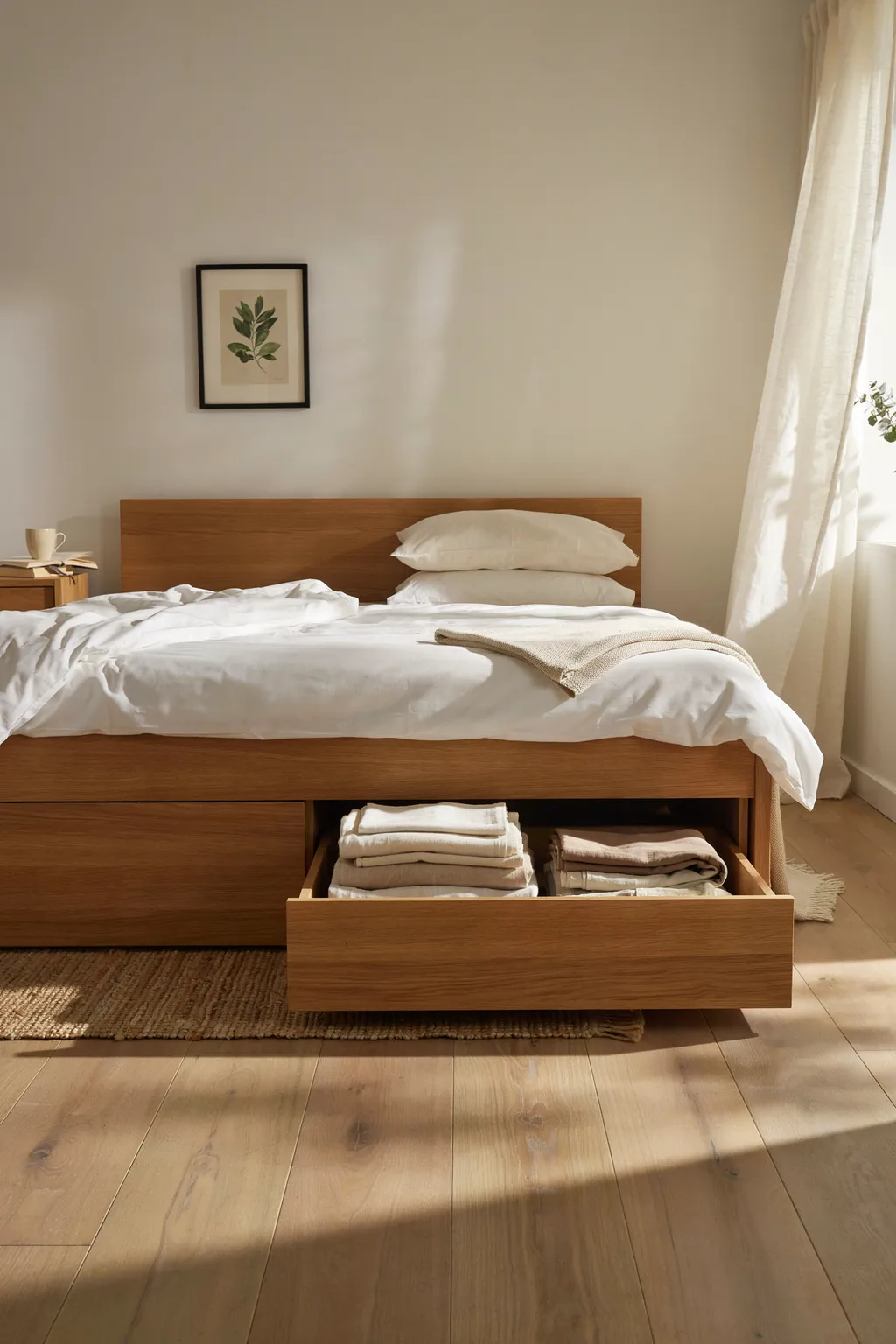
8. Choose a Bed Frame With Hidden Storage
In a small bedroom, the biggest piece of furniture is also your biggest storage chance. A bed with built-in drawers or an open base that fits flat bins turns dead space under the mattress into a home for off-season clothes, spare bedding, and shoes. That is one fewer dresser you have to cram into the room, which buys back real floor.
Reclaiming under-bed storage clears the surfaces above, and clear surfaces are what make a small room read calm. Look for frames with side drawers or at least 13 to 15 inches of clearance so standard under-bed bins slide in easily. Soft fabric bins keep dust off and look tidier than open piles if your frame has no skirt.
Lift-up hydraulic storage beds hold the most, but the platform is heavy and awkward to raise with bedding on top, so they suit gear you rarely touch, not daily items. If you need quick access, side drawers beat a lift-up base every time.
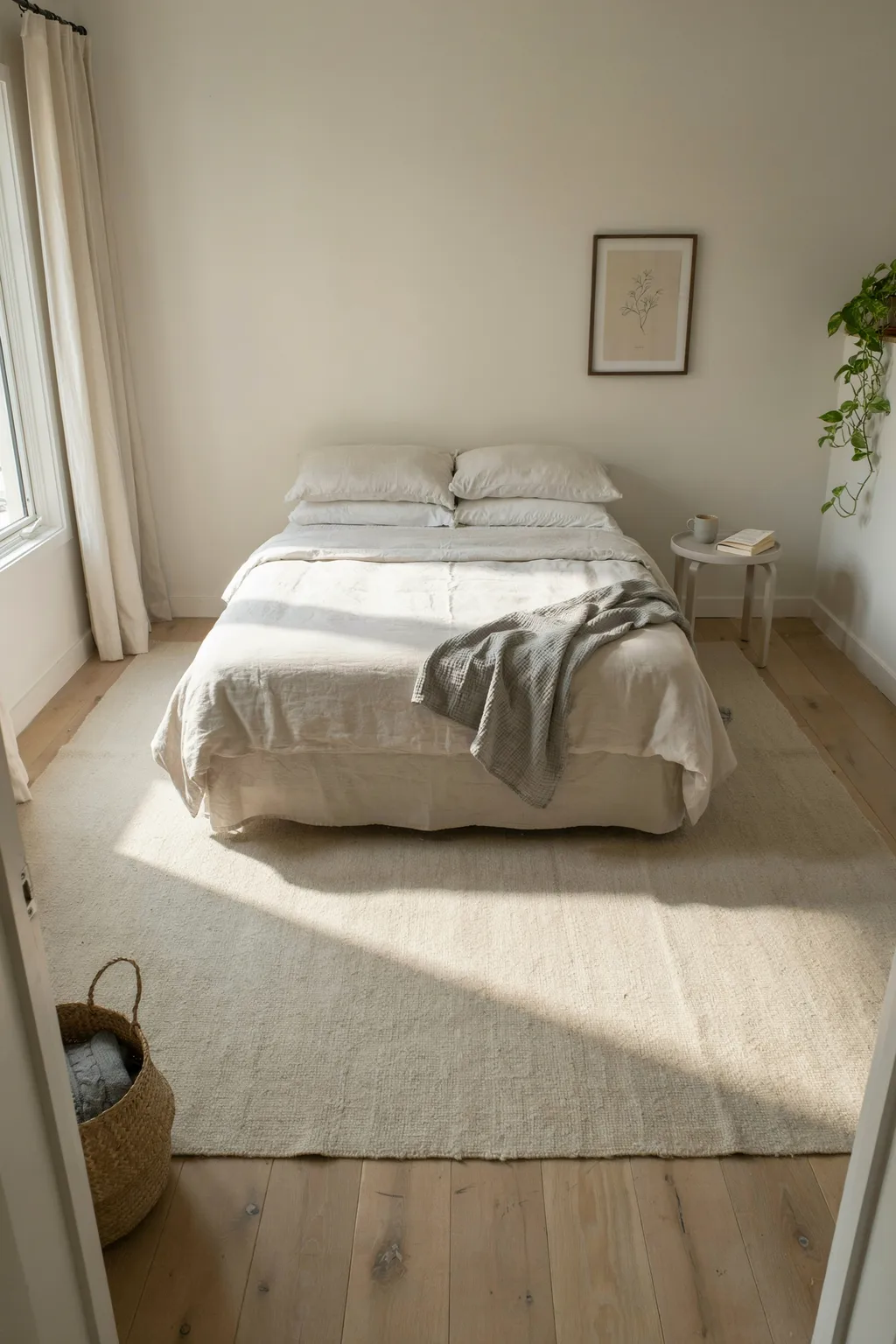
9. Float a Soft Rug Under the Bed
A bare floor makes a bedroom feel temporary and a little echoey. A soft rug under the bed warms it instantly, both underfoot and to the eye. Size it right: an 8 by 10 under a queen leaves 18 to 24 inches of rug showing on the sides and foot, which frames the bed and makes the room feel grounded and larger.
A correctly sized rug pulls the whole arrangement together, like a mat around a photo. The bed stops floating and starts looking like part of a planned space. Choose a low pile in wool or a soft wool blend for warmth and quiet, since plush fibers also absorb a little sound and add to the hush.
If a big rug is out of budget, run two washable runners along the sides of the bed instead. What you must avoid is the classic mistake: a tiny 5 by 7 stranded in the middle under the bed, with just a sliver peeking out. It reads like a bath mat and makes everything look smaller.
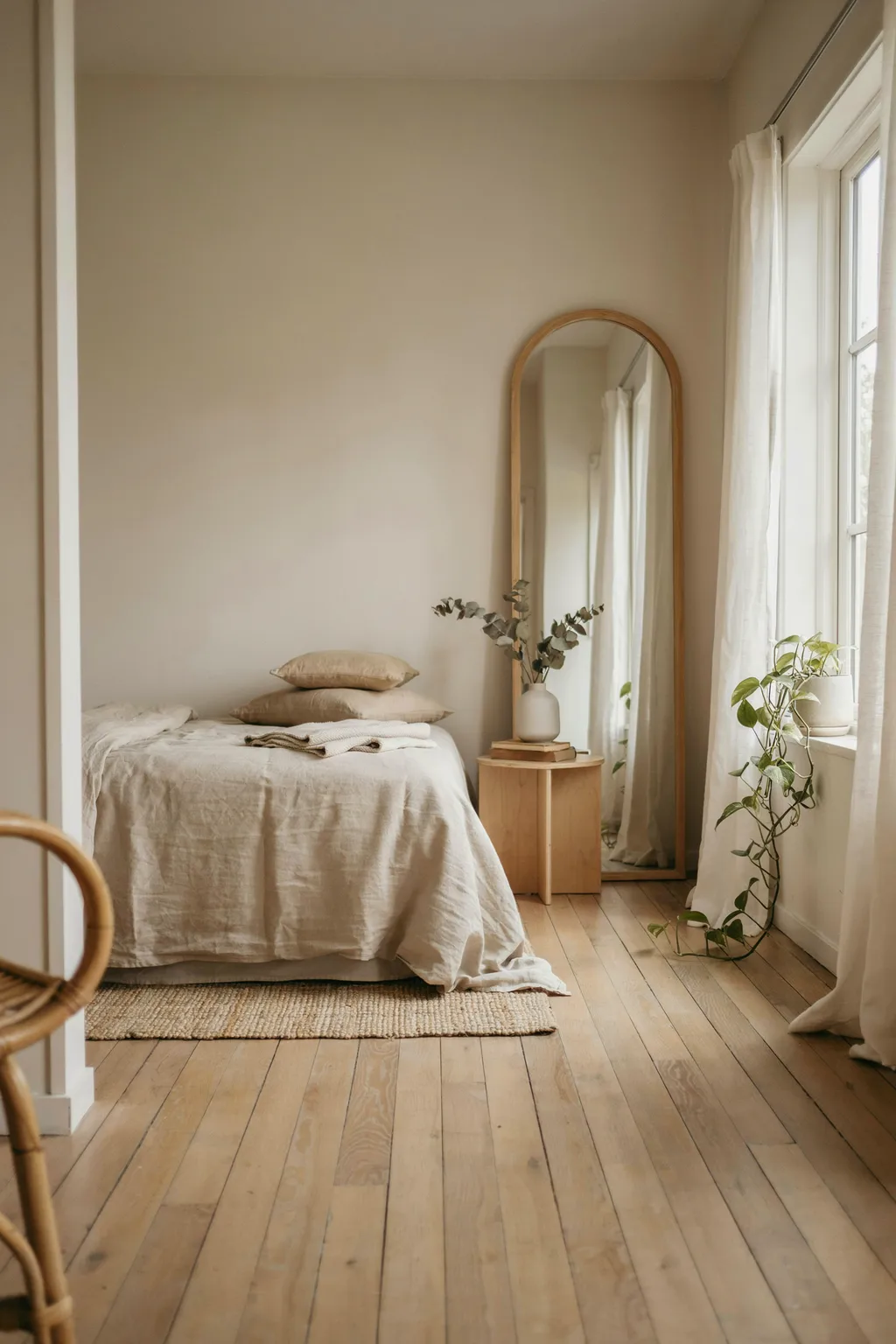
10. Add a Tall Mirror Across From the Window
A mirror is the cheapest way to double the light and depth in a small bedroom. Lean a tall floor mirror, 60 inches or more, against the wall directly across from your window. It catches the daylight and bounces it back into the room, so even a north-facing box feels brighter and more open. The reflection also adds a sense of a second, deeper space.
Placement is everything here. A mirror facing a window doubles your best feature, while a mirror facing a cluttered corner just doubles the clutter. Aim it at light and at something calm, your curtains, your headboard, a plant, so the reflection works for you. A leaning mirror also skips the wall anchors, which renters will appreciate.
One honest caveat: a big mirror can feel busy or even unsettling directly facing the bed for some sleepers. If you are sensitive to that, angle it toward the window from the side instead of straight at the pillows.
11. Pick an Upholstered or Statement Headboard
A bed without a headboard looks unfinished, and the gap behind your pillows feels cold. An upholstered headboard fixes both. It adds softness right where you rest your head, drinks up a little sound, and gives the bed the visual weight it needs to anchor the room. In a small space, a padded headboard around 48 inches tall reads cozy without overpowering the wall.
A headboard tells the eye where the room centers, and a clear center reads as calm. Upholstered linen or a soft bouclé in a tone near your wall color keeps it from shouting. If you sit up to read, the padding earns its keep nightly, far comfier than leaning on a cold wall or a hard wooden slat.
Go careful with tall, dark, tufted headboards in a tiny room, since they can dominate and make the ceiling press down. If your room is really small, keep the headboard lighter in color and modest in height so it supports the bed without swallowing the wall.
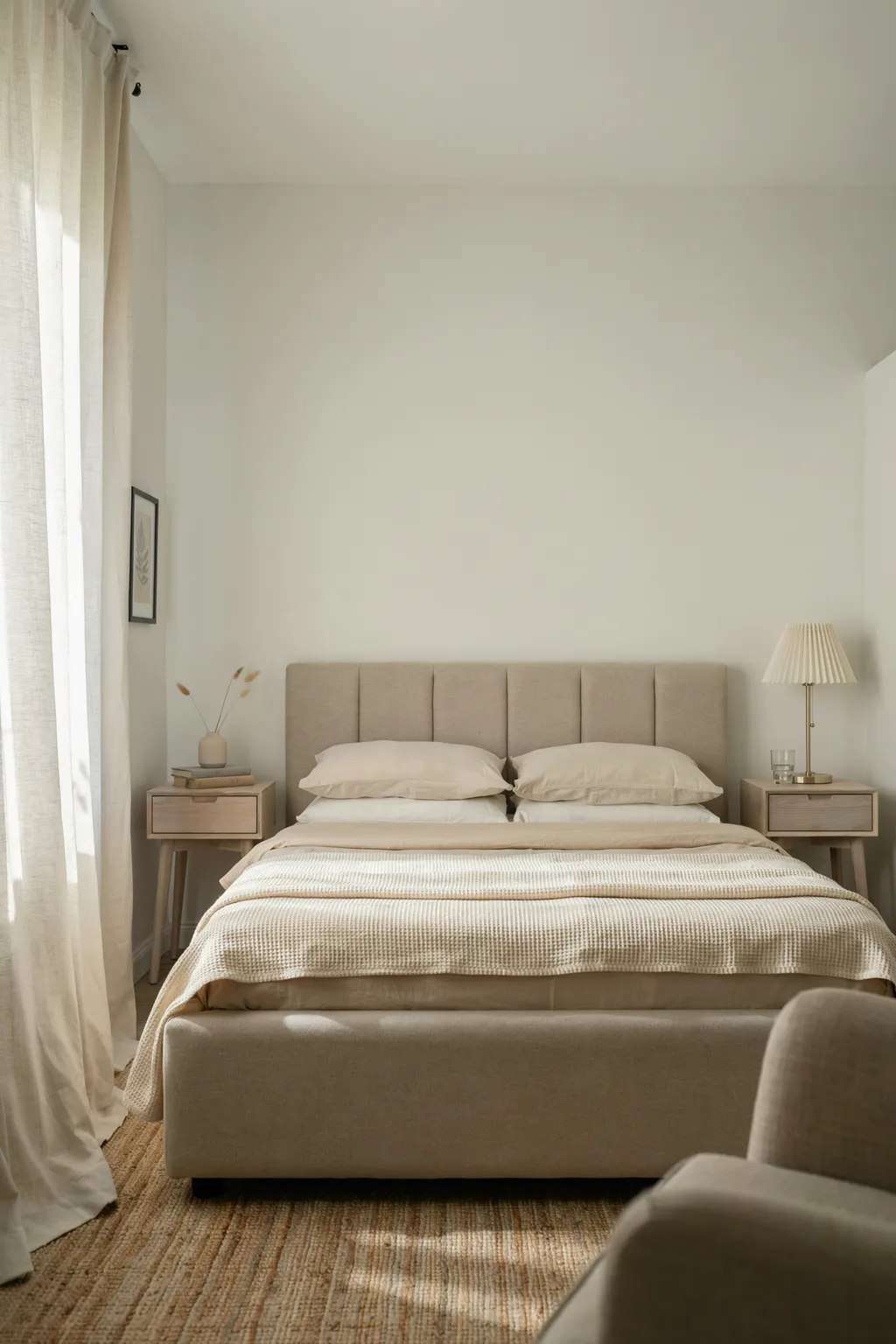
12. Style Nightstands With the Rule of Three
A cluttered nightstand is the first thing you see waking up and the last before sleep, so it sets the room’s tone. Style it with three things at three heights: a lamp or sconce up high, a small stack of two books in the middle, and a low dish for rings and earrings. Three is enough to feel intentional and few enough to stay calm.
Varying the heights gives the little vignette a quiet rhythm, like a tiny still life. The tall lamp, the medium books, the low dish lead your eye in a gentle line instead of a flat row. Keep the colors in your palette and leave breathing room around each piece. Empty space on the surface is part of the look, not a gap to fill.
The pull to overstyle is strong, and it is the thing to resist. A water glass, charger, lip balm, and three remotes pile up fast. Give the daily clutter a small tray or a drawer so the styled surface stays styled.
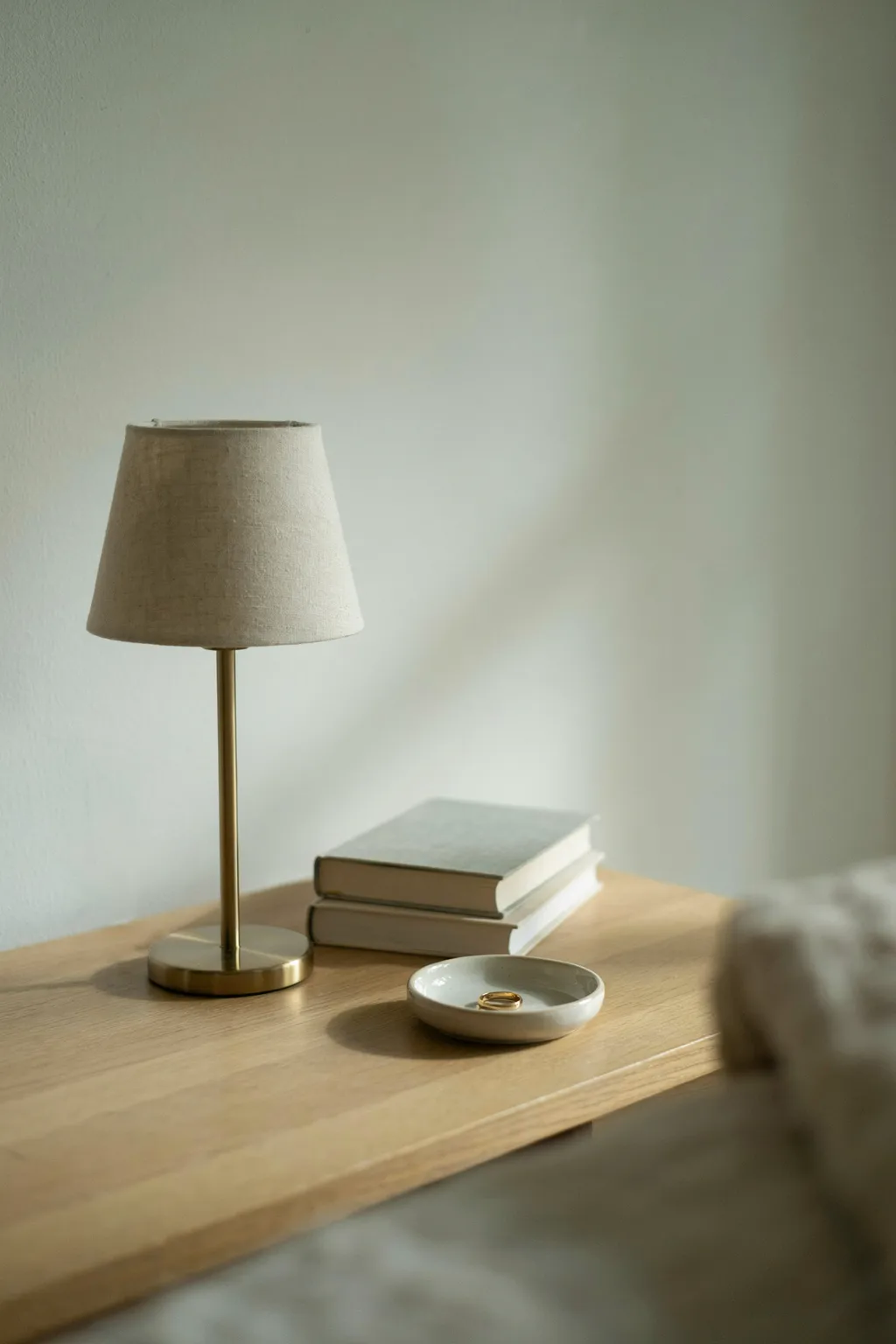
13. Build a Small Reading Nook in the Corner
If you have a spare corner, even a tight one, turn it into a reading nook. A 30 by 30 inch armchair, a slim floor lamp, and a small side table is all it takes. The nook gives the room a second purpose beyond sleep, and a room that earns its keep feels more lived-in and more loved. It also keeps reading and scrolling out of the bed, which helps you sleep.
A defined corner makes a small room feel intentional rather than just full. Anchor it with the floor lamp for warm light and a soft throw over the chair arm so the spot invites you in. Even a floor cushion and a stack of books in the corner works if a chair will not fit. The point is a small, cozy destination of its own.
Be honest about whether you have the room. If the only corner sits in your walking path or the chair would block a drawer, skip this one. A cramped nook you squeeze past is worse than no nook at all.
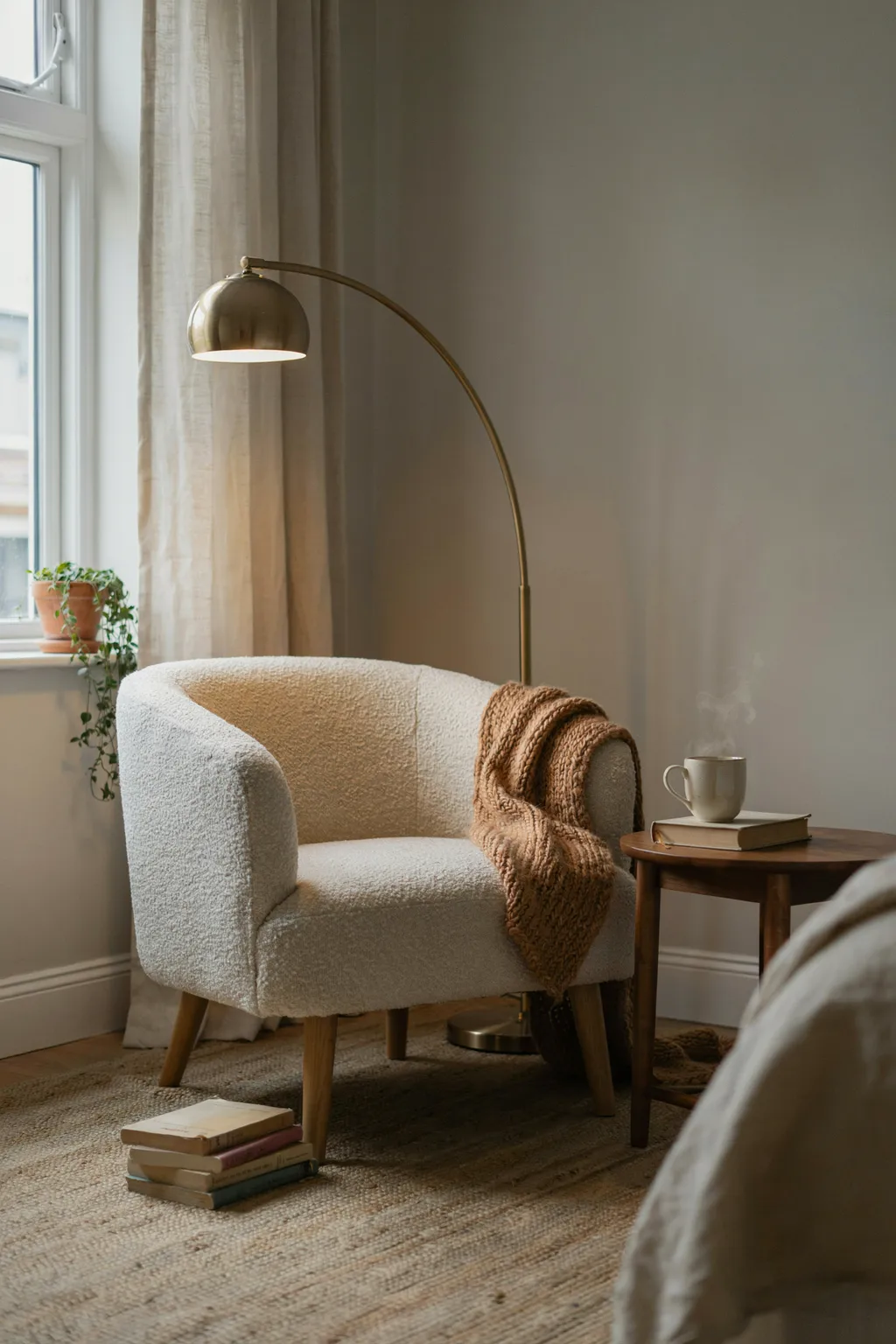
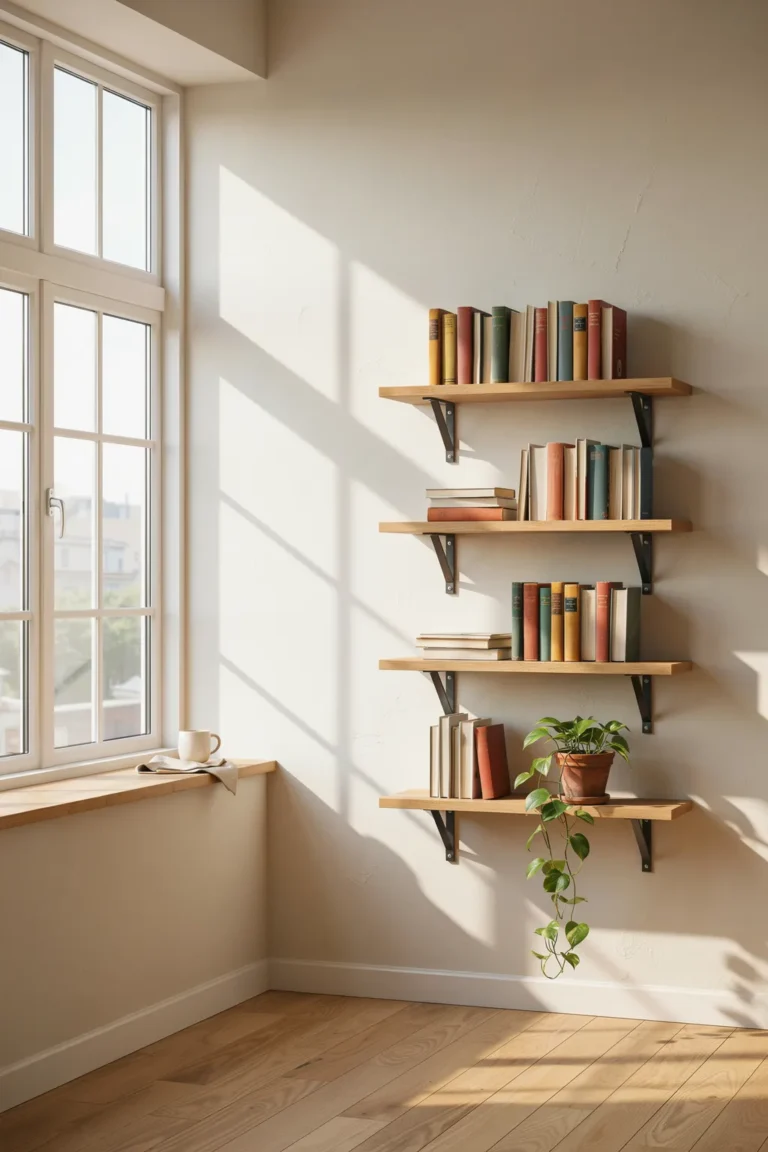
14. Use Floating Shelves Instead of Bulky Units
Floor-standing bookcases steal precious square footage in a small bedroom. Floating shelves give you storage and display without touching the floor, so the room keeps its open, airy feel. Mount a couple of 24-inch shelves on a bare wall, about 10 to 12 inches apart, and you have a spot for books, a small plant, and a frame or two, all up off your surfaces.
Going vertical is the small-room move that keeps eyes traveling up and floors clear. Style the shelves the way you style a nightstand: a few objects, varied heights, lots of breathing room. Match the wood or finish to another piece in the room so the shelves feel built-in rather than tacked on. Less on each shelf always looks calmer than a crammed one.
Mind the weight limits and use proper wall anchors, especially in drywall or plaster. A shelf that pulls loose damages the wall and anything on it, so check the bracket rating before you load it up with hardcovers.
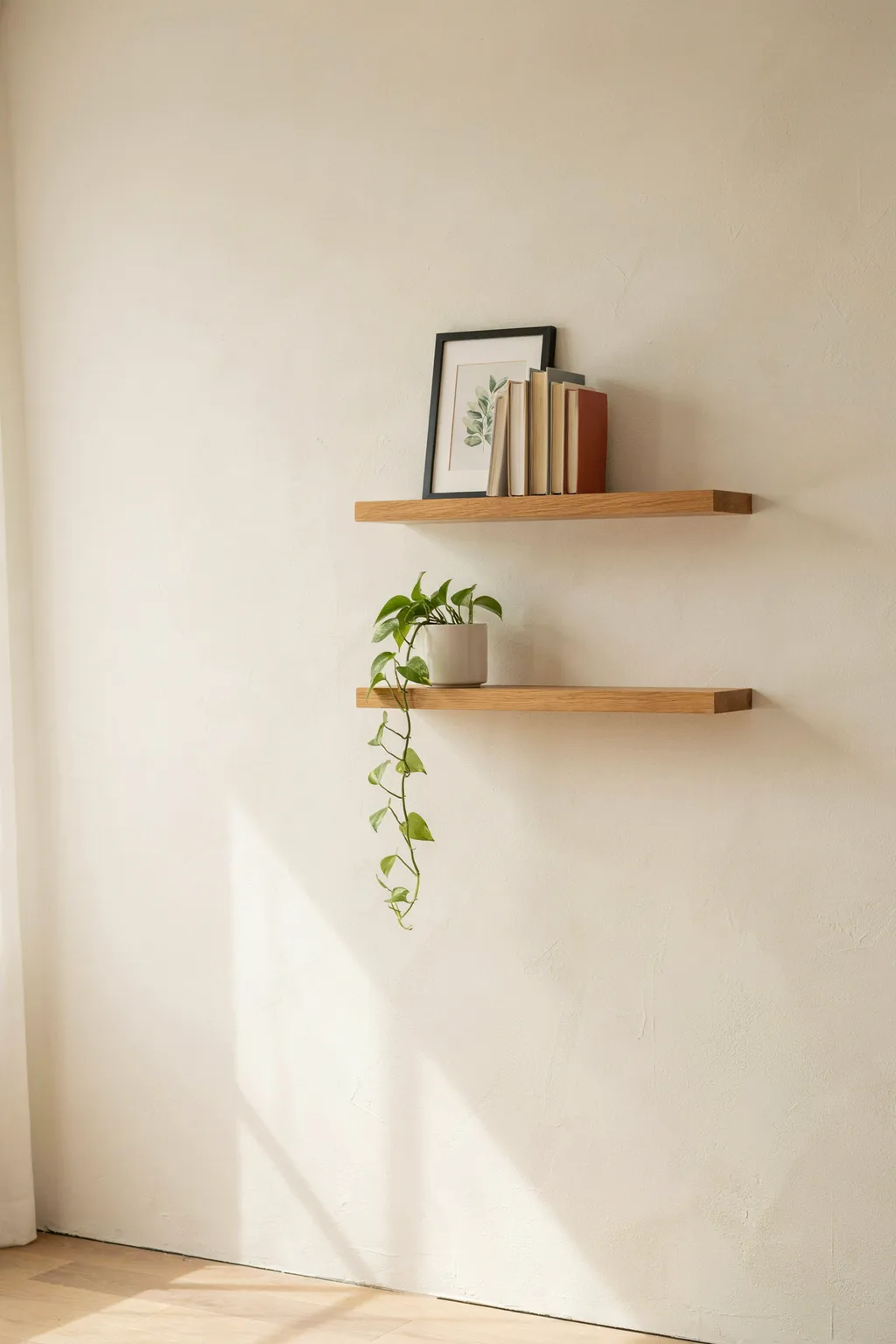
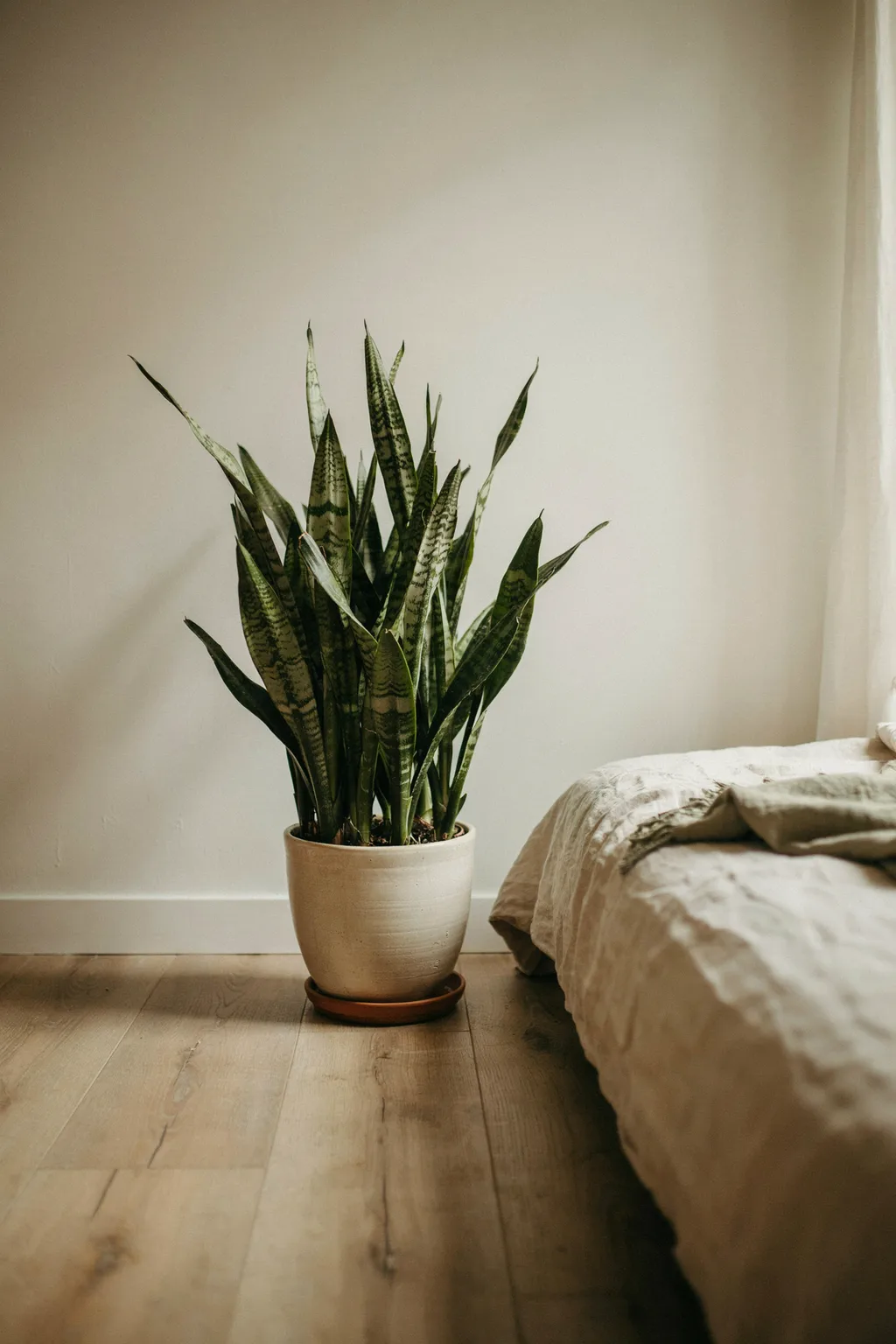
15. Bring in One Real Plant
A single living plant softens the hard lines of a small room and adds a quiet bit of life that no decor object can fake. You do not need a jungle. One snake plant on the floor or a pothos trailing from a shelf is enough to break up the straight edges of furniture and make the space feel cared for and calm.
Greenery reads as restful because our eyes relax around natural shapes and soft green tones. Pick a low-light, low-fuss plant if your room does not get much sun, since both snake plants and pothos forgive a dim corner and a missed watering. Put it where its shape stands out, against a plain wall or beside the bed, so it counts.
Two honest caveats. Skip live plants if your room is truly dark, since even tough plants slowly fade without light, and a dying plant is the opposite of calm. And check toxicity if you have cats or dogs, since pothos and several common picks are not pet-safe.
16. Mix in Natural Materials
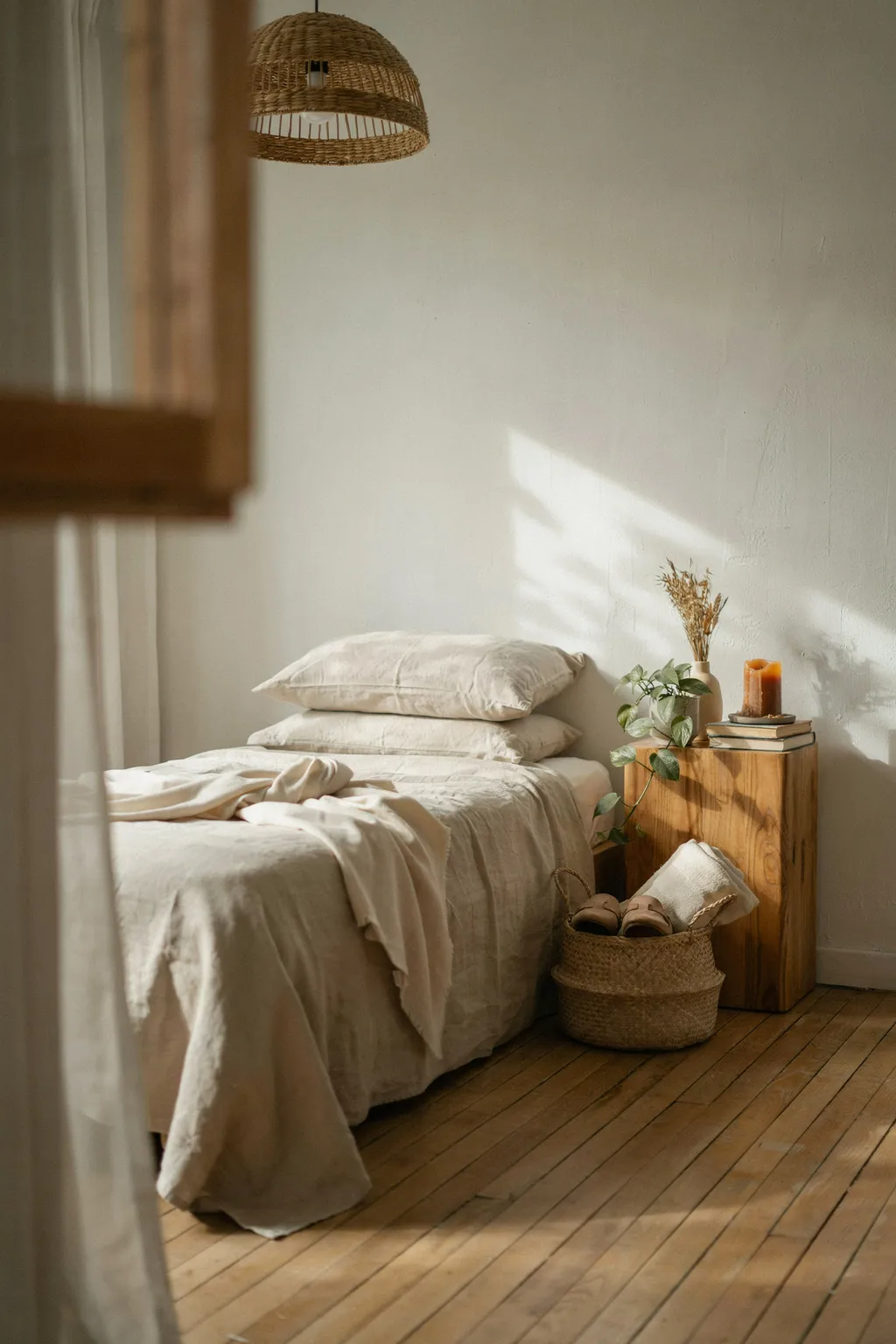
Rooms built only from painted MDF and plastic feel flat and a little lifeless. Bring in natural materials to add warmth and depth: an oak nightstand, a rattan pendant, a jute basket, a wool throw. Each one carries real texture and a little imperfection, and those small variations are what make a space feel grounded and human instead of showroom-cold.
Natural surfaces also age well and play nicely together, since wood, linen, jute, and stone share an earthy, low-key tone. Aim for two or three of them rather than all at once, so the room reads layered, not like a craft fair. A wooden frame plus a linen duvet plus a woven basket is plenty to warm up a small neutral room.
Watch the quality on faux versions. Cheap plastic “rattan” or printed wood-grain laminate can read shiny and obviously fake, which undercuts the calm, natural feel you are after. One genuine wood or woven piece beats three plasticky imitations.
17. Add a Slim Bench or Trunk at the Foot
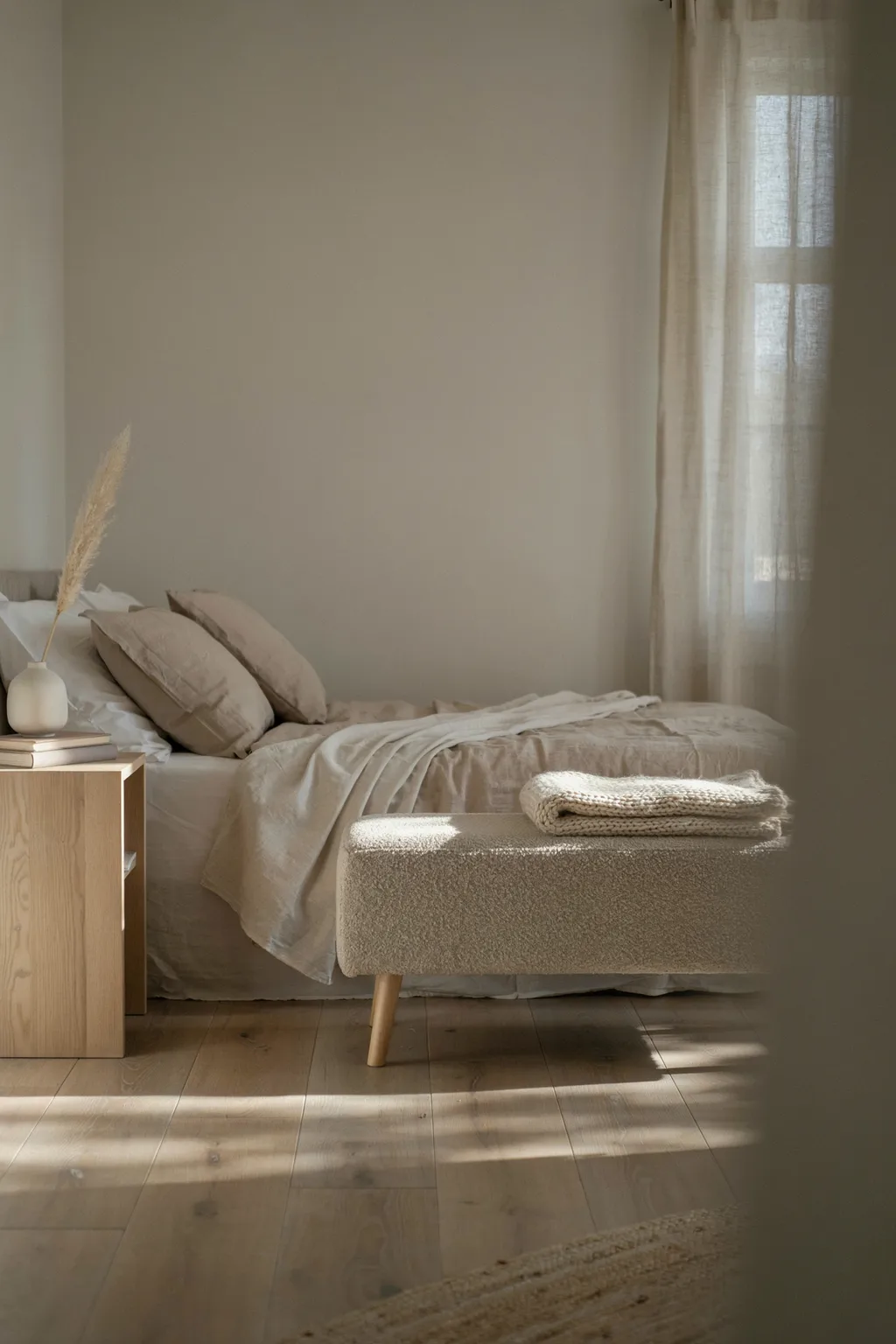
A narrow bench or a low trunk at the foot of the bed finishes the room and works hard at the same time. It gives you a spot to sit and pull on socks, a landing pad for tomorrow’s clothes, and, if it is a trunk, hidden storage for blankets. The horizontal line also caps the bed visually and makes the arrangement feel complete.
A foot-of-bed piece adds function without adding a tall, space-eating item, which is exactly what a small room needs. Keep it slim and low so it does not block the view or the light. A trunk doubles your storage in the same footprint, while an open bench keeps things feeling lighter and more open.
Measure before you buy. You want at least 14 to 18 inches of clear floor between the bench and the wall or door so you can still move around the bed. If your room cannot spare that, skip the bench, since a piece you have to edge past every day kills the calm.
18. Hide the Cords and Tech
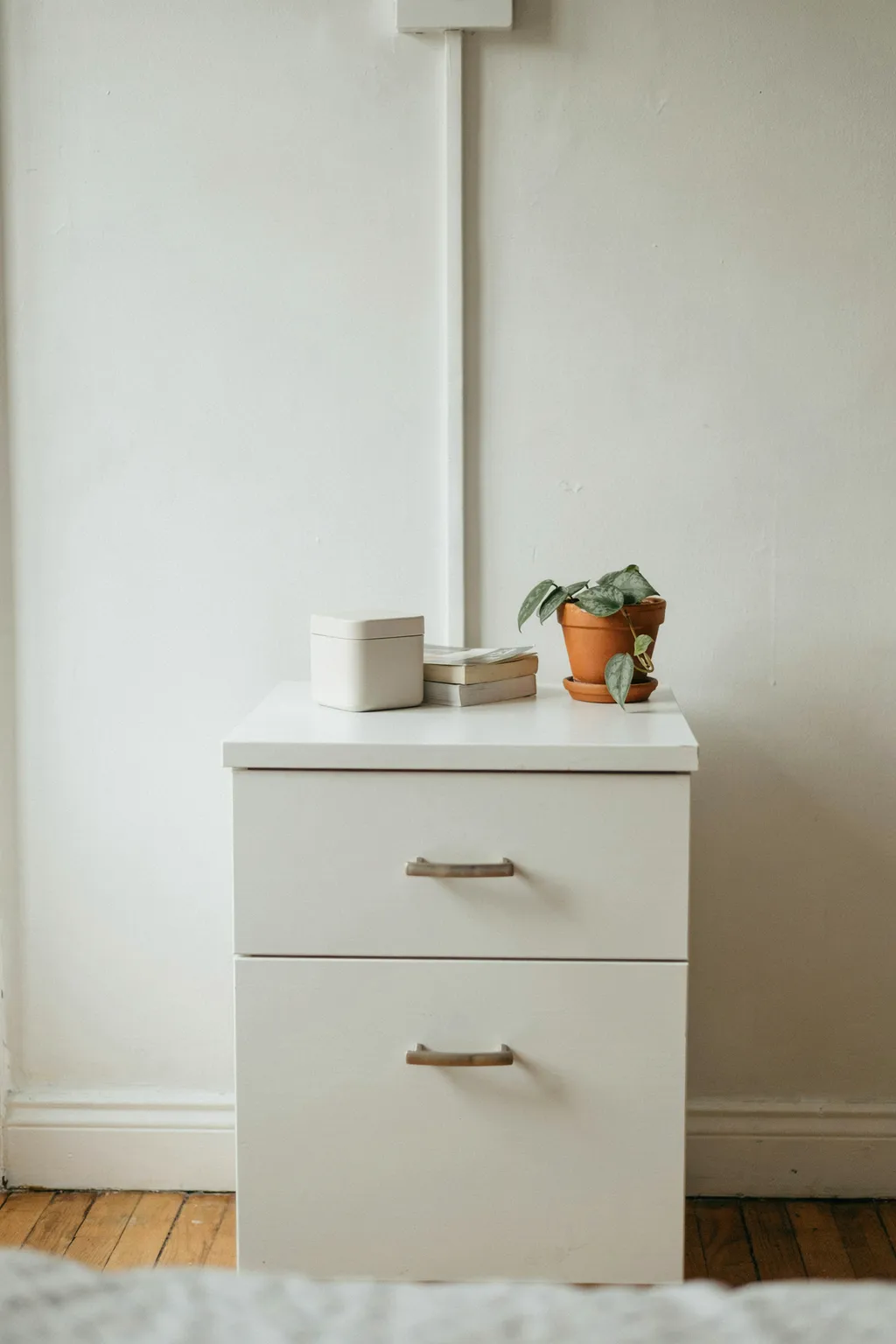
Nothing breaks a calm room faster than a tangle of black cables down the wall and a glowing charger on the nightstand. Tame them. Run cords through an adhesive cord channel painted to match the wall, about 12 dollars, and corral the chargers in a drawer or a small box. The visual quiet you get from hidden wires is out of all proportion to the tiny effort it takes.
Our eyes snag on the busy, high-contrast lines of cables, so clearing them lowers the room’s whole stress level. Move the phone charger off the bedside surface into a drawer with a hole drilled for the cable, and your nightstand stays clean while your phone stays out of reach at night, which is better for sleep anyway.
Two safety notes: do not bundle power cords so tightly they overheat, and keep cord channels clear of outlets and heat sources. Tidy is the goal, but never at the cost of a safe setup.
19. Layer Throw Pillows Without Crowding
The right pillows make a bed look soft and inviting; too many make it a chore. For a full or queen, two euro shams stood up at the back plus one lumbar pillow in front is the sweet spot. Odd numbers and varied sizes look relaxed and natural, while a flat row of identical pillows looks stiff and staged.
A short pillow layer adds depth and a place for the eye to land without burying the bed. Mix textures within your palette, a linen sham, a knit lumbar, maybe one subtle pattern, so the grouping feels collected rather than matched-set. Keep them all in your two or three colors so the bed stays calm instead of loud.
Here is the test of a good pillow plan: where do they go at night? If your arrangement means a mountain of pillows on the floor every evening, it is too much. Keep it to three or four you will actually move, not decorate around.
20. Drape One Chunky Throw Blanket
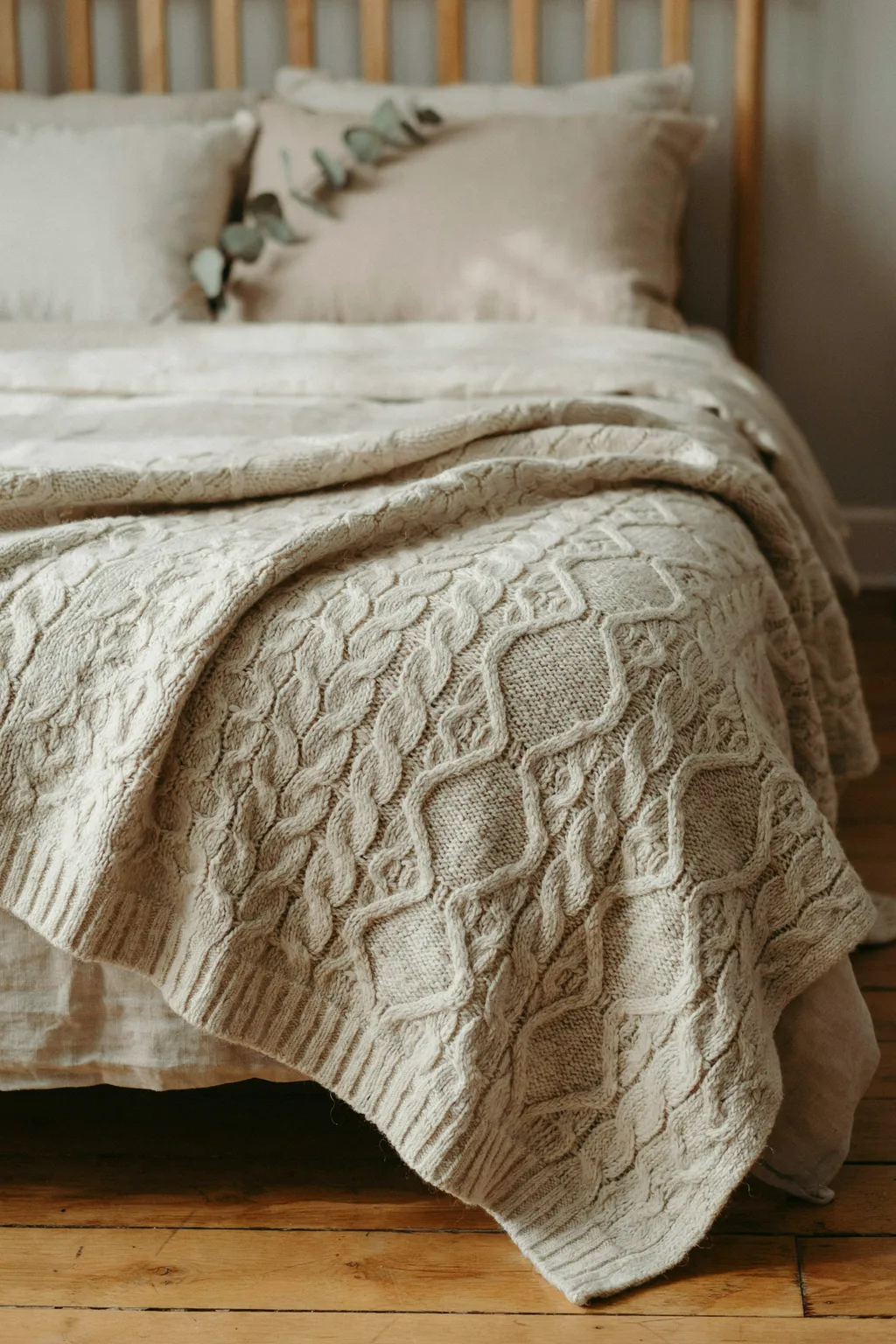
A single chunky throw blanket is the fastest way to say cozy without words. Drape it on the diagonal across the foot of the bed or over the arm of your reading chair, and it instantly softens the room and invites you to grab it. The loose, casual fold matters: a blanket tossed with a little slack looks warm, while one folded into a stiff rectangle looks like a store display.
Texture is what sells the cozy here. A chunky knit in wool or a wool blend reads warm and tactile from across the room, far more than a thin flat fleece. Keep it in your color story, then let it be the soft, touchable moment the bed needs. It also earns its place on cold nights as an actual extra layer.
Skip the cheap acrylic chunky knits if you can. They pill, snag, and stretch out of shape within a season, and a saggy, fuzzy blanket undercuts the whole look. Spend a little more on wool or cotton for something that stays good-looking.
21. Add Quiet Wall Paneling or Molding
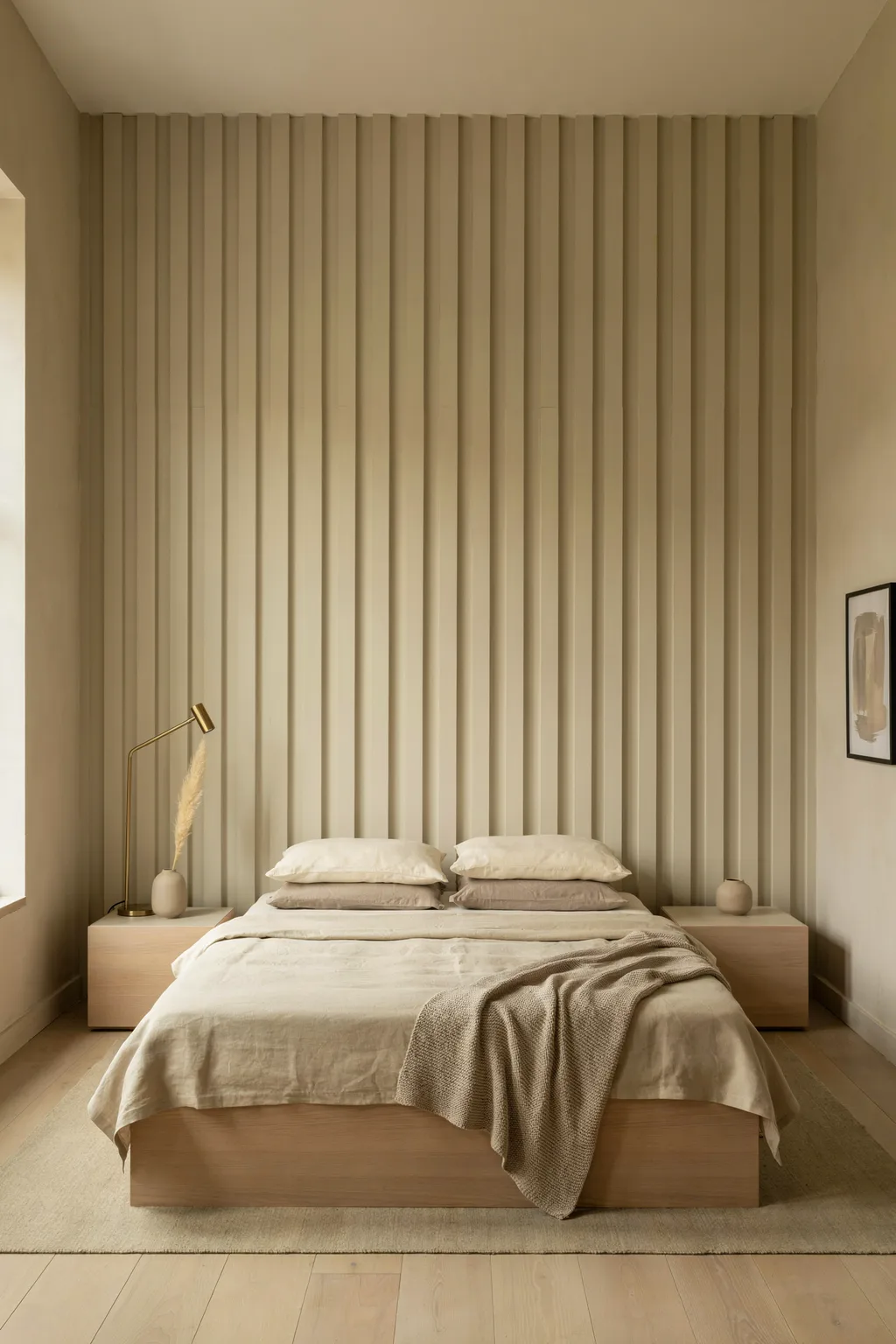
A blank wall behind the bed can feel a little flat. Add gentle texture with peel-and-stick wood slat panels or simple picture-frame molding, then paint it the same color as the wall. The subtle shadow lines give the room depth and a custom, grown-up look, without the busy pattern that wallpaper can bring to a small space.
Keeping the paneling and wall the same color is the trick that keeps it calm. You get the architecture and the soft shadows, but the surface still reads as one quiet plane, so the room does not feel chopped up. Slat panels also add a faint warmth and a touch of sound dampening, which suits a bedroom.
Be restrained in a really small room. Busy, high-contrast paneling, or covering every wall, can overwhelm the space and make it feel smaller. Treat one wall, usually the one behind the bed, and keep the rest plain so the feature has room to breathe.
22. Hang Art at the Right Height
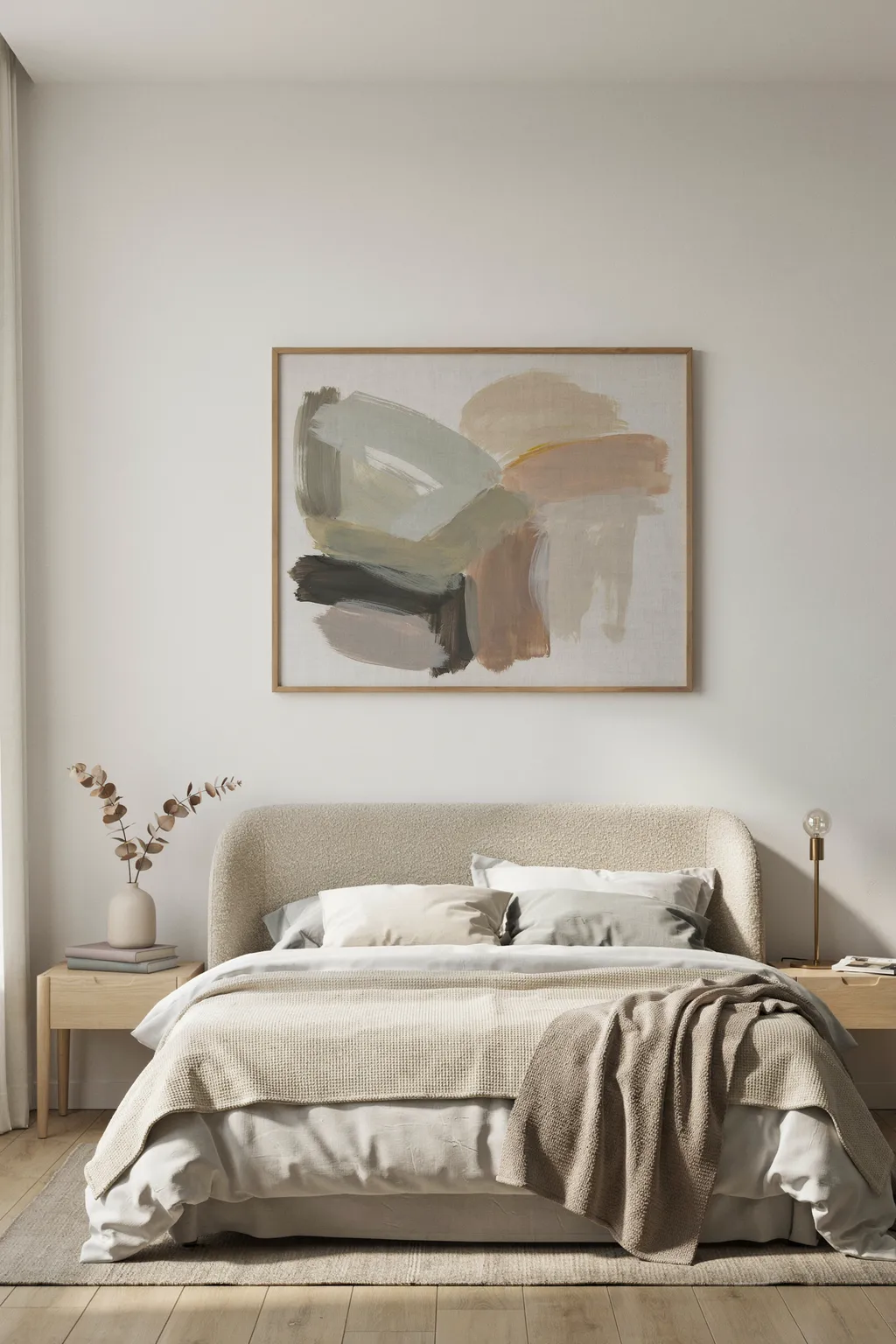
Art hung too high floats off into space and pulls the room apart. Hang it so the center of the piece sits about 57 to 60 inches from the floor, gallery height, which lines up with natural eye level. Above the bed, keep the art or grouping within about two-thirds the width of the headboard so it feels connected to the bed, not stranded above it.
Correct placement is what makes cheap art look expensive. The right height ties the piece to the furniture below it and settles the whole wall. In a small room, one larger calm piece often beats a busy gallery wall, since less visual chopping reads as more restful. Pick imagery that is soft and quiet, landscapes, abstracts, soft tones, over anything loud.
One safety caveat for the spot above your pillow: hang heavy framed glass with proper anchors, or better, choose lightweight canvas or unframed prints there. You do not want a heavy frame coming down over your head in the night.
23. Leave Real Walking Clearance
The most overlooked calm trick is empty floor you can actually walk on. Crowd a room with furniture and it feels stressful no matter how pretty each piece is. Leave 24 to 30 inches of clear walkway on at least one side of the bed and a 36-inch arc clear in front of the door and closet. Your body relaxes in a room it can move through without turning sideways.
Clear paths read as calm because the eye, and your feet, find easy routes instead of obstacles. This often means choosing a smaller bed or fewer pieces, and that trade is worth it. A queen with room to walk feels better than a king you have to climb over to reach the window. Floor space is a feature, not wasted room.
If you are squeezed, pull a too-big bed first before sacrificing the walkway. A bed scaled to the room, with real clearance around it, will always feel calmer than a maxed-out room you shuffle through edgewise.
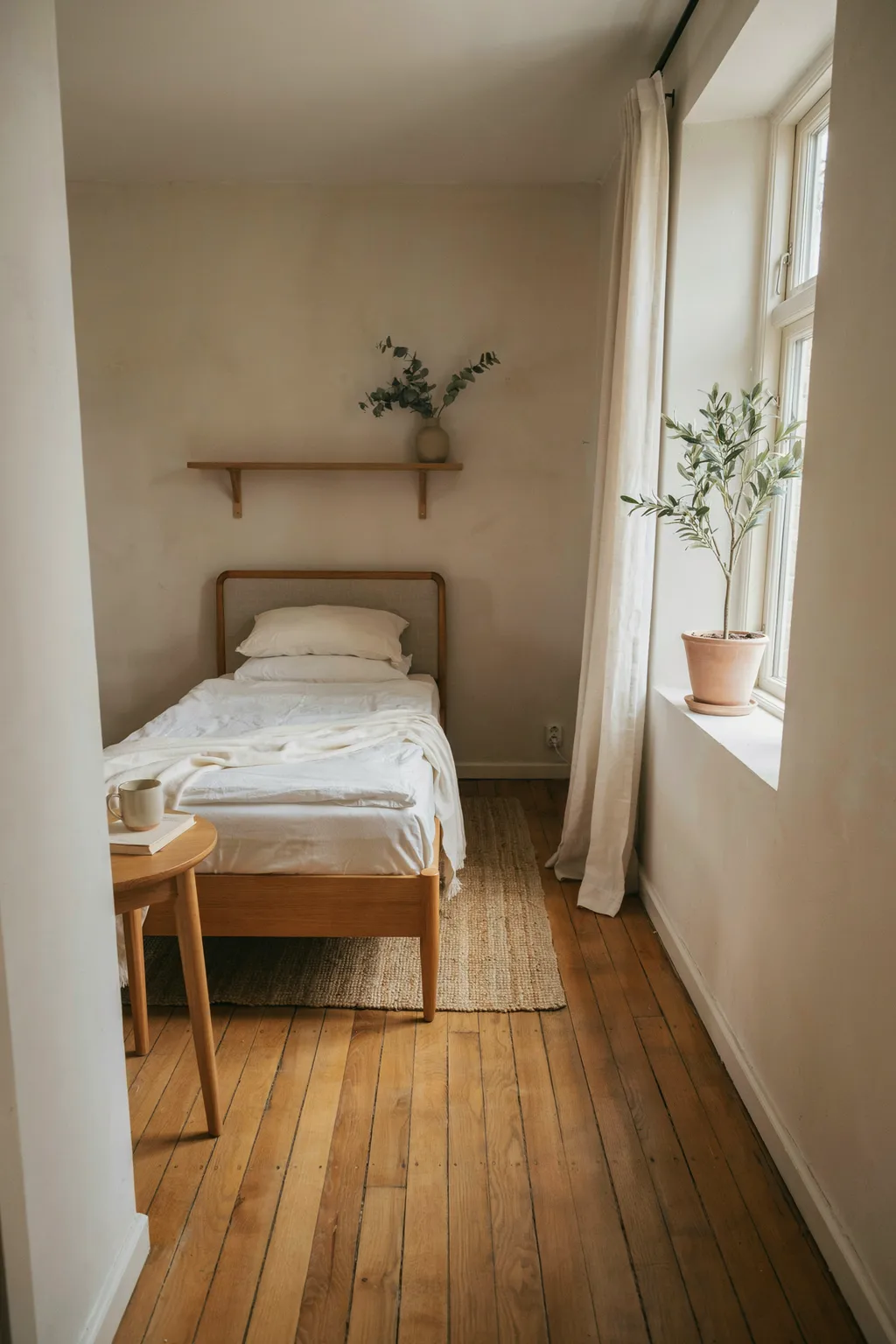
24. Layer Scent and Sound
Calm is more than what you see. It is also what you smell and hear. Add a low-watt reed diffuser or an essential-oil diffuser in a quiet scent like lavender or cedar, and a small white-noise machine or fan for a soft, steady hum. These two senses set the mood the moment you walk in, often faster than anything visual, and they are what most decor lists forget.
Scent and sound work because they cue your nervous system directly. A familiar calming smell and a low background hush tell your body it is safe to wind down, which is the whole point of a bedroom. Keep the scent subtle and the sound steady, since the goal is a gentle backdrop, not a noticeable event.
Go light here. Strong synthetic fragrance can trigger headaches or bother anyone with allergies or asthma, so choose a mild, natural scent and keep it faint. If anyone in the room is sensitive, lean on the white noise and skip the scent entirely.
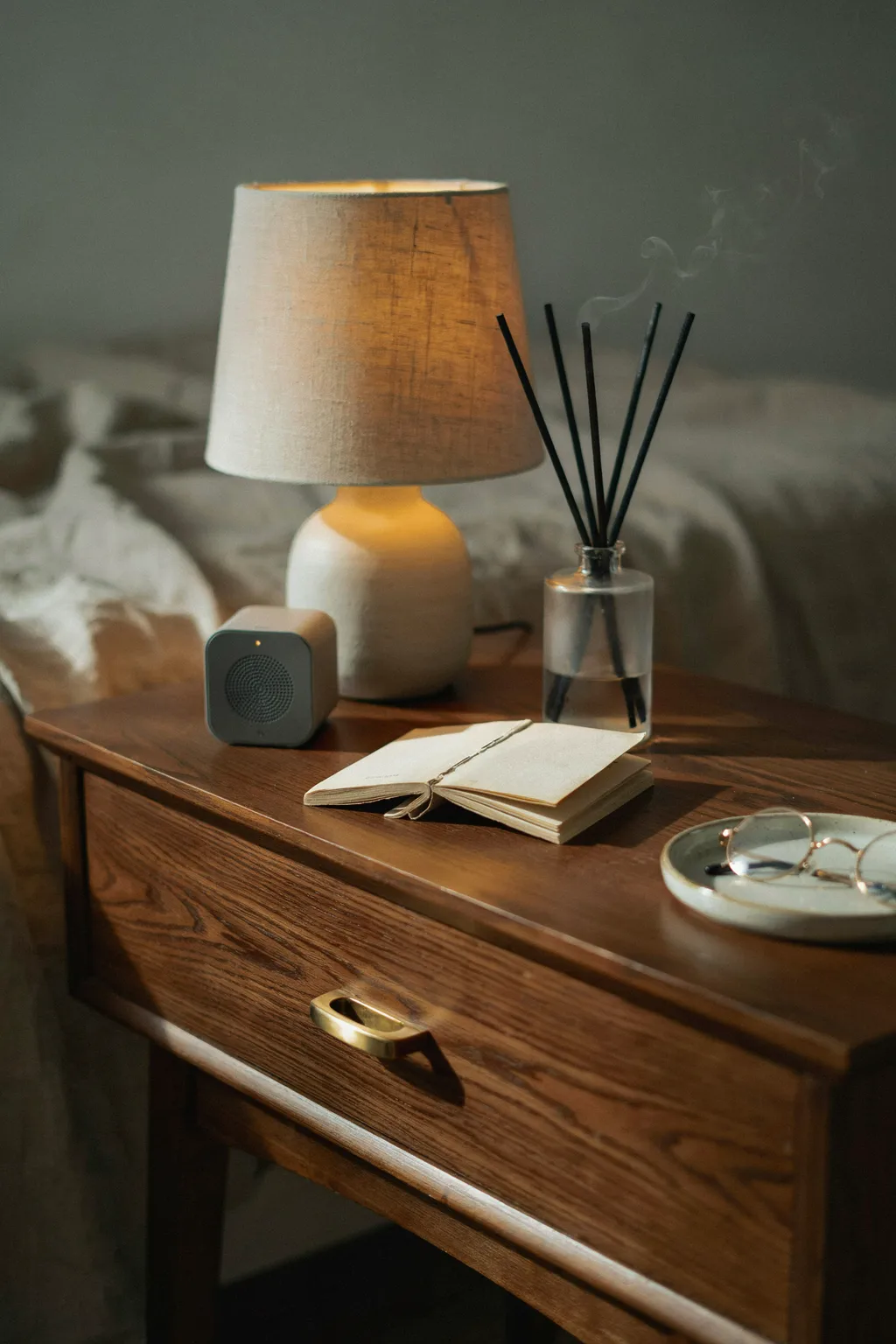
25. Edit Down to Keep It Calm
After you add, subtract. The final and most important idea is to edit. Aim to keep at least half of every flat surface clear: the dresser, the nightstand, the windowsill. Empty space is what lets the eye, and the mind, rest. A small room with a few good things and room to breathe will always feel calmer than the same room stuffed with more.
Editing is what makes everything else on this list land. The warm light, the layered bed, the natural textures, they all read better against calm, clear surfaces. Adopt a simple one-in-one-out habit: when something new comes in, something old leaves. That keeps the room from creeping back to cluttered over the months.
A fair caveat: pure minimalism can tip into cold and bare, which is not the goal either. Keep softness in the edit, a throw, a plant, a warm lamp, so the room reads calm and lived-in rather than empty. Calm is the balance between too much and too little.
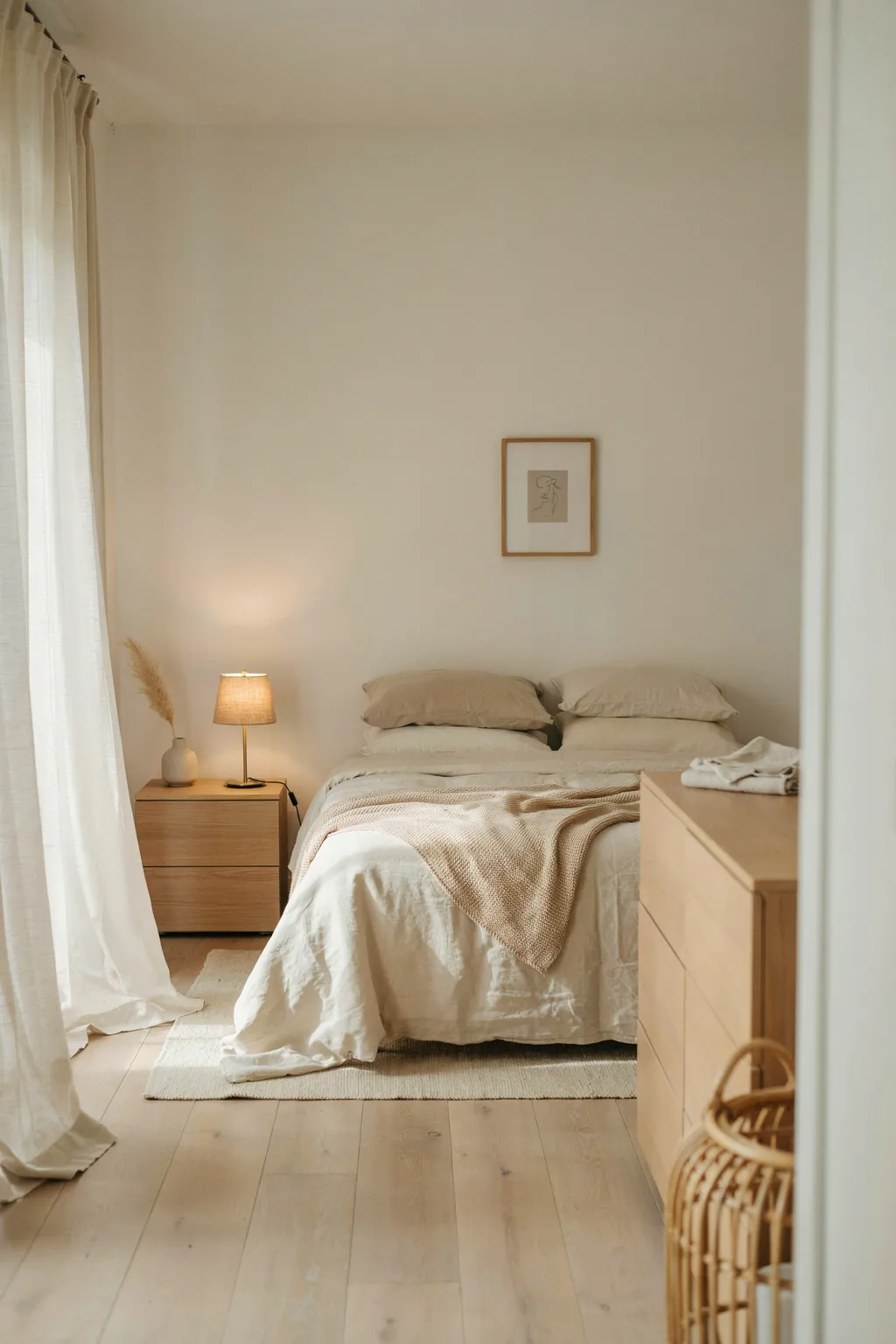
Common Mistakes to Avoid
Mistake 1: Using cool, bright daylight bulbs
Daylight bulbs at 5000K make a bedroom feel like an office and keep your brain alert at the exact moment you want it winding down. The fix costs about 15 dollars: swap to 2700K warm bulbs and add a dimmer. No other change does this much for so little.
Mistake 2: Cramming in too much furniture
A small room with a king bed, two nightstands, a dresser, and a chair has no floor left to breathe. Pull the largest piece first, usually an oversized bed, and protect a clear 24 to 30 inch walkway. Open floor reads as calm; a maze of furniture reads as stress.
Mistake 3: Hanging curtains and art too low
Curtains on the frame and art floating high both fight the room. Mount curtain rods near the ceiling and extended past the window, and center art around 57 to 60 inches from the floor. Right height is free and instantly makes the room look taller and more finished.
Mistake 4: Choosing a rug that is too small
A 5 by 7 rug marooned under the bed shrinks the whole room. Size up to an 8 by 10 with 18 to 24 inches showing around the bed, or run two runners along the sides. A right-sized rug grounds the bed and warms the floor.
Mistake 5: Leaving cords and clutter on show
Visible cables and piled-up surfaces quietly raise the stress level of an entire room. Hide cords in a paint-matched channel, corral chargers in a drawer, and keep at least half of every surface clear. Tidy surfaces are the backbone of a calm bedroom.
Mistake 6: Going all-neutral with zero texture
A beige room with no texture reads flat and cold, not cozy. Layer in three weaves on the bed, a wool throw, and a natural material or two. Texture is what makes a neutral small bedroom feel warm instead of bland.
Quick Start Checklist
- [ ] Swap bedroom bulbs to 2700K warm white and add a plug-in dimmer or smart bulb
- [ ] Repaint or test a warm neutral wall color and check it at night
- [ ] Layer the bed in three textures: sheets, blanket, duvet
- [ ] Rehang curtains high and wide, floor-length panels
- [ ] Size up the rug so 18 to 24 inches shows around the bed
- [ ] Lean a tall mirror across from the window
- [ ] Clear and style nightstands with the rule of three
- [ ] Hide all cords in a paint-matched channel and corral chargers
- [ ] Add one low-light plant and one chunky throw blanket
- [ ] Edit every flat surface until it is at least half clear
Frequently Asked Questions
How do I make a small bedroom feel calm on a budget?
Start with the cheapest, highest-impact moves: a 2700K bulb swap and a plug-in dimmer for under 20 dollars, rehang your existing curtains higher and wider, and declutter every surface, which is free. Then add one chunky throw and one plant. You can transform the mood for well under 100 dollars before buying any furniture. These budget cozy bedroom decor ideas prove calm costs very little.
What is the best color for a small, calm bedroom?
Warm neutrals with a light reflectance value around 60 to 70 work best: greige, warm oat, soft creamy whites. They hold lamplight and glow at night instead of going grey. Add one low-saturation anchor like sage or muted blue in small doses. Skip cool stark whites and icy greys, especially in north-facing rooms. Color is the foundation most cozy bedroom decor ideas build on.
How do I make a small bedroom look bigger?
Hang curtains near the ceiling and extend them past the window, lean a tall mirror across from the light source, keep furniture low and scaled to the room, and protect a clear 24 to 30 inch walkway. Use one wall color top to bottom and keep surfaces clear. Continuous color and clear floor both stretch the space. Space-stretching cozy bedroom decor ideas like these matter most in box rooms.
How many decor pieces are too many in a small room?
Use the surface test: keep at least half of every flat surface clear. On the bed, three or four pillows is plenty. On a nightstand, three objects at three heights. If you are constantly moving a pile of pillows to the floor at night, or you cannot set down a glass of water, you have too much.
What lighting makes a bedroom feel cozy?
Warm, layered, dimmable light. Those 2700K bulbs sit at the warm end of the color temperature scale, which is what reads as cozy. Use them across the room, spread the light over two or three low sources at different heights, a bedside lamp, a floor lamp, a sconce, and put them on dimmers so you can drop to 10 to 20 percent before sleep. Avoid relying on a single bright overhead.
Can I do these cozy bedroom decor ideas in a rental?
Yes, most are renter-safe. Swap bulbs, use plug-in sconces and dimmers, lean a mirror instead of mounting it, use peel-and-stick paneling, and choose tension or no-drill curtain rods. Keep your landlord-required paint color if needed and lean on textiles, lighting, and decluttering, which leave zero marks behind.
Final Takeaways
A small bedroom does not feel calm by accident, and it does not need a renovation either. The best cozy bedroom decor ideas are a handful of warm, deliberate choices stacked together. Remember the few that matter most:
- Light is the fastest win. Warm 2700K bulbs on a dimmer change the whole mood for the price of lunch.
- Layers beat stuff. Three textures on the bed and a couple of natural materials do more than a pile of decor.
- Clear floor and clear surfaces are features. Walking room and half-empty tabletops are what your nervous system reads as calm.
- Right sizes and heights make cheap things look good. Curtain height, rug size, and art placement cost nothing and change everything.
Pick one idea and do it today, the bulb swap is the easiest place to start, and you will feel the difference tonight. These cozy bedroom decor ideas are meant to be layered in over time, not bought in a single weekend. Add them at your own pace, keep editing as you go, and your small space will turn into the quiet, restful room you actually want to come home to.
You Might Also Like
- ▸20 Small Bedroom Ideas for Men That Maximize Space
- ▸10 Small Bedroom Nightstand Ideas That Maximize Space
- ▸20 Chic Small Bedroom Ideas That Feel Roomy and Refined
- ▸13 Small Bedroom Layout Mistakes Interior Designers Always Avoid
- ▸18 Small Bedroom Bookshelf Ideas That Save Space in Style
- ▸20 Black Bedroom Ideas That Still Feel Spacious