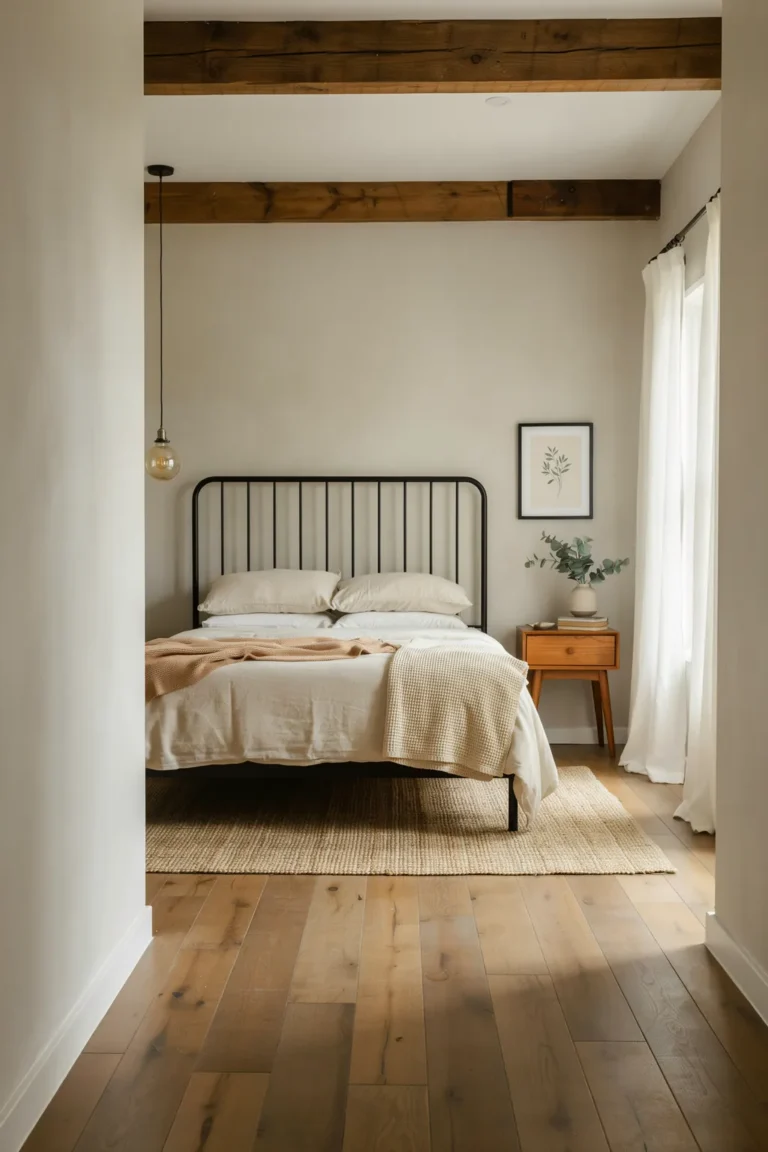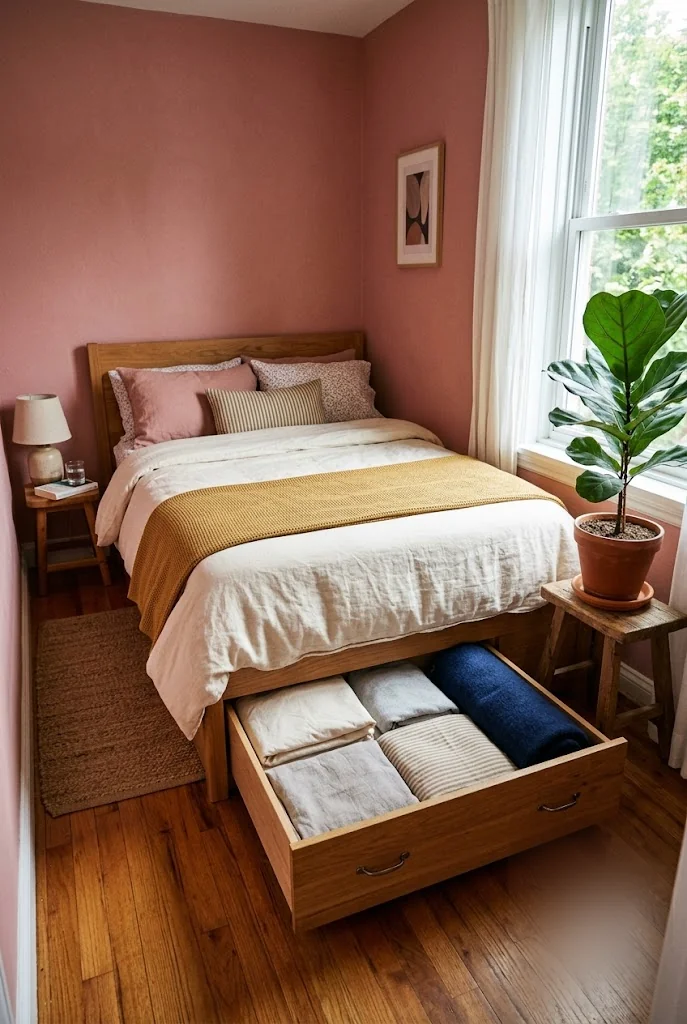
15 Minimalist Bedroom Ideas That Feel Calm
Your bedroom is the last thing you see at night and the first thing you face at dawn. So why does it feel like a storage unit with a bed in it? Piles on the dresser, a chair wearing yesterday’s clothes, a nightstand you cannot find under the chargers. None of it helps you rest, and the minimalist bedroom ideas below are built to fix exactly that.
That low hum of visual noise keeps your brain mildly busy even while you sleep. Calm is not something you buy in one expensive purchase. It comes from taking things away and being choosy about the few that stay. These minimalist bedroom ideas are built around that simple swap: fewer objects, better light, softer materials, and a little breathing room around everything.
You will not need to gut the place or spend a fortune. Most of what follows costs little or nothing, because subtraction is free. Some ideas lean warm and earthy. Others go cool and grey. A few strip the room down to almost nothing. Pick the ones that match how you want to feel when you walk in.
Each idea below is paired with a real-room look you can copy, plus an honest note on who it suits and who should skip it. By the end you will have a clear plan to turn a busy, tiring room into a space that finally lets you exhale.
Quick Answer
A calm minimalist bedroom comes from three moves: clear every surface you can, stick to one quiet color family, and let natural light and soft texture do the decorating. Keep the bed low and simple, choose one or two materials like pale wood and linen, and leave deliberate empty space. The best minimalist bedroom ideas balance that emptiness with one warm touch, so add back a single lamp, a plant, or a textured rug and the room feels restful, not bare.
1. Start With Soft Neutrals for an Instant Hush
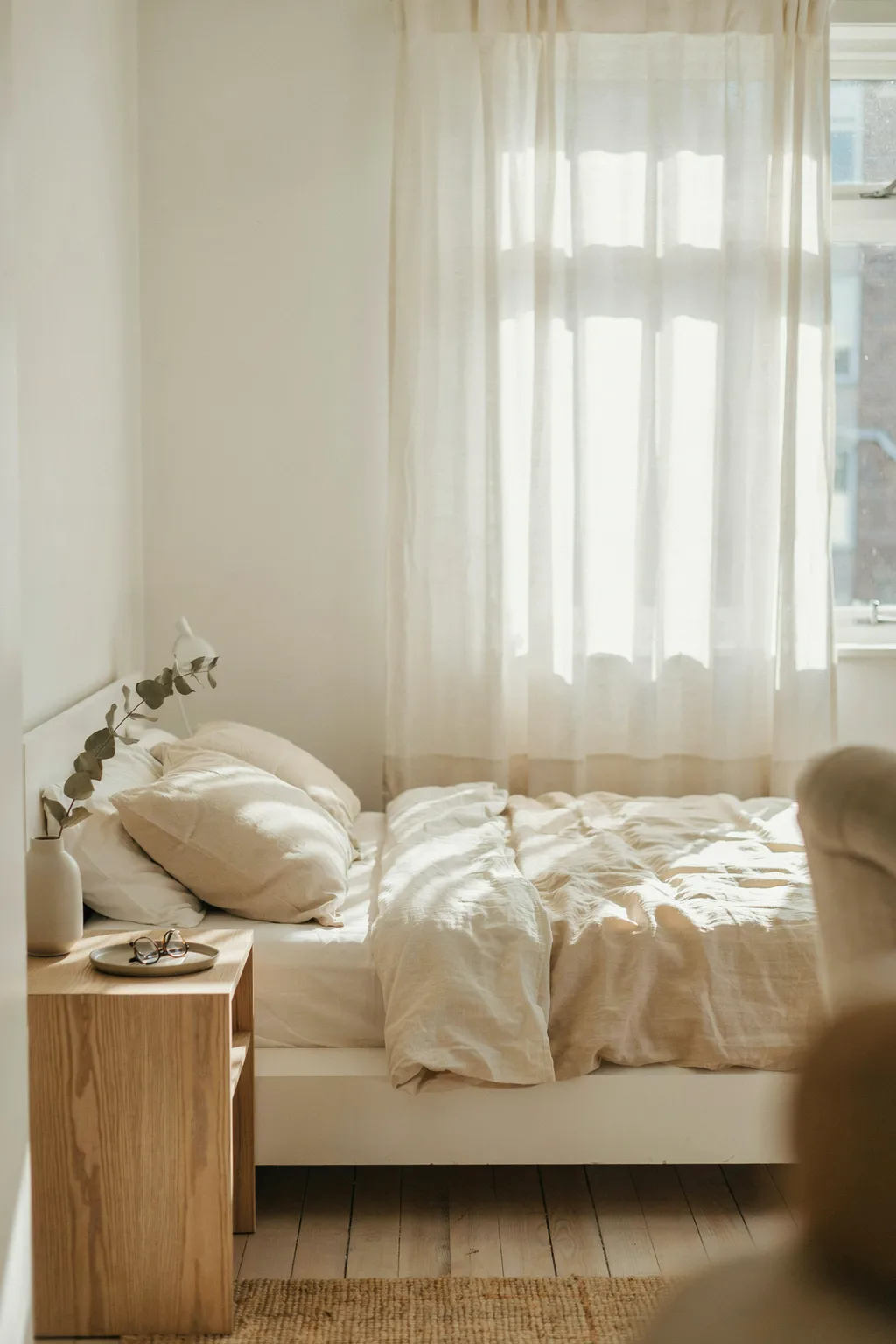
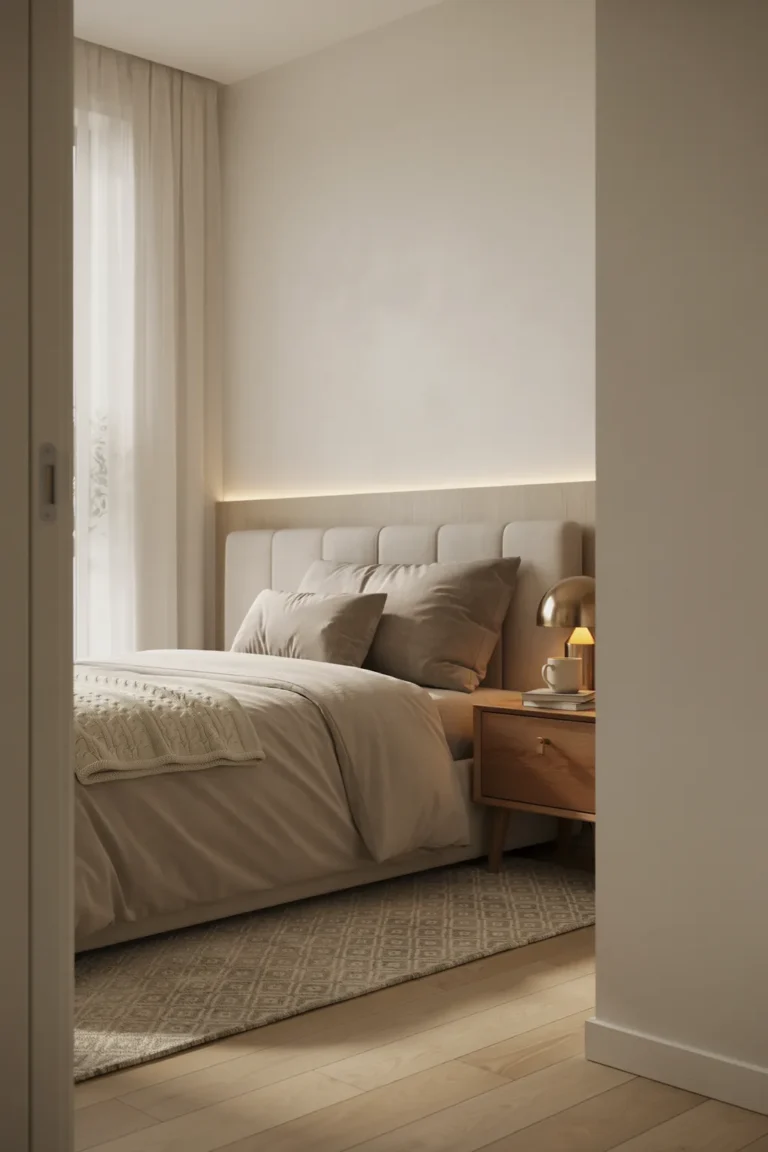
The fastest way to quiet a room is to drain the loud colors out of it. Picture a low platform bed dressed in cream and oatmeal linen, sheer curtains filtering soft morning light, and a pale oak nightstand holding almost nothing. Nothing shouts. Your eye has nowhere to snag, so your shoulders drop the moment you walk in. Soft neutrals do the heavy lifting in most minimalist bedroom ideas because they hide visual clutter and bounce light around instead of absorbing it.
Stick to two or three tones from the same family: a warm white wall, a sand duvet, a slightly deeper beige throw. The tiny shifts in shade read as cozy, not flat. Crumpled linen helps too, since the soft wrinkles catch shadow and keep an all-neutral room from looking like a hotel showroom.
This works best if you have decent natural light to keep the beiges from going dull. If your room faces north and stays grey, warm the neutrals up with peachy undertones or skip ahead to the moody palette idea instead.
2. Blend Japandi Warmth With Clean Wood Lines
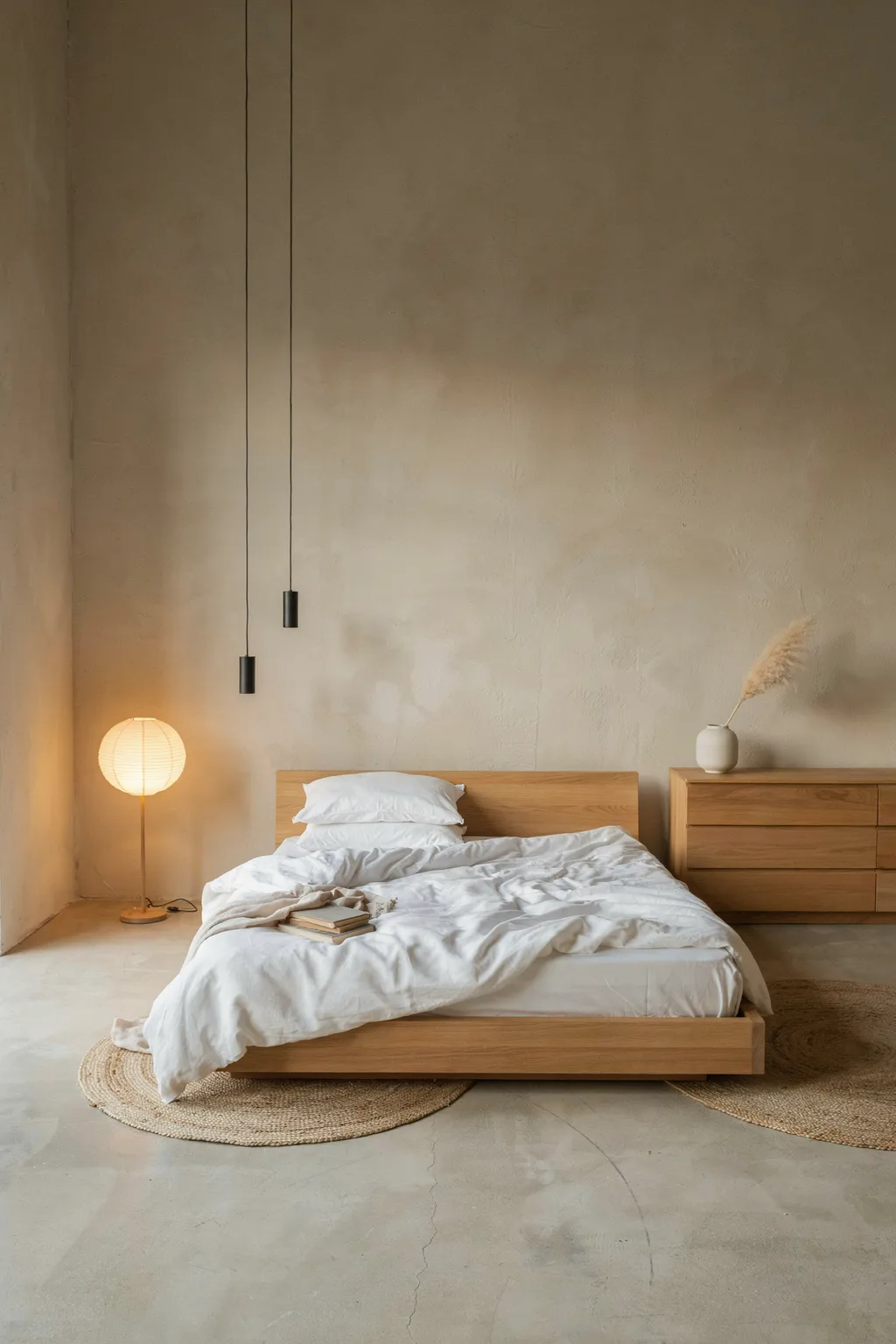
Japandi marries Japanese restraint with Scandinavian comfort, and it might be the friendliest style for a calm minimalist bedroom. Think a solid wood platform bed sitting low to the ground, crisp white bedding with a soft rumple, a putty-colored wall, and two slim black pendant lights dropping beside the bed instead of table lamps. The wood keeps it warm. The empty wall keeps it calm.
Every piece here earns its place and shares a quiet material story: natural timber, plain cotton, a little matte black for contrast. A round jute rug on each side softens the floor without adding pattern. A single paper floor lamp in the corner throws a warm glow at night, so you never need harsh overhead light.
Japandi suits people who find pure white rooms a bit cold but still want very little stuff. Skip it if you love color or layered patterns, because this look depends on holding back. One wood tone, one neutral textile, and a lot of restraint is the whole recipe.
3. Float Slim Wood Shelves Under Warm Sconces
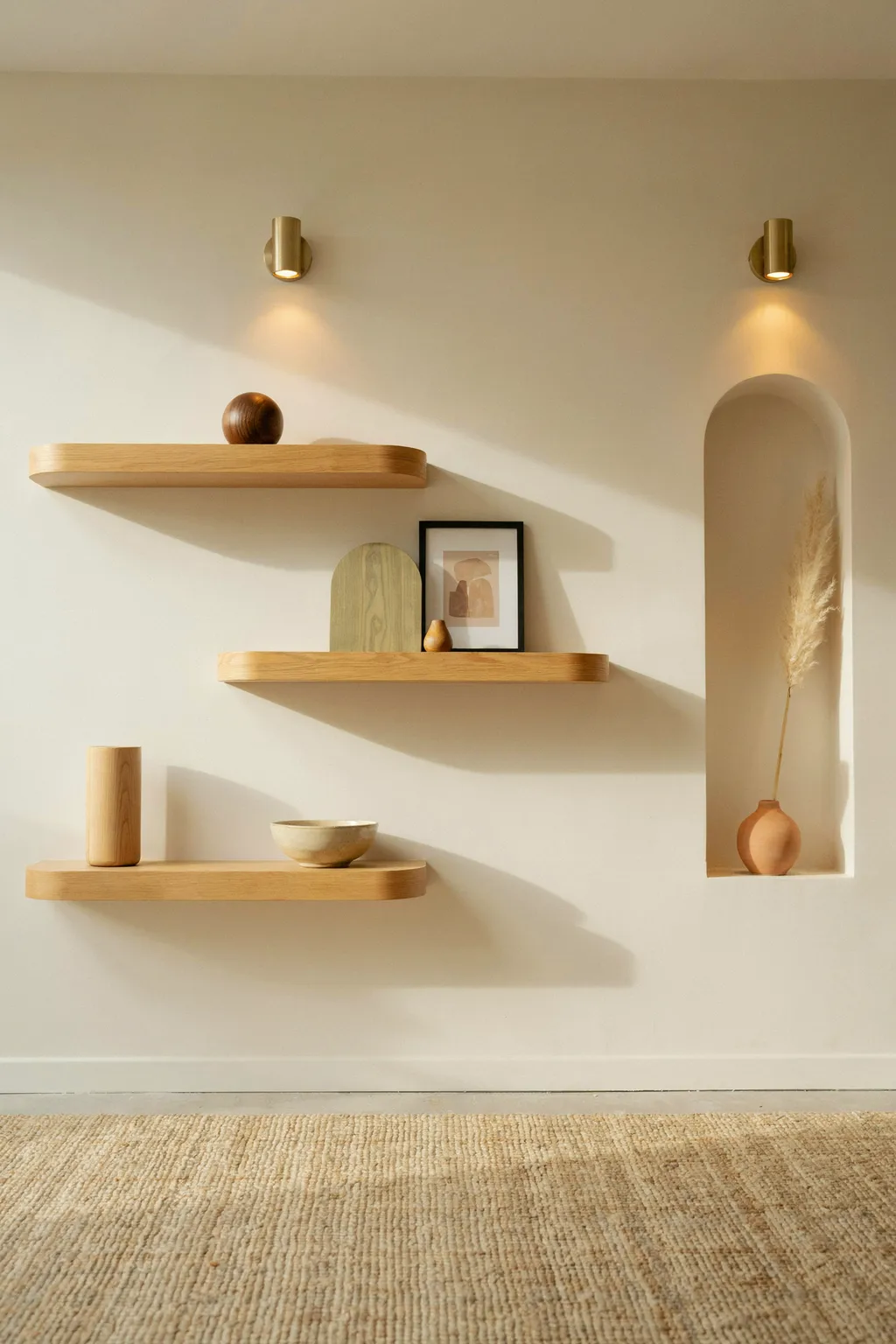
A blank wall is calm, but a thin row of floating wood shelves gives you a home for the few things you want to keep, without a bulky bookcase eating the floor. Picture pale oak shelves staggered across a plaster wall, lit from above by two small brass sconces that throw warm pools of light. A handful of round wooden objects, one framed print, a small bowl. That is the whole display, and the empty stretches between pieces are doing as much work as the pieces themselves.
The warm sconce light is the secret. It turns a practical storage wall into something that feels intentional and softly lit after dark. Keep the shelf styling to the rule of one-third full: leave two thirds of each shelf empty so nothing reads as cluttered.
This suits renters who cannot build in storage but can hang a few brackets. The honest caveat: floating shelves tempt you to fill them over time. Set a hard limit on the number of objects, maybe seven across three shelves, and put anything new only by removing something old.
4. Add Living Greenery to a Crisp White Backdrop
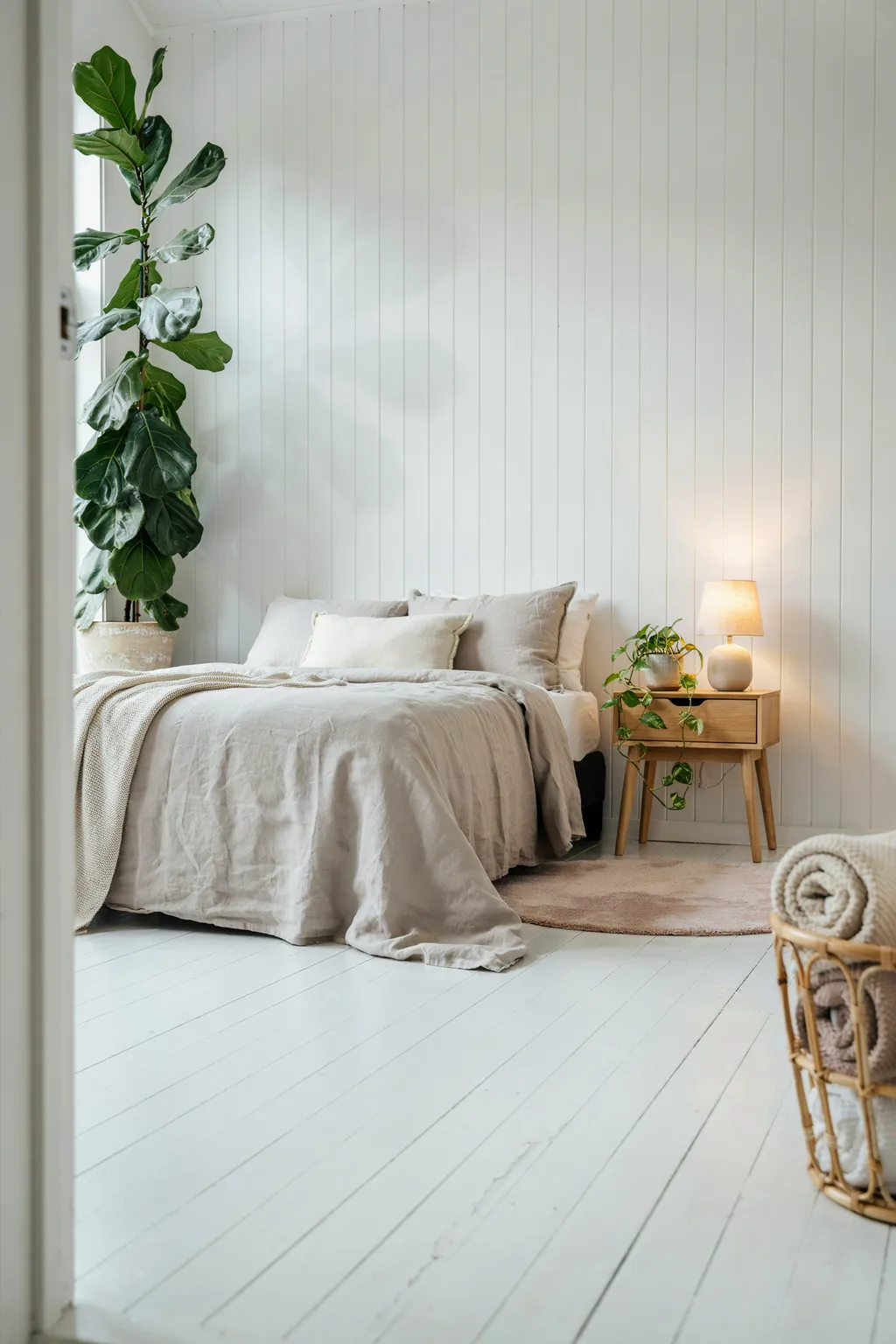
A white minimalist bedroom can tip into sterile fast. One or two leafy plants fix that in a second. Set a tall potted plant by the window and a smaller one on a light wood stool beside a paneled white wall with soft grey bedding, and the room suddenly feels alive instead of empty. Green is the one color that reads as restful even against pure white, so it breaks the blankness without breaking the calm. Most minimalist bedroom ideas overlook this cheap, living fix.
Plants pull this off by adding movement, shadow, and a hint of the outdoors, three things a flat white wall cannot give you. Pick low-fuss greenery like a snake plant, pothos, or ZZ plant if you forget to water. A painted white wood floor keeps the base bright and makes the green pop harder.
This is perfect for small rooms that need life on a tiny budget, since a single plant costs less than most decor. Skip the high-maintenance ferns and fiddle-leaf figs if your room is dim or you travel often, because a dying plant adds more visual stress than no plant at all.
5. Frame the Room With Quiet Black Accents
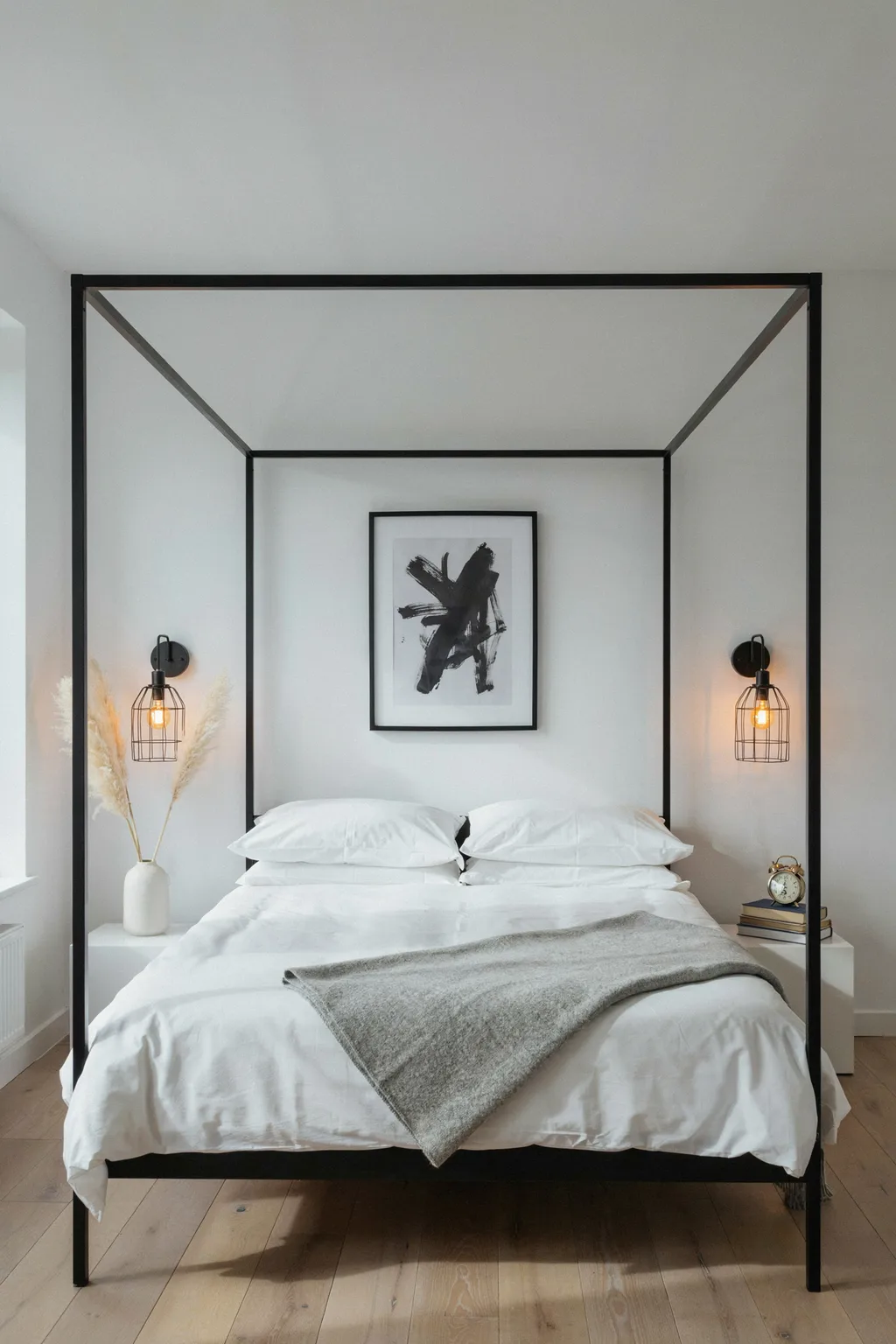
Minimal does not have to mean all pale. A few sharp black accents give a calm room backbone. Picture a slim black four-poster frame around a white bed, two black cage sconces with warm Edison bulbs, and a single black and white print above the headboard. The black draws clean lines in the air and makes the white feel even crisper, yet there is so little of it that the room still reads as restful.
This works on the same logic as a black frame around a photo: the dark edge contains the calm and gives your eye a place to land. Keep the black to roughly one tenth of the room, a frame here, a lamp there, one piece of art. Any more and it stops feeling minimal and starts feeling heavy.
Quiet black accents suit modern rooms with good light and high ceilings, where the thin frame can breathe. Skip this if your room is small and dim, since black lines in a cramped space can feel like bars rather than elegant edges. In that case keep the accents to a single lamp.
6. Wrap the Walls in Earthy Clay Tones
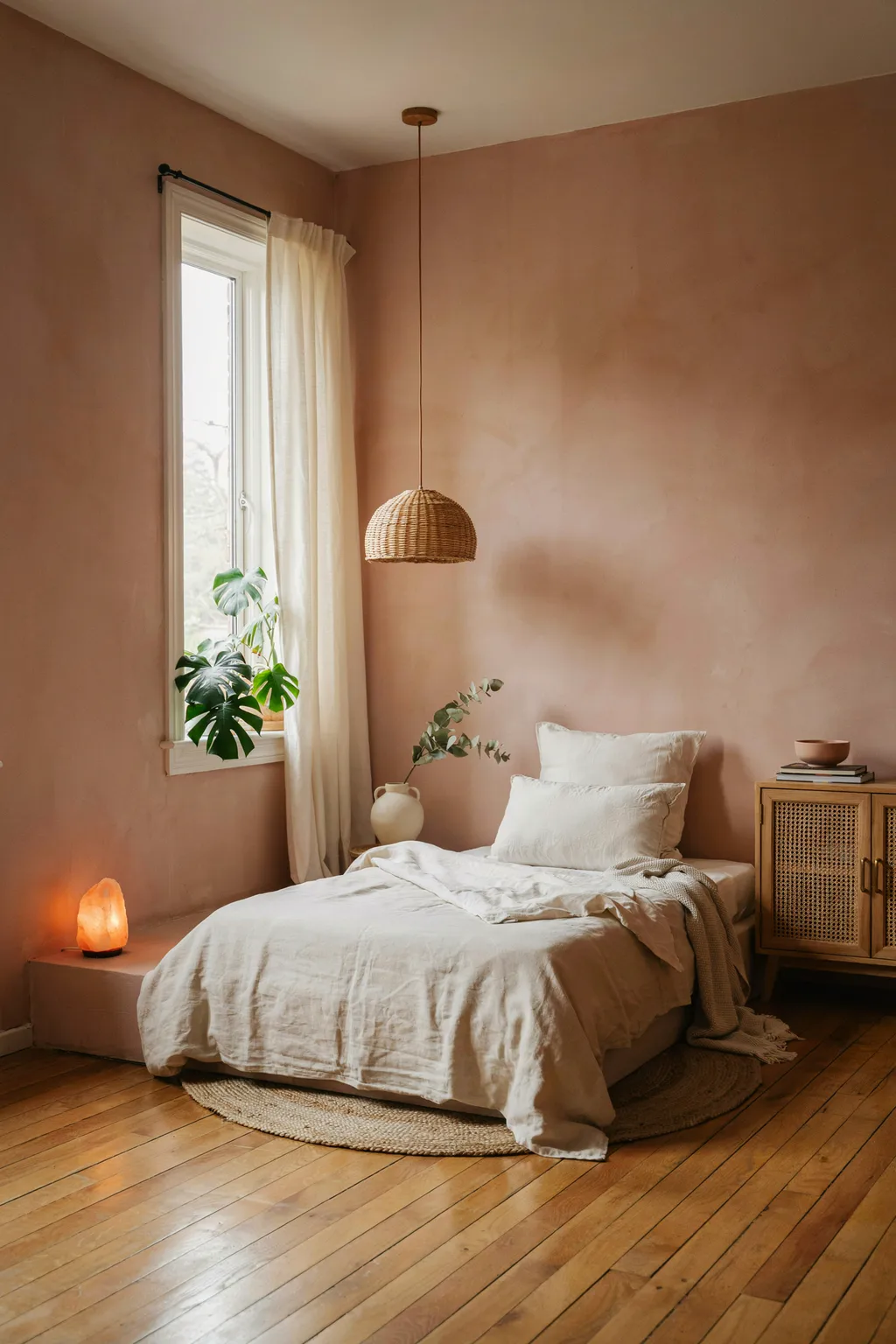
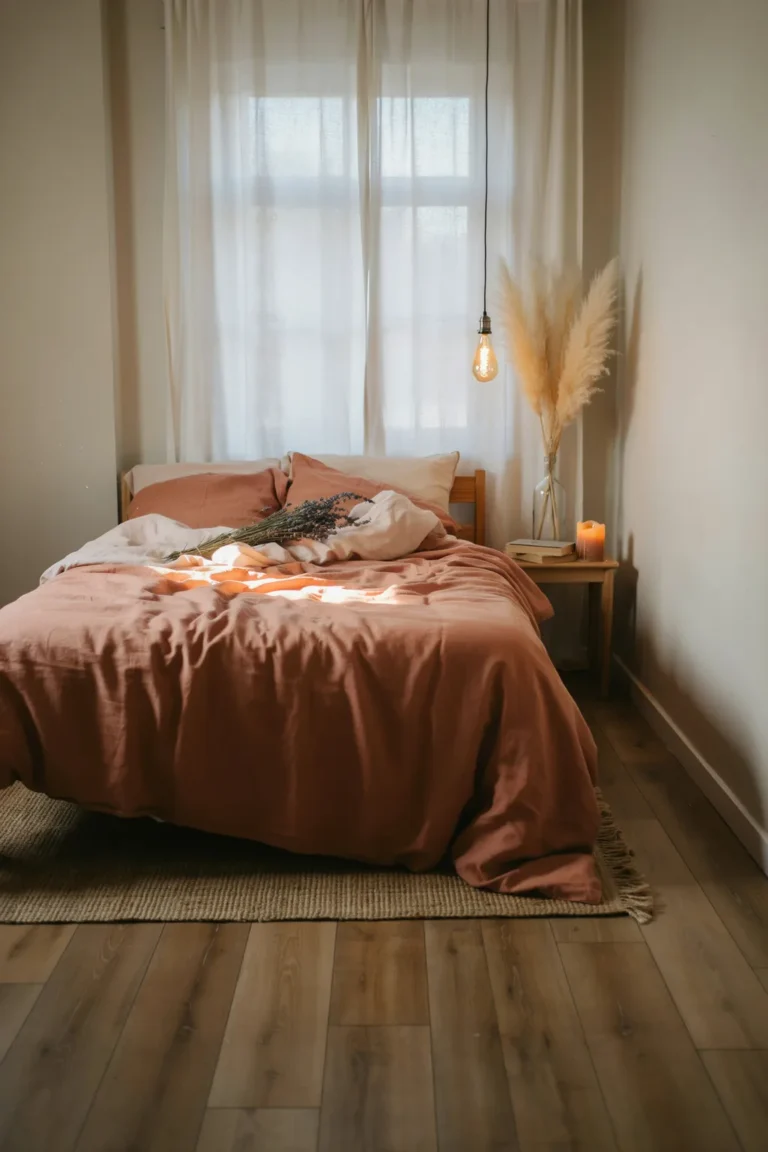
If beige feels too safe, warm terracotta and clay walls bring a grounded, sun-baked calm without going loud. Imagine soft pinkish-clay walls, a low bed in nubby white bedding, a rattan cane cabinet, and a woven pendant overhead. A small salt-glow lamp warms one corner at dusk. The earthy color hugs the room, so it feels intimate and settled rather than cold and open.
Warm mineral tones echo natural clay and stone, colors our eyes read as safe and steady. Pair the clay walls with raw, tactile materials: cane, jute, undyed cotton, pale wood. The texture keeps the look minimal because there is almost no pattern, just a quiet mix of natural surfaces. A round jute rug anchors the bed and softens the footing.
This suits people who want warmth and personality while keeping the clutter near zero. The honest caveat: a saturated clay wall is a commitment. Test a large paint sample on two walls and live with it for a few days, since terracotta shifts a lot between bright noon and lamp-lit night.
7. Hide the Clutter Inside Built-In Storage
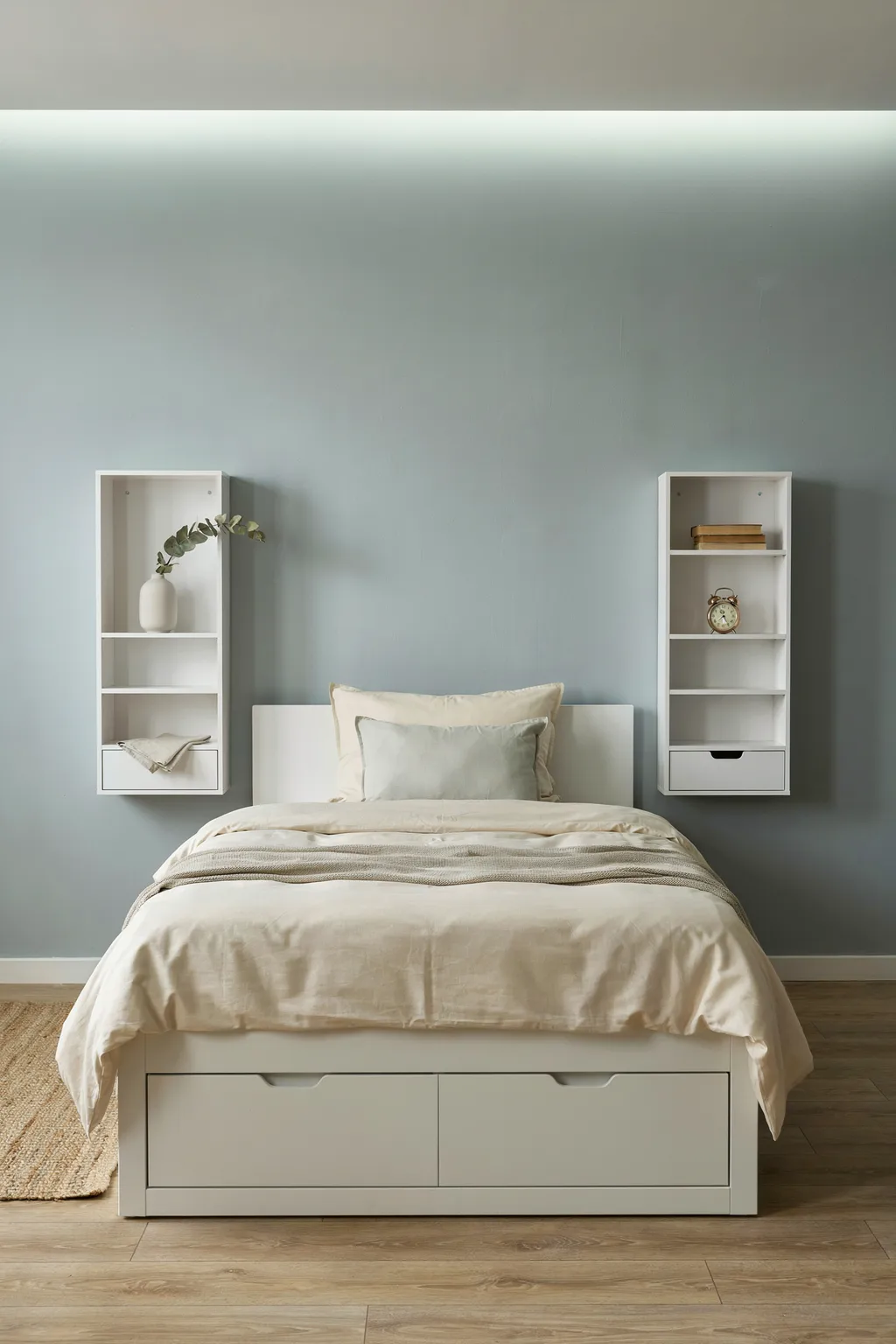
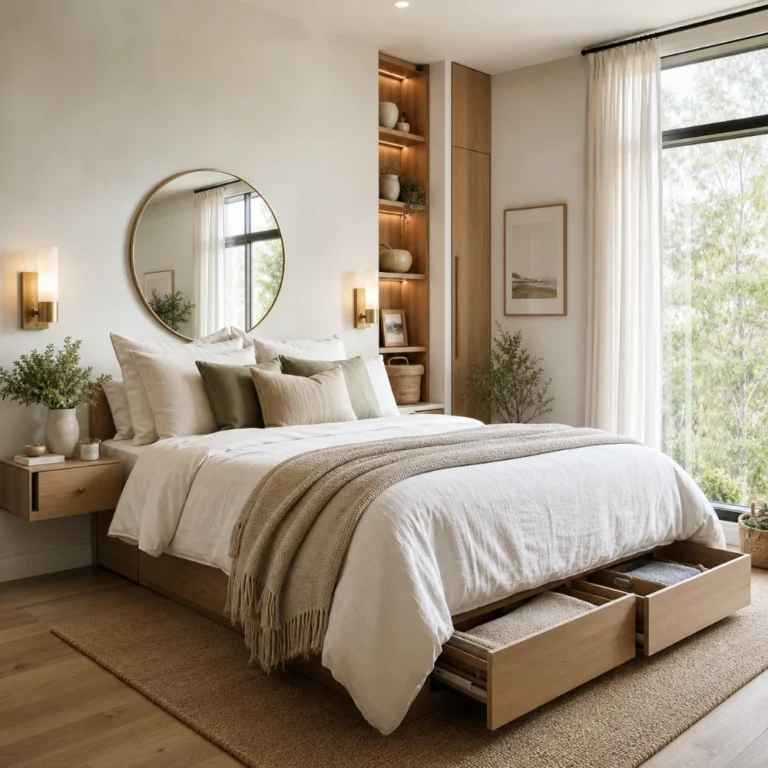
Clutter is the enemy of calm, and the cleanest fix is to give everything a hidden home. Picture a storage bed with deep drawers in the base, flanked by two slim wall-mounted shelving units that tuck books and a few objects up off the floor. Cove lighting glows softly along the ceiling edge. With the mess zipped away behind drawer fronts, the room can stay almost bare without you living out of a suitcase.
Minimalism only sticks when there is a place for daily things to disappear into. Drawers under the mattress can swallow off-season clothes, spare bedding, and the chargers that usually breed on a nightstand. Aim for closed storage over open shelves wherever you can, since closed fronts hide the visual noise completely.
This is the most practical of these minimalist bedroom ideas for families or anyone in a small flat with no spare closet. The trade-off is cost: a quality storage bed runs more than a plain frame, often a few hundred dollars more. If the budget is tight, add under-bed drawers to your current frame instead and get most of the benefit.
8. Make One Bold Monochrome Wall the Focus
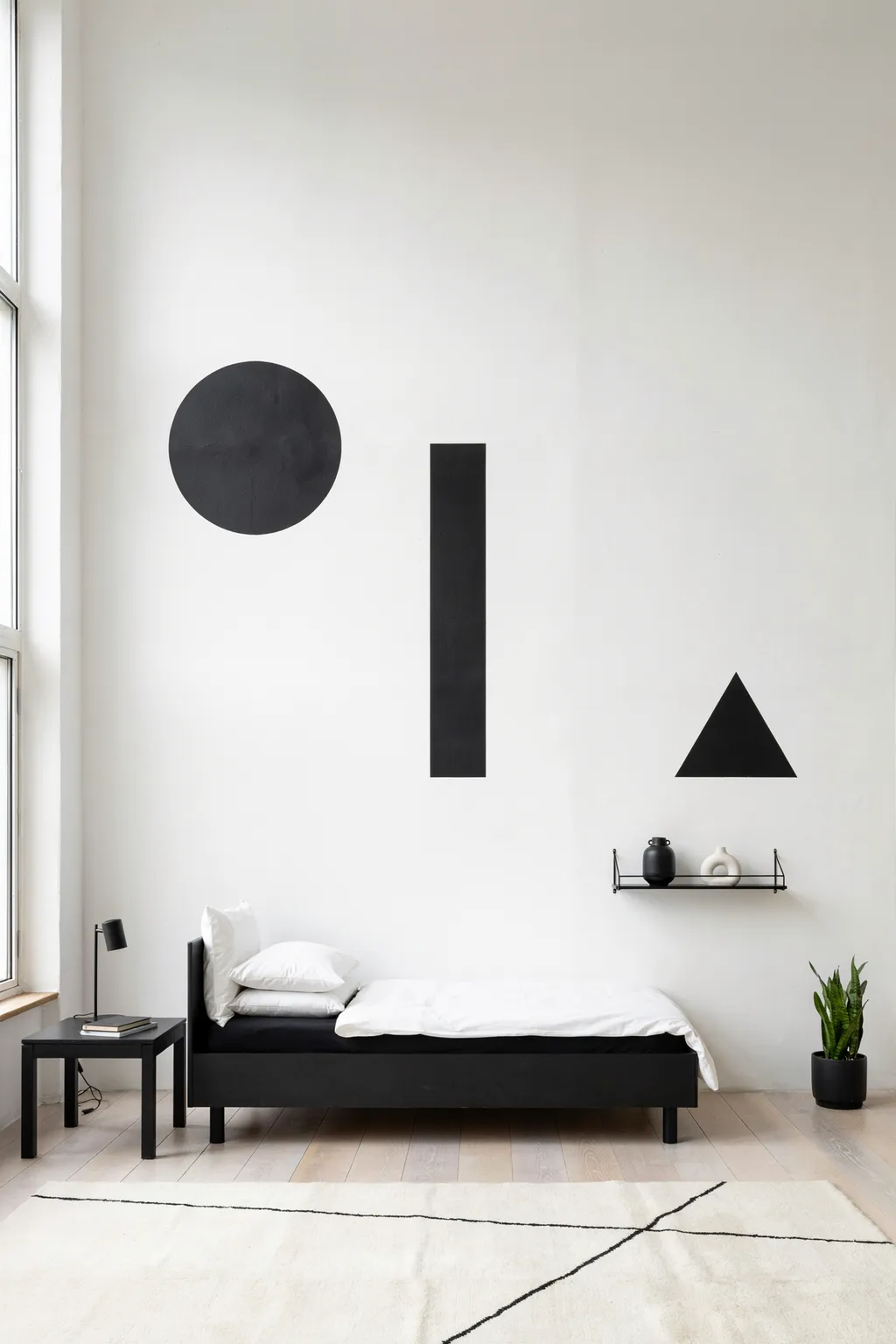
Sometimes calm comes from one strong focal point that holds your eye so the rest of the room can stay empty. A monochrome scheme does this well: a white wall with a few oversized black geometric shapes, a black platform daybed, white bedding, and a simple geometric rug. The bold shapes give the room a clear center of gravity, which means every other surface can be plain and your eye still feels satisfied.
It works on the gallery principle. Give people one thing worth looking at and they stop scanning for more. Keep the palette to pure black and white so the boldness stays graphic instead of busy. A wire wall shelf with two or three objects is all the extra detail this look needs.
This suits creative types and small studios where one statement wall can define the whole space. Skip it if bold graphics tire you quickly, because a big black shape is hard to ignore on a slow morning. A removable wall decal is a smart way to test the look before you commit paint to it.
9. Float the Bed and Nightstands Off the Floor
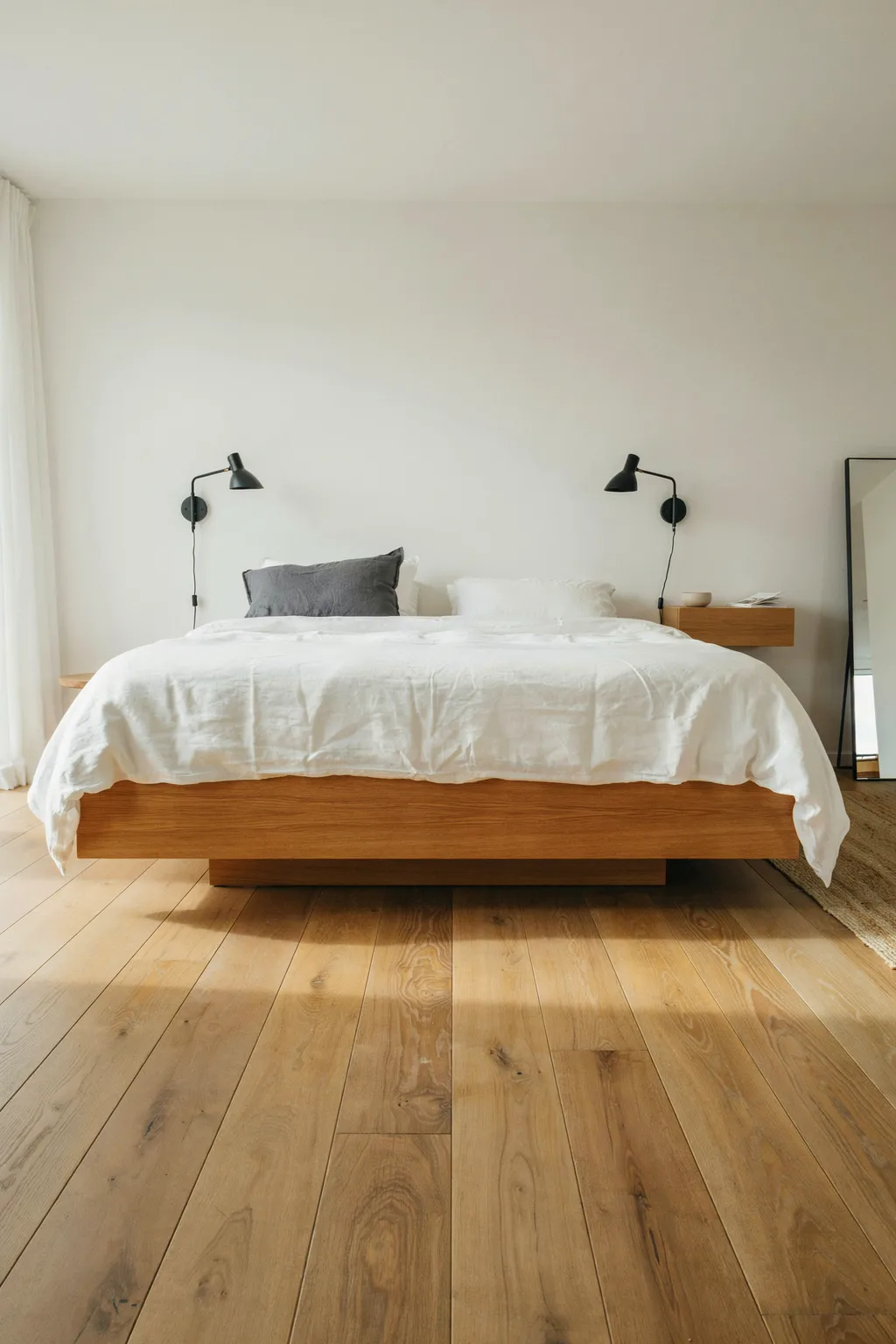
Visible floor equals visible calm. The more bare floor your eye can see, the more open and restful the room feels, which is exactly why floating furniture works so well. Picture a wood platform bed that appears to hover, with matching floating nightstands cantilevered from the wall and a tall mirror leaning in the corner. The unbroken sweep of wood floor underneath makes even a midsize room read as airy.
The shadow gap under floating pieces tricks the eye into reading lightness. Nothing looks planted or heavy. Wall-mounted nightstands also kill the dust-and-clutter trap that table legs create, so cleaning takes seconds. A leaning full-length mirror bounces light and doubles the sense of space without adding a bulky frame on legs.
This look suits modern rooms with solid walls that can take the mounting weight. The honest caveat: floating beds and wall nightstands need secure fixing into studs, so this is harder in a rental with plaster or for anyone uneasy with a drill. If mounting is off the table, choose slim-legged furniture that still shows plenty of floor.
10. Let Natural Light Do the Decorating
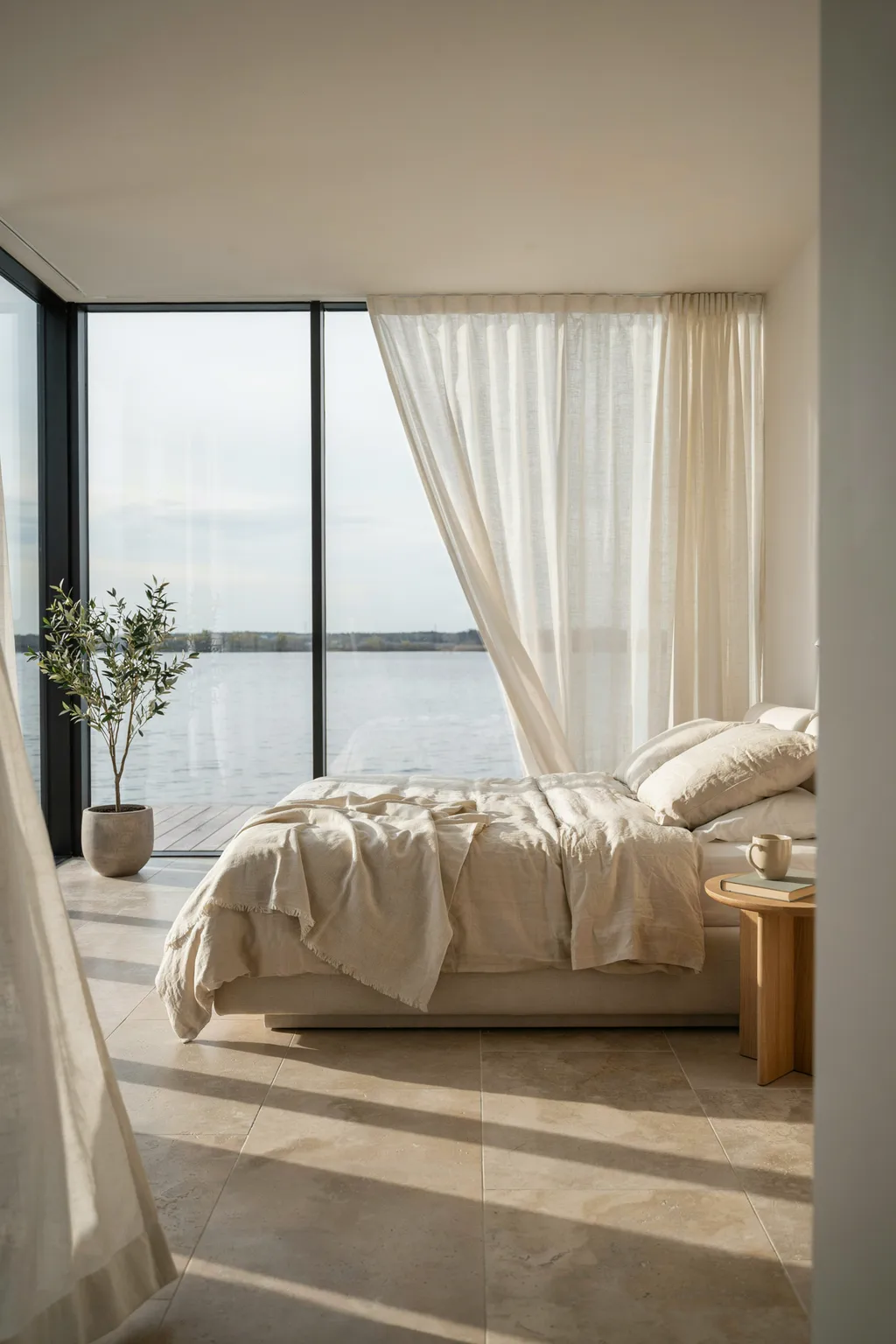
The cheapest decor in any room is sunlight, and a minimalist bedroom is built to show it off. Picture floor-to-ceiling windows, sheer linen curtains drifting in the breeze, and a low bed in soft cream bedding catching the afternoon glow. With light this good, you barely need anything on the walls. The changing shadows across the floor become the artwork, and they cost nothing, which is why so many minimalist bedroom ideas start by chasing the light before anything else.
Light gives a bare room life, depth, and a daily rhythm that fixed decor never can. Swap heavy drapes for sheer linen so daylight pours in while keeping a little privacy. Keep the windowsill and floor near the glass clear, since the goal is to let the view and the light be the feature. Good light also supports better rest; the Sleep Foundation notes that a bright, naturally lit bedroom by day helps keep your sleep rhythm steady.
This suits any room blessed with big windows or a decent view. The caveat is honest: if your only window faces a brick wall or you work nights and sleep by day, you will want blackout layers behind the sheers, which adds a little cost and bulk to an otherwise bare setup.
11. Mix in Raw Industrial Texture
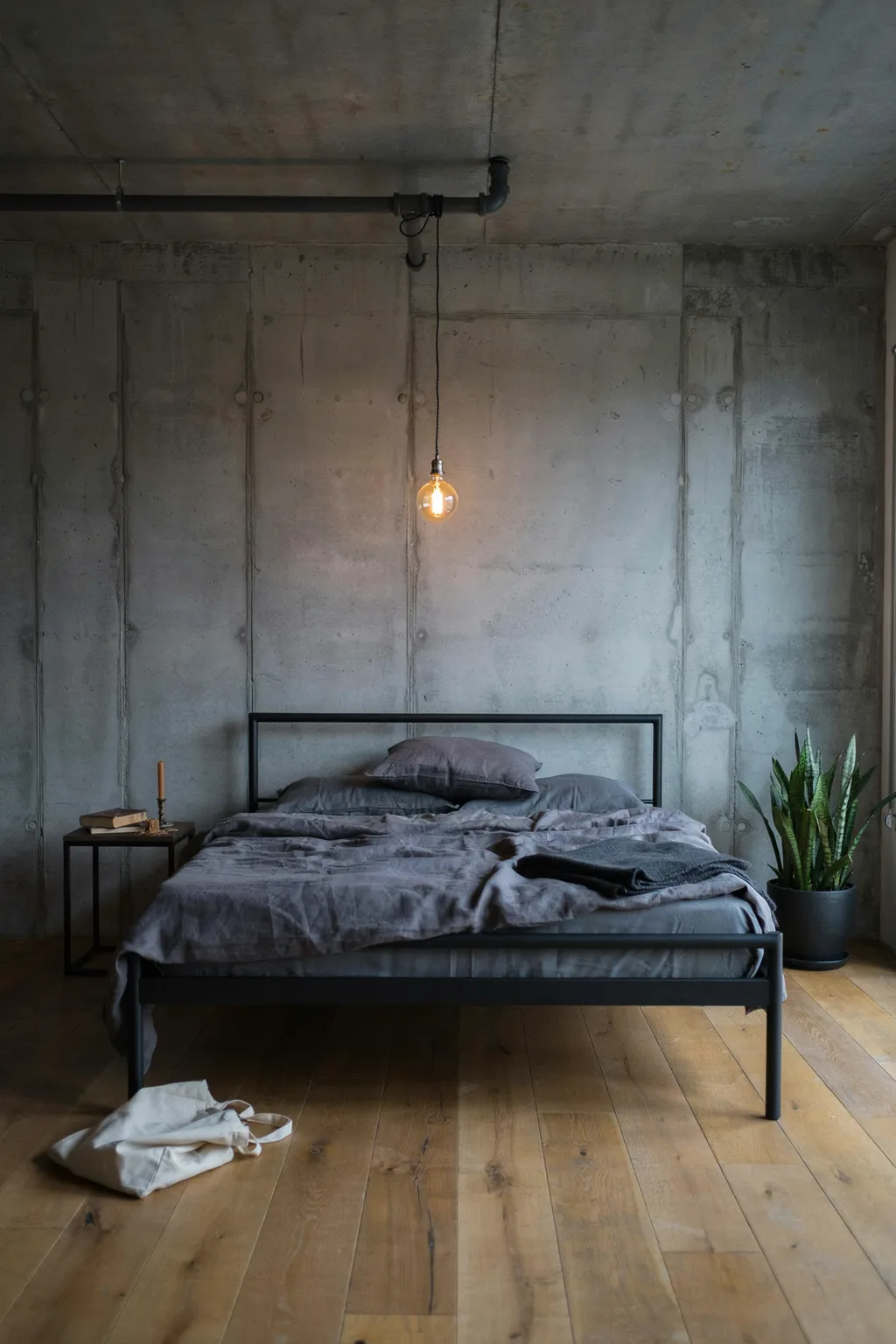
A calm room does not have to be soft and pale. Raw industrial texture brings a grounded, masculine calm that still counts as minimal because it relies on bare materials, not stuff. Picture a concrete wall, an exposed black pipe running the ceiling, a single Edison bulb hanging on a cord, a black metal bed frame, and charcoal bedding. There is almost nothing in the room, yet the rough surfaces give it weight and character.
Concrete, iron, and aged wood carry their own visual interest, so you do not need decor to fill the space. The honesty of raw materials is the whole point: leave the pipe exposed, let the concrete stay unpainted, keep the bed frame simple metal. One green snake plant softens the hard edges just enough.
This suits lofts, basements, and anyone who finds soft beige rooms a little boring. The caveat: real concrete and exposed services are hard to add to a finished room, and they can feel cold underfoot and to the touch. Renters can fake the look with a concrete-effect wallpaper and a black metal frame rather than a full renovation.
12. Layer Soft Grey Tones for Depth
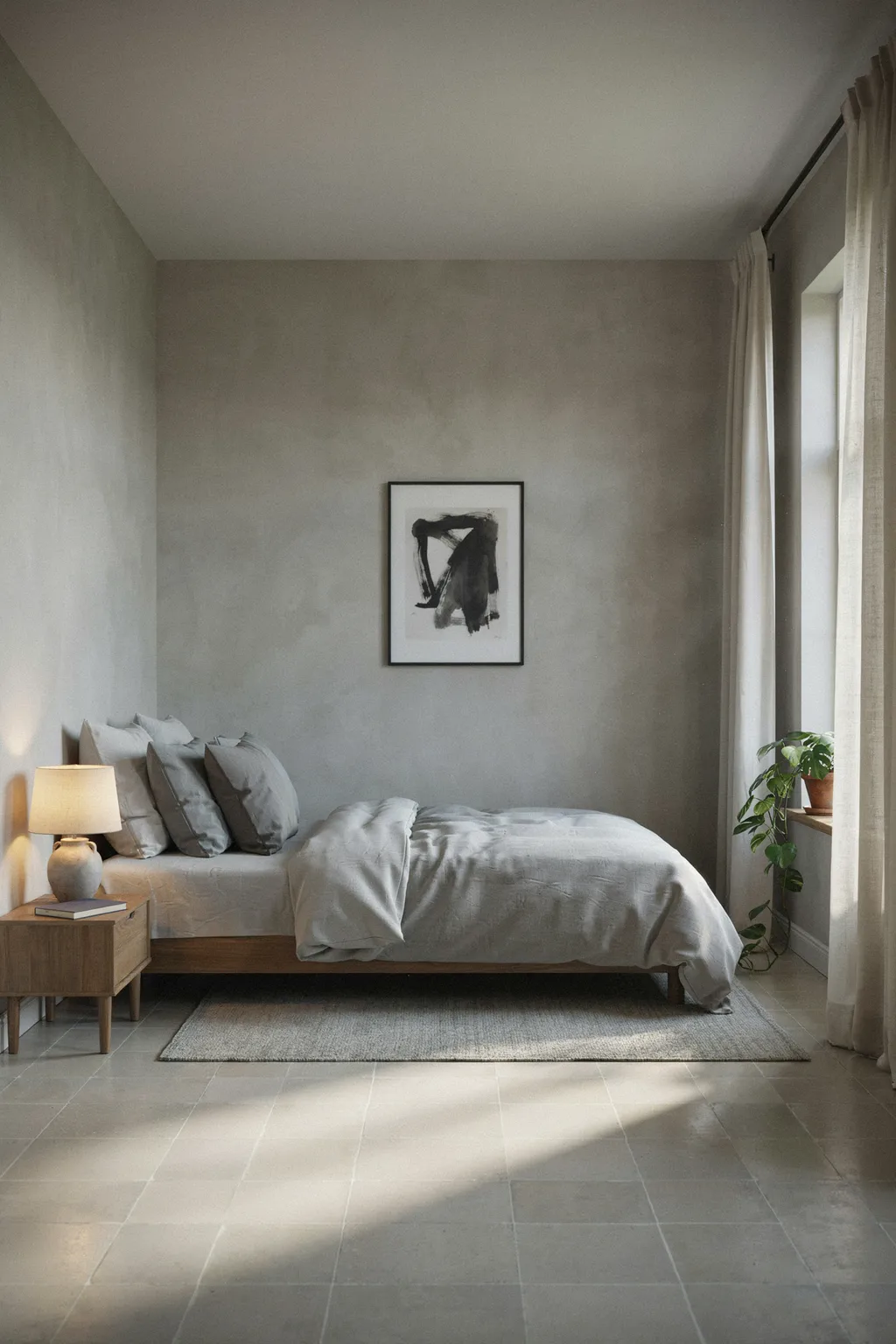
Grey gets called boring, but layered well it gives a minimalist bedroom quiet depth without a single bright color. Picture grey plaster walls, a low platform bed in soft grey linen, pillows in three close shades of grey, and one black and white abstract print above. Because the greys sit so near each other, the room feels deep and considered rather than flat, and there is no color to compete with rest.
It works thanks to tonal layering. Stacking several shades from the same family, a pale dove pillow, a mid-grey duvet, a charcoal throw, creates richness the way a single flat grey never could. Vary the textures too: smooth plaster, slubby linen, a soft wool rug. The mix of surfaces is what keeps an all-grey room from looking like a rainy afternoon.
This suits anyone who wants a calm, modern, gender-neutral room that hides everyday wear. Grey forgives dust and small marks far better than crisp white. The honest caveat: grey needs warm light to stay cozy, so pair it with soft 2700K bulbs. Under cool blue-white light, layered grey can turn cold and a little gloomy.
13. Leave Deliberate Empty Space
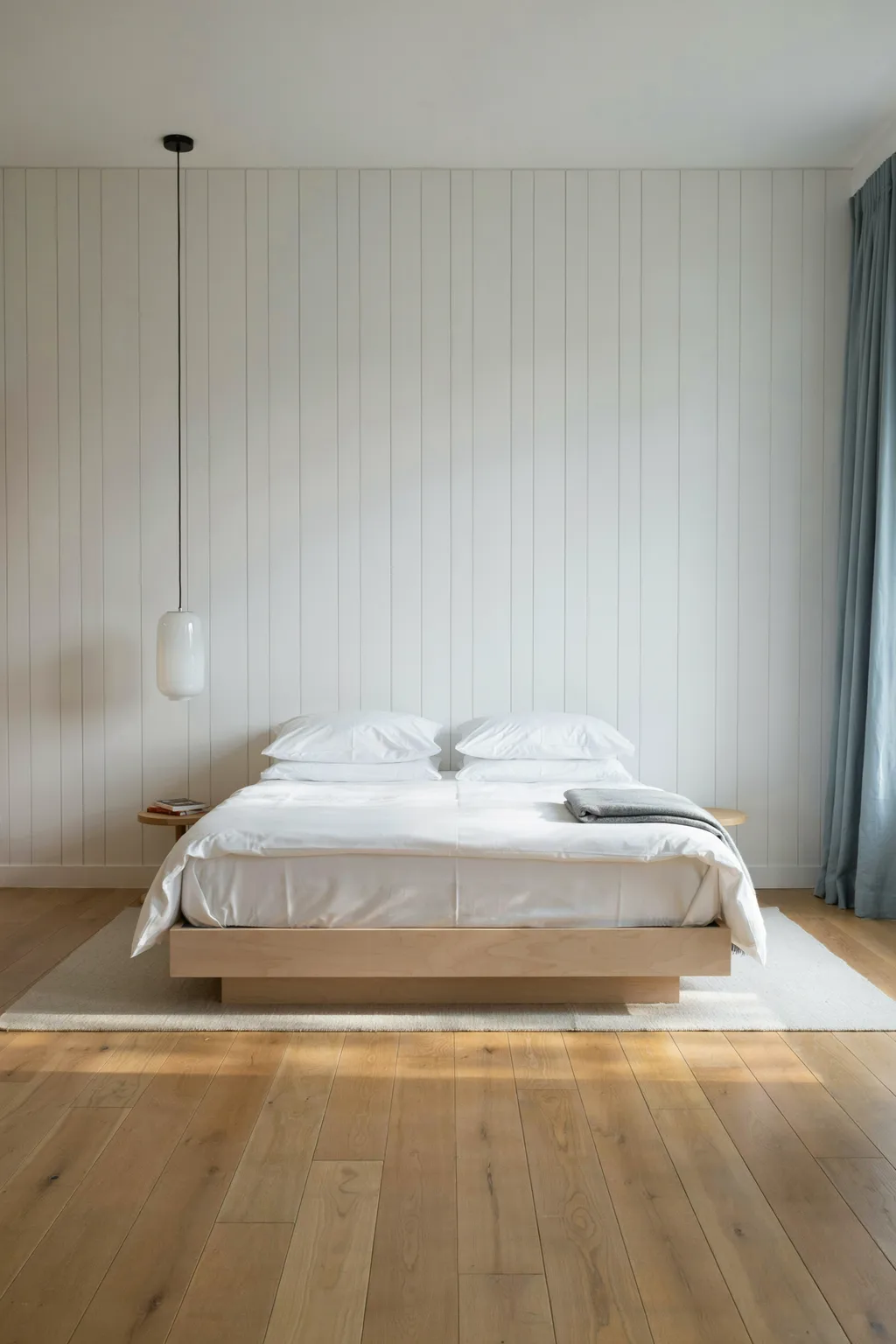
The boldest of these minimalist bedroom ideas is also the simplest: leave a big stretch of the room empty on purpose. Picture a single light wood bed against a tall paneled white wall, one slim pendant on a long cord, a soft white rug, and nothing else. The emptiness is not a gap waiting to be filled. It is the whole point, and it gives your eyes and mind room to settle.
Empty space, what designers call negative space, makes the few things you keep feel deliberate and important. A room with one beautiful bed and a wide blank wall feels far calmer than the same bed crowded by a dresser, a chair, and a stack of bins. Resist the urge to decorate every surface. Let one wall stay completely bare.
This suits anyone who feels frazzled by visual busyness and craves real quiet. The honest caveat: deliberate emptiness can read as unfinished to guests, and it gives you nowhere to stash daily clutter, so it pairs best with strong hidden storage elsewhere. If a fully bare room feels stark, add one large plant and stop there.
14. Go Moody With a Deep Charcoal Palette
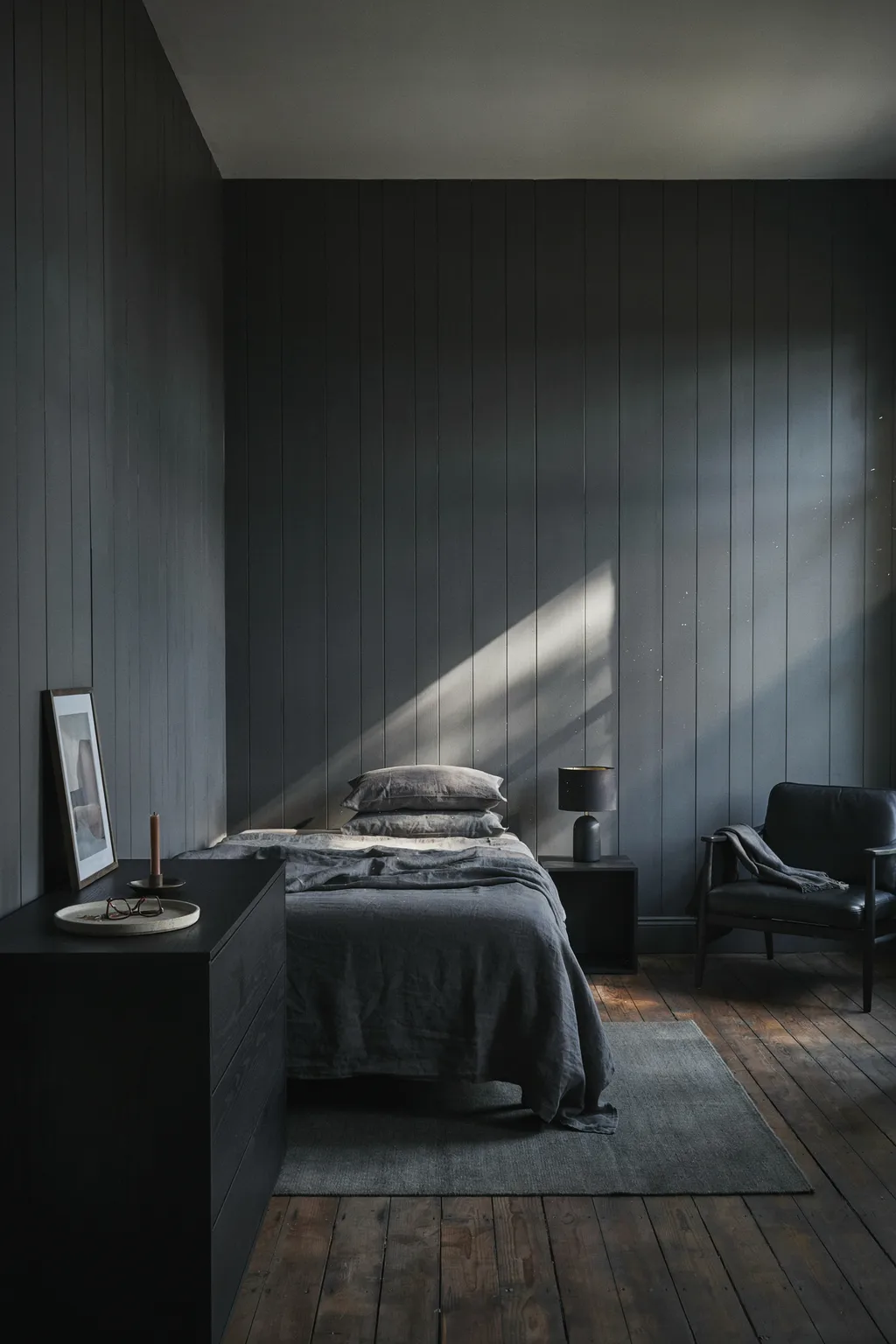
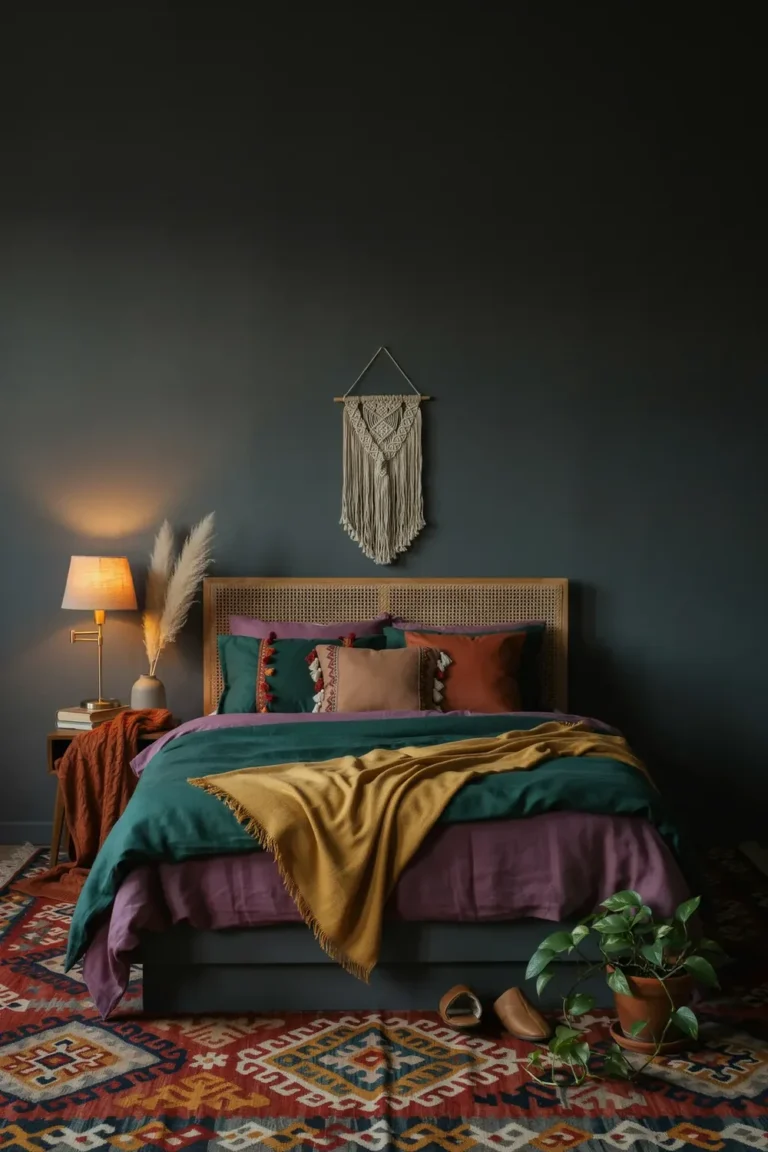
Calm is not always bright. A deep charcoal room wraps you in a cocoon-like quiet that pale rooms cannot match, and it stays minimal as long as you keep the clutter out. Picture near-black paneled walls, dark bedding, a black dresser, a single matte black lamp, and one shaft of daylight cutting across the wall. The darkness swallows visual noise whole, so even a few objects vanish into calm shadow.
Dark, enveloping color lowers the contrast in a room, and lower contrast means less for your eye to track. The result feels restful and a little luxurious, like a boutique hotel at night. Keep the materials matte, not glossy: flat charcoal paint, brushed metal, soft cotton. One pool of warm lamplight gives the darkness somewhere to breathe.
This suits north-facing or dim rooms that never looked bright anyway, so you stop fighting the lack of light and lean in. It also helps night-shift sleepers. The honest caveat: a dark room needs good layered lighting or it turns into a cave, and very dark walls can make a tiny room feel smaller, so reserve the deepest tones for rooms of average size or larger.
15. Drop the Bed to a Simple Floor Mattress
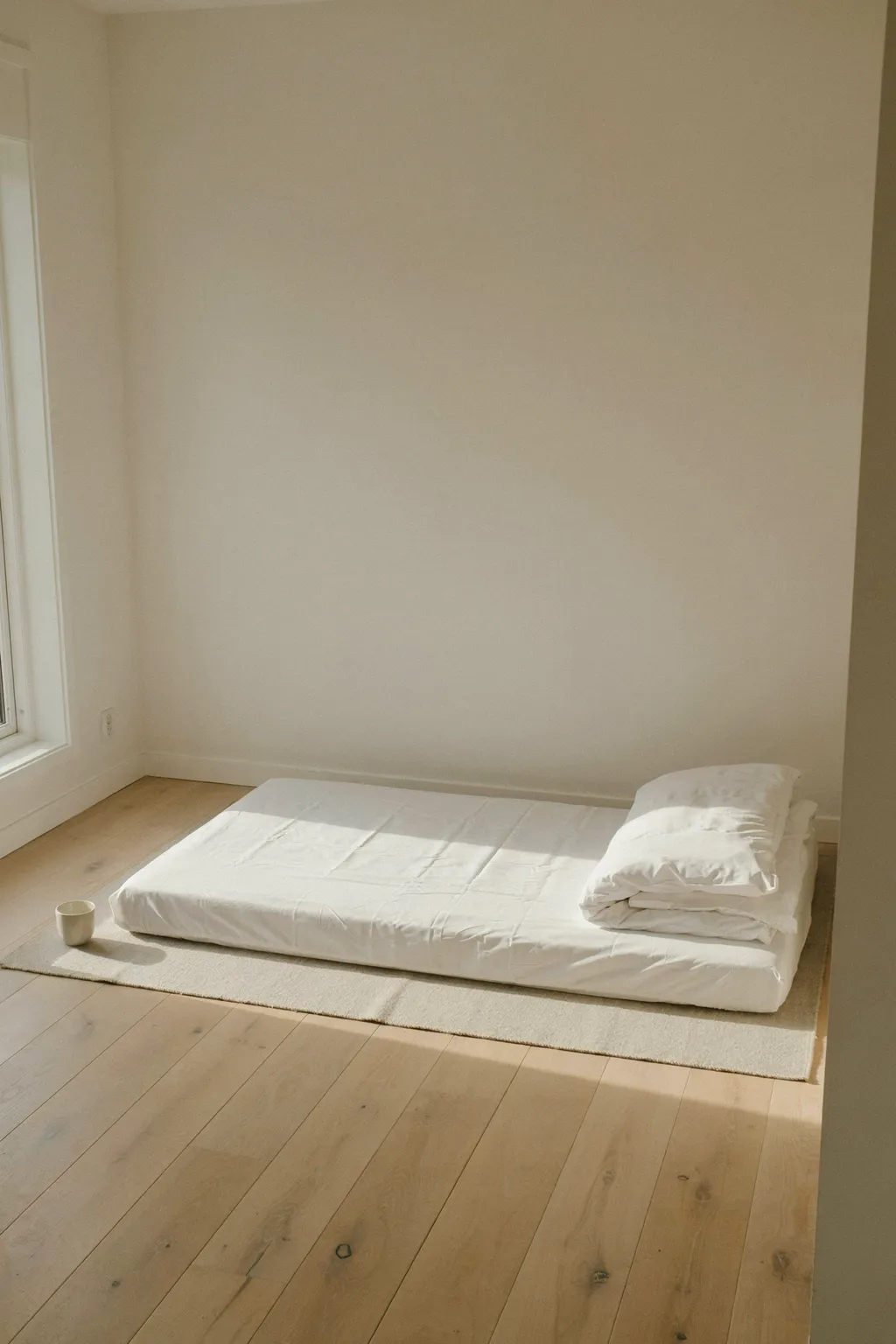
The most stripped-back idea on this list does away with the frame entirely. A simple mattress or futon on the floor, topped with soft white bedding and set on a low mat, brings a grounded, almost monk-like calm. Picture pale wood floors, a neatly folded duvet, daylight from a nearby window, and nothing else. With the bed this low, the whole room opens up overhead and feels twice as tall.
Removing the frame strips out both bulk and cost, leaving just the essentials: a comfortable surface to sleep on and clear floor all around it. The low height suits the floor-sitting habits of Japanese and many minimalist homes, and it makes a small room feel airy because nothing breaks the sightline. A foldable futon also frees the floor by day if you want a multipurpose space.
This suits small studios, kids’ rooms, and anyone testing minimalism before buying furniture. Be honest about the trade-offs, though: floor mattresses need airflow underneath or they trap moisture, so lift and air the bedding often and use a breathable mat. It is also harder on anyone with knee or back issues who struggles to get up from floor level. Skip it if that is you.
Common Mistakes to Avoid
Mistake 1: Confusing empty with cold
Stripping a room bare but forgetting warmth leaves it feeling like a waiting room, not a retreat. The cost is a space you never want to relax in. Add one warm element back, a wood tone, a soft rug, or a single lamp, and the calm turns inviting instead of clinical.
Mistake 2: Buying storage instead of removing stuff
More bins and shelves just give clutter new places to hide and breed. You end up with the same volume of belongings plus more furniture. Remove and donate first, then buy storage only for what truly remains. Subtraction comes before any purchase.
Mistake 3: Mixing too many materials
Minimalism reads calm when materials are limited. Five different woods, three metals, and four fabrics create busy visual noise even with few objects. Pick one or two main materials, say pale wood and linen, and repeat them so the room feels cohesive and quiet.
Mistake 4: Harsh overhead lighting
A single bright ceiling light flattens a room and kills the calm you worked for. It costs you that soft, restful mood every evening. Layer in a warm bedside lamp or wall sconce with 2700K bulbs, and reserve the overhead light for cleaning days only.
Mistake 5: Forgetting the floor
A cluttered or cold floor undoes a tidy room above it. Shoes, bags, and cables creeping across the floor break the calm instantly. Keep the floor as clear as the surfaces, add one soft rug for warmth, and route cables out of sight along the wall.
Mistake 6: Picking color before testing light
A beige or grey that looks calm in the store can turn yellow, green, or cold in your actual room. Repainting twice wastes money and a weekend. Always test a large sample on two walls and check it in morning, noon, and lamp light before you commit.
Quick Start Checklist
- [ ] Clear every surface in the room, then put back only what you use weekly.
- [ ] Donate or store three things you have not touched in six months.
- [ ] Choose one quiet color family and remove anything that clashes with it.
- [ ] Swap heavy curtains for sheer linen to let in more daylight.
- [ ] Add one soft texture: a linen duvet, a wool rug, or a knit throw.
- [ ] Put a warm 2700K bulb in a bedside lamp or sconce.
- [ ] Mount or add hidden storage so daily clutter has a home.
- [ ] Place one plant for life, and stop there.
- [ ] Leave at least one wall or corner deliberately empty.
- [ ] Route every visible cable out of sight along the wall or floor edge.
Frequently Asked Questions
How do I start a minimalist bedroom on a tight budget?
Start with subtraction, which costs nothing. Clear every surface, donate what you do not use, and pare the room back to the bed, one nightstand, and a lamp. Most minimalist bedroom ideas rely on removing things rather than buying them. Once the room is clear, add back one warm element at a time, like a linen duvet or a single plant, as the budget allows.
What colors make a bedroom feel the calmest?
Soft, low-contrast tones from one family work best: warm whites, sand, greige, dove grey, and earthy clay. They hide visual clutter and bounce light gently. Avoid loud, high-contrast combinations, which keep the eye busy. Green from a plant is the one accent that reads as restful against almost any neutral base, so it is a safe pop of life.
How do I keep a minimalist bedroom from feeling cold?
Add warmth through material and light, not more objects. One wood tone, a soft textured rug, crumpled linen bedding, and a warm 2700K lamp turn a bare room cozy fast. A single plant helps too. The trick is keeping the count of items low while making sure the few you keep are tactile and warm rather than hard and shiny.
Do I need to throw everything out to be a minimalist?
No. Minimalism is about keeping what you use and value, not living with nothing. The goal is a room where every item earns its place and clutter has a hidden home. Start by removing the clearly unused, then judge the rest over a few weeks. You can be a comfortable minimalist with a full, well-organized closet behind a closed door.
Does a minimalist bedroom actually help you sleep better?
It can, indirectly. A clear, low-clutter room gives your mind less to process at bedtime, which many people find easier to wind down in. That calming effect is the real reason minimalist bedroom ideas stay so popular. Pairing that with good natural light by day, warm dim light at night, and a comfortable bed supports healthy sleep habits. The room alone will not fix poor sleep, but it removes one common source of low-grade stress.
What is the easiest minimalist bedroom idea to try first?
Clear and style just the nightstand. Take everything off it, wipe it down, and put back only a lamp, maybe a book, and a small dish for your essentials. This single surface sets the tone for the whole room and takes ten minutes. Once you see how calm one clear surface feels, the rest of the room follows naturally.
Conclusion
A calm bedroom is not about owning less for its own sake. It is about giving yourself a soft place to land at the end of the day. Across all 15 of these minimalist bedroom ideas, the same few moves keep coming back, and they are worth remembering.
Clear your surfaces first, because subtraction is free and does the most work. Stick to one quiet color family so nothing competes for your attention. Let natural light and a couple of soft textures do the decorating instead of a pile of objects. Give daily clutter a hidden home so the calm actually lasts. And leave a little empty space on purpose, since the room you do not fill is often the part that lets you breathe.
You do not have to copy a whole look today. Pick the single idea that matched the feeling you want, whether that is warm clay, layered grey, or a bare floor mattress, and try just that one this week. Start with the nightstand if you want the fastest win. Clear it tonight, add one warm lamp, and notice how different the room feels in the morning. That small change is how every calm bedroom begins.
You Might Also Like
- ▸16 Teen Girl Bedroom Ideas That Bring Personality and Charm
- ▸20 Bedroom Lighting Ideas That Feel Instantly Relaxing
- ▸10 Small Bedroom Nightstand Ideas That Maximize Space
- ▸20 Small Bedroom Ideas for Men That Maximize Space
- ▸20 Calm Bedroom Ideas for Deeper Sleep
- ▸20 Black Bedroom Ideas That Still Feel Spacious