25 Green Kitchen Ideas That Feel Fresh and Calm
White kitchens are safe, and that is exactly the problem. You want warmth, personality, and a room that feels calm instead of clinical, but you are scared green will look dated in two years. It won’t, if you pick the right shade and pair it well. Green is the most flexible cabinet color there is, and these green kitchen ideas prove it across 25 real rooms, from soft sage to deep forest, glossy emerald, and playful lime.
Each idea here comes from a fully styled kitchen, not a swatch. You get the exact green, the counter and hardware that flatter it, the flooring that grounds it, and one honest note on who each look suits and who should skip it. Some are a weekend and a can of paint. Others lean on a single new element, a butcher-block top or a brass tap, to shift the whole mood. Green works because it borrows from nature, so it feels restful the way a garden does, and it flatters wood, brass, marble, and brick alike.
Refreshing a kitchen rarely means gutting it. It usually means choosing a green with intention, then letting the counters, hardware, and light do the rest. Find the shade that makes you exhale, then borrow the small details that make it sing.
Quick Answer
The best green kitchen ideas match the green to your light and your style: sage and mint for soft, calm rooms; forest, hunter, and emerald for drama; olive for warm and earthy. Pair cool greens with brass or wood to warm them, and ground every green with a natural counter like marble, butcher block, or concrete. Test paint on the cabinet doors, check it morning and night, then commit. Pick a look below and copy its palette.
1. Sage Shaker Cabinets With Warm Brass Hardware
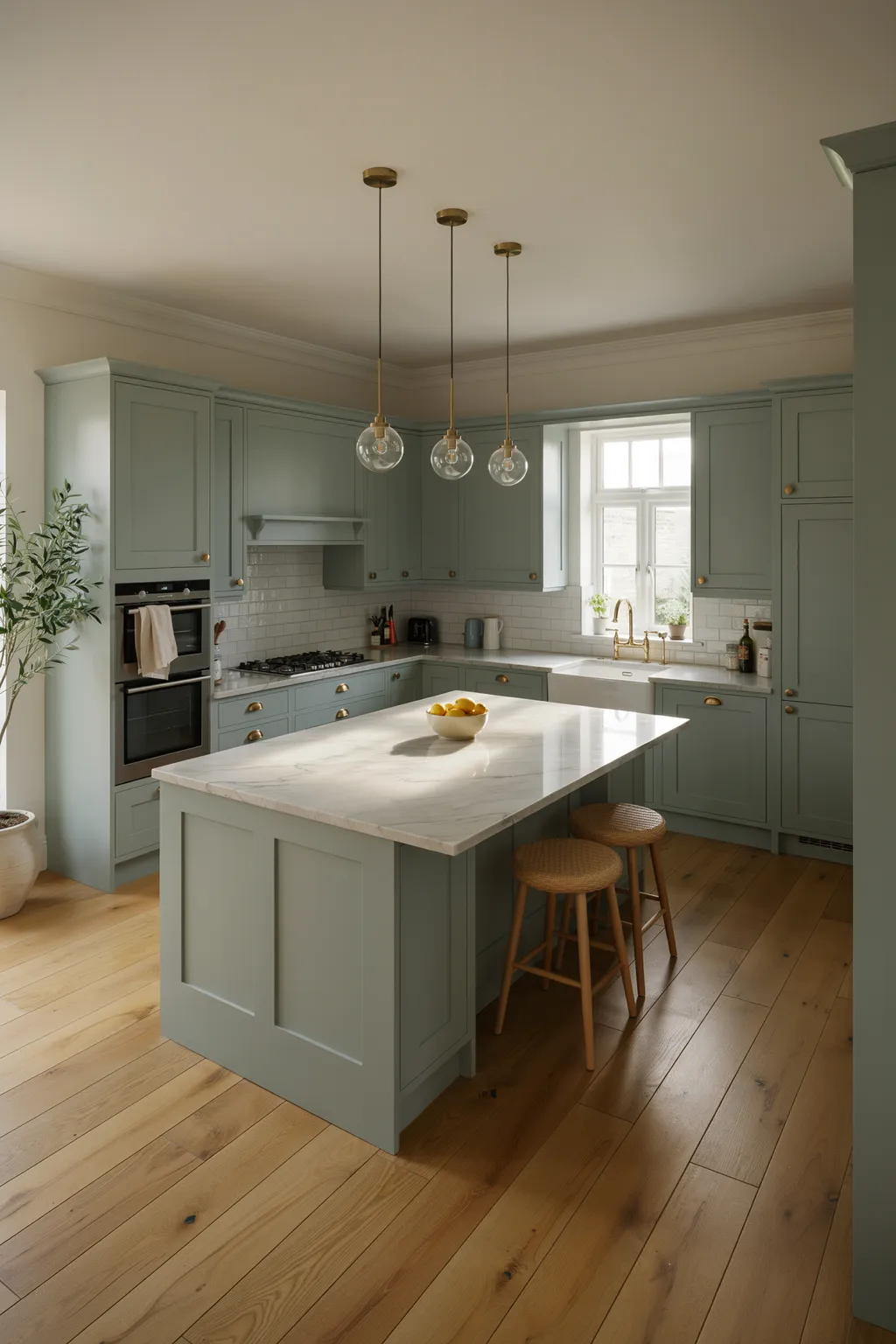
Sage green shaker cabinets are the gateway green, calm enough for cautious remodelers and rich enough to feel considered. Set against white subway tile with a marble-topped island, a farmhouse sink, and glass pendants, sage reads soft and timeless. The warm brass cup pulls are the detail that lifts it, adding a glow that keeps the cool green from feeling flat. It is a look that ages like a good linen shirt.
Brass and sage flatter each other because the warm metal balances the cool paint, so the room feels layered rather than one-note. Choose an unlacquered or aged brass so it patinas softly over the years instead of staying shiny and new. A honed marble top keeps the mood matte and calm. This suits anyone who wants green without risk. Skip high-gloss brass here, since a mirror finish fights the quiet, lived-in feel that makes sage work.
2. Deep Forest Green With a Matte Finish
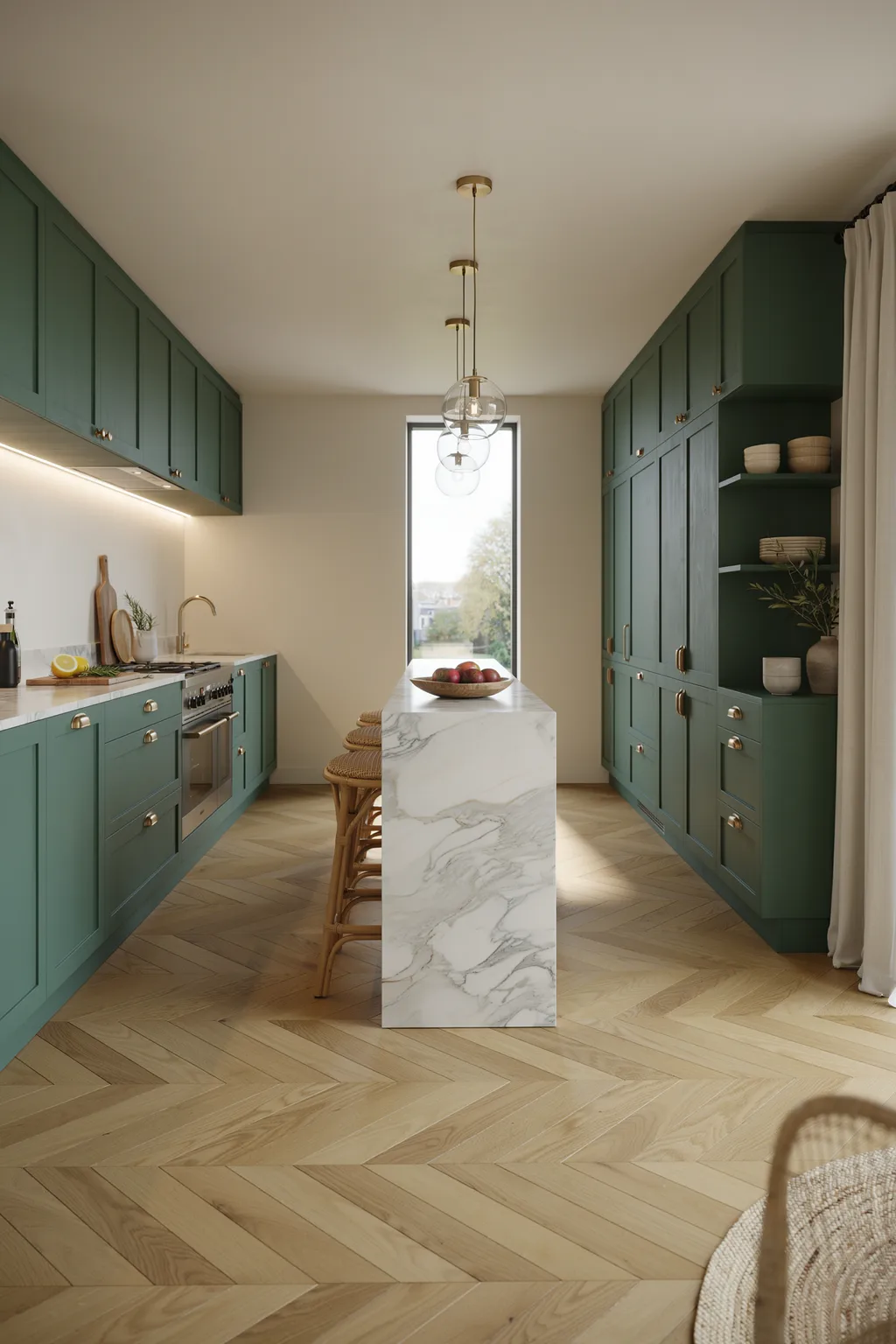
Turn the volume up with deep forest green in a flat, matte finish. Against pale walls and a herringbone wood floor, matte forest cabinets feel modern and confident, while a marble-topped peninsula and simple glass pendants keep it from going heavy. Brass hardware warms the cool green, and the low-sheen paint hides fingerprints far better than gloss. This is green for people who find sage too soft.
Matte paint suits deep colors because it absorbs light and reads velvety rather than plasticky, so a dark green looks expensive instead of loud. Balance all that saturation with warm wood underfoot and one or two bright metal accents. Keep the counters pale to bounce light around. This suits bright rooms that can carry a moody color. It falls flat in a dark, north-facing galley, where deep forest can close the space in and feel gloomy after sunset.
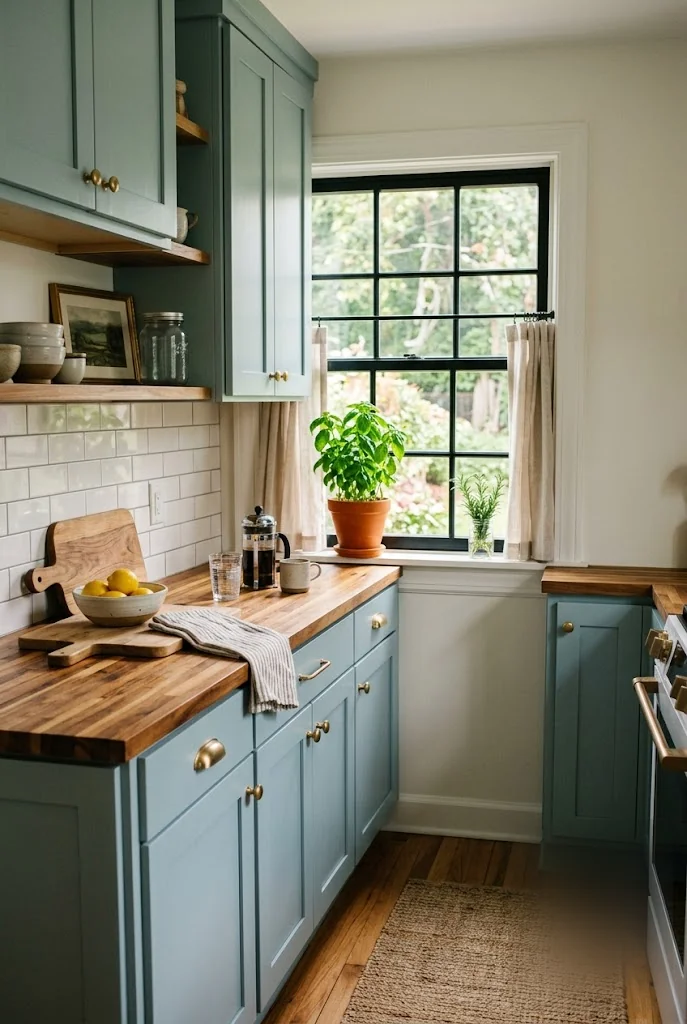
3. Olive Lowers Topped With Butcher Block
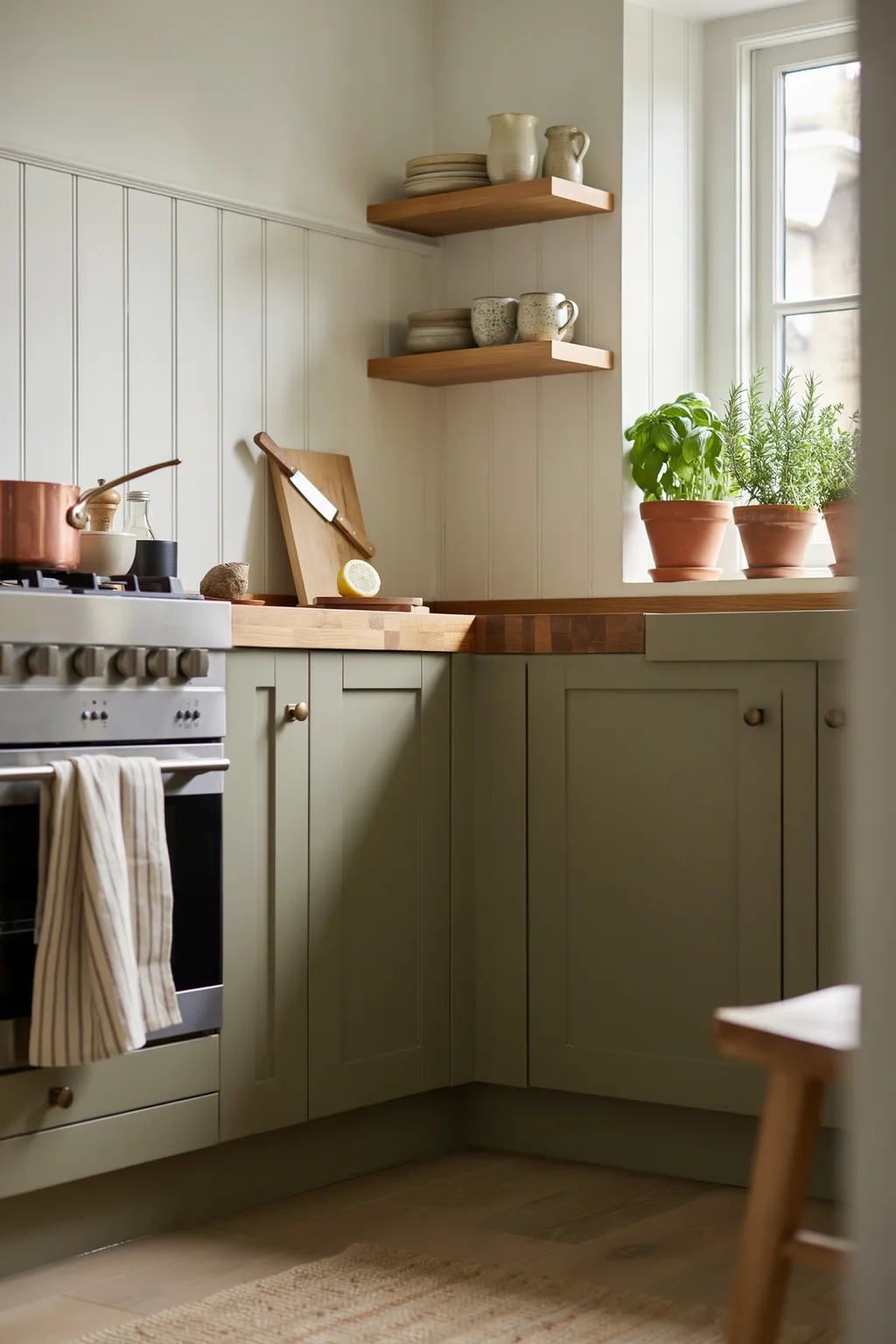
Warm, earthy olive lowers with a butcher-block counter make a kitchen feel like a farmhouse pantry. Pair the muted green with wood floating shelves, bronze cup pulls, and a row of terracotta herb pots on the windowsill, and the whole corner glows. Among green kitchen ideas, this is the one that feels the most homegrown and unfussy. The wood counter and green paint share an earthy warmth that reads instantly cozy.
Butcher block flatters olive because both come from nature, so the palette feels grounded rather than styled. Seal the wood well and treat spills fast, since butcher block scorches and stains if you neglect it. Bronze or oil-rubbed hardware suits the rustic mood better than shiny brass. This suits keen cooks and cottage lovers. Skip butcher block near a busy sink unless you commit to oiling it every few weeks, or the area around the tap will darken and wear.
4. Two-Tone Green and White Split
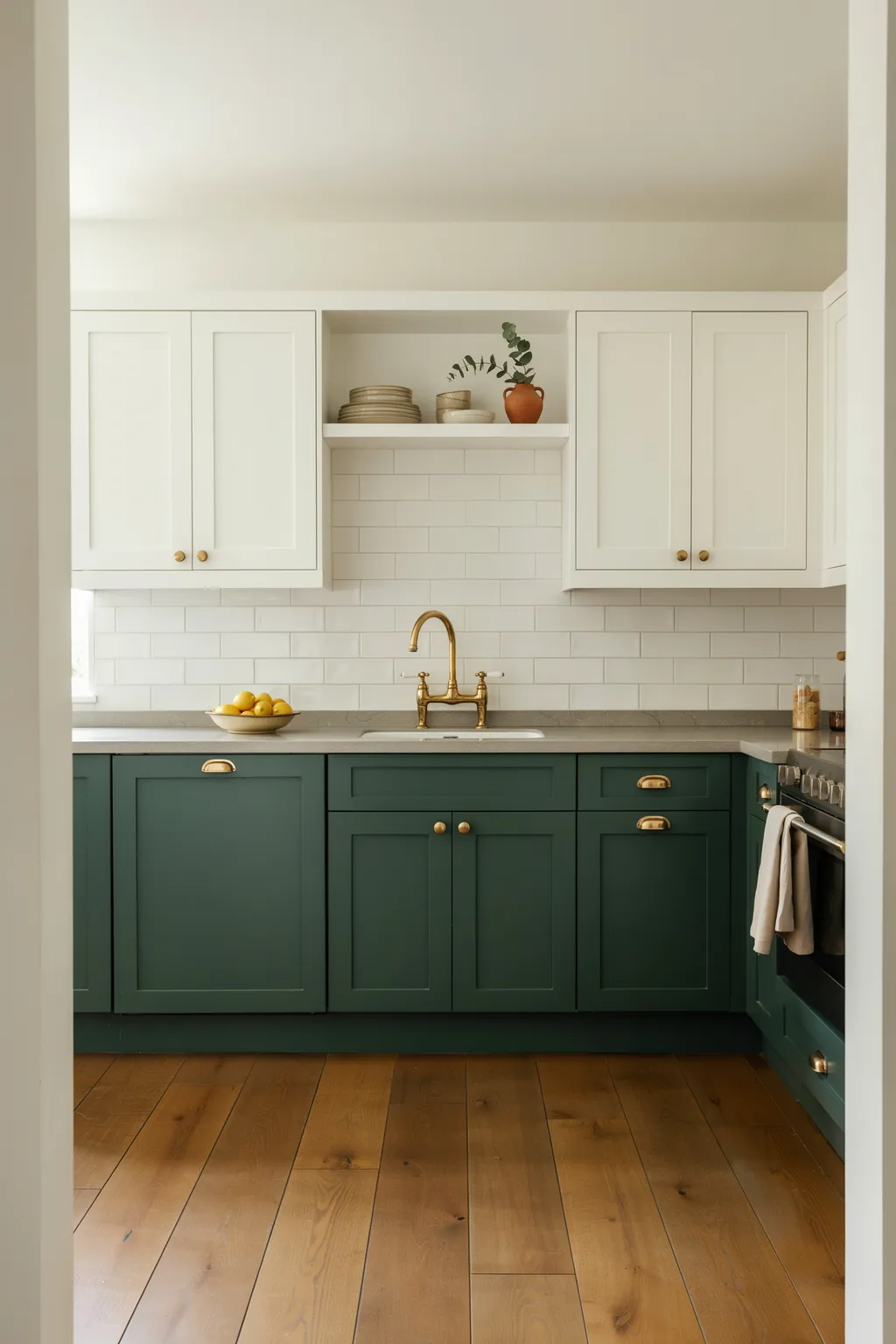
Not ready to commit fully? Paint the lowers a deep green and keep the uppers white. The split keeps the room feeling light while the rich green grounds it, and white subway tile bridges the two. Brass cup pulls and a matching bridge tap tie the halves together over a simple gray stone counter. It is the safest way to bring real green into a kitchen without darkening the whole space.
Two-tone works because dark on the bottom and light on top mirrors how we read a room, heavy below, airy above, so it feels balanced and calm. Match your hardware finish across both colors to keep the split intentional. A busy backsplash would fight the contrast, so keep tile plain. This suits smaller kitchens and nervous first-timers. It won’t wow anyone chasing a bold, all-green statement, since the white uppers deliberately soften the drama.
5. A Bold Green Island in a White Kitchen
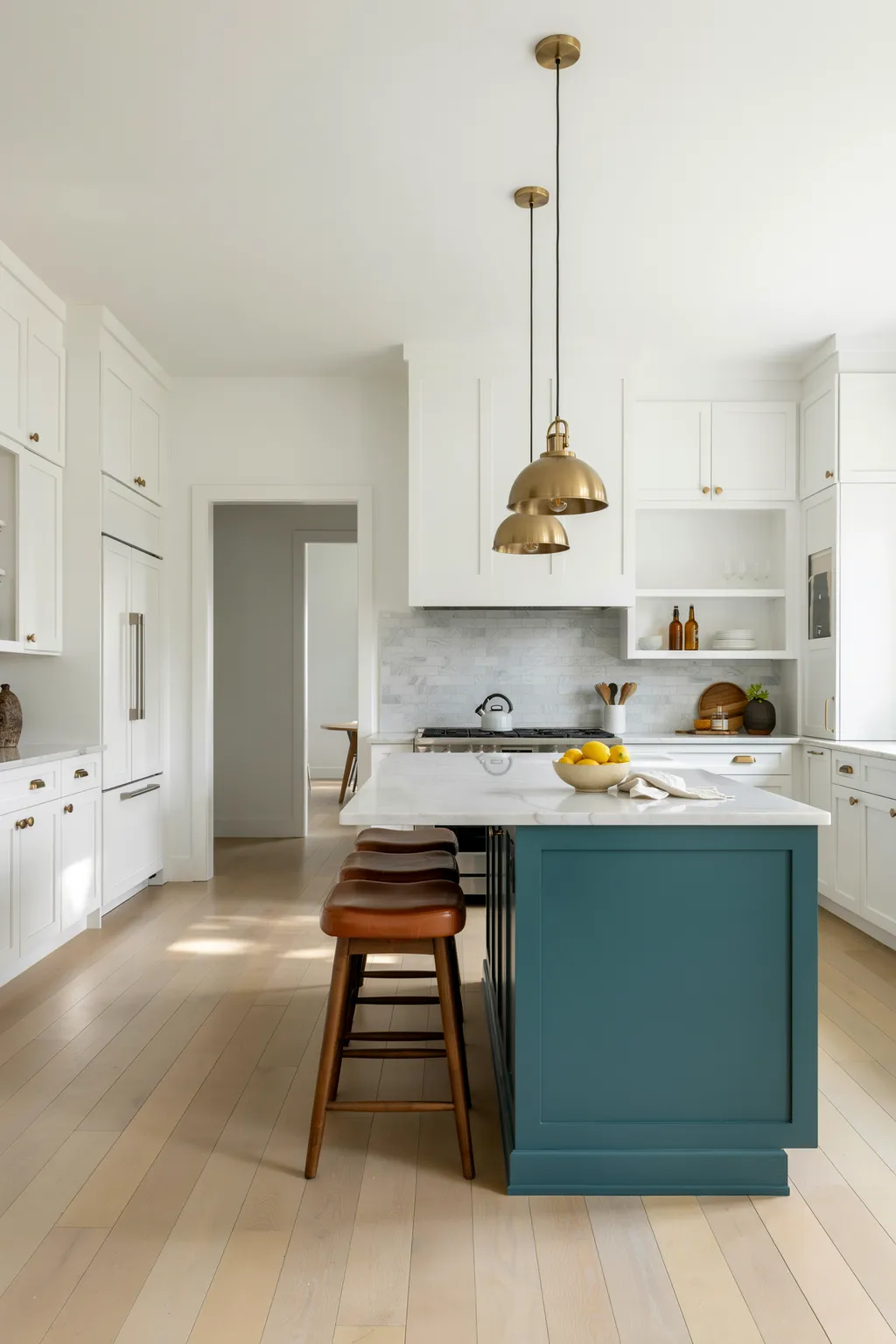
If painting every cabinet feels like too much, let a single green island carry the color. A deep teal-green island with a thick marble top anchors a soft white kitchen, while dome pendants and worn leather stools add warmth. The island becomes the heart of the room without overwhelming it, and you can repaint just that one piece if your taste shifts. It is commitment-light color with maximum impact.
An island in a contrast color works because your eye lands on it first, so one bold piece reads as a deliberate design choice. Pick a green with enough depth to hold its own against all that white. Leather or wood stools warm the cool palette. This suits open-plan kitchens with room for a real island. Skip it in a galley or a tight U-shape, where there is no space for a freestanding island to breathe.
6. Sage Galley That Steals Every Ray of Light
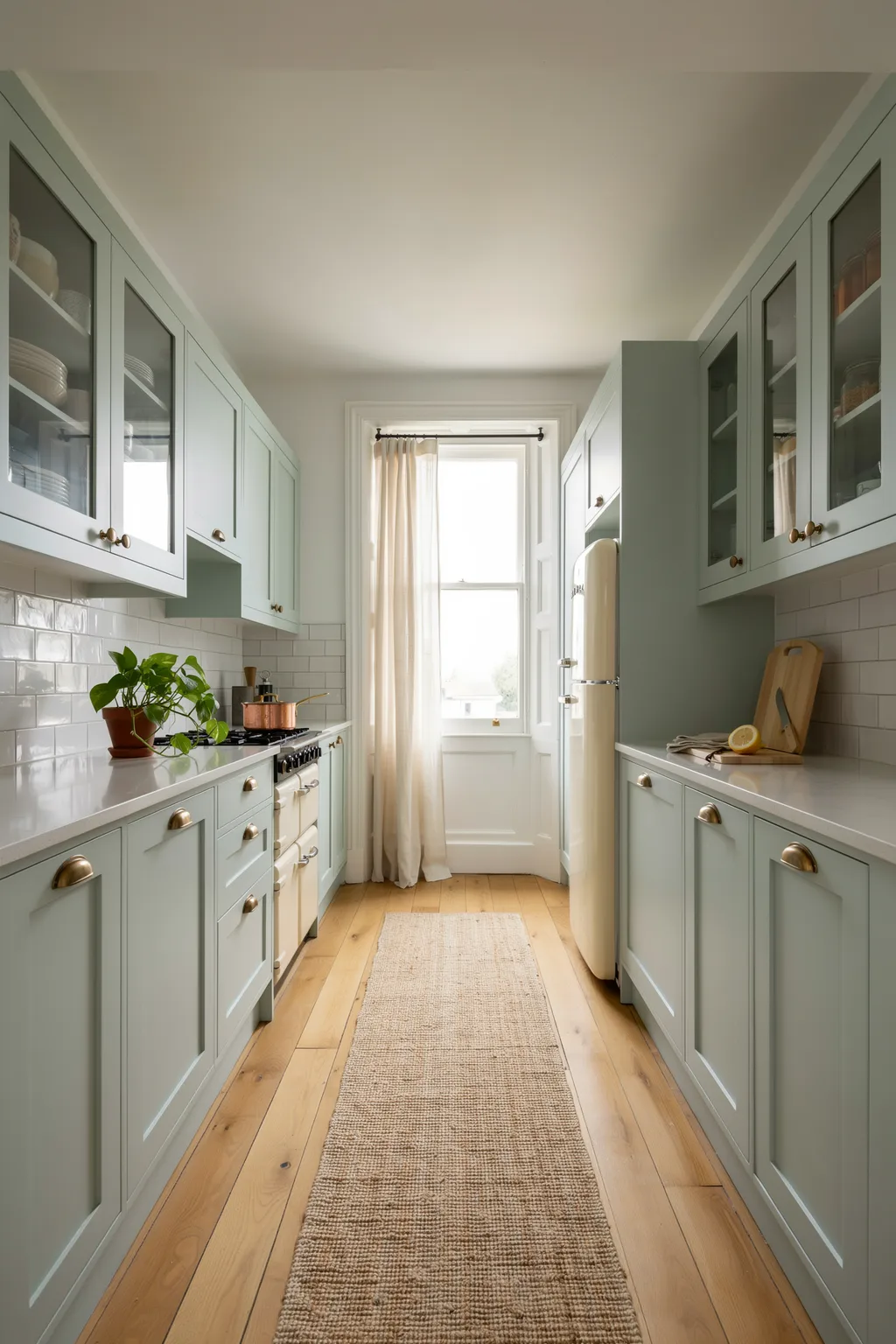
A narrow galley can still feel bright in green if you keep the shade pale and let light lead. Soft sage cabinets with glass-front uppers line both walls, white tile bounces the sun from a tall end window, and a retro cream fridge adds gentle nostalgia. The glass fronts stop the run of cabinets from feeling like a wall, so the space breathes even at four feet wide.
Glass-front doors work in a tight galley because they add depth and reflect light, which tricks a narrow room into feeling wider. Keep the tile and counters pale so nothing absorbs the daylight you fought to keep. A window at the end of the run is your best friend here. This suits small older homes and rentals with a real galley. Skip dark green in this layout, since deep color on both close walls can make the corridor feel like a tunnel.
7. Moss Green With Rustic Farmhouse Warmth
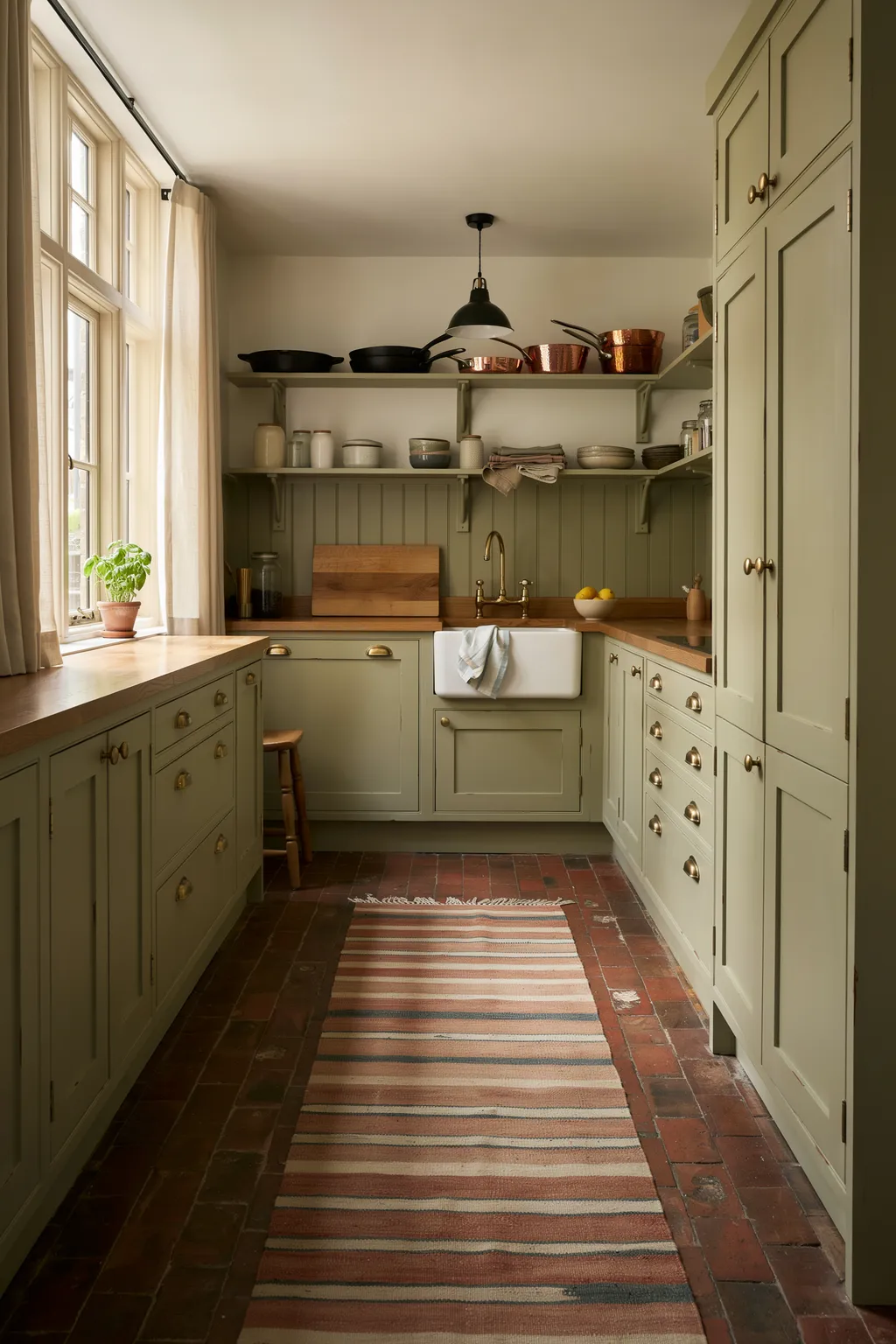
Moss green is olive’s cozier cousin, and it shines in a rustic kitchen. Pair the muted green cabinets with a reclaimed brick floor, a white farmhouse sink, a butcher-block counter, and open shelves stacked with cast iron and copper. A faded kilim runner adds age and warmth. The whole room feels like a country cottage that has been loved for a hundred years.
Brick underfoot flatters moss green because both are earthy and imperfect, so the palette feels collected over time rather than newly installed. Reclaimed or tumbled brick reads more authentic than a crisp new tile. Brass and copper accessories deepen the vintage mood. This suits old houses and slow-cooking home chefs. Skip a brick floor if you stand for hours daily, since the hard, uneven surface is tough on your feet and joints without a cushioned mat.
8. Pale Mint Paired With Speckled Terrazzo
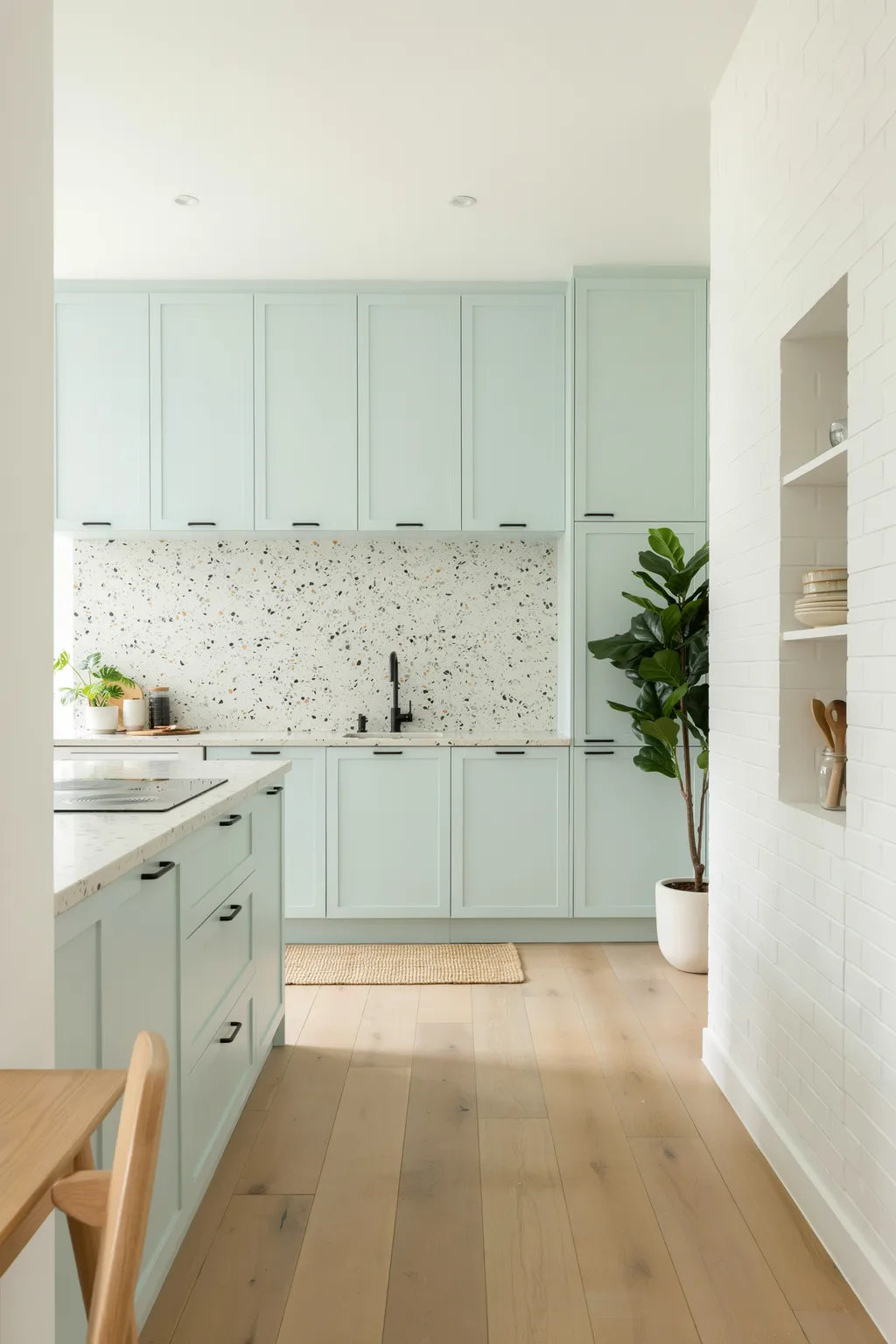
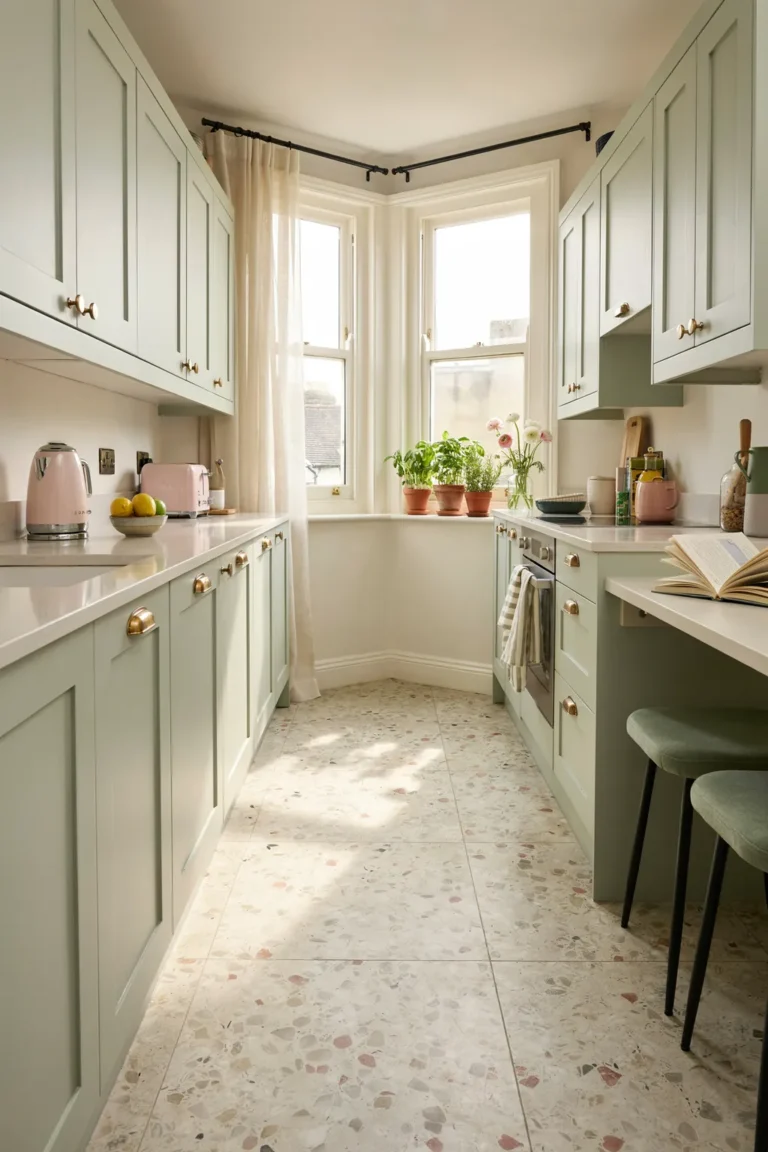
For a fresh, modern take, set pale mint cabinets against speckled terrazzo. The confetti of chips in the counter and backsplash picks up the soft green and adds playful texture, while matte-black tap and pulls keep it grounded and current. This is green kitchen ideas at their most contemporary, light and clean without feeling cold. A single potted plant is all the extra color it needs.
Terrazzo suits mint because the flecks tie the green to the neutral base, so the palette feels intentional and joined up. Choose a terrazzo with green or warm chips to echo the cabinets rather than fight them. Matte-black hardware adds the crisp contrast that keeps pastel from turning babyish. This suits modern flats and younger homes. It won’t suit a traditional cottage, since terrazzo and black hardware read distinctly contemporary and clash with a period feel.
9. Glossy Emerald for a Jewel-Box Kitchen
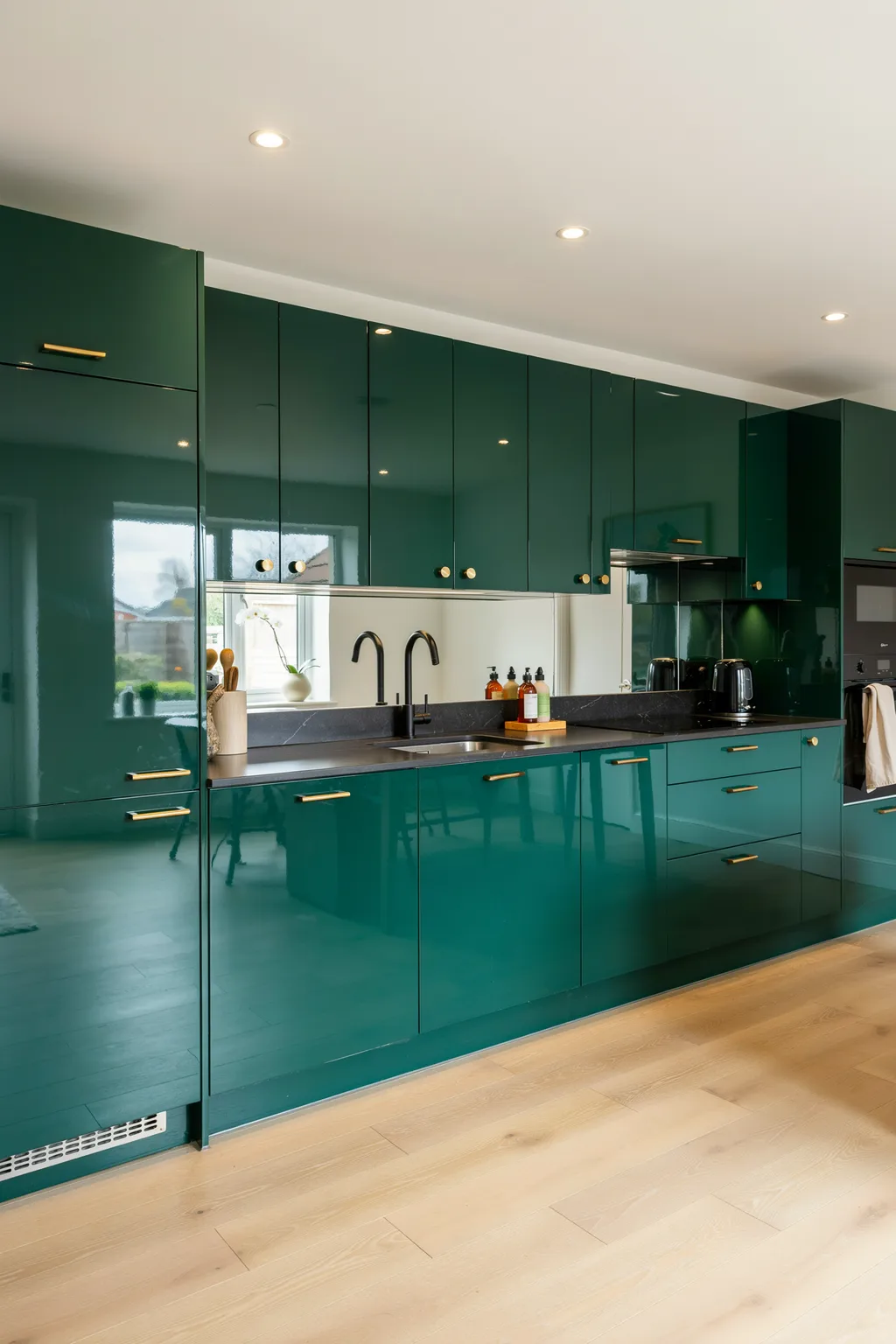
When you want glamour, reach for high-gloss emerald. Lacquered emerald cabinets with a mirrored backsplash, a black stone counter, and slim brass bar pulls turn a kitchen into a jewel box. The gloss reflects every light source, so the room sparkles after dark and feels dressed up for dinner. This is the most dramatic entry among these green kitchen ideas, and it is not for the timid.
Gloss suits emerald because the shine deepens the color and reflects light, which makes a small or dim kitchen feel richer and larger. A mirrored splash doubles the effect, bouncing light and view around the room. Keep counters dark and hardware slim so the cabinets stay the star. This suits city apartments and lovers of drama. Skip gloss if you have kids or cook messily, since a lacquered finish shows every fingerprint, splash, and smudge in bright light.
10. Soft Green Cabinets With a White Farmhouse Sink
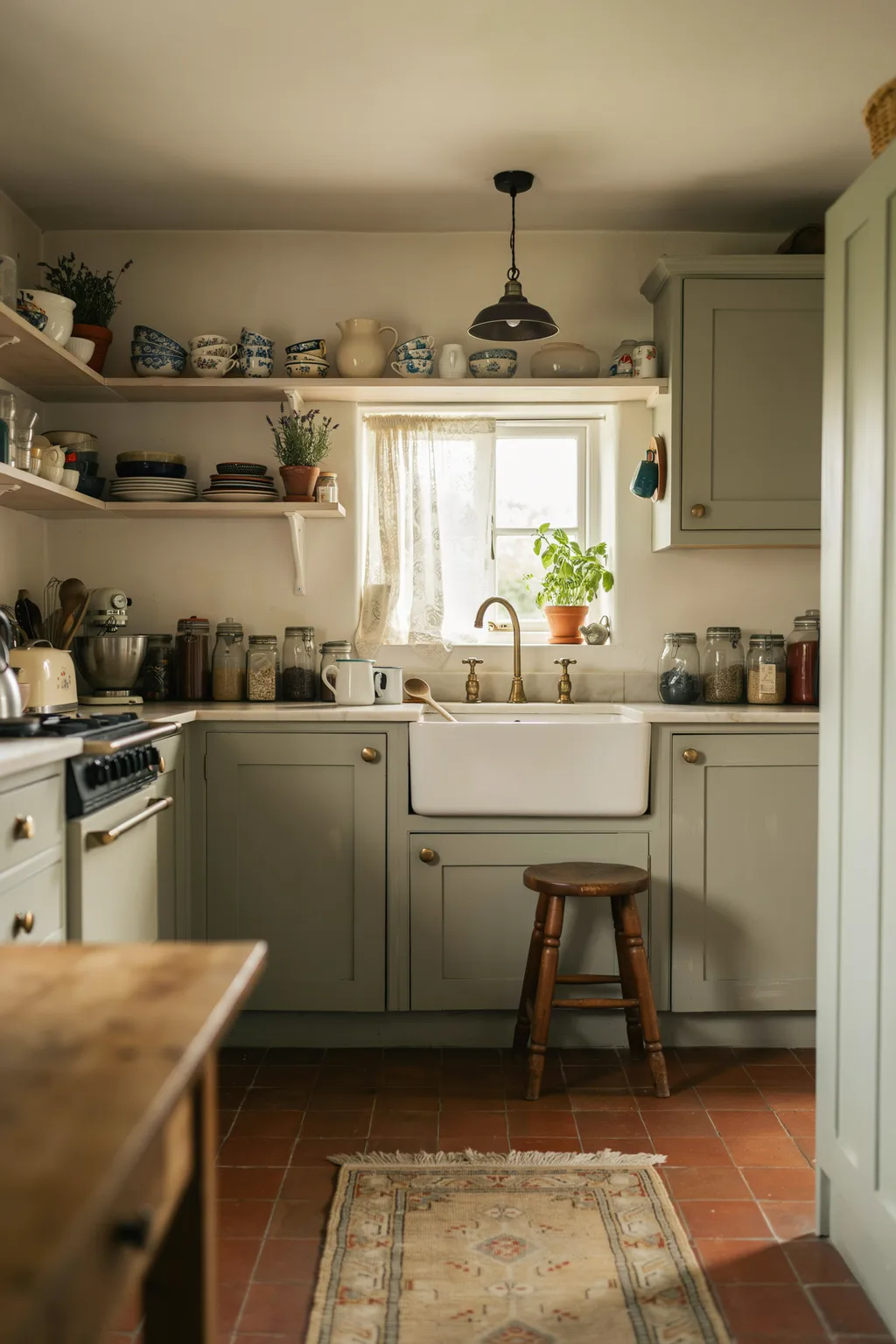
A soft, chalky green with a deep white farmhouse sink is pure cottage comfort. Add a terracotta tile floor, open shelves lined with vintage crockery, and a lace-trimmed window, and the room feels warm and unhurried. The white apron sink pops against the green and gives you a generous basin for real cooking. It is a look that feels honest, humble, and endlessly welcoming.
A white farmhouse sink flatters soft green because the crisp white lifts the muted color and stops it from feeling drab. Terracotta underfoot adds earthy warmth that ties back to the green. Vintage china on open shelves brings personality for little money. This suits period cottages and anyone who cooks from scratch. Skip open shelving above the stove if you fry often, since airborne grease settles on exposed dishes and means constant wiping.
11. Sage Under a Sun-Drenched Skylight
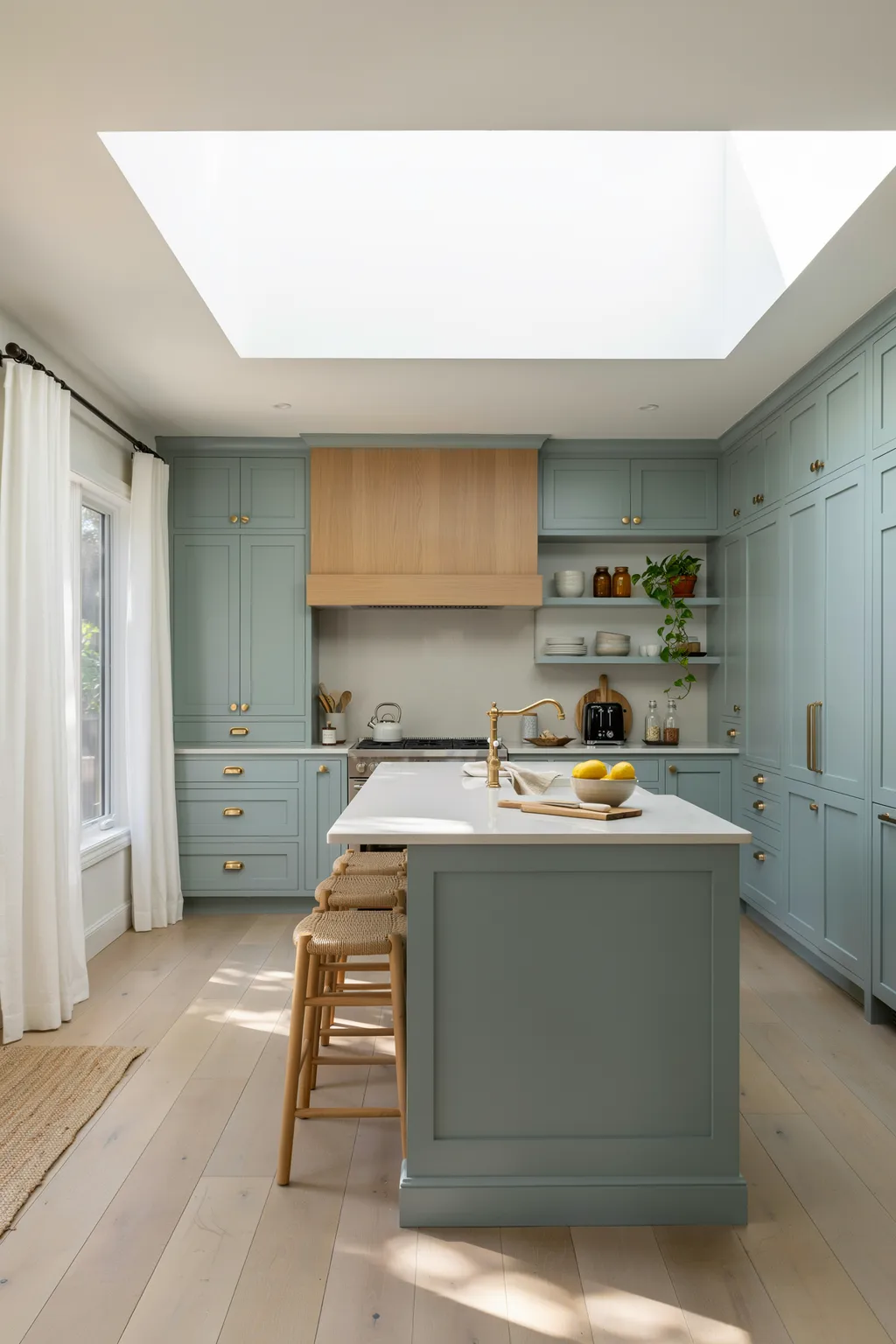
Green loves natural light, so give it a skylight. Sage cabinets glow under a big roof window, and the daylight keeps the color reading fresh all day instead of muddy. A wood range hood, a farmhouse sink, a central island, and pale oak floors round out a bright, calm family kitchen. The skylight is the hero, washing the green in soft, shifting light from morning to dusk.
Overhead light suits green because it hits the cabinet faces evenly, so the color stays true and lively rather than falling into shadow. A skylight also frees up wall space you would otherwise lose to windows. Warm wood tones keep all that brightness from feeling stark. This suits single-story rooms and extensions where a roof light is possible. Skip it if you cannot add glazing overhead, since sage in a genuinely dark room can turn flat and gray.
12. Dark Green With an Open Industrial Wall
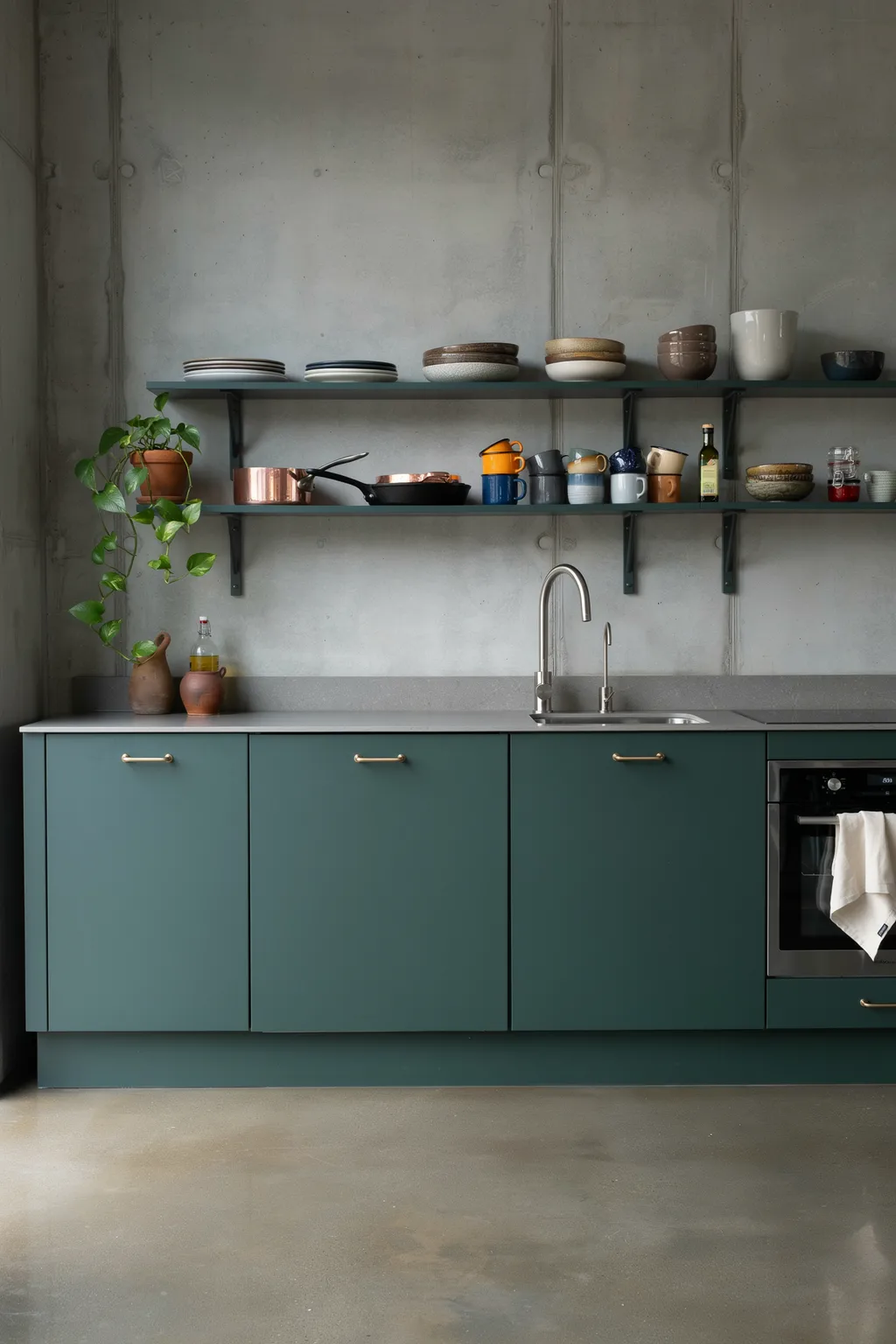
Swap upper cabinets for open metal shelving and let a dark green base do the heavy lifting. Against a concrete floor and a raw concrete-look wall, deep green cabinets feel urban and grounded, while the black bracket shelving keeps everyday dishes on show. It is a practical, hard-wearing look that suits a working cook who wants tools within reach and nothing precious.
Open industrial shelving suits dark green because the utilitarian metal stops the deep color from feeling stuffy or formal. Steel bracket shelves also hold real weight, so you can stack heavy pots without worry. A concrete counter keeps the tough, honest mood consistent. This suits loft apartments and serious home cooks. Skip open shelves if you hate dusting or crave a tidy, hidden look, since everything on display needs regular use and wiping to stay clean.
13. Teal Green Warmed by Copper Accents
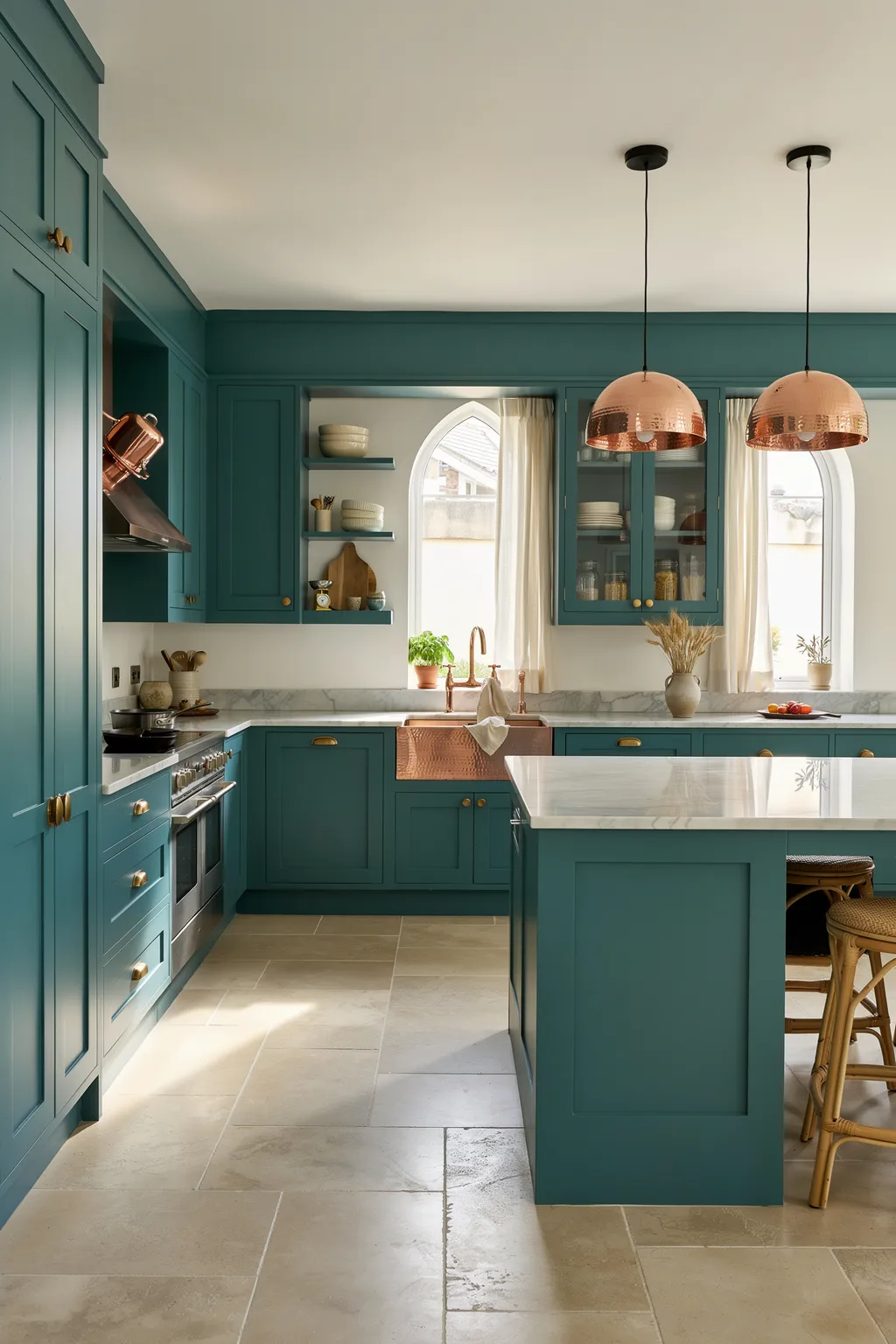
Teal green leans blue, so warm it up with copper. Deep teal cabinets paired with copper pendant lights, a hammered copper farmhouse sink, and copper taps feel rich and grown-up over a pale limestone floor. A glass-front dresser stores pretty china, and marble counters keep it light. The copper glows against the cool teal in a way that feels both vintage and current.
Copper flatters teal because the warm, rosy metal is the perfect counter to the cool blue-green, so the room feels balanced and expensive. A hammered copper sink becomes a working piece of art and develops a lovely patina with use. Limestone underfoot keeps the base soft and pale. This suits period homes and confident decorators. Skip a copper sink if you dislike upkeep, since the finish shifts and spots over time and needs occasional polishing to stay bright.
14. Pastel Mint for a Snug Apartment Kitchen
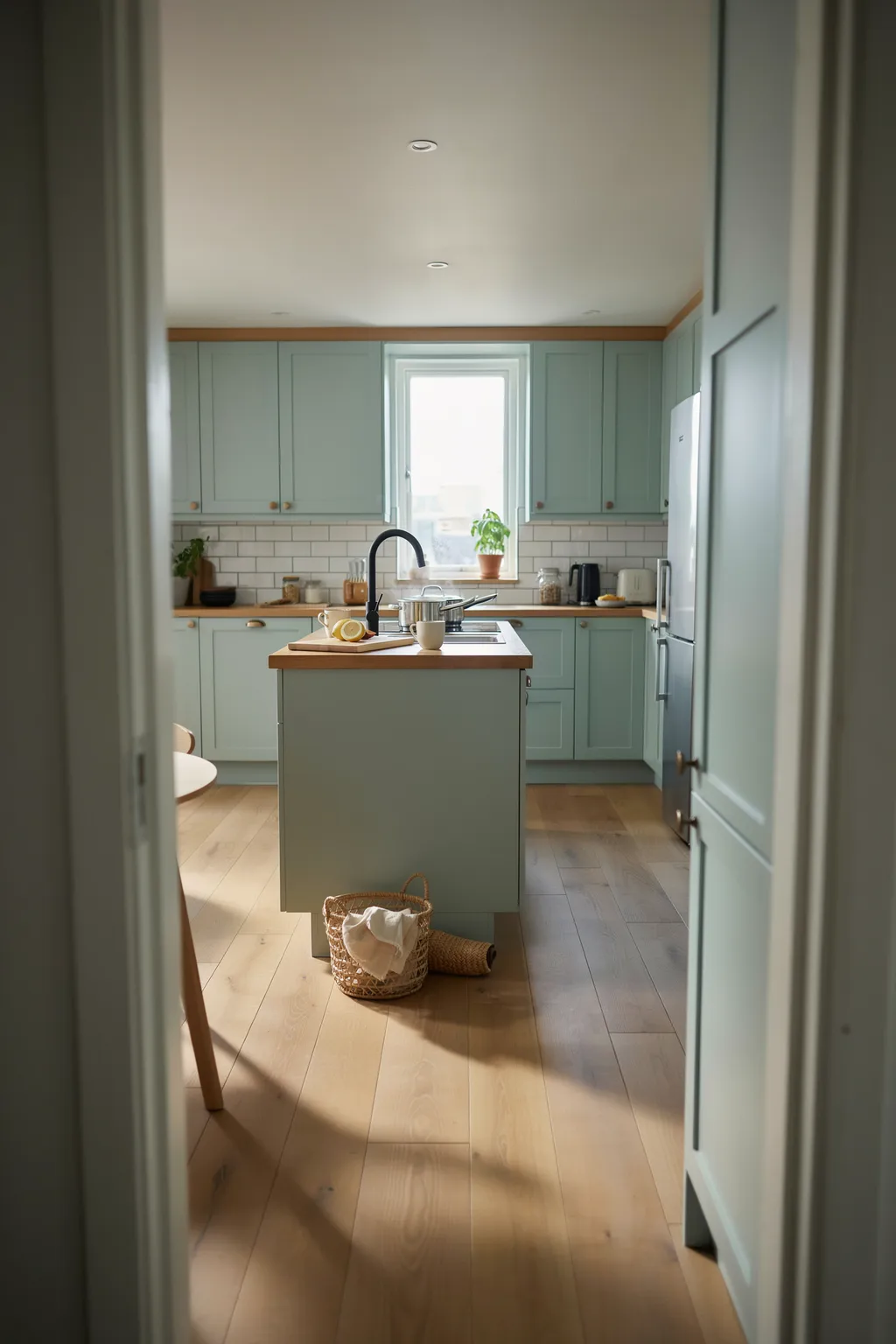
Small apartment kitchens come alive with pastel mint and light oak. Soft mint cabinets framed in pale oak trim feel Scandinavian and calm, and a compact island with a black tap adds function without crowding. White grid tile keeps the backdrop clean. This is one of the most rental-friendly green kitchen ideas, since even peel-and-stick or painted doors can fake the look cheaply.
Pale oak flatters mint because the blond wood adds warmth and a natural frame, so the pastel reads considered rather than childish. A slim island gives a tiny kitchen extra prep space and a spot to sit. Keep appliances white or integrated so nothing visually clutters the small footprint. This suits flats, first homes, and renters. Skip a bulky island here, since anything too deep will block the walkway and make an already snug kitchen feel cramped.
15. Hunter Green Over a Patterned Tile Floor
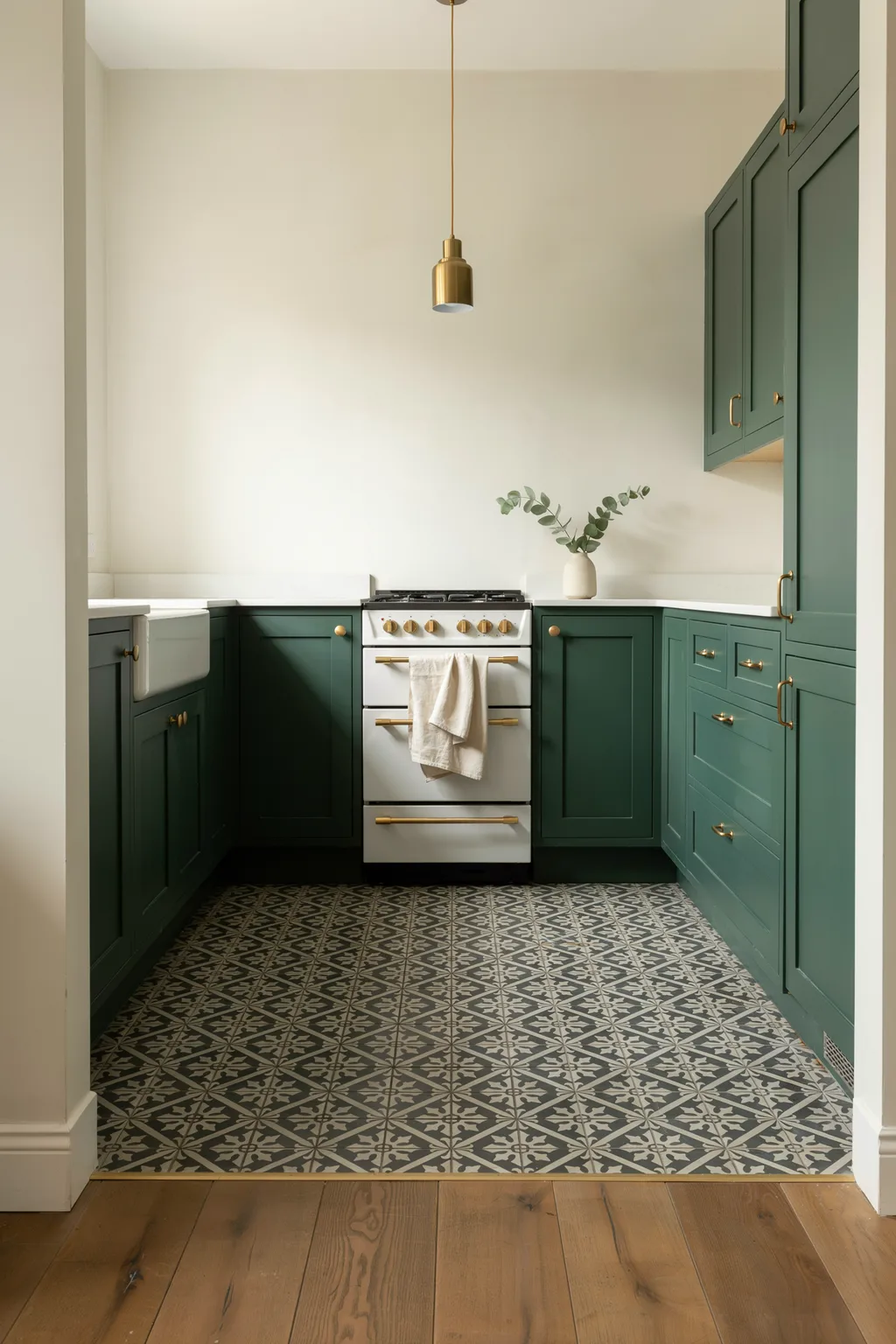
Go all in with hunter green from floor to ceiling, then ground it with a patterned encaustic tile floor. Full-height hunter cabinets with brass cup pulls feel bold and enveloping, and the black-and-white geometric floor gives the eye a place to rest. A crisp white counter breaks up the depth. These green kitchen ideas prove a saturated color can feel calm when the room is committed and cohesive.
A patterned floor suits hunter green because the busy underfoot detail balances the solid mass of color above, so neither feels overwhelming. Choose a floor with black or green in the pattern to tie back to the cabinets. Brass hardware keeps the deep green from reading severe. This suits high-ceilinged period rooms that can carry floor-to-ceiling color. Skip full-height dark cabinets in a low or dim room, where they can loom and make the space feel heavy.
16. Olive Green Against Exposed Brick
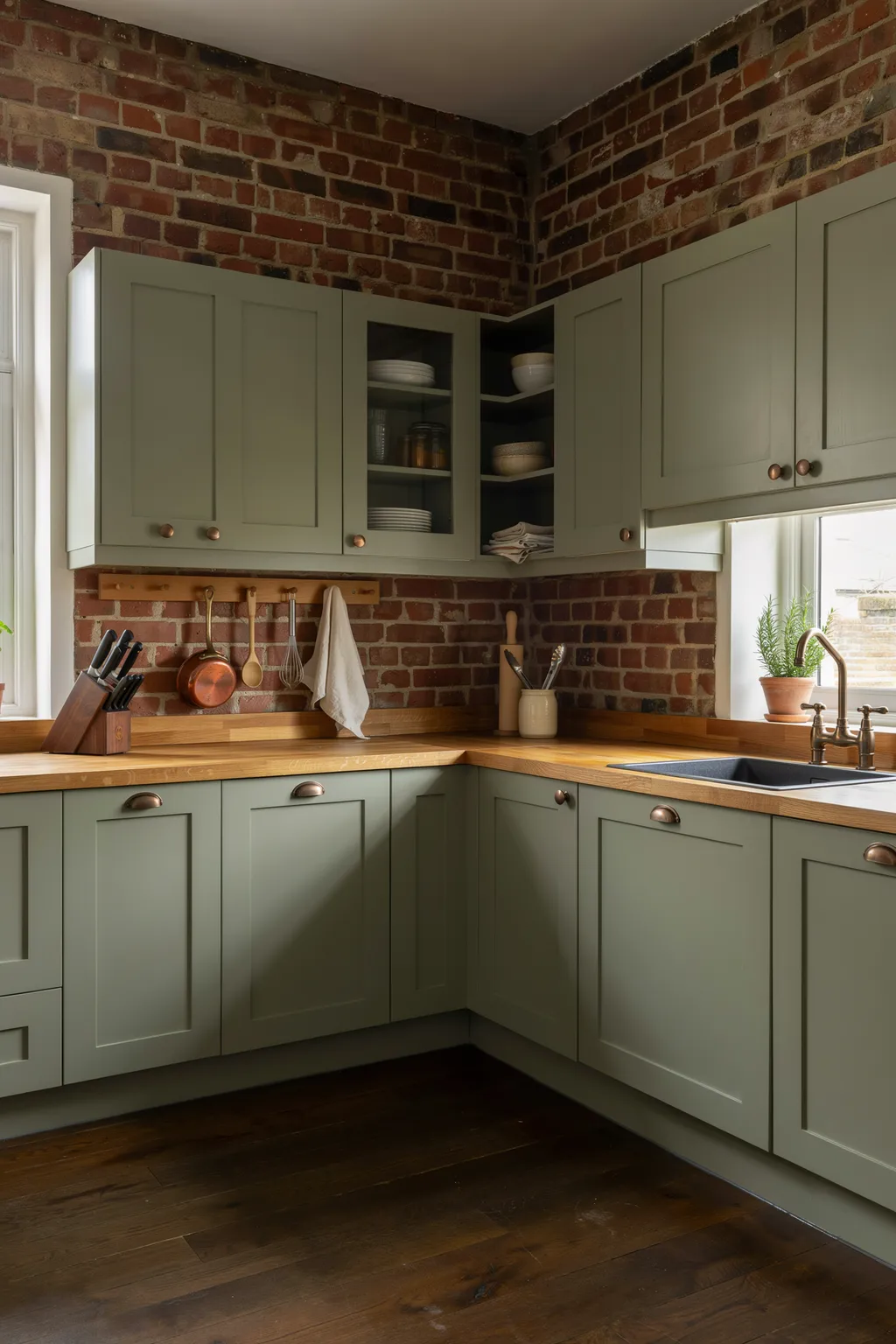
Exposed brick and olive green are a match made for warmth. Olive shaker cabinets set against a red-brick wall, topped with a butcher-block counter and bronze cup pulls, feel rustic and rooted. The brick brings texture and history the moment you walk in, and the earthy green settles right into it. Hang a few utensils on brick hooks and the corner feels like a proper working kitchen.
Brick flatters olive because both are warm and organic, so the palette feels natural rather than decorated. Real or brick-slip veneer both work, as long as you seal it against grease near the stove. Butcher-block counters continue the earthy story. This suits lofts, older homes, and anyone lucky enough to uncover original brick. Skip unsealed brick behind the hob, since raw brick soaks up cooking grease and grime and becomes almost impossible to clean.
17. Minimalist Sage With Airy Open Shelves
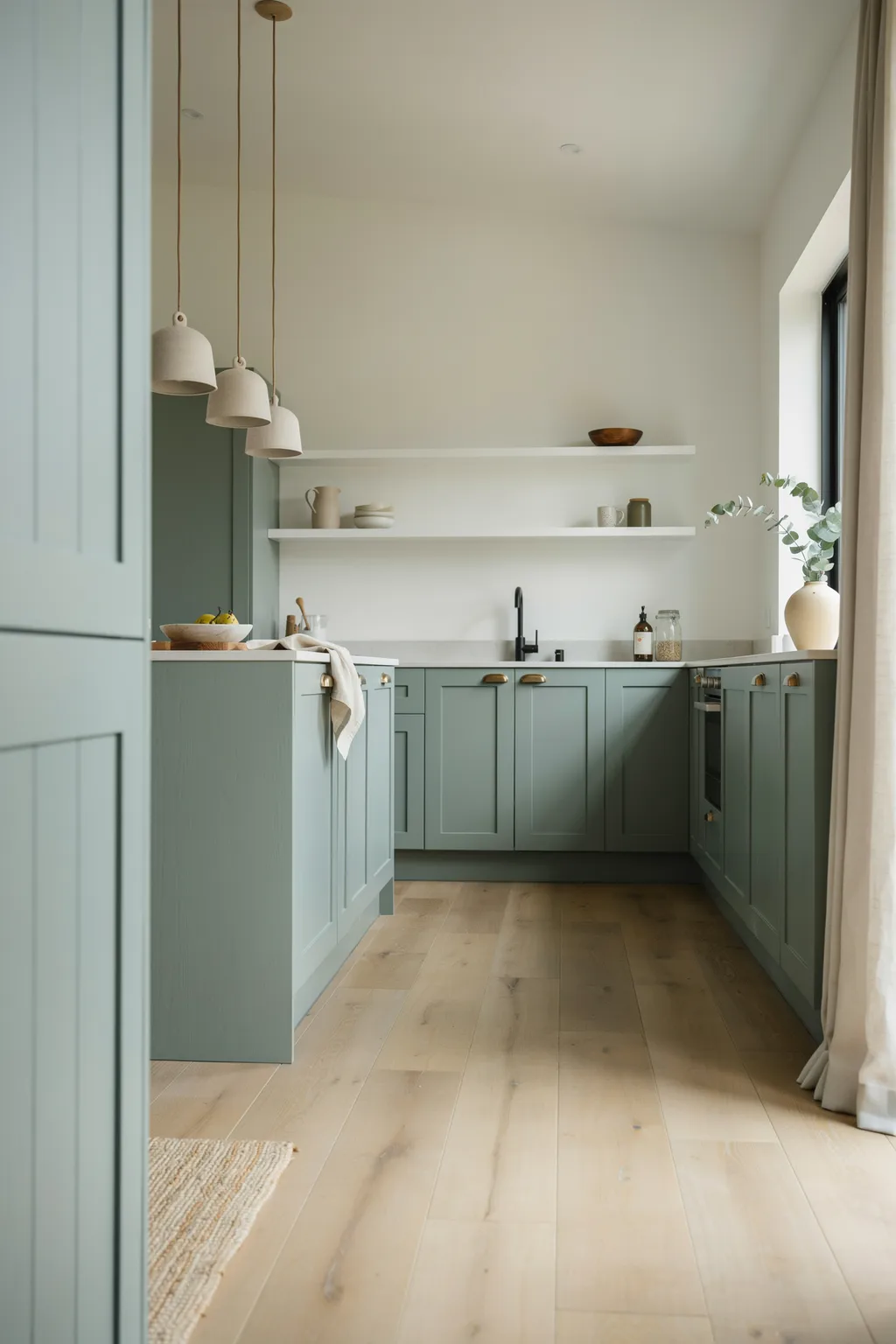
Green can be quiet and modern too. Pair muted sage cabinets with white open shelving, white counters, and simple brass pulls for a calm, pared-back look. A few ceramics on the shelves and cloth-cord pendants overhead keep it warm without clutter. Pale oak floors bounce the light. This is minimalism with a heartbeat, restful rather than stark, and it makes a small kitchen feel serene.
White open shelves suit sage because the airy gaps break up the cabinetry and keep the room feeling light and uncrowded. Style shelves sparingly, with a handful of pieces you actually use, so they read curated not cluttered. Warm brass and wood stop the white and green from feeling cold. This suits modern homes and tidy minds. Skip open shelving if you own a lot of mismatched dishes, since the look depends on a restrained, cohesive collection on display.
18. Traditional Green With Paneled Walls
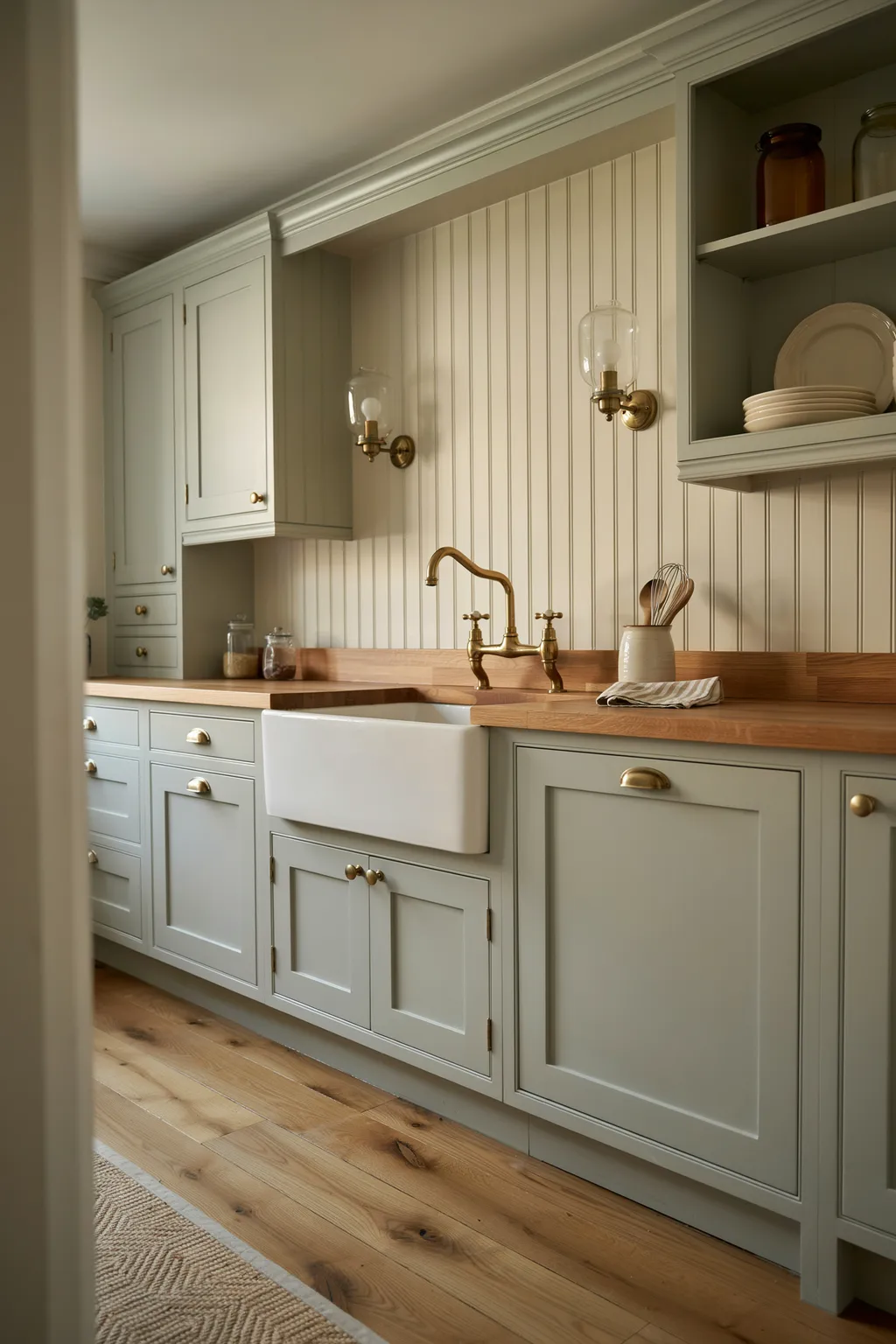
For a classic look, back green cabinets with cream beadboard paneling. Muted green shaker cabinets, a white farmhouse sink, a brass bridge tap, and vintage glass wall sconces feel warm and traditional, while a butcher-block counter keeps it grounded. The vertical paneling adds gentle texture and old-house character behind the run. It is a timeless English-country feel that never chases trends.
Beadboard paneling suits traditional green because the fine vertical lines add period detail that flat plaster lacks. Paint the paneling a soft cream to keep the backdrop warm and let the green cabinets lead. Aged brass sconces and a bridge tap complete the classic mood. This suits cottages, farmhouses, and lovers of heritage style. Skip glossy modern fittings here, since sleek chrome or matte black would jar against the soft, old-fashioned charm the paneling creates.
19. A Green Kitchen With a Built-In Banquette
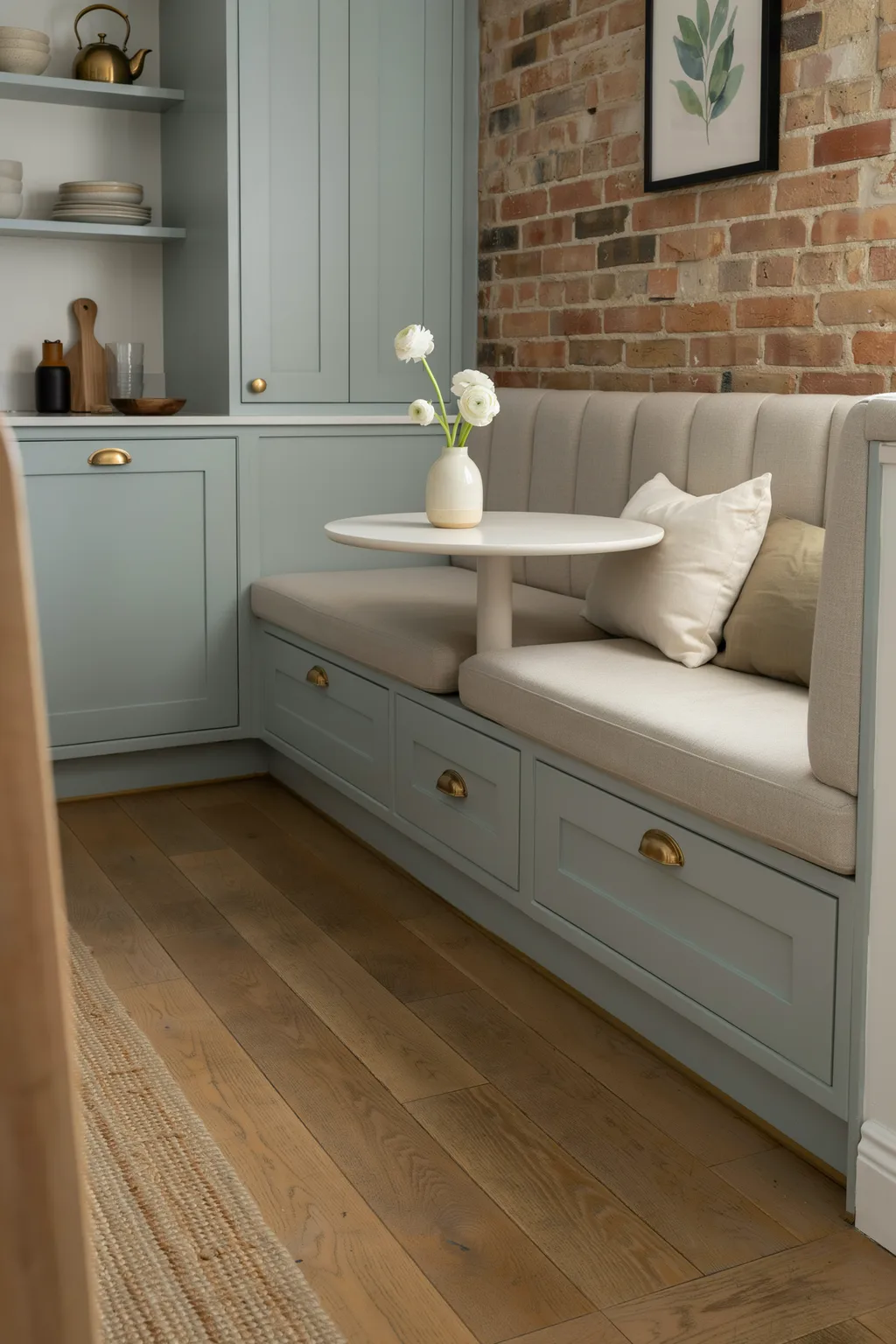
Steal a corner for a built-in banquette and your green kitchen doubles as a breakfast spot. Sage cabinetry wraps into a padded bench with hidden storage below, framed by a brick wall and a small tulip table. A single piece of art and a couple of cushions make the nook feel like a room within a room. It turns dead corner space into the coziest seat in the house.
A built-in banquette suits a green kitchen because the continuous cabinetry ties the seating into the run, so it feels designed rather than added on. Lift-up bench seats hide bulky trays and appliances you rarely use. Keep the table small and round to ease traffic around it. This suits families and open-plan rooms with a spare corner. Skip a fixed banquette if your layout shifts often, since built-in seating is far harder to move than freestanding chairs.
20. Sage and Natural Oak, Side by Side
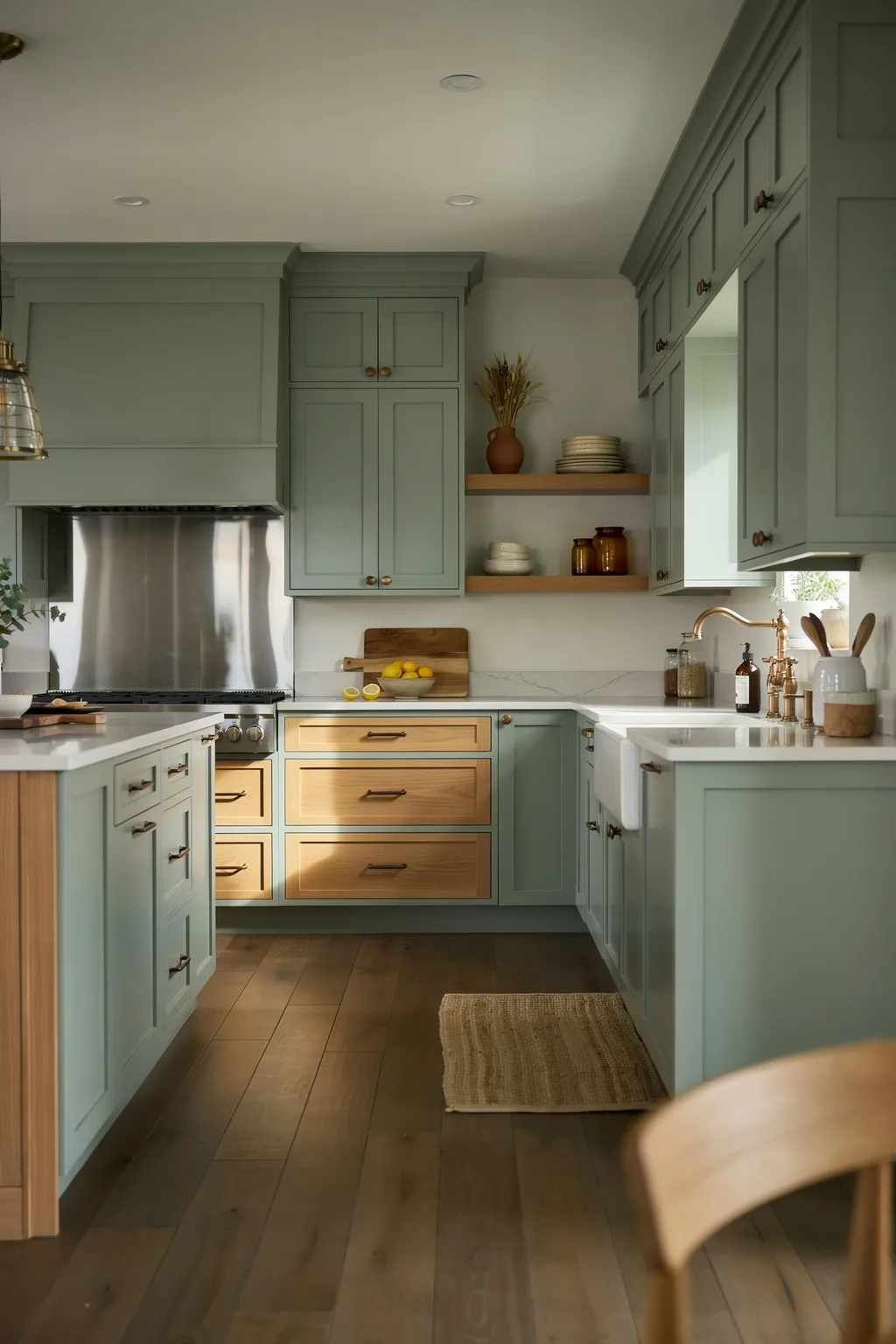
Mix painted sage with natural oak fronts for a warm, layered look, one of the most popular green kitchen ideas right now. Sage perimeter cabinets with oak drawer fronts and oak floating shelves feel current and grounded, and white counters keep it fresh. The raw wood adds texture that flat paint alone cannot, and the two materials share a soft, earthy tone. It is the sweet spot between painted color and natural wood.
Mixing paint and wood suits sage because the oak warms the cool green and breaks up a solid run of color, so the kitchen feels handcrafted. Use oak on a few drawers or the island, not everything, so it reads as a deliberate accent. Keep the wood tone light and honey, not orange, to sit well with sage. This suits modern rustic homes. Skip mixing too many wood tones, since clashing undertones between oak and floor can quickly look muddled.
21. A Zesty Lime Island for a Pop of Play
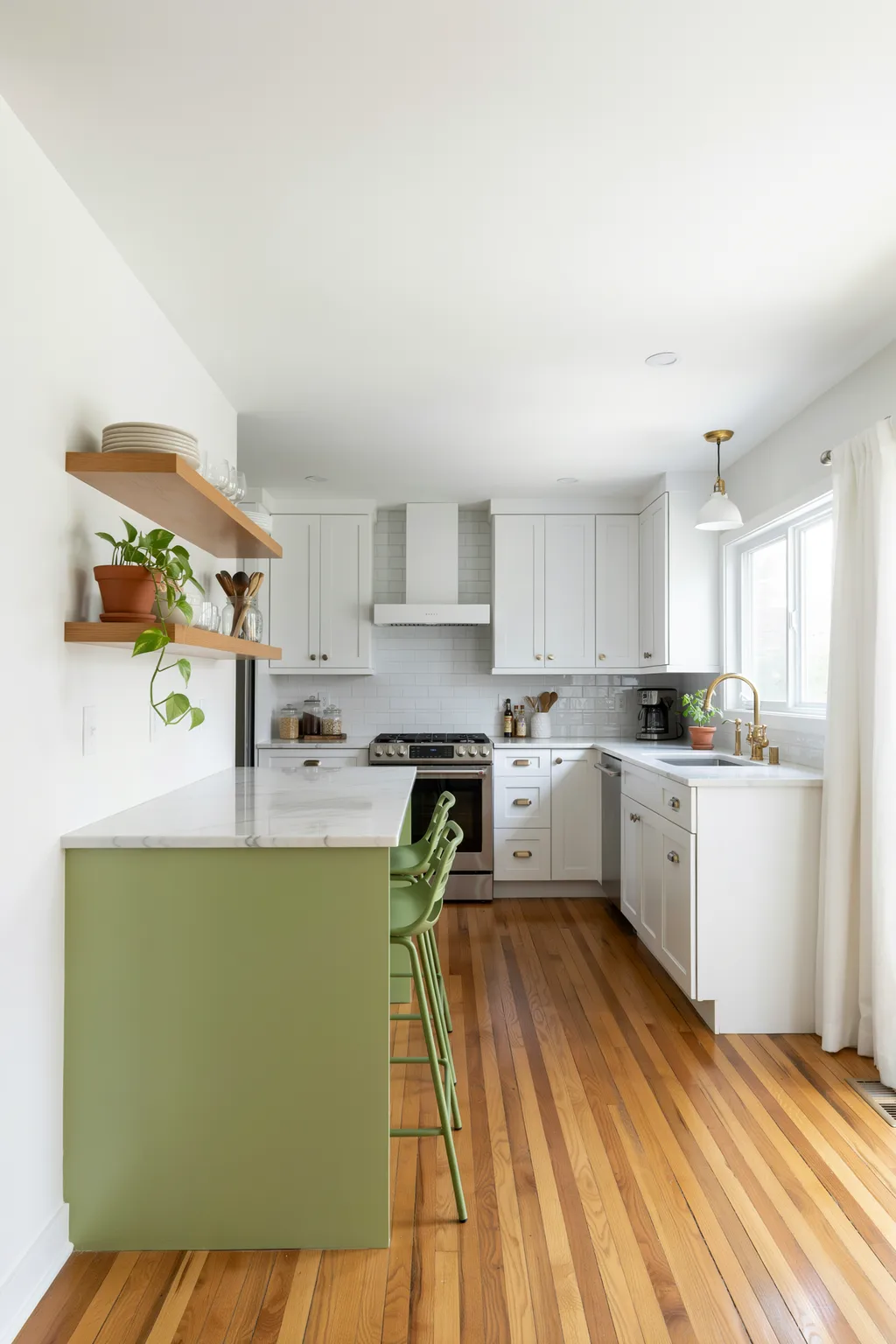
Want green with a sense of humor? Add a zesty lime island to a crisp white kitchen. The bright chartreuse base and matching green metal stools bring energy and play, while white perimeter cabinets, a brass bridge tap, and grid tile keep the rest calm. The single hit of lime reads intentional and fun rather than loud, and you can repaint it if the mood passes.
A lime accent suits a white kitchen because the neutral backdrop lets the bold color sing without taking over. Repeat the green once more, in stools or accessories, so the island feels connected to the room. Brass warms the zingy green and keeps it from feeling neon. This suits playful families and bright open spaces. Skip lime across every cabinet, since a full kitchen of such a strong color is exhausting to live with day after day.
22. Matte Green Grounded by Concrete
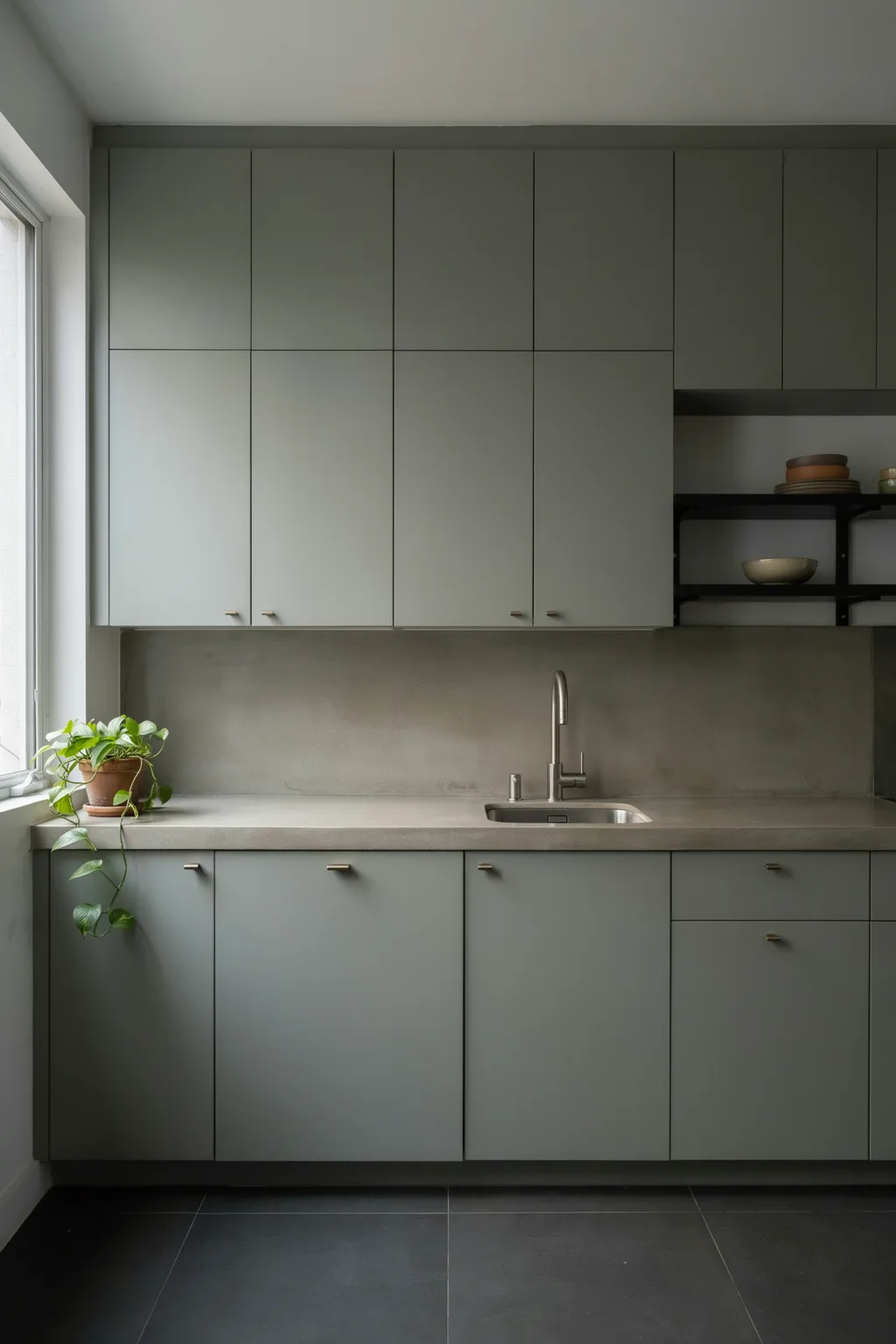
For an understated, architectural look, pair matte green cabinets with concrete. A soft grayed-green base under a concrete counter and backsplash, with black metal open shelves and dark tile underfoot, feels moody and modern. The raw concrete cools the green and keeps everything low-key and grown-up. It is quiet, tactile, and a world away from glossy or fussy.
Concrete suits grayed green because both are muted and matte, so the palette feels seamless and calm. A poured or micro-cement counter reads more modern than stone here. Black shelving and dark tile deepen the shadowy, restful mood. This suits city apartments and lovers of understated design. Skip concrete counters if you spill wine or citrus often, since the porous surface stains easily unless it is sealed well and resealed on schedule.
23. Vintage Mint Over a Checkerboard Floor
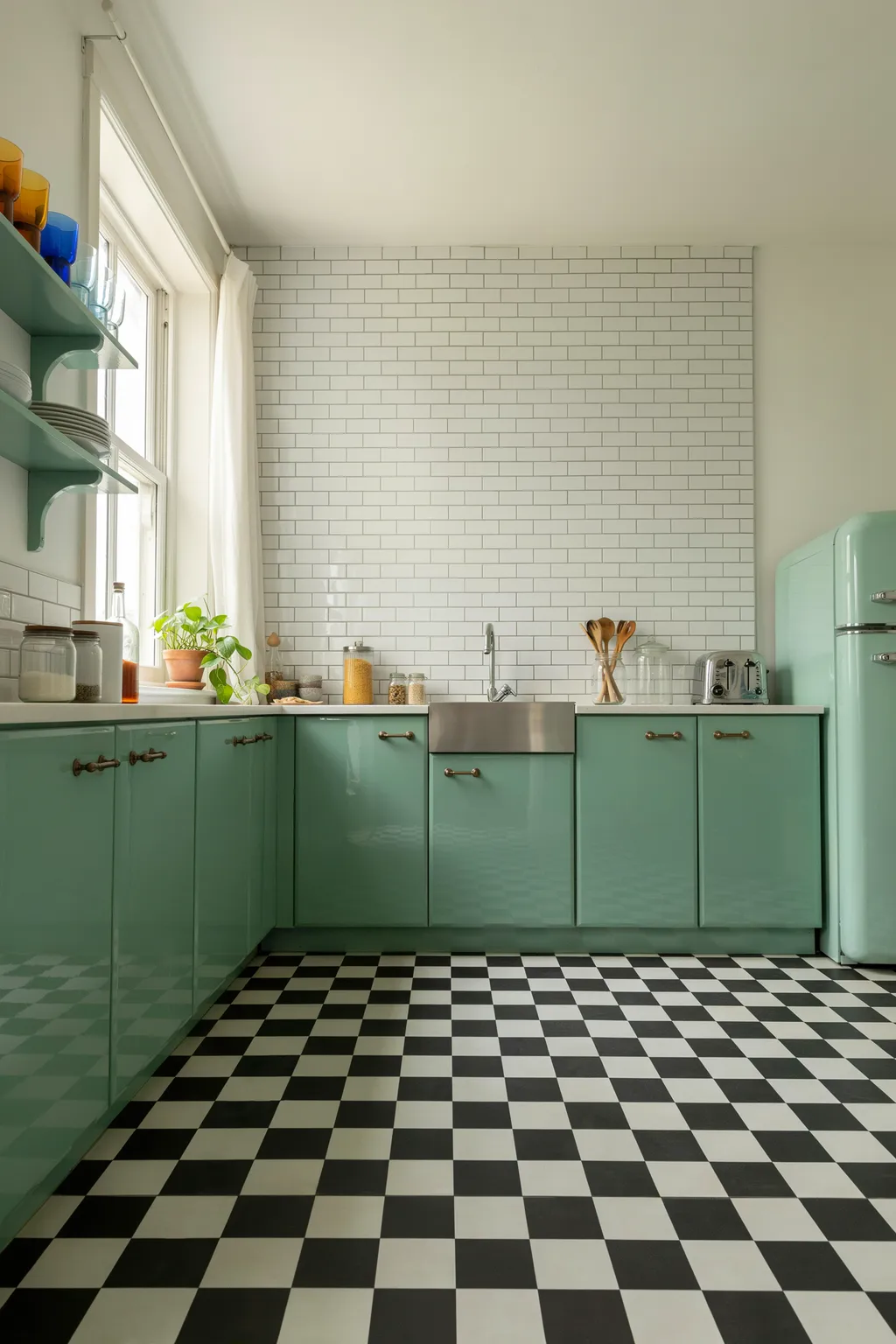
Lean into retro charm with mint green and a checkerboard floor. Glossy mint cabinets, a black-and-white checkered floor, a rounded retro mint fridge, and white subway tile channel a 1950s diner in the best way. Open shelves hold colored glass and vintage finds. It is cheerful, nostalgic, and full of personality, the kind of kitchen that makes you smile over morning coffee.
A checkerboard floor suits mint because the graphic black-and-white base grounds the sweet pastel and adds retro punch. Pick a real vinyl or tile check rather than a printed mat for a convincing period feel. A matching retro fridge seals the vintage story. This suits maximalists and lovers of mid-century style. Skip the full diner treatment if you prefer calm and neutral, since the busy floor and bright fridge make a strong, unmissable statement.
24. Dark Green in a Beamed Stone Kitchen
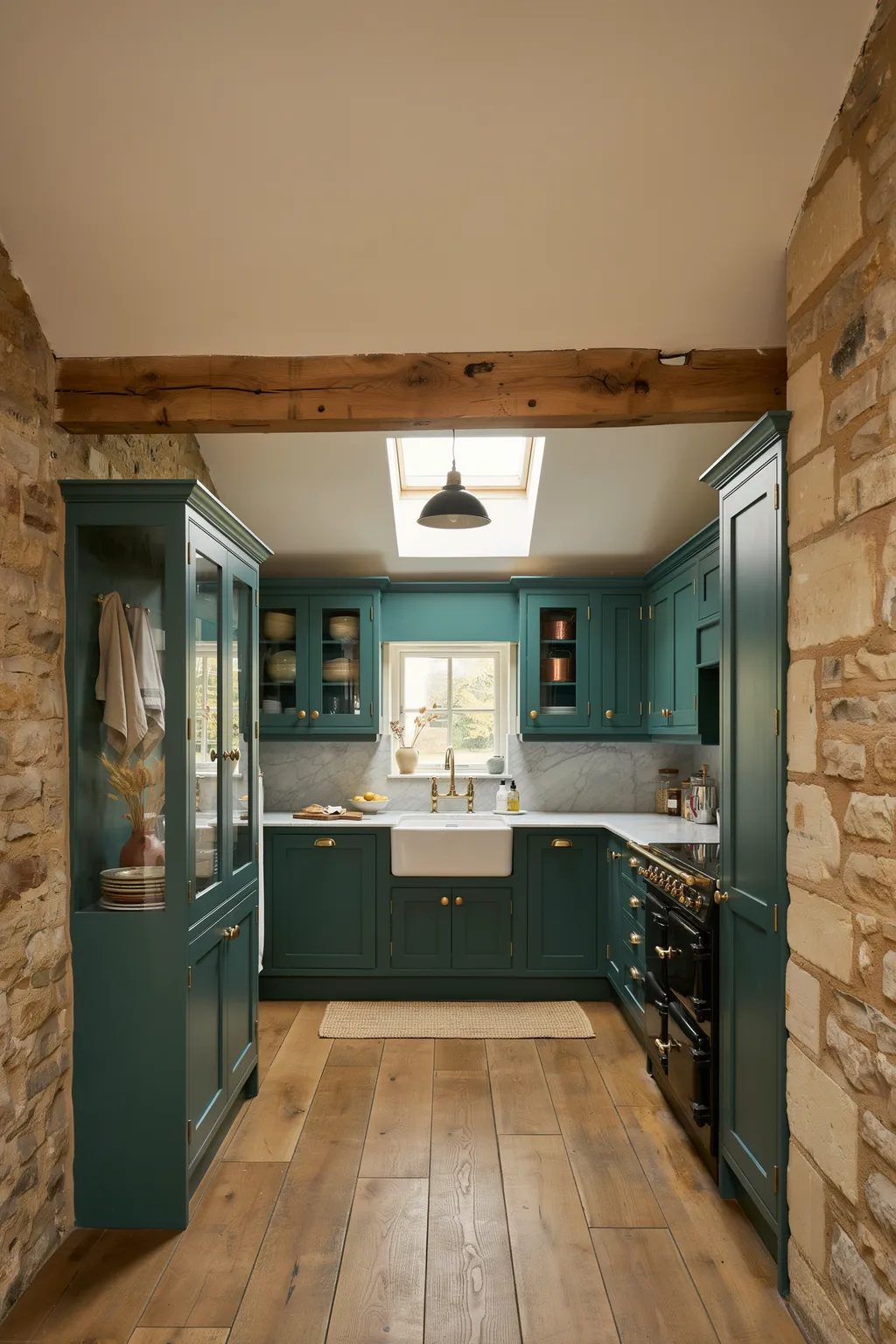
For rustic drama, set dark green against rough stone and a beamed ceiling. Deep green cabinets with brass cup pulls, marble counters, and a farmhouse sink sit under an exposed wood beam and a skylight, framed by natural stone walls. A glass dresser and a range cooker complete a kitchen that feels centuries old yet freshly cooked in. The green deepens the cozy, old-world mood.
Stone and beams suit dark green because the natural, weathered textures make the rich color feel rooted in history. A skylight overhead keeps the deep tones from swallowing the light. Marble counters and brass hardware add just enough polish to keep it from feeling like a barn. This suits converted farmhouses and stone cottages. Skip dark green here if the room has no overhead light, since stone walls plus deep cabinets can leave the space feeling like a cave.
25. Olive Green in a Cozy Cottage Galley
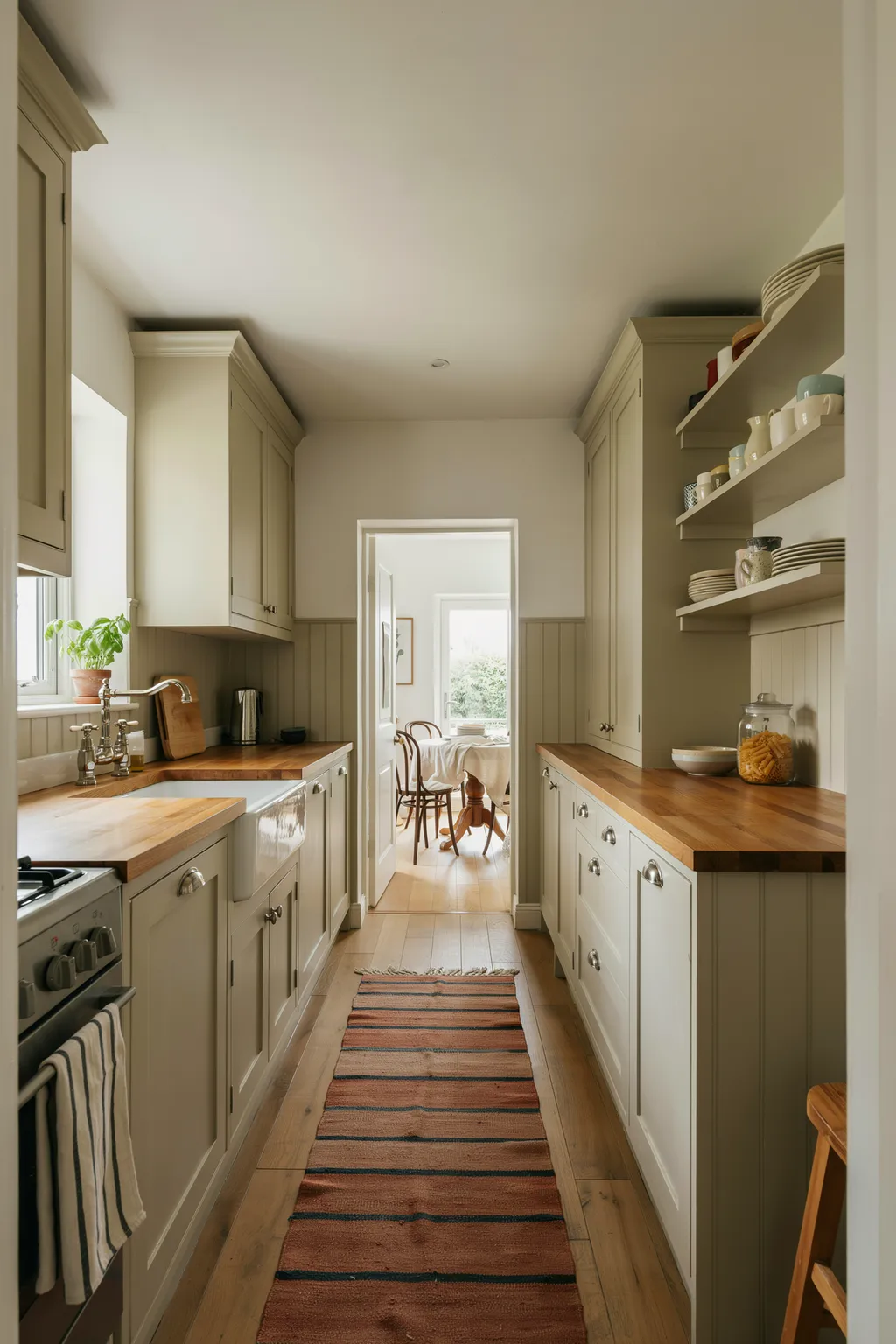
Close with a snug olive galley that feels utterly homey. Muted olive cabinets line both walls under white beadboard, topped with butcher-block counters, a white farmhouse sink, and open shelves of everyday china. A worn kilim runner leads the eye to a small dining nook beyond. It is a modest, real-life kitchen that proves green does not need a big budget to feel warm and complete.
An olive galley works because the earthy green and warm wood counters make even a narrow, hard-working space feel cared for. Run beadboard the full height to add cottage texture on a budget. A vintage runner softens the floor and adds color. This suits older homes, rentals, and small budgets. Skip a light-colored runner in a galley, since the highest-traffic strip of the kitchen shows every crumb and footprint and needs constant cleaning.
Common Mistakes to Avoid
Mistake 1: Choosing the green without testing it in your light
A green that looks perfect online can turn gray, blue, or sludgy in your kitchen. Paint two coats on a large board or the cabinet doors, then look at it in morning, midday, and evening light for a few days. Committing from a tiny chip is the fastest way to a color you regret.
Mistake 2: Pairing cool green with cool everything
A cool green next to gray counters, chrome, and cool-white walls can feel cold and flat. Warm it up with brass or bronze hardware, wood tones, or a warm-white wall. That one warm element is what makes green feel inviting instead of clinical.
Mistake 3: Going too dark in a room with little light
Deep forest or hunter green looks stunning in a bright room and gloomy in a dim one. In a north-facing or windowless kitchen, keep green on the lower cabinets or an island and let light colors handle the rest, so the space still feels open.
Mistake 4: Forgetting a grounding natural material
Green cabinets alone can feel like a paint job rather than a designed room. Add one natural counter, marble, butcher block, or concrete, plus wood or brick somewhere, to root the color. Without a natural anchor, the green floats and the room feels unfinished.
Mistake 5: Matching the green to a passing trend shade
Chasing this year’s exact “it” green can date fast. Choose a green you genuinely love and that suits your home’s era, not the shade all over social media this month. Classic sage, olive, and forest have stayed popular for decades for a reason.
Mistake 6: Overloading the room with competing accents
Green is already a statement, so a bold backsplash, patterned counter, and busy hardware all at once fight each other. Let the cabinets lead and keep one or two supporting features quiet. The calmest green kitchen ideas keep a plain backdrop so the color actually shines.
Quick Start Checklist
- [ ] Gather three green paint samples that suit your home’s light and style
- [ ] Paint large boards or cabinet doors and check them morning, noon, and night
- [ ] Decide your commitment level: full cabinets, two-tone, or just an island
- [ ] Choose a warming metal, brass or bronze, to offset a cool green
- [ ] Pick one natural counter to ground the color: marble, butcher block, or concrete
- [ ] Select flooring that ties back to the green (wood, brick, terracotta, or patterned tile)
- [ ] Keep the backsplash simple so the cabinets stay the star
- [ ] Add one texture layer: open shelves, paneling, or exposed brick
- [ ] Bring in a plant or two to echo the green naturally
- [ ] Live with samples a week before ordering anything
Frequently Asked Questions
Is a green kitchen a good long-term choice or just a trend?
Green is a strong long-term choice, not a passing fad. Shades like sage, olive, and forest have stayed popular for decades because they borrow from nature and pair with almost any material. Green kitchen ideas endure when you pick a classic shade over a trendy one and ground it with timeless counters and hardware, so the room still feels current years from now.
What counter color goes best with green cabinets?
Natural, warm-toned counters flatter green best. White or gray marble keeps sage and forest fresh, butcher block warms olive and moss beautifully, and concrete suits muted, modern greens. Avoid busy, multicolored granite that competes with the cabinets. The goal is a counter that grounds the green and adds natural texture rather than fighting it for attention.
What hardware looks best on green kitchen cabinets?
Brass and bronze are the classic partners for green, since the warm metal balances the cool color and adds a subtle glow. Aged or unlacquered brass patinas gently over time and reads timeless. For modern greens like mint or grayed sage, matte black gives a crisp, contemporary edge. Match your tap finish to the hardware for a pulled-together look.
Will a green kitchen make my small space feel smaller?
Not if you choose the shade well. Pale greens like sage and mint actually keep a small kitchen feeling fresh and airy, especially with light counters and good daylight. In a tight or dark room, keep deep greens to the lower cabinets or an island, use glass-front doors to add depth, and let white or wood handle the upper half.
How do I keep a cool green kitchen from feeling cold?
Layer in warmth on purpose. Add brass or bronze hardware, a wood counter or wood floor, a warm-white wall color, and natural textures like brick or rattan. Warm lighting matters too, so choose soft-white bulbs over cool ones. These touches offset the coolness in the green and make the whole room feel welcoming instead of clinical.
Where can I find reliable green paint colors to start with?
Begin with a trusted paint maker’s curated greens, like the Benjamin Moore green color family, which groups tested shades and shows how each behaves in different light. Order real peel-and-stick or pint samples, paint them large, and view them in your own kitchen at different times of day before you commit to a single green.
Conclusion
Green is the rare cabinet color that feels both fresh and timeless, and these 25 rooms show how far it stretches, from whisper-soft sage to glossy emerald, earthy olive, and playful lime. The common thread is simple: choose a green that suits your light, warm it with brass or wood, and ground it with one honest natural material.
Here are your takeaways. Test the exact shade in your own light before you commit to anything. Match your ambition to your room, full cabinets for bright spaces, an island or two-tone split for smaller or darker ones. Warm every cool green with brass, bronze, or wood so it never feels cold. And keep the supporting cast calm so the cabinets lead. The best green kitchen ideas change one or two things with intention rather than gutting the whole room.
Your move: pick the single kitchen above that made you pause, grab three paint samples in that shade this weekend, and tape them to your cabinet doors before you buy a thing.