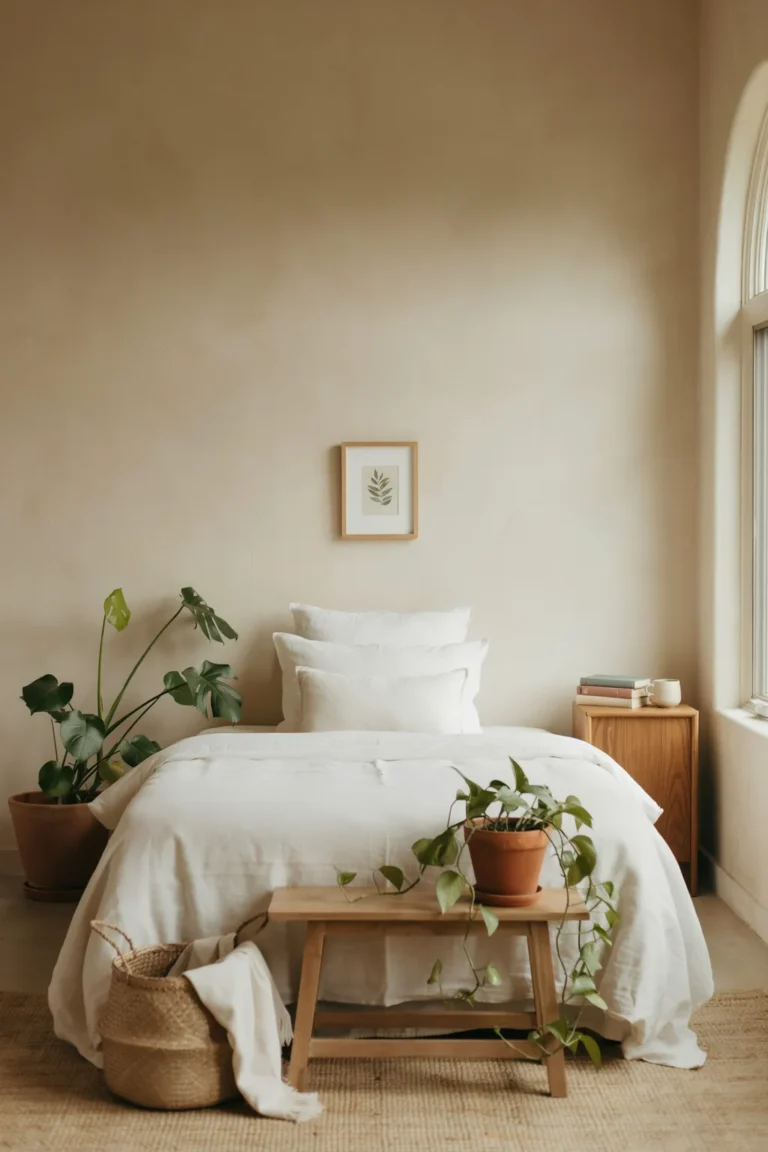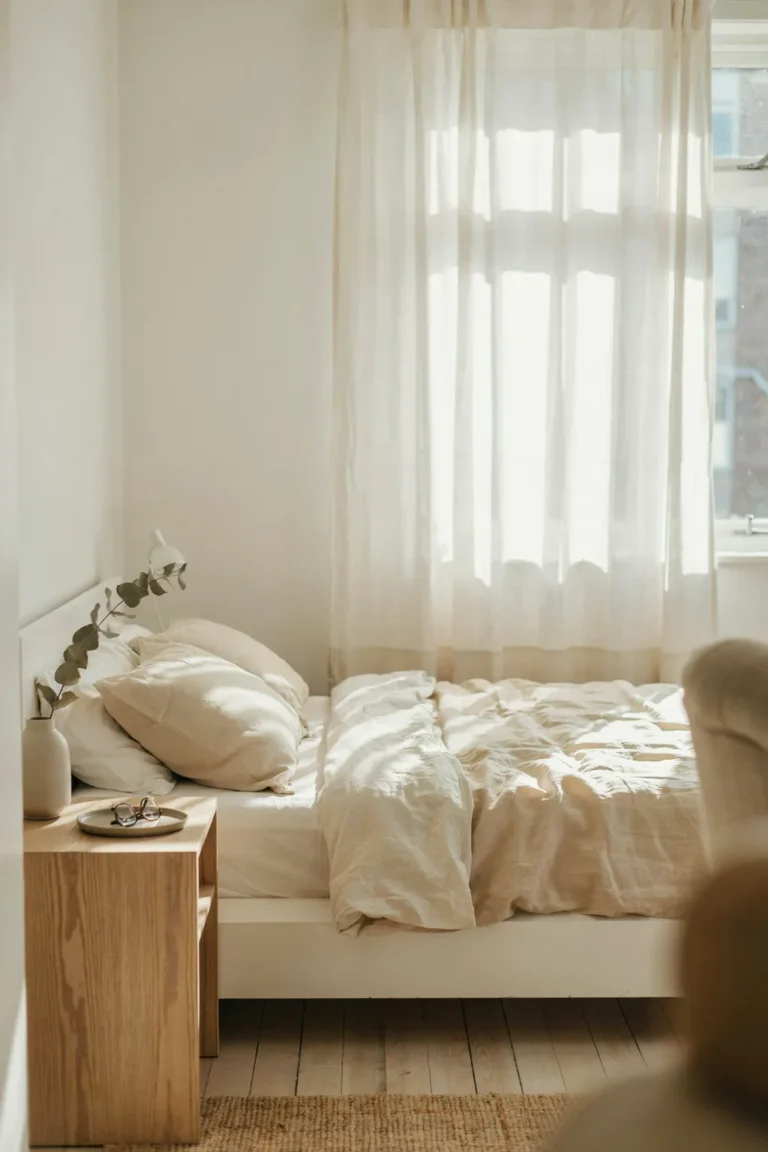
15 Bedroom Makeover Ideas for a Cozy Refresh
You spend a third of your life in this room, and most bedrooms still look like an afterthought. A leftover comforter, a lamp that came with the apartment, walls that never got their own color. These bedroom makeover ideas are here to fix that, whether you have a weekend and one accent wall or a full renovation budget and a blank slate.
The best bedrooms share a few things: a bed that anchors the room, lighting that actually flatters you at 10 p.m., and a palette that feels chosen instead of leftover. Beyond that, the range is huge. You can go moody and dark, bright and Scandinavian, layered and neutral, or loud and colorful, and any of them can feel finished if you commit to the details. That range is exactly why one-size-fits-all advice falls flat. What works in a sunny loft will smother a small north-facing room.
I broke these fifteen looks down by what each one actually solves, so you can match the idea to your own room instead of copying a photo that will never translate. Some of these are weekend projects: new bedding, a lamp swap, a gallery wall. Others are real renovations with wood paneling, built-ins, or a repainted accent wall.
Each section is grounded in a real bedroom so you can see the proportions, not just the vibe, and I flag who each idea suits and where it falls short. A moody dark green room that photographs beautifully can also make a small, low-light bedroom feel like a cave if you skip the lighting plan. Grab what fits your space and skip the rest.
Quick Answer
The fastest way to pull off a bedroom makeover is to fix three things at once: the bed, the lighting, and one accent surface. Choose a bed frame and bedding in a cohesive palette, layer at least two light sources beyond the overhead fixture, and commit to one bold wall, whether that is paint, wood paneling, or wallpaper. These bedroom makeover ideas range from a single weekend swap to a full room overhaul, so start with whichever piece bothers you most.
1. Layer Neutrals So the Room Feels Intentional
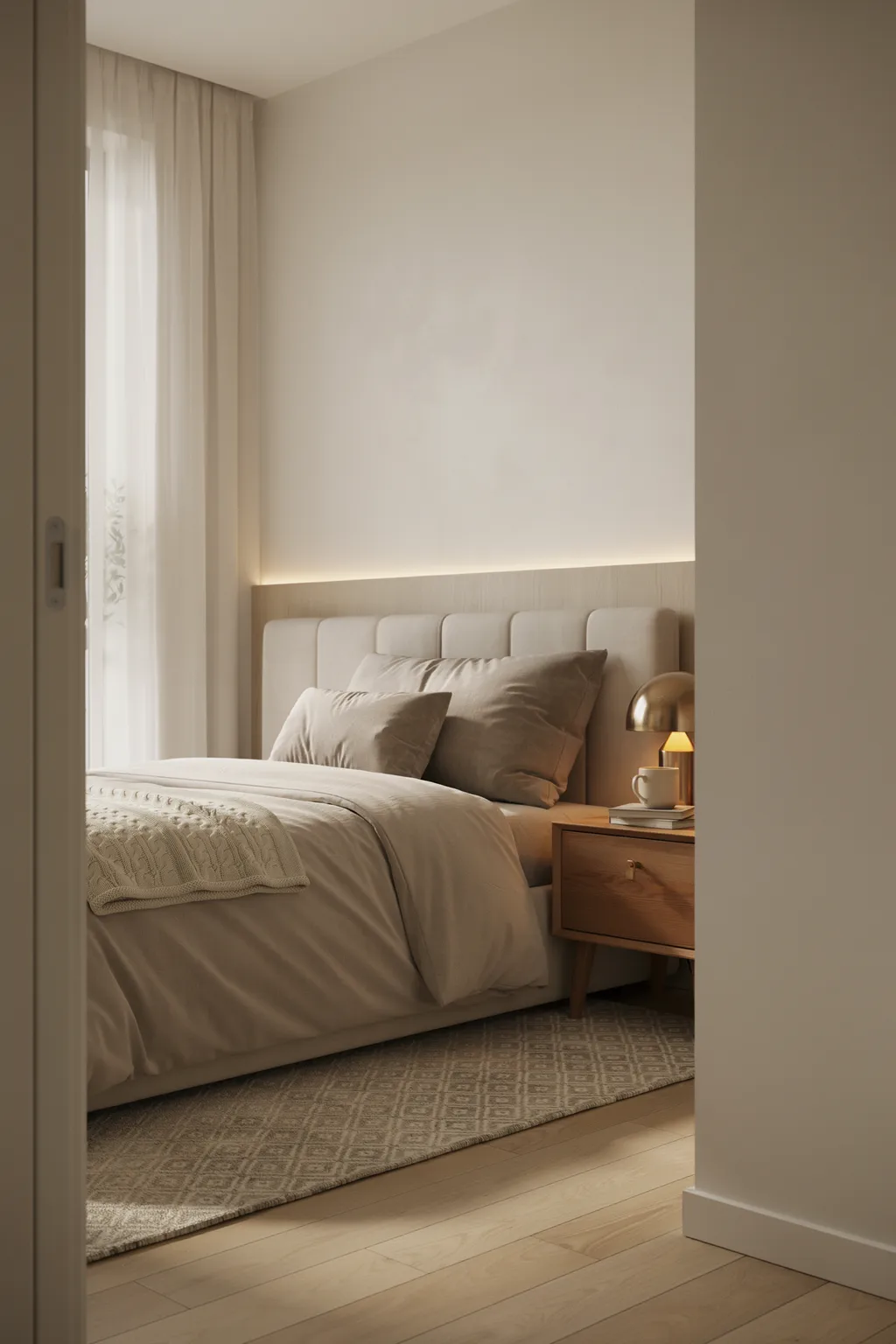
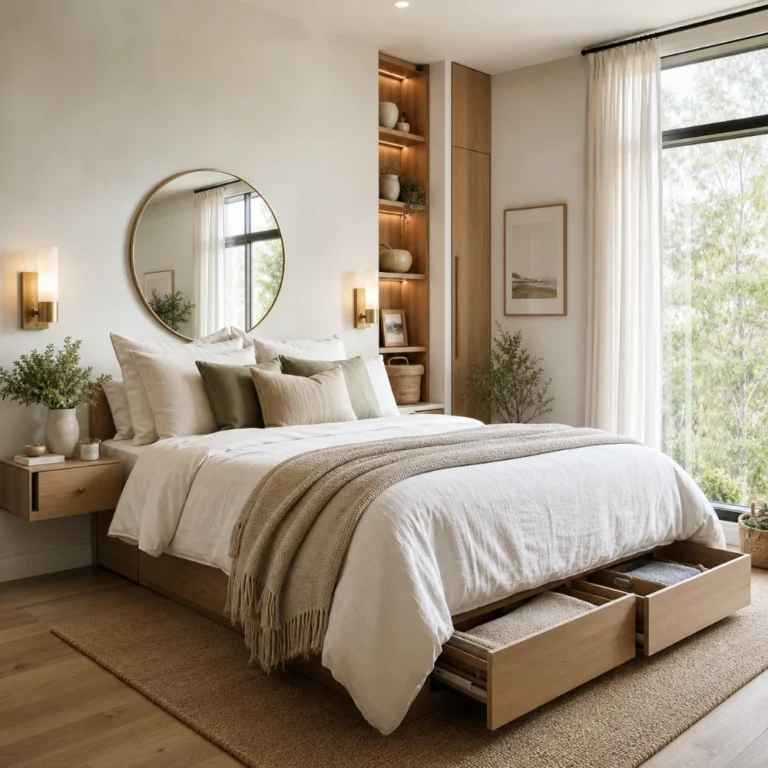
A room built entirely in neutrals can read flat fast, unless you build it in layers. Start with the bed frame and linens as your base, add a lighting layer with integrated headboard LEDs or a sculptural brass lamp, then finish with texture: a chunky knit throw, a couple of velvet pillows, and a patterned rug underfoot. Each layer does a different job, so nothing feels like it is missing.
Texture is what separates a styled neutral room from a boring one. Warm beige linens next to a nubby wool rug and a smooth velvet pillow give your eye plenty to register even without a single bold color. A warm brass lamp adds a metallic note that keeps the palette from washing out. This suits anyone nervous about committing to a bold wall color, since you get richness without risk. It falls short if you stop at one layer, since flat beige with nothing else just reads unfinished, not calm.
2. Add Open Wood Shelving for Organized Storage
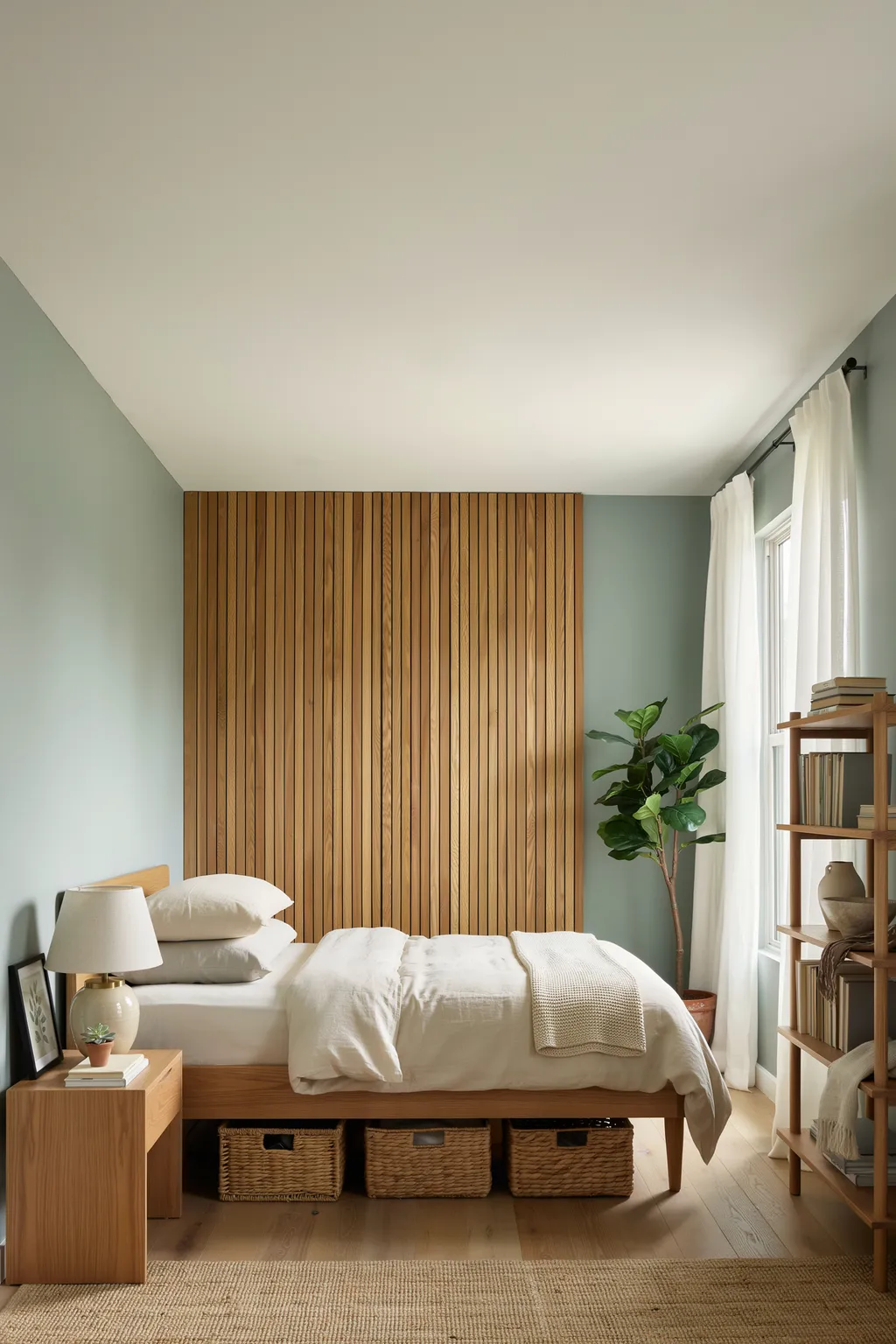
Swap a closed dresser for an open wood étagère beside the bed, and storage becomes part of the decor instead of hiding from it. Stack books, ceramics, and woven baskets on the shelves, run a wood slat accent panel behind the headboard, and tuck woven storage boxes under the bed frame for the stuff you actually want hidden. The wood tones tie the whole wall together.
Open shelving forces a little curation, so the room stays tidy without feeling sparse. A fiddle leaf fig in the corner and a jute rug underfoot round out the organic modern look, and mustard or teal velvet pillows add just enough color against the sage walls. Reach for this if you are short on closet space or renting a place with none. It is not for you if you are not willing to keep the shelves edited, since open storage shows clutter as fast as it shows books.
3. Recreate a Five-Star Hotel Retreat
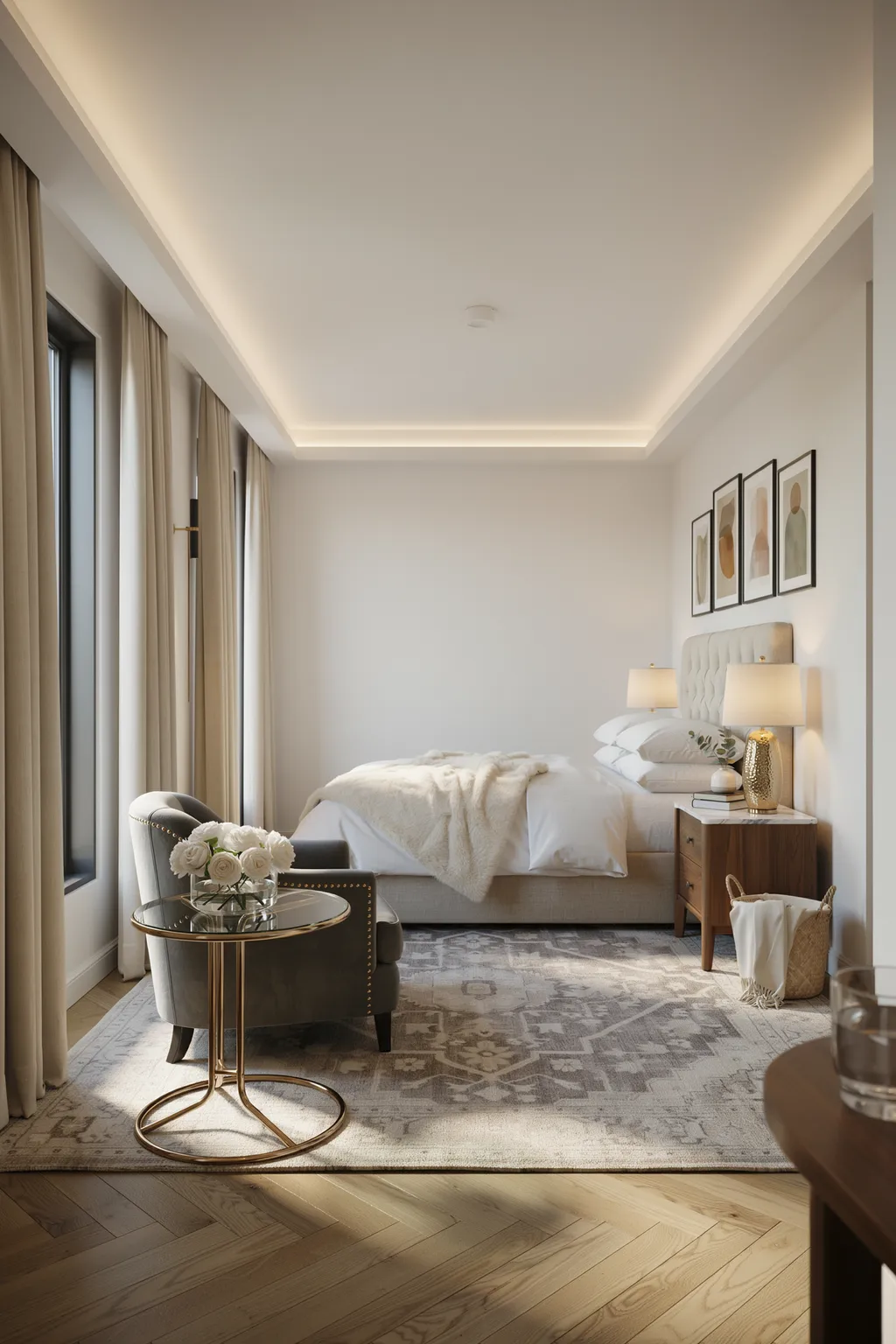
A hotel bedroom feels calm because nothing in it is an accident. Go for a tall tufted headboard, a tray ceiling if you have the height, and a gold table lamp on a two-tone wood-and-marble nightstand. Add a small seating nook with a velvet armchair and a round glass-and-brass coffee table, then dress the bed in crisp white linens with one plush throw.
Hotels edit ruthlessly: one seating spot, one art moment, one lamp style repeated. A cluster of small framed pieces above the nightstand adds interest without turning into a full gallery wall. This suits primary bedrooms with the square footage for a sitting area. It is the most expensive of these bedroom makeover ideas to execute fully, since a tufted headboard and a stone-topped nightstand are real furniture investments, so start with the bedding and lamp if the budget is tight and build from there.
4. Go Moody With a Deep, Uncluttered Palette
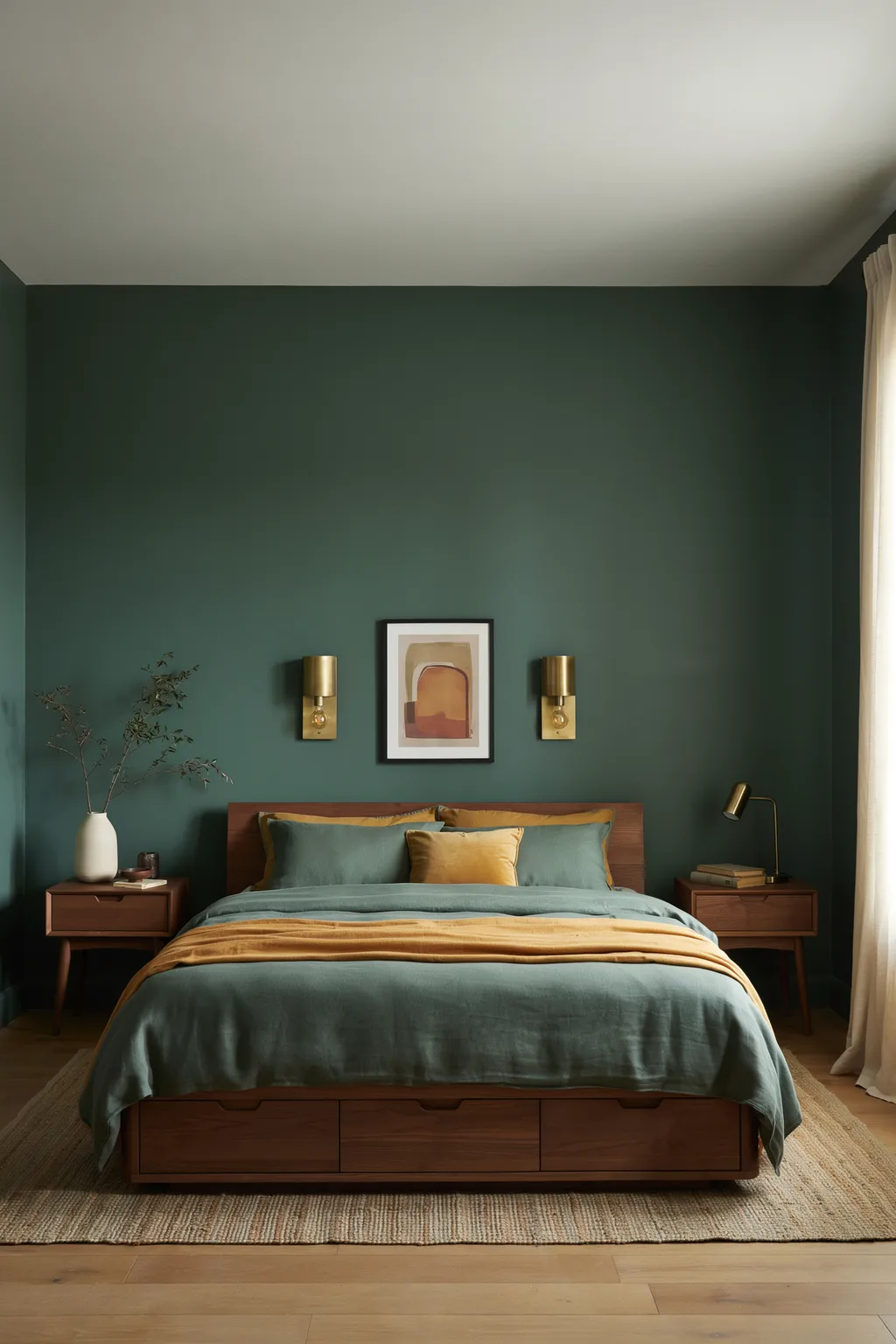
A dark bedroom is not about gloom, it is about focus. Paint the walls a deep forest green or charcoal, keep the furniture list short, a wood bed frame with storage drawers, two matching nightstands, and brass cylinder sconces flanking the headboard instead of table lamps. The uncluttered layout is what keeps a dark room from feeling heavy.
Deep color paired with almost nothing else reads intentional rather than dim. Mustard and gray velvet bedding warms the green without fighting it, and a single ceramic vase with dried branches is enough decoration. It works best in a room that gets decent daylight, since dark walls need real light to avoid feeling like a cave. Skip this in a small, windowless room, or pair it with layered lamps and sconces so the moody effect reads rich instead of dark for the wrong reasons.
5. Mix Color for a Dopamine-Decor Bedroom
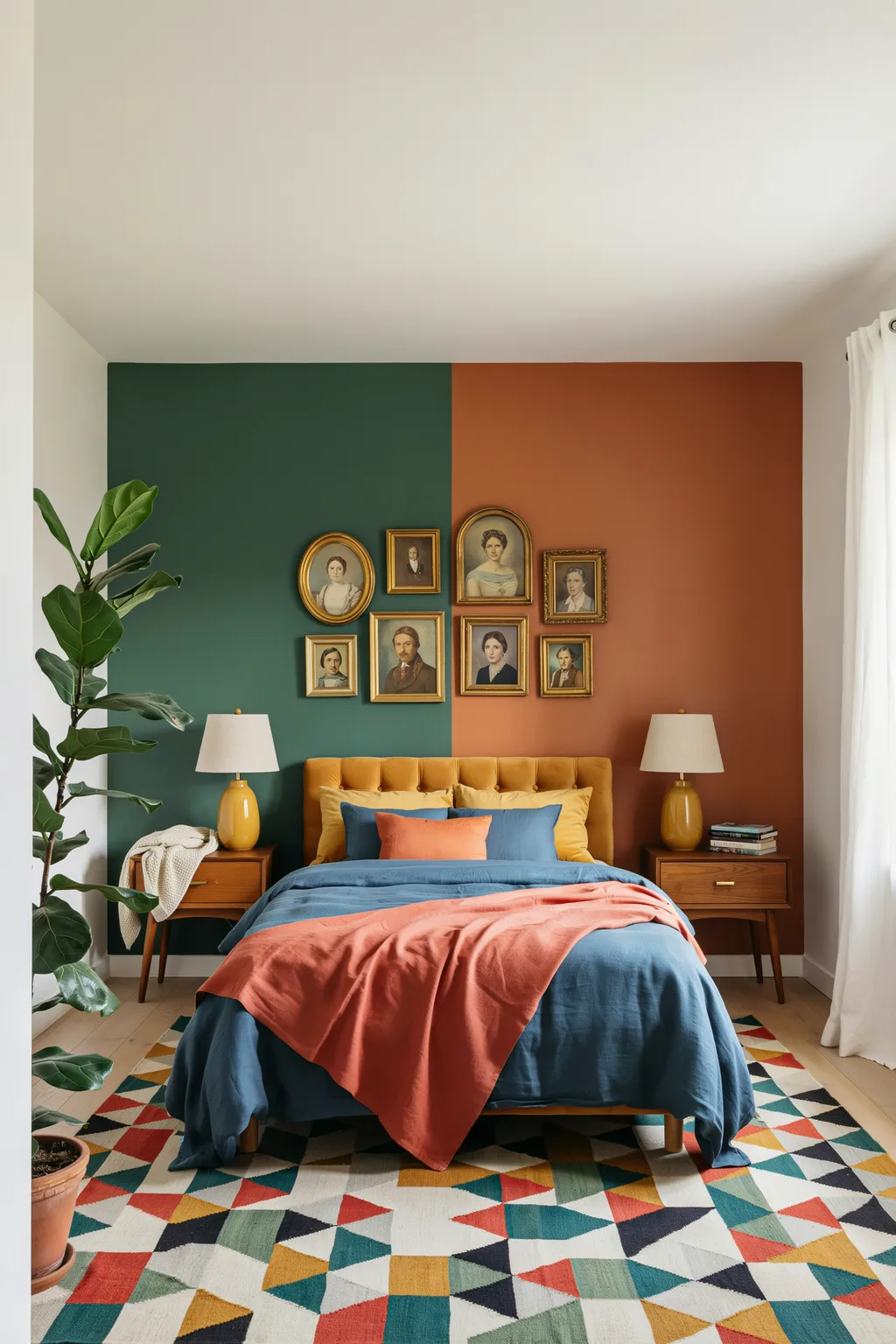
If neutral makes you restless, go the other way. Paint two walls in different bold colors, split down a corner, then build a gallery wall of vintage-style portraits in mismatched gold frames. A gold velvet upholstered bed and a mix of blue, coral, and mustard bedding keep the room from feeling like any single trend, and a bold geometric rug ties the colors together on the floor.
A shared color family, warm gold, forest green, burnt orange, keeps a maximalist room from turning chaotic, even with a dozen different elements in play. Repeating gold frames across the gallery wall does the same unifying job. This suits creative types and anyone who has always wanted a bolder room but did not know where to start. It is the hardest of these bedroom makeover ideas to get resale-neutral, so if you are renting, keep the paint on removable panels or wallpaper instead of the walls themselves.
6. Stack Textures for an Elevated, Cozy Feel
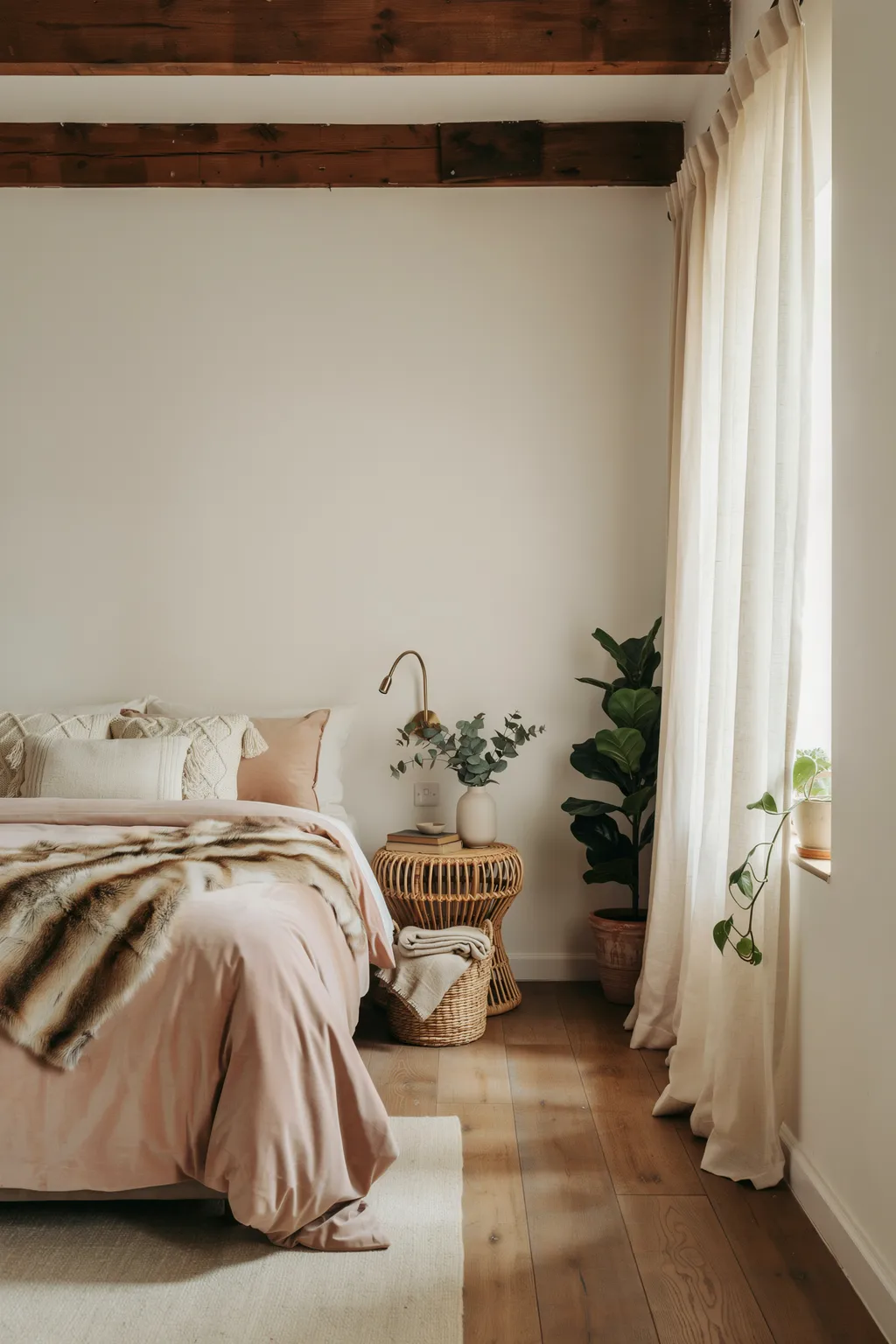
Texture does more for comfort than color ever will. Dress the bed in blush velvet and knit pillows, add a faux fur throw across the foot, and swap a plain overhead light for warm sheer curtains and a pair of brass gooseneck sconces. A round rattan nightstand and a couple of trailing plants finish the layered, tactile look.
A room you want to touch is a room you want to be in, and mixing velvet, knit, fur, and rattan gives your hands and eyes different textures in every direction. Warm golden lighting ties it together at night. Reach for this in bedrooms that already have good bones but feel a little cold or sparse. The one catch: too many textures in the same tone can blur together, so keep one element, the throw or the rug, as the visual anchor and let the rest support it.
7. Bring Nature In With a Stone Accent Wall
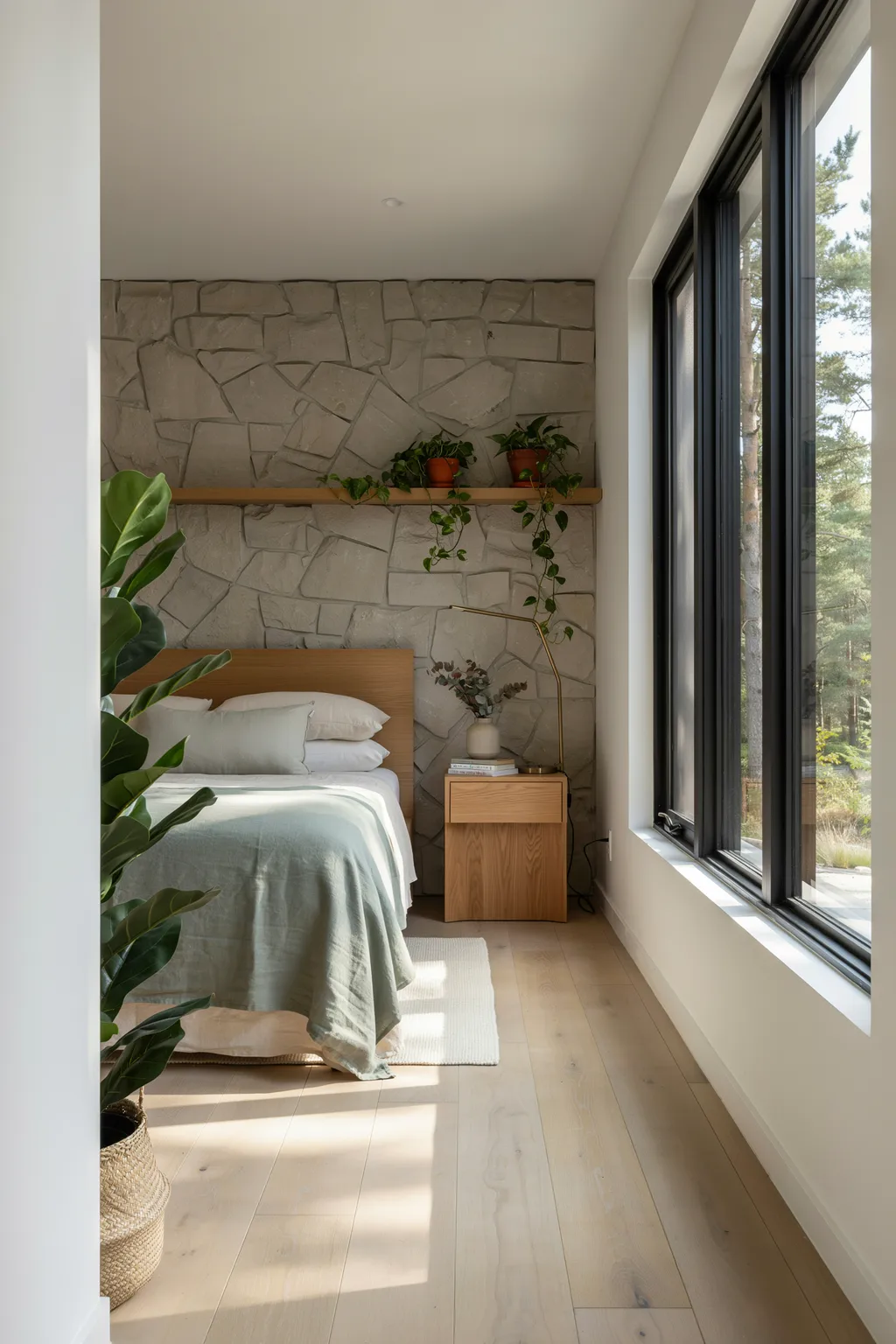
A stacked stone wall behind the headboard grounds a bedroom in something real. Let trailing pothos cascade from a floating wood shelf above the bed, keep the bedding in sage and cream linen, and pair a floor-to-ceiling window with the stone so the room reads like an extension of the yard outside.
Natural materials, stone, wood, and living plants, calm a room in a way paint alone cannot, and a big window makes the connection to the outdoors literal instead of implied. This suits primary bedrooms with a real view or a private, tree-lined lot. According to the National Sleep Foundation, a bedroom kept between 60 and 67 degrees Fahrenheit sleeps best, so if you add a big glass wall for the view, budget for good insulation or blackout shades, since floor-to-ceiling glass swings the room’s temperature more than a standard window.
8. Frame the Outdoors With Floor-to-Ceiling Windows
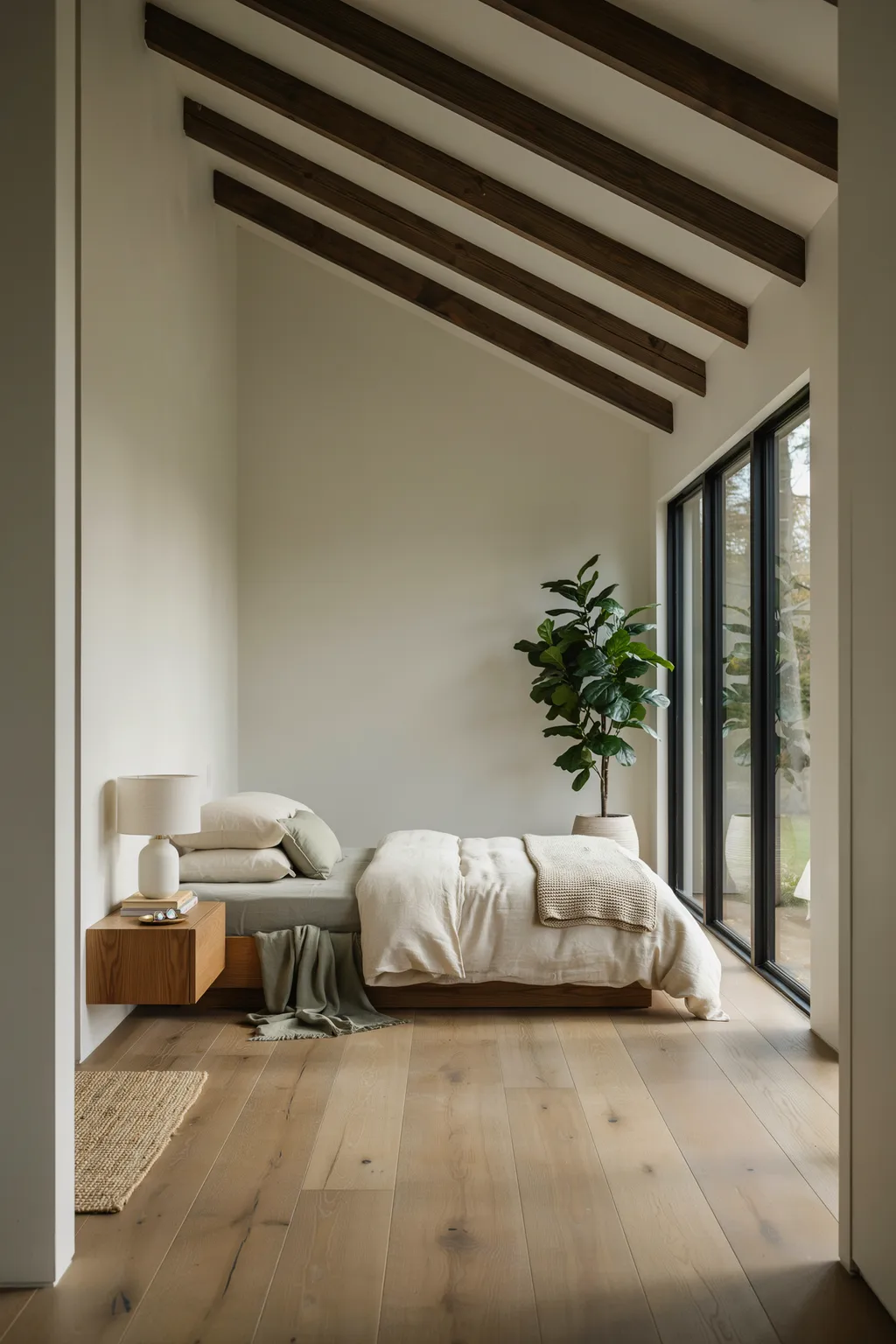
Take the view idea further and let the window wall become the entire headboard backdrop. A wood-beamed vaulted ceiling and warm wood floors keep the room grounded while the glass wall does the heavy lifting, framing trees and greenery like living art. A low platform bed in cream and sage linen keeps the furniture from competing with the view.
When the outdoors is the main event, the furniture can stay simple and quiet, letting the changing light and seasons do the decorating for free. A chunky knit throw and a floating wood nightstand are the only extras this room needs. It works best in homes with real privacy and a wooded or elevated lot, since a street-facing bedroom with floor-to-ceiling glass trades calm for exposure fast. Add operable blinds or sheers so you can dial the openness up or down.
9. Warm It Up With Rustic Reclaimed Wood
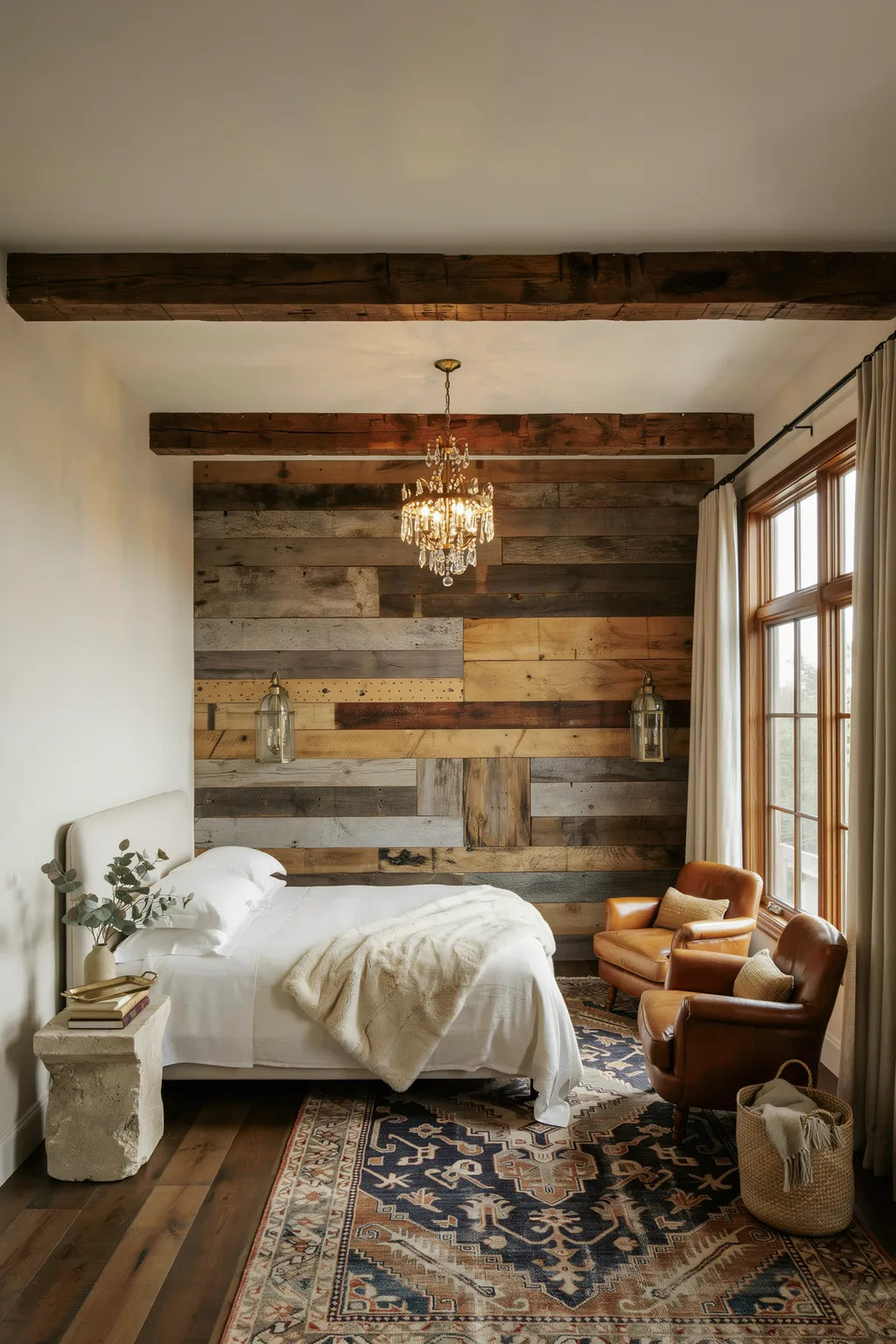
A reclaimed wood accent wall behind the bed brings instant warmth and history to a room, especially under exposed beams and a crystal chandelier for contrast. Mix in leather armchairs by the window, a faux fur throw on white bedding, and a vintage-style rug for that lived-in farmhouse feel that never looks staged.
The mismatched wood tones in a reclaimed wall do the pattern work that a plain wall cannot, and pairing rough wood with a crystal chandelier keeps the room from tipping into full cabin territory. Glass lantern sconces and an aged stone side table add just enough polish. This suits farmhouses, cabins, and older homes with real ceiling height for the beams. It is a heavier look, so skip it in a small or low-ceilinged room where the reclaimed wall and beams will feel like they are closing in rather than warming up.
10. Simplify With a Clutter-Free Japandi Layout
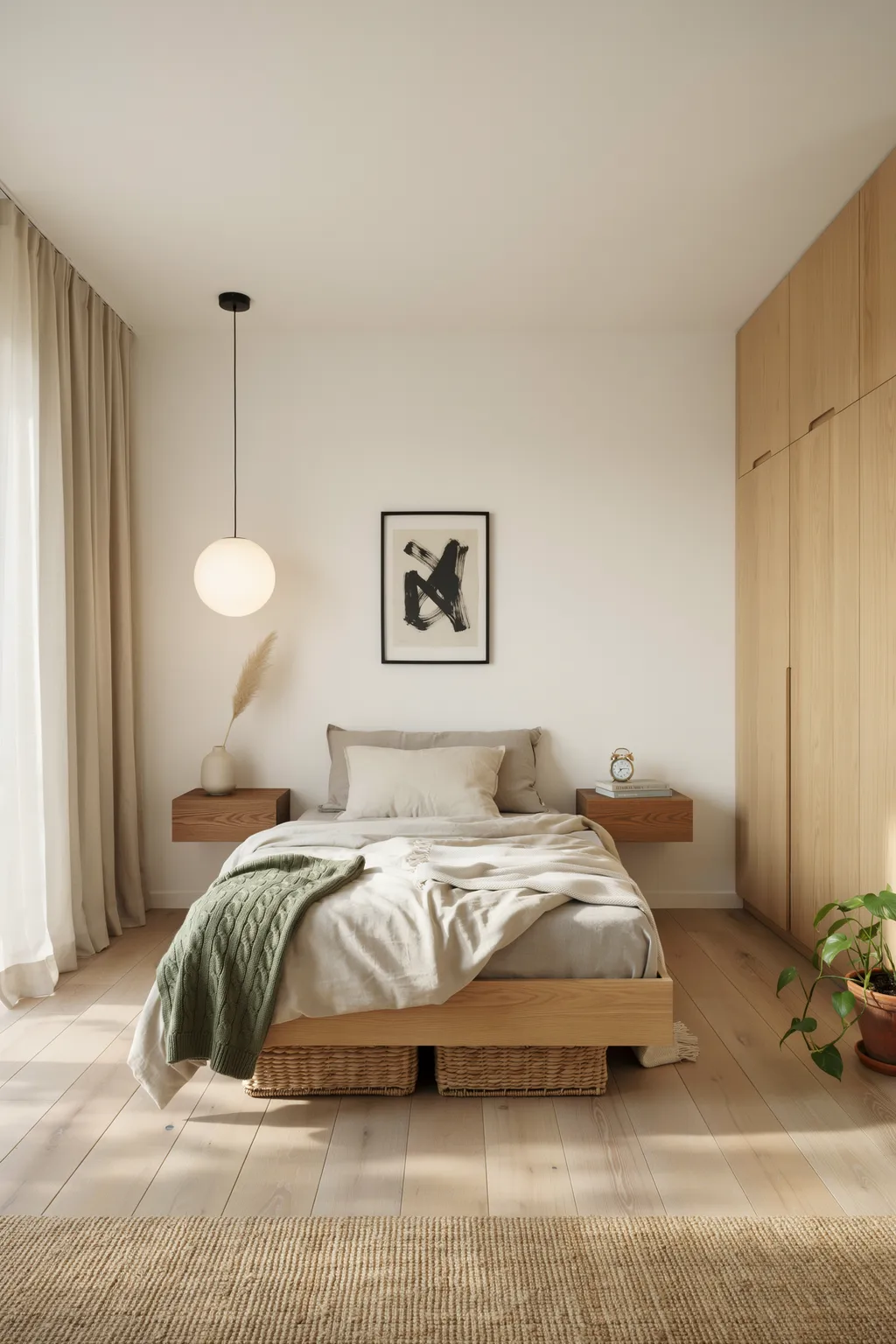
Japandi pairs Japanese restraint with Scandinavian warmth, and a bedroom is the easiest room to try it in. Keep the walls a soft off-white with subtle texture, hang a single ink-wash style art print above a low wood platform bed, and float the nightstands so the floor stays visually open. A paper lantern pendant and a jute rug are the only extras this look needs.
Negative space is doing the styling here, and every remaining object earns its spot, from the wicker under-bed baskets to the single piece of art. Reach for this if you get overwhelmed by decision fatigue, since a Japandi bedroom has a short, forgiving shopping list. It falls short if your storage needs outpace what a low platform bed and two floating nightstands can hold, so pair it with a real wardrobe or closet system rather than trying to make this minimal layout do double duty as your only storage.
11. Keep a Small Room Light With Scandinavian Basics
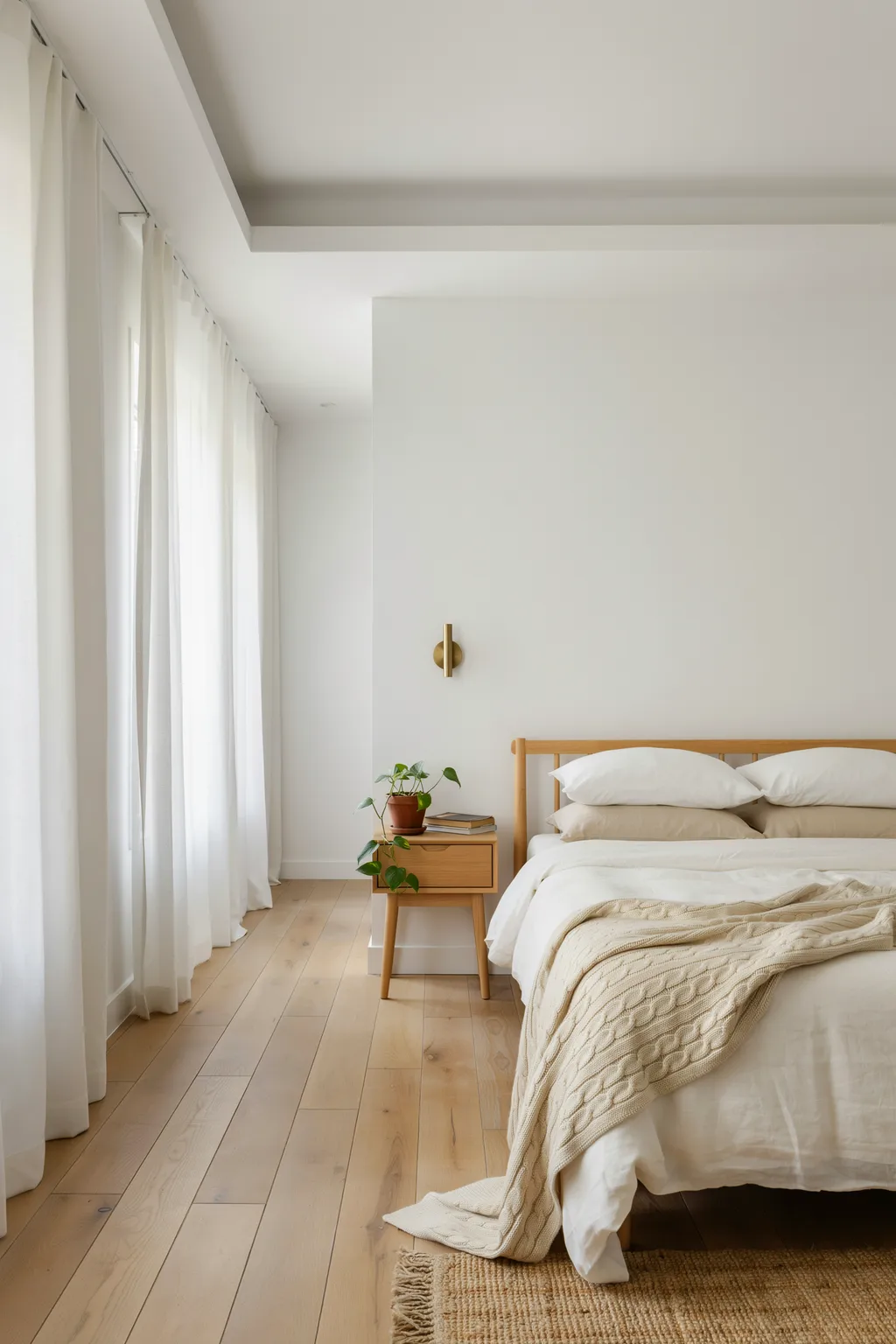
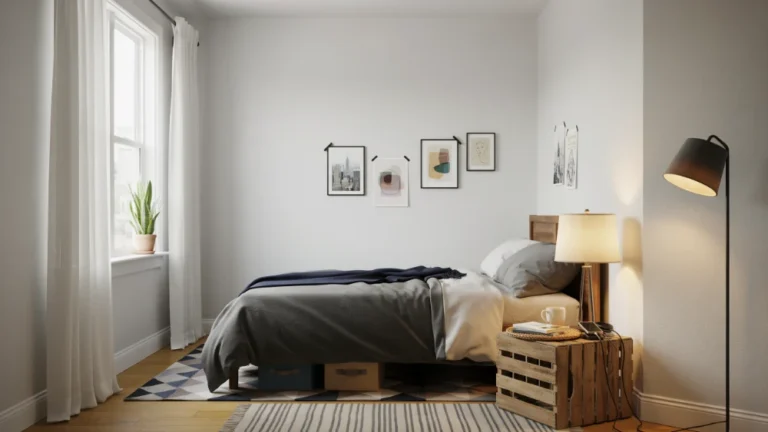
In a tight bedroom, bright and simple beats dark and dramatic. Paint the walls crisp white, choose a light wood bed frame, and dress it in white and cream linen with one chunky knit throw for texture. A single wood nightstand with a small potted plant is all the extra furniture the room needs.
Pale walls and light wood bounce every bit of available daylight around the room, which makes a small footprint feel bigger than it is. Keeping the furniture list short protects the walking space, too. This suits studio apartments, guest rooms, and any bedroom under about 100 square feet. It is one of the more renter-friendly bedroom makeover ideas here, since white walls are usually already there and you just add furniture and textiles. Warm the palette with wood tones and a knit throw, or it can read a little sterile.
12. Build Storage Into the Walls to Save Space
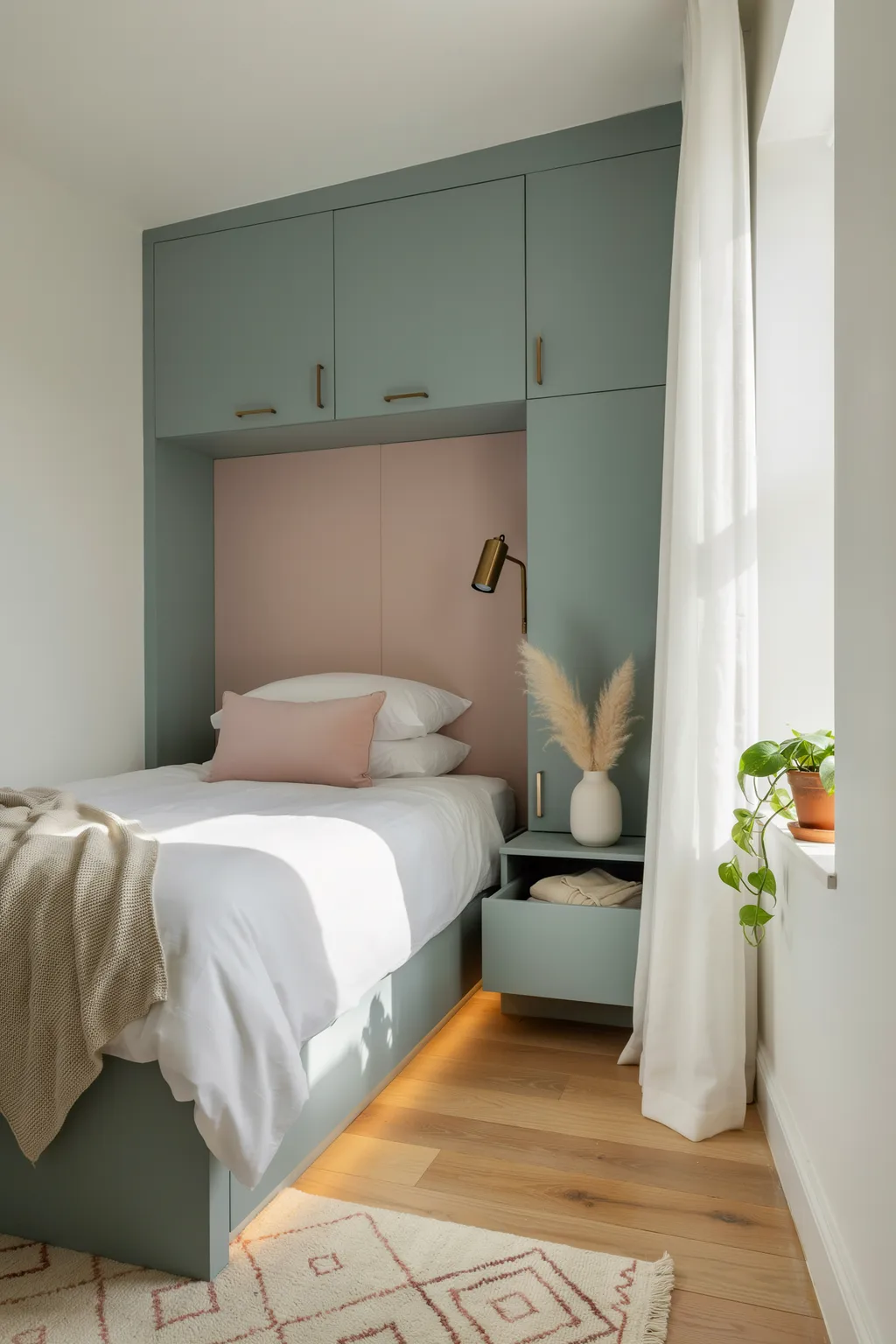
When floor space is tight, go vertical and built-in. Wrap a sage green cabinet wall around the bed nook, with upper cabinets over the headboard and a drawer unit doubling as a nightstand on one side. A soft blush accent panel behind the pillows and a brass swing-arm sconce keep the built-in wall from feeling like a warehouse.
Built-ins use every inch up to the ceiling, storage a freestanding dresser never reaches, while keeping the floor completely clear. Matching the cabinetry color to the wall color makes the whole system disappear visually instead of looming over the bed. It works best in small bedrooms, especially in apartments or converted spaces, where a separate closet and dresser will not both fit. It is a carpentry project, not a weekend one, so budget for a cabinet maker or a semi-custom storage system rather than expecting off-the-shelf furniture to pull this off.
13. Go All-In on a Theme for a Kid’s Room
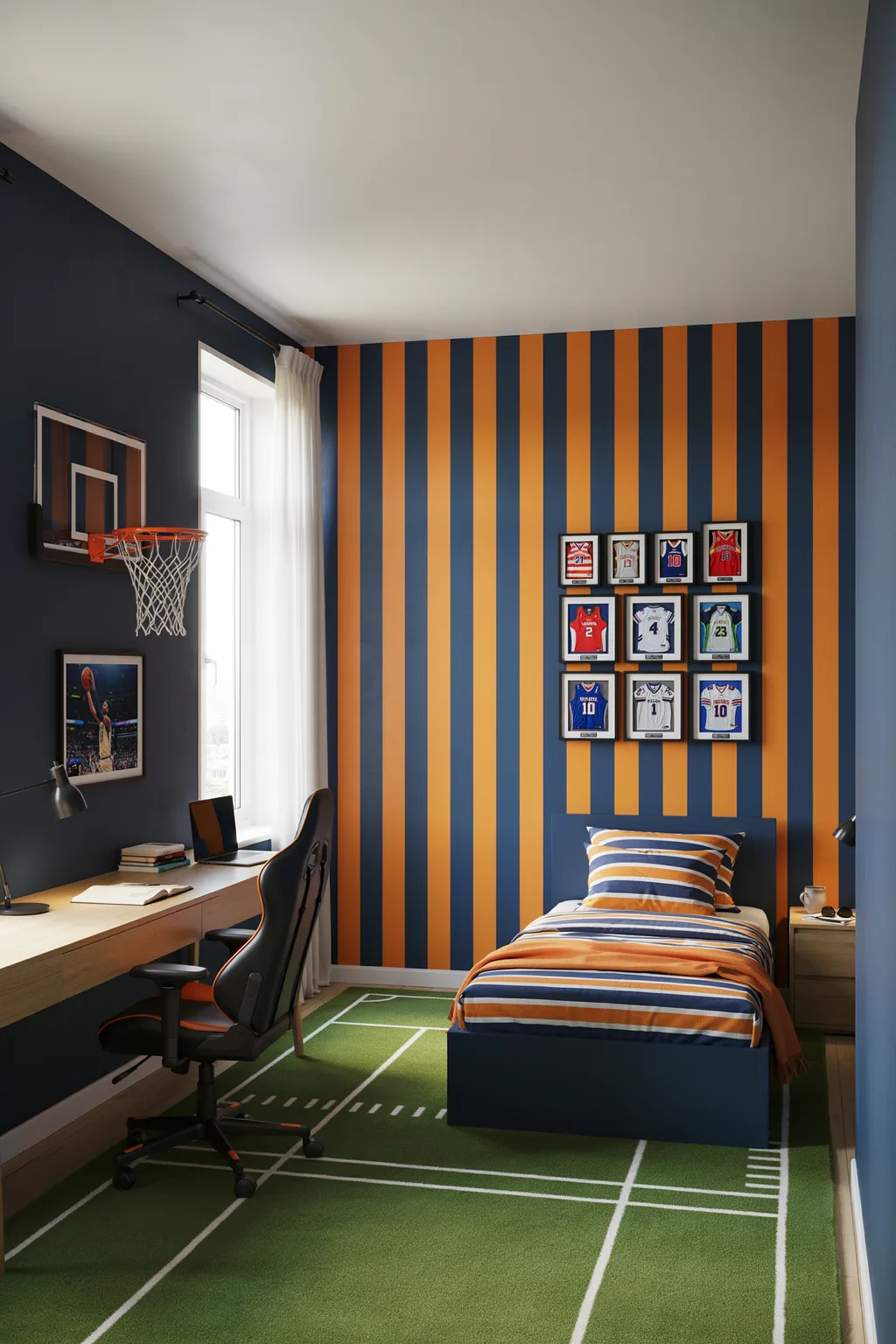
A theme bedroom works best when you commit fully instead of scattering a few matching items. Paint bold vertical stripes in two colors, hang framed jerseys and sports memorabilia in a tight grid, add a turf-style area rug, and pick bedding that repeats the same two or three colors as the walls. A small desk with a task lamp gives the theme a place to be functional, not just decorative.
A half-committed theme, one poster and nothing else, reads more random than a fully styled room does. Repeating the same color pairing across the walls, rug, and bedding is what makes a loud theme feel designed instead of thrown together. This suits kids’ and teens’ rooms where personality matters more than resale value. The honest caveat: a theme this specific has a shelf life, so build it around paint, rugs, and bedding you can swap in a few years rather than anything permanently installed.
14. Ground the Room With Modern Navy Walls
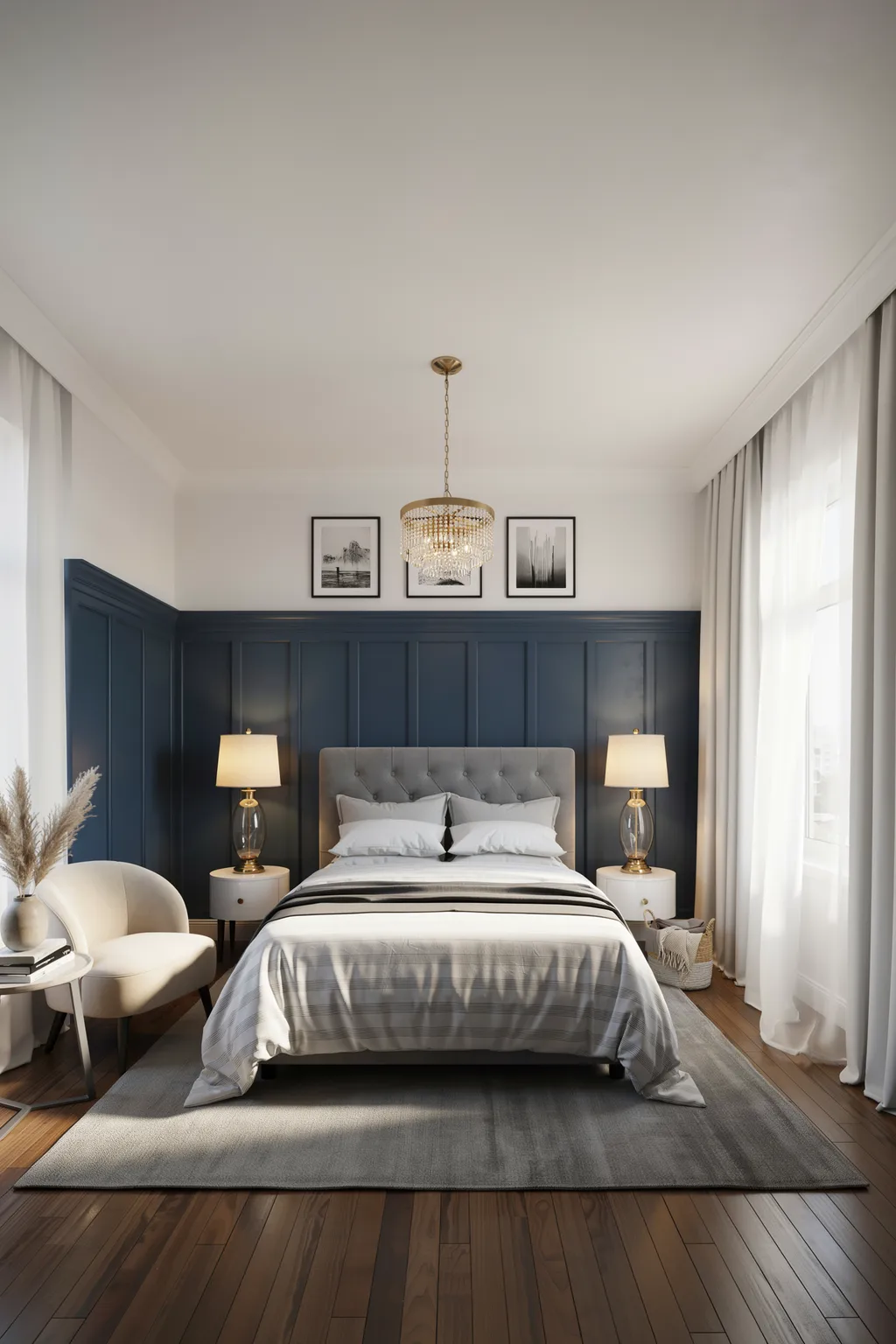
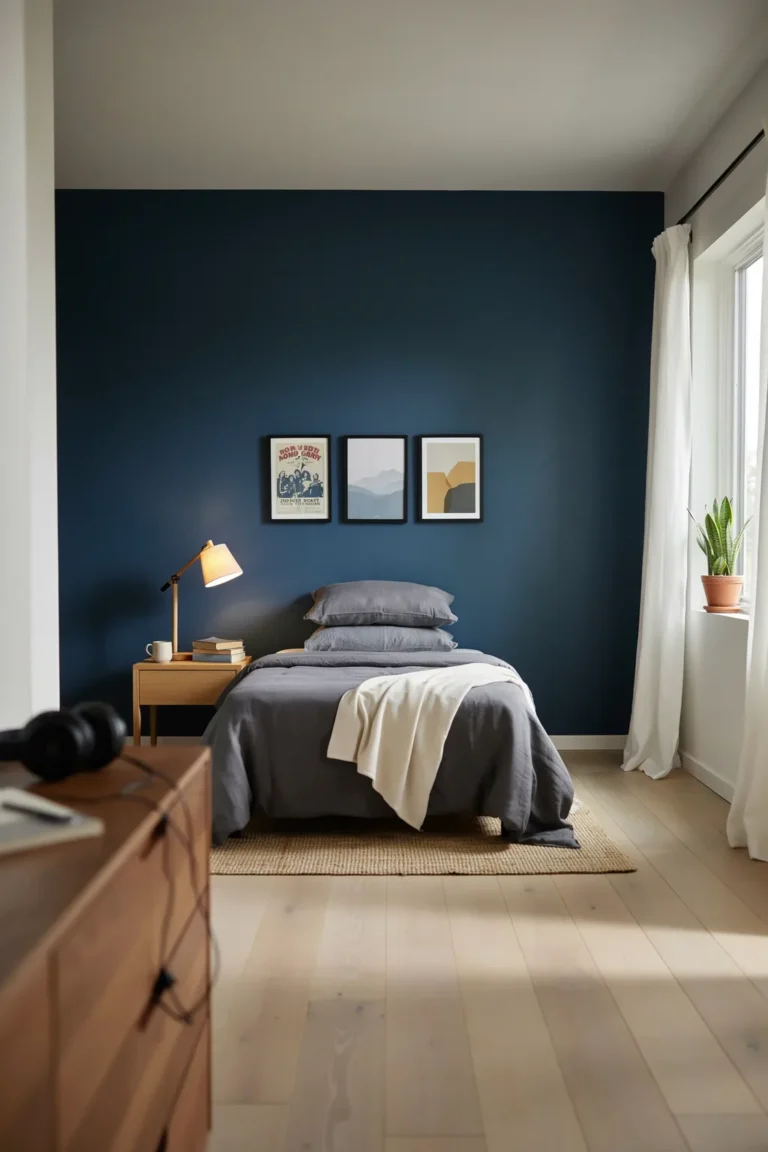
Navy gives you drama without the commitment of black or the softness of gray. Panel the walls with simple wainscot trim and paint it all one deep navy, then hang a gold beaded chandelier for a little sparkle against the dark color. A gray upholstered headboard and white-and-gray bedding keep the room from feeling too formal.
Navy reads sophisticated in a way few other colors manage, and the gold chandelier and lamps stop it from feeling cold. A deep, reliable navy like Hale Navy from Benjamin Moore reads rich in both daylight and lamp light, which matters since navy can shift darker than expected under weak bulbs. Reach for this in primary bedrooms and guest rooms where you want depth without going full black-out moody. Test a large paint sample on the wall for two days before committing, since navy is one of the trickier colors to judge from a small chip.
15. Carve Out a Calm Work-From-Home Nook
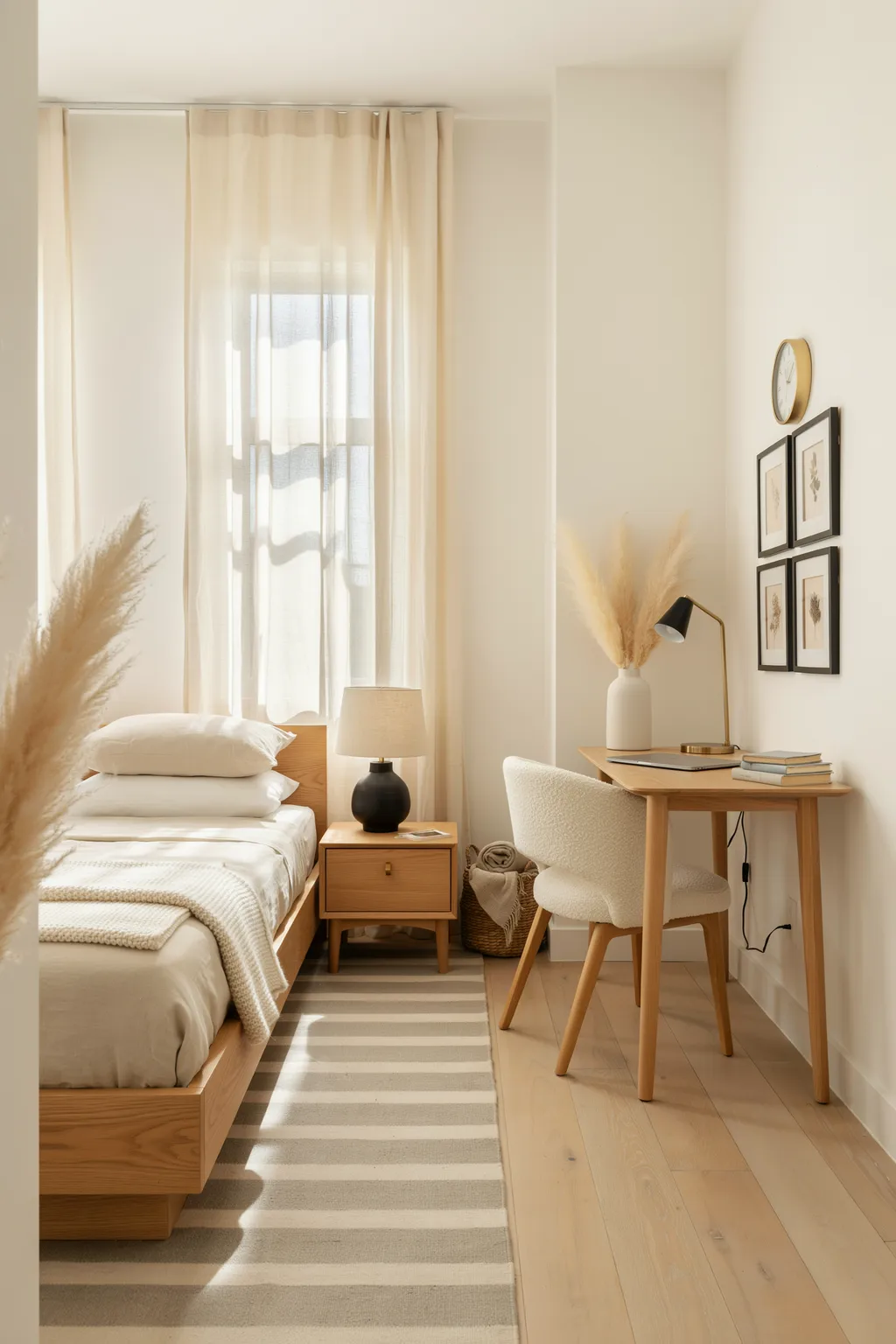
A bedroom desk works if you treat it like furniture, not a folding table shoved in a corner. Match a wood desk to your nightstands, add a brass gooseneck task lamp, a soft boucle chair, and a small gallery of botanical prints above it. A ceramic vase with pampas grass and a gold wall clock keep the corner from feeling purely functional.
Matching the desk’s wood tone to the rest of the bedroom furniture makes it read as part of the room instead of an office that wandered in. A dedicated task lamp matters more than most people think, since overhead light alone causes eye strain during long screen sessions. This suits anyone who works from home without a spare room to convert. It is the one idea on this list where function has to win first, so before you style it, confirm the chair supports good posture and the desk sits at a height that will not wreck your back over a full workday.
Common Mistakes to Avoid
Before you start shopping, dodge the errors that trip up most bedroom makeover ideas.
Mistake 1: Choosing paint before testing it in your actual light
A color that looks perfect on a chip can shift completely under your room’s specific light and orientation. Paint a large sample directly on the wall and watch it for two full days, morning and night, before you commit to a whole room. Repainting costs far more in time and money than a ten-dollar sample pot.
Mistake 2: Relying on one overhead light for the whole room
A single ceiling fixture creates flat, unflattering light and leaves the corners dim. Layer at least three light sources: an overhead fixture, a bedside lamp, and a wall sconce or floor lamp. This one change does more for mood than almost any furniture purchase.
Mistake 3: Buying a bed frame before measuring the walk space
A king bed crammed into a room with 18 inches of clearance on each side makes the whole space feel cramped, no matter how nice the frame is. Leave at least 24 to 30 inches of walking room around the bed, and measure your actual room before you fall for a floor sample.
Mistake 4: Skipping window treatments
Bare windows leave a bedroom feeling unfinished and expose you to every streetlight and sunrise. Add at least a simple curtain or blind, even a budget one, since it softens hard light and adds an instant layer of coziness that furniture alone cannot.
Mistake 5: Matching everything too exactly
A bedroom set bought as one matched unit, same wood, same finish, same hardware, can read like a furniture showroom instead of a home. Mix in one antique, one different wood tone, or one unexpected material so the room feels collected over time.
Mistake 6: Ignoring the closet and storage plan
A gorgeous headboard wall means little if the closet door will not open all the way or clothes pile on a chair. Plan storage, whether that is built-ins, an étagère, or under-bed baskets, at the same time as the decor, not as an afterthought once the pretty parts are done.
Quick Start Checklist
- [ ] Measure your room and mark out at least 24 inches of walk space around the bed.
- [ ] Pick your direction: layered neutral, moody dark, colorful maximalist, or light and airy.
- [ ] Test paint samples on the actual wall for two days before buying full cans.
- [ ] Choose your bed frame and bedding as the anchor, then build the rest around it.
- [ ] Plan three light sources: overhead, bedside, and one accent lamp or sconce.
- [ ] Add one textured layer, a knit throw, a velvet pillow, or a woven rug.
- [ ] Solve storage with built-ins, open shelving, or under-bed baskets before you style.
- [ ] Hang window treatments, even a simple curtain, to finish the room.
- [ ] Add one plant or a vase of dried stems for a living touch.
- [ ] Style last: art, small objects, and personal pieces once the base is set.
Frequently Asked Questions
What is the cheapest way to do a bedroom makeover?
New bedding, a lamp swap, and one gallon of paint on an accent wall are the most budget-friendly bedroom makeover ideas, often under 300 dollars total. Rearranging existing furniture and adding a curtain or a plant costs even less. Save the big-ticket items, a new bed frame or built-in storage, for a later phase once the cheaper layer proves the direction works.
How do I choose a color scheme for my bedroom?
Start with one anchor color, either from your existing bedding or a wall you already love, and build two or three supporting tones around it. Neutral bases with one accent color are the most forgiving for beginners, while a full maximalist mix works best if you repeat the same two or three hues across walls, rug, and bedding so the room stays cohesive rather than random.
What lighting works best in a bedroom?
Layer your lighting instead of relying on one source. A dimmable overhead fixture, a bedside lamp on each side, and one accent light, a sconce or a floor lamp, cover reading, relaxing, and getting dressed without harsh shadows. Warm bulbs around 2700 Kelvin flatter skin tones and feel cozier than cool white light, which reads more like an office.
How small is too small for a real makeover?
Almost no bedroom is too small for a meaningful refresh. Rooms under 100 square feet do best with a lighter palette, a low-profile bed, and built-in or floating storage instead of bulky freestanding furniture. Several of these bedroom makeover ideas, the Scandinavian and Japandi looks especially, were designed with small footprints in mind.
Should I paint the ceiling too?
It depends on the ceiling height and the mood you want. A painted ceiling in a room with 9 feet or more of height can add real drama and coziness, while a low ceiling under 8 feet usually looks better left white or a very pale tone, since a dark ceiling in a short room can feel like it is pressing down.
How often should I redo my bedroom?
There is no fixed rule, but refreshing textiles, bedding, pillows, a throw, every couple of years keeps the room feeling current for very little money. Bigger changes like paint or furniture tend to last five to ten years before they start to feel dated, so budget your bedroom makeover ideas in phases rather than trying to do everything at once.
Conclusion
A real bedroom makeover comes down to a handful of decisions done well, not a long shopping list. Pick a direction that matches how you actually want to feel in the room, whether that is calm and neutral, moody and dramatic, or bright and colorful. Anchor the space with a bed and bedding you love, then layer in lighting and texture before you touch the smaller decor. Solve storage early so the pretty parts have somewhere to live, and always test paint on the real wall before you commit a whole room to it.
You do not need to tackle all fifteen of these bedroom makeover ideas at once. Pick the one that fixes your biggest complaint right now, whether that is bad lighting, a cluttered dresser, or walls that never got painted, and start there this weekend. Move the furniture, hang one new light, drape a throw over the end of the bed, and give it a few nights before you decide what comes next. The room you spend a third of your life in deserves better than an afterthought.