15 Tropical Bedroom Ideas for a Calm, Green Retreat
There is a particular feeling you get in a good hotel room on the first morning of a trip. The light is soft, the sheets are cool, something green is moving a little near the window, and none of it is asking anything of you.
That feeling is what most people are chasing when they start collecting tropical bedroom ideas. What tends to arrive instead is a plastic monstera in the corner, a turquoise cushion, and a framed flamingo. Close, but the wrong kind of close.
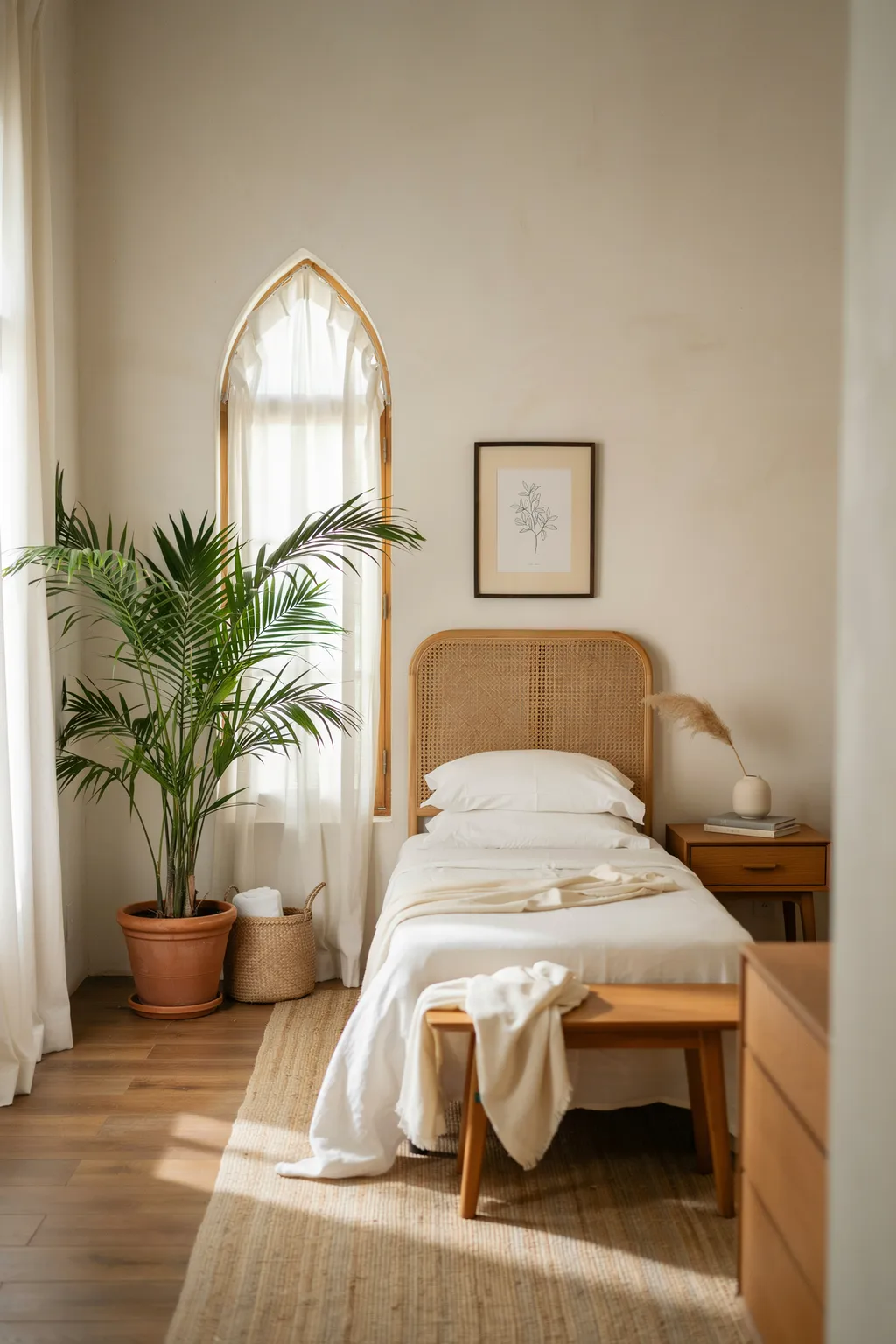
The gap is almost never money. Resort rooms are built out of materials and light, not out of theme. Real wood, real weave, one green, warm bulbs, and a great deal of restraint.
So every idea below names the thing that actually produces the effect: which plant survives a dim bedroom, which weave, which bulb, which rug size, and roughly what it costs. Several take a single evening. Two of them work in a rental without drilling anything.
1. Build the Palette From Sand, White, and One Green
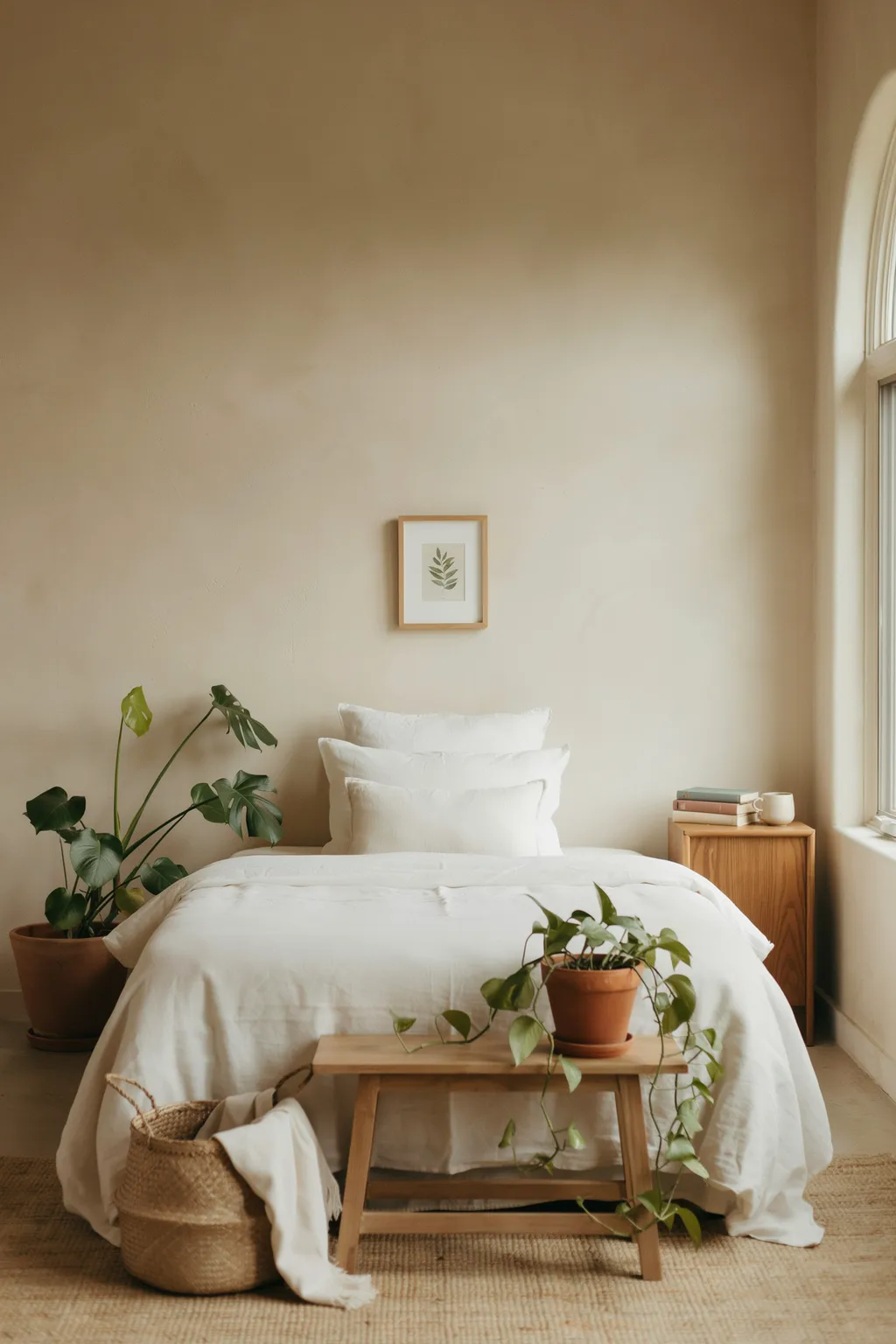
Resort rooms almost never use more than three colors, and one of them barely counts as a color.
Most tropical bedroom ideas start with objects to buy. Start with the palette instead and the shopping gets much easier. The usual mistake is treating tropical as a full spectrum, with turquoise, coral, and lime all invited to the same room. That is how you end up somewhere between a spa and a gift shop. Choose a single green, the deep flat green of a rubber plant leaf, and let it show up three or four times:
- One large plant with real presence
- One cushion, or a throw folded at the foot of the bed
- A framed botanical print, or the spine of a stack of books
Repetition is what makes a color look chosen. One green in one spot just looks like something you happened to own.
2. Pick Plants That Actually Survive a Bedroom’s Light
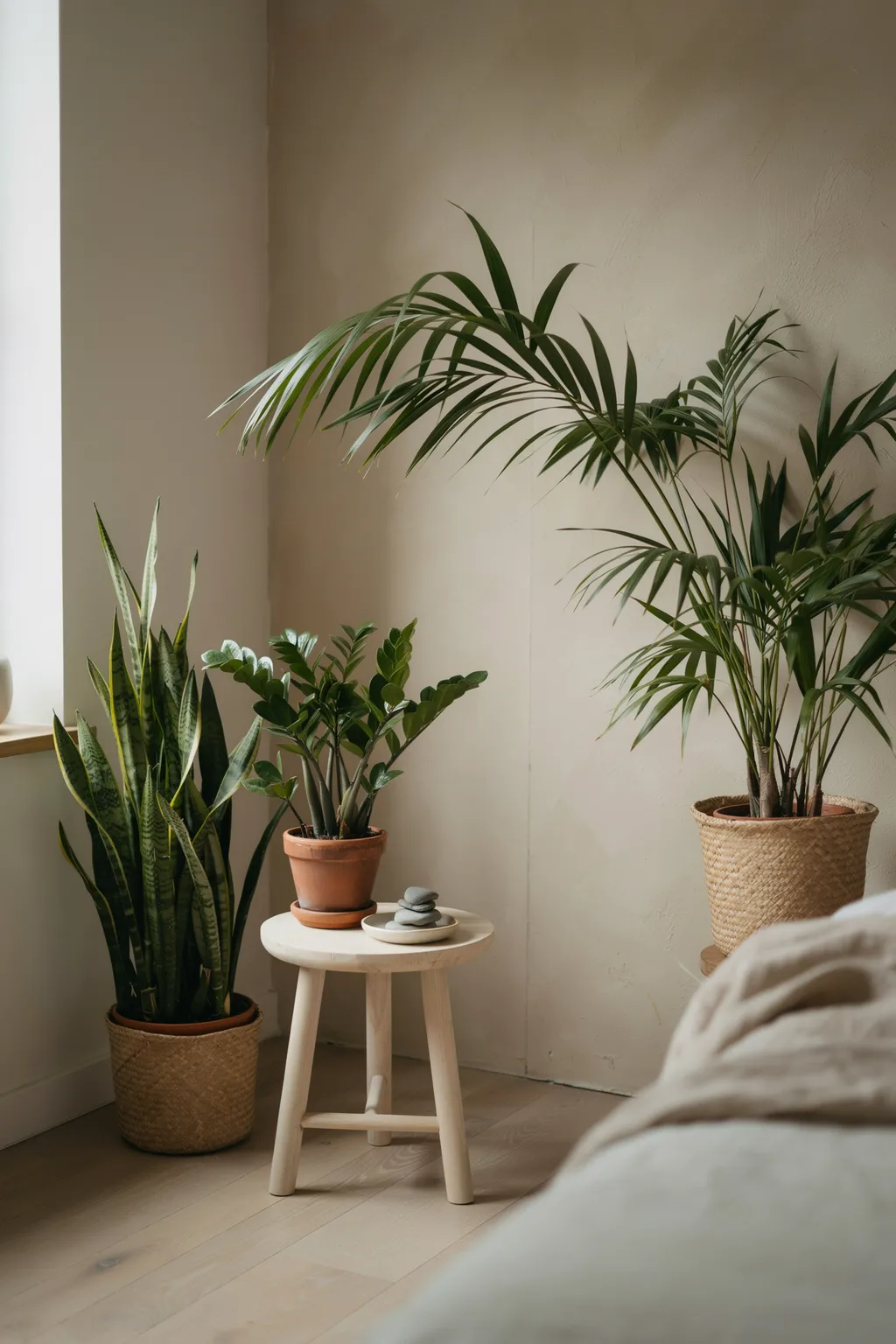
The plants in most resort-style photos were brought in for the photo shoot and taken out afterward.
Bedrooms tend to be the darkest room in the house. They face a side wall, the curtains stay half drawn, and the light is indirect for most of the day. A fiddle leaf fig in that room will drop its lower leaves within a couple of months and look sadder than no plant at all. This is the single biggest reason tropical bedroom ideas fall apart around month two.
Choose species that evolved under a forest canopy and forgive a missed watering. The RHS houseplant guides are worth reading before you buy, since they list real light needs rather than whatever the label on the pot claims.
One large plant in a floor basket does more than five small ones on shelves. It is the big one that reads as tropical from the doorway.
| Will live in a dim bedroom | Will quietly die there |
|---|---|
| Snake plant. Near neglect-proof, water every 3 to 4 weeks. | Fiddle leaf fig. Wants bright indirect light and hates being moved. |
| ZZ plant. Glossy, upright, happy in a corner with no window. | Bird of paradise. Needs several hours of direct sun to hold its shape. |
| Kentia palm. The one that genuinely looks resort-like and tolerates shade. | Majesty palm. Wants humidity and light most bedrooms cannot give. |
| Pothos or philodendron trailing from a shelf. Nearly unkillable. | Calathea. Beautiful, but it will brown at the edges and sulk. |
3. Drape the Canopy From the Ceiling, Not the Bed Frame
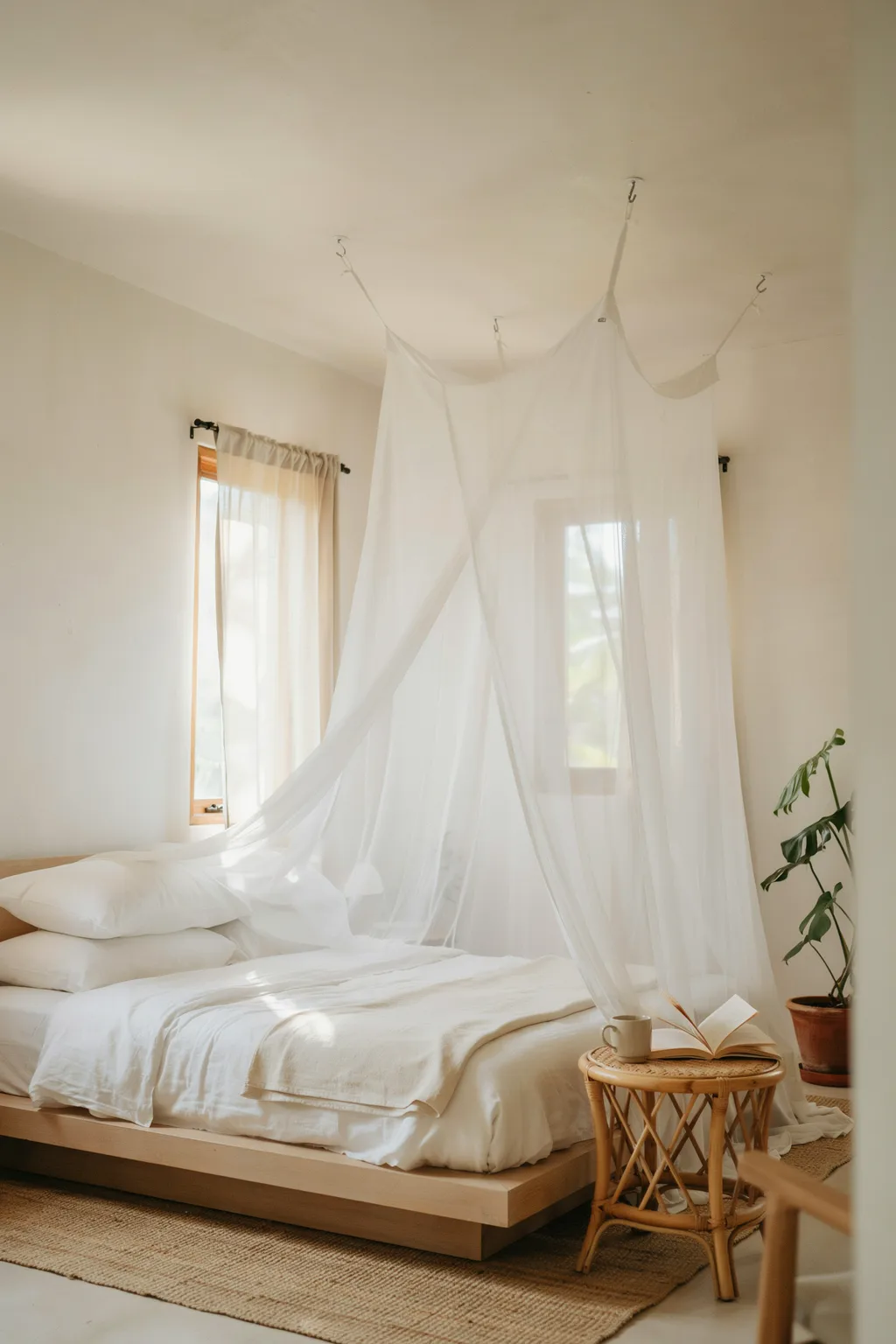
Canopy frames are expensive, heavy, and they lock you into one bed forever.
Beds like this headline nearly every collection of tropical bedroom ideas, and they are usually the priciest thing in the photo. Four ceiling hooks and a length of fabric do the same job for a fraction of the money. Screw the hooks into joists in a rectangle slightly wider than the mattress, then let sheer cotton or mosquito netting fall from each one. The fabric should touch the floor or stop a finger’s width above it.
Keep it sheer and white. Heavy velvet or a dark drape turns the bed into a cave and kills the airy quality, which is the entire point.
One thing worth knowing before you start: fabric hanging above a bed collects dust. Plan to take it down two or three times a year, and choose something machine washable for that reason alone.
4. Put the Palm Print on One Wall Only, and Get the Scale Right
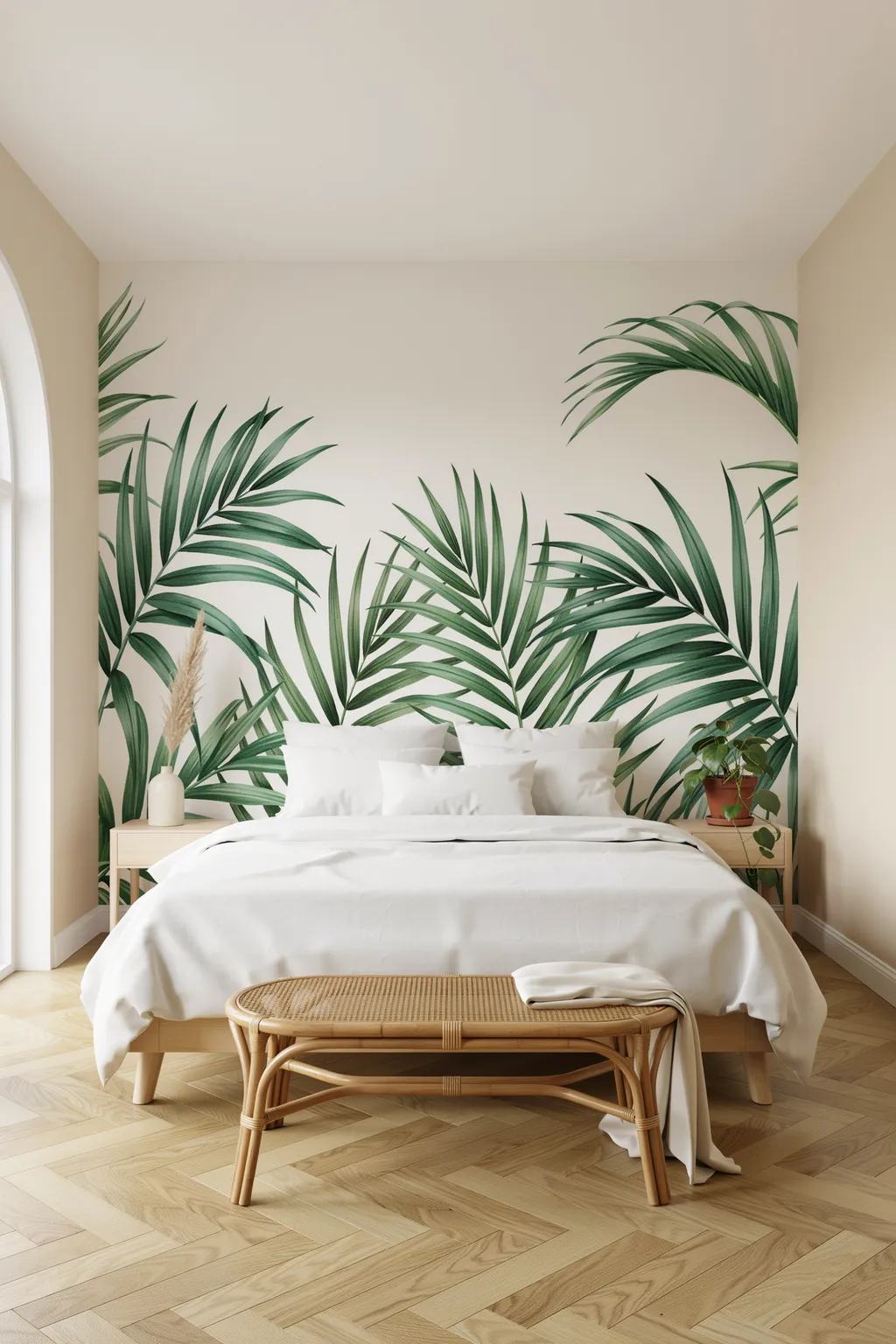
A palm print rarely fails because of the pattern. It fails because of the size.
Small, busy leaves repeated across a whole wall read as wrapping paper from across the room. Large leaves, the kind where a single frond is nearly as long as your forearm, read as a mural and hold up at bedroom distance.
Put it behind the bed and nowhere else. The headboard wall is the one you never look at from inside the bed, so the pattern works on everyone entering and never wears you out.
Then let the other three walls go quiet in the sand tone from idea one. A palm wall with three plain walls looks deliberate. A palm wall competing with a patterned rug and patterned curtains looks like a showroom nobody edited.
💡 Quick Tip
Order a sample and tape it to the wall, then walk to the doorway and look back. Pattern is judged from across the room, not from twelve inches away with the roll in your hand. If the leaves blur into texture at that distance, the scale is too small.
5. Swap One Piece to Cane or Rattan Instead of Buying a Set
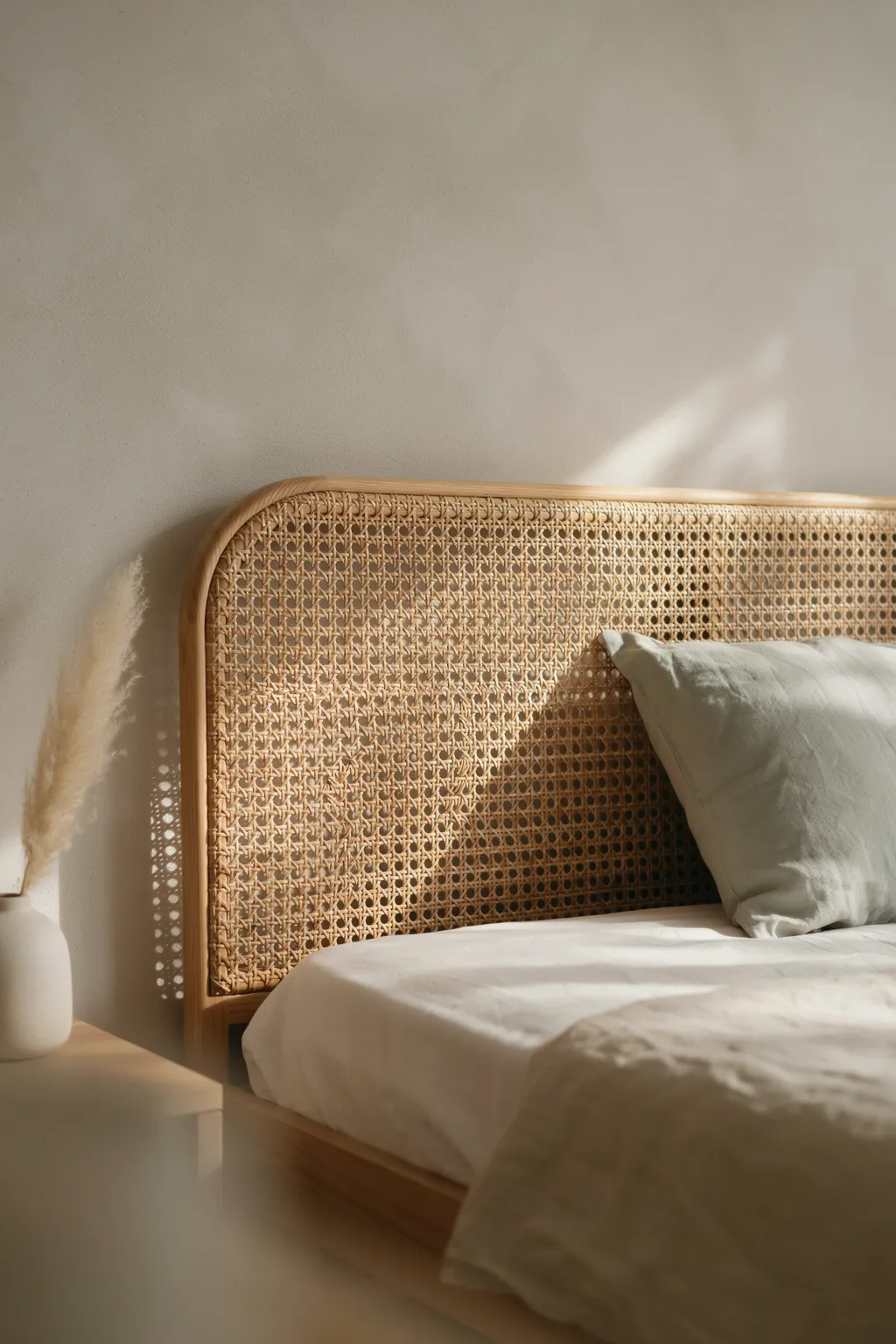
Matching rattan bedroom sets are the fastest route to a room that looks like a rental unit in Florida.
The look you actually want comes from contrast: one woven piece against otherwise smooth surfaces. A cane headboard beside painted walls. A rattan bench at the foot of an upholstered bed. One pendant, one chair, one nightstand door front. Of all the tropical bedroom ideas here, this is the one people most often overdo.
Pick the piece by how much of it you will see:
- Headboard, if you want the weave to be the room’s main texture
- Bench or chair, if the bed is already doing enough
- Nightstand or a small cabinet, if you want it subtle and cheap
Buy real cane webbing if it is within reach. Printed rattan-look laminate photographs fine and looks wrong the moment you stand beside it.
Bed, two nightstands, and a dresser all in the same weave. Reads as a furniture-showroom package, dates quickly, and costs the most in one hit.
A single cane headboard against smooth walls. The weave stays special, the room looks collected over time, and you can change your mind for the price of one item.
6. Dress the Bed in Washed Linen in Sand and White
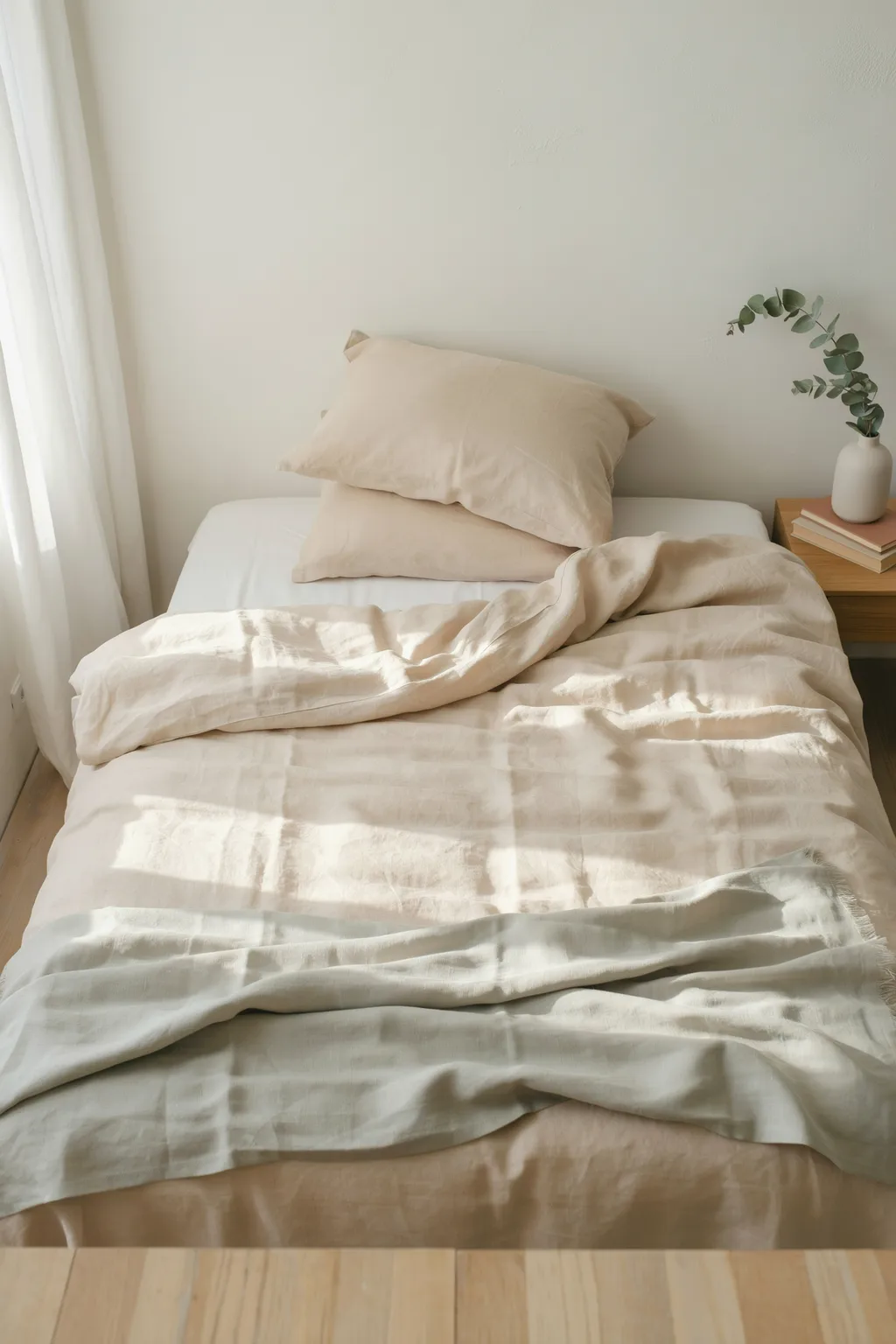
Washed linen is the rare fabric that looks better slightly wrecked.
That matters here, because the resort look depends on bedding that reads relaxed rather than pressed. Cotton percale needs ironing to look its best and looks untidy when it does not get it. Linen sidesteps the problem entirely. It creases the second you touch it, and the creases are the point.
Two honest caveats before you buy. Good linen costs noticeably more per set than cotton, though it tends to outlast it by years. And it arrives stiff. It takes roughly five or six washes before it turns genuinely soft, so do not judge it in the first week.
White underneath. White fitted and flat sheets. They bleach, they wash hot, and they keep the bed feeling hotel-clean no matter what goes on top.
Sand on top. A washed linen duvet cover in oatmeal, flax, or warm stone. This is the layer doing the color work, so it is worth the money.
One green, folded. A single lightweight throw across the bottom third. Not draped artfully. Folded in half and laid down, the way a hotel does it.
7. Ground the Room With Jute or Seagrass, Sized One Up
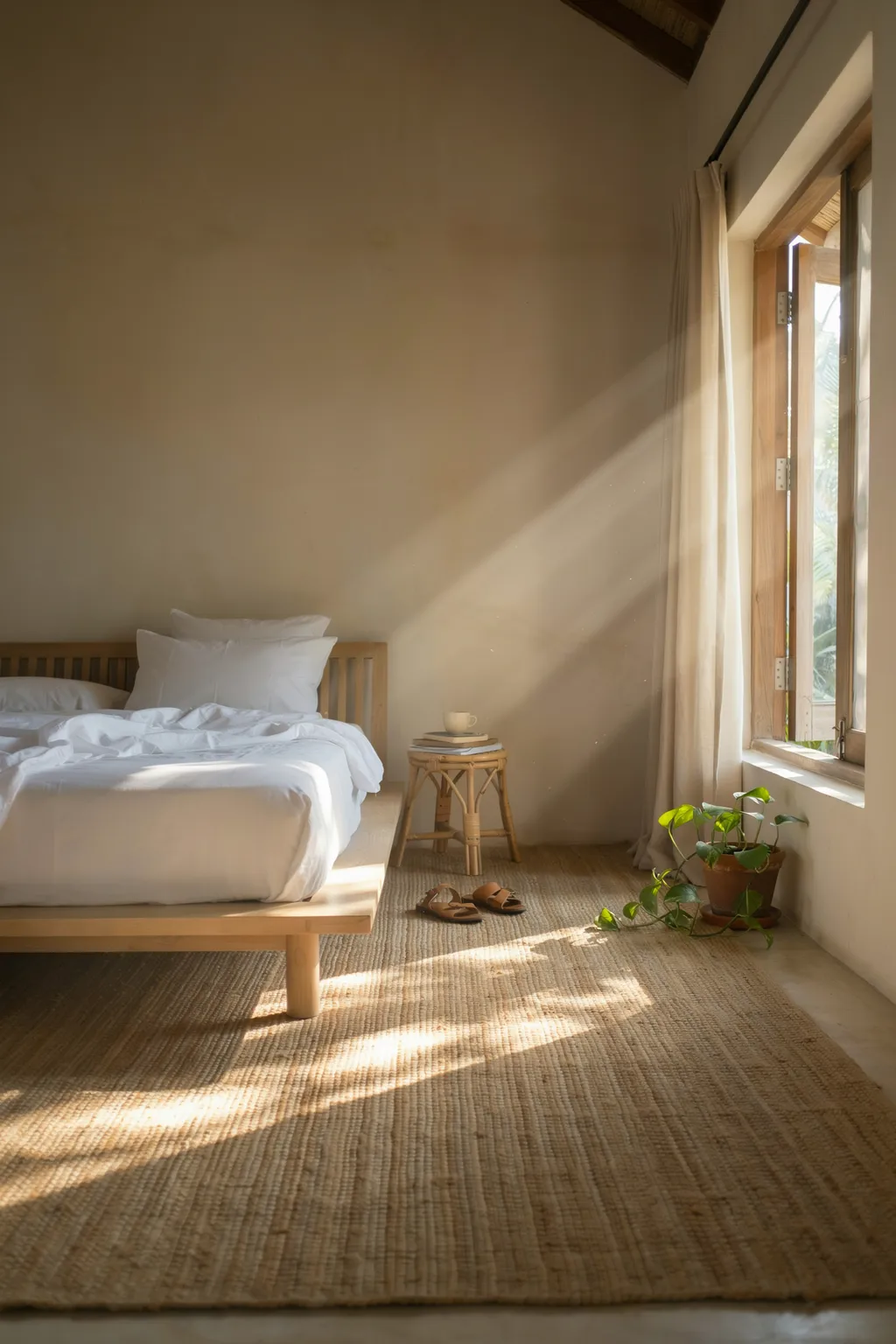
Nearly every bedroom rug in the world is too small.
Floors get less attention than they deserve in most tropical bedroom ideas, and it shows. A rug that stops short of the bed makes the room look smaller, not bigger. It draws a tight box in the middle of the floor and hands your eye a hard edge to measure the space against. Going one size up costs less than most people fear, since jute and seagrass are among the cheapest natural floor coverings by the square foot.
Between the two: seagrass is smoother underfoot and slightly glossier, jute looks softer and sheds noticeably for the first month or so. Both flatten and mellow over a season.
If your floors run cold, layer a small washable rug on top, on whichever side you actually get out of bed.
Run the rug 18 to 24 inches past the sides and the foot of the bed, so your feet land on it.
Queen bed, think 8 by 10. King, think 9 by 12. Measure the floor, not the mattress.
Use a rug pad. Natural weaves slide on hard floors and wear through at the edges without one.
A 5 by 7 floating in the middle of the room. It shrinks the floor and looks like a bath mat.
Jute in a room where anyone walks barefoot with sensitive feet. It is genuinely scratchy.
Natural fiber in a damp basement bedroom. It holds moisture and can smell within a season.
8. Warm the Light to 2700K and Use Three Sources
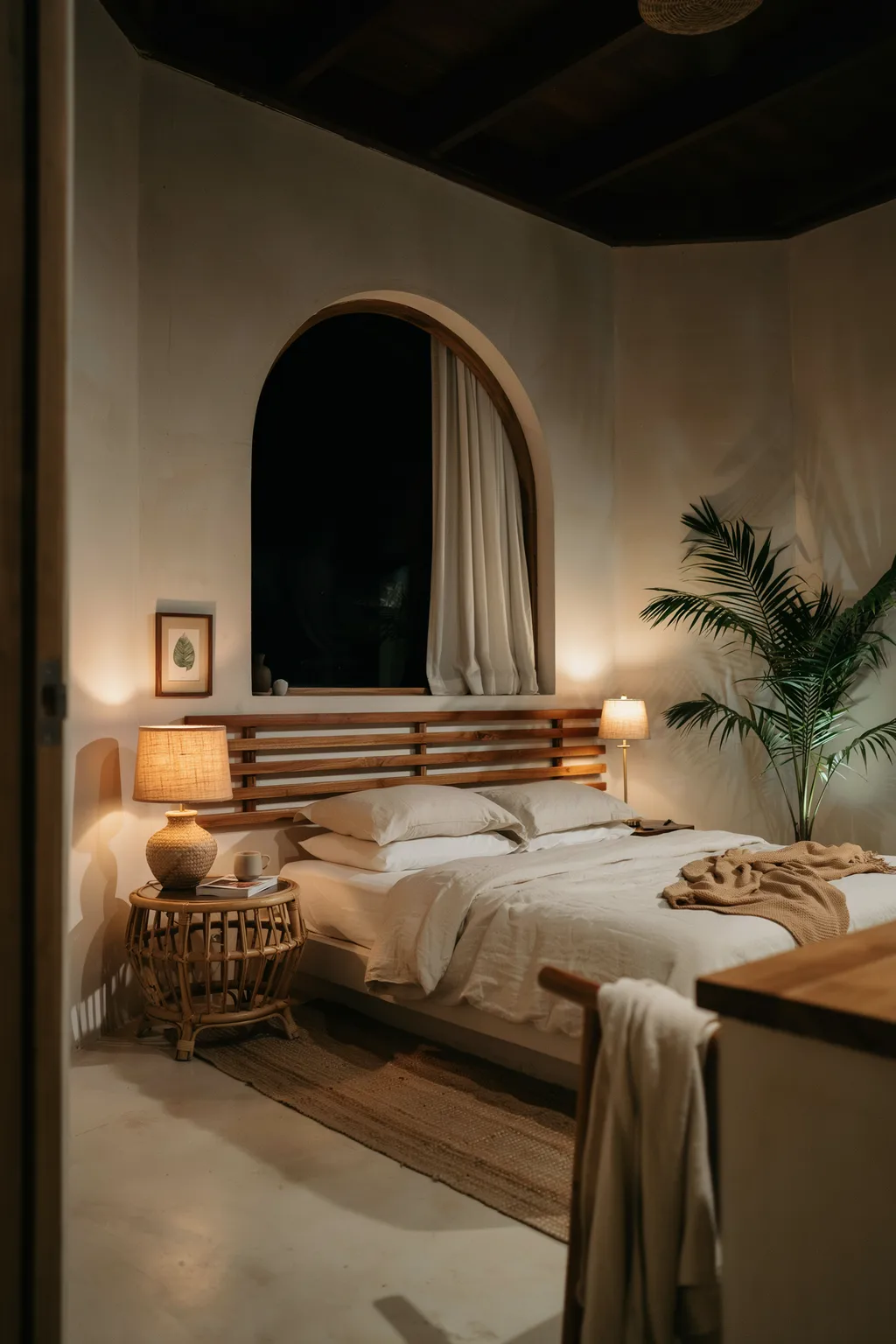
Two numbers do most of the work in this room: 2700 and three.
2700K is the bulb color. It is the warm, faintly golden light hotels use, and it is what makes wood and linen look expensive after dark. Anything at 4000K or above washes the palette gray and makes a healthy plant look slightly ill. Lighting is the cheapest of all the tropical bedroom ideas on this list and the one people skip most often.
Three is how many light sources the room needs. A single ceiling fixture flattens everything under it, no matter how good the furniture is. Bedside, floor level, and one low or indirect source gives you the layered glow the photos actually have.
Put a dimmer on at least one of them. The room should work at nine at night without being lit like a kitchen.
Check before you buy bulbs
9. Commit to One Wood Tone: Teak, Acacia, or Mango
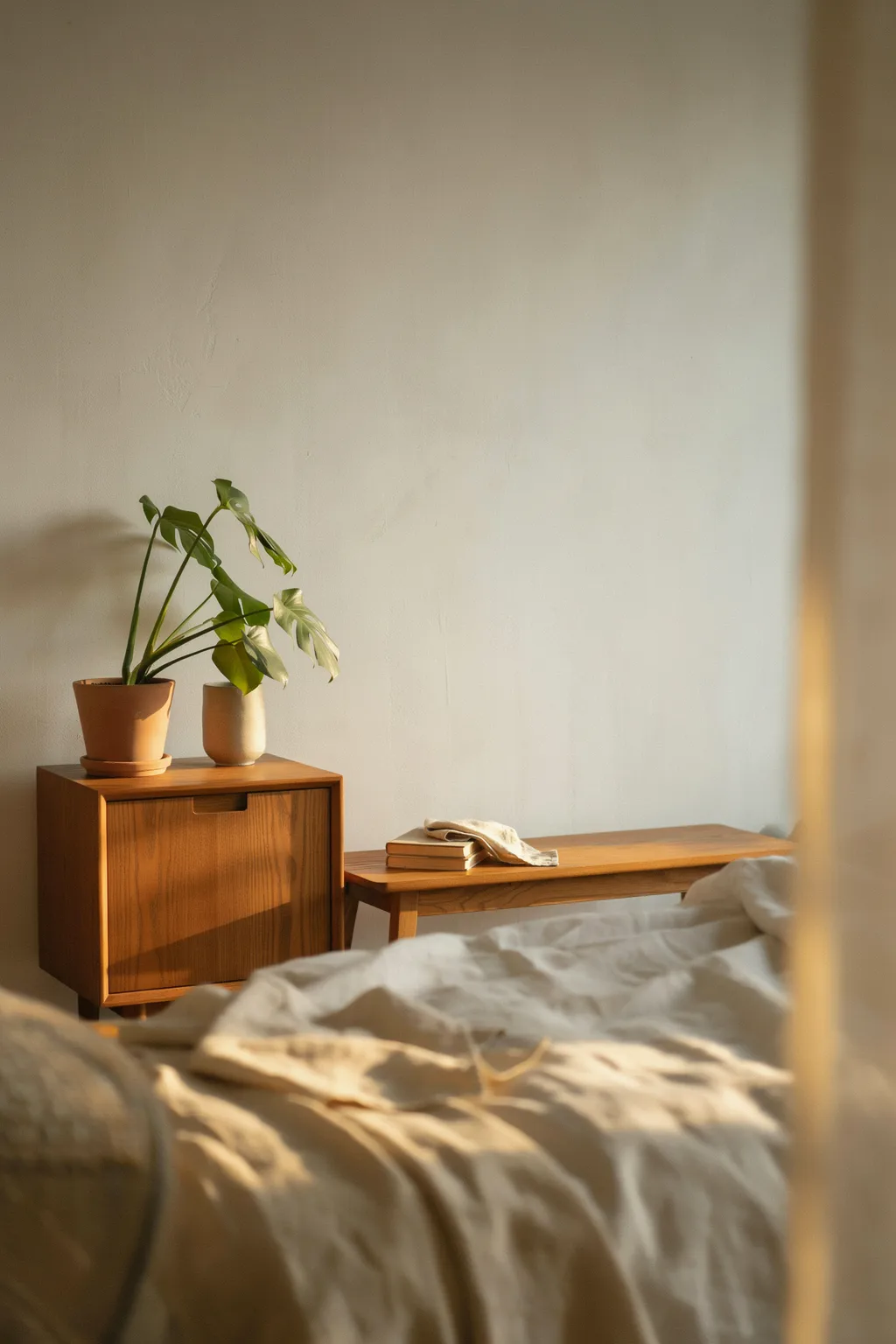
Mixing wood tones works beautifully in a large living room. In a bedroom it usually just reads as furniture you happened to accumulate.
Tropical style leans on warm mid-brown woods. Teak, acacia, and mango all sit in that family, and walnut works at the darker end. Pick one and stay inside it, so the nightstands, the bench, and the frame around your cane headboard look like they came off the same tree even when they did not.
The tone to avoid is orange. Budget furniture defaults to a yellow-orange stain that turns almost fluorescent next to a green plant.
Most tropical bedroom ideas never mention this, which is why a room full of individually nice pieces can still look unresolved. If you already own mixed woods, tie them together with one repeated material instead: the same black metal leg, or the same basket weave in three places.
One wood family, repeated three times, will do more for this room than any single piece of furniture you could buy. Matching tone is what makes a collected room look intentional instead of accidental.
10. Hang a Woven Pendant or Rattan Shade Overhead
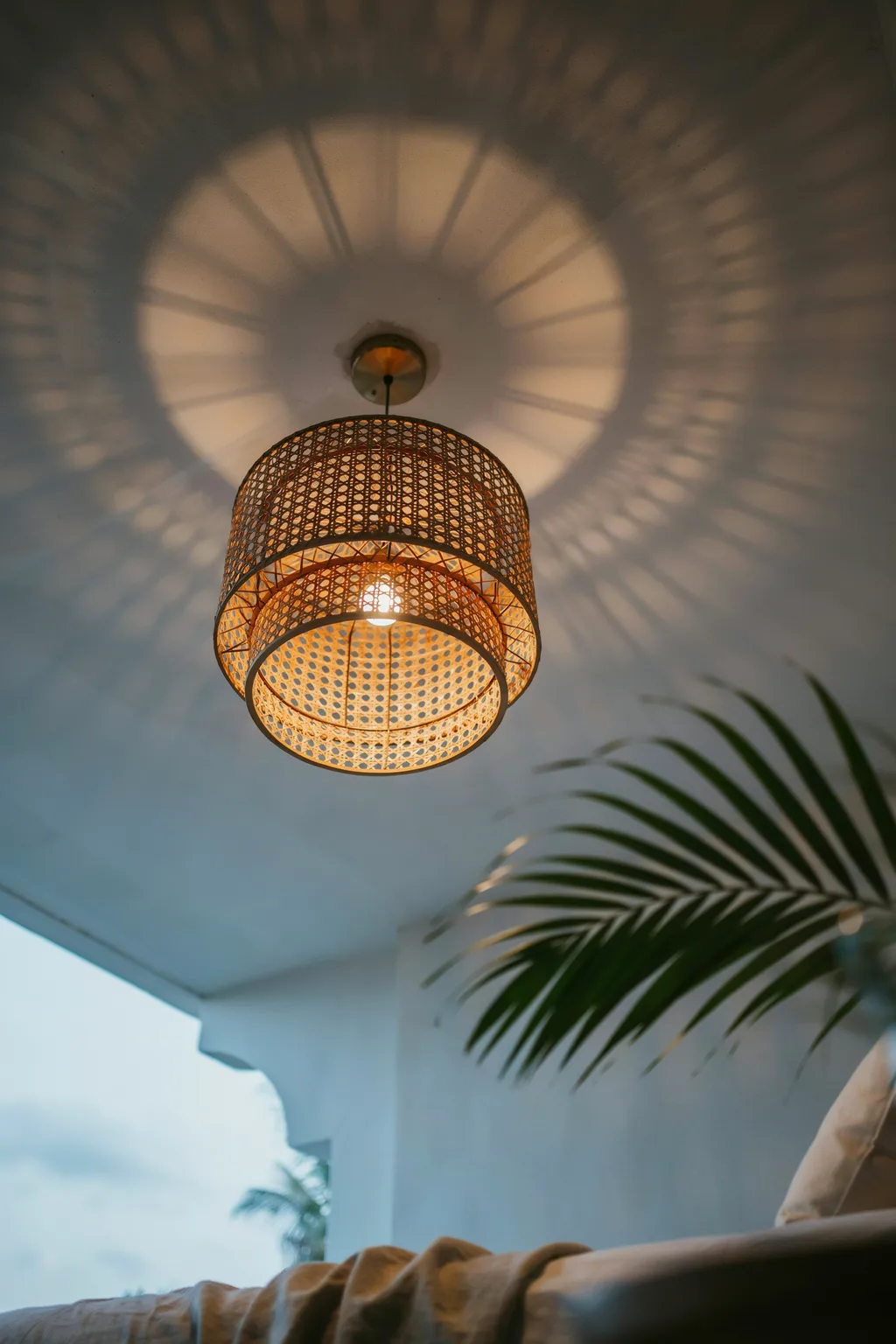
Overhead is the one surface nobody thinks to weave.
Most bedrooms have a bare bulb, a flush dome, or a fan, and nothing else happening up there. A woven shade fixes it in an afternoon and throws patterned shadow across the ceiling after dark, which is the detail that genuinely reads as a hotel room rather than a bedroom with plants in it.
Size it larger than feels right in the shop. A shade that looks generous at eye level shrinks the moment it is eight feet up.
- ▸Rattan drum shade. The safest choice. Wide, simple, and it spreads light evenly instead of spotlighting the bed.
- ▸Seagrass basket pendant. Tighter weave, so it casts less shadow. Good if the room is already dim.
- ▸Open bamboo lantern. The most dramatic ceiling shadow of the three, and the one to pick if the ceiling is high.
- ▸Woven plug-in pendant. Hooks into the ceiling, cord runs to an outlet. No electrician, and it comes down when you move.
- ▸A swapped shade only. Cheapest route of all. Keep the fixture, change the shade to woven, done in ten minutes.
11. Trade Heavy Curtains for Louvered Shutters or Bamboo Shades
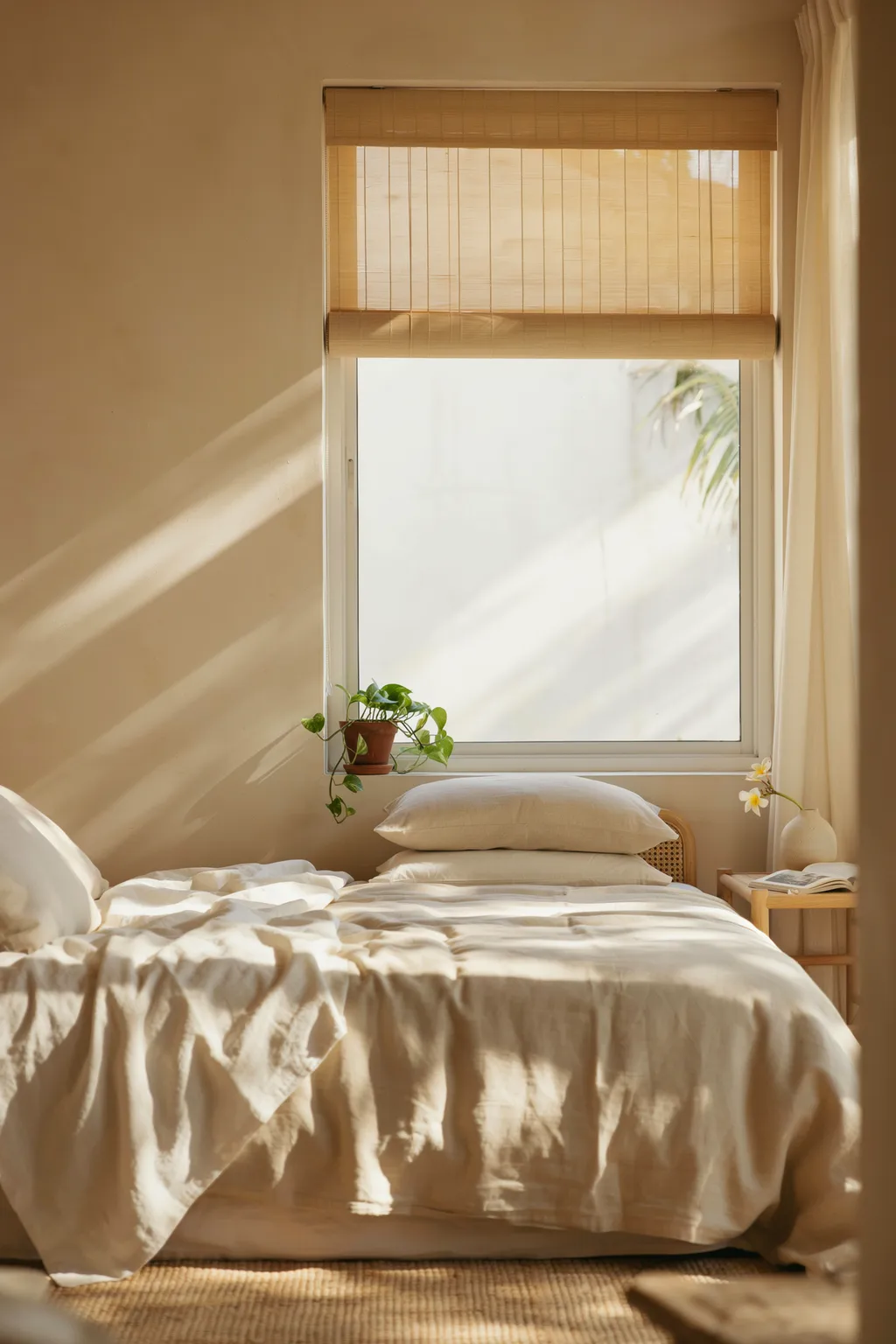
Blackout curtains and this style are quietly working against each other.
The resort feeling depends on filtered light, the sort that comes through slats and sheers and shifts across the floor during the day. A lined blackout panel gives you a flat rectangle and a hard edge instead. Excellent for sleeping, poor for atmosphere. Windows are where a lot of otherwise good tropical bedroom ideas quietly stall.
Most people end up layering, and that is the honest answer: something that filters by day, something that blocks at night. If your window faces a streetlight, you will need both regardless of style.
Whatever you pick, mount it high. Even a cheap bamboo shade looks considered when it is hung near the ceiling rather than tight against the window frame.
12. Stand a Reed or Bamboo Screen Behind the Bed If You Rent
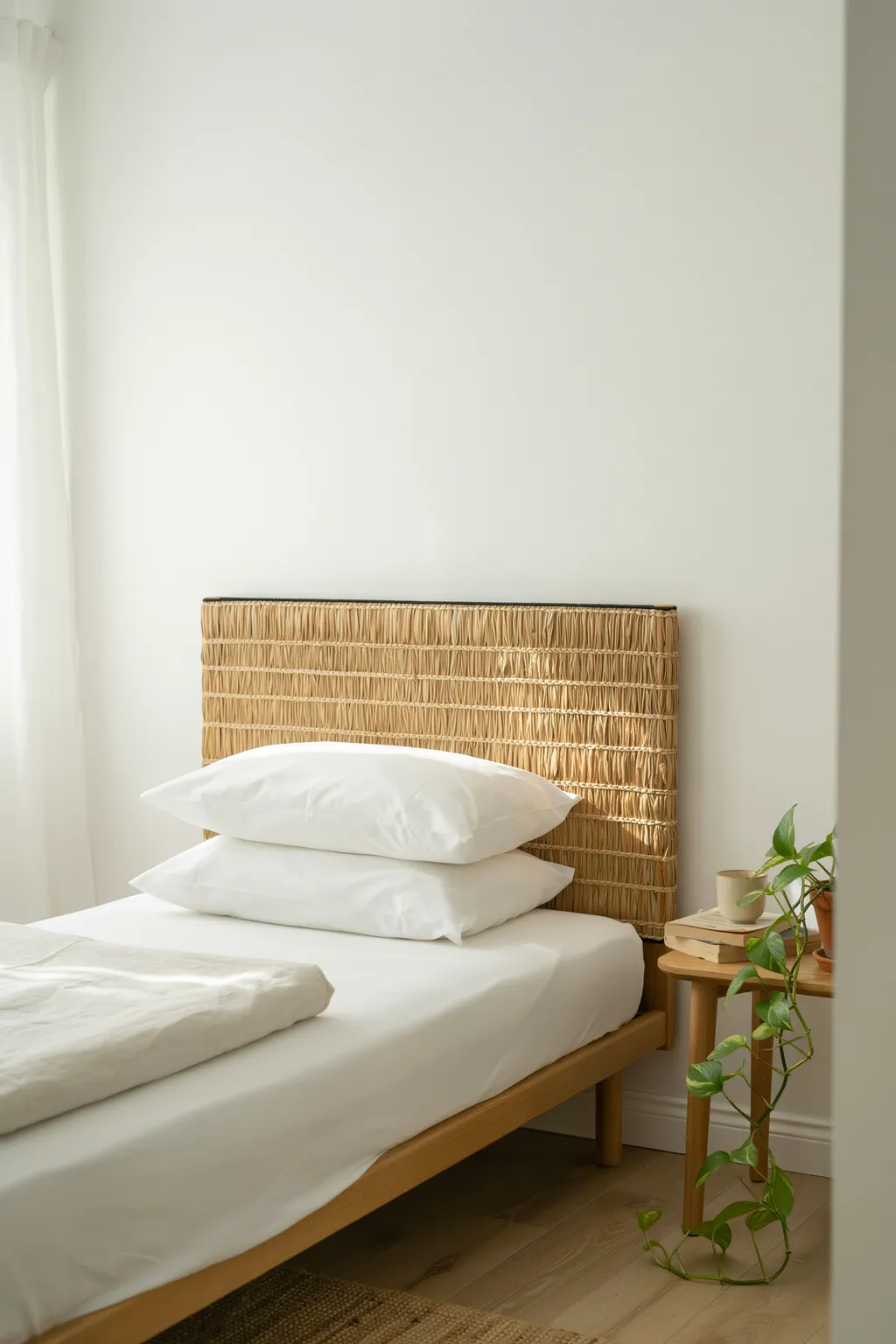
Drilling a headboard into the wall is off the table in most rentals, and plenty of leases count anchors as damage.
Rolled reed or bamboo garden fencing solves it for very little money. It is sold outdoors for screening, comes in wide rolls, and once you cut it to the width of the bed and stand it upright behind the frame, it looks a great deal like an expensive woven headboard. It is one of the few tropical bedroom ideas that leaves no trace at all when you hand the keys back.
Cut it with secateurs or a fine-toothed saw. Then either lean it against the wall so the bed frame traps the bottom edge, or hang it from two adhesive hooks rated well above its actual weight.
The bed doing the holding is what keeps this from turning into a project.
⚠️ Watch Out
This is outdoor material, so air it out for a few days before it goes anywhere near your pillow. Some rolls are treated and carry a smell. Secure the top edge to the wall with removable strips even if it seems stable, since a leaning panel behind a bed is exactly the thing that slides at two in the morning. And keep it well clear of candles or a heater, because dry reed catches easily.
13. Add a Wood-Blade Ceiling Fan and Let It Earn Its Keep
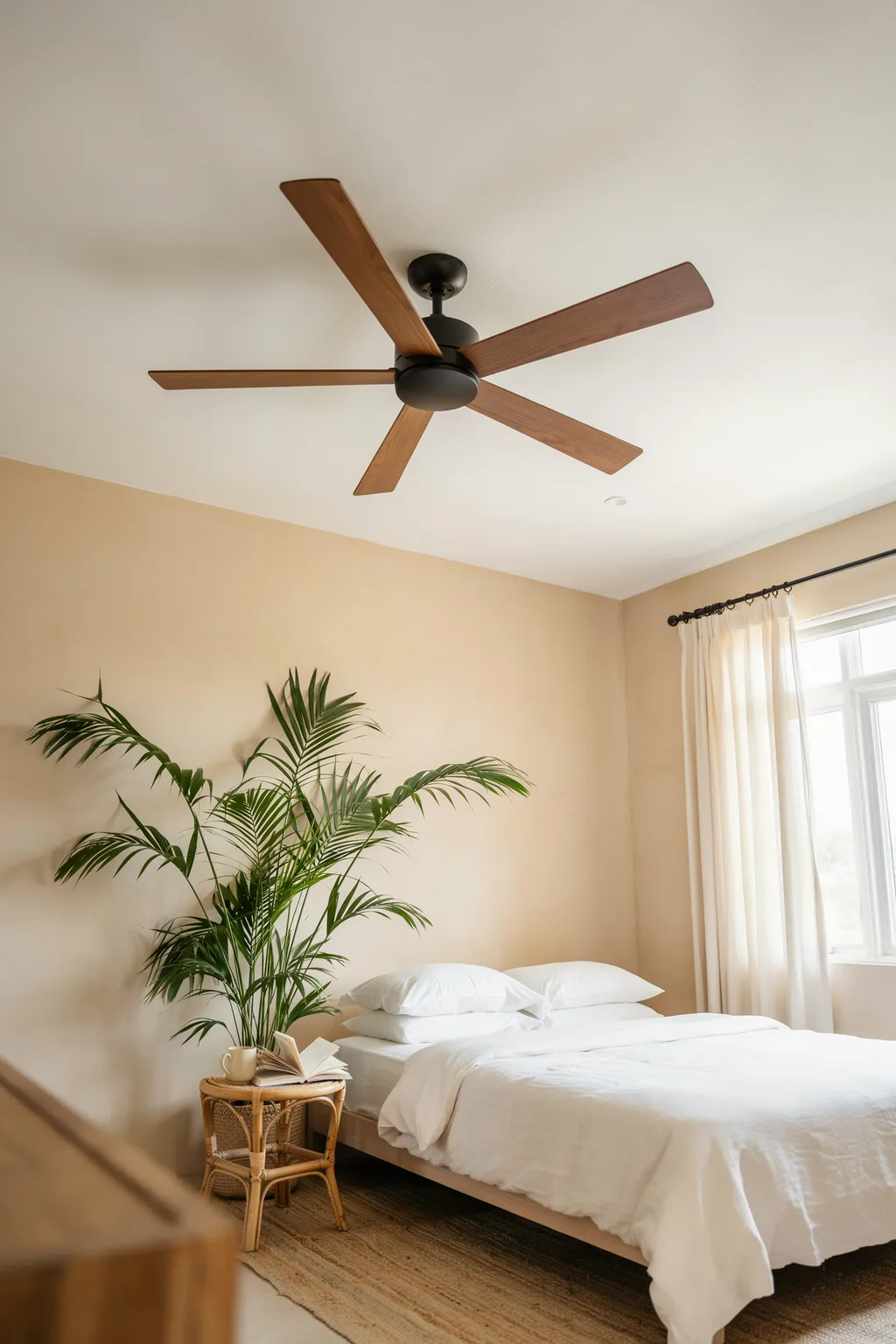
A ceiling fan is the most tropical object you can own and the one most commonly ruined by the wrong finish.
Shiny brass with white plastic blades reads as a 1990s rental unit. Matte wood or wood-look blades, in the same tone family you settled on earlier, read as a veranda. It is the same fan doing the same job, and the difference is entirely surface.
Size it to the room, not to the ceiling. An undersized fan in a large room has to spin fast to move any air at all, which makes noise and achieves very little.
Run it counterclockwise in summer to push air down. Reverse it in winter and it pulls warm air off the ceiling instead.
14. Put One Unglazed Terracotta or Stoneware Piece in the Room
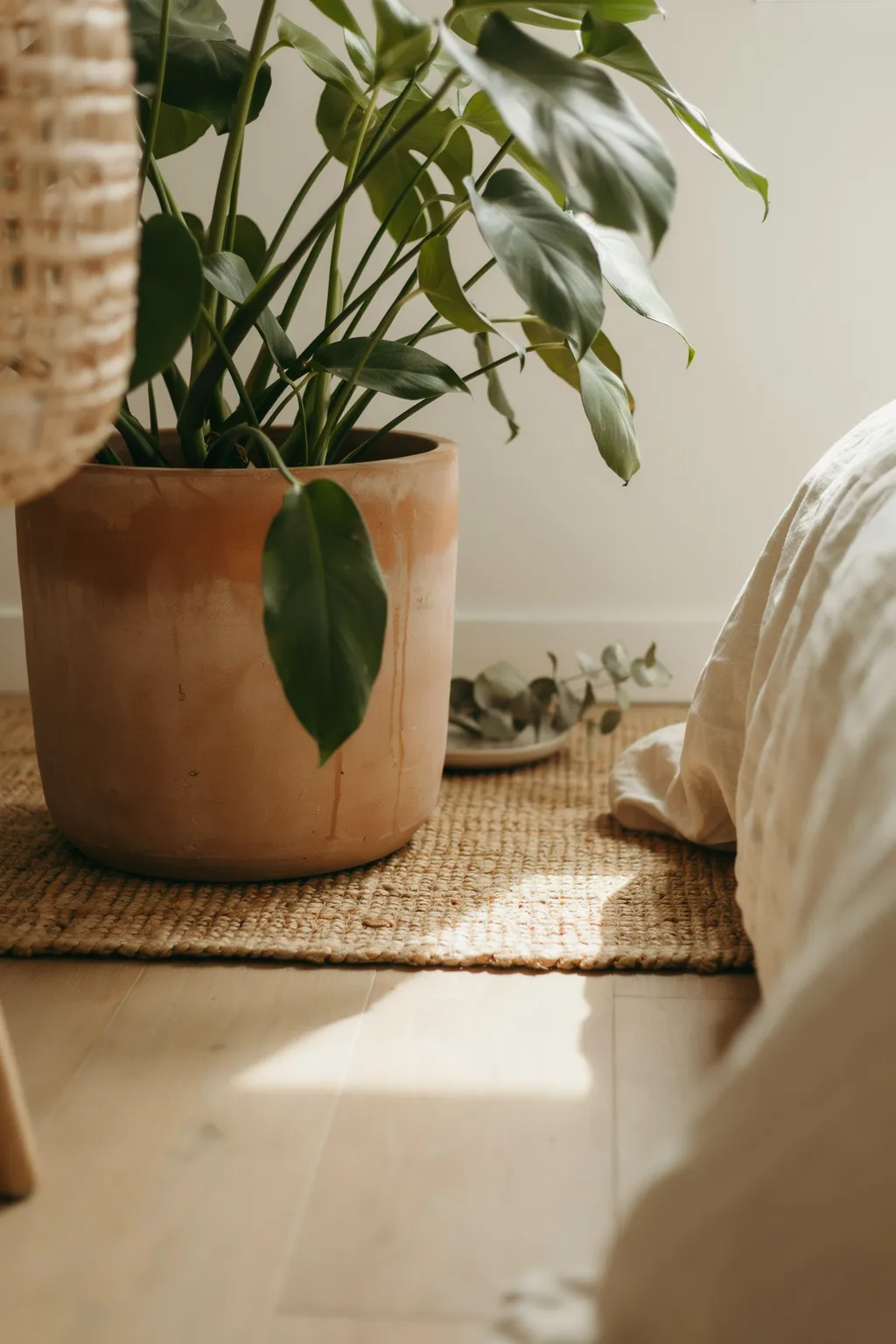
There is usually one thing missing from a room that has the wood, the weave, and the plants and still feels faintly cold.
It is a hard, matte, earthy surface. Unglazed terracotta, raw stoneware, or a rough plaster vessel. Everything else in this room is soft, woven, or living, so one dense chalky object gives the eye somewhere firm to land.
Keep it plain. No glaze, no painted pattern, no words on it. The whole appeal is the raw material, and a shiny finish cancels the effect completely.
Biggest impact: the floor. A large unglazed pot holding your one big plant. It solves the plant container and the earthy texture in a single purchase.
Second: the nightstand. A small stoneware lamp base or a wide shallow dish. Low, heavy, and matte against all that linen.
Stop at two. A third piece starts to look like a pottery collection rather than a material choice. One large, one small, done.
15. Skip the Tiki: What Turns Tropical Into a Theme Park
Four objects do most of the damage.
Plastic monstera leaves, which never catch light the way a real leaf does. Anything shaped like a pineapple. Carved tiki faces. And flamingos, in any form, at any size, on any surface.
The thread running through all four is identical: each one represents the tropics rather than being made of them. A living palm in a clay pot is tropical. A palm printed on a cushion next to a flamingo print is a theme.
The tropical bedroom ideas that hold up over years use materials, not motifs. There is a simple test for anything you are tempted by. If it would look out of place in a quiet hotel room in Bali, leave it. Very little that passes that test is loud.
A living plant in an unglazed pot, even a small one.
Real weave you can feel: cane, rattan, seagrass, reed.
One large botanical print, framed simply, hung alone.
Plastic leaves and fake vines strung along a headboard.
Pineapples, tiki carvings, flamingos, and novelty signs.
Turquoise and coral together. It is a beach bar palette, not a bedroom one.
Bringing It Together
None of this depends on a renovation or a big budget. The rooms that genuinely feel like a resort are built from ordinary materials chosen carefully: one green rather than five, warm bulbs rather than bright ones, real weave rather than printed weave, and a plant that can actually survive where you put it.
If you only do three things, warm the bulbs to 2700K, size the rug up, and buy one plant suited to your light. That combination shifts a room further than any single piece of furniture will.
Come back to these tropical bedroom ideas when you are ready to spend, and start with whichever one costs the least.
Start here, in this order
Save this to your bedroom board so it is there the next time you want the room to feel like somewhere you went on purpose.