10 Best Small Bedroom Storage Ideas for Tight Spaces
A small bedroom fills up faster than any other room in the house. The bed alone eats most of the floor, and whatever is left has to hold your clothes, your books, your charger cords, and the laundry basket that never quite goes away.
Most small bedroom storage ideas you see online assume you can buy a whole new furniture set or rebuild a closet. You probably cannot, and you should not have to.
The ten ideas below work the spaces you already own: the 7 inches under the bed, the bare wall above the headboard, the back of the door you close every night. Some cost almost nothing. A few are worth a bigger spend because they replace two pieces of furniture with one.
Each idea comes with real numbers, so you can measure tonight and know what fits before you spend a dollar.
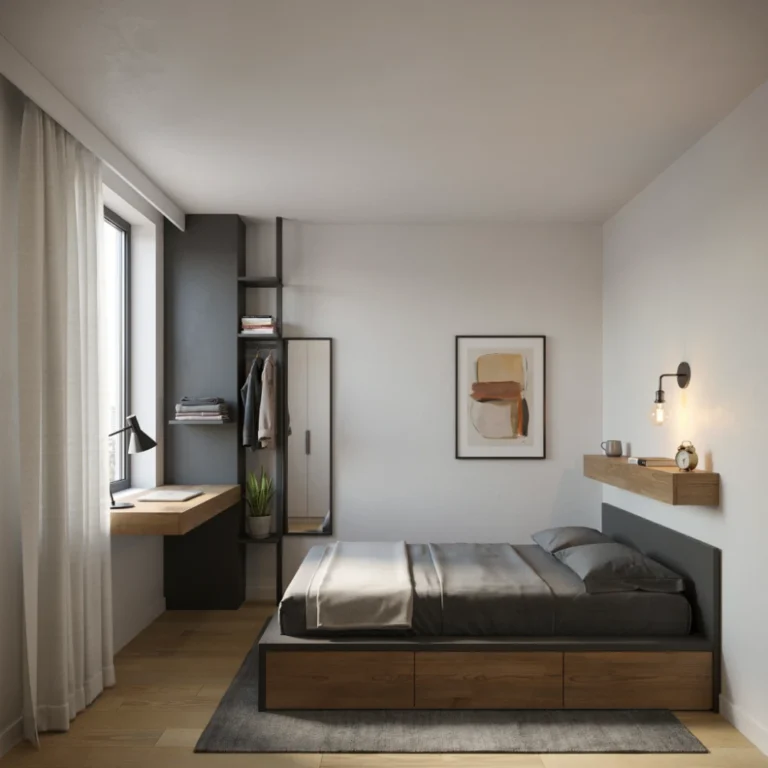
1. Start With a Bed That Has Drawers Built In
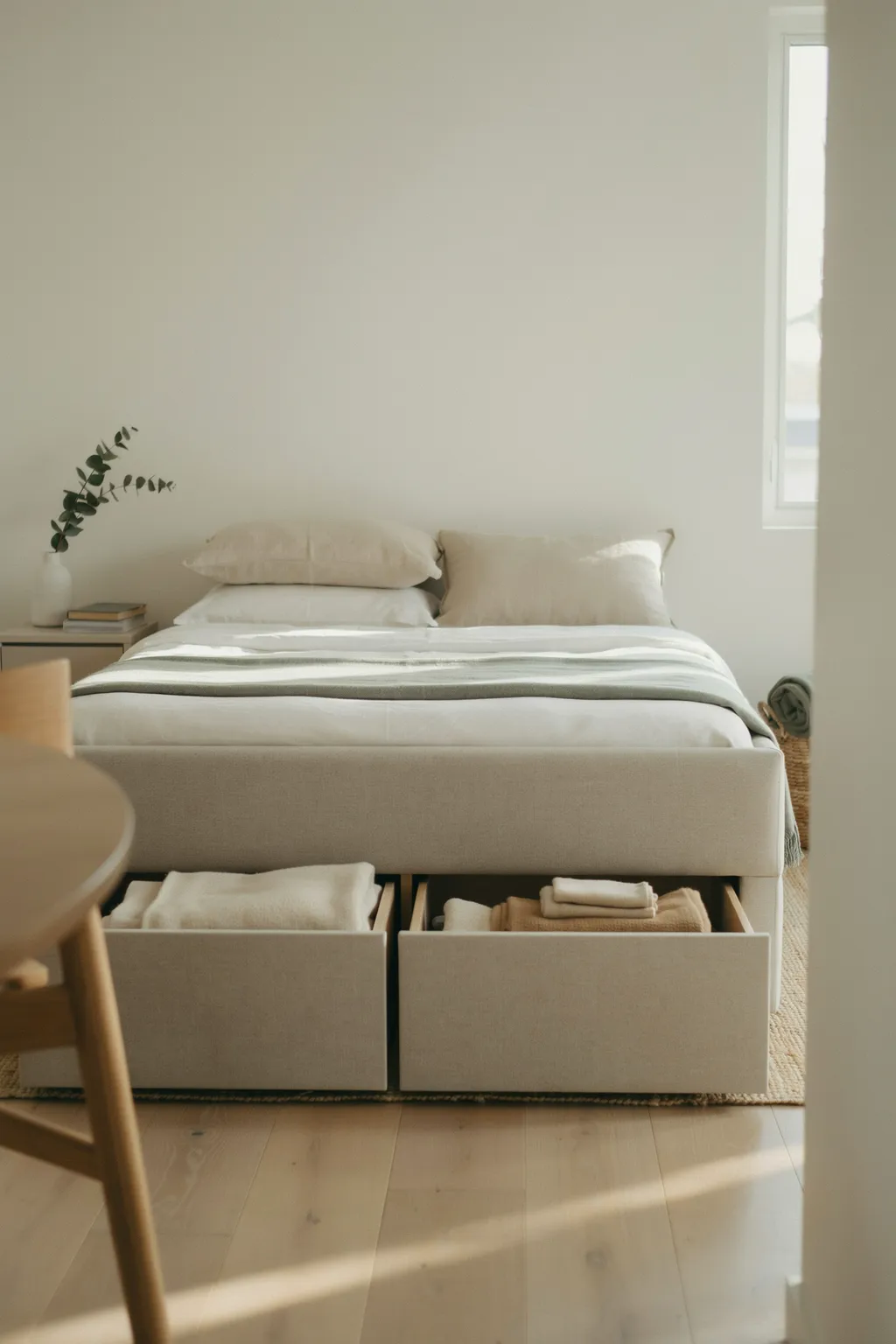
Plenty of small bedroom storage ideas nibble around the edges of the problem. The biggest upgrade hides in the piece already taking up the most room. A storage bed with two to four built-in drawers holds roughly what a small dresser does, without claiming one extra inch of floor.
Two styles to know:
- Side drawer frames. Cheaper and simpler, but each drawer needs 18 to 24 inches of clear space beside the bed to pull open.
- Hydraulic lift frames. The whole mattress lifts to reveal one huge shallow bin, which suits rooms where both sides of the bed are tight.
The honest downside is weight. A loaded storage bed is a two person job to shift, so vacuum under it before you fill the drawers, not after.
2. Put the Space Under Your Current Bed to Work
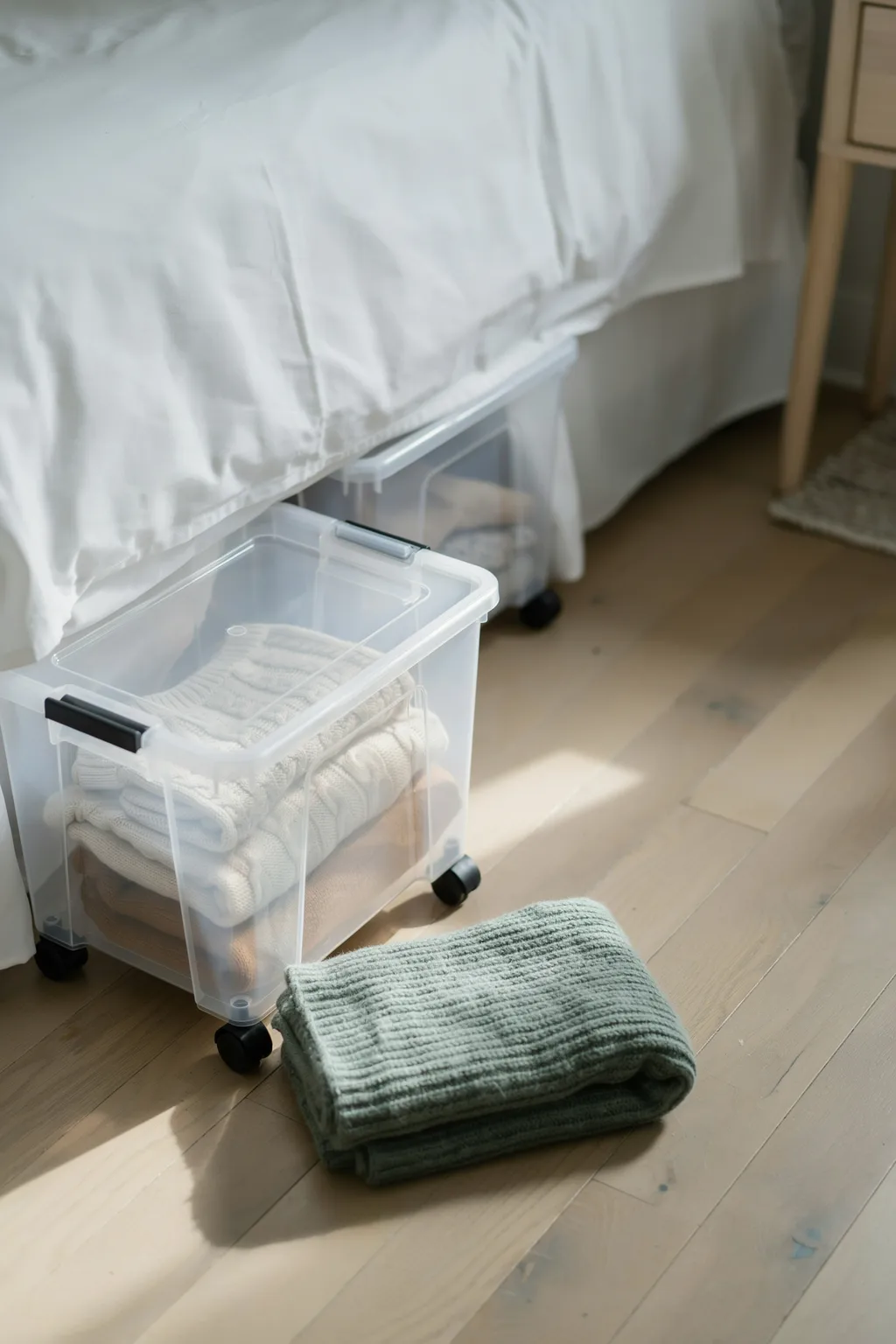
Keep the frame you have and claim the empty layer beneath it. Most standard frames sit about 7 inches off the floor, which fits a 6 inch lidded bin with room to slide.
Do it in this order. Measure the gap from floor to frame rail first. Buy bins with lids and wheels second, since open boxes under a bed collect dust in weeks. Load them by season third, with off-season clothes in the far bins and spare bedding in the easy-reach ones.
Bed risers add 5 to 6 more inches of height for a few dollars if your gap is too shallow. They do not work with platform beds, so check your frame type before ordering.
💡 Quick Tip
Measure from the floor to the bottom of the bed rail, then buy bins at least 1 inch shorter than that number. A bin that scrapes the frame every time will stop getting used by February.
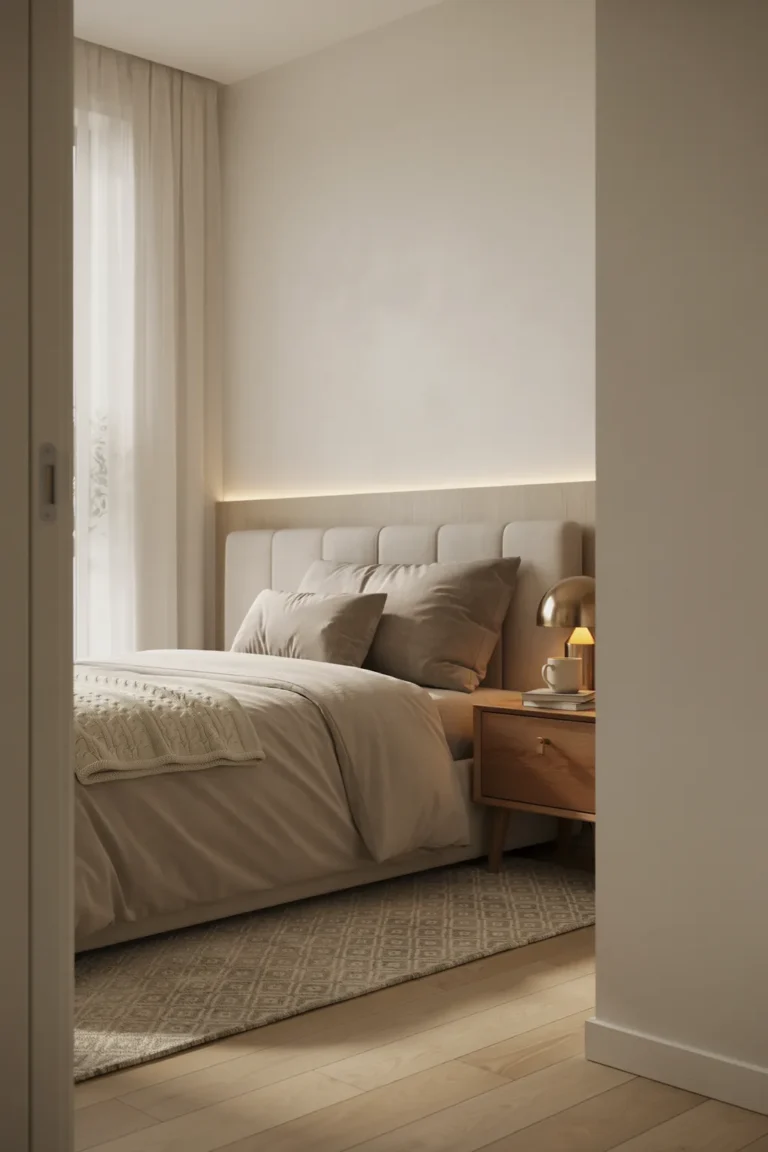
3. Swap Your Headboard for One That Opens
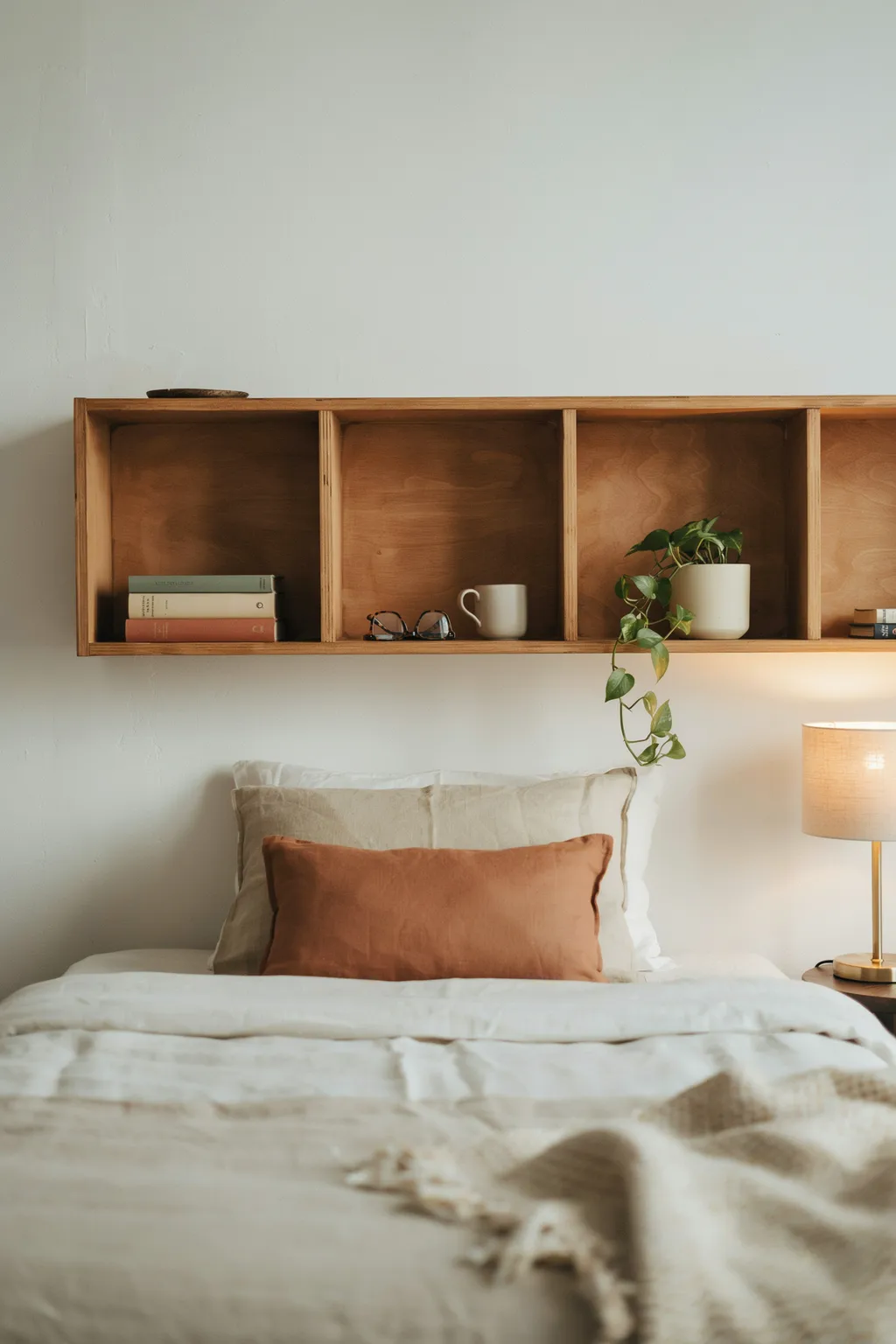
A flat headboard is a wasted wall. The books, glasses, phone, and hand cream crowding your nightstand all want to live 12 inches higher, in a headboard with shelves or cubbies built in.
Storage headboards run 10 to 12 inches deep, which sounds like a lot until you remember they replace most of what a nightstand does. Some include sliding panels that hide the clutter, and a few have built-in outlets for charging.
Measure your available wall width first, since storage headboards often run wider than the bed frame. In a very narrow room, those extra inches per side may matter more than the shelf space.
A flat headboard against a bare wall, with books and chargers piled on one overworked nightstand.
A cubby headboard holding the bedside pile at arm’s reach, with the nightstand top clear or gone entirely.
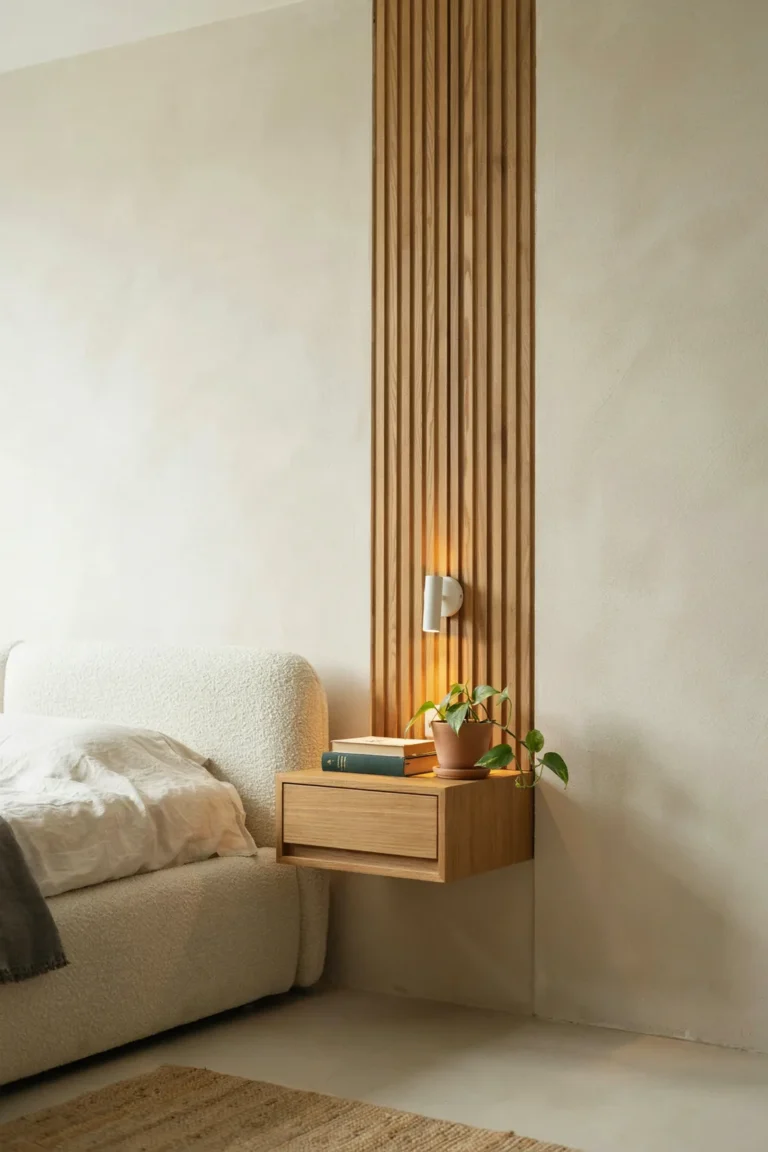
4. Float the Nightstands and Free the Floor
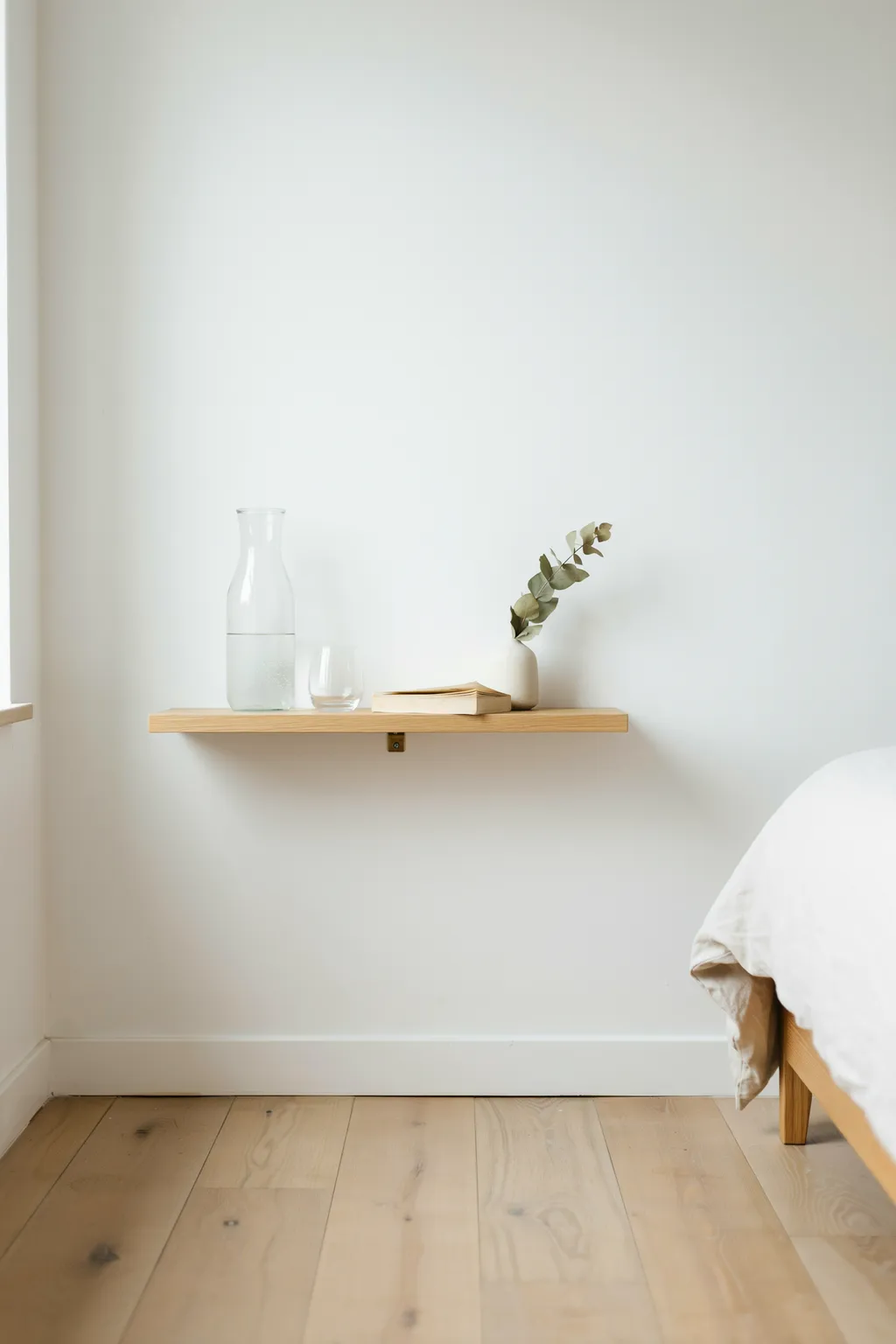
A freestanding nightstand and a wall-mounted shelf can hold the same water glass. Only one of them lets the vacuum pass underneath and makes the floor look bigger doing it.
Mount a floating shelf or a small wall-hung drawer unit at mattress height, usually 24 to 28 inches off the floor. Into drywall anchors, keep the load under about 15 pounds. Hit a stud and you can hold far more.
Renters take note: two screw holes patch easier than most people fear.
| Floating shelf | Freestanding nightstand |
|---|---|
| Zero floor footprint, floor stays visible. | Takes about 18 by 18 inches of floor. |
| Holds about 15 lb on anchors, more on a stud. | Holds anything, plus a drawer or shelf below. |
| Needs a drill and 20 minutes. | Needs nothing, moves anytime. |
5. Wrap Shelving Around the Bed Wall
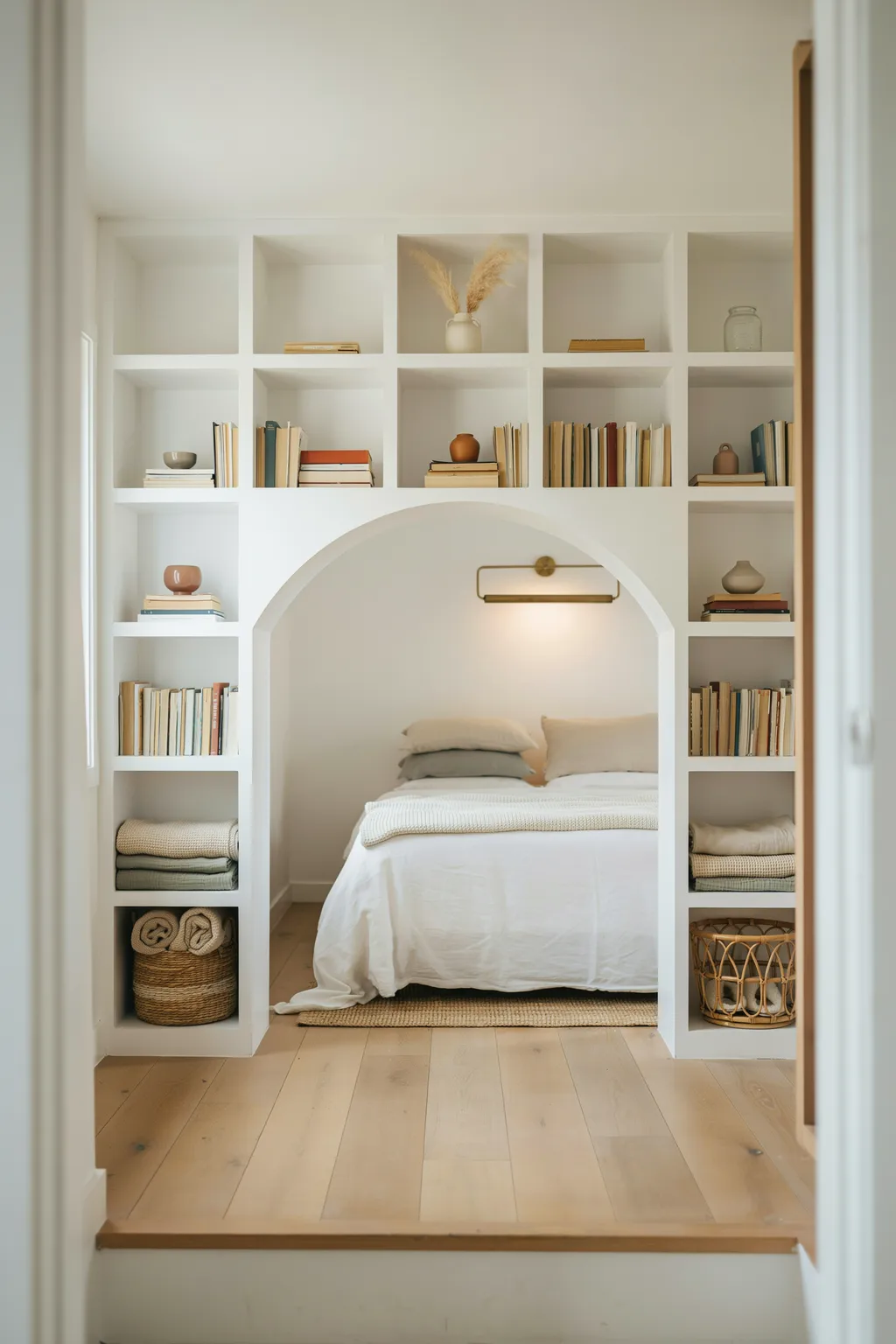
Look at the wall behind your bed. In most small bedrooms there is a horseshoe of dead space there: two strips beside the headboard and a long stretch above it. Shelving that wraps all three turns the bed wall into a closet you never have to walk to.
You can build the look three ways, from a weekend of bracket shelves to a true built-in. Keep shelf depth at 10 to 12 inches and leave at least 24 inches of clear air above the mattress so nobody knocks their head sitting up.
Anchor every upright into studs. This wall carries weight directly over sleeping heads, so it is not the place for drywall anchors alone.
6. Climb the Walls Before You Crowd the Floor
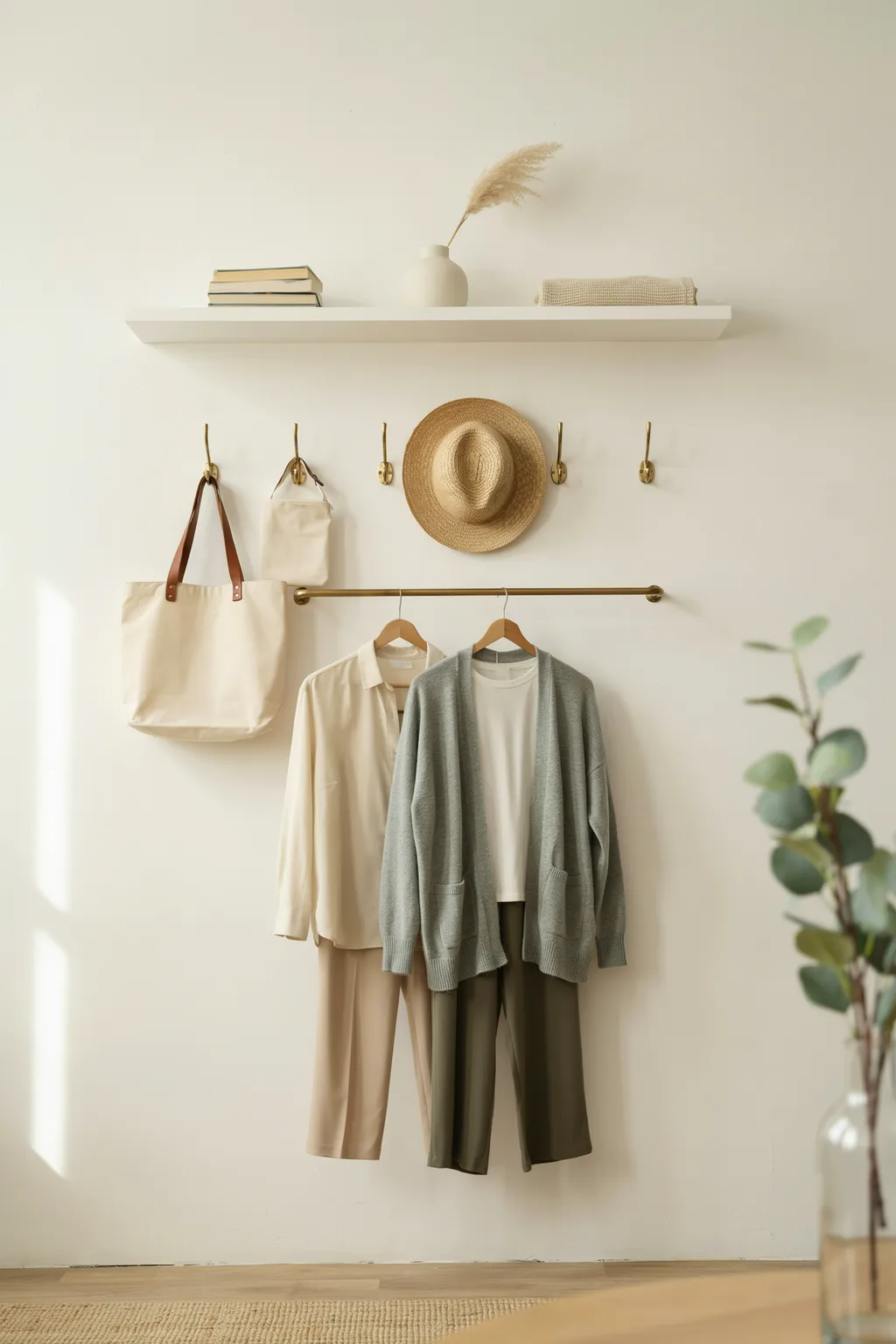
One rule keeps a tight bedroom livable: anything that can hang, hangs. Floor space is the scarcest thing you own, and wall space above 48 inches is usually doing nothing at all.
High shelves, a pegboard behind the door, hooks for bags and hats, a rail for tomorrow’s outfit. Each one moves clutter up and out of the walking zone.
Locate the studs and mark each one with painter’s tape before anything goes on the wall.
Hang the heavy pieces into studs: shelves at about 66 inches high, clothing rails at 60.
Fill the spaces between studs with light hooks and pegboard on drywall anchors, nothing over 10 pounds.
Stop at one high shelf per wall. Two rows of stuff overhead starts to feel like a stockroom.
7. Park a Storage Bench at the Foot of the Bed
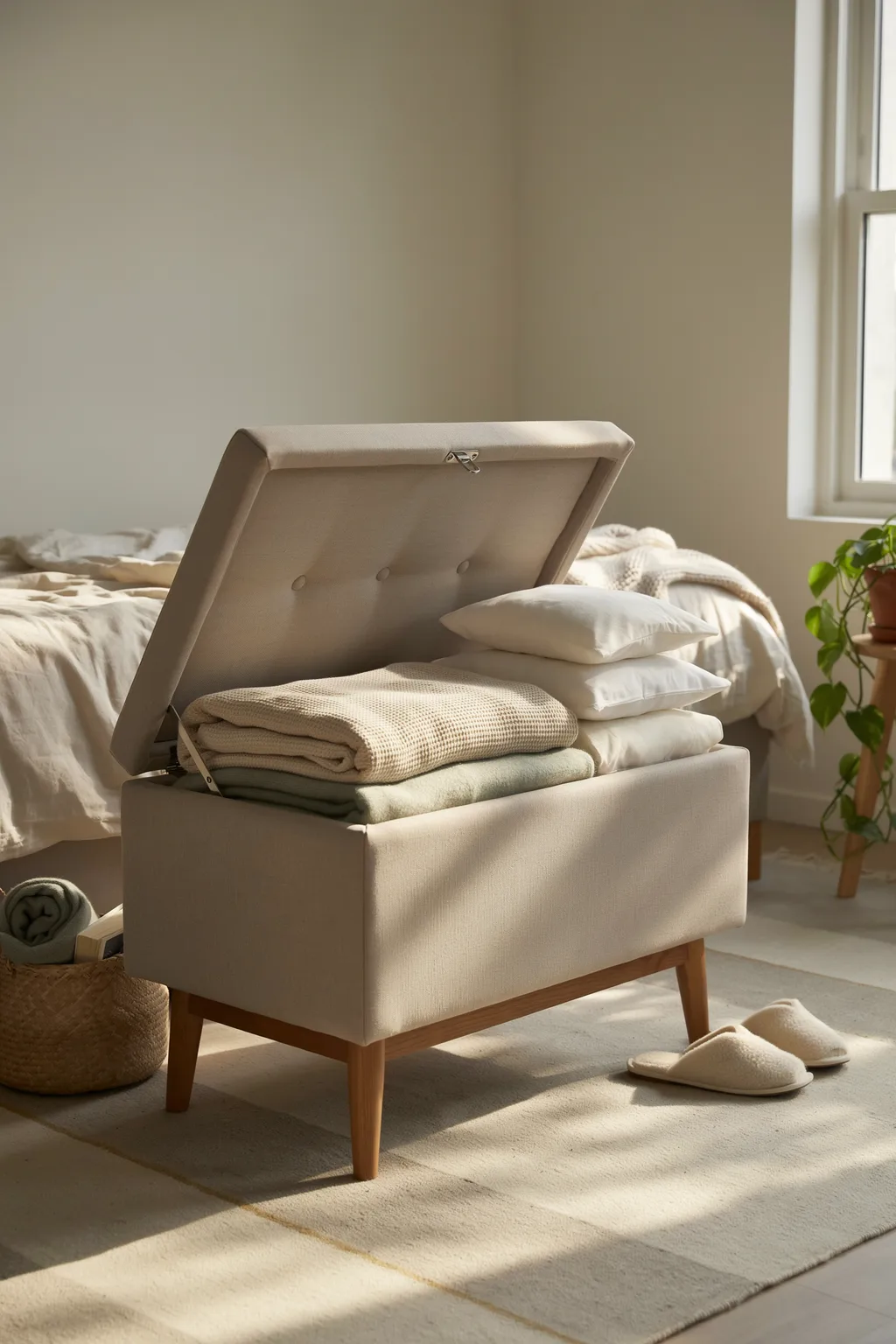
There is a spot at the foot of most beds where shoes pile up and yesterday’s sweatshirt lands. That strip of floor is usually about 18 inches deep, and a storage bench fills it exactly.
Inside the lid goes the bulky stuff that ruins closets: spare duvets, winter blankets, out-of-season sweaters. On top you get a place to sit while putting on socks, which none of the other small bedroom storage ideas on this list can offer.
Pick a bench 2 to 4 inches lower than the mattress top so it reads as part of the bed, not a roadblock. Leave 30 inches between bench and wall so the path past the bed stays walkable.
A bench at the foot of the bed earns its space three times over: a blanket chest inside, a seat on top, and a landing spot that keeps clothes off the floor.
8. Double What Your Closet Holds With a Second Rod
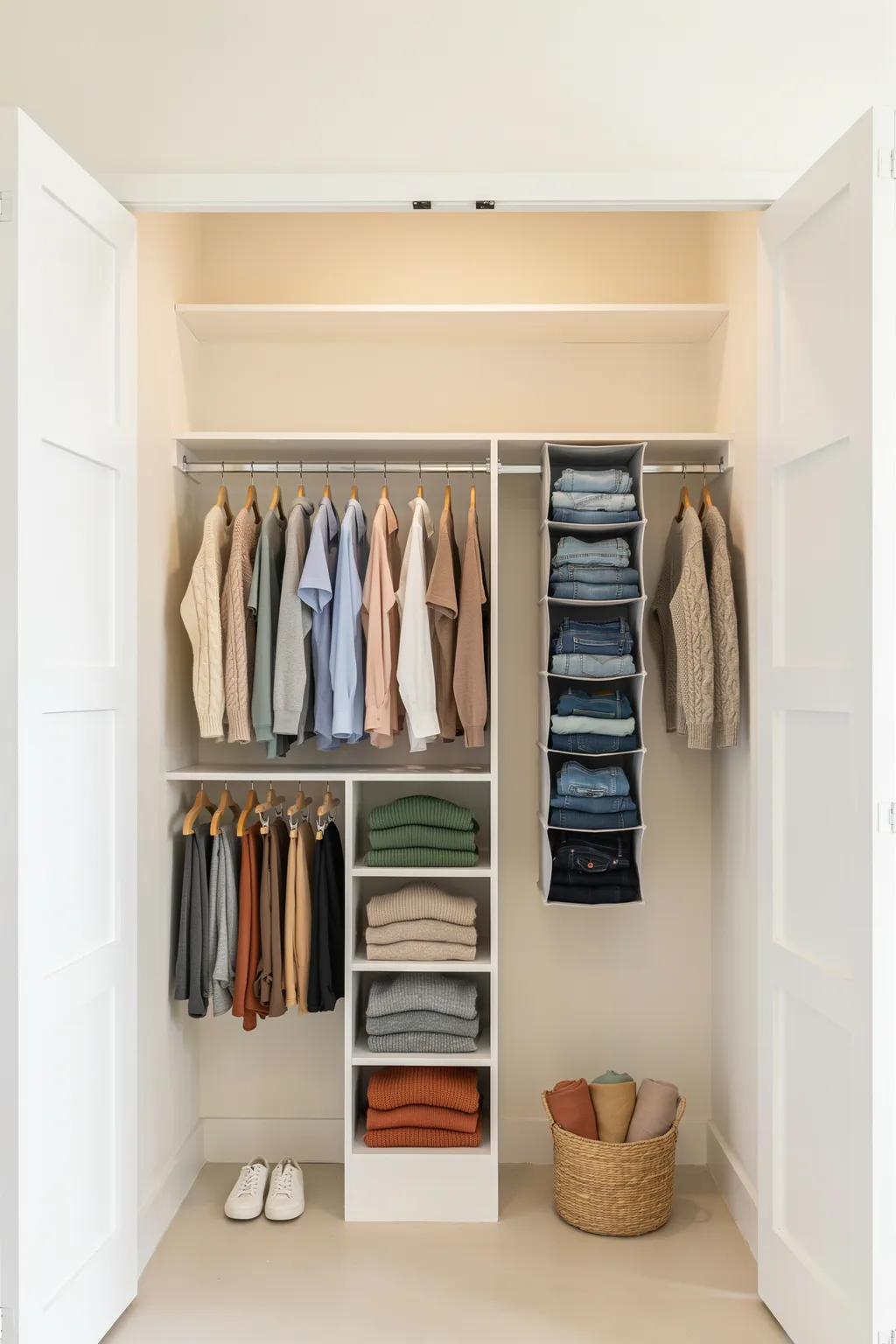
The most common closet mistake is treating the layout as fixed. A single rod with a shelf above it leaves a huge empty column below your shirts, and that column is free storage waiting for hardware.
A second rod hung at about 40 inches, below a top rod raised to 80, doubles your hanging space for the cost of one bracket kit. Shirts and folded-length pants go up top, skirts and kids’ clothes below.
No drill? A hang-down extender rod hooks over the existing rod and does the same job for less, though it sways a little.
Closet upgrades worth the money
9. Trade Table Lamps for Wall Sconces
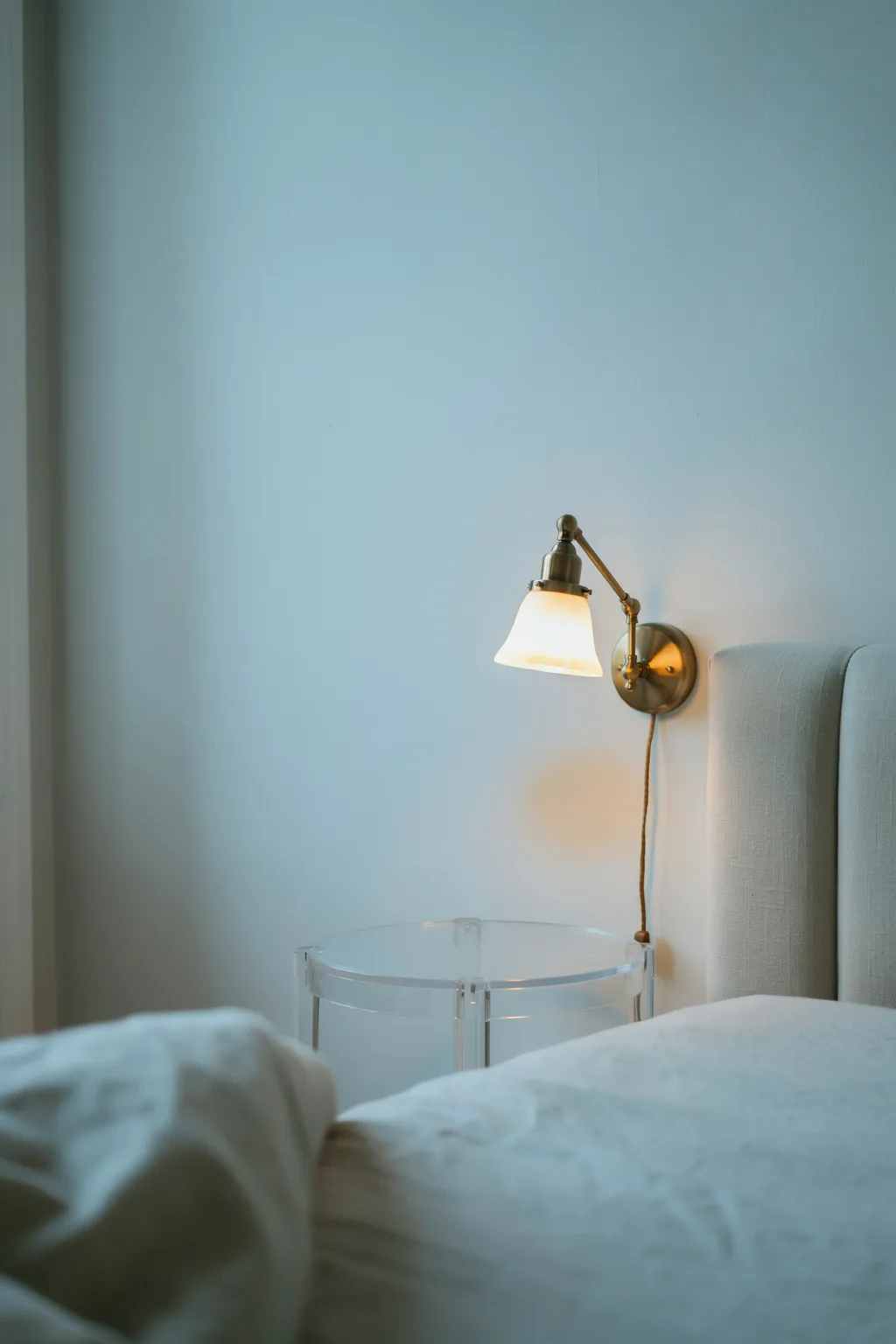
People assume sconces mean rewiring, an electrician, and a landlord fight. Plug-in sconces killed that excuse years ago. They mount with two screws, run a slim cord down to the outlet, and cost about what a decent table lamp does.
What you win is the entire nightstand surface. A lamp base claims the middle of that little table all day; a sconce leaves it clear for the things you actually reach for at night.
Mount them 30 to 36 inches above the mattress top. If you do want a hardwired look with no visible cord, that part is worth doing right, and the Electrical Safety Foundation International is blunt that fixed wiring belongs with a licensed electrician.
Choose plug-in sconces with a cord cover, mounted 30 to 36 inches above the mattress.
Pick swing-arm styles so the light aims at your book, not your partner.
DIY hardwiring. Fixed electrical work belongs with a licensed electrician.
Mounting so low that you knock the shade every time you sit up in bed.
10. Use the Back of Every Door You Own
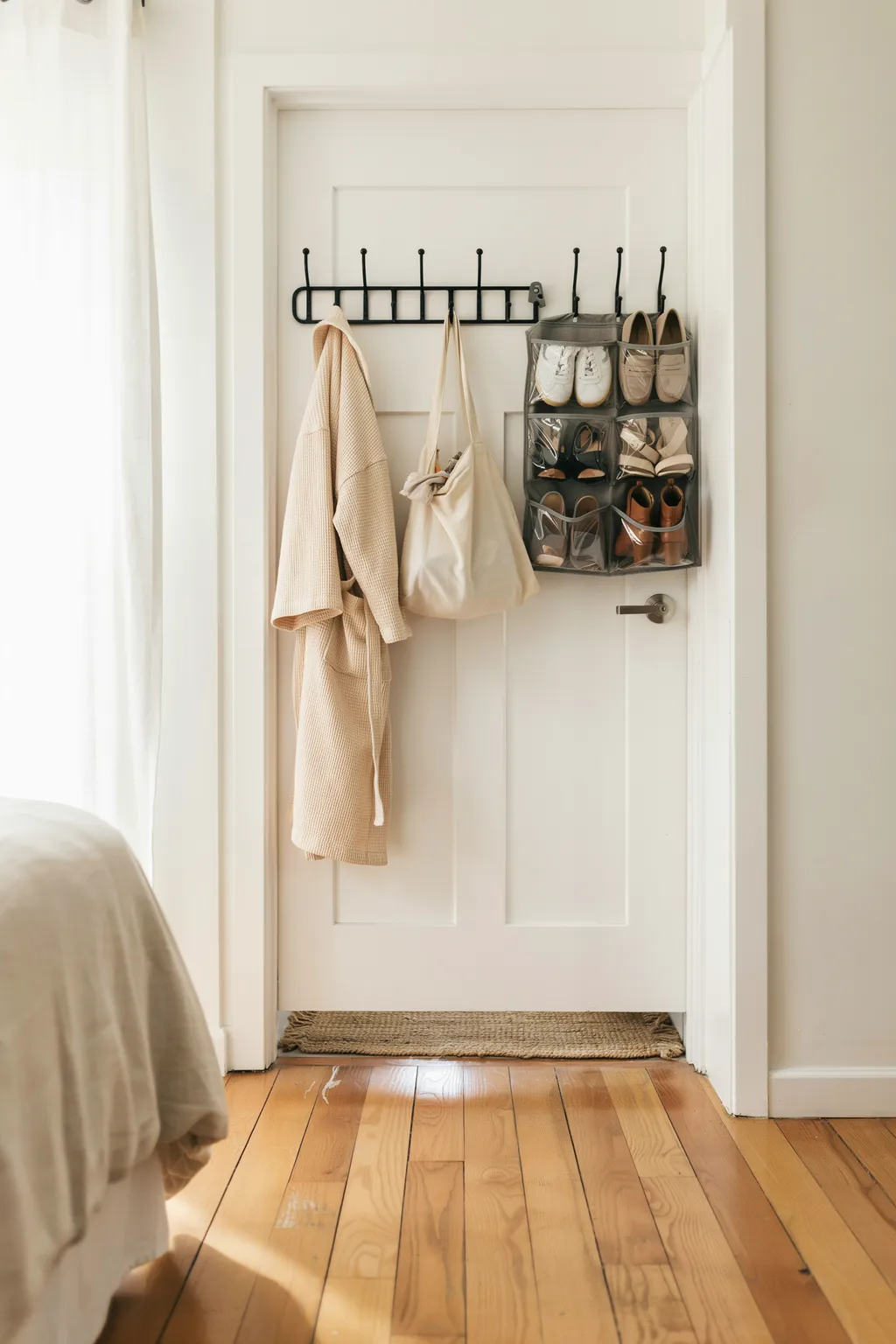
For years I ignored the back of my own bedroom door, then hung one over-door rack and gained what felt like half a closet. A standard door offers roughly 20 by 60 inches of flat, empty, completely hidden storage, and most bedrooms have two doors counting the closet.
Every bit of it disappears when the door is open against the wall. That is the charm: full storage, zero visual clutter.
Good candidates for door backs:
- An over-door hook rack for robes, towels, and tomorrow’s outfit.
- A pocket organizer for shoes, or for anything shoe-sized like chargers, socks, and sunscreen.
- A slim mounted mirror, which frees the wall a leaning mirror would block.
Check clearance first. Racks that hook over the top need about half an inch of gap above the door, and bulging pockets can stop a door short of the wall.
- ▸Bedroom door back: hook rack for robes and next-day clothes.
- ▸Closet door back: pocket organizer for shoes and small gear.
- ▸Either door: slim mirror to free up wall space.
- ▸Before buying: confirm a half inch of gap over the door and enough swing clearance.
Start With the Space You Are Not Using Yet
You do not need all ten of these at once. Walk into your bedroom tonight and look for the emptiest hiding spot: the gap under the bed, the bare wall over the headboard, the naked back of the closet door. Start there, with a tape measure and one purchase.
The best small bedroom storage ideas are the ones that vanish into the room, holding more while looking like less. One good move a weekend, and in a month the floor is clear and the nightstand finally breathes.
Save this list to your Pinterest board so it is there the next time the clutter creeps back.
You Might Also Like