18 Vintage Bedroom Ideas That Still Look Fresh
Vintage does not mean dated. It means something in the room was made before you were born, and that is a different thing entirely.
The rooms people picture when they hear the word, the fussy florals, the matching mahogany set, the lace on every surface, are dated for one specific reason. Somebody committed to a whole era at once and left nothing modern to push against. That is a decorating mistake, not a problem with old furniture.
One good vintage piece in an otherwise plain room reads as character. Six of them in matching wood reads as a house clearance. The distance between those two outcomes is mostly restraint, plus knowing what to check before you hand money over for something that has already lived one life.
These vintage bedroom ideas cover both halves. The looks worth copying, and the practical parts nobody mentions, like whether that beautiful iron bed will actually take a modern mattress.
Start with whichever one matches what you already own.
1. Start With One Anchor Piece, Not a Whole Set
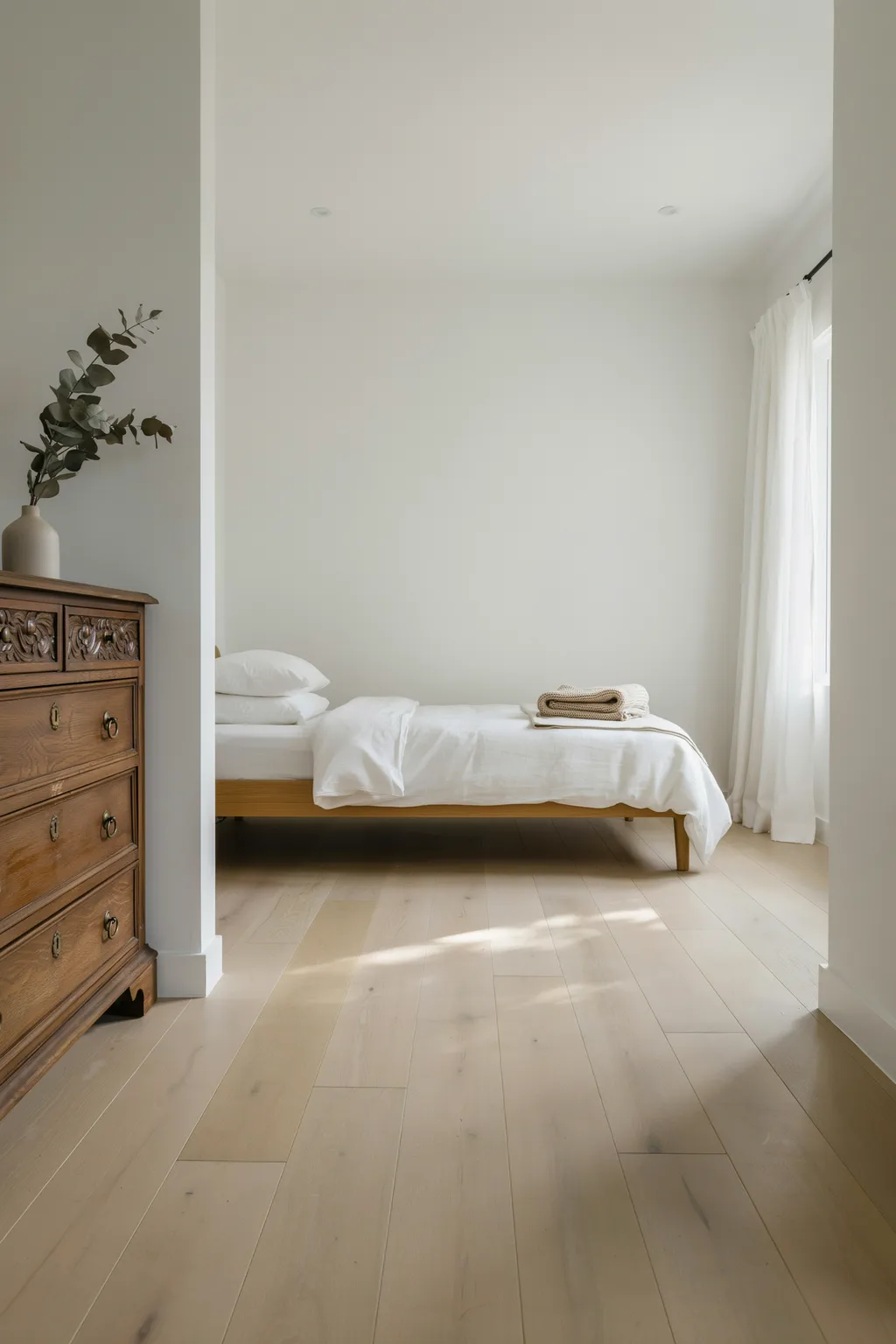
Buy one old thing and build around it.
Most vintage bedroom ideas start by imagining a whole finished room. Start with a single object instead. An anchor piece is whatever carries the most presence: a carved headboard, a heavy chest of drawers, a brass bed. Everything else can be new and plain. That one old piece supplies all the character the room needs, and it gives you a reference point when you shop for the rest.
Matching sets are the trap. A bed, two nightstands, and a dresser in identical wood was a furniture showroom idea decades ago, and it still looks like one.
One old piece in a plain room reads as character. A matching set of them reads as a house clearance.
2. Check an Antique Bed Fits a Modern Mattress
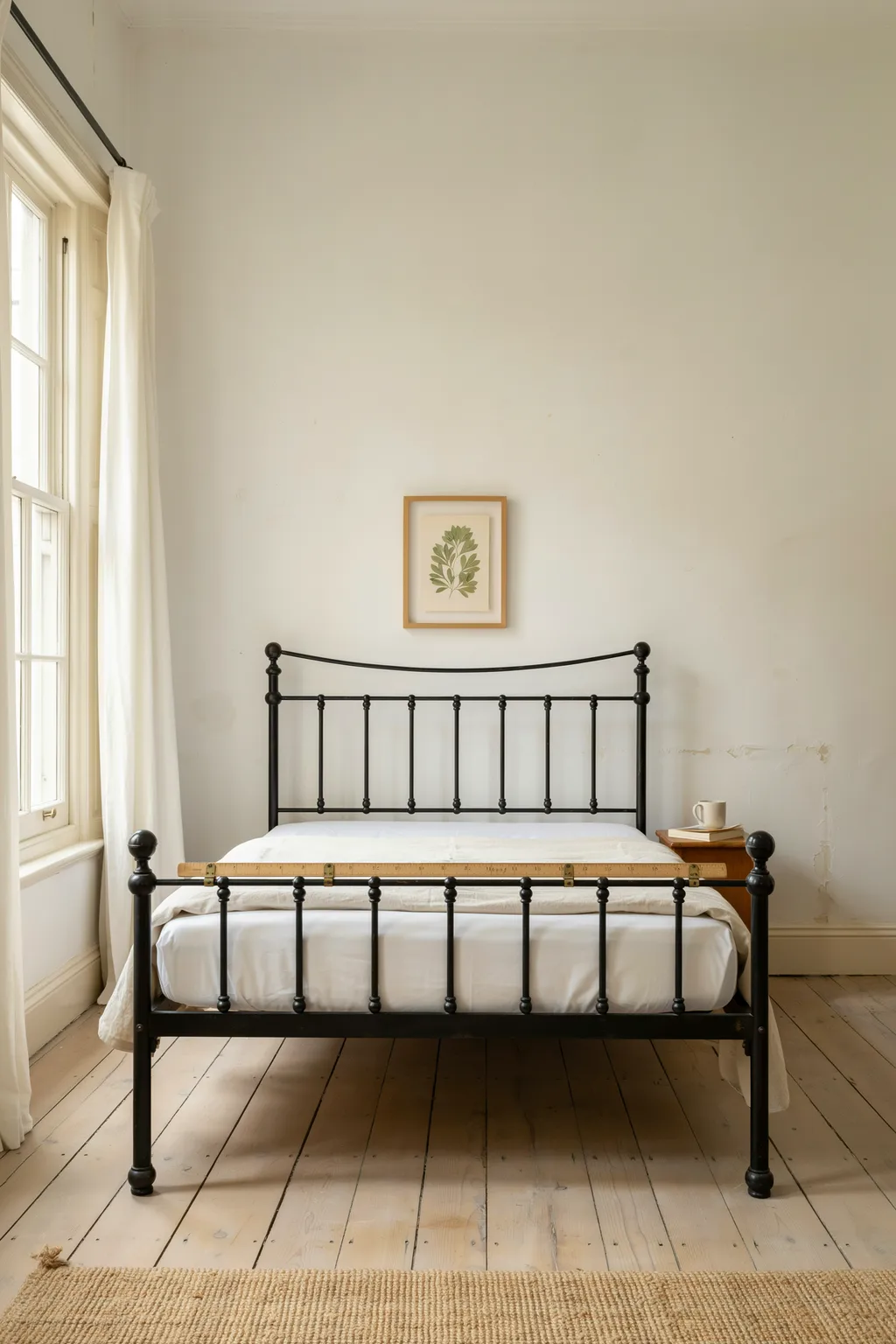
The most expensive mistake in vintage furniture is a bed frame no mattress fits.
Old beds were built to old sizes, and those sizes shifted over the years. A Victorian double is often narrower than a modern double, and frames from different countries vary again. Measure the inside of the frame, rail to rail and head to foot, before you buy rather than after. A frame even a couple of inches short will not take a standard mattress, and having one made costs considerably more than most people budget for.
A carpenter can widen some frames. Plenty of others cannot be altered without wrecking what made them worth having.
| Measure this | Why it matters |
|---|---|
| Inside width, rail to rail | Decides whether a standard mattress drops in at all |
| Inside length, head to foot | Older frames often run short for modern heights |
| Slat spacing or base type | Wide gaps sag a foam mattress within months |
| Height under the rail | A thick modern mattress can swallow the footboard |
3. Layer a Quilt Instead of a Duvet
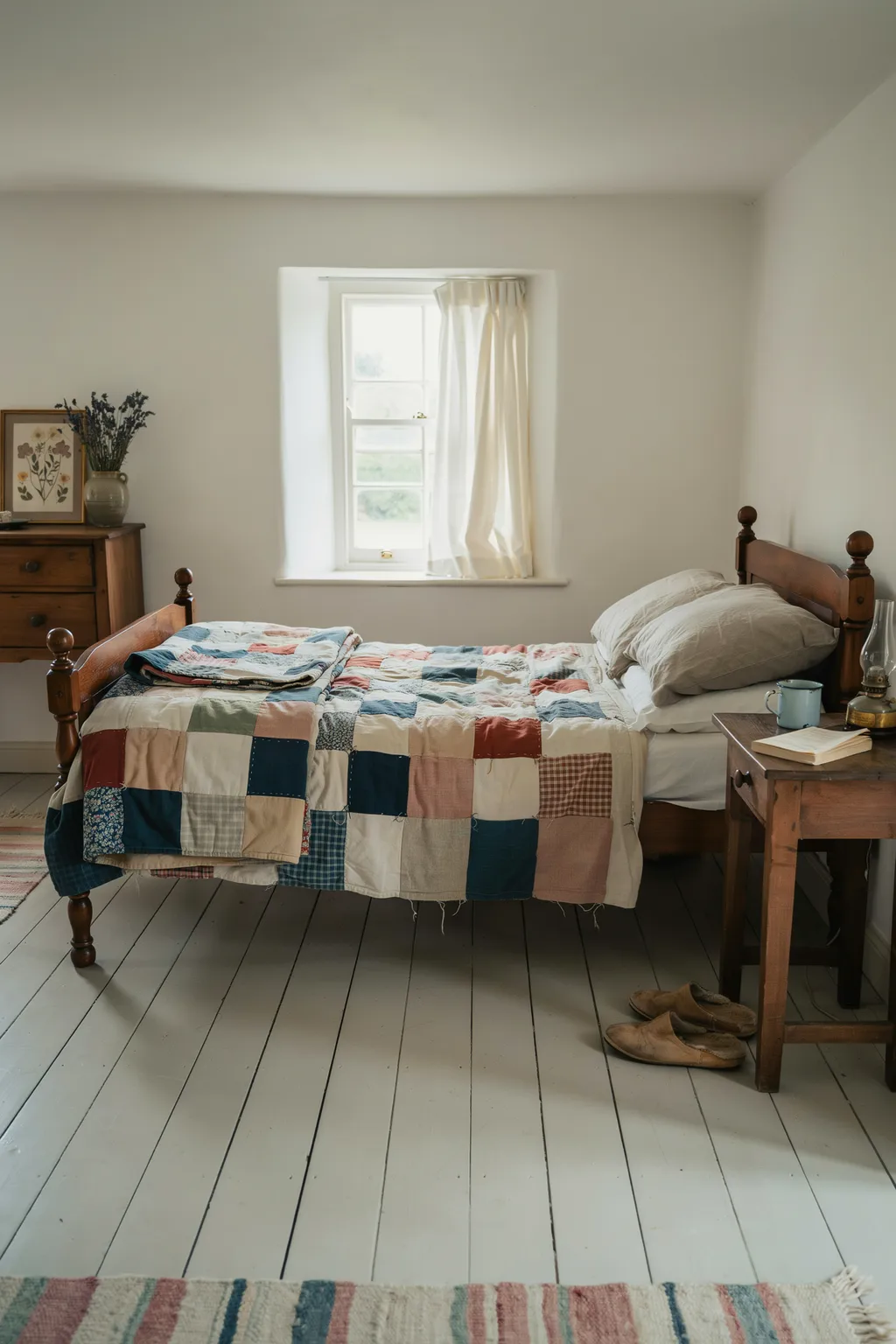
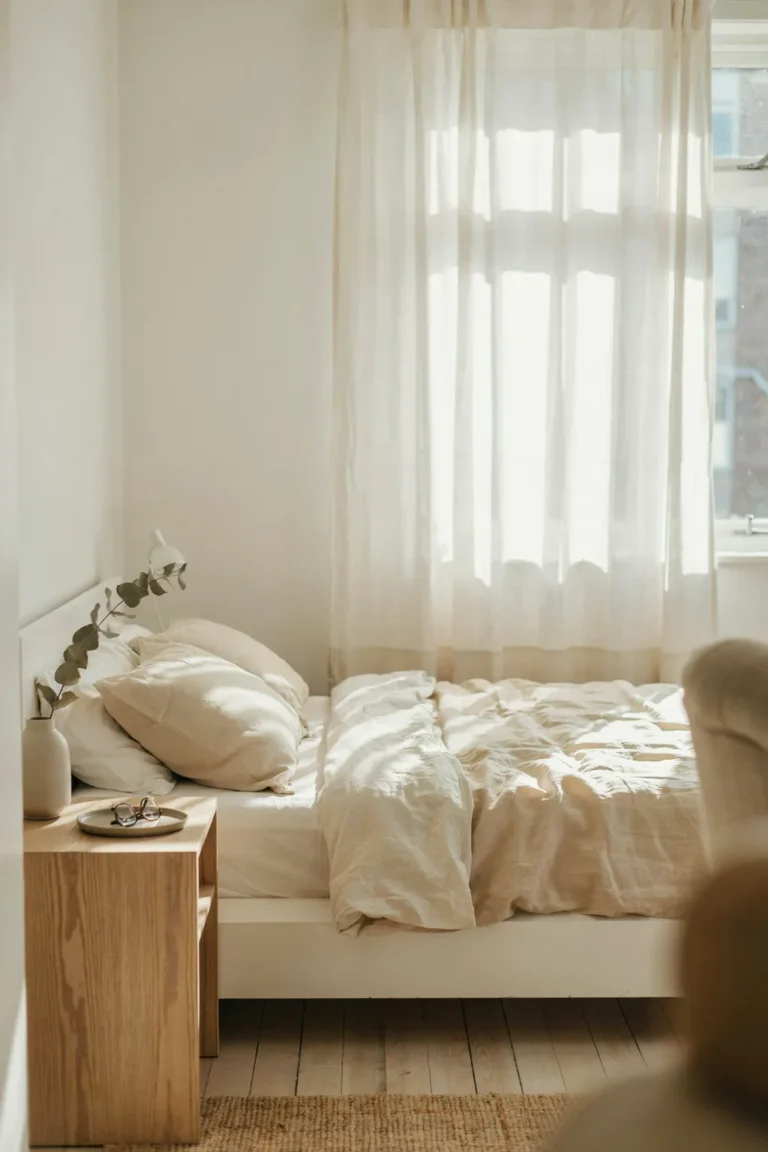
A quilt sits flatter than a duvet, and that flatness is what makes an old bed look right.
Duvets puff. They hide the shape of the frame and they read distinctly modern, which fights against a carved footboard or a thin iron rail. A cotton quilt drapes over the edge instead and lets the frame stay visible. Vintage and reproduction quilts both do the job, and genuinely old ones stay cheap at markets because they rarely turn up in matching pairs.
Fold a second quilt across the foot of the bed for weight through winter.
Plain cotton sheet first, tucked at the foot so the frame reads clean.
Main quilt over the top, hanging past the rails rather than stopping short.
Second quilt folded in thirds across the foot for weight and depth.
Two plain pillows behind, one patterned in front. Resist stacking six.
4. Put One Vintage Piece Against Modern Bedding
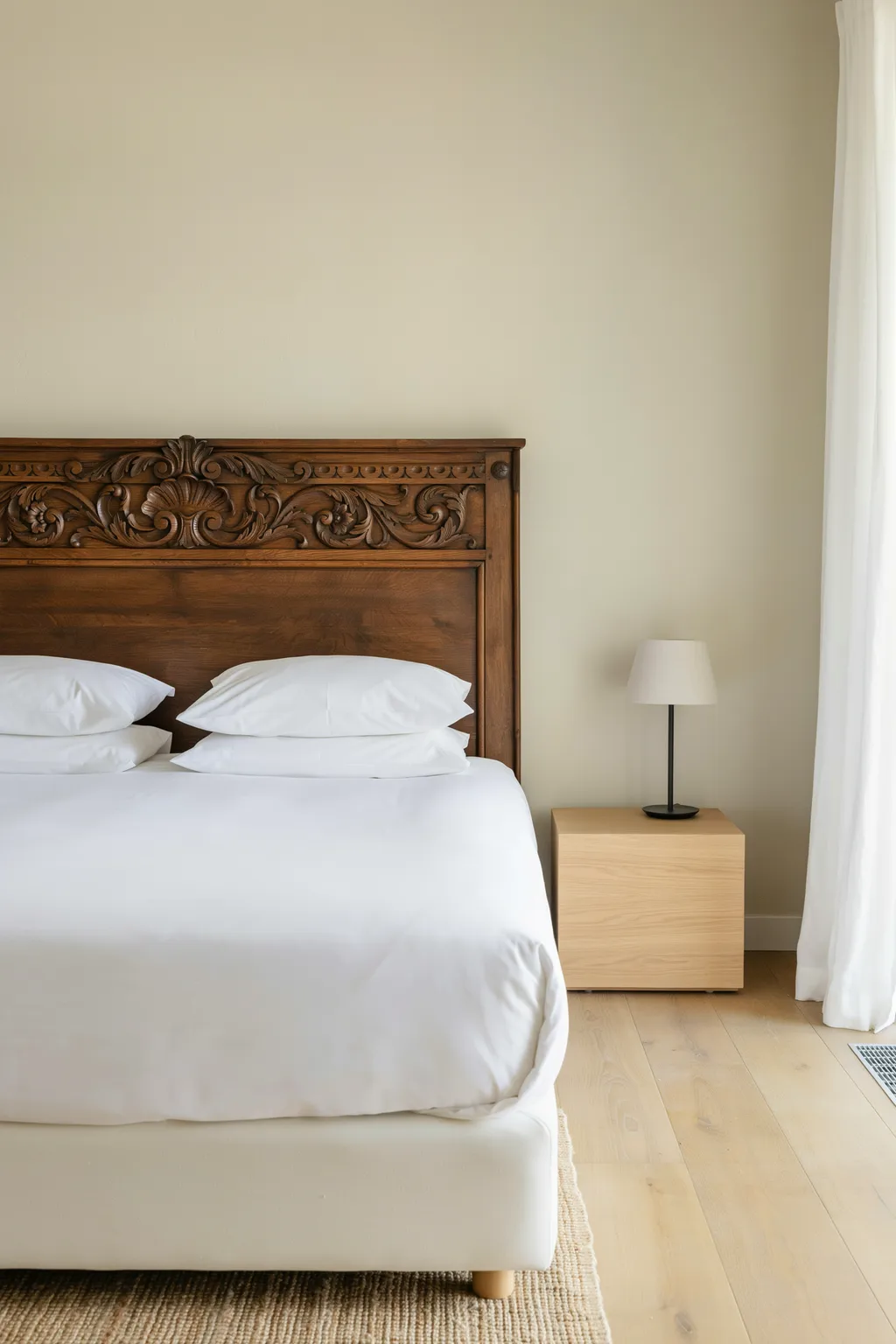
The same antique headboard can look tired or sharp depending entirely on what sits in front of it.
Plain white cotton, a simple linen throw, and one modern lamp make a carved Victorian headboard look deliberate. Ruffled floral bedding in front of that identical headboard makes it look like it came with the house and nobody ever bothered to change it. Modern textiles are the cheapest way to pull an old piece forward in time, and this is where most vintage bedroom ideas either succeed or quietly fall apart.
This is the move that keeps a room out of costume territory.
Plain white or oatmeal bedding against an ornate frame.
One contemporary lamp or a simple linen shade.
Let the old piece be the only busy thing in view.
Ruffles and florals stacked in front of a carved headboard.
Reproduction lamps chosen to match the frame’s era.
Period bedding, which tips the room into a film set.
5. Keep the Patina, Skip the Refinishing
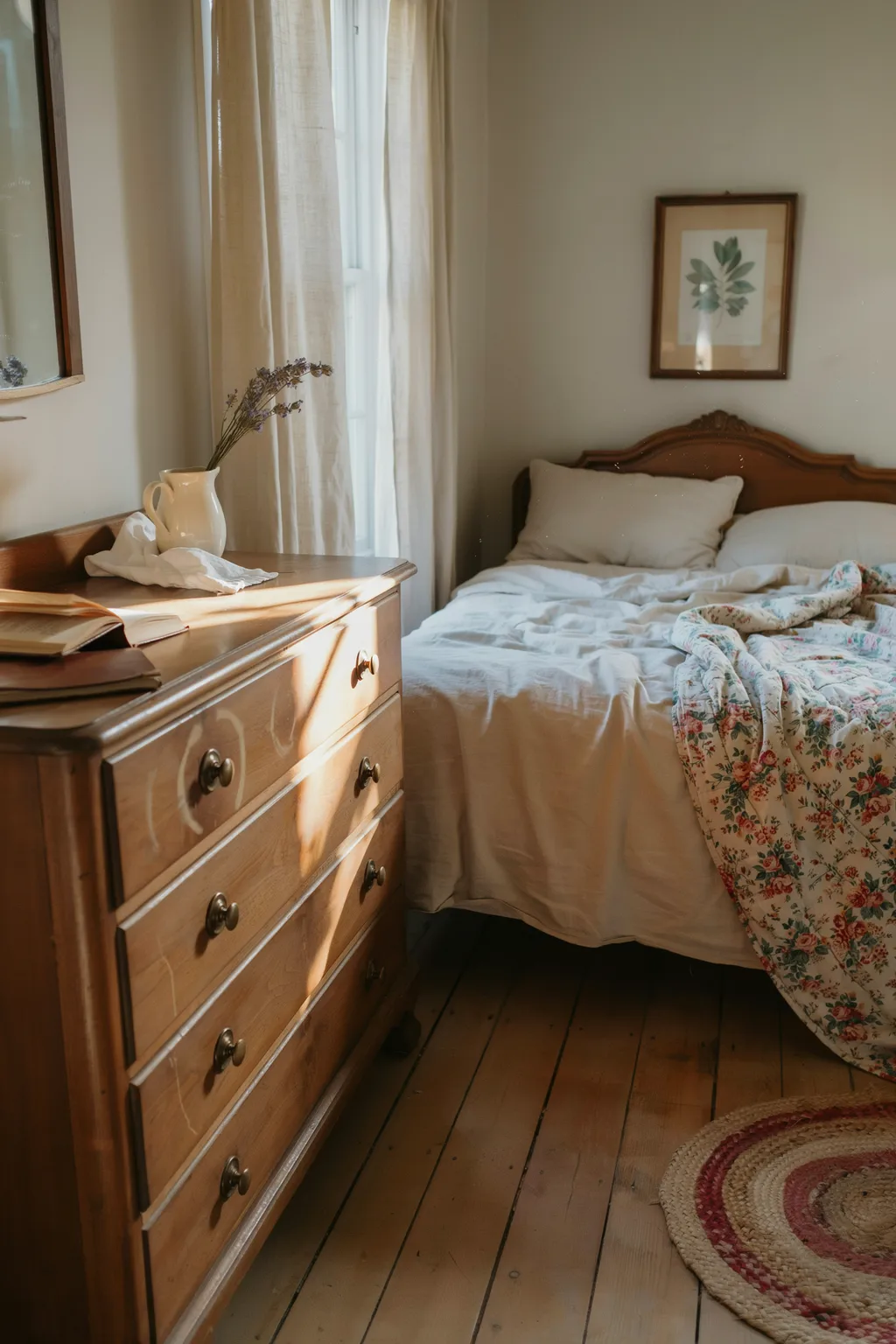
Stripping an old piece back to bare wood usually removes the exact thing that made it worth buying.
Patina is the darkened, slightly uneven surface that decades put on timber, and it cannot be faked convincingly. Sand it off and you are left with something that looks like new furniture doing an impression of old furniture. Clean it, wax it, tighten whatever wobbles, and stop there. Patina is the one part of vintage bedroom ideas you genuinely cannot buy new.
Refinish only when the surface is damaged, water-marked through, or covered in flaking paint. On anything painted before the late 1970s, assume the paint may contain lead and get it checked before you sand a single inch.
Sanded to bare wood and re-varnished. Even color, no history, and it now reads as a modern reproduction.
Washed, waxed, joints tightened. Marks and darkening left alone, and the piece still looks its age in a good way.
6. Bring Back a Vintage Floral, Just Not Everywhere
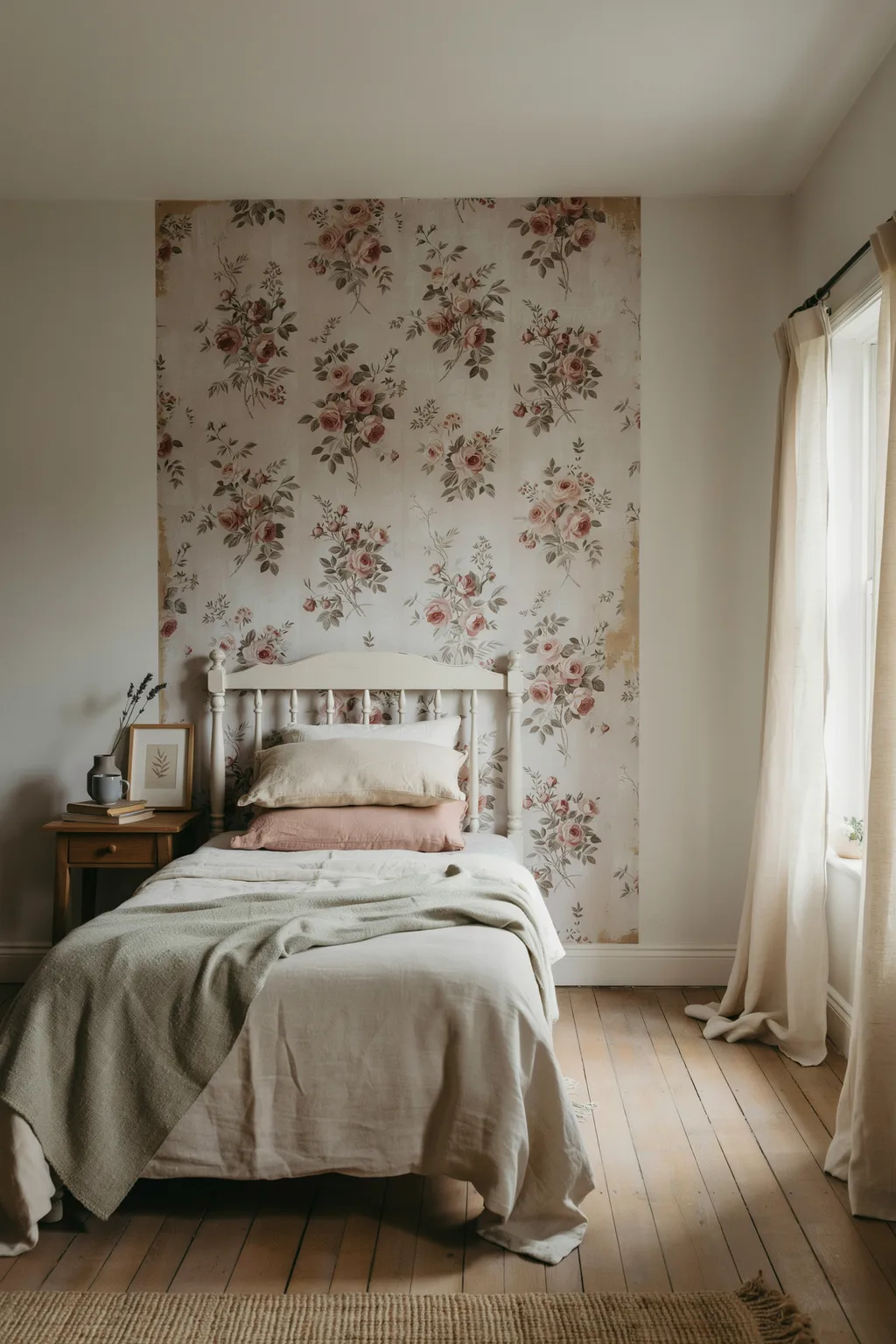
A single floral surface does more for a vintage room than six of them.
Florals earned their bad reputation by covering everything at once: curtains, bedding, wallpaper, and a chair, all in the same sprig. Choose one place instead. A papered wall behind the bed, or a pair of curtains, or one upholstered chair in the corner. Keep the rest plain and the pattern becomes a feature rather than a fog you have to look through.
Small repeating prints read older and busier. Larger, sparser patterns tend to sit more comfortably in a modern room.
- ▸Best spot: the wall behind the headboard, where you never sit facing it.
- ▸Second best: curtains, which move and break the pattern up.
- ▸Smallest dose: one upholstered chair or a single cushion.
- ▸Avoid: the same print on bedding and walls at once.
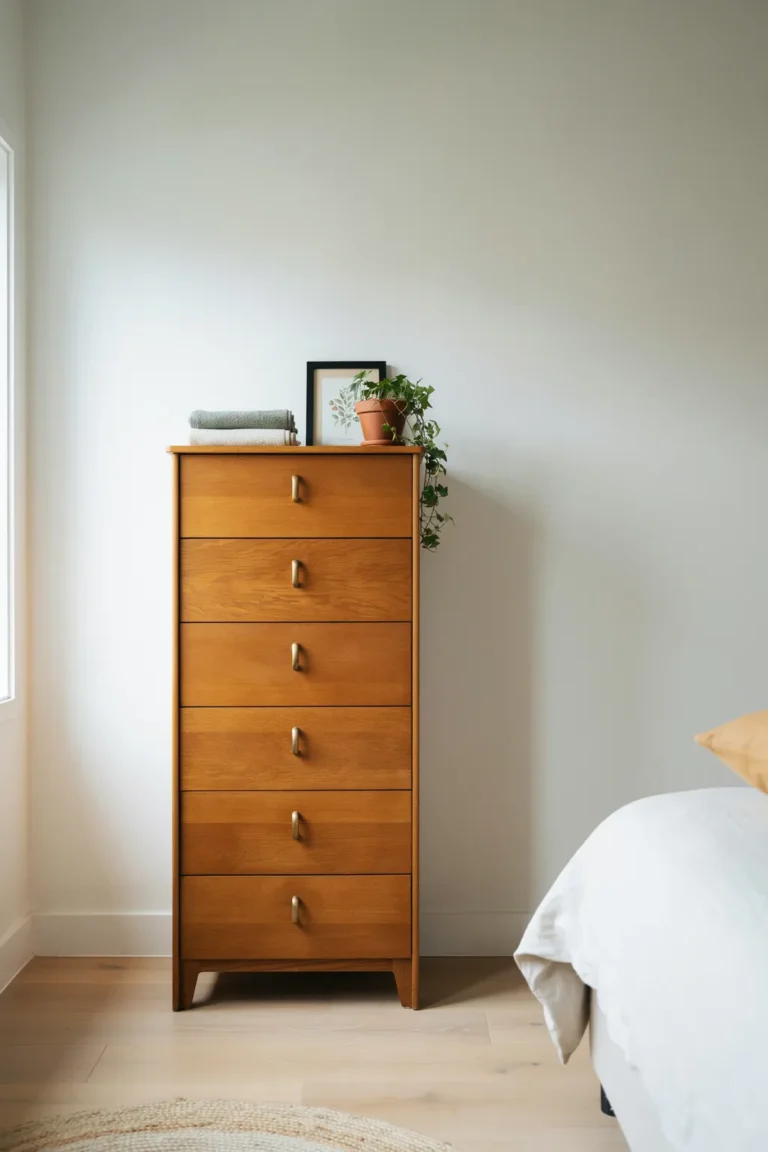
7. Add a Mid-Century Teak Dresser
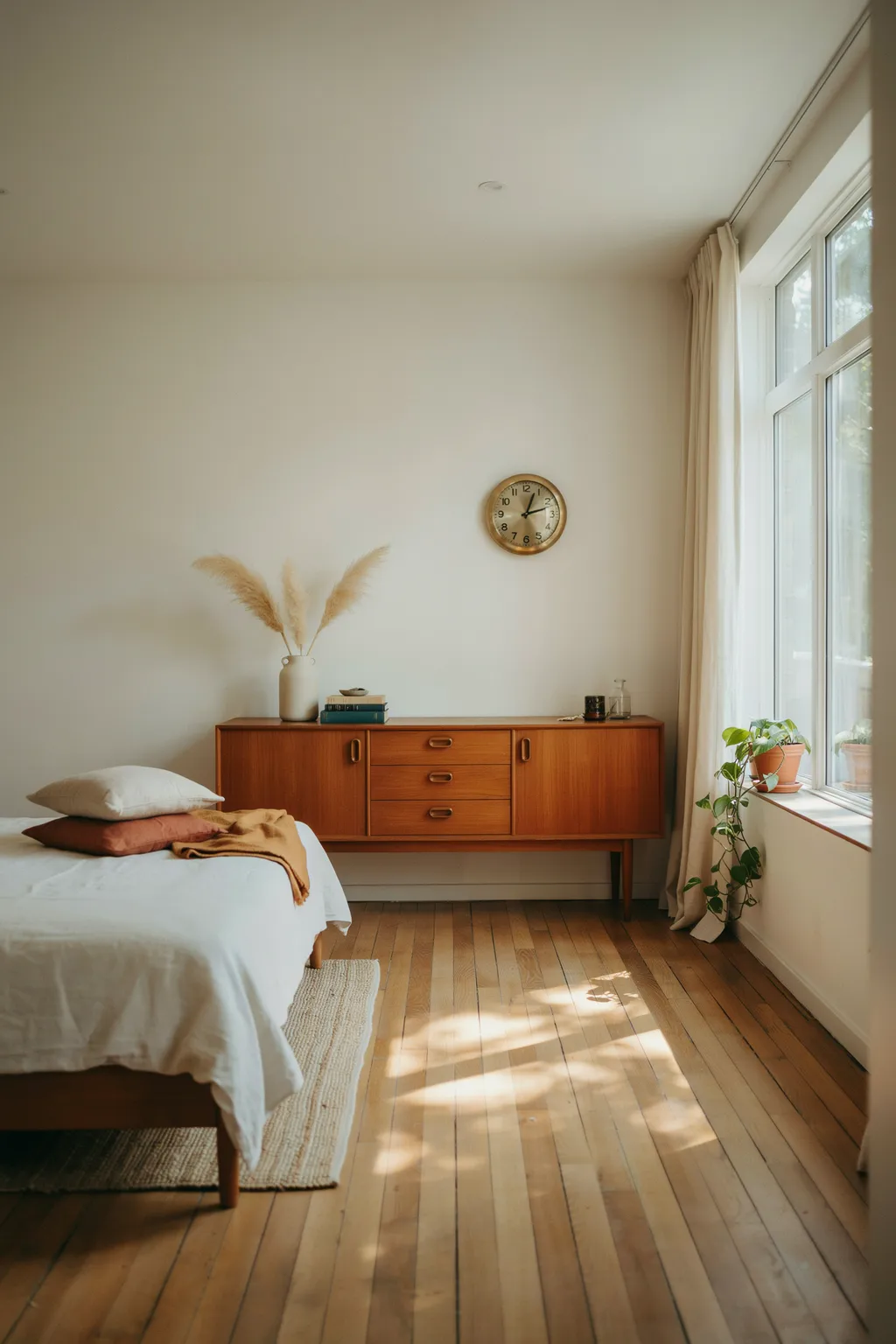
Teak turns up at house clearances more often than almost any other decent old furniture.
Mid-century dressers run low and long on tapered legs, which keeps floor visible and stops a bedroom feeling blocked in. The warm orange-brown of oiled teak does something useful against white walls too, adding heat that painted furniture never manages. Check the drawers slide properly before committing, because sticking runners on a heavy dresser become a daily irritation fast.
Teak dries out over time. A wipe of teak oil once or twice a year stops it going gray and chalky.
8. Make a Brass or Iron Bed the Centerpiece
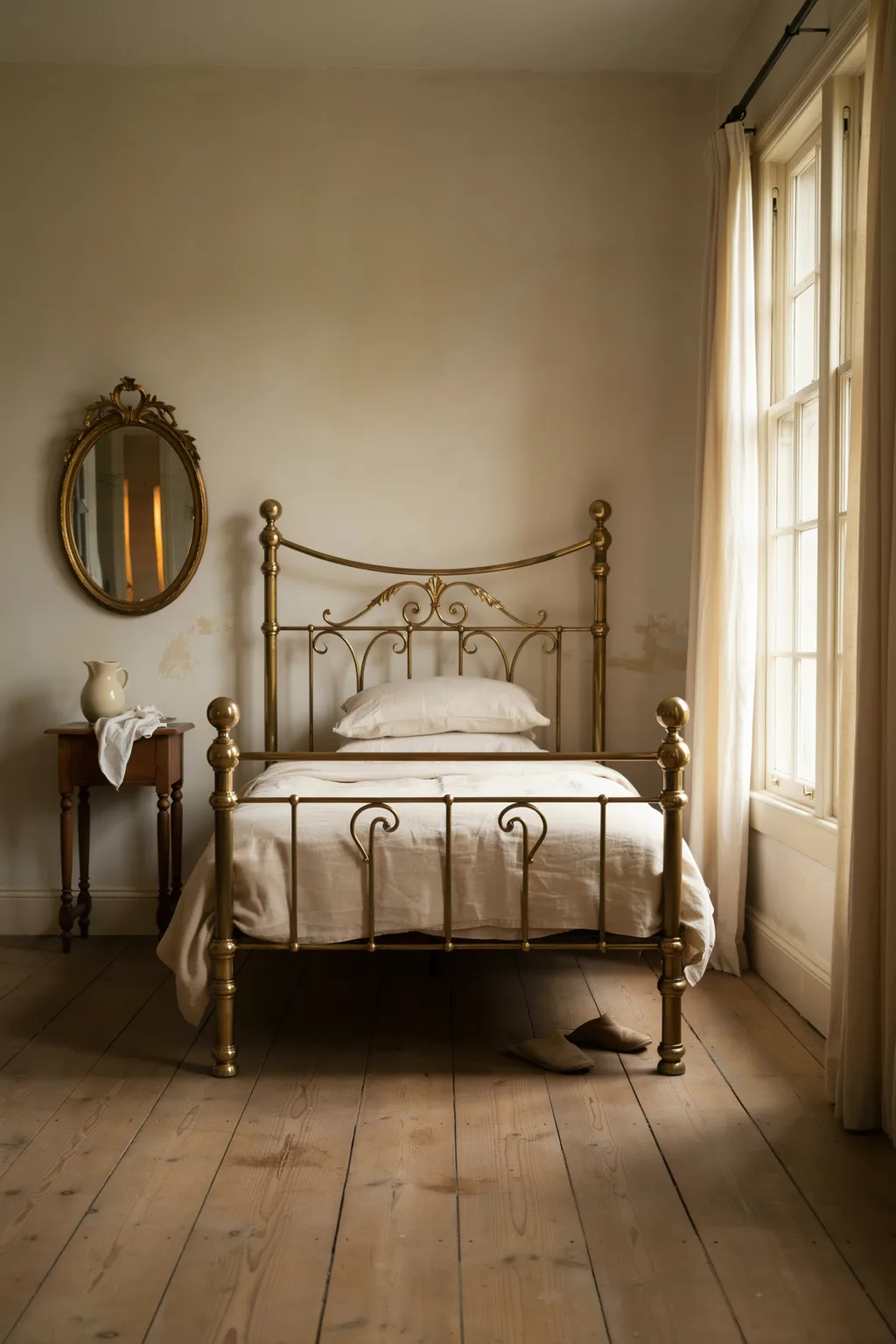
Let the bed frame be the oldest thing in the room and keep everything else quiet.
Brass warms a space and suits softer, prettier schemes. Black iron reads graphic and works better against plain modern walls. Both leave the wall visible through the rails, which is exactly why they suit small bedrooms better than a solid upholstered headboard does.
Old metal beds squeak. Tighten every bolt the day it arrives, and add felt or rubber washers at the joints if it still complains at night.
9. Shop Estate Sales Before Antique Shops
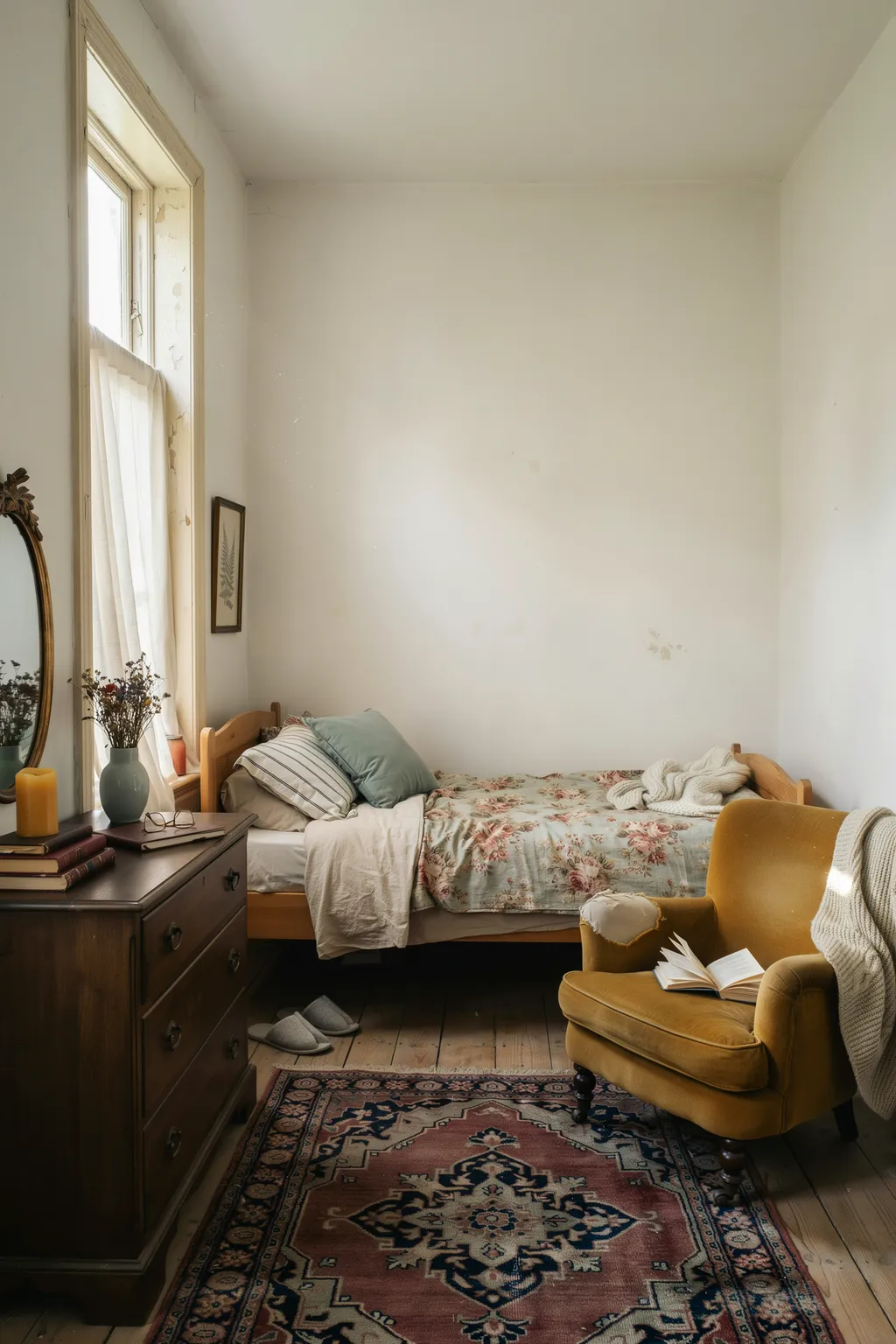
The same chest of drawers carries three different prices depending on where you find it.
Antique shops have already done the hunting and priced that labor in. Estate sales, house clearances, and local auction listings are where those same pieces sit before anyone has cleaned them up. The cheapest vintage bedroom ideas nearly always start at a sale rather than a shop. Online marketplace listings are worth watching as well, particularly the ones photographed badly in a dim room, since poor photos get far fewer views.
Go late on the final day of an estate sale. Sellers would rather discount than pack the whole lot up again.
- ▸Cheapest: house clearances and end-of-day estate sales.
- ▸Best value: local auction houses, especially unglamorous lots.
- ▸Worth watching: marketplace listings with bad, dim photographs.
- ▸Priciest: antique shops, where the finding is already done for you.
10. Check for Woodworm and Damage Before You Buy
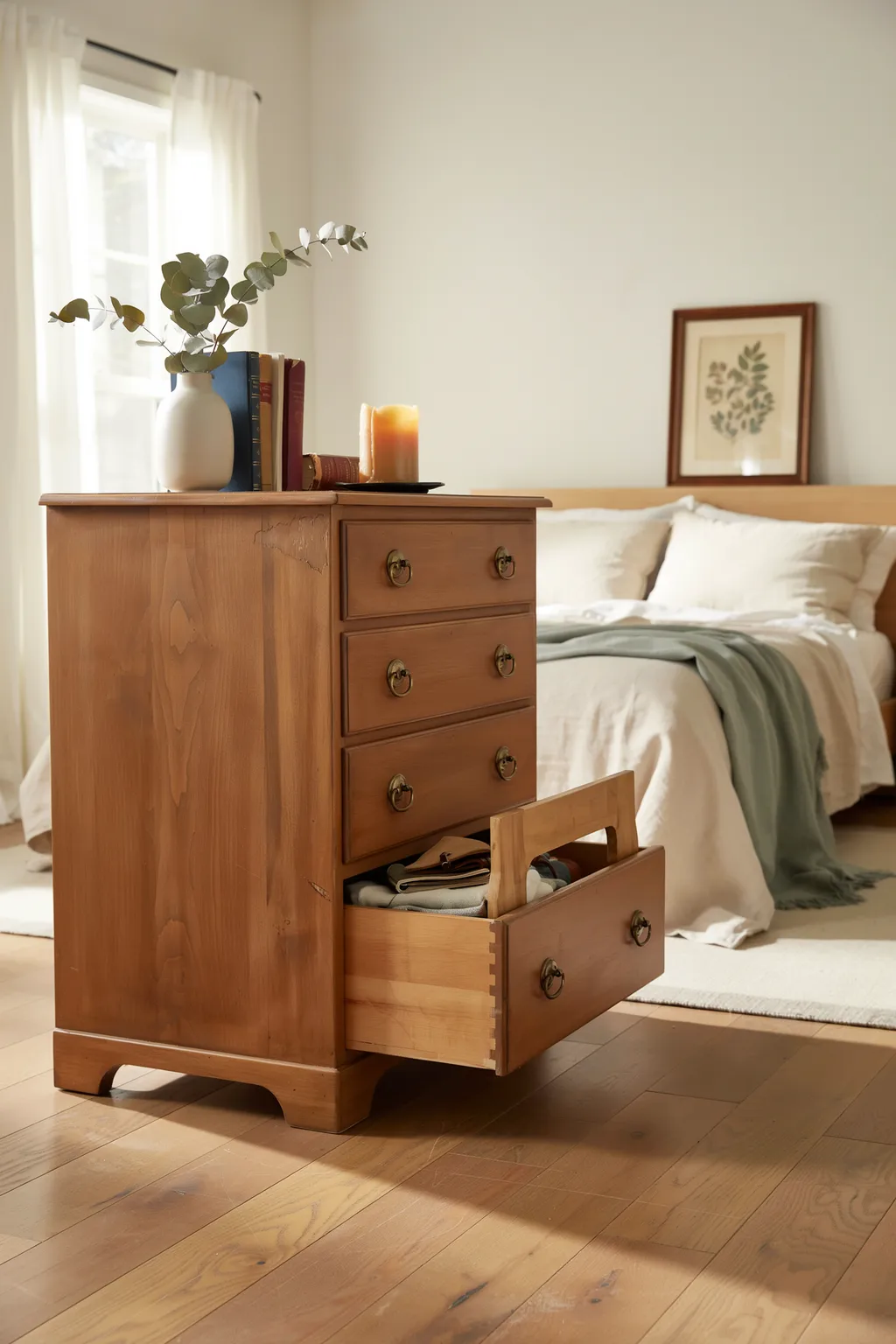
Small round holes in old wood are not always a charming sign of age.
Active woodworm leaves clean-edged holes with fine powder underneath, and it can spread to other furniture in your house. Old, treated damage is dry, dusty, and stable. Learn the difference before you carry anything into a bedroom. Check the joints, the drawer bottoms, and the underside, which is where sellers almost never clean.
If the piece is painted and predates the late 1970s, the EPA’s guidance on lead is worth reading before you sand or strip a single inch of it.
Check before money changes hands
11. Hang a Gilt-Framed Mirror Above the Dresser
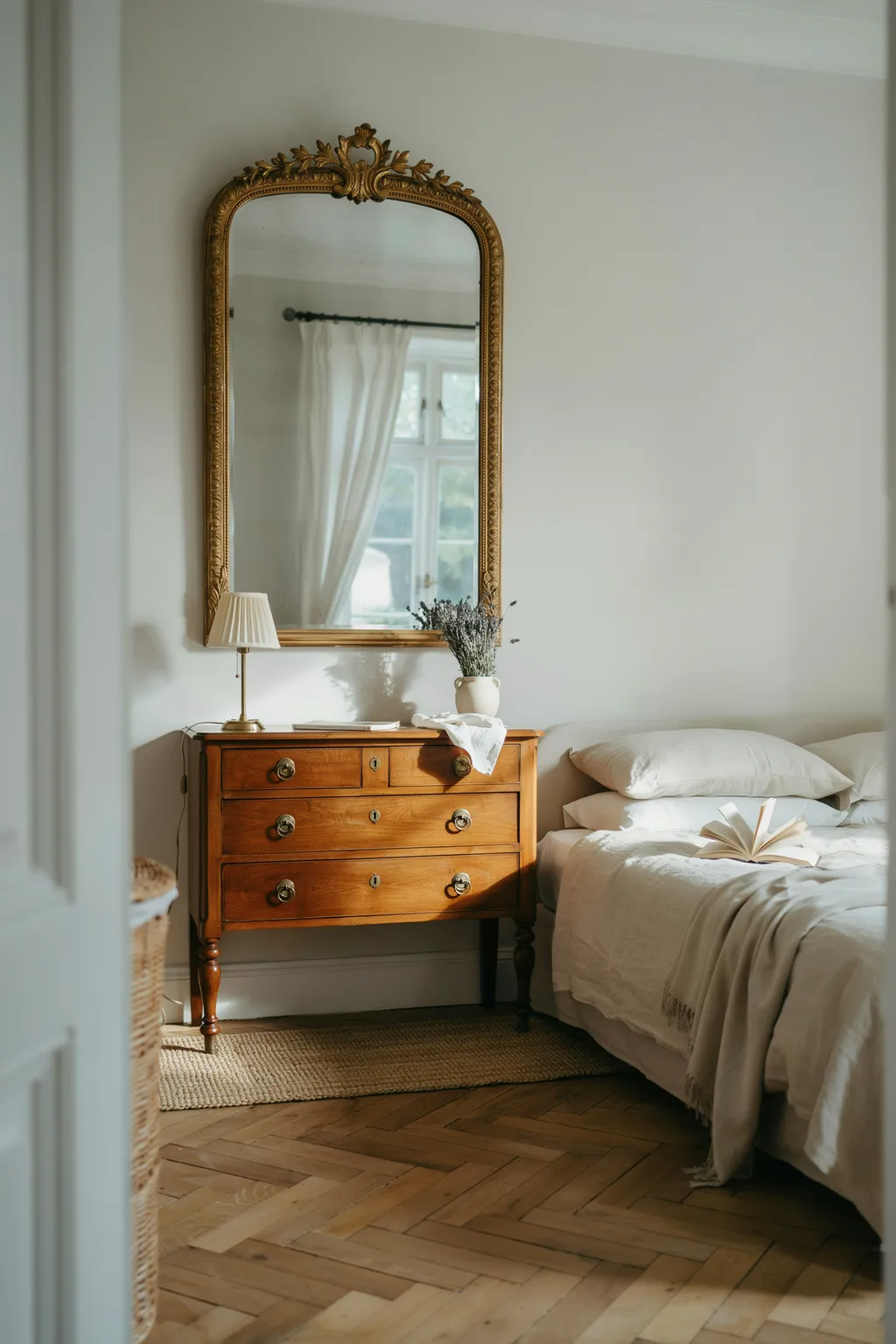
Hang the mirror where it can catch a window rather than simply fill a gap.
An old gilt frame does two jobs at once. The gold warms the wall, and the glass throws daylight back into the room, which matters in bedrooms that only get sun for part of the day. Foxed, spotted glass is worth keeping rather than replacing. Those cloudy patches are what tell you the mirror is genuinely old.
Hang it roughly 6 to 8 inches above the dresser top so the two read as one arrangement instead of two unrelated objects.
💡 Quick Tip
Before hanging, sit on the edge of the bed and look at the wall. If the mirror will reflect a blank ceiling or a doorway from there, move it. A mirror is only worth the wall space if it reflects something you actually want to see twice.
12. Build a Cottagecore Corner With Pressed Flowers
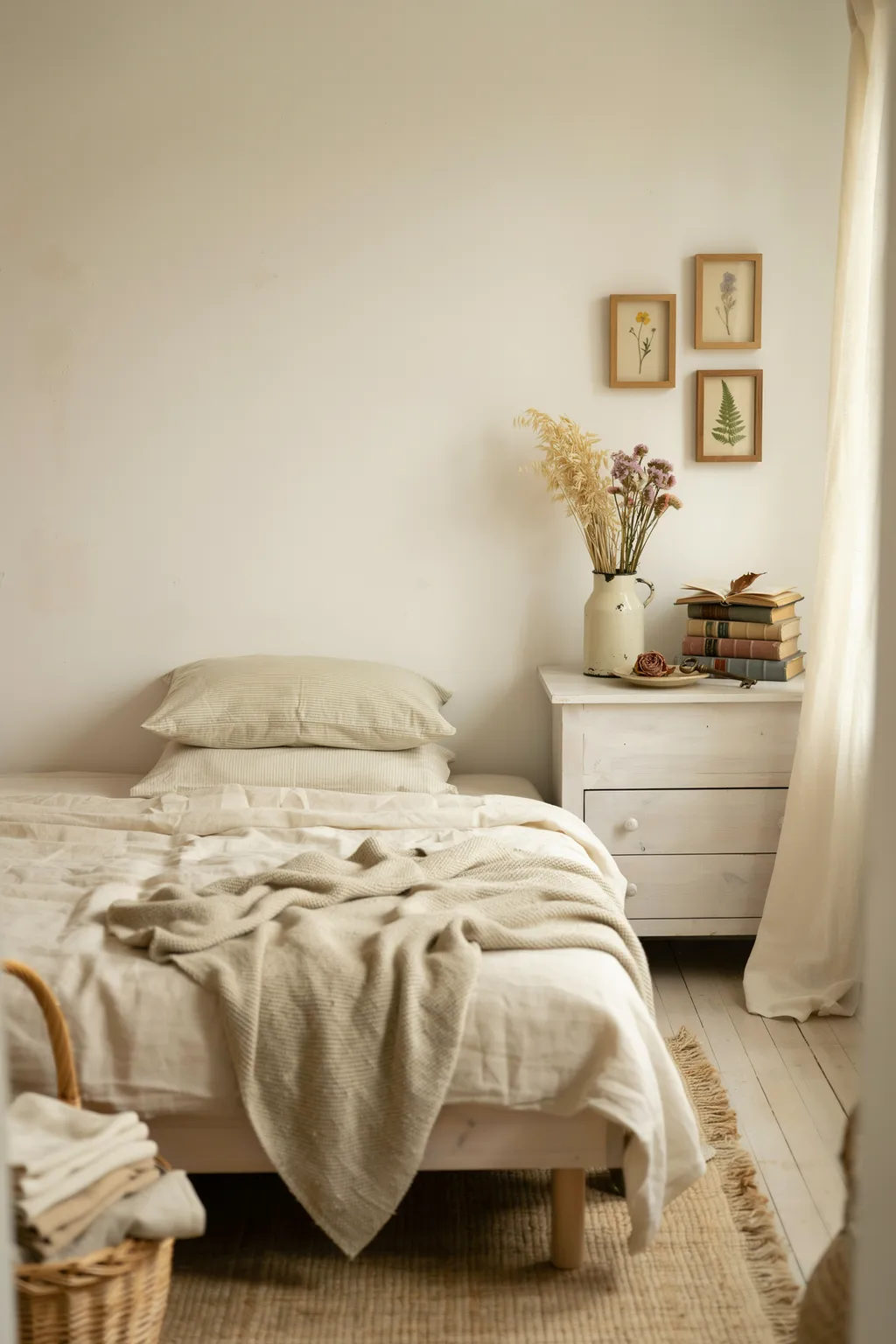
Press a few stems in summer and frame them by autumn.
Some of the prettiest vintage bedroom ideas cost almost nothing, and this is one of them. Pressed flowers in plain glass frames give a bedroom the handmade quality that bought art never quite manages. Group three or five small frames rather than hanging one large piece. Add a jug of dried stems on the dresser and a short stack of old books, and that corner does the work of a far bigger scheme.
Keep pressed flowers out of direct sun. They fade to brown within a season on a bright wall.
13. Swap Modern Lamps for Vintage Glass or Brass
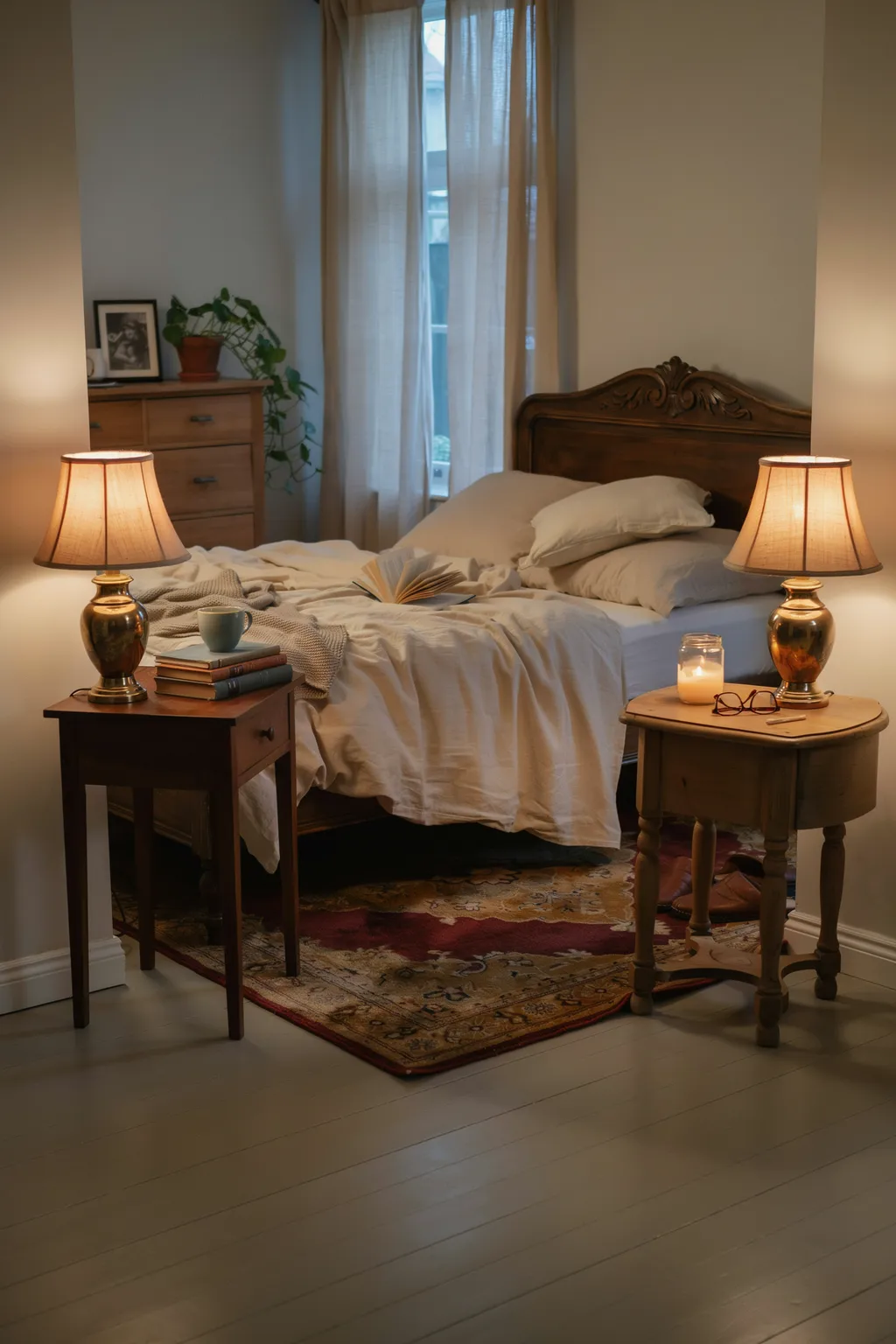
A cheap modern lamp beside an antique dresser quietly undoes the dresser.
Old glass and brass table lamps turn up constantly at markets and often cost less than new ones. Glass suits softer, prettier rooms and all but disappears when switched off. Brass reads heavier and holds its own next to dark wood. Either way, a linen or parchment shade beats a shiny modern one every time.
Have any old lamp rewired before it goes near a bed. Perished flex on a bedside lamp is not a risk worth taking to save a few dollars.
Check the base is heavy enough not to tip when the flex is tugged.
Have it rewired by an electrician, whatever the seller tells you.
Replace the shade. Original shades are usually stained or brittle.
Fit a warm bulb. Cool white makes old brass look gray and dead.
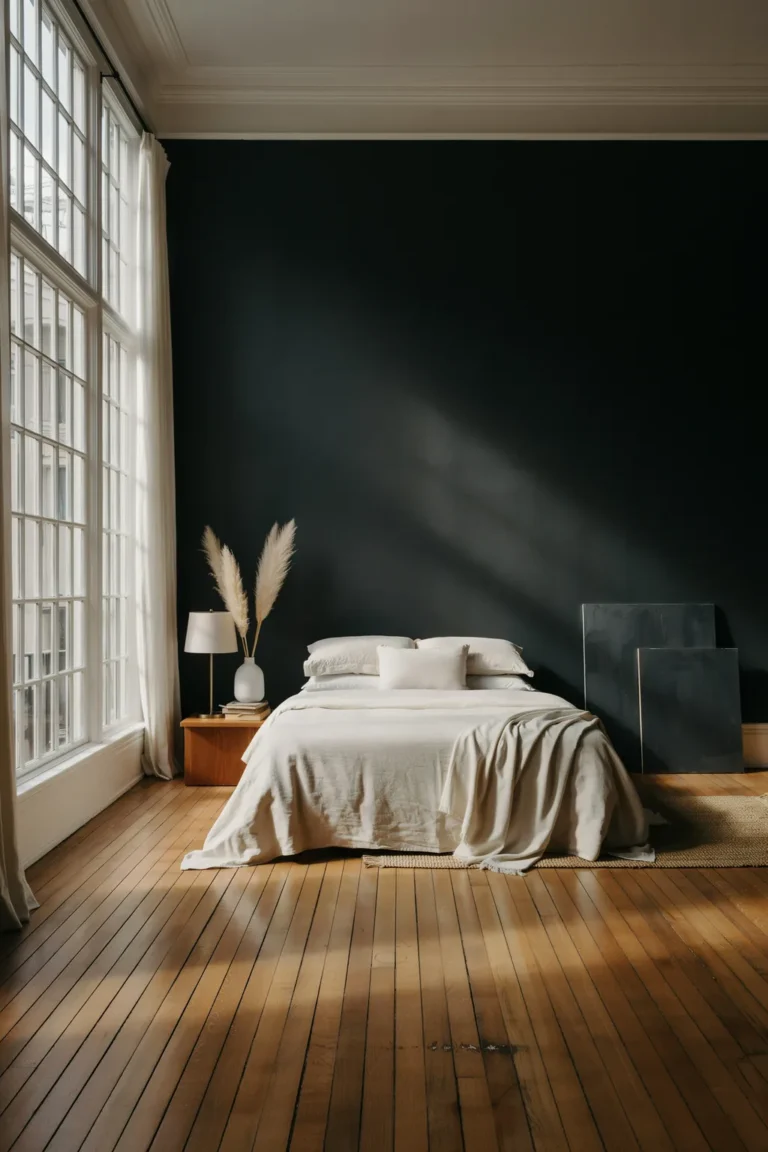
14. Keep the Walls Quiet So the Furniture Speaks
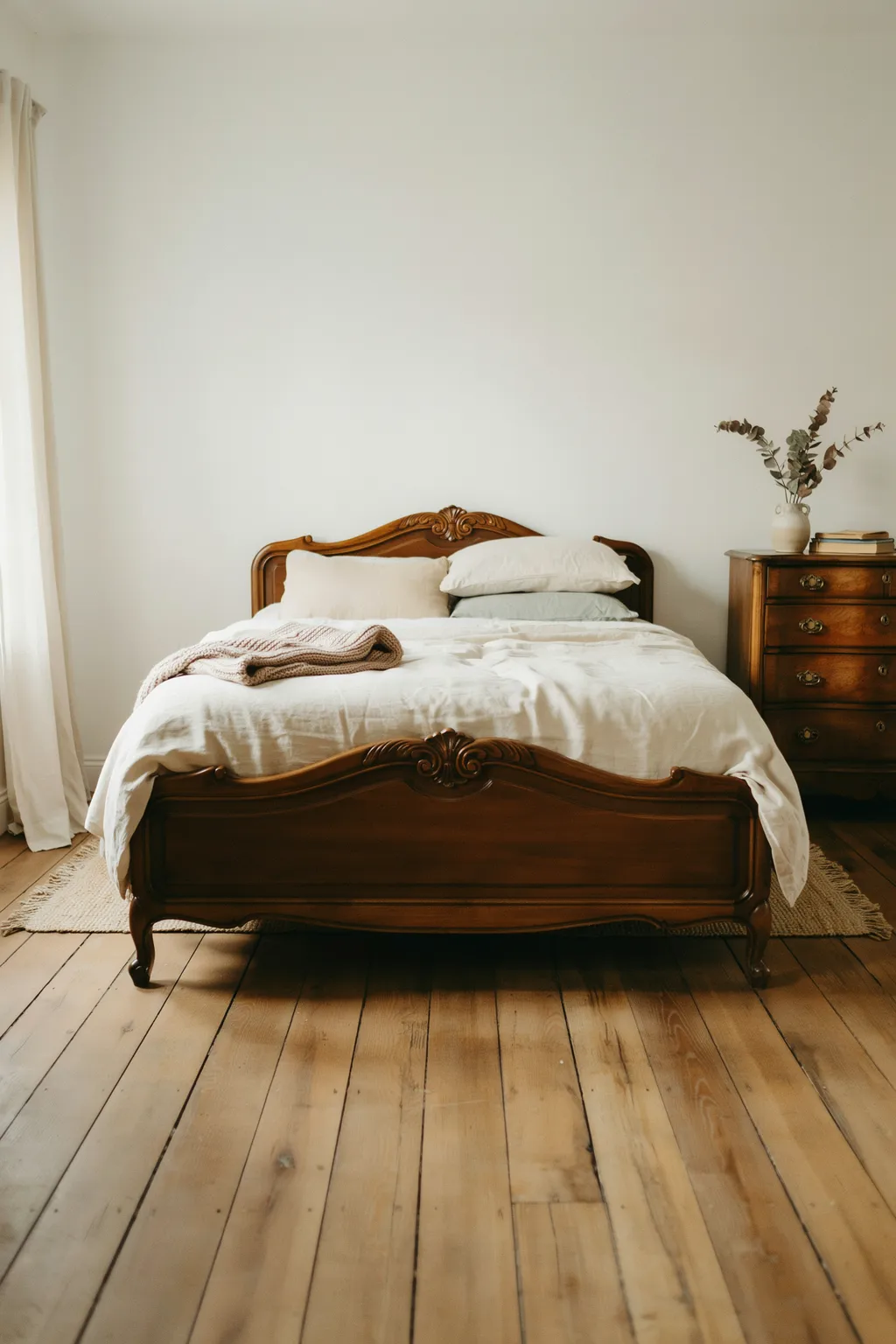
Old furniture is already busy enough without patterned walls behind it.
Carved edges, turned legs, aged grain, and brass handles all carry their own detail. Put a bold wallpaper behind all of that and the room has nowhere for your eye to rest. Plain walls are the least glamorous of all vintage bedroom ideas and among the most effective. Warm white, soft chalk, or a muted green or clay give the furniture a backdrop to stand against, and they let you swap pieces later without redecorating.
The exception is that single papered wall from earlier. One patterned surface, everything else calm.
Let the furniture be the pattern. Walls in a vintage room are a backdrop, not another thing competing for attention.
15. Air Out and Wash Vintage Textiles First
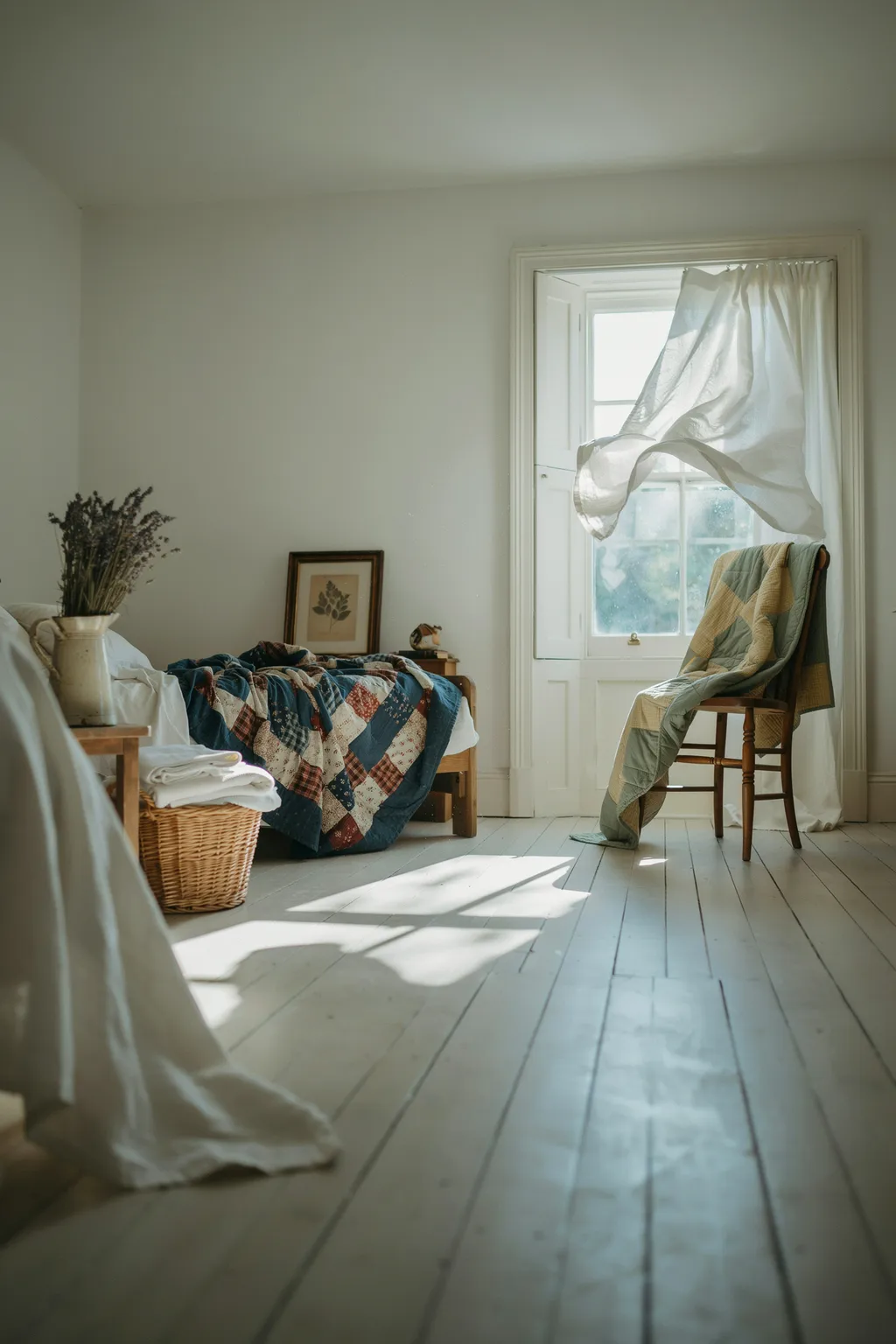
People bring home a beautiful old quilt and put it straight onto the bed.
Old textiles carry the smell of wherever they were stored, and that mustiness transfers to everything around them. Air anything vintage outdoors on a dry day before it comes near a bedroom. Hand wash cotton quilts in cool water, and take anything with silk, wool, or fragile stitching to a cleaner rather than gambling on a machine cycle.
If a piece still smells after a proper airing and a wash, it generally always will.
Air it outside in shade for a full day. Direct sun fades old dyes.
Test a hidden corner for color run before anything gets wet.
Hand wash cotton in cool water with a gentle detergent, no bleach.
Dry flat, never wrung. Old seams give way under twisting.
16. Use Lace and Crochet Without the Shabby Chic Cliché
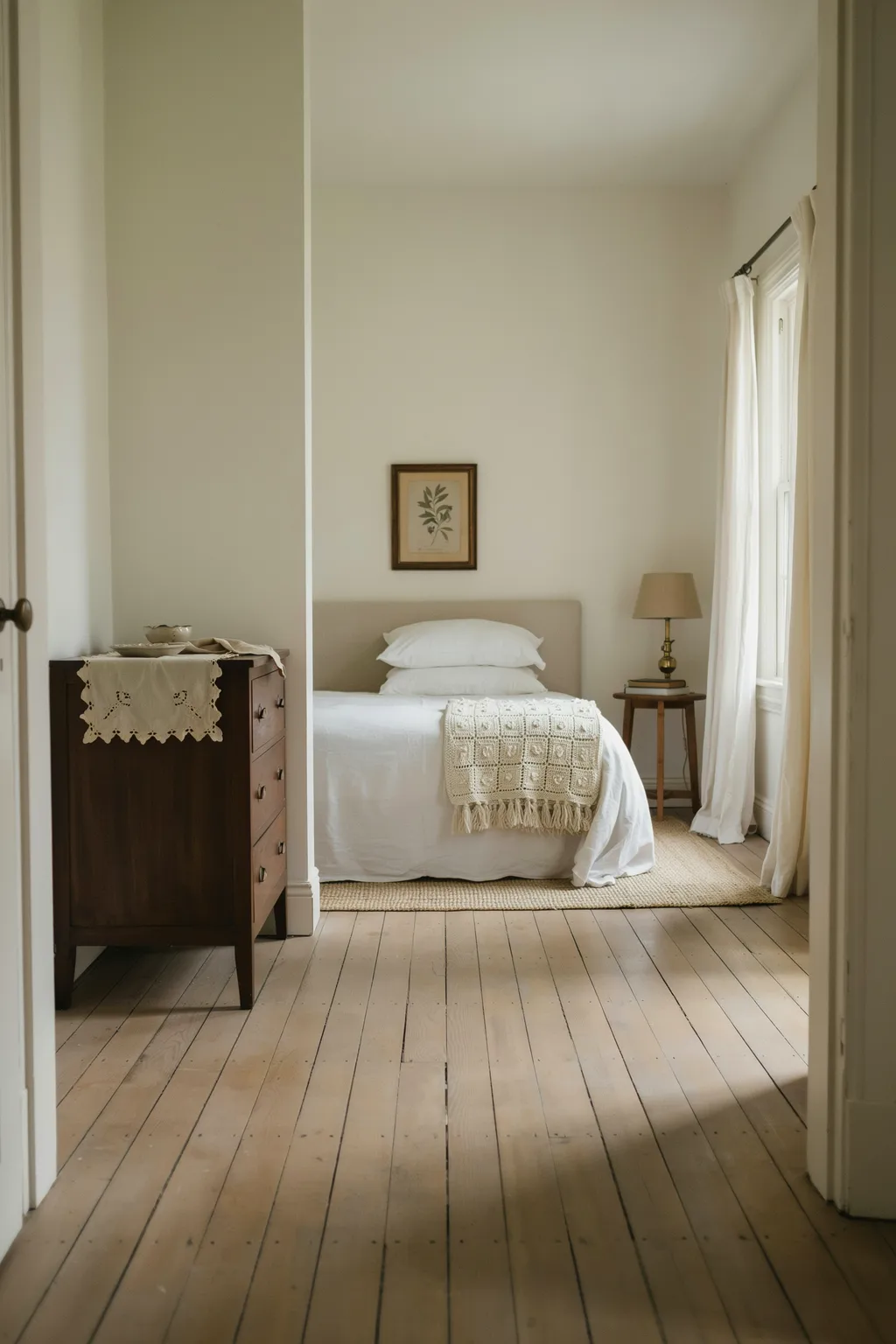
Lace is not the problem. Volume is.
Shabby chic fell out of favor because it put crochet and lace on every surface at once, all of it distressed, all of it white. One handmade lace runner on a dark dresser looks like something else entirely. So does a single crocheted blanket folded at the foot of an otherwise plain bed. The contrast between the delicate thing and the plain thing is what makes it read as considered.
Keep the pieces genuinely old where you can. Machine-made lace looks flat and even next to hand-worked cotton.
One lace runner on a dark or plain surface.
A single crocheted throw folded at the foot of the bed.
Hand-worked pieces, where the stitching is slightly uneven.
Lace at the window, on the bed, and on every surface.
Everything painted white and sanded at the edges.
Machine lace, which reads uniform and slightly plastic.
17. Pick One Era and Let It Lead
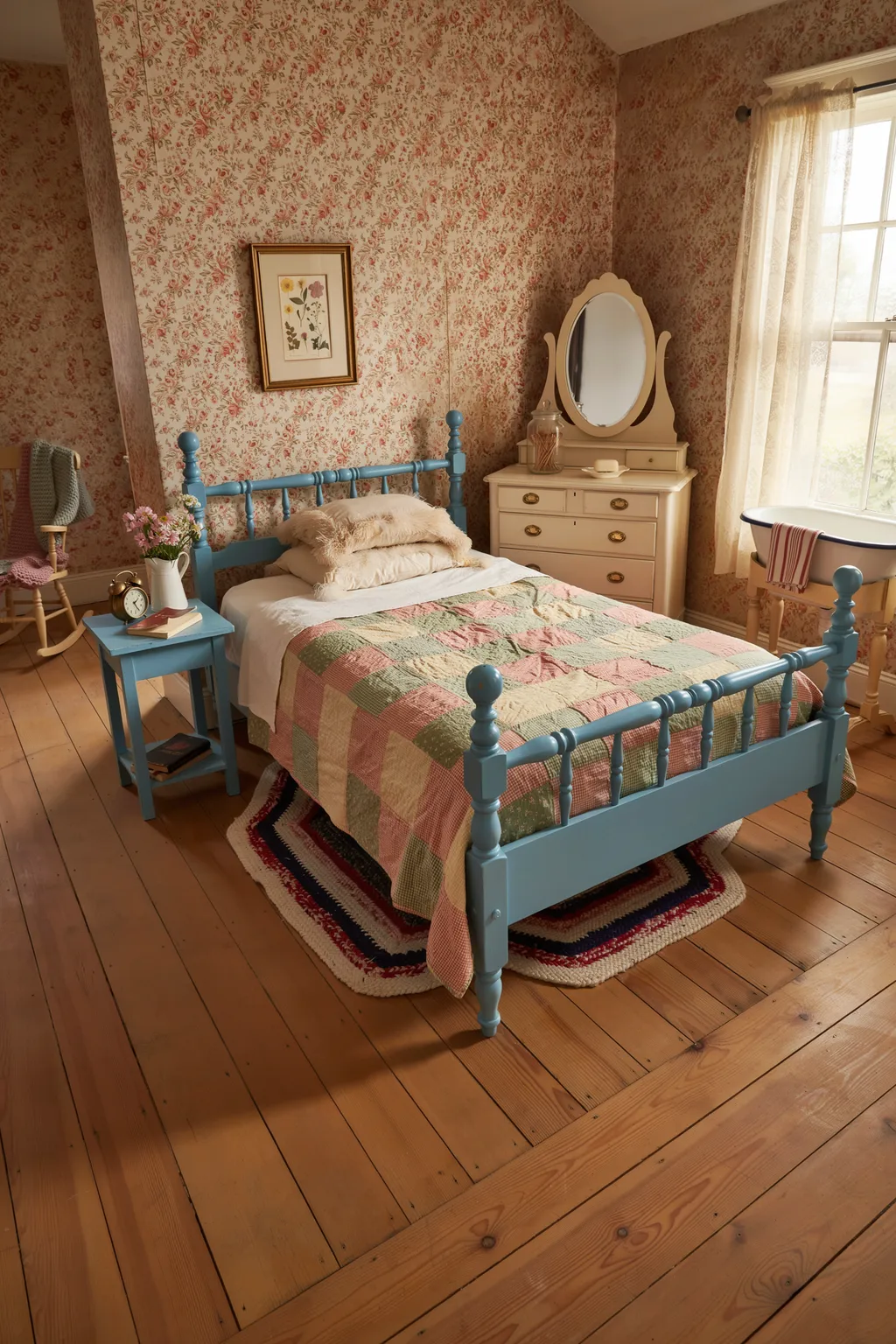
Choosing a decade makes every decision after it easier.
You do not have to be strict about it. One era leads, and one or two pieces from elsewhere keep it from feeling like a museum set. A 1940s cottage room can take a mid-century lamp. A Victorian frame can sit happily under a modern print. Most vintage bedroom ideas fall apart for one reason alone, which is one piece from every decade at once, and that reads as random rather than collected.
If you already own something you love, let that piece decide the era for you.
| Era | What to hunt for |
|---|---|
| Victorian | Iron or brass beds, carved dark wood, gilt mirrors |
| 1940s cottage | Quilts, painted furniture, small florals, enamelware |
| Mid-century | Teak dressers, tapered legs, glass lamps, wool blankets |
| 1970s | Rattan, warm earth tones, macrame, chunky pottery |
18. Finish With One Odd Object That Has a Story
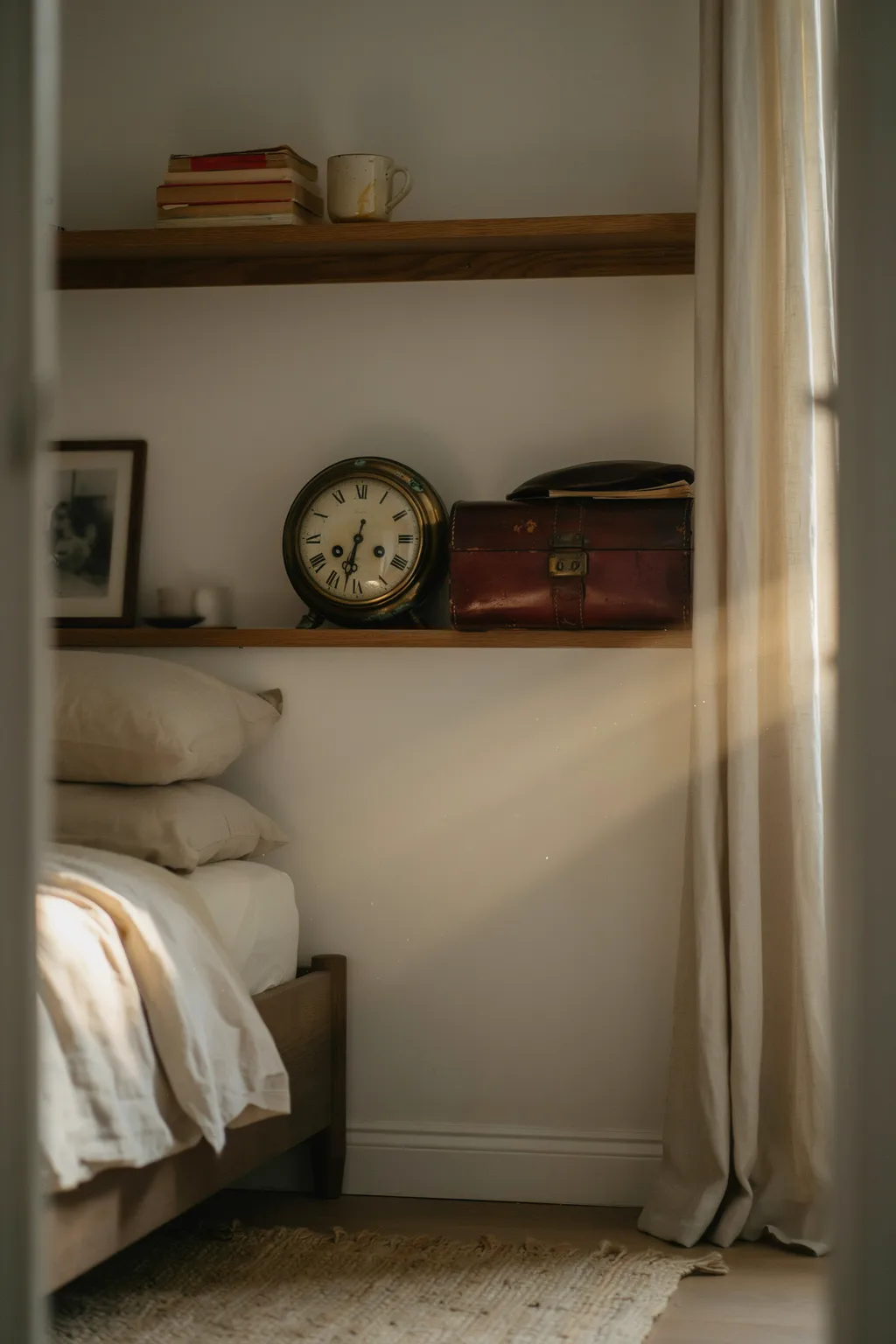
The thing guests always ask about is rarely the expensive piece.
It tends to be the ship’s clock, the leather hat box, the pair of worn wooden shoe lasts sitting on a shelf. Odd objects give a room the sense that it belongs to a person rather than to a scheme, and they cost very little precisely because nobody else is competing for them. The best vintage bedroom ideas nearly always end with something personal rather than something bought to match.
One is enough. A whole shelf of curiosities stops being interesting and becomes a display.
Before You Buy Anything
Old furniture does the hard work in a bedroom. It brings texture, weight, and a bit of history that new pieces spend years trying to imitate. The trick is giving it room to be seen: plain walls, modern bedding, one pattern at most, and nothing else competing for the same attention.
Buy slowly. One anchor piece you genuinely like beats a whole set bought in a single afternoon, and it leaves space for the odd find that turns up months later.
Save this list of vintage bedroom ideas for the next time you are standing in a market wondering whether that chest of drawers is worth carrying home.
If you only do three things