15 TV Table Ideas That Suit Any Living Room
The television is almost always the least attractive object in a living room. Big, black, rectangular, and impossible to hide.
Most advice deals with that by trying to disguise it, which rarely works. Cabinets that swallow the screen, art frames that fool nobody, entire walls built to camouflage one appliance. The simpler answer is to stop hiding it and start giving it a proper base, at the right height, with the cables out of sight.
That is where a lot of rooms go wrong. The screen sits too high because somebody mounted it above a fireplace. The stand is narrower than the TV, so the whole arrangement looks top-heavy. Six cables hang down the wall in plain view. None of that is a furniture problem, and none of it costs much to fix.
These TV table ideas cover both sides. Ten looks worth copying, including real freestanding tables and sideboards rather than only built-in walls, then the practical rules that decide whether the finished corner looks deliberate.
Start with the height. Everything else gets easier once that is settled.
1. Pick a Table Wider Than the TV
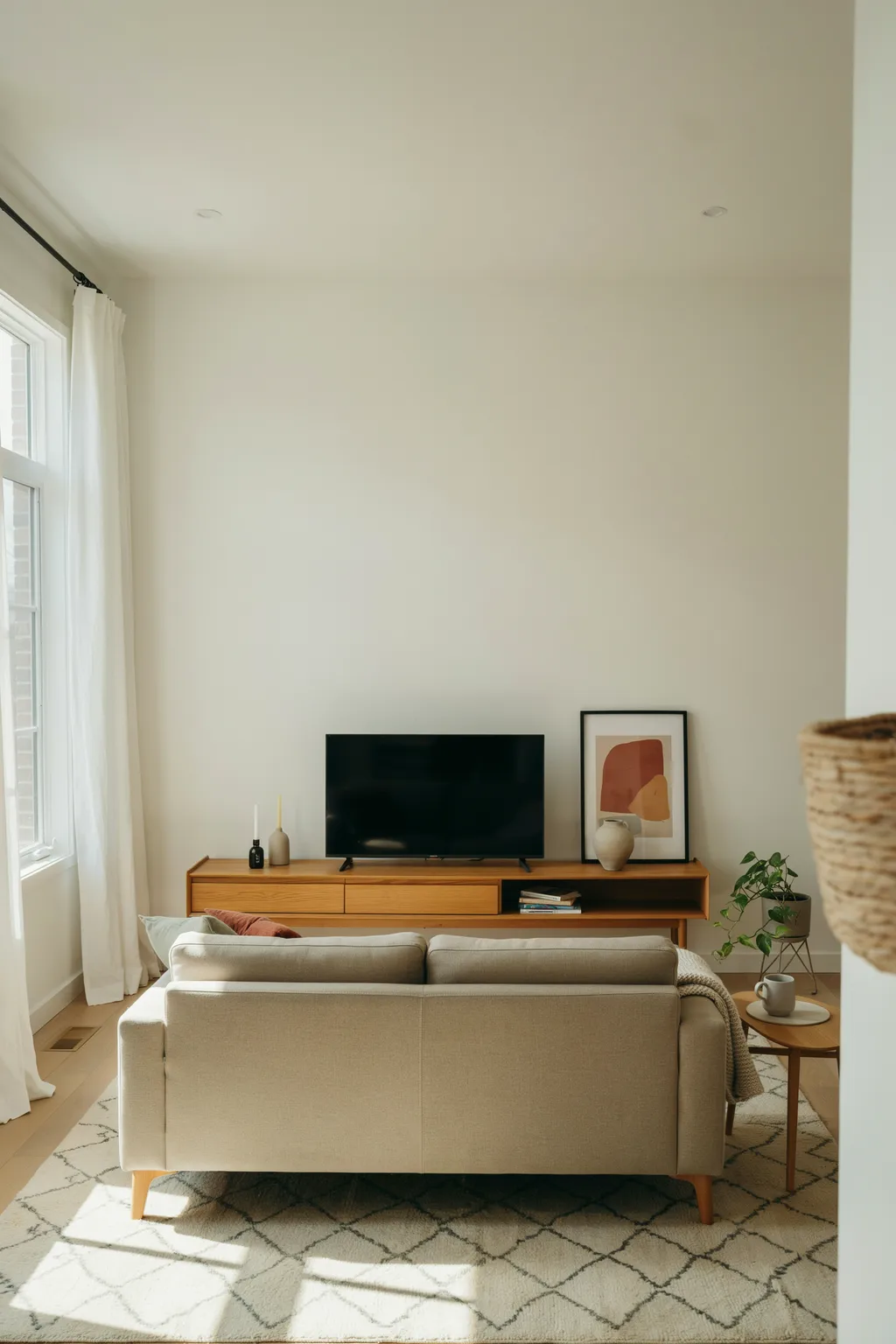
The stand should always be wider than the screen sitting on it.
Most TV table ideas skip this measurement entirely, which is why so many finished corners look top-heavy. A television that overhangs its table looks unstable even when it is perfectly safe, and the eye registers it as wrong before you consciously work out why. Aim for a unit that extends a few inches past the screen on each side. Wider still is fine and often looks better, particularly in a large room.
Measure the screen edge to edge rather than trusting the advertised size. A 55 inch TV is measured diagonally, so its actual width is quite a bit less, and people routinely buy a stand based on the wrong number.
| TV size | Approx width | Unit width to aim for |
|---|---|---|
| 43 in | about 38 in | 44 in or more |
| 55 in | about 48 in | 54 in or more |
| 65 in | about 57 in | 63 in or more |
| 75 in | about 65 in | 72 in or more |
2. A Low Wooden Console for a Calm Room
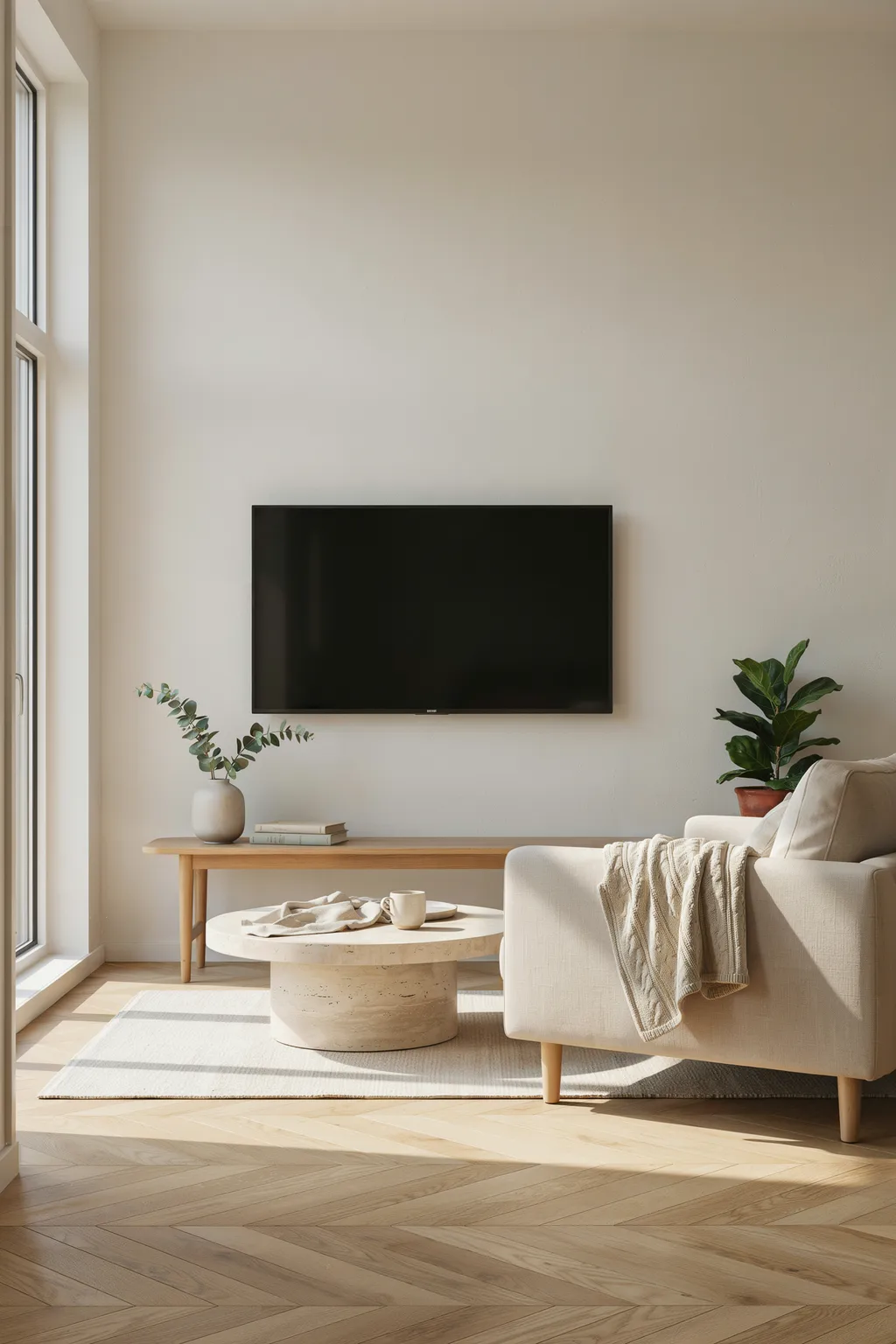
A long, low console does more for a living room than a tall cabinet ever will.
Keeping the unit low leaves wall space above the screen, which stops that corner feeling crowded and gives you somewhere to hang art later on. Oak reads light and Scandinavian, walnut reads warmer and more formal, and painted wood almost disappears against a wall in the same shade.
Look for one with closed storage at one end. Consoles that are entirely open shelving look tidy in photographs and collect clutter in real life.
3. Floating Units That Free Up the Floor
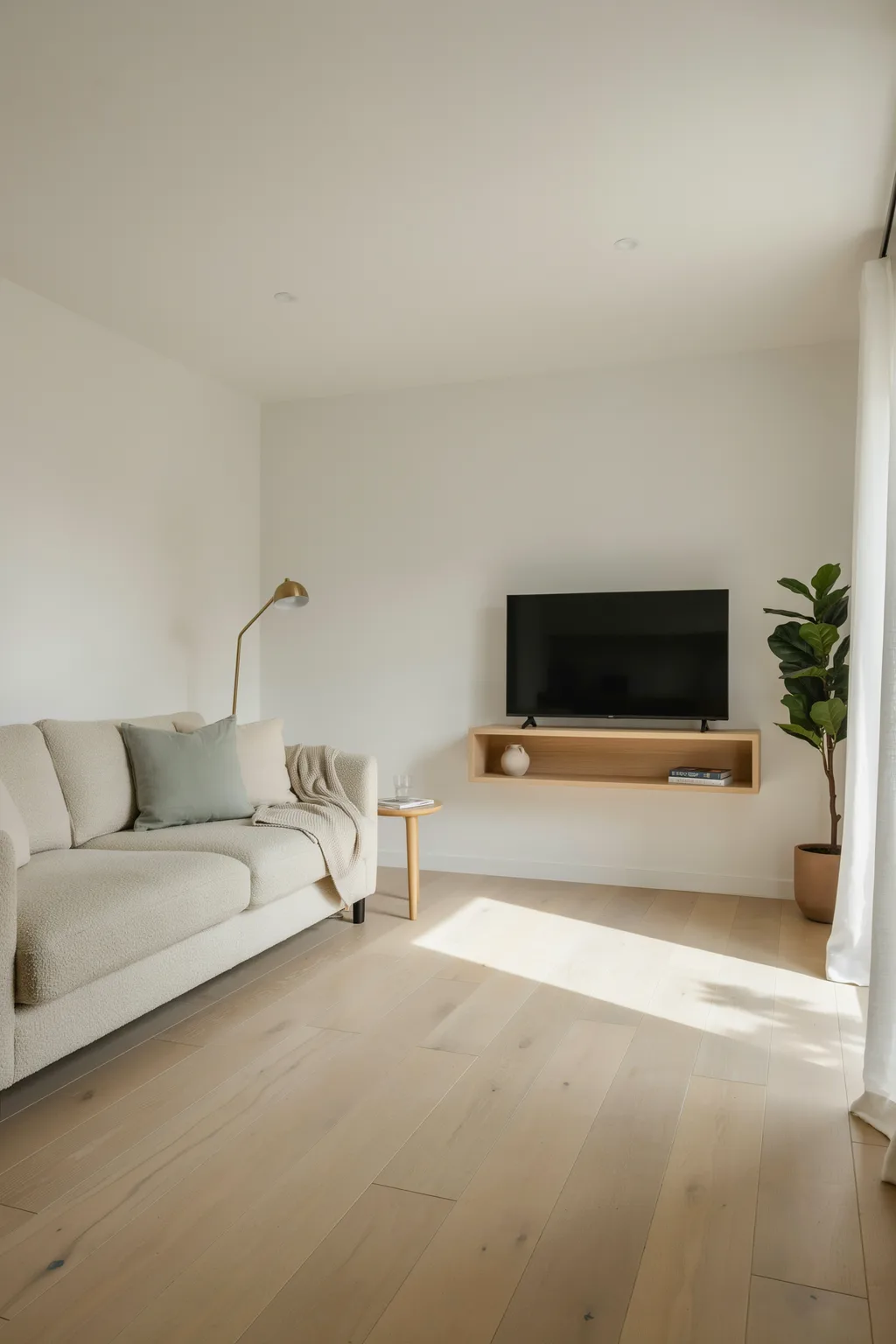
Floor space is the thing small living rooms run out of first.
A wall-mounted unit hands some back, which makes floating consoles among the most space-saving TV table ideas going. With nothing standing on the floor the room reads larger, vacuuming gets easier, and a robot vacuum can actually reach underneath. It also lets you drop cables straight down inside the wall, if you are willing to open the plaster up.
The fixing matters far more than the unit does. A floating console carrying a soundbar and a games console needs to go into studs or proper masonry fixings, never into plasterboard on its own.
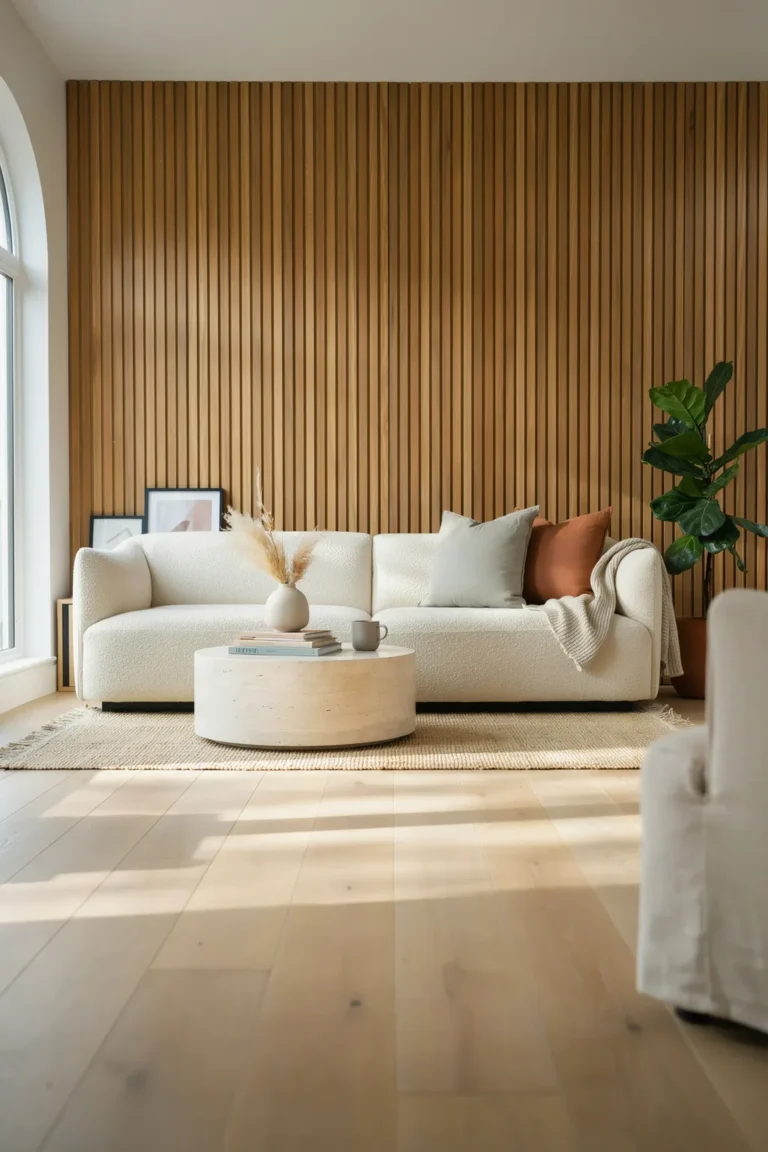
4. Build a Slatted Wood Wall Behind the Screen
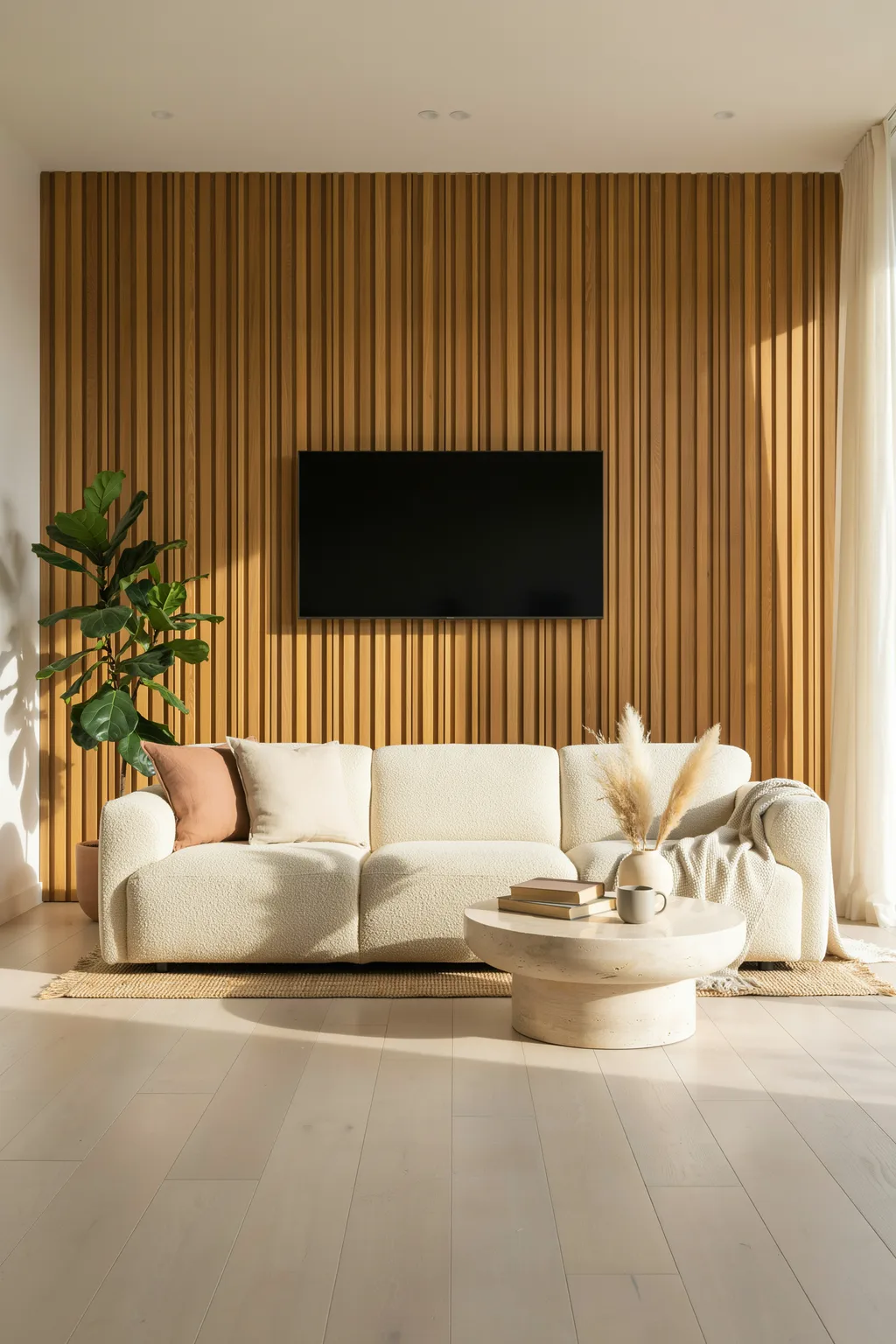
Run the slats wider than the TV and the screen stops looking like it landed there by accident.
A slatted panel behind a wall-mounted television gives that black rectangle a background to sit against, which softens it considerably. Vertical slats suit most rooms. Keep them in a warm wood tone rather than a cool gray one, since the screen is already cold and dark enough on its own.
Leave a gap behind the panel for cables to run down. Fixing the slats flat to the wall and then realizing there is nowhere for the wires to go is a common and thoroughly annoying mistake.
Fix vertical battens to the wall first, leaving a cable channel behind them.
Mark your TV bracket position before any slats go on, and reinforce there.
Run the slats at least a foot past the TV on both sides, floor to ceiling.
Thread the cables through before fixing the final few slats in place.
5. Industrial Metal and Wood Stands
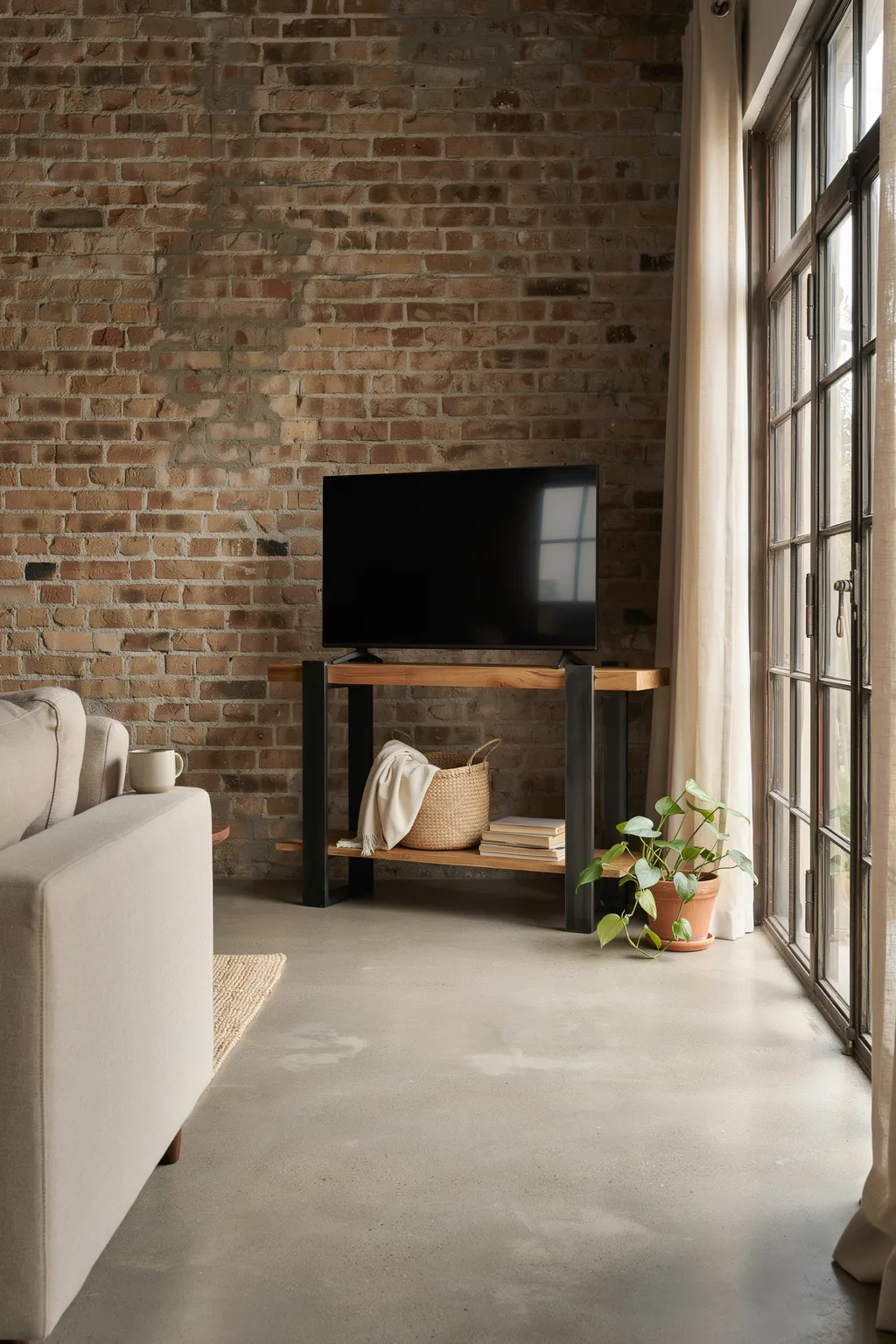
Black metal legs under a solid wood top make the most forgiving TV stand style there is.
The open frame keeps the unit visually light, so it works in a smaller room where a solid cabinet would dominate. The metal also picks up the black of the screen, which ties the two together rather than leaving the television perched on a wooden box.
Open frames do mean visible cables. Pair this style with a cable box or a fabric sleeve, or the tidy look collapses the moment everything is plugged in.
- ▸Works because: the open frame keeps a small room from feeling blocked.
- ▸Pair with: a woven basket on the lower shelf for remotes and controllers.
- ▸Watch for: wobble. Check the frame is welded, not bolted, if you can.
- ▸Plan for: cable cover, since nothing is hidden by a solid back panel.
6. Stone and Marble Tops That Hold Their Own
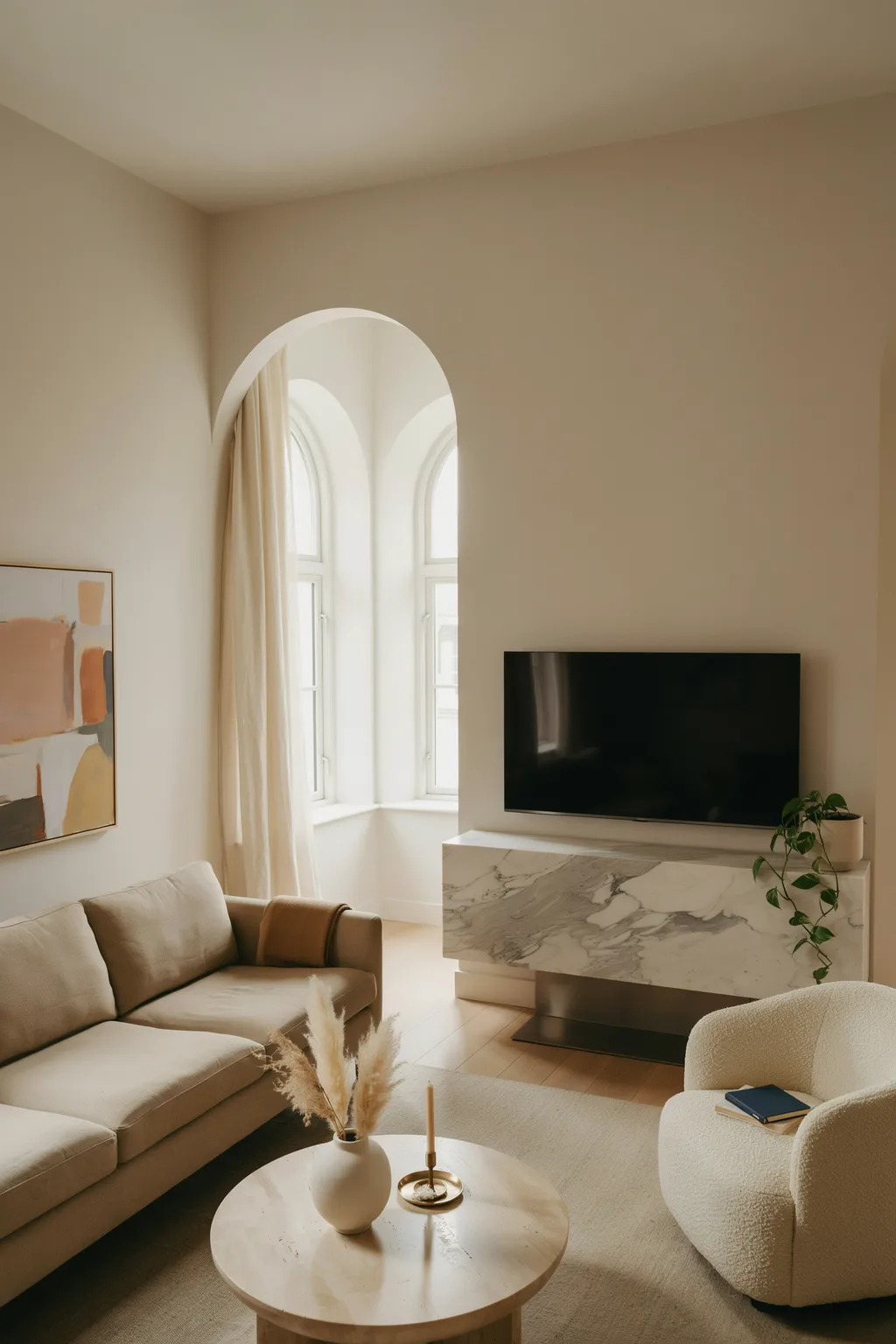
Stone gives a TV unit a weight that wood cannot, and that matters more than it sounds.
A marble or travertine top anchors even the lightest-looking frame, so a slim metal base stops feeling flimsy under a large screen. It also survives a wet glass, which no untreated wood top manages. Real stone is heavy and costly. Sintered stone and good porcelain give a similar look at a fraction of the weight, which counts if you ever plan to move it.
Seal real marble before it goes anywhere drinks get put down. It stains far more readily than people expect.
Pair a stone top with a slim metal or wood base.
Seal real marble, then reseal it every year or so.
Consider porcelain or sintered stone if you rent and move often.
Unsealed marble in a room where people drink red wine.
A heavy stone slab on a unit not rated to carry it.
Busy veining under an already busy gallery wall.
7. Glass and Open Shelving for a Lighter Look
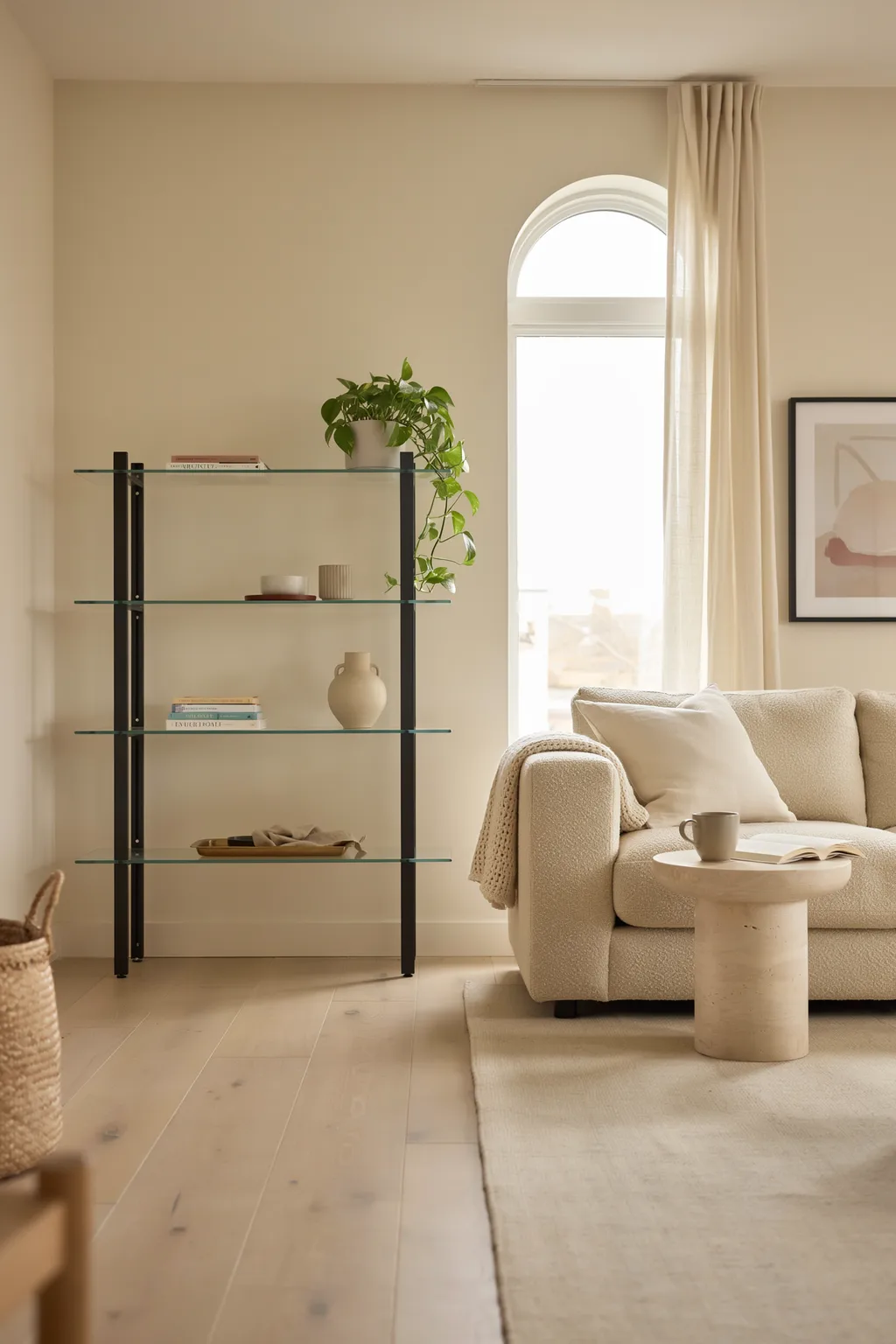
Glass shelving carries a 1990s reputation that it has largely outgrown.
Used now, with slim black metal uprights instead of chrome and gold, it reads modern and keeps a small room feeling open. You see the floor and the wall straight through it, which is precisely why it works in a corner where a solid cabinet would close everything down.
Glass shows every fingerprint and every speck of dust. Skip it if you have small children, or if you resent cleaning.
💡 Quick Tip
Ask for low-iron glass if the shelves are thick. Standard glass shows a green tint along the exposed edge, which is the detail that makes a unit look cheap up close even when the design is good.
8. Reclaimed Wood for Warmth and Texture
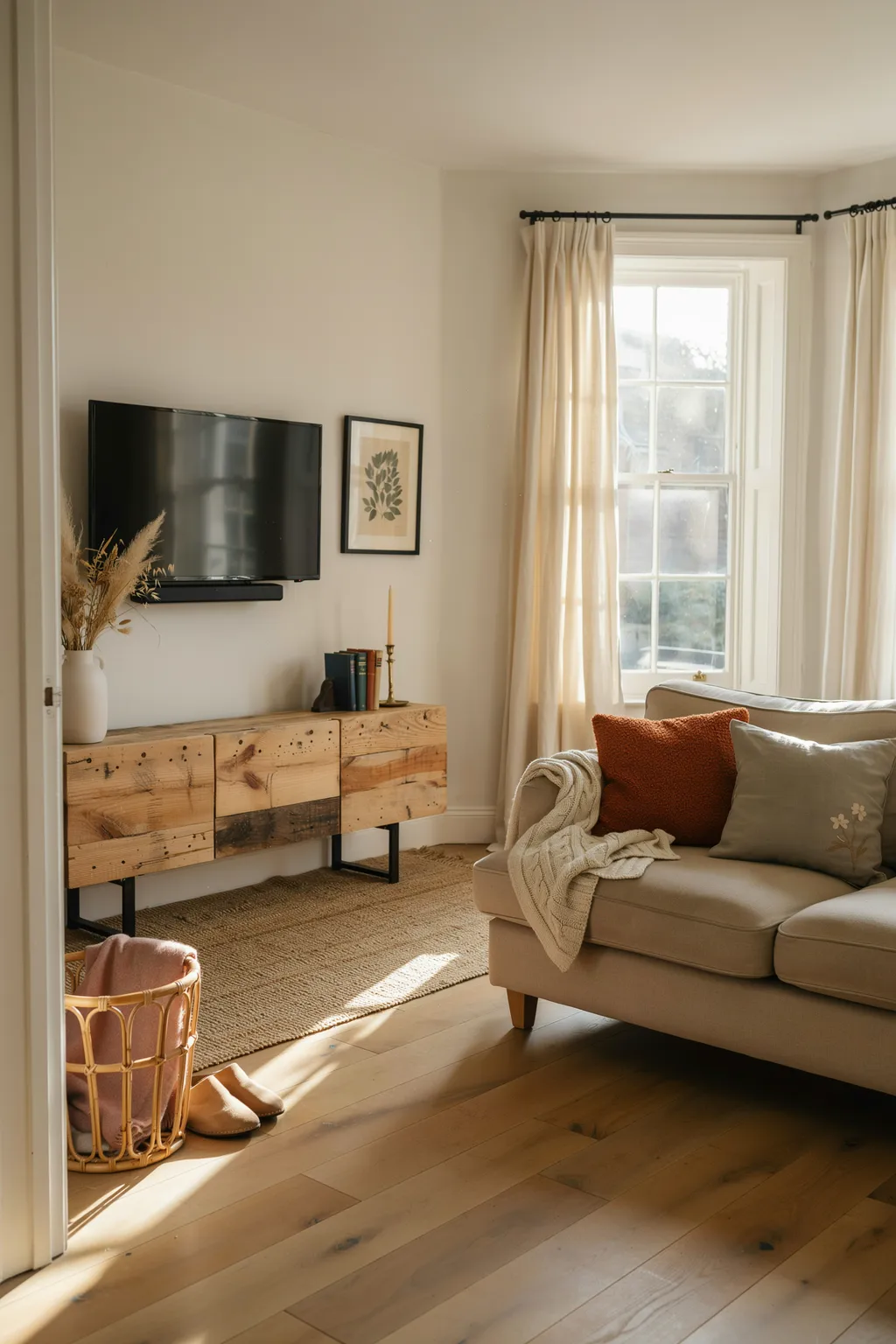
A reclaimed scaffold board with its original saw marks costs less than most flat-pack units and looks considerably better.
Some of the best TV table ideas cost the least, and this is one of them. Old wood brings grain, color variation, and small dents that new timber spends years earning. Against a large black screen that texture does real work, because it gives the eye something to settle on other than the television itself. Sand it lightly, oil it, and leave the marks where they are.
Check it is properly dry before it comes indoors. Reclaimed timber straight from a yard often carries moisture, and it will twist as it dries out in a warm room.
Black gloss flat-pack unit under a black screen. Two dark rectangles stacked, and nothing in the corner to look at.
Oiled reclaimed board with visible saw marks. The grain warms the corner and the screen stops being the only thing you notice.
9. Light Behind the Screen, Not Around It
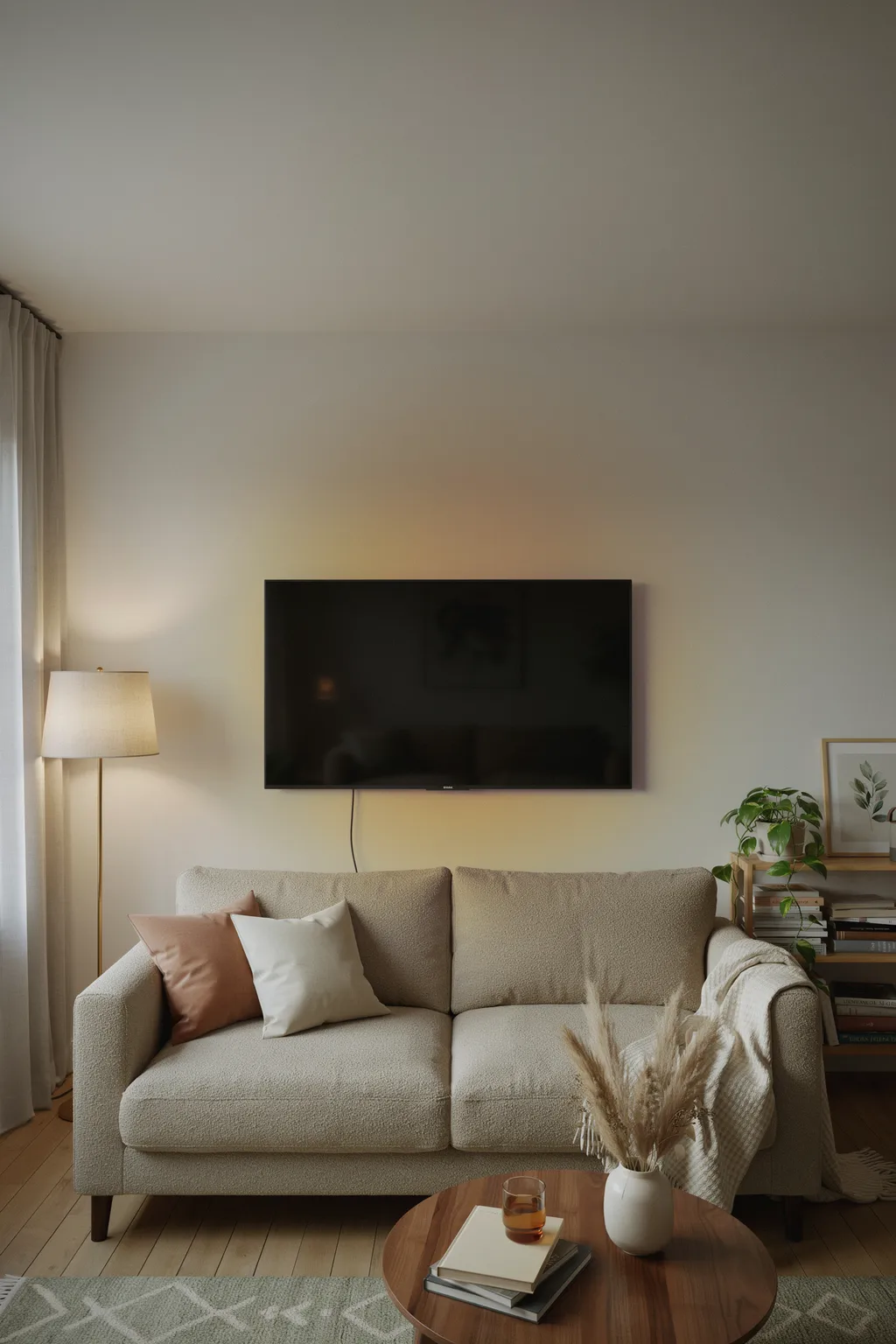
Most people put a lamp beside the television, which is exactly where it causes glare.
Light placed behind the screen works far better. A warm strip along the back edge of the unit, or a lamp on a shelf behind the TV, throws light onto the wall rather than onto the glass. It softens the jump between a bright screen and a dark room, which is easier on your eyes across a long evening.
Keep it warm and dim. Color-changing strips set to blue look impressive for about a week and tiring after that.
10. Use a Vintage Sideboard Instead
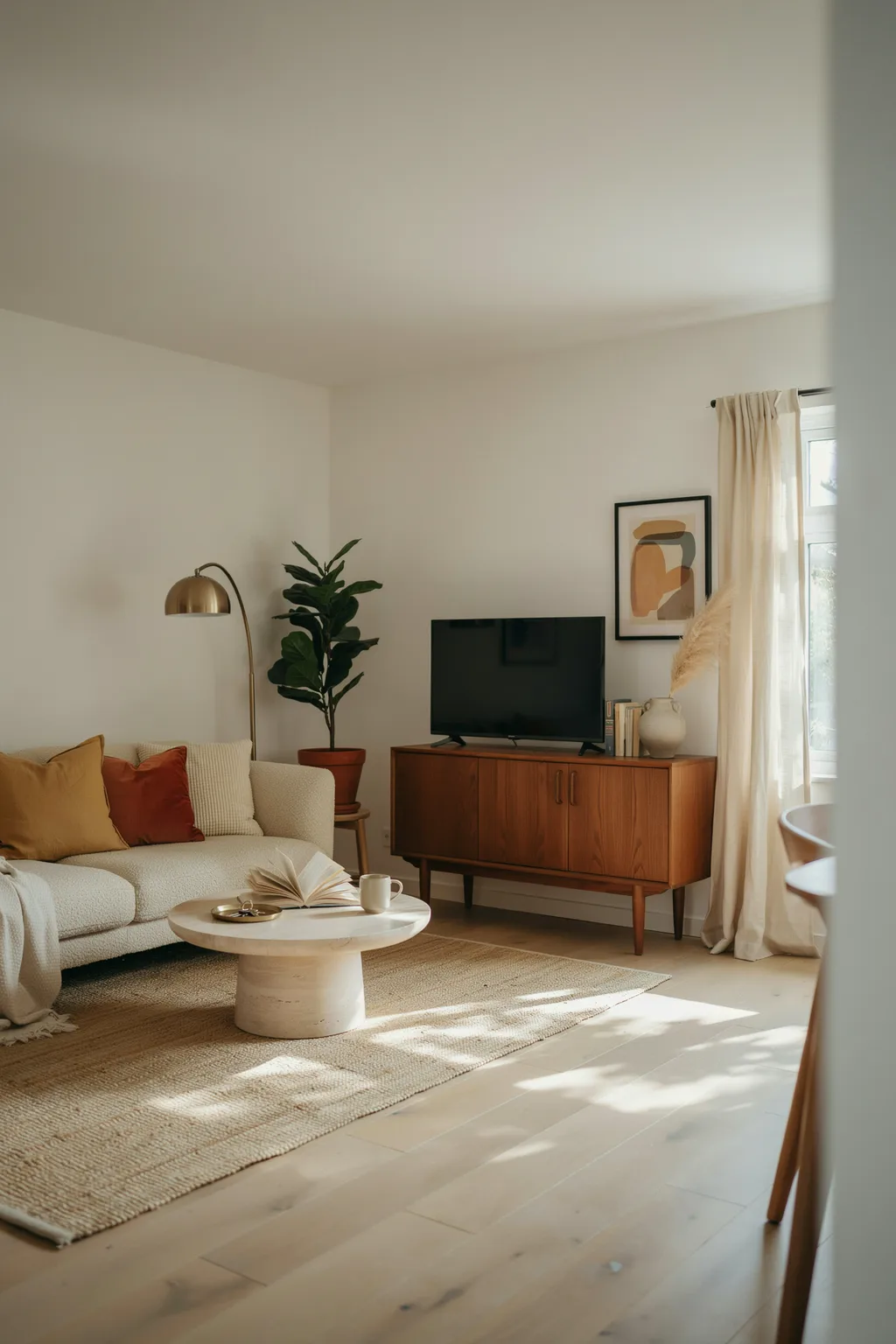
The best TV stands are frequently not sold as TV stands at all.
The most characterful TV table ideas often start in a secondhand shop rather than a showroom. A mid-century sideboard usually sits at about the right height, comes with proper closed storage, and costs less secondhand than a new media unit. It also brings some age into a corner otherwise full of black plastic. Measure the depth before buying, because older sideboards run shallower than modern units and a deep soundbar can overhang the front edge.
Drill a discreet hole in the back panel for cables. It is the one modification worth making, and on an ordinary piece it costs you nothing in value.
Check before you buy a sideboard for TV use
11. Get the TV Height Right Before Anything Else
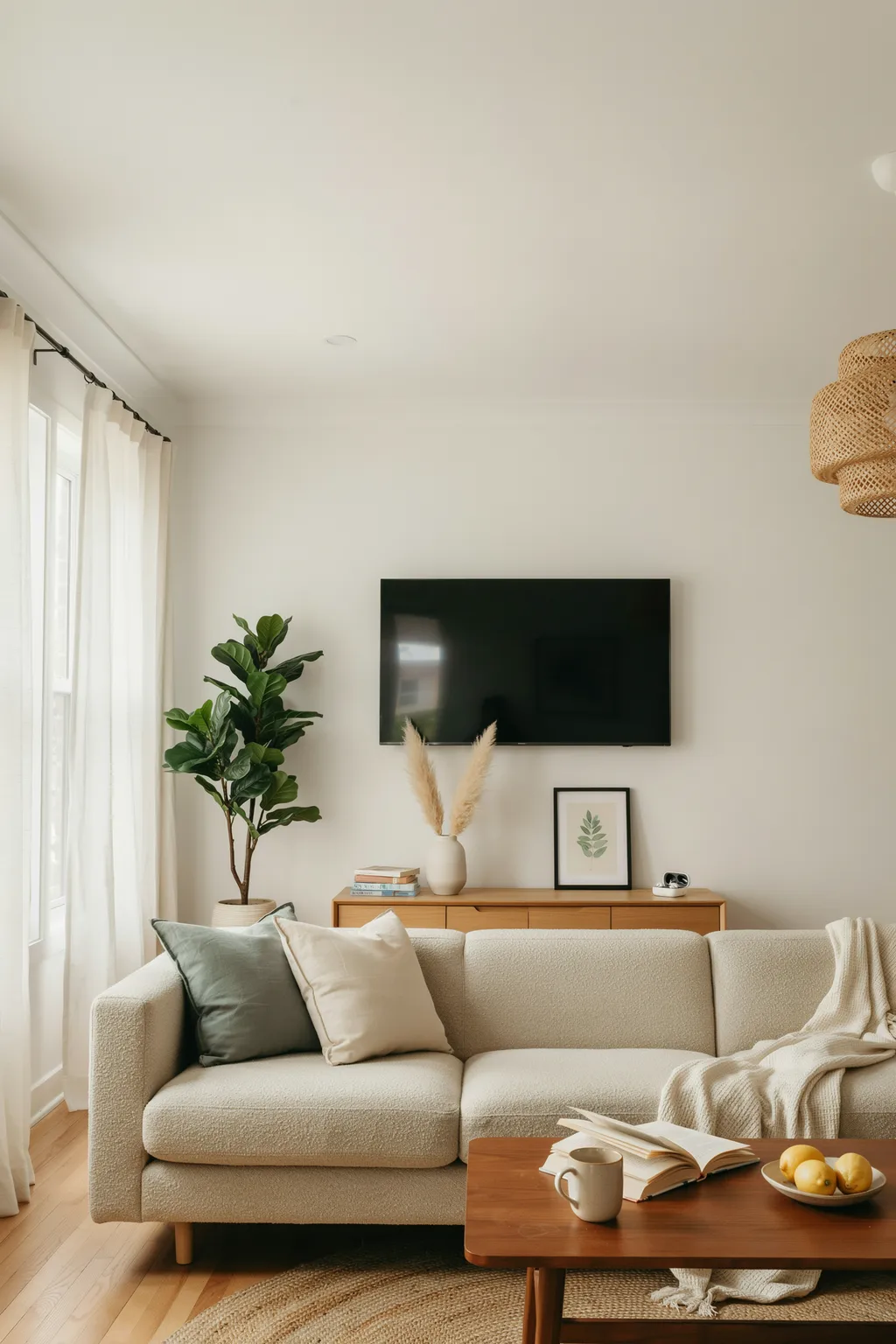
Sit on your sofa, look straight ahead, and mark where your eyes land on the wall.
That mark is where the center of the screen belongs, and every one of these TV table ideas depends on getting it right first. For most sofas it puts the middle of the TV somewhere around 42 inches off the floor, though your own sofa and your own height decide that, not an average. Mount it higher and you spend every evening with your neck tilted back.
This is also why a television over a fireplace so rarely works. The mantel usually pushes the screen well above eye level, and no amount of careful styling makes that comfortable to watch for two hours.
The center of the screen should meet your eyeline when you are sitting down. Measure it from your actual sofa, not from a chart.
12. Hide the Cables Properly
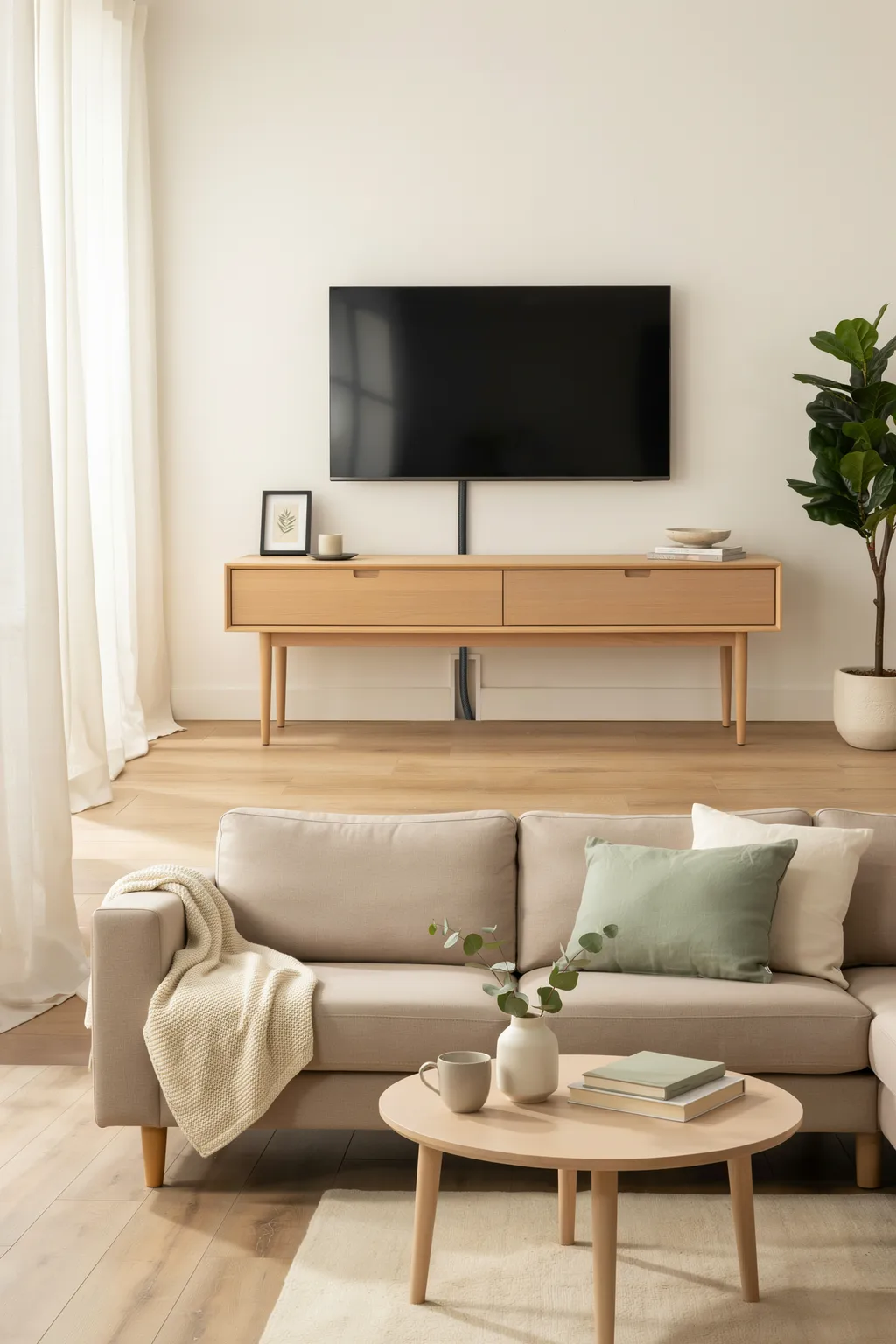
Bundle first, then route, then cover. In that order.
Cable management is what separates tidy TV table ideas from the ones that only look good in photographs. Loose cables read far worse than thick ones, so start by sleeving everything into a single run with a fabric wrap or spiral binding. Then choose the path: down the wall inside a trunking channel, tucked behind the unit, or through the wall itself if you own the place and are willing to cut into it.
Label both ends of every cable before you tidy them away. The neatest setup in the world is useless when you cannot work out which HDMI goes where six months later.
Unplug everything and label both ends of each cable with tape.
Sleeve the run into one bundle so it reads as a single line, not six.
Fix a trunking channel or cord cover down the wall, painted to match.
Put the power strip in a cable box on the shelf, never loose on the floor.
13. Leave Clearance for a Soundbar
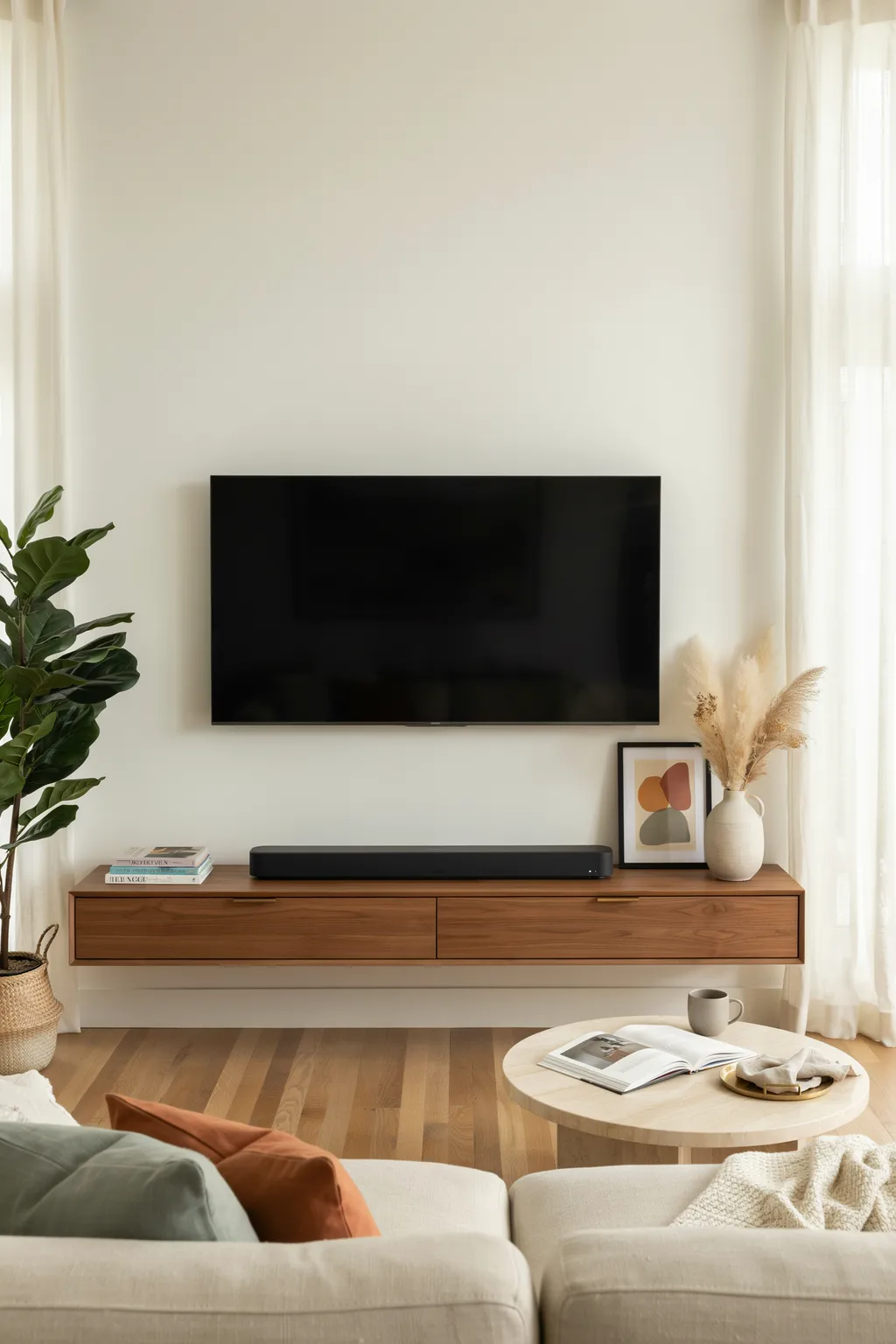
A soundbar creeping up over the bottom of the screen is the most common measuring mistake in a living room.
It happens because people buy the television, then the stand, then the soundbar, checking each one on its own. Measure the gap between the top of your unit and the bottom of the screen before ordering the bar, and allow for the TV feet as well if it stands rather than mounts.
Some bars block the remote sensor too. If your TV suddenly stops responding after you add one, that is usually the reason, and a small riser solves it.
📌 Good To Know
Measure three things before buying a soundbar: the width of your unit, the gap under the screen, and the depth of the shelf it will sit on. A bar that is wider than the furniture looks wrong even when it fits the television perfectly.
14. Anchor It If You Have Young Children
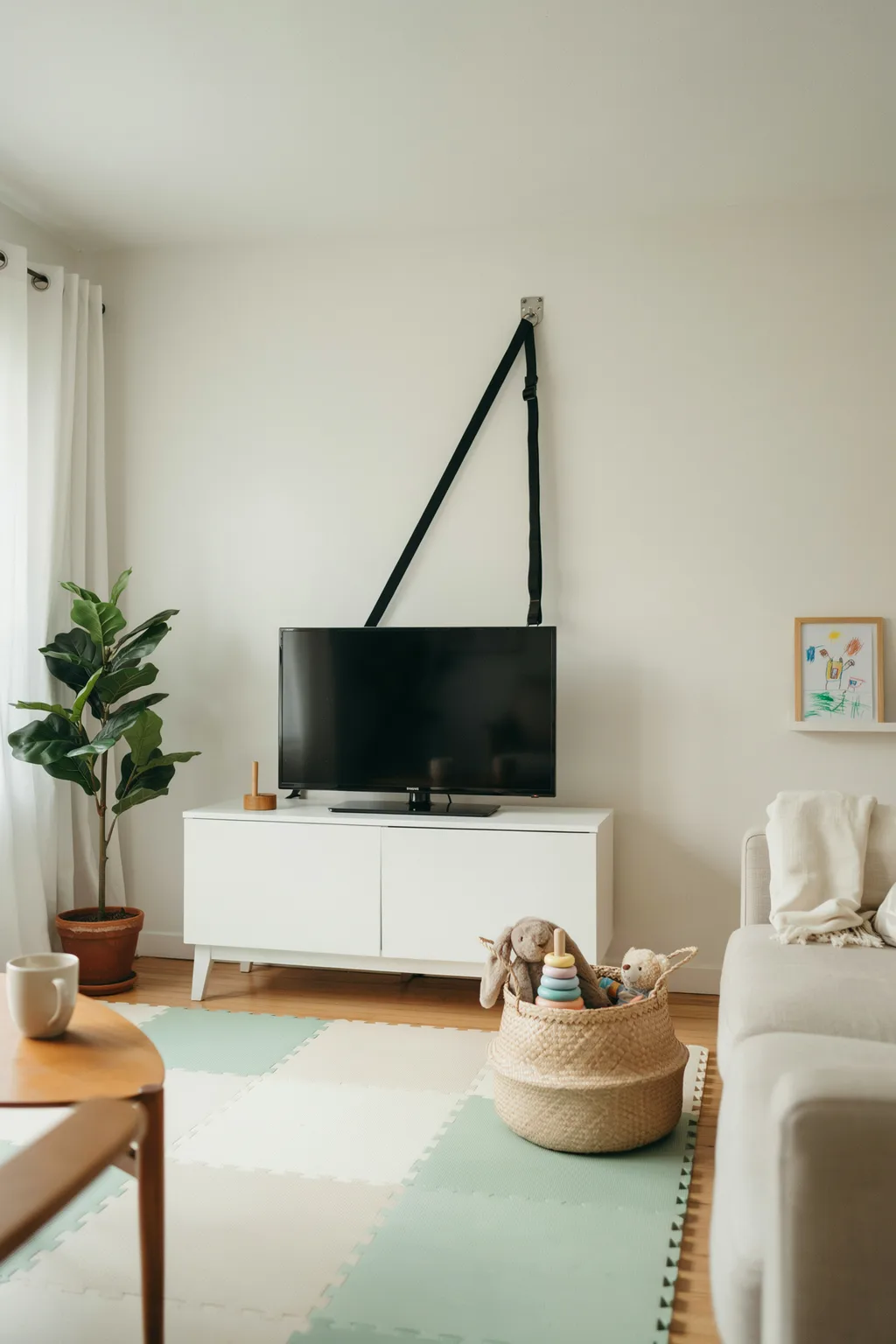
Televisions and the furniture holding them tip over, and it happens quickly and quietly.
Anti-tip straps cost very little and take around ten minutes to fit. Strap the TV to the unit, and strap the unit to the wall. Both, not one or the other. A child pulling on an open drawer can bring down a chest that felt entirely stable when you pushed against the top of it.
The CPSC’s Anchor It campaign explains how to secure furniture and screens properly. Worth ten minutes of reading if there are small children in the house.
Strap the screen to the unit and the unit to the wall.
Fix into a stud or use proper masonry anchors.
Keep remotes and toys off the top, so nothing invites climbing.
Relying on the unit’s weight to keep it upright.
Straps fixed into plasterboard with no anchor behind.
A tall, narrow unit in a room where toddlers play.
15. Small Room or Renting? Stay Freestanding
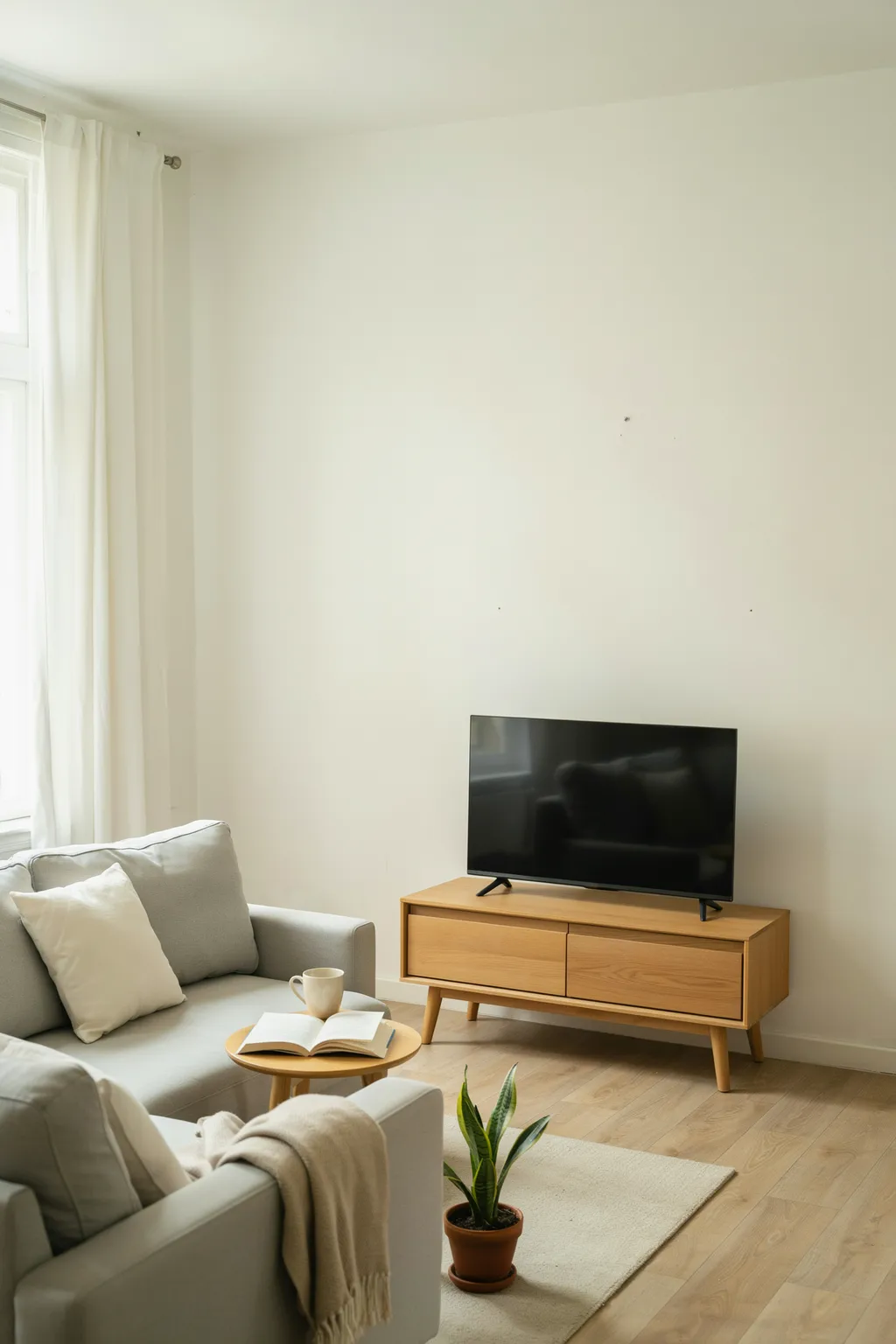
Freestanding furniture is the version you can undo, which counts for a great deal in a rented flat.
Most TV table ideas quietly assume you can drill into the wall. A slim console on legs, a low bench, or a repurposed sideboard all give you a proper TV table with nothing screwed into anything. Keep the unit raised on legs rather than sitting flush to the floor, because seeing floor underneath makes a small room read larger.
Wall mounting is still possible in most rentals if you ask first, but you will be making good the holes when you leave. Freestanding sidesteps that conversation entirely.
- ▸Best pick: a console on visible legs, which keeps floor in view.
- ▸Budget pick: a secondhand sideboard, usually the right height already.
- ▸Tiny room: a narrow bench, with the console box stored underneath.
- ▸Still anchor it: freestanding does not mean it cannot tip over.
Start With the Height
A TV corner looks settled when three things line up: the screen sits at eye level, the unit is wider than the television, and the cables are out of sight. Get those right and almost any style works after that. A reclaimed board, a marble top, a secondhand sideboard.
Buy the height first and the furniture second. Choosing a stand is far easier once you know exactly how tall it needs to be.
Save this list of TV table ideas for the next time you are staring at a tangle of wires wondering where to start.
If you only do three things