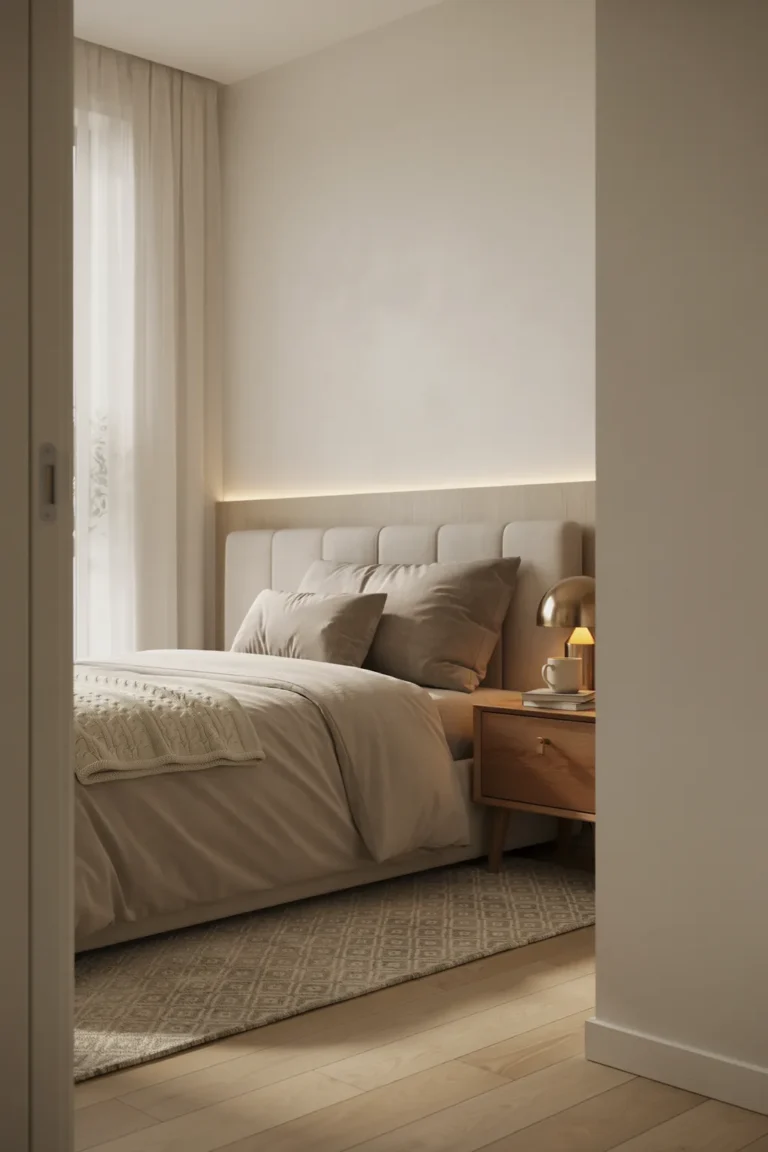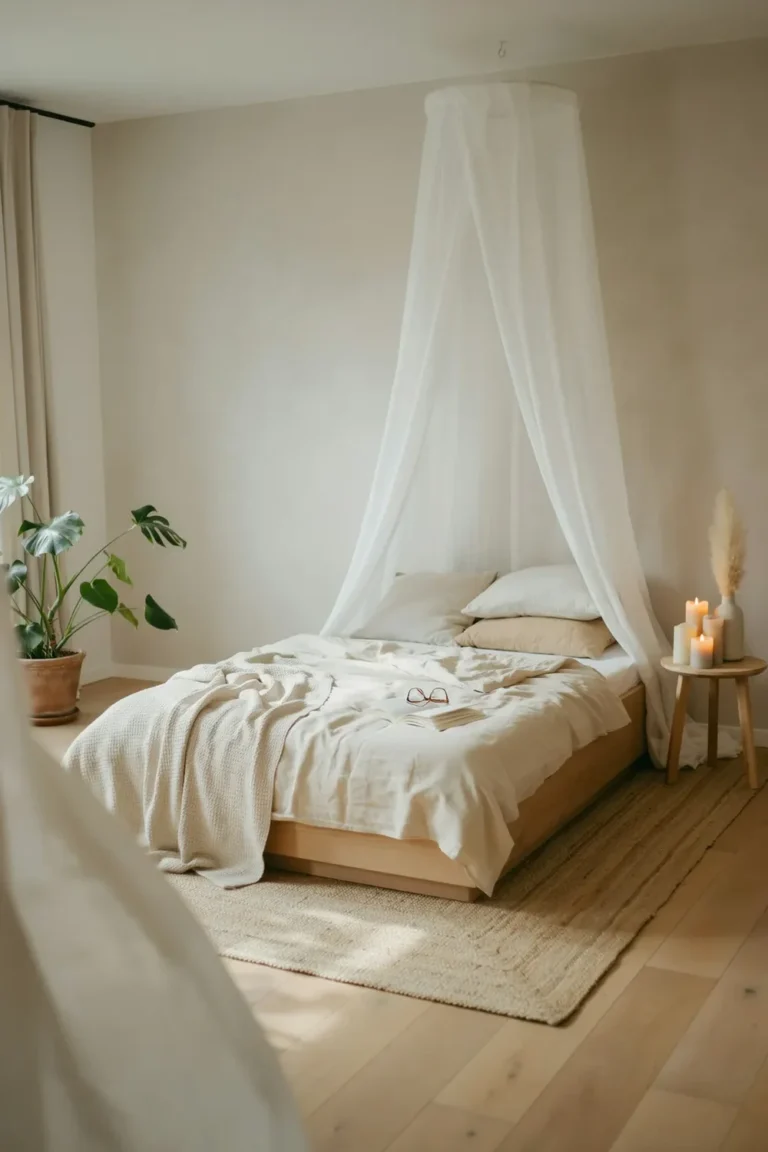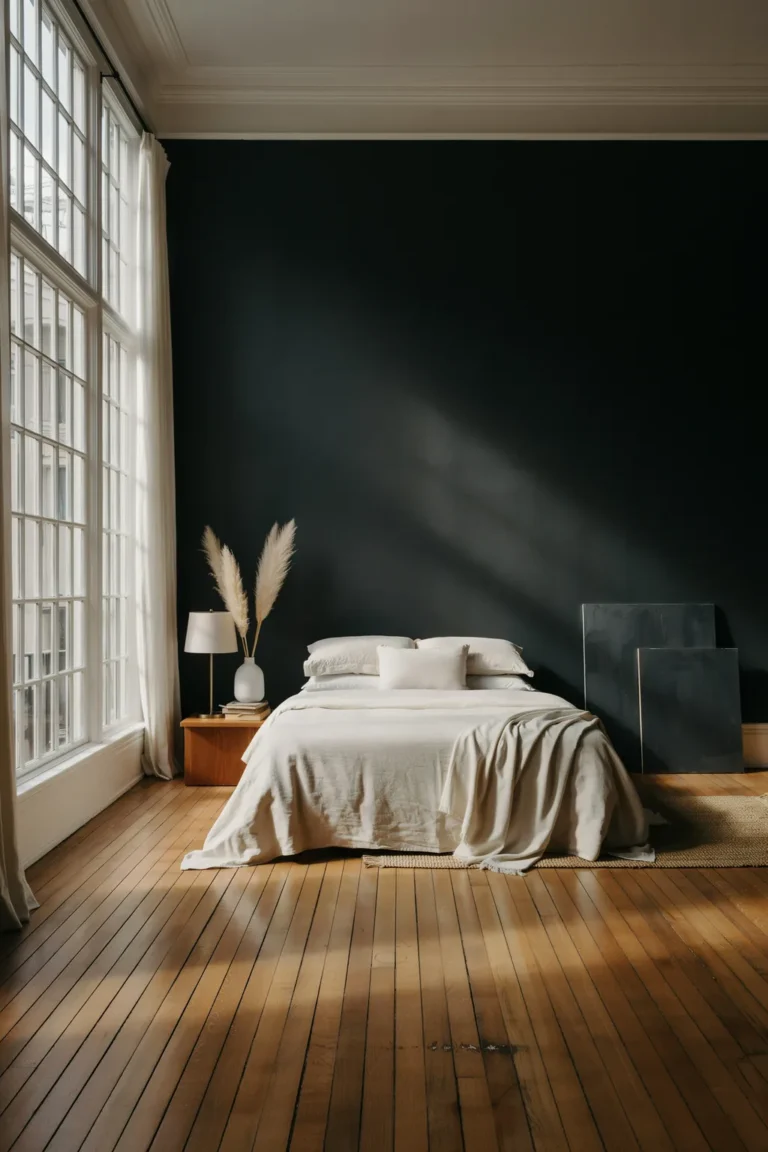
15 Stunning Blue and White Bedroom Ideas for 2026
Blue and white looks easy until you actually try it. You paint the walls a soft blue you loved on the chip, pile on white bedding, and the room comes out looking like a waiting room. Cold. A little flat. Nothing like the photos you saved.
The problem is almost never the blue itself. It is the proportion, the undertone, and the one thing that got left out. Most blue and white bedroom ideas show you a finished room and quietly skip the part where somebody decided how much blue to use, which white to put beside it, and what warm thing keeps the whole thing from feeling clinical.
That is what this list fixes. Every idea below comes with the rule underneath it: a ratio, a shade, a measurement, or a material you can actually buy. Some cost twenty dollars and one evening. A few need a weekend and a paint tray. Three of them work in a rental without a drop of paint.
Start at number one if you have not bought anything yet. It will save you the most money.
1. Split the Room 60/30/10 Before You Buy a Single Thing
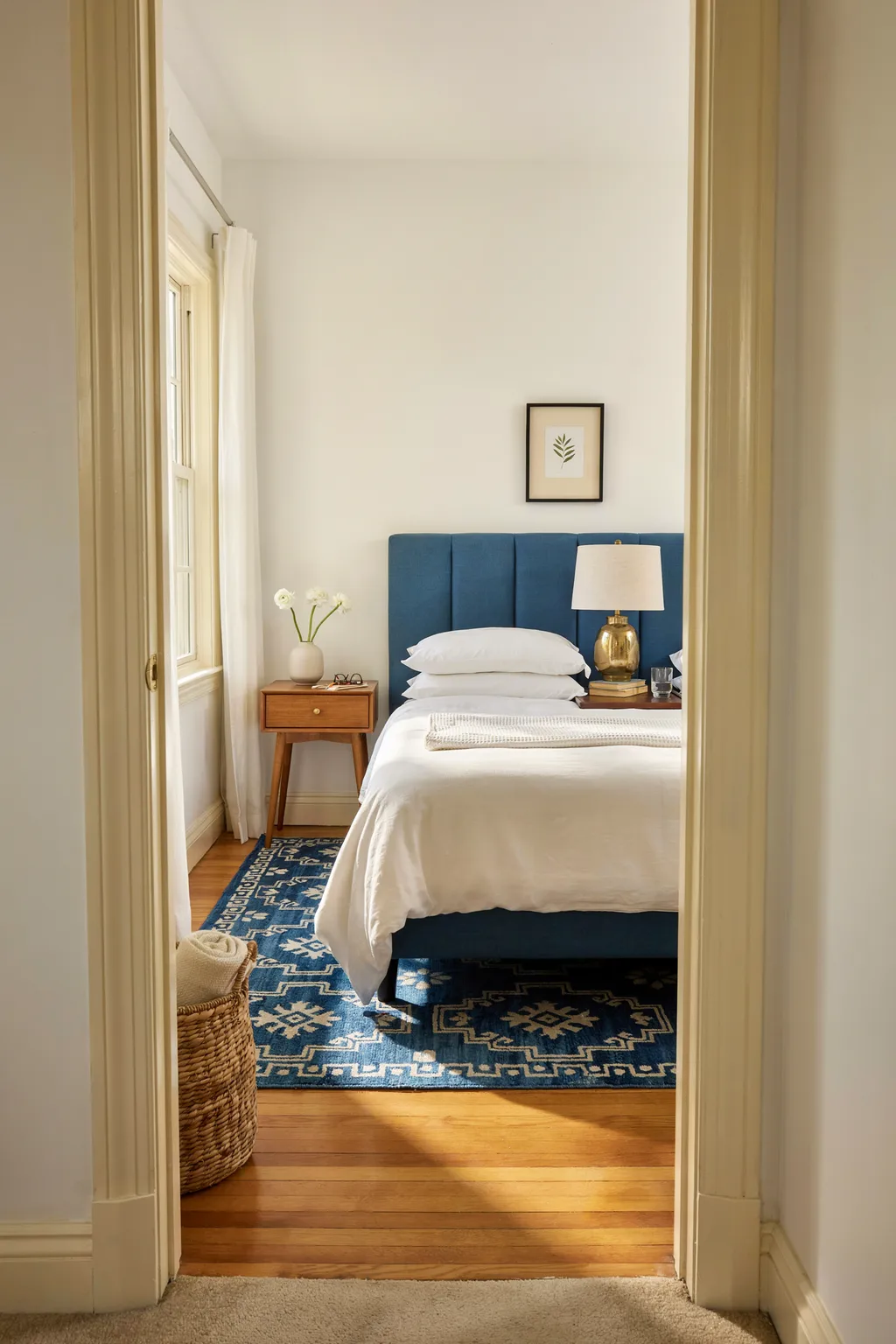
There is one ratio worth memorizing, and it does more work for a room than any single paint color. Nearly all the blue and white bedroom ideas that follow depend on getting this part settled first.
Sixty percent of the room stays white, thirty percent carries the blue, and the last ten is your warm relief. That last slice is the one everyone skips, and it is exactly why so many blue rooms end up feeling chilly.
Before you order anything, stand in the doorway and count what is already working:
- White surfaces you plan to keep: walls, ceiling, trim, the door
- Anything blue you already own, including art, books, and a rug
- One warm object you genuinely like: wood, leather, a brass lamp base
Most people are further along than they think. You are usually shopping for the ten percent, not the sixty.
2. Check Which Way Your Windows Face Before You Pick the Blue
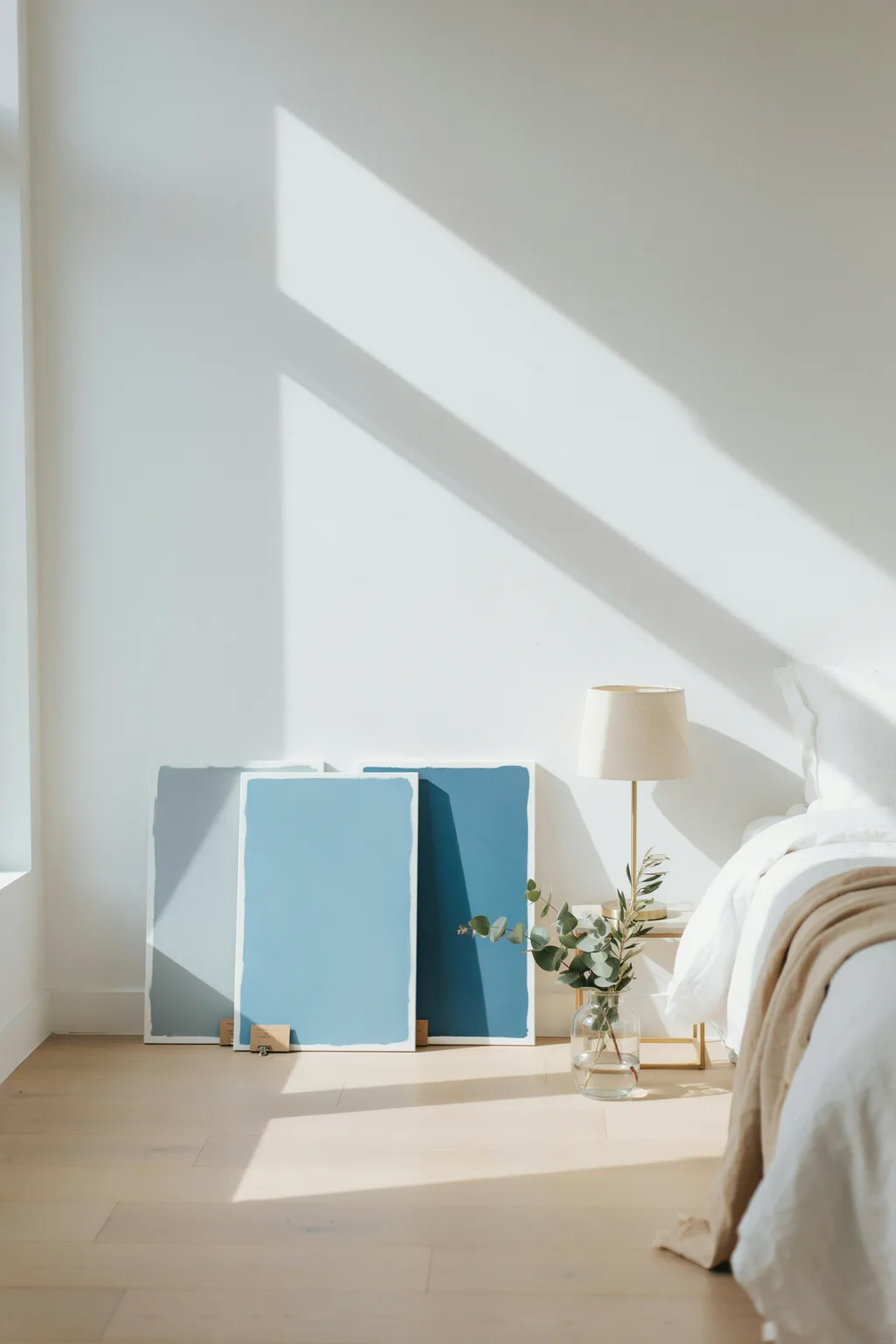
Here is why a blue can look nothing like the paint chip once it is up on the wall.
North-facing rooms get cool, indirect light all day long. It pushes blues toward gray and can turn a soft powder blue into something closer to dryer lint by four in the afternoon. South-facing rooms do the opposite. Warm light fills them, which flatters a deep navy but can tip a gray-blue slightly green.
Tape a sample the size of a sheet of paper on the wall next to the bed, never right beside the window. Then look at it three times:
- Early morning, before the sun swings around
- Mid afternoon, the room’s honest hour
- After dark, with only your bedside lamps on
Two coats on the sample. One coat lies to you.
| North-facing room (cool light) | South-facing room (warm light) |
|---|---|
| Lean warm: blues with a hint of green or gray behind them | You can afford a true, clean blue or a full navy |
| Pair with a creamy white, not a stark one | Pair with a crisp, cooler white so it stays fresh |
| Avoid pale icy blues, they go flat and gray | Watch gray-blues, strong sun can pull them green |
| Add warm bulbs, roughly 2700K, to fight the chill | Sheer white curtains keep the blue from washing out |
3. Pull Three Shades Off One Paint Strip Instead of Mixing Random Blues
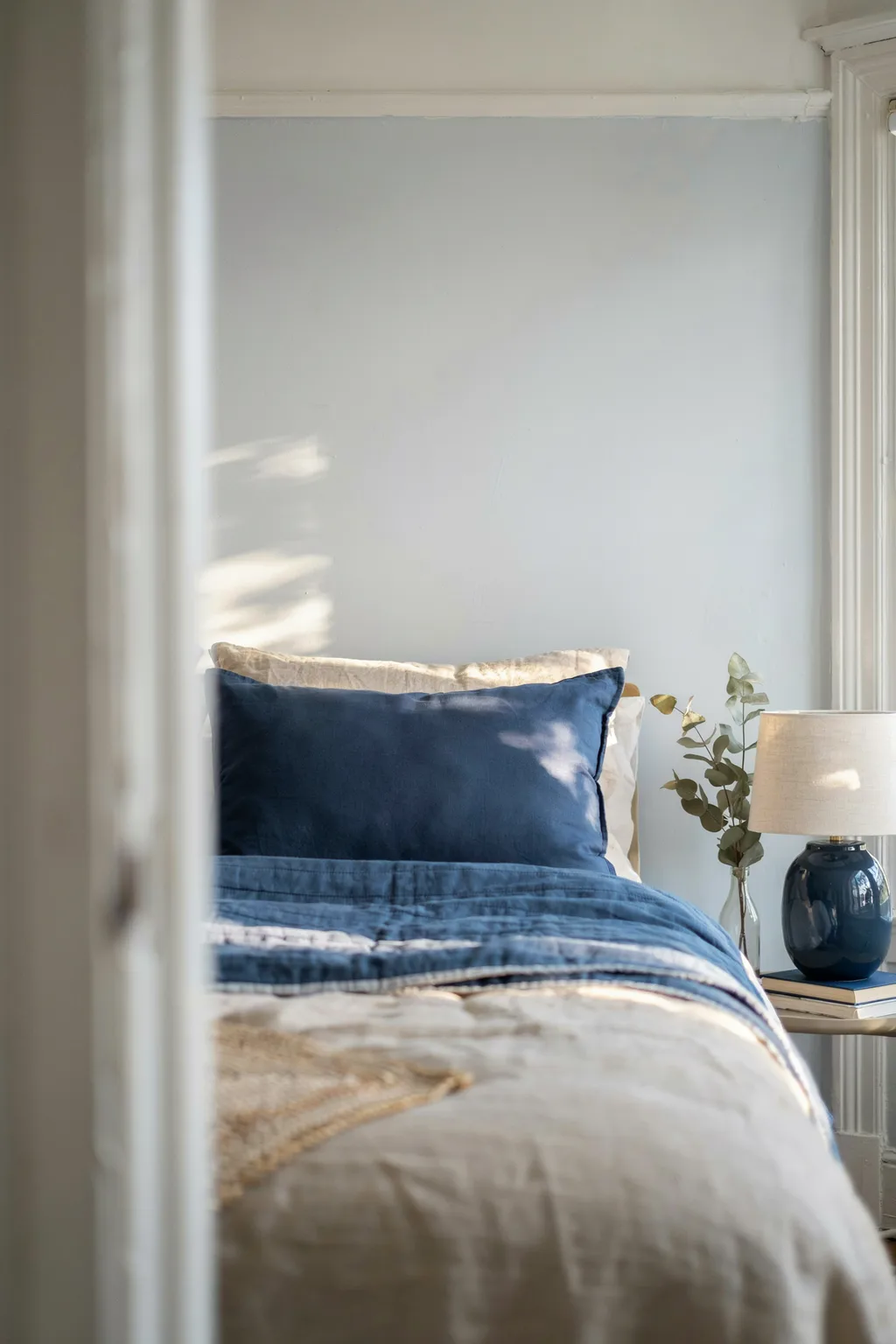
Two blues bought from two different brands almost never agree. One has a green base, the other a violet base, and side by side they read as a mistake nobody can quite name.
The fix is boring, and it works. Take a single paint strip off the rack and use three steps from it.
One strip, three depths, nothing borrowed from anywhere else.
Where each shade lands matters more than which strip you grabbed. The lightest goes on the biggest surfaces, the deepest goes on the smallest objects, and the middle tone carries whatever your eye lands on first.
Squint at the finished room. If the three blues blur into one soft field instead of separating into stripes, you got the spacing right.
4. Paint Only the Headboard Wall Navy and Leave the Other Three White
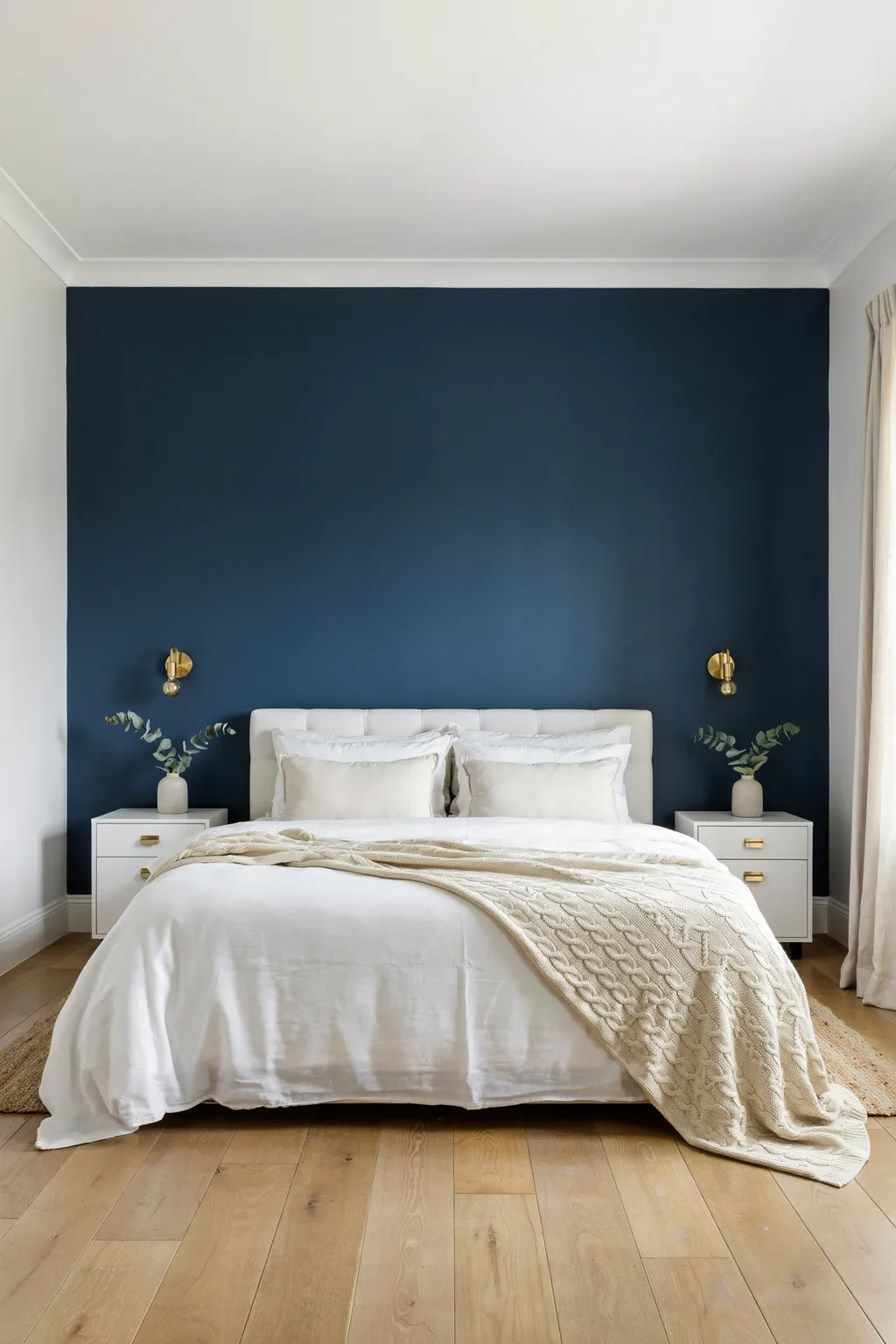
One wall of deep navy buys you the drama of a dark room for about a third of a gallon and two hours of work.
Choose the wall behind the bed. It is the one wall you never look at while you are lying down, so the color does its job on everyone walking in and bothers nobody staring at the ceiling at midnight.
Three rules keep it from looking like a 2009 feature wall:
- Corner to corner, floor all the way up to the ceiling line
- Trim stays the exact same white as the other three walls
- Art goes small or skips this wall entirely, since the wall is already the art
Since this is a room you sleep in for eight hours, it is worth reading the EPA’s guidance on VOCs and indoor air quality and choosing a low-VOC line. Then open a window for two days regardless.
💡 Quick Tip
Use matte or eggshell on a dark wall, never satin. Satin bounces light straight back at you and shows every roller lap, every patched nail hole, and every ripple the drywall was hiding. Matte swallows all of it.
5. Build the Bed in White First, Then Add Blue in One Layer
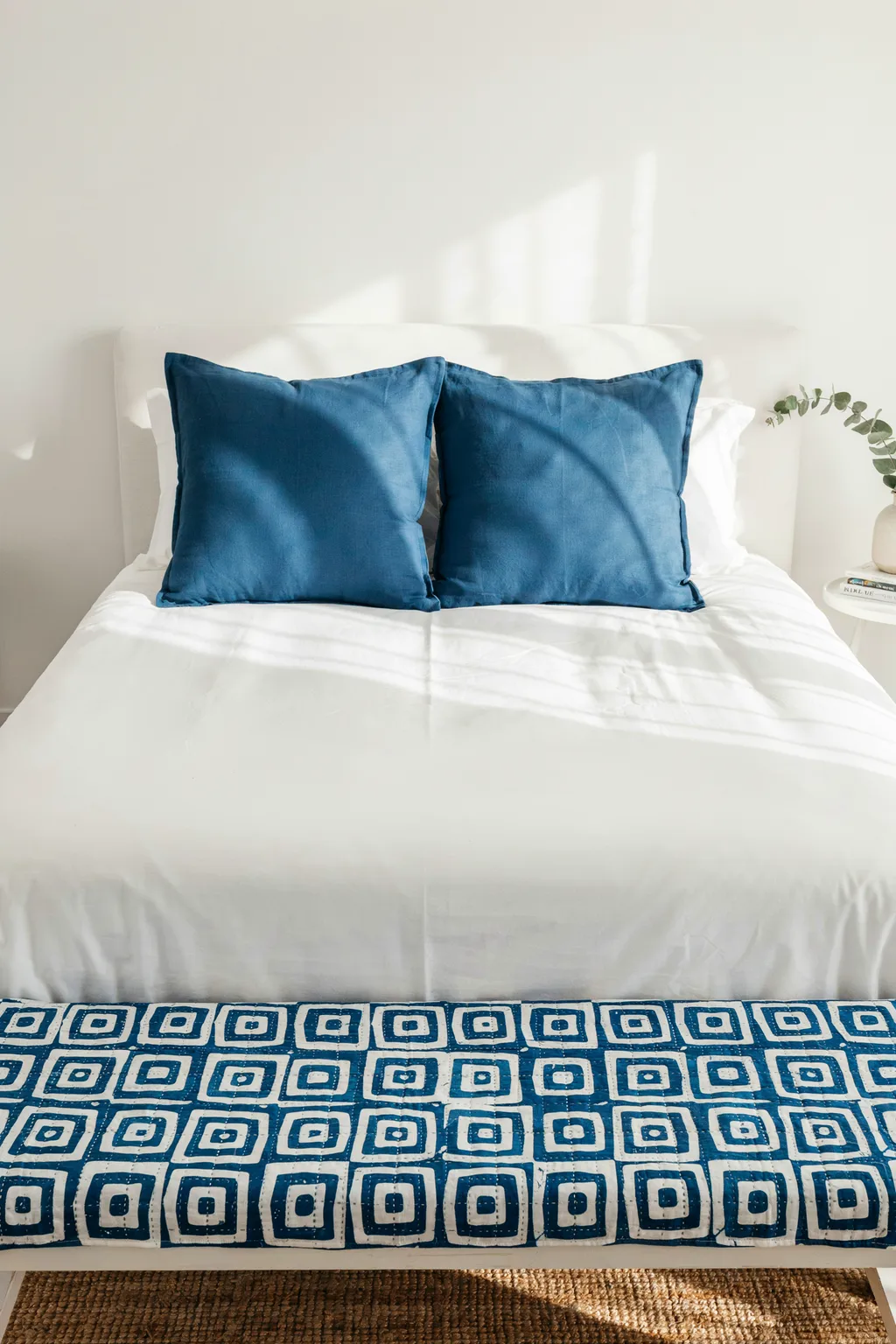
Most people do this backwards. They fall for a blue duvet, buy it, and then spend a year trying to make the rest of the room agree with it.
Start with white instead. White fitted sheet, white flat sheet, white duvet cover. All three wash at high heat, all three bleach, and any one of them is replaceable for under forty dollars the day a coffee cup goes over.
Then blue enters exactly once, as a layer you can lift off:
- A blue and white patterned quilt folded across the bottom third of the bed
- Two blue shams, or one long lumbar pillow if the bed is against a window
- Nothing else
The bed stays flexible that way. When you want a different blue in two years, you swap one quilt instead of the whole bed.
One expensive piece sets the shade for the entire room. Every rug, curtain, and pillow after it has to match. Changing your mind means replacing the biggest thing you own.
The blue lives in a quilt and two shams. A whole new look costs one purchase, the white base keeps working, and stains come out with hot water and bleach.
6. Mix One Large Pattern, One Medium, and One Tiny So Nothing Fights
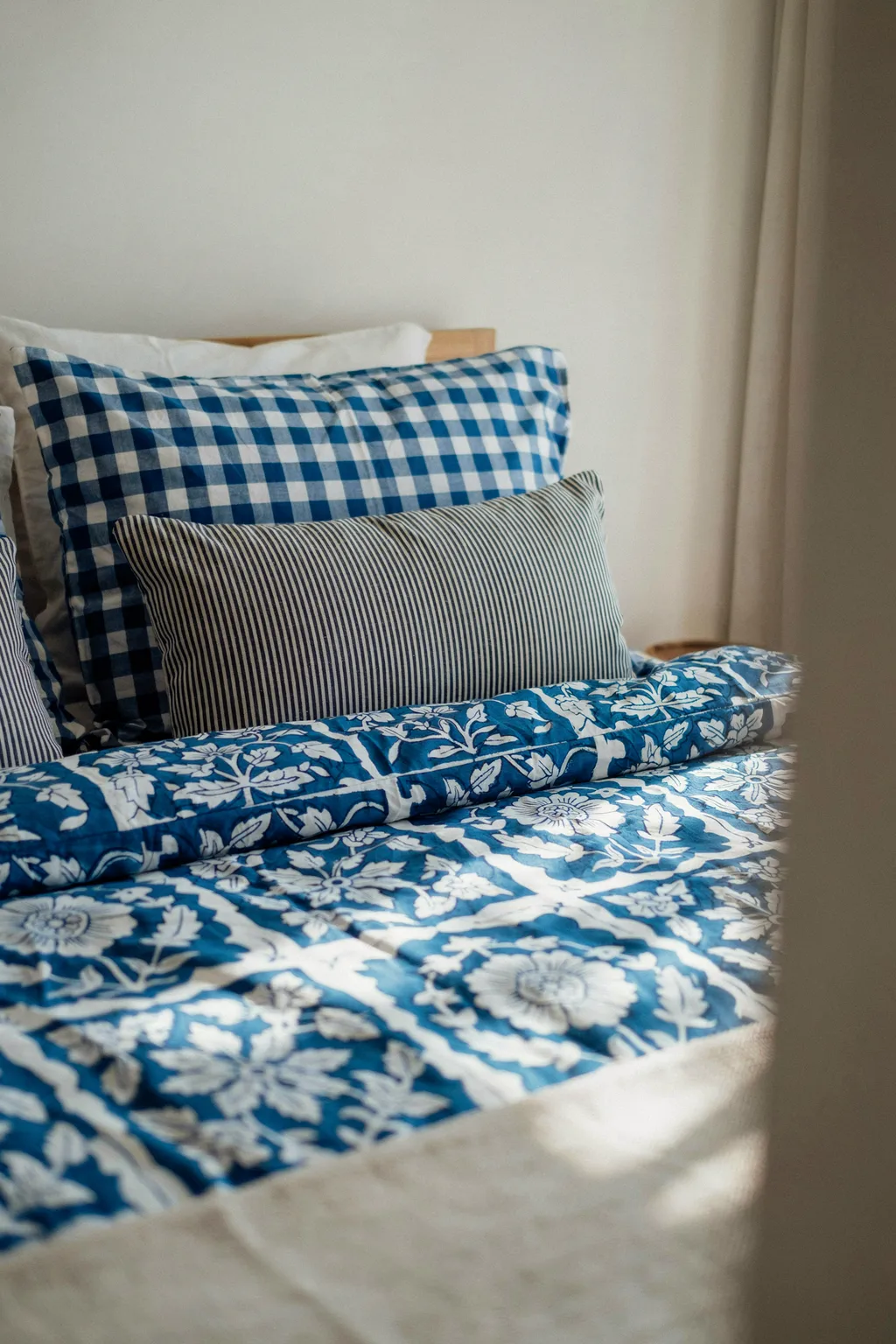
A room with three patterns can look collected or chaotic, and the only thing separating the two is scale.
Same-size patterns fight. A medium floral duvet beside a medium check pillow beside a medium striped rug gives your eye nowhere to rest, and the whole room reads busy even though each piece is lovely on its own.
Stagger them instead. One big, one middle, one small, sized to the surface they sit on.
The tiny pattern is the one people forget. It is usually a ticking stripe or a pin dot, and it quietly ties the two louder patterns together.
Largest pattern, largest surface. A wide floral, damask, or block print on the duvet or the curtains. Motifs roughly the size of your open hand or bigger.
Medium pattern, second largest surface. A check, a wide stripe, or a small floral on the rug or the euro shams. Aim for about half the scale of the first one.
Tiniest pattern, smallest pieces. Ticking stripe, pin dot, or a fine grid on the lumbar pillow or a lampshade. Thumbnail scale, read as texture from across the room.
7. Use Peel-and-Stick Wallpaper Behind the Bed If You Rent
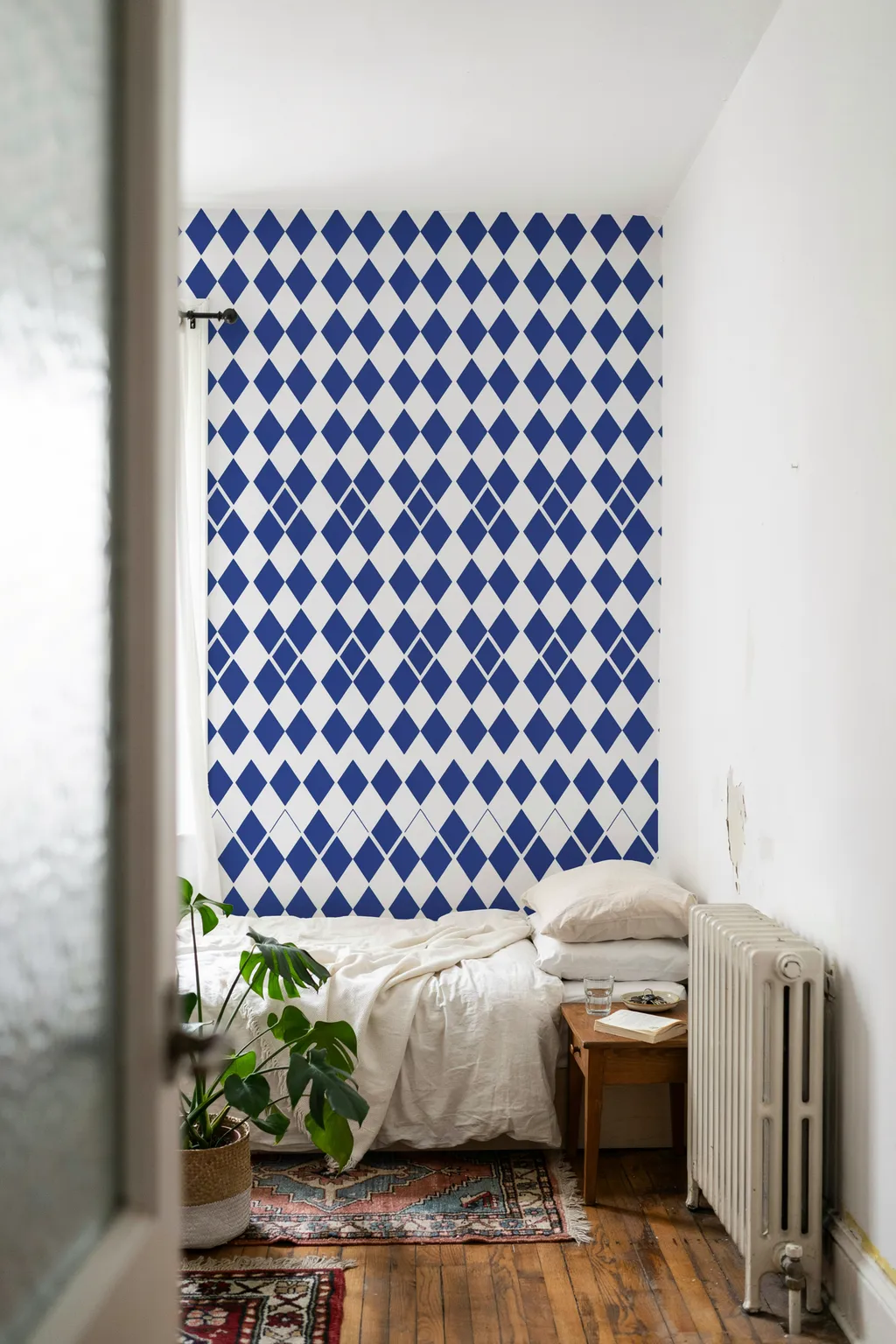
Renters get told to work around their walls, which usually means hanging one polite piece of art and calling the room done.
Peel-and-stick paper on the headboard wall is the exception worth the effort. A standard queen wall takes two to three rolls, costs less than a decent lamp, and lifts off in whole strips years later as long as the wall underneath was primed and painted. It is one of the few blue and white bedroom ideas here that leaves no trace at all when you move out.
Keep it to that one wall. Papering a small bedroom top to bottom in a blue print reads as busy, and it triples both the cost and the afternoon.
Read your lease before you buy. Plenty of them name removable wall coverings directly, one way or the other.
Wipe the wall with rubbing alcohol and let it dry fully. Dust is the reason corners peel.
Buy one roll more than the calculator says. Pattern repeat eats more than you expect.
Order a sample sheet first and stick it up for a week before committing.
Textured or orange-peel walls. The adhesive only grabs the high spots and drops within a month.
Fresh paint under about 30 days old. It is still curing and will come off with the paper.
Bare or unpainted drywall, and any wall in a bathroom-adjacent damp corner.
8. Add a Third Color That Is Not a Color: Rattan, Jute, and Raw Oak
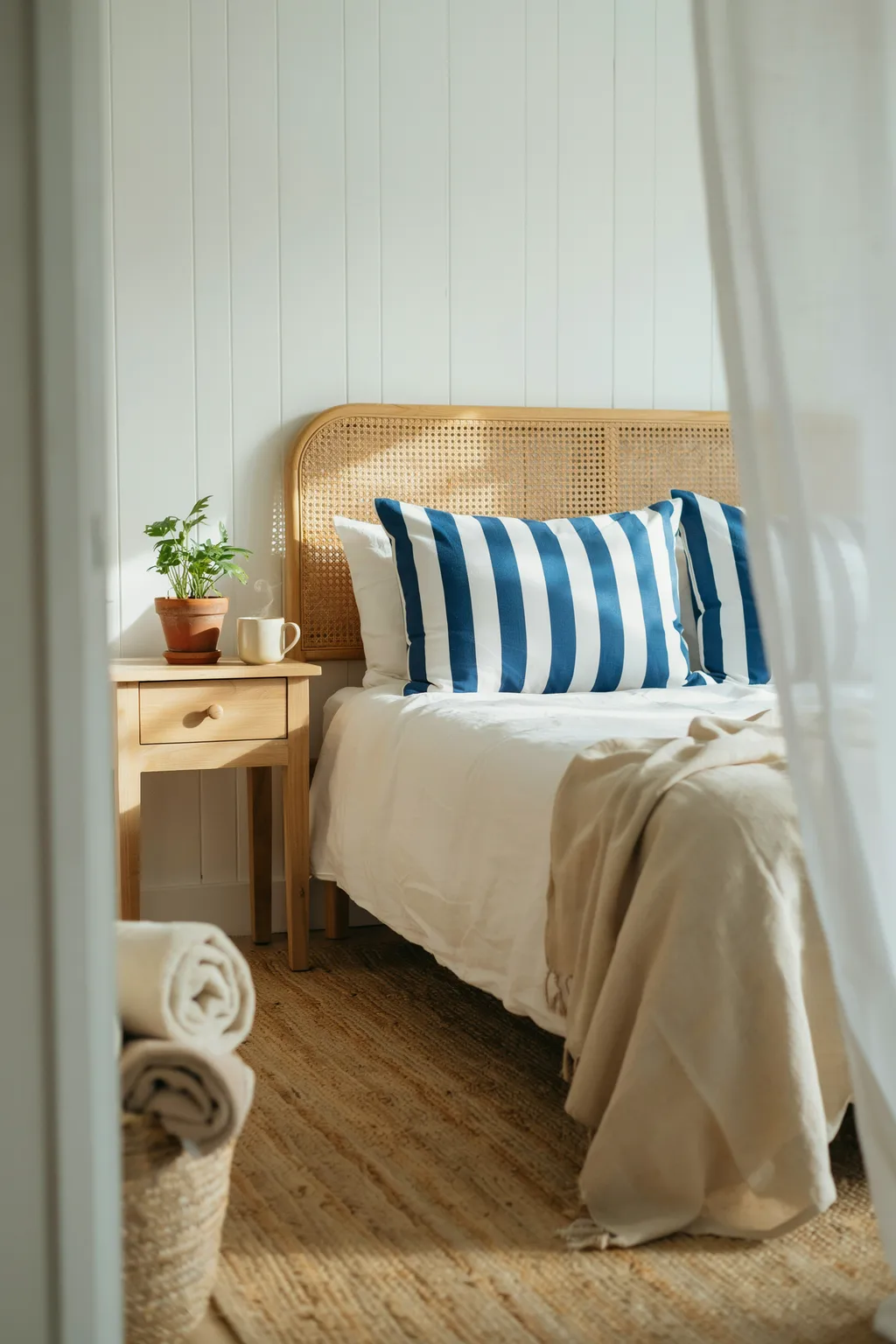
Blue and white is not really a two color scheme, and treating it like one is why so many of these rooms feel unfinished.
Most blue and white bedroom ideas stop at the two shades in the name. The rooms that genuinely work have a third thing running through them, and it is not a color at all. It is texture in a natural, undyed material.
That layer is what keeps the contrast from looking like a printed graphic. It is also the reason the saved photos feel warm while your version feels like a hotel hallway.
- ▸Rattan or cane on a headboard, a bench, or one nightstand door front.
- ▸Jute or seagrass rug under the bed, layered with a smaller blue rug on top if you want both.
- ▸Raw or white oak on the nightstands, a bench, or a picture frame. Skip anything orange-toned.
- ▸Unbleached linen curtains or a throw. The slightly rumpled look is the point.
- ▸Aged leather in one small dose, a bench top or a strap pull. It goes further than you think.
9. Go Dark Navy on All Four Walls in a Small Bedroom
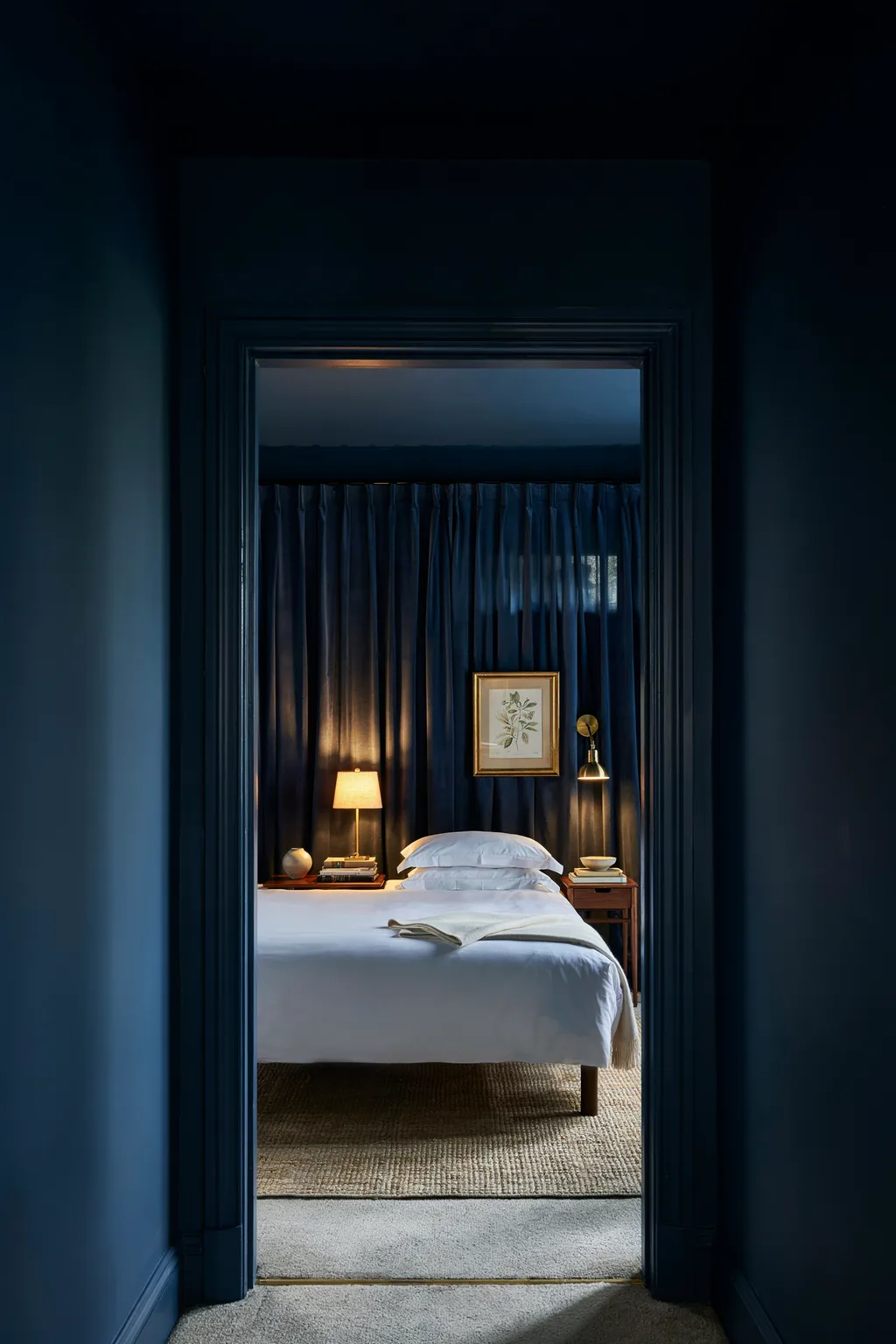
A small bedroom painted navy on all four walls does not shrink. It stops having corners.
Pale paint in a tight room advertises exactly where every wall sits. Deep color blurs those edges, your eye quits measuring, and the room starts reading as intimate rather than cramped.
Two things decide whether it lands:
- Paint the ceiling and the trim the same navy, or the corners snap right back into view
- Light it in layers, at least three sources, never one overhead fixture on its own
This is one of the few blue and white bedroom ideas that gets easier in a small room rather than harder, so a box room is the right place to try it.
It works best in a space you mostly use after dark, though. A north-facing bedroom where you sit and read at ten in the morning will just feel like a cave.
Dark walls make a small room feel bigger only when the ceiling goes dark too. A white ceiling over navy walls draws a hard line at the top and hands the room’s exact size straight back to you.
10. Hang Curtains High and Wide, and Keep Them the Wall Color
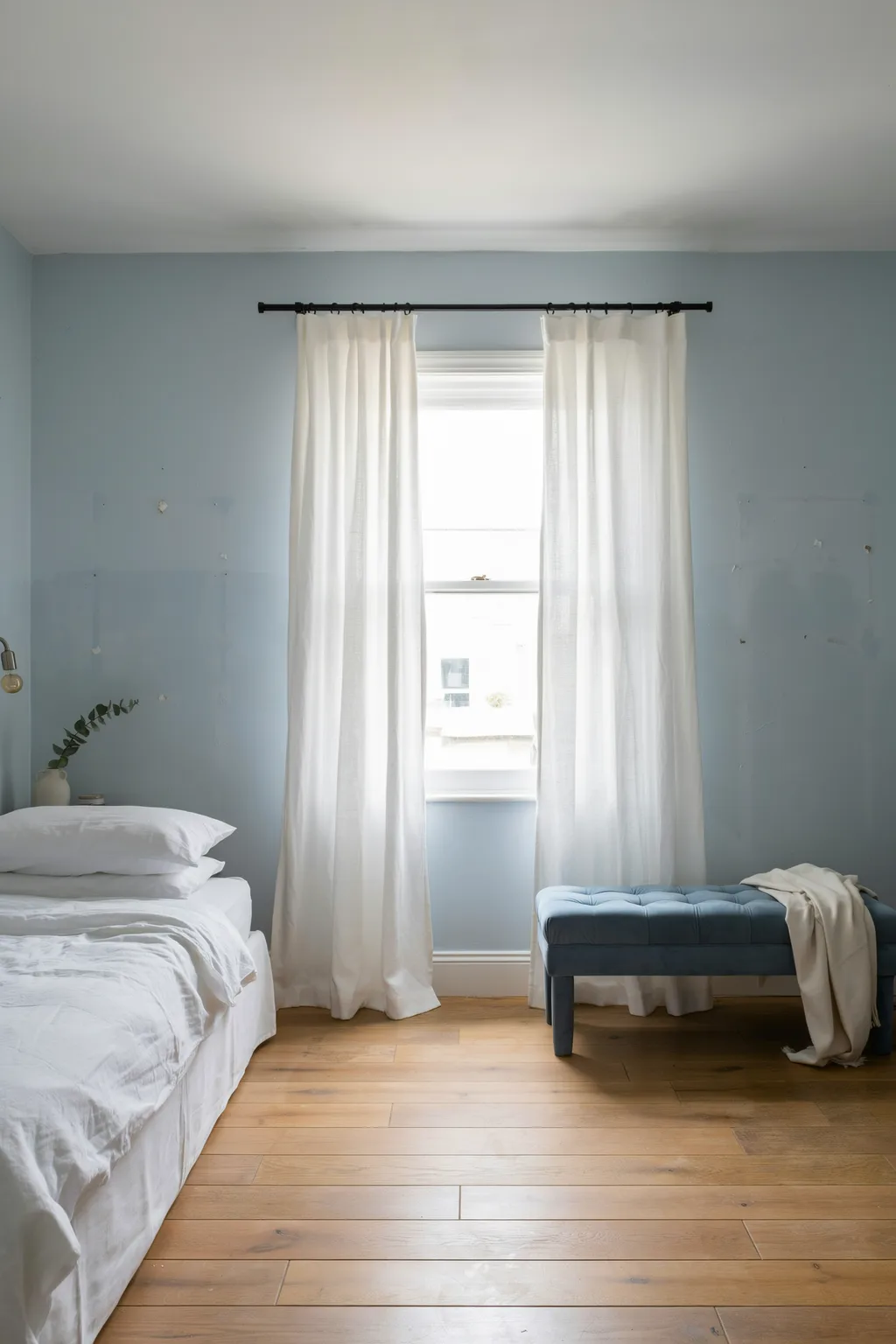
Hang the rod about six inches below the ceiling line, not two inches above the window frame.
Almost every bedroom curtain in the world is hung too low and too narrow. Raising the rod stretches the wall upward. Pushing it eight to twelve inches past the frame on each side lets the panels stack off the glass, so you get your full window and all of its daylight back.
Then pick the color by what you want the window to do. Match the walls and it disappears into the room. Go white against a blue wall and it becomes a bright frame.
Length is what people actually notice. Panels should brush the floor or puddle by half an inch. Floating three inches above it looks like a mistake, because it is one.
Measure before you order
11. Warm It Back Up With Brass, Aged Gold, or Unlacquered Nickel
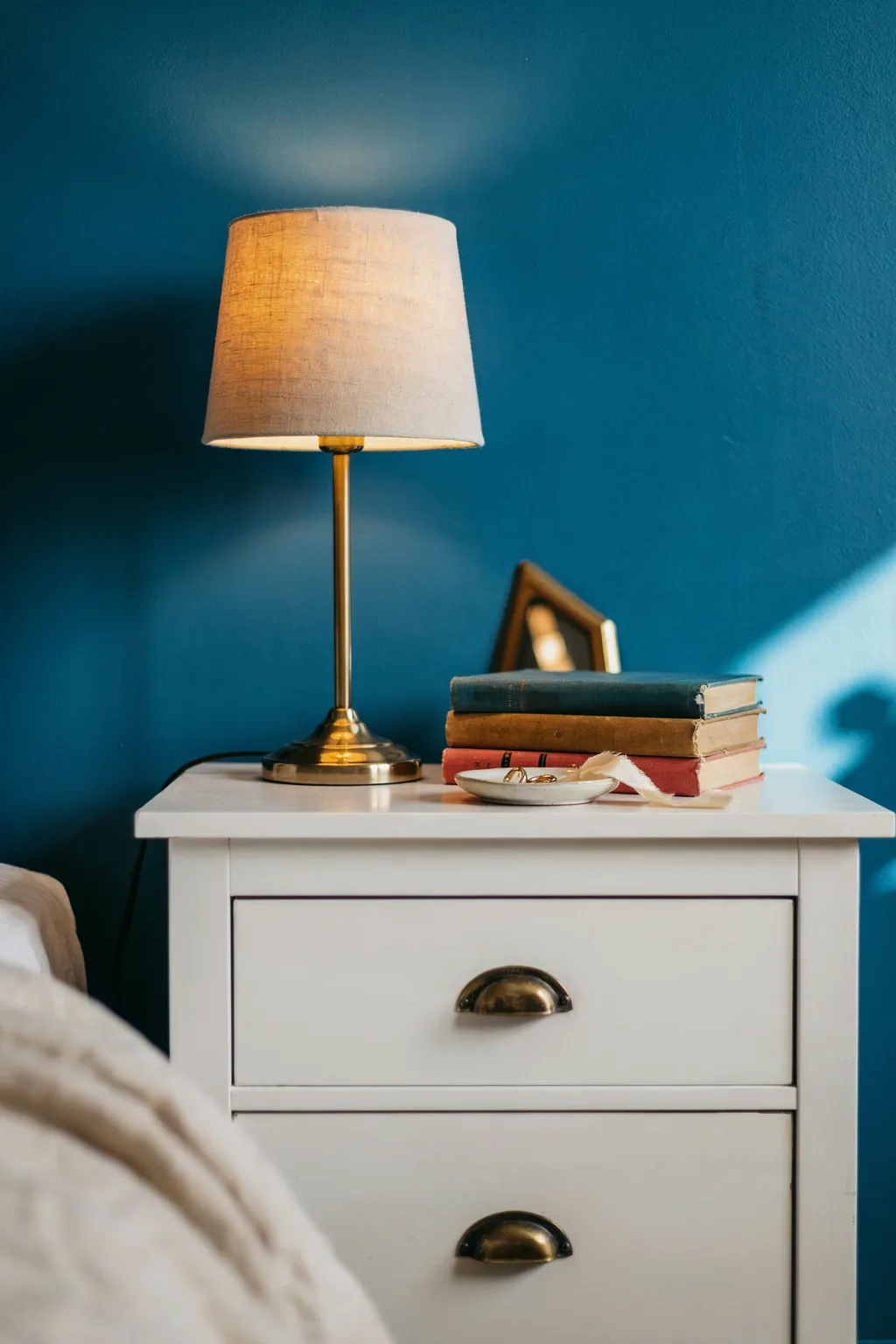
The complaint people have about a finished blue and white bedroom is almost always the same one. It feels cold. The fix is usually metal, not paint.
Chrome and polished nickel are the default hardware in most bedrooms, and they are a big part of why the room reads like a bathroom. Both run cool. Set against a cool wall color, they give your eye nothing to rest on.
So change the small metal instead of the big color. Lamp base, drawer pulls, curtain rod, one picture frame. Four warm pieces will shift the room further than a new duvet would.
Pick one finish and repeat it. Two different warm metals in a small bedroom is one too many.
12. Do Coastal With Stripes and Shiplap, Skip the Anchors and Rope
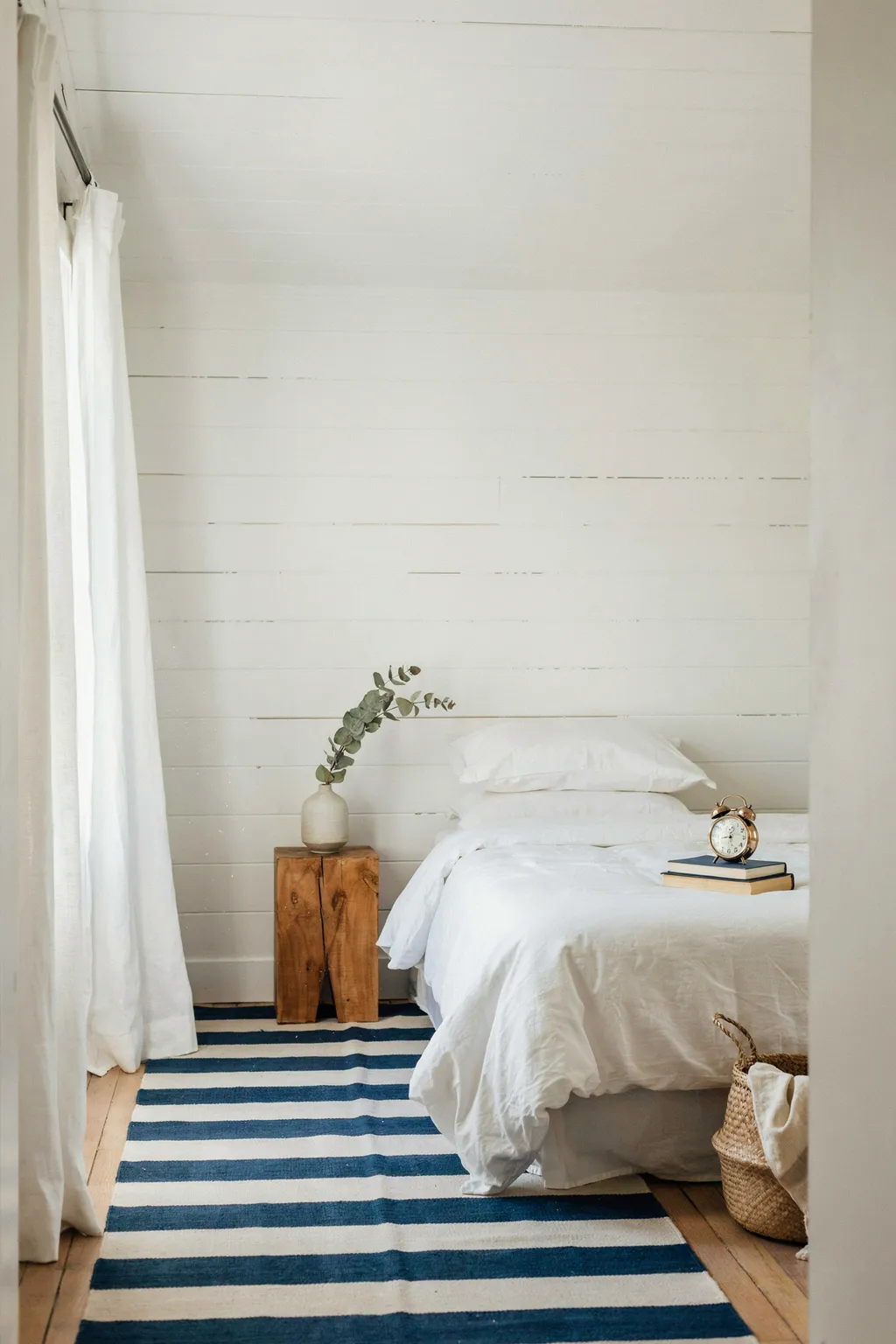
Coastal goes wrong the second it starts announcing itself. The blue and white bedroom ideas that read as seaside without a single prop are the ones still looking right five years later.
Stripes and shiplap do the entire job on their own. A horizontal stripe on the rug or a euro sham, plus white shiplap or beadboard on one wall, and the room reads coastal before you have bought one themed object.
Here is what tips it into gift shop territory:
- Anchors, ship wheels, and rope knots hung on the wall
- Driftwood signs with the word beach carved into them
- Anything shaped like a starfish, in any material
Reference the materials and the colors, not the objects. Worn wood, white cotton, one small dose of sea glass green. That room still looks right in January, which is the honest test.
⚠️ Watch Out
Real shiplap adds roughly three quarters of an inch to the wall. That means outlets and switches sit recessed and need spacer rings and longer screws, and any baseboard or door casing on that wall will suddenly look thin. Budget an extra afternoon for the trim, or use a peel-and-stick beadboard panel instead and skip the problem entirely.
13. Paint the Ceiling Pale Blue and Let the Walls Stay White
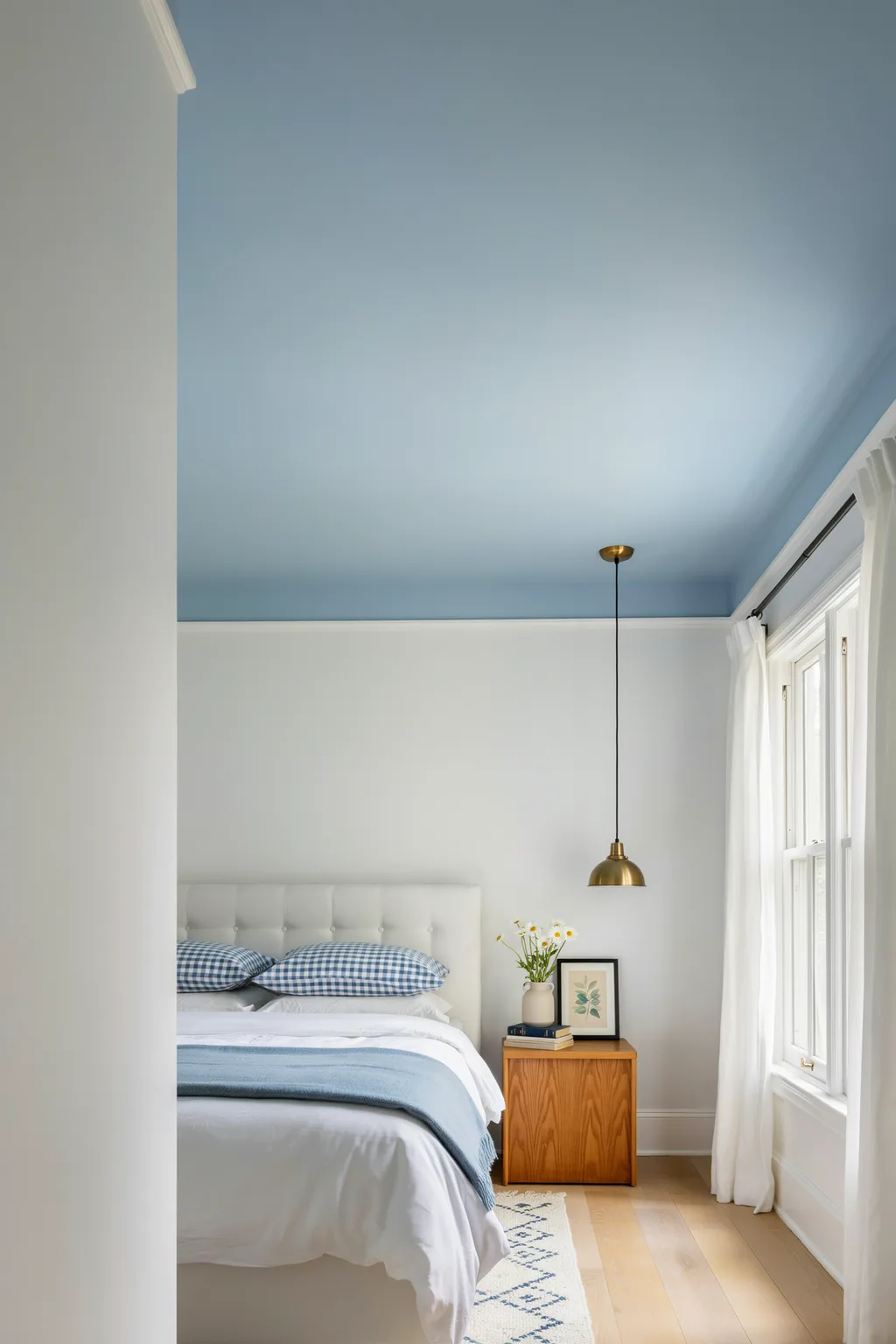
Lie down on your bed and look straight up. That blank rectangle is the largest uninterrupted surface in the whole room, and nearly nobody does anything with it.
A pale blue ceiling above white walls does something a blue wall cannot. It reads as sky, so the room lifts instead of closing in, and it drops a very soft wash of color onto everything underneath. Of all the blue and white bedroom ideas on this list, it changes the most for the least money.
Go two or three steps lighter than any blue you would consider for a wall. Ceilings always read darker than the chip, because no direct light ever hits them.
Flat finish only. Any sheen up there catches raking light and shows every drywall seam you have.
Reads as a lid. Your eye stops at the wall line and the room ends there. Every blue in the space has to come from furniture you paid for.
Reads as sky. The room feels taller, the color arrives for the price of one quart, and it takes an evening plus a roller extension pole.
14. Line Up a Shared Room With Two Matching Blue Headboards
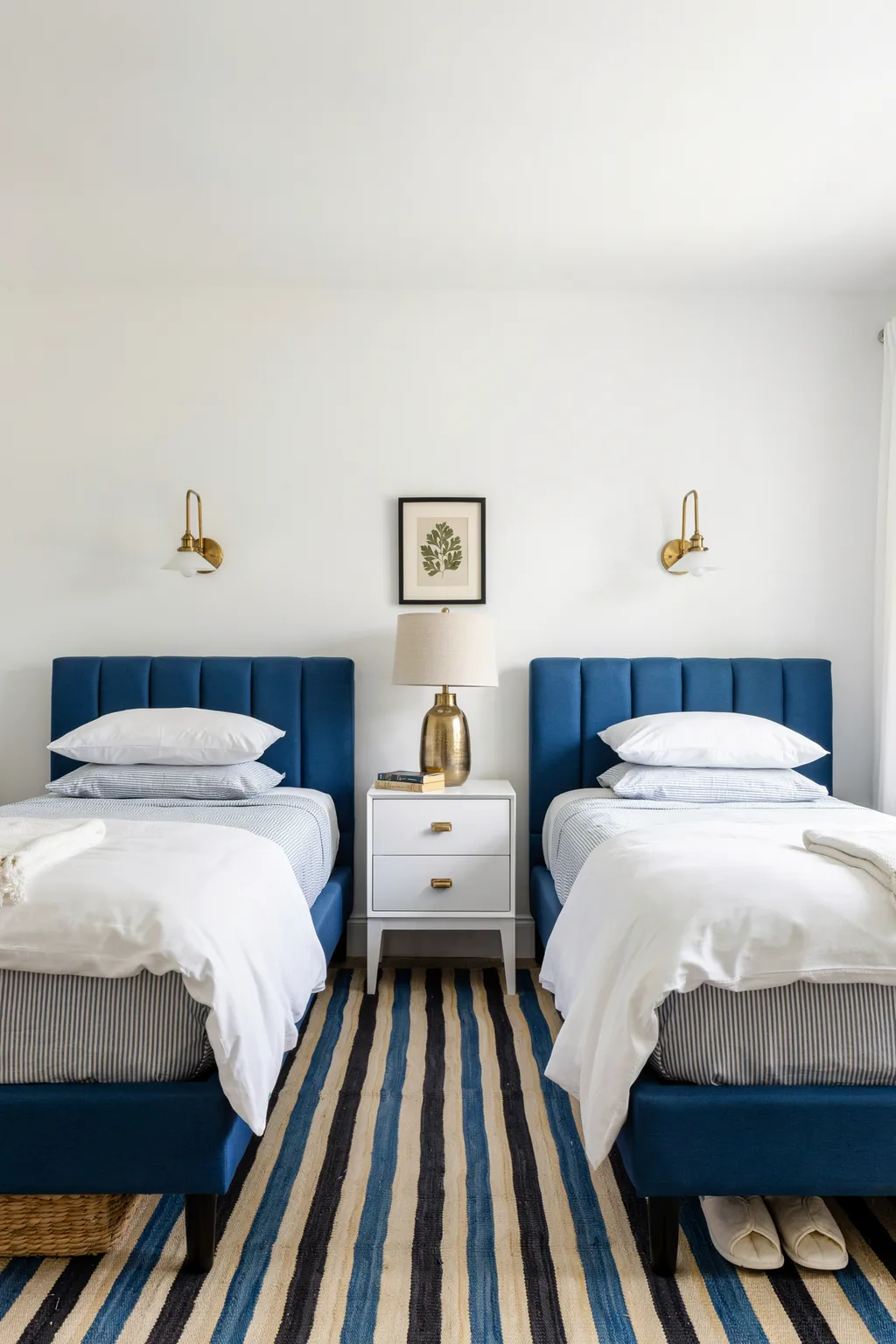
Two beds in one room only look deliberate when you treat them as a single unit instead of two separate setups.
Symmetry carries this. Matching blue headboards, matching bedding down to the pillow count, one shared nightstand centered between them, and either a single fixture overhead or a matched pair of sconces.
That centered nightstand is the move that makes the whole thing click. Two separate nightstands crowd both walls and turn the room into a dorm.
It also solves a real problem: guests and siblings stop negotiating over who got the better side, because there is no better side.
Find the wall’s centerline first. Mark it in pencil, then set both beds an equal distance out from it. Everything else measures off that line.
Leave 24 to 30 inches between the beds. Under 24 and nobody can make the beds. Over 36 and the pair stops reading as one unit.
Hang art or sconces on the centerline, not over each bed. One piece centered in the gap holds the two beds together visually.
15. Swap Linen for Velvet in Winter and Leave the Bones Alone
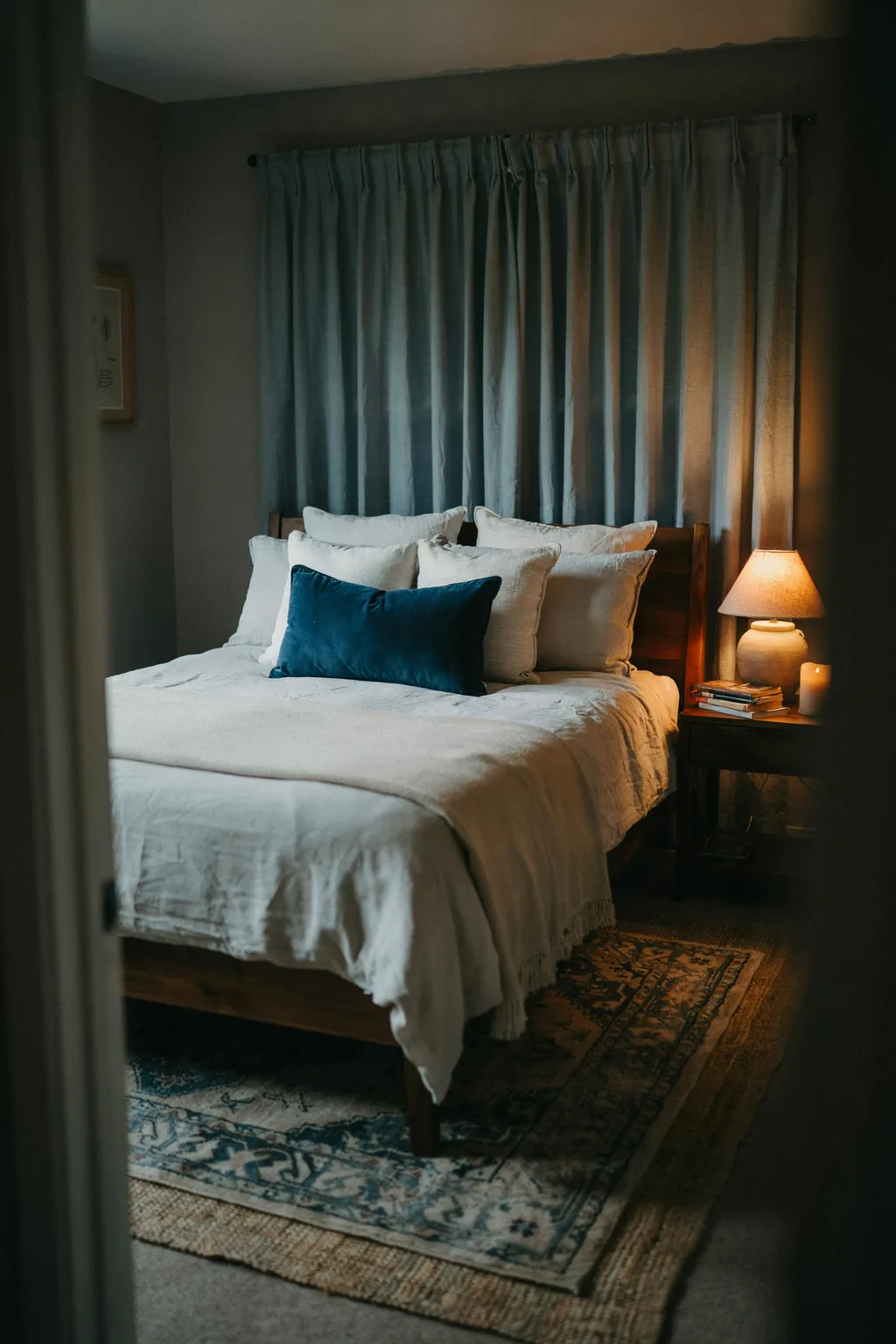
The structure of the room should not change with the season. Only the soft parts should.
That is the quiet advantage of this color pair. It takes a summer version and a winter version without a repaint, because neither blue nor white commits to a temperature on its own.
In May, strip it back. White linen duvet, one thin blue quilt, bare jute rug, sheers pulled open all day.
In November, add weight. A navy velvet lumbar pillow, a heavy cotton blanket across the foot, a small wool rug layered over the jute, lined curtains drawn by five.
Two bins in the closet hold the entire rotation. Fifteen minutes, twice a year, and the room never feels stale.
Throw pillows, the folded blanket, and the top layer on the bed.
A small layered rug, and whether the curtains are sheer or lined.
Bulb warmth, and whether the lamp shade is linen or paper.
Wall color, headboard, and the large rug underneath everything.
Art placement and curtain rod height. Moving those undoes your measuring.
The white bedding base. It is the thing making both versions possible.
Bringing It Together
Blue and white works because it is forgiving, not because it is easy. Get the proportion right, test your light before you commit to a paint color, and make sure something warm and something woven is in the room. After that, most of it really is just shopping.
If you only take three things from this list, take the 60/30/10 count, the window direction test, and the curtain rod height. Those three fix more rooms than any single purchase ever will.
Come back to these blue and white bedroom ideas when you are actually standing in the paint aisle with four chips in your hand. That is the moment the details start to matter.
Your first weekend, in order
Save this to your bedroom board so it is waiting for you the next time you want to refresh the room.