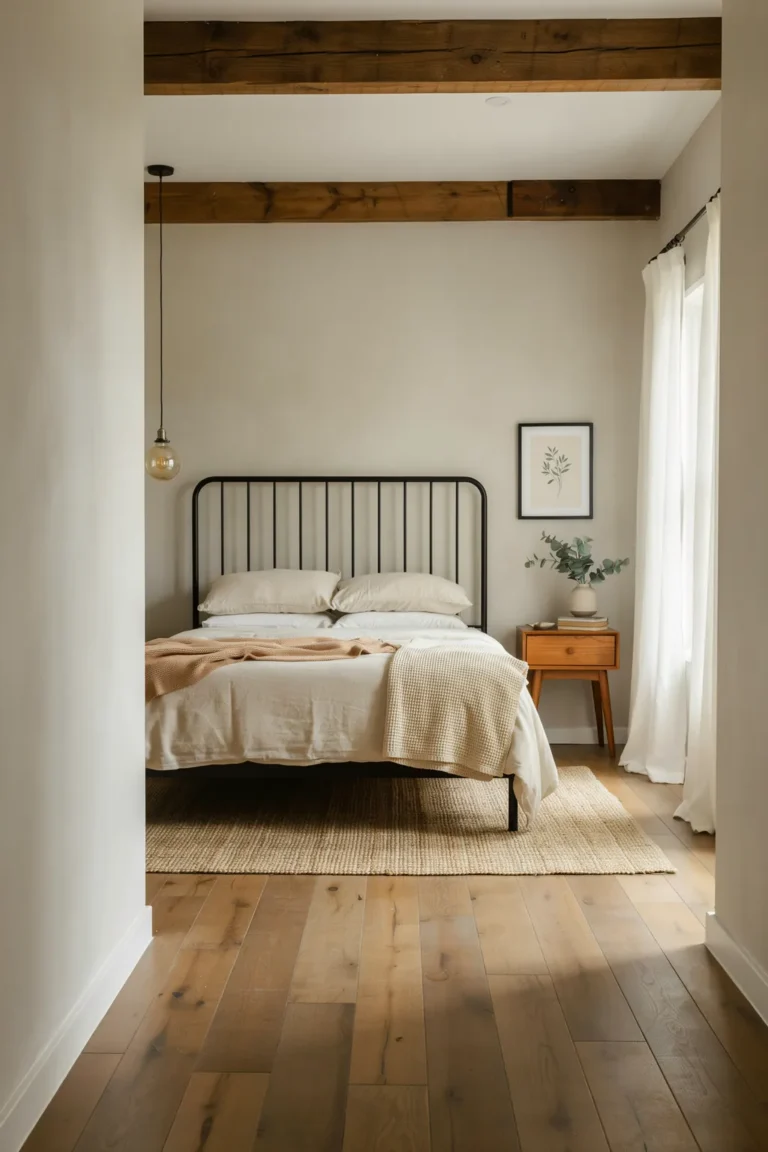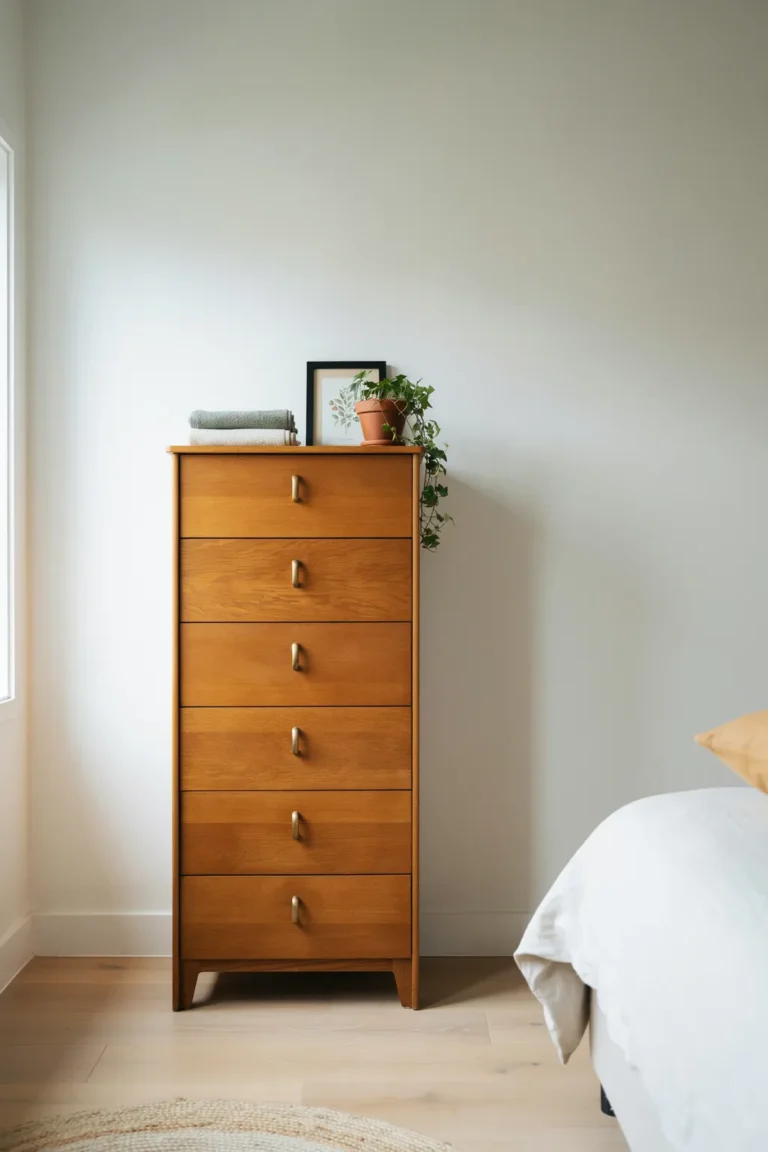
20 Calm Bedroom Ideas for Deeper Sleep
You lie down, and your brain will not switch off. The room is part of the reason. Harsh light, a cluttered nightstand, scratchy sheets, and a phone glowing on the pillow all tell your body to stay alert when you want the opposite. A calm room is not a luxury; it is a sleep tool. These calm bedroom ideas treat the space as something that should actively help you wind down, not just look pretty in a photo.
Most “relaxing bedroom” lists stop at a paint color and a plant. That is a start, but it will not change how the room feels at 11 p.m. with the lights low. Real calm comes from a stack of small choices working together: the warmth of your bulbs, the texture against your skin, the darkness at the window, and the clear floor your feet cross at 3 a.m. Below are 20 calm bedroom ideas, each with the specifics, who it suits, and when to skip it. Pick a few tonight and add the rest over time. By the end, your room should feel less like a place you crash and more like a place you rest.
Quick Answer
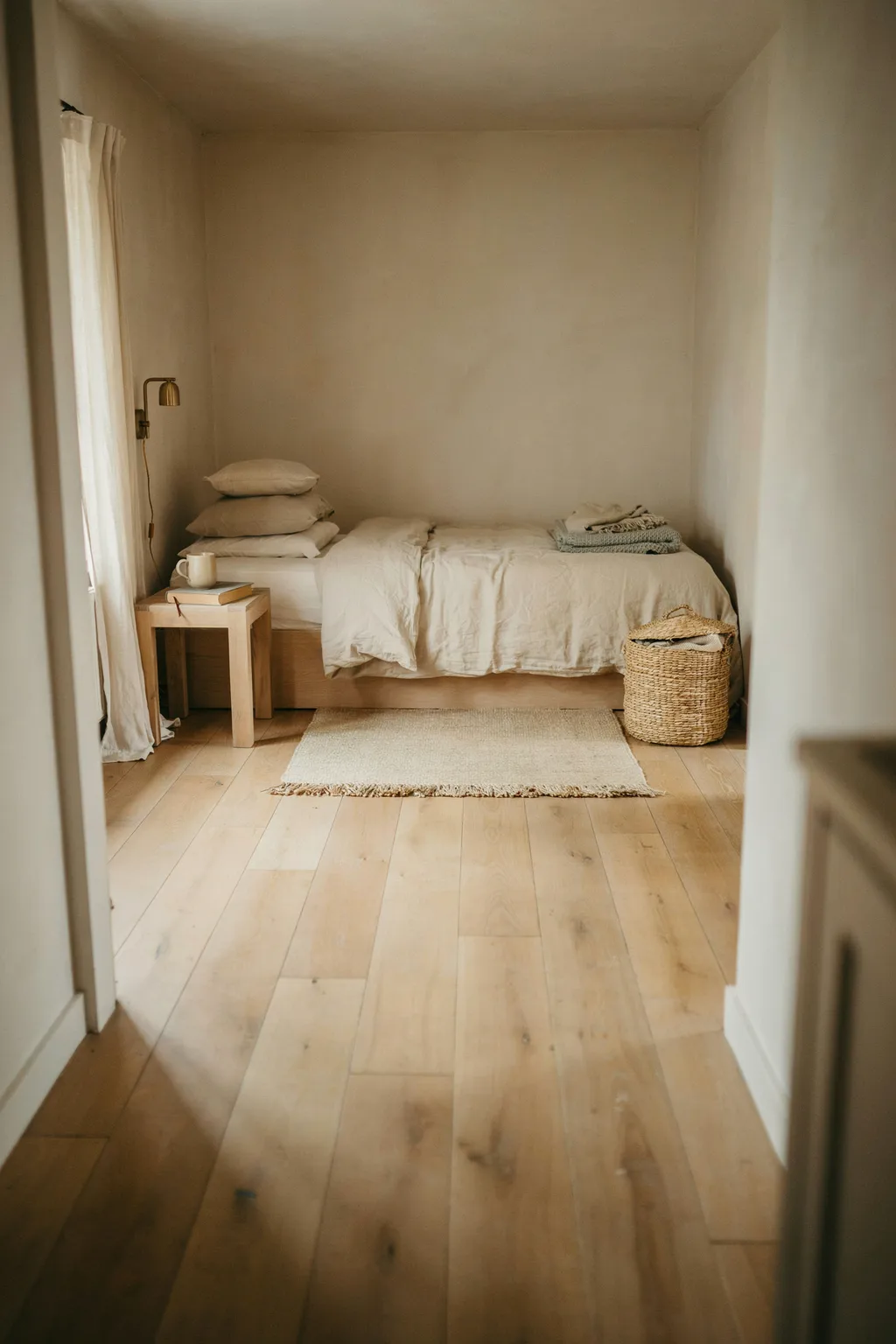
For a calm bedroom, work in layers, not one big buy. Start with a warm neutral wall color, switch to 2700K bulbs on a dimmer, and dress the bed in breathable natural fabrics. Then darken the window, clear the surfaces, and soften the room with a rug and curtains. The best calm bedroom ideas stack quiet, low-stimulation choices on top of each other so the whole space signals rest the moment you walk in.
1. Start With a Warm Neutral Wall Color
Cool, bright white can make a bedroom feel like a clinic, and that hard edge keeps you subtly alert. Trade it for a warm neutral with a light reflectance value around 60 to 70: soft greige, warm oat, or a creamy off-white. These shades carry a little yellow or red, so at night they hold lamplight and glow instead of turning grey and flat.
The reason this matters is contrast, or rather the lack of it. A low-contrast, warm room gives your eyes nothing jarring to land on, so the nervous system reads the space as safe and settled. Paint a small sample on two walls and check it after dark under your real bulbs, not just at noon. Skip stark whites and icy greys here, especially in a north-facing room where cool daylight already drains the warmth.
2. Switch to 2700K Bulbs on a Dimmer
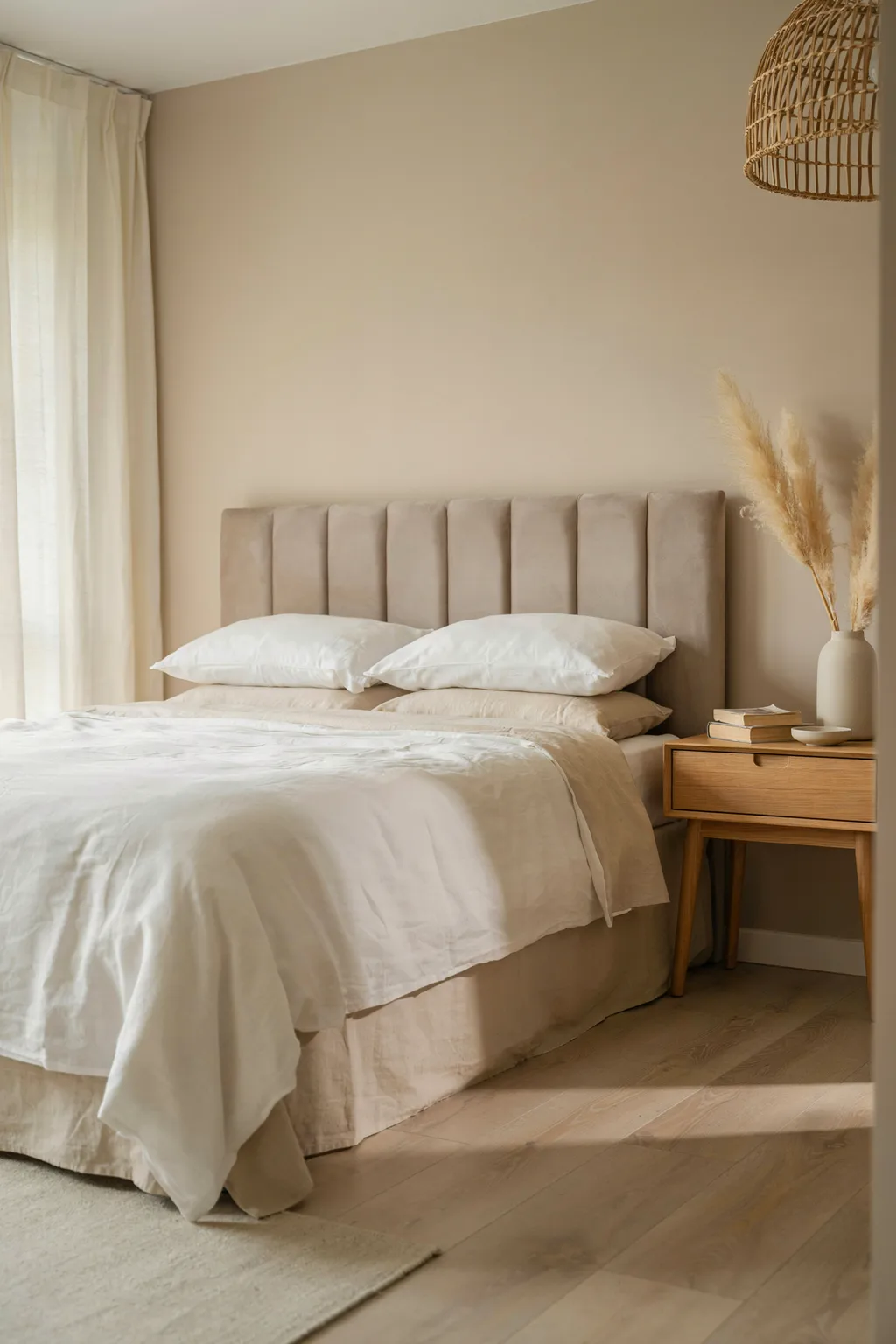
Lighting changes sleep more than almost anything else in the room, and it is cheap to fix. Replace cool, bluish bulbs with warm 2700K ones, then add a plug-in dimmer so you can drop the brightness as bedtime nears. Bright blue-white light in the evening tells your brain it is still daytime; warm, dim light does the opposite.
This works because evening light shapes your circadian rhythm, the internal clock that decides when you feel sleepy. Warm light low to the ground, around 10 to 20 percent brightness in the last hour, nudges that clock toward rest. A bedside lamp and a small floor lamp on dimmers beat one bright ceiling fixture every time. The only catch: cheap dimmers can buzz or flicker with some LEDs, so buy a dimmable bulb and a matching dimmer together.
3. Add Sage Green in Small Doses
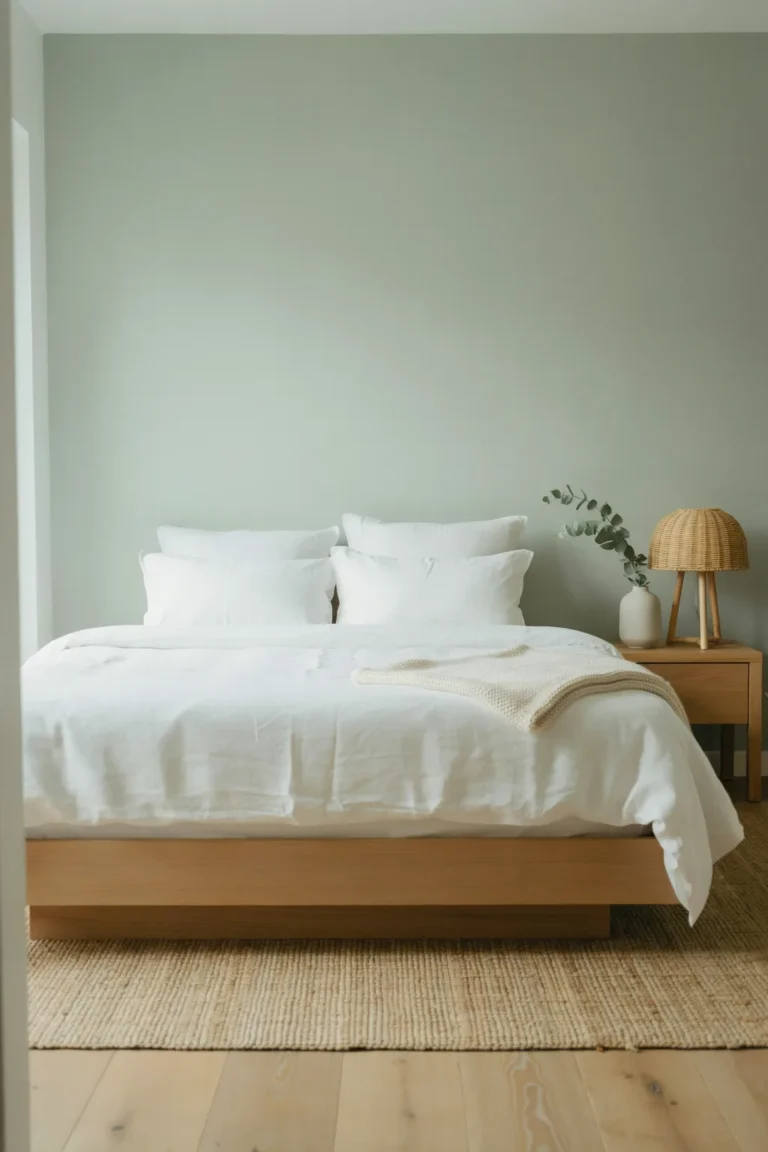
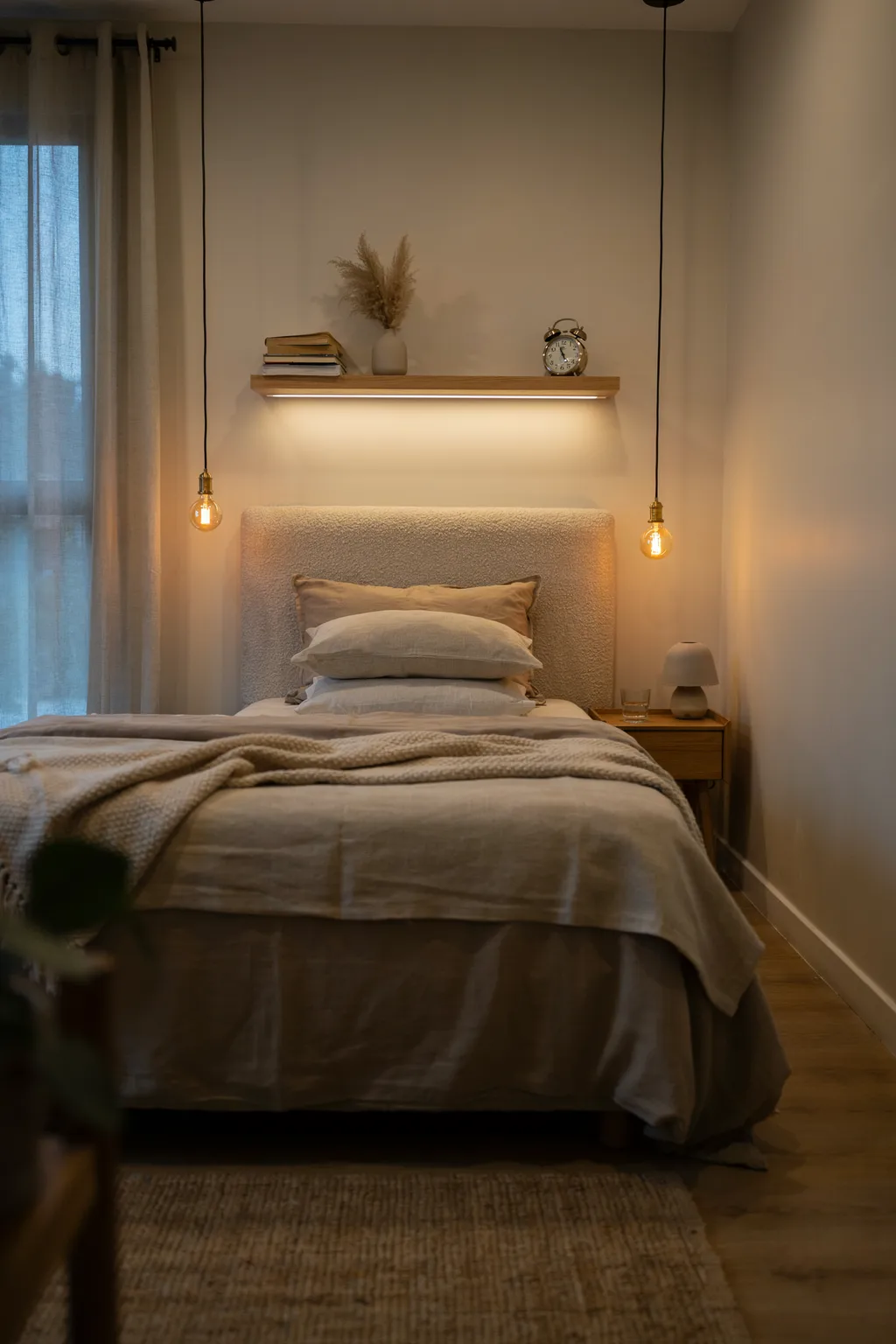
Sage is the calm color that is not another beige. A muted, grey-leaning green sits halfway between neutral and color, so it brings life to the room without shouting for attention. Used on a headboard wall, bedding, or a single chair, it feels organic and quiet, like the room borrowed something from a garden.
The trick is restraint and the right undertone. Keep sage to roughly a third of the room and pair it with warm wood and cream so it stays cozy rather than cold. A sage duvet against oat walls with a rattan light reads instantly restful. Sage can turn flat and grey under cool bulbs, so this idea only works once you have warm 2700K light in place, which is why it follows the lighting step.
4. Layer the Bed in Breathable Natural Fabrics
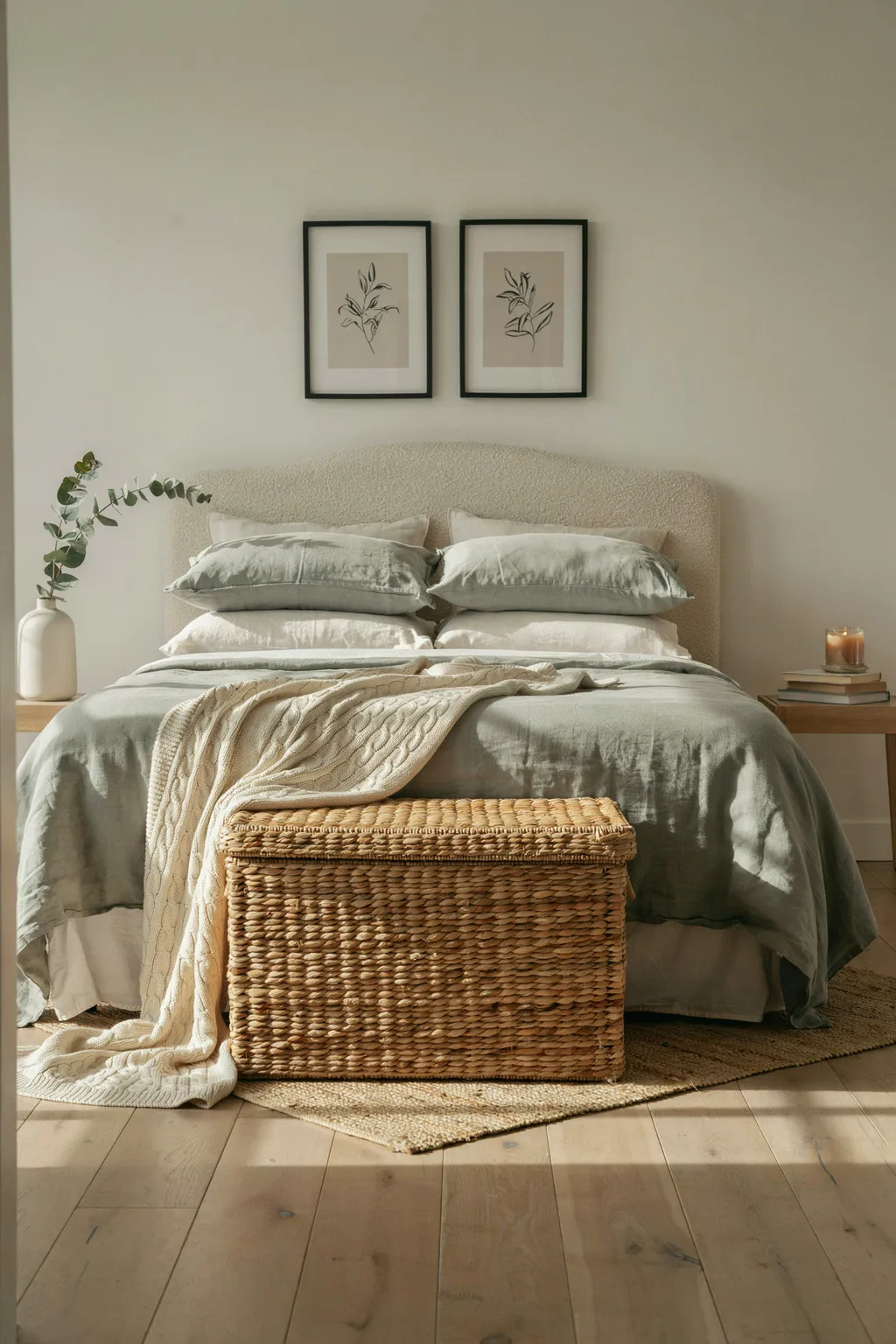
The bed is where calm gets personal, because you actually feel it. Swap slick polyester for breathable natural fibers: washed linen, cotton percale, a light wool throw. They regulate temperature better, so you are less likely to wake up hot at 2 a.m., and they drape softly instead of looking stiff and shiny.
Texture also reads as comfort before you touch it. A linen duvet, a waffle blanket folded at the foot, and one knit throw give the bed visual softness that signals rest. Stick to three textures in a tight color family so it stays calm, not busy. Linen wrinkles by nature, so if a crisp, hotel-smooth bed is what relaxes you, choose cotton percale instead and skip the linen.
5. Darken the Window With High, Lined Curtains
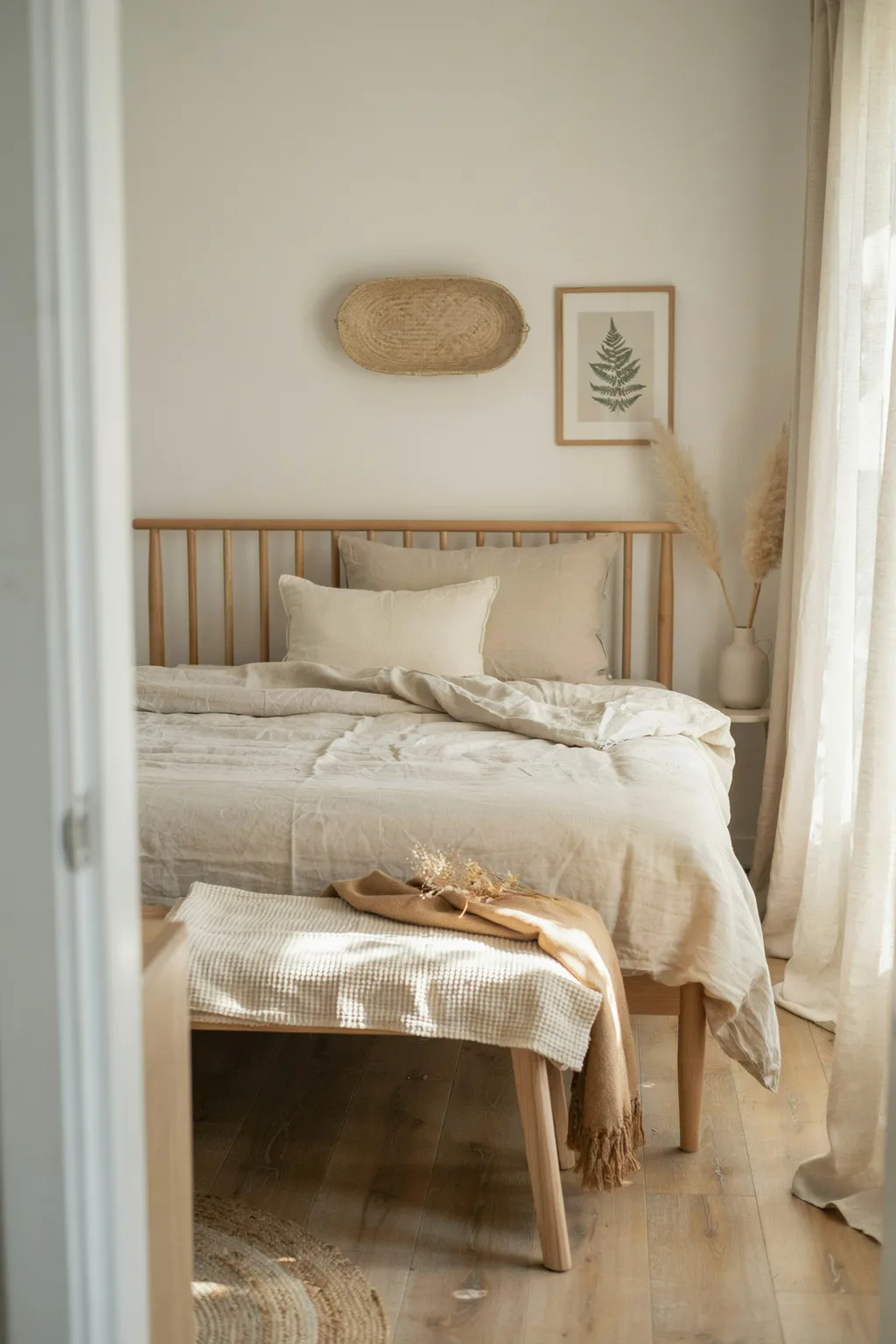
Light leaking in at night and at dawn fragments sleep, even when your eyes are closed. Hang curtains close to the ceiling and let them extend a few inches past each side of the window, then choose a blackout or thermal lining. The high, wide hang makes the window look bigger and the room taller, while the lining does the real work after dark.
Beyond darkness, heavy curtains also muffle street noise and hold heat, two more things a calm room needs. Floor-length panels that just kiss the floor look intentional; short, floating curtains look like an afterthought. If you rent and cannot drill, a tension rod or a no-drill bracket carries lightweight blackout panels, though very heavy drapes will need proper fixings.
6. Bring In Natural Wood and Rattan
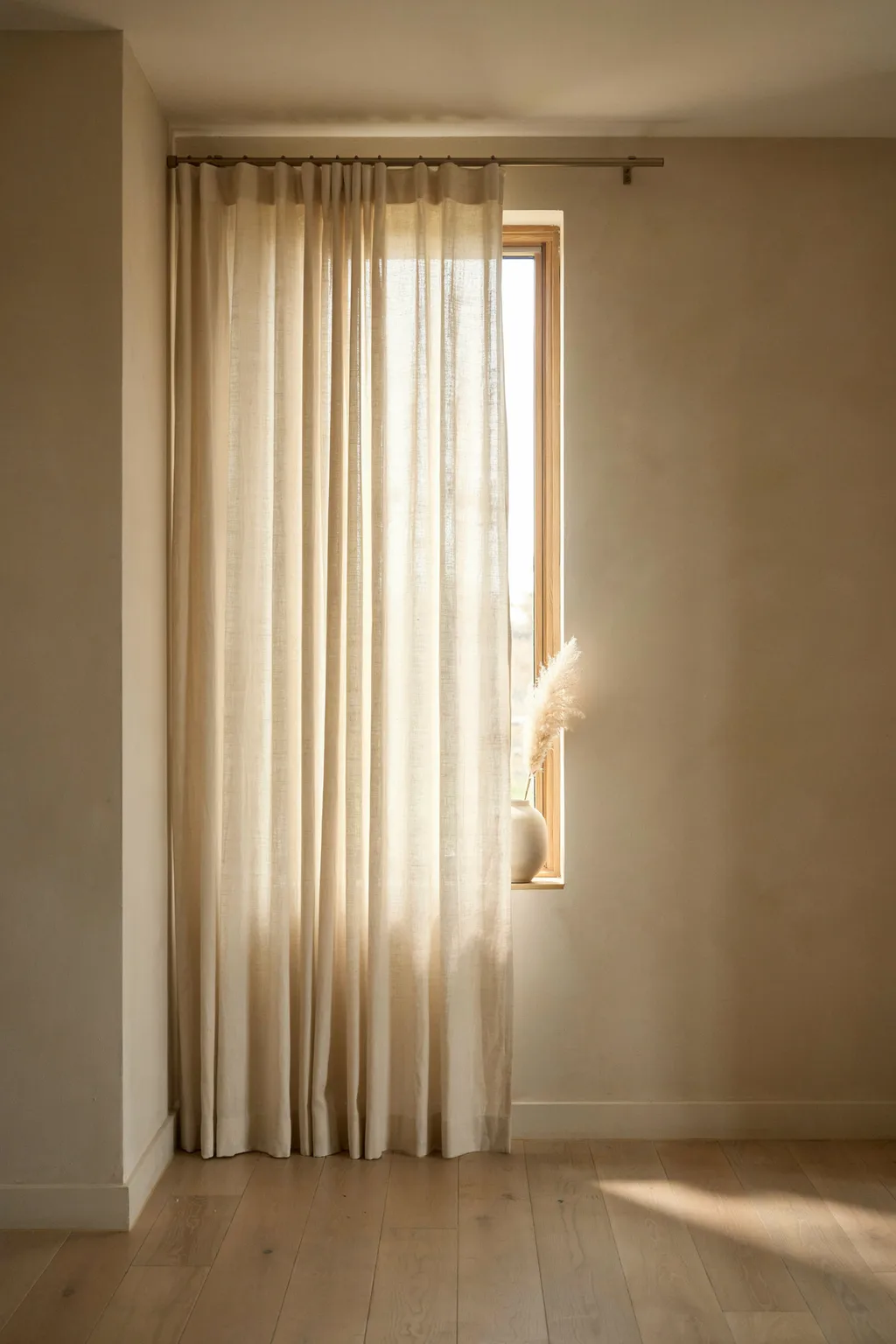
A calm bedroom needs warmth that paint alone cannot give, and raw natural materials supply it. A wood nightstand, a cane headboard, or a rattan pendant adds grain, shadow, and a hand-made feel that plastic and high-gloss finishes flatten. These materials read as grounded and unhurried.
The effect comes from imperfection. Natural grain and weave catch light unevenly, giving the eye gentle interest without bold pattern or color. One or two wood or rattan pieces against neutral walls is the sweet spot, and they make some of the warmest calm bedroom ideas going. Go too far and the room tips rustic and busy, so keep most surfaces smooth and let the texture be the accent, not the whole story.
7. Keep Furniture Low and Grounded
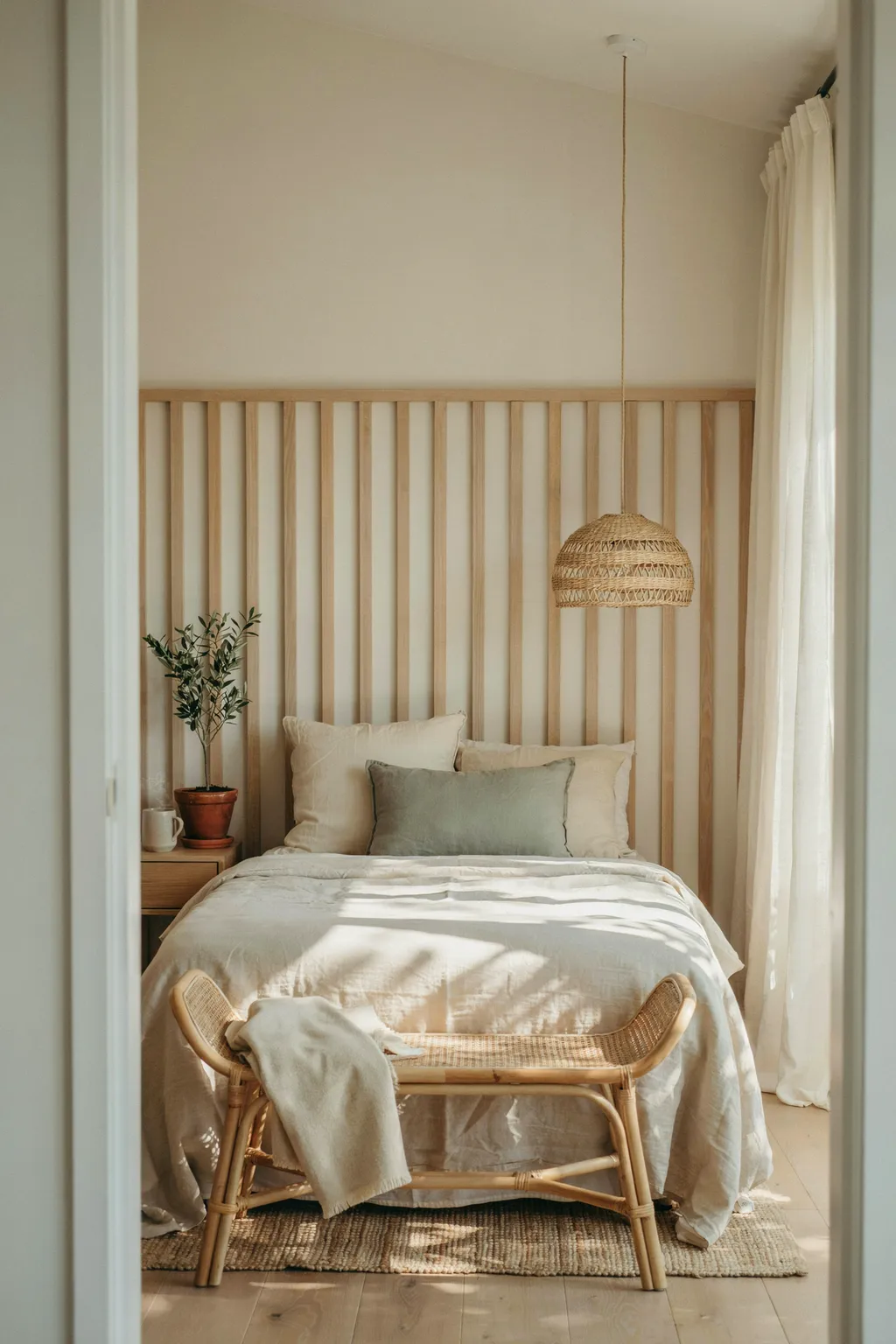
Tall, heavy furniture crowds a bedroom and makes the ceiling feel lower, which quietly raises tension. Choosing low, horizontal pieces, a platform bed, a low dresser, a short nightstand, opens up the wall above and lets the room breathe. The eye travels along calm horizontal lines instead of bumping into looming verticals.
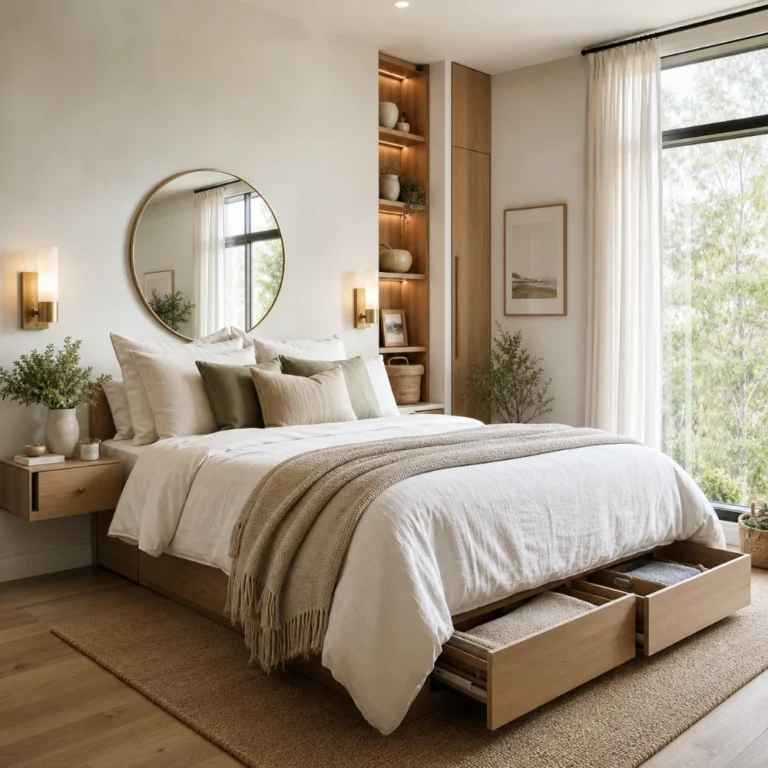
Lower furniture also pulls the whole room toward a restful, lounging posture, the same reason low seating feels relaxed. A platform bed with a foot or two of clear wall above it instantly feels more spa than storage unit. The honest trade-off is storage: low pieces hold less, so if you are short on space, gain it with under-bed bins rather than tall towers.
8. Clear the Nightstand to Three Things
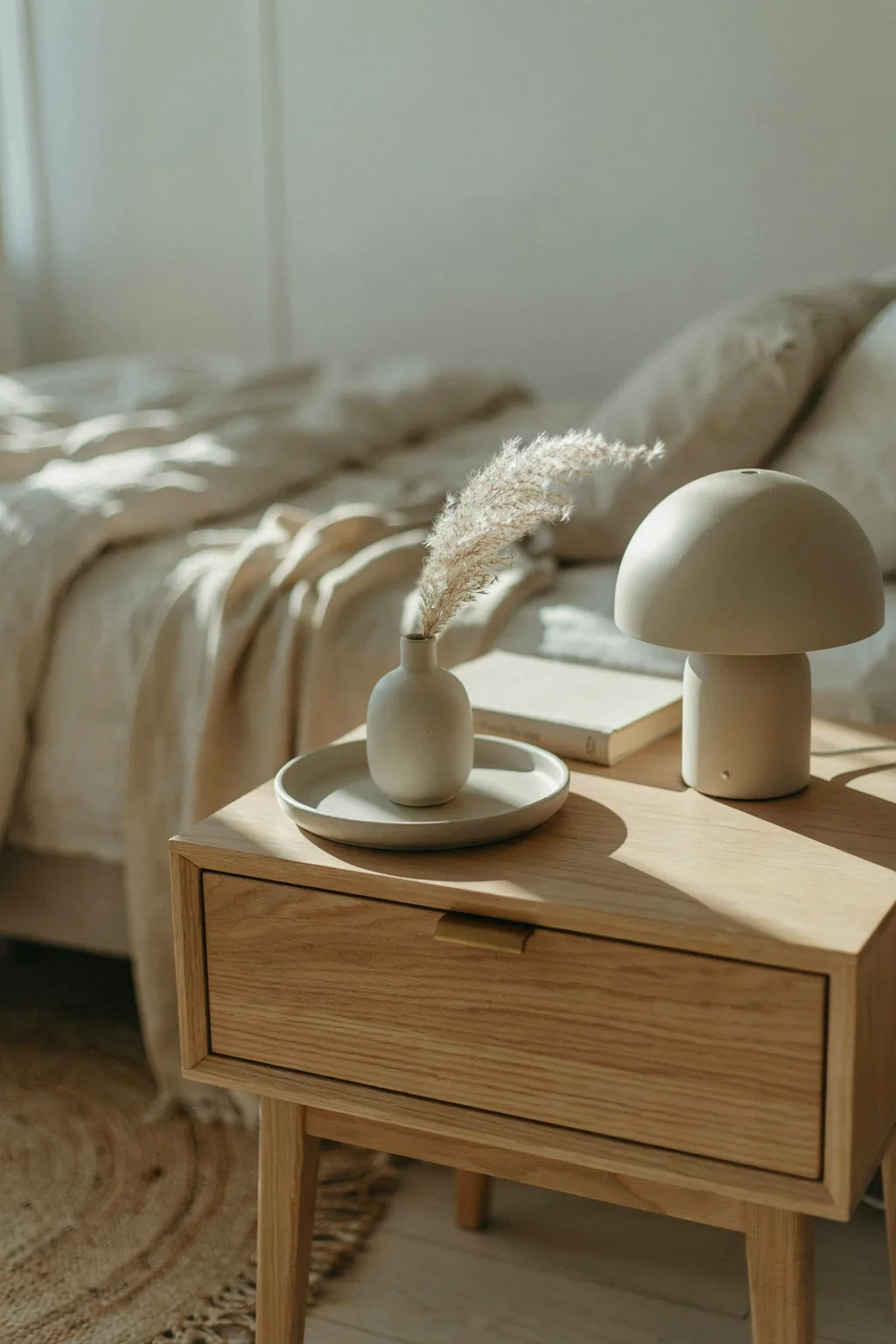
A cluttered nightstand is the last thing you see before sleep and the first thing you see awake, so it sets the tone twice a day. Pare it back to three objects at three heights: a lamp, a book, and one small thing like a candle or a glass of water. Everything else goes in the drawer.
The calm here is about visual quiet at close range. Your bed-level view is the most intimate sightline in the room, and a tidy surface tells your brain there is nothing left to handle today. Use a small tray to corral the essentials so they look deliberate rather than abandoned. If you genuinely need meds or glasses within reach, a single shallow tray keeps them present without the pile.
9. Soften the Floor With a Large Rug
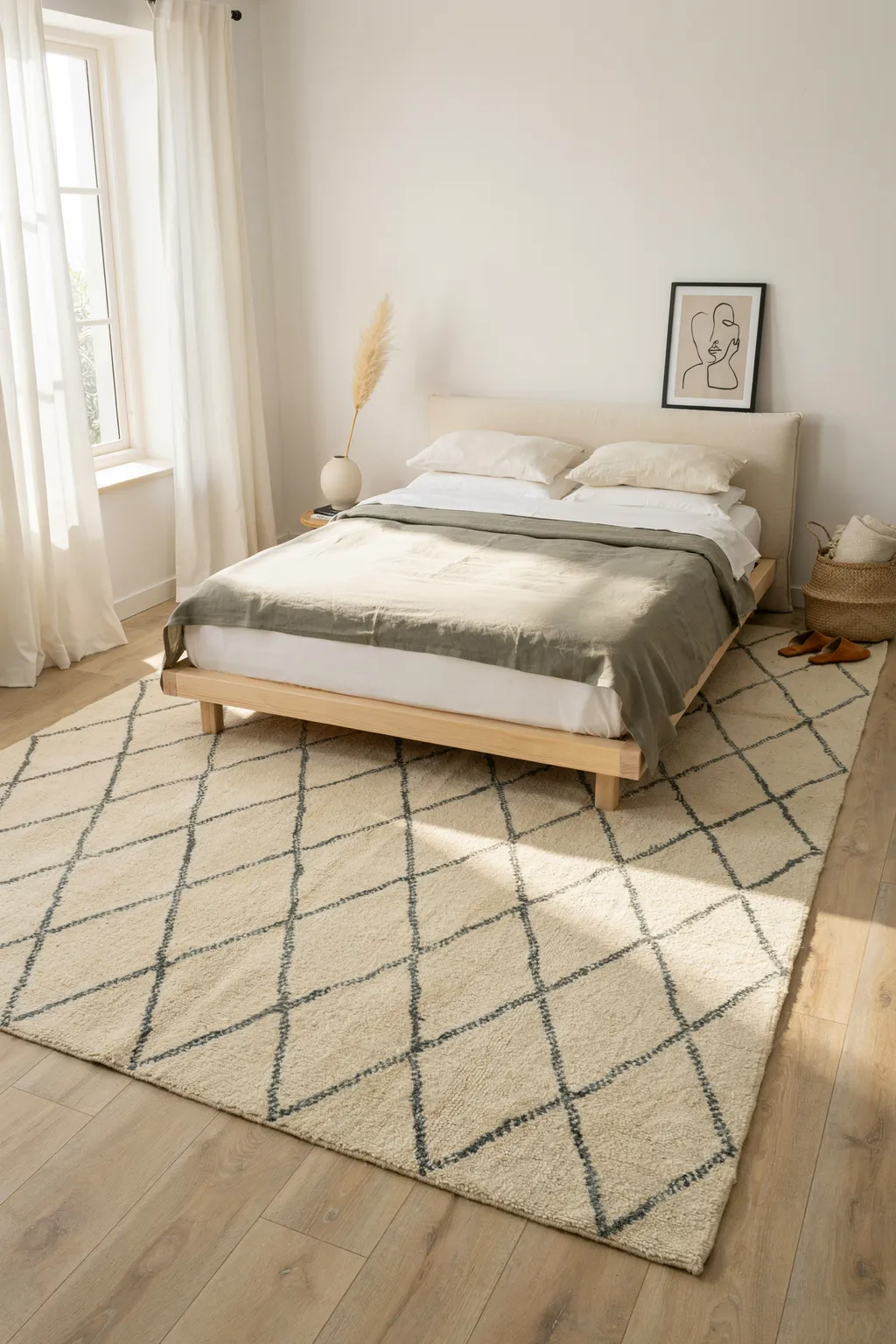
A bare floor, especially hard flooring, makes a bedroom echo and feel cold underfoot, which is a small but real jolt first thing in the morning. A large, soft rug warms the floor, absorbs sound, and visually anchors the bed. Size matters more than pattern: the rug should slide at least 18 to 24 inches out from each side of the bed.
Underfoot softness is a sensory cue your body registers before you are fully awake, and warm wool or a plush weave makes stepping out of bed gentle instead of bracing. A too-small rug, floating like a postage stamp under the bed, does the opposite and makes the room feel unfinished. If budget is tight, a larger low-pile rug beats a small thick one every time.
10. Settle on an Earthy Cream-and-Sand Palette
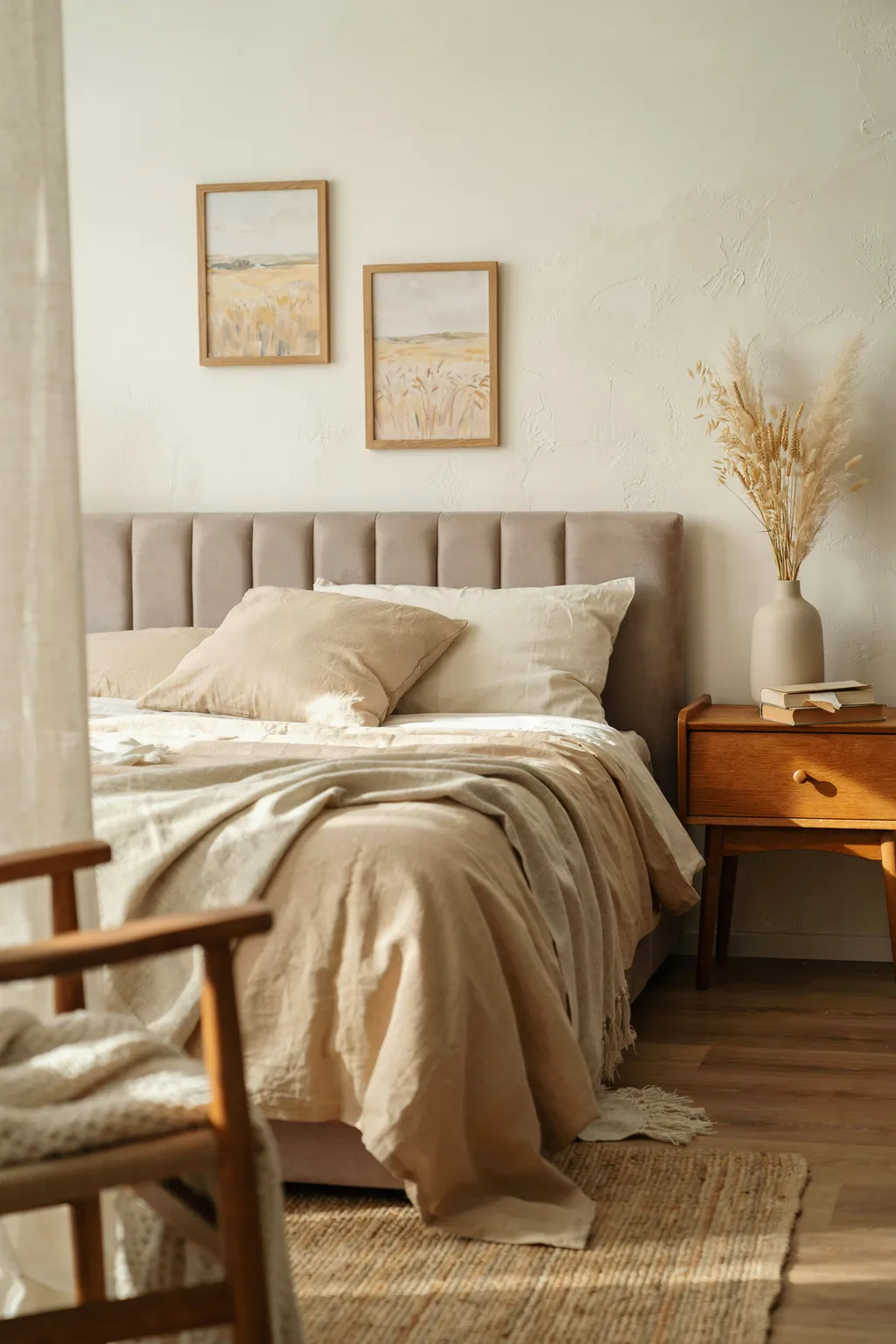
If sage is not your color, an earthy palette of cream, sand, and soft taupe delivers calm without any color commitment at all. These warm, sun-faded tones feel like a quiet beach house and never date, which makes them a safe base you can live with for years. The whole room reads soft and continuous.
Tonal schemes like this soothe because there is no hard line for the eye to catch, only gentle shifts from cream to sand to taupe. A sand duvet, cream walls, and a taupe throw layer depth without contrast. The risk is flatness, so add texture, a nubby throw, a jute basket, a linen lampshade, to keep a quiet room from sliding into a boring one.
11. Add a Few Quiet Plants and a Botanical Shelf
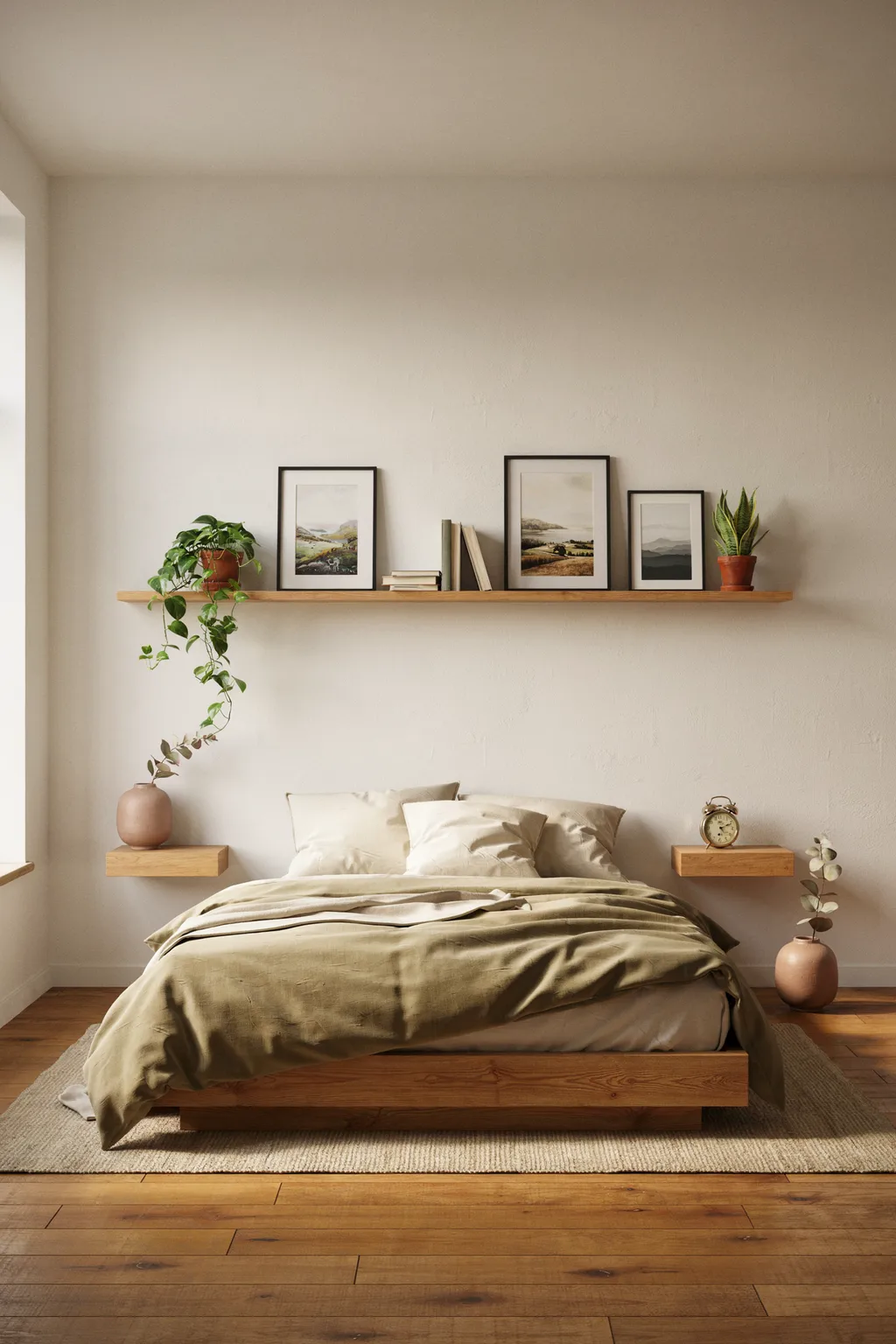
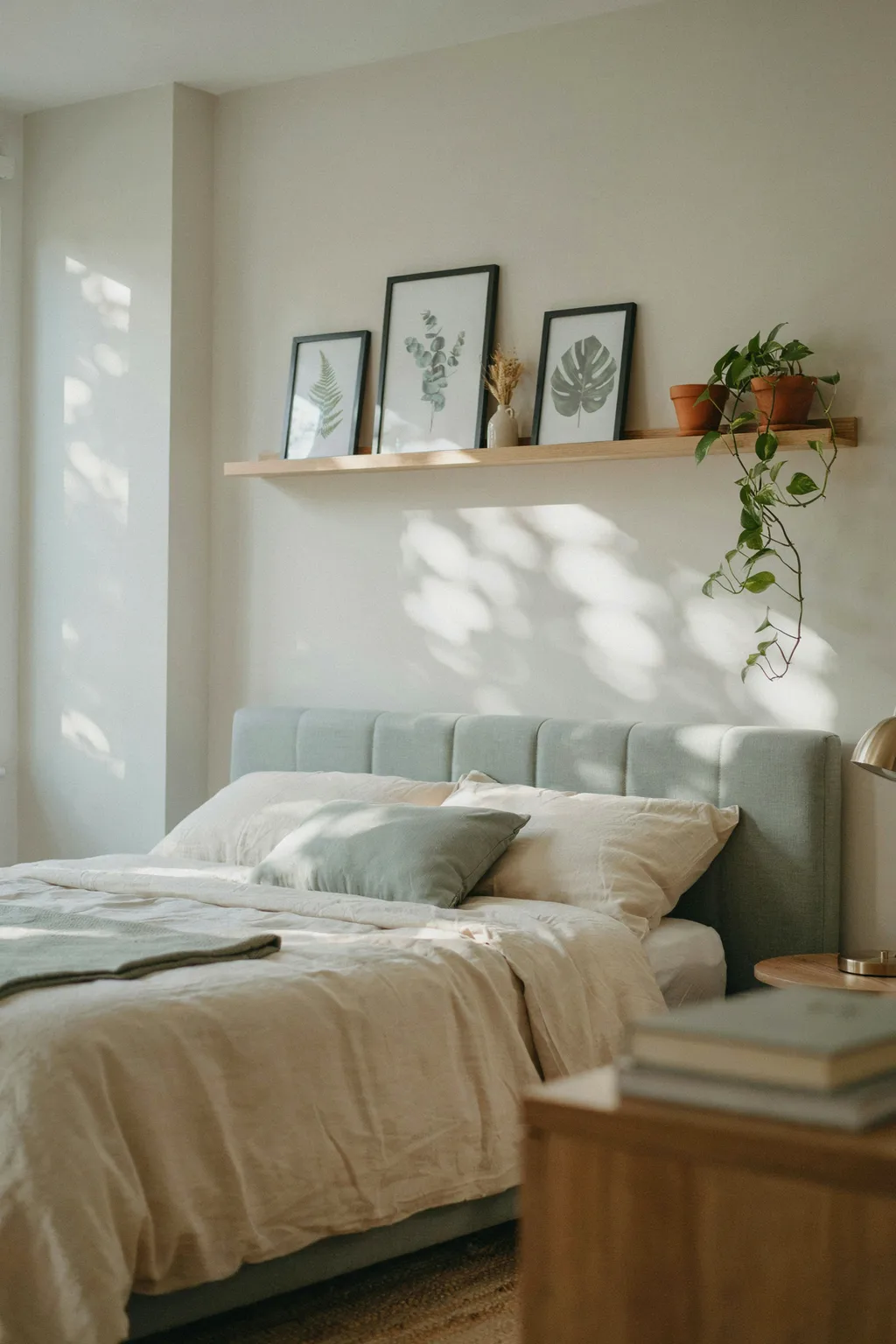
Greenery softens hard edges and brings a little life into a room built for rest, and the effect is calming out of proportion to the cost. A floating shelf above the bed holding two or three small plants, a trailing pothos, and a couple of framed botanical prints turns a bare wall into a quiet, living focal point.
Plants work partly because we are wired to relax around greenery, and partly because caring for one slows you down at the end of the day. Choose low-light, low-fuss species so they survive a dim, curtained bedroom. Keep it to a few pots, not a jungle, and skip live plants entirely if you travel often, since a dying plant in the corner adds stress, not calm.
12. Build Symmetry Around the Bed
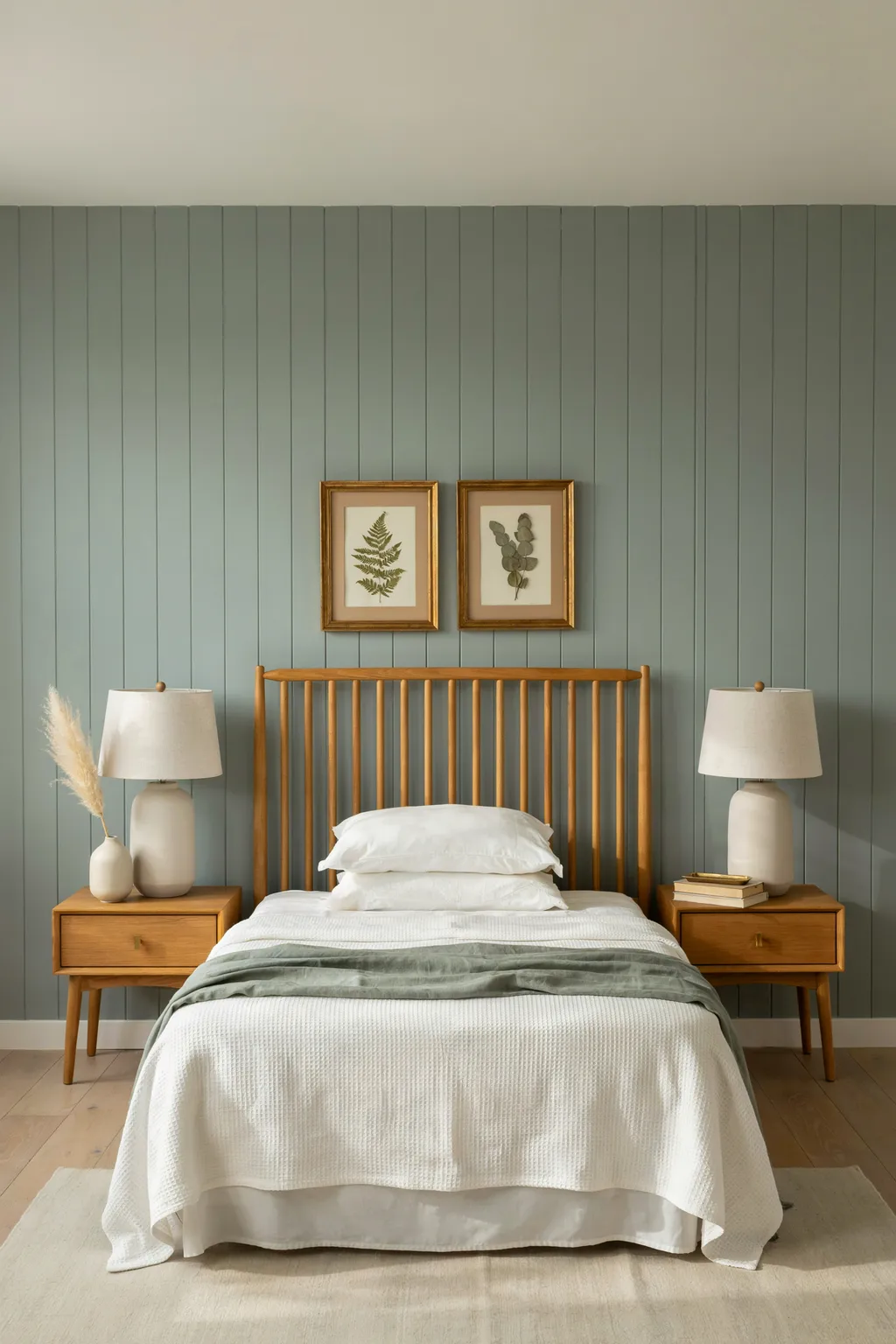
Symmetry is a shortcut to calm because the brain reads balance as order. Matching nightstands and a pair of identical lamps flanking the bed instantly make a room feel composed and intentional, even when everything else is simple. It is the most reliable way to make a budget bedroom look considered.
The reason it lands is predictability: when the left and right of the bed mirror each other, nothing feels off or unfinished, and the eye relaxes. Two thrift-store nightstands painted the same color count, they do not need to be a designer set. If your layout only allows one nightstand, fake the balance with a matching sconce or a stack of books on the open side instead.
13. Choose a Soft, Upholstered Headboard
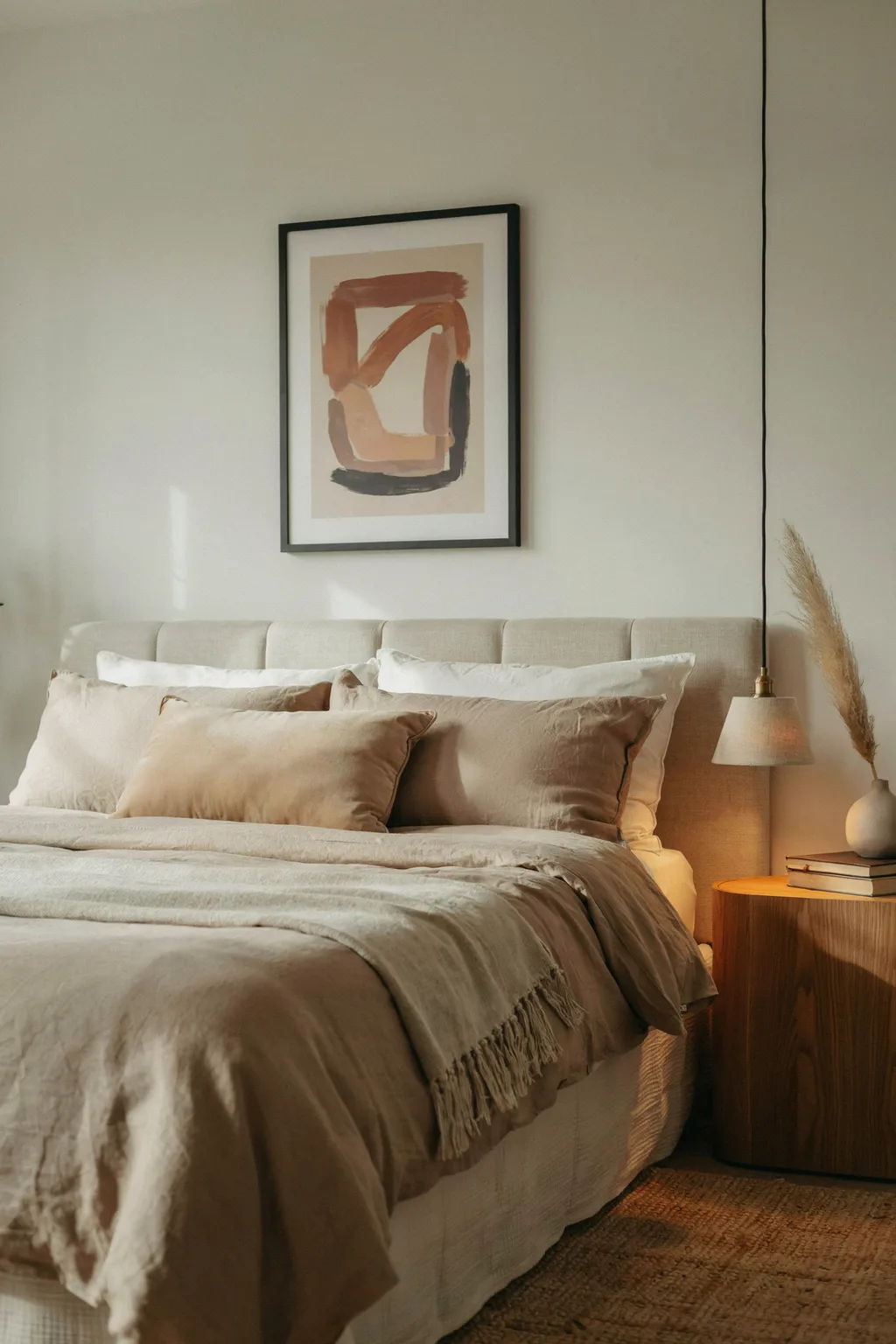
A hard wall or a metal frame behind your head feels exposed; a padded, upholstered headboard feels like a backrest and a buffer. In a neutral linen or boucle, it adds a big block of soft texture exactly where you rest, and it quietly absorbs a little sound and draft from the wall behind.
The comfort is both real and visual. Leaning back into something soft to read signals the body to relax, and the headboard frames the bed as the calm center of the room. Light, washable covers matter if you read in bed or have pets. Skip a very tall, dramatic headboard in a low room, since it can loom; a low or mid-height one keeps the calm, horizontal feel.
14. Layer Light at Three Heights
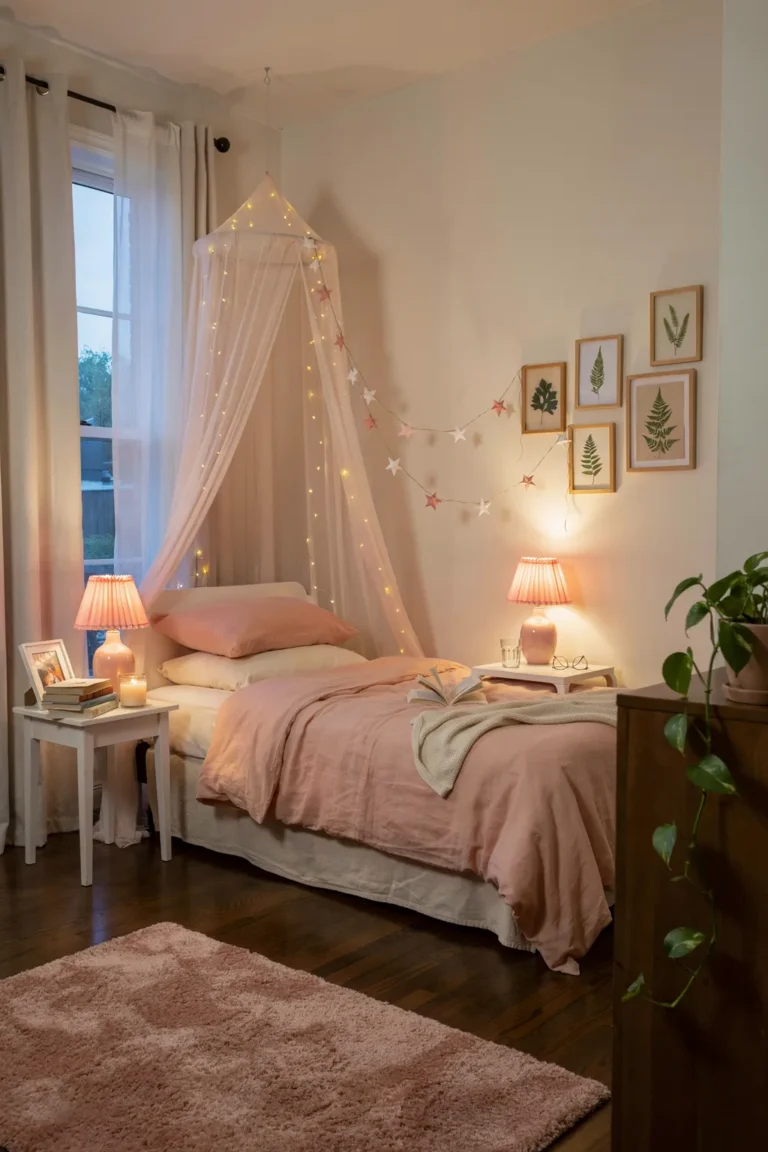
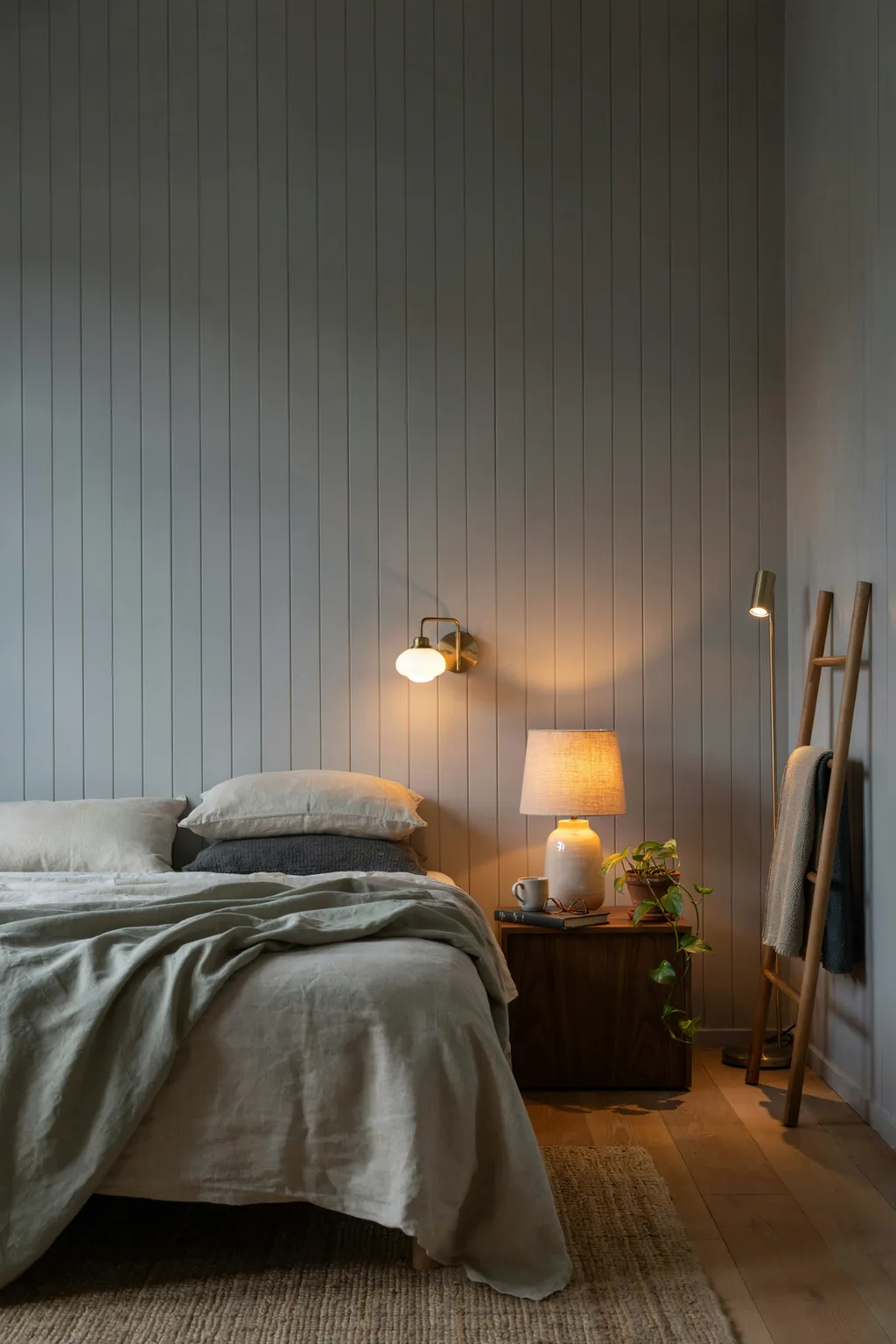
One bright ceiling light flattens a room and feels like an office, which is the opposite of restful. Spread the light over three sources at different heights instead: a table lamp at bedside, a floor lamp in a corner, and a low wall sconce or string of warm fairy lights. Each pool of light is small, warm, and easy on the eyes.
Layered low light gives the room depth and shadow, and shadow is what makes a space feel intimate and settled at night. With each source on a dimmer or a smart plug, you can drop the whole room to a soft evening glow in seconds. The one rule: keep them all warm, around 2700K, because mixing a cool bulb into the layers breaks the calm instantly.
15. Soften Sound With Soft Surfaces
A room full of hard surfaces bounces every creak and car horn straight at you, and noise is a quiet enemy of deep sleep. Soft materials soak it up: a thick rug, lined curtains, an upholstered headboard, and a few textiles together noticeably dampen echo and outside sound. The room gets quieter without a single gadget.
The calm is literal here, since less ambient noise means fewer micro-wake-ups through the night. You do not need acoustic panels; the soft furnishings you already want for warmth do double duty. For a noisy street or a snoring partner, add a small white-noise machine or a fan, which masks sudden sounds with a steady, sleepable hum.
16. Add a Single Calming Scent Corner
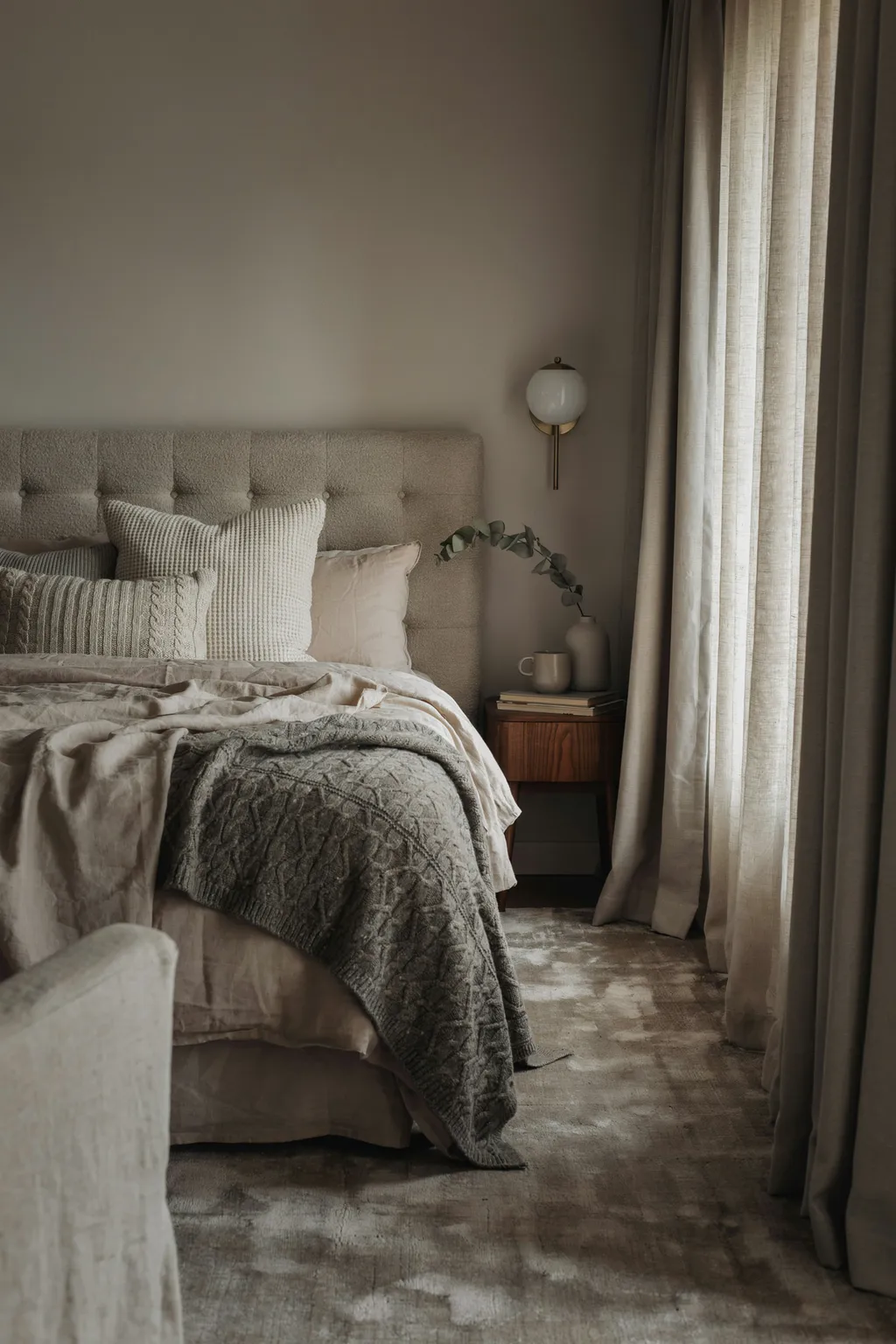
Smell reaches the brain faster than any other sense, so a quiet, consistent scent can become a sleep cue your body learns. A small tray on the dresser with a linen-and-lavender pillow mist, a low-burn candle, and a reed diffuser in a soft botanical note tells your brain, gently, that it is time to switch off.
The power is in the routine, not the strength. Use one calm scent, not a clash of three, and keep it faint, since a heavy fragrance can do the opposite and keep you alert. Spritz the pillows a few minutes before bed each night and the smell becomes a signal over time. Skip strong synthetic plug-ins if you are sensitive, and never leave a candle burning as you drift off.

17. Try a Muted Pastel Accent
If pure neutrals feel a touch lifeless to you, a muted pastel is the gentlest way to add color without breaking the calm. A dusty blue, a faded blush, or a soft clay used on a cushion, a throw, or one piece of art keeps the room soothing while giving the eye a quiet place to rest.
These work because muted pastels are low-saturation, so they read as soft and washed rather than bright and stimulating. One accent color, repeated two or three times around the room, looks intentional and pulls the scheme together. Keep saturated, candy-bright versions out of the bedroom, as they energize rather than settle, which is great for a playroom and wrong for sleep.
18. Build a Quiet Coastal Corner
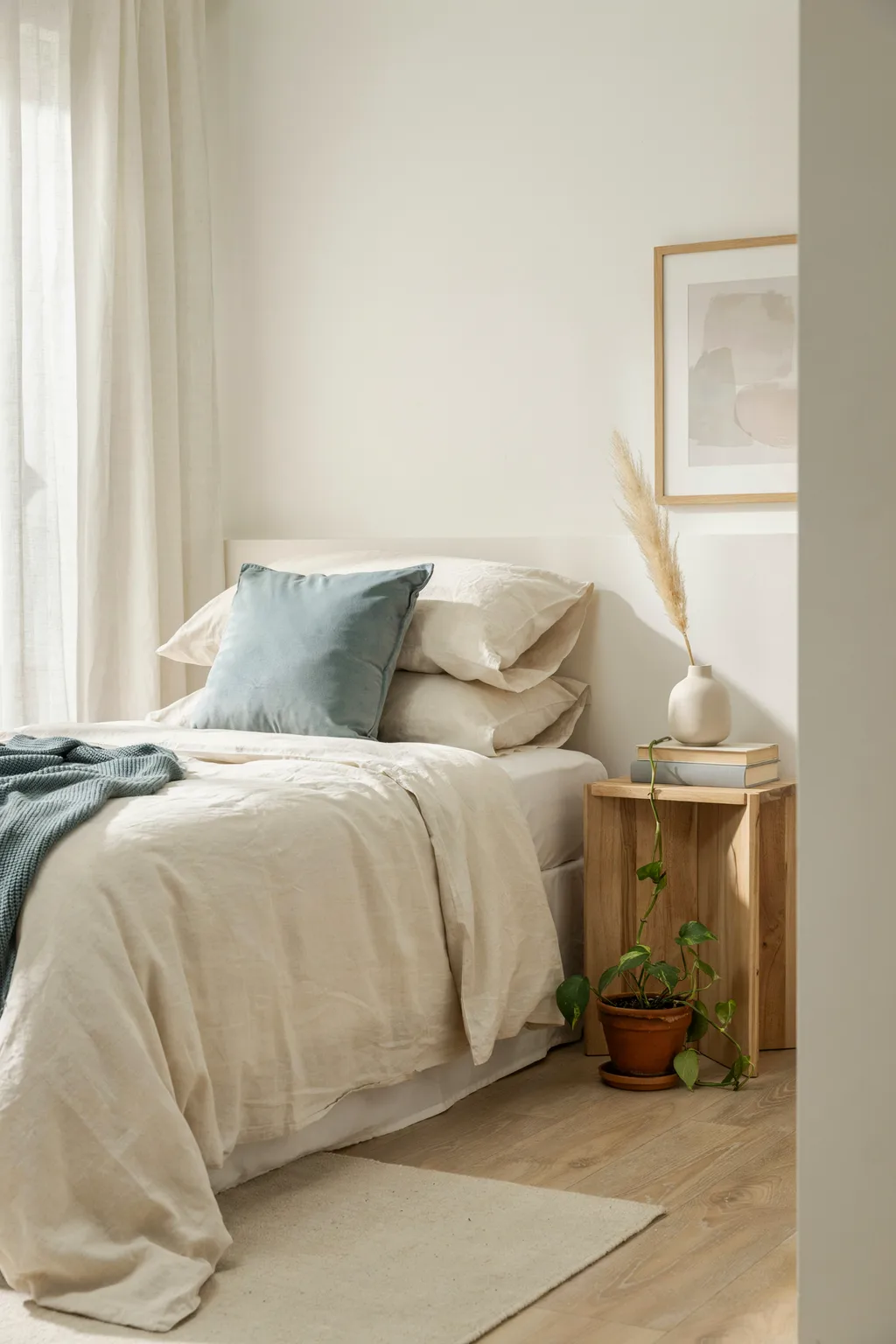
A light, coastal-calm scheme borrows the easy feeling of a seaside morning: pale sky-blue, sandy neutrals, natural fibers, and lots of white. Done with restraint, it feels airy and restful rather than themed or kitschy. The point is the calm of the coast, not literal seashells on every shelf.
It soothes because the palette is light and the materials are natural, so the room feels open and unhurried. A pale blue throw, a jute rug, and white linen against sandy walls give the look without a single anchor motif. The failure mode is going too literal, so skip the rope, nets, and novelty signs and let color and texture carry the mood.
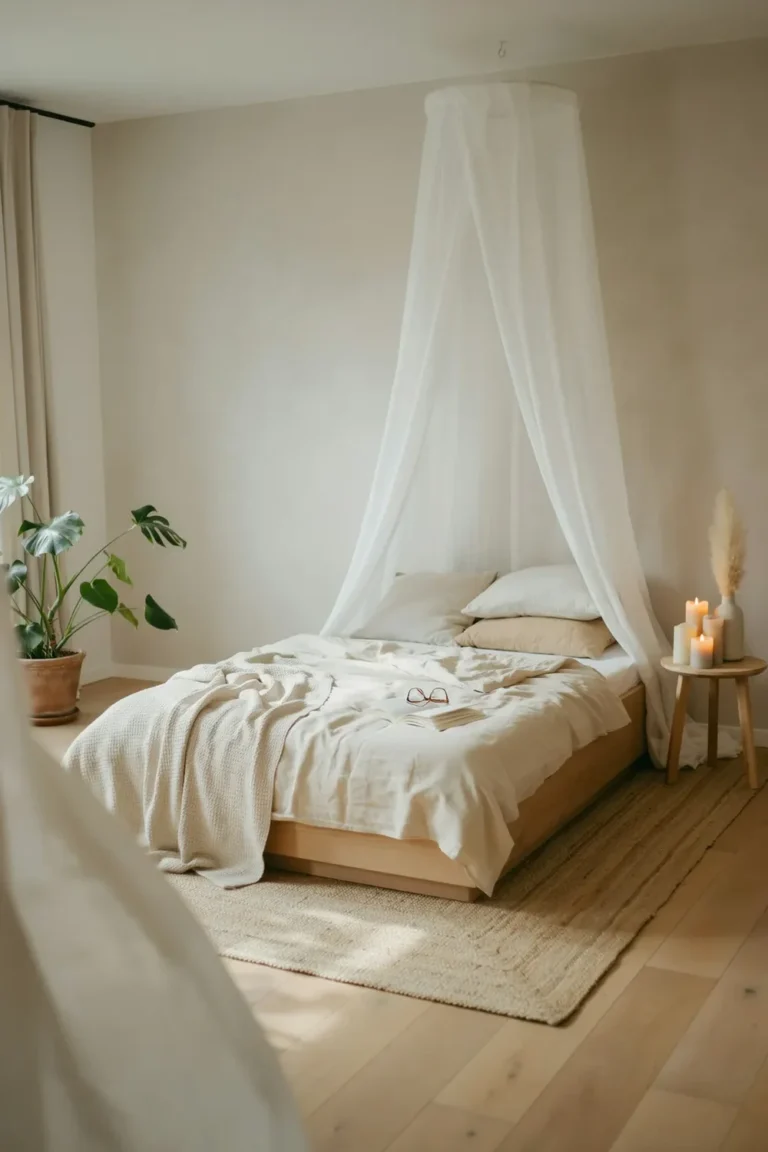
19. Cocoon the Bed With a Canopy or Drape
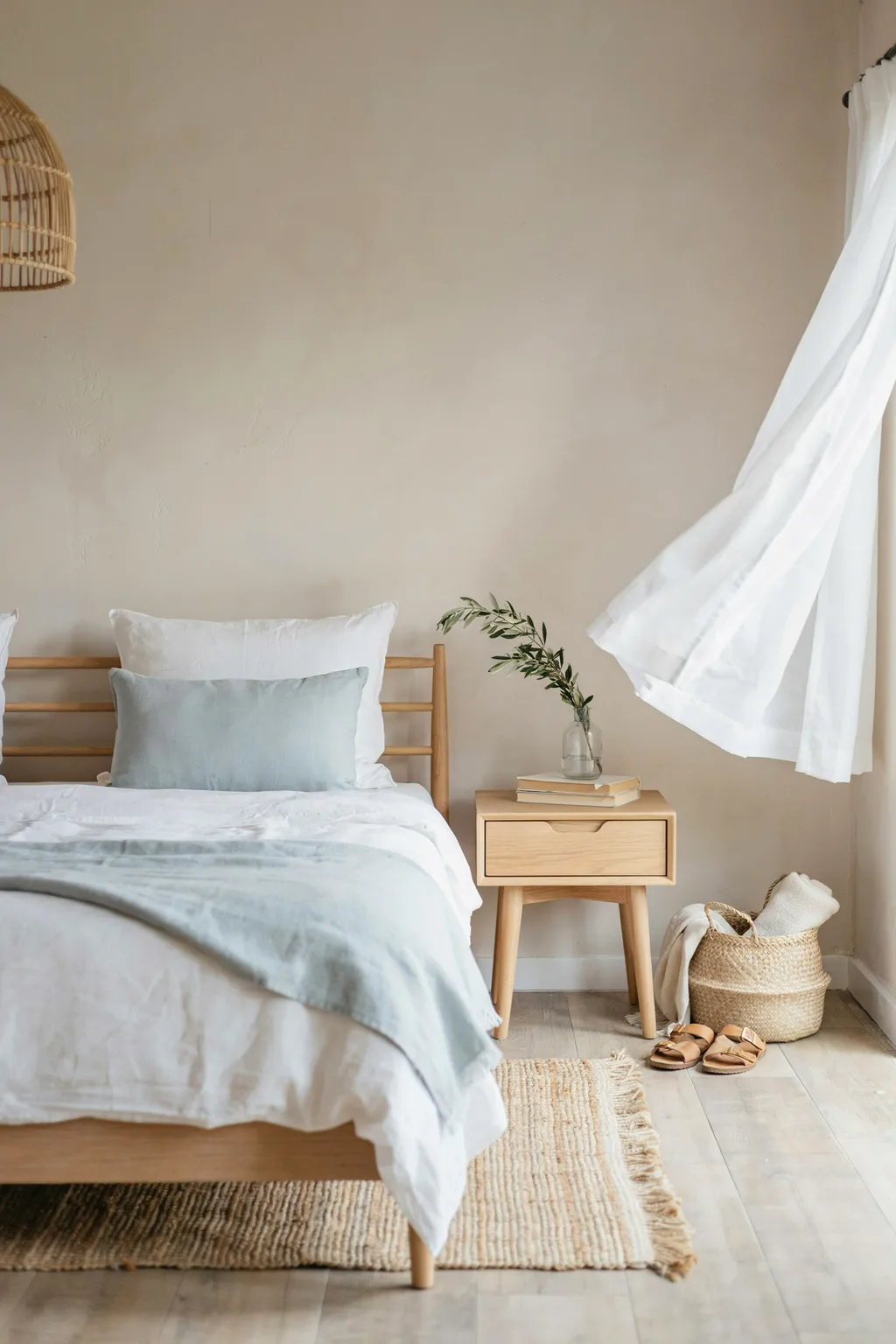
A canopy or a length of soft drape over the bed wraps the sleeping spot in its own quiet zone, which feels protective and cocooning, especially in a studio or an open room. Even a simple sheer panel on a ceiling track softens the space and gives the bed a clear sense of retreat.
The calm comes from enclosure: a light boundary around the bed signals safety and separates rest from the rest of your life. Keep the fabric sheer and pale so it diffuses light rather than darkening the whole room. This needs a little ceiling height to work, so skip a heavy four-poster in a low room and use a light ceiling-mounted sheer instead.
20. Keep a Clear Path and Clear Floor
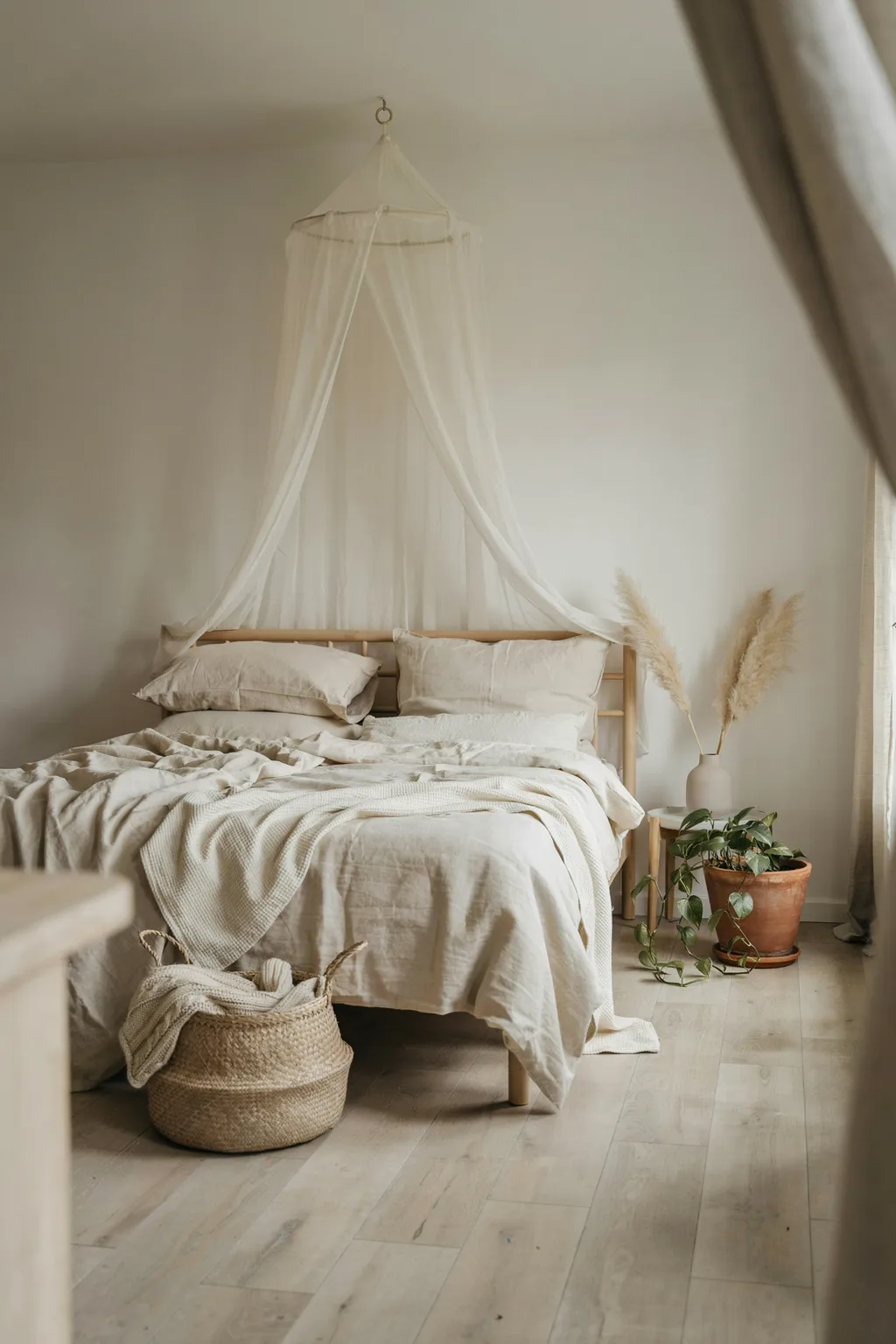
The last idea is the one your nervous system reads without you noticing: open floor. A clear path from the door to the bed, and a clean stretch of floor around it, tells the brain the room is under control. Clutter on the floor does the reverse, quietly raising the sense that something is unfinished.
This is the cheapest of all the moves and the easiest to undo, which is why it needs a habit, not a purchase. Protect a clear 24 to 30 inch walkway, give every stray item a home in a basket or drawer, and do a 60-second floor sweep before bed. If your floor is your default dumping ground, one lidded basket by the door catches the daily pile and keeps the calm intact.
Common Mistakes to Avoid
Mistake 1: Lighting the room with one bright, cool overhead
A single cool-white ceiling light flattens the room and signals daytime to your brain at night. Swap to warm 2700K bulbs and spread them across two or three low sources on dimmers so you can drop to a soft glow before sleep.
Mistake 2: Letting the phone live on the nightstand
The glow and the pull of a phone are the most common sleep killers. Move the charger across the room and use a simple alarm clock, so reaching the phone means choosing to get up.
Mistake 3: Choosing a rug that is too small
A tiny rug floating under the bed makes the room feel unfinished and leaves cold floor underfoot. Go large enough that the rug extends 18 to 24 inches past the sides of the bed.
Mistake 4: Skipping window darkness
Light leaking in at dawn fragments sleep. Add a blackout or thermal lining behind your curtains and hang them high and wide so the room actually goes dark.
Mistake 5: Going all-neutral with zero texture
A neutral room with no texture reads flat and cold, not calm. Layer linen, wool, jute, and wood so the quiet palette still feels warm and lived-in.
Mistake 6: Cramming in tall, heavy furniture
Looming pieces shrink a bedroom and raise tension. Choose low, horizontal furniture and gain storage under the bed instead of with tall towers.
Quick Start Checklist
- [ ] Swap to 2700K bulbs and add a plug-in dimmer, in 10 minutes.
- [ ] Move your phone charger across the room and set out a real alarm clock.
- [ ] Rehang curtains high and wide, and add a blackout lining.
- [ ] Clear the nightstand down to three things on a small tray.
- [ ] Do a 60-second floor sweep and protect a clear walkway.
- [ ] Add one large rug that extends past the sides of the bed.
- [ ] Layer the bed in three breathable natural textures.
- [ ] Pick one calm accent color (sage or a muted pastel) and repeat it twice.
- [ ] Add one or two low-light plants.
- [ ] Choose one faint bedtime scent and use it nightly.
Frequently Asked Questions
What are the best calm bedroom ideas on a budget?
Start with the cheap, high-impact moves: a 2700K bulb swap and a plug-in dimmer for under 20 dollars, rehang your existing curtains higher with a blackout lining, declutter every surface for free, and move your phone charger across the room. These calm bedroom ideas change the mood for well under 50 dollars before you buy any furniture.
What color makes a bedroom feel calm?
Warm neutrals with a light reflectance value around 60 to 70 work best: greige, warm oat, and creamy whites that glow under lamplight. Add one low-saturation accent like sage green or a muted pastel in small doses. Skip stark whites and icy greys, especially in north-facing rooms where the light is already cool.
How do I make my bedroom better for sleep?
Focus on light, darkness, and quiet. Use warm dim light in the evening, block outside light with lined curtains, and soften noise with a rug and curtains. Keep the phone out of reach and the floor clear. These calm bedroom ideas lower stimulation so your body can wind down faster.
How many decor items are too many in a calm bedroom?
Use the half-clear rule: keep at least half of every surface empty. Three pillows on the bed and three objects on the nightstand is plenty. If you are constantly moving piles to the floor at night or cannot set down a glass of water, the room has too much.
Can I do these calm bedroom ideas in a rental?
Yes, almost all are renter-safe. Swap bulbs, use plug-in lamps and dimmers, hang blackout panels on tension or no-drill rods, lean a mirror, and lean on rugs, textiles, and decluttering. Keep any landlord-required paint and carry the calm with lighting and soft layers that leave no marks.
Conclusion
A calm bedroom does not happen by accident, and it does not need a renovation. It is built from a stack of small, low-stimulation choices that work while you sleep, not just while you scroll Pinterest. Remember the few that matter most:
- Light leads. Warm 2700K bulbs on a dimmer, plus a dark window, do more for sleep than any decor.
- Texture beats stuff. Breathable natural layers and a soft floor feel calmer than a pile of accessories.
- Clear surfaces and clear floor read as rest. Your nervous system relaxes when nothing is left unhandled.
Be honest about your room before you buy. A noisy street wants soft surfaces and a white-noise hum; a bright dawn wants blackout lining. Match the fix to the problem and the result will actually help you sleep. The best calm bedroom ideas are the ones you layer in slowly, so pick the bulb swap tonight, add one idea a week, and let the room grow quieter and more restful over time.