20 Small Bedroom Ideas for Men That Maximize Space
Your room has a bed, a pile of clothes on a chair, and not much floor left. You want somewhere to sleep, somewhere to work, and somewhere to put your stuff, but the four walls are not getting any bigger. Add the pressure of wanting it to look sharp instead of like a college dorm, and a tight bedroom starts to feel like a puzzle with no clean answer.
There is an answer, and it is not “buy less stuff.” It is using the room you already have in smarter directions: up the walls, under the bed, and into the corners that sit empty right now. The best small bedroom ideas for men treat vertical space and dual-purpose furniture as the whole game, so one piece earns its footprint twice.
This guide runs through 20 setups built from real rooms, covering everything from a low platform bed with a built-in desk to a loft bed that frees up the entire floor below. Each idea tells you what it costs, who it fits, and where it falls short, because a gaming wall that eats half your room is not a win if you also need a place to hang shirts. You get the moody dark looks, the warm earthy ones, the gamer corners, and the clean minimalist builds, plus the storage tricks the pretty photos usually skip. Pick the three or four that match your room and your budget, then build from there.
Quick Answer
The fastest way to make a small room feel bigger: go vertical and double up. Use a low platform bed to drop the visual weight, mount a floating desk and shelves so the floor stays clear, and pick one furniture piece that does two jobs (a loft bed over a desk, a bench with storage). Keep the palette to two or three colors, add one bold accent, and light it in layers instead of one harsh ceiling bulb. The strongest small bedroom ideas for men all share that same DNA: clear the floor, climb the walls, and make every piece earn its place.
1. Floating Shelves That Frame the Bed
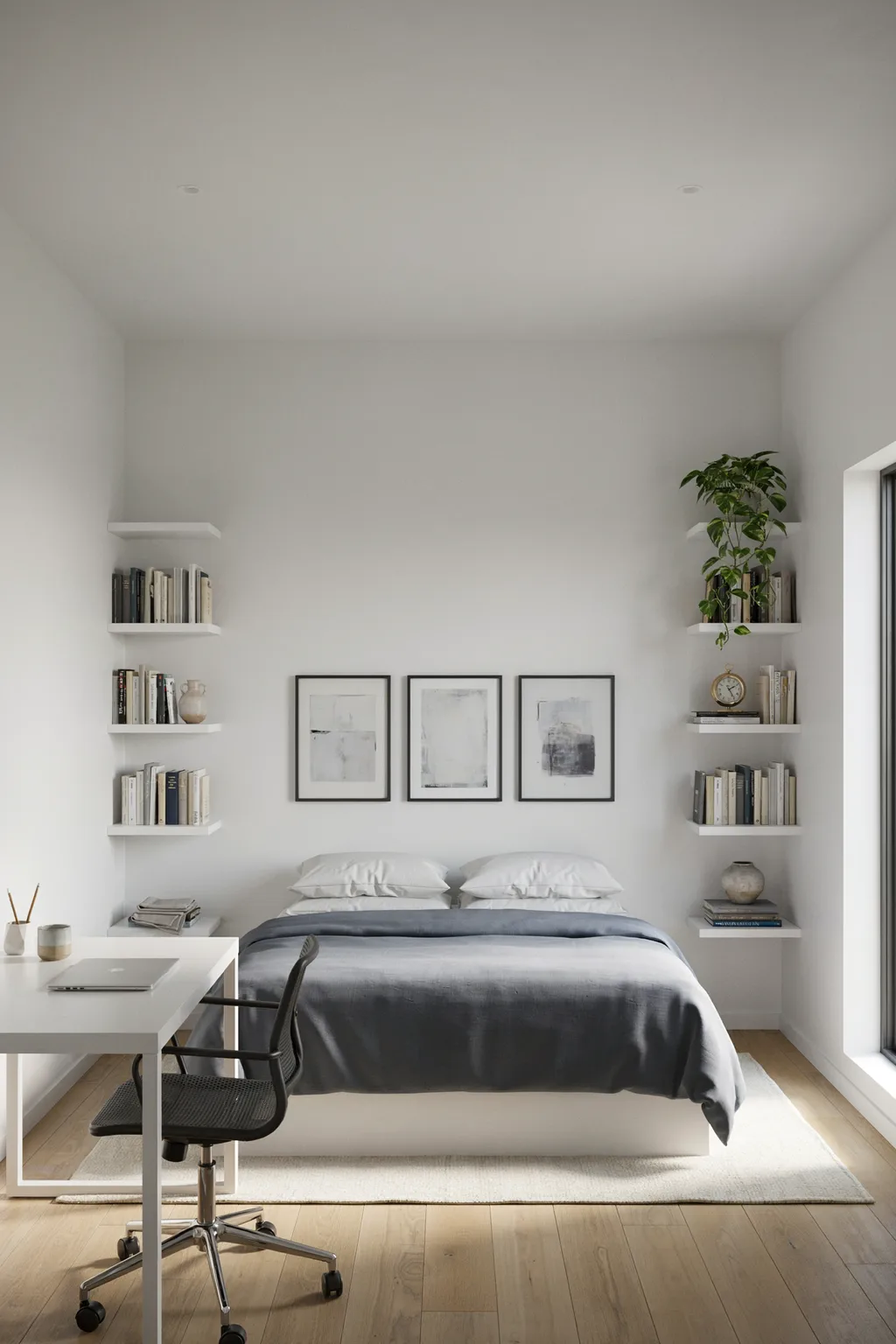
Flank your bed with tall floating shelves and the wall does the storage work the floor cannot. In this bright white setup, two columns of slim shelves hold books, art, and small gear, turning the dead space beside the headboard into a library and a display in one. The bed tucks into the gap between them, which makes the whole arrangement feel built-in even though the shelves are off-the-shelf brackets.
White shelves against a white wall keep the look airy, so the storage never reads as clutter. That matters in a room under 100 square feet, where one dark, heavy bookcase would shrink the space fast. Mount the lowest shelf about 16 inches above the mattress so you can sit up without knocking your head, and anchor every bracket into a stud or a 30-pound-rated toggle. Skip this if you rent and cannot drill, since floating shelves leave real holes.
2. Low Platform Bed With a Built-In Desk
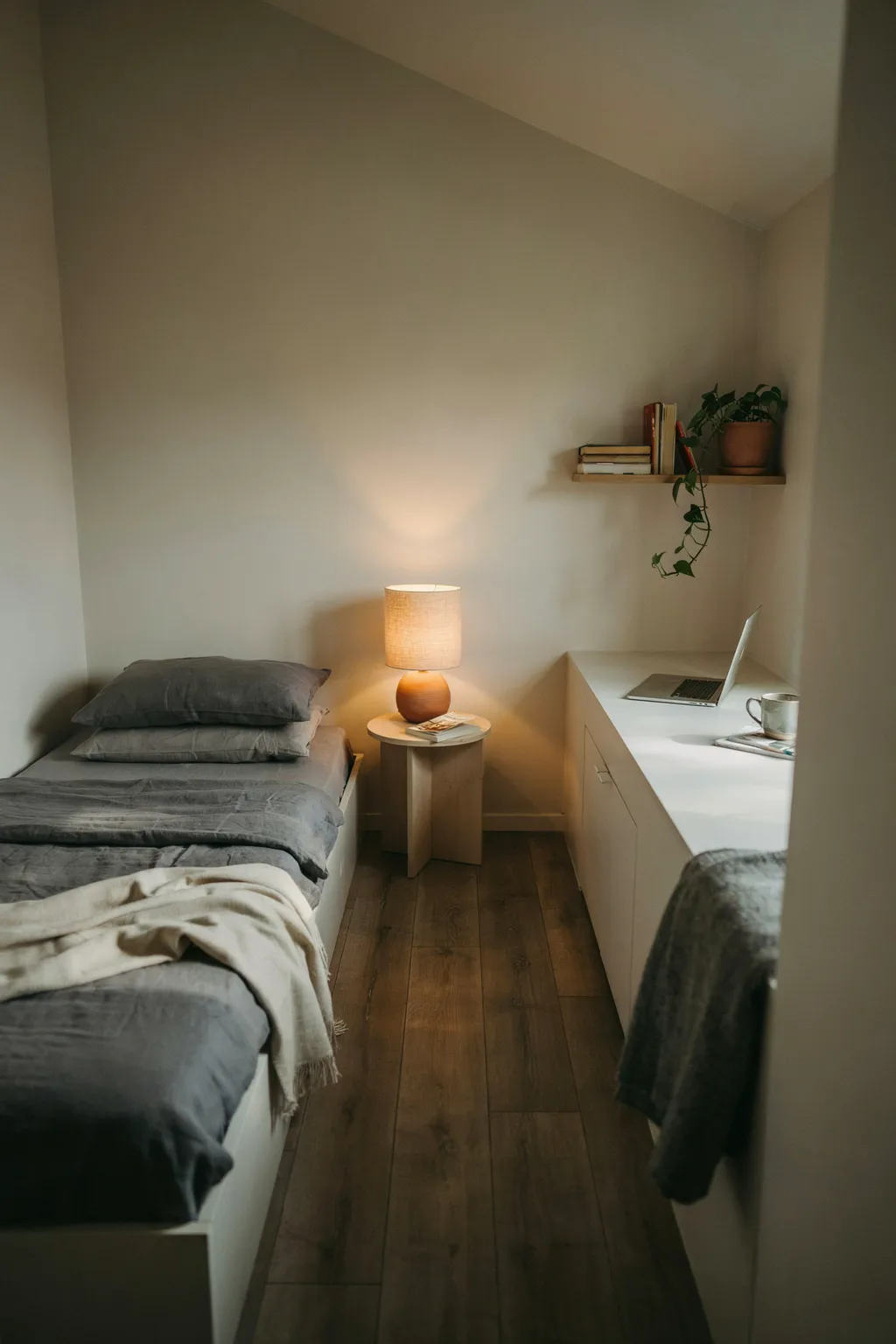
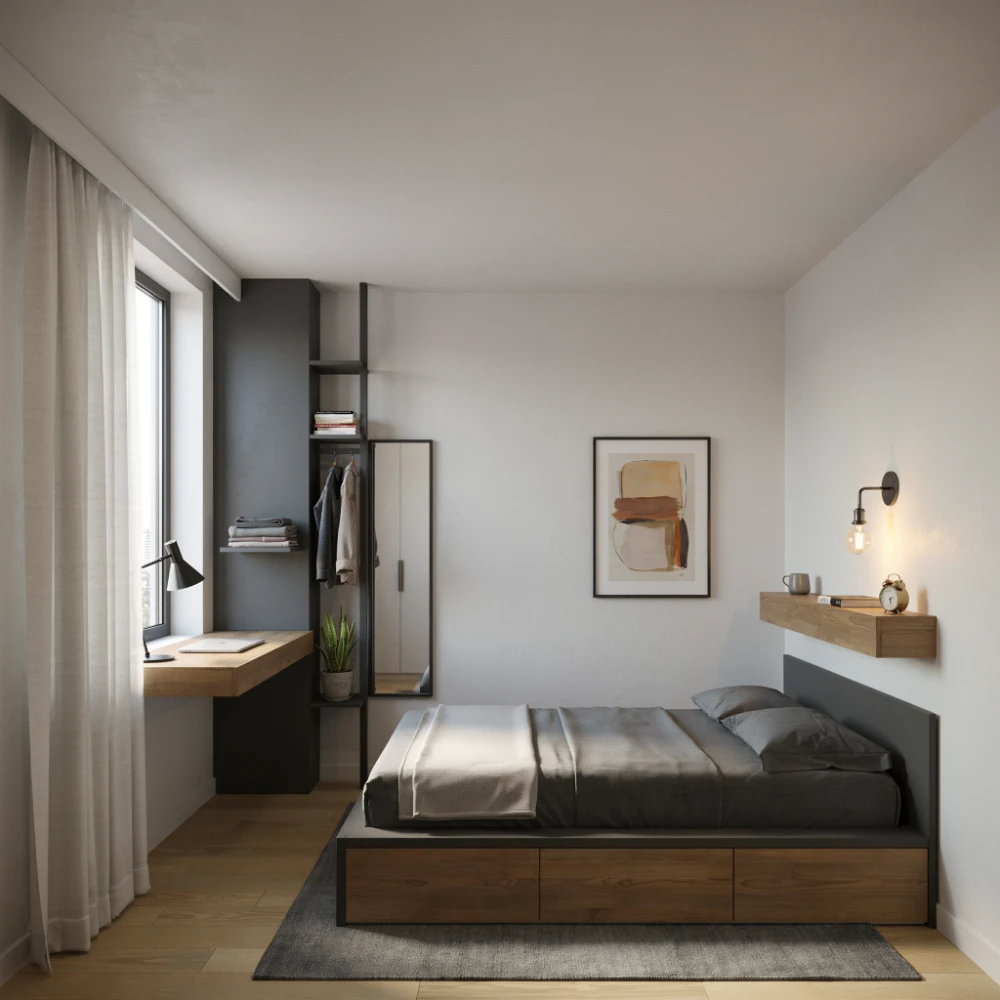
Drop your bed low and the ceiling instantly feels higher. A platform bed that sits just off the floor pairs with a built-in desk run along the adjacent wall, so your sleep zone and work zone share one continuous footprint. The warm cylindrical lamp and charcoal bedding here keep it calm at night, while the desk stays ready for a laptop by day. This is one of the small bedroom ideas for men that solves “where do I work” without adding a single extra piece of furniture.
The low profile is the trick: less visual bulk means the eye reads more open air above. A floating shelf over the desk adds book and plant space without touching the floor. The honest catch is getting in and out, since a very low bed is harder on bad knees and on anyone over about 6 feet. Test the height before you commit, and add a thin rug underneath to warm up a hard wood or tile floor.
3. Earthy Olive Walls With a Leather Bed
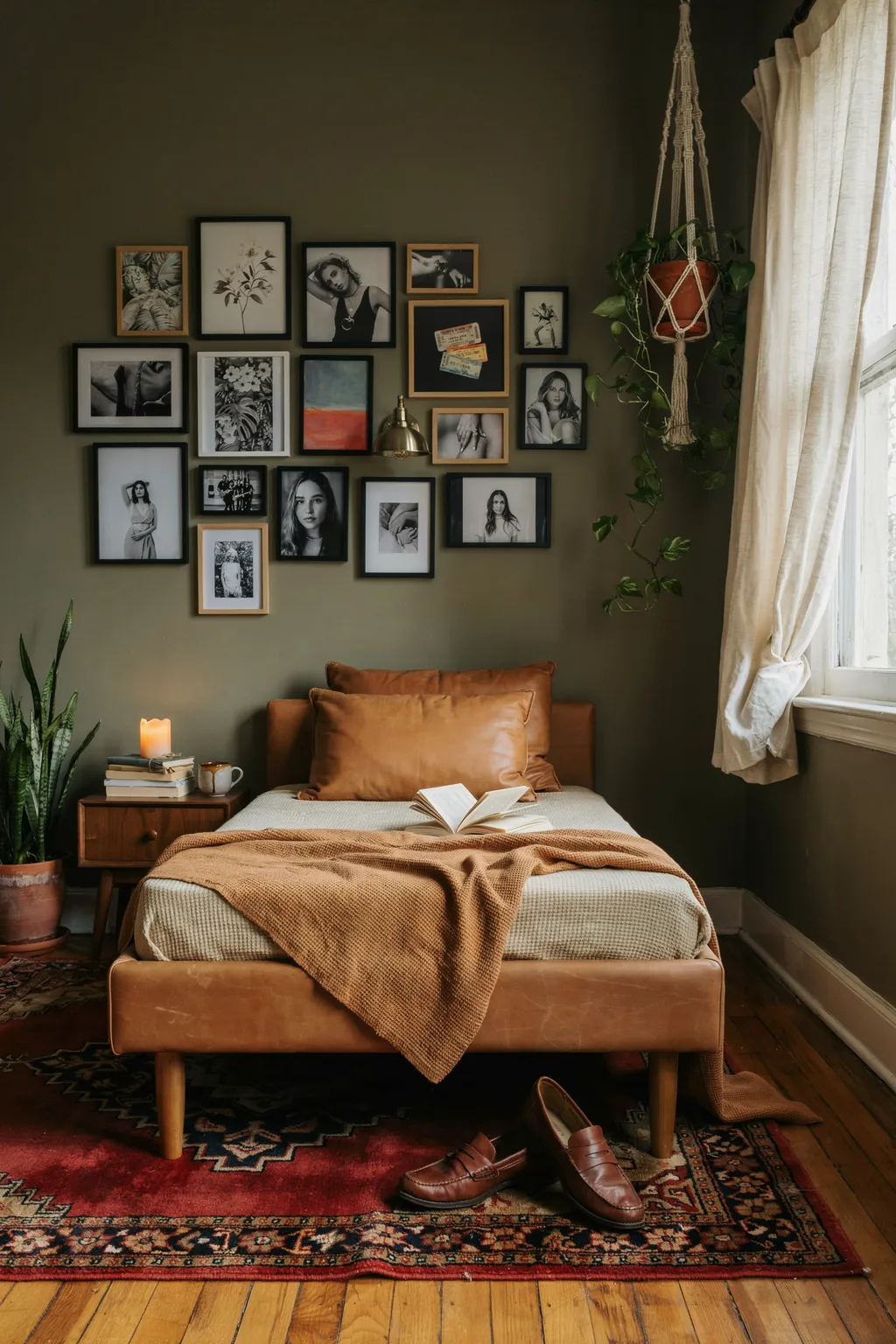
Paint the walls a deep olive green and the room stops feeling like a rental box. Against that earthy backdrop, a tan leather platform bed with cognac leather pillows brings warmth and a grown-up edge, while a dense gallery wall of framed photos gives the eye somewhere to land. A macramé plant hanger and a worn vintage rug finish the lived-in, collected feel.
Earthy color works in tight rooms because mid-tone greens recede instead of closing in, unlike a flat builder white that shows every scuff. The leather adds texture that a small room often lacks, and it ages better the more you use it. One caveat: a busy gallery wall needs a tight, consistent frame color or it tips into chaos. Stick to black or natural wood frames, and leave a couple inches of even spacing between pieces so the wall feels planned, not piled.
4. LED-Backlit Headboard and an Open Garment Rack
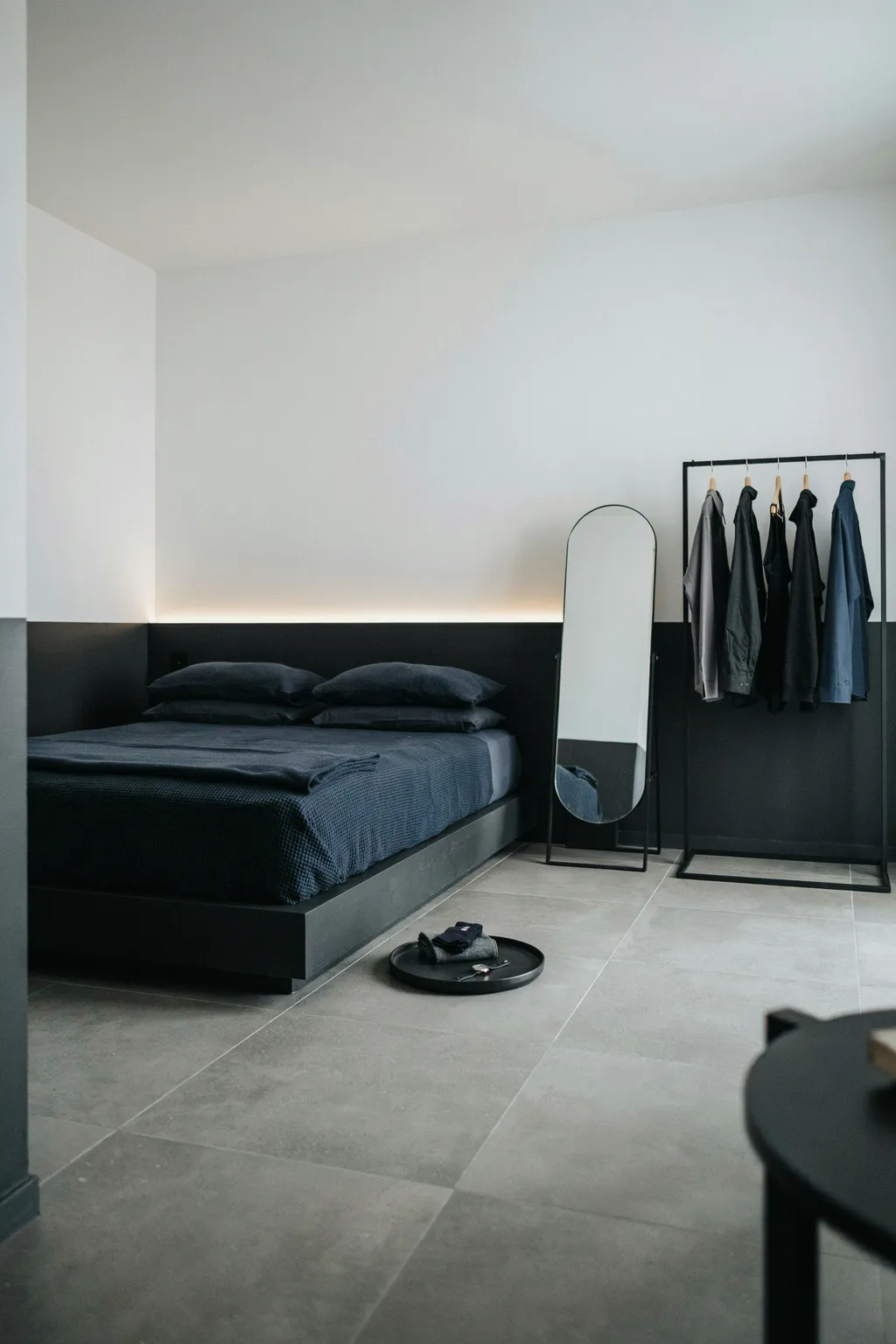
A strip of warm LED behind a low headboard ledge gives a small room a hotel glow for under $20. Here the white upper wall meets a black platform base, and the hidden light washes up the wall to make the bed feel like a floating feature. Beside it, an open black garment rack holds shirts in plain sight, which turns your wardrobe into part of the design instead of a closet you cannot fit.
The point of the open rack is honesty: in a room with no closet, hiding clothes is a losing fight, so style them instead. Keep the rack to one color story (here it is black metal with neutral clothes) and it reads intentional. A freestanding oval mirror nearby bounces light and helps you dress. The downside is upkeep, since an open rack shows every messy day. This look only holds if you actually keep the rack tidy, so skip it if folding is not your thing.
5. Open Metal Shelving as a Room Divider
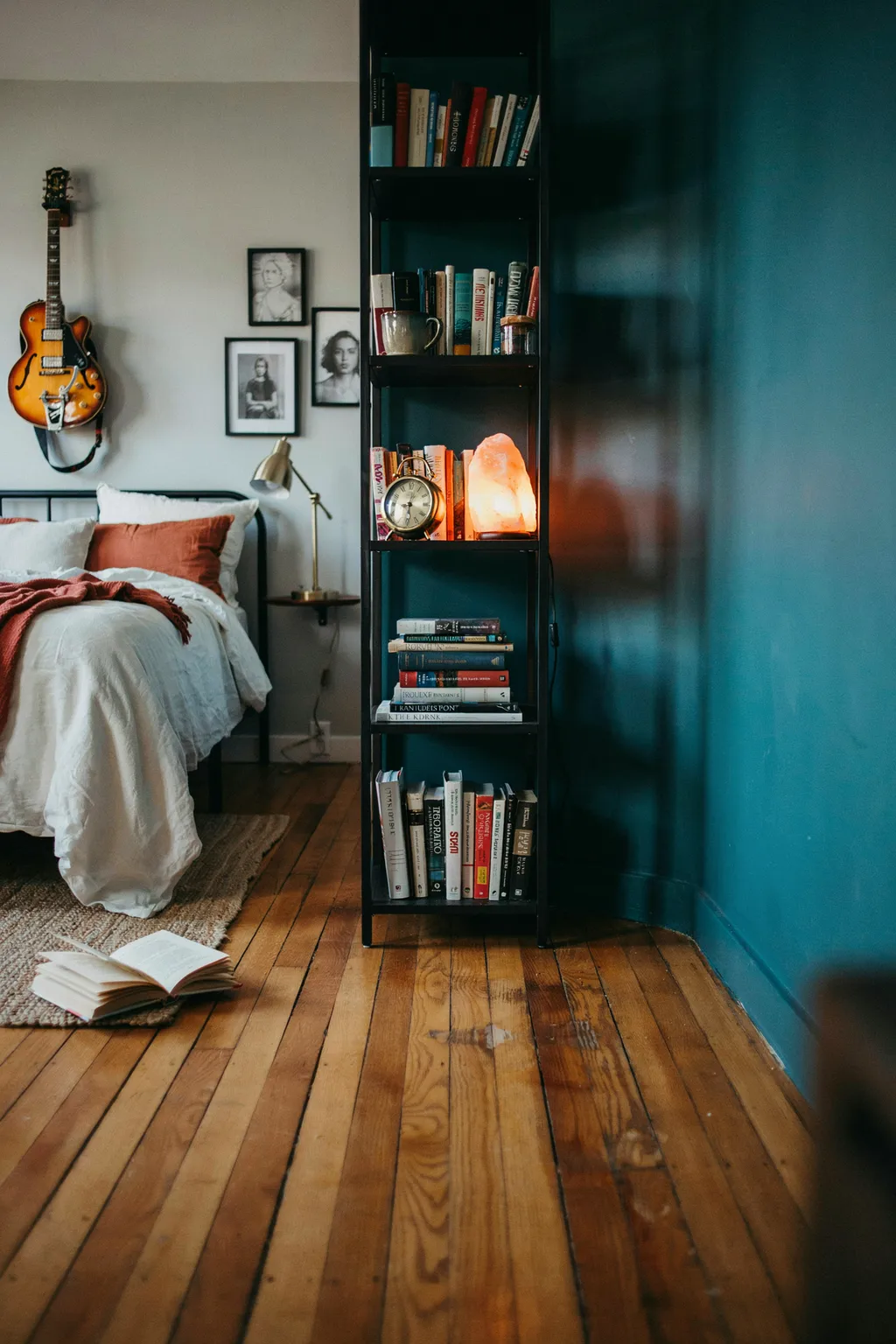
When a room has to be a bedroom and a hangout, a tall open metal shelf splits it without building a wall. The black industrial unit here carries books, a glowing salt lamp, and small gear, and because you can see through it, the room never feels chopped in half. Behind it, a teal accent wall and an electric guitar mark the relaxing zone, separate but connected.
A see-through divider works because it defines space with sightlines, not solid mass, so a 10-by-10 room still breathes. The salt lamp throws a warm orange pool that softens all the black metal at night. This suits a studio or a shared room where you need a visual break between sleep and play. The trade-off is dust and display discipline, since open shelves show everything. Keep one shelf deliberately empty for breathing room, and do not let it become a junk drop zone.
6. Dark Charcoal Walls and a Statement Print
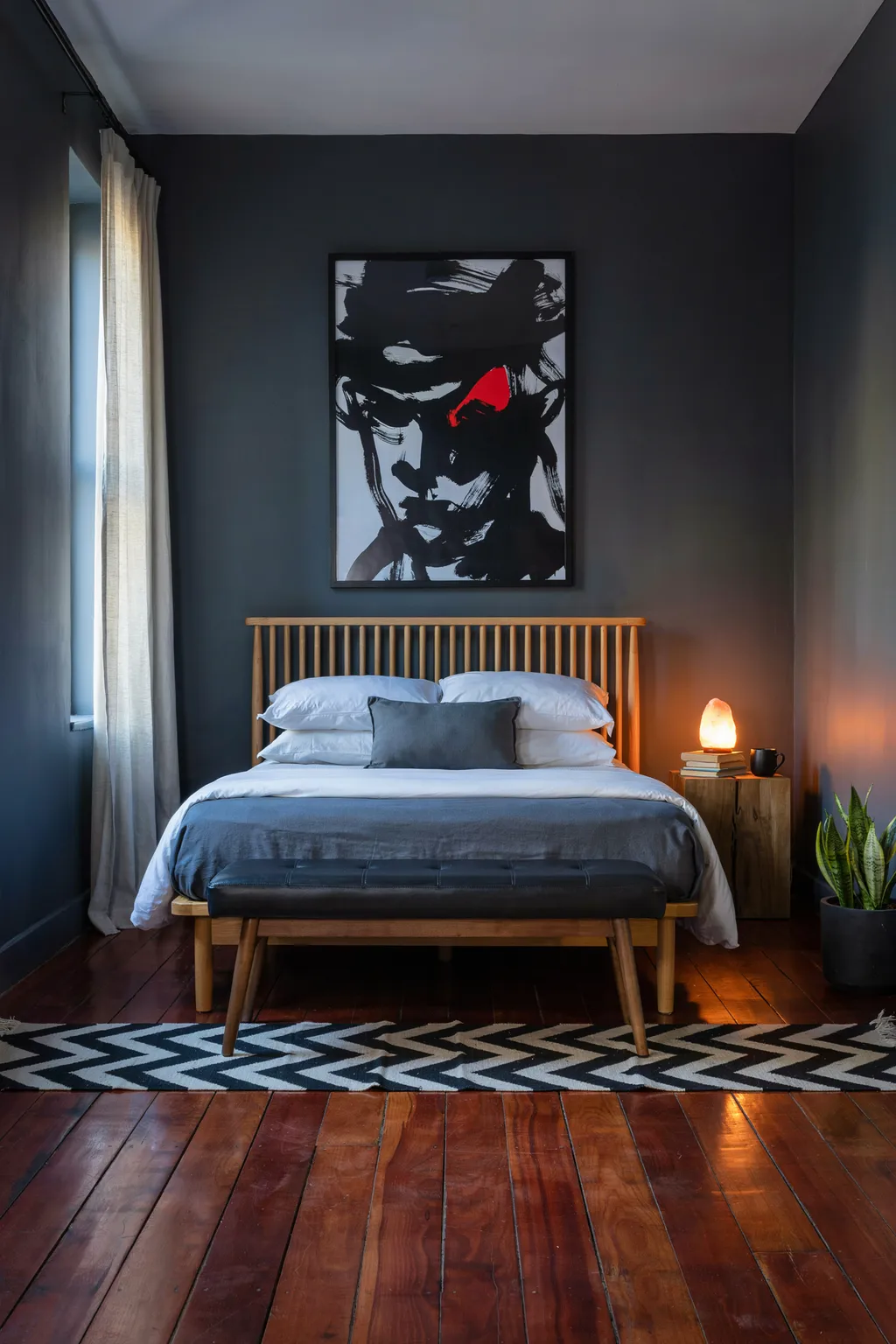
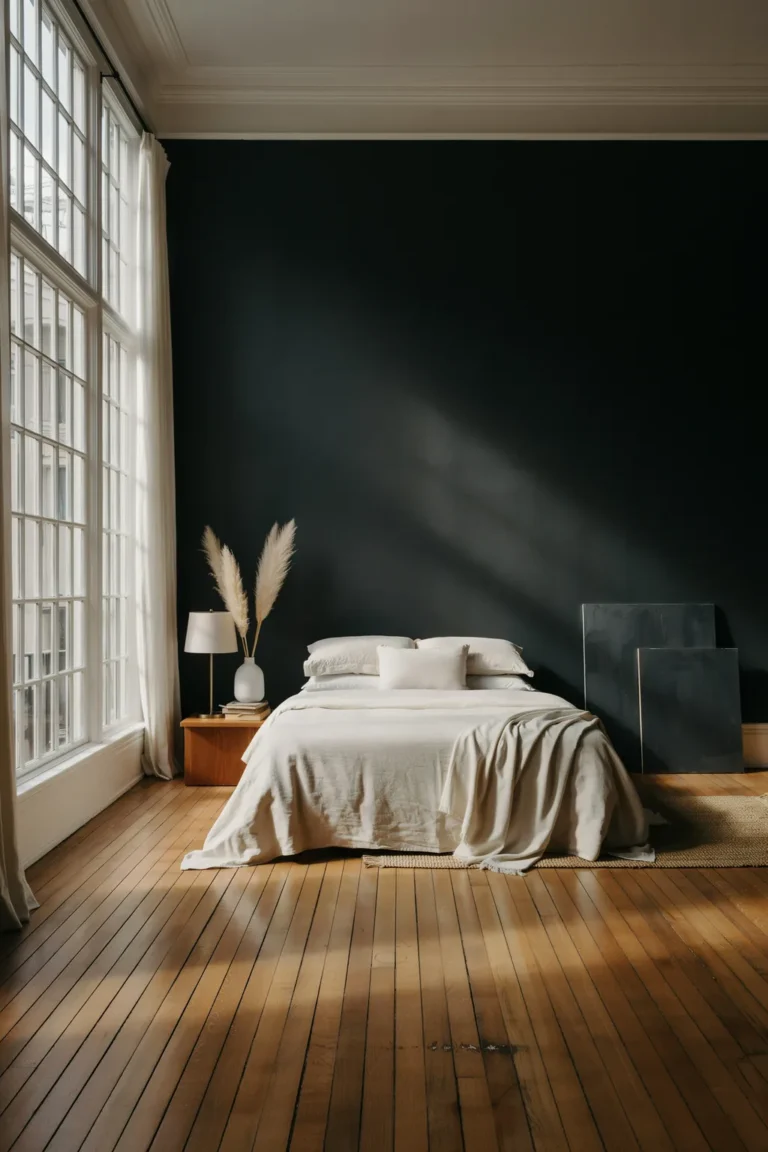
Painting a small room dark sounds wrong, but charcoal walls can make it feel deep and intimate instead of tight. This setup pairs near-black walls with a wood-slat headboard and crisp white bedding, so the bed pops against the gloom. A large graphic art print and a leather bench at the foot of the bed add bold, masculine weight without crowding the floor.
Dark walls bury the corners, which hides where the room actually ends and tricks the eye into reading more depth. The white bedding and warm wood keep it from feeling like a cave. A bench at the foot doubles as a spot to sit and a place to drop a bag, earning its footprint. The honest warning: dark colors need layered light to work, so one weak ceiling bulb will make it grim. Plan for a bedside lamp plus an accent light before you commit to the paint.
7. Built-In Desk With a Wall-Niche TV
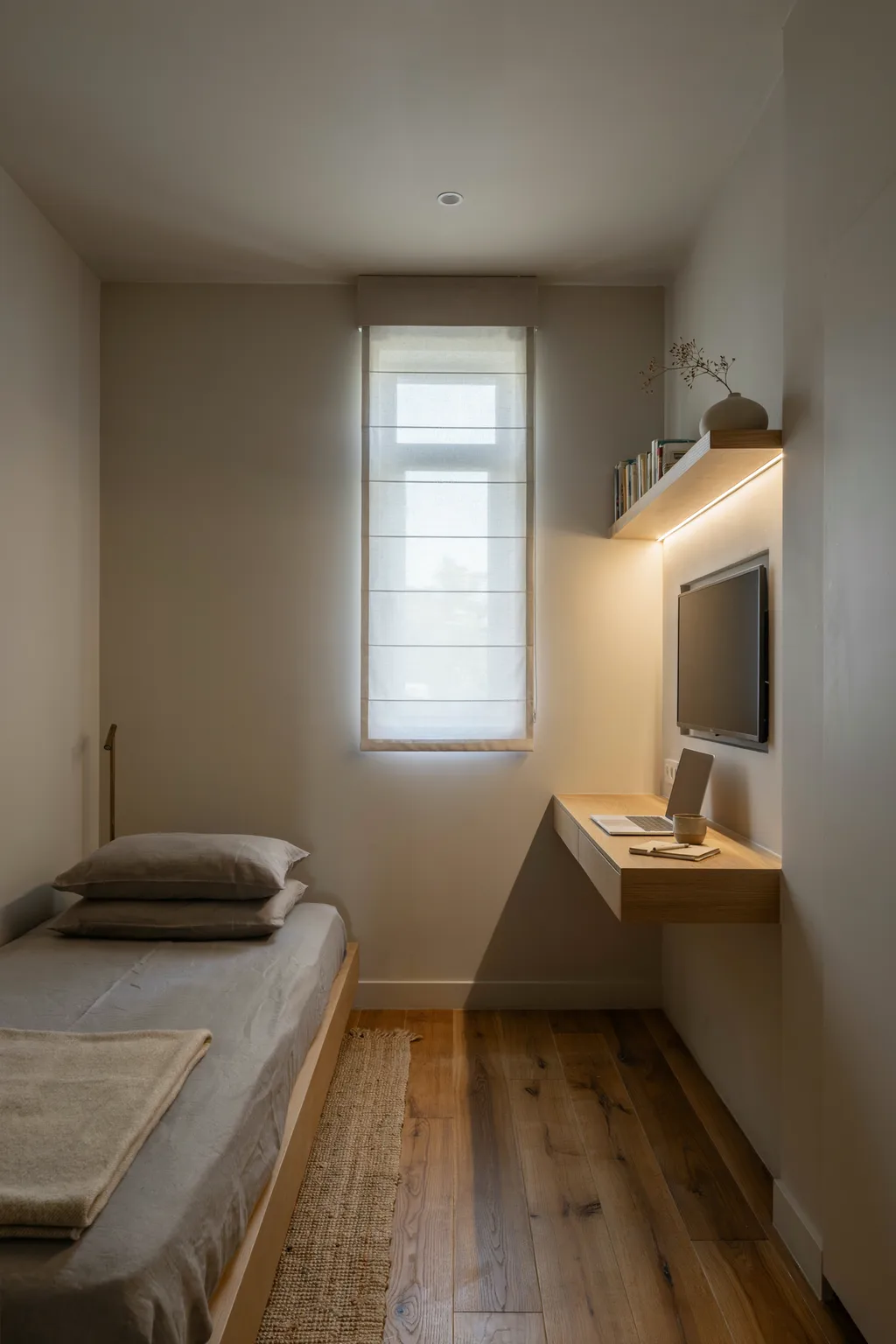
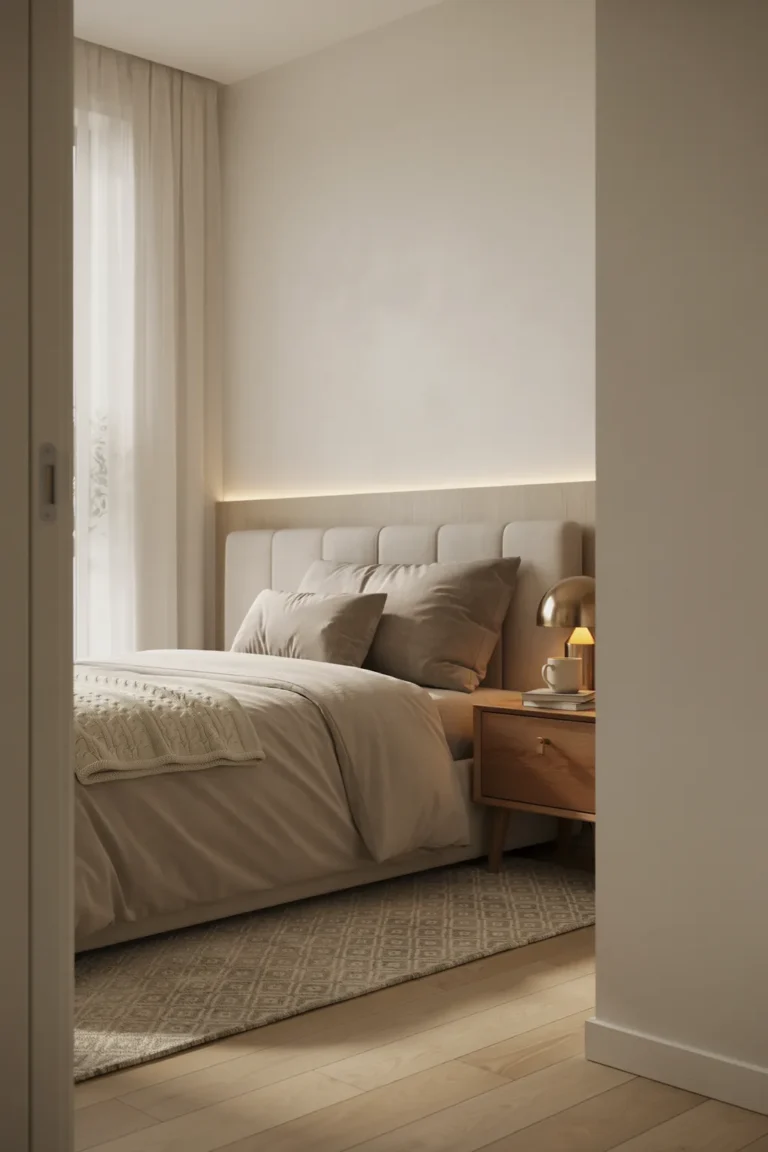
If you want sleek and tech-friendly, recess the TV into a wall niche and run a built-in desk along the same wall. The greige minimalist room here keeps everything flush and low-profile, so the bed, desk, and screen all read as one calm surface. Warm LED glows under the floating shelf, which keeps the tech zone from feeling cold at night.
Recessing the TV saves the floor a stand and keeps cables hidden, a real win when every inch counts. Matching the desk and cabinetry to the wall color makes bulky pieces seem to disappear. This is a great pick for a renter-turned-owner who watches and works in bed, since it stacks two functions on one wall. The limit is cost and commitment, because a true niche means cutting into the wall. If you rent, fake it with a slim wall-mounted TV and a floating desk instead.
8. A Reclaimed Wood Plank Headboard Wall
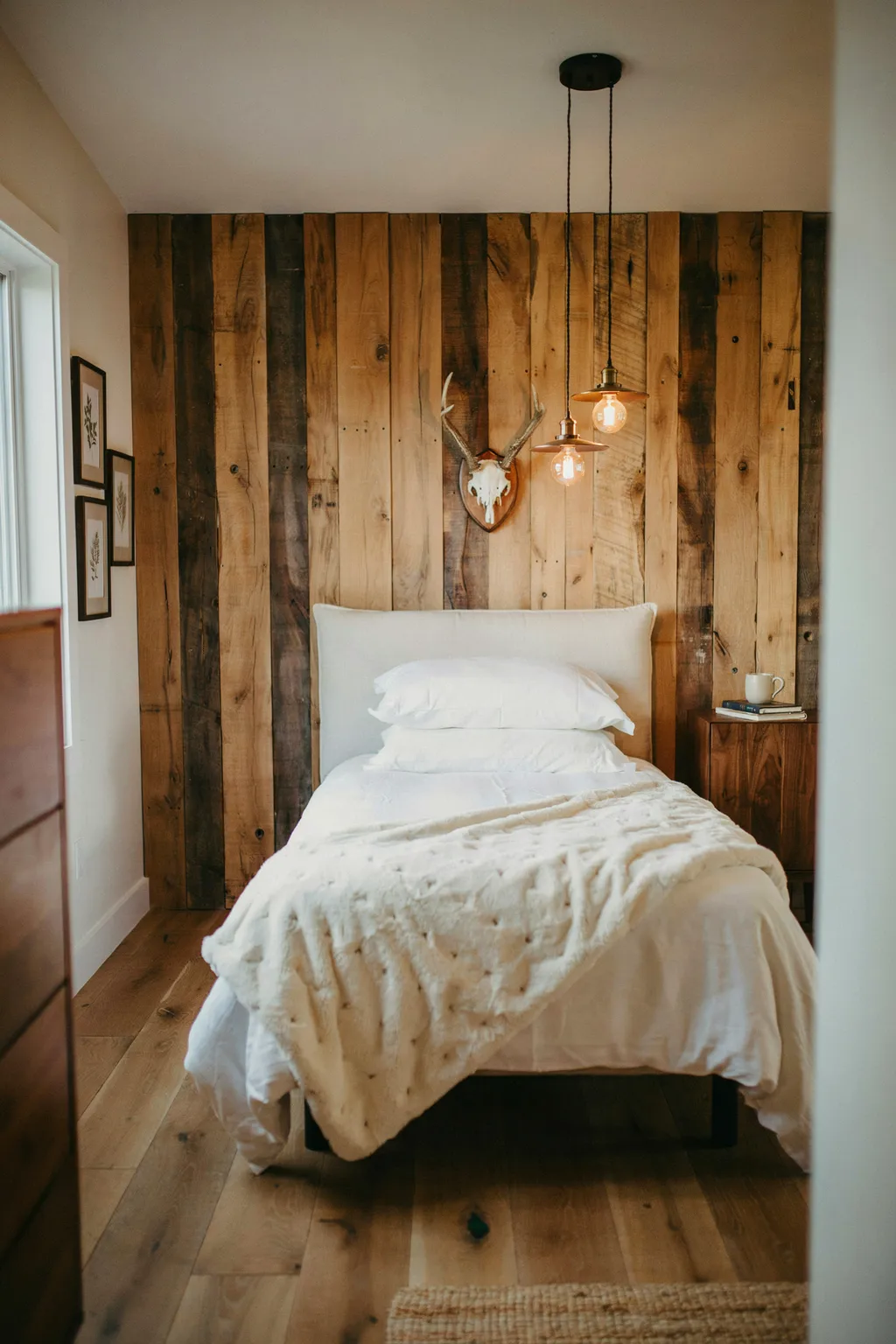
Cover the wall behind your bed in reclaimed wood planks and you get a headboard, an accent wall, and instant warmth in one move. The mixed-tone timber here, lit by two warm pendants, turns a plain bedroom into something that looks like a mountain lodge. An upholstered bed, a faux-fur throw, and a bit of antler decor lean into the rustic cabin feel without going full hunting-lodge.
Wood planks add texture and a focal point, which a small blank room badly needs, and the warm tones make the space feel cozy rather than sterile. Reclaimed boards are cheap or free if you salvage them, though peel-and-stick wood panels work for renters. Hanging pendants instead of table lamps frees up the nightstands. The caveat is scale, since very dark or very busy wood can shrink a tiny room. Keep the rest of the palette light to balance the heavy wall.
9. Built-In Bookshelves Around a Wood Accent
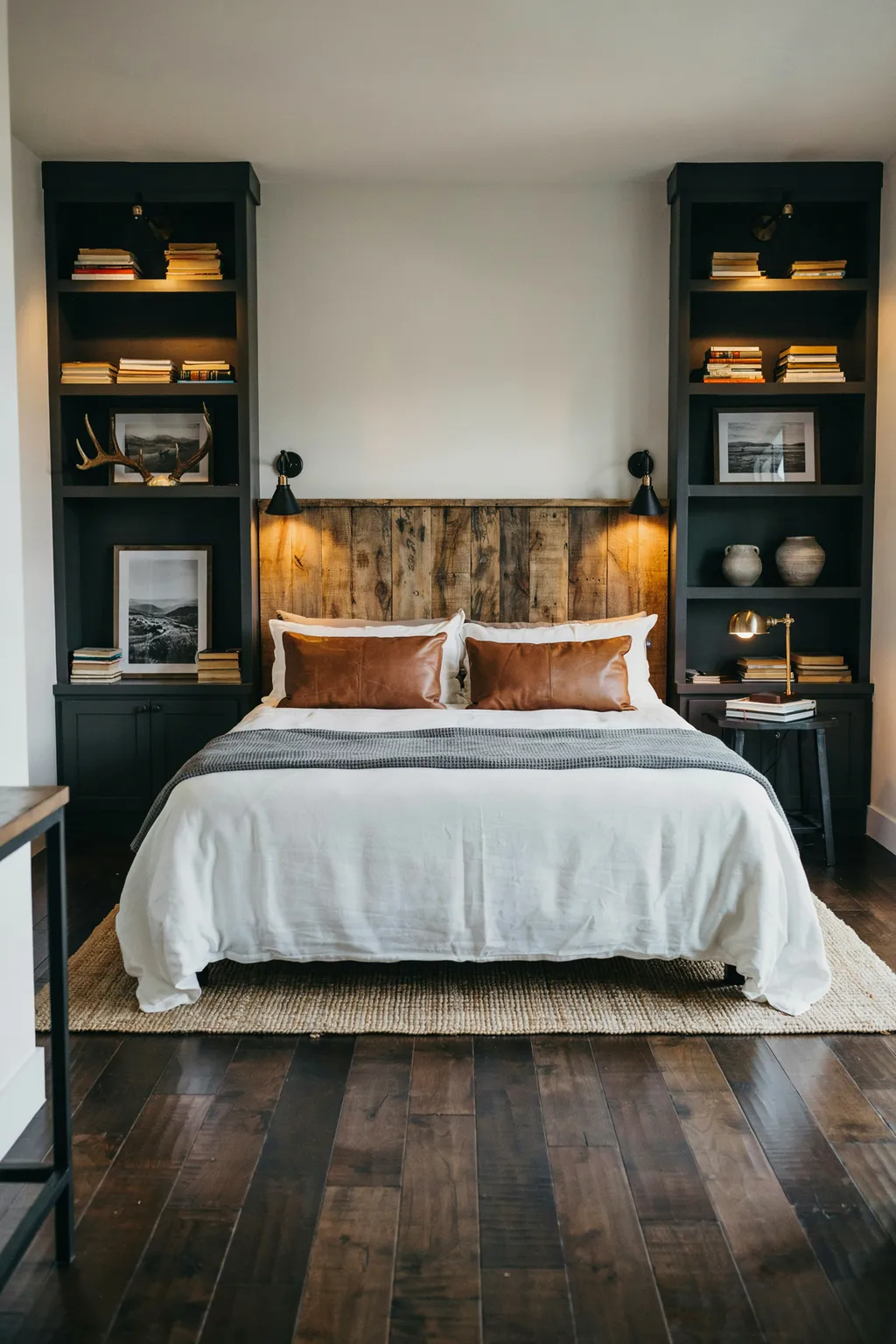
Frame a wood-plank headboard with tall black built-in bookshelves and you get a wall that stores, displays, and anchors the whole room. This rustic-industrial setup uses the dark shelving to hold books, framed art, and a few rugged pieces like antler and pottery, while wall sconces free the nightstands of lamps. The brown leather lumbar pillows tie the warm wood to the black frame.
Built-ins around the bed use vertical wall height that usually goes to waste above eye level, which is exactly the space a small room has to spare. The best small bedroom ideas for men keep coming back to this trick, since the dark shelves recede into shadow and the books and objects seem to float. This suits a man who owns a lot of books or gear and wants it visible, not boxed away. The honest note: built-ins are a bigger project and harder to undo, so measure carefully and dry-fit before you screw anything to studs.
10. A Dedicated Gaming and Music Corner
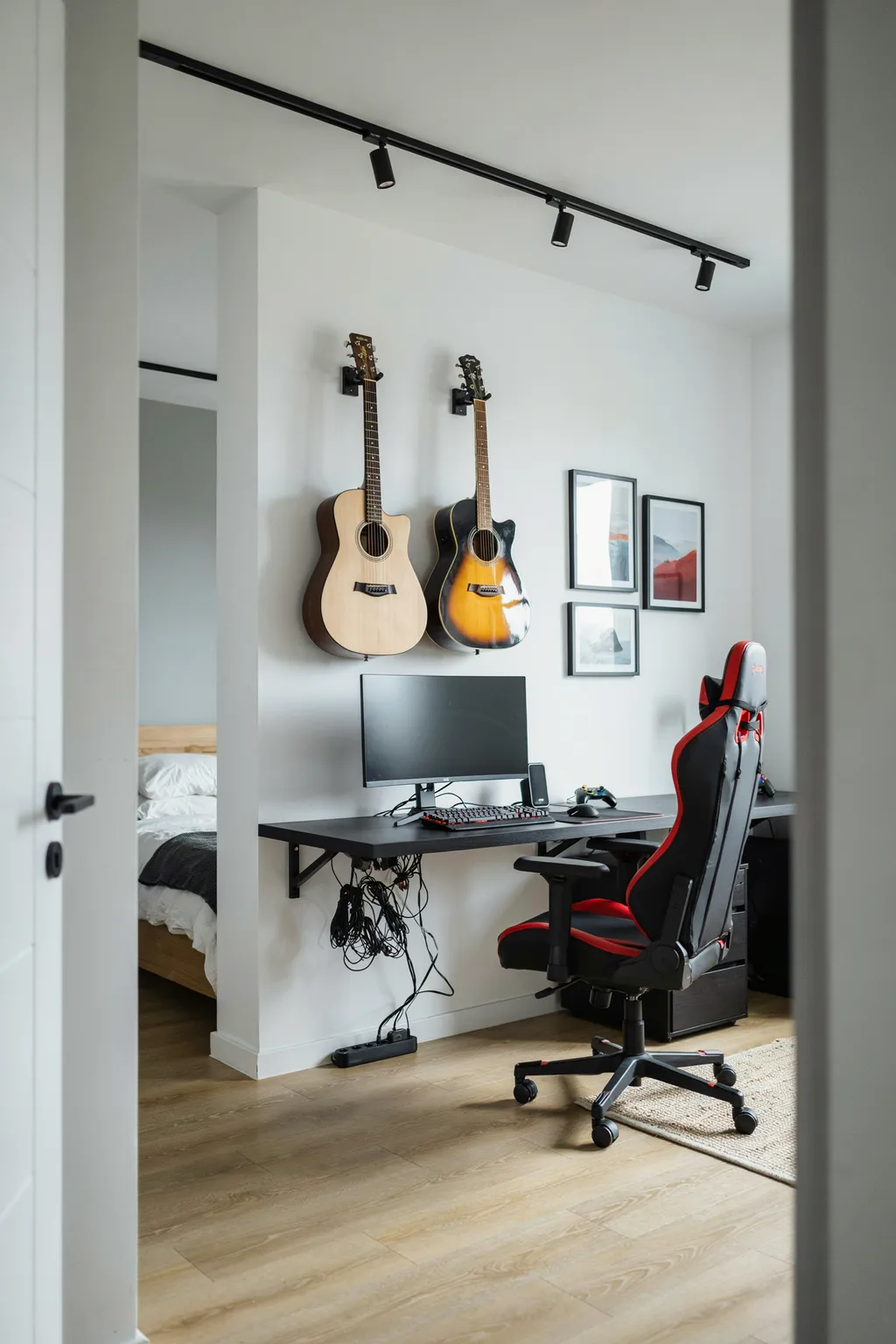
Carve out one corner for a real gaming and music station and the rest of the room can stay calm. Here a black-and-red gaming chair sits at a desk with a monitor, while two acoustic guitars hang on the wall above and framed prints fill the gaps. The setup is contained to a single wall, so the bed and sleep zone keep their own breathing room.
Zoning the hobby gear into one corner keeps the whole room from turning into a setup with a bed shoved in the corner. Hanging the guitars on the wall saves the floor and shows them off as decor. Track lighting overhead lets you aim light where you actually need it. This is built for a gamer or musician who also wants the room to feel adult. The drawback is heat and cable mess, so plan a power strip and some cable channels from day one, or the corner gets ugly fast.
11. Open Garment Rack Plus Cube Storage
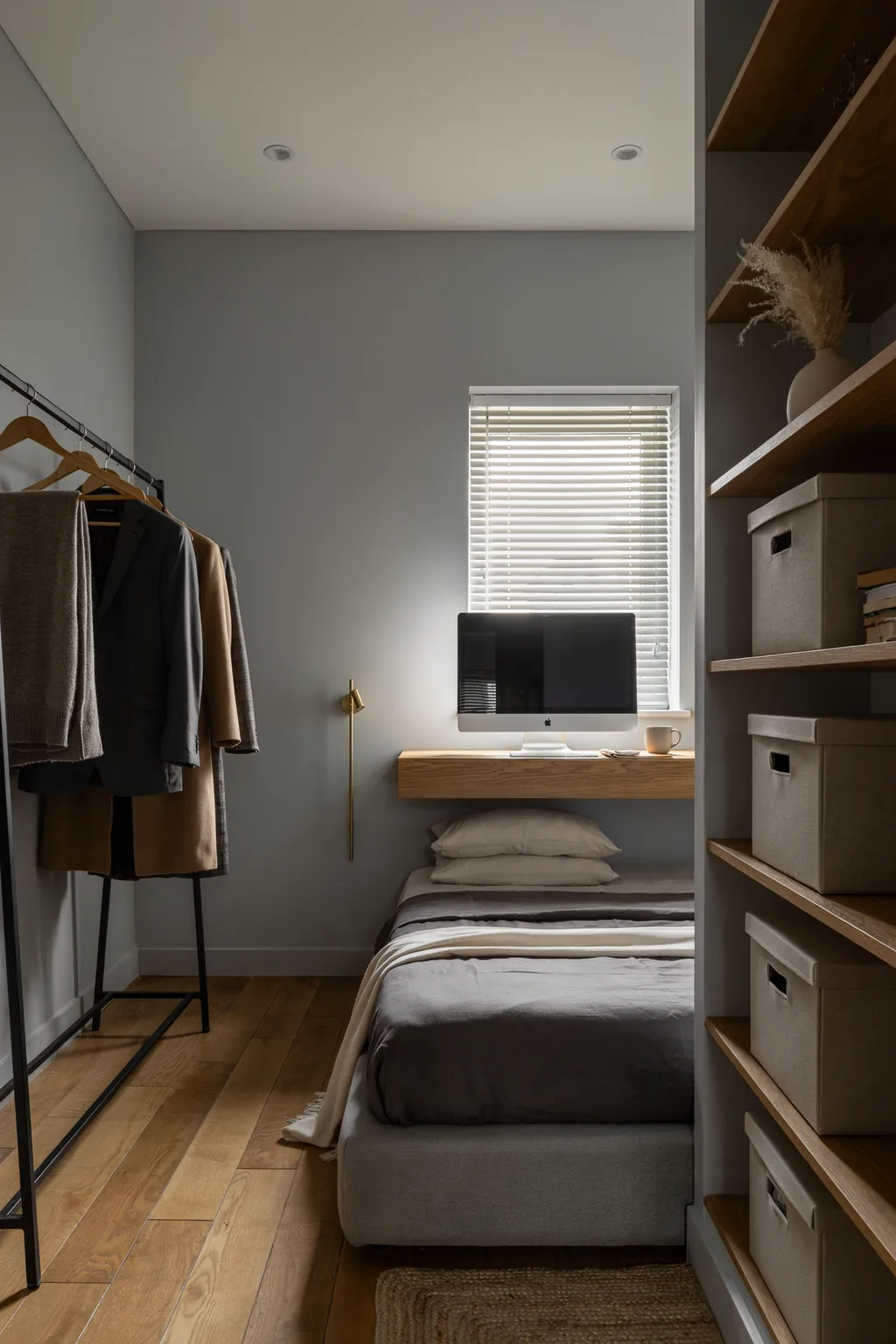
No closet? Build a wardrobe zone from an open garment rack and a tall cube shelf instead of fighting the room. In this calm grey setup, a black rack holds suits and coats while a corner unit with wood shelves and fabric storage boxes hides the smaller stuff. A floating desk with an iMac shares the same wall, so dressing and working live in one tidy strip.
Pairing a hang rack with closed boxes gives you the best of both: shirts and jackets stay visible and wrinkle-free, while socks and clutter disappear into bins. Fabric boxes are cheap, around $8 each, and soften the hard metal lines. This fits an older apartment with a useless tiny closet or none at all. The catch is that open storage demands a real wardrobe edit, so this works best if you keep your clothes count lean and rotate seasonally.
12. One Oversized Pendant for Drama
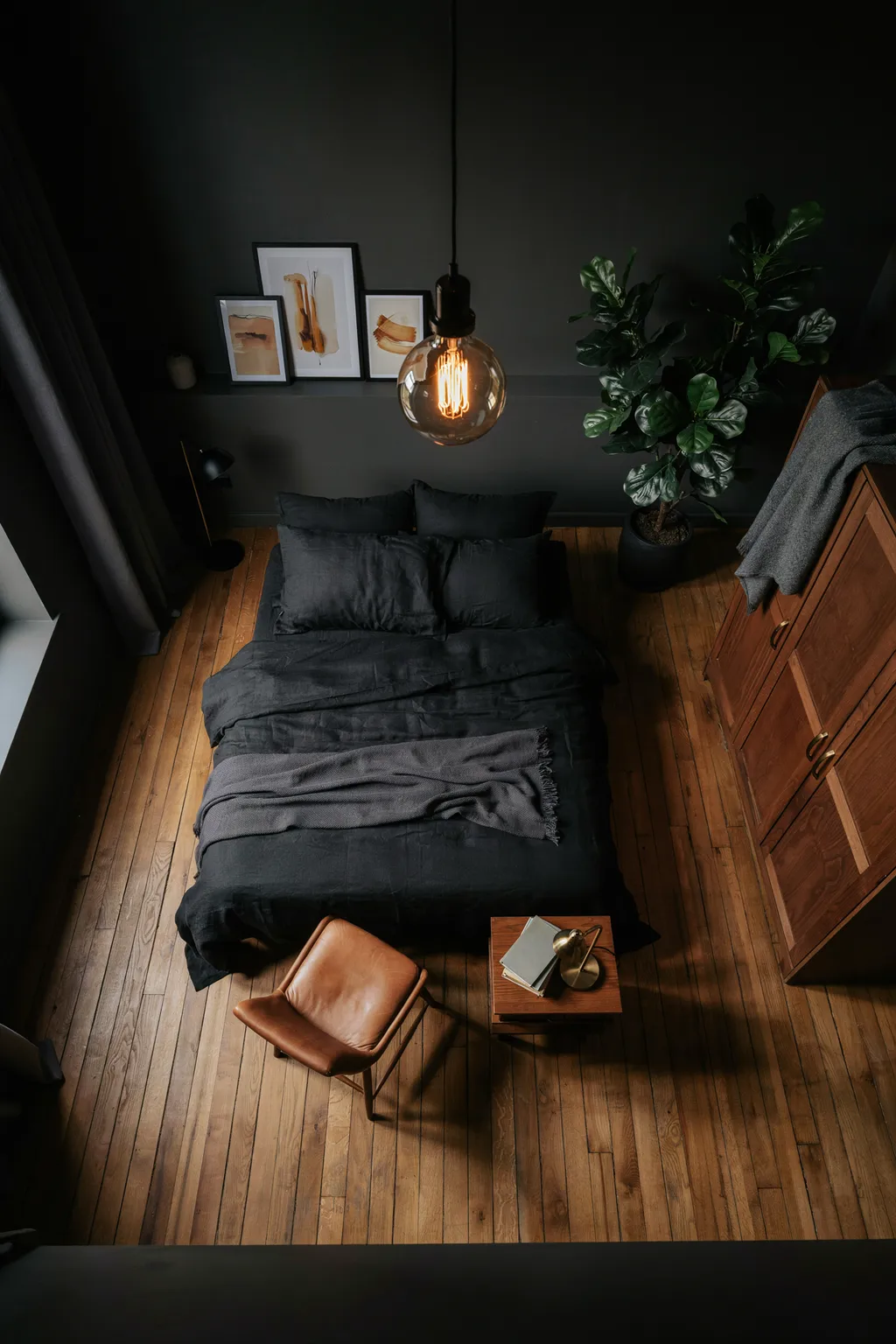
Hang a single oversized Edison-bulb pendant and you give a small dark room a center of gravity without using any floor or table space. Seen from above, this moody setup pairs black bedding and a dark accent wall with a walnut wardrobe and a cognac leather accent chair, all pulled together by that one big warm bulb glowing overhead.
A statement pendant frees the nightstands of lamps and draws the eye up, which makes a low room feel taller. The single warm bulb also flatters the dark palette, casting soft pools instead of flat overhead glare. A leather chair in the corner adds a spot to sit and a hit of warm color against all the black. This look leans moody on purpose, so it suits a man who likes a darker, cocoon-like room. If you need bright task light for reading or work, add a separate focused lamp, because one warm bulb alone will not cut it.
13. Bold Canvas Art With Sharp Accent Colors
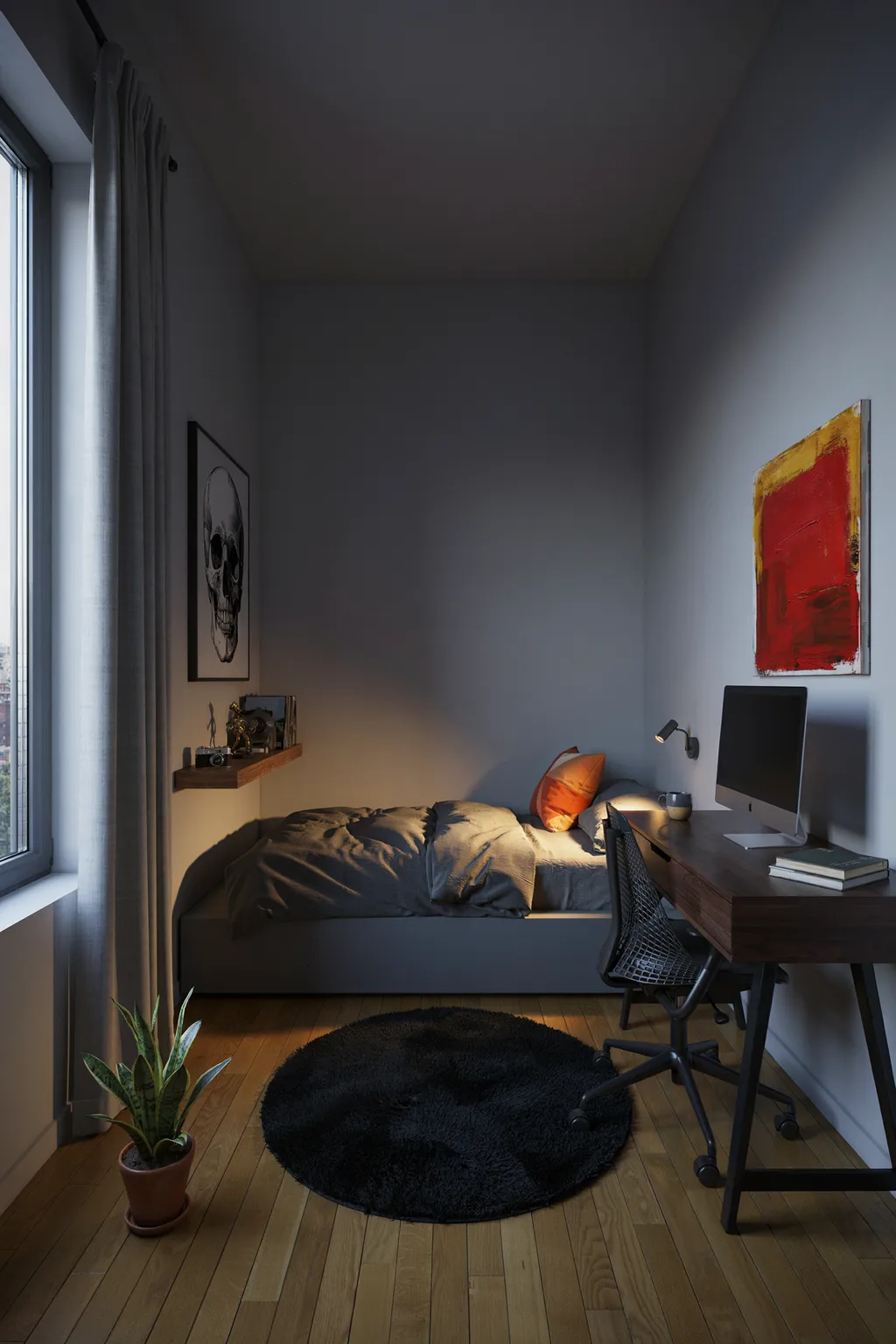
Let one big canvas set the whole mood. This room hangs a stark skull print on one wall and a bright red-and-yellow abstract over the desk, then echoes the warm tones in a single orange geometric pillow. The grey platform bed and floating shelf of small collectibles keep the base neutral, so the art does the shouting and the room still reads pulled-together.
Leaning on bold art instead of bold furniture is smart in a small room, because a canvas adds personality with zero floor footprint. Pulling one accent color out of the art and repeating it once (the orange pillow) makes the scheme feel deliberate. This suits a younger guy who wants the room to show his personality and game without going full neon. The mistake to dodge is hanging five loud pieces at once. One large statement plus one secondary piece is plenty; more than that and a small wall feels frantic.
14. A Loft Bed Over a Full Workspace
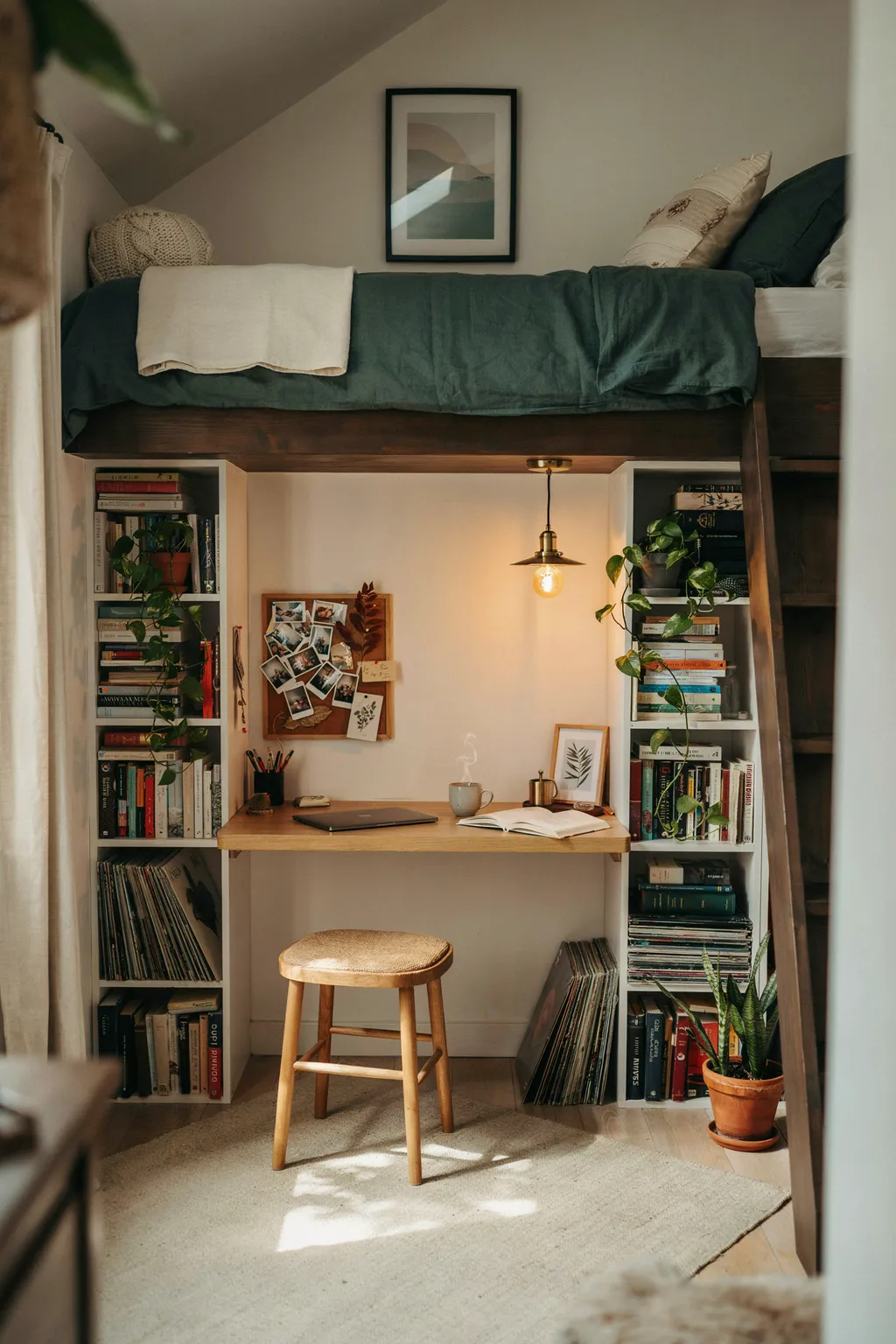
Raise the bed to the ceiling and you basically double your floor. A loft bed frees the whole space underneath for a real desk, shelves, and a corkboard, which is the single biggest space win on this list. The cozy setup here puts green-and-cream bedding up top under a “dream big” print, with a warm pendant lighting the study nook below.
Stacking sleep over work uses the one direction a small room always has: height. You get a full workstation, book storage, and a pin wall in the footprint of just the bed. This is the move for students, gamers, and anyone in a sub-100-square-foot room. The honest limits are real, though: loft beds need decent ceiling height (aim for 7.5 feet or more), they are a chore to make each morning, and they suit younger guys more than anyone wary of a nightly climb. Check the standard mattress dimensions before buying a frame so your mattress actually fits the loft.
15. A Wraparound Corner Desk
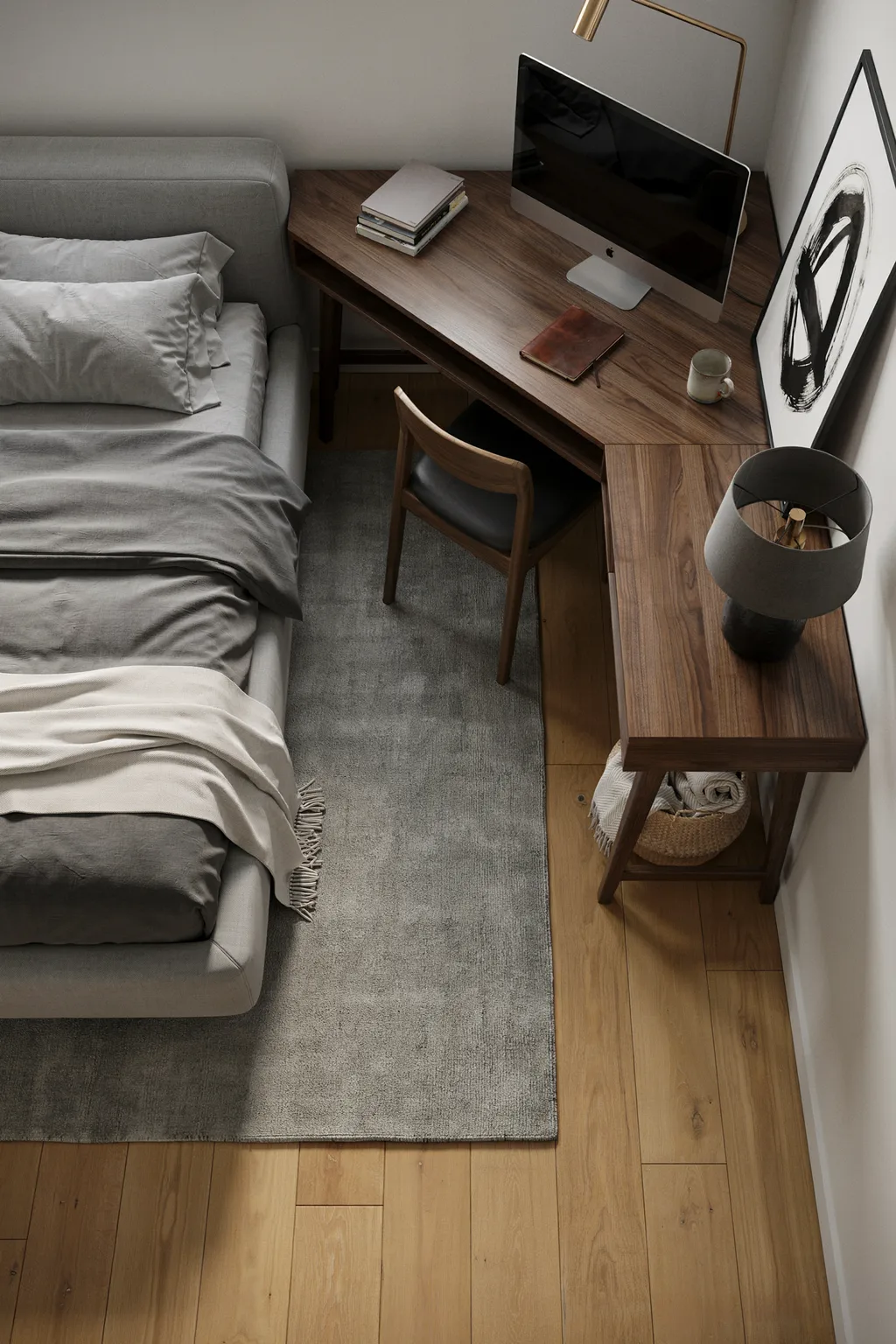
Push a desk into the corner and wrap it along two walls to get a big work surface from a small footprint. This minimalist aerial setup runs a dark desk around the corner beside the bed, holding an iMac with room to spare, while a textured grey rug grounds the sleep zone. The corner that usually sits empty becomes the most useful surface in the room.
An L-shaped corner desk gives you more usable top than a straight desk of the same wall length, because it borrows the second wall. Keeping the desk dark against light walls makes it recede so the room stays calm. This fits anyone who works or studies from home and needs spread-out space for a monitor, notes, and gear. The downside is corners can feel cramped for your knees, so check the leg room under an L-desk before buying, and choose one with an open underside rather than boxed-in cabinets.
16. Exposed Brick With a Velvet Reading Chair
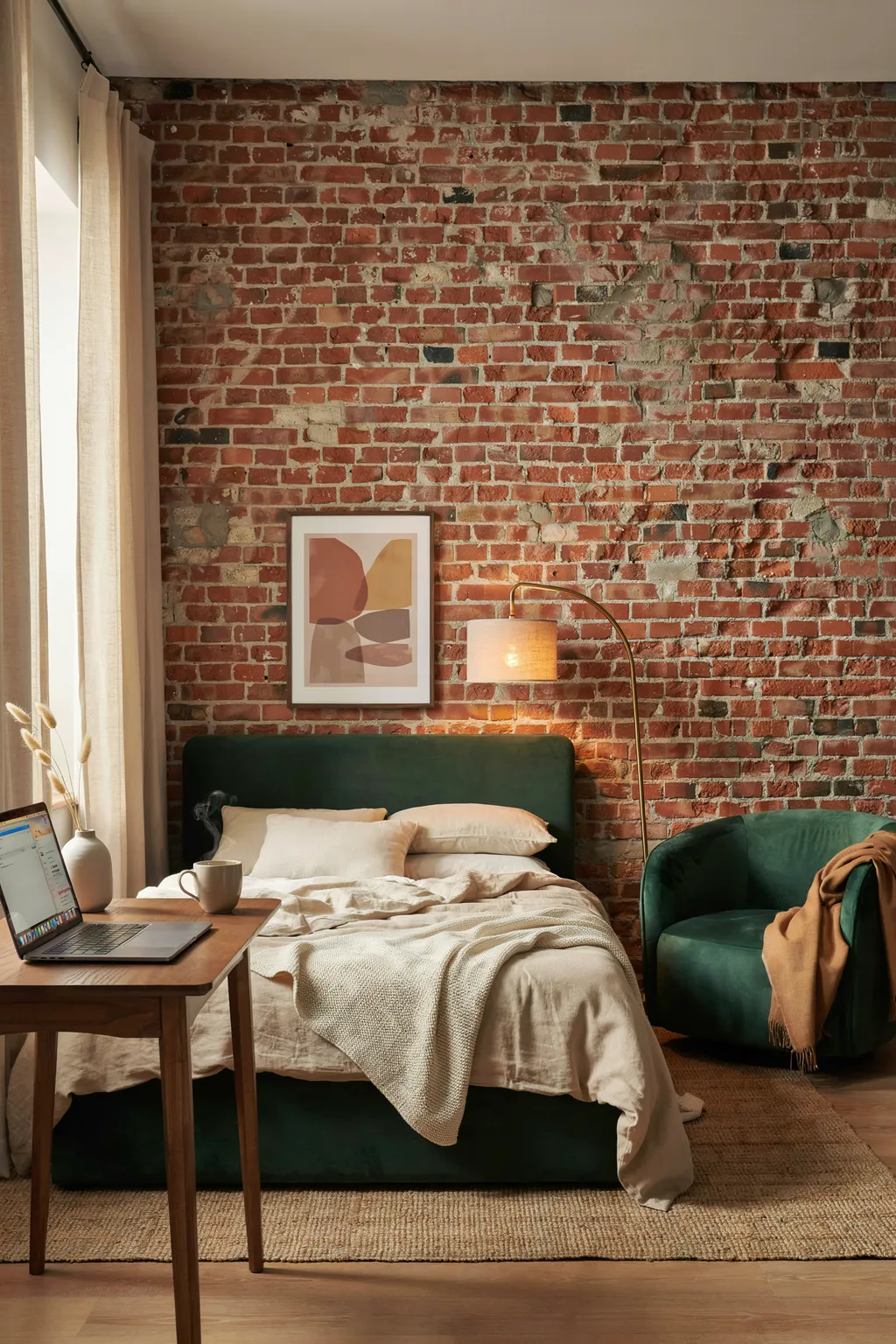
Pair a raw brick wall with a soft green velvet headboard and chair, and a small room gets texture plus a place to relax. The warm setup here layers camel linen bedding, a brass floor lamp, and a jute rug against the brick, with a walnut side table holding a laptop and coffee. It feels like a tiny urban loft instead of a cramped box.
Mixing rough brick with soft velvet gives a small room the contrast it needs to feel designed, not bare. Tucking a compact armchair in the corner adds a reading spot without a bulky recliner. The brass lamp throws warm light up the brick at night, which adds depth. This is a strong pick for an older apartment that already has brick, or a renter willing to use a brick-look peel-and-stick panel. The caveat: a full reading chair only fits if your room can spare about a 3-by-3-foot corner. In a truly tiny room, skip the chair and keep the brick.
17. A Red Neon Gaming Theme
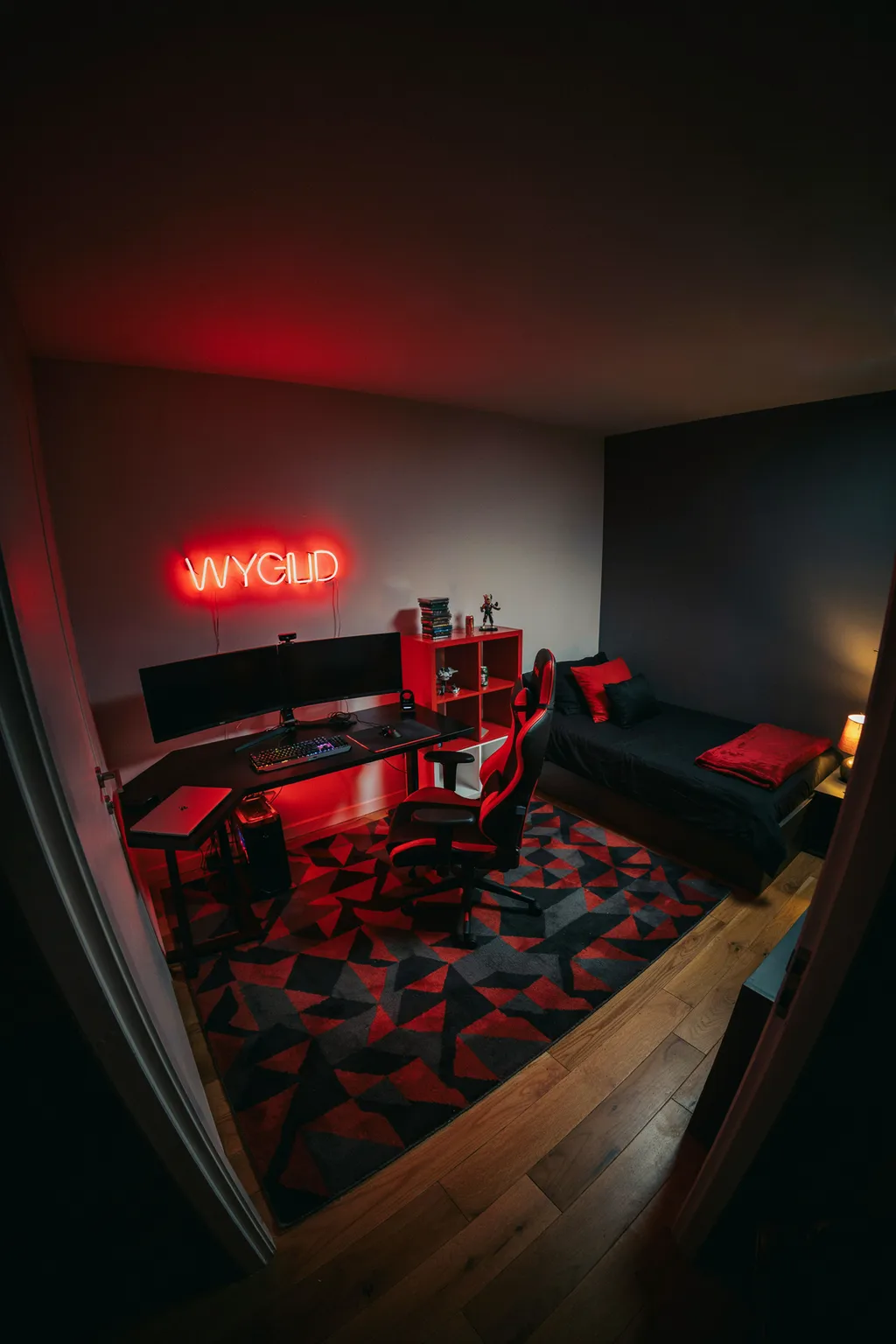
Go all in on a gaming theme with a red neon sign and a dual-monitor battle station. This room commits: a glowing “level up” style sign washes the wall red, a red gaming chair faces two monitors, and the bedding picks up the same black-and-red scheme. A red cube shelf and a warm bedside lamp keep small storage and soft light close to the bed.
A single color theme, run from the lighting to the bedding, makes a small themed room feel designed instead of random. Mounting the monitors on the desk and keeping the chair compact leaves just enough floor for the bed. This is built for a committed gamer who wants the room to feel like their arena. The honest trade-offs are sleep and resale: red light and screens are stimulating right before bed, and a heavily themed room is harder to repurpose later. Put the neon on a switch or a smart plug so you can kill it at lights-out.
18. Industrial Brick With a Vinyl Desk
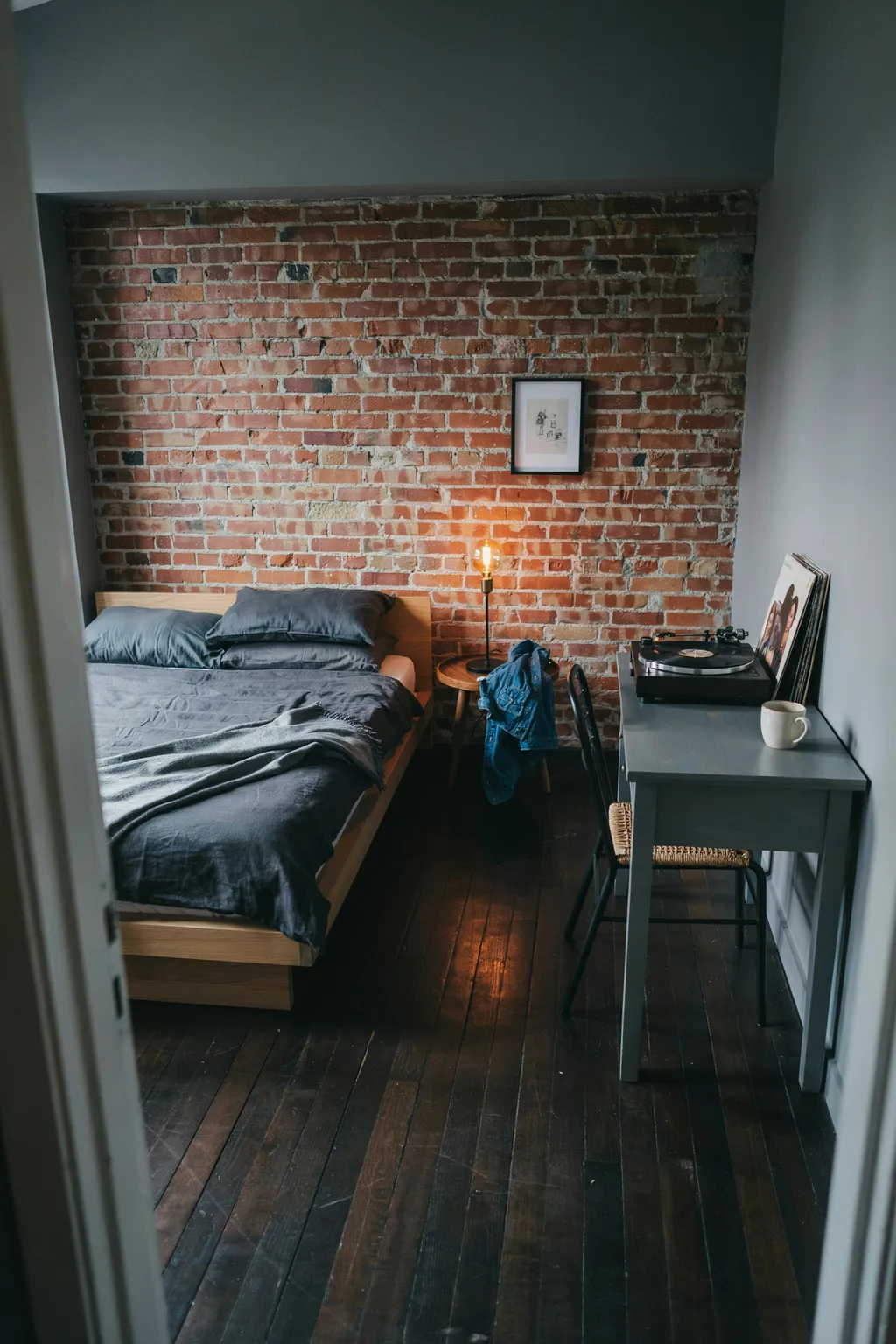
For a grown-up industrial look, set a black-dressed platform bed against exposed brick and give the desk a record player. The moody setup here uses a light wood bed base with charcoal bedding, an Edison-bulb table lamp, and a grey desk holding a turntable, with a metal chair to finish the workshop feel. It is masculine and warm at the same time.
Combining hard materials (brick, metal, black linen) with the warm glow of a single Edison bulb keeps an industrial room from feeling cold. Putting a turntable on the desk gives the room a hobby and a focal point that is not a screen. This fits a man who likes analog gear and a darker, textured palette. The downside is that vinyl and equipment eat surface space, so give the desk enough depth (at least 24 inches) to hold a turntable plus a workspace, or the record player crowds out everything else.
19. A Low Bookshelf Headboard
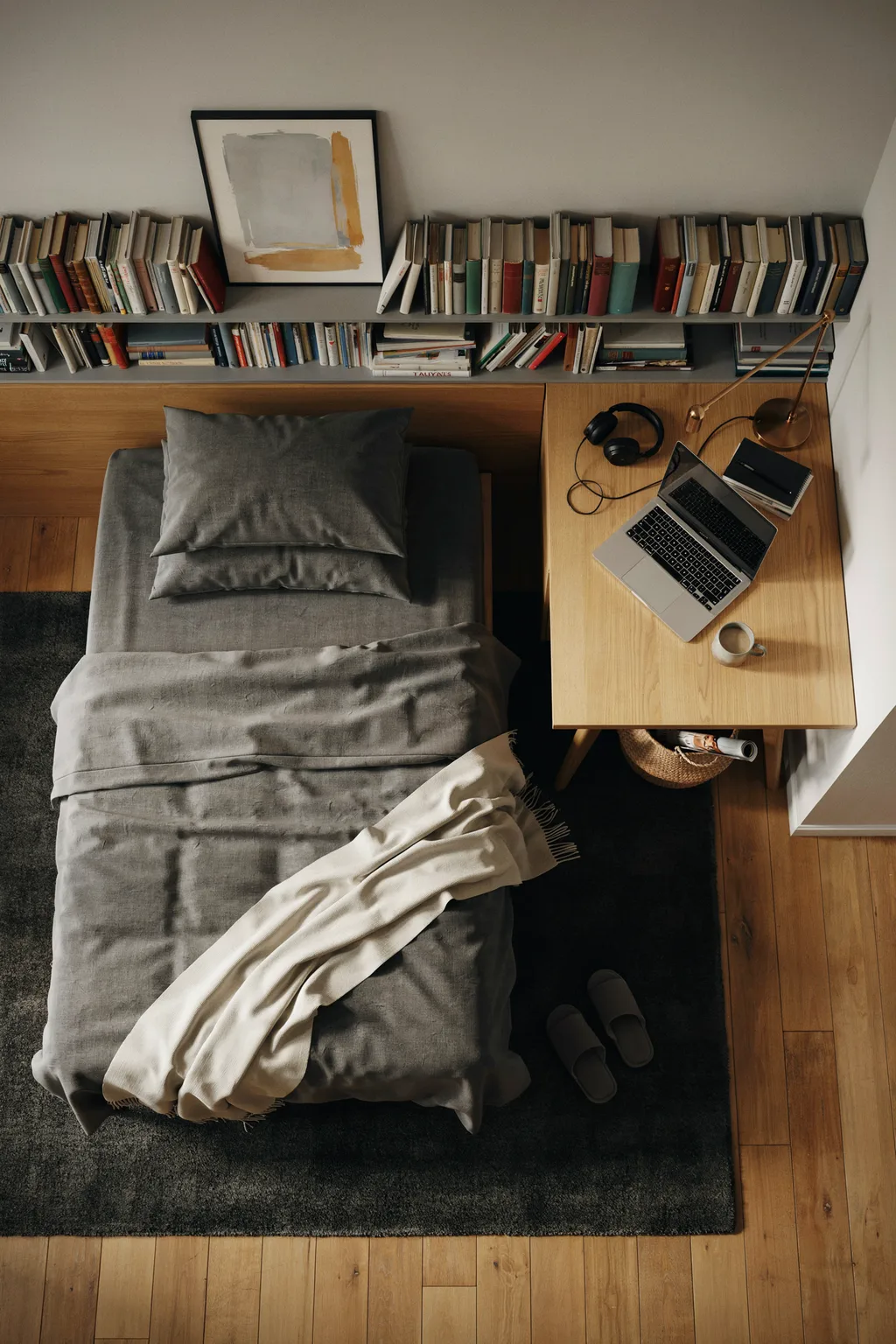
Turn the wall behind your bed into a long, low bookshelf and the headboard becomes storage. This top-down setup runs a horizontal shelf packed with books right behind the pillows, with a built-in desk extending off one side and headphones and art completing the wall. The grey bedding and shag rug keep the sleep zone soft against all that function.
A bookshelf headboard uses the prime wall real estate behind the bed that a normal headboard wastes, holding dozens of books at arm’s reach. Running a desk off the same shelf line ties the work and sleep zones into one clean horizontal band. This suits a reader or student who wants books visible and a workspace built in. The caveat is dust and the risk of clutter right by your head, so keep the shelf to books and a few clean objects, not a catch-all for keys, cables, and snacks.
20. Float Everything Off the Floor
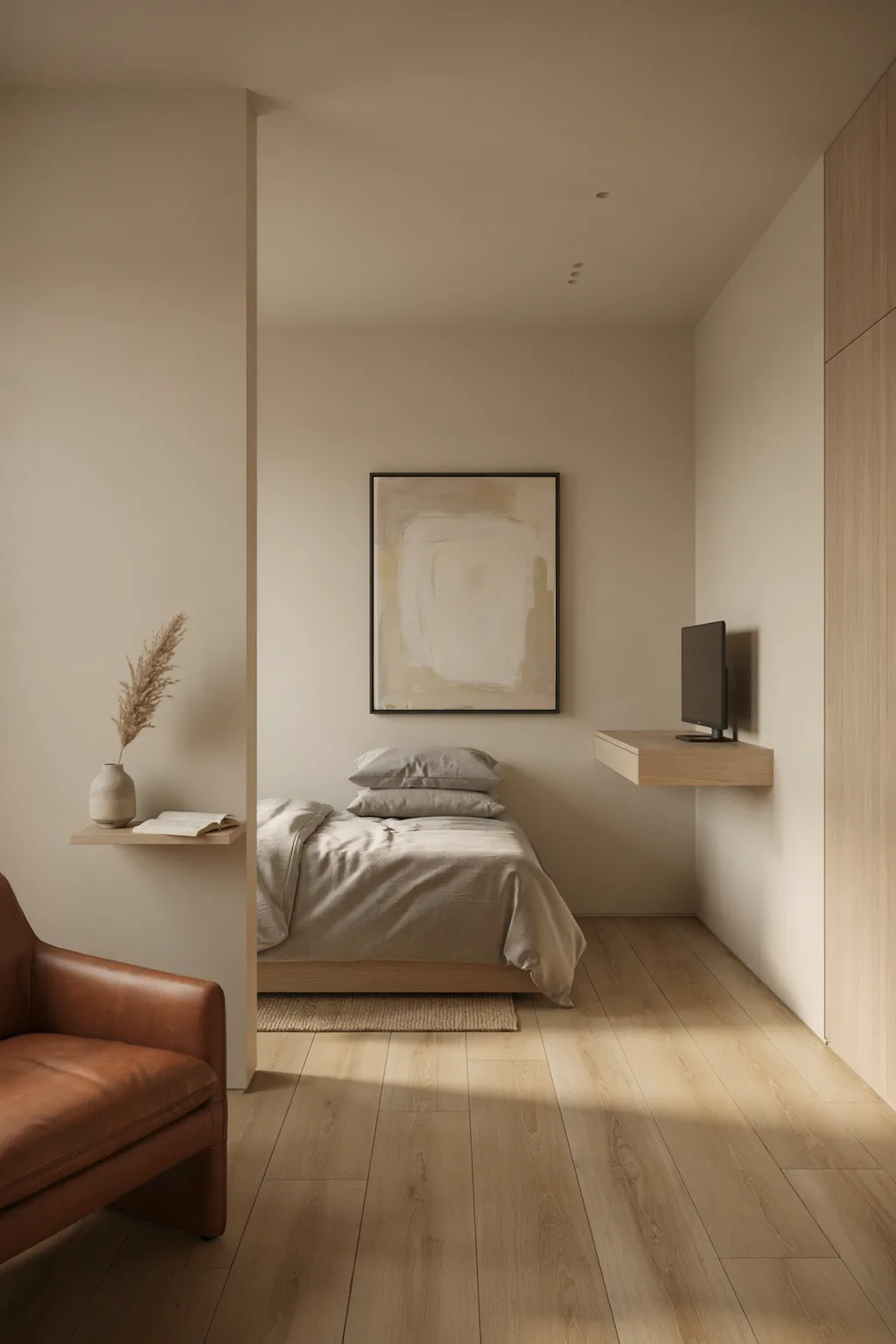
End on the clearest space trick of all: mount the desk and nightstand to the wall so nothing touches the floor. This warm minimalist room floats a slim desk with a monitor and a wall-hung nightstand beside a low platform bed, with a big calm abstract over the headboard. The visible floor stretching under the floating pieces is what makes the room feel open.
Floating furniture works because the eye reads open floor as open space, so seeing the ground run beneath the desk and nightstand makes a tiny room breathe. Wall-mounting also kills the dust traps and stubbed toes that legs create. This fits a true minimalist who wants the calmest possible room and is willing to drill solid anchors. The honest limit is weight: floating pieces need proper mounting into studs and have lower load limits than legged furniture, so do not load a floating desk with heavy gear. For renters, a slim legged desk gives a similar airy feel without the holes.
Common Mistakes to Avoid
Mistake 1: Buying a bed that is too big for the room
A king bed in a 10-by-10 room leaves no path to walk and nowhere for a desk. Measure the floor and leave at least 24 inches of clearance on the sides you use. A full or twin XL often serves a single man better and frees space for everything else.
Mistake 2: Lighting the whole room with one ceiling bulb
A single overhead light makes a small room feel flat and institutional. Layer it: add a bedside lamp and one accent light (LED strip, picture light, or floor lamp). Three small sources beat one big one and cost very little to add.
Mistake 3: Shoving furniture flat against every wall
Lining all four walls with furniture actually makes a room feel smaller and boxy. Leave one wall mostly clear, and let a couple pieces float a few inches off the wall. The breathing room reads as space.
Mistake 4: Choosing bulky, dark, legless furniture
Big closed cabinets that sit on the floor swallow visual space. Pick pieces with visible legs or wall-mounted ones so the floor shows through. Seeing the floor under furniture is one of the cheapest ways to make a room feel larger.
Mistake 5: Going all-neutral with zero personality
A small room painted entirely beige reads cheap and dorm-like, not minimalist. Add one bold move: a dark accent wall, a big piece of art, or a leather chair. One strong choice gives the room a point of view without cluttering it.
Mistake 6: Ignoring vertical storage
Keeping everything at waist height wastes the top half of your walls. Run shelves up high, hang the guitars, mount the desk. The space above eye level is the storage a small room is secretly hiding.
Quick Start Checklist
- [ ] Measure the room and sketch where the bed must go first
- [ ] Pick a bed size that leaves 24 inches of walking clearance
- [ ] Choose one piece that does two jobs (loft bed, storage bench, desk-nightstand)
- [ ] Mount at least one thing to the wall to clear the floor
- [ ] Limit the palette to two or three colors plus one accent
- [ ] Plan three light sources before you buy any furniture
- [ ] Use vertical shelving above eye level for books and gear
- [ ] Decide drill or no-drill based on whether you rent
- [ ] Leave one wall mostly empty so the room can breathe
- [ ] Add one personal statement piece (art, leather, neon, wood)
Frequently Asked Questions
What is the best bed for a small men’s bedroom?
A low platform bed in a full or twin XL size usually works best. The low profile makes the ceiling feel higher, and the smaller footprint leaves room for a desk and storage. If your ceiling is over 7.5 feet, a loft bed wins on pure space, since it frees the entire floor underneath for a workspace.
How do I add storage to a small bedroom with no closet?
Go vertical and mix open with hidden. An open garment rack keeps shirts and jackets visible, while a tall cube shelf with fabric bins hides smaller items. Add floating shelves above eye level and under-bed storage boxes. These small bedroom ideas for men lean on wall height and the space beneath the bed, the two areas most rooms waste.
What colors make a small bedroom look bigger?
Light, mid-tone, and even dark colors can all work; the trick is keeping the palette tight. Most of the best small bedroom ideas for men stick to two or three colors plus one accent, which reads calm and intentional. Cool greys and soft greens recede and feel open, while a dark charcoal wall can add depth if you light it in layers. Avoid more than one busy pattern.
Can a small bedroom have a desk and still feel open?
Yes, if the desk shares a wall or floats. A built-in desk along the bed wall, a wraparound corner desk, or a wall-mounted floating desk all add a workspace without a separate footprint. The key is letting the desk recede by matching it to the wall color and keeping the floor beneath it visible.
How do I make a small men’s bedroom look stylish, not like a dorm?
Skip the all-beige, all-plastic look. Add one grown-up material like leather, walnut, or velvet, hang one large piece of real art instead of posters, and layer your lighting. A tight color palette and one bold statement piece separate a designed room from a dorm thrown together in an afternoon.
Is a loft bed worth it for an adult man?
For a small room with tall ceilings, often yes. A loft bed can double your usable floor by stacking sleep over a desk or storage. The downsides are real: you need 7.5-plus feet of ceiling, making the bed daily is a hassle, and climbing up nightly suits younger or more able bodies. If those fit you, it is the single biggest space win available.
Conclusion
A small room is not the problem; using it in only two dimensions is. The takeaways are simple: go vertical with shelves and lofts, make each piece pull double duty, keep the palette tight, and light the room in layers instead of one bulb. Whether you want a moody dark cave, a warm brick loft, or a clean minimalist build, the same rules hold, and the best small bedroom ideas for men all come back to clearing the floor and climbing the walls.
Start with the bed, since it anchors everything else, then choose one storage move and one personality piece. You do not need all 20 of these; you need the three or four that fit your room, your habits, and your budget. Your next step takes five minutes: grab a tape measure, mark where the bed goes, and note every empty wall above eye level. That blank vertical space is where your storage, your desk, and your style are hiding. Build up into it, and even the tightest room starts working twice as hard.
You Might Also Like
- ▸10 Small Bedroom Nightstand Ideas That Maximize Space
- ▸25 Cozy Bedroom Decor Ideas for Small Spaces That Feel Calm
- ▸20 Chic Small Bedroom Ideas That Feel Roomy and Refined
- ▸13 Small Bedroom Layout Mistakes Interior Designers Always Avoid
- ▸18 Small Bedroom Bookshelf Ideas That Save Space in Style
- ▸19 Best Teenage Boy Bedroom Ideas