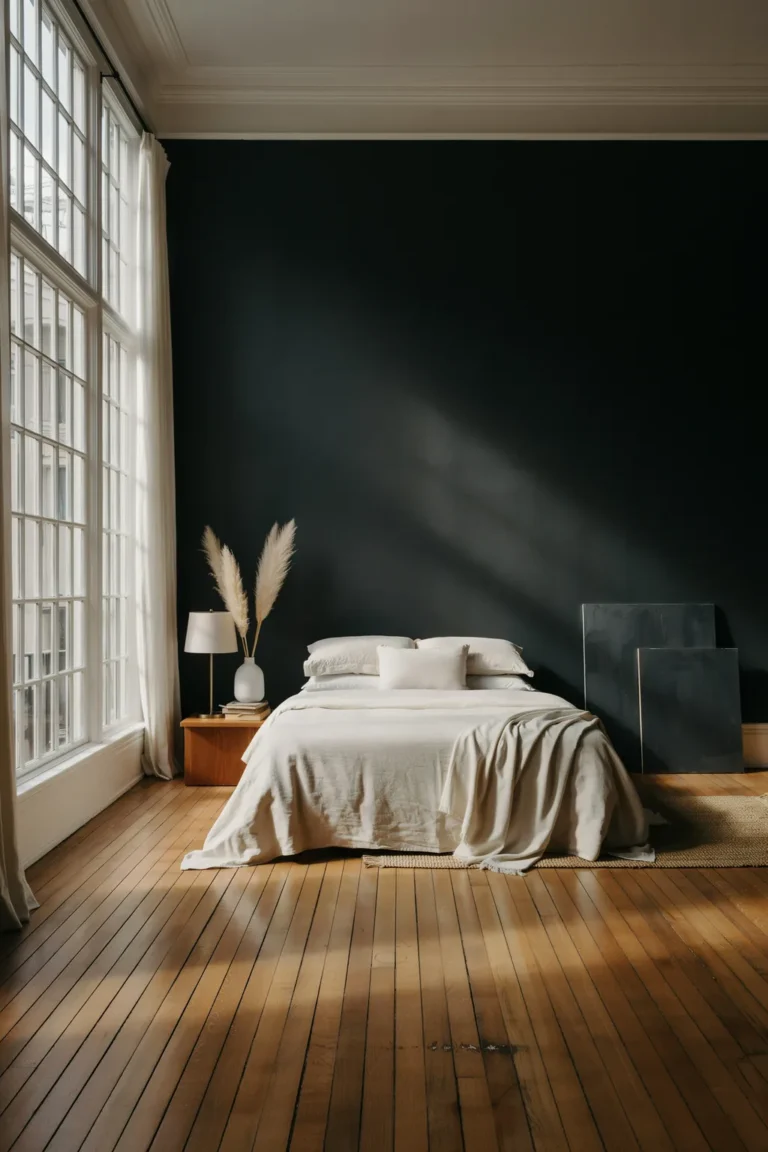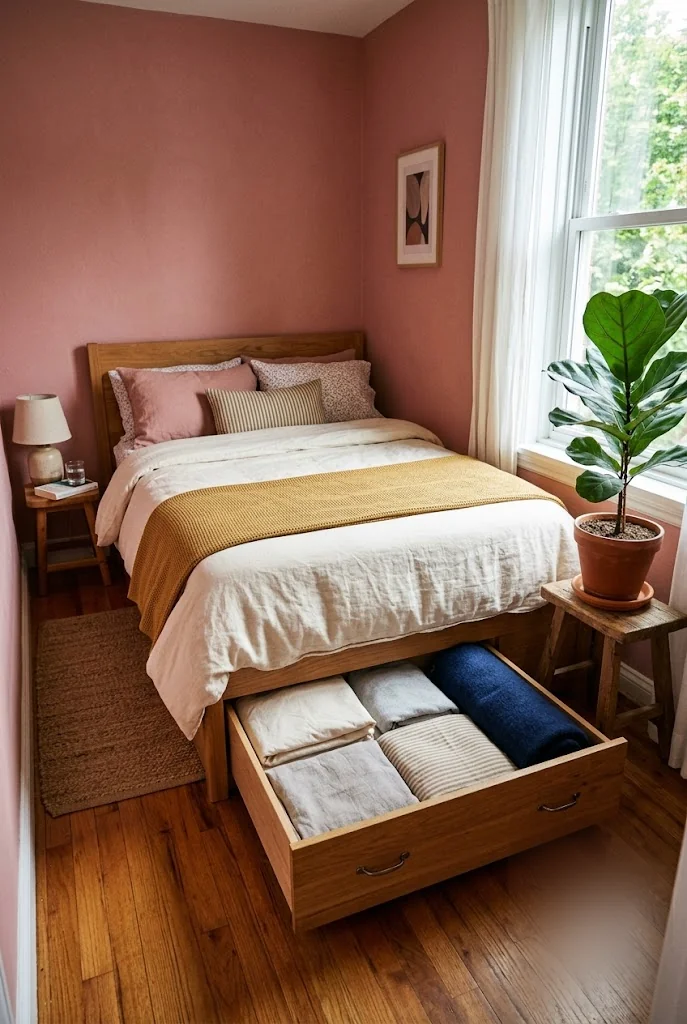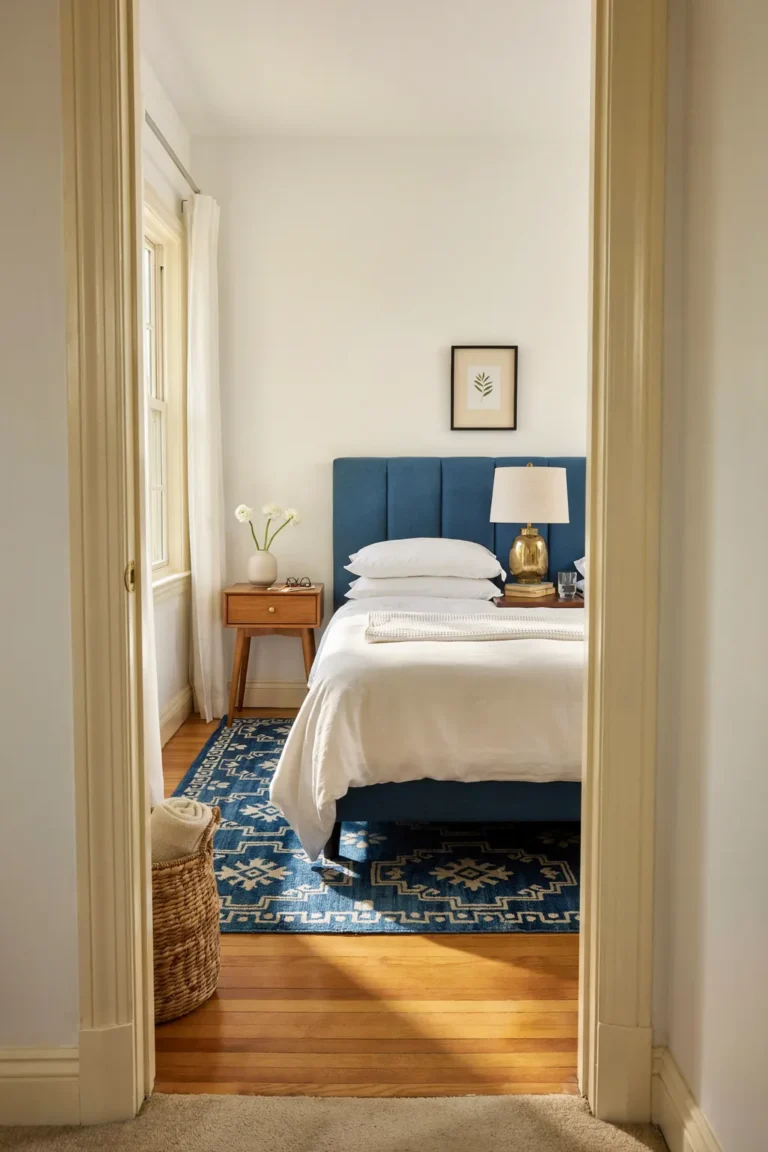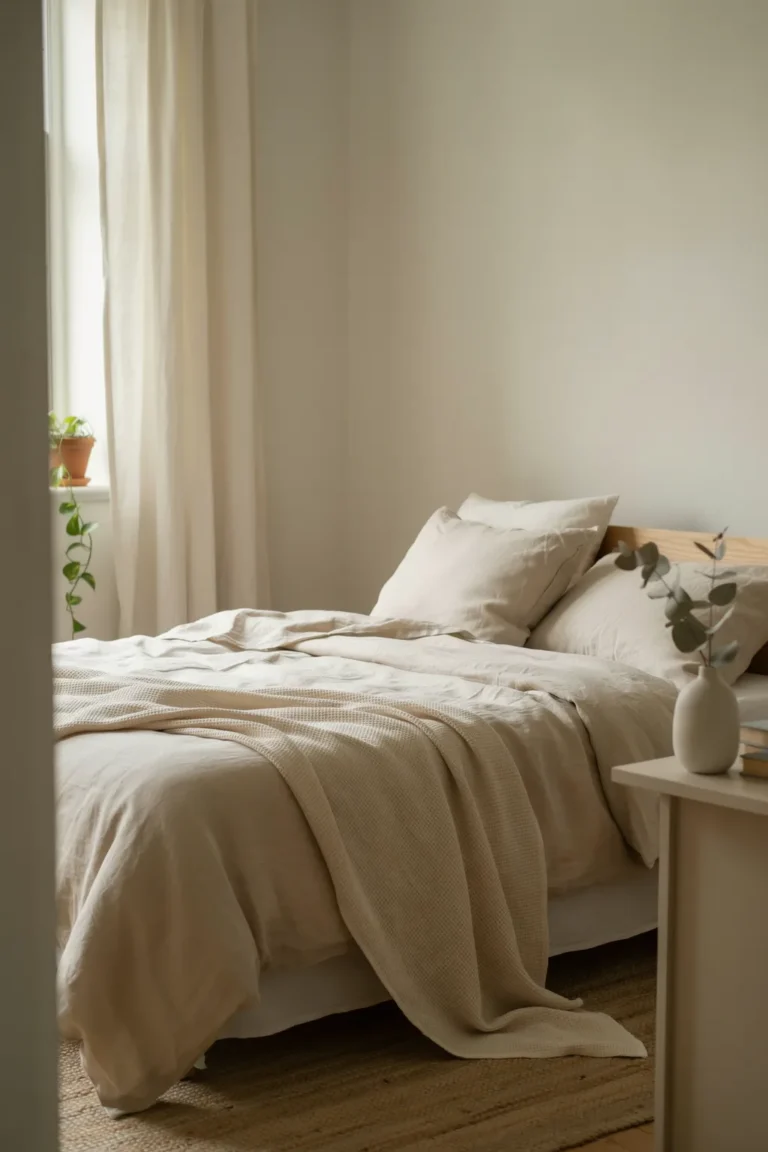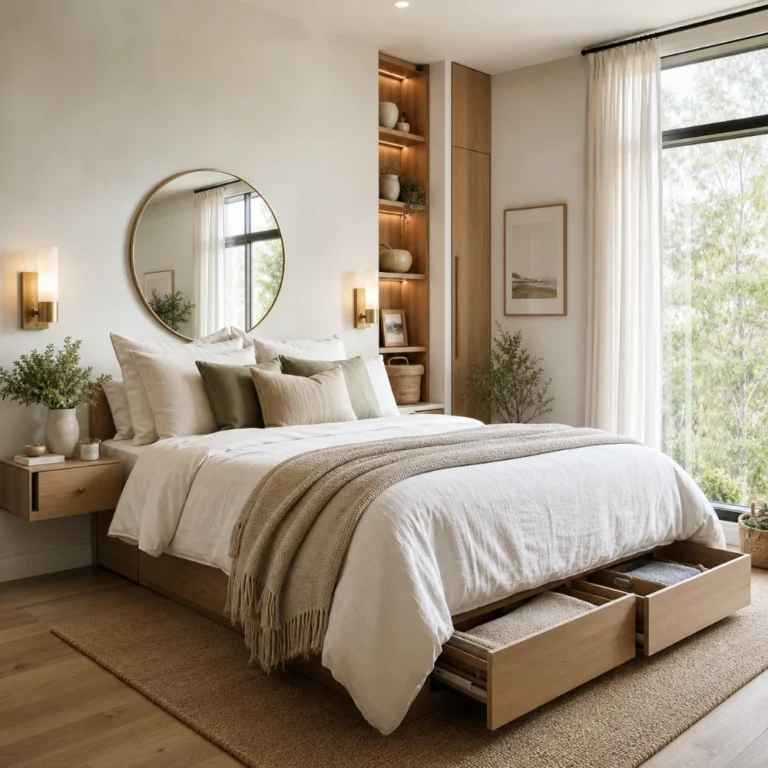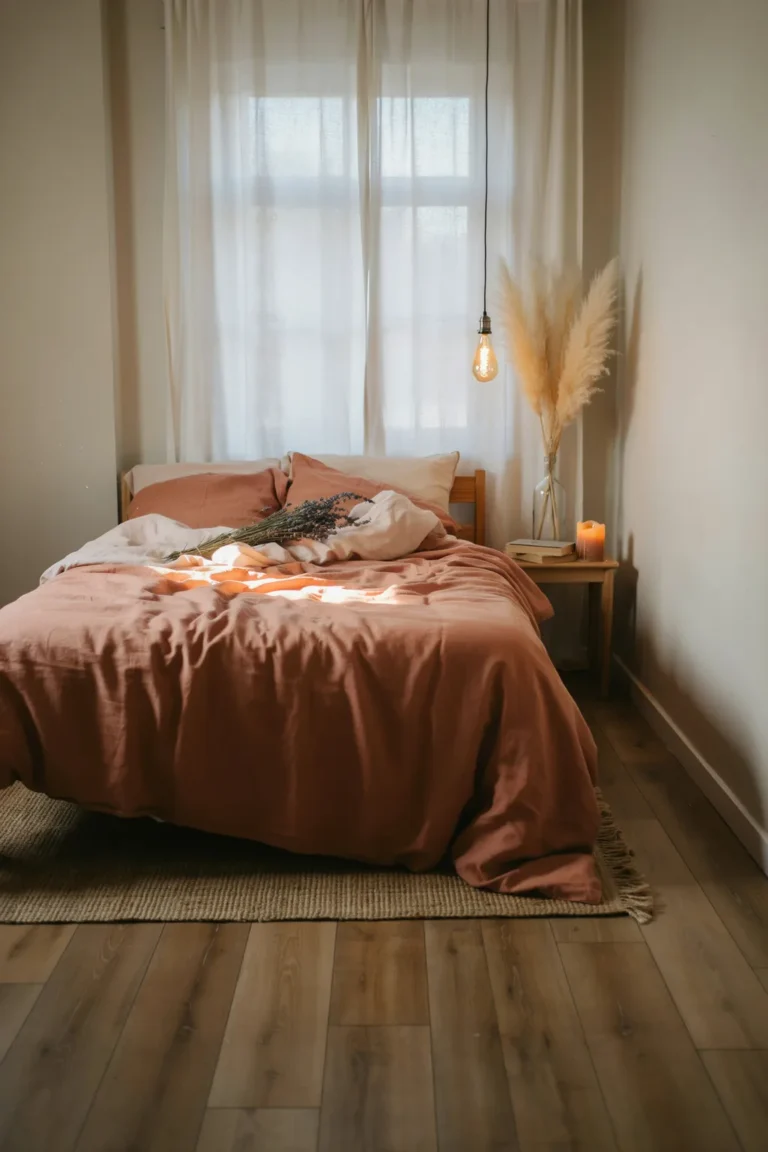
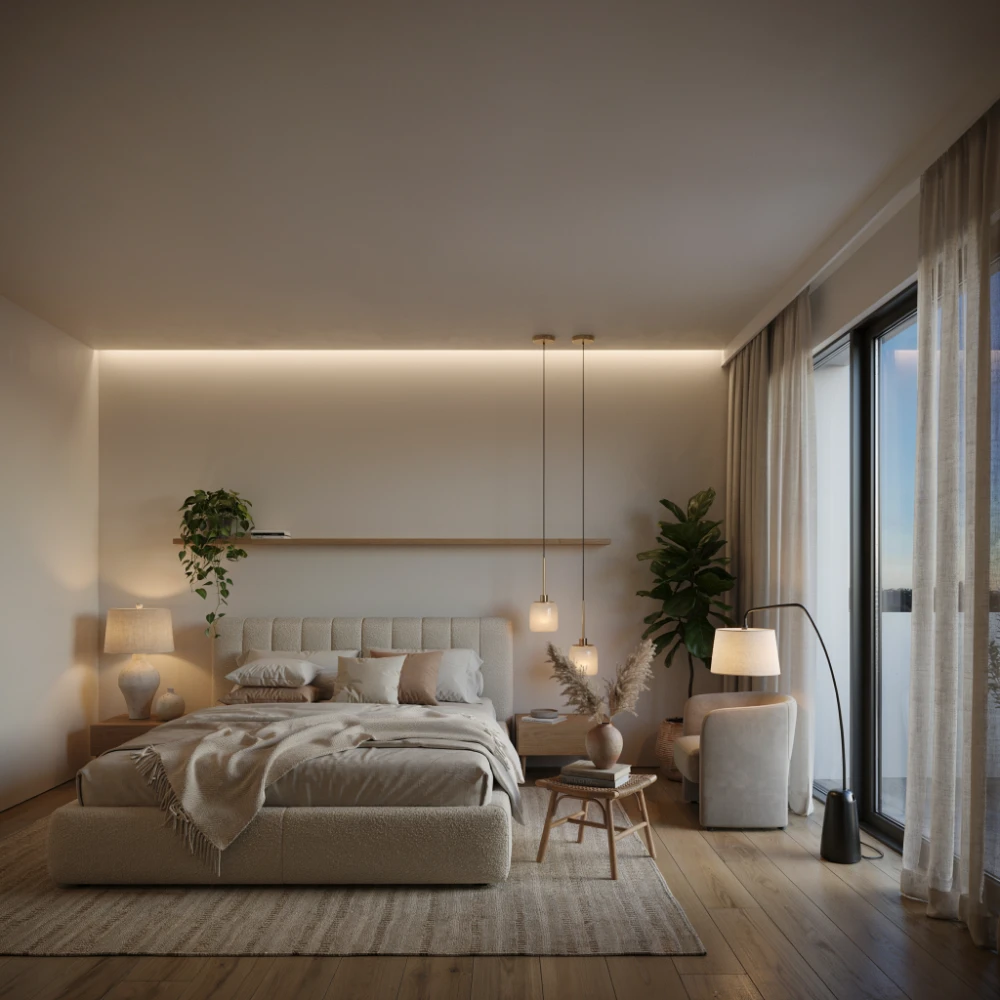
20 Bedroom Lighting Ideas That Feel Instantly Relaxing
The right bedroom lighting ideas can transform how a room feels before you even sit down. Yet most bedrooms run on a single overhead fixture at full blast, which is about as relaxing as a dentist’s waiting room. Too bright, too cold, and zero mood.
Your bedroom is the one room that earns the right to feel different at 7 PM than it does at 7 AM. Good lighting makes that possible. Bad lighting fights you every evening.
These 20 bedroom lighting ideas cover every style and budget, from a $15 paper lantern to a full multi-layer LED system. Some take an afternoon to set up. A few require a contractor. Most need nothing more than a new lamp and a dimmable bulb. What the competitor articles miss: the specific measurements, the Kelvin numbers that actually matter, and the honest caveats for each approach. You will find all of that here.
Pick the idea that catches your eye and start tonight.
Quick Answer for Bedroom Lighting Ideas
The most relaxing bedrooms layer at least two independent light sources, both on dimmers, both set to 2700K-3000K warm white. A floor lamp beside a reading chair plus a bedside table lamp covers most bedrooms. Dimmable LED bulbs are the single best upgrade at $8-15 each. Avoid “daylight” or “cool white” bulbs above 3500K in any sleeping space.
1. A Floor Lamp That Turns a Corner into a Reading Retreat
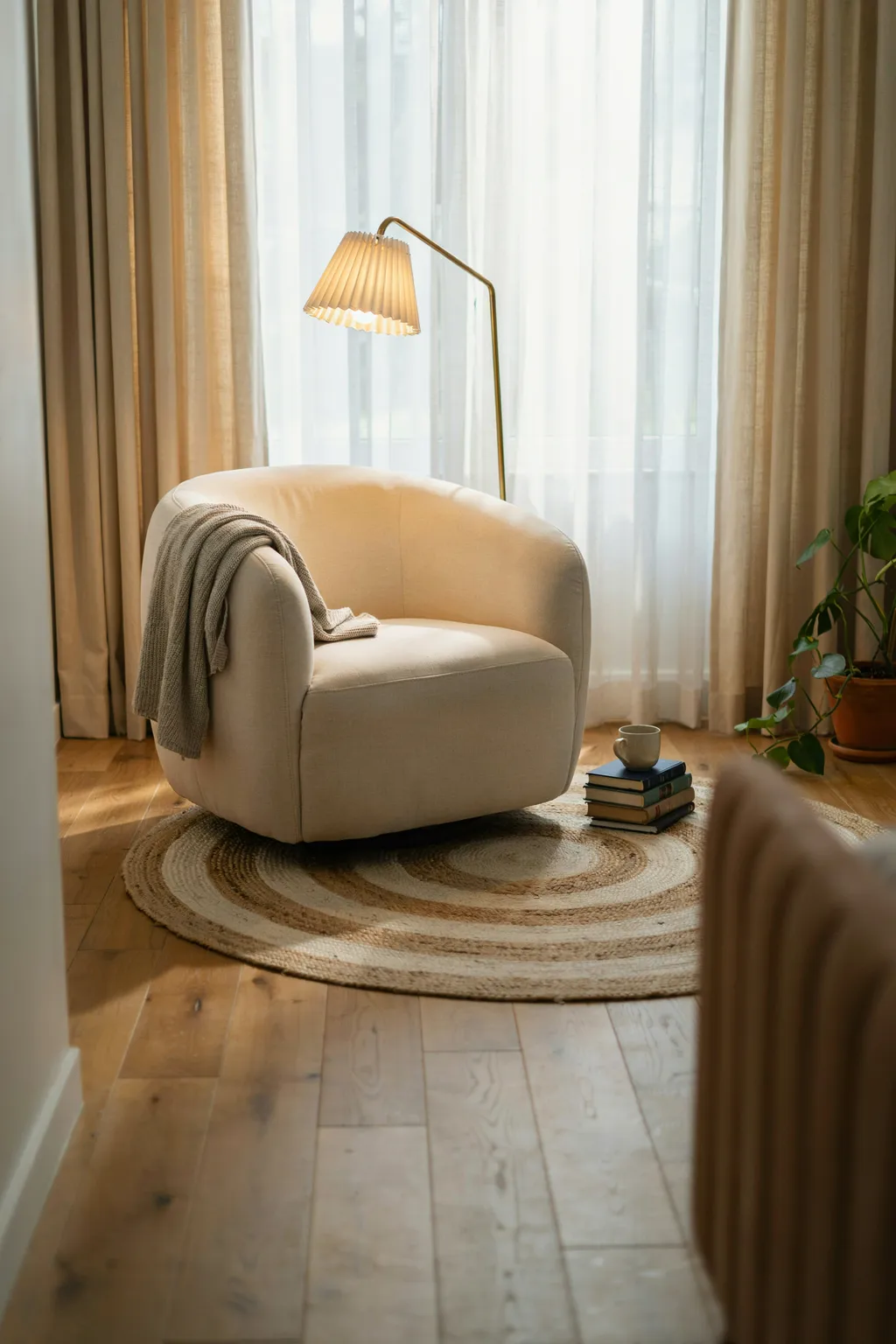
A single armchair with a floor lamp placed behind and slightly to the side of it creates a dedicated wind-down zone. Your brain starts to associate that corner with quiet and rest, which is more valuable than the light itself. Over time, just walking to the chair begins to trigger a shift in your body.
Pick a lamp with a fabric or pleated shade, not a bare metal reflector. Fabric diffuses the bulb so light wraps the space instead of pointing it. The lamp should stand 58-64 inches tall with the shade bottom sitting slightly above seated eye level. A warm 2700K bulb at 400-600 lumens is sufficient for reading without strain.
This setup works best in bedrooms with at least 150 square feet. In a smaller room, a swing-arm wall sconce does the same job without claiming floor space.
2. A Woven Pendant That Casts Pattern as Well as Light
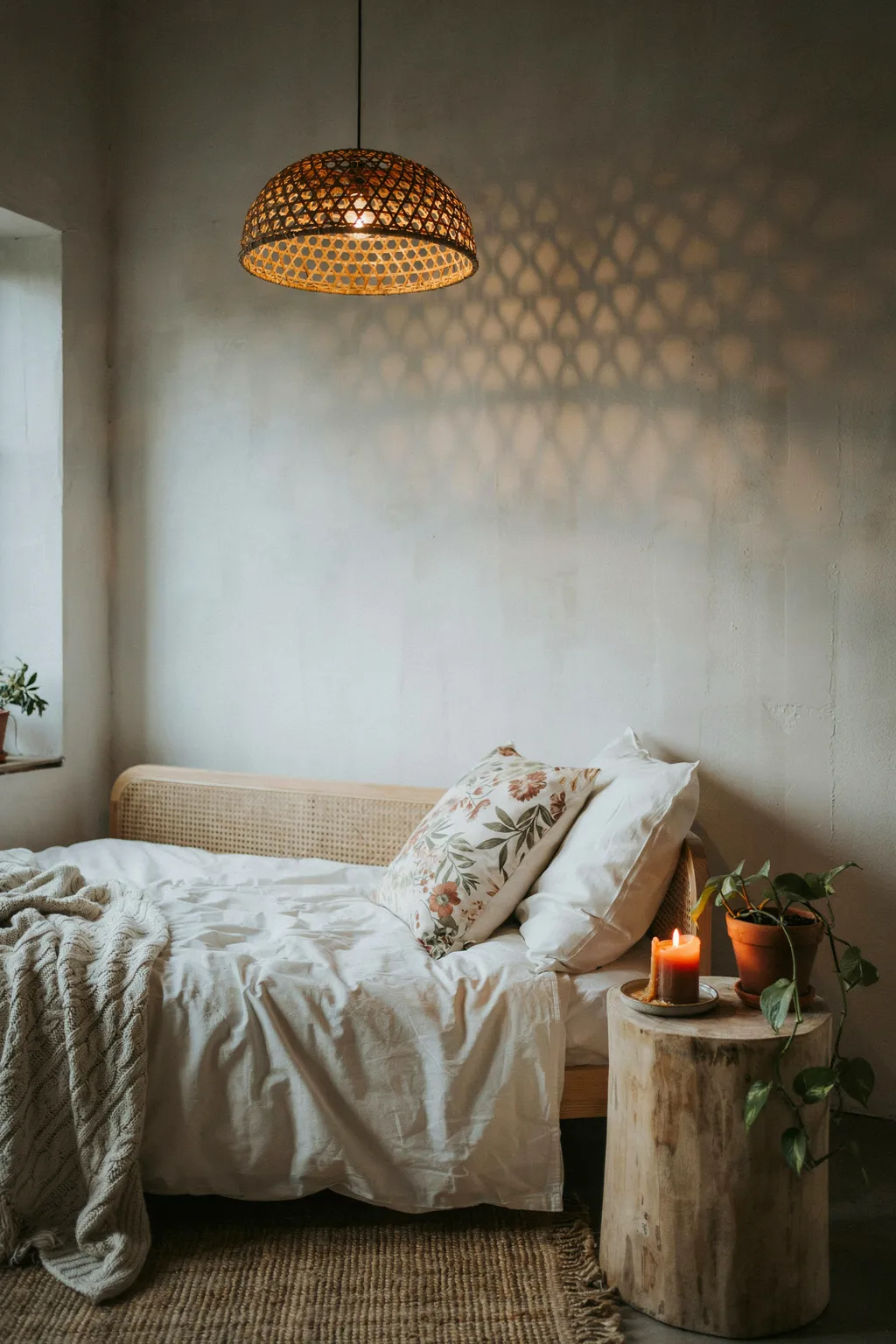
A rattan or woven pendant light does two jobs at once. It delivers direct light to the bed area, and it throws intricate geometric shadow patterns across the wall behind it. Those textured shadows make the room feel alive in a way no plain overhead fixture ever achieves.
Hang the pendant so its bottom edge sits about 12-15 inches above your head when you’re sitting up in bed. Too low feels claustrophobic. Too high and the light misses the headboard zone entirely. Use an amber or warm-tinted bulb inside, around 300-400 lumens.
One honest caveat: woven and rattan shades collect dust quickly. If you deal with allergies, a smooth ceramic or glass pendant is easier to keep clean.
3. Pendant Lights on Each Side of the Bed Instead of Table Lamps
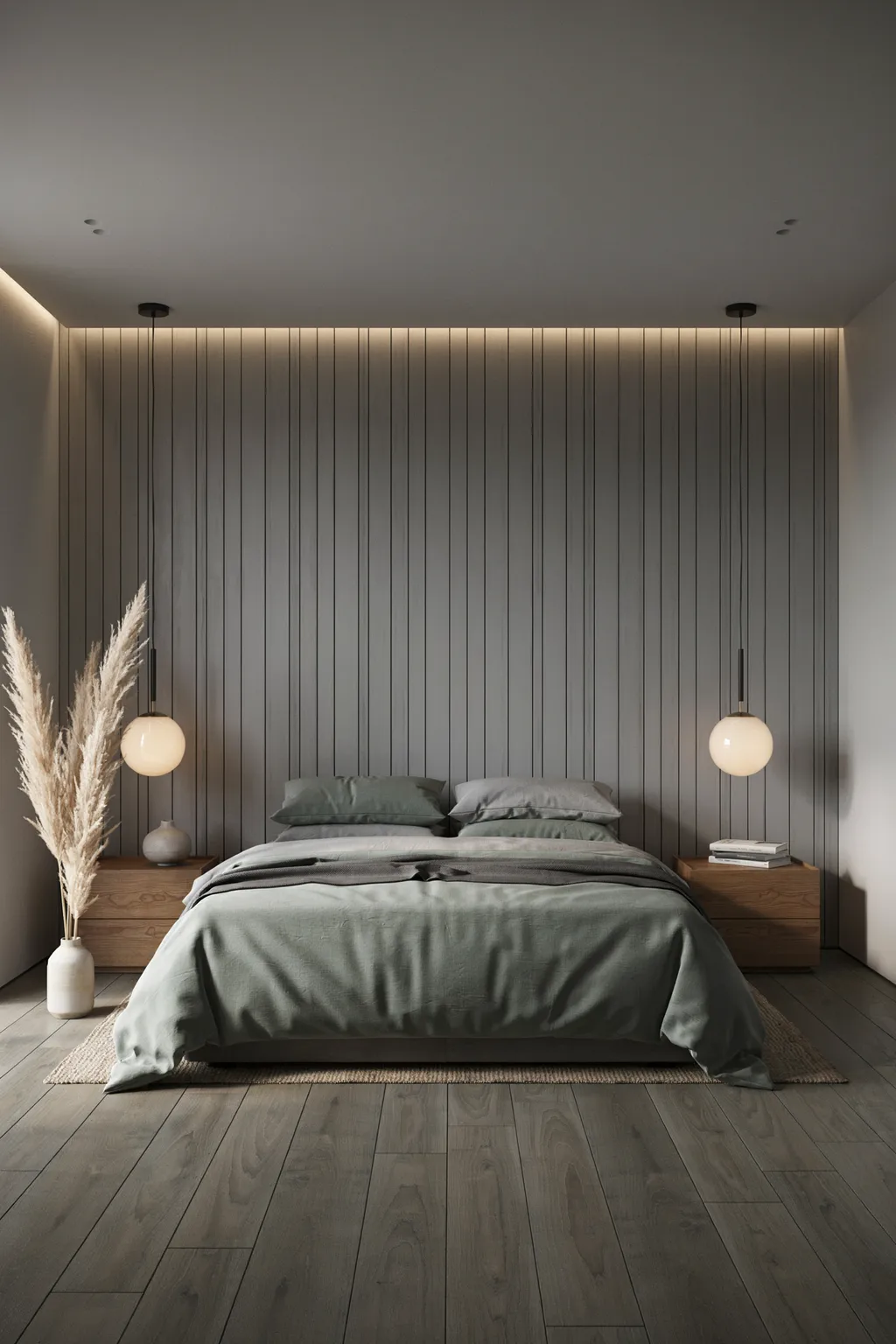
Swapping out bedside table lamps for hanging pendants frees your nightstand completely. You still get directional light for reading, but now there is room on the table surface for a glass of water, a book, a phone charger, and something that is not a lamp base.
Mount the pendants so their centers sit 24-30 inches above the mattress surface. Frosted globe pendants in the 6-8 inch diameter range are the safest choice: they diffuse light gently and suit almost every design style. Avoid clear glass with a bare exposed bulb at eye level. The glare will bother you every time you lie back and look up.
This works for queen and king beds. On a twin or full, the pendants can feel crowded if your nightstands are narrow.
4. Backlit Headboard LED Strip for an Effortless Hotel Glow
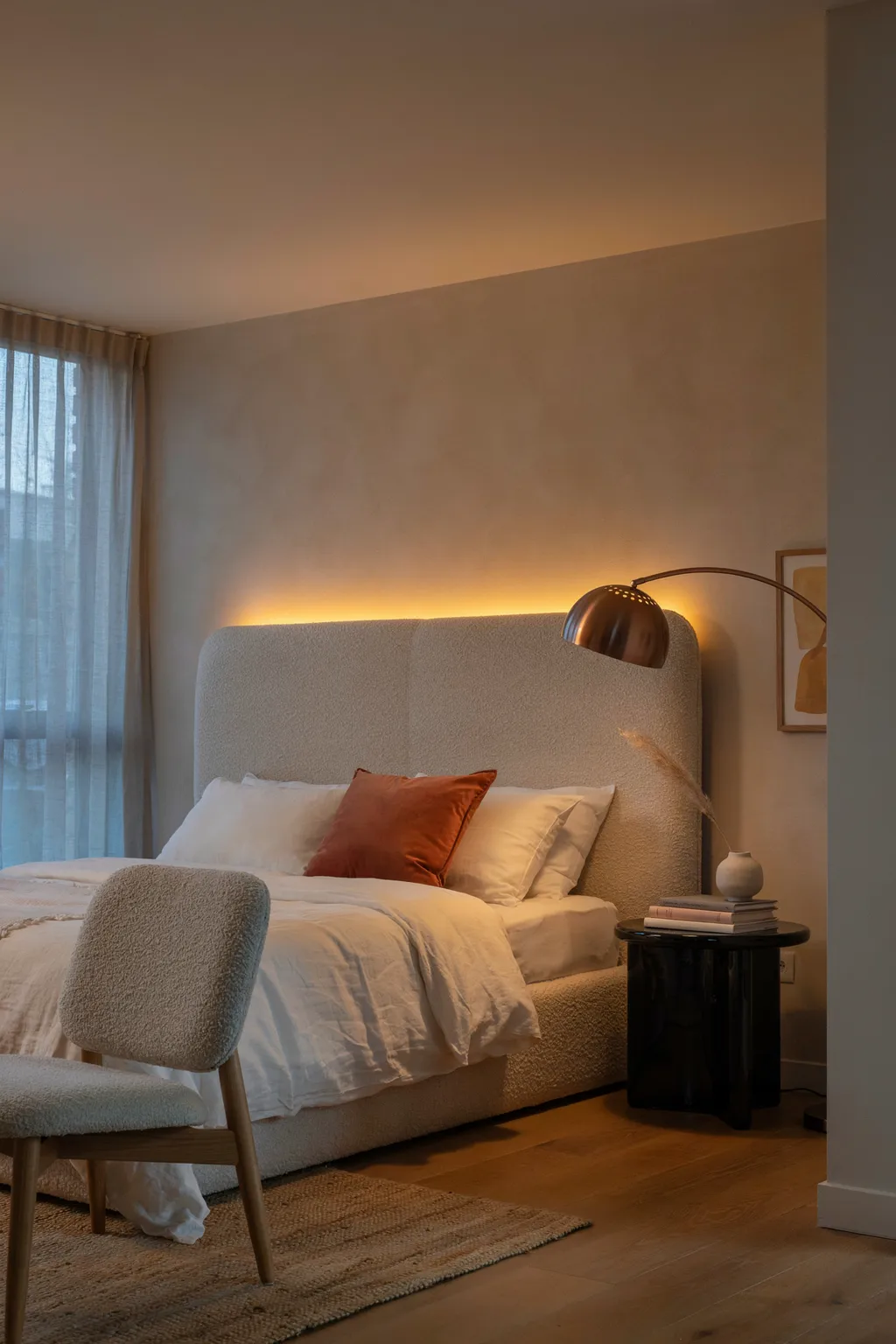
An LED strip mounted along the back edge of your headboard so it glows against the wall behind it is one of the bedroom lighting ideas you can finish in a single afternoon. The light bounces off the wall and wraps forward, so you never look directly into the source. It is always ambient and never harsh.
Use a 2700K-3000K strip at 30-40% brightness. Any brighter and it becomes a distraction instead of a mood-setter. Adhesive LED strips cost $15-25 and take minutes to install. A dimmer or smart controller runs an extra $10-15 and is worth every cent.
If your headboard is fabric-upholstered, check that the strip does not run hot enough to damage the material over time. Most modern LED strips stay cool, but older or uncertified products can get warm after hours of continuous use.
5. A Crystal Chandelier Paired with Matching Bedside Table Lamps
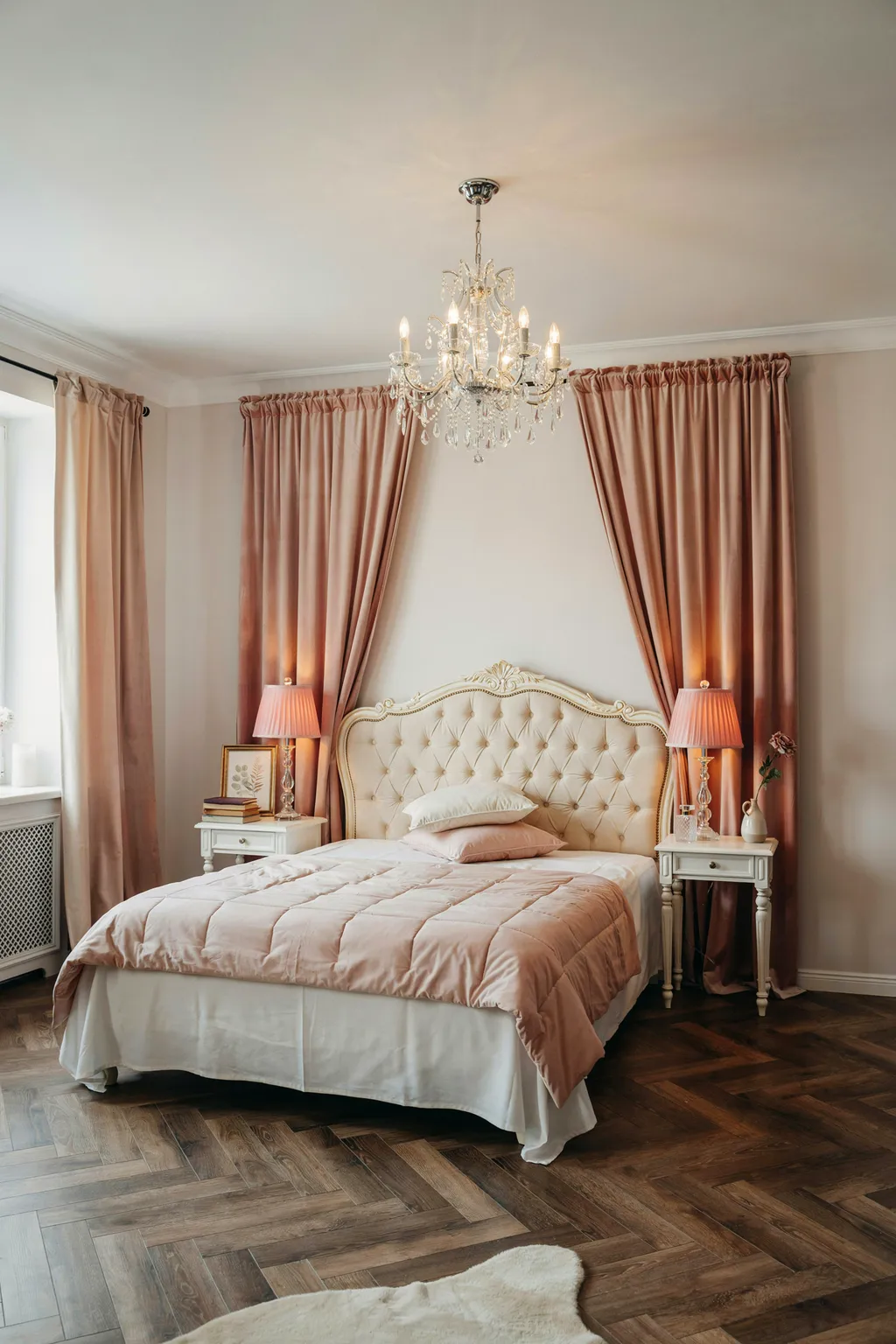
A crystal or glass chandelier centered over the bed anchors the whole room and adds a layer of occasion that floor lamps simply cannot replicate. Pair it with matching table lamps on both nightstands, and the light reaches the bed from above and from either side simultaneously, eliminating harsh shadows.
For this to feel restful rather than theatrical, all three fixtures should share a dimmer circuit or use smart bulbs you can control from your phone. At full brightness this setup works for getting dressed; at 20-30% it is genuinely calming. Budget: a quality glass chandelier runs $80-250, table lamps $40-80 each.
Ceiling height matters here. This works in rooms with 9-foot ceilings or higher. In a standard 8-foot room, a chandelier above the bed can feel low and crowded.
6. Mixed Pendant Heights for a Layered Look Above the Bed
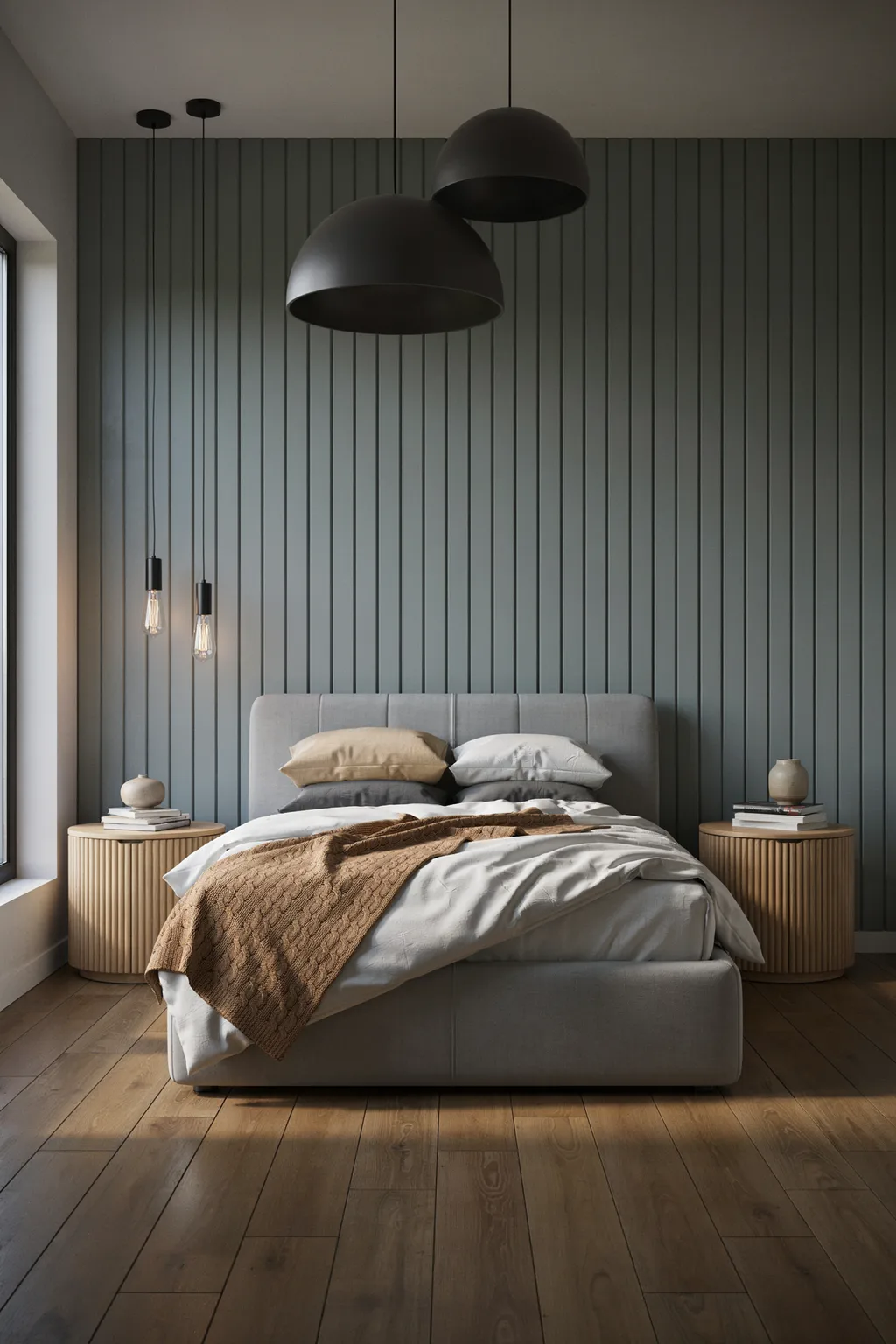
Combining two types of pendants — large statement globes overhead and slim filament pendants at nightstand height — creates a lighting setup that feels genuinely designed rather than defaulted. The large globes fill the room with soft ambient light. The slim pendants direct a focused glow right where you need it for reading.
This setup works best with 9-foot ceilings or taller. Mount the large pendants at 7-8 feet from the floor and let the slim ones drop to 24-28 inches above the mattress. Both types should be on separate dimmers so you can run them independently.
Renters will find this impractical. It requires multiple ceiling hooks and at minimum two junction boxes. A single adjustable pendant on one side can give you a partial version of the same effect.
7. A Paper Lantern Pendant for the Softest Possible Ceiling Light
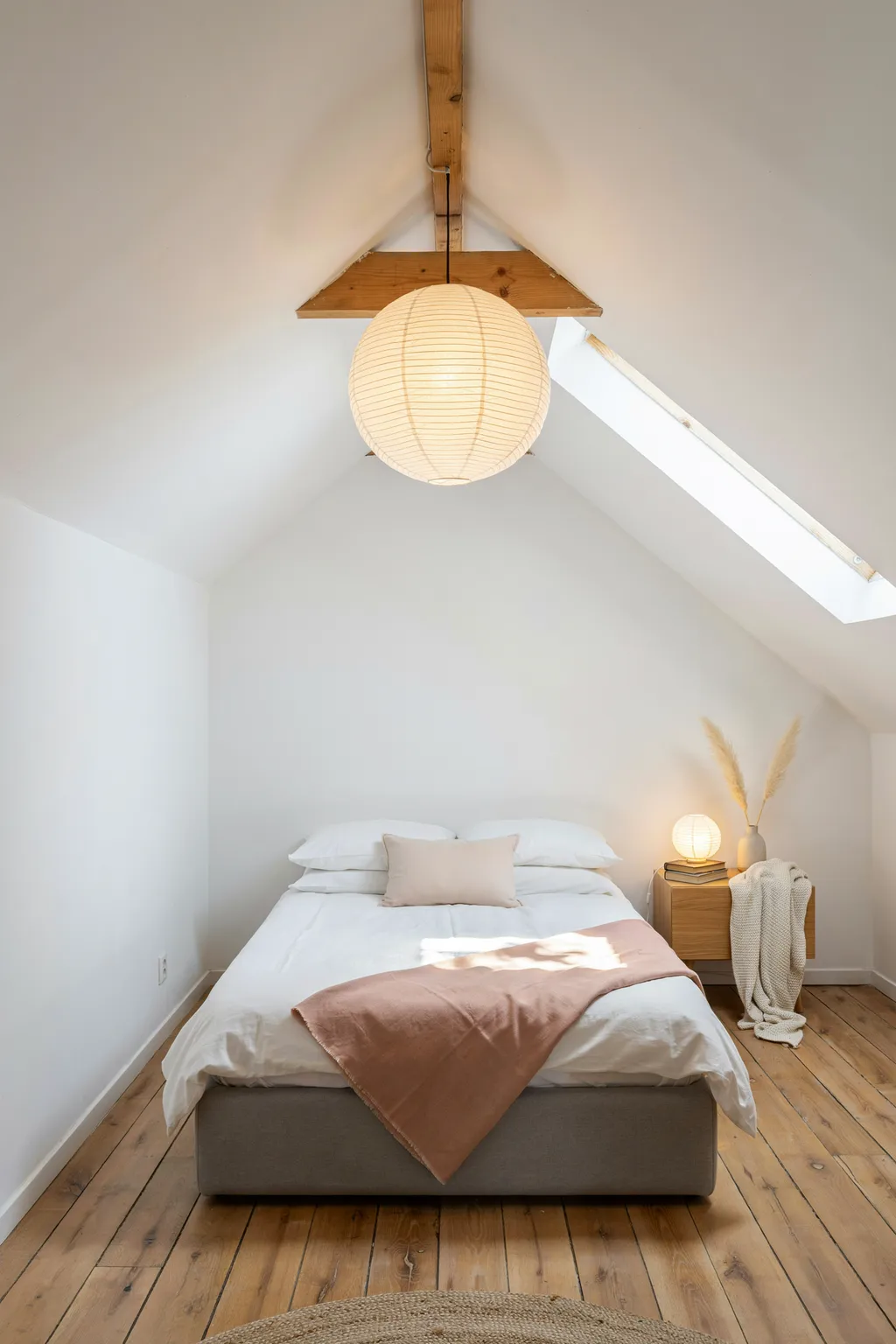
Paper lantern pendants are among the most effective bedroom lighting ideas for softening a room because the shade diffuses the bulb entirely. You see no hot spot, no harsh point of brightness, just a warm glowing sphere. The quality of light is close to candlelight: gentle, even, and easy on the eyes at any time of day.
A 16-20 inch diameter paper globe is the right size for most standard bedrooms. Hang it so the center sits 7 feet from the floor. Use a 400-lumen 2700K bulb inside rather than a high-output one. The shade amplifies the apparent warmth of the light, so you need less output than you would expect.
This will not work well over a ceiling fan mount or an existing unattractive light box. A swag-style hook installation solves that: one ceiling hook, a chain, and the cord drops to a nearby plug.
8. String Lights on a Canopy Frame for a Dreamy Focal Point
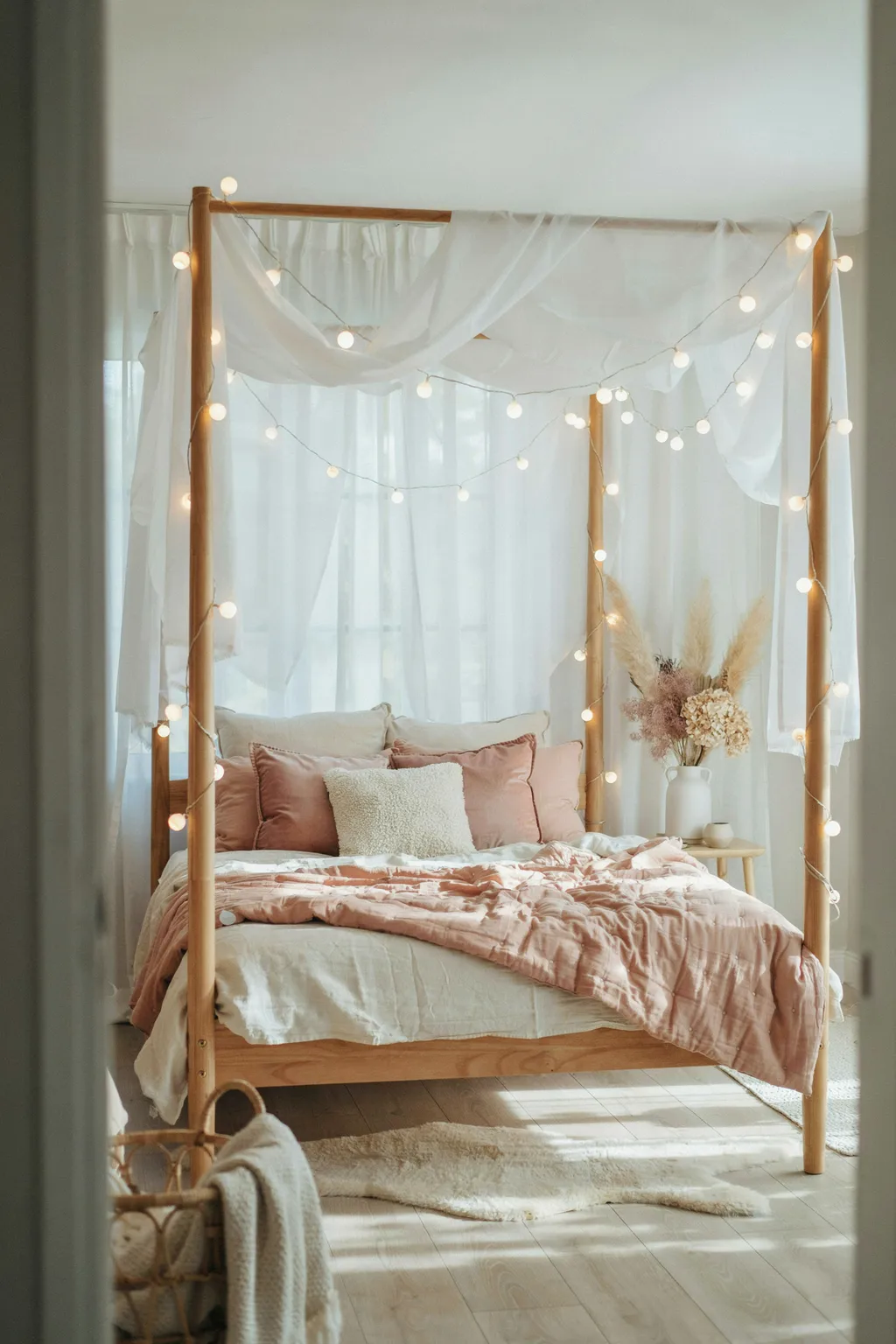
A four-poster or canopy bed frame with warm globe string lights threaded along the top and around the posts becomes the center of the whole room. Each individual bulb is small enough that the combined output is soft and festive rather than bright and blaring. The overall quality resembles golden-hour outdoor light.
Use globe string lights with G40 or G50 bulbs, which are roughly 1.5-2 inches in diameter. Avoid tiny seed-light strings for this application — the small bulbs look like a dorm room rather than a considered design choice. Set the lights on a timer so they turn on at dusk and off at bedtime automatically.
No four-poster frame? Mount a canopy ceiling rod above the bed and drape sheer fabric and string lights from it. About $40-60 in hardware and fabric, plus the lights.
9. Edison Bulb Clusters on a Rustic Wood Accent Wall
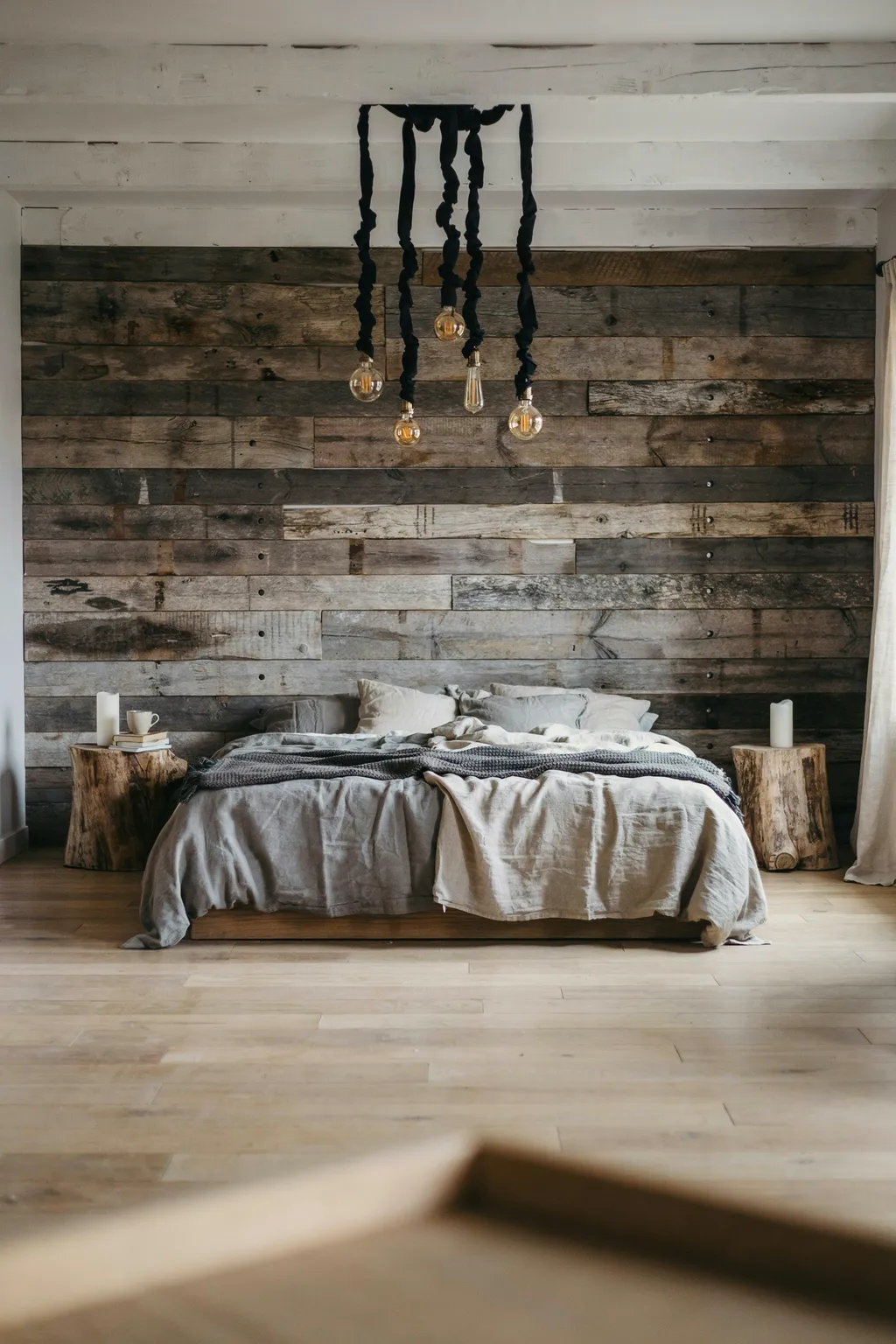
If your bedroom has a reclaimed wood, stone, or brick accent wall, hanging a cluster of exposed Edison bulbs at varying cord lengths in front of it leans into the texture and warmth of that surface. Exposed amber filament bulbs glow at around 2200K, which matches the color temperature of firelight and is one of the most naturally calming color temperatures for the human nervous system.
Use 4-6 bulbs per cluster, staggered between 18 and 48 inches from the ceiling. A multi-cord ceiling canopy holds all the cords from one mounting point and runs $25-40. Keep wattage low per bulb: 4-6W LED equivalents are enough for this purpose.
Edison bulbs produce less usable lumen output than enclosed shades, so this is a mood-and-ambiance solution. You still need a task lamp elsewhere in the room for actual reading.
10. Under-Bed LED Strips for a Floating-Bed Effect
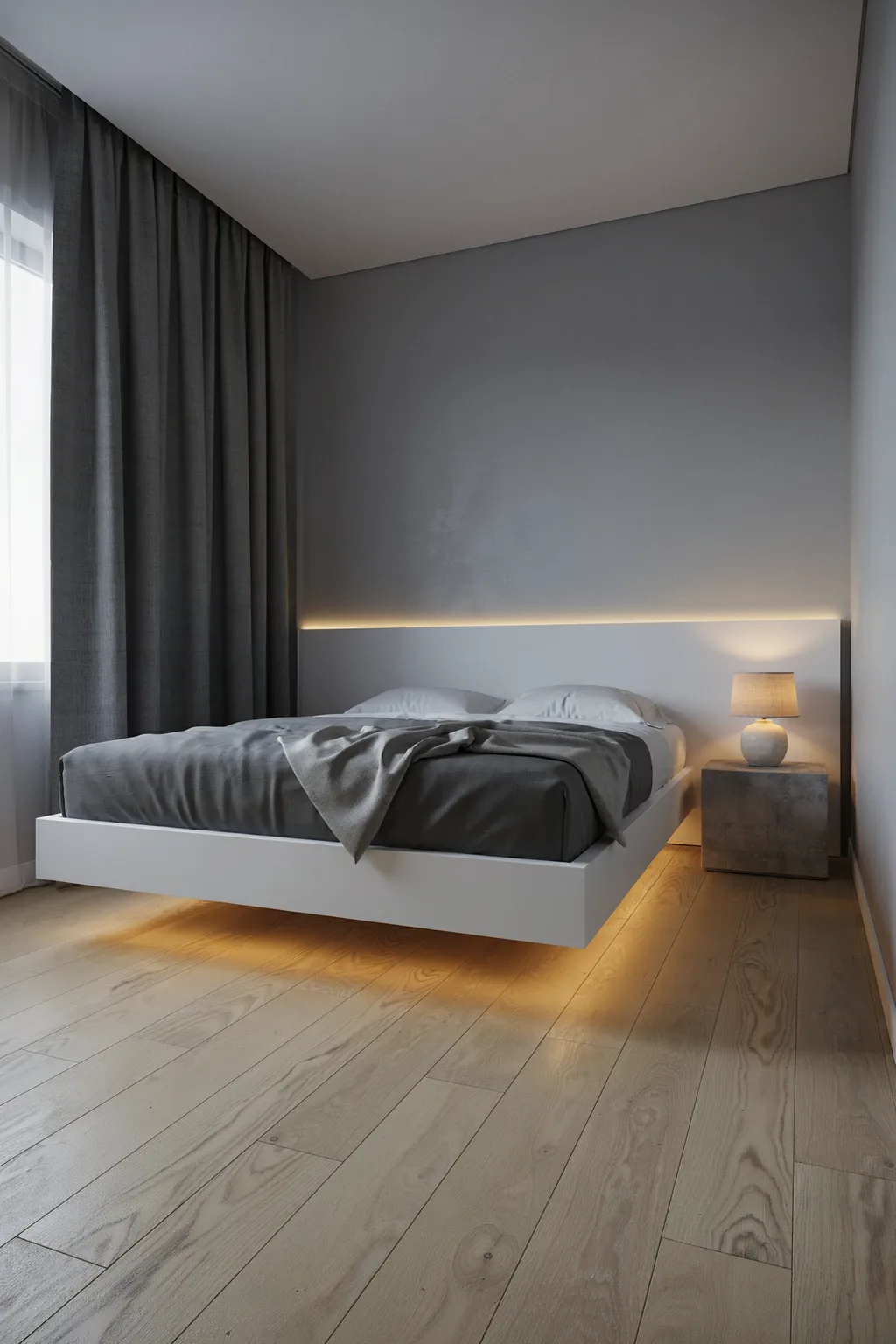
LED strips mounted along the inner lip of your bed frame, facing downward, create a floating effect that looks architectural and costs under $20 to achieve. At 10% brightness in a dark room, this is also a perfect nightlight for moving around without waking a partner.
The placement is critical: the strip must face downward and inward, hidden from direct view. If you can see the strip itself, the effect is broken. Attach the strip to the inside edge of the frame base and test the direction before committing the adhesive backing permanently.
According to the U.S. Department of Energy, LED strips use 75% less energy than incandescent alternatives and last up to 25 times longer, making them one of the most cost-effective bedroom lighting ideas available in 2026.
11. Adjustable Wall Sconces Plus a Table Lamp for Multi-Level Glow
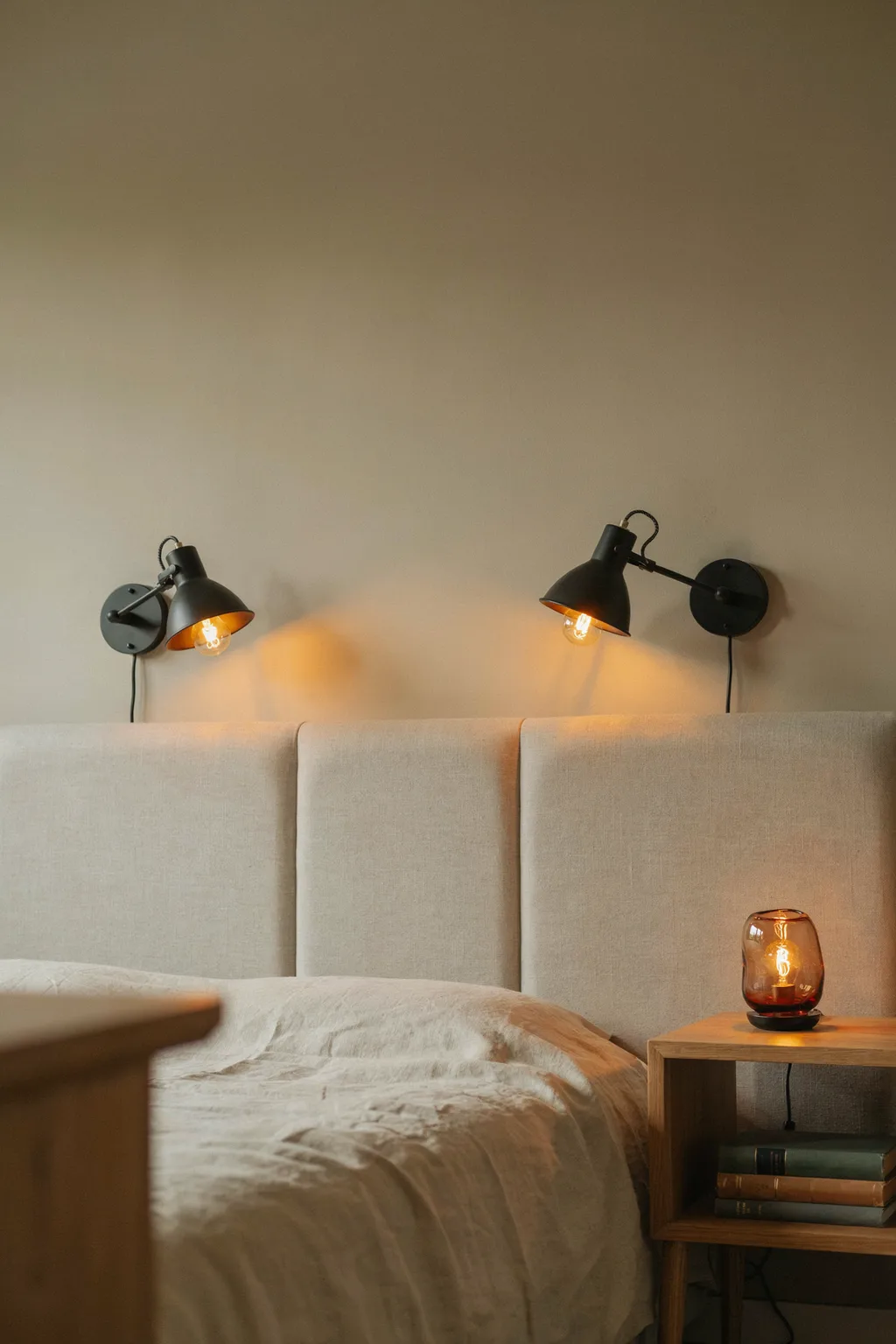
Two adjustable wall sconces mounted above and flanking the headboard give you directional reading light. A single table lamp on the nightstand adds ambient warmth at a lower level. The result is three points of light at different heights — above, beside, and at surface level — which fills the bed zone with even, shadow-free glow.
The sconces should be on separate switches from the table lamp so you can use them independently. Mount each sconce 24 inches above the mattress surface, centered 6-8 inches beside where your pillow sits. Matte black and brushed brass both suit this setup well.
If your walls cannot accommodate new wiring, plug-in sconces with cord covers route down the wall and look almost hardwired.
12. Cove Ceiling LED Plus a Circular Ring Sconce for Glow Without Glare
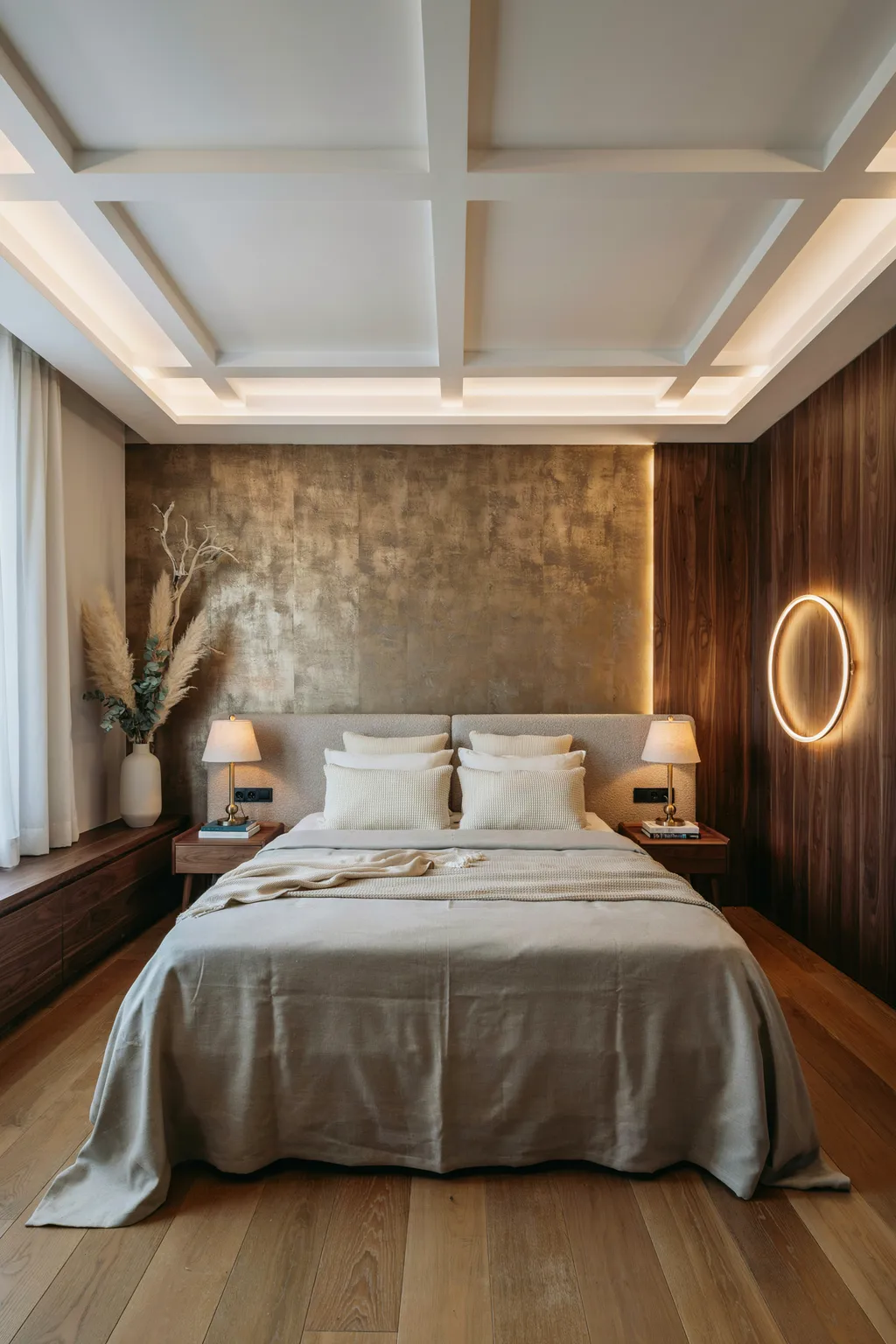
A cove ceiling runs an LED strip inside a recessed ledge around the ceiling perimeter so the light source is completely hidden. All you see is a warm halo around the top of the room. Add a large circular LED ring sconce on the wall beside the bed, and the room has two glowing focal points with zero visible fixtures.
This is one of the most sophisticated bedroom lighting ideas on this list specifically because there is no lamp, no shade, and no bulb to look at. The light simply exists.
Cove lighting requires a false ceiling or existing tray ceiling. On a flat ceiling, a simpler version is to run LED strips along the top of a wide floating shelf or the top of the headboard. The circular sconce should measure 18-24 inches in diameter — smaller ones read as an afterthought on a full bedroom wall.
13. LED Strips Under Floating Shelves for a Glowing Display Wall
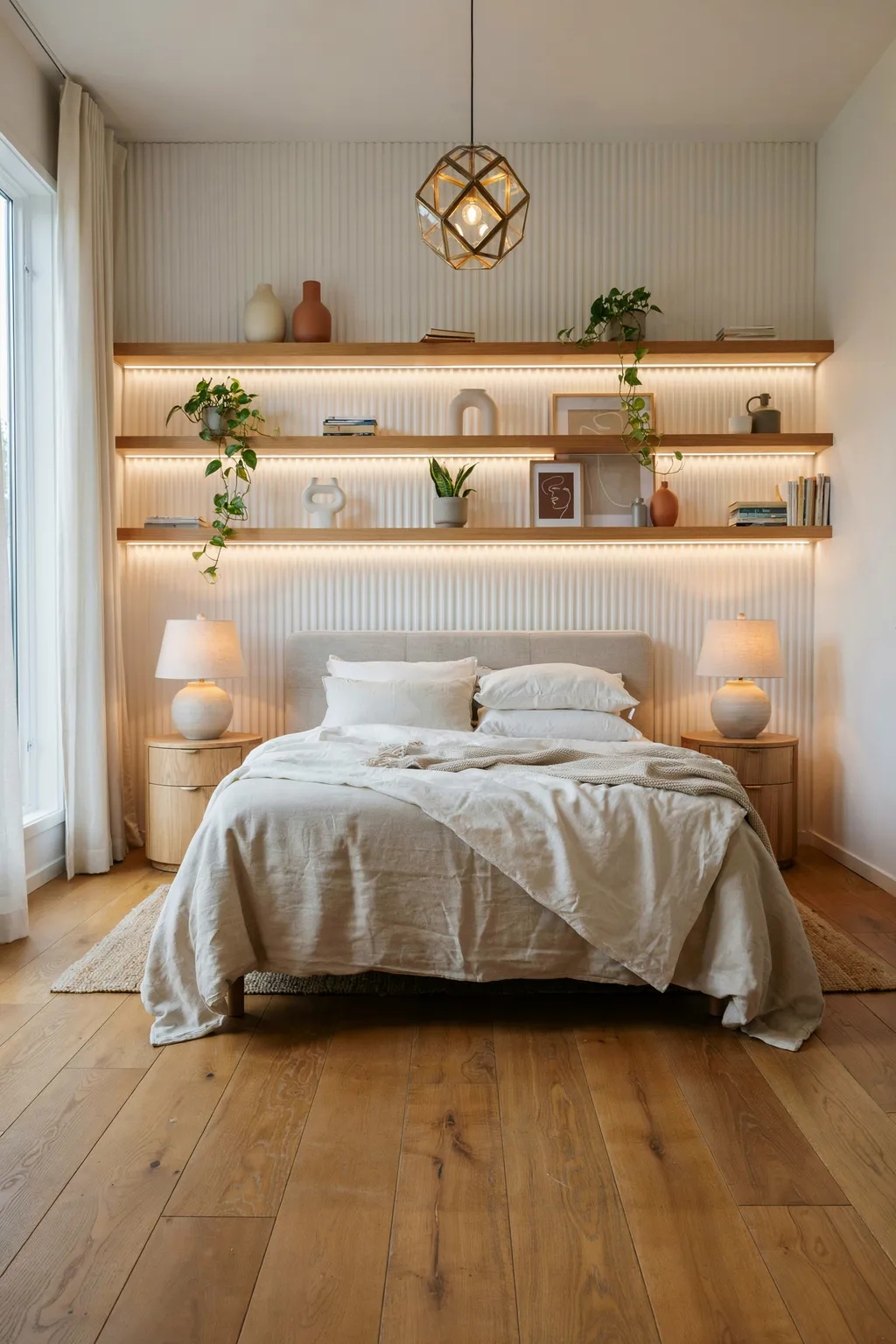
Floating shelves mounted above the headboard with LED strips running beneath each shelf level create a glowing display wall that functions as both art and lighting at the same time. During the day, the shelves hold books, small plants, and ceramics. At night, the hidden strips light those objects from below and cast a warm glow down toward the bed.
Set the strips to 2700K or slightly warmer. RGBW strips with a simple controller let you adjust intensity without replacing bulbs. Position the lowest shelf at least 24 inches above your pillow top so the light does not point directly into your eyes from a lying position.
Keep the shelves lightly styled. Overfilled shelves look cluttered, and cluttered shelves undermine the whole calm-room effect you’re building.
14. A Recessed Wall Niche Lit from Inside for an Invisible Headboard Feature
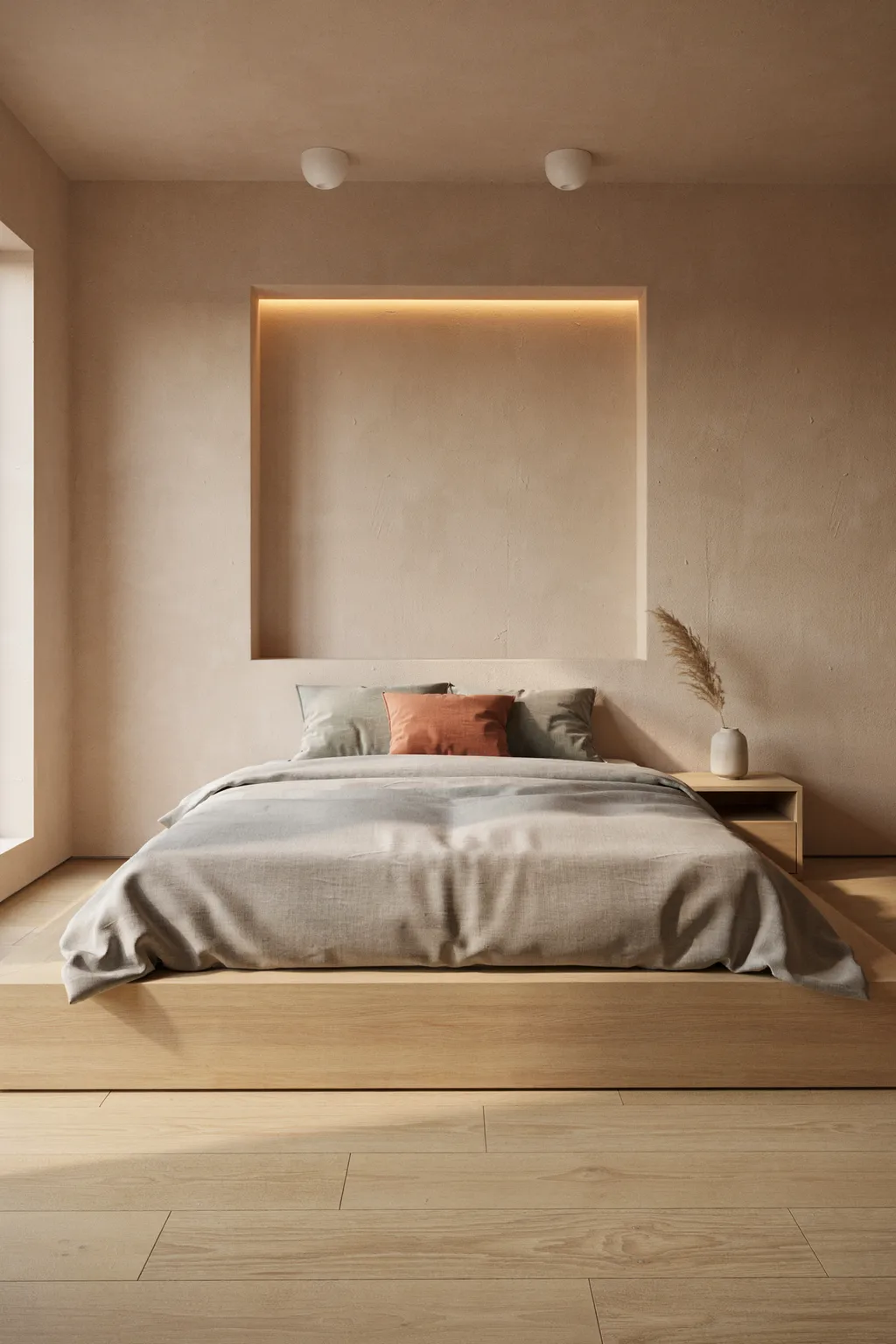
Building a recessed plaster or drywall niche into the wall behind the bed and placing LED strips inside creates a glowing headboard panel with no visible fixture at all. The light appears to come from inside the wall itself, which is a cleaner effect than anything surface-mounted.
A typical niche runs 6-8 inches deep, 48-60 inches wide, and spans the headboard height zone behind the pillows. Warm 2700K LED strips at 40-50% brightness inside the niche is the right intensity. Pair it with two ceiling downlights directed toward the bed for complete ambient coverage.
This is a construction project. Expect $300-800 from a drywall contractor, or a full weekend of work if you are experienced. Renters should skip this one.
15. A Full-Room LED System That Layers Bed, Shelf, and Ceiling
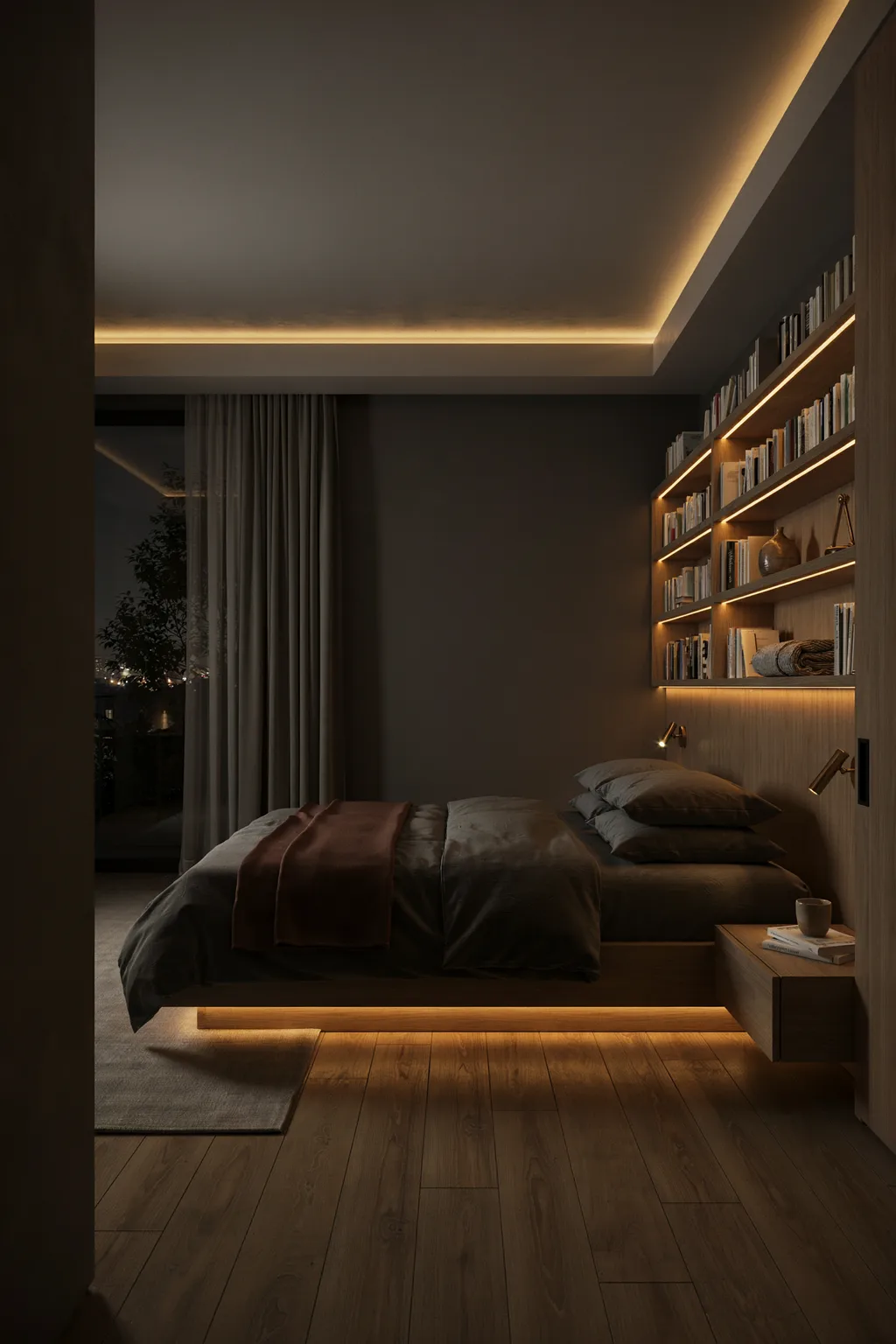
A complete layered LED system uses three independent strip circuits: one under the bed base, one under floating shelves, and one along the ceiling cornice. Each zone runs on its own dimmer so you can adjust them separately. Morning can be brighter and cooler-toned. Evening drops everything to deep warm amber.
This is the highest-effort setup in this article, but also the most versatile. All three zones combined cost $60-120 in LED strips. Add a smart controller ($20-40) that connects to your phone or a voice assistant. Being able to say “dim bedroom to 15%” without getting out of bed is a quality-of-life change that sounds minor until you use it every night.
The system only reaches its full potential in a well-organized room. In a cluttered space, the even low-level ambient light highlights everything on the floor and surfaces.
16. Recessed Downlights Angled to Spotlight the Headboard Wall
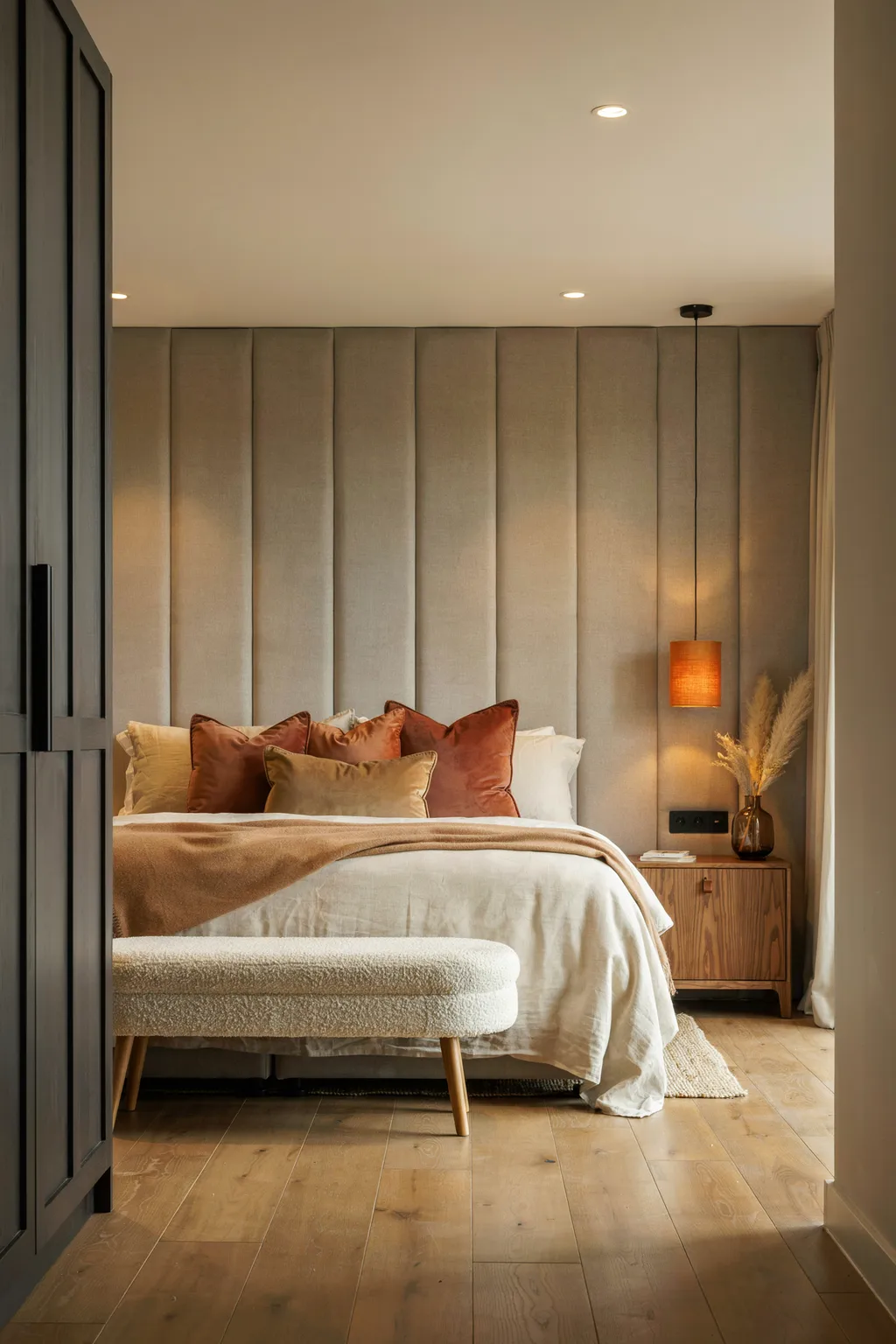
Tilting recessed ceiling downlights to wash across the headboard wall, rather than straight down, is a hotel design technique that almost no residential bedroom uses. The angle picks up texture in whatever surface you have — fabric, plaster, wallpaper, wood paneling — and makes that surface look dramatically richer than it does under flat overhead light.
Two adjustable recessed fixtures placed 18-24 inches back from the headboard wall are enough for a queen bed. Aim them at a 30-degree angle toward the wall. Use 2700K bulbs with a 25-35 degree beam angle (labeled “narrow flood” on most packaging).
The main risk: non-adjustable can fixtures lock you into one angle forever. Always choose adjustable or gimbal-style recessed fixtures so you can redirect the beam if your layout changes.
17. Twin Slim Cylinder Pendants Flanking a Low Platform Bed
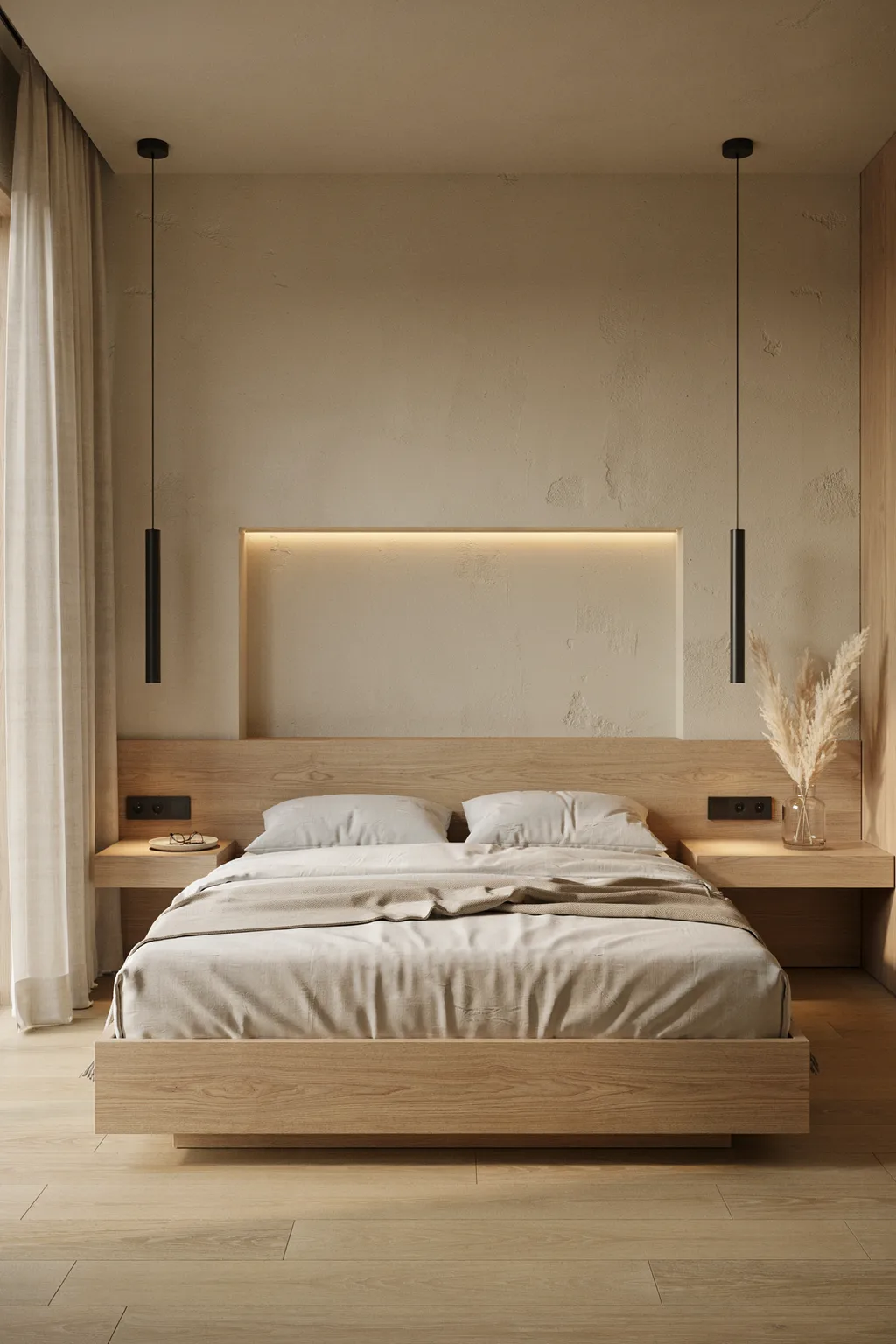
A pair of slim cylindrical tube pendants, in matte black or brushed brass, dropping from the ceiling on each side of a low platform bed is a sculptural bedroom lighting idea that serves a design function during the day and a task function at night. The long tube shape is graphic enough to read as a decorative element even when the light is off.
Position the bottom of each pendant 20-24 inches above the mattress surface. The tube body should be at least 12 inches long so it has visual presence at scale. Pair the pendants with a hidden LED strip behind the headboard shelf for warm ambient fill.
This only looks proportionally right with a low or platform bed. On a high-profile traditional bed frame, the pendants end up too close to sitting eye level.
18. A Statement Chandelier That Sets the Whole Room’s Personality
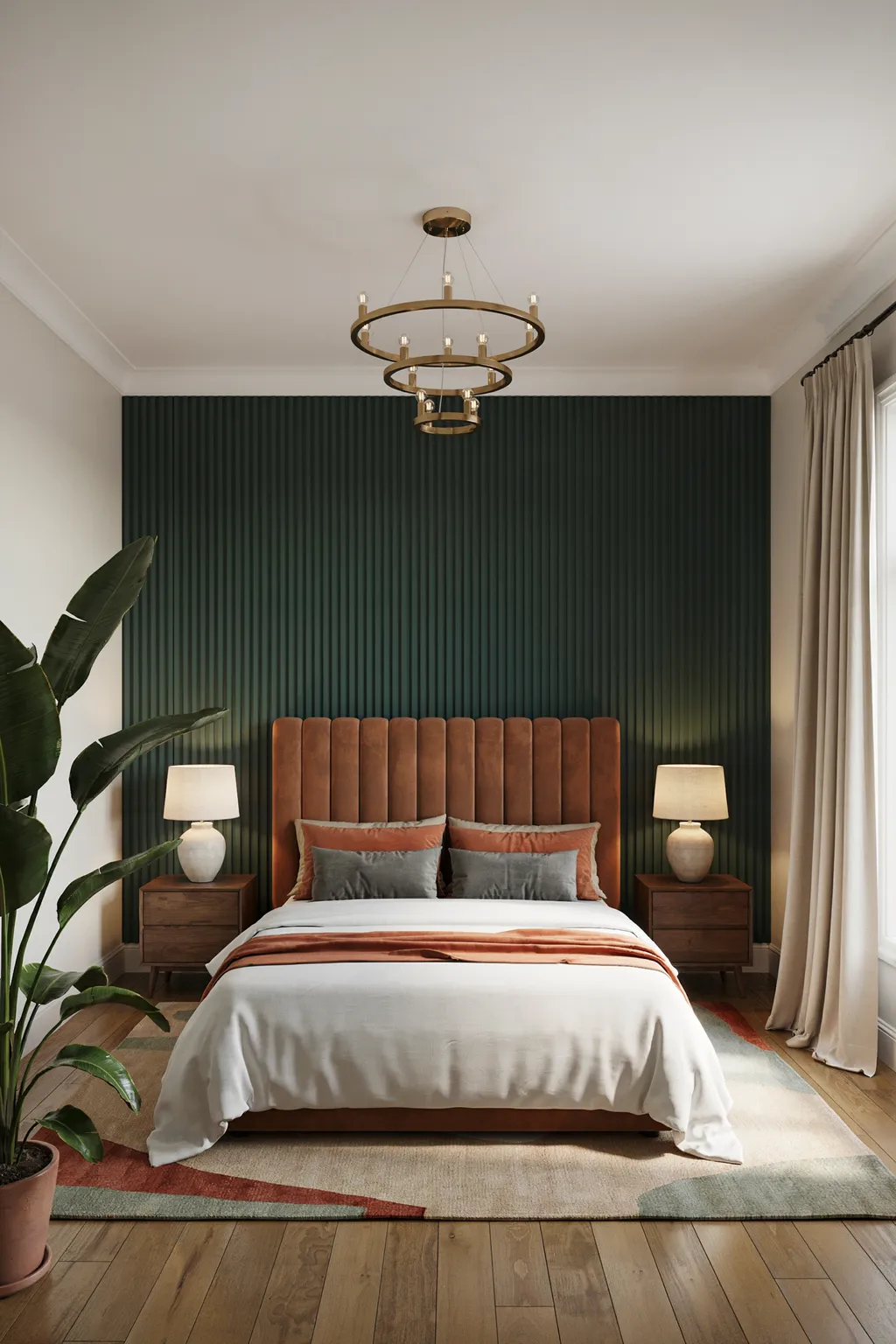
A bold chandelier, whether a triple-ring gold sculpture, a large dark iron frame, or a wide rattan disc, does something no other bedroom lighting idea does: it defines the room’s personality from the ceiling down. Every piece of furniture, every textile, and every wall color ends up styled in response to it.
This is a commitment. Choose a triple-ring gold chandelier and your bedding, wall color, and furniture all need to work with that choice. It is also the most expensive single item in this article: quality statement chandeliers run $150-600. Done right, though, it is the piece that makes the room feel finished rather than assembled.
Hang the bottom edge at least 84 inches from the floor if the bed sits beneath it. In rooms where no furniture is directly below, 78 inches is the minimum safe clearance.
19. Symmetrical Globe Pendants on Each Side for Instant Visual Calm
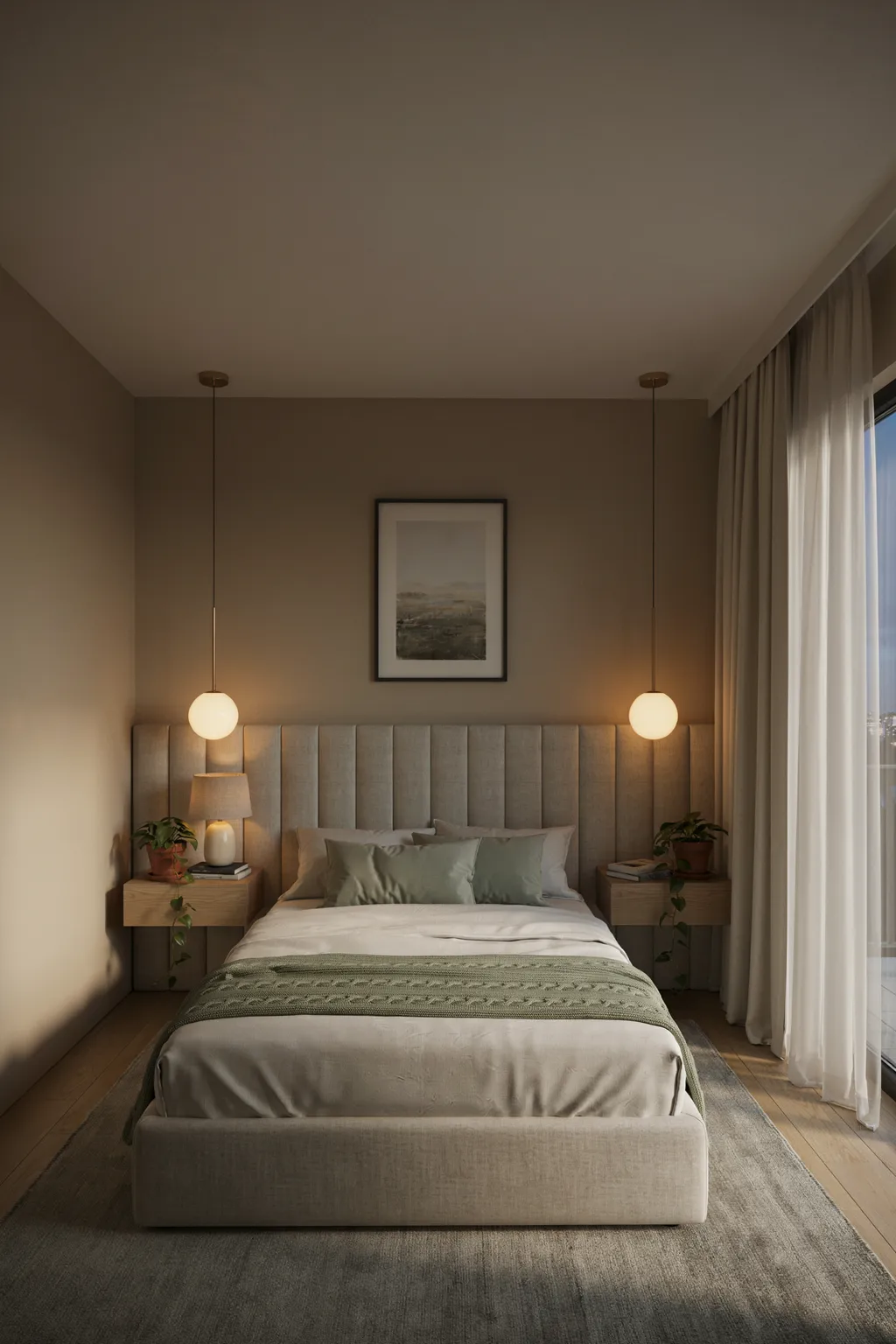
Two identical frosted glass globe pendants, hung at the same height on matching cords on either side of the bed, create instant visual balance. Symmetry is one of the most reliable cues the brain uses to read a space as calm and organized. This is exactly why hotel rooms so consistently default to matched pairs at each side.
Globe pendants in the 6-8 inch diameter range in frosted or opal glass work for almost every design style. They cost $30-120 per light and are easy to find. Position the center of each globe at about 54-60 inches from the floor.
Two ceiling junction boxes are required, or two pendant adapter plates. Plan the electrical before ordering the fixtures, not after.
20. A Japanese-Inspired Minimalist LED Setup for Complete Serenity
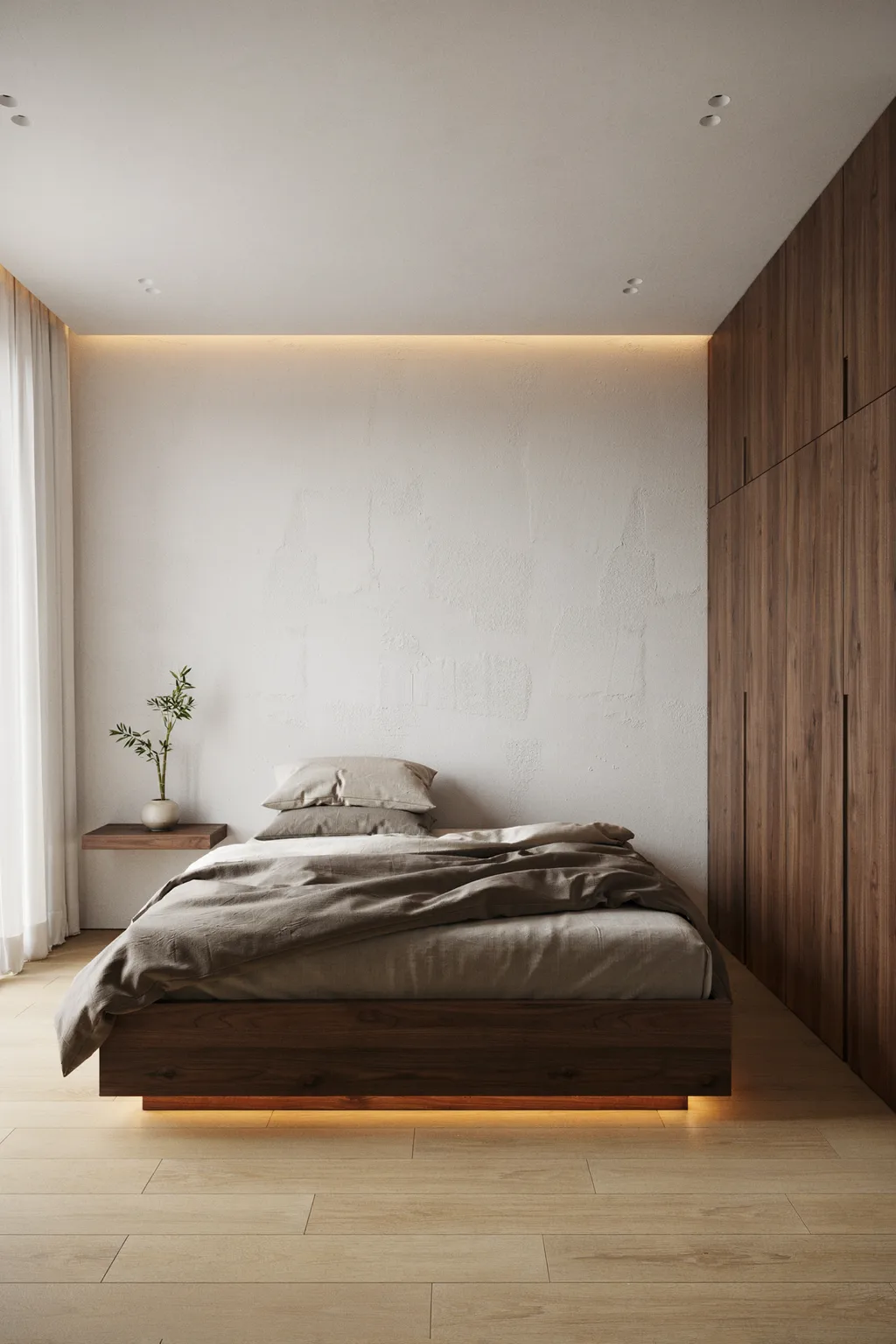
A bedroom built around Japanese design principles uses light as deliberately as furniture. Recessed ceiling downlights handle even background illumination. A warm LED strip inside a ceiling cove softens the upper zone. A third strip under the low bed base lifts the room visually off the floor. No table lamps, no pendants, no visible fixtures anywhere.
The effect is a room that feels completely quiet. Nothing competes for attention. Light is present everywhere and invisible at the source.
This only works if the room is genuinely tidy. The absence of lamp clutter and visible fixtures removes all visual distraction, which means any mess on the floor or surfaces becomes the entire focal point. This is the best of all bedroom lighting ideas for people who already keep a clean space, and a good motivator to start if you do not.
Common Mistakes to Avoid
Mistake 1: Using a Single Overhead Light as the Only Source
One ceiling fixture lights a bedroom the way a flashlight lights a tent: bright in the center, useless at the edges, and harsh from any angle. It offers no way to create mood and leaves every corner feeling institutional. Even a $15 thrift-store floor lamp makes a measurable difference.
Mistake 2: Buying Bulbs at the Wrong Color Temperature
Bulbs labeled “cool white” or “daylight” (5000K-6500K) suppress melatonin and tell your brain to stay alert. For bedroom use, always buy bulbs marked “soft white” or “warm white” in the 2700K-3000K range. Check the Kelvin number on the packaging before you leave the store.
Mistake 3: Skipping the Dimmer
A non-dimmable light forces you to choose between full brightness and off. That binary is wrong for a room where you need reading light at 7 PM and near-darkness by 9 PM. A dimmable LED bulb plus a compatible dimmer switch runs about $25 total per fixture and pays back immediately.
Mistake 4: Hanging Pendants Too Close to the Ceiling
Pendants mounted near the ceiling provide almost no usable light for the bed. They are essentially decorative at that height. Drop them low enough that the bottom of the shade sits at or below 6 feet from the floor, and the light actually reaches where you need it.
Mistake 5: Installing LED Strips Facing the Wrong Way
An LED strip facing toward the room rather than toward a surface creates glare. The strip should always face the thing it is meant to illuminate: a shelf strip faces the wall below it, a bed strip faces the floor, a headboard strip faces the wall behind it.
Mistake 6: Using Smart Bulbs Without Checking Dimmer Compatibility
Some smart bulbs buzz or flicker with certain dimmers. Buy one bulb, install it, and live with it for two days before buying a full set. Many manufacturers publish a dimmer compatibility list on their website.
Mistake 7: Buying Too Many Fixtures at Once
Over-lighting is a real problem. Most people overestimate how much light they need when planning a room on paper. Start with one or two sources, use them for a week, and then add more only where a specific zone actually feels too dark.
Quick Start Checklist
- [ ] Write down what bothers you about your current bedroom lighting (too bright, too cold, too flat, only one source)
- [ ] Measure your ceiling height and distance from the bed to any planned pendant mount before shopping
- [ ] Check the Kelvin number on every bulb you consider buying: it must say 2700K-3000K
- [ ] Replace at least one existing bulb with a dimmable LED in the 2700K range
- [ ] Add one independent light source (floor lamp, table lamp, or plug-in sconce) that operates separately from the overhead
- [ ] Mount any LED strip facing the surface you want lit, not out toward the room
- [ ] Put new lights on a timer or smart schedule to dim automatically 60-90 minutes before your usual bedtime
- [ ] Sit on your bed and scan for any light source that shines directly into your eyes from a lying position
- [ ] Remove or relocate any fixture with a bare exposed bulb visible at eye level from the pillow
Frequently Asked Questions
What color temperature is best for bedroom lighting?
2700K-3000K is the standard recommendation for bedrooms. That range produces warm, amber-tinted light that supports melatonin production and signals the body to wind down. Anything above 3500K starts to feel activating rather than calming. Look for “warm white” or “soft white” on the label, and verify the Kelvin number before buying.
How many lumens does a bedroom need?
A 10×12 foot bedroom needs roughly 1,000-2,000 total lumens for general ambient light, which works out to 10-20 lumens per square foot. For a bedside reading lamp specifically, aim for 450-800 lumens at the task surface. Keep ambient sources lower, around 150-300 lumens each, so the overall mood stays relaxed rather than bright.
Do LED strip lights work for bedroom lighting?
Yes, when positioned correctly. A strip facing outward into the room creates glare. A strip facing a wall, ceiling surface, or floor creates beautiful, sourceless ambient glow. Use warm white strips (2700K-3000K) and always pair them with a dimmer. LED strips work best as secondary or accent layers, not as the only light source in a room.
How do I choose between a ceiling fixture and pendant lights?
A flush or semi-flush ceiling fixture is easier to install and suits lower ceilings (8 feet or below). Pendant lights work better in rooms with 9-foot ceilings or more and give you more control over placement and style. If your ceiling has a single junction box, a flush mount is simpler. Two bedside pendants require two junction boxes or surface canopy adapters.
Can I improve bedroom lighting without any electrical work?
Yes. Plug-in floor lamps, plug-in table lamps, plug-in wall sconces with cord covers, and battery-powered or USB LED strips all work with zero wiring. Smart plugs with timer schedules let you automate them. This is the right starting point for renters or anyone not ready to commit to hardwired changes.
What is the difference between ambient, task, and accent lighting in a bedroom?
Ambient lighting fills the whole room — a ceiling fixture or upward-facing floor lamp. Task lighting points at a specific activity — a bedside sconce for reading. Accent lighting highlights a surface or feature — an LED strip behind the headboard, shelf lights above the bed. The most relaxing bedrooms use all three layers at low, independent intensities rather than relying on one bright source.
Should every bedroom light be on a dimmer?
Yes, with very few exceptions. A dimmer costs $15-30 per switch and may be the single highest-return investment in any bedroom lighting plan. Fixed-brightness lighting cannot serve both the needs of early morning and pre-sleep winding down. Make sure your bulbs are labeled “dimmable” before installing; non-dimmable LED bulbs can flicker or fail early on dimmer switches.
A well-lit bedroom is built from details most people never consciously register but feel the moment they walk in. The lamp that makes the reading chair look inviting. The glow behind the headboard that signals the day is done. The pendant that clears the nightstand and frames the space.
These 20 bedroom lighting ideas are a starting point, not a checklist. You do not need to do all of them. Pick two or three that match your space and your budget, start there, and adjust as you live with the result. Most people find that two good sources on dimmers is enough to change how the room feels every evening.
Pick the one that caught your eye first and set it up this week.