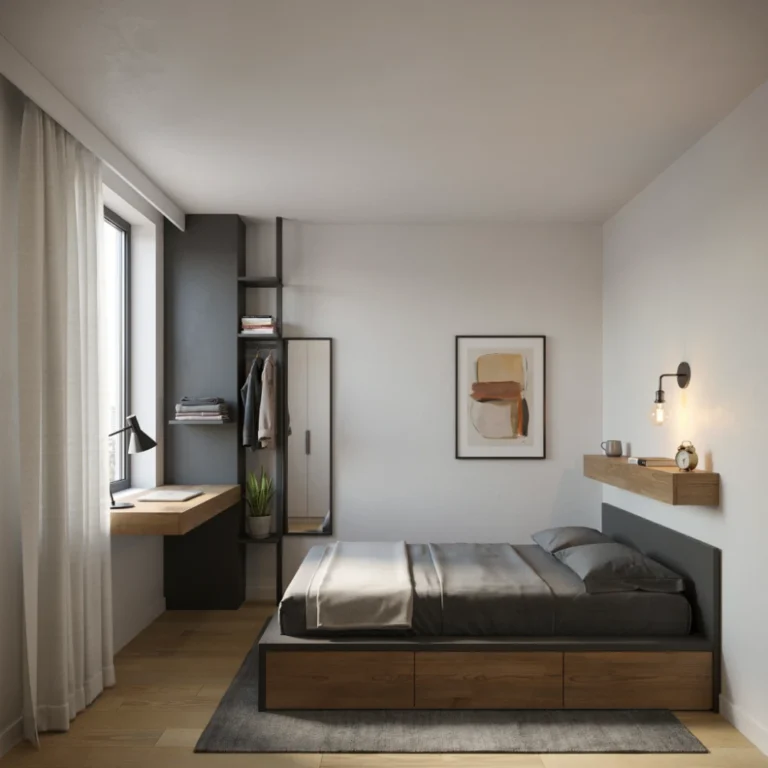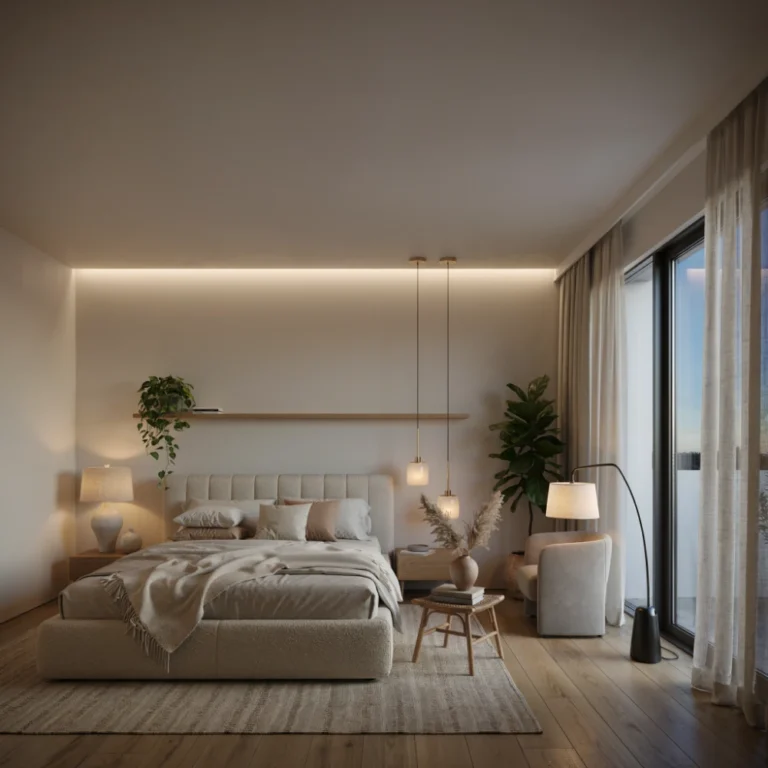
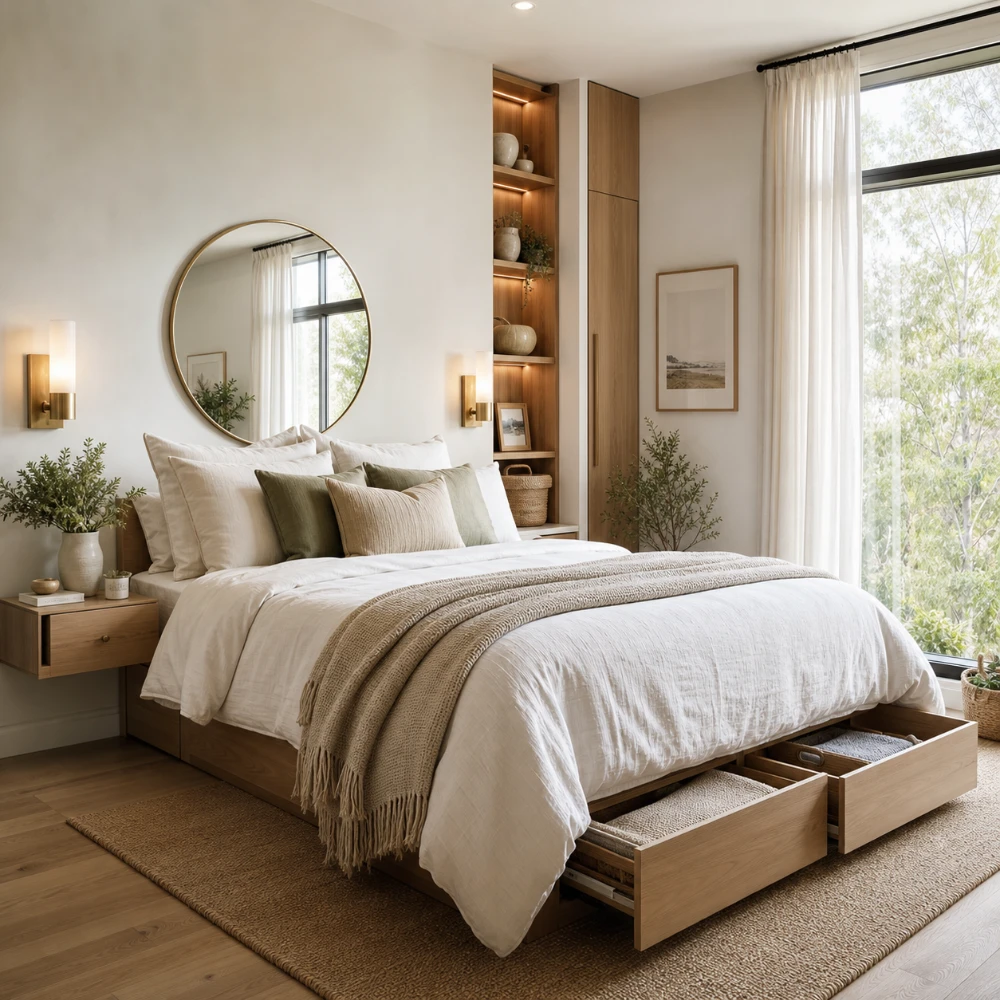
20 Chic Small Bedroom Ideas That Feel Roomy and Refined
You walk into your bedroom, and the walls feel like they are inching closer. The bed eats the floor. There is nowhere to put your book, your water, or your phone without a pile forming. A small room can feel cramped, but it does not have to. Most tight bedrooms are not too small. They are just working against themselves.
The fix is rarely a bigger room. It is smarter choices about storage, color, and light. That is exactly what these chic small bedroom ideas are built to do. Each one comes from a real, styled room, so you can see the result before you spend a cent. You will find swaps for renters who cannot drill holes, plus bigger moves for owners ready to build in.
I have grouped the ideas so they build on each other. Start with the wall and the floor, then layer in color, texture, and lighting last. By the end you will have a room that photographs well, sleeps well, and stops feeling like a closet with a mattress in it. Pick three ideas that fit your space and start there. You do not need all twenty at once.
Quick Answer
Make the walls do the storing and keep the floor clear. The fastest way to open a small bedroom is to move clutter up and out of sight: built-in or vertical storage, a bed with drawers, and floating nightstands. Then lean on a soft, light palette and warm layered lighting. Those two moves alone are the backbone of most chic small bedroom ideas that actually feel roomy.
1. Wrap One Wall in Built-In Storage
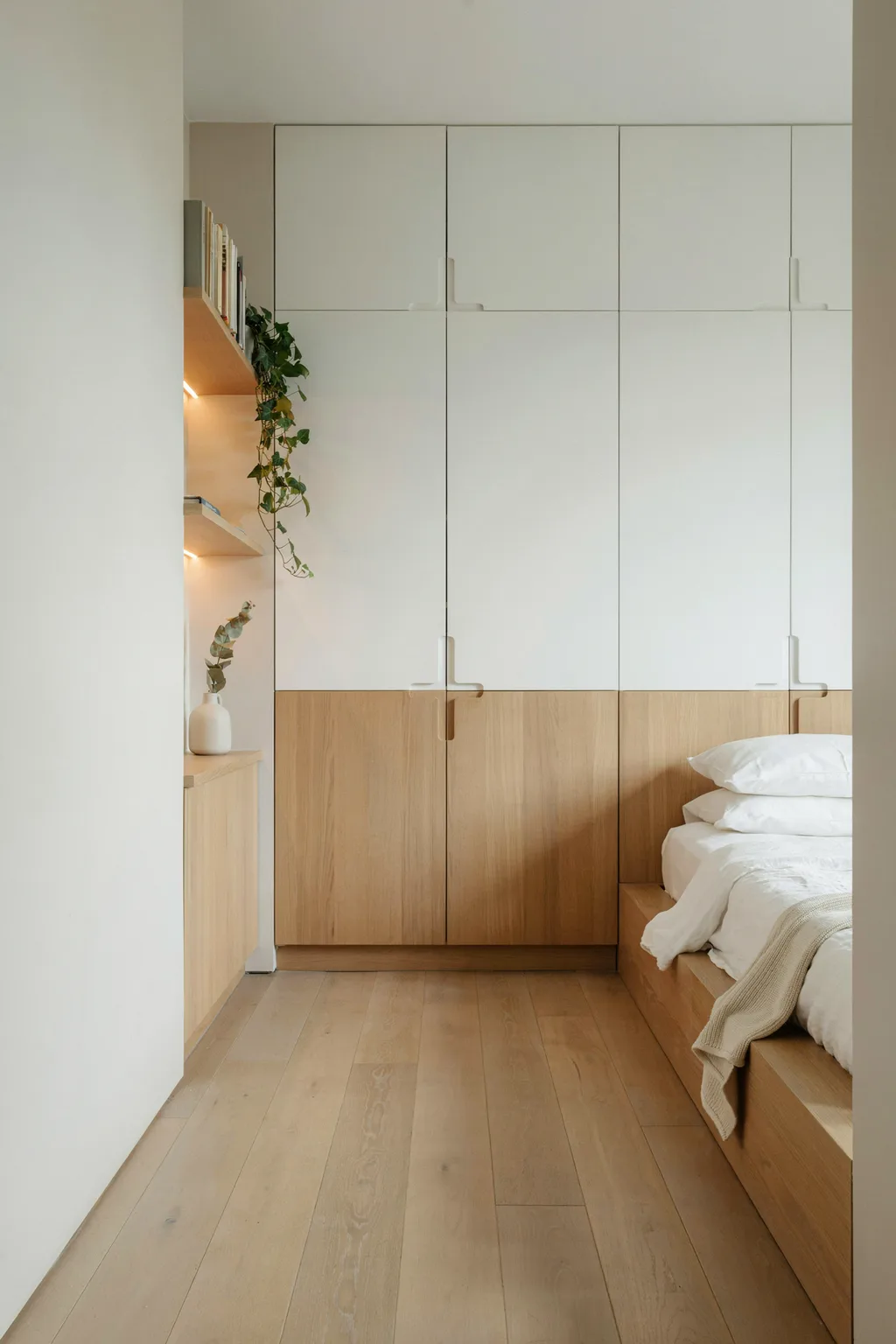
The single biggest win in a narrow room is a full-height wall of built-in cabinets. When storage climbs all the way to the ceiling and sits flush with the wall, it disappears into the room instead of crowding it. A mix of closed doors and a few open shelves keeps it from looking like a blank slab, and it hides the mess most freestanding furniture leaves on show.
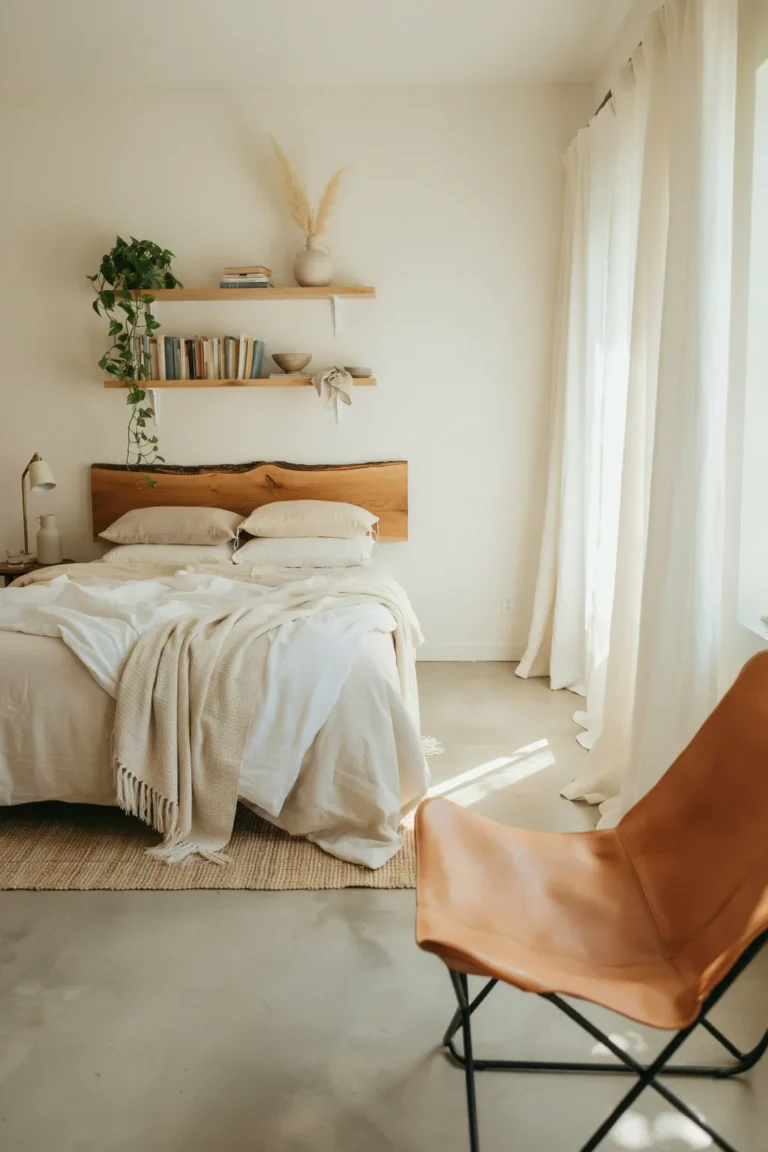
Here is why it works so well in a tight space. A standalone wardrobe steals about 24 inches of depth and casts a shadow. A built-in uses that same footprint but reads as part of the wall, so your eye slides right past it. Add a slim floating shelf above the bed for plants and books, and you get display space without a single extra piece on the floor. Of all the chic small bedroom ideas here, this one buys back the most usable space.
The honest caveat: built-ins are the priciest option and hard to take with you. If you rent, skip the joinery and use a tall wardrobe painted the same color as the wall for a similar vanishing act.
2. Stick to a Soft Neutral Palette
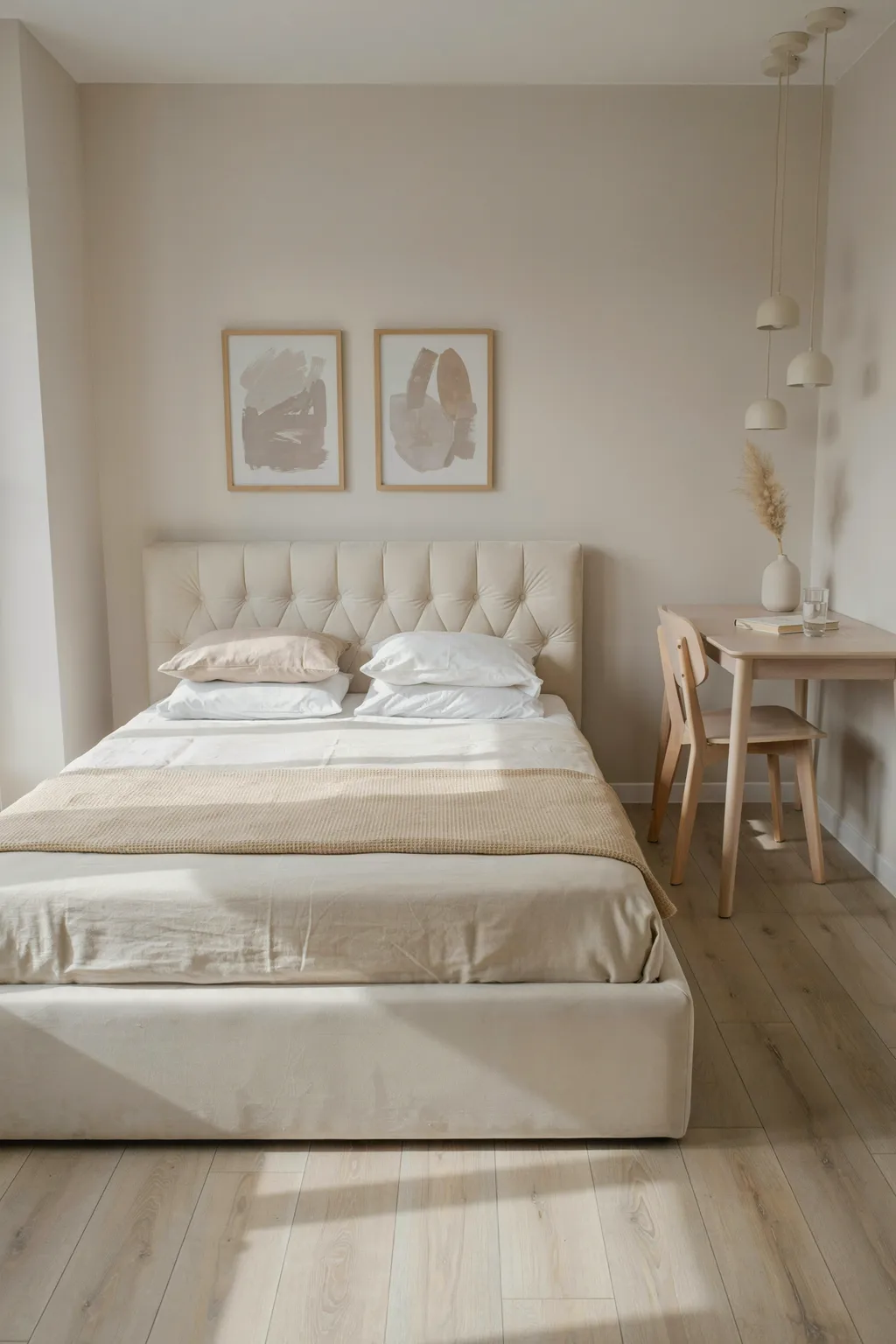
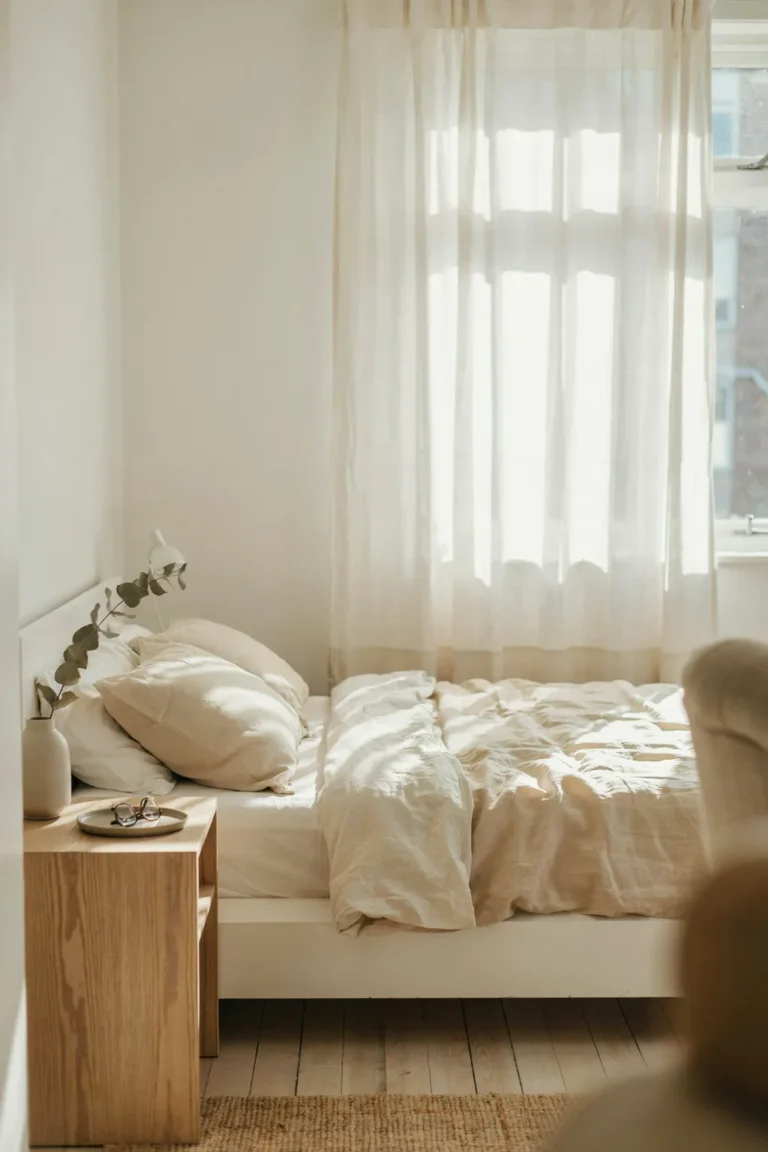
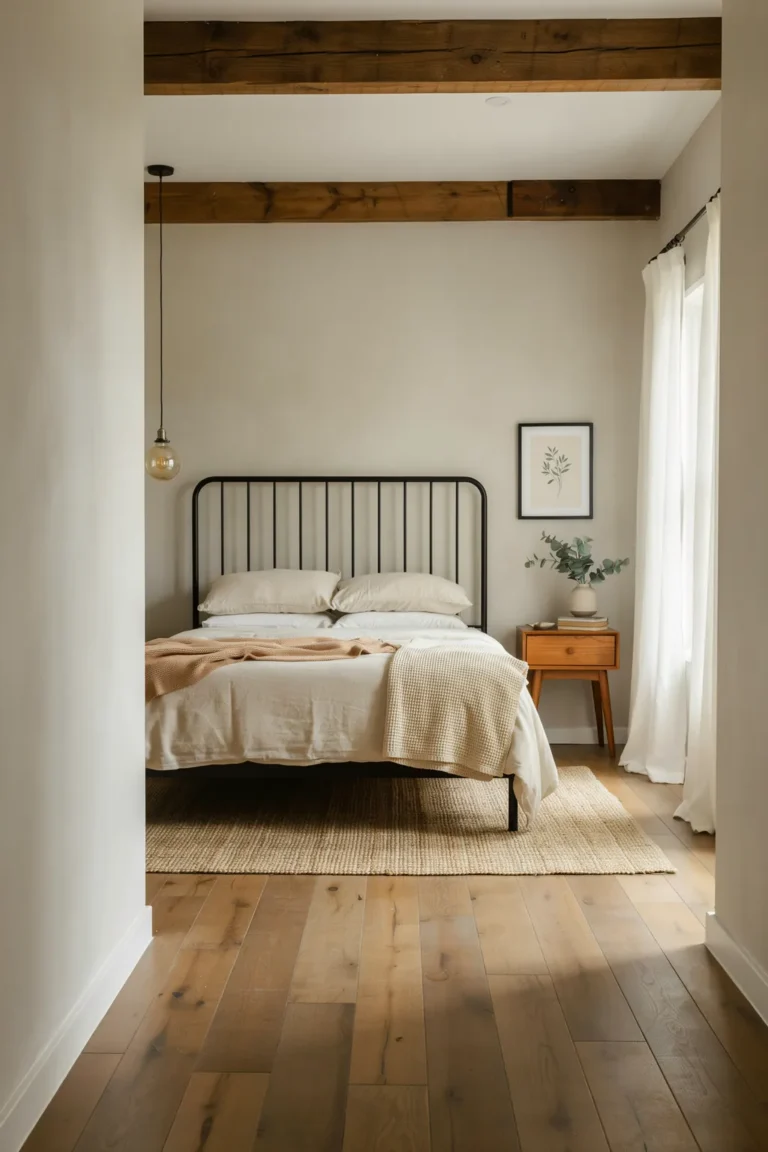
Color choice changes how big a room feels before you move a single object. Warm greige walls, cream bedding, and pale wood keep everything in the same gentle family, so the eye never hits a hard stop. That unbroken flow tricks the brain into reading the room as larger than it is. Pair it with a couple of quiet framed prints above the headboard, and the wall feels styled without feeling busy.
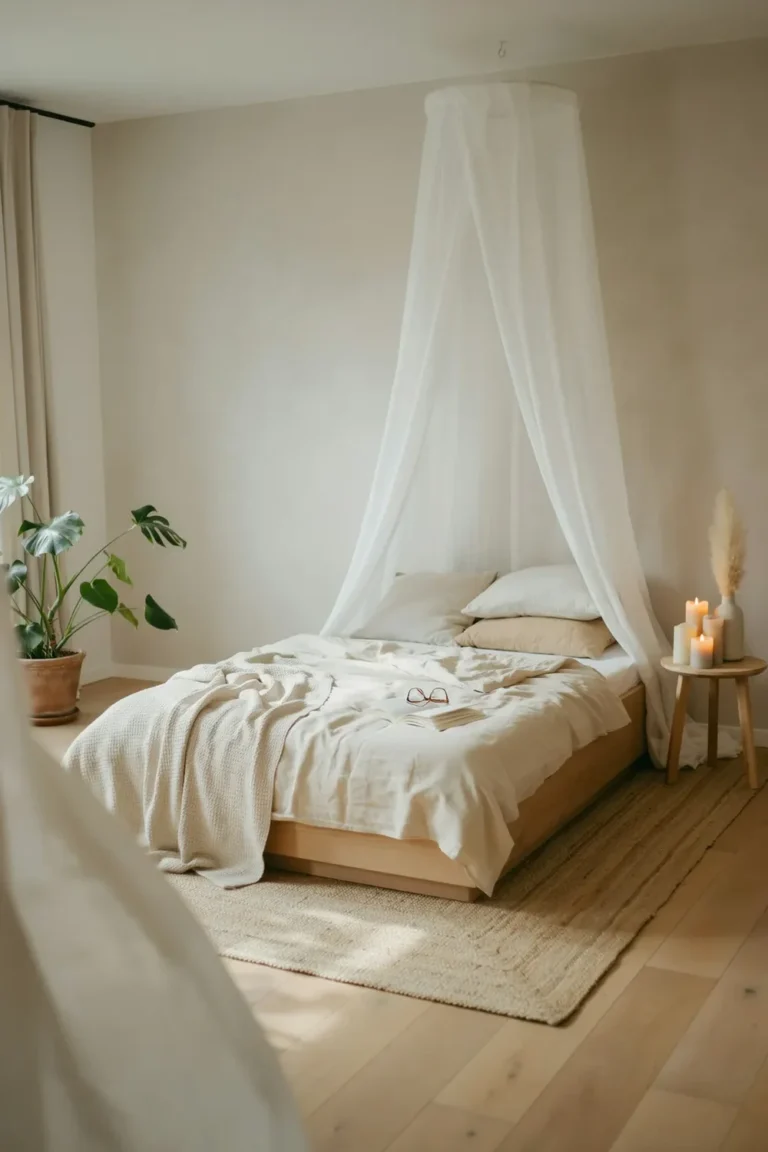
Soft neutrals also age well and hide their sins. Scuffs, dust, and the odd stray sock blend in against a beige backdrop far better than they would against a bold navy. Tuck a compact corner desk into the leftover space beside the bed, and you get a workspace that reads as calm, not cluttered. This is the easiest starting point for beginners because it forgives almost every other choice you make on top of it.
3. Bring in Warm Wood Tones
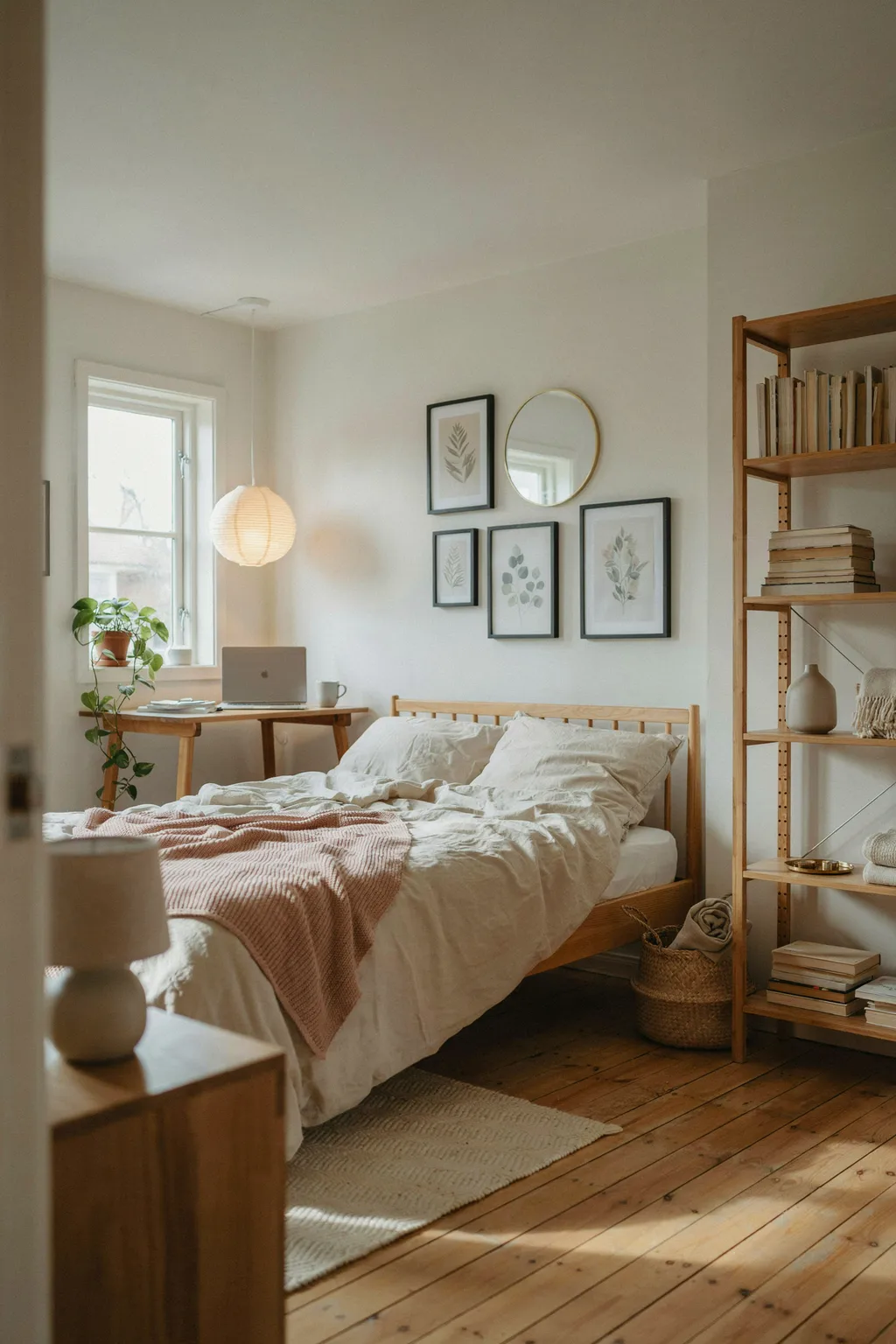
An all-white small room can tip from calm into cold and flat. Natural wood is the fix. A honey-toned bed frame, a matching tall shelving unit, and a simple wood desk add warmth and grain that a plain painted surface never will. The wood catches daylight and gives the eye something soft to land on, which makes the whole room feel lived-in rather than staged.
Scandinavian rooms lean on this trick for a reason: their winters are dark, so wood does the heavy lifting for coziness. Copy the palette with light oak or beech rather than heavy walnut, since paler wood keeps a small space feeling open. Add one dusty blush throw and a gallery wall with a small round mirror, and the mirror bounces light while the wood keeps things grounded. It is a warm, forgiving look that suits almost any budget.
4. Go Tall With Open Vertical Shelving
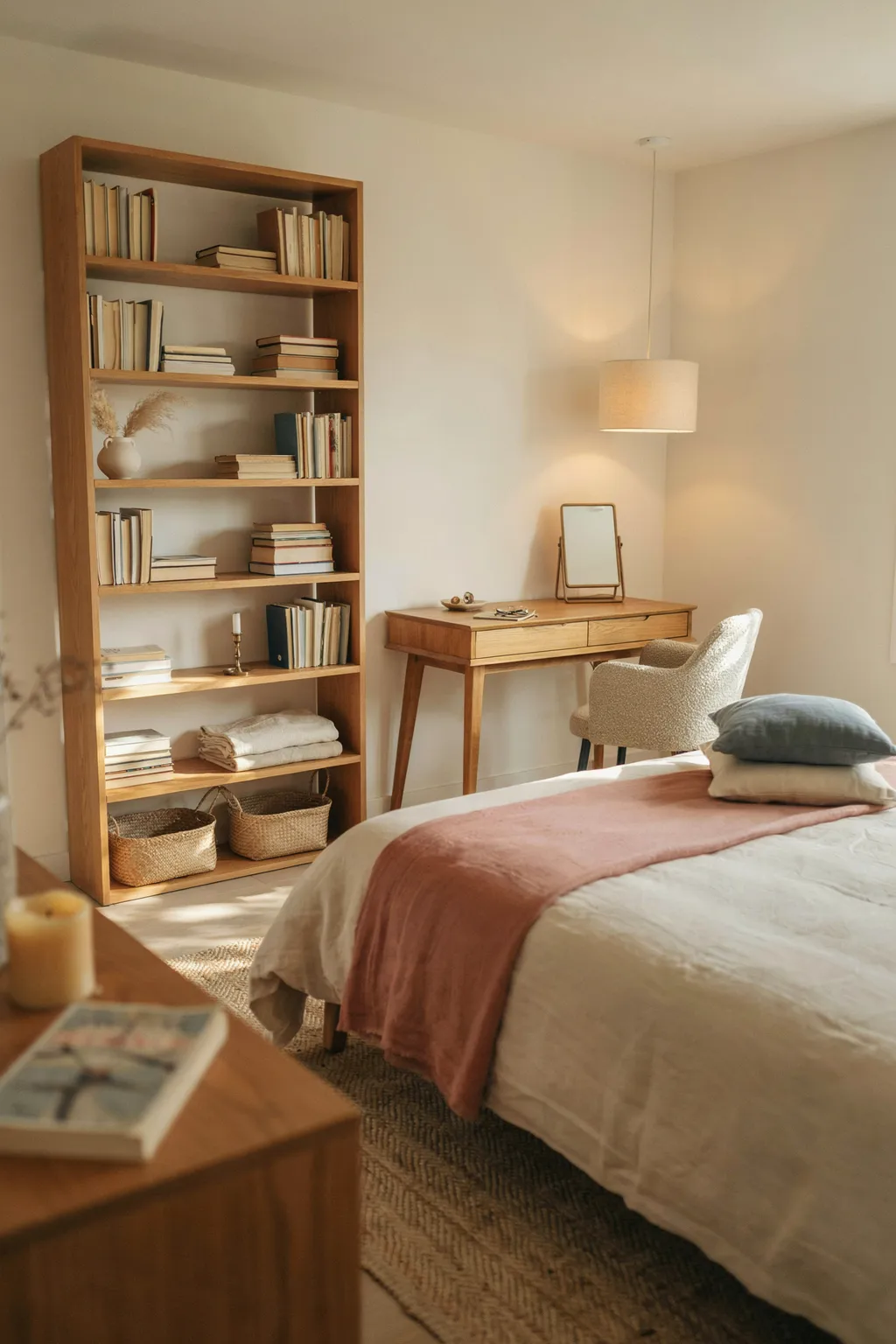
When you cannot spread out, build up. A tall open bookshelf that nearly touches the ceiling turns roughly two square feet of floor into six or seven feet of usable storage. The vertical lines pull your eye upward, and that upward pull is what makes a low, small room feel taller. Fill it with a rotating mix of books, baskets, and a few sculptural objects so it never looks like a supply closet.
Keep the styling loose to avoid clutter creep. A good rule is to leave about a third of each shelf empty; that breathing room is what separates chic from crammed. Pair the shelving with a compact desk that doubles as a vanity, using a small standing mirror instead of a fixed one so you keep the surface flexible. Woven baskets on the lower shelves hide the ugly stuff, cables, chargers, and spare bedding, without adding visual noise.
5. Add Golden Accents for Instant Warmth
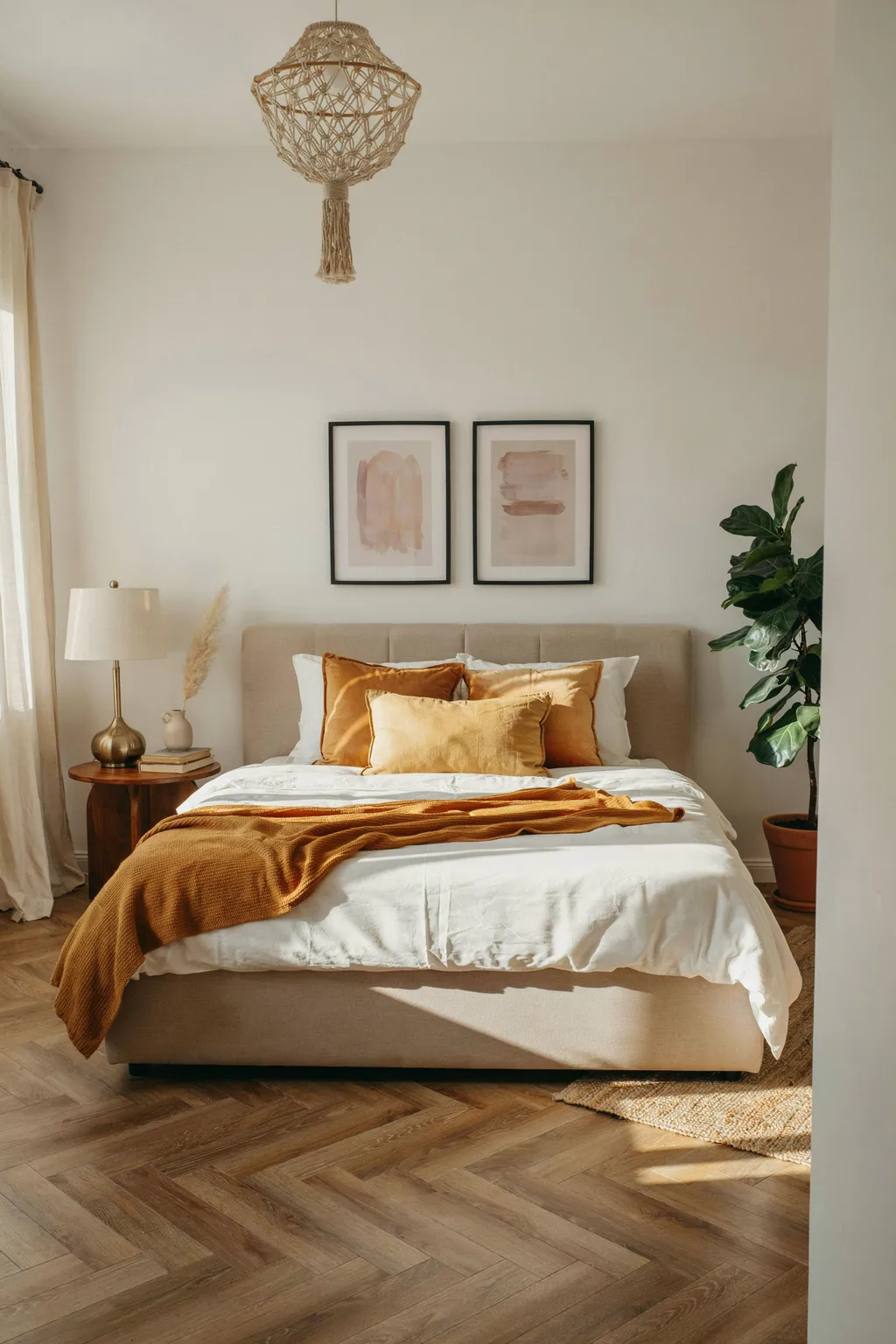
A neutral base can start to feel sleepy. Golden and mustard accents wake it up without breaking the calm. Think a mustard lumbar pillow, a warm ochre throw folded across the foot of the bed, and a brass table lamp with a soft glow. These warm metallic and amber notes read as expensive even when the pieces are cheap, because gold catches light and adds a small spark of richness to an otherwise flat corner.
The trick is restraint. Two or three golden touches look intentional; six look like a theme park. Anchor them against a beige headboard and a couple of blush art prints so the warm tones have somewhere quiet to sit. A tall leafy plant in the corner adds a hit of green that stops the whole scheme from feeling too matched. This won’t work if your room already runs cool and blue, since gold can clash with those undertones, so test one pillow before you commit.
6. Hang Twin Pendants to Free Up Nightstands
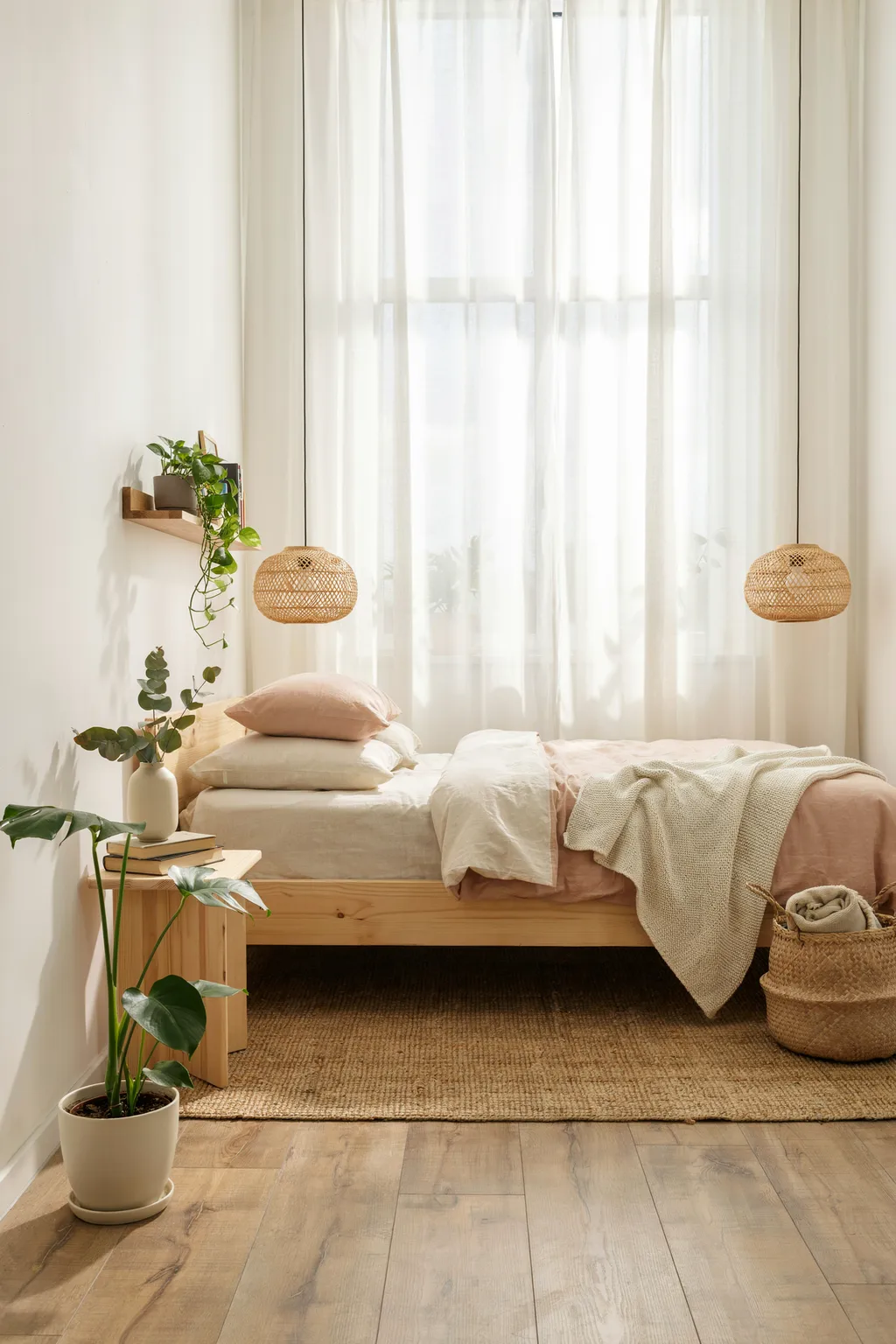
Table lamps are lovely, but in a small room they eat the exact surface you need for a glass of water and a phone. Swap them for two slim pendant lights that hang from the ceiling on either side of the bed. Suddenly your nightstands are clear, the light falls right where you read, and the room gains a designer touch for the price of two cords and two bulbs.
This move photographs beautifully and solves a real problem at once. Rattan or woven pendants keep the mood soft and airy, which suits a bright Scandinavian scheme with pale wood and jute underfoot. Hang them so the bottom of the shade sits about 24 to 28 inches above the mattress, low enough to pool light, high enough that you will not knock your head. If you rent and cannot hard-wire, plug-in pendant kits with a cord hook do the same job without an electrician.
7. Layer Quiet-Luxury Textures
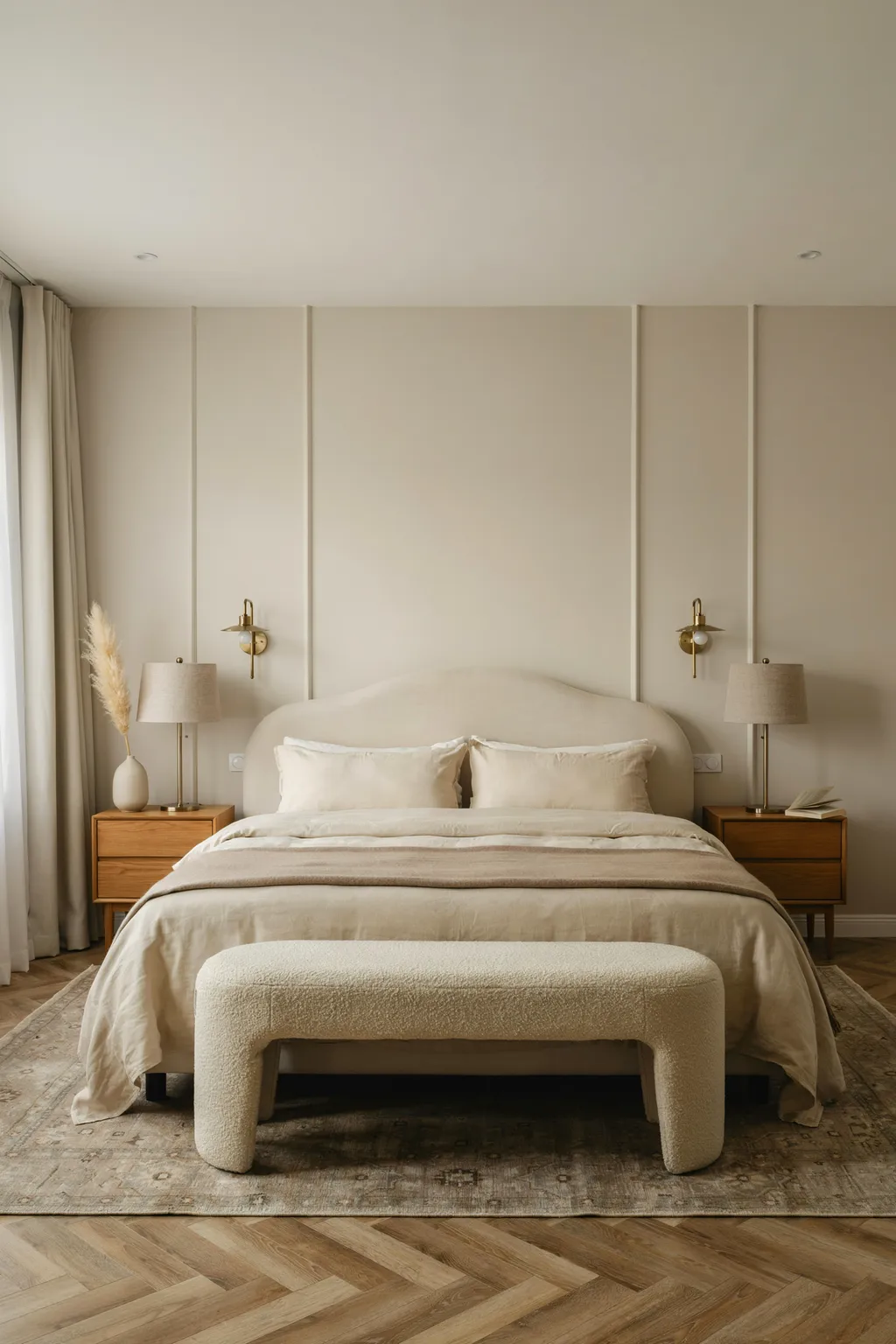
Quiet luxury is less about spending more and more about texture doing the talking. Soft wall panelling, a curved upholstered headboard, a boucle bench at the foot of the bed, and a pair of brass wall sconces turn an ordinary box room into something that feels considered. There is no loud pattern or bright color here. The richness comes from how the surfaces feel, matte linen against nubby boucle against cool metal.
Because the palette stays tight, in the cream, taupe, and soft brown range, nothing competes for attention and the small room stays serene. Wall sconces are a smart pick for tight spaces since they throw light without taking up an inch of floor or table. A slim bench at the foot gives you a spot to sit and pull on shoes, and it hides a surprising amount of spare bedding inside. Keep the bedding hotel-crisp with a folded blanket across the base, and the whole look lands as refined rather than fussy.
8. Use Bold Color in Small Doses
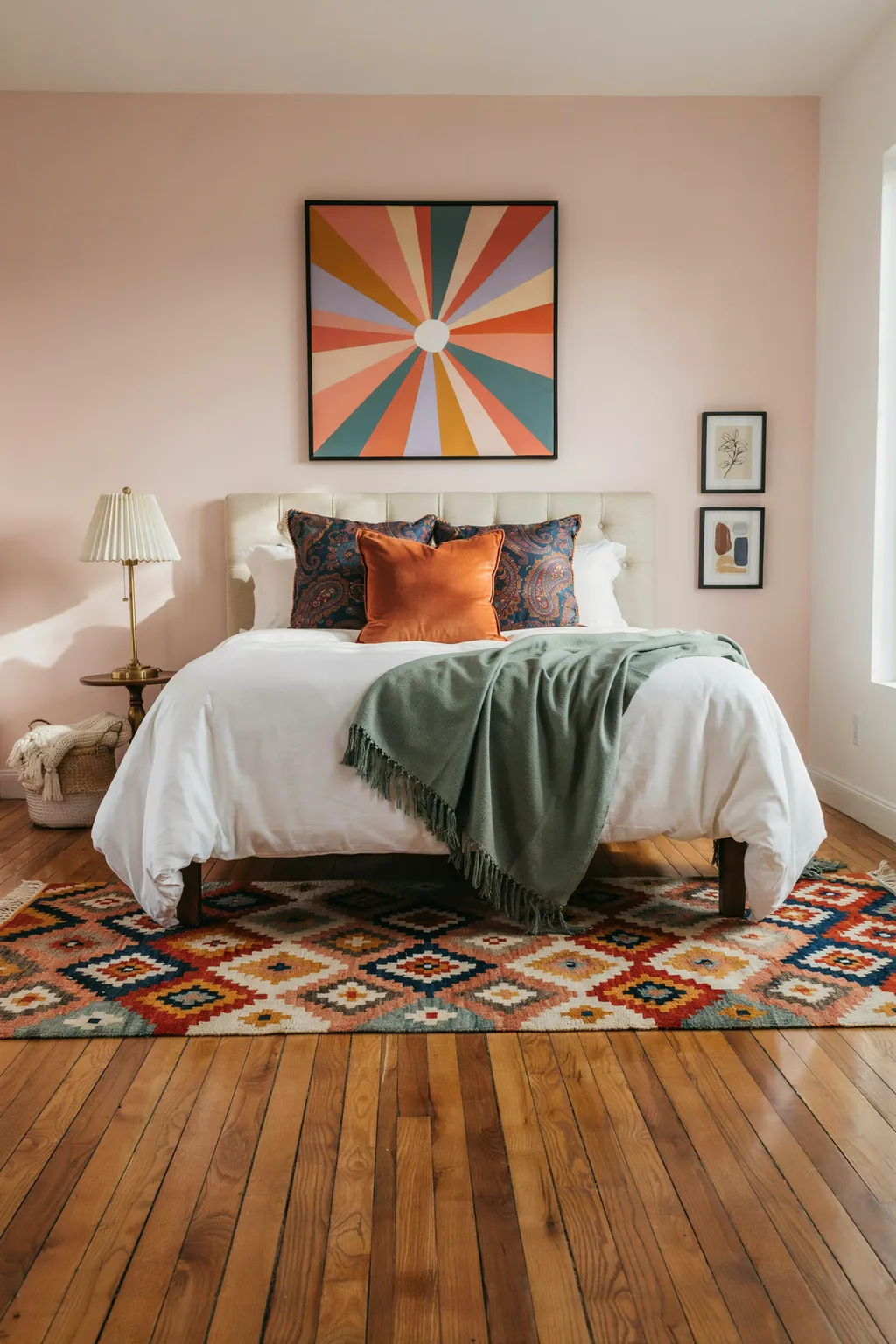
Not every chic small bedroom needs to be beige. If you love color, a small room is actually a low-risk place to be brave, since there is less surface area to get wrong. The rule is to pick one hero moment and let everything else stay calm. A single piece of bright sunburst art above the bed, backed by soft pink walls, brings joy and personality without shrinking the space.
Then echo that hero in small, cheap accents: a couple of paisley pillows, an orange velvet cushion, a sage throw, a colorful kilim rug. Because the walls and bedding stay pale, the color reads as playful rather than chaotic, and you can swap a pillow cover for a whole new mood in five minutes. That flexibility is why bold-but-contained color belongs on any honest list of chic small bedroom ideas. Skip this approach if bright color keeps you awake, since a stimulating room can genuinely work against good sleep.
9. Float the Nightstands to Open the Floor
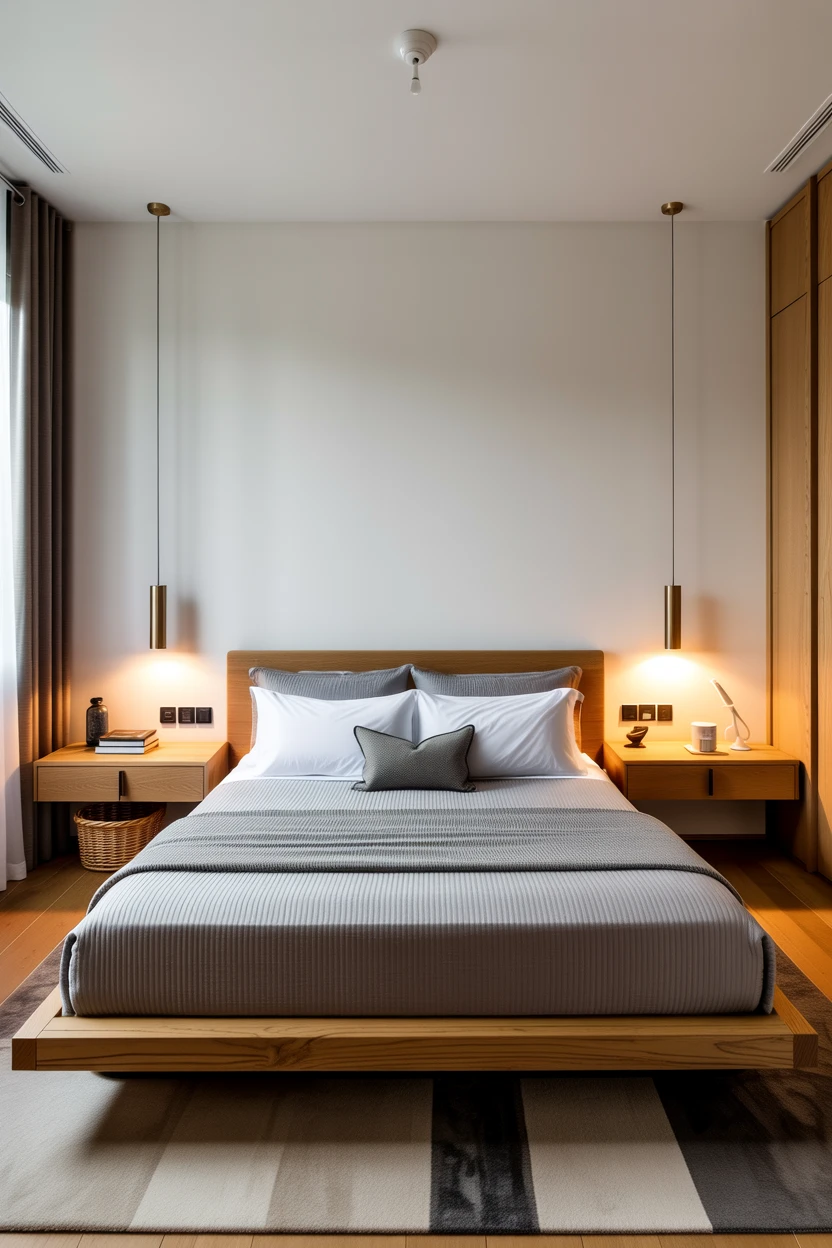
The floor is the surface that tells your eye how big a room is. The more of it you can see, the larger the space feels. Wall-mounted floating nightstands are one of the cleanest ways to reveal more floor, because the space under them stays open and light keeps moving across it. A low platform bed does the same job, sitting close to the ground so the walls feel taller by comparison.
This modern minimalist look leans hard on negative space, and that emptiness is the whole point. Keep each floating nightstand to one book and one small object, nothing more. Slim gold pendant lights instead of lamps reinforce the clean, uncluttered lines. The trade-off is real: floating nightstands need solid fixings and offer less storage than a chunky drawer unit, so keep a low basket under the bed for the overflow. If your walls are hollow plasterboard, use proper anchors rated for the weight or the whole thing sags in a month.
10. Build Cozy Layers With Soft Lighting
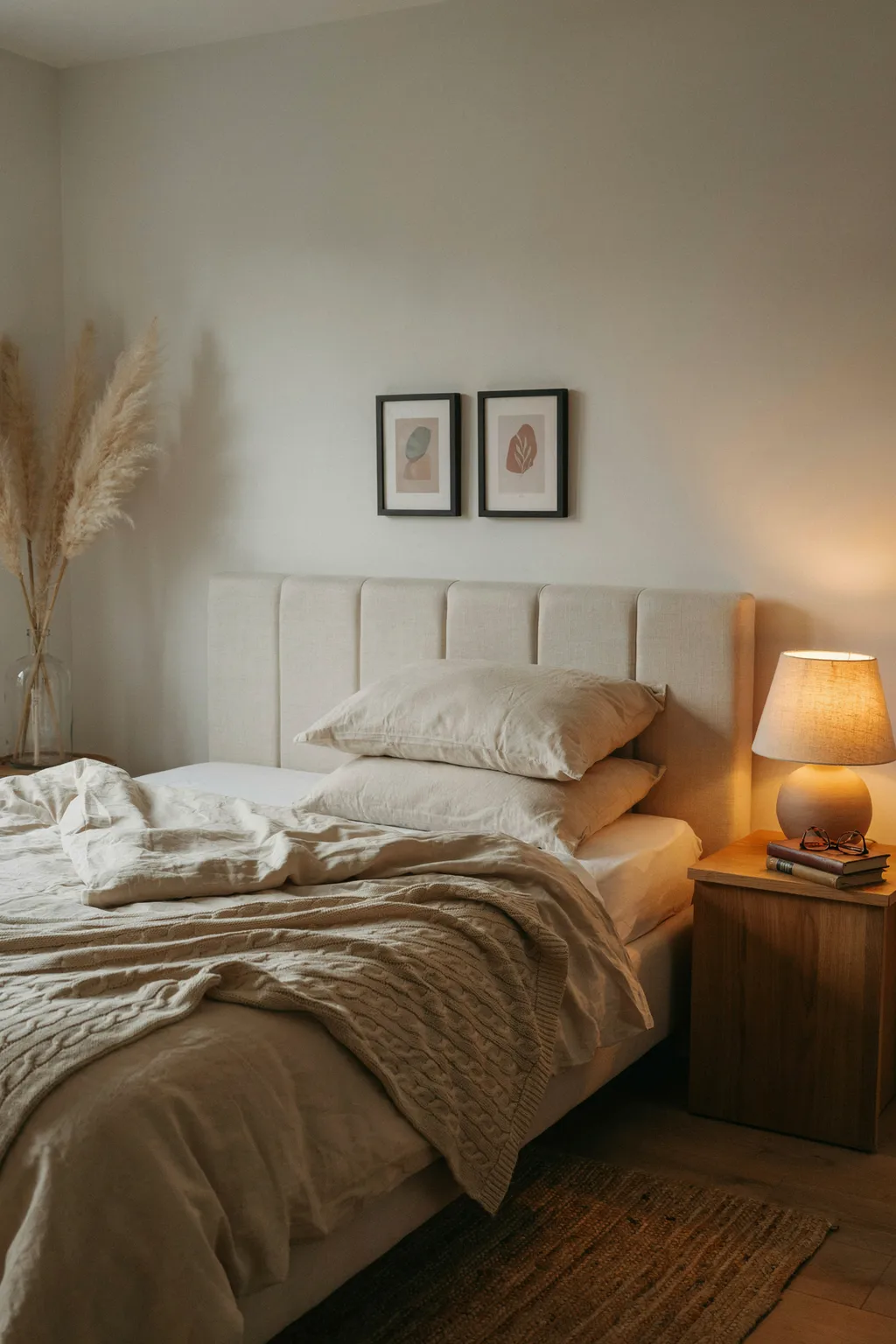
A small bedroom should feel like a hug at the end of the day, and lighting is what gets you there. One warm bedside lamp with an amber glow does more for coziness than a bright ceiling light ever will. Layer the bed with mixed textures, a linen duvet, a chunky knit throw, a couple of soft cream pillows, and let the low light catch every ridge and fold. The shadows are a feature, not a flaw.
Warm light matters for more than mood. Cooler, bluer light in the evening can make it harder to wind down, while soft warm tones help signal that the day is over. The Sleep Foundation notes that a dark, calm bedroom supports better rest, so dimmable, warm-toned lamps earn their place (Sleep Foundation on the bedroom environment). Add a stem of pampas grass and two small framed prints, and the corner feels finished. Aim for bulbs around 2700K for that golden, restful glow.
11. Balance Soft Layers for a Calm Look
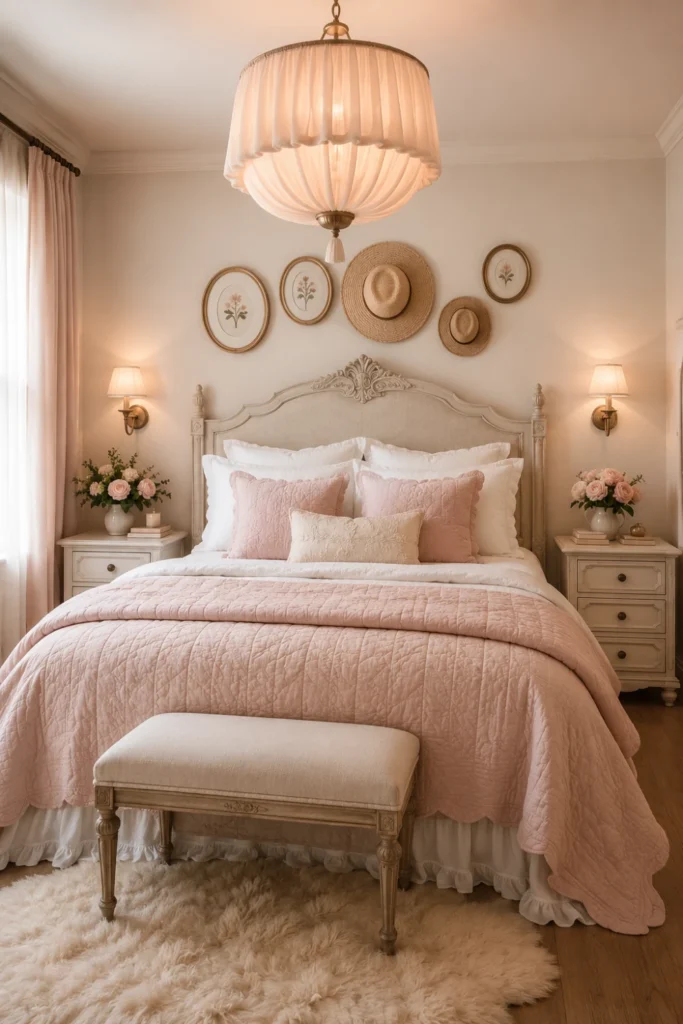
Romantic rooms can slide into cluttered fast, so the goal is soft layers that still feel balanced. Picture a quilted blush coverlet over crisp white bedding, a carved headboard, and a small gallery of woven hats or oval frames on the wall. Each layer is gentle on its own, and together they read as calm because no single element shouts. The symmetry, matching sconces, matching nightstands, is what keeps it from tipping into chaos.
Balance is really about giving the eye a rhythm to follow. When the left and right sides of the bed mirror each other, the brain relaxes, even in a busy, layered room. A soft fabric chandelier adds a romantic focal point overhead while a sheepskin rug softens the floor underfoot. Keep the color story to two or three soft shades, blush, cream, and warm white here, so the layering feels intentional. This look rewards editing: if a surface feels crowded, remove one object and it will almost always look better.
12. Let Plants and Daylight Do the Work
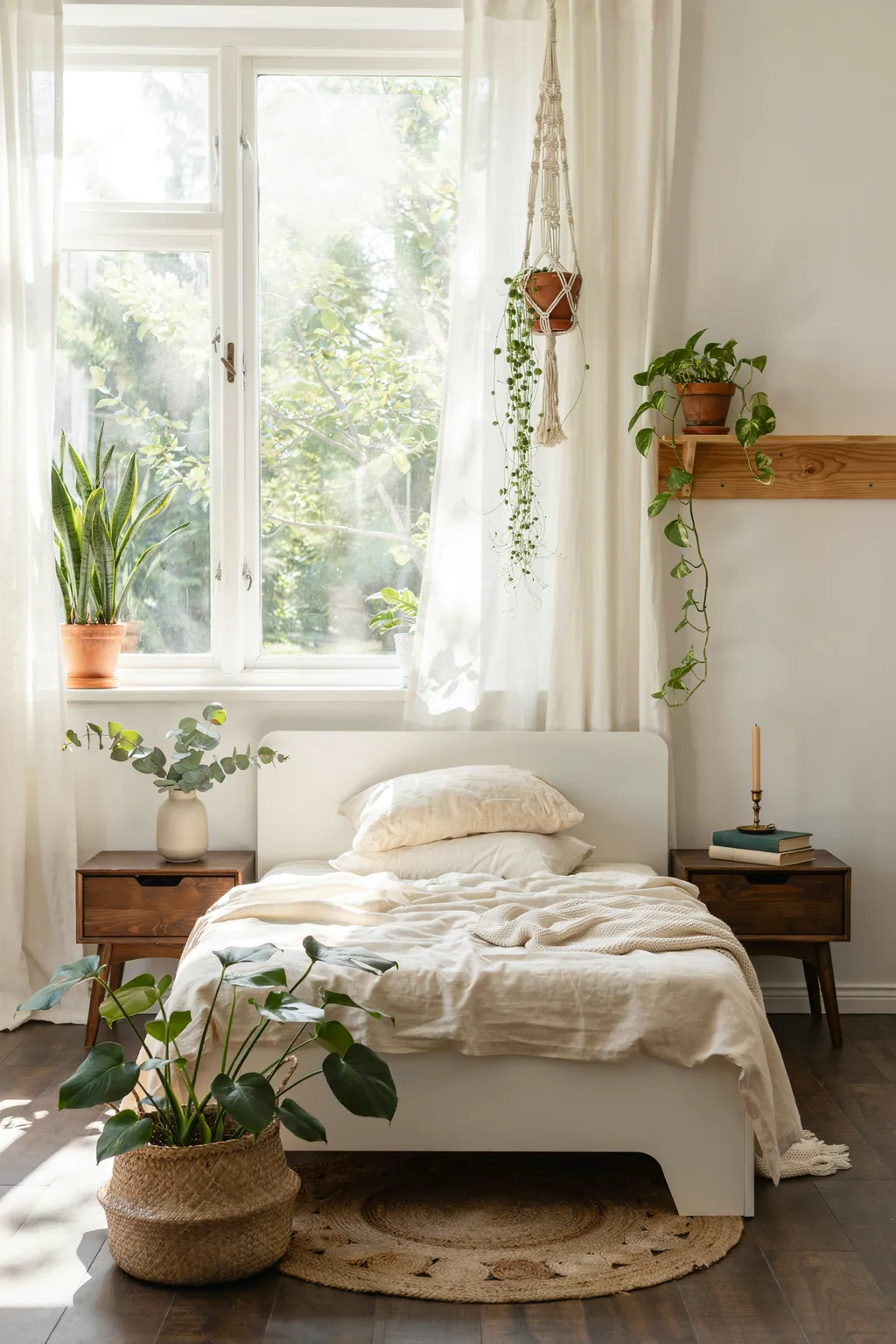
The cheapest way to make a small room feel alive is free: daylight and greenery. Keep the window as bare as your privacy allows, using sheer curtains or a light blind so sunlight pours in and bounces off the walls. Then stack plants at different heights, a tall floor plant, trailing pothos on a shelf, a snake plant on the sill, to draw the eye around the room instead of letting it stop at the nearest wall.
Plants add depth that flat decor cannot. A layered jungle of green reads as a room with more going on, which makes the space feel bigger and more considered. Choose low-light, hard-to-kill varieties like pothos, snake plant, and ZZ if your window faces north, since a struggling plant looks worse than no plant at all. A round jute rug and simple linen bedding keep the base calm so the greenery stays the star. Group pots in odd numbers, threes and fives, for a natural, unforced arrangement.
13. Carve Out a Compact Work Zone
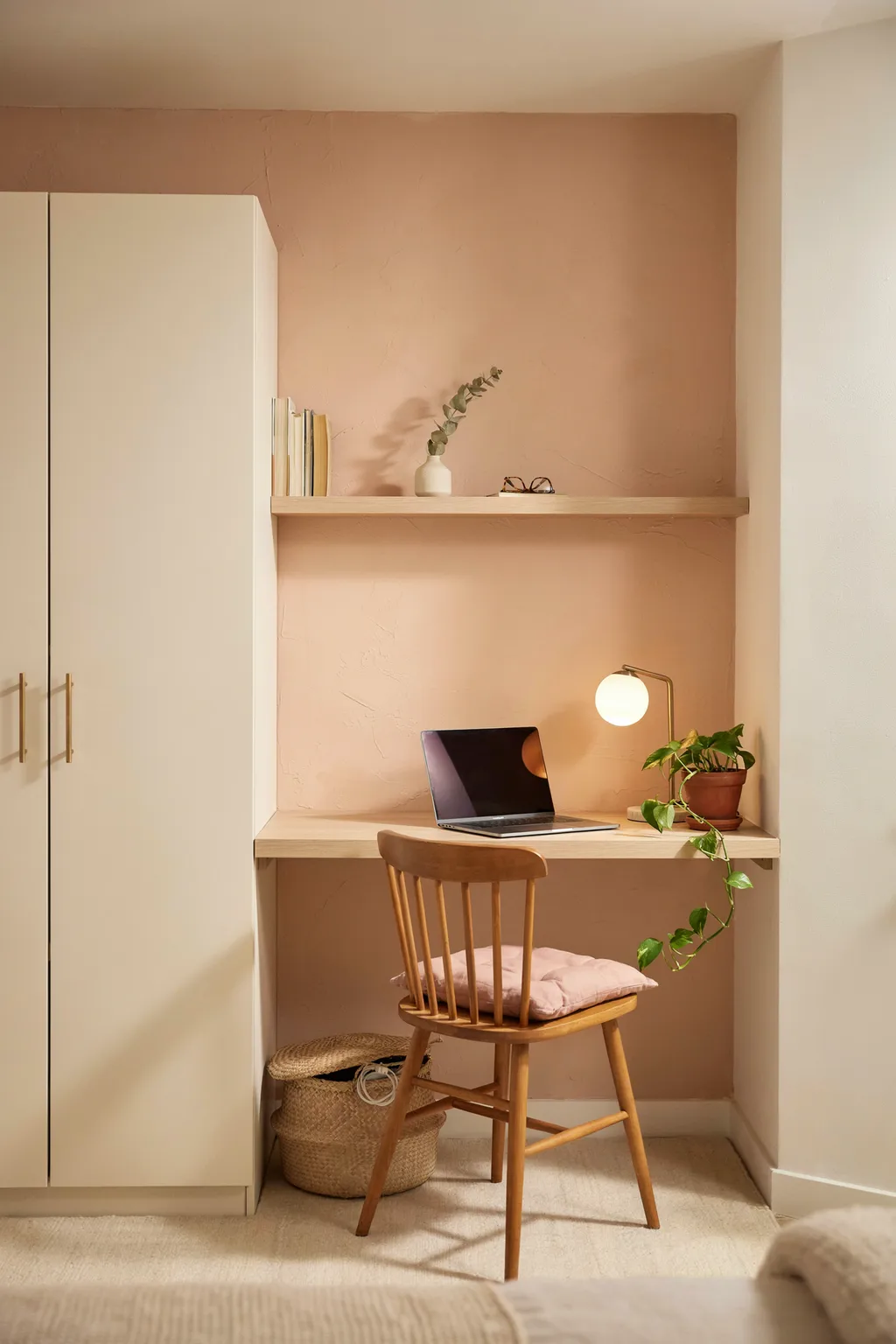
If your bedroom has to double as an office, a compact built-in desk is the answer, not a full desk that swallows the room. A slim floating desktop tucked against the wall, with one shelf of books above and a chair that slides fully under, gives you a real work surface that takes almost no floor. When the workday ends, a clear desktop lets the corner read as part of the bedroom again rather than a permanent office.
The secret to a work zone that does not wreck your sleep is separation. Even a warm accent wall behind the desk, a soft peach or terracotta, signals a different zone without a physical wall. Keep a single small lamp for task light and a lidded basket underneath for the cables and clutter that pile up. This won’t work if your job needs two monitors and a lot of paper, in which case a bedroom desk will always feel cramped and a shared space elsewhere serves you better.
14. Make the Ceiling Light a Statement
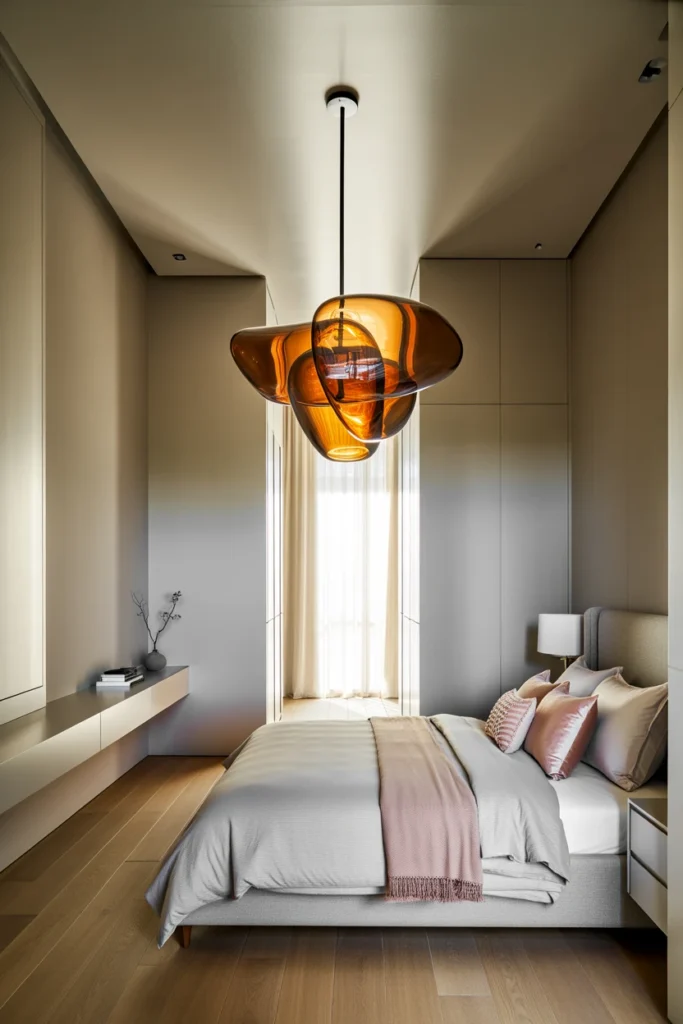
In a small room, the ceiling is empty real estate, so let the light fixture earn its keep. One striking chandelier or sculptural pendant becomes the jewelry of the room, drawing the eye up and away from the tight floor. An amber glass or gold-toned fixture adds a note of glamour that a flat flush light never could, and it instantly lifts the whole scheme from plain to polished.
A statement light works because it gives the room a clear focal point, which stops a small space from feeling like a jumble of equal parts. Keep the rest of the room quiet, soft grey bedding, blush pillows, a slim built-in shelf, so the fixture has room to shine. Scale matters more than you think: a fixture that is too tiny looks lost, while one that is slightly bolder than feels safe usually looks best. Just check your ceiling height first, since a low ceiling needs a flush or semi-flush statement rather than a long drop.
15. Ground the Room With Earthy Tones
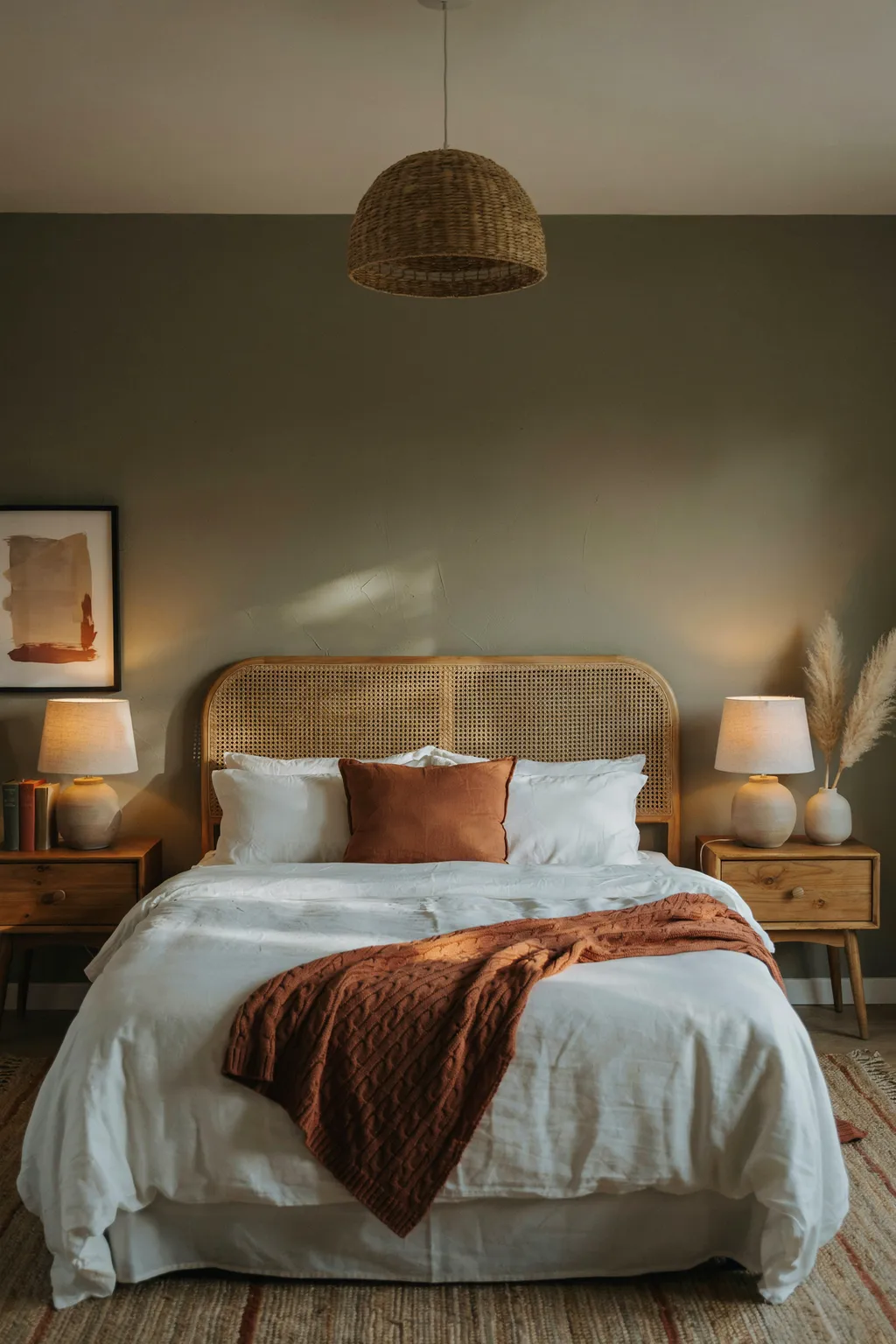
An earthy palette gives a small bedroom a grounded, retreat-like calm that pale neutrals sometimes miss. An olive green accent wall behind the bed, paired with a cane headboard and a rust or terracotta throw, feels warm and enveloping without going dark. These deeper, nature-drawn shades wrap the room like a cocoon, which is exactly the mood you want in a space meant for rest. The green also plays beautifully with wood and natural fibers.
One accent wall is the key restraint here. Painting all four walls a deep color can close a small room in, but a single olive wall behind the headboard adds depth while the other three stay light and reflective. Layer in a rattan pendant, wood nightstands, and two warm lamps, and the earthy scheme feels rich rather than heavy. Among the more grown-up chic small bedroom ideas, this one suits anyone tired of all-white rooms who still wants the space to feel open. Test the green on the wall at different times of day first, since olive can turn muddy under warm bulbs.
16. Choose a Storage Bed With Drawers
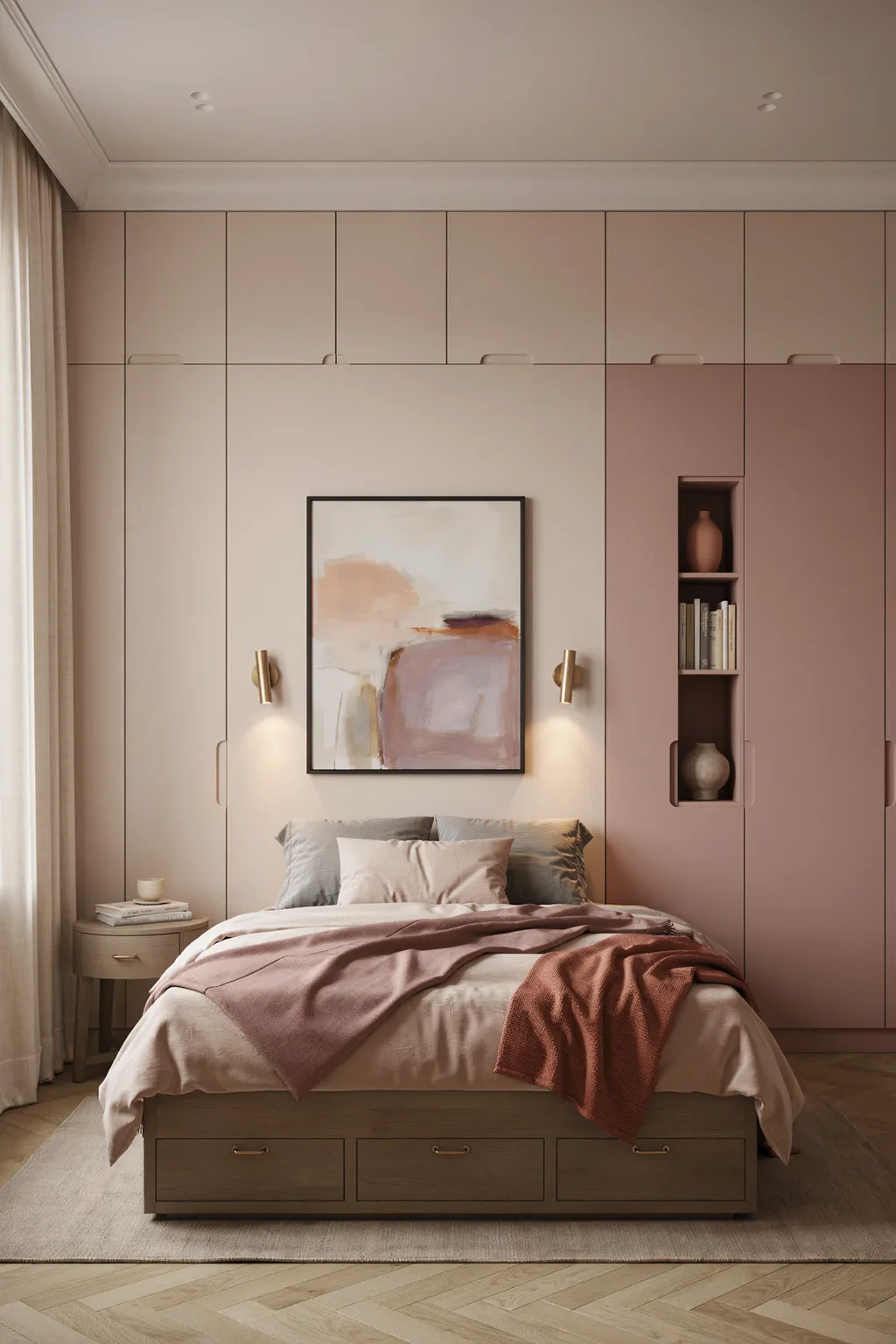
The bed sits on the single largest patch of floor in the room, so that space underneath is too valuable to waste. A platform bed with built-in drawers turns the whole footprint into hidden storage, swallowing spare bedding, off-season clothes, and shoes without adding a single piece of furniture. Pair it with a blush or mauve built-in wardrobe wall and the room stores a startling amount while looking almost bare.
The payoff is a floor with nothing shoved under the bed, which reads as instantly tidier and more spacious. Deep drawers hold bulky duvets that would otherwise fill a whole shelf, and because they are built into the frame, there are no dust-collecting gaps. Open a slim niche of shelving beside the wardrobe for the pretty things, books, ceramics, a small plant, so the storage wall still feels styled. The trade-off: drawer beds are heavier and harder to move, so measure your doorway and stairs before you buy one you cannot get into the room.
17. Mix Rattan and Macramé for Boho Charm
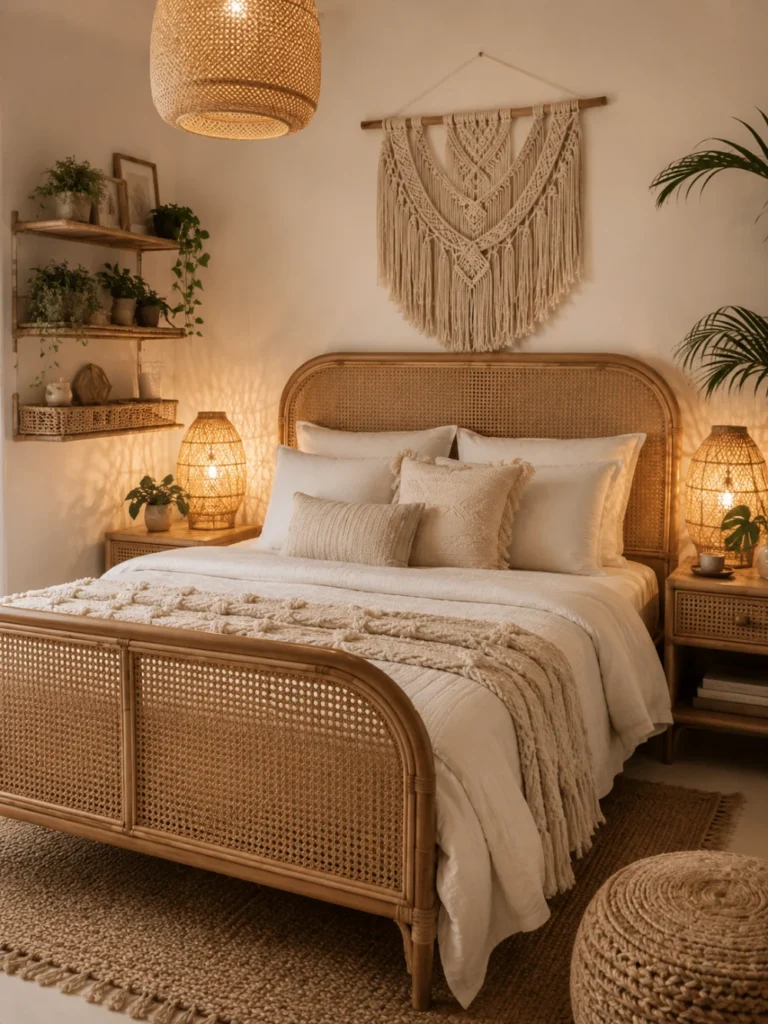
Boho done well in a small room is about warm, natural texture, not piling on stuff. A cane headboard and footboard, a macramé wall hanging, woven shelves, and a couple of rattan lamps bring in that handmade, earthy charm while keeping the palette soft and light. Natural fibers add warmth and interest without the visual weight of dark, solid furniture, so the room stays airy even as it fills with character.
The reason this works in tight quarters is that cane and rattan are visually see-through. Light passes through the woven gaps, so a cane bed frame feels far lighter than a solid one of the same size. Warm bedside lamps glowing through woven shades cast a soft, textured light that makes the whole room feel snug at night. Stick to a cream, sand, and warm brown base and let the textures carry the interest. If dusting is not your thing, know that woven pieces do catch more of it than smooth surfaces.
18. Try a Calm Japandi Setup
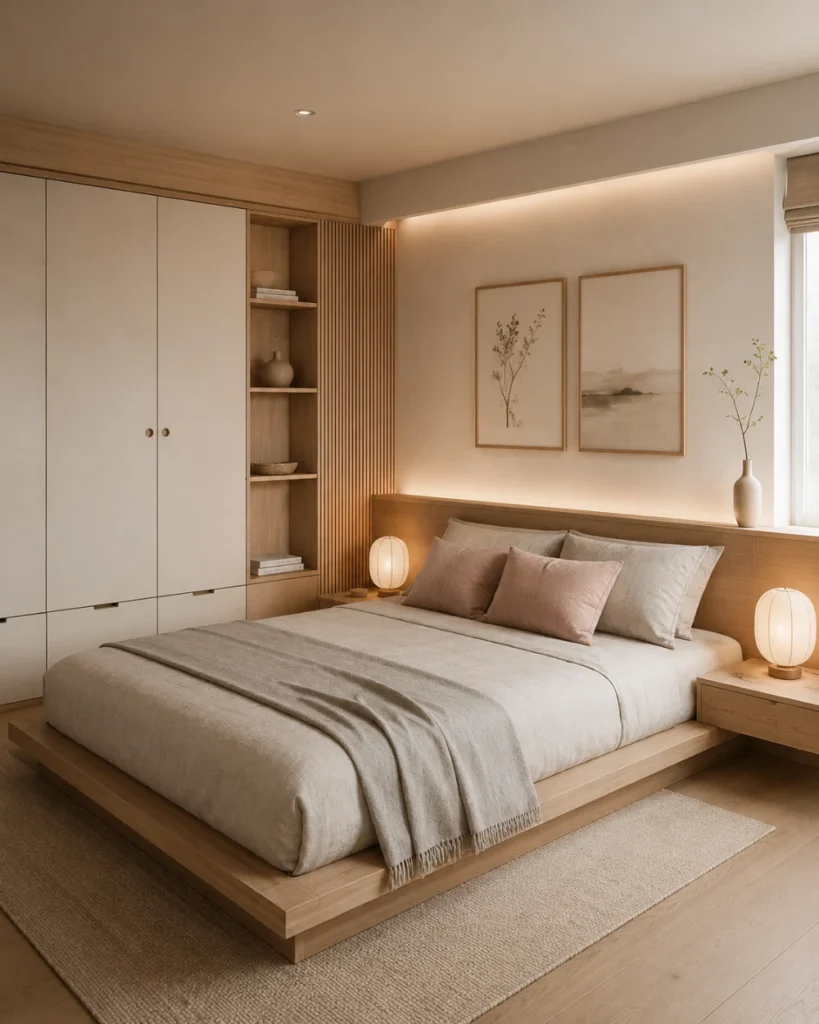
Japandi, the blend of Japanese calm and Scandinavian warmth, might be the perfect philosophy for a small bedroom. It prizes empty space, natural materials, and only the things you truly need, which is exactly the discipline a tight room demands. A light wood platform bed, a wood-and-white built-in wardrobe, one slim vase with a single stem, and a couple of muted art prints is genuinely all it takes.
The beauty of Japandi is that restraint is the whole style, so you are rewarded for owning less. Every surface you leave clear makes the room feel calmer and larger, and the quality of the few pieces you keep does the talking. Warm blush pillows against a soft grey throw add just enough warmth to keep it from feeling stark. This approach asks something real of you, though: it only works if you are willing to declutter and keep clutter out, so it suits minimalists more than collectors.
19. Copy the Boutique Hotel Look
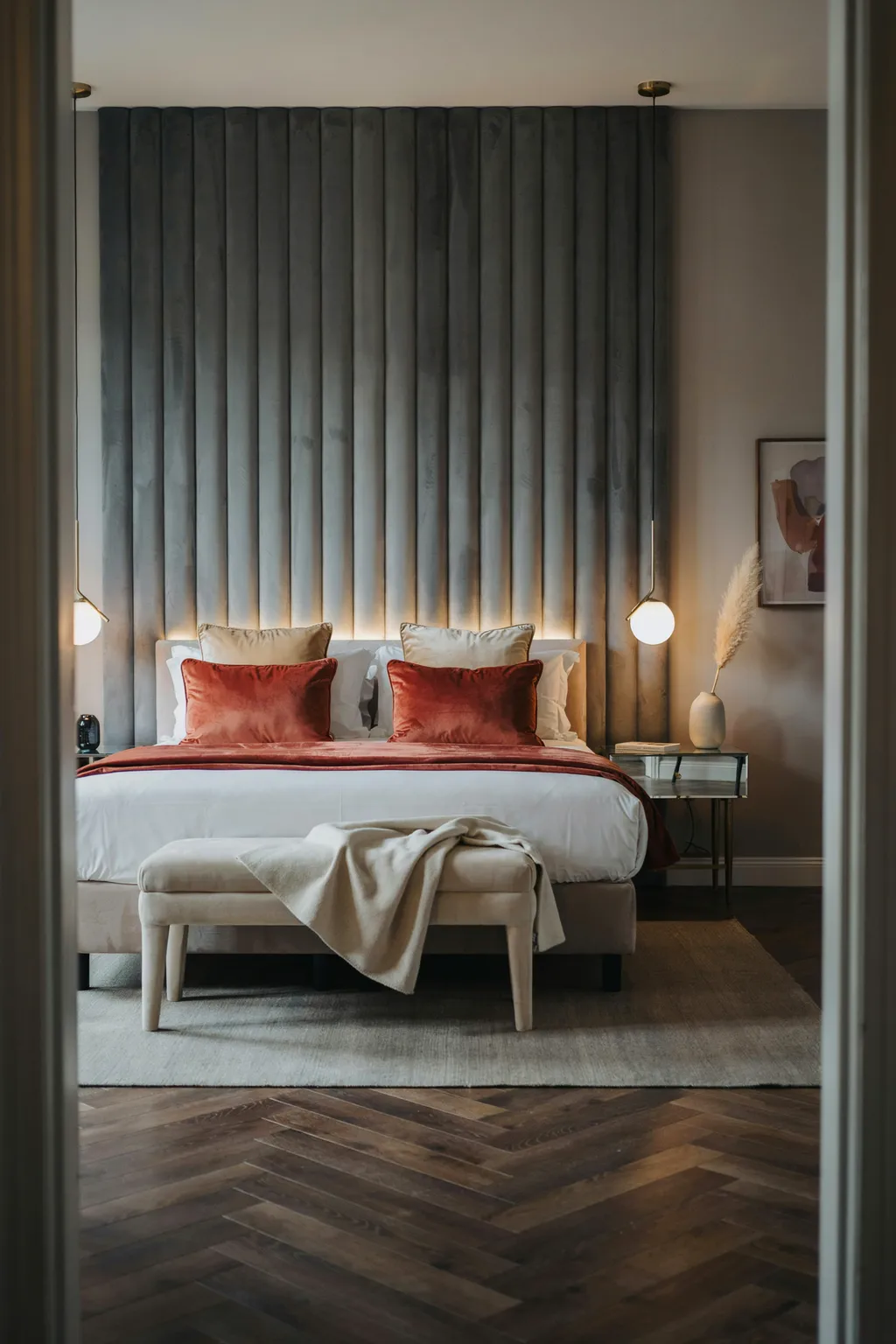
There is a reason a good hotel room feels instantly relaxing even when it is small: every detail is deliberate. You can copy that at home with a tall channel-tufted headboard, LED backlighting behind it for a soft halo, rich velvet pillows, and mirrored nightstands that bounce light around. The mirrored surfaces are the small-space trick, reflecting the room back and doubling the sense of space.
Hotel style leans on symmetry and a moody, grown-up palette to feel luxe. Matching glass pendant lights on either side, a rust-and-cream color story, and a soft grey rug over dark herringbone floor give the room that designed, checked-in feeling. The backlit headboard is both drama and function, throwing a gentle glow you can read by without a harsh overhead. It is one of the more polished chic small bedroom ideas, though the velvet and mirrored pieces sit at the pricier end, so treat it as a slow upgrade rather than a weekend flip.
20. Stack Sleep With a Storage Bunk
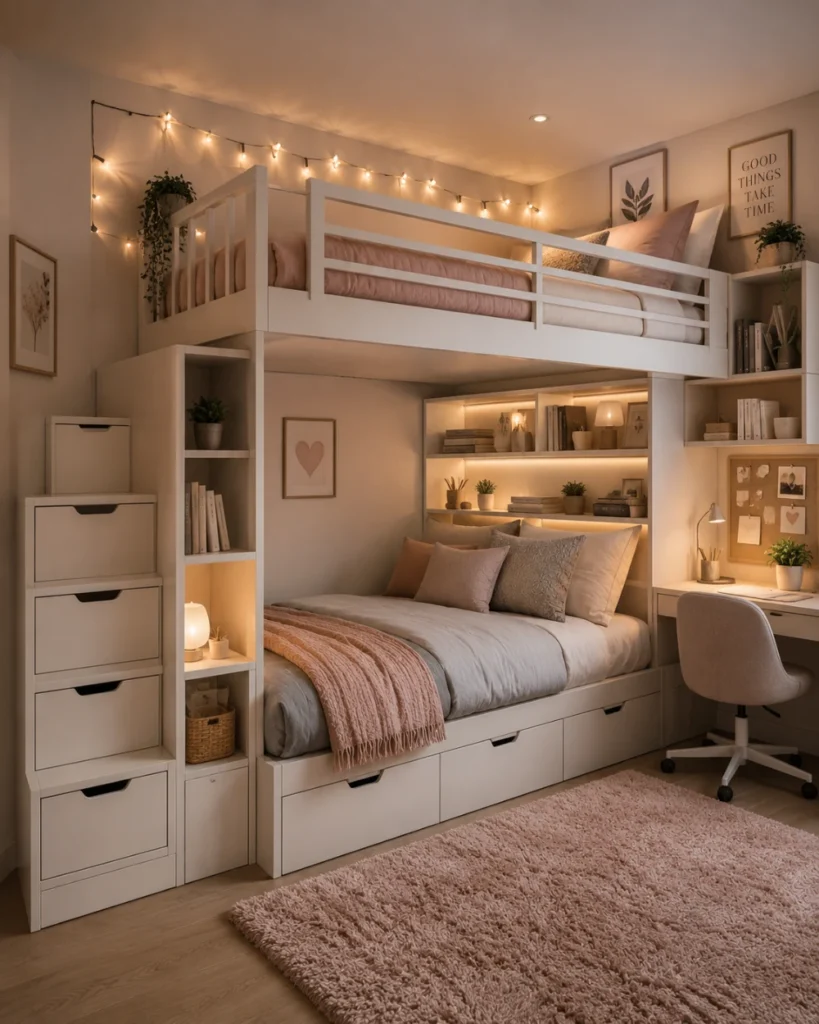
When a small bedroom has to sleep two, or one sleeper plus a heap of storage, a modern bunk with built-in drawers and shelves is the smartest use of vertical space you can make. Lofting one bed above another frees the floor entirely, and the built-in drawers, shelves, and a slim desk tucked alongside turn the whole structure into a compact, all-in-one setup. String lights along the top rail keep it feeling cozy rather than dorm-like.
This is a lifesaver in shared kids’ rooms and studio apartments alike. The under-bunk zone becomes a proper nook, a bed with a bookshelf headboard, or a desk and storage combo, so one footprint does three jobs. Choose a bunk with drawers in the base steps and shelves built into the frame to squeeze out every inch. Add soft blush and grey bedding and a small rug to keep it warm and inviting. The honest caveat: bunks need decent ceiling height to feel comfortable up top, so measure before you order, and the top bunk is not ideal for anyone who dislikes ladders.
Common Mistakes to Avoid
Mistake 1: Pushing every piece of furniture against the walls
It feels like it opens the floor, but a ring of furniture around a bare center actually makes a small room feel smaller and more like a waiting room. Pull the bed to a comfortable position and let one clear zone breathe instead. Fix it by floating the layout around how you actually use the space.
Mistake 2: Choosing one giant statement piece too many
A single hero, one bold art piece or one striking light, lifts a room. Three heroes fight each other and shrink the space. Pick your one focal point per room and let everything else support it quietly.
Mistake 3: Relying on a single overhead light
One bright ceiling light flattens a room and kills any cozy mood. It also casts hard shadows that make a small space feel like a cell. Add at least two more warm light sources at different heights, a lamp and a sconce or pendant, for depth.
Mistake 4: Using tiny rugs that float in the middle
A small rug marooned under the foot of the bed chops the floor into pieces and makes the room read smaller. Go bigger than feels right, large enough that the front legs of the bed sit on it, to visually stretch the floor.
Mistake 5: Skipping vertical storage
Leaving your walls bare above waist height wastes the one dimension a small room has plenty of: height. Every empty upper wall is storage or display you are not using. Add tall shelving or high cabinets to move clutter up and off the floor.
Mistake 6: Hanging curtains at window height
Mounting the curtain rod right at the top of the window frame chops the wall and lowers the ceiling. Hang the rod close to the ceiling and let panels fall to the floor to draw the eye up and make the whole room feel taller.
Mistake 7: Letting cords and clutter show
Visible chargers, cables, and a crowded nightstand undo all your styling in one glance. Corral cables with a small box or clip, and keep each surface to two or three objects so the calm you worked for actually reads.
Quick Start Checklist
- [ ] Clear the floor first: remove anything stored under or around the bed that has a better home.
- [ ] Pick a light, soft base color for walls and bedding to keep the room feeling open.
- [ ] Move storage upward with tall shelving, high cabinets, or a full built-in wall.
- [ ] Swap a bulky wardrobe for a built-in or a storage bed with drawers.
- [ ] Replace bedside lamps with wall sconces or slim pendants to clear the nightstands.
- [ ] Add two or three warm light sources at different heights, nothing over 2700K.
- [ ] Choose one focal point per room: one bold art piece or one statement light, not both.
- [ ] Lay down a rug big enough that the bed’s front legs sit on it.
- [ ] Hang curtains close to the ceiling and let them fall to the floor.
- [ ] Add greenery at two or three heights for life and depth.
- [ ] Edit ruthlessly: if a surface feels crowded, remove one thing.
Frequently Asked Questions
What colors make a small bedroom look bigger?
Soft, light shades in the same family do the most work: warm whites, greige, pale blush, and light wood tones keep the eye moving without hard stops, so the room reads as larger. You do not have to go stark white. A single deeper accent wall behind the headboard can actually add depth as long as the other walls stay light and reflective. The core rule behind most chic small bedroom ideas is to keep the base pale and add color in small, swappable doses like pillows and art.
How do I fit storage in a tiny bedroom without it feeling cramped?
Build up and build in. Move storage vertically with tall shelving and high cabinets, and choose furniture that stores things inside it, a bed with drawers, a bench with a lid, a nightstand with a shelf. The trick is to keep most of it behind closed or flush fronts so the room looks calm, and reserve a small open niche for the pretty things. Clutter you can see is what makes a room feel cramped, not the storage itself.
Can a small bedroom double as a home office?
Yes, if you keep the desk compact and the two zones visually separate. A slim floating desk against one wall, a chair that tucks fully under, and one shelf above give you a real workspace without eating the room. Use a soft accent wall or a small lamp to signal the work zone, and clear the desktop at night so the corner reads as a bedroom again. It falls short only if your work needs a lot of gear or paper.
What is the best lighting for a small bedroom?
Layered, warm, and dimmable. Skip the single bright overhead and use at least two or three sources at different heights: a pendant or statement fixture up top, plus wall sconces or slim bedside pendants that free up your nightstands. Stick to warm bulbs around 2700K for a restful glow, and add a dimmer if you can. Warm, low light in the evening helps the room feel cozy and supports winding down for sleep.
How do I make a rental small bedroom look chic without renovating?
Lean on the moves that leave no marks: a light paint-free palette through bedding and curtains, a tall freestanding wardrobe painted or chosen to match the wall, plug-in pendant lights with cord hooks, and plenty of plants. Removable wall hooks, a large rug, and layered textures do most of the styling. You get the built-in, designed look from freestanding and temporary pieces, and it all comes with you when you move.
How many decor styles should I mix in one small room?
Keep it to one main style plus a light touch of a second at most. A small room does not have the surface area to carry three or four competing looks, and mixing too many reads as cluttered rather than curated. Pick a lead, Scandinavian, Japandi, boho, or quiet luxury, and let it set the palette and materials, then borrow just one or two accents from elsewhere. Consistency is what makes a small space feel intentional.
Conclusion
A small bedroom is not a problem to apologize for. It is a space that rewards good decisions and punishes clutter, which means every smart move you make shows up fast. Get the bones right and the room does more with less.
If you take only a few things from this list, make them these. First, move storage up and out of sight, with a built-in wall, a drawer bed, or tall shelving, so the floor stays clear. Second, keep a soft, light base and add color only in small, swappable doses. Third, layer warm lighting at different heights and pick just one focal point per room. Those three habits sit underneath nearly every one of these chic small bedroom ideas, and they work in a rental as well as a forever home.
Do not try to do all twenty this weekend. Pick the three that fit your room and your budget, and start there. The single best first step costs nothing: pull everything out from under and around the bed, and give yourself a clear floor to build on. Once you can see the space, you will know exactly which idea to reach for next.
You Might Also Like