22 Wabi Sabi Bathroom Ideas for a Calm Retreat
You are tired of the glossy, matchy bathroom that looks like every builder showroom. You want a room that feels lived-in and quiet, where a chipped pot and a raw wood shelf feel like the point, not a mistake. That pull toward warmth and imperfection is the whole idea behind a wabi sabi bathroom, a space that finds beauty in age, texture, and the handmade. It swaps shiny perfection for calm, earthy soul.
The style leans on a short list of honest things: rough plaster, natural stone, aged metal, weathered wood, linen, and a few well-worn objects. Nothing needs to match. A cracked glaze, a live-edge counter, and a faded towel all belong. You are not chasing flaws for their own sake, you are letting real materials breathe and age, which is exactly what makes the room feel restful instead of staged.
This guide walks through 22 setups, each grounded in a real bathroom scene, so you can see the look and borrow the parts that fit. You get the idea, why it works, who it suits, and where it falls short, because raw plaster is gorgeous until you learn how it handles a splashy sink. Some ideas are full renovations. Plenty are a weekend of styling with stone, wood, and linen. Pick what matches your room, your light, and your budget, and leave the rest.
Quick Answer
A great wabi sabi bathroom comes down to three moves: use raw natural materials like stone, plaster, and aged wood, keep the palette to warm earthy neutrals, and let age and imperfection show instead of hiding them. Start with one rough, tactile surface, a plaster wall or a stone basin, and build calm around it. Add aged brass or matte black, natural light, linen textiles, and a few handmade objects. The goal is warmth and quiet, not polish.
1. Style the Edges With Raw Natural Objects
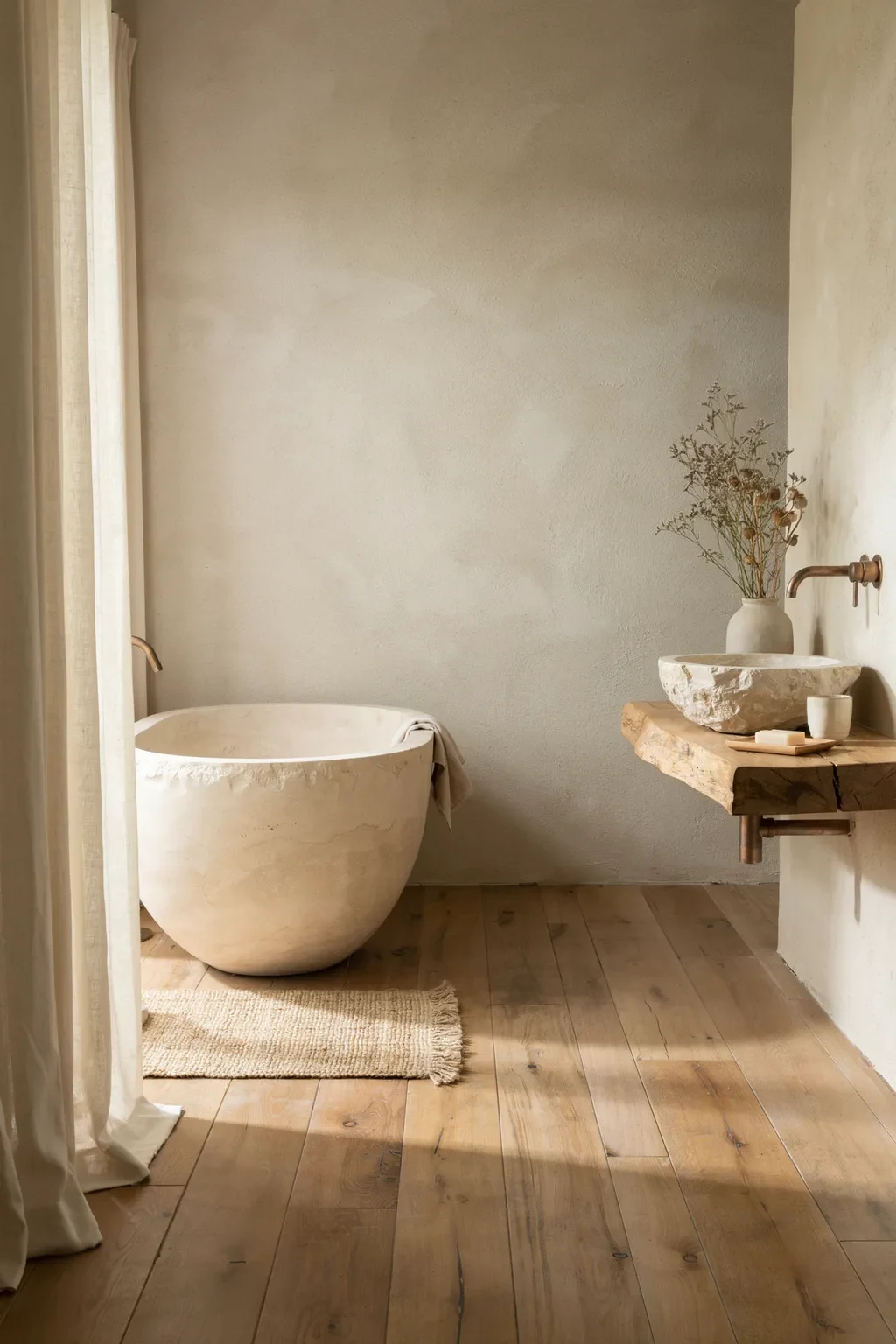
The fastest way into this look costs almost nothing: style your existing surfaces with raw, natural objects. A piece of driftwood, a handmade ceramic soap dish, a bar of stone-grey soap on a fringed jute mat, and a rumpled linen cloth turn a plain tub ledge into a quiet still life. These small, imperfect things carry the whole spirit of the style without a single renovation.
Curating a few tactile objects is how wabi sabi starts. Each worn, handmade piece adds texture and a sense of time, so the corner feels collected over years rather than bought in one trip. Odd numbers and uneven shapes read more natural than neat pairs. You can pull this together for under 40 dollars from a craft market or your own garden.
Perfect for renters and anyone testing the style before committing. Skip anything shiny or mass-produced here, since a plastic dish or a glossy bottle breaks the calm instantly.
2. Set the Palette With a Natural Material Board
Before you buy anything, gather your materials like a designer and see them together. Lay an oak offcut, an aged copper or verdigris tile, a piece of travertine, a handmade clay bowl, and a fold of natural linen on a linen backdrop. Seeing wood, stone, metal, and cloth side by side tells you fast whether the room will feel warm and grounded or cold and flat.
A material board saves you from costly mismatches. Because this style leans on texture and tone rather than color, getting your naturals into one warm, muted family is what makes the finished room feel calm and whole. Aged metal adds the patina that says time has passed. You can build a full sample board for the price of a few offcuts and tile chips, often under 30 dollars.
Best for anyone planning a full renovation who wants to commit with confidence. Skip buying fixtures one at a time, since a stone basin and a tile chosen months apart rarely land in the same earthy tone.
3. Float a Reclaimed Wood Vanity With a Concrete Sink
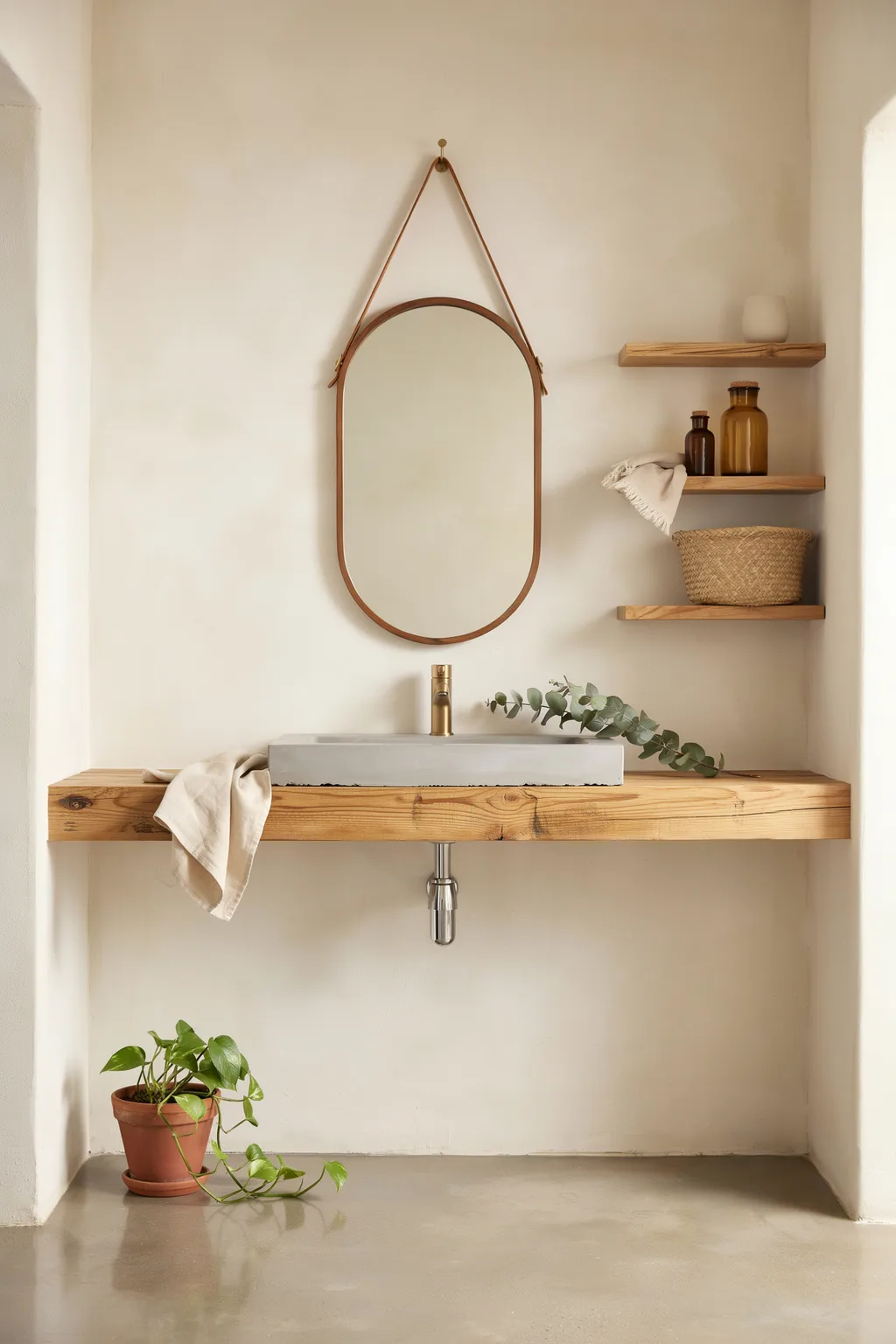
Pair a floating reclaimed-wood vanity with an integrated concrete or stone sink slab for a look that is raw and refined at once. The warm, knotty timber softens the cool grey slab, and hanging both off the wall keeps the floor open and the room airy. Add an oval mirror on a leather strap and open wood shelving beside it, and the space feels grounded and quietly modern.
Mixing warm wood with cool concrete is the balance this style loves. The timber brings age and character while the concrete adds a honest, handmade weight, so the vanity feels crafted rather than bought. A leather-hung mirror and open shelves keep it casual. A concrete sink slab runs 300 to 700 dollars, with a reclaimed wood vanity from 400 to 1,000.
Great for modern homes that still want soul and texture. Skip a porous concrete basin if you never want to seal it, since raw concrete stains and needs sealing once or twice a year to stay looking good.
4. Weather a Vanity Under an Arched Mirror
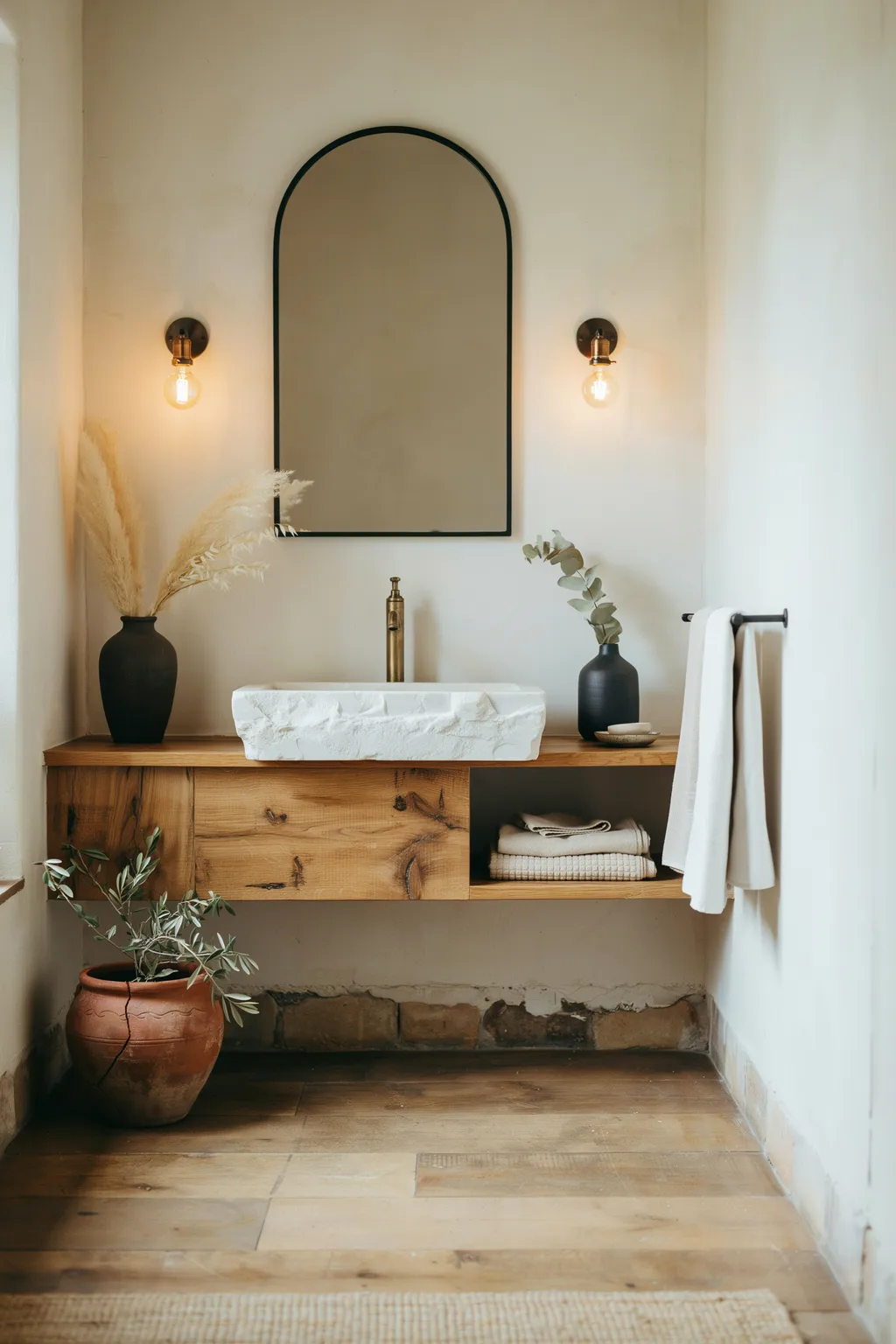
A vanity built from reclaimed timber, with open shelving and a rough marble trough sink, gives a bathroom instant age. Hang a slim arched black mirror above it, flank it with two bare-bulb sconces, and let dried flowers and an old clay pot finish the scene. The mix of worn wood, raw stone, and soft plaster feels like a room that has quietly aged into beauty.
Layering aged pieces is what carries the mood. A weathered vanity with visible grain and knots reads as honest and lived-in, and the marble trough adds a tactile, handmade weight. Bare-bulb sconces keep the light warm and unfussy. Hunt secondhand and you can build this for the cost of a sink and a mirror, often under 400 dollars.
Best for older homes and character-lovers who want warmth over polish. Skip untreated wood right at the splash zone unless it is sealed, since raw timber swells and stains where water lands daily.
5. Center a Live-Edge Console Under a Linen Pendant
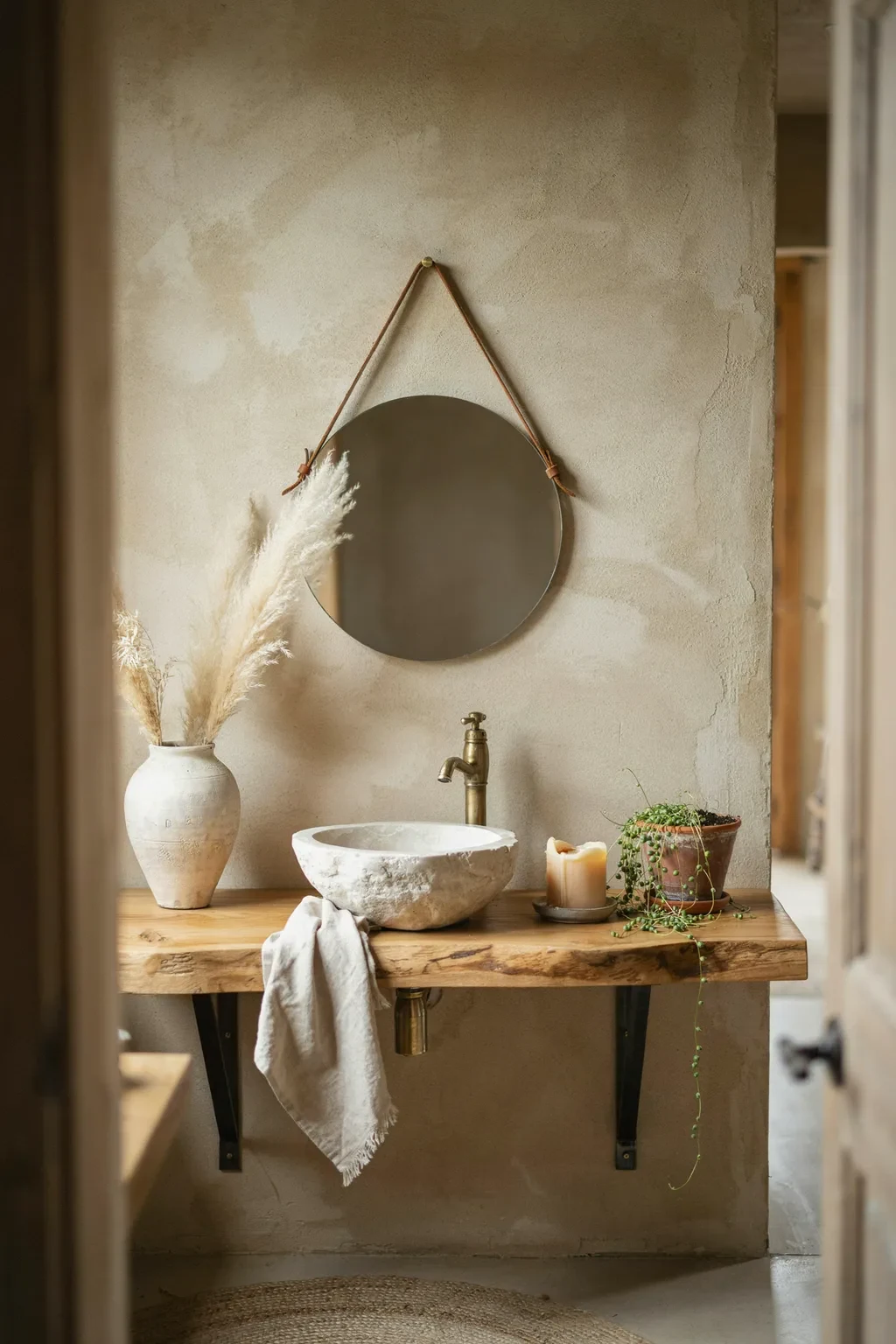
A live-edge wood console with a round stone vessel makes a warm, sculptural centerpiece. Keep the natural wavy edge of the timber, set a smooth stone bowl on top, and hang a soft linen drum pendant above for gentle, diffused light. A rustic wood-framed mirror, pampas grass, and a couple of handmade bowls complete a corner that feels calm and collected.
The live edge is the detail that sells it. Leaving the timber’s raw profile intact brings organic softness a straight-cut top cannot, and the stone bowl adds honest weight. A linen pendant softens the whole scene with warm, filtered light. A live-edge slab runs 100 to 300 dollars, and a linen pendant 40 to 120.
Perfect for a powder room or ensuite that wants a natural statement. Skip a very pale linen shade if your room runs damp and dim, since natural fabric can hold moisture and needs airflow to stay fresh.
6. Soften the Light With Sheer Linen Curtains
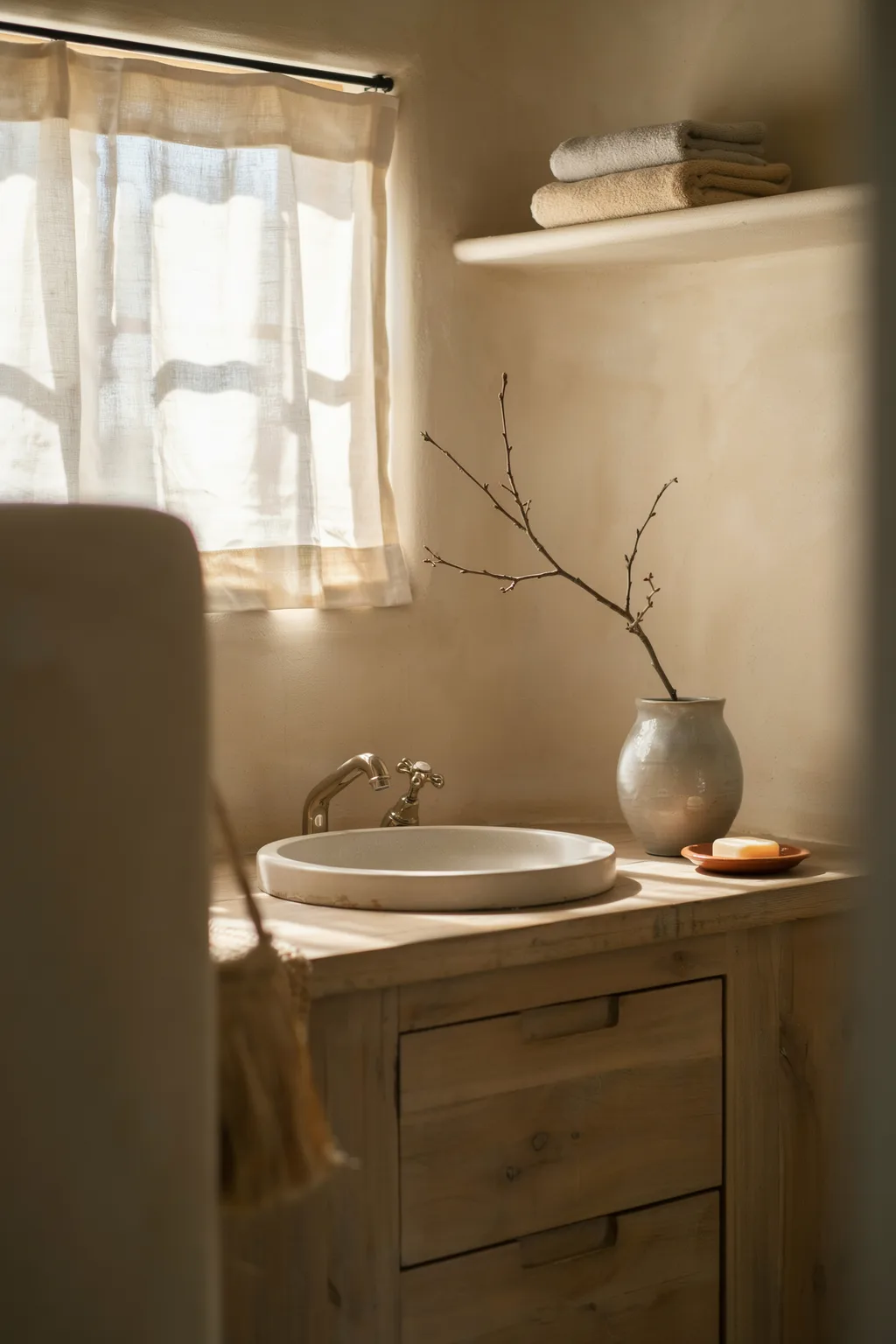
Sheer linen curtains turn hard daylight into a soft, glowing wash that flatters every raw surface. Hang unlined natural linen at the window near a rustic wood vanity, and the light comes through warm and diffused, catching the grain of the timber and the curve of a ceramic vase. A single bare branch in a pot keeps the styling spare and quiet.
Diffused light is half of this style’s magic. Linen filters the sun into a gentle, moody glow that makes worn wood and plaster look their best, and it adds its own soft texture at the window. Natural, undyed fabric fits the earthy palette perfectly. Ready-made linen curtains run 30 to 90 dollars a panel, an easy, high-impact change.
Great for any bathroom with a window and a view you want to soften. Skip heavy or synthetic curtains here, since they block the glow and read too formal for a relaxed, imperfect room.
7. Repurpose Salvaged Furniture for Storage
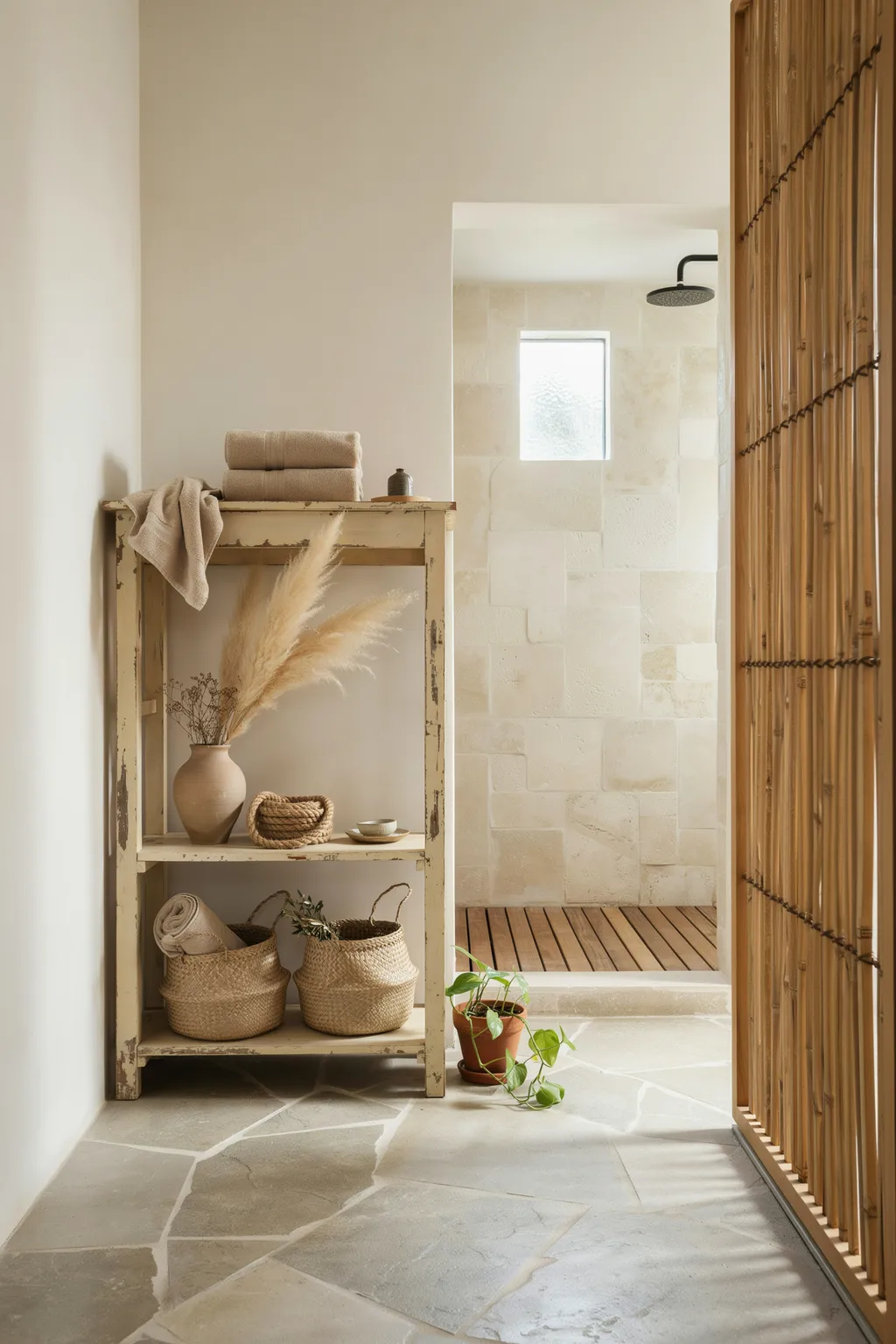
Salvaged and worn-paint furniture makes the most honest storage in a wabi sabi bathroom. An old shelving unit with chippy, faded paint holds folded linens, baskets, and a vase of pampas, while a woven bamboo screen door hides the rest. The visible wear is the feature, telling a story that new cabinetry never could. Nearby, a tiled walk-in shower with a wood floor keeps the mood earthy.
Reusing worn pieces is deeply in tune with the philosophy. Chipped paint and soft edges carry the marks of time this style celebrates, and repurposing furniture keeps good pieces out of landfill. A bamboo screen adds natural texture and gentle privacy. Hunt salvage yards and you can furnish storage for well under 150 dollars.
Perfect for characterful homes and budget renovators who love a hunt. Skip flaking paint on very old pieces without checking it, since pre-1978 layers can contain lead and may need sealing or removal.
8. Light It Low With Paper Lantern Sconces
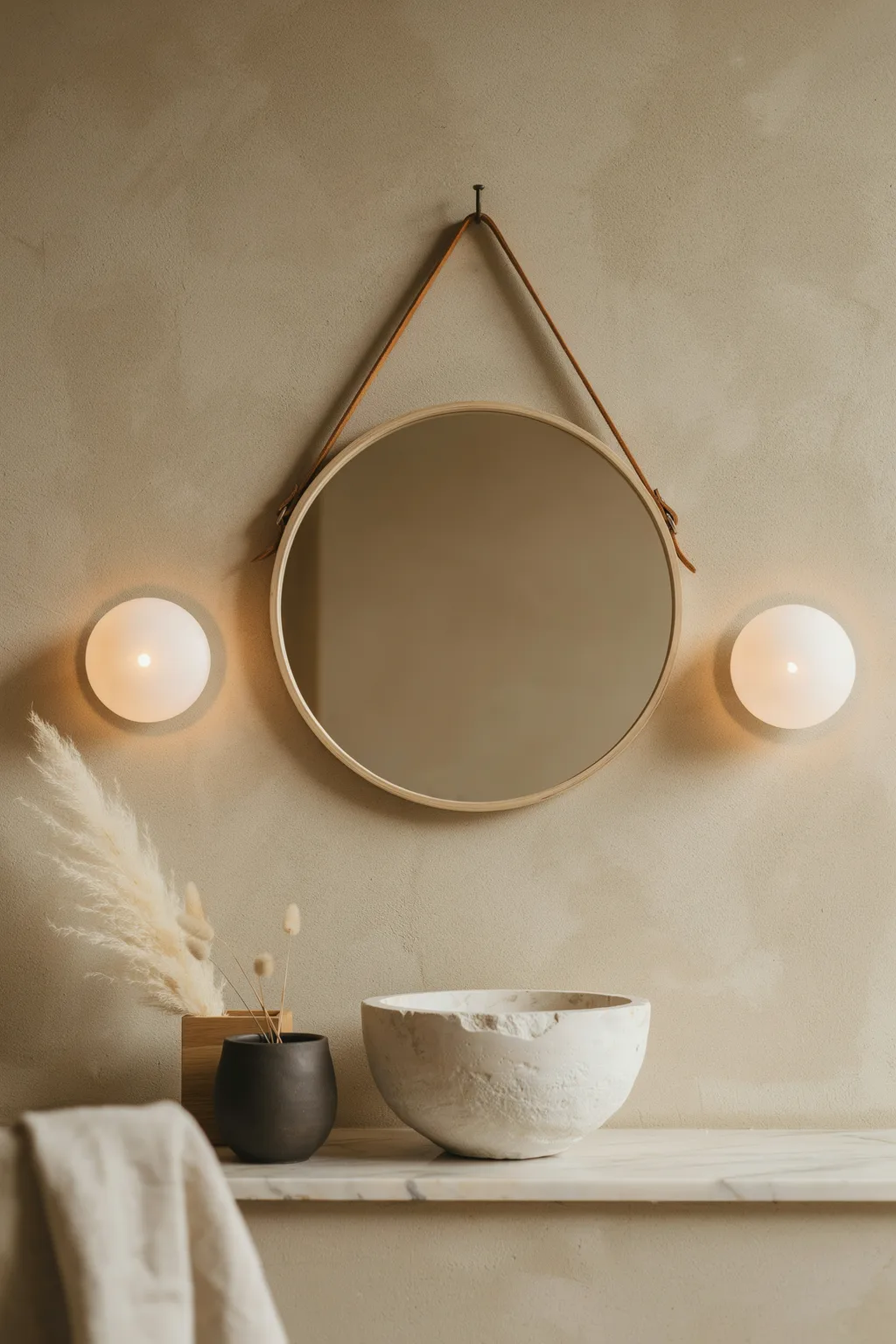
Soft paper lantern lighting sets the calm, low-lit mood this style is known for. Flank a round leather-strap mirror with two glowing paper globe sconces, and the light turns warm and even, wrapping the raw plaster and a textured stone basin in a gentle glow. A rough white stone bowl on a marble slab and a few dried grasses keep the scene earthy and spare.
Paper lanterns give a diffused, shadow-free light that flatters everything. Their soft glow feels handmade and quiet, echoing traditional Japanese interiors, and low placement at eye level reads far calmer than a harsh ceiling light. Paper globe sconces run 30 to 80 dollars each, an easy way to shift a room’s whole feel.
Great for anyone who unwinds in the evening and wants a warm, low-lit space. Keep real-paper shades away from direct steam and splashes, since paper warps in constant moisture and needs a dry, ventilated spot.
9. Pair Aged Brass With Rough Stone Basins
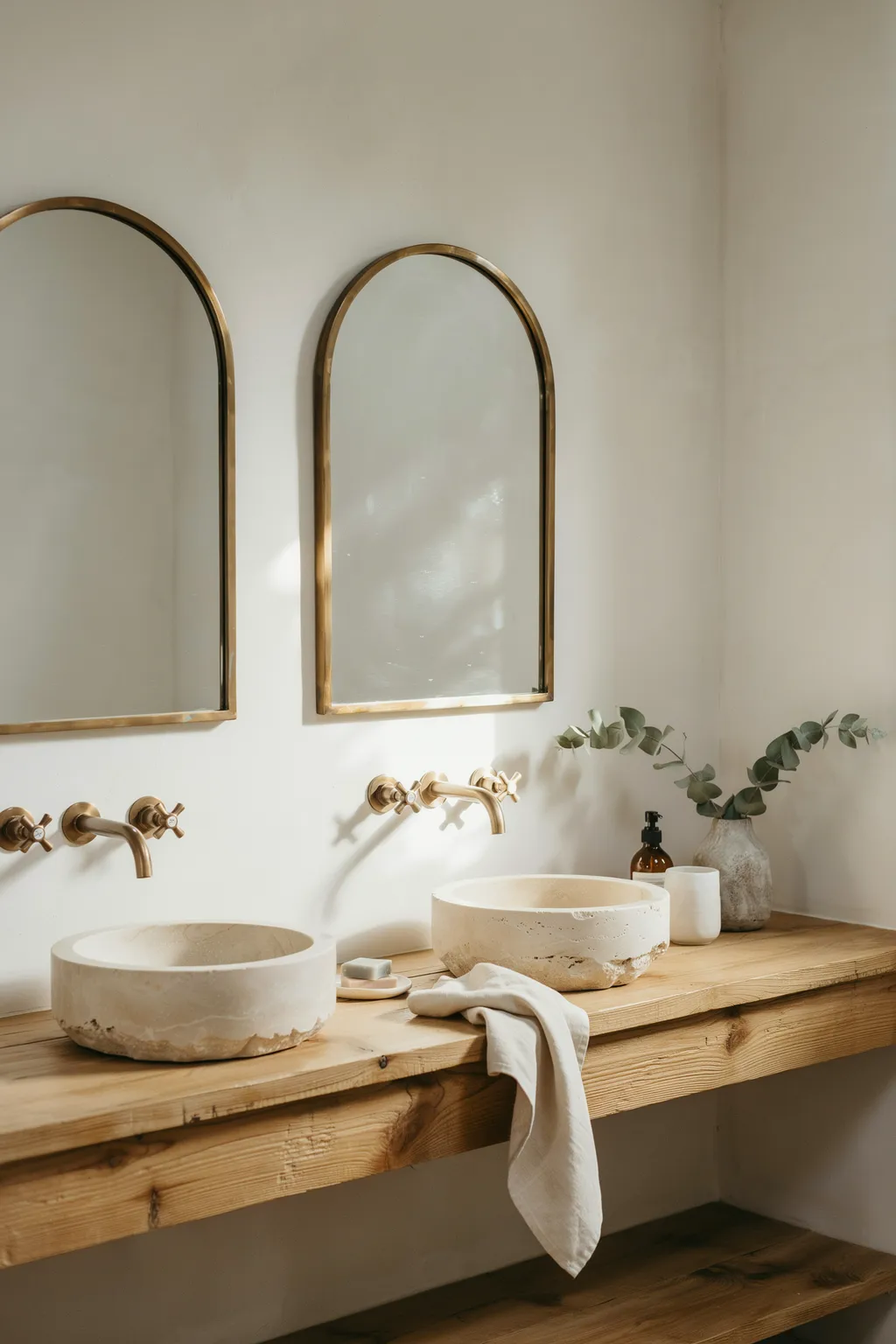
Aged brass and rough stone are a match made for this look. Set two hand-hewn stone vessel basins on a rustic wood vanity, fit them with aged brass bridge faucets, and hang a pair of arched brass mirrors above. The warm, tarnished metal glows against the pale, pitted stone, and the plaster wall behind keeps it all soft. It feels timeless, like a room in an old farmhouse.
Living finishes are the secret here. Unlacquered brass darkens and patinas with use, so the fixtures only grow more beautiful, and the rough stone basins add honest, tactile weight. Two of everything reads generous without feeling formal. Stone vessel basins run 150 to 500 dollars each, and aged brass taps 120 to 400.
Best for primary bathrooms with room for a double vanity. Skip lacquered “antique” brass if you want real patina, since a sealed finish stays shiny and never develops the aged character this look depends on.
10. Make a Rough Stone Basin the Whole Statement
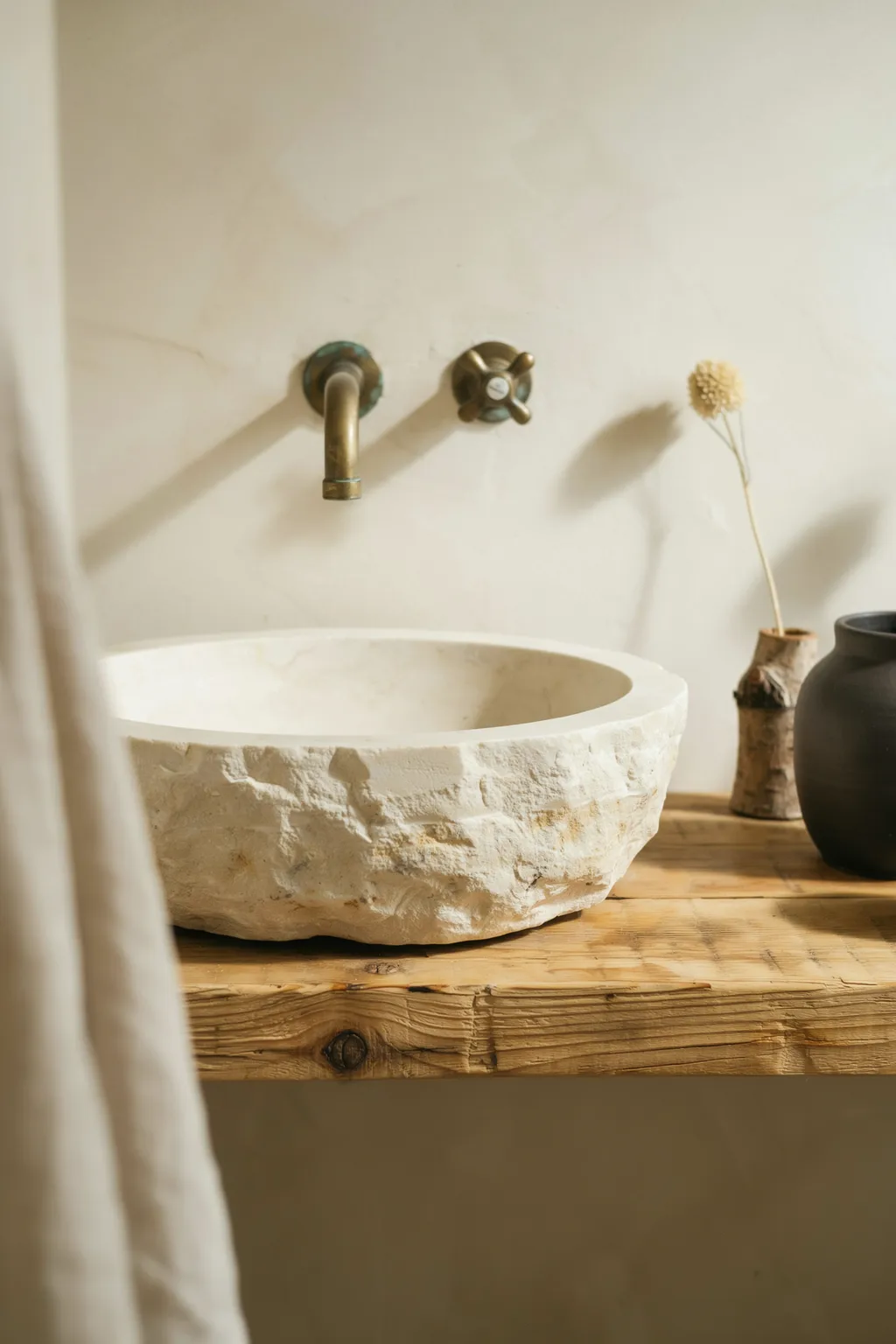
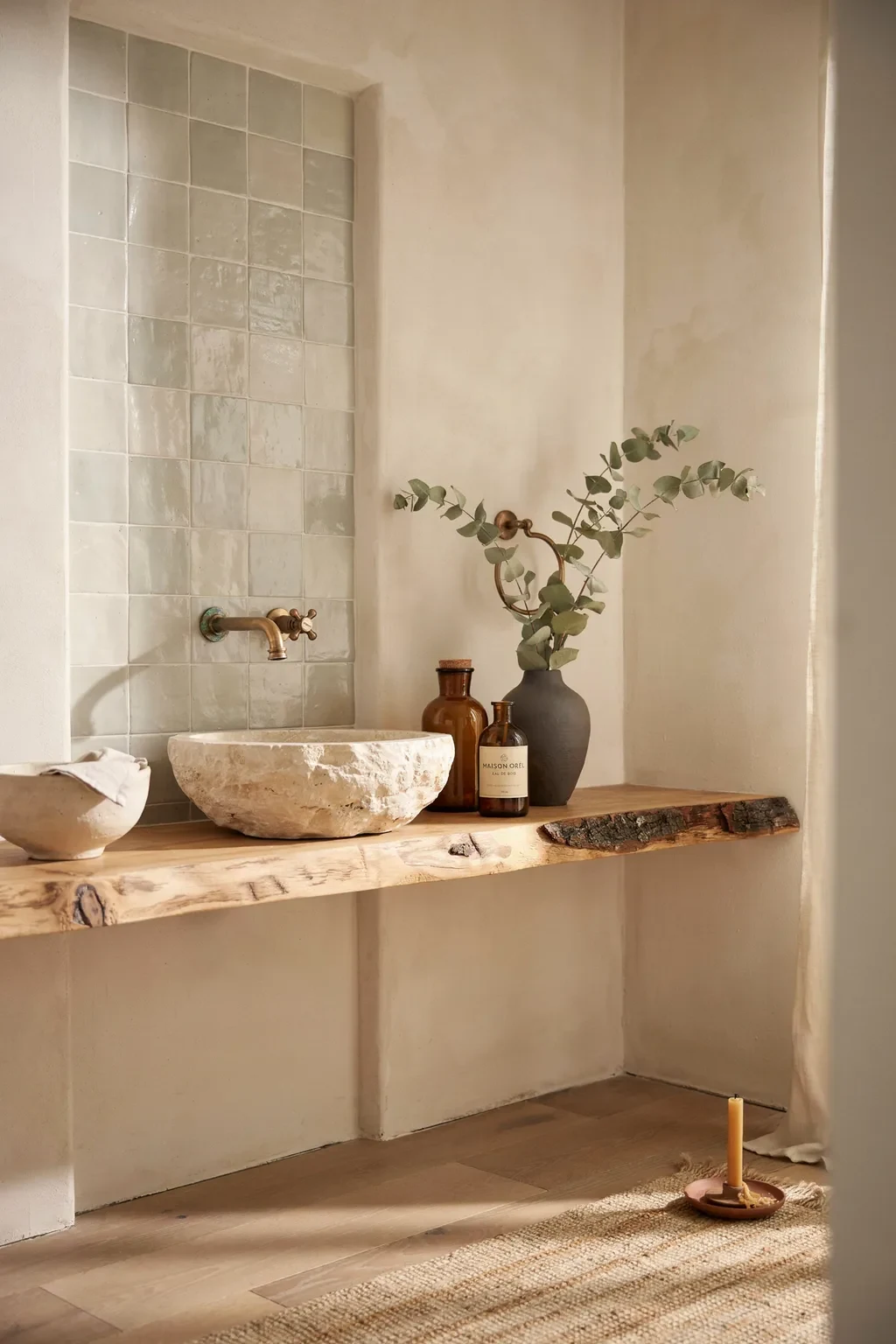
Sometimes one raw object says it all. A rough, chunky stone bowl on a reclaimed wood counter, fed by an aged brass wall spout, needs almost nothing around it. The pitted texture of the stone against warm timber and soft plaster carries the entire mood. A single dried flower in a bark pot is all the styling it asks for.
Letting one tactile piece lead is very wabi sabi. When the basin itself is the art, everything around it can stay plain, which is restful and easy to keep clean. Raw stone also feels cool and grounding under your hands each morning. A rough stone bowl basin runs 100 to 350 dollars, an easy upgrade even on a small budget.
Perfect for renters and quick refreshes, since a vessel basin can sit on an existing counter. Just check your tap and drain first, because a deep stone bowl needs a taller spout to clear the rim cleanly.
11. Tile a Shower in Irregular Handmade Squares
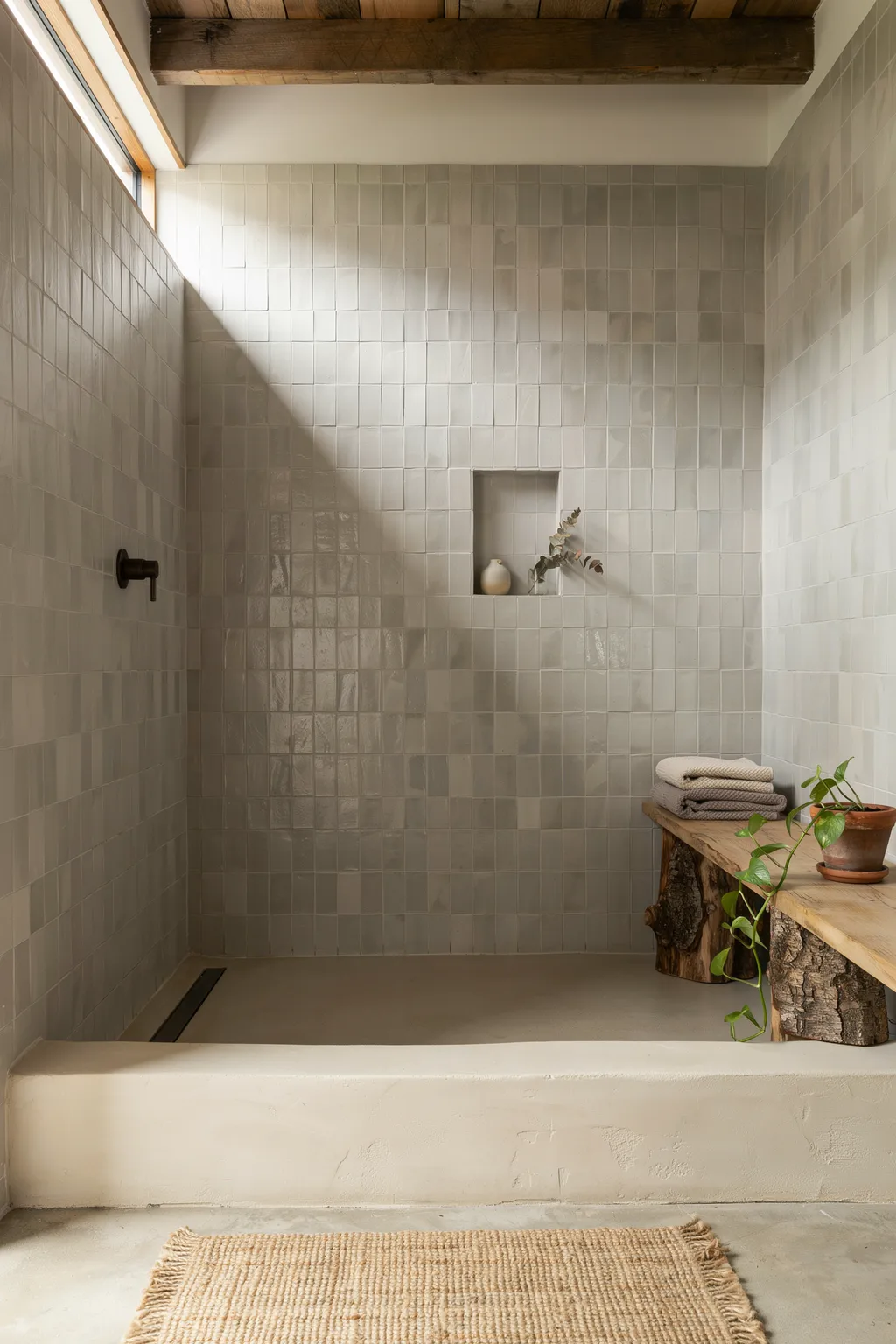
Handmade tiles with uneven edges give a shower the gentle imperfection this style is built on. Line a walk-in shower with irregular grey square tiles, each slightly different in size and glaze, and the wall shimmers with subtle variation instead of machine-perfect sameness. A plaster half-wall, a rough log bench, and a jute mat keep the rest raw and warm.
Uneven tiles are the whole charm. Because no two are quite alike, the light catches them differently across the wall, giving a handmade depth that flat, uniform tile never has. Zellige and other handmade tiles are made for exactly this. Handmade square tiles run 15 to 40 dollars a square foot, more than standard tile but worth it for the texture.
Great for anyone who wants craft and character in a wet zone. Skip handmade tile if you need a flawless, uniform grid, since the natural size and color variation is the point and will never look perfectly even.
12. Hang a Paper Globe Over a Light Oak Vanity
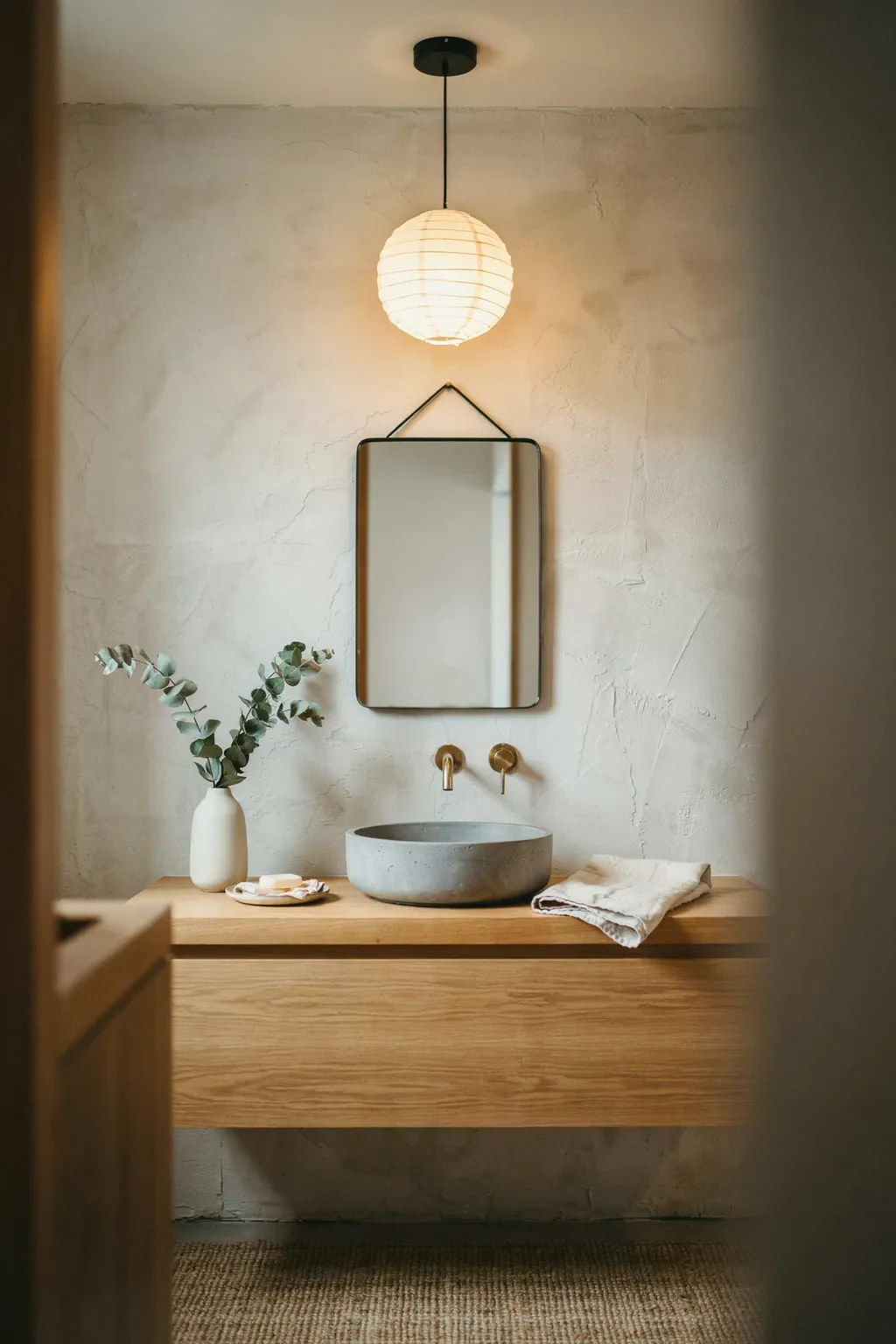
A single white paper globe pendant brings soft, sculptural calm above a light oak vanity. Pair the warm wood with a round grey stone vessel, a tall frameless mirror, and a sheer linen curtain, and the paper globe glows overhead like a small moon. A jute round rug and a stem of pampas ground the floor and keep it warm.
The paper globe is a quiet anchor. Its round, glowing form softens the room and casts even, flattering light, while the oak and stone keep the palette warm and natural. Frameless details let the materials speak. A paper globe pendant costs as little as 25 to 60 dollars, one of the cheapest ways to shift the whole mood.
Perfect for a calm, budget-friendly refresh in a small bathroom. Skip a big globe in a low-ceiling room, since an oversized shade can feel cramped, and a smaller one keeps the space breathing.
13. Wrap a Galley Bath in Warm Microcement
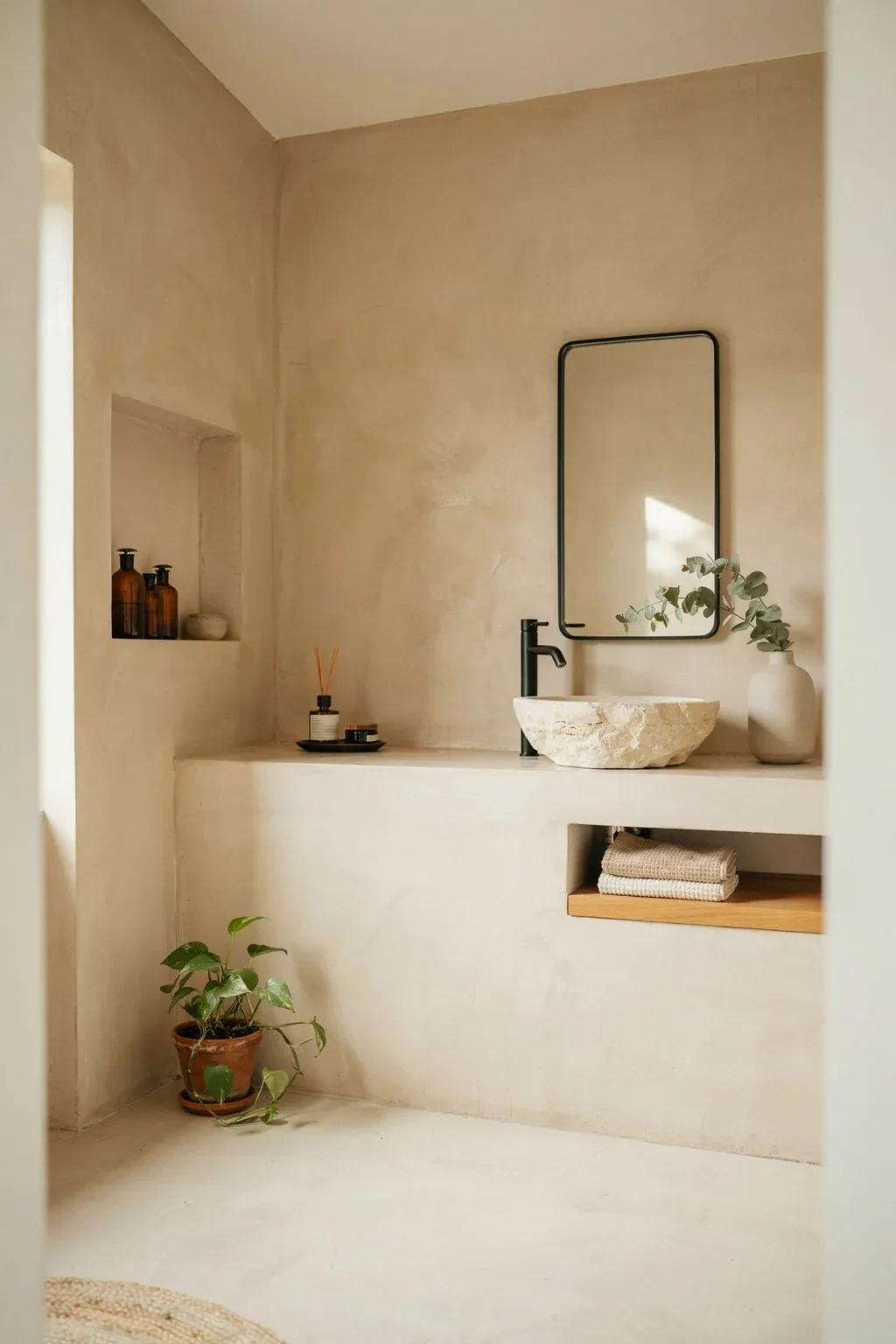
In a narrow galley bathroom, warm microcement on the walls creates a seamless, tactile calm. Run the soft plaster-like finish over every wall, line both sides with light wood cabinetry, and set stone vessels on a stone counter. When sunlight streams down the length of the room, the cloudy microcement glows and the whole space feels like one continuous, handmade surface.
Seamless texture is what makes a small room feel serene. Microcement has a soft, mottled finish that flat paint cannot match, and running it unbroken across the walls removes busy grout lines and visual clutter. Wood cabinetry keeps it warm. Applied microcement runs 5 to 15 dollars a square foot, best done by a skilled installer.
Great for narrow bathrooms that need calm and flow. Skip microcement as a weekend DIY, since it needs proper application and sealing or it cracks and stains in a wet room. The U.S. EPA’s guidance on controlling bathroom moisture and mold is worth reading before you finish any raw-surface bathroom.
14. Blend Wabi Sabi With Japandi Calm
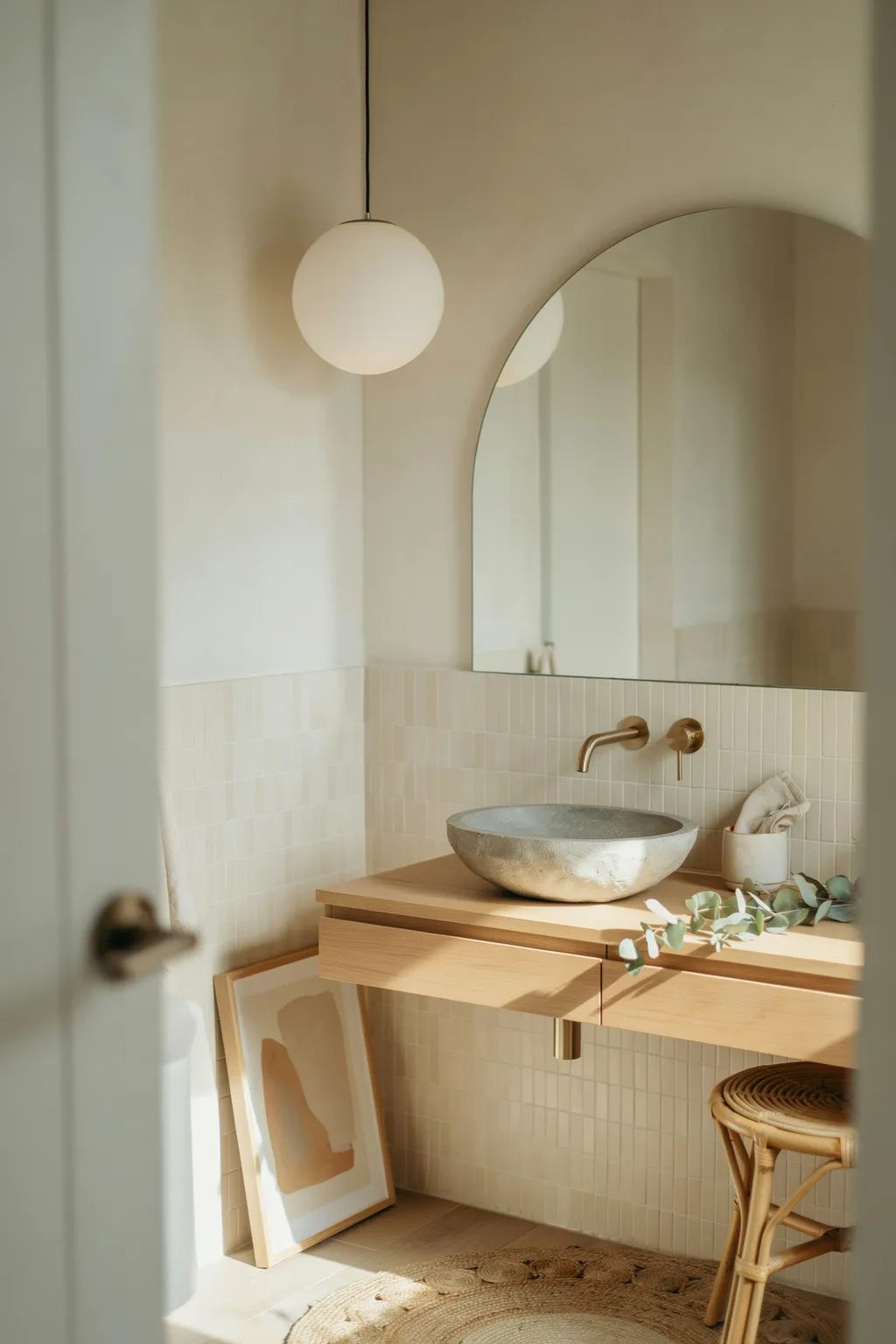
Wabi sabi and Japandi share the same soul, and together they make an especially serene bathroom. Combine a light wood floating vanity and a grey stone vessel with an arched frameless mirror and a paper globe pendant. Add a piece of soft abstract art, a rattan stool, and a half-tiled wall, and you get the raw warmth of wabi sabi with the clean restraint of Japandi.
The fusion works because both styles prize natural materials and calm. Wabi sabi brings the rough, aged texture while Japandi adds the tidy lines and clear surfaces, so the room feels warm but never messy. A single piece of art gives the eye a soft focal point. This look sits mid-budget, roughly 800 to 2,000 dollars for the key pieces.
Perfect for anyone torn between rustic warmth and minimal calm. Skip too many rough or busy elements here, since the Japandi side needs breathing room and clear space to stay serene.
15. Top a Rustic Vanity With a Live-Edge Slab
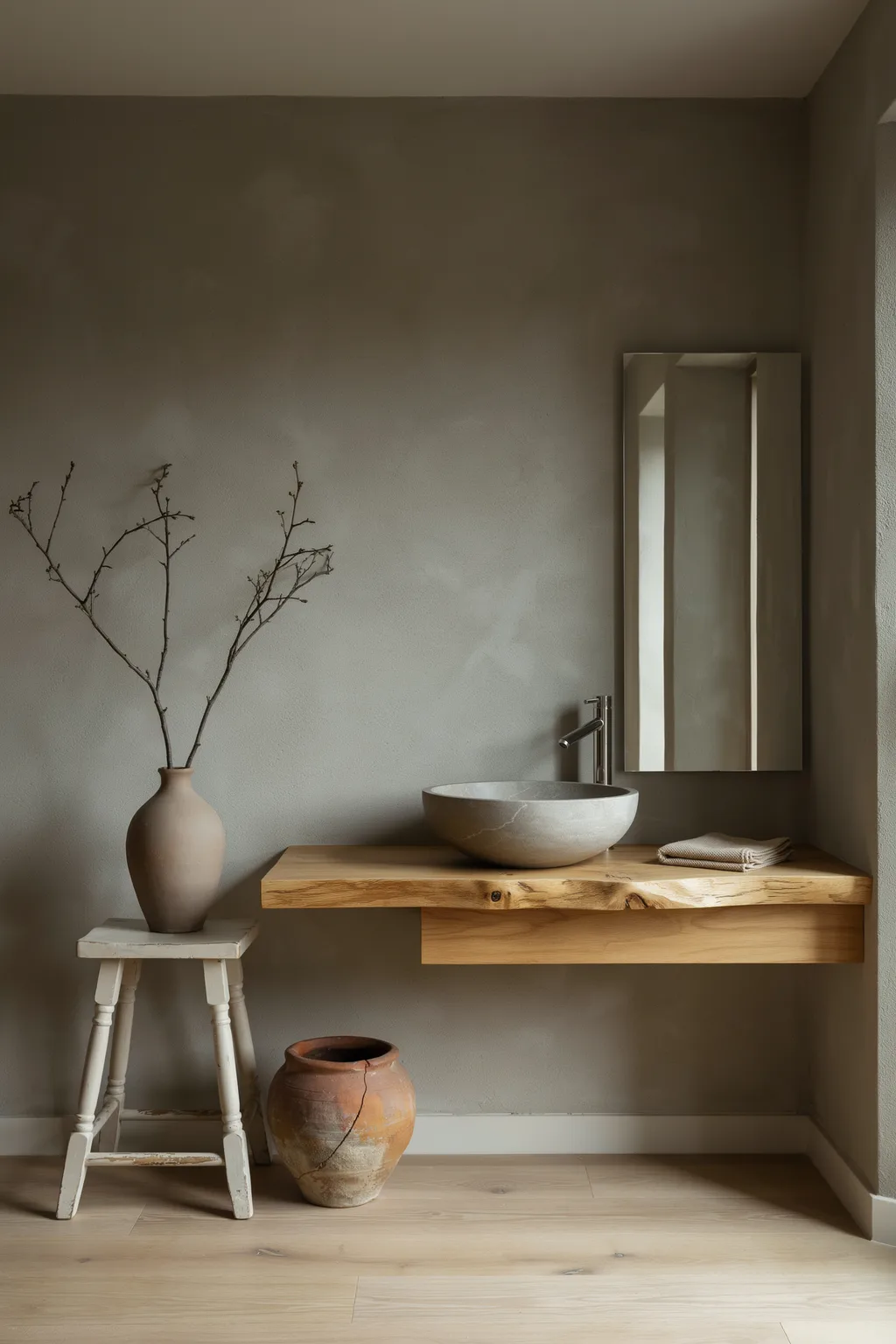
A live-edge wood top turns a plain vanity into a piece of natural sculpture. Set a live-edge slab over a rustic cabinet, add a round grey stone bowl and a simple chrome tap, and style a weathered white stool nearby with a ceramic vase and a few bare branches. Against soft microcement walls, the raw wood edge and stone bowl feel like quiet art.
The natural edge is the star. Keeping the tree’s original profile brings organic movement and warmth that a straight cut cannot, and a rough stone bowl adds honest weight on top. An aged stool used for styling reinforces the collected, imperfect feel. A live-edge vanity top runs 150 to 400 dollars depending on the wood.
Great for anyone who wants a natural focal point without a full remodel. Seal the wood well near the basin, since even a beautiful live-edge top will darken and crack if standing water sits on it.
16. Double Up With Vessel Bowls and a Concrete Tub
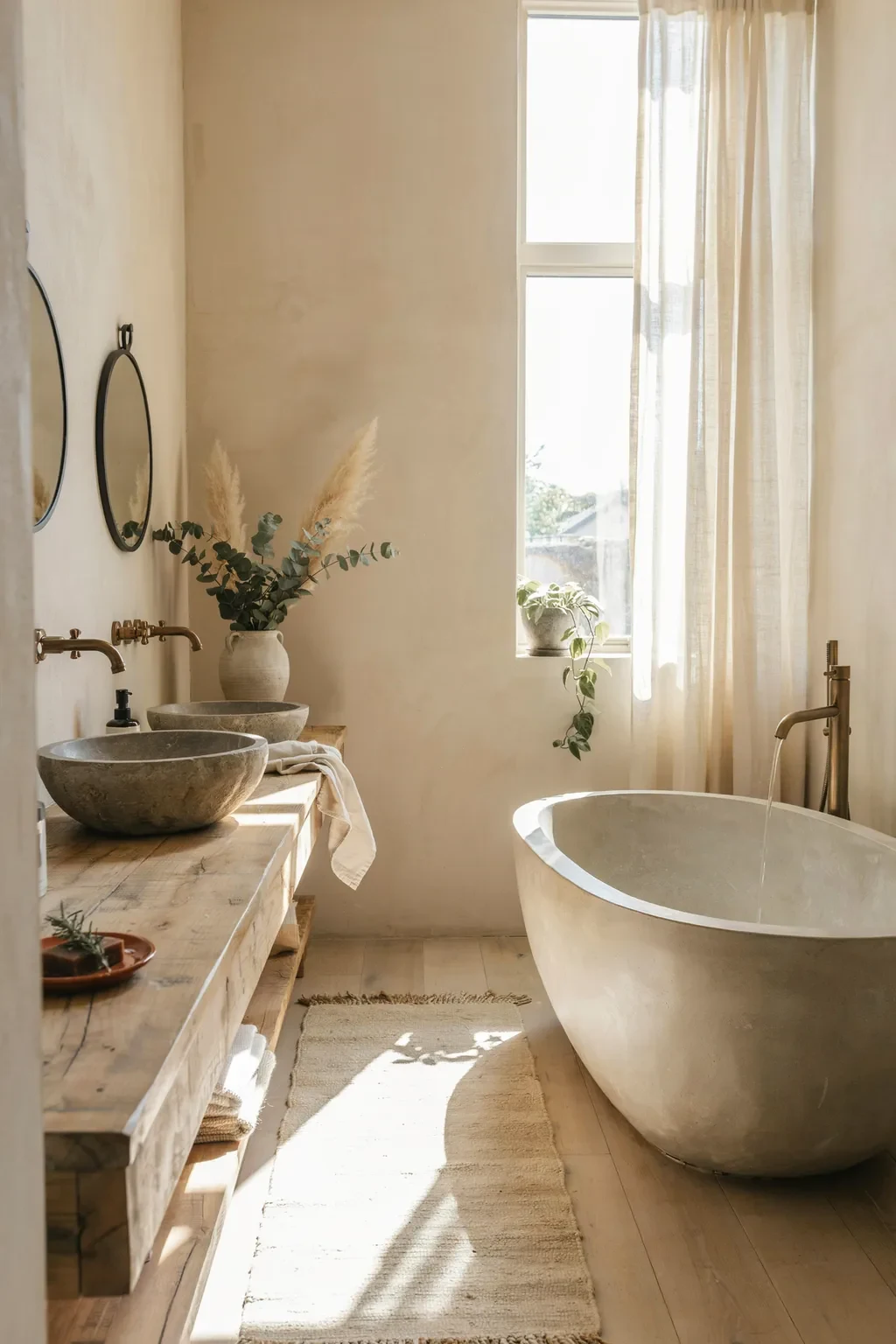
A bright galley bathroom handles a whole crowd with a reclaimed-wood double vanity and two white vessel bowls. Fit aged brass wall taps, hang two slim mirrors, and set a chunky concrete tub along the opposite wall. A wood barrel stool, a jute runner, and a potted palm under a skylight keep the long room warm and full of light.
Doubling the basics suits a shared, hardworking bath. Two vessel bowls and two mirrors give couples room without crowding, and the reclaimed wood and concrete tub keep the mood raw and grounded. A skylight floods the galley with the natural light this style loves. A concrete soaking tub runs 1,500 to 4,000 dollars, so plan it as the centerpiece.
Best for primary bathrooms with length to spare and good overhead light. Skip a heavy concrete tub on an upper floor without checking the structure, since a filled stone tub is very heavy and needs proper support.
17. Contrast Rough Stone With Matte Black Fixtures
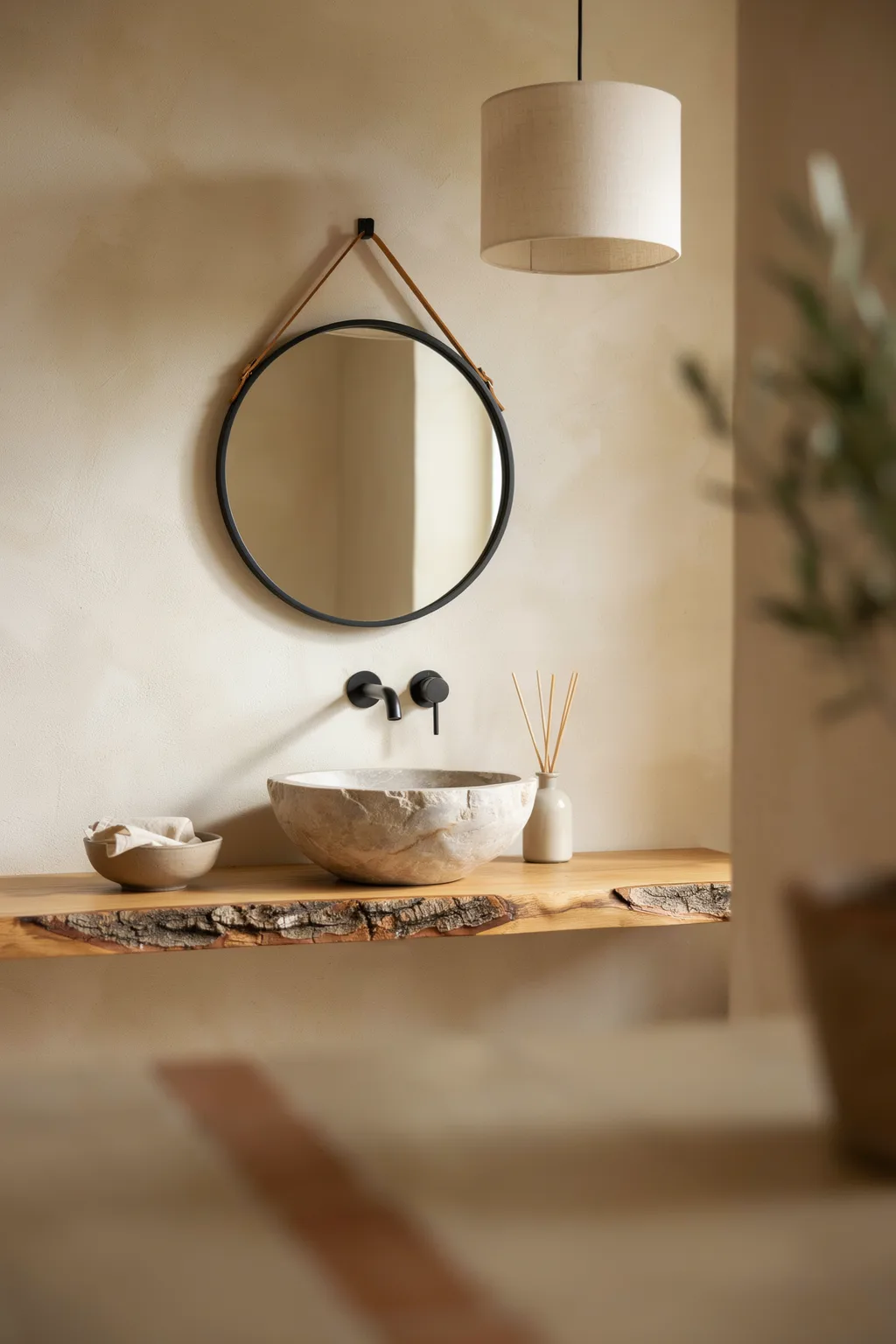
Matte black fixtures give raw stone a crisp, modern edge. Set a rough grey-and-cream stone vessel on a live-edge floating shelf, add black wall taps and a black-framed round mirror on a leather strap, and hang a soft linen drum pendant. The dark metal sharpens the soft plaster and pitted stone, so the room feels both earthy and current.
Black against natural texture is a quiet power move. The matte fixtures ground the warm, cloudy plaster and give the eye a clean line to rest on, while the rough stone keeps it from feeling cold. A live-edge shelf floats it all lightly off the wall. Matte black taps run 100 to 300 dollars, an easy way to modernize the look.
Great for those who want raw materials with a modern backbone. Skip glossy black here, since a shiny finish fights the matte, handmade feel and shows every water spot.
18. Float a Travertine Shelf With a Stone Bowl
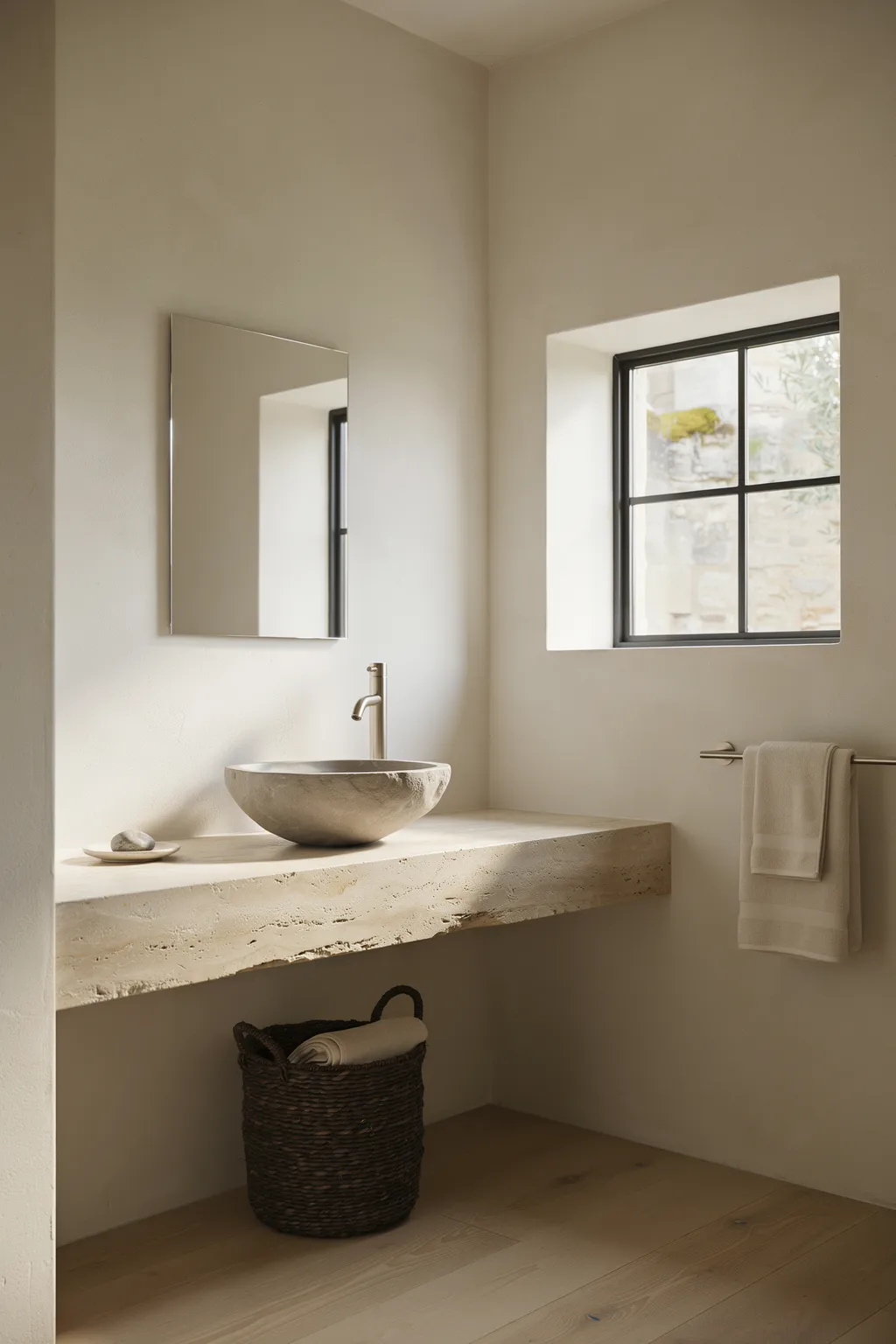
A raw travertine floating shelf makes a minimal, sculptural vanity. Let the slab’s rough, pitted edge show, set a smooth grey stone bowl on top, and keep the wall a soft plaster with a simple frameless mirror. A window with a stone view, linen towels, and a dark woven basket underneath finish a spare, grounded corner that feels quietly luxurious.
Raw travertine is honest and beautiful. Its natural pits and tonal shifts read as handmade even when the line is clean, and floating it keeps the floor open and the look light. A smooth stone bowl on rough stone plays soft against rugged. A travertine shelf runs 200 to 600 dollars depending on size and thickness.
Perfect for minimalists who still want warmth and texture. Skip unsealed travertine near heavy splashing, since the porous stone stains and etches from soap and water without a good sealer.
19. Go All Microcement With a Rattan Pendant
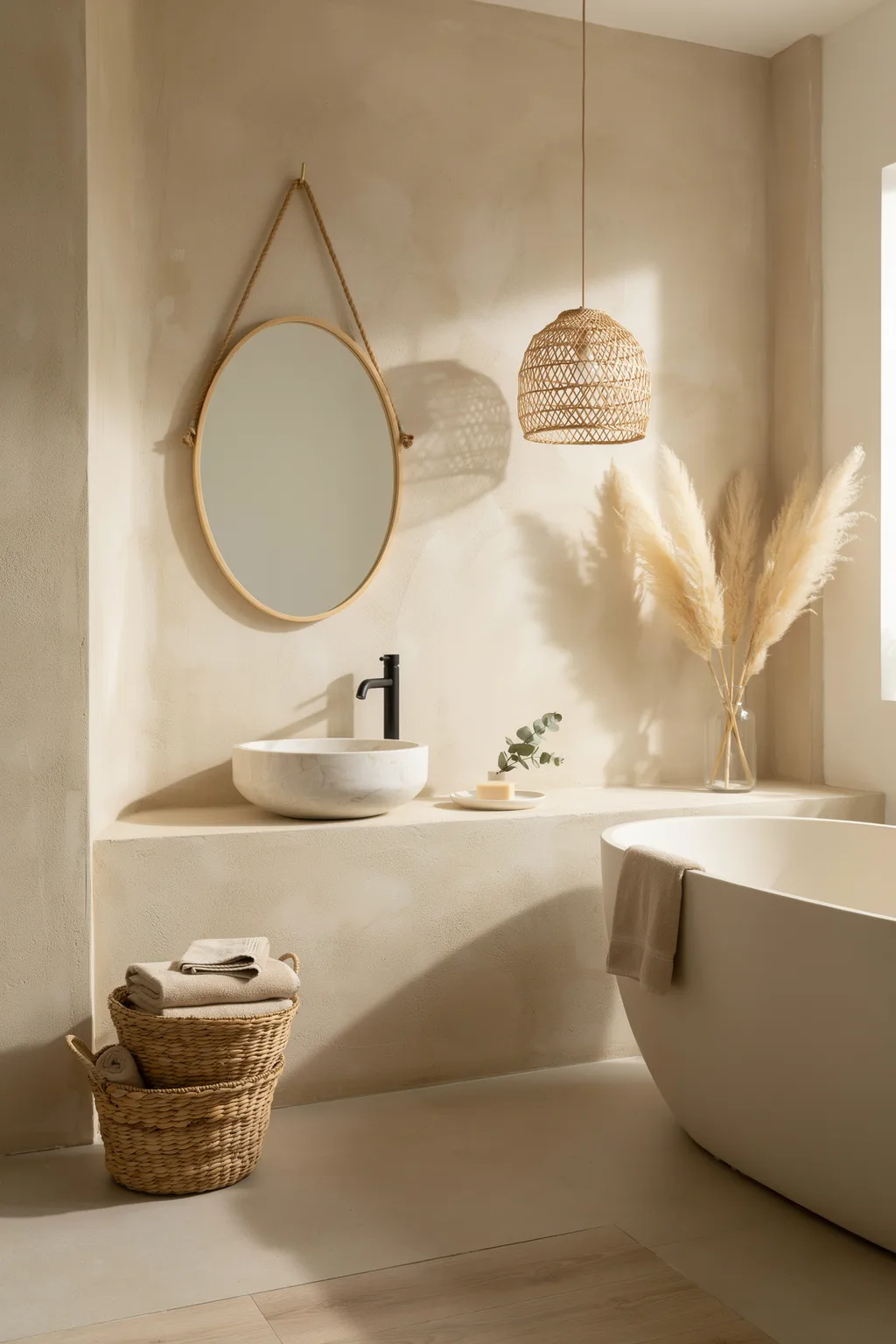
Wrapping the whole room in microcement, floor to counter, creates a soft, cocoon-like calm. Pair the seamless earthy finish with a round wood-framed mirror on a rope, a round white stone vessel, and a woven rattan pendant for warm texture overhead. Pampas grass and woven baskets keep it natural, and a freestanding tub anchors the serene, monochrome space.
An all-microcement room feels enveloping and whole. With walls, counter, and floor in one continuous tone, there is nothing jarring for the eye, which is deeply restful, and the natural rattan pendant adds warmth against the cool plaster. Baskets bring soft, functional texture. A full microcement application is a bigger job, often 3,000 dollars and up for a whole bathroom.
Best for those who want a serene, seamless, spa-like room. Skip the fully monochrome look if you crave contrast, since an all-one-tone space can feel too subtle without layered natural textures.
20. Anchor the Room With a Sculptural Stone Tub
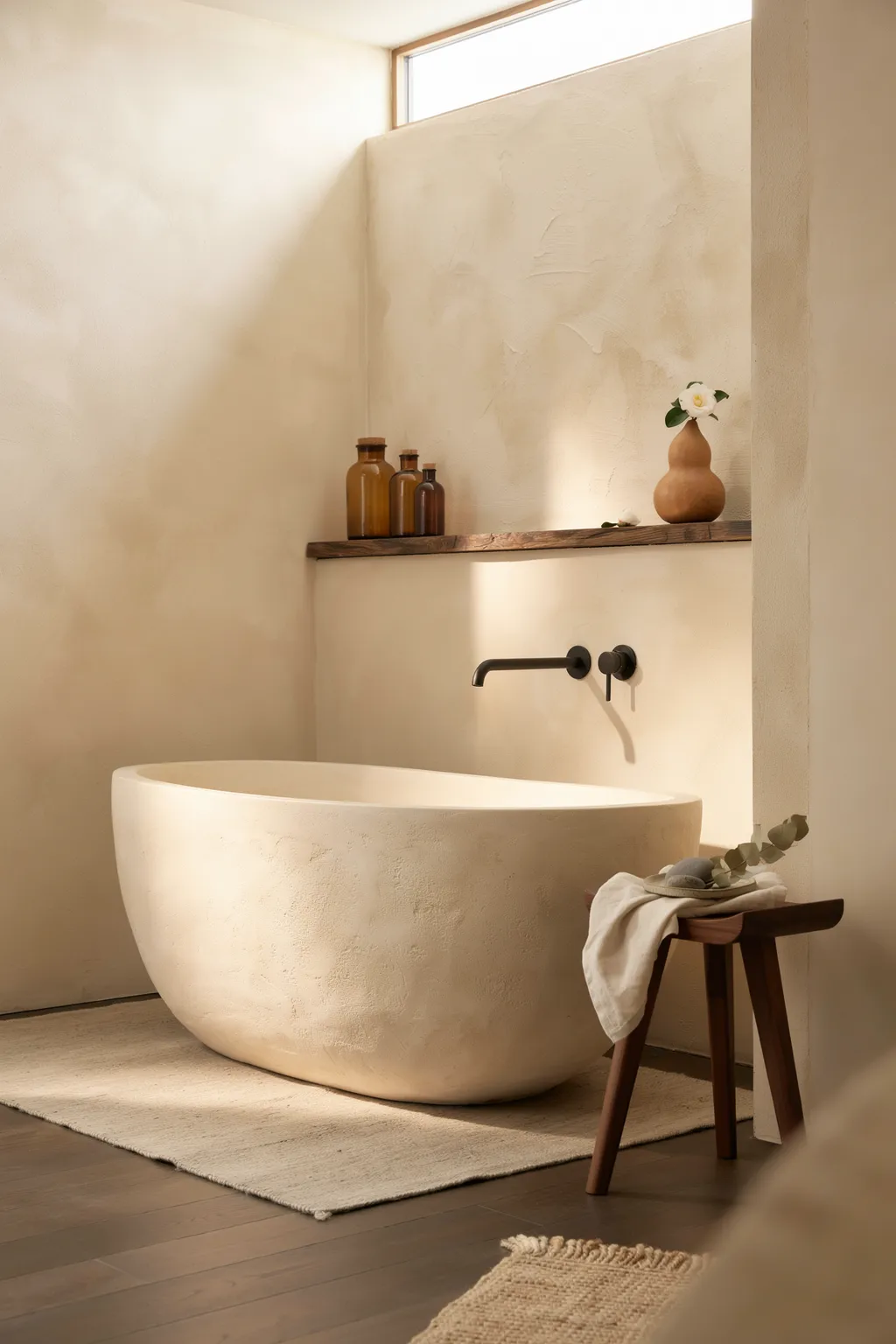
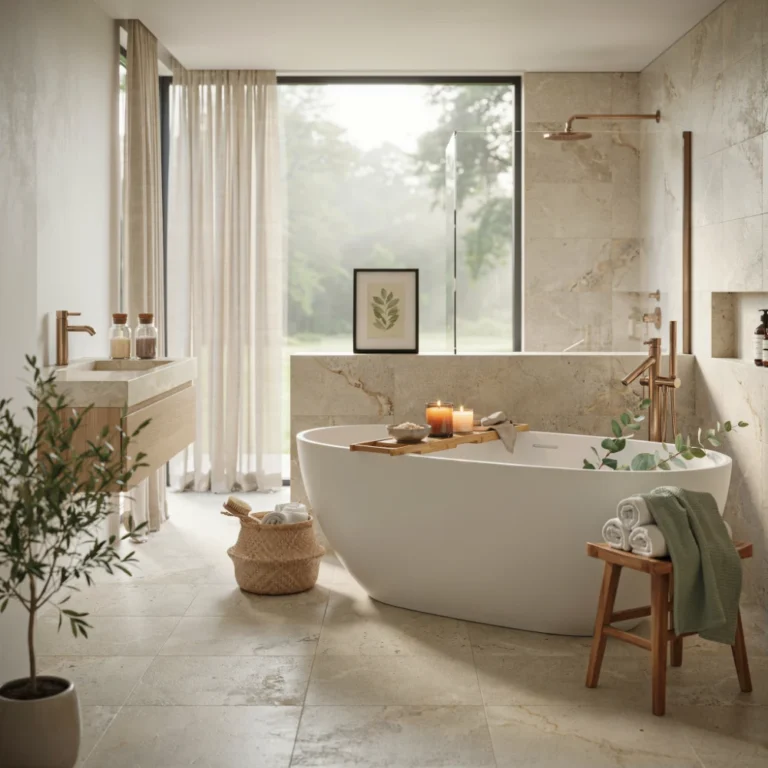
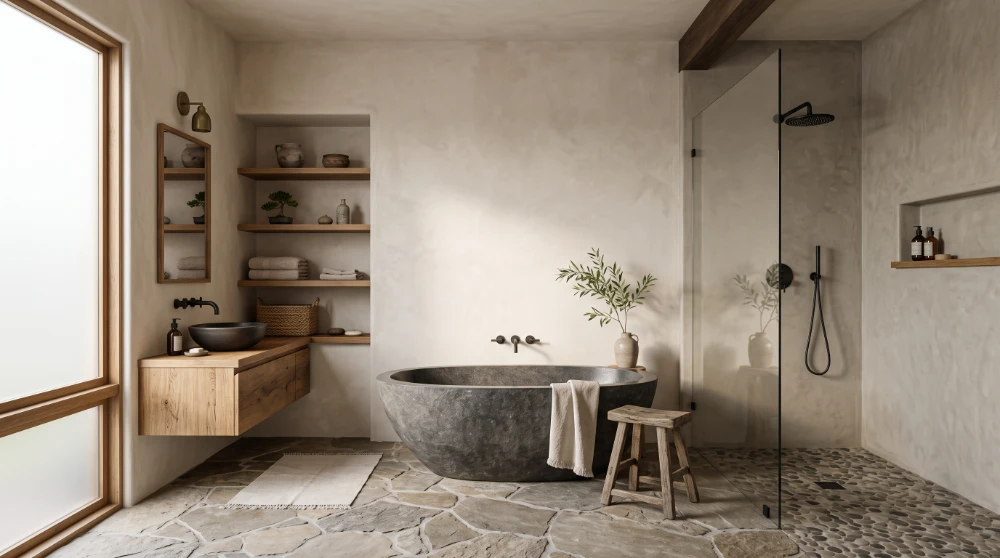
A sculptural stone tub is the ultimate calm centerpiece for this style. Set a cream, hand-formed freestanding tub against heavily textured plaster walls, add a wall-mounted tap and a rough wood ledge for amber bottles, and place a gourd vase with a single flower nearby. Under a clerestory window, the raw plaster and organic tub shape feel like a spa carved from earth.
A monolithic tub carries deep, grounding weight. Its hand-formed curves and stone surface read as timeless and elemental, while the textured plaster around it amplifies the raw, tactile mood. One simple flower keeps the styling spare and intentional. A stone or cast freestanding tub runs 1,500 to 5,000 dollars, so it is the splurge that defines the room.
Best for primary bathrooms with the space and structure for a heavy tub. Skip a solid stone tub upstairs without an engineer’s check, since a filled stone tub is extremely heavy and needs proper support below.
21. Lay a Pebble Stone Shower Floor
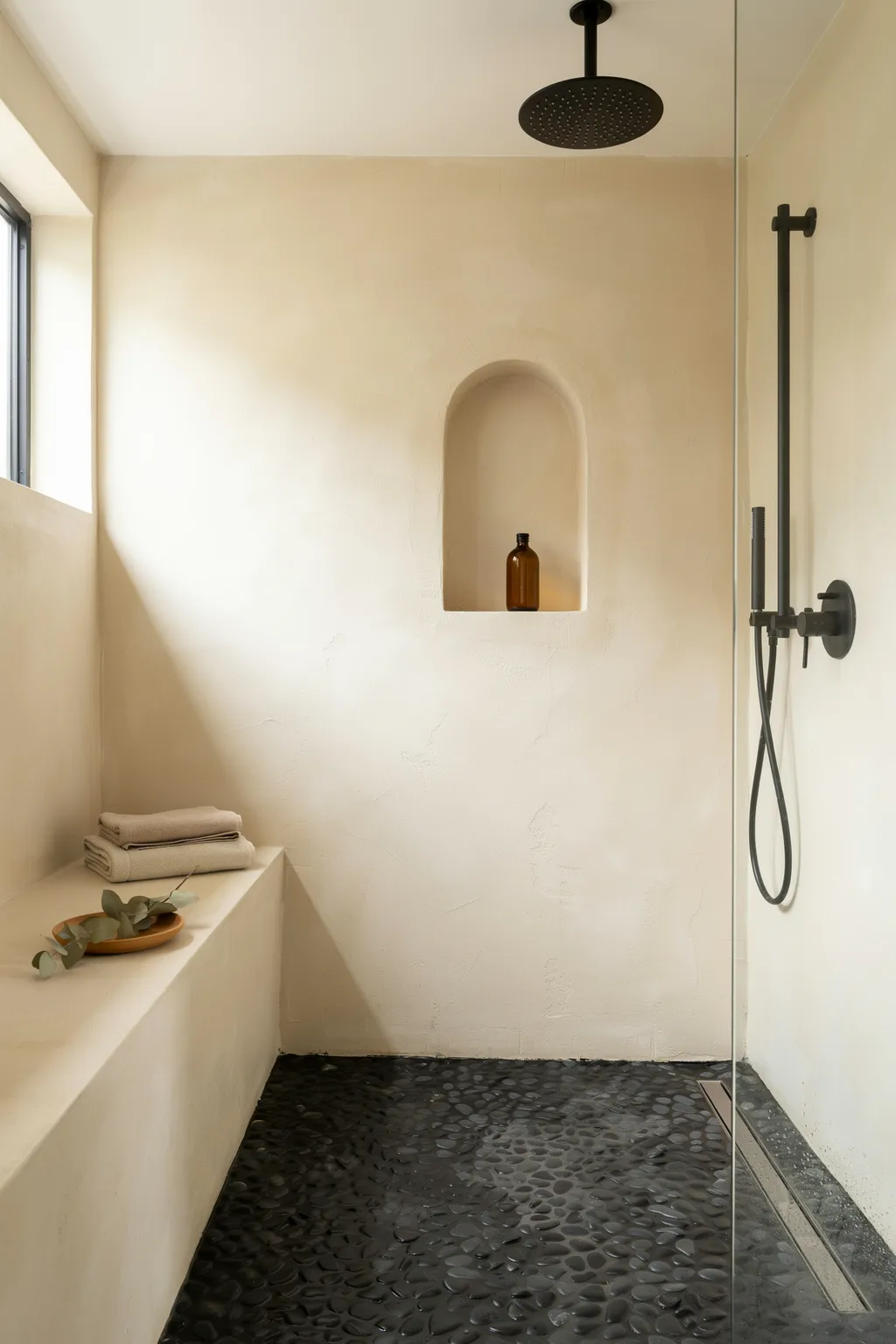
A pebble stone shower floor brings the outdoors underfoot and doubles as a gentle foot massage. Set smooth black river pebbles into the base of a microcement walk-in shower, add a black rain head and hand shower, and carve an arched niche for a single amber bottle. A built-in plaster bench and soft linen towels keep the whole shower calm and earthy.
Pebbles add natural texture where you least expect it. The rounded stones feel wonderful underfoot and echo a riverbed, bringing raw nature right into the shower, while the arched niche and plaster bench keep the lines soft. Black pebbles ground the pale plaster. A pebble shower floor runs 8 to 20 dollars a square foot in stone, plus install.
Great for anyone who wants a spa-like, sensory shower. Skip pebbles if you dislike uneven footing or want easy cleaning, since the many small gaps trap grime and need regular sealing and scrubbing.
22. Make a Monolithic Pedestal Sink the Sculpture
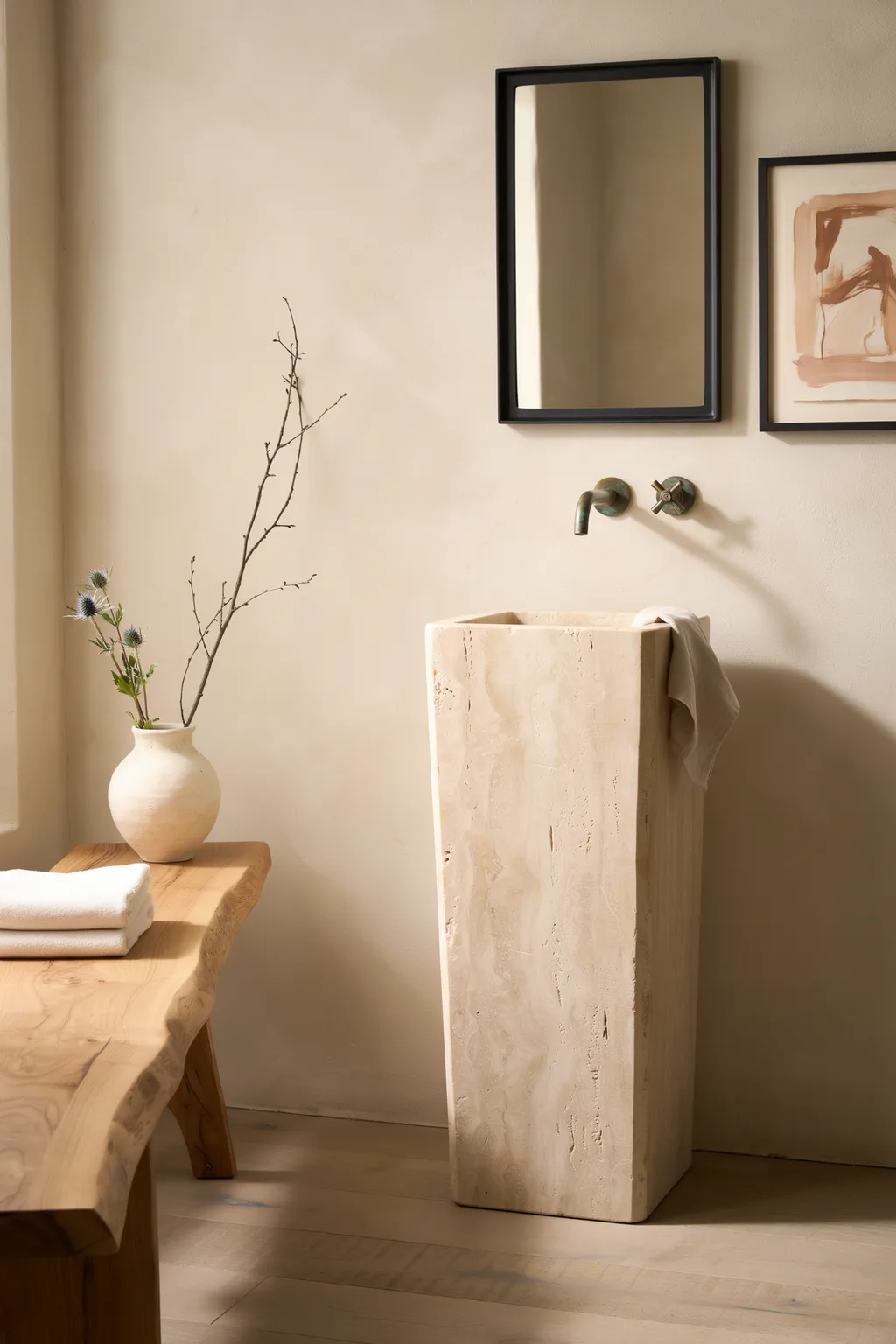
A monolithic stone pedestal sink turns the basin itself into the room’s sculpture. Choose a tall, hand-carved travertine or stone pedestal, mount aged bronze wall taps and a black-framed mirror above, and hang one piece of warm abstract art in terracotta tones nearby. A live-edge wood bench and a dried thistle keep the styling raw and spare, so the sculptural sink stands alone.
A single carved form makes a powerful, quiet statement. A one-piece pedestal reads as art and needs no cabinetry, which keeps the room open and calm, while the aged bronze and abstract art add warmth and a human touch. This is minimalism with soul, not sterility. A stone pedestal sink runs 400 to 1,500 dollars, a real but rewarding investment.
Perfect for a powder room or ensuite where you want one strong focal point. Skip a heavy pedestal on a weak floor without checking it, since a solid stone sink concentrates a lot of weight in one small footprint.
Common Mistakes to Avoid
A wabi sabi bathroom can go from soulful to shabby when a few basics get missed. Each of these is easy to fix once you spot it.
Mistake 1: Confusing imperfect with unfinished
Wabi sabi celebrates intentional, honest wear, not laziness. A raw plaster wall should look considered and well made, not patchy and unsealed. Aim for finishes that read as crafted, and hire a skilled hand for plaster and microcement, since a sloppy job looks like a mistake, not a mood.
Mistake 2: Using fake, printed materials
Plastic “stone” basins and printed wood laminate read false and cheapen the whole look. This style lives on real, honest materials, so spend where it shows, on the basin, the counter, and the taps. One genuine stone or wood piece beats a room full of convincing fakes.
Mistake 3: Ignoring sealing and ventilation
Raw plaster, stone, and wood all suffer in a room full of trapped steam, and mold ruins the calm fast. Seal porous surfaces properly and run a good extractor fan after every shower. Skipping this is the quickest way to turn beautiful raw materials into a maintenance headache.
Mistake 4: Making it cold and empty
Stripping the room to bare grey surfaces reads as sterile, not serene. Layer in warm wood, linen, and a few handmade objects so it feels lived-in. Wabi sabi is warm and human, so an empty, monochrome box misses the whole point of the style.
Mistake 5: Over-styling the surfaces
Too many bottles, trinkets, and dried stems turn calm into clutter. Edit hard and leave out only a few beautiful, useful things. The serenity comes from restraint, so a crowded shelf undoes the quiet the raw materials worked to create.
Mistake 6: Forcing perfect symmetry
Matching everything in neat pairs fights the natural, imperfect spirit. Let heights, shapes, and finishes vary a little. A slightly off-center arrangement and mismatched textures feel far more authentic than a showroom-perfect, mirror-image layout.
Quick Start Checklist
- [ ] Gather a material board of stone, wood, aged metal, and linen before buying
- [ ] Choose one raw hero surface, a plaster wall or a stone basin, to build around
- [ ] Keep the palette to warm earthy neutrals with aged brass or matte black
- [ ] Seal porous plaster, stone, and wood, especially near water
- [ ] Confirm a properly sized extractor fan and good ventilation
- [ ] Soften the light with linen curtains, paper lanterns, or warm bulbs
- [ ] Add natural textiles like linen towels and a jute or wool rug
- [ ] Limit décor to a few handmade, imperfect objects
- [ ] Choose real materials over printed or plastic imitations
- [ ] Let heights and shapes vary instead of forcing symmetry
Frequently Asked Questions
What is a wabi sabi bathroom?
A wabi sabi bathroom is built on the Japanese idea of finding beauty in imperfection, age, and natural materials. It uses raw stone, plaster, aged wood, and linen in warm, earthy tones, and lets wear and handmade texture show rather than hiding them. The result feels calm, grounded, and lived-in instead of glossy and matched.
What colors suit a wabi sabi bathroom?
Stick to warm, muted, earthy neutrals: oatmeal, sand, clay, warm grey, soft white, and natural wood tones. Add depth with aged brass, matte black, or a single terracotta accent. Avoid bright, saturated colors and cool blue-greys, which break the warm, organic calm the style depends on.
What materials should I use?
Choose honest, natural materials: rough stone, lime plaster or microcement, reclaimed and live-edge wood, travertine, handmade tile, linen, jute, and rattan. Aged brass and matte black suit the fixtures. Real texture matters most, so pick genuine stone and wood where you can and skip printed or plastic lookalikes.
How do I get the look on a budget?
Start with styling. Add a stone vessel basin, swap in aged brass or matte black taps, hang linen curtains, and layer in handmade bowls and a jute rug. A paper lantern and a few dried stems cost little and shift the whole mood. You do not need a full renovation to capture the calm.
Is wabi sabi the same as Japandi?
They overlap but are not identical. Wabi sabi is a Japanese philosophy centered on imperfection and age, leaning rawer and more rustic. Japandi is a design style that blends Japanese and Scandinavian ideas, leaning cleaner and more minimal. Many rooms mix both, using raw wabi sabi texture with tidy Japandi restraint.
How do I keep raw materials from getting damaged?
Seal porous plaster, stone, and wood, especially near the sink and shower, and reseal once or twice a year. Wipe up standing water, run your fan to control humidity, and keep raw wood out of direct spray. Cared for this way, natural materials only grow more beautiful with age.
Conclusion
A calm, soulful bathroom is not about spending the most or matching everything. It is about choosing honest materials, keeping the palette warm, and letting age and texture show. Get those right and the room feels restful the moment you step in.
Start with one raw hero, a plaster wall, a stone basin, or a live-edge counter, and build quiet around it. Keep the colors earthy and warm, softened with aged brass or matte black. Layer in linen, jute, and a few handmade objects so the space feels lived-in, not sterile. Seal your raw surfaces and run a fan so the materials last. And edit hard, since restraint is what turns raw texture into calm rather than clutter.
You do not need all 22 of these wabi sabi bathroom ideas or a full renovation to begin. Pick the one setup that fits your room, your light, and your budget, whether that is a stone vessel basin this month or a pebble shower floor next year. The best wabi sabi bathroom is the one that feels honest and calm, where a little wear is exactly the point.
So gather your natural samples this weekend, choose your first raw material, and start there. That single, honest choice does more than anything else to turn a glossy, matched bathroom into the grounded retreat you pictured.