28 Covered Patio Ideas for Easy Outdoor Living
Your backyard gets great light for about three hours, then the sun turns the whole slab into a griddle. So the cushions fade, the drinks get warm, and everyone drifts back inside. A roof over even part of your patio fixes that fast, and it turns a spot you avoid into the one you actually use after work. These covered patio ideas show you how to get there without a full remodel.
The best part is you have real range here. Some of these looks lean rustic with stone and timber. Others go crisp and modern with clean overhangs and low sofas. A few cost a weekend and a curtain rod. Others are worth saving up for. You can borrow one idea or stack several, and they still hang together because they all solve the same problem: sun, glare, and the urge to hide indoors.
I pulled these covered patio ideas apart by what each one gives you. Shade first, then comfort, then the small touches that make people linger past sunset. Each section is grounded in a real setup so you can see the proportions, not just the vibe. I also flag who each idea suits and where it falls short, because a shade sail that looks perfect in July can sag under the first heavy rain if you skip the pitch. Grab the ones that fit your yard and your budget.
Quick Answer
The fastest way to cover a patio is to match the structure to your climate and how often it rains. Dry, sunny yards do great with pergolas, shade sails, or slatted roofs that filter light. Wet regions need a solid roof or a louvered system that closes tight. Then layer comfort: an outdoor rug, deep-seat cushions, and lighting. The covered patio ideas below run from weekend curtain fixes to built-in fireplaces, so you can start small and grow.
1. Anchor the Space With a Stone Fireplace
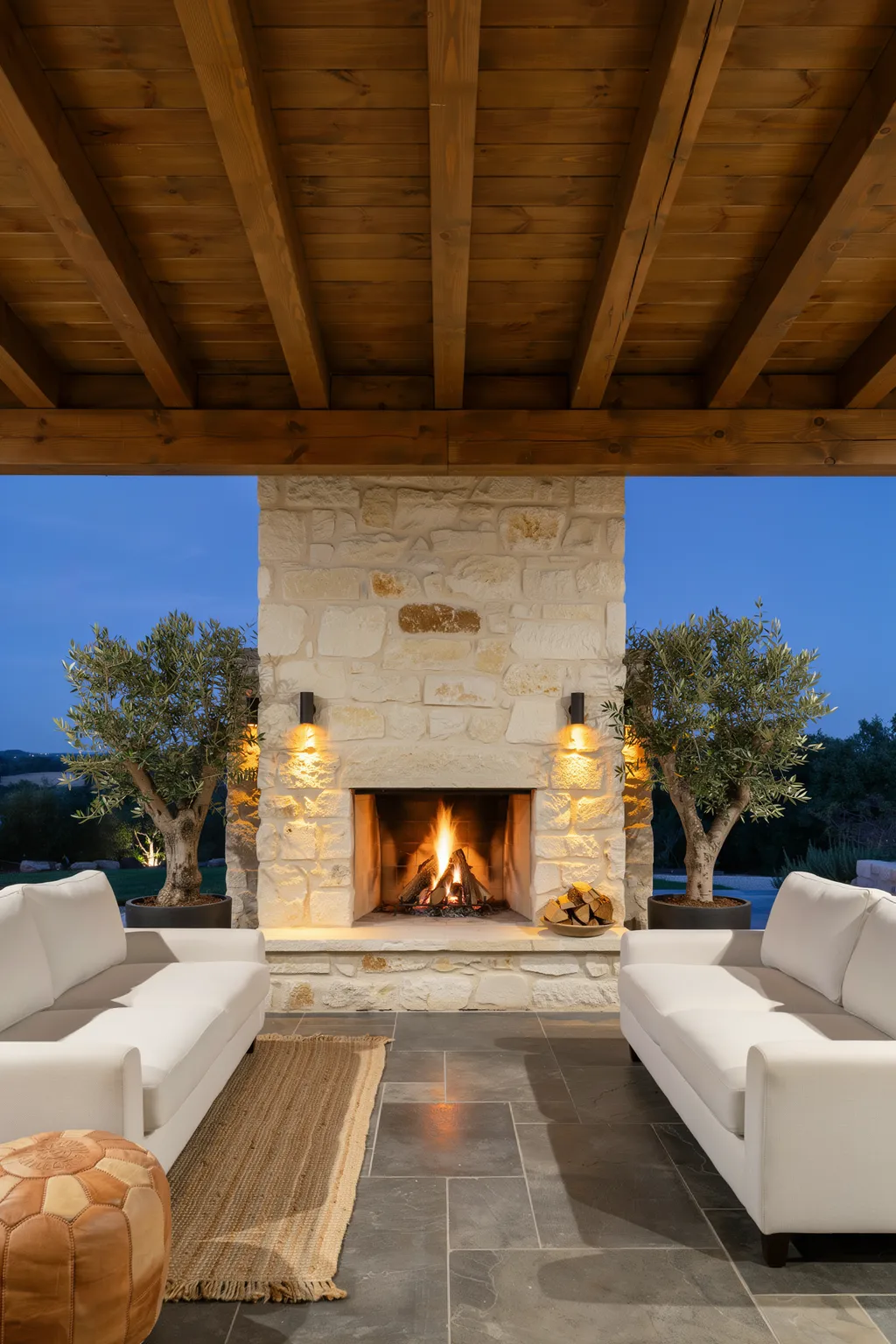
A stone fireplace gives a covered patio a reason to exist after dark. Set two facing sofas about seven feet apart, drop a low table between them, and the fire becomes the thing everyone turns toward. Pale limestone or cast stone reads calm and keeps the heat feeling soft, not heavy. Add wall sconces on the flanking piers so the corners never go black.
This works because a fireplace does two jobs at once. It throws real warmth into the shoulder seasons, and it gives your eye a warm center under a big timber ceiling. A gas insert runs around 40,000 BTU, plenty for a 12-by-14 lounge. Skip this if your covered patio sits under a low wood roof with tight clearances, since code usually wants a chimney or a rated vent above the firebox.
2. Frame a Modern Fireplace With Matching Chairs
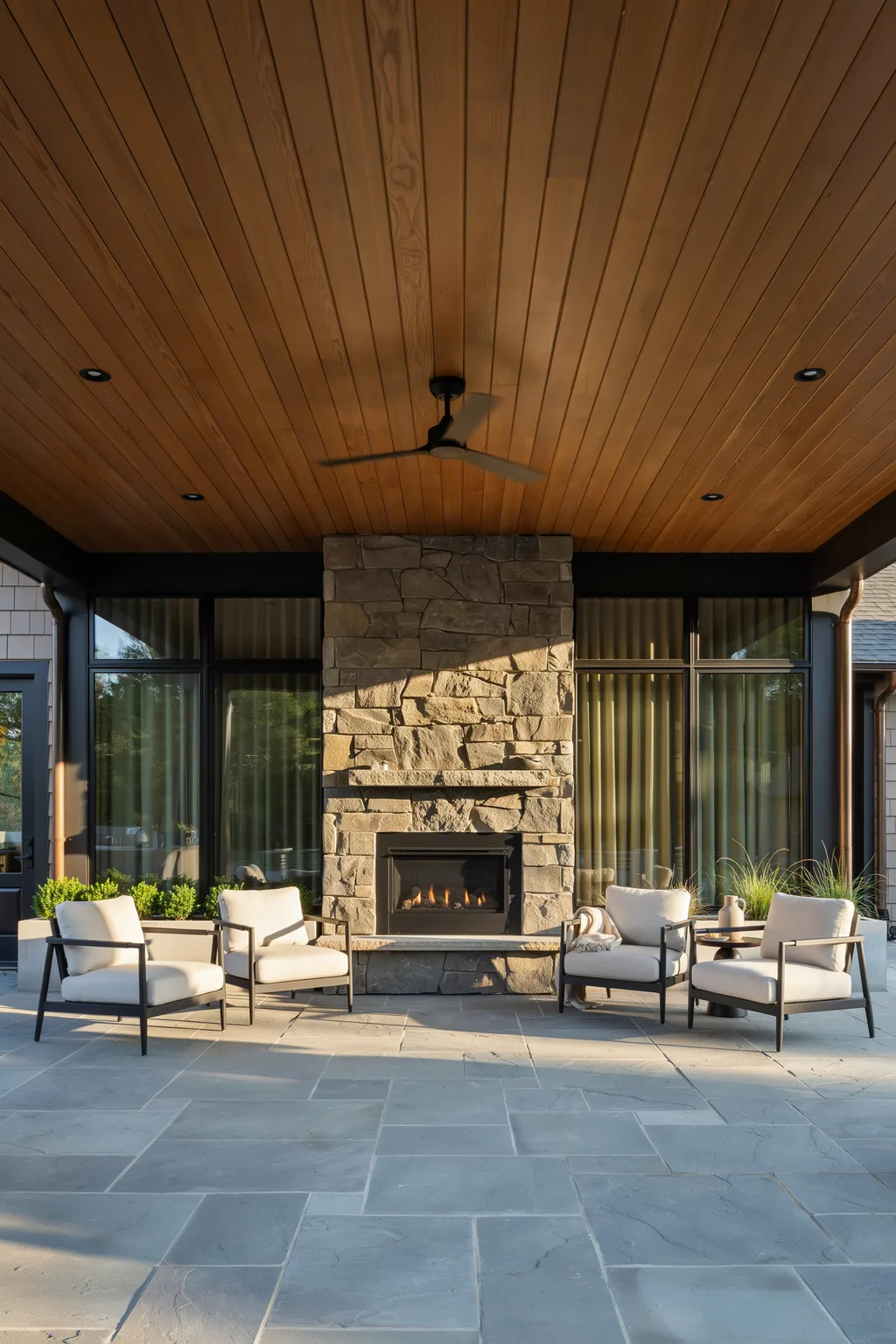
For a sharper look, pull four cushioned armchairs around a stacked-stone fireplace instead of sofas. The symmetry feels crisp and calm, and it seats a small group without one big couch swallowing the floor. Black metal frames with cream cushions play well against warm cedar ceilings and a slow-turning fan overhead.
The trick is the pairing. Two chairs on each side keep sight lines open to the yard, so the patio still feels like part of the garden. A cedar plank ceiling with recessed lights washes the wood in a honey tone at night. This suits homes with a wide, deep overhang. It falls short on a narrow porch, where four chairs plus a fire leave no walking room. Aim for at least a 10-foot depth.
3. Keep It Airy With a Slatted Wood Ceiling
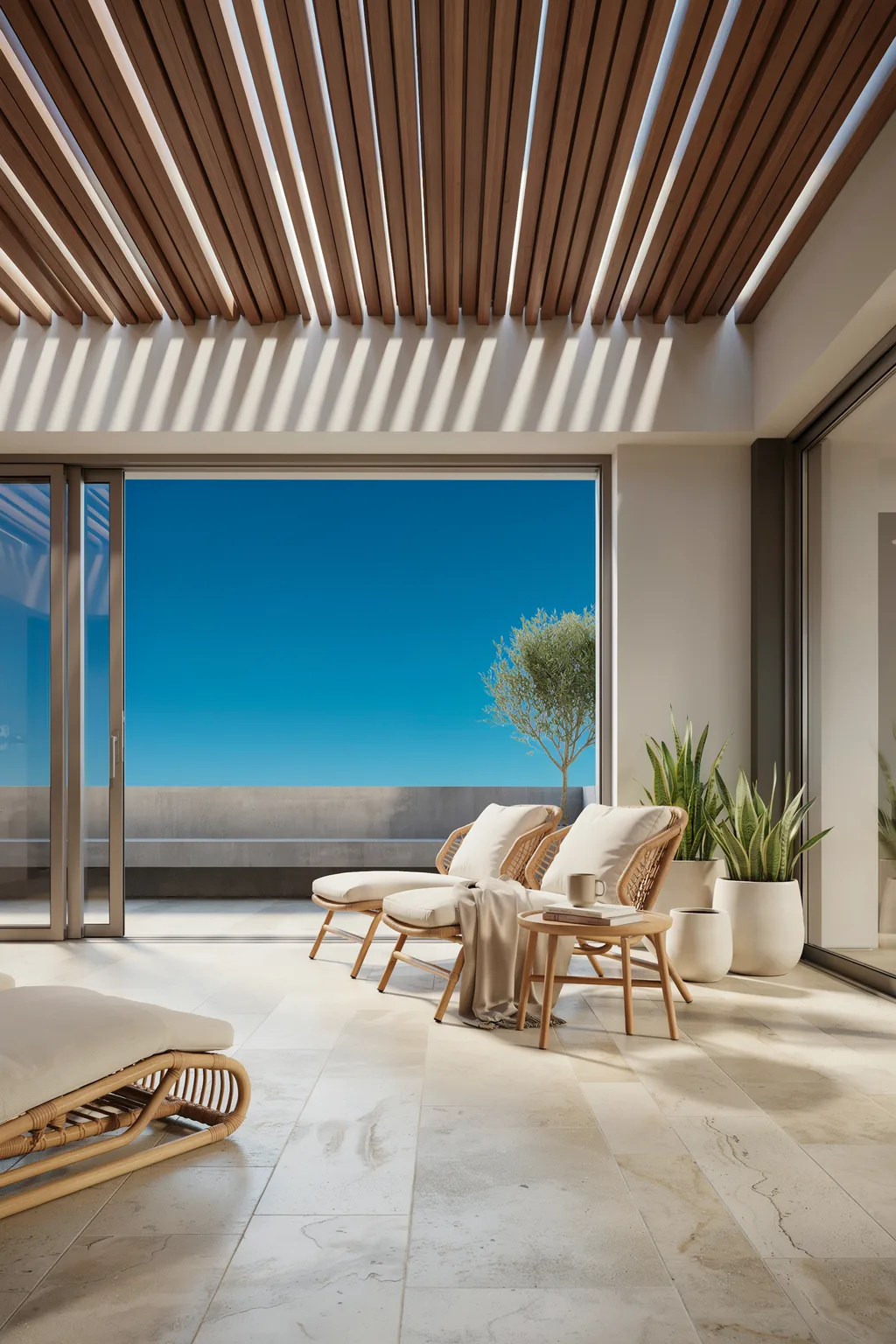
If you want shade but hate a boxed-in feeling, run wood slats across the roof frame. The gaps drop the temperature and still let slivers of sky through, so the patio reads open and bright. Pair it with woven lounge chairs and a small round side table for a calm, resort feel. These covered patio ideas suit rooftops and second-floor terraces where a solid roof would block the view.
Slats work because they cut direct sun without trapping heat the way a closed ceiling can. Run the boards north to south and you get moving stripes of light through the day, which keeps the space from feeling flat. Warm oak tones over pale flooring look clean and current. One caveat: slats filter rain, they do not stop it, so keep any electronics or fabric that must stay dry closer to the wall.
4. Pair Terrazzo Floors With Low White Sofas
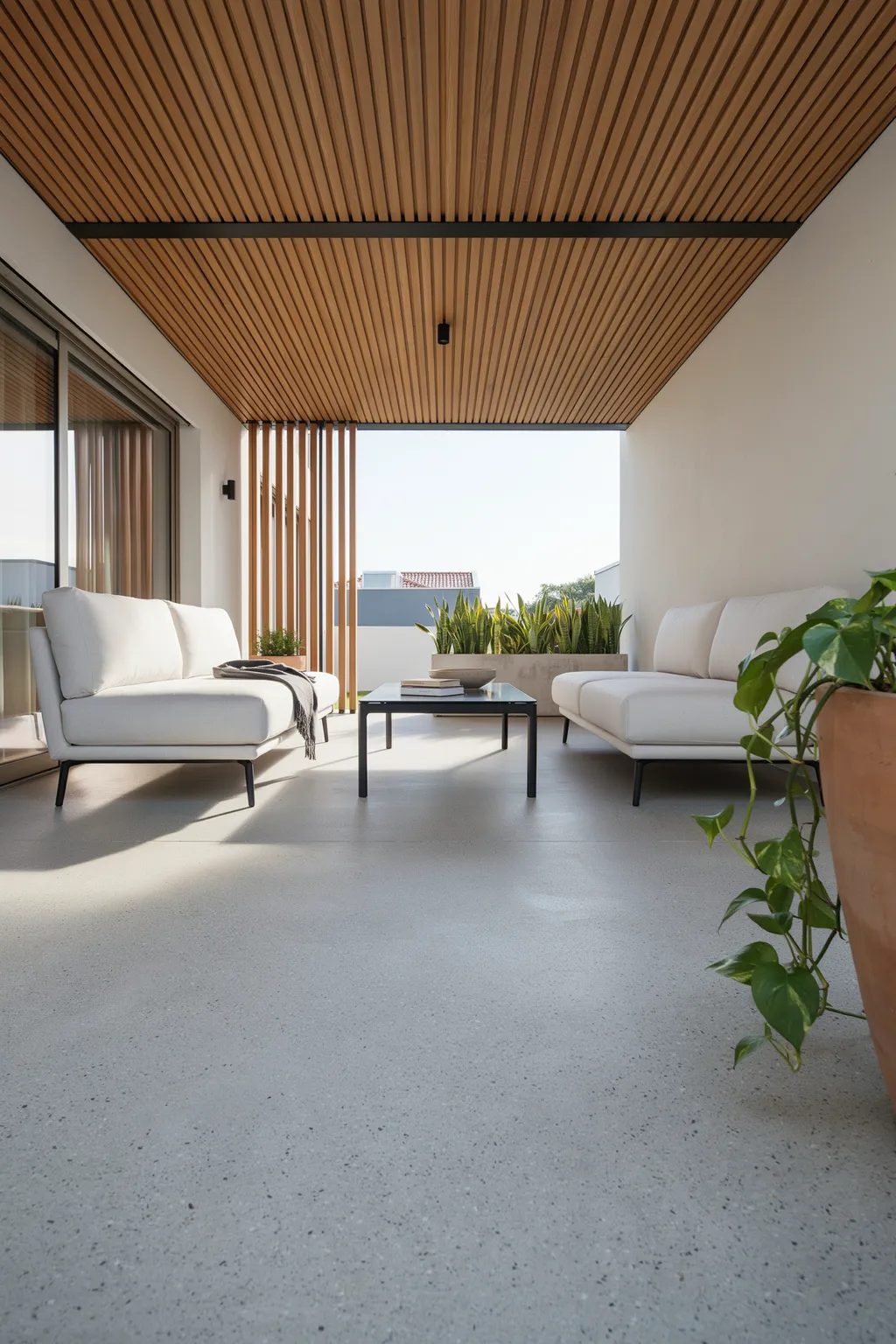
Terrazzo has quietly taken over patios, and it earns the hype. The speckled gray surface hides dust, stays cool underfoot, and pairs beautifully with two low white sofas facing each other. Add a black glass coffee table and a row of snake plants in concrete cubes for a look that feels gallery-clean but still comfortable.
This combination works because the busy floor does the decorating for you. You can keep the furniture plain and let the terrazzo carry the pattern, which reads intentional rather than sparse. A slatted wood ceiling above keeps the whole thing warm. This suits modern homes with a big flush overhang. Terrazzo pours run pricey, often 15 to 30 dollars a square foot installed, so budget builders may prefer large-format porcelain tile that mimics the speckle.
5. Install a Linear Fire Feature Along a Dark Wall
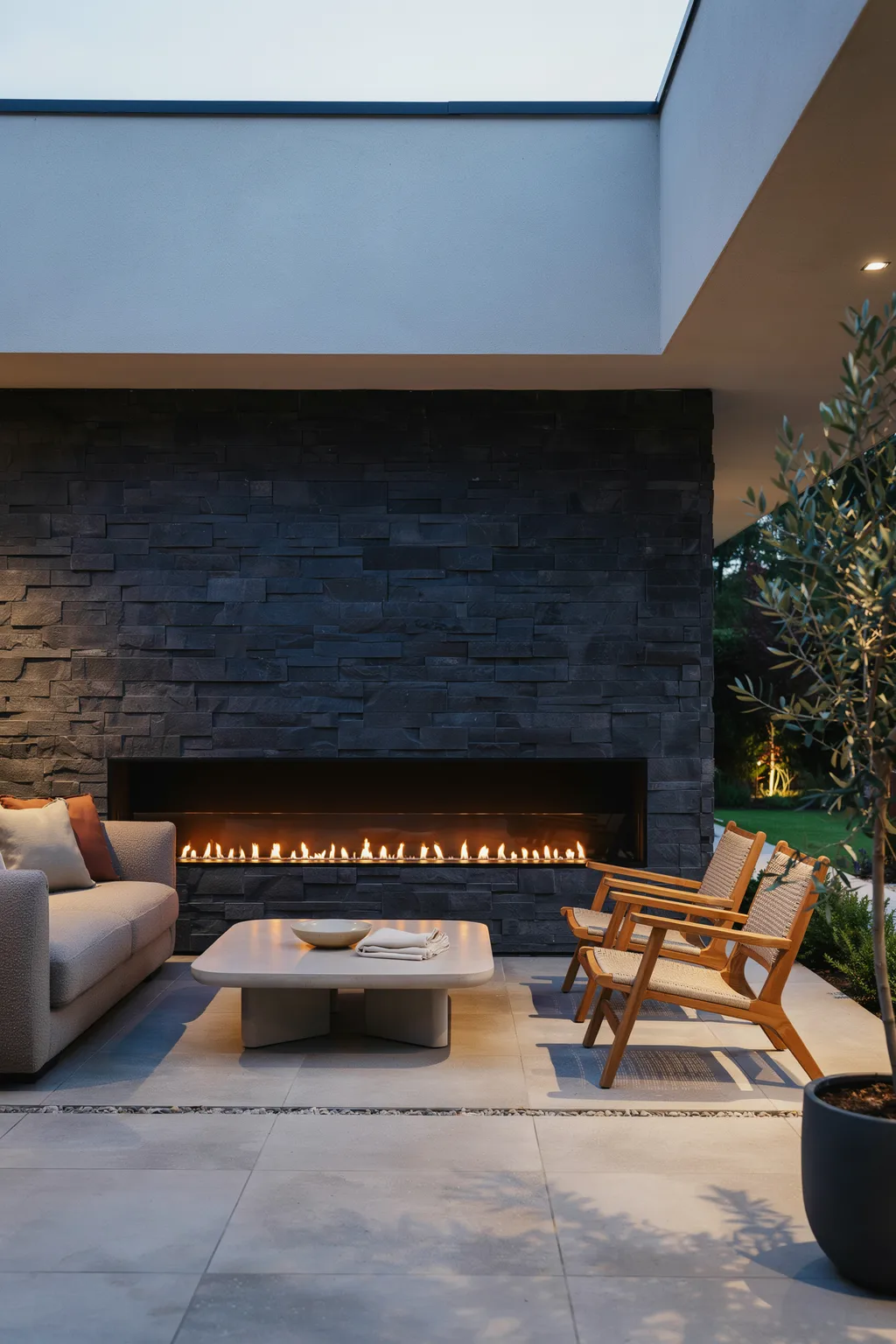
For a high-end modern lounge, set a long linear gas burner into a dark stone wall. The low ribbon of flame runs several feet wide, which looks dramatic without the bulk of a traditional firebox. Face it with a soft taupe sofa and a pair of sling chairs, and keep the flooring pale so the dark wall stays the star.
The reason this lands is contrast. A charcoal feature wall under a bright flush roof makes the fire glow read crisp and luxe at dusk. A potted olive tree softens the hard lines. This idea suits new builds and clean-lined homes with a solid overhang. It runs expensive, since linear burners and stone cladding add up quickly, and it needs a gas line, so it is not a weekend swap.
6. Soften a Farmhouse Porch With Linen Curtains
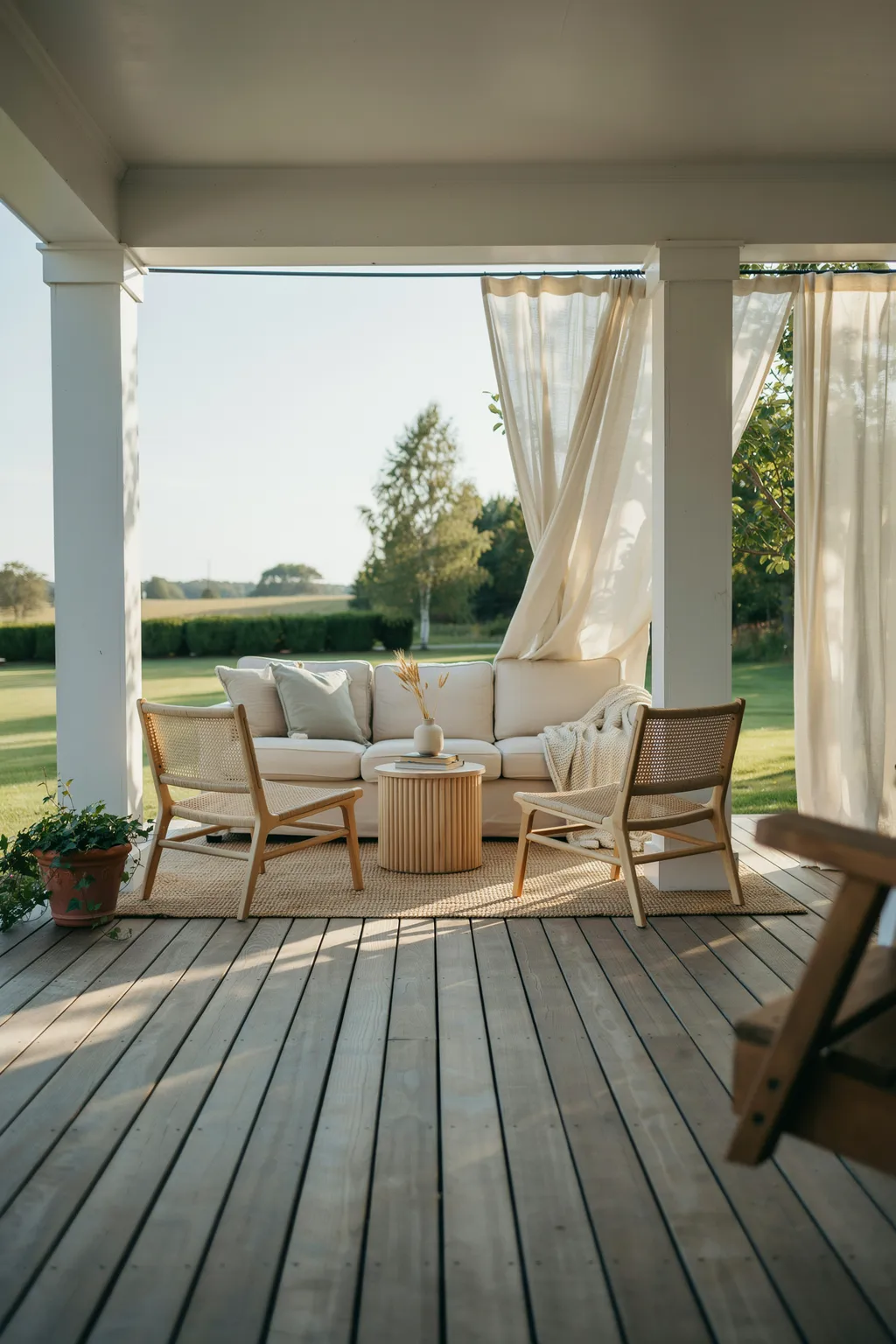
A covered porch with white columns begs for movement, and long linen curtains give it. Hang them from a simple black rod between the posts so they billow in the breeze and filter the late sun to a soft gold. Fill the space with a cream sectional, a couple of cane chairs, and a jute rug for that easy farmhouse warmth.
This works because fabric adds softness that hard columns and decking cannot. The curtains also buy you privacy and glare control on the low western side without walling anything off. A wood plank ceiling keeps the palette warm. This suits classic porches and covered decks with posts you can rig a rod between. Choose outdoor-rated linen or performance fabric, since real linen mildews and sags after a few storms.
7. Enclose a Sunroom With Black-Framed Windows
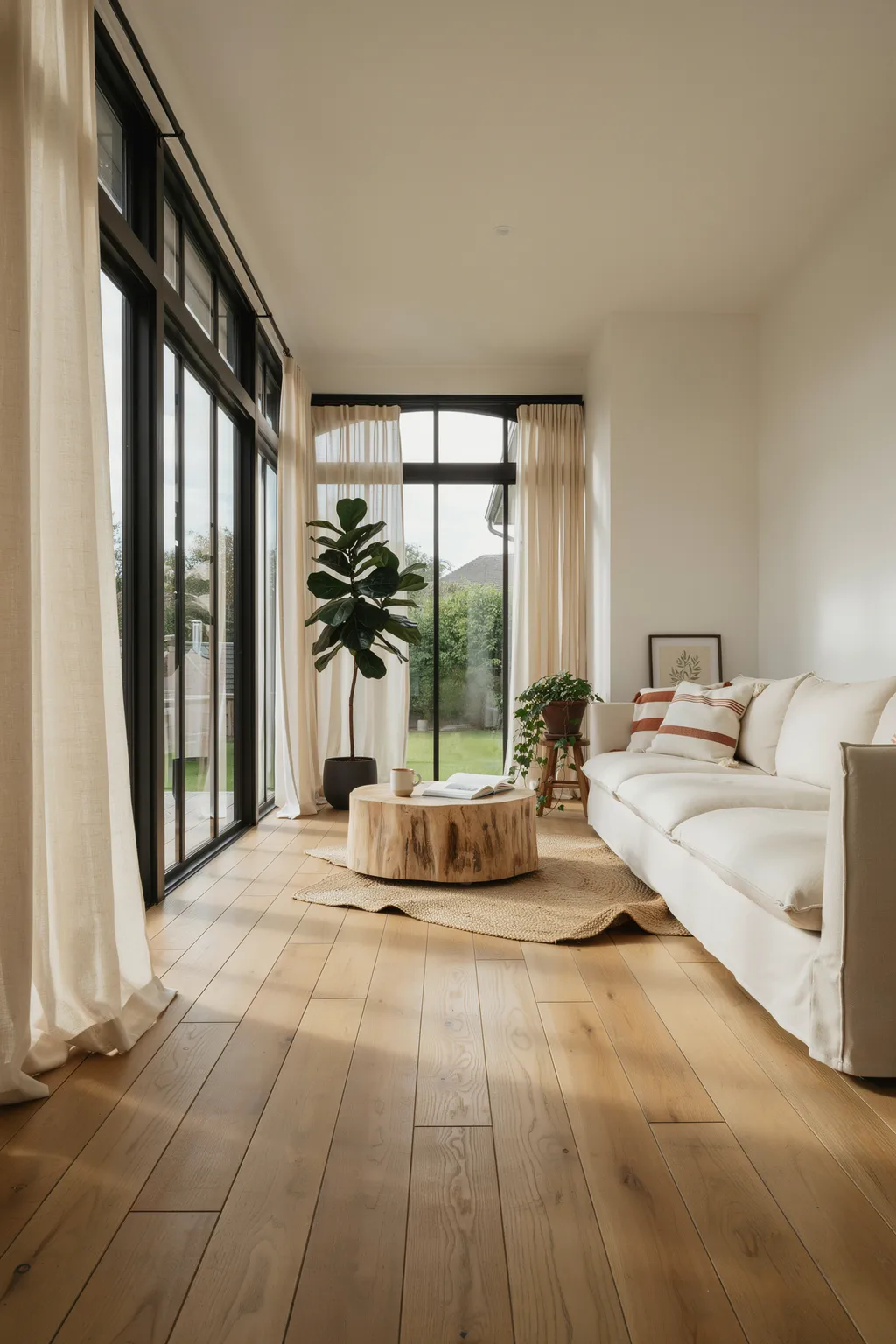
When you want cover plus bug control, glass it in. A three-season sunroom with tall black-framed windows and arched transoms keeps the weather out while flooding the space with light. Layer sheer curtains, a cream sectional, a rough wood stump table, and a couple of fiddle-leaf figs for a room that feels indoor-soft and garden-fresh at once.
This suits climates with real mosquito seasons or windy shoulder months, since screens and glass turn a patio into usable space six extra weeks a year. The black frames give the light interior a graphic edge so it never reads bland. The honest downside is cost and permits: a framed sunroom is a build, not a decor tweak, and it can run tens of thousands. Start with screens if the budget is tight.
8. Stretch Shade Sails for a Soft Canopy

Shade sails are the fastest way to cover a big open patio for little money. Overlap two or three triangular sails at different heights against a stucco wall, and you get a sculptural canopy that blocks the worst midday sun. Under it, a teak slat sofa with white cushions and a pair of olive trees keeps the mood clean and Mediterranean.
These covered patio ideas win on price and speed, since a sail kit and posts cost a fraction of a built roof and go up in a weekend. The overlapping angles also throw great shadow lines across the wall. The catch is water and wind: sails must be pitched at least 20 to 30 degrees so rain sheets off, and they should come down before a storm. Use marine-grade hardware or they will fray.
9. Add a Retractable Canopy Over a Pergola
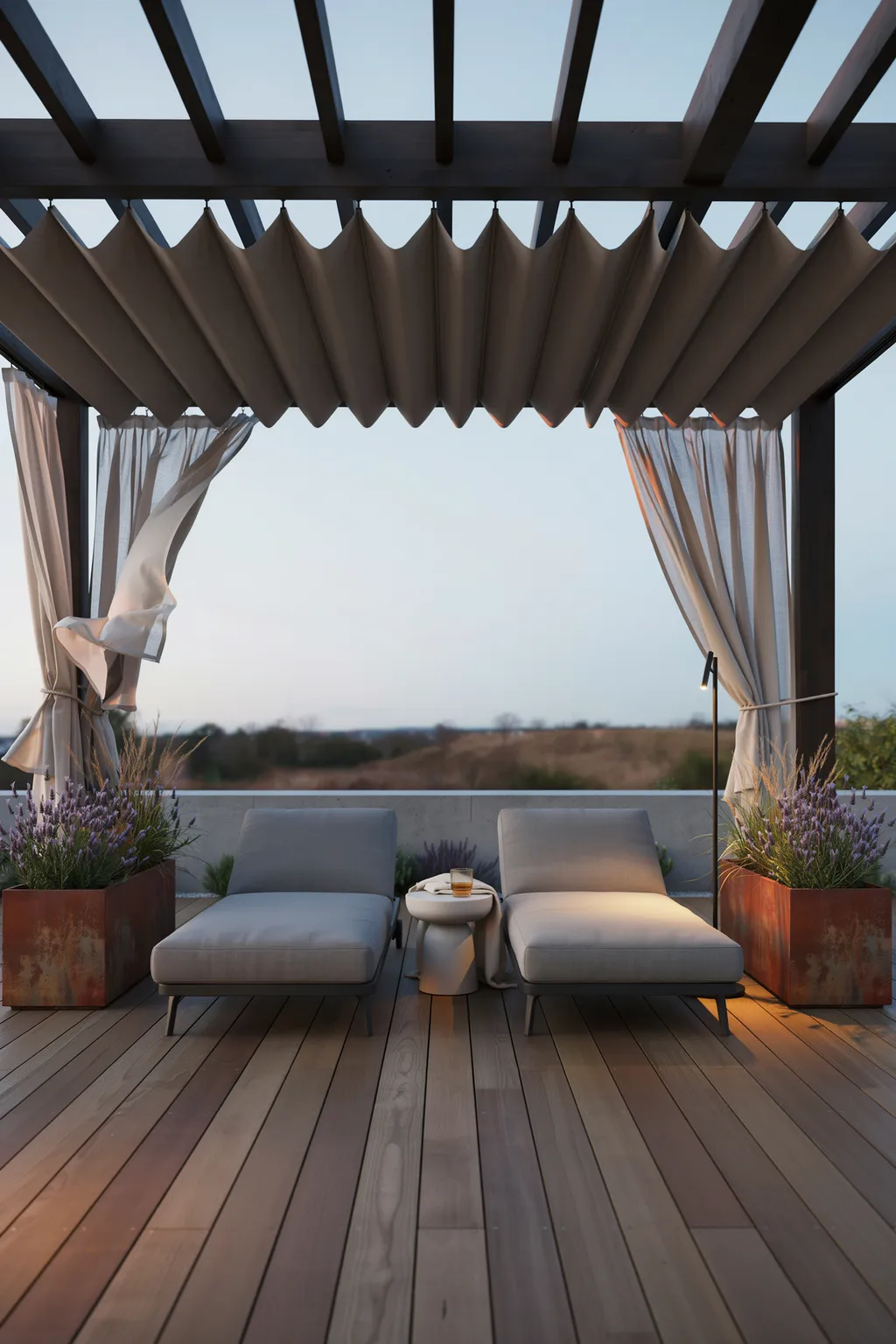
A pergola gives you the frame; a retractable fabric canopy gives you control. Wave-style shades slide along wires under the beams so you can open them for morning sun and close them by noon. Pair a dark pergola with two chaise loungers, drop curtains on the sides, and edge the deck with lavender in weathered steel planters for a private cabana feel.
This flexibility is the whole point. You get full sun, dappled light, or near-total shade from the same structure, which fixes the biggest pergola complaint. Corten steel planters rust to a soft orange that plays off the wood. This suits patios where the sun angle shifts hard through the day. Budget for the mechanism, since a quality slide-on-wire canopy and track add real cost, and cheap versions bind and tear.
10. Go Boho With Rattan and Tropical Plants
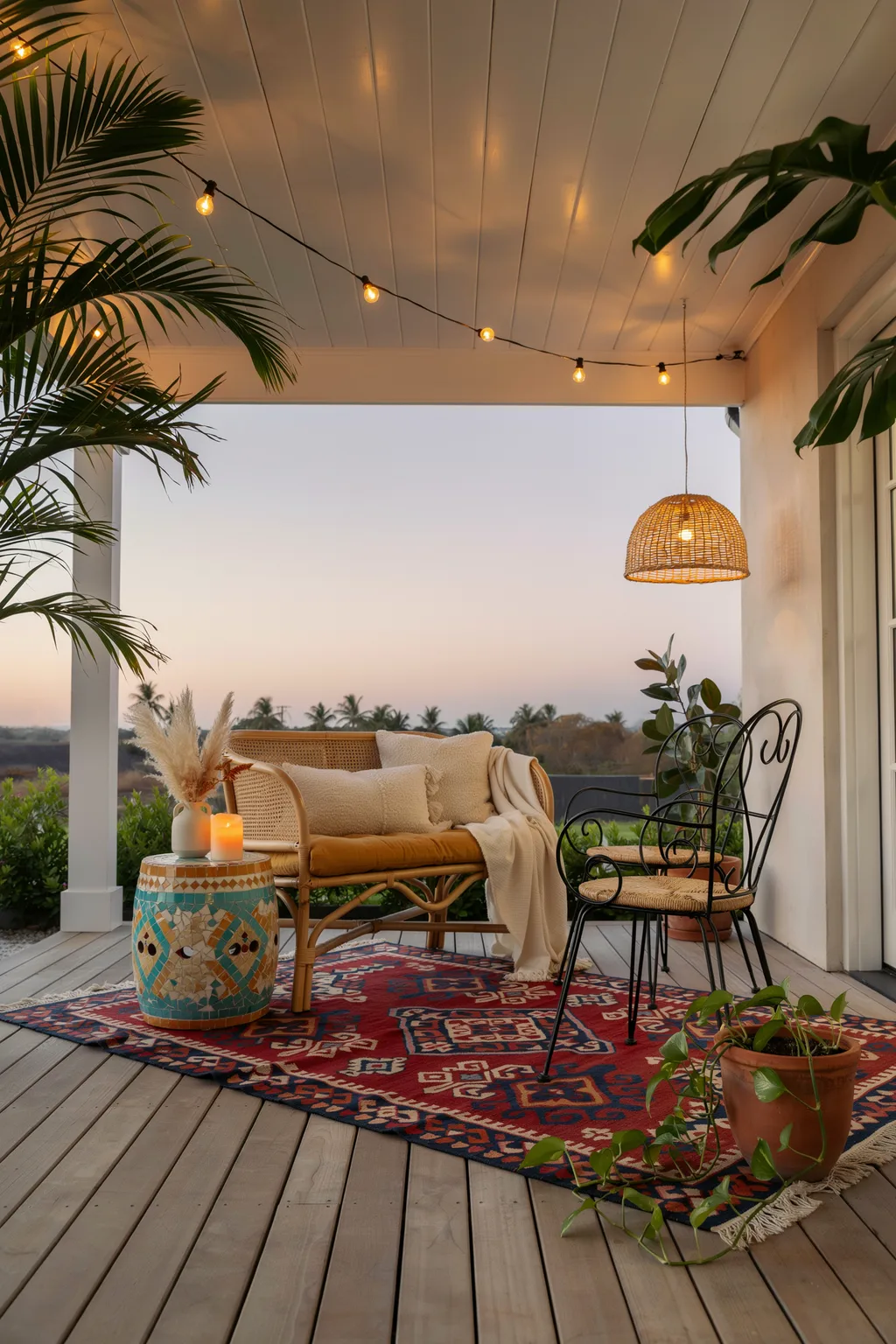
For a laid-back look, crowd the space with green. A rattan loveseat piled with mustard pillows, mixed metal chairs, a bold kilim rug, and a wall of palms turns a plain covered patio into a jungle lounge. Hang a woven pendant and string a few warm bulbs across the ceiling for that late-summer glow.
This style works because the plants do the heavy lifting, so the furniture can stay thrifted and mismatched. Layering textures, rattan, wool, terracotta, reads collected instead of cluttered. This suits shady, humid corners where tropicals actually thrive, and renters who want impact without construction. The trade-off is upkeep, since palms and monstera drop leaves and need regular water, so a low-effort gardener may want a few good faux plants mixed in.
11. Lay Patterned Tile Under a Timber Pergola
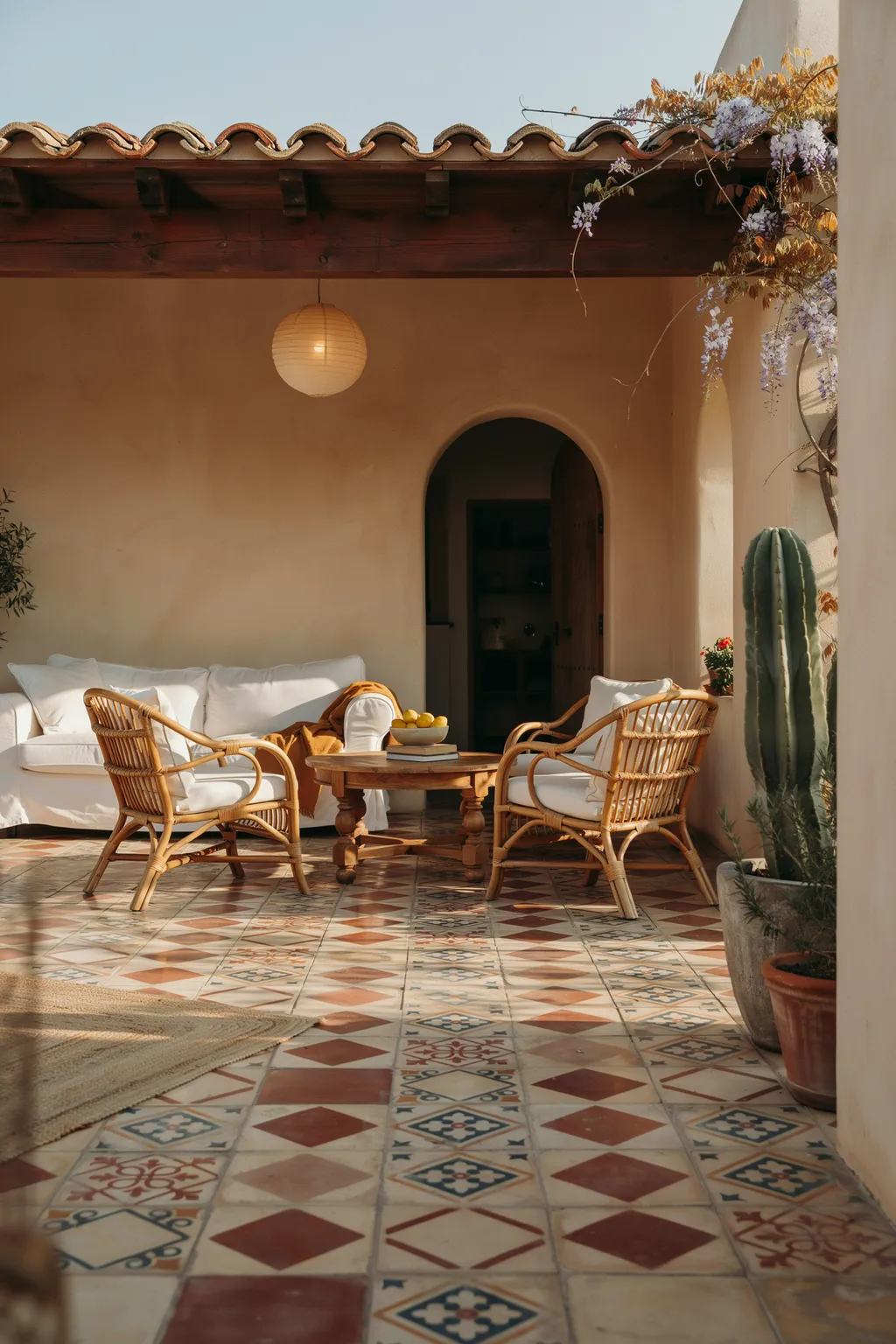
Give the floor a job. Encaustic-look cement tile in a mixed pattern turns the ground into the centerpiece, and it pairs beautifully with a chunky dark timber pergola and stucco walls. Fill the room with rattan chairs, a white slipcovered sofa, a carved wood coffee table, and a big cactus for a warm Spanish courtyard feel.
Patterned tile works because it hides dirt and adds soul that a plain slab never will. Under a heavy timber frame draped with vines and a paper lantern, the whole corner feels like a getaway. This suits covered courtyards and side yards with walls to bounce warm light. Cement tile needs sealing to resist stains and can get slick when wet, so pick a matte finish and reseal every year or two.
12. Hang a Rattan Egg Chair in a Cozy Corner
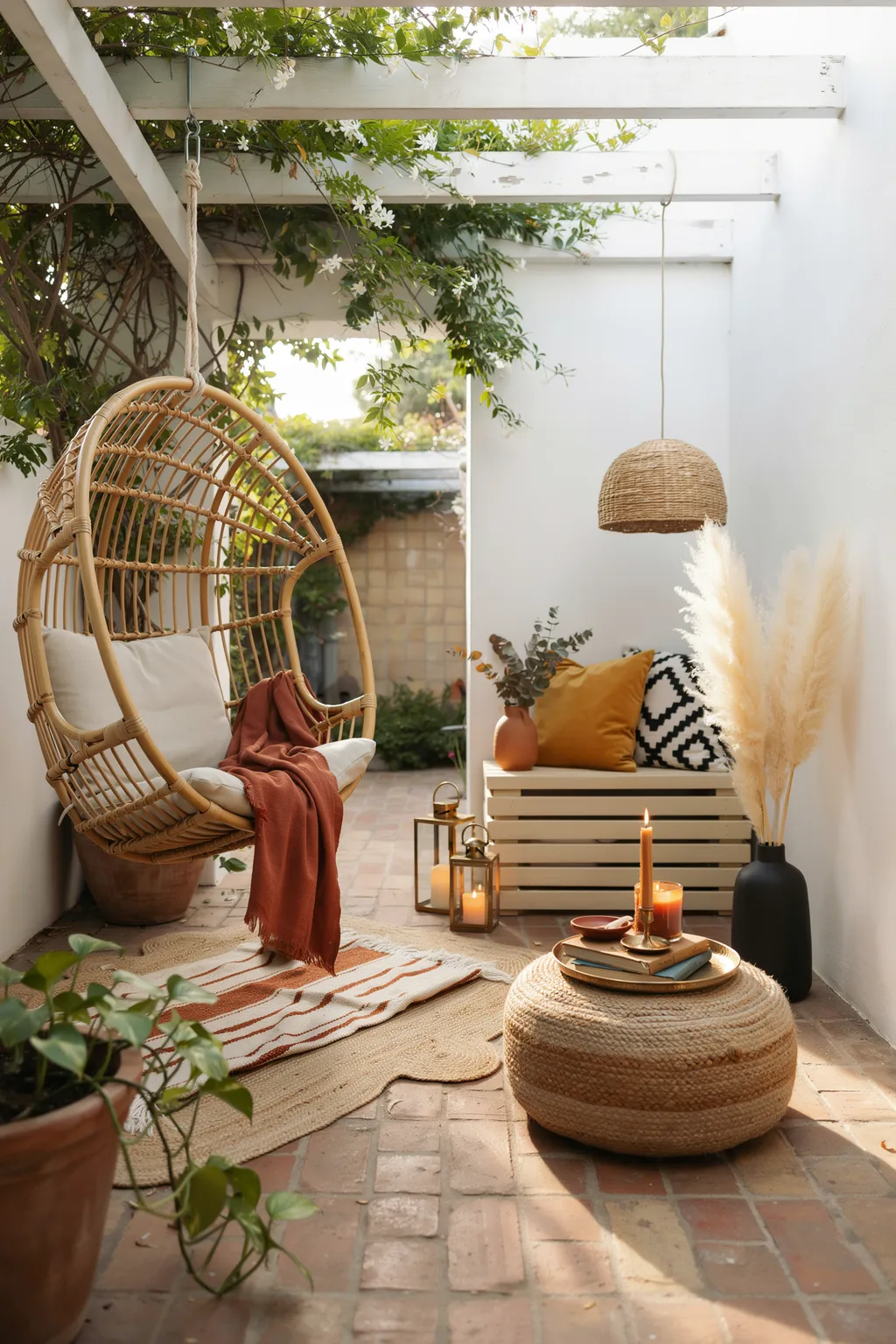
One suspended chair changes a corner completely. Hang a rattan egg chair from a whitewashed pergola beam, tuck a cream bench and mustard pillows beside it, and add pampas grass in a black vase for texture. Layer a jute round and a striped flatweave over terracotta brick, and the corner reads like a slow Sunday.
This suits small patios and awkward corners that a full sofa set would crowd. A single hanging chair gives you the same cozy payoff with a much smaller footprint. Warm brass and terracotta keep it grounded, not girly. The honest caveat is the hardware: an egg chair needs a rated ceiling hook drilled into a solid beam, ideally supporting 300 pounds or more, so check the framing before you hang anything with a person in mind.
13. Brighten a Porch With Pastel Summer Accents
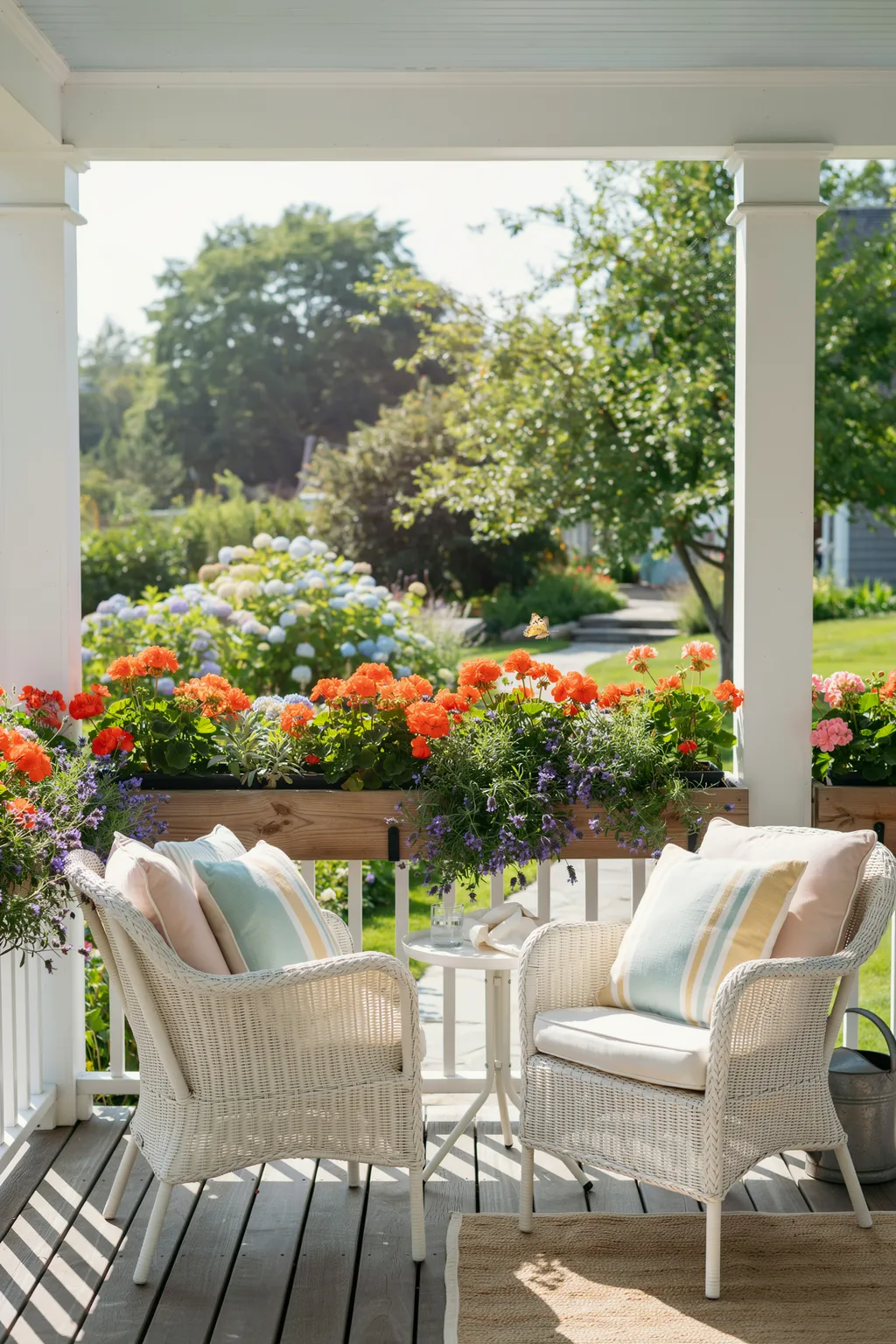
Not every covered patio needs to be moody. For a cheerful front or side porch, start with white wicker chairs, then toss in pastel pillows in blush, mint, and sunny yellow stripe. Line the rail with flower boxes of geraniums and lavender, add a small round side table, and lean a galvanized watering can in the corner for that lived-in cottage charm.
This works because color and blooms read happy and welcoming, which is exactly what a front porch should do. White wicker keeps the base neutral so you can swap pillow colors each season for almost nothing. This suits classic cottages, farmhouses, and rentals where big changes are off the table. The one warning: real geraniums need daily summer water in pots, so set a reminder or run a small drip line, or the display fades fast.
14. Squeeze a Lounge Into a Small Courtyard
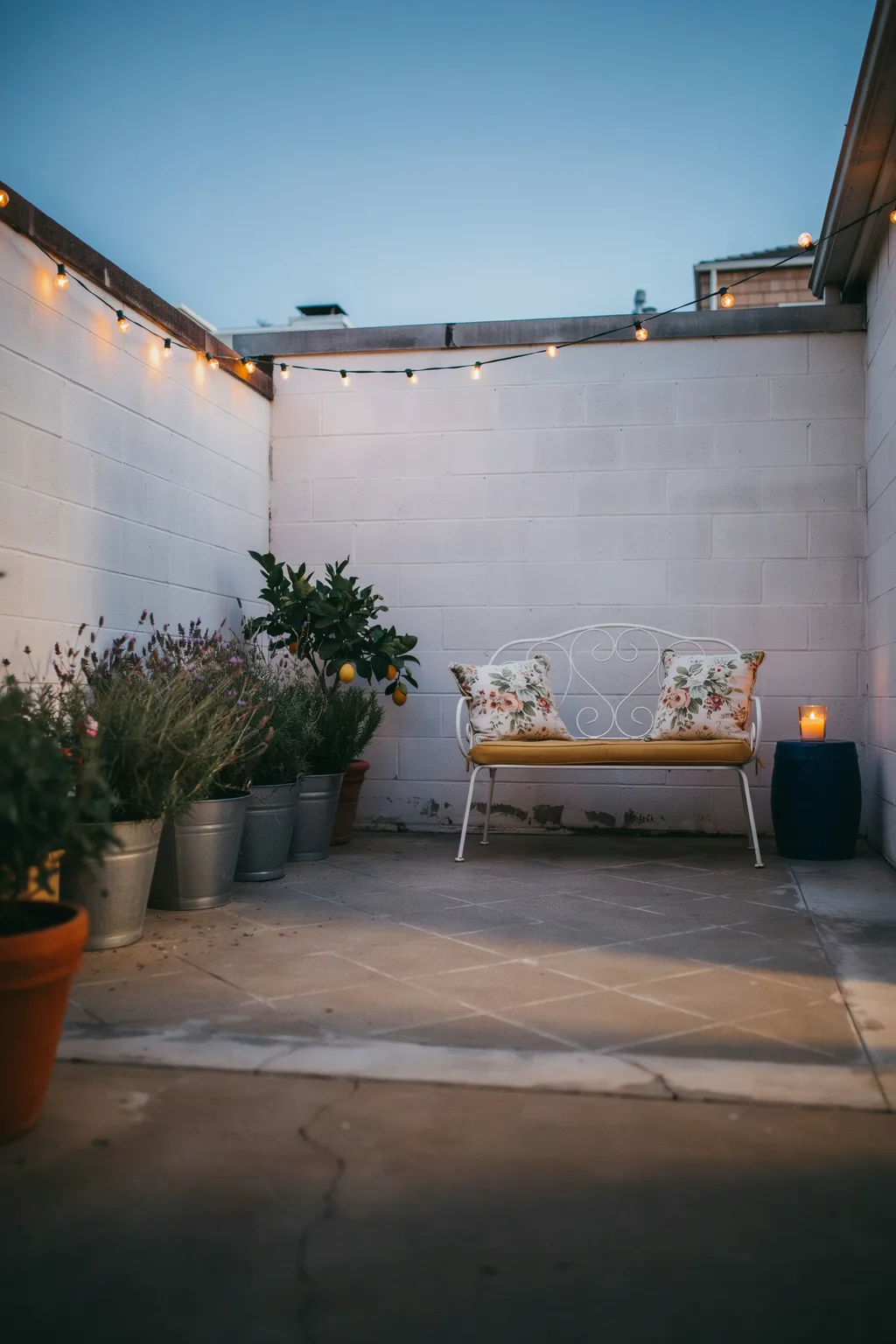
Tiny yards count too. Against a white brick wall, cluster galvanized buckets planted with lavender, herbs, and a potted lemon tree, then add one white metal loveseat with soft floral pillows and a small blue drum table for a candle. String a single strand of warm bulbs overhead and the whole nook glows. These covered patio ideas prove you do not need square footage to get a real retreat.
The layout works because vertical plant staging draws the eye up, which makes a cramped courtyard feel taller and lush. One good bench plus one small table keeps the floor walkable. This suits city patios, side returns, and rentals. The limit is sun: a lemon tree wants six hours of light, so a fully shaded corner will need shade-tolerant plants like ferns and hostas instead.
15. Set Curved Chairs Beside a Plunge Pool
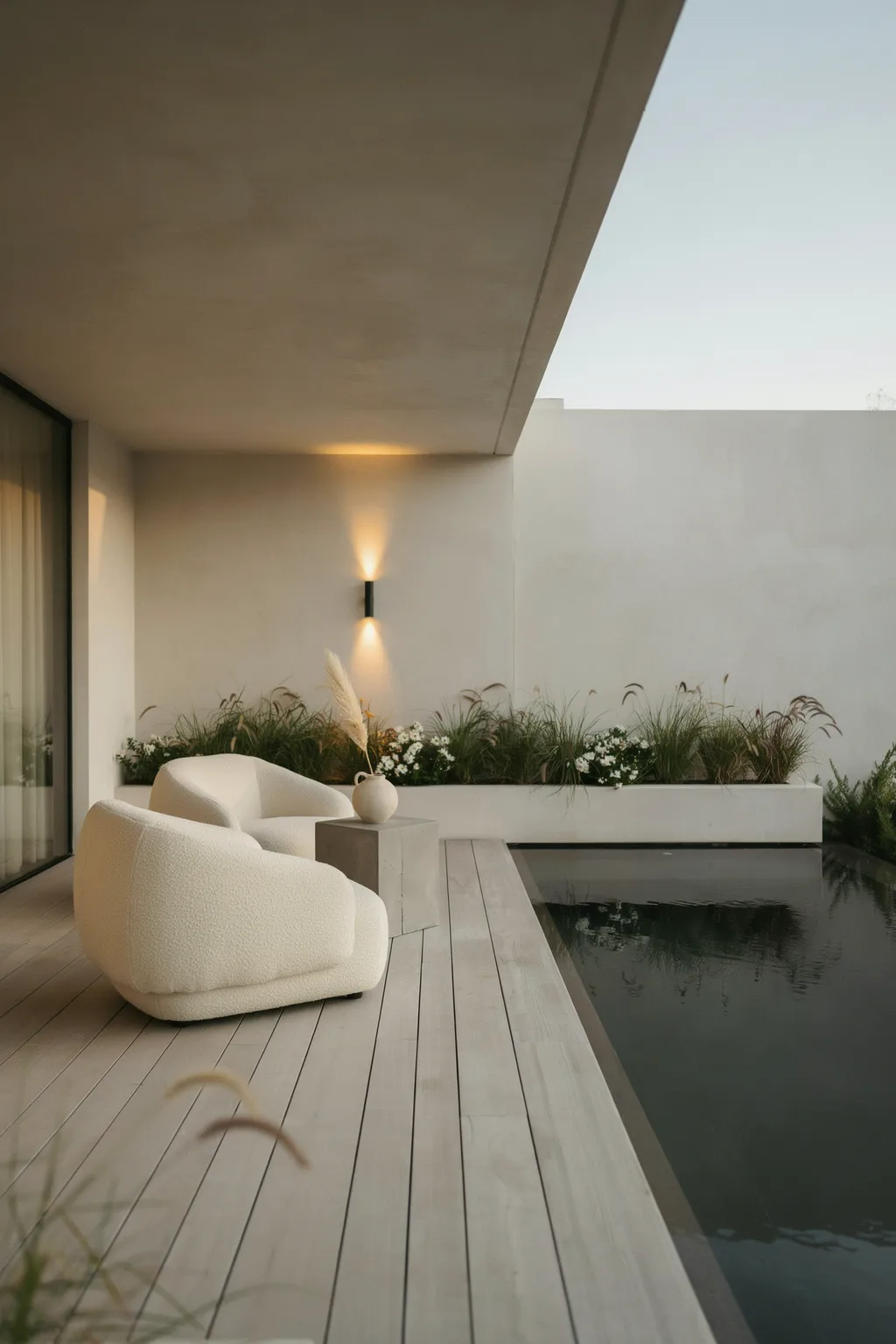
Where a patio meets water, keep the seating soft and low. Two curved boucle chairs and a squat concrete table on a pale wood deck read spa-calm next to a black plunge pool. A planter of grasses and white blooms behind the chairs softens the edge, and a cantilevered concrete roof keeps the sun off without posts blocking the view.
This works because rounded shapes feel relaxed, and the reflection of the deck in dark water doubles the sense of space. The neutral boucle stays quiet so the pool and sky lead. This suits modern homes with a pool or water feature and a flush roofline. The caution is fabric choice, since boucle looks plush but soaks up splashes, so use quick-dry outdoor foam and a mildew-resistant weave or those pretty chairs turn damp and musty.
16. Build a Low Bench Into a Stucco Wall
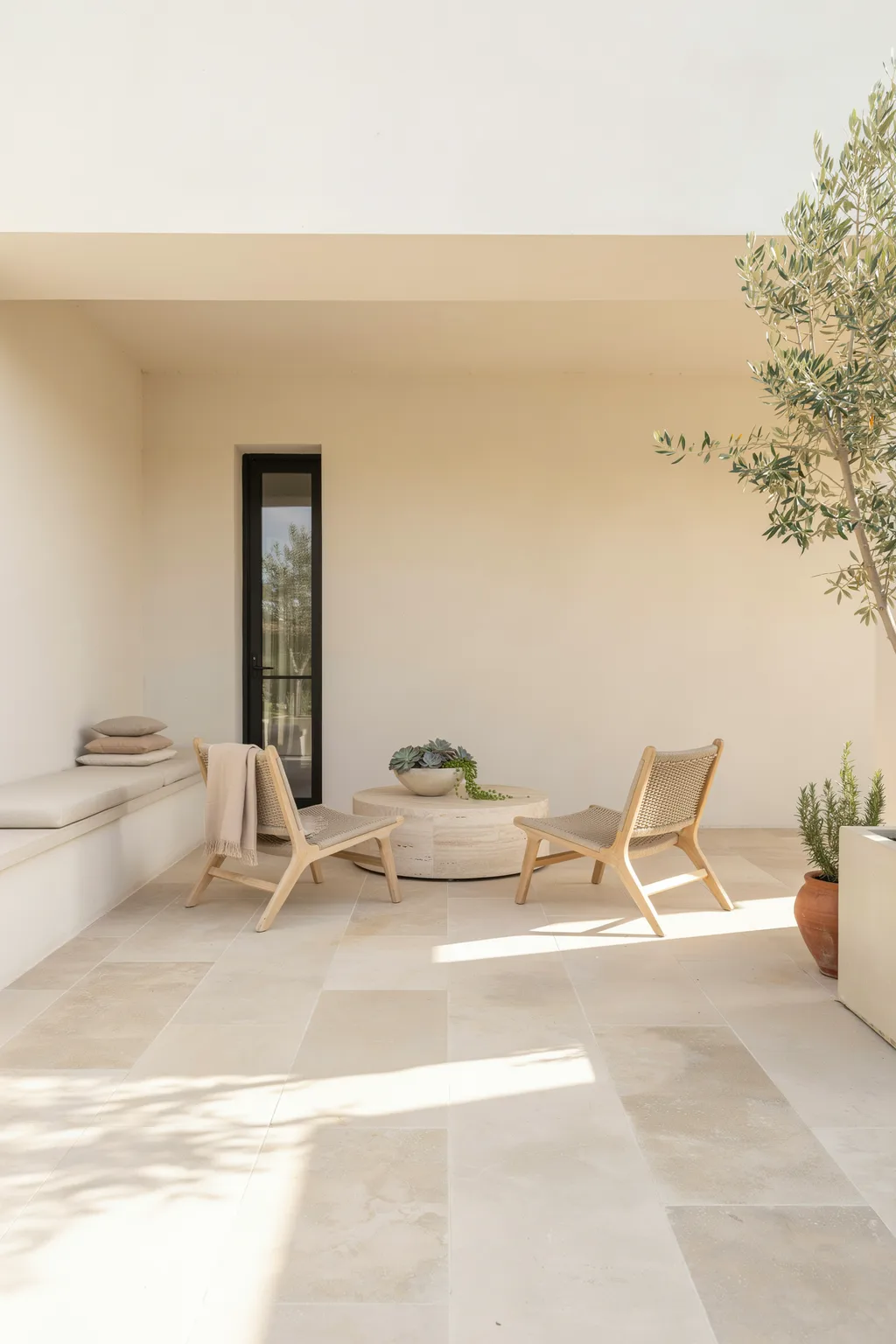
A built-in bench saves space and looks architectural. Run a low stucco or concrete bench along one wall, top it with slim cushions, and pair it with two light chairs and a round travertine table. The result is clean and grounded, and it leaves the middle of the patio open for traffic and a rug. These covered patio ideas suit minimalists who hate clutter.
The bench works because it reads as part of the house, not furniture you dropped in, so the space feels calm and finished. Large limestone pavers and an olive tree in a tall planter keep the palette warm and quiet. This suits new stucco homes and courtyards where you can pour a bench during the build. Retrofitting one is possible but messier, and a hard bench needs at least three inches of quality foam so guests actually stay seated.
17. Create a Zen Garden With a Slatted Screen
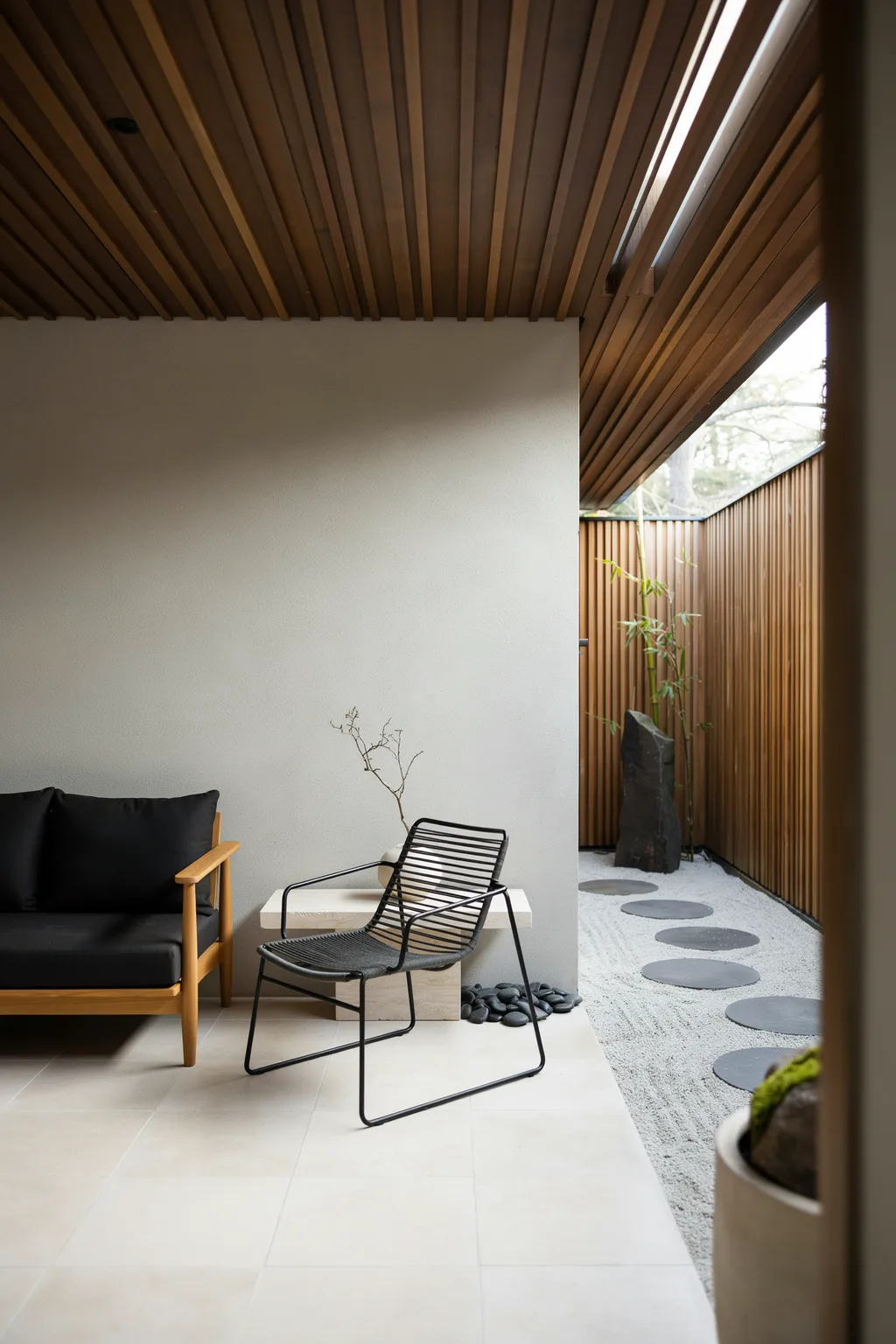
For a meditative patio, go Japandi. A dark wood slat ceiling and a matching vertical slat screen frame a low teak-and-black sofa and a wire lounge chair. Add a standing stone, a patch of black pebbles, a slim bamboo, and stepping stones set into gravel for a calm, ordered feel that quiets a busy mind.
This works because restraint is the whole look: a tight palette, natural materials, and lots of negative space make the patio feel like a retreat. The vertical screen also hides a fence or an ugly view while letting air move. This suits small modern yards and anyone craving a quiet corner. The trade-off is upkeep of a different kind, since a raked gravel-and-stone zone shows every leaf, so it wants a spot away from heavy tree drop or a quick daily tidy.
18. Tuck a Daybed Behind Flowing Curtains
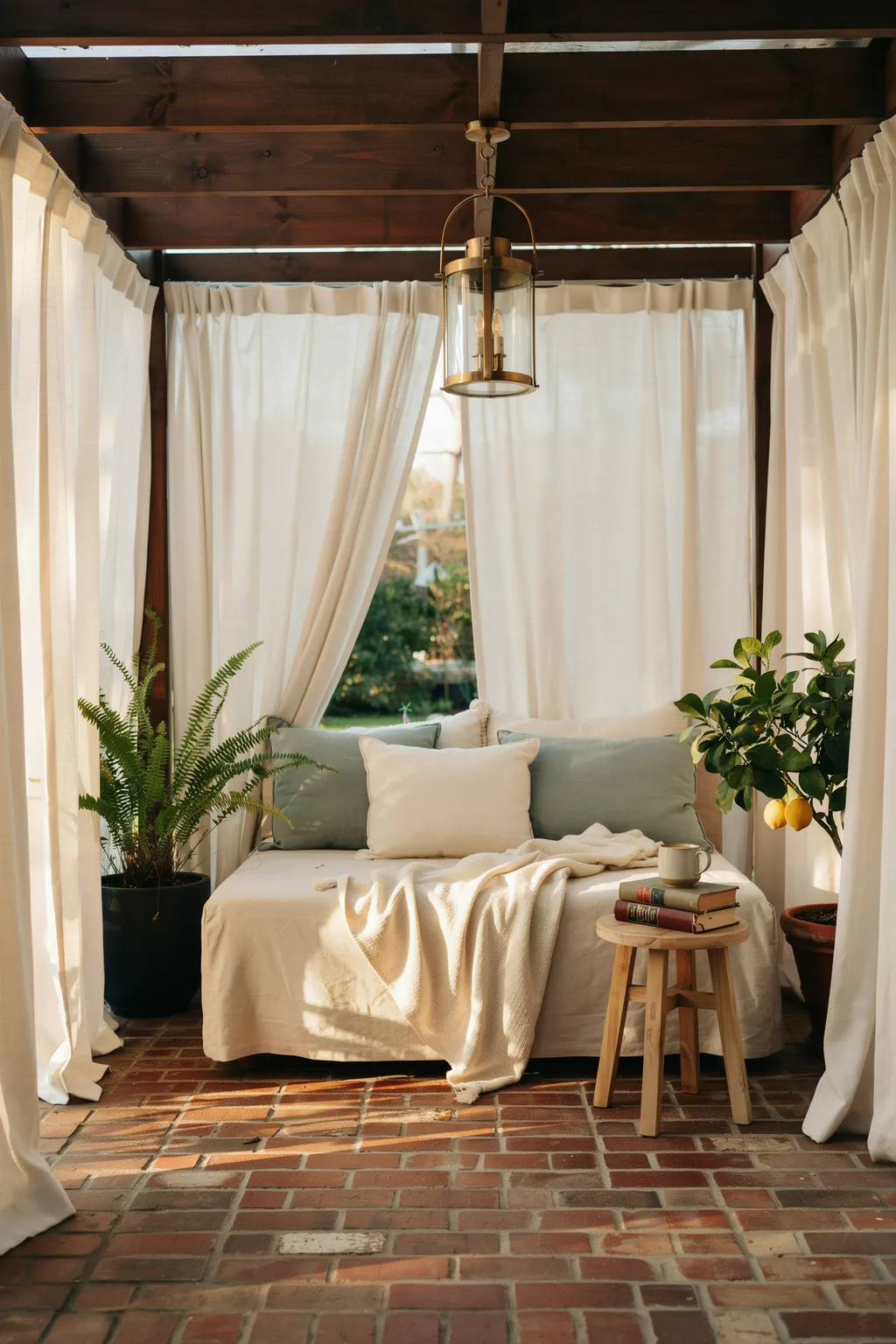
A daybed under cover is the ultimate nap spot. Frame a deep cushioned daybed with sheer tab-top curtains on a dark pergola, pile on sage and cream pillows, and toss a chunky knit throw for the cool part of the evening. A hanging lantern, a wood stool with a coffee mug, and a fern nearby finish the retreat.
The curtains matter as much as the bed. Drawn, they give you shade and a private cocoon; open, they frame the garden. Sage and cream keep the mood soft, and a stack of books signals this is a place to slow down. This suits anyone who wants one truly restful zone outside. The caveat is fabric care again: outdoor-rated sheers hold up to sun, but cheap poly curtains go brittle and yellow after a couple of hard summers.
19. Carve Out a Reading Nook With a Chaise
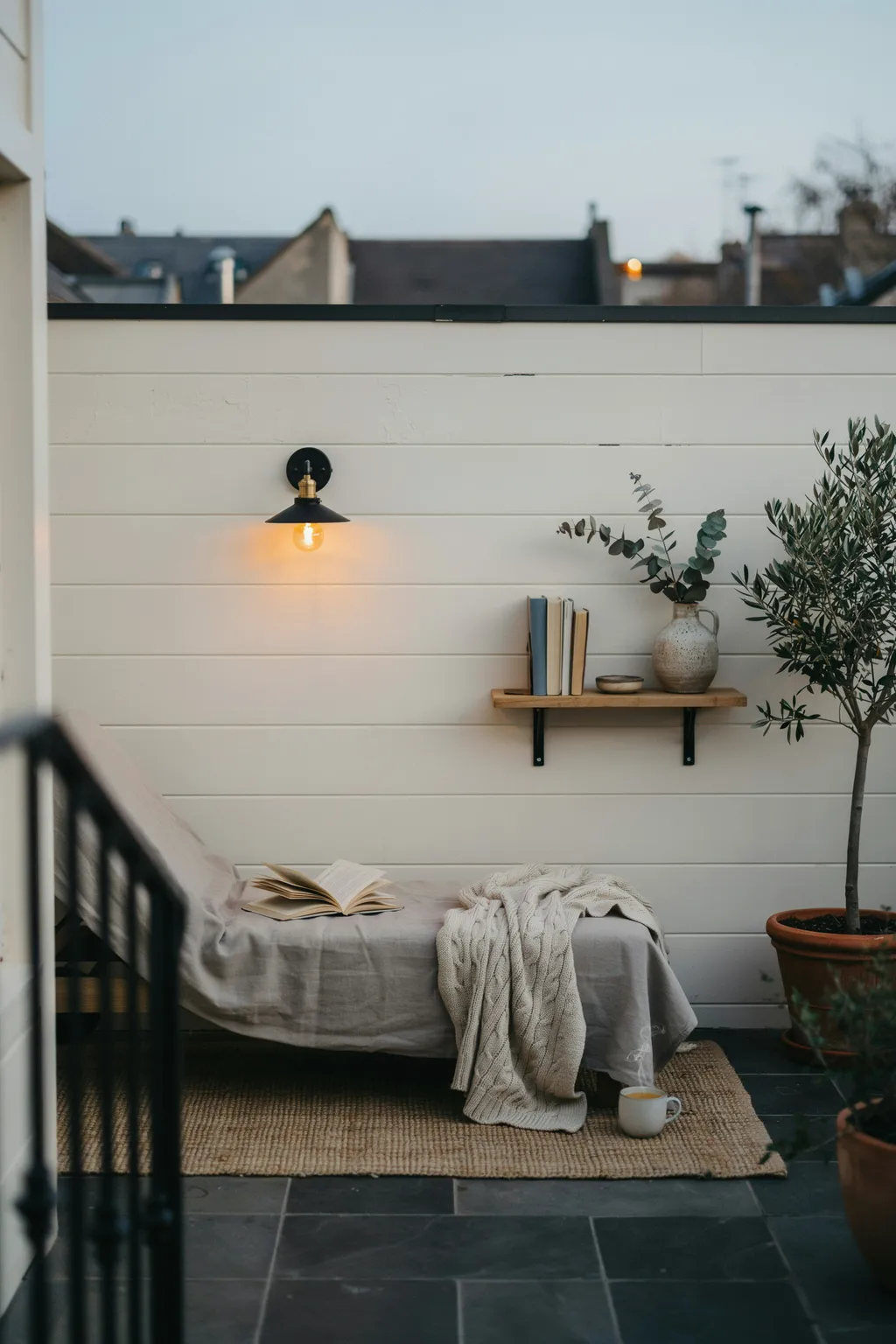
You only need a corner to make a reading spot. Set a gray chaise daybed against a shiplap wall, mount a black wall sconce for night light, and add a floating shelf with a few books and a stoneware vase. A jute rug over slate tile and an olive tree in the corner keep it warm and quiet.
This works because a chaise supports your back and legs for long sits, which a stiff chair never manages. The floating shelf keeps books and a drink close without a bulky side table. This suits narrow side patios and empty corners begging for a purpose. The honest note: leave the cushions out in full weather and they will fade and hold damp, so plan a nearby bin or bring them in, and choose a solution-dyed fabric to slow the fading.
20. Frame the Opening With Tie-Back Drapes
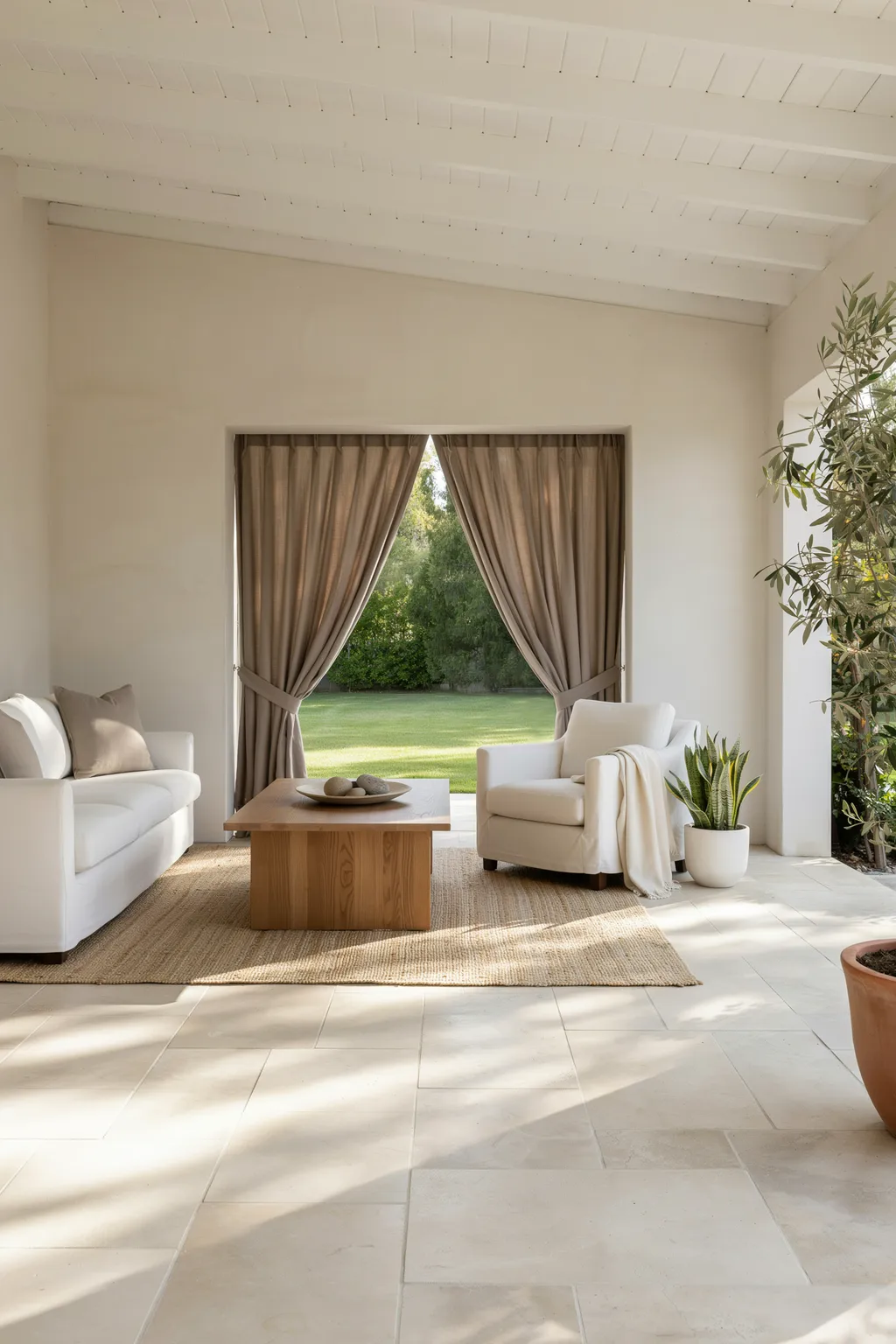
Sometimes the cover is already there and the opening needs softening. Hang heavy taupe linen drapes at the mouth of a modern covered patio and tie them back with matching bands. The fabric frames the view like a stage, and on a bright day you can loosen the ties to cut glare over a white sofa and chair. These covered patio ideas add instant polish for the price of curtains and a rod.
The tie-backs do the styling work, holding clean vertical folds that read polished, not fussy. A jute rug, a wood coffee table, and an olive tree keep the palette warm against the white stucco. This suits modern and transitional homes with a squared opening. Mount the rod into solid framing, not just stucco, and weight the hems so the panels hang straight instead of blowing into the seating.
21. Wrap a Lounge in Privacy Curtains
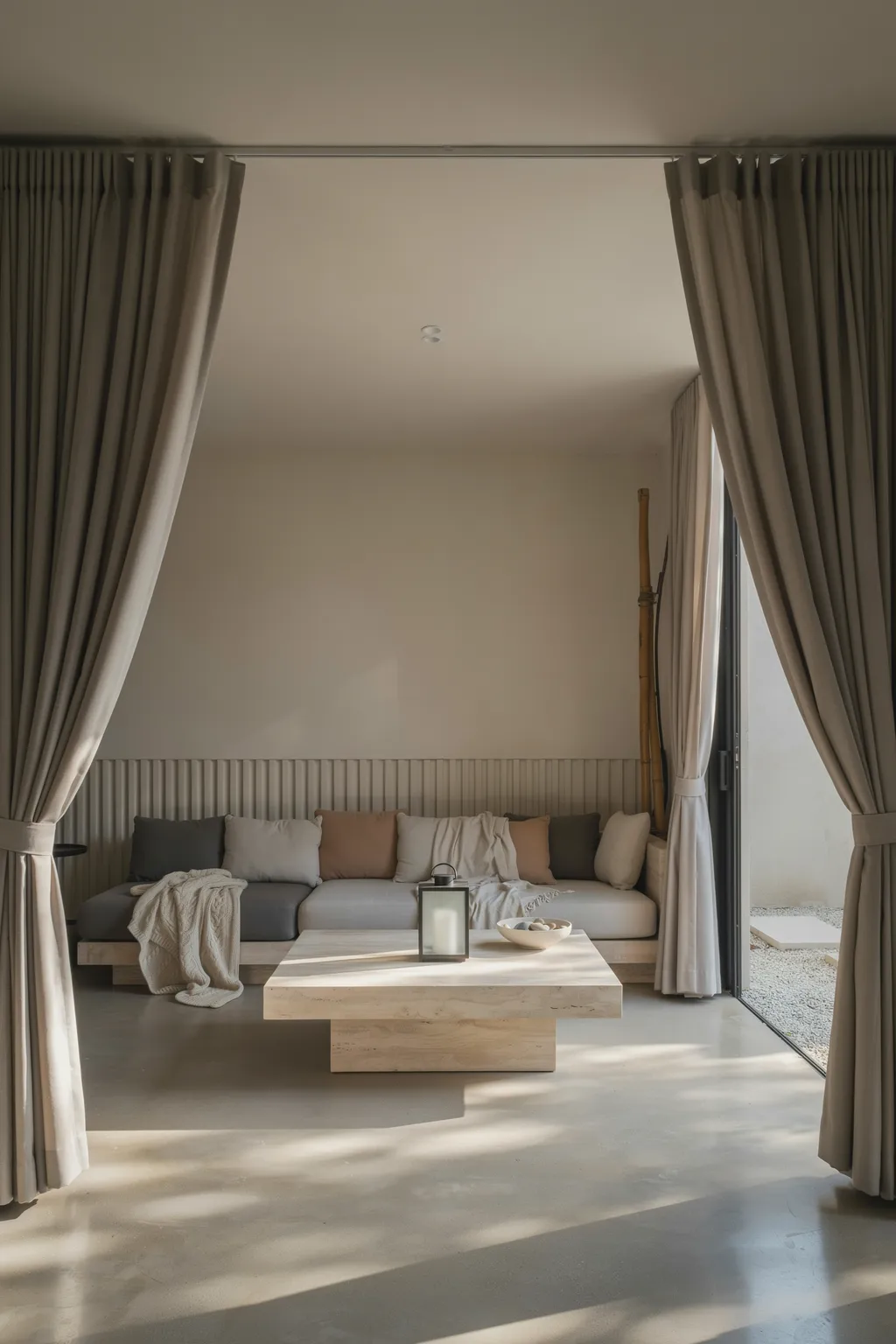
Take the curtain idea further and enclose the whole lounge. Hang floor-length grommet drapes on all open sides of a recessed patio so you can close off the world for a private cabana. Inside, a low modular sofa in mixed gray tones, a chunky stone coffee table, and a single lantern keep it serene, while a slim bamboo screen behind adds warmth.
Full curtains work because they control sun, wind, and sight lines all at once, which is huge on an exposed corner lot. Closed, the space feels like an outdoor room; open, it breathes. This suits patios overlooked by neighbors and anyone craving a resort feel at home. The maintenance reality is real: more fabric means more washing and more wind load, so use grommets on a sturdy track and pick a color that hides dust between cleanings.
22. Set a Round Dining Table Under a Gable
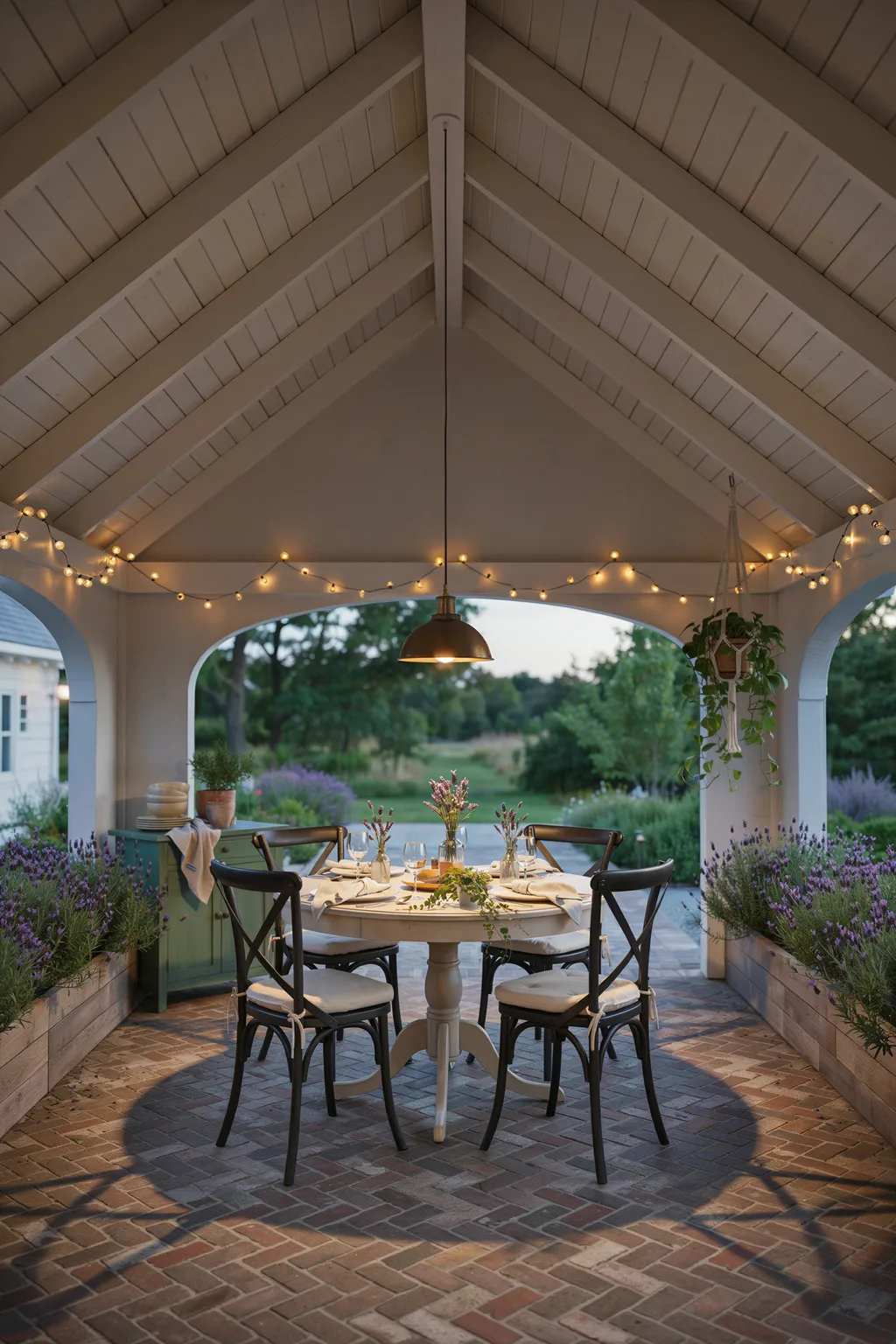
A covered patio earns its keep at dinner. Center a round pedestal dining table under a vaulted wood gable ceiling, ring it with black cross-back chairs and tie-on cushions, and hang one dark pendant low over the center. String lights along the beams and a green painted sideboard nearby make it feel like a real outdoor dining room.
A round table works because it seats four to five comfortably in a compact footprint and keeps conversation easy, with no one stuck at a corner. The vaulted ceiling adds height and drama over the brick floor. This suits families who eat outside often and porches deep enough for chairs to slide back. Leave at least three feet behind each chair, and seal the wood table yearly, since a covered patio still sees humidity that can gray untreated timber.
23. Seat a Crowd at a Long Dining Table
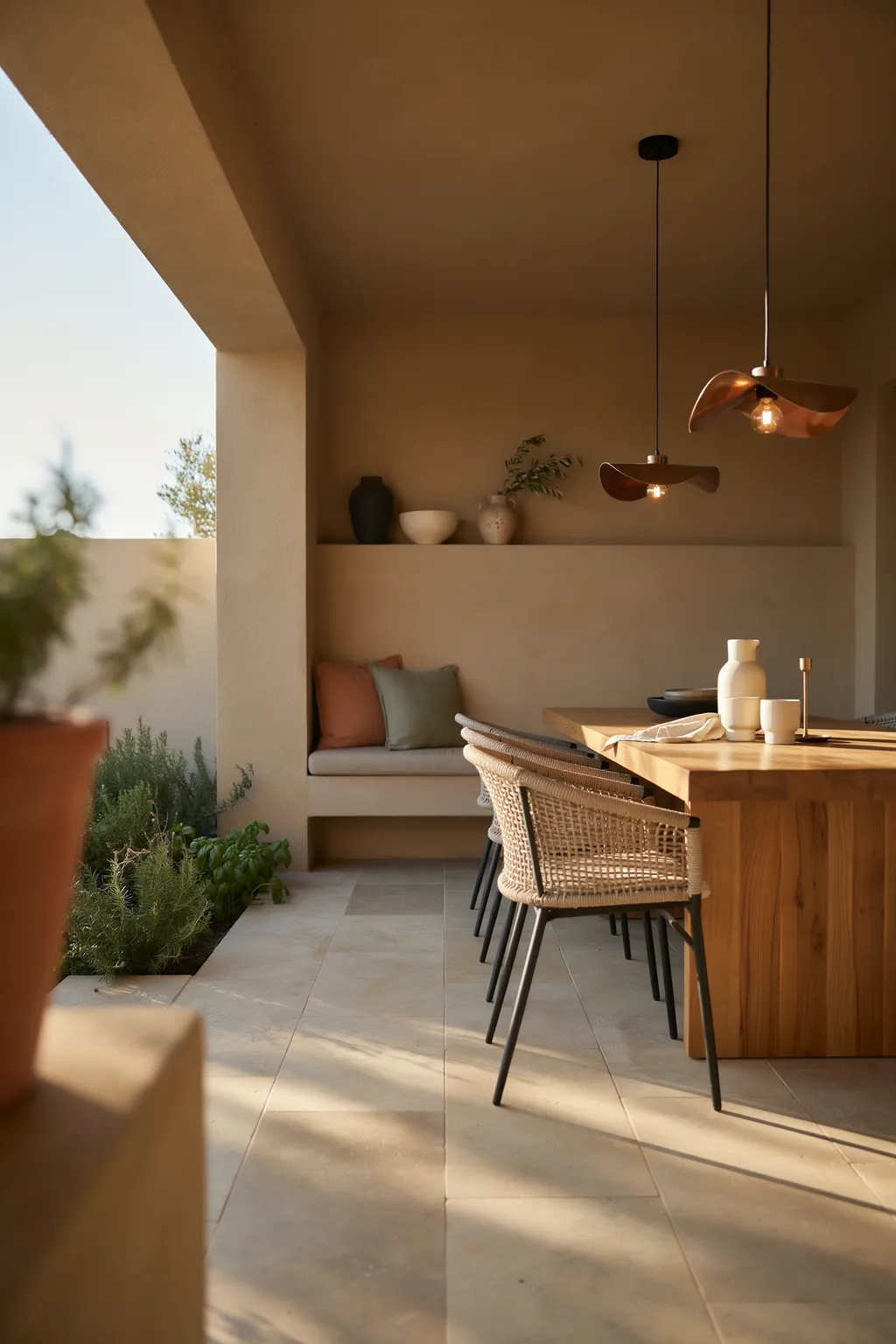
For bigger gatherings, go long. A chunky wood table with a built-in bench on one side and rope-weave chairs on the other seats eight without feeling formal. Hang two sculptural pendants over the length, run a low ledge along the wall for serving bowls, and edge the patio with an herb bed you can snip from mid-meal.
This layout works because a bench packs in extra seats and reads casual, so guests slide in instead of standing on ceremony. Two pendants light the whole table evenly, which a single fixture cannot over a long top. This suits entertainers and big families with a wide covered patio. The one caution is scale: a 10-foot table needs real clearance, so measure your slab first, and pick a warm-toned hardwood that hides the marks a busy table collects.
24. Layer Candle Lanterns for Evening Glow
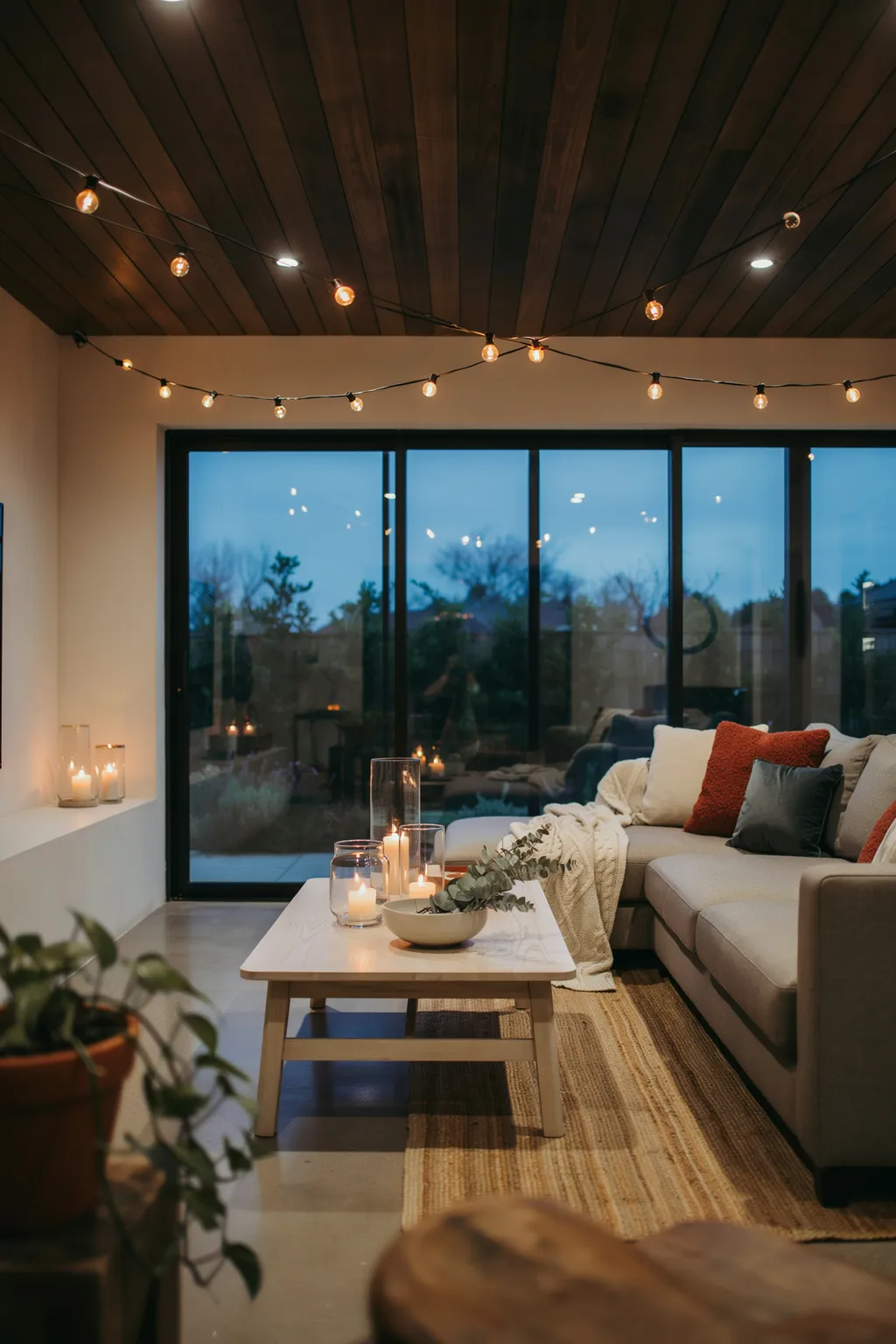
Lighting is what keeps people outside past dark. Skip one harsh fixture and layer instead: string lights zigzagged under the ceiling, a cluster of glass candle lanterns on the coffee table, and more grouped on a side ledge. Around a plush sectional in warm gray, the mixed pools of light make the whole covered patio feel like a lounge at golden hour, all night. Small covered patio ideas like this cost little and change everything.
Layered light works because our eyes relax when a space has several soft sources instead of one bright one. Battery or flameless candles skip the fire risk while keeping the flicker. This suits any patio, on any budget, tonight. The only real tip is warmth: choose bulbs around 2200 to 2700 Kelvin, since cool white light kills the mood no matter how pretty the lanterns are.
25. Line the Steps With Flickering Lanterns
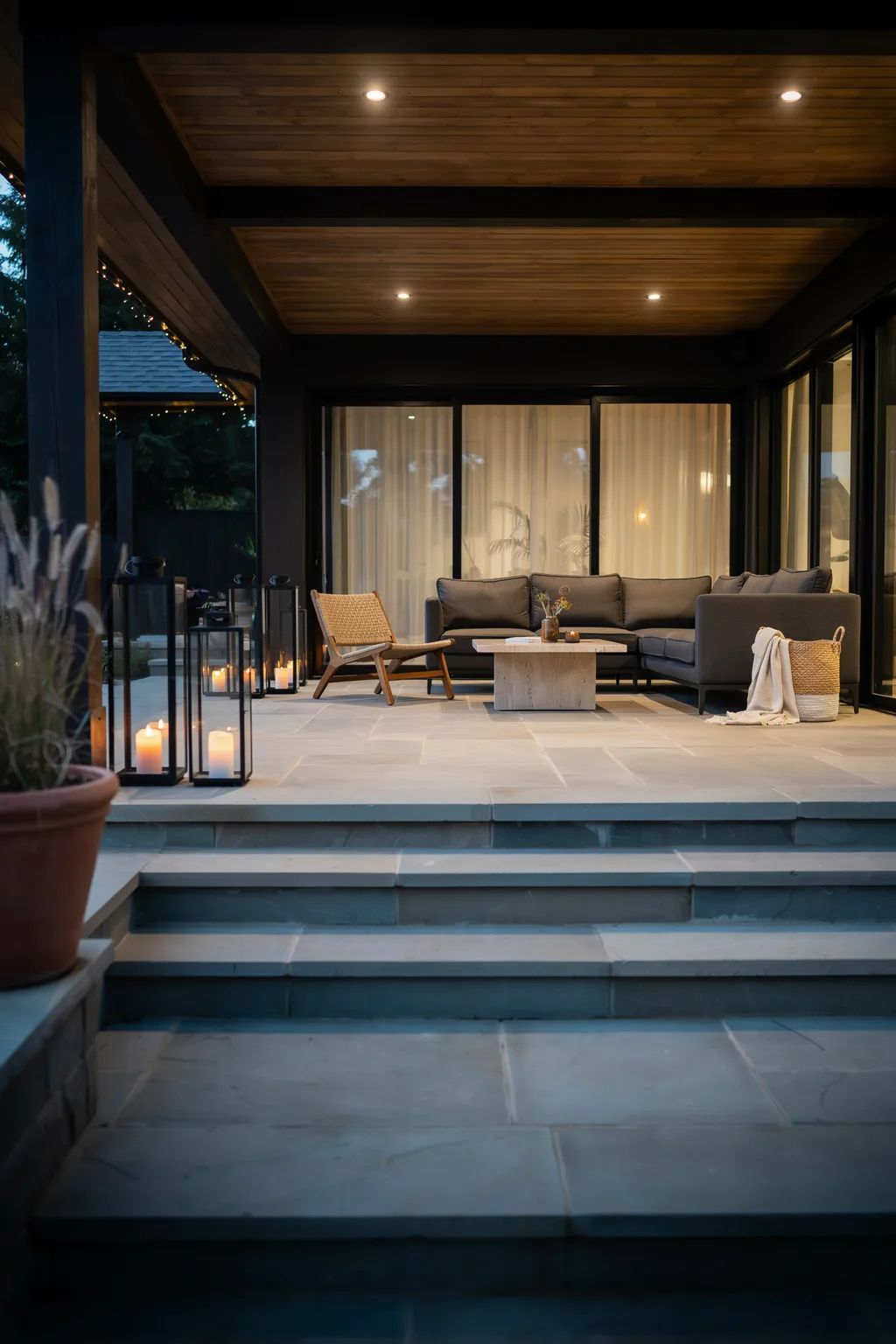
For drama on a budget, take the light to the floor. Line the patio steps and edges with tall black metal lanterns holding fat candles, then keep the seating simple with charcoal sofas and a low stone table under a warm wood ceiling. The path of flames pulls guests in from the yard and makes an ordinary step feel like an entrance.
This works because floor-level light guides the eye and the feet at once, which is safer and prettier than a single overhead glare. Grouping lanterns in odd numbers, threes and fives, looks natural rather than staged. This suits patios with steps, level changes, or a long approach from the lawn. Use flameless pillars if kids or pets race through, and weight the bases so a gust or a stray ball does not send a lantern over.
26. Add a Covered Outdoor Kitchen Bar
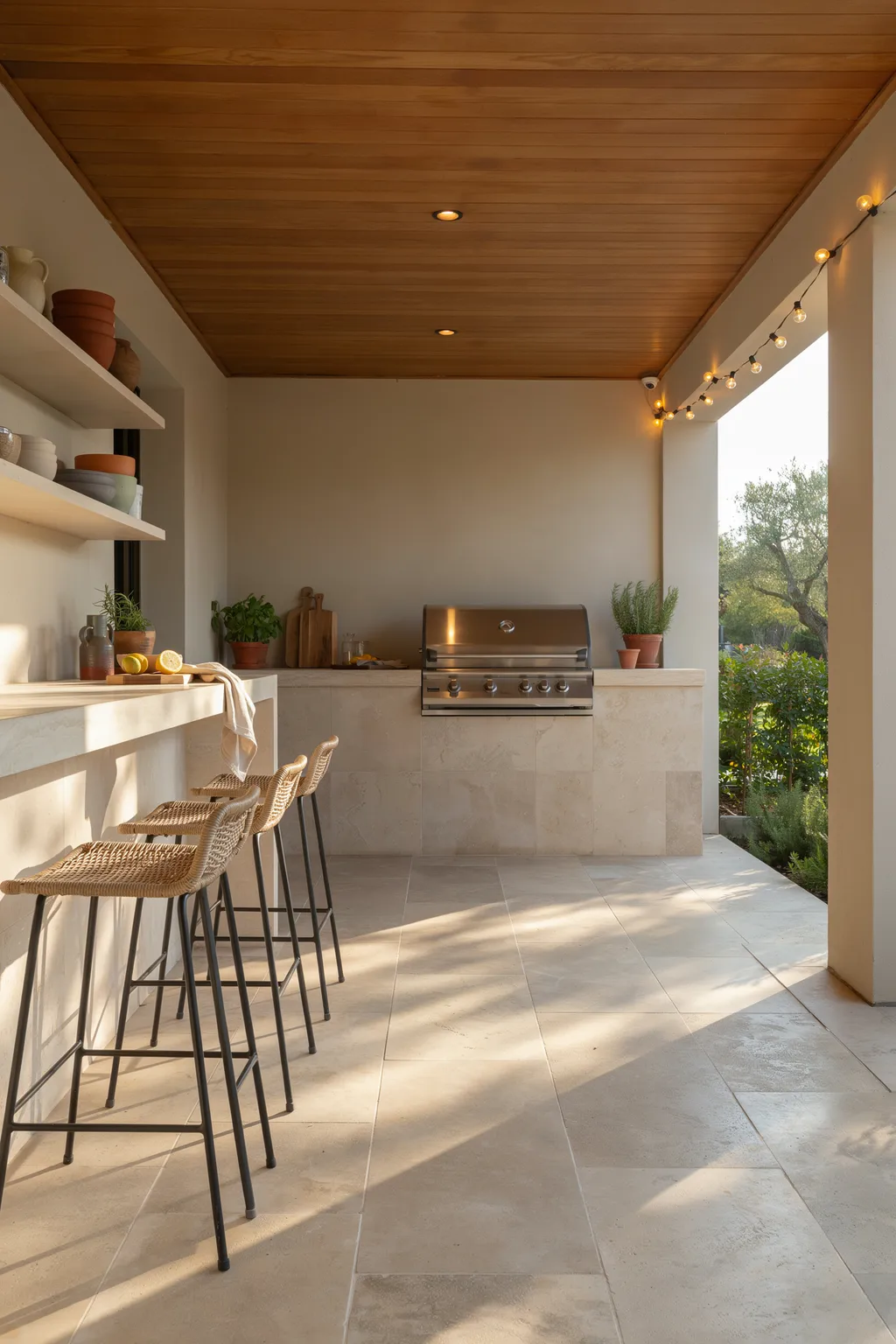
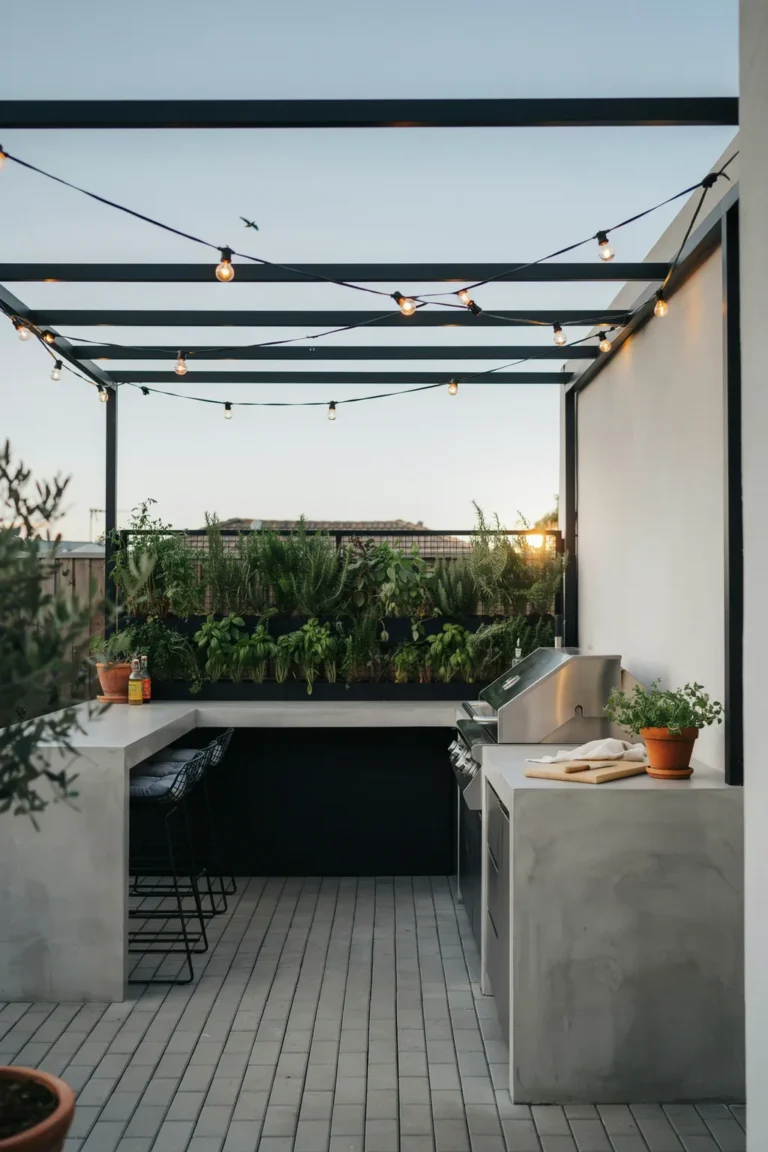
Here is a gap most patio roundups skip: cooking. Tuck a compact outdoor kitchen along one wall of your covered patio, with a built-in grill, a stone counter, and two or three stools at a raised bar edge. Now the cook stays in the conversation instead of stranded at a grill in the sun, and dinner never drives everyone back inside.
This works because a roof protects the grill, the counter, and the cook from sun and light rain, so the kitchen actually gets used year-round. A stone or concrete counter shrugs off heat and spills. This suits patios with a nearby gas and water line and enough depth for a three-foot walkway behind the stools. Keep at least a few feet of non-combustible clearance around the grill, and vent it well, since a closed roof plus a hot grill needs airflow or a hood.
27. Choose a Louvered Roof for Rain or Shine
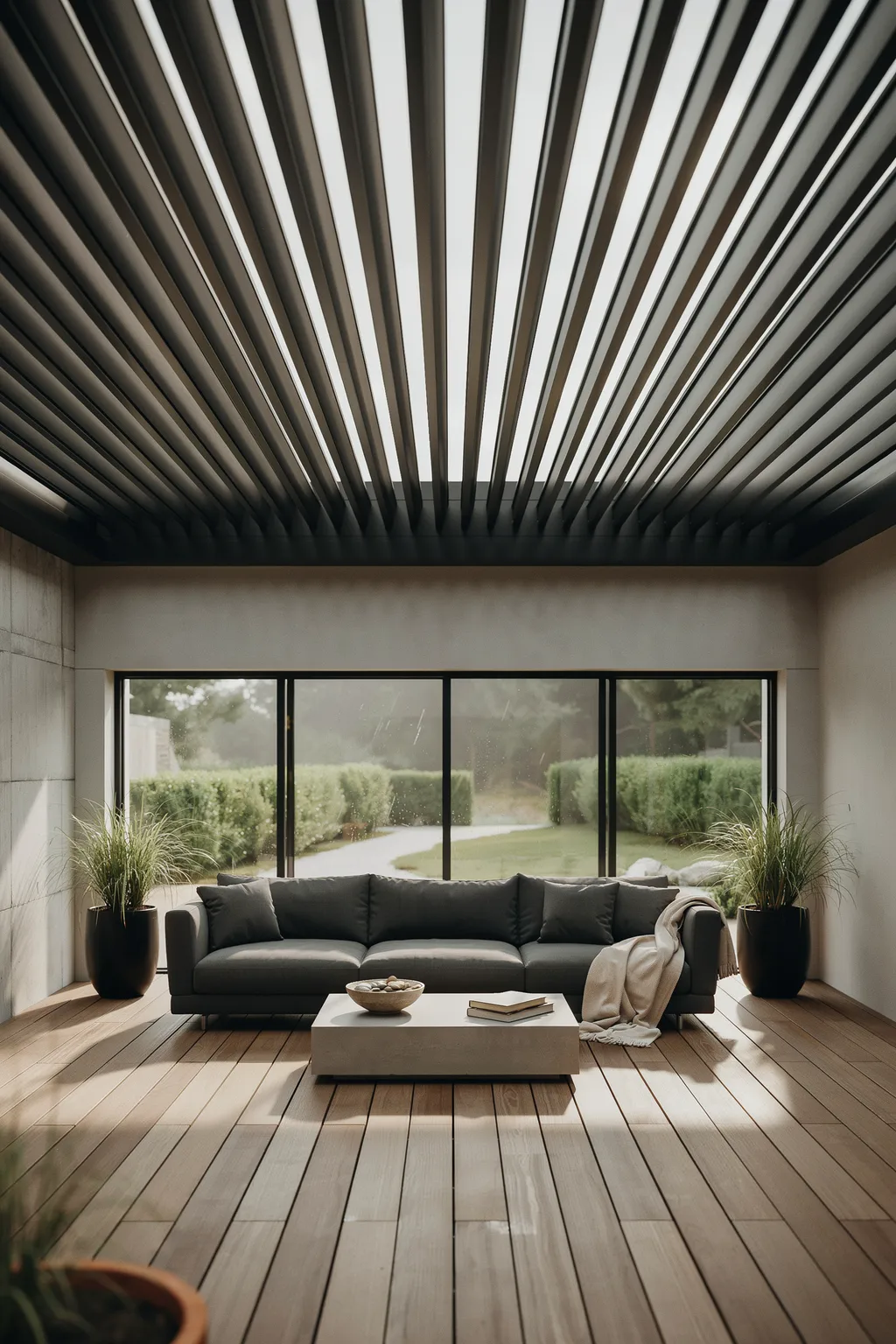
The competitor never mentions weatherproofing, and it matters most. An aluminum louvered roof, sometimes called a pergola with a motorized top, tilts its slats open for breeze and dappled light, then closes tight and sheds rain in seconds. Set it over a lounge with a sectional and a low table, and you get a patio you can use in a drizzle, not just on perfect days.
This works because it solves the pergola problem for real: full sun, filtered light, or a dry room, all from a remote or a rain sensor. Powder-coated aluminum will not rot or need staining like wood. This suits climates with pop-up storms and anyone tired of racing to save cushions. The trade-off is upfront cost, since motorized louvered roofs run several thousand dollars installed, so price it against how many rained-out evenings you lose now.
28. Build an Outdoor Movie Lounge
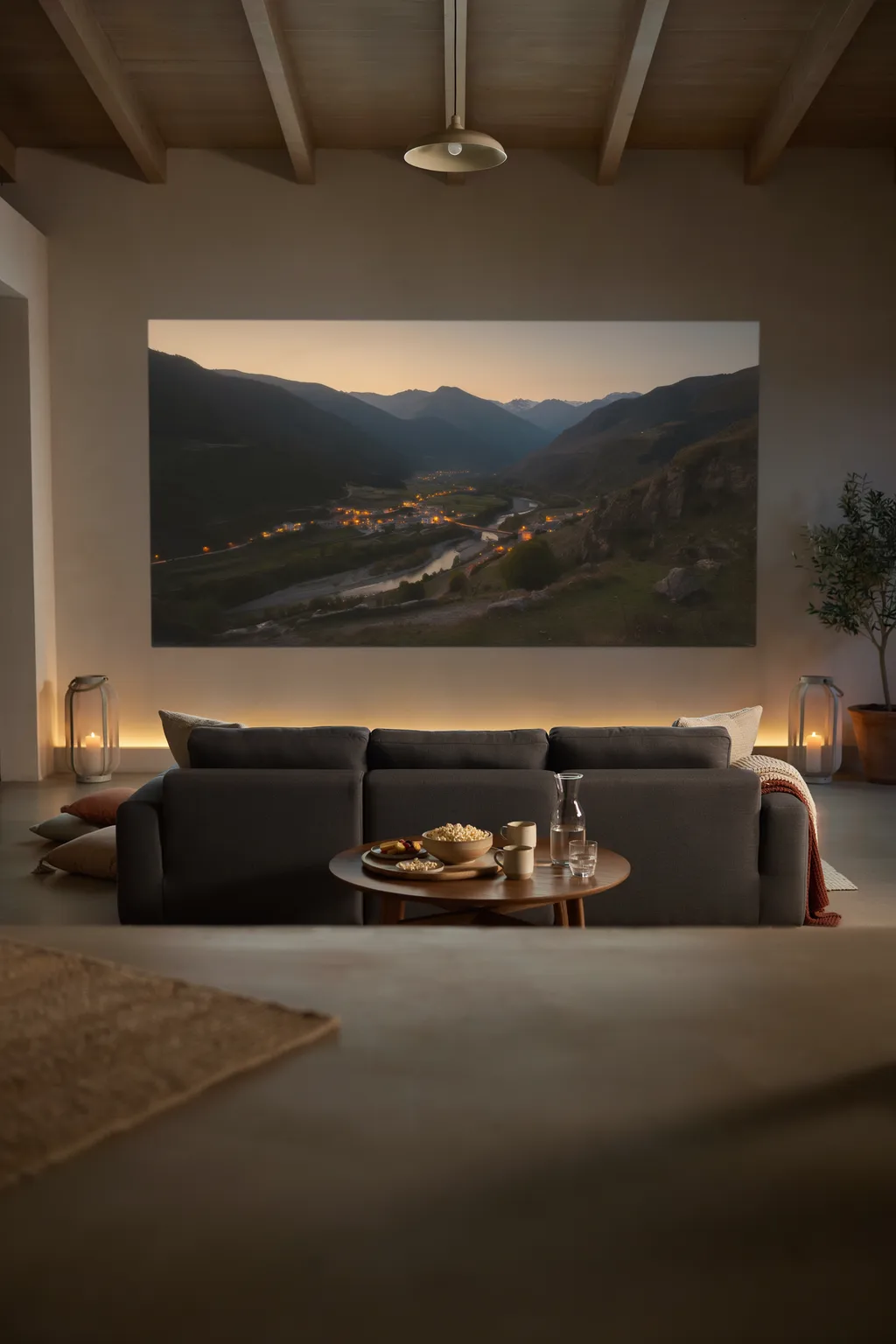
End with pure fun the competitor leaves out: movie nights. Mount a weatherproof screen or a drop-down projector sheet on one wall of your covered patio, aim a deep sectional at it, and pile on blankets and floor cushions for the overflow crowd. Dim, warm bias lighting behind the screen and a couple of side lanterns keep it cozy without washing out the picture.
This works because a roof blocks the glare and dew that ruin outdoor screens, so the image stays crisp and the gear stays dry. A projector plus a blank wall costs far less than a giant outdoor TV and packs away fast. This suits families and anyone who hosts game nights. Keep the projector under cover and out of humidity, run outdoor-rated cords, and add a small weatherproof speaker, since patio spaces swallow sound more than a living room does.
Common Mistakes to Avoid
Before you commit money to any of these covered patio ideas, dodge the errors that sink good plans.
Mistake 1: Skipping the roof pitch on shade sails and pergolas
A flat sail or fabric top pools water, sags, and tears within a season. Pitch sails 20 to 30 degrees and slope solid covers at least a quarter inch per foot so rain runs off. Fixing a failed cover costs more than building it right the first time.
Mistake 2: Buying indoor furniture for an outdoor room
Regular foam, wood, and fabric mold, warp, and fade fast under a patio roof, since a cover blocks sun but not humidity. Buy solution-dyed outdoor fabric and treated or powder-coated frames. The upfront premium is small next to replacing a ruined sofa every two years.
Mistake 3: Under-lighting the space
One bright fixture makes a patio feel like a garage. Layer string lights, lanterns, and a warm sconce or two at 2200 to 2700 Kelvin. Poor lighting is the top reason people stop using a patio after dark, and it is the cheapest thing to fix.
Mistake 4: Ignoring drainage and airflow
Water that sheets off a roof onto the slab pools and stains, and a closed cover with a grill or fireplace traps smoke. Add a gutter or a gravel drain edge, and vent any heat source. These are boring fixes that quietly protect everything else you bought.
Mistake 5: Forgetting permits and setbacks
Attached patio covers, gas lines, and electrical often need a permit and must sit a set distance from the property line. Skipping this can force a teardown or block a future sale. A quick call to your local building office saves a costly redo.
Mistake 6: Matching nothing to your climate
A breezy shade sail in a rainy region or a closed sunroom in a mild one wastes money. Match the structure to your real weather and how often you will use it, then spend on comfort second.
Quick Start Checklist
- [ ] Measure your patio depth and width, and note the midday sun direction.
- [ ] Pick your cover type based on climate: sail, pergola, slatted, solid, or louvered.
- [ ] Check local permit and setback rules before ordering anything structural.
- [ ] Confirm gas, water, or electrical access if you want a fire, kitchen, or lighting.
- [ ] Choose outdoor-rated flooring that stays cool and is not slippery when wet.
- [ ] Buy solution-dyed cushions and weatherproof curtains, not indoor versions.
- [ ] Plan layered lighting: overhead string lights plus lanterns plus a warm sconce.
- [ ] Add one anchor feature (fireplace, dining table, or daybed) as the focal point.
- [ ] Set a storage plan for cushions and pillows during storms and winter.
- [ ] Style last with a rug, plants, and personal touches once the base is done.
Frequently Asked Questions
What is the cheapest way to cover a patio?
Shade sails and a simple pergola kit are the most budget-friendly covered patio ideas, often a few hundred dollars for materials plus a weekend of work. Outdoor curtains on a post-mounted rod are even cheaper and add instant shade and privacy. Solid roofs and louvered systems cost far more but last longer and handle rain, so weigh price against how often it storms where you live.
Do covered patios need a permit?
Often, yes. Most areas require a permit for a permanent, attached cover, and always for new gas or electrical lines. Freestanding pergolas and shade sails under a certain size sometimes skip it, but rules vary by city and by how close you build to the property line. Call your local building department first; it takes ten minutes and prevents a teardown later.
What flooring works best under a covered patio?
Large-format porcelain tile, concrete, and natural stone like limestone or bluestone all wear well, stay cool, and clean easily. Terrazzo looks stunning but costs more. Whatever you pick, choose a matte or textured finish rated for outdoor use so it does not turn slick in the damp. Wood and composite decking work too, but need more upkeep in humid, shaded spots.
How do I keep a covered patio cool in summer?
Start with airflow. A slatted or louvered roof and an outdoor ceiling fan move air and drop the felt temperature several degrees. The U.S. Department of Energy notes that ceiling fans let you stay comfortable at higher thermostat settings, and the same logic works outdoors. Add light-colored surfaces, shade plants, and a misting line in dry heat, and keep the west side curtained against the afternoon sun.
Can I use a covered patio in winter?
In many climates, yes, with a little help. A fireplace, a linear fire feature, or patio heaters extend the season into the cold months, and closing off one or two sides with curtains or panels blocks wind. In hard-freeze regions you will still lose the deep winter, but a well-set-up covered patio easily adds several usable weeks in fall and spring.
How much does a covered patio cost?
It ranges widely. A shade sail or curtain setup can land under 500 dollars, a decent pergola runs 3,000 to 8,000 dollars, and a solid attached roof or louvered system with lighting and a fireplace can pass 20,000 dollars. Set your must-haves first, then add comfort and style in phases so you never stall the whole project waiting on the big-ticket parts.
Conclusion
A covered patio is the rare upgrade that pays you back every single evening. Get the bones right and the rest is easy. First, match your cover to your climate, since a shade sail, a pergola, a slatted top, and a louvered roof each solve a different problem. Second, buy for the weather, choosing outdoor-rated fabric and flooring so nothing molds or fades on you. Third, layer your lighting warm and low so people stay out past dark. Fourth, give the space one clear anchor, whether that is a fireplace, a long table, or a daybed. And fifth, respect the boring stuff, drainage, airflow, and permits, because that is what protects everything else.
You do not have to do all 28 at once. Pick the one idea that fixes your biggest complaint, whether that is glare, rain, or a patio nobody uses, and start there this month. Tape out the furniture, stand in the space at noon and again at dusk, and let the light tell you where the cover needs to go. Your favorite room might turn out to be the one without walls.