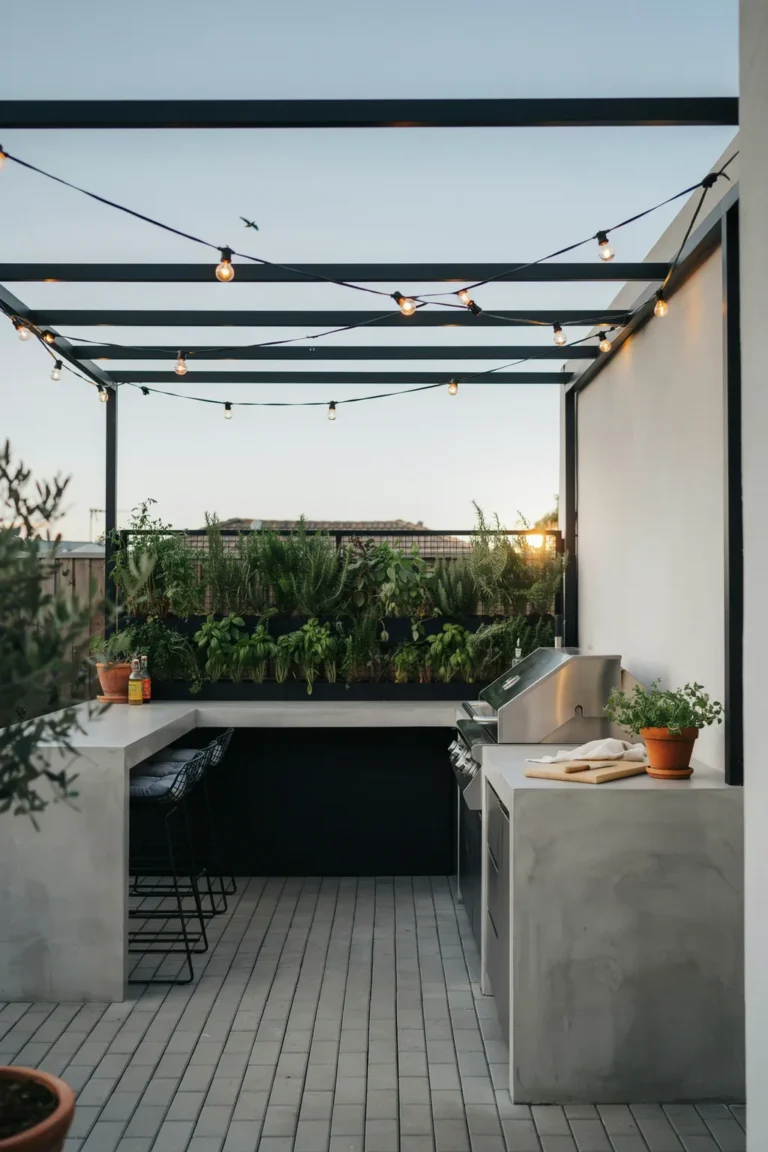
21 Outdoor Jacuzzi Ideas That Feel Dreamy Yet Practical
You saved for the hot tub. It arrived. And now it sits on a bare concrete slab looking like a delivery that nobody finished. That gap between the spa you pictured and the one you actually have is where most backyards get stuck. The tub works fine. The setting around it does all the heavy lifting, and right now the setting is doing nothing.
The good news is that fixing this rarely means starting over. Most of these outdoor jacuzzi ideas build around a tub you already own or plan to buy, using decking, screens, planting, and light to close that gap. A cedar surround, a run of string lights, or a single row of tall planters can move a spa from “appliance in the yard” to “the reason people stay late.”
This guide walks through 21 setups, each grounded in a real backyard scene. You get the look, the reason it works, who it suits, and where it falls short, because a fire pit next to a tub is lovely until you think about wind direction. Some of these need a contractor. Plenty need a weekend and a trip to the garden center. Pick the ones that match your space, your budget, and how you actually live outside.
Quick Answer
The best outdoor jacuzzi ideas do three things at once: they hide the tub’s bulk with a surround or sunken deck, add privacy with screens or planting, and set a mood with warm light. Start with privacy, because a spa you feel exposed in never gets used. Then soften the hard shell with wood or stone. Finish with low, warm lighting so it pulls you outside after dark, not just on weekends.
1. Tuck a Round Tub Into a Snug Corner Nook
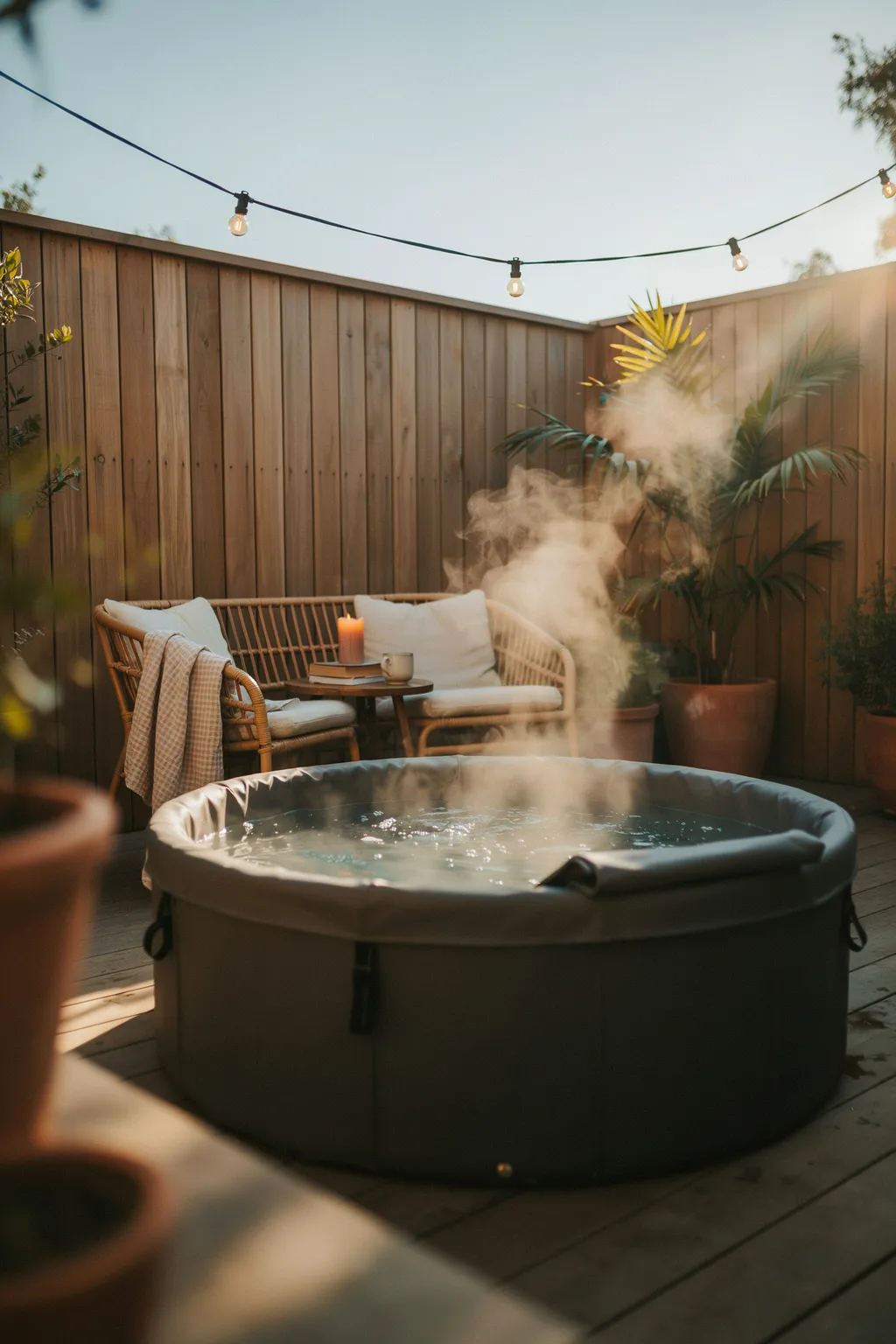
A small yard is not a reason to skip a spa. It is the reason to plan one carefully. Push a round portable tub into the tightest corner you have, then build the rest of the scene around it: two woven chairs, a low side table, a scatter of potted palms, and a string of bulbs overhead. The tub becomes the anchor of a pocket lounge instead of an object stranded in open space.
This works because a corner gives you two walls of instant backdrop, so you only have to style one open side. A round shell also reads softer in a small footprint than a hard square, and it seats three to four without demanding a big pad. Warm sunset light and a jute rug pull the whole nook together for under a few hundred dollars in accessories.
Best for renters and anyone with a courtyard under 150 square feet. Skip it if your only corner sits under a gutter downspout, because splashback and runoff will fight you all season.
2. Frame It in a Wide Cedar Deck With a Sitting Ledge
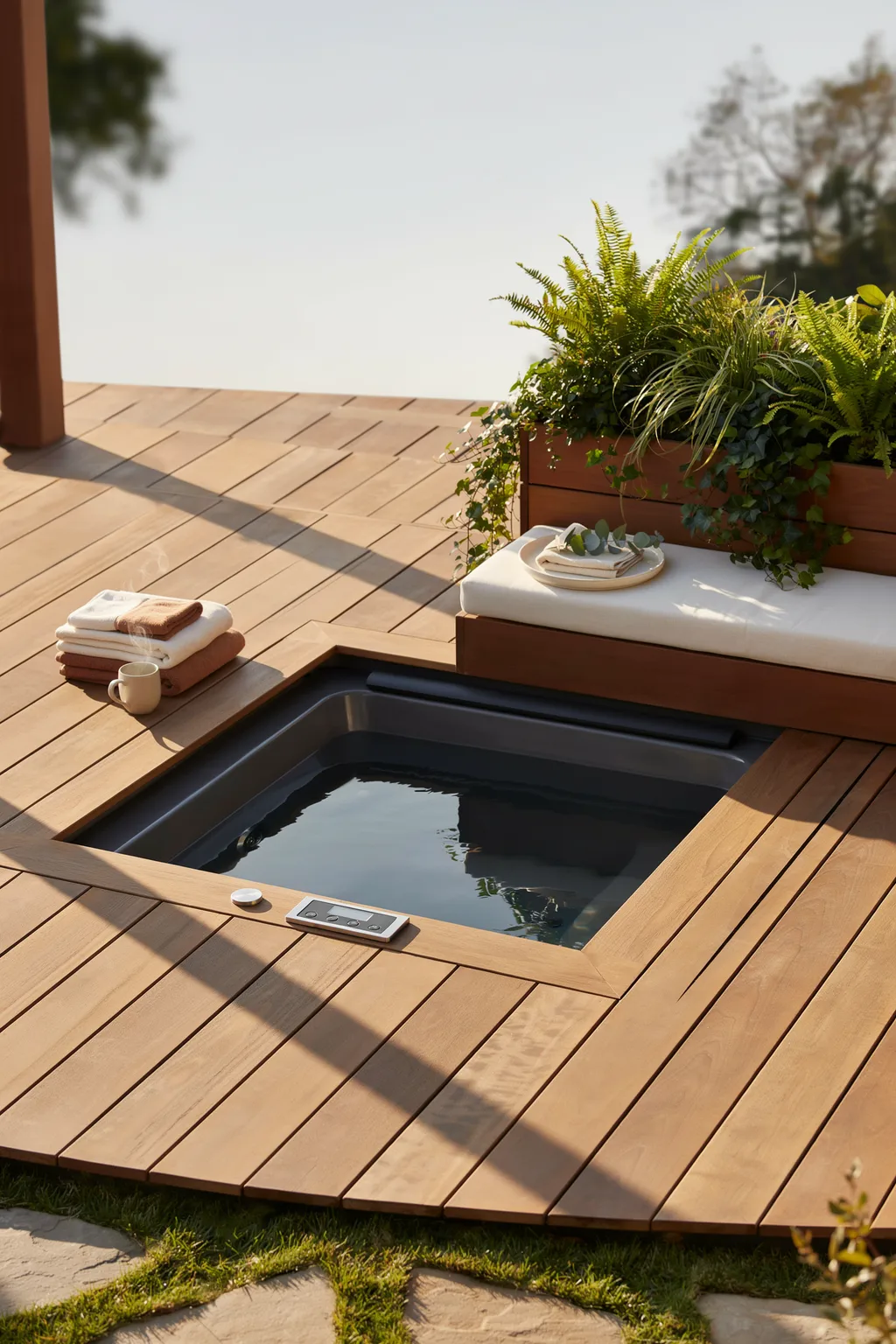
Give a square tub a broad cedar surround and something quiet happens: the spa stops looking like equipment and starts looking built-in. Run the decking flush with the shell rim, then extend it wide enough on one side to hold folded towels, a drink, or someone perched with their feet in the water. A matching bench with a single cushion turns the edge into a spot people use even when the tub is covered.
The wide ledge is the whole trick here. It hides the tub’s plastic cabinet, gives you a staging surface, and creates a visual pause between water and lawn. Cedar or thermally modified wood handles moisture far better than untreated pine and ages to a soft silver if you let it. Budget 400 to 800 dollars in lumber for a modest surround, more if you hire it out.
Great for anyone who entertains and wants a landing spot for towels and glasses. Less ideal if you dislike upkeep, since wood near a spa needs a reseal every year or two.
3. Sink It Into a Raised Planter Garden
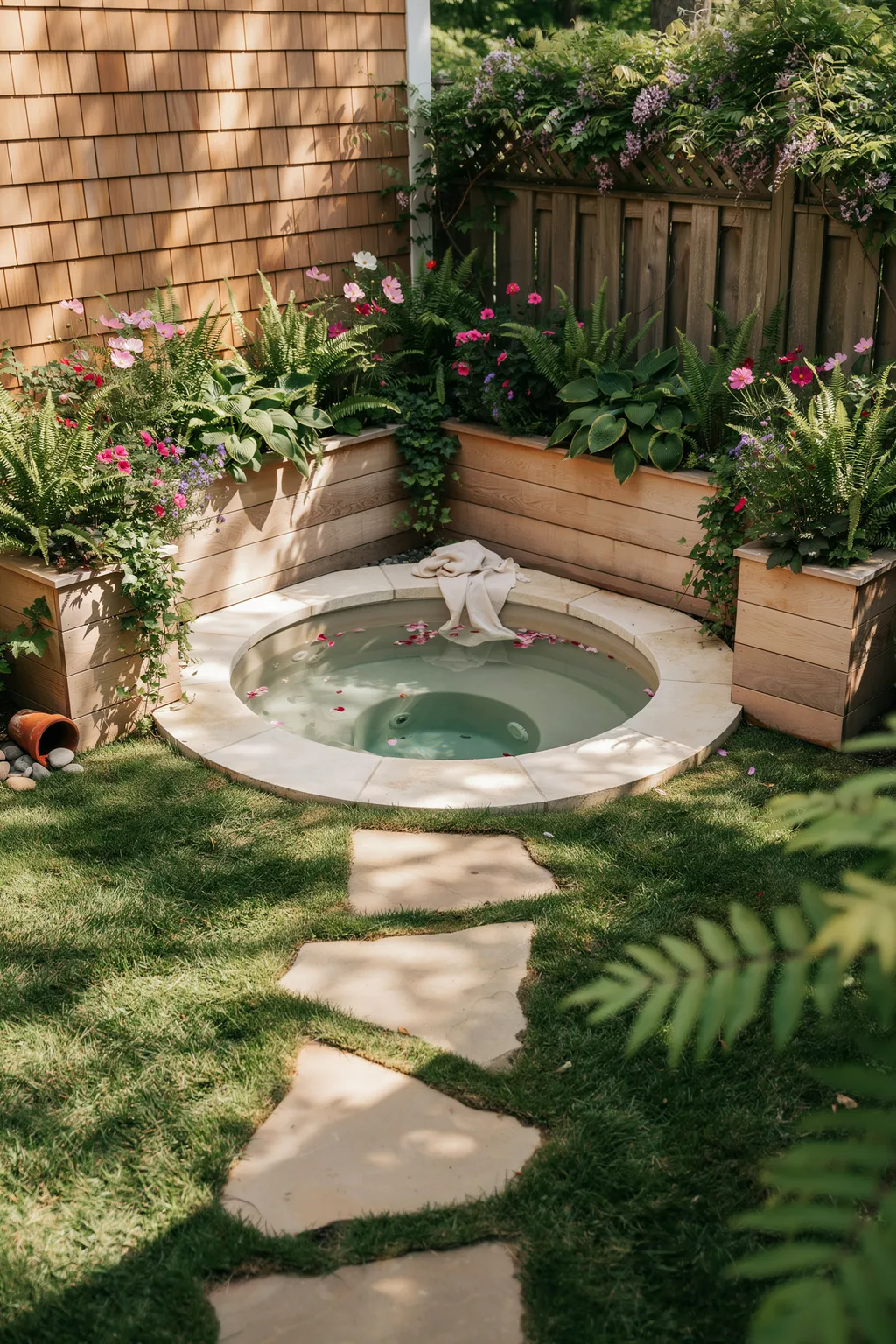
Ring a round sunken spa with waist-high wooden planter boxes and you get a soak that feels like it grew out of the garden. Fill the boxes with ferns, trailing greenery, and a few flowering plants so the water sits inside a living frame. A stone coping around the rim keeps the edge crisp, while flagstone steppers lead you in across the lawn.
This layout works because the raised beds do double duty. They screen the sides at seated height, and they bring scent and movement right up to the water without you bending to ground level to tend them. Planters also let you garden over a spa you cannot dig around, since the roots stay in the boxes and off the equipment. Expect to spend a weekend building beds from cedar boards and a few hundred dollars on soil and plants.
Suited to gardeners who want the spa to feel like part of the yard, not a bolt-on. Skip dense planting right against the shell if you need frequent access to the pump panel.
4. Cap It With a Pergola and Slatted Privacy Screen
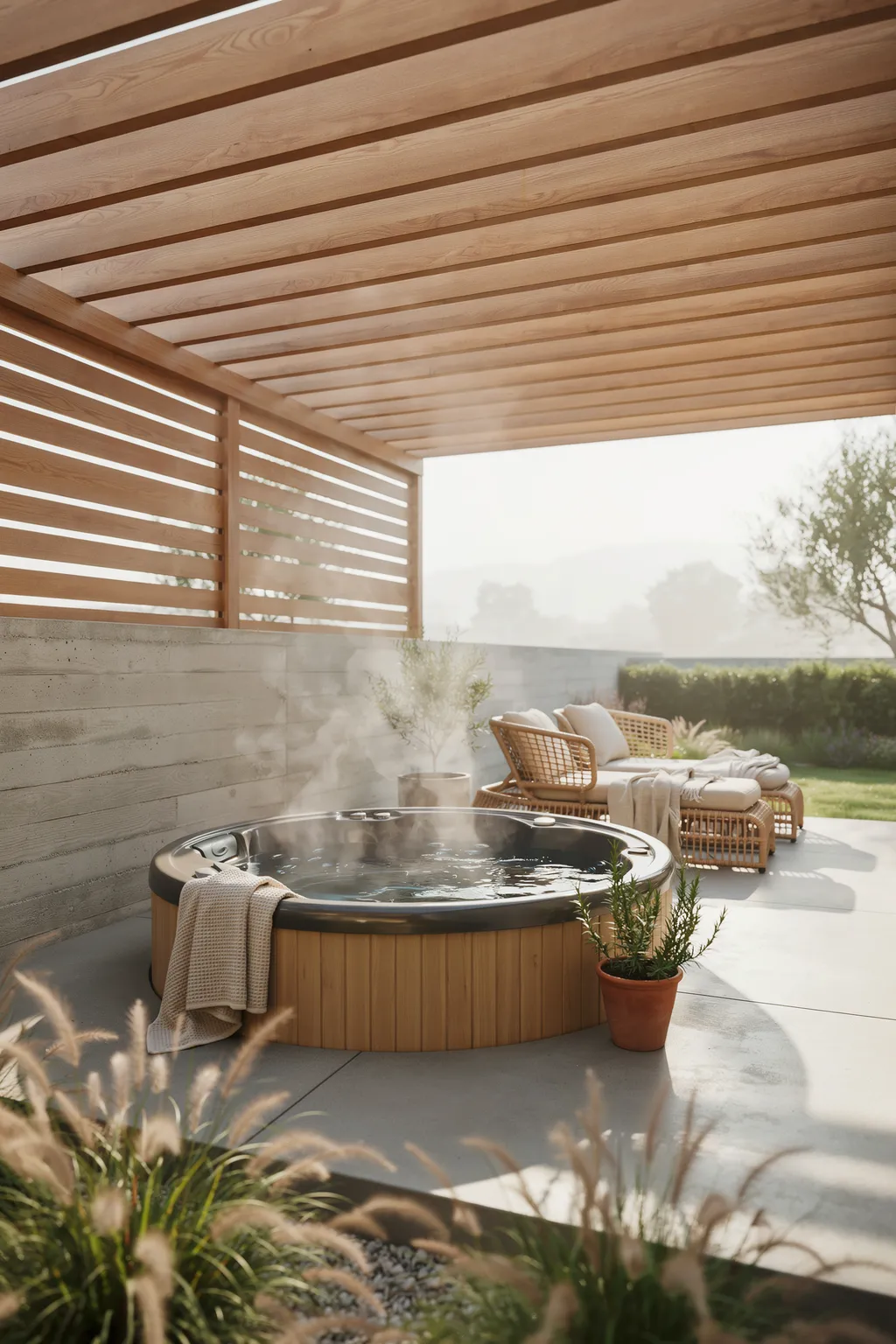
An open tub under open sky feels exposed, and exposure is the fastest way to stop using a spa. A wood pergola overhead with a slatted screen on the windward side solves both problems in one structure. The overhead beams give you shade and a sense of shelter, while the horizontal slats block the neighbor’s line of sight without walling you into a box.
The slats matter more than the roof here. Spaced boards filter views and breeze while still letting light and air move through, so the space stays bright instead of cave-like. A pergola also gives you a frame to hang a shade cloth, a heater, or a light strip later. Kits start around 1,000 dollars for a modest footprint, and a screen wall adds a few hundred in lumber.
Ideal for corner lots and yards that back onto a two-story neighbor. Think twice if your spa sits where afternoon sun is the main draw, since even a slatted roof cuts warmth on cool days.
5. Drop It Into a Deck With Wraparound Bench Seating
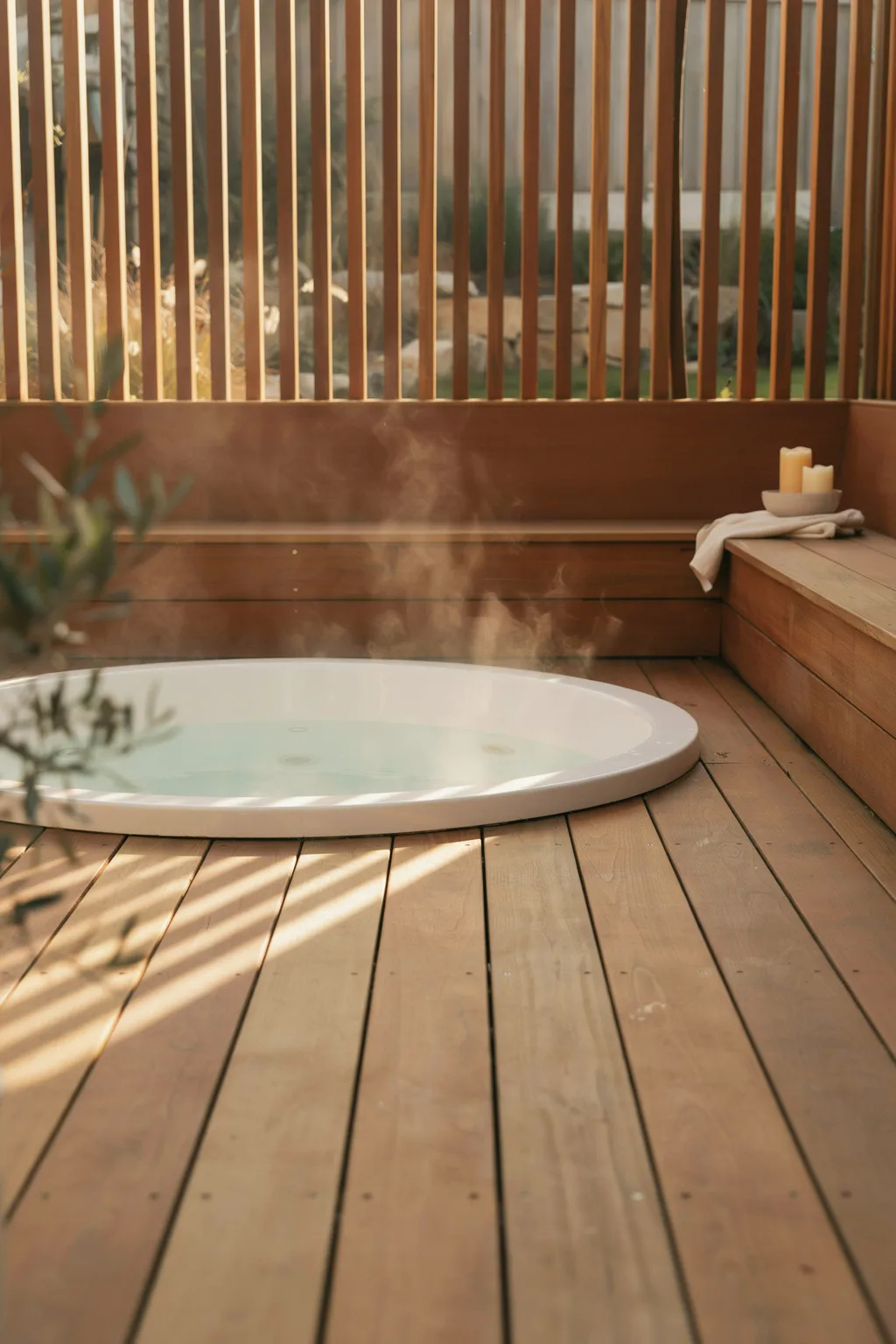
When the tub sits flush inside a wood deck and a built-in bench wraps two sides of it, the spa reads as the center of a room rather than a fixture. The bench gives overflow guests a place to sit close, keeps towels off the ground, and turns the deck into a gathering spot that works whether the cover is on or off. Slatted railing around the back closes the space without blocking the breeze.
The sunken install is what sells the effect. With the shell dropped below deck level, you step down into the water and the bulky cabinet disappears entirely. Wraparound seating then hugs the tub so conversation stays close, which is the whole point of a soak with friends. A sunken deck build is a bigger job, usually 2,000 dollars and up with access panels planned in.
Best for homeowners committing to a permanent setup on a level yard. Not for you if you rent or expect to move the tub, since sinking it locks it in place.
6. Keep It Classic With Cedar Steps and Tidy Landscaping
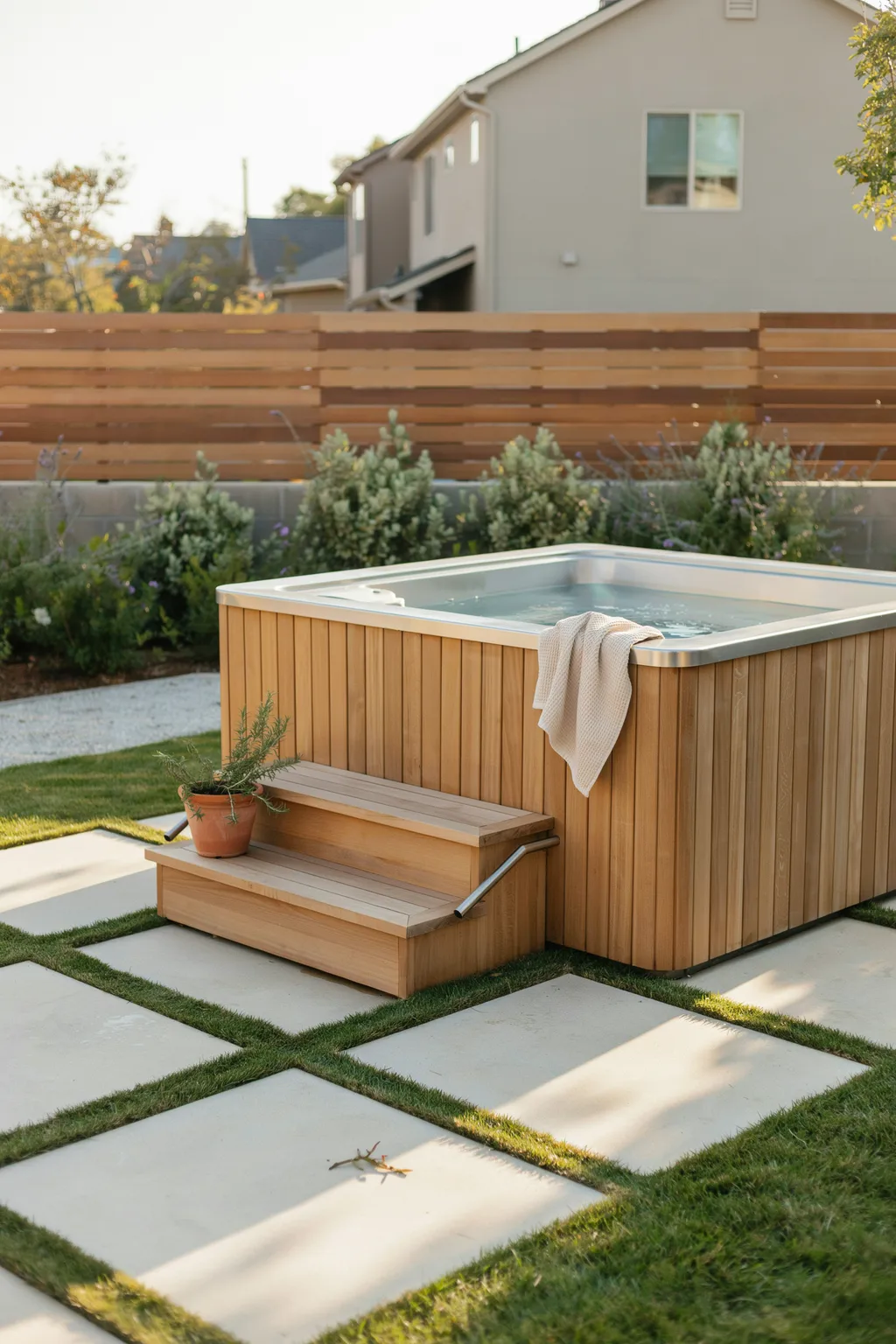
Not every spa needs a dramatic build. A square hot tub in a natural cedar cabinet, with a set of matching wood steps and clean landscaping around it, looks polished precisely because it is simple. A grid of pavers set into the lawn, a gravel band along the fence, and a few silvery shrubs frame the tub without competing with it. This is the setup that ages well and never looks like a trend, and it is one of the outdoor jacuzzi ideas most owners wish they had started with.
The restraint is the strategy. Matching the steps to the cabinet makes the whole unit read as one designed piece, and the paver-and-grass grid gives the eye order instead of clutter. A gravel strip along the fence keeps splash-out water draining away from the shell and stops mud from tracking in. You can do this look for the cost of steps, a few bags of gravel, and a Saturday.
Great for first-time spa owners who want a safe, handsome result. Less exciting if you crave a statement, since the whole point is that it stays quiet.
7. Pair It With a Fire Pit for Cool Nights
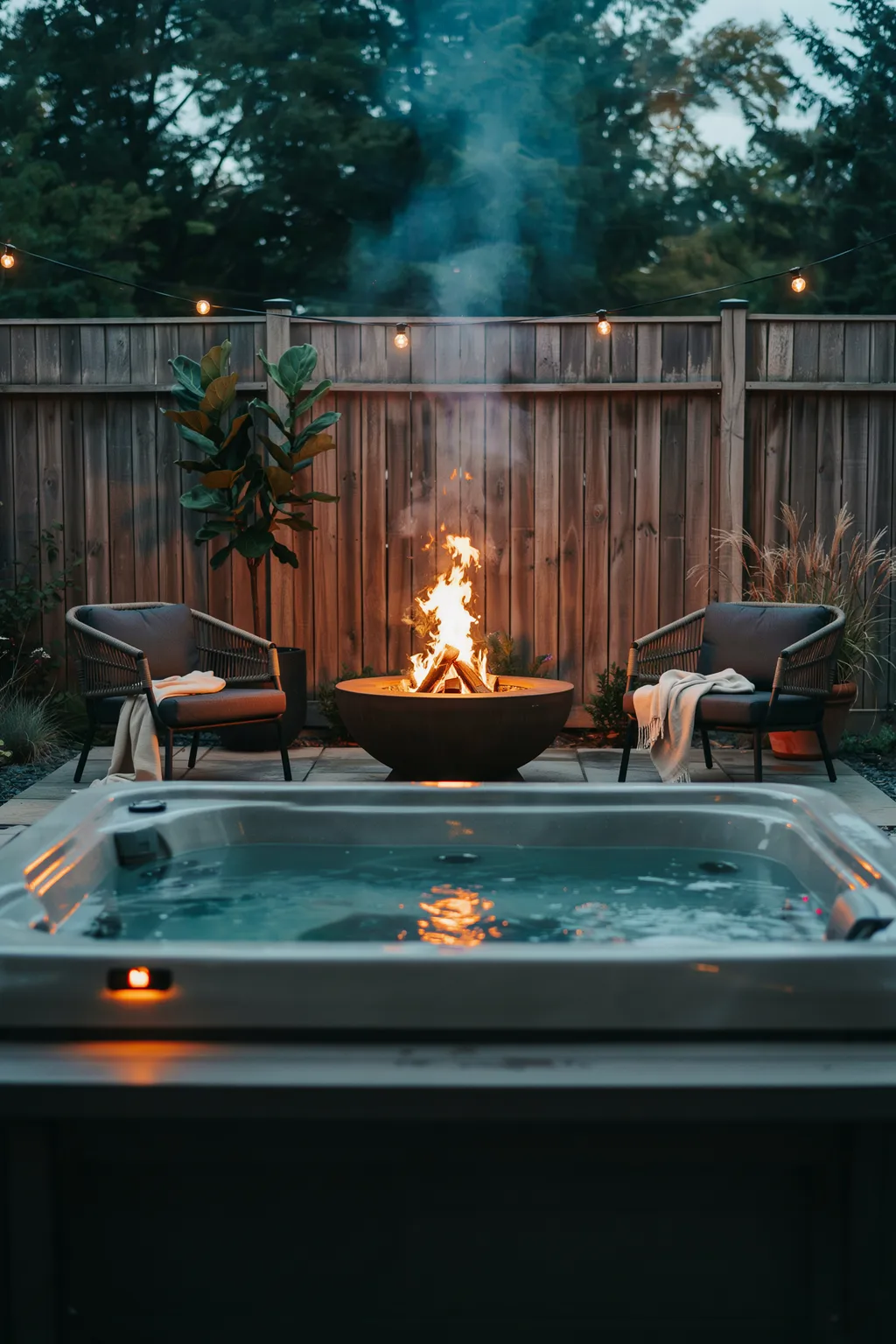
Heat from below, heat from beside. Setting a fire pit a safe distance from the spa gives you a second warm zone, so the people waiting their turn or drying off still have a reason to stay. At dusk the fire throws amber light across the water and the whole yard shifts from functional to atmospheric. Add two lounge chairs between the two and you have built an outdoor room that runs late into fall.
This pairing works on a simple principle: a spa is a warm island in a cold yard, and a fire pit extends that warmth to dry seats. The flicker also does something the tub cannot, giving the space movement and glow after the sun drops. Keep the pit at least eight to ten feet from the shell and mind the prevailing wind so smoke drifts away from the water, not into it.
Perfect for cooler climates and anyone who soaks year-round. Skip an open wood fire if you are close to neighbors or under a low tree canopy, and reach for a low propane bowl instead.
8. Set a Square Shell in a Raised Paver Platform
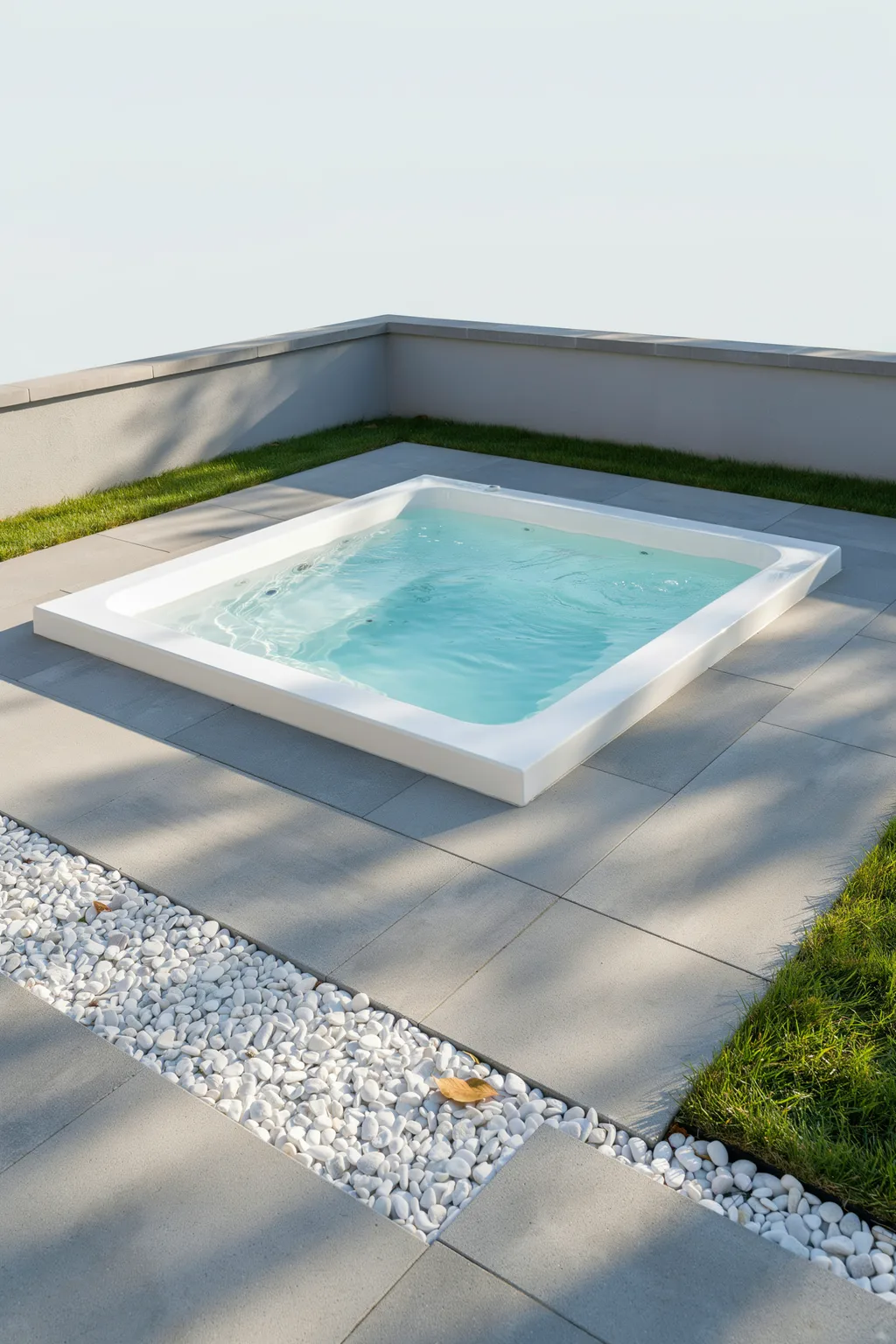
For a crisp modern look, seat a square spa in a raised platform of large-format pavers with a clean band of white gravel around the base. The straight lines of the platform echo the tub’s square shell, and the pale gravel gives the eye a bright margin that makes the whole thing feel intentional and new. There is no wood to reseal and no lawn creeping up to the water.
The hard materials are the point. Concrete pavers and gravel shrug off splash, sun, and freeze without maintenance, so the look you build in spring is the look you have in five years. The raised platform also lifts the shell to a comfortable sit-and-swing-your-legs-in height and hides the mechanicals inside the plinth. Materials run higher than a simple pad, but the payoff is a near zero-upkeep surround.
Right for modern homes and low-maintenance owners. Not the warmest look underfoot, so add a teak mat or a small rug at the step if you dislike bare stone on wet feet.
9. Anchor an Outdoor Living Room Under a Pergola
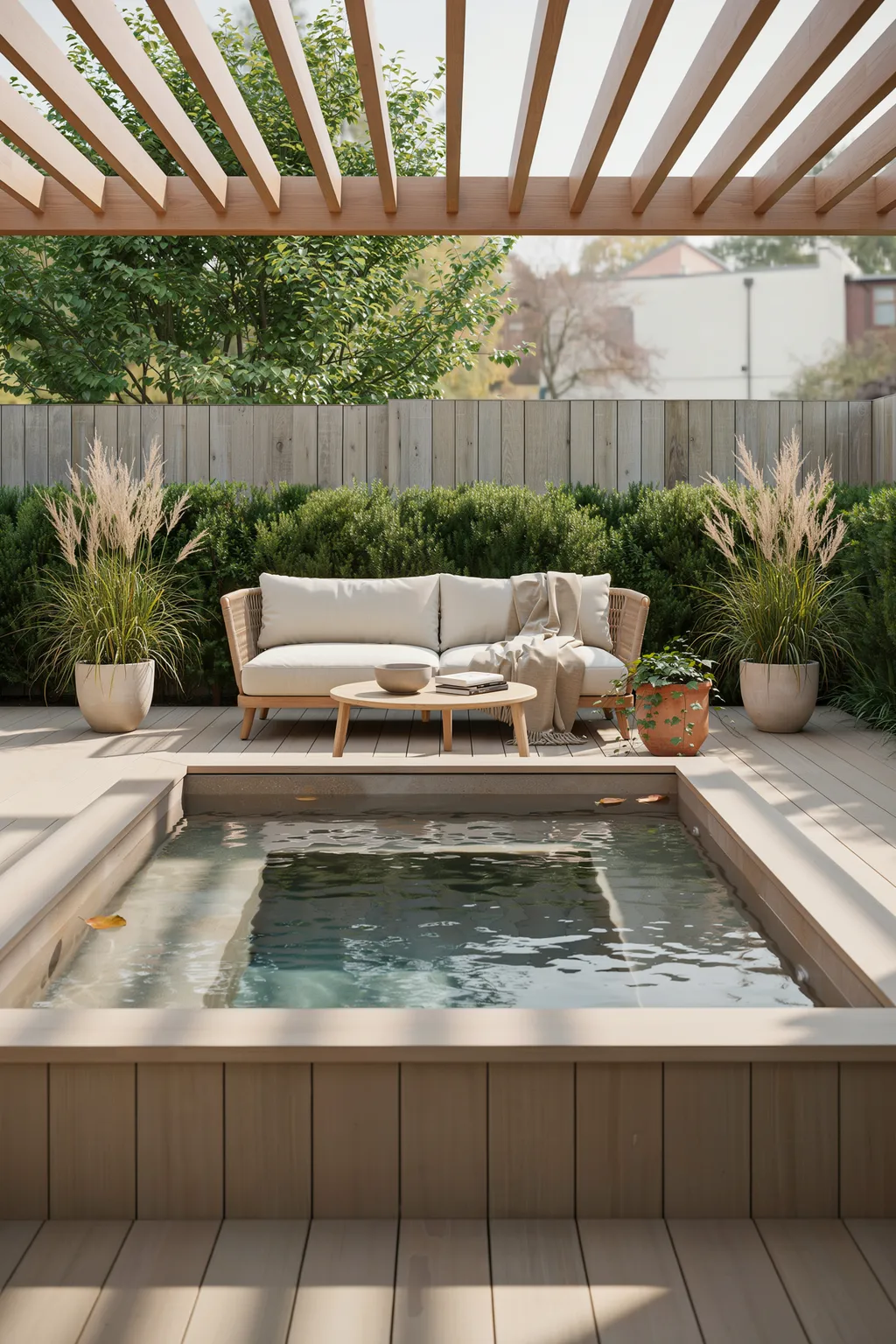
Treat the spa as the anchor of a full outdoor living room rather than a stand-alone feature. Set a square tub at one end, place a woven sofa and a low coffee table nearby, and run a light-timber pergola over the whole zone. Now the area works at every hour: coffee on the sofa in the morning, a soak at night, and shade in between. The tub earns its footprint by belonging to a space you use all day.
This approach works because it solves the “we only use it twice a month” problem. By grouping seating, a table, and the spa under one structure, you make the corner a destination whether or not anyone gets in the water. The pergola ties the furniture and tub together visually, and potted grasses soften the edges. It is a larger commitment in space and budget, but it replaces a patio set and a spa surround in one move.
Best for medium to large yards where the spa can share a zone with lounge seating. Too much for a tiny courtyard, where the furniture would crowd the water.
10. Place It Beside a Raised Deck to Extend Daily Living
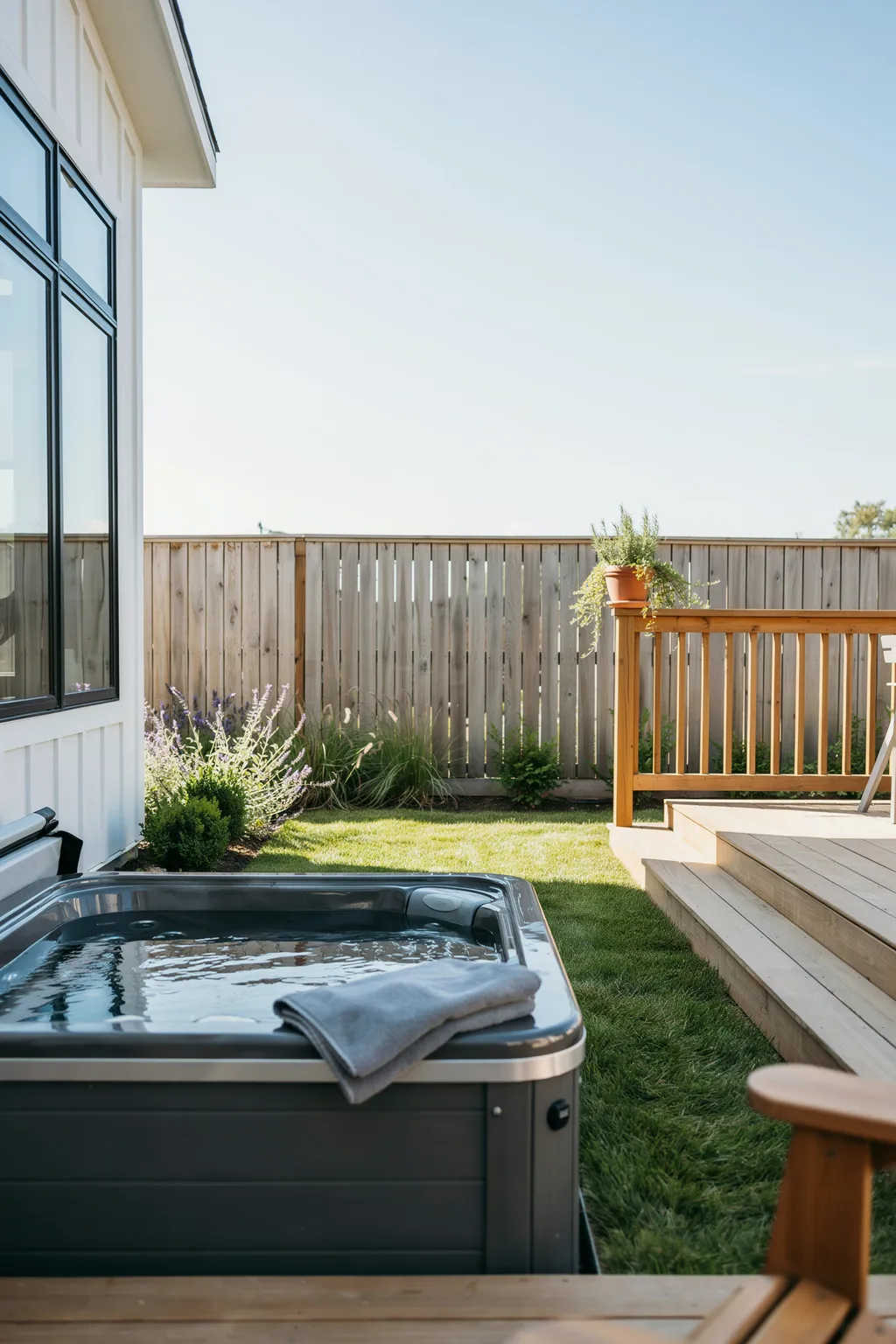
If you already have a raised deck off the house, put the spa right beside it at grade instead of on top of it. The tub becomes a natural extension of the deck you use every day, a step down from the dining area into the water, with a garden bed and lawn wrapping the rest. You skip the cost and structural math of putting a heavy full tub on an elevated frame, and you still get the flow between house, deck, and spa.
The logic is about traffic. A spa next to the deck sits on the path you already walk, so it gets used on ordinary evenings, not just planned ones. Ground-level placement also keeps the plumbing simple and the weight off your deck joists, which most decks were never sized to carry. A low planting bed between deck and tub softens the transition and hides the equipment side.
Ideal for homes with an existing deck and a level spot beside it. Skip it if the only flat ground is a long walk from the house, since distance kills casual use.
11. Raise It on a Deck Platform With a Fold-Back Cover
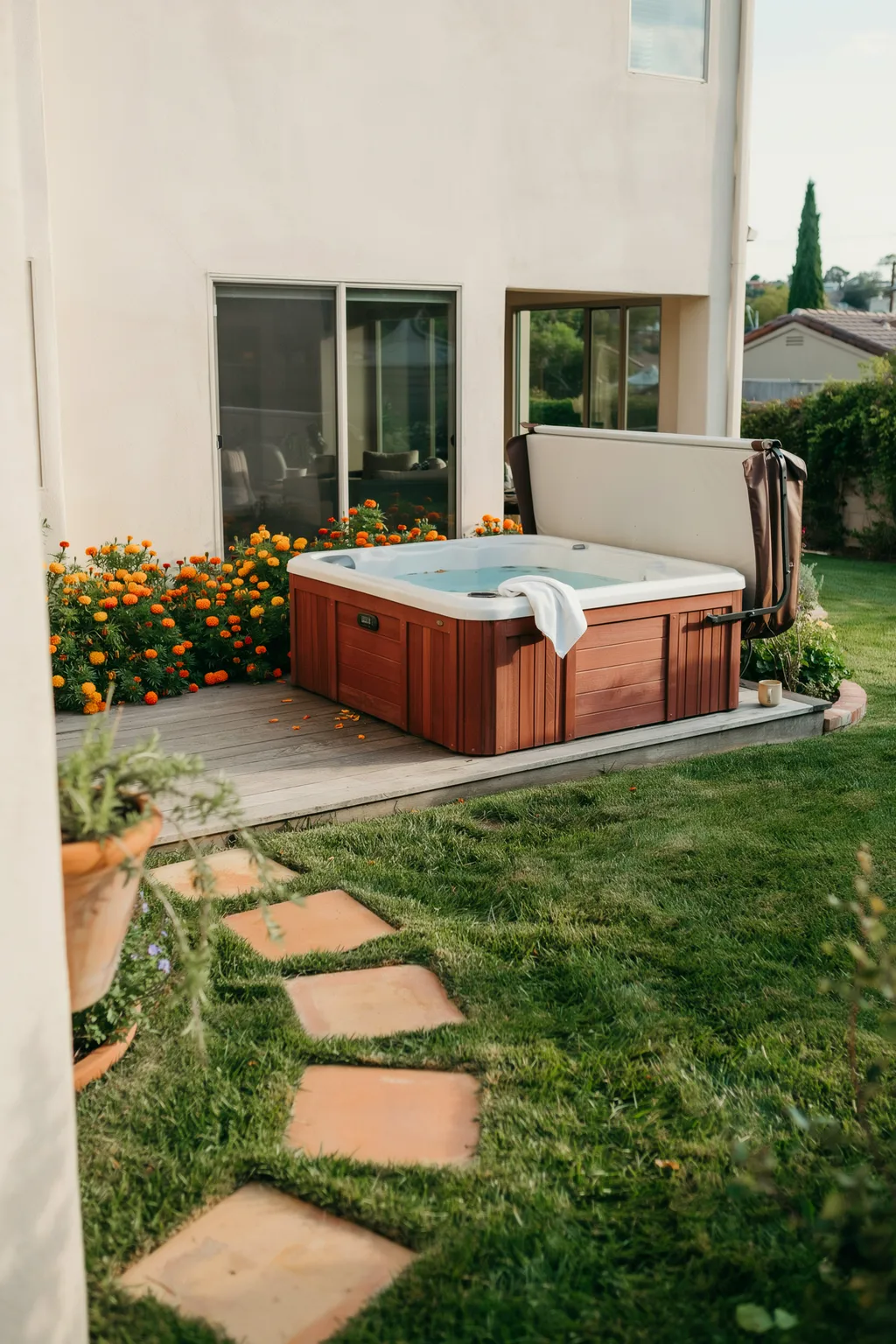
A spa on a low raised deck platform, with its insulated cover propped open on a lift, is the setup that gets used on a Tuesday. Lifting the tub a step off the yard gives it presence and keeps grass clippings and mud out of the water. A cover lift means one person can open the spa in seconds, which is the difference between a tub you soak in and one you keep meaning to.
The cover hardware is the unsung hero. A heavy insulated cover holds heat and slashes running costs, but a cover you have to wrestle off and drag across the deck is a cover you leave on. A lift arm folds it back cleanly and gives it a home, so opening up is effortless. Building a low platform runs a few hundred dollars in framing and boards, and a cover lift adds around 150 to 300.
Great for daily soakers who want minimum friction. Less necessary if your tub sits recessed already, since a flush install may not clear a fold-back lift.
12. Sink a Round Tub Into Curved Wood Decking
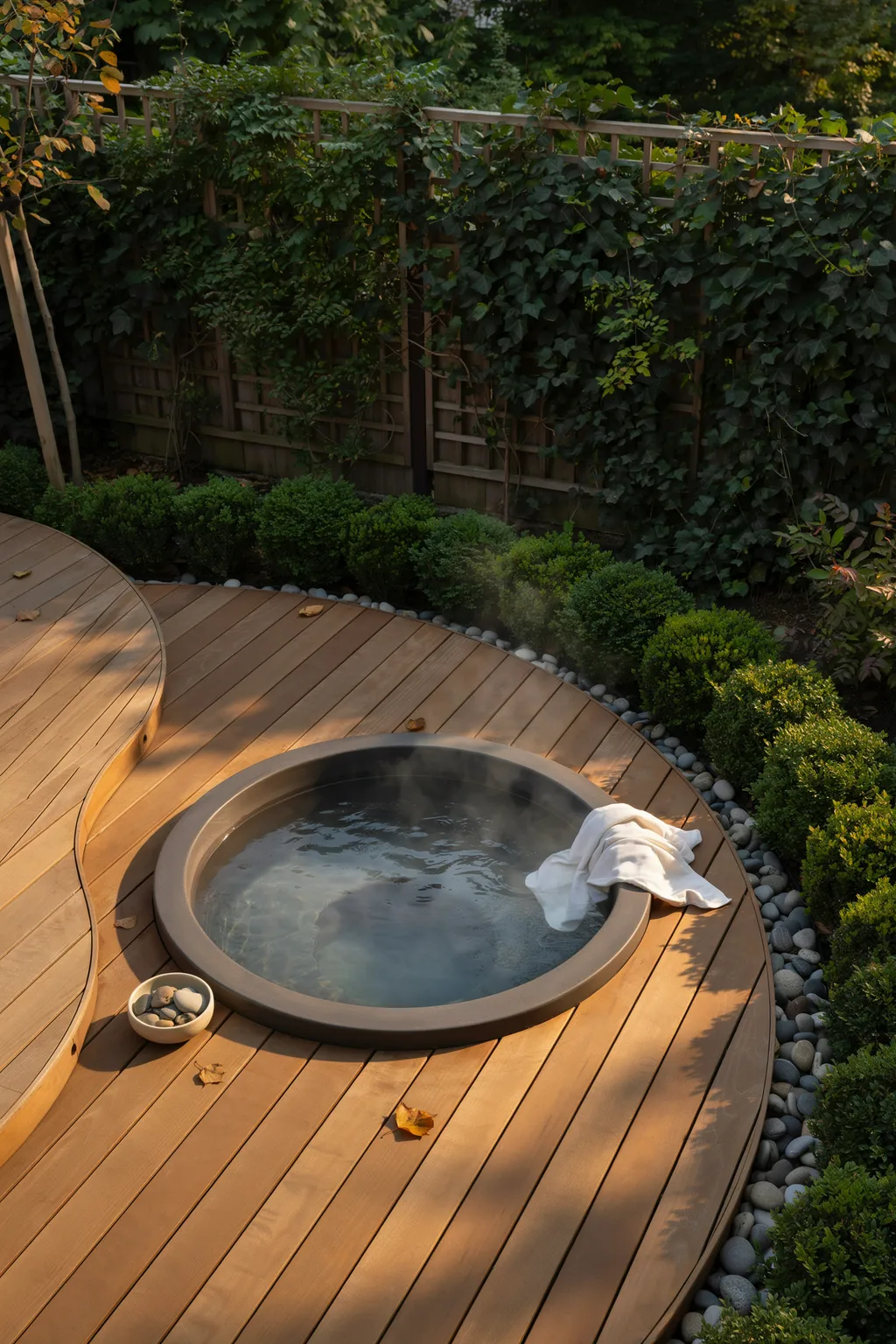
Straight decks are easy. A curved one around a round tub is what makes people stop and look. Sink a round shell into decking that sweeps around it in a gentle arc, add a low clipped hedge and a pebble border, and the spa feels custom-built even if the tub came off a showroom floor. The curve softens the whole corner and leads the eye around the water.
The shape is doing quiet work. A round tub in square decking always shows awkward gaps at the corners, but curved boards follow the shell and erase them, so the water and wood read as one flowing form. Clipped hedges add a crisp green edge, and a pebble strip handles drainage where deck meets soil. Curved decking costs more in labor and cut waste, so price it as a splurge, not a budget build.
Suited to design-forward owners who want a signature corner. Skip the curves if you are building it yourself with basic tools, since the cuts are unforgiving.
13. Screen It With Tall Bamboo in Sleek Planters
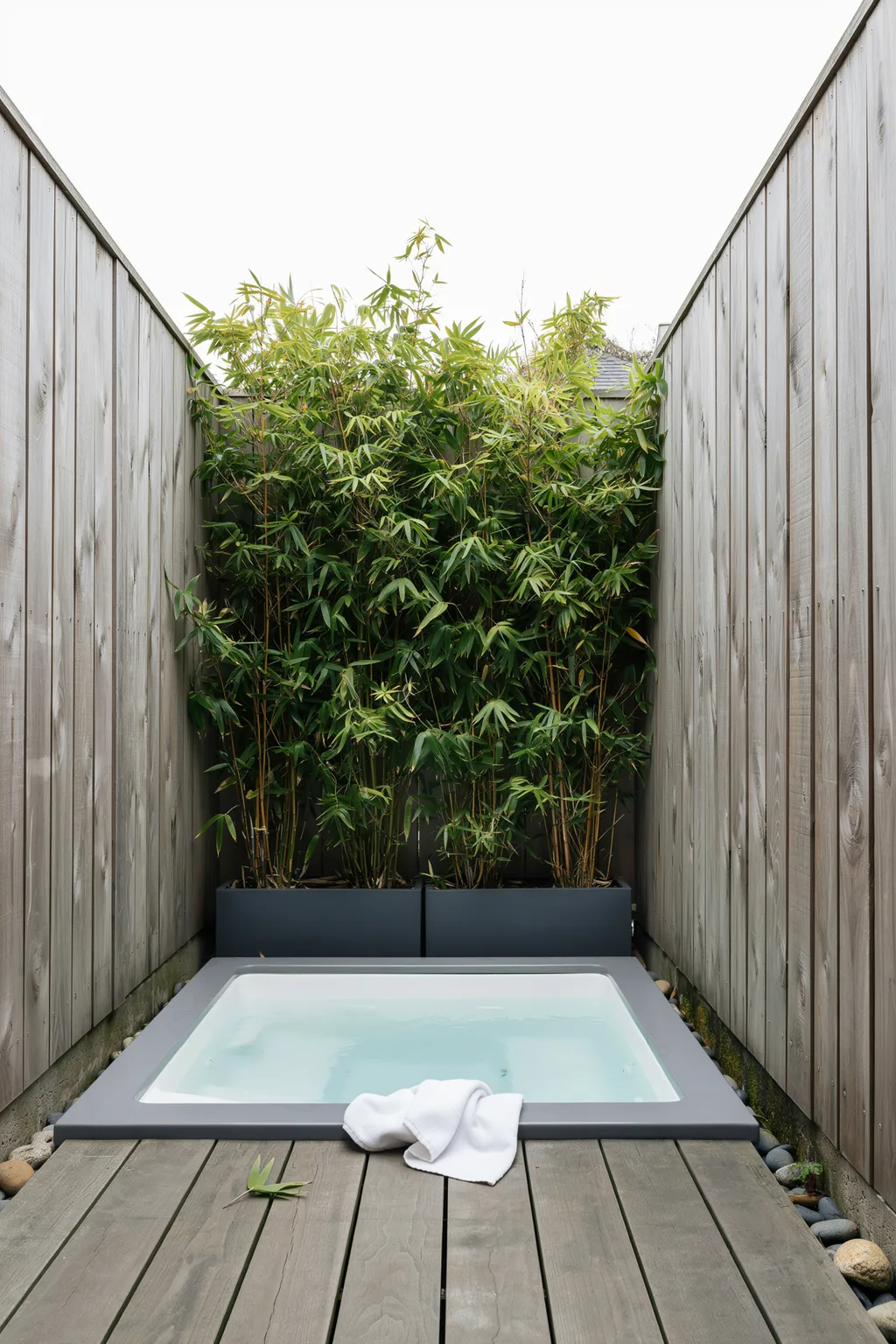
For privacy that feels lush instead of walled-off, line the back of a deck-set spa with tall bamboo in matching grey planters. The bamboo climbs well above head height and rustles in the wind, giving you a living screen that blocks second-story views without the fortress feel of a solid fence. Set on a wood deck, the whole scene reads calm and resort-like.
Bamboo in containers is the key detail. Planted in the ground, running bamboo can invade your whole yard, but sleek boxes keep the roots contained and the look architectural. The height gives you seated and standing privacy, and the leaves soften wind and sound. Buy established clumping bamboo for instant screening, and count on watering it faithfully, since potted bamboo dries out fast in summer heat.
Best for overlooked yards that need height without masonry. Not for you if you travel often, because container bamboo can crisp and brown after a week of missed watering.
14. Wrap the Deck Edge in Warm Ambient Lighting
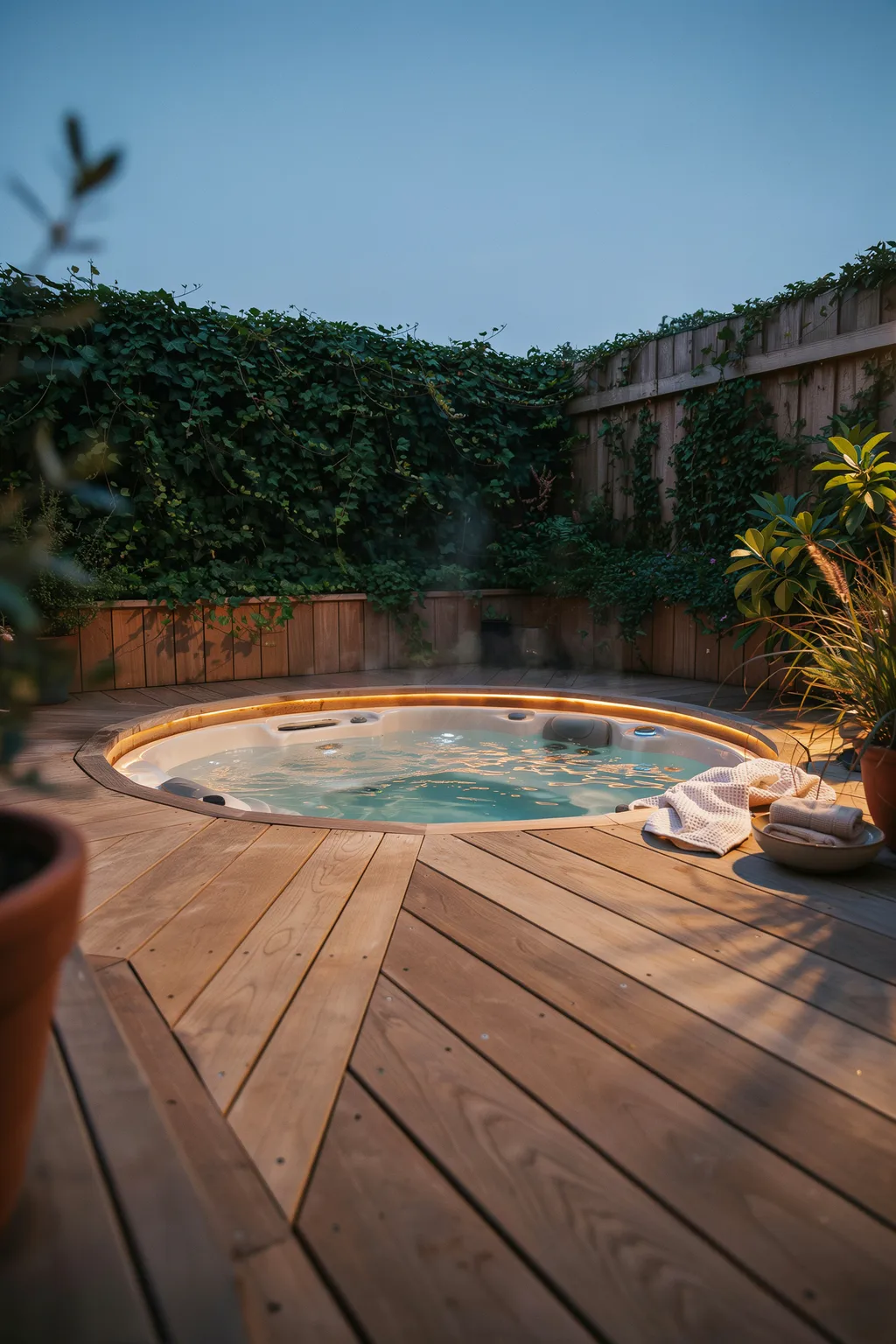
A spa is a night thing, so light it like one. Run a warm LED strip along the inside edge of the deck where it meets a sunken round tub, and the water picks up a soft glow that turns an ordinary soak into something cinematic. Skip the harsh floodlight. Low, warm, hidden light is what reads as luxury after dark.
Placement beats brightness every time. Tucking the strip under the deck lip hides the source, so you see the glow and not the fixture, and the light grazes the water instead of glaring off it. Warm color temperature around 2700K flatters everything and keeps the mood restful, while cool white would make the yard feel like a parking lot. A quality outdoor LED strip and a transformer run 50 to 150 dollars and install in an afternoon.
Perfect for anyone who mostly soaks after sunset. Less impactful if your spot already bathes in bright patio lighting you cannot dim, since competing light kills the effect.
15. Corner It With Wood Slat Walls and Climbing Vines
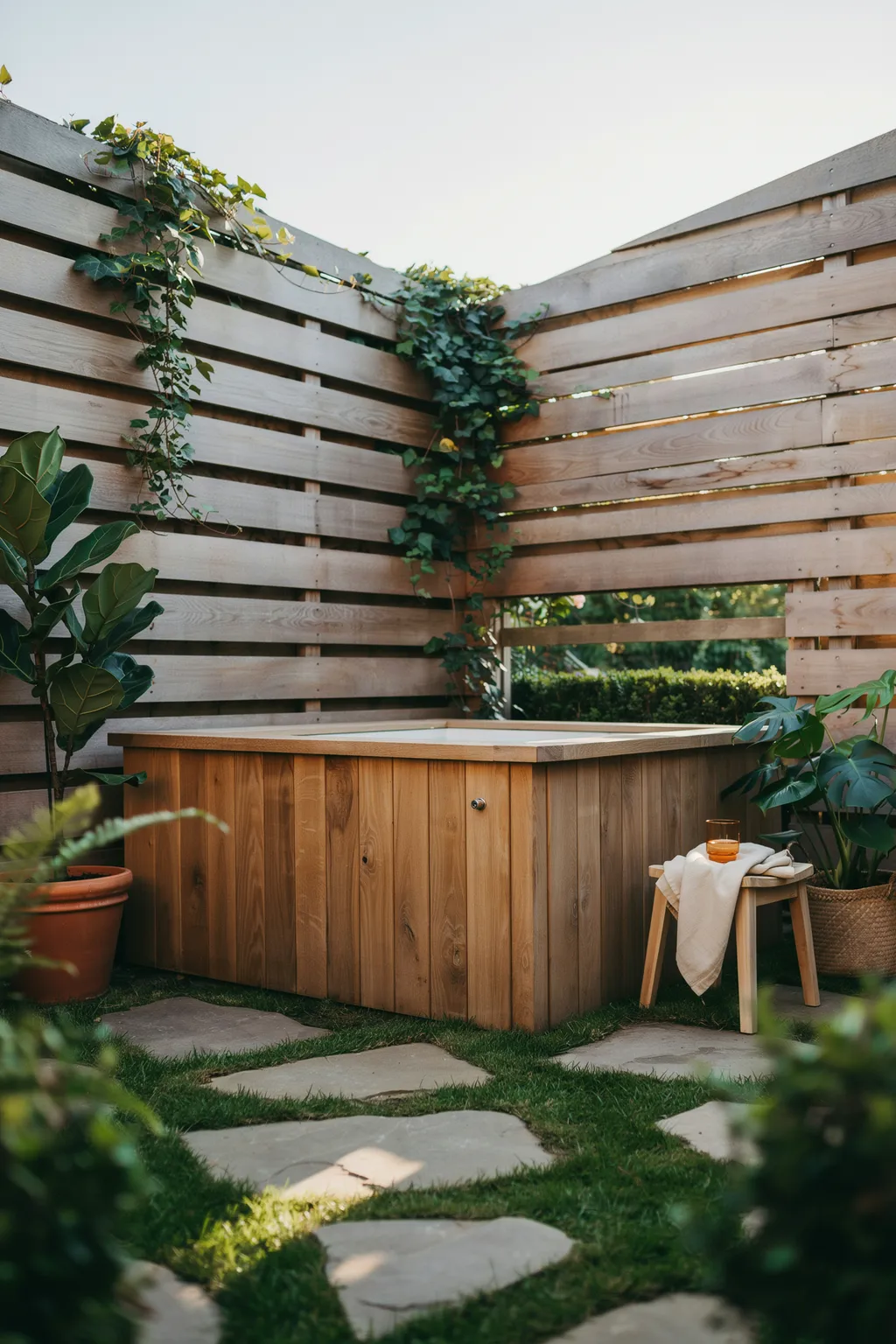
Two walls of horizontal wood slats, softened by climbing vines, turn a plain corner into the most private seat in the yard. Set a cedar-clad square tub into that corner and let the greenery trail down the slats over a season or two. The result is a green pocket that feels tucked away, even in a yard the neighbors can see into.
The mix of slat and vine is what makes it. Bare slat walls give you instant structure and filtered privacy, and the climbing plants keep them from looking like a raw fence, adding depth and a little wildness. Matching the tub cabinet to the slat tone ties the corner together. Build the screens from cedar 1x4s on a simple frame, then train ivy, star jasmine, or a clematis up wires for scent and softness.
Great for corner installs where you want privacy that grows lusher each year. Skip aggressive vines like English ivy near siding, since they cling and creep into places you do not want them.
16. Build a Courtyard With Modern Wood Panel Walls
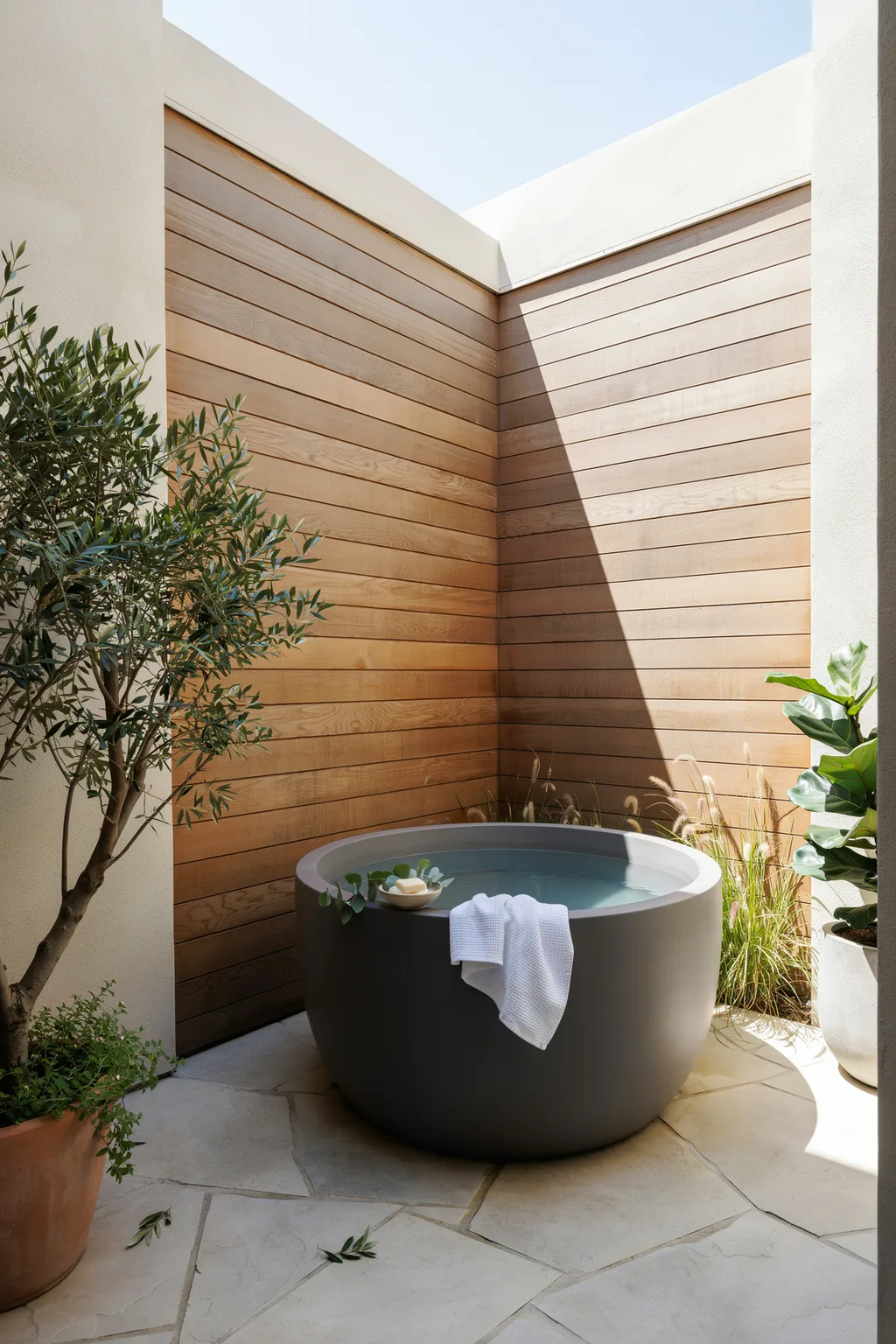
Take a cue from boutique hotels and wrap a round spa in tall, warm-toned horizontal wood panel walls to make a private courtyard. Full-height panels on two sides create a clean, contemporary room open to the sky, with stone pavers underfoot and a few sculptural plants for life. It feels like a spa suite you would pay to visit, built into your own lot.
Height and simplicity carry this look. Running the wood panels to full height gives you true standing privacy and a strong architectural backdrop, while keeping the palette warm stops it from feeling cold or corporate. Fewer, larger plants read more upscale here than a busy jumble. This is a bigger build with real posts and framing, so budget for a contractor unless you are comfortable with tall structures and wind loads.
Best for modern homes and small lots that can be fully enclosed. Too enclosing for a large open yard, where full walls would cut you off from a view worth keeping.
17. Go Minimal With a Sunken Stone Spa and Dark Walls
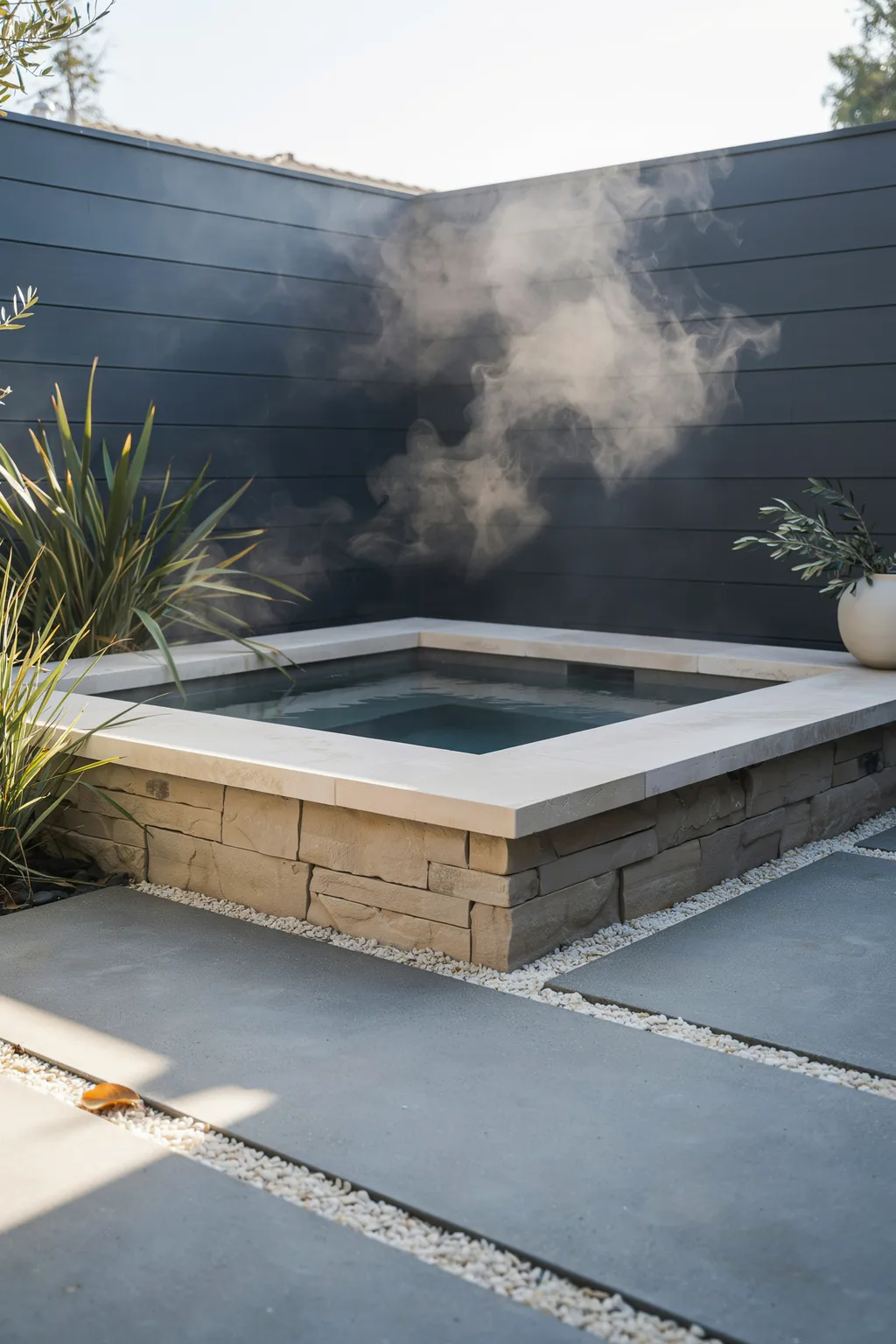
For a look that whispers instead of shouts, sink a square spa into a stone-clad surround and set it against matte dark grey privacy walls. The pale stone coping against the near-black panels is quiet and confident, and a few spiky plants with a gravel-and-paver ground keep it feeling like a designed courtyard rather than a backyard afterthought. Steam drifting off the water is the only ornament it needs.
Contrast is the entire idea. The dark walls recede and make the pale stone and clear water pop, so the spa becomes a bright, calm focal point. Minimal planting keeps the eye on those clean lines, and a stone-faced surround handles weather without a hint of upkeep. It is a material-heavy build, so the cost sits in the stone cladding and the wall panels rather than in fussy details.
Suited to modern minimalists who want restraint and drama at once. Skip the dark walls in a hot, sun-baked yard, since deep colors soak up heat and can make a small space feel like an oven at midday.
18. Nest a Round Tub in a Deck With Cushioned Seating
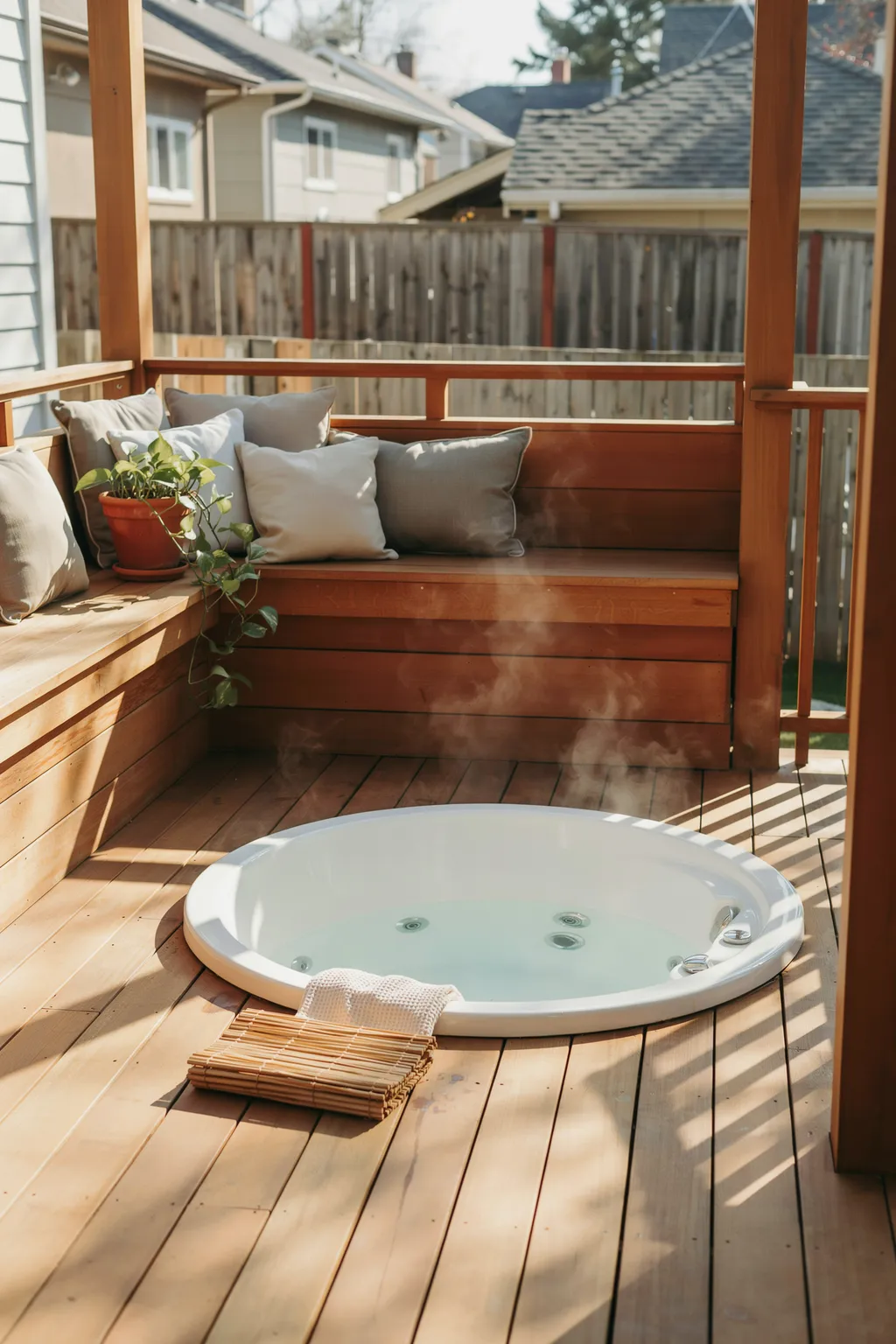
Build a round spa into a deck and line the back edge with a low bench dressed in throw pillows, and the tub turns into a conversation pit that happens to hold hot water. The cushions invite people to sit close and linger with a drink whether or not they get in, and a pergola post plus railing frame the space so it feels contained and calm. It is casual, comfortable, and very easy to use.
The soft goods make the difference between a deck and a hangout. Firm outdoor pillows on a built-in bench give the hard wood a reason to hold people, and placing the seating right at the water’s edge keeps everyone in one warm huddle. Nesting the round shell in the deck hides the cabinet and gives you a flush, safe edge to perch on. A simple bench and weatherproof cushions bring this together for a modest sum.
Great for families and anyone who hosts small groups. Bring cushions in or use quick-dry foam if your climate is wet, since soggy pillows end the cozy fast.
19. Style an In-Ground Spa as a Natural Garden Retreat
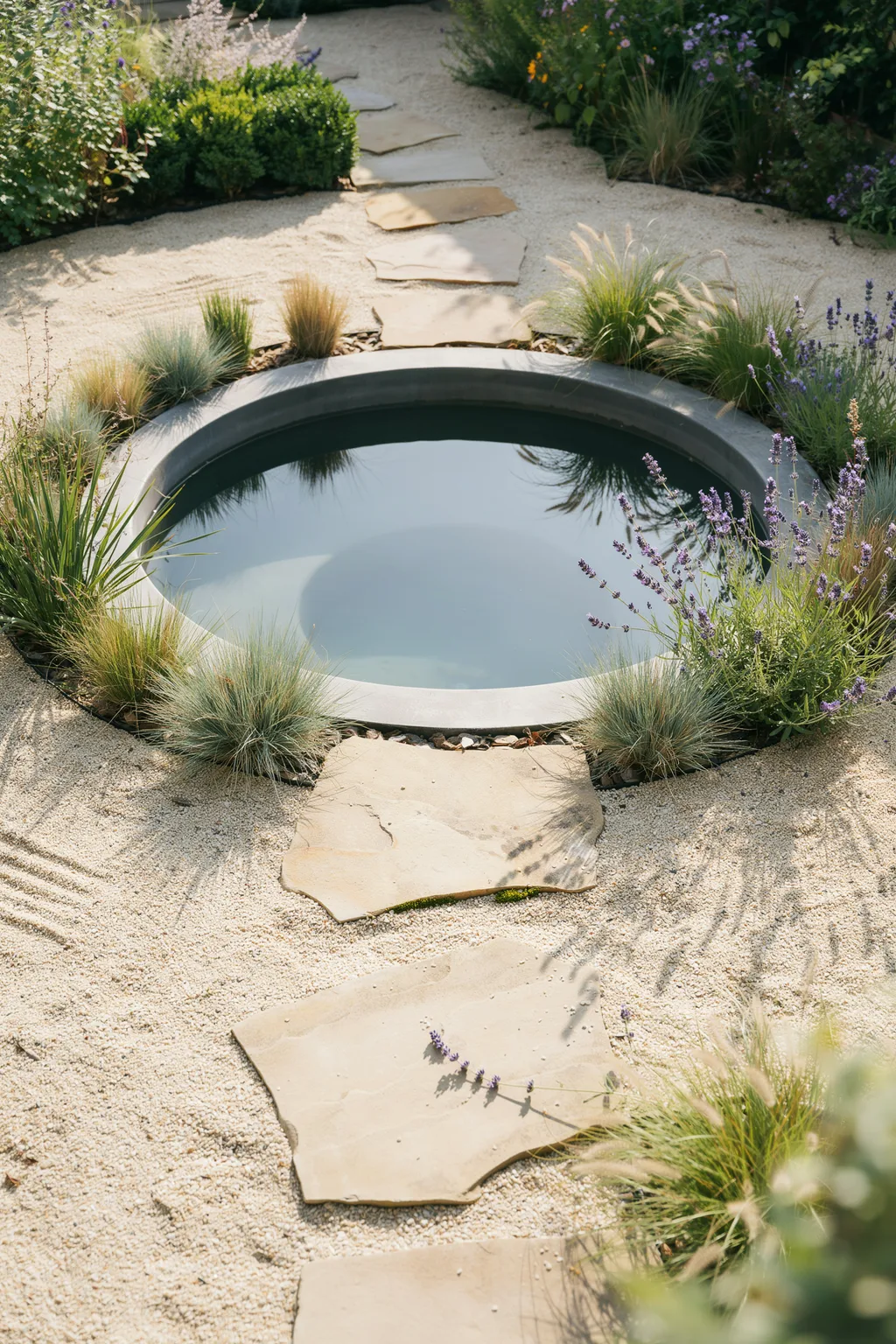
Set a round in-ground spa flush with a gravel garden and surround it with ornamental grasses, lavender, and stepping stones, and it stops looking like a hot tub at all. It reads as a warm spring dropped into a naturalistic planting, the kind of thing you find at a desert resort. Flat stone steppers wander up to the rim, and drought-tough plants ring the water with movement and scent.
The naturalistic planting is what sells the illusion. Loose grasses and lavender break up any hard edge and blur the line between spa and garden, so the water looks like it belongs to the landscape. Gravel ground drains instantly and needs no mowing, and the low-water plants suit a spot that gets warm and bright. An in-ground install is the most involved build here, with real excavation and drainage to plan, so treat it as a project, not a weekend.
Best for warm, dry climates and gardeners who love a wild, low-water look. Skip the gravel-and-grasses style in a soggy, shaded yard, since these plants sulk without sun and sharp drainage.
20. Turn a Narrow Side Yard Into a Hidden Escape
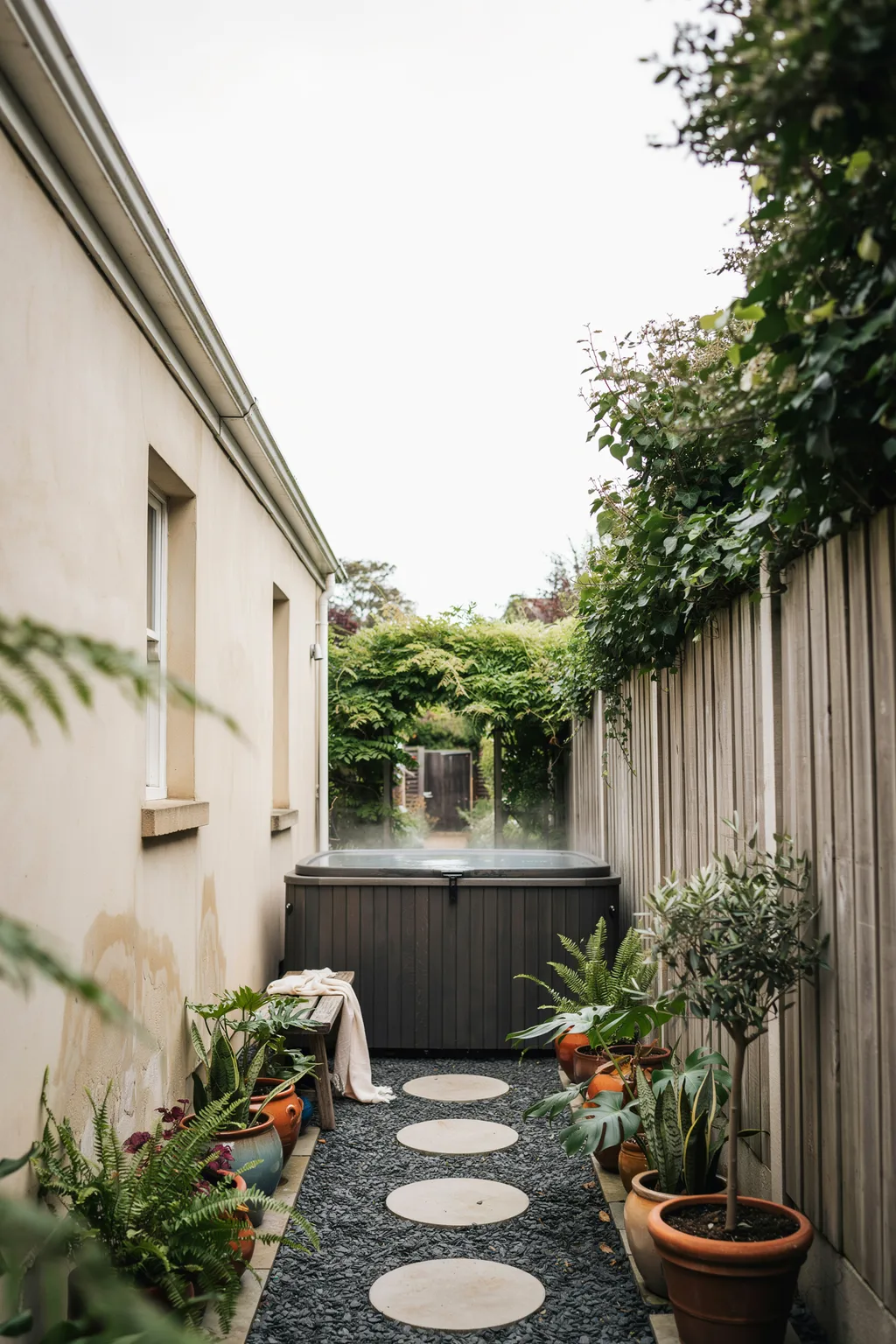
That skinny strip of side yard nobody uses can hold a spa. Slot a hot tub into the narrow run between the house and fence, drape the fence in ivy, crowd in potted plants, and lay a few round steppers through the gravel, and the dead space becomes a hidden green escape. It is the ultimate use-what-you-have move, reclaiming square footage you were mowing around or ignoring, and it is one of the smartest outdoor jacuzzi ideas for homes with no spare backyard.
The trick is layering green up the vertical surfaces. In a narrow yard you have little floor but plenty of wall, so ivy on the fence and stacked potted plants pull the greenery upward and make the corridor feel lush instead of tight. A gravel-and-stepper path keeps the ground tidy and draining. Because the space is small, you can transform it with plants and a tub without touching the rest of the yard.
Perfect for row houses and homes where the backyard is spoken for. Measure clearances carefully first, since side yards often hide the AC unit, meters, and the path you need for access.
21. Crown It With String Lights for Everyday Evenings
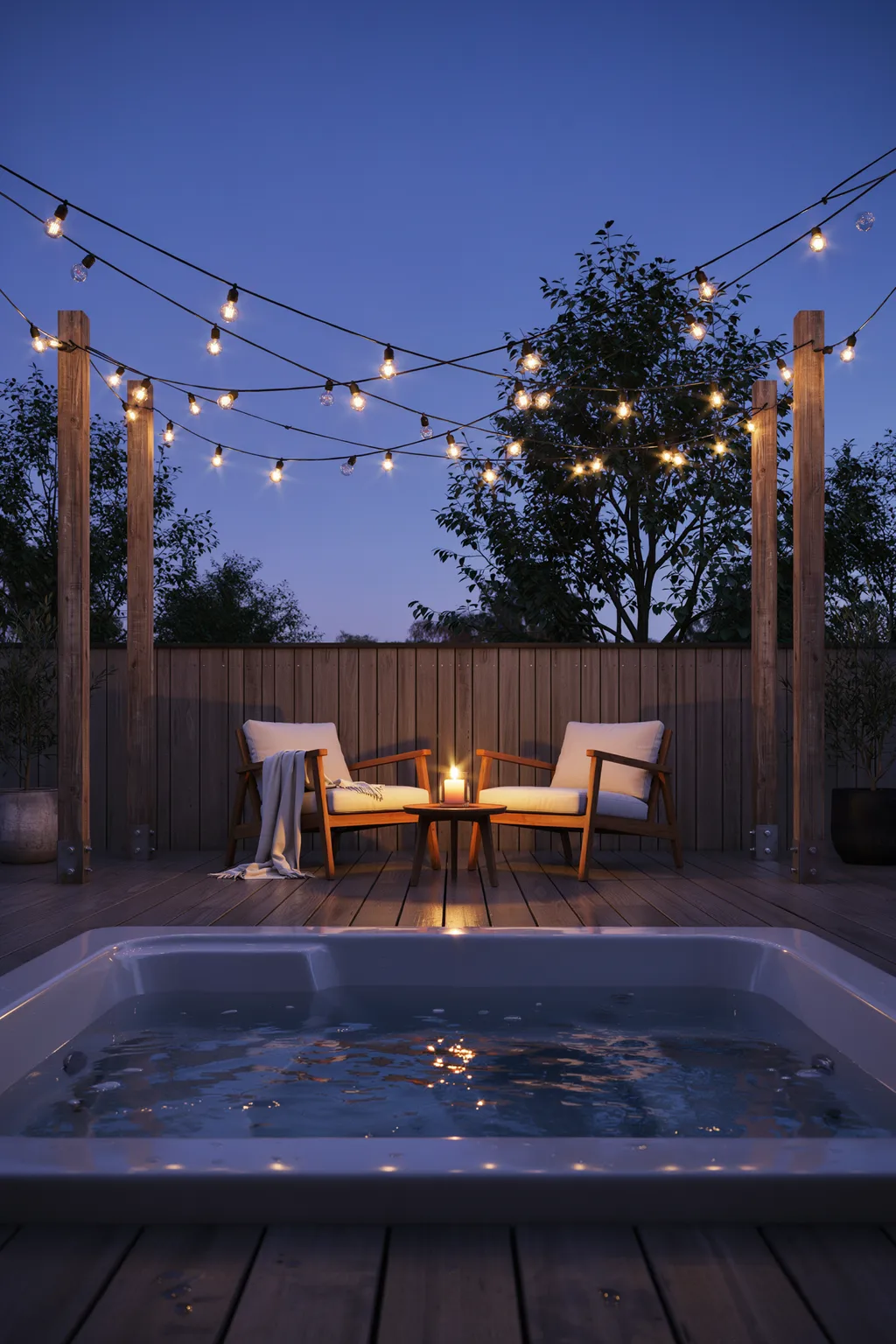
Sometimes the whole upgrade is overhead. Sling a canopy of warm string lights above the spa on a couple of wood posts, add two chairs and a small table with a candle, and an ordinary tub becomes the best seat in the yard at blue hour. It is the cheapest, fastest way to make a spa feel special, and of all the outdoor jacuzzi ideas here, it works on any surround you already have.
Bulbs overhead do what walls and decks cannot: they define the room in the air. Hung high on posts, warm-white bulbs draw a ceiling of light over the tub and pull your eye up, so even a plain patio feels framed and intimate after dark. Pair them with a candle and a couple of chairs and you have a nightly ritual for well under 100 dollars. Choose weatherproof commercial-grade strands so they survive the seasons.
Great for everyone, on any budget, as a first or finishing touch. Just secure the posts and strands well, since a droopy or wind-whipped run of lights looks messy and can pull loose in a storm.
Common Mistakes to Avoid
Even the best outdoor jacuzzi ideas fall apart when a few basics get skipped. These are the errors that turn a dream spa into a headache, and every one of them is cheaper to avoid than to fix.
Mistake 1: Setting the tub on bare, unlevel ground
A filled spa can weigh over 3,000 pounds, and soft or sloped ground shifts under that load, stressing the shell and voiding many warranties. Pour a proper reinforced pad or lay a rated paver base before delivery. Fixing a cracked shell later costs far more than the base ever would.
Mistake 2: Ignoring privacy until after install
A spa you feel watched in becomes an expensive planter for pool noodles. Plan screens, slat walls, or tall planters into the layout from the start, at seated eye level where it counts. Retrofitting privacy around a finished install almost always looks bolted-on and costs more.
Mistake 3: Forgetting access to the equipment panel
Decking, planters, and stone that box in the tub look great until a pump fails and the technician cannot reach it. Leave a removable panel or a clear service gap on the mechanical side. A sealed-in spa can mean tearing out your beautiful surround for a simple repair.
Mistake 4: Skimping on the cover and lift
A cheap cover waterlogs, sags, and bleeds heat, which spikes your power bill and makes the tub a chore to open. Buy a thick insulated cover and a lift arm. The upgrade pays for itself in running costs and in how often you actually use the spa.
Mistake 5: Lighting it like a garage
Bright white floodlights flatten the mood and glare off the water. Use low, warm, hidden light around 2700K instead. Harsh lighting is the single fastest way to make a lovely spa feel clinical after dark, and it is the cheapest mistake to fix.
Mistake 6: Planting the wrong things too close
Leafy trees and messy bloomers drop debris straight into the water, and thirsty roots can crowd the equipment. Choose tidy, moisture-tolerant plants and keep droppers back from the rim. The wrong plant turns your relaxing soak into a daily skimming chore.
Quick Start Checklist
- [ ] Confirm a level, load-rated base (pad or pavers) sized for a full tub plus people
- [ ] Check clearances for meters, AC units, gates, and a service path before you commit a spot
- [ ] Decide privacy first: screen, slat wall, pergola, or tall planters at seated eye level
- [ ] Choose a surround material and price the reseal or upkeep it needs
- [ ] Leave a removable access panel on the equipment side
- [ ] Plan drainage so splash-out water runs away from the shell, not under it
- [ ] Buy a thick insulated cover and a cover lift up front
- [ ] Add low, warm lighting around 2700K, not bright white floods
- [ ] Pick tidy, moisture-tolerant plants and keep them back from the rim
- [ ] Book a licensed electrician for the wiring and a bonded, GFCI-protected circuit
Frequently Asked Questions
What is the cheapest way to make an outdoor jacuzzi look expensive?
Start with warm string lights and a simple wood or gravel surround, since those two moves cost under 200 dollars combined and change the whole feel. Hiding the plastic cabinet and adding low, warm light does more for the look than any pricey feature. Many of the best outdoor jacuzzi ideas lean on light and a tidy edge, not big spending.
Do I need a permit or special wiring for a backyard hot tub?
Usually yes. Most areas require a dedicated, GFCI-protected circuit installed by a licensed electrician, and many require a permit and proper bonding for safety. Rules vary by location, so check with your local building department first. The U.S. Consumer Product Safety Commission publishes spa and pool safety guidance worth reading before you buy, at cpsc.gov.
How much space do I really need around the tub?
Leave at least 18 to 24 inches of clear footing on the entry side, plus room for a cover to open and a lift to swing. Plan a service gap on the equipment side too. Cramped clearances are the most common regret, so measure the full footprint, not just the shell.
Can I put a hot tub on my existing raised deck?
Only if the deck was engineered for the load, which most were not. A filled spa with bathers can top 3,000 pounds concentrated in one spot. Have a pro assess the framing, or set the tub at grade beside the deck instead, which is simpler and safer for most homes.
What plants work best around an outdoor jacuzzi?
Pick tidy, moisture-tolerant plants that do not shed into the water: ornamental grasses, clumping bamboo in pots, ferns for shade, and lavender or grasses for sun. Avoid heavy bloomers and messy trees near the rim. Container planting keeps roots off the equipment and lets you rearrange the look.
How do I keep running costs down on an outdoor spa?
The cover is your biggest lever. A thick, well-fitting insulated cover holds heat between soaks and cuts energy use sharply, while a worn or thin one bleeds money. Set a sensible temperature, use a floating thermal blanket in cold months, and site the tub out of constant wind.
Are these outdoor jacuzzi ideas doable on a small budget?
Many are. String lights, a gravel surround, potted screening plants, and a simple cedar ledge are all weekend-and-a-few-hundred-dollars projects. The big-ticket builds, like sunken decks or in-ground installs, are optional. You can layer the cheap outdoor jacuzzi ideas now and add the bigger moves later.
Conclusion
The difference between a spa you love and one you tolerate is rarely the tub. It is everything around it. Get these few things right and the rest falls into place.
First, solve privacy before anything else, because a spot you feel exposed in never becomes a habit. Second, hide the bulky cabinet with wood, stone, or a sunken install so the shell reads as built-in, not dropped-off. Third, light it low and warm, since a spa lives at night and harsh light kills the mood. Fourth, plan real access to the equipment so a repair does not mean demolition. And fifth, spend on the cover, because it drives both your power bill and how often you climb in.
You do not need every idea here or a contractor’s budget to start. Pick the one setup that fits your space and your evenings, whether that is a string-light canopy this weekend or a cedar surround next month. The best of these outdoor jacuzzi ideas are the ones you will actually use on a random Tuesday, not just the ones that photograph well.
So measure your spot tonight, choose your first move, and start with privacy. That single decision does more than any other to turn a bare backyard into the retreat you meant to build.