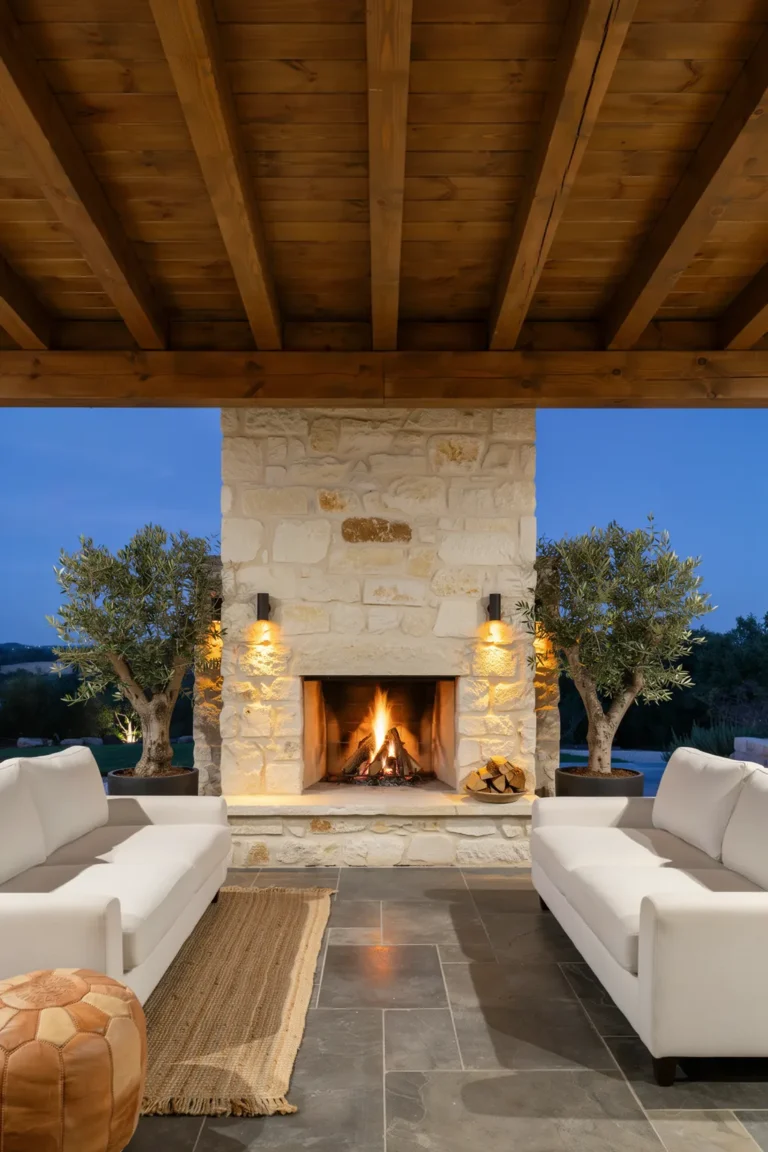
18 Tiny Patio Ideas That Feel Bigger Than They Are
You step outside, look at the bare little slab off your door, and feel a bit deflated. There is barely room for two chairs, the neighbors can see everything, and the concrete does nothing for you. A small patio can feel like wasted square footage, the one part of your home you walk past instead of into. That is the frustration most of these tiny patio ideas set out to fix, and the fixes are smaller than you think.
The trick with a small space is not cramming more into it. It is choosing a few right pieces and letting them do the heavy lifting. One good chair, a run of warm string lights, a wall of trailing plants, and suddenly the same slab reads as a private nook you want to sit in. The footprint never changed. The feeling did.
This guide walks through 18 setups, each built around a real small-patio scene, so you can see the look and copy the parts that fit your space. You get the idea, why it works, who it suits, and where it falls short, because a hanging chair is dreamy until you learn what it takes to mount one safely. Some are weekend projects. Most are an afternoon and a trip to the garden center. Pick the ones that match your patio, your light, and your budget, and skip the rest without guilt.
Quick Answer
The best tiny patio ideas do three things: they pull the eye up with vertical greenery and hung lights, pick one comfortable seat instead of a crowded set, and add warm low light so the space works after dark. Start by clearing the floor and going vertical, since walls and railings are your unused square footage. Then add one soft, cozy anchor, and finish with string lights or lanterns so the patio earns its keep at night, not just at noon.
1. Set a Romantic Bistro Corner Against a Flowering Wall
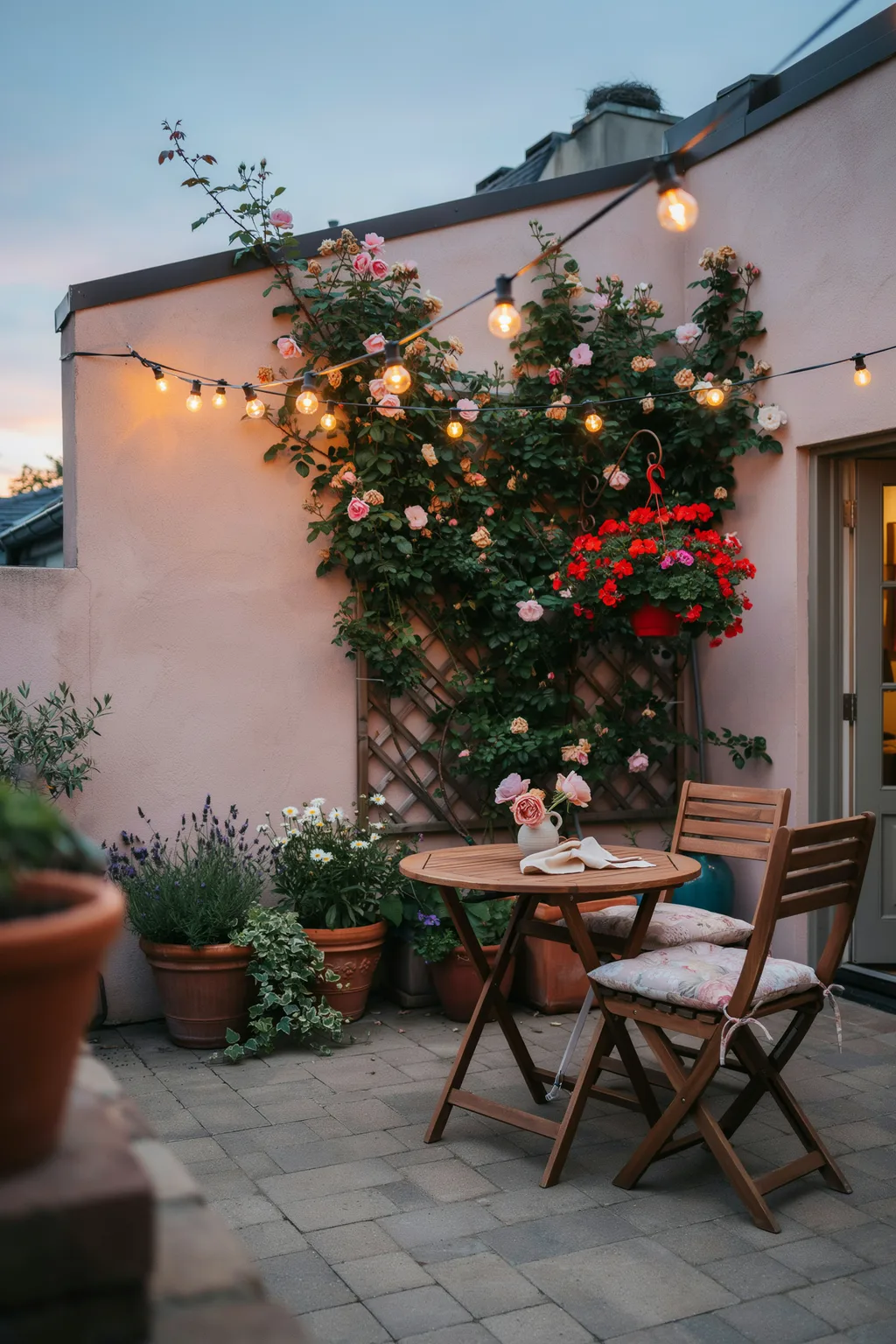
A folding bistro set is the small-patio classic for a reason: two slim chairs and a round table fit where a full dining set never could. Push it against your best wall, then let climbing roses or a flowering vine do the decorating behind it. Add a hanging basket spilling color and a strand of warm bulbs overhead, and a plain corner turns into a spot that feels straight out of a courtyard cafe.
The flowers are what make it. A blank wall reads as a boundary, but cover it in blooms and it becomes a backdrop that draws the eye up and outward, so the patio feels less boxed in. Folding furniture also stores flat when you need the floor for something else. Expect to spend 80 to 200 dollars on a decent wood bistro set, plus a trellis and a climbing plant.
Great for a sunny south or west wall where roses actually thrive. Skip climbers in deep shade, and choose a self-clinging vine instead if you rent and cannot drill a trellis.
2. Build a Snug Nook Around a Rattan Loveseat
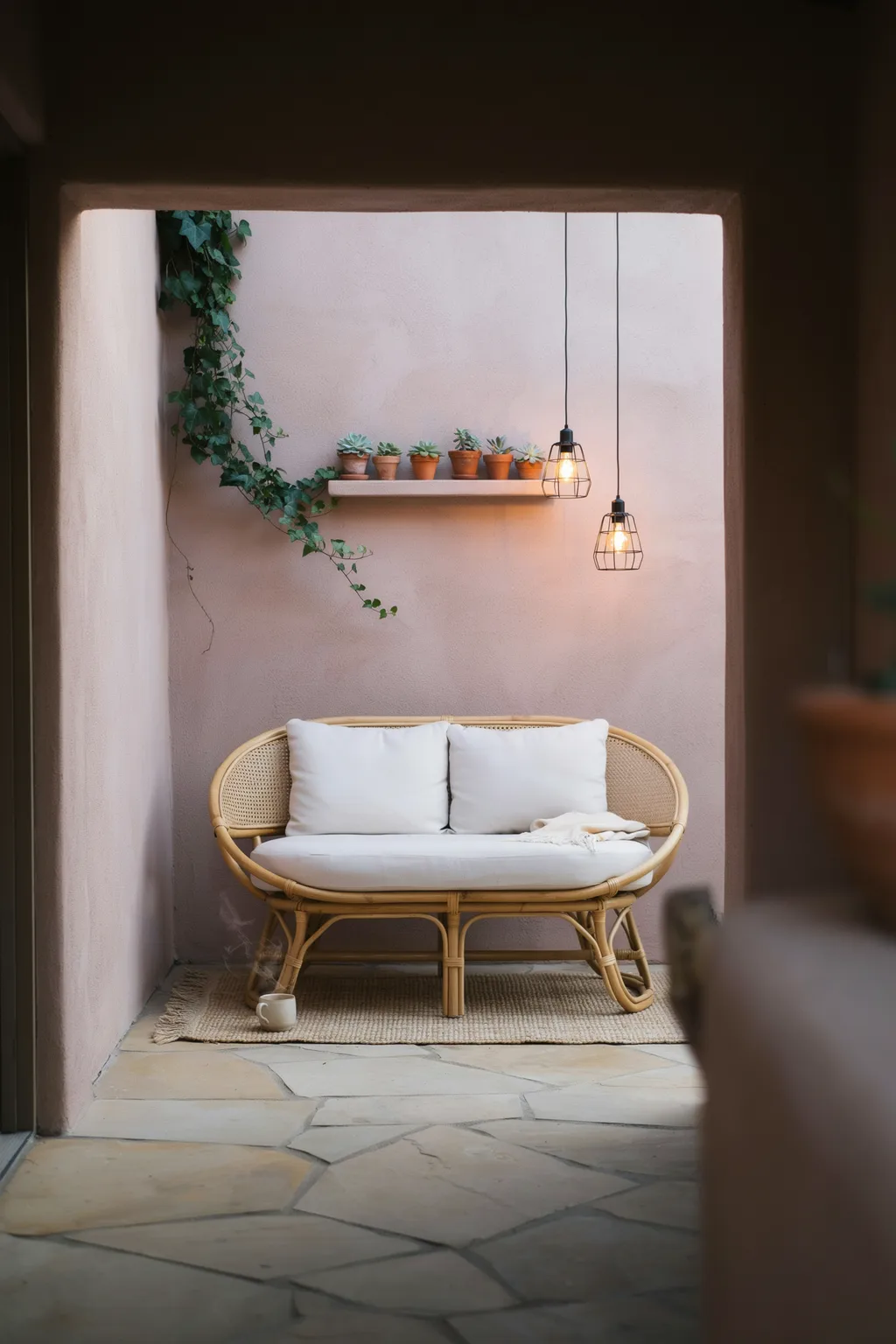
When the space is truly tiny, one small loveseat beats a scattered set of chairs. Tuck a rounded rattan two-seater into the corner, dress it with plump white cushions, and let it anchor the whole patio. A slim shelf above holds a row of potted succulents, and a caged pendant or two throws soft light down. It feels like a little outdoor living room carved out of almost nothing.
Rounded rattan reads soft and inviting, which keeps a small corner from feeling hard and crammed. A wall shelf is the smart move here because it holds greenery at eye level without stealing an inch of floor. Succulents suit it since they stay small and forgive a missed watering. A quality rattan loveseat runs 150 to 350 dollars, and a floating shelf is a 20 dollar afternoon.
Perfect for a covered balcony or a shaded step where you want to lounge, not dine. Not ideal in full exposure, since natural rattan fades and frays in constant sun and rain unless you bring it in or cover it.
3. Layer a Boho Bench With Lanterns and a Jute Rug
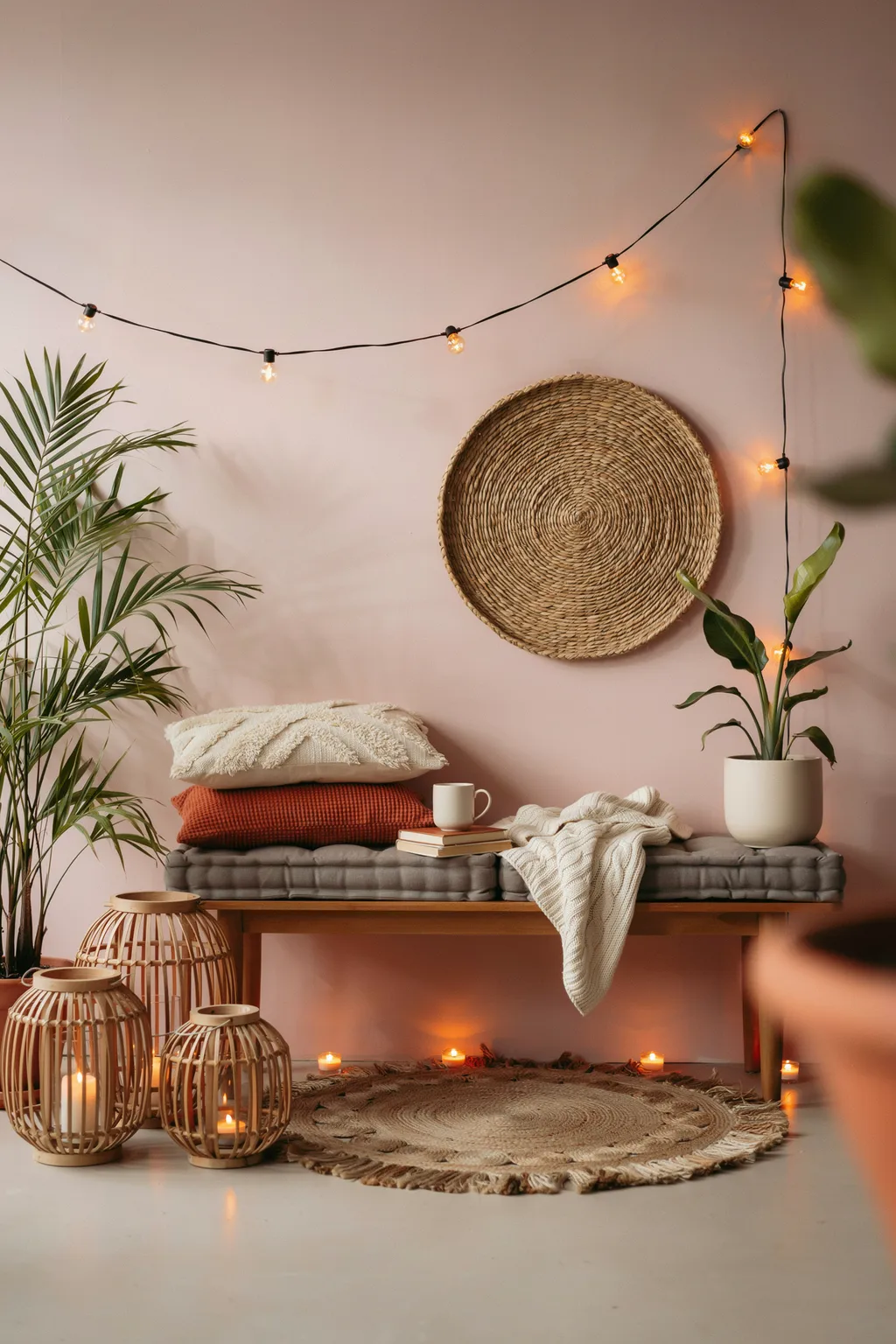
Take a low corner bench, pile it with mixed cushions and a soft throw, and surround it with the warm glow of wicker lanterns. Add a round jute rug to ground the seating and a woven wall disc for texture, and the corner turns into a boho lounge that begs you to stay past sunset. This is layering, not buying big, which is exactly what a small patio needs.
The mix of textures carries the whole look. A single bench can feel flat, but pile on nubby pillows, a fringed throw, and a braided rug and the eye reads richness instead of emptiness. Lanterns at floor level cast a low, flattering glow that makes the space feel intimate after dark. You can assemble this from cushions and lanterns you already own, plus a 30 to 50 dollar jute rug.
Ideal for anyone who soaks up evenings outside and loves a soft, collected look. Bring the textiles in when rain threatens, since damp cushions and a soggy jute rug turn musty fast.
4. Drape the Walls in Cascading Greenery
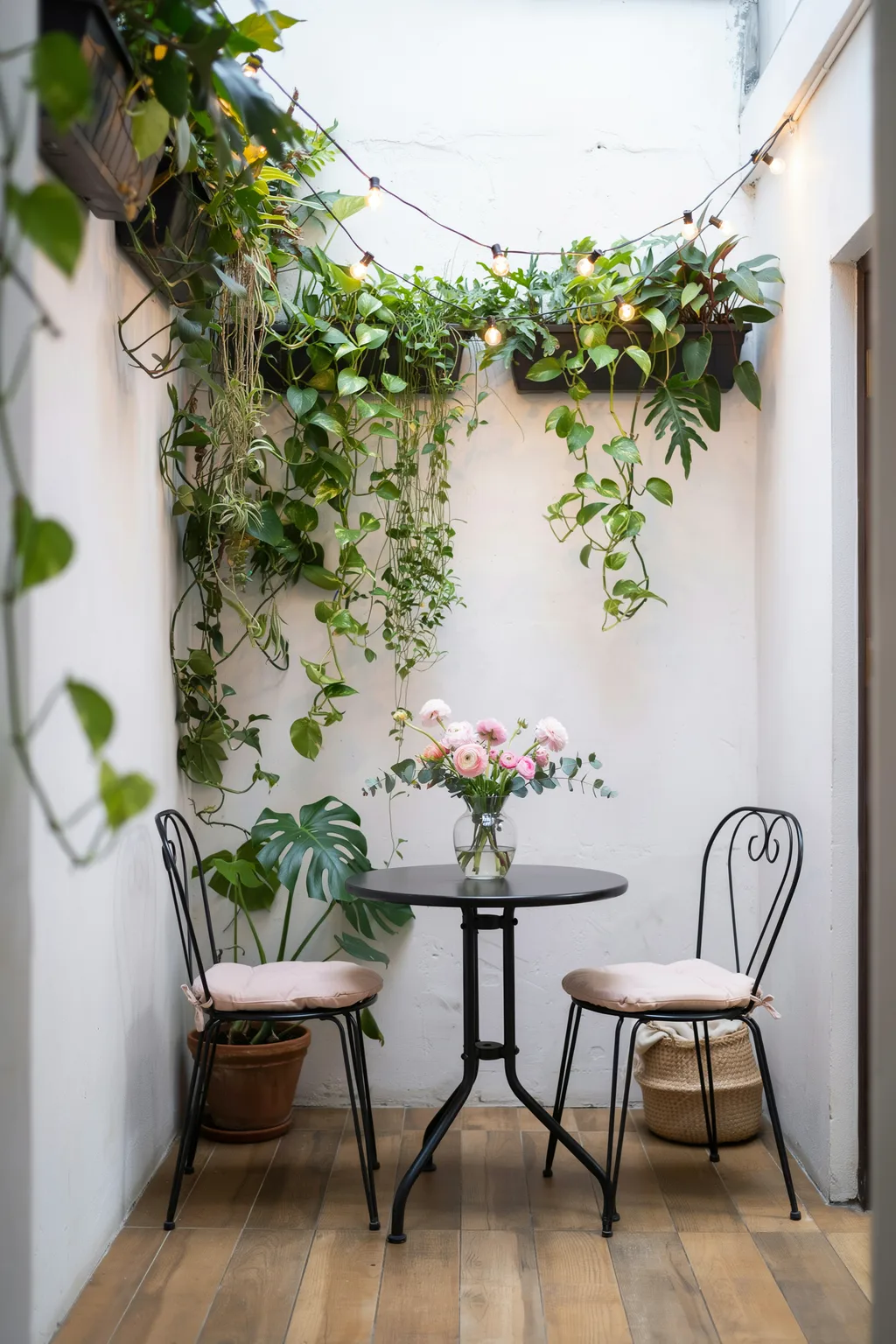
If your patio has white or pale walls, treat them like a canvas for trailing plants. Mount planters high, let pothos and string-of-hearts spill down, and place a small bistro set below. The greenery pouring from above makes the space feel lush and alive, and it draws the eye upward so the tight floor barely registers. It is the fastest way to soften hard walls without a single power tool if you use adhesive hooks.
Vertical planting is the core move for any cramped space. By growing up and down the walls instead of out across the floor, you get a jungle feel while keeping every inch of standing room. Trailing plants also read as generous and full, which tricks the eye into sensing more space. Wall planters and a few trailing plants run 60 to 120 dollars all in.
Best for a shaded or part-shaded patio where trailing foliage plants stay happy. Skip it in blazing all-day sun, which scorches tender trailers like pothos, and reach for sun-tough options instead.
5. Pack a Narrow Alley With a Potted Herb Garden
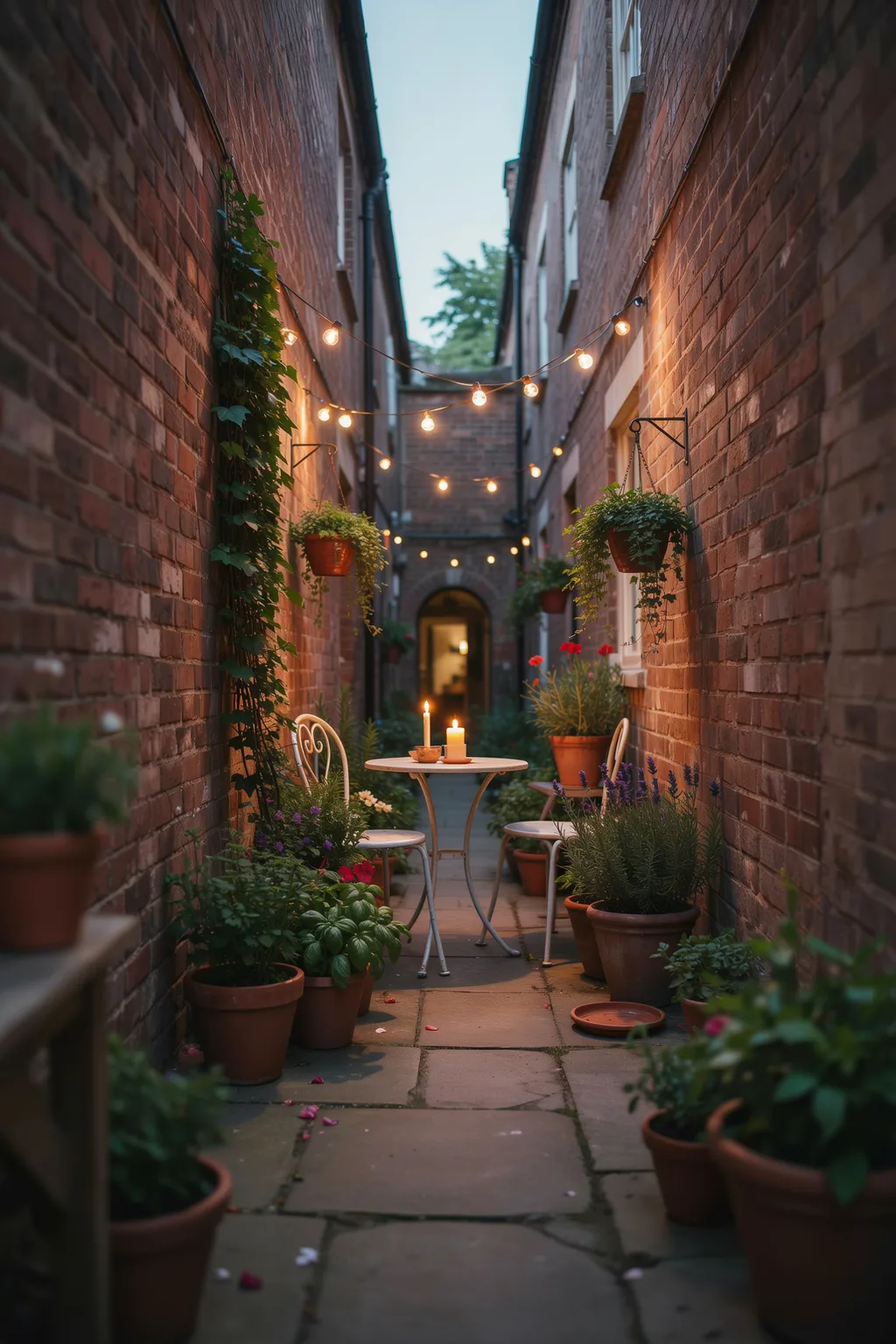
That skinny brick passage beside a city home can become the most charming spot you own. Line both walls and the floor with potted herbs and flowers, tuck a small white bistro table between them, and light a few candles. The plants turn a bare corridor into a green retreat, and clustering them at different heights makes the narrow space feel full and considered rather than dead.
Grouping pots is what sells it. A single planter looks lonely, but a crowd of herbs and flowers at varied heights reads as a real garden and softens the hard brick on every side. Herbs earn their spot twice over, since they smell wonderful and end up in your cooking. Start with 6 to 10 pots of basil, mint, thyme, and a few flowers for well under 100 dollars.
Great for renters, since it is all containers and nothing gets drilled. Just watch your clearances, because a narrow alley still needs a walkable path, so keep at least 24 inches clear down the middle.
6. Anchor a Tropical Nook With a Rattan Loveseat and Big Leaves
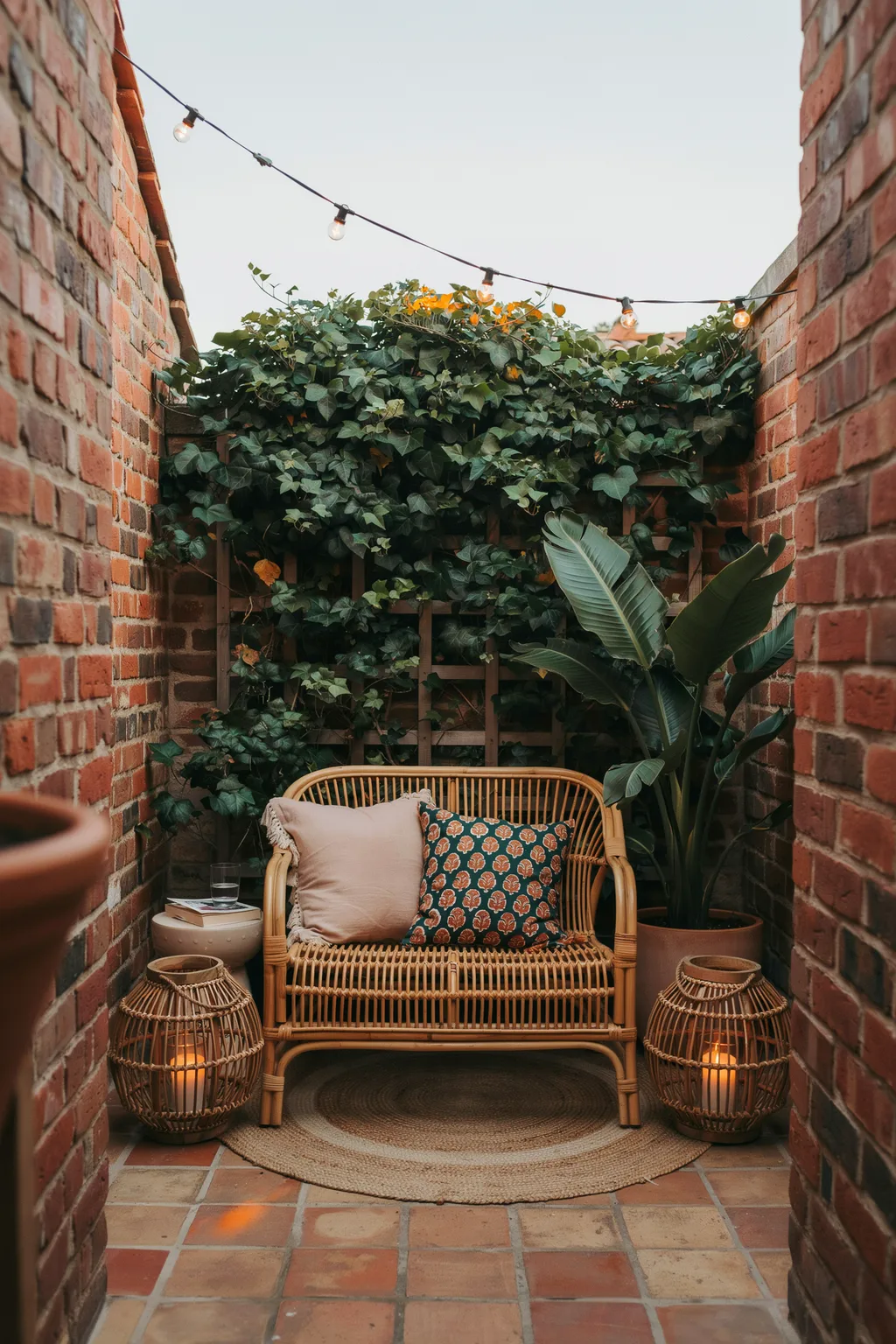
Want a resort feel in a tiny footprint? Pair a natural rattan loveseat with one or two big-leaf plants like a bird of paradise, then back it with a trellis of climbing ivy. The oversized leaves bring instant drama, and the warm terracotta floor and a jute rug keep it grounded. A couple of wicker candle lanterns finish the mood once the sun drops.
One big statement plant does more than a dozen small ones in a small space. Broad tropical leaves fill vertical volume and read as lush, so the eye lands on the greenery instead of the tight walls. The rattan loveseat keeps the seating soft and low, which helps the ceiling feel higher. A large potted bird of paradise runs 40 to 90 dollars and grows fast in warmth.
Best for warm, sheltered patios that stay above 50 degrees, or for gardeners happy to move tropicals inside for winter. Skip big tender leaves in a windy spot, since they shred and brown at the edges.
7. Go Cottagecore With Pastel Chairs and a Crate Table
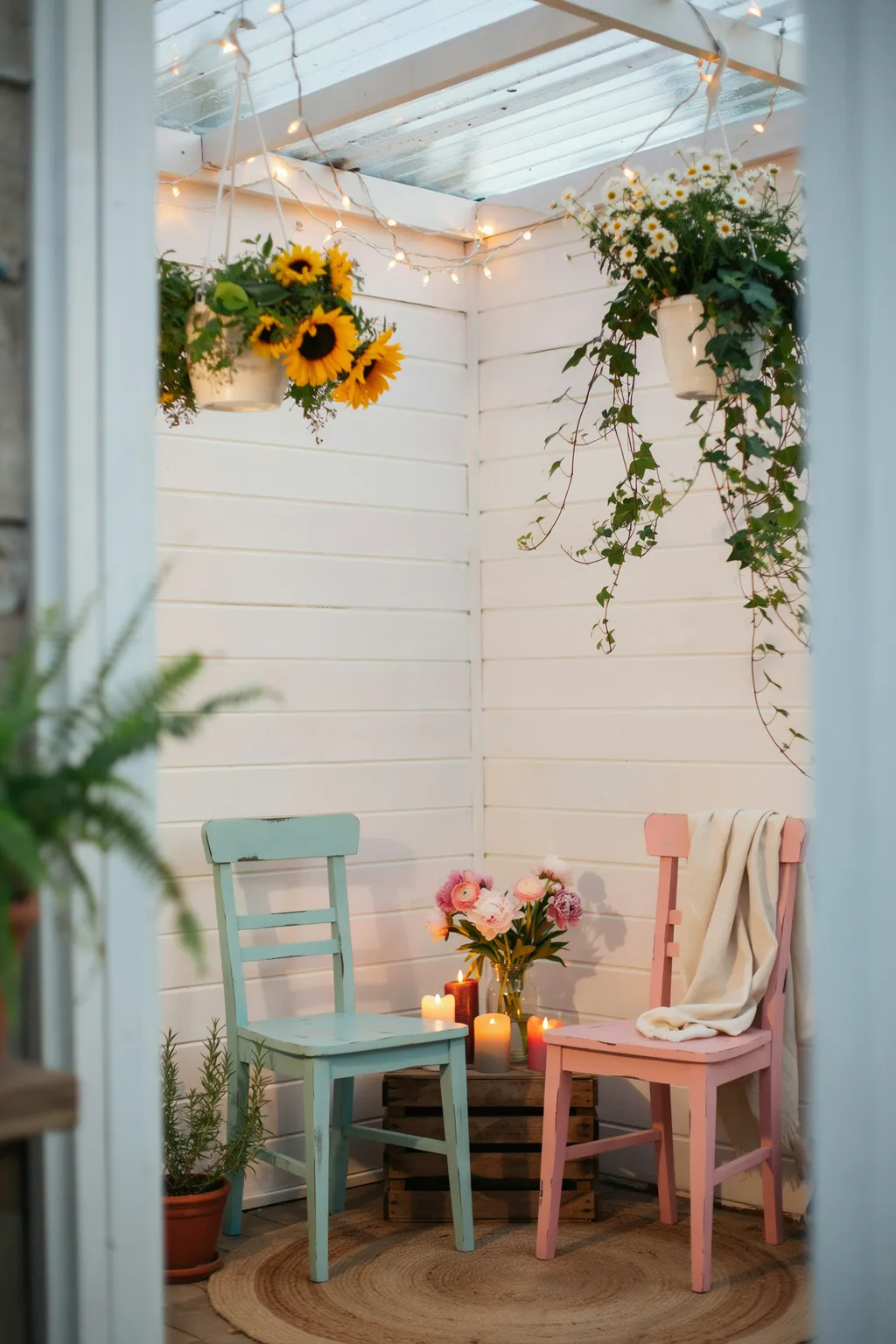
For a sweet, handmade look, paint a pair of simple wooden chairs in soft pastels, one mint and one blush, and set them around a rustic wooden crate that doubles as a table. Cluster sunflowers and daisies in hanging planters and jars, add a jute rug and a few candles, and you have a cottagecore corner that feels personal and cheerful. It reads like it grew over time, not like a showroom.
Mismatched pastels are the charm. Two chairs in different soft colors feel collected and playful, and an upcycled crate keeps the whole thing casual and cheap. Cut flowers and a wooden surface bring warmth that matching plastic furniture never will. You can build this look for the price of paint and a couple of thrifted chairs, often under 60 dollars total.
Great for a covered patio or a spot with a light roof, since painted wood and cut blooms both dislike a soaking. Not the pick for a sleek modern home, where the folksy look would feel out of step with the rest of your space.
8. Carve Out a Reading Nook With a Rattan Egg Chair
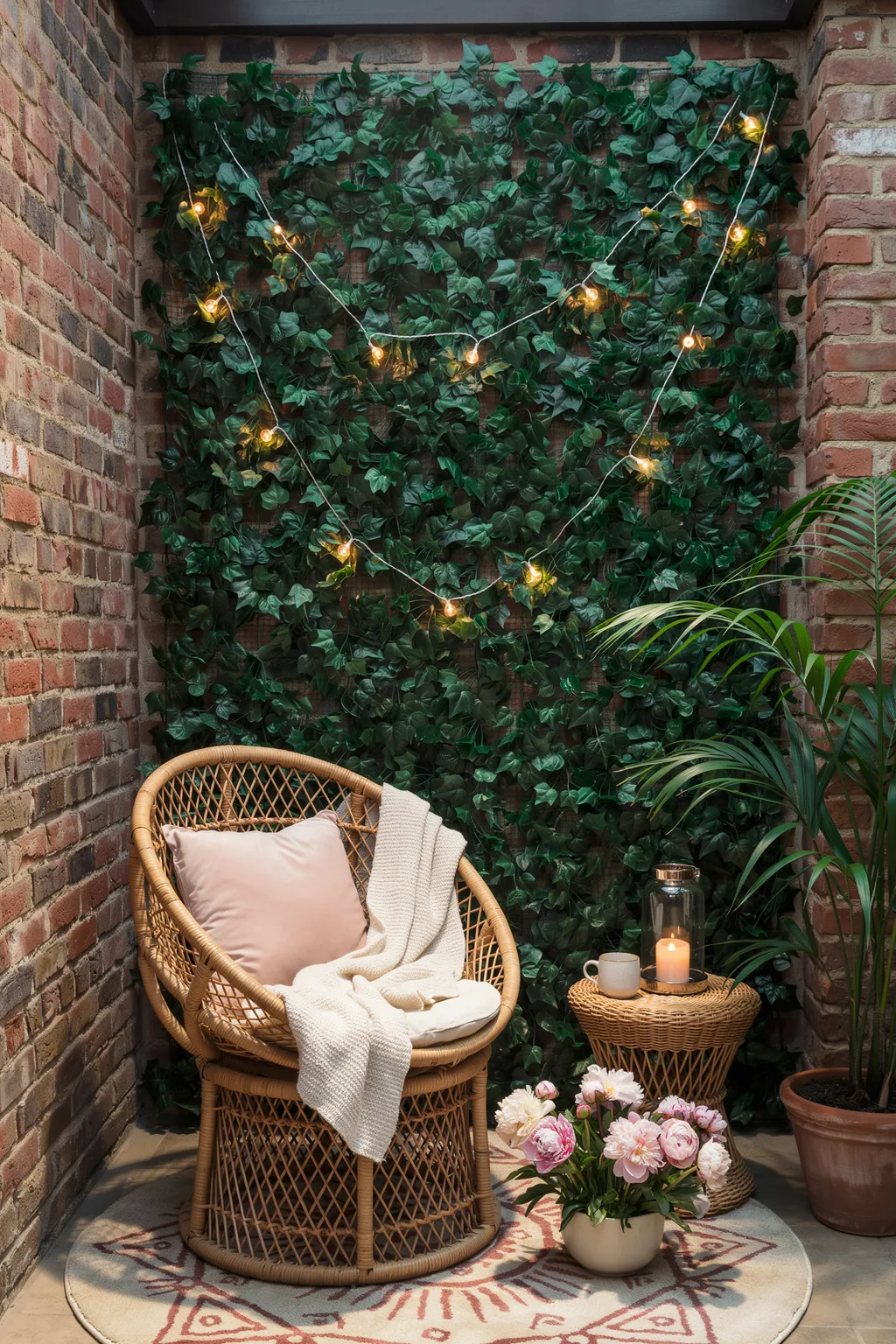
A single egg chair can turn a corner into your favorite seat in the house. Set a rounded rattan egg chair against a green ivy wall, drape it with a blush cushion and a knit throw, and add a small wicker side table for a mug and a lantern. String lights above and a patterned rug below make it a proper reading retreat, all from one well-chosen piece.
Choosing one statement seat beats squeezing in a full set. An egg chair wraps you in and reads as a cozy destination, so the patio feels intentional instead of sparse. The ivy backdrop softens the walls and adds privacy without any building. A freestanding rattan egg chair runs 200 to 400 dollars, so it is the splurge on this list, but it is the whole room.
Perfect for solo unwinders and small-space readers who want comfort over seat count. Skip a cheap frame if you are tall or over the weight rating, since flimsy egg chairs sag and creak within a season.
9. Hang a Swing Chair Under a Glass Roof
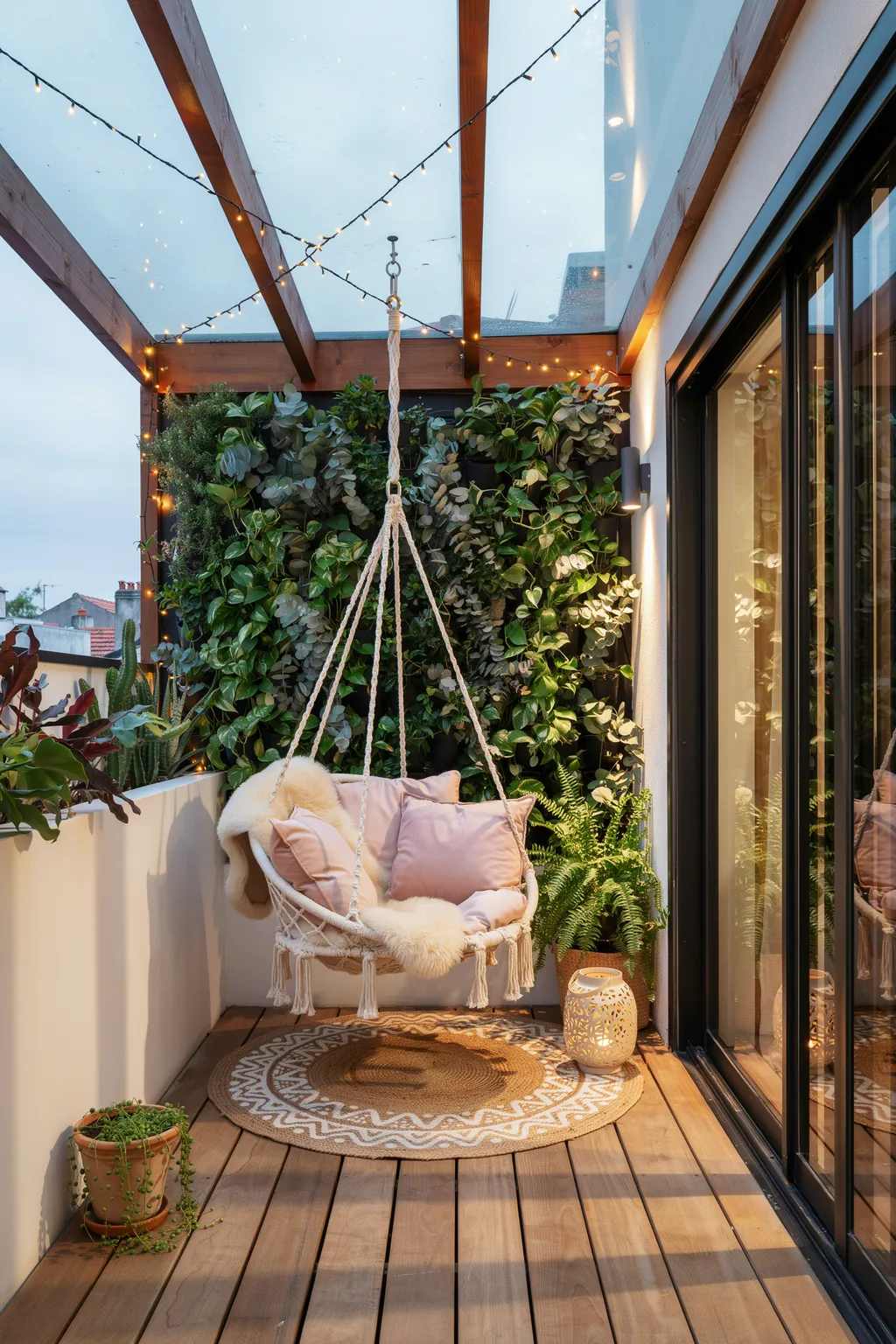
A suspended swing chair is pure delight, and it barely touches your floor plan. Hang a round rope or macramé swing from a solid beam, pile it with blush pillows and a fur throw, and let a fern trail down beside it. A glass or slatted roof overhead keeps the rain off, a green living wall softens the back, and string lights make it glow. The seat floats, so the ground stays open and airy.
Hanging the seat is the space-saving genius here. Because the chair takes up air instead of floor, the patio feels roomier even with a full-size seat in it. The gentle sway also makes it the most relaxing spot you own. Just know the mount matters most: you need a rated ceiling hook or beam that can hold 250 pounds or more, ideally checked by a pro.
Great for a covered patio or pergola with real structure overhead. This one is not for flimsy roofs or uncertain joists, since a pull-out mount is genuinely dangerous, so never hang from a guess.
10. Warm a Brick Nook With a Vintage Cabinet
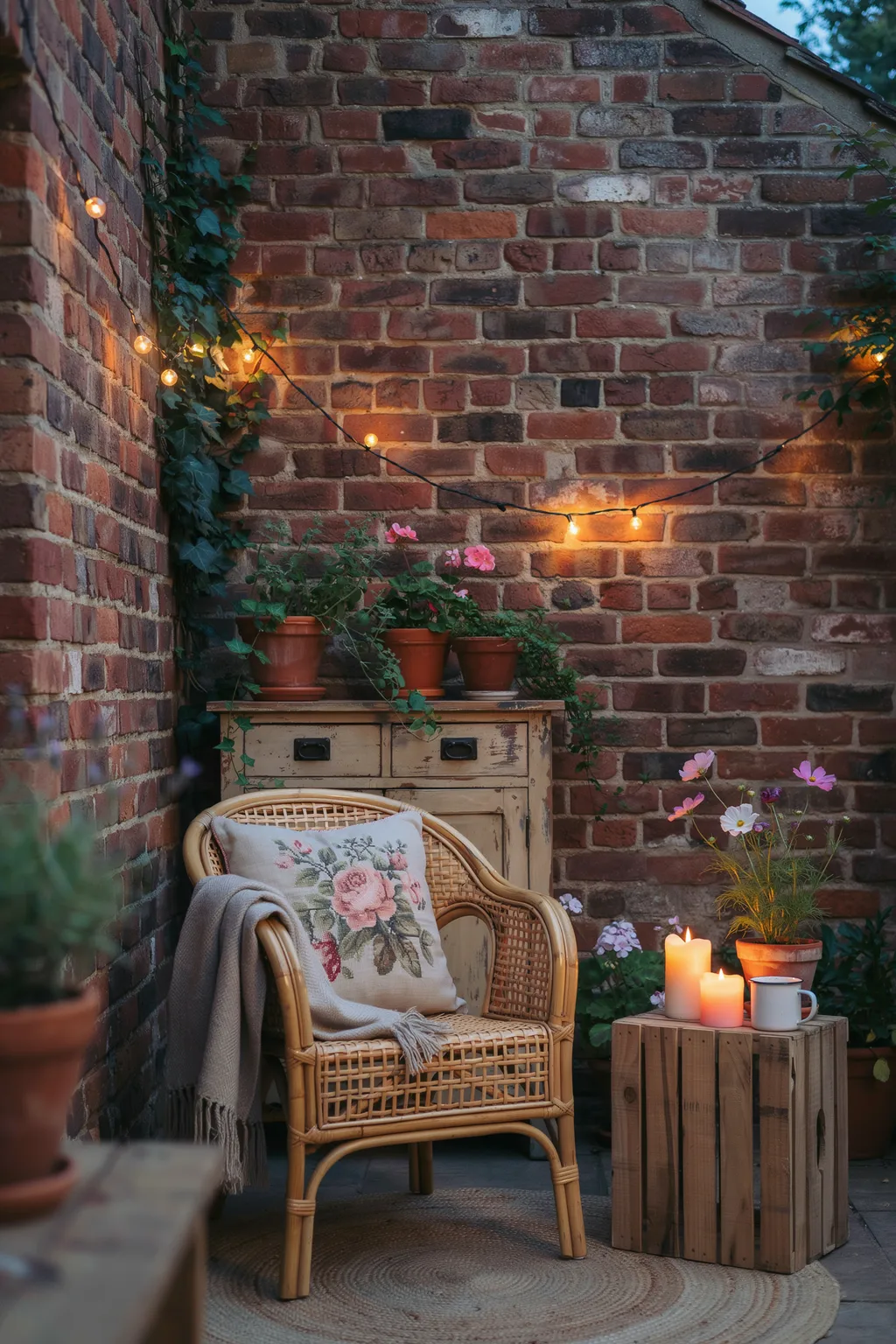
Old brick and a weathered cabinet give a tiny patio instant soul. Set a rattan loveseat against a rustic wooden cabinet or shelf, top the shelf with terracotta pots, and let ivy climb the brick around it. Cross-stitch or floral pillows, a candle-topped crate, and warm string lights turn the corner into a cottage snug that feels like it has been loved for years.
Weathered pieces carry the character. A vintage cabinet adds storage and a story at once, so the patio feels furnished and lived-in rather than staged. Aged brick and terracotta warm the palette, and clustered pots keep the greenery generous. Hunt secondhand and you can pull this together for very little, often just the cost of cushions and a few plants.
Best for older homes with real brick and a shaded, sheltered feel. Skip a solid-wood cabinet in an exposed spot, since untreated wood left in the weather warps and rots within a couple of seasons.
11. Keep It Modern With a Slat Screen and Bistro Set
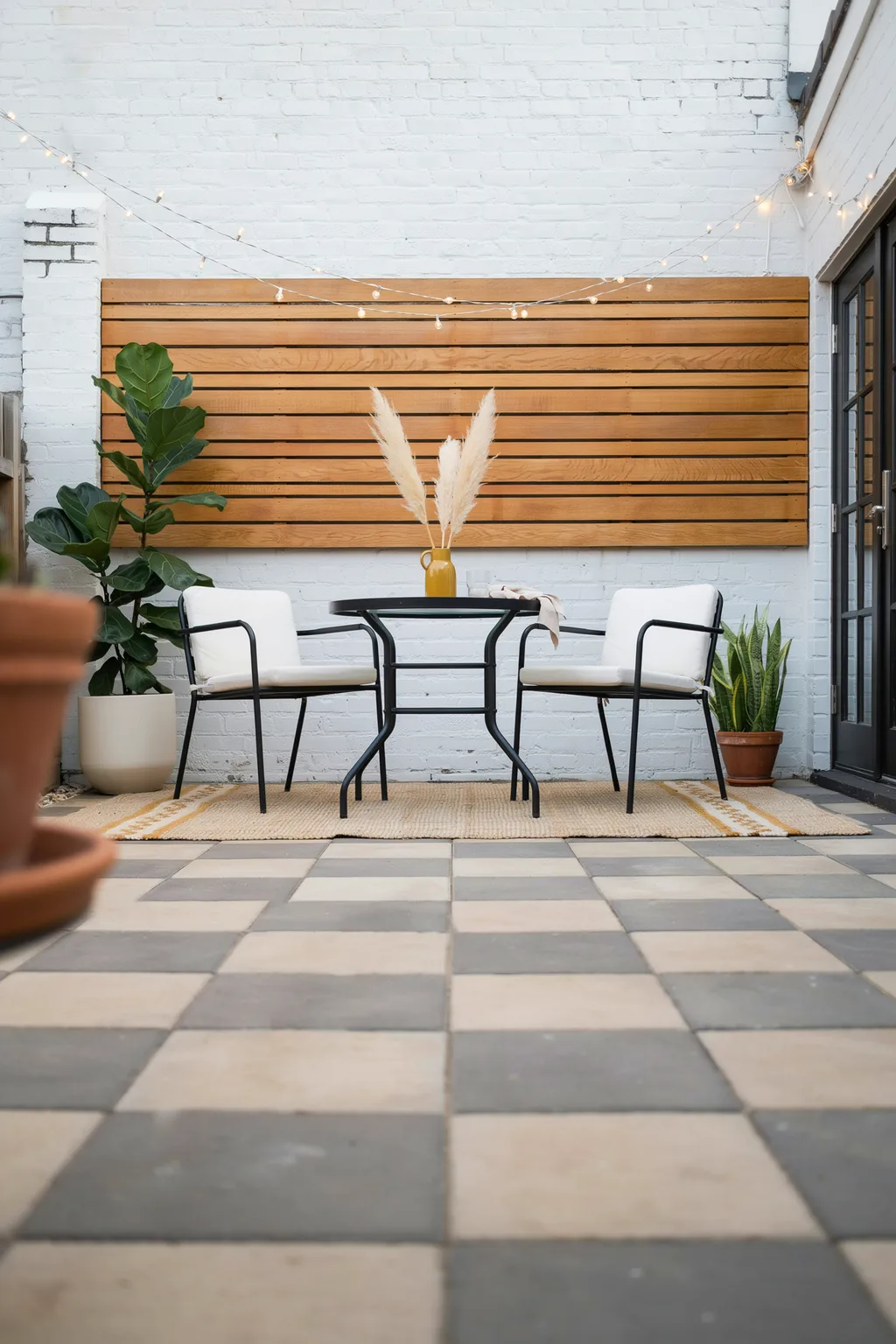
For a clean, current look, back a black metal bistro set against a horizontal cedar slat screen on a white brick wall. Flank it with sculptural potted plants like a fiddle-leaf and a snake plant, drop a jute rug under a patterned runner, and you get a small patio that feels designed rather than decorated. The straight lines make a tiny space read as crisp and calm, and it is one of the few tiny patio ideas that suits a truly modern home.
Restraint is the strategy here. A slat screen gives you privacy and a warm wood backdrop without visual clutter, and a few bold architectural plants beat a jumble of little pots. Black-and-white materials keep it sharp and modern. A prefab cedar slat panel runs 80 to 150 dollars, and a metal bistro set adds 100 to 250 depending on quality.
Great for modern homes and anyone who likes a minimal, tidy patio. Not for you if you crave a soft, layered cottage feel, since this look leans deliberately spare and structured.
12. Fill an Urban Courtyard With Layered Tropicals
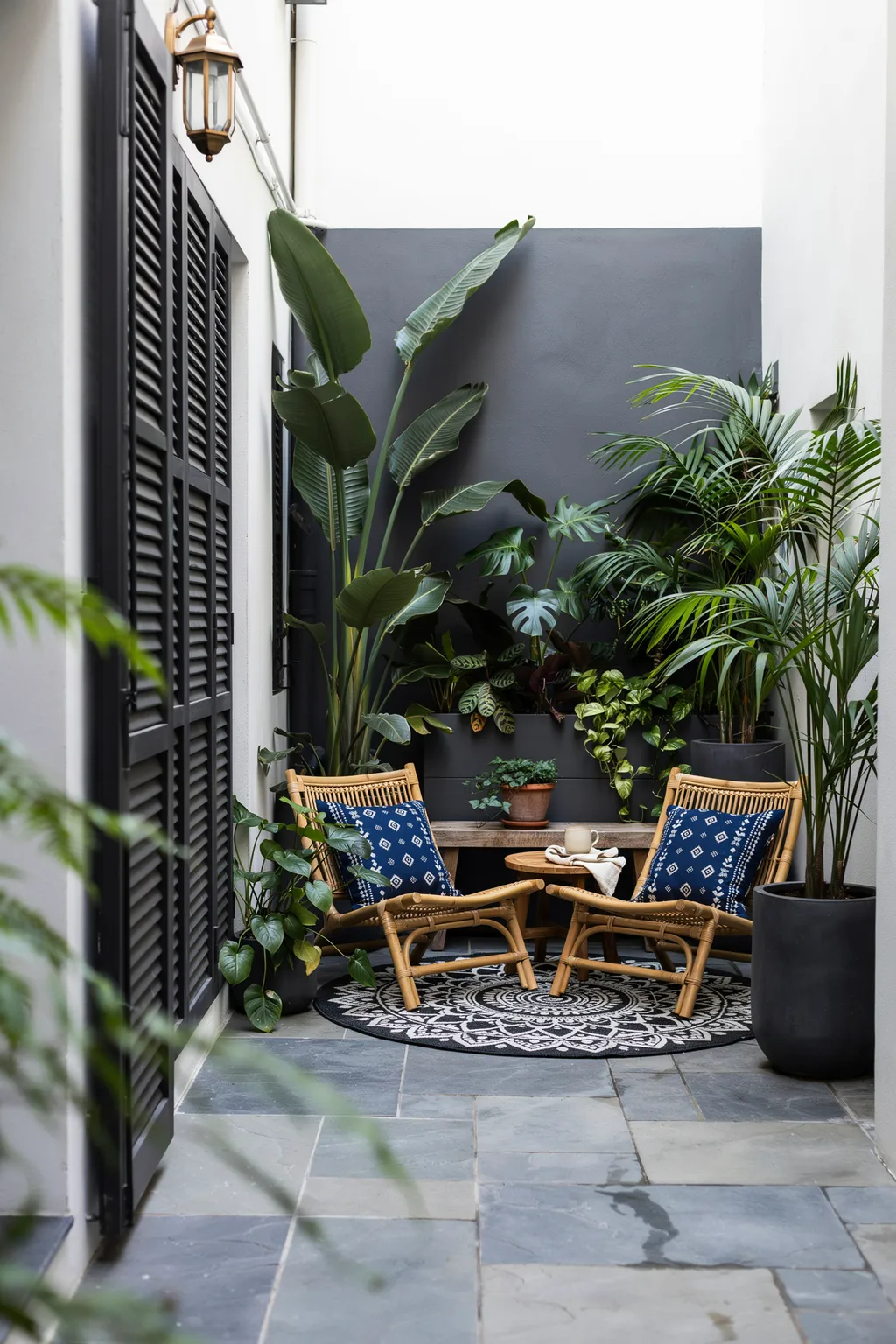
A narrow city courtyard turns exotic when you flood it with tropical plants. Line the walls with palms, bird of paradise, and philodendron in dark planters, then set a pair of rattan chairs and a small round table in the middle. A black-and-white mandala rug and a dark accent wall pull it together, so a plain passage between buildings becomes a leafy hideaway.
Massing plants at different heights is the whole idea. Tall palms, mid-height leafy plants, and low trailers layer into a wall of green that hides the surrounding brick and makes the space feel like a secret garden. A dark accent wall recedes and makes the foliage pop. Building a courtyard jungle takes a real plant budget, often 200 dollars or more, but you can grow it in over a season.
Best for sheltered urban courtyards with decent light and mild winters. Skip a heavy tropical scheme if your space bakes or freezes, since these plants stall in extreme heat and die in a hard frost.
13. Give a Balcony an Egg Chair and a View
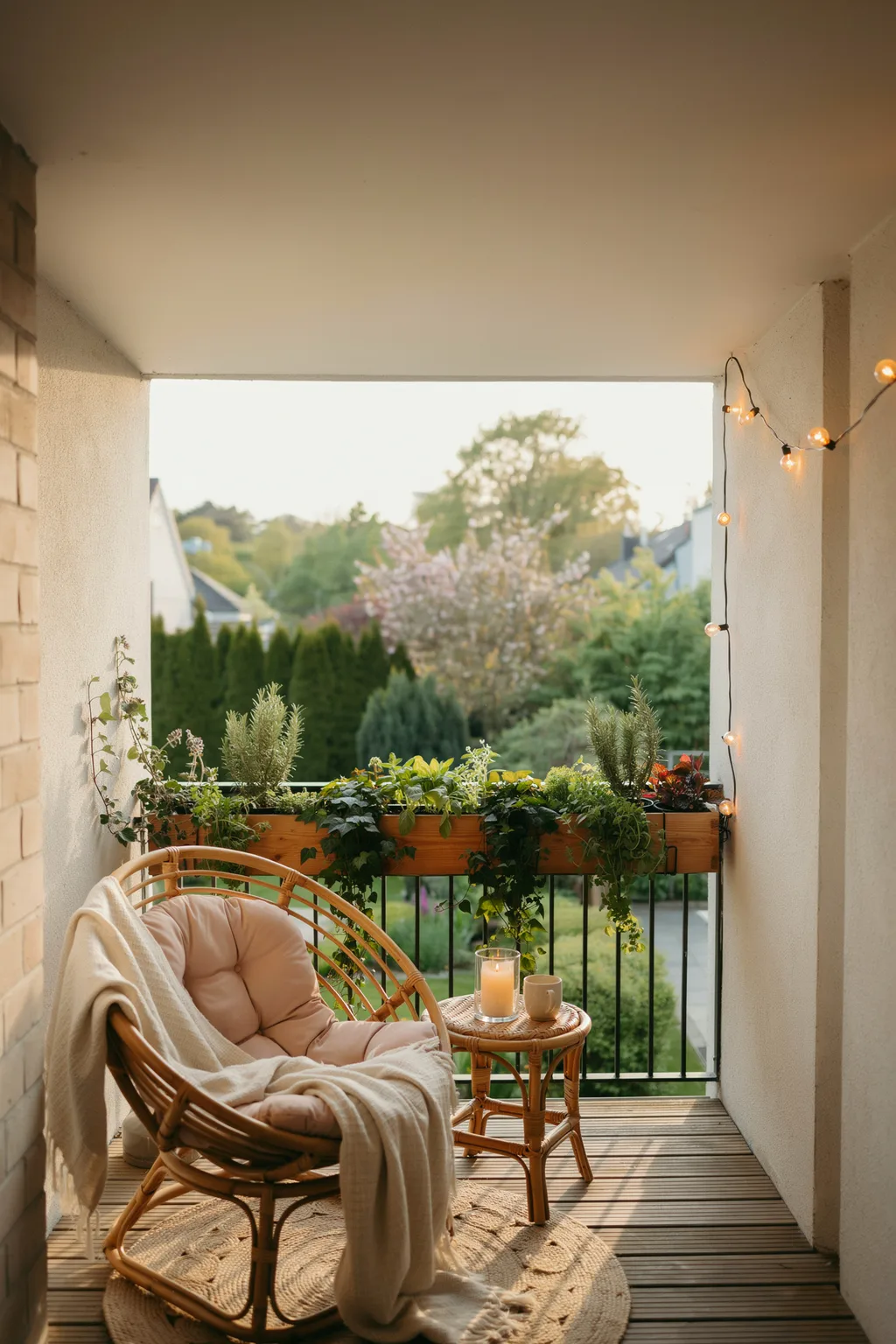
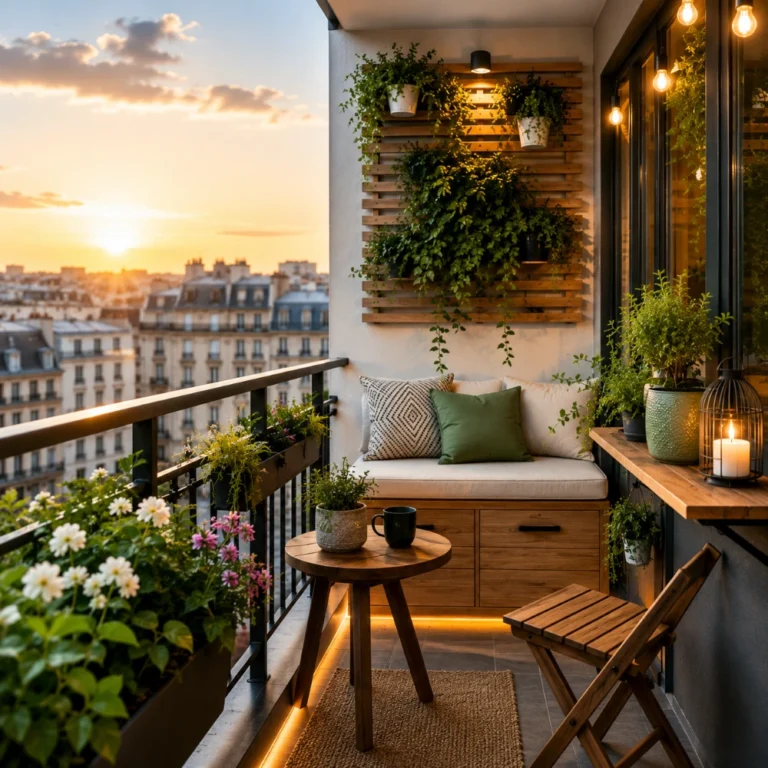
A small balcony works hardest with one comfortable seat pointed at the best view. Set a rattan egg chair in the corner, add a blush cushion and a knit throw, and hang planters on the railing so greenery frames the scene without eating floor space. String lights and a little side table for a candle make it a spot you use morning and night, not just for storing the drying rack.
Facing the seat outward is the key move on a balcony. Pointing the chair at the sunset or the garden borrows the whole view as your backdrop, so the small floor stops mattering. Railing planters add green without a single pot on the ground. A railing planter set runs 30 to 70 dollars, and it clears the deck for the chair.
Great for apartment balconies with a view worth facing. Check your railing’s weight limit and any building rules first, since heavy planters and anything hung over the edge can be a real hazard below.
14. Fit a Corner Sectional Into a Compact Courtyard
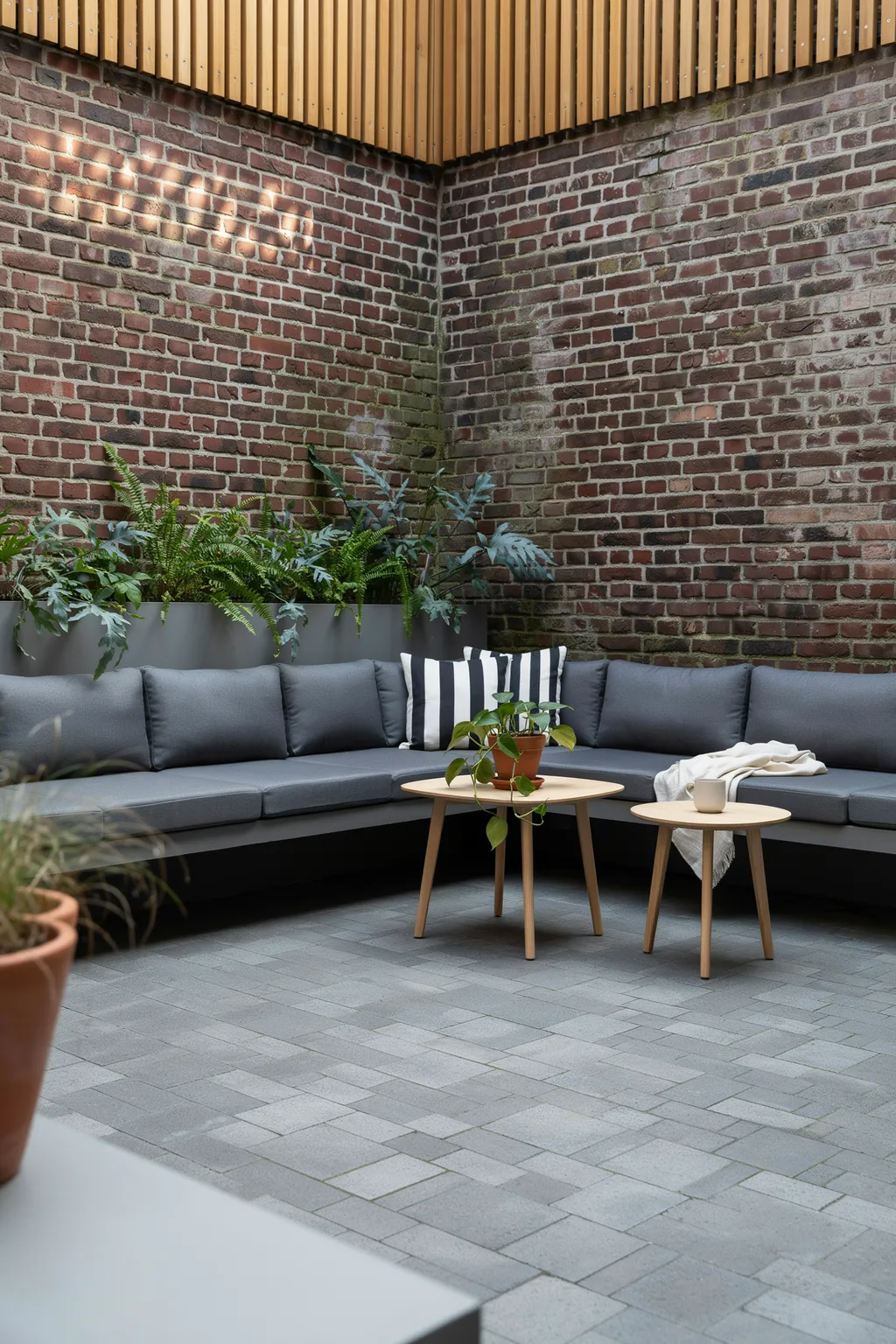
You can seat a small crowd in a tight courtyard with an L-shaped sectional that hugs two walls. Pick a low grey sectional, add black-and-white striped pillows, and back it with raised planters full of ferns and leafy greens. A slim wood coffee table and a small side table keep surfaces handy without crowding the middle, so a compact space still hosts four people comfortably.
Corner seating is the space-efficient answer. Running the sofa along two walls uses the perimeter and leaves the center open, which is exactly how you fit more seats in less room. Raised planters behind the sofa add a green backrest and privacy at once. A compact outdoor sectional runs 400 to 900 dollars, so it is a bigger commitment, but it replaces several chairs.
Ideal for small households that entertain and want real seating, not just a photo corner. Measure carefully first, since a sectional that looks fine online can swallow a courtyard and block your door swing.
15. Set a Boho Scene With Macrame and Layered Rugs
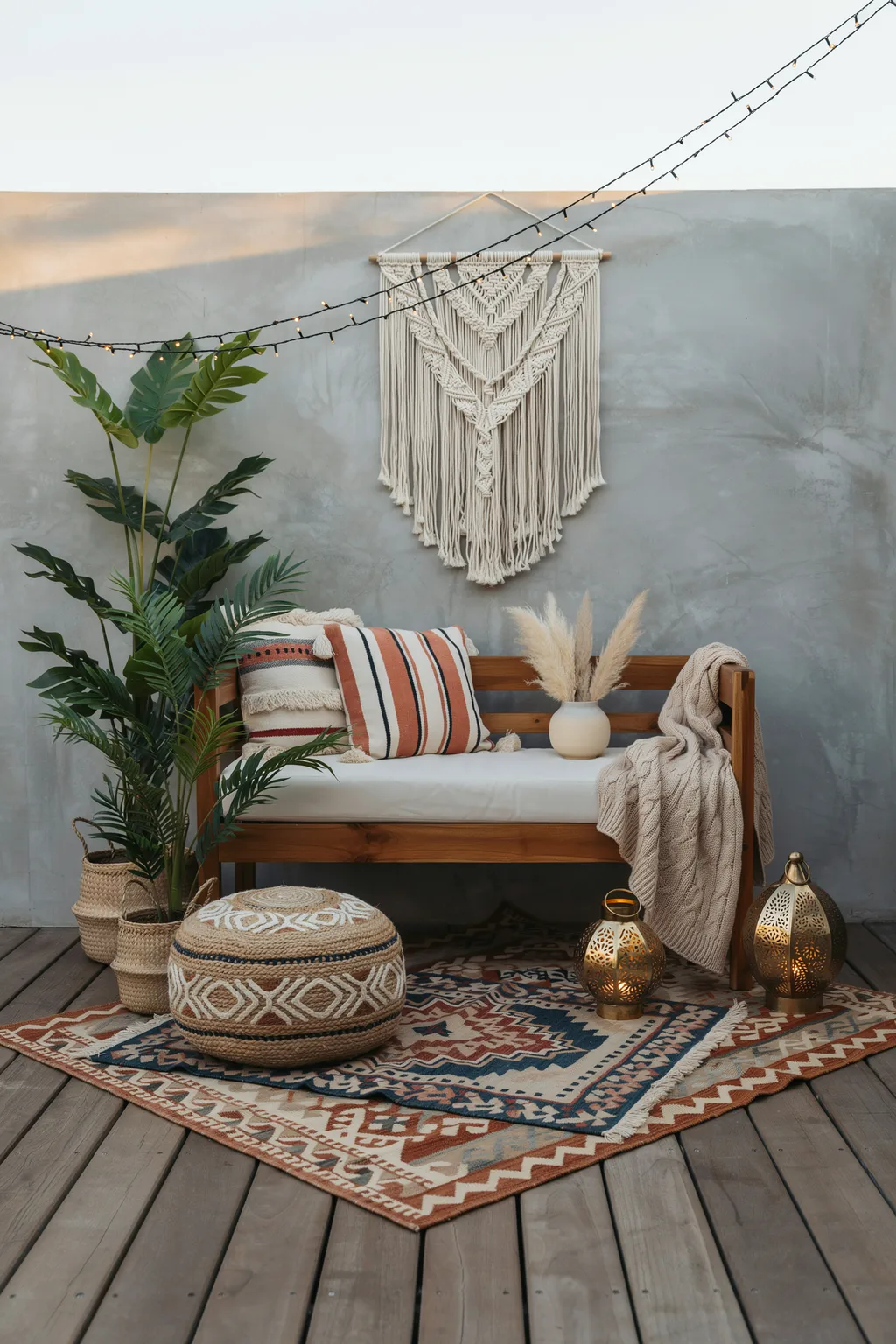
For a warm, collected boho look, layer soft textures on the floor and walls. Set a low wood settee with a white cushion and tribal pillows, add a patterned pouf, and stack a couple of kilim rugs underneath. A macrame wall hanging, monstera and palm in woven baskets, and a scatter of lanterns finish a corner that feels like a bohemian den. It is all soft goods and plants, so nothing is permanent.
Stacking rugs is the trick most people miss. Layering two patterned rugs adds instant warmth and defines the seating, which makes a hard patio floor feel like a room. A macrame hanging fills wall space with texture instead of clutter. You can build this from thrifted textiles and a few plants, keeping the whole corner under 150 dollars.
Great for renters and free spirits who love pattern and plants. Bring the rugs and macrame in before rain, since layered textiles hold damp and can mildew if they stay wet.
16. Line a Built-In Bench With Candlelight and Big Leaves
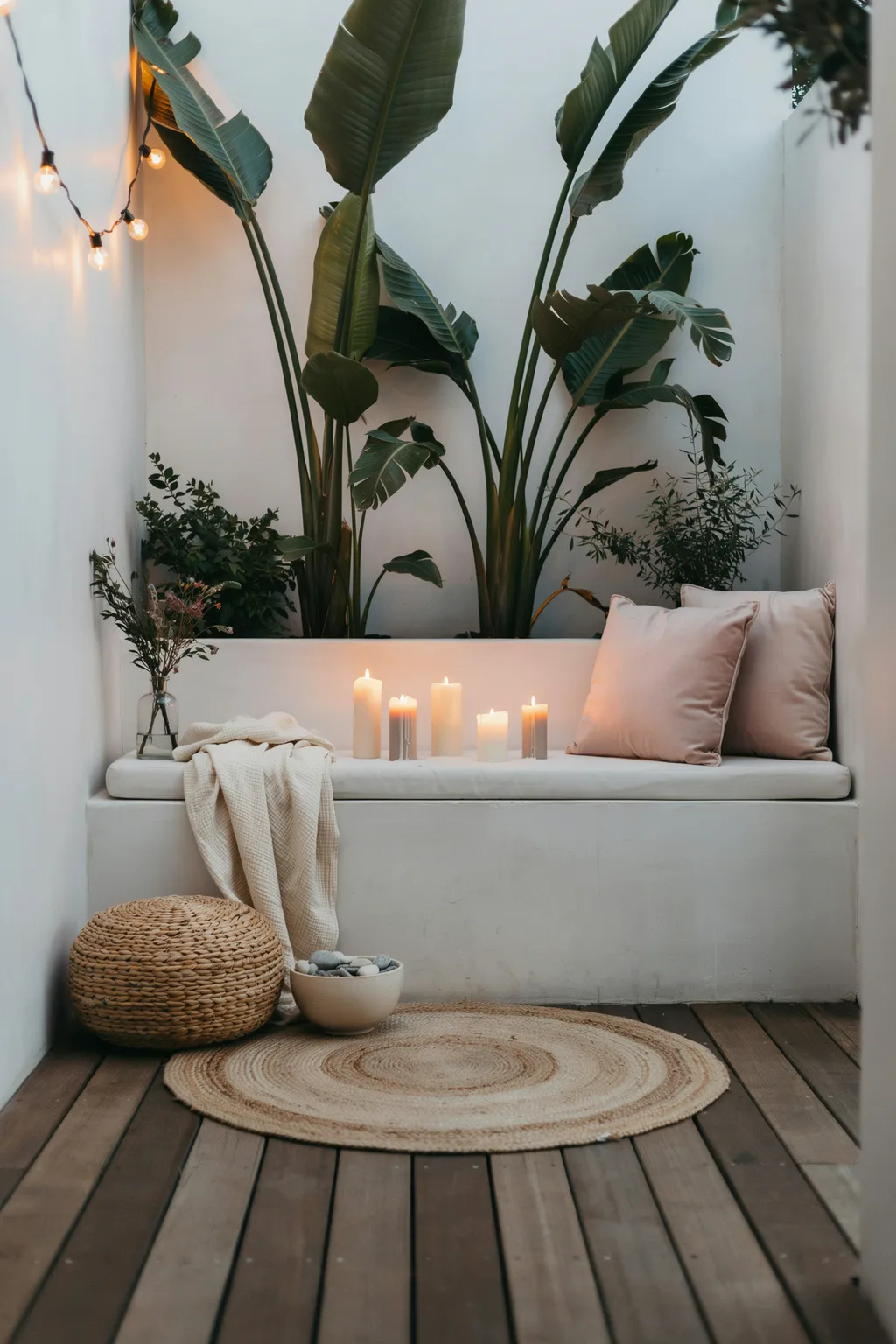
A built-in bench along one wall is a space-saver that seats several without any bulky furniture. Top it with a white cushion and blush pillows, back it with tall banana or bird-of-paradise leaves, and line the ledge with pillar candles. String lights above and a jute rug below turn the corner into a warm, glowing lounge that feels like a spa at night.
A built-in bench wins on footprint. Because it sits flush to the wall, it seats three or four while leaving the floor clear, which no loose sofa can match in a small space. A row of candles at ledge height throws a soft, even glow that flatters the whole patio. Building a simple bench runs 100 to 300 dollars in lumber, or you can fake it with a low storage unit and a cushion.
Perfect for a permanent patio where you want fixed, tidy seating. Skip real flame candles if you have kids, pets, or wind, and use flameless LED pillars instead for the same look without the risk.
17. Soften a Bare Slab With Turf and Floor Cushions
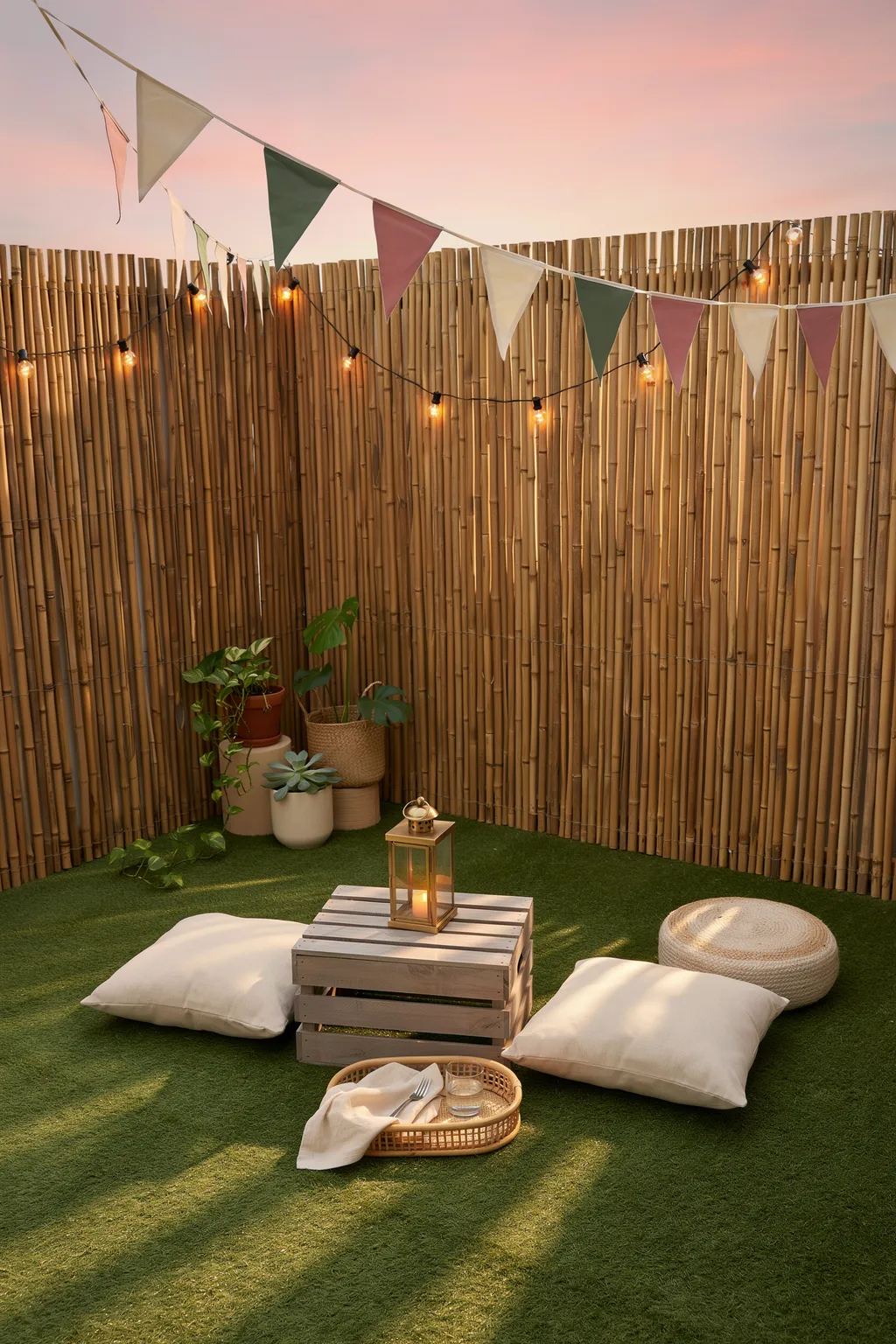
No comfortable ground? Lay artificial turf over the concrete, screen the space with a bamboo reed fence, and swap chairs for low floor cushions around a crate table. Add a string of bunting flags and warm lights, and a hard slab becomes a soft, playful lounge you can sprawl on. The green floor alone changes how the whole space feels underfoot.
Ground-level lounging is the surprise move. Floor cushions sit low, so they keep sight lines open and make the patio feel taller and airier than chairs would. Turf hides ugly concrete and feels soft for bare feet or kids, while a bamboo screen adds privacy and a natural backdrop cheaply. A roll of quality turf runs 3 to 8 dollars a square foot, and reed fencing is inexpensive by the roll.
Great for families, casual loungers, and anyone hiding a cracked slab. Skip turf in a soggy, shaded spot with no drainage, since water pools under it and it can smell without airflow beneath.
18. Wrap a Corner in a Wood Slat Fence for Privacy
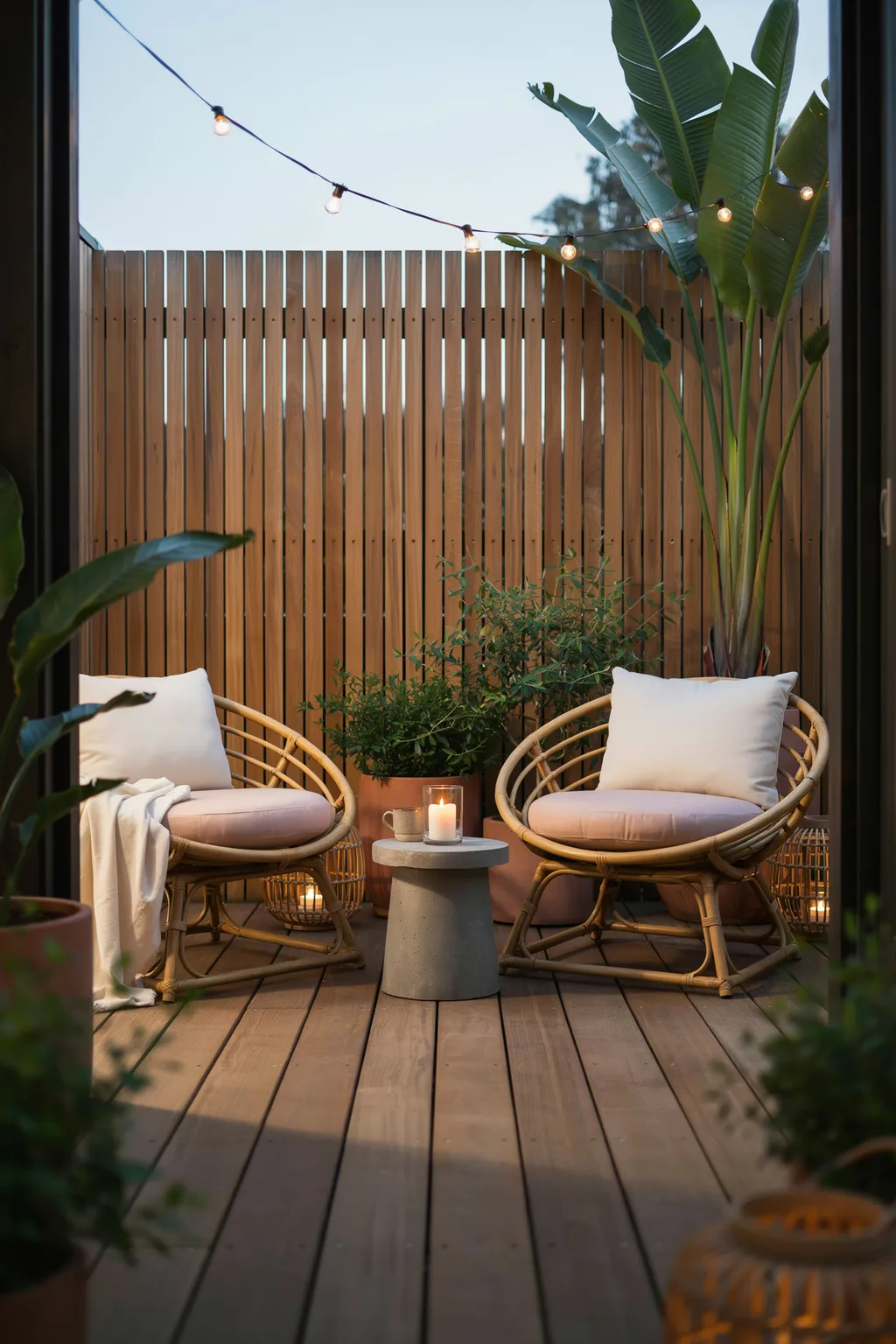
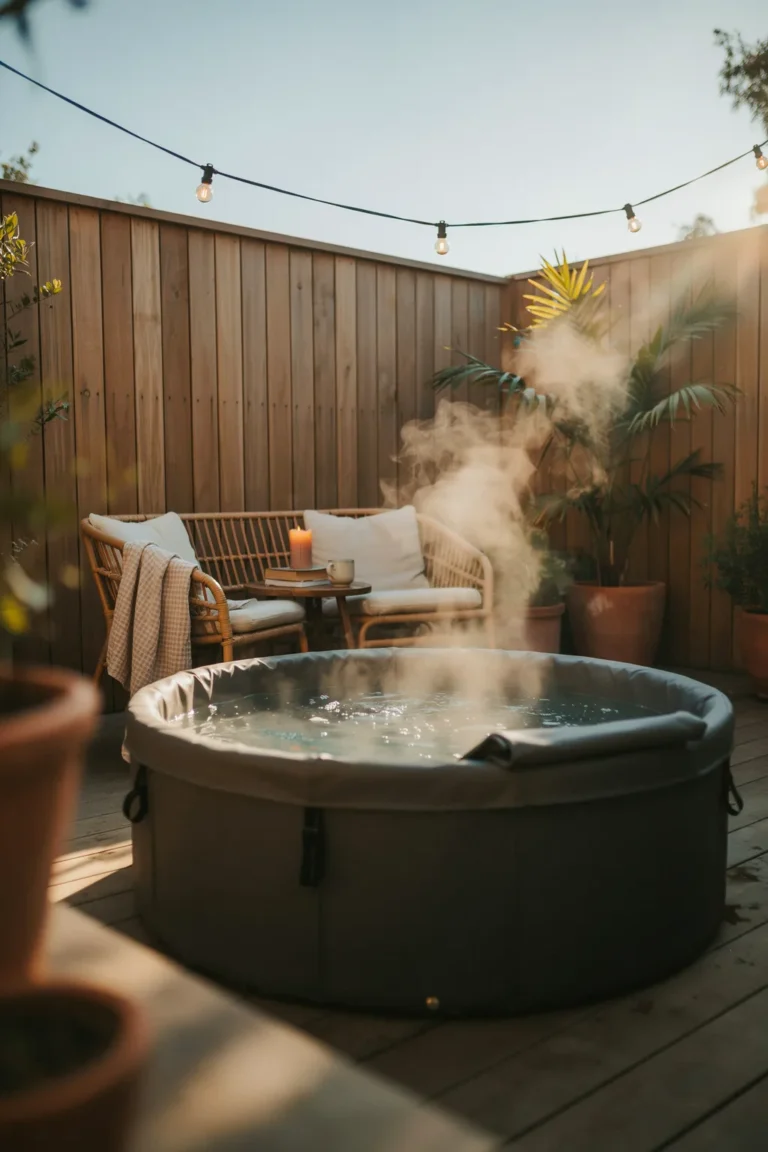
Sometimes the fix is a good fence. Screen a corner with a vertical wood slat fence, set two rounded rattan chairs and a small round table between big banana leaves, and hang warm bulbs above. The slats block prying eyes while the gaps still let air and light through, so the corner feels private and calm without turning into a dark box.
Vertical slats are the privacy sweet spot. Spaced boards hide the neighbors but keep the breeze moving, so a small enclosed patio stays fresh rather than stuffy. Framing the seats with tall leaves adds a green ceiling that makes the space feel finished. A prefab slat fence panel runs 60 to 150 dollars, and two rattan chairs add 150 to 300.
Best for overlooked corners where privacy is the missing piece. Not the move if you are chasing an open, expansive feel, since a full slat surround deliberately encloses the space to make it cozy.
Common Mistakes to Avoid
A few missteps make a small patio feel smaller and shabbier than it needs to. The best tiny patio ideas fall flat when these basics get skipped, and every one of them is easy to sidestep once you know it.
Mistake 1: Buying furniture that is too big for the space
A bulky sofa or full dining set eats a tiny patio and blocks the door swing. Measure your floor and leave at least 24 inches of walking room before you buy. Returning an oversized piece is a hassle, so tape out the footprint on the ground first and live with it for a day.
Mistake 2: Leaving the walls and vertical space empty
Bare walls waste your best square footage and make the floor do all the work. Hang planters, shelves, and lights to draw the eye up. Skipping vertical space is the single most common small-patio miss, and fixing it costs less than another chair.
Mistake 3: Scattering lots of tiny pots
A dozen little pots read as clutter and dry out constantly. Group a few larger planters at different heights instead. Too many small containers also mean daily watering in summer, which turns your retreat into a chore.
Mistake 4: Forgetting drainage
Rugs, turf, and cushions sitting on a slab that pools water get moldy and musty fast. Check that water runs off your patio and lift textiles when rain is coming. A blocked drain or a low spot can ruin pricey cushions in one wet week.
Mistake 5: Skipping nighttime lighting
A patio with no evening light goes unused after sunset, which is when you most want to sit out. Add string lights, lanterns, or LED candles. Harsh single floodlights are the wrong fix, since they flatten the mood and glare.
Mistake 6: Choosing plants that fight your light
Sun-lovers sulk in a shaded corner and shade plants scorch in blazing sun. Match every plant to the light your patio actually gets, and check its needs against a trusted reference like the Royal Horticultural Society before you buy. Guessing here is the top reason small-patio plants die, and dead plants make the whole space look neglected.
Quick Start Checklist
- [ ] Measure your patio and tape out furniture footprints before buying anything
- [ ] Leave at least 24 inches of clear walking path
- [ ] Claim the walls and railings with planters, shelves, or hooks
- [ ] Pick one comfortable anchor seat over a crowded set
- [ ] Choose plants that match your patio’s real sun or shade
- [ ] Group a few larger pots instead of many tiny ones
- [ ] Add warm string lights or lanterns for after dark
- [ ] Ground the seating with an outdoor-rated rug
- [ ] Confirm drainage so textiles and turf stay dry
- [ ] Check railing and ceiling weight limits before hanging anything
Frequently Asked Questions
How do I make a tiny patio look bigger?
Draw the eye up and keep the floor clear. Use vertical planters, hang your lights, and pick one low, comfortable seat instead of a bulky set. Light colors, a single larger rug, and a mirror on a wall also stretch the sense of space. Many tiny patio ideas lean on these tricks rather than on actually gaining square footage.
What is the best flooring for a small patio?
It depends on your base and budget. Outdoor rugs and interlocking wood or composite deck tiles cover ugly concrete cheaply and add warmth. Artificial turf softens a slab for bare feet. Whatever you choose, confirm water can still drain underneath, since trapped moisture leads to mold.
How can renters decorate a patio without permits or drilling?
Stick to freestanding and clamp-on pieces. Container plants, tension-rod or railing planters, adhesive hooks for lights, and freestanding screens all leave no marks. Bamboo roll fencing zip-tied to an existing railing adds privacy you can remove on move-out day, so your deposit stays safe.
What plants work best on a small patio?
Match the plant to your light first. For shade, try ferns, pothos, and ivy. For sun, go with lavender, succulents, and ornamental grasses. Vertical trailers and one bold statement plant give the most impact per inch. Group a few larger pots rather than many small ones to cut watering.
How much does it cost to redo a tiny patio?
You can refresh one for under 150 dollars with string lights, a rug, a few plants, and cushions you restyle. A bigger redo with new seating, a slat screen, and planters runs 400 to 900 dollars. The best small-patio value is light and greenery, which change the feel for very little money.
How do I add privacy to a small patio?
Screen the sightlines that bother you, not the whole space. A wood slat panel, a bamboo roll, or a wall of tall potted plants blocks the neighbors while keeping air moving. Slatted and planted screens feel softer than a solid wall and stop a small patio from turning into a dark box.
Can these tiny patio ideas work on a rental balcony?
Yes. Most of these tiny patio ideas rely on containers, freestanding furniture, and removable lights, so nothing gets drilled. Just check your building’s rules and your railing’s weight limit before hanging planters or anything over the edge, and keep heavy items off the rail for safety.
Conclusion
A small patio is not a lesser space. It is a space that rewards a few smart choices instead of a big budget. Get these right and the square footage stops mattering.
First, go vertical, because your walls and railings are the room you are not using yet. Second, choose one comfortable anchor, whether that is an egg chair, a loveseat, or a built-in bench, and let it define the corner. Third, light it warm and low so the patio pulls you outside after dark, not just at noon. Fourth, match every plant to your real light, since a thriving corner always beats a struggling one. And fifth, measure before you buy, because the fastest way to shrink a tiny space is to overfill it.
You do not need all 18 of these tiny patio ideas or a renovation to start. Pick the one setup that fits your light, your walls, and your evenings, and build from there. The best tiny patio ideas are the ones you actually sit in on an ordinary Tuesday.
So measure your patio tonight, claim one wall for greenery, and add a string of lights. That small start turns a slab you walk past into a corner you cannot wait to use.