15 Green Wall Living Room Ideas That Feel Fresh and Stylish
A green wall does something most paint colors do not: it makes a living room feel finished the second you walk in. You do not need a designer’s eye to notice it either, just a room that suddenly feels calmer, warmer, and more like a place you actually want to sit in.
The trouble is most green wall living room ideas either drown a room in one flat shade or leave you standing in the paint aisle, color card in hand, with no plan for what happens next. The shade only tells half the story.
What the wall sits next to, the wood, the trim, the light it catches at 4pm, decides whether the room feels rich or muddy. This list skips the vague inspiration and gets into the parts that actually matter: which greens work in small rooms, which ones need a big window, and what to pair them with so the color reads as intentional instead of accidental. Fifteen ways in, you will know exactly which green belongs on your wall.
1. Sage Green Walls for a Calm, Airy Living Room
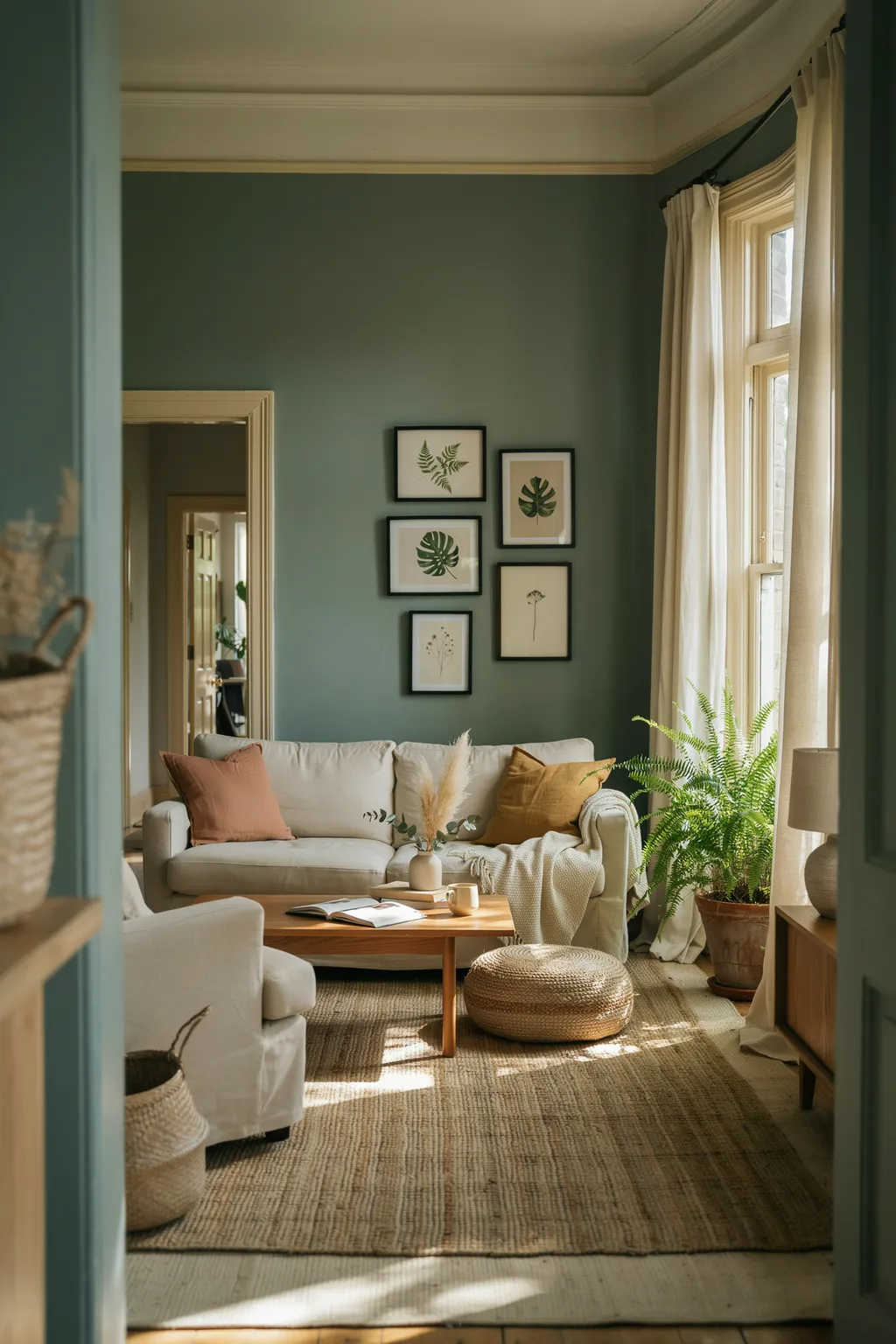
Sage reads lighter than almost any other green.
That’s why it works in rooms that only get a few hours of direct sun. Pair it with a white or bone colored sofa and it stops looking cold and starts looking soft. Keep trim on the warm side, an off white or soft ivory, since cool white can pull sage toward grey. Natural fiber rugs and linen curtains lean into the same warmth, and an eggshell or matte finish keeps it looking like fabric instead of plastic.
💡 Quick Tip
Test sage on the wall facing your main window first. North facing walls can pull sage toward grey, so a small sample patch saves you a repaint.
2. Deep Forest Green as a Bold Accent Wall
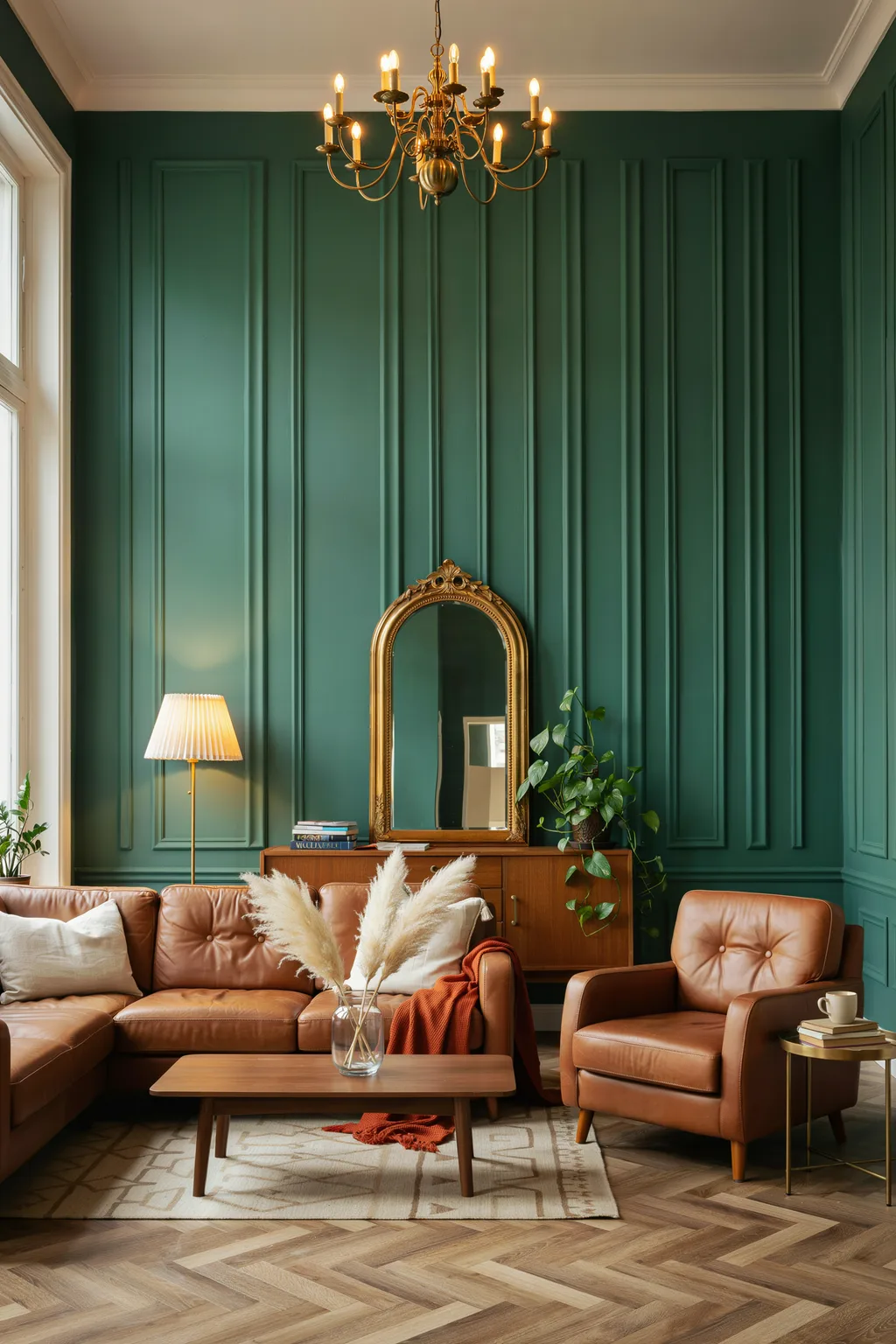
Most people paint all four walls forest green, then wonder why the room feels like a cave.
One wall is plenty, usually the one behind the sofa or the one your eye lands on first from the doorway. Forest green needs light to breathe, so add a large mirror across from it, or skip the heavy drapes and let the window stay bare. Leather furniture and brass hardware read expensive against this shade. A couple of warm lamps do more work at night than any overhead light.
Four dark green walls and one small lamp. The room reads small and heavy by 7pm.
One forest green wall, a mirror across from it, and warm lamp light. The room feels rich instead of cramped.
3. Olive Green Paired with Warm Wood Tones
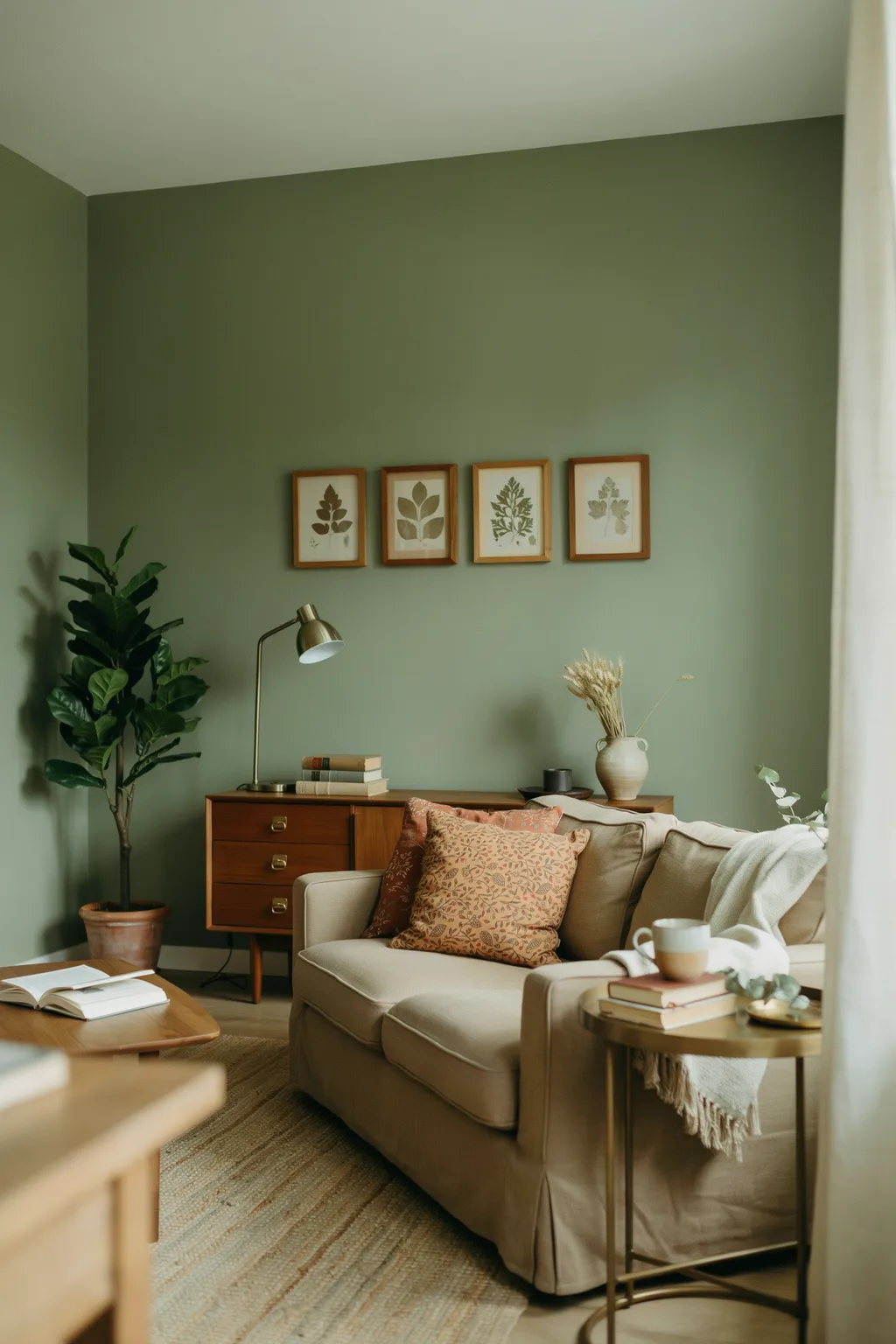
Olive is the green that hides a multitude of sins.
It goes with almost any wood tone already in the room, which is rare for a color this specific. I painted a rental living room olive a few years back and never once had to think about whether the furniture matched. Brass and aged wood lean into the warmth, while cool grey furniture is the one pairing that fights it. If your sofa is grey, keep olive to a smaller accent instead of a full wall.
What pairs well with olive
4. Mint Green for Small Living Rooms That Need Light
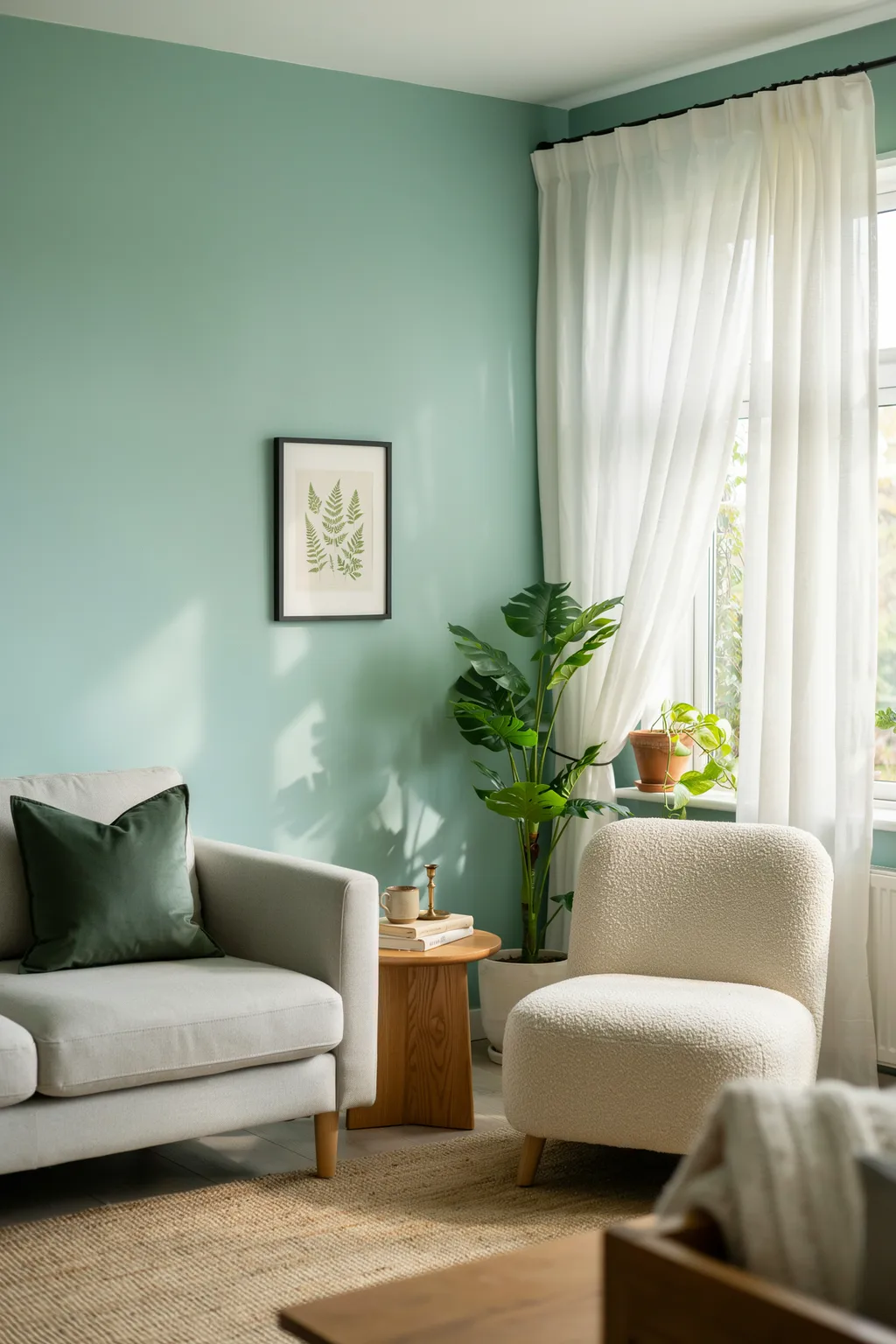
Small rooms need a green that bounces light instead of soaking it up.
Mint does exactly that, especially against pale wood, white trim, and light grey furniture. A single darker green throw pillow or a real, living plant keeps it from tipping into nursery territory. Mint looks best with at least one good window, since it can turn flat and grey under lamp light alone. In an all electric room, warm up your bulbs before you commit to the color.
5. A Single Green Accent Wall Behind the Sofa
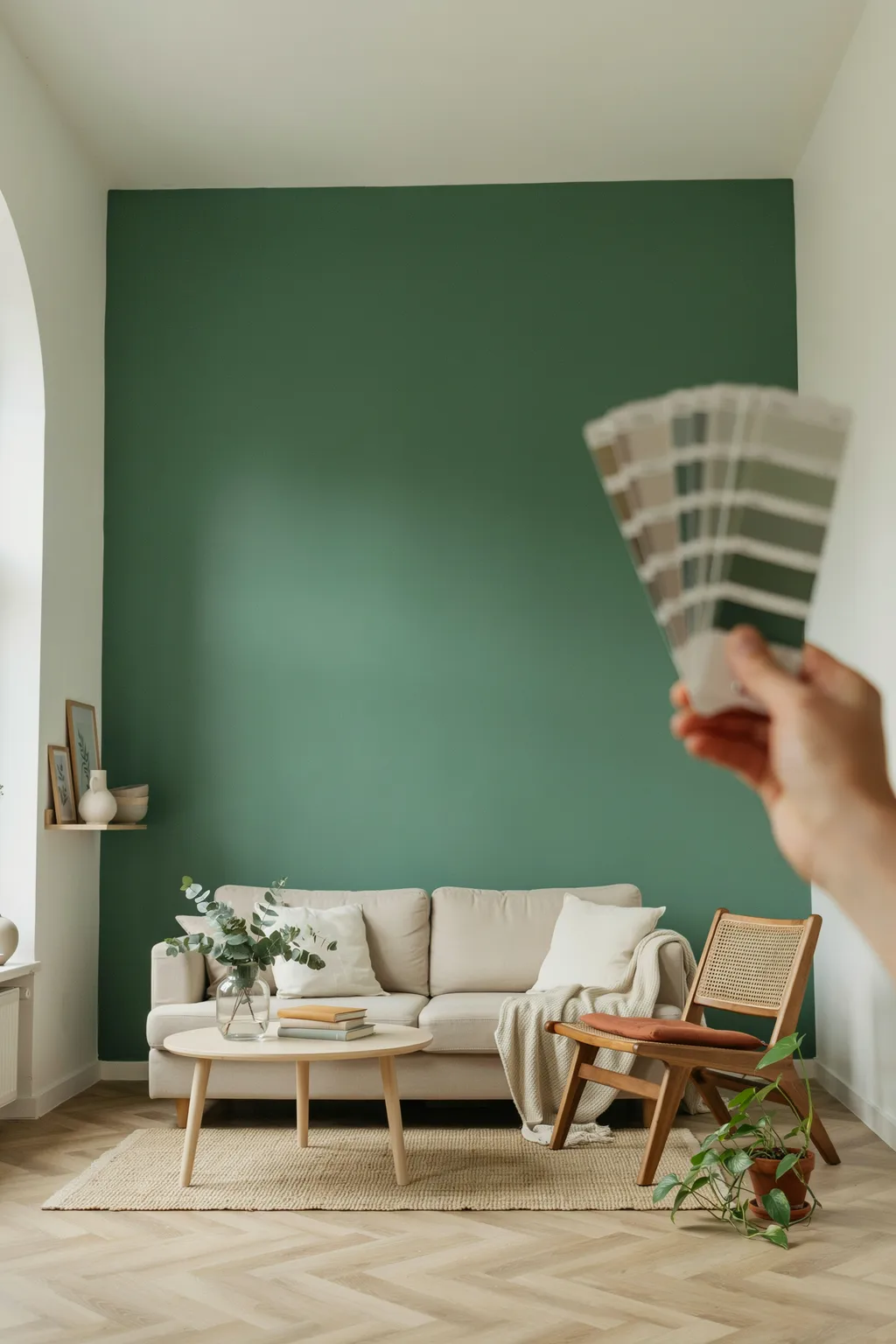
One wall behind the sofa does more for a room than painting all four ever will.
It also costs a fraction of the paint. The trick is choosing the right wall, the one you see first from the doorway, not just the one behind the biggest piece of furniture. Test a swatch at both morning and evening light before taping anything off, and keep the other three walls in a warm white or pale neutral so the green stays the star. This approach also makes it painless to change the color again in a year or two.
Pick the wall your eye hits first from the doorway, not just the biggest one.
Test a large swatch in both morning and evening light.
Tape off cleanly and keep the other three walls a warm neutral.
6. Textured Botanical Wallpaper for Instant Depth
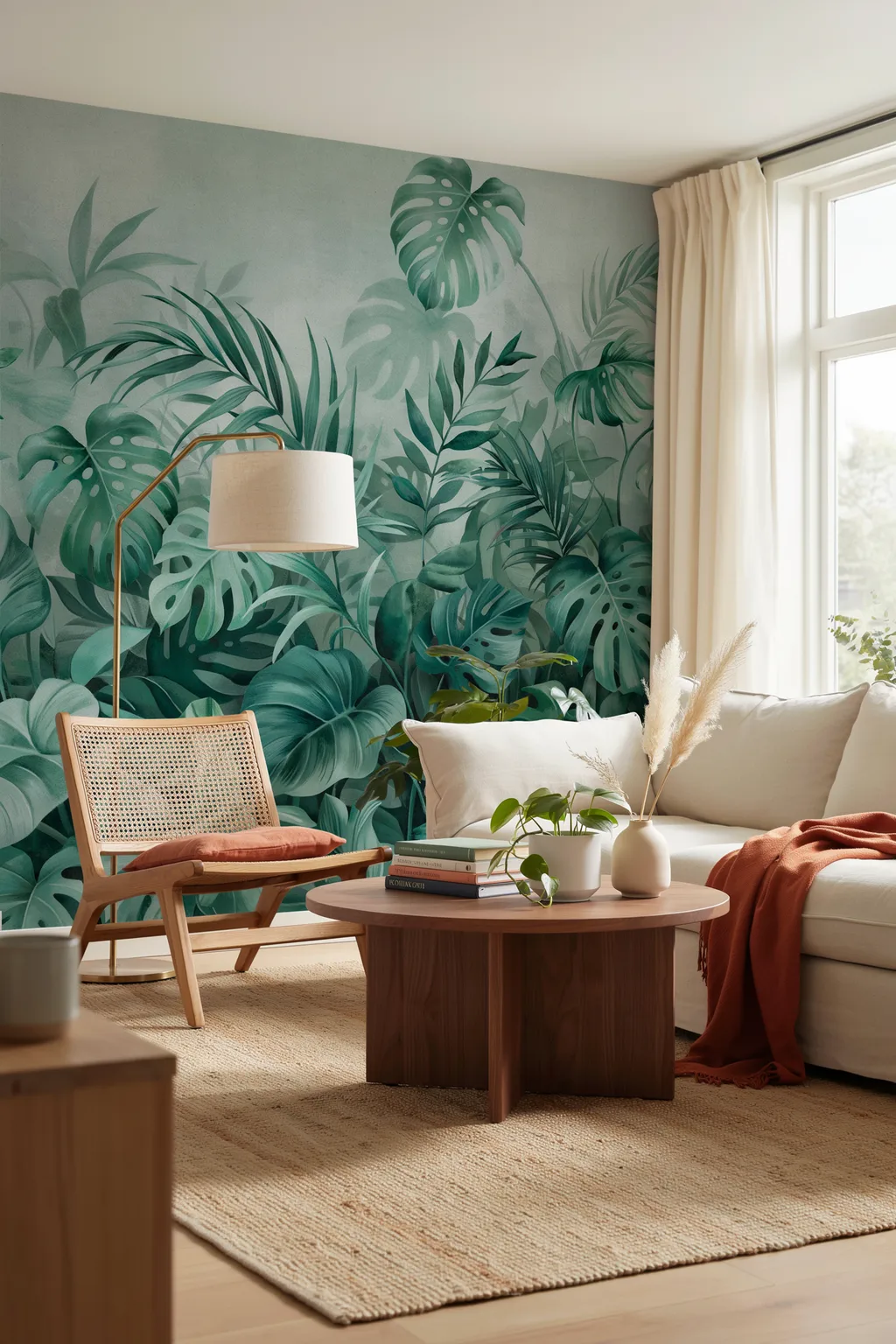
A friend of mine covered one wall in a leafy botanical print and stopped decorating the rest of the room for months, because nothing else needed to compete with it.
Textured botanical wallpaper does the work of art, greenery, and paint color all at once, which makes it one of the more versatile green wall living room ideas for a rental. Pick a pattern with some variation in leaf shade, not a flat single tone print, so the wall reads dimensional instead of like a sticker. Keep the wall you choose free of large furniture in front of it so the pattern actually shows. A plain sofa and simple curtains let the paper stay the focal point.
7. Matte Green Finish for a Modern, Glare-Free Look
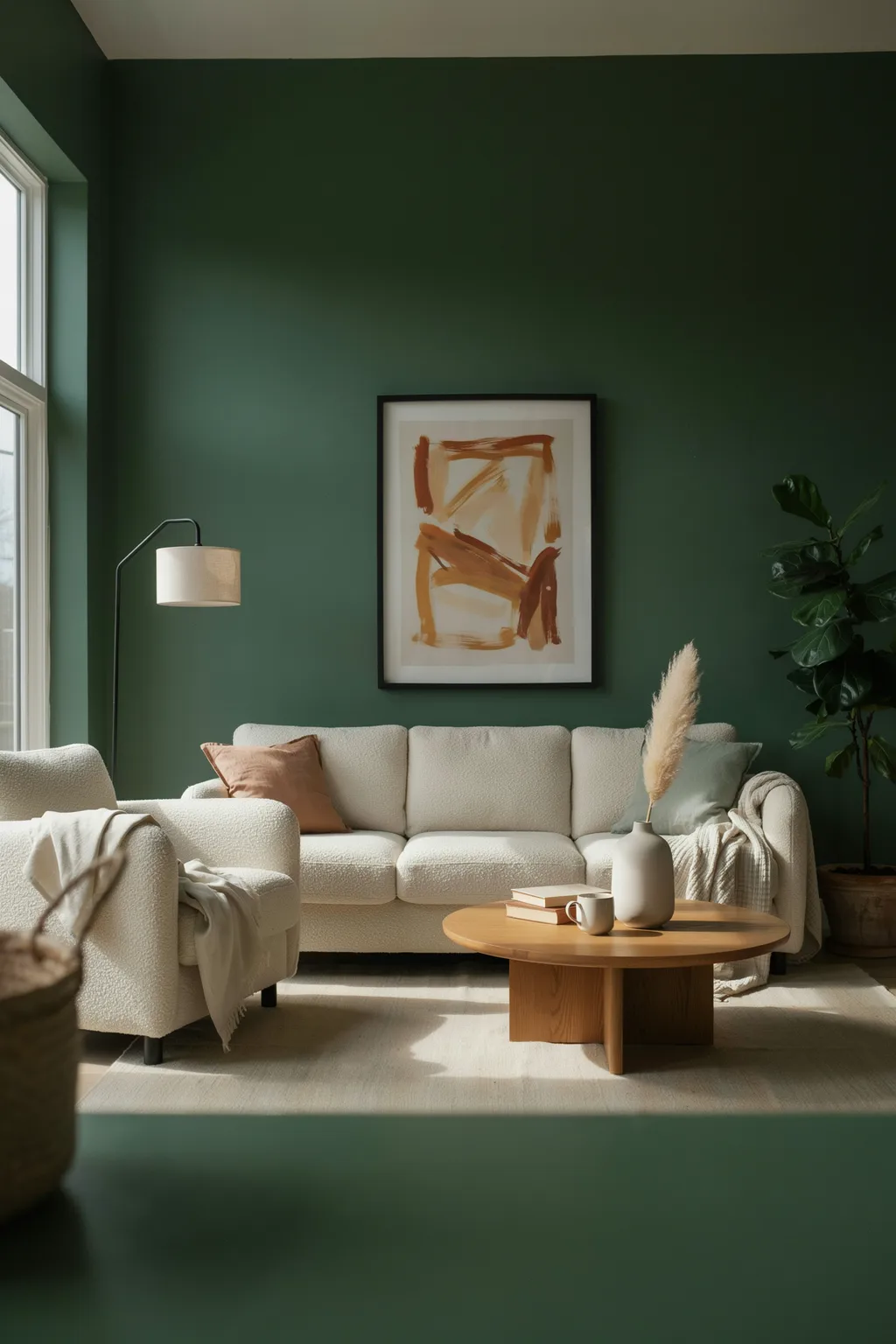
A glossy finish looks fancier in the store, but glare tells a different story once it is on the wall.
Matte absorbs light instead of bouncing it, since matte surfaces have very low gloss compared to satin or semi-gloss, so every uneven patch of drywall stays hidden instead of catching a glare under lamp light. Satin or eggshell can work in a hallway that takes a beating, but in a living room, matte reads calmer and more intentional. The tradeoff is matte marks easier, so keep a touch up pot on hand near a well used armchair or a busy corner.
| Matte | Satin / Eggshell |
|---|---|
| Hides drywall flaws and glare. | Wipes clean more easily. |
| Reads calmer and more intentional. | Shows more sheen and surface texture. |
8. Dark Green Walls Balanced with Light Furniture
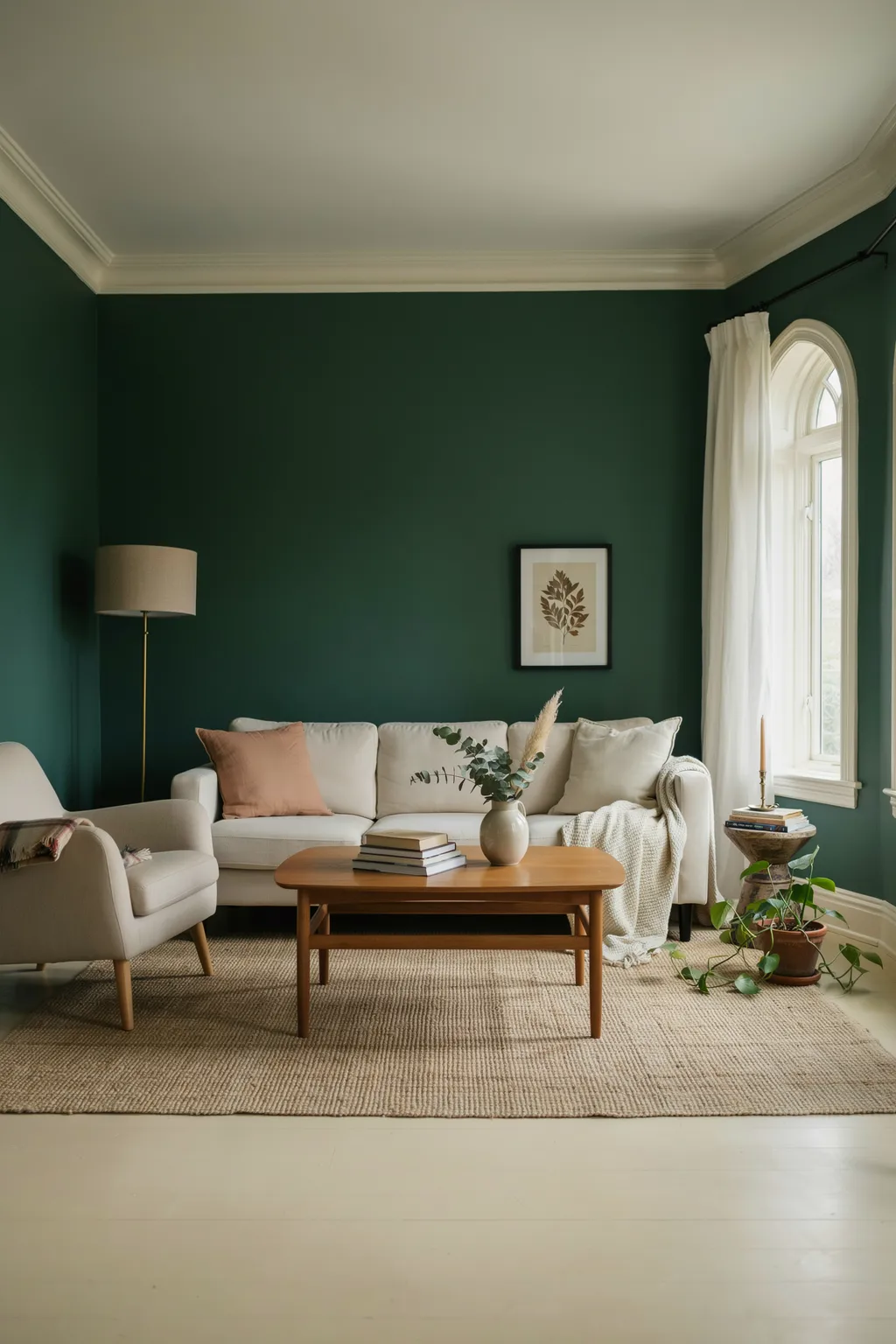
Dark green swallows a room the moment every other surface goes dark too.
Keep the sofa, rug, and curtains light, cream, oatmeal, or pale grey, so the wall has something to push against. Wood tones read best warm and medium, not black stained pieces, which flatten the contrast instead of sharpening it. This pairing works well in a medium to large living room with decent ceiling height. Skip it in a small, low ceilinged room unless there is strong natural light.
Pair with cream or oatmeal upholstery.
Keep wood tones warm and medium.
Black stained furniture in the same room.
A low ceiling with weak natural light.
9. Two-Tone Green Walls for Visual Height
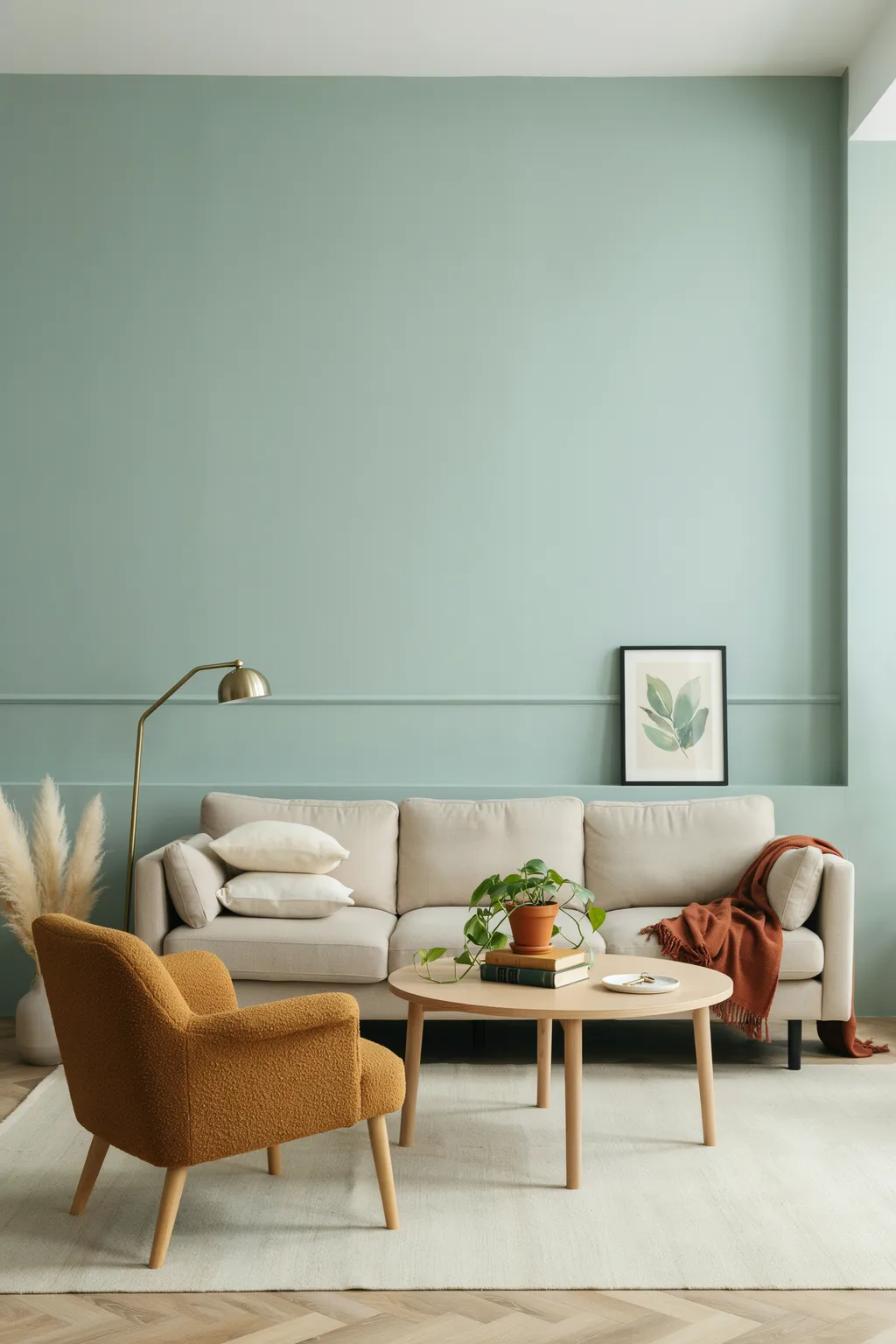
A single flat green wall can look shorter than the room actually is.
Splitting the wall into two shades, a lighter green on top and a deeper one below a chair rail line, tricks the eye into reading more height. Keep the transition line between one third and halfway up the wall, not dead center, or it reads like a mistake instead of a design choice. This works especially well in rooms with 8 foot ceilings that feel a little squat. Painter’s tape and a level are the only tools this really requires.
- ▸Lighter shade above the line, deeper shade below.
- ▸Set the transition between one third and half way up the wall.
- ▸Works especially well with 8 foot or lower ceilings.
10. Green Walls With Wood Paneling for Texture
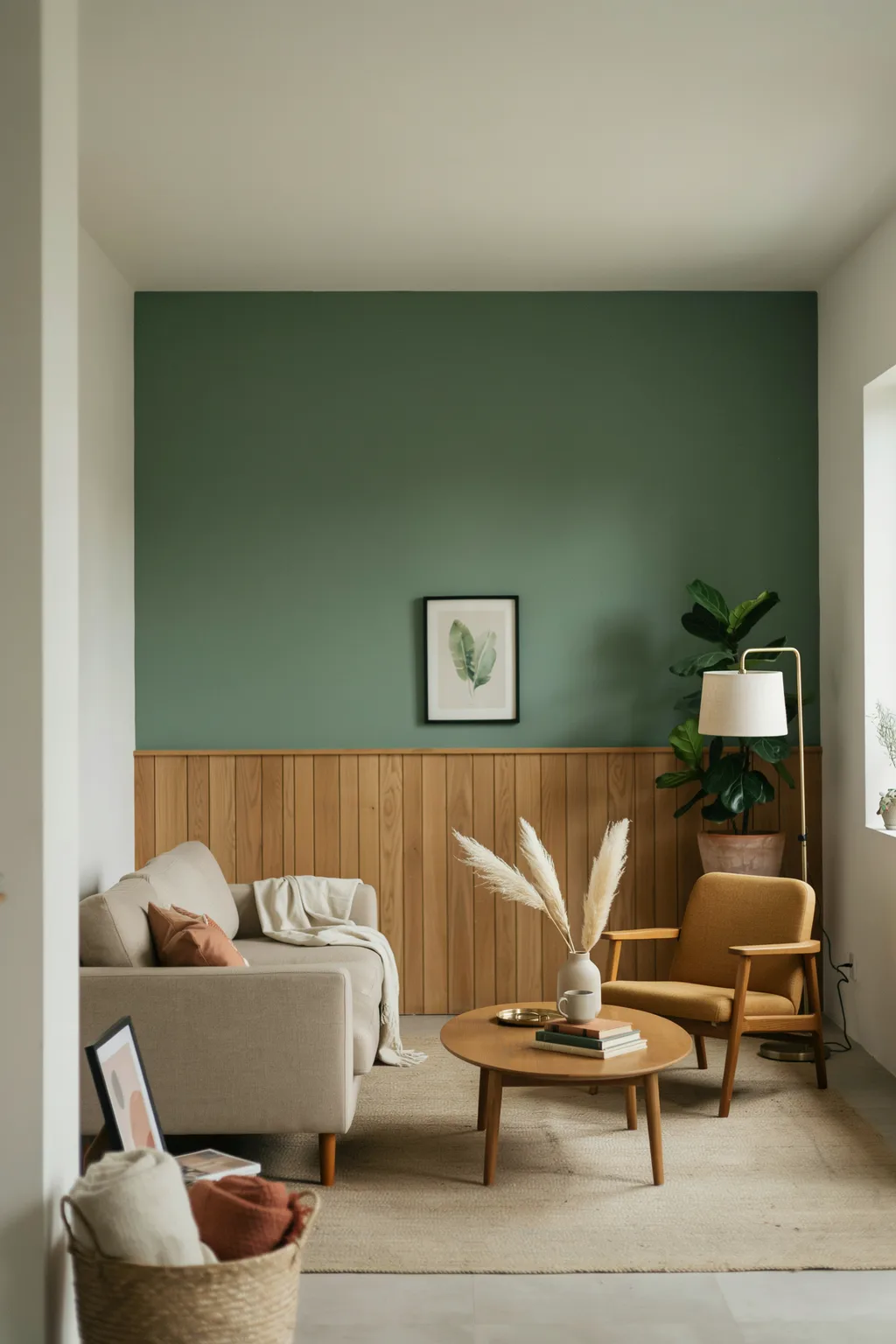
Add wood paneling to a green wall and the room stops looking like a paint swatch.
Half height paneling, waist high with green above it, works in almost any living room and gives the eye a place to rest. Choose a wood tone that already exists somewhere else in the room, the floor, a shelf, a coffee table, so the pairing feels planned instead of random. Vertical slat paneling reads more modern, horizontal shiplap reads more traditional. Either way, leave the paneling unpainted or lightly sealed so the grain still shows.
Match the paneling wood tone to something already in the room, and the pairing looks planned instead of accidental.
11. Emerald Green for a Glamorous Statement Room
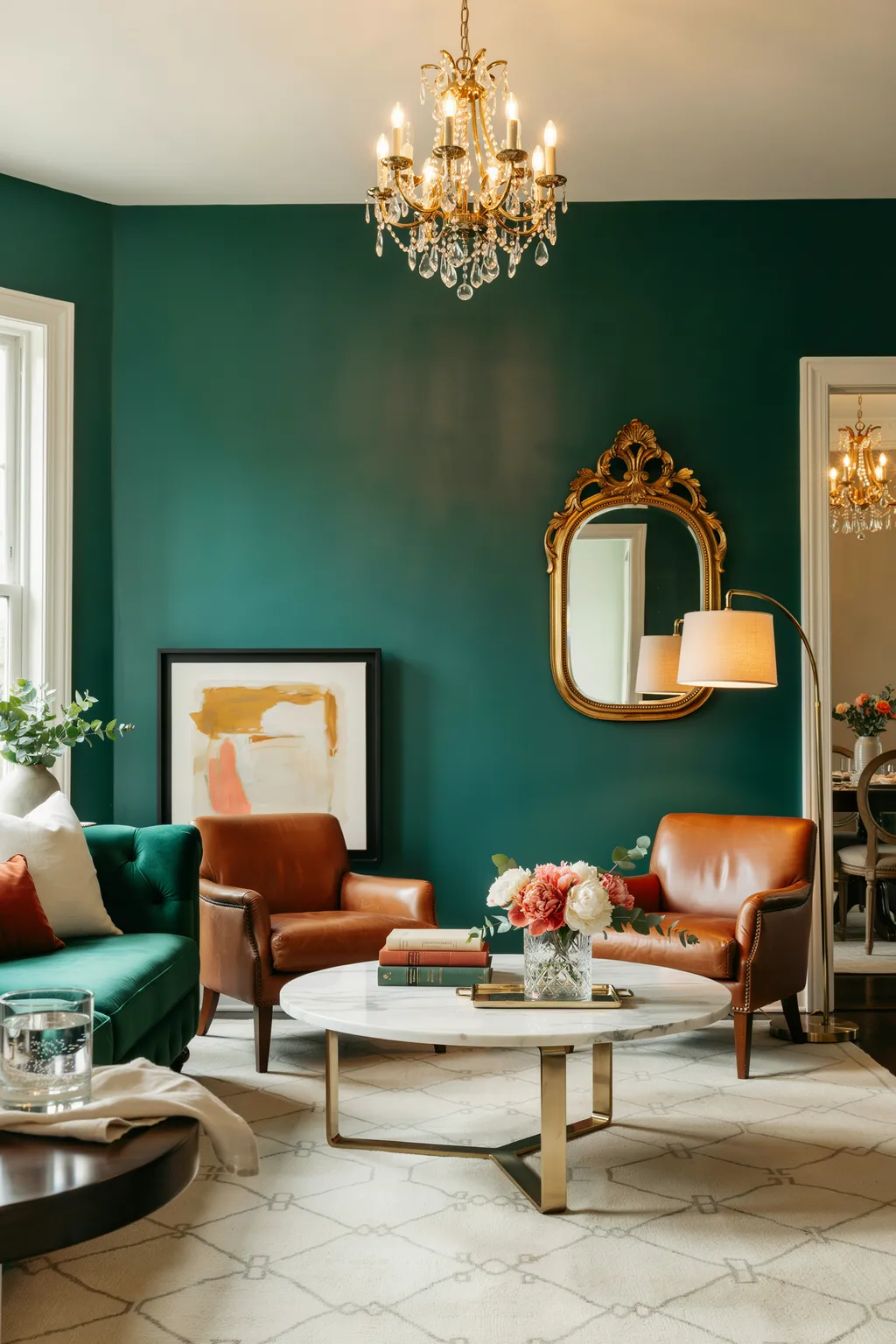
Emerald catches every bit of light in the room and throws it back twice as rich.
Velvet upholstery amplifies that shine instead of competing with it, and a single emerald wall next to gold or brass hardware reads high end without needing a full renovation. Keep the ceiling white or a pale neutral so the room does not tip into feeling closed in. Save emerald for a room that gets some evening lamp light, since it can look flat under harsh daylight alone.
💡 Quick Tip
Test emerald under your evening lamps before committing. The shade shifts noticeably between daylight and warm bulb light.
12. Green Walls With Crisp White Trim
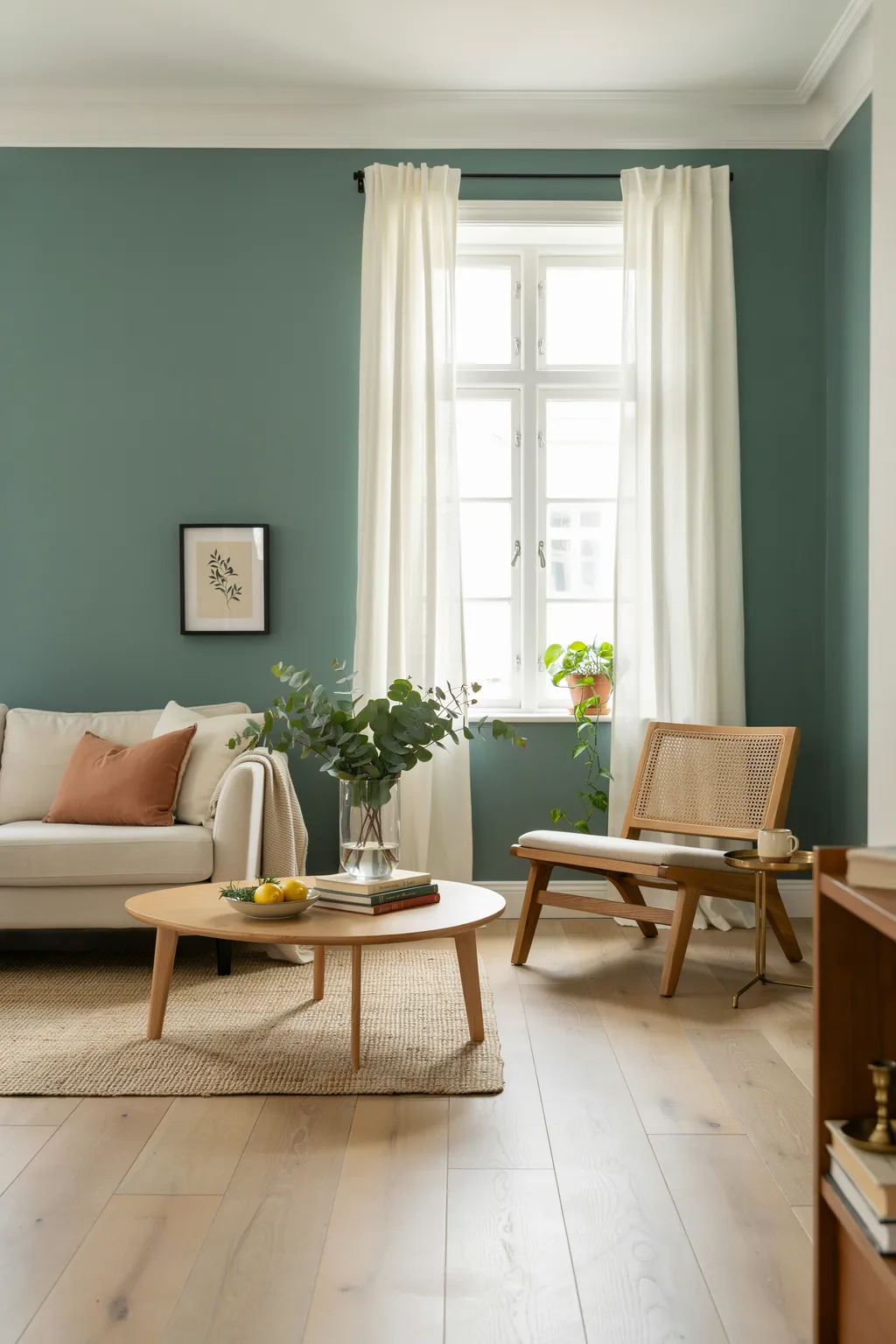
People skip repainting the trim when they add a green wall, and the whole room ends up looking unfinished.
Crisp white trim, baseboards, and window casings give the green wall a clean edge to stop at, instead of blending into a slightly yellowed trim color left over from years ago. Bright white works with cooler greens like mint or sage, while a warmer white, close to ivory, suits olive or forest shades better. This one change costs a can of trim paint and a weekend.
Green wall, yellowed old trim. The whole room looks dated and unfinished.
Same green wall, fresh crisp white trim. The room reads clean and intentional.
13. Layering Green Walls With Real Houseplants
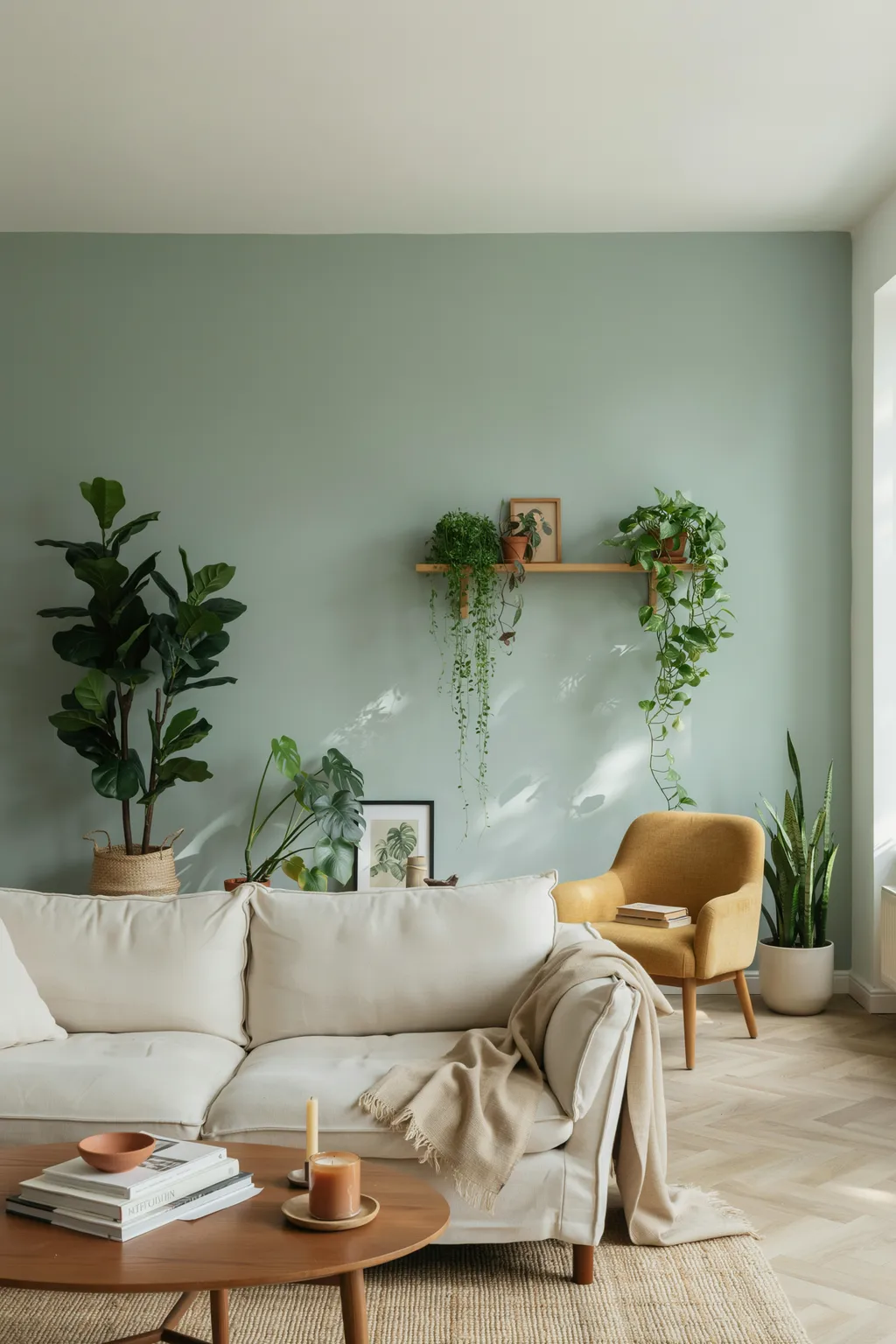
I never trust a green wall with fake plants in front of it, the fake leaf tone always clashes.
Real plants shift in shade and texture as they grow, which keeps the wall from feeling flat and staged. A tall floor plant like a fiddle leaf fig or a snake plant works best near a wall painted a lighter green, so the two greens read as layers instead of a single blob of color. Group two or three pot sizes together rather than lining up one plant per corner.
What to grab first
14. Earthy Green With Neutral, Textured Decor
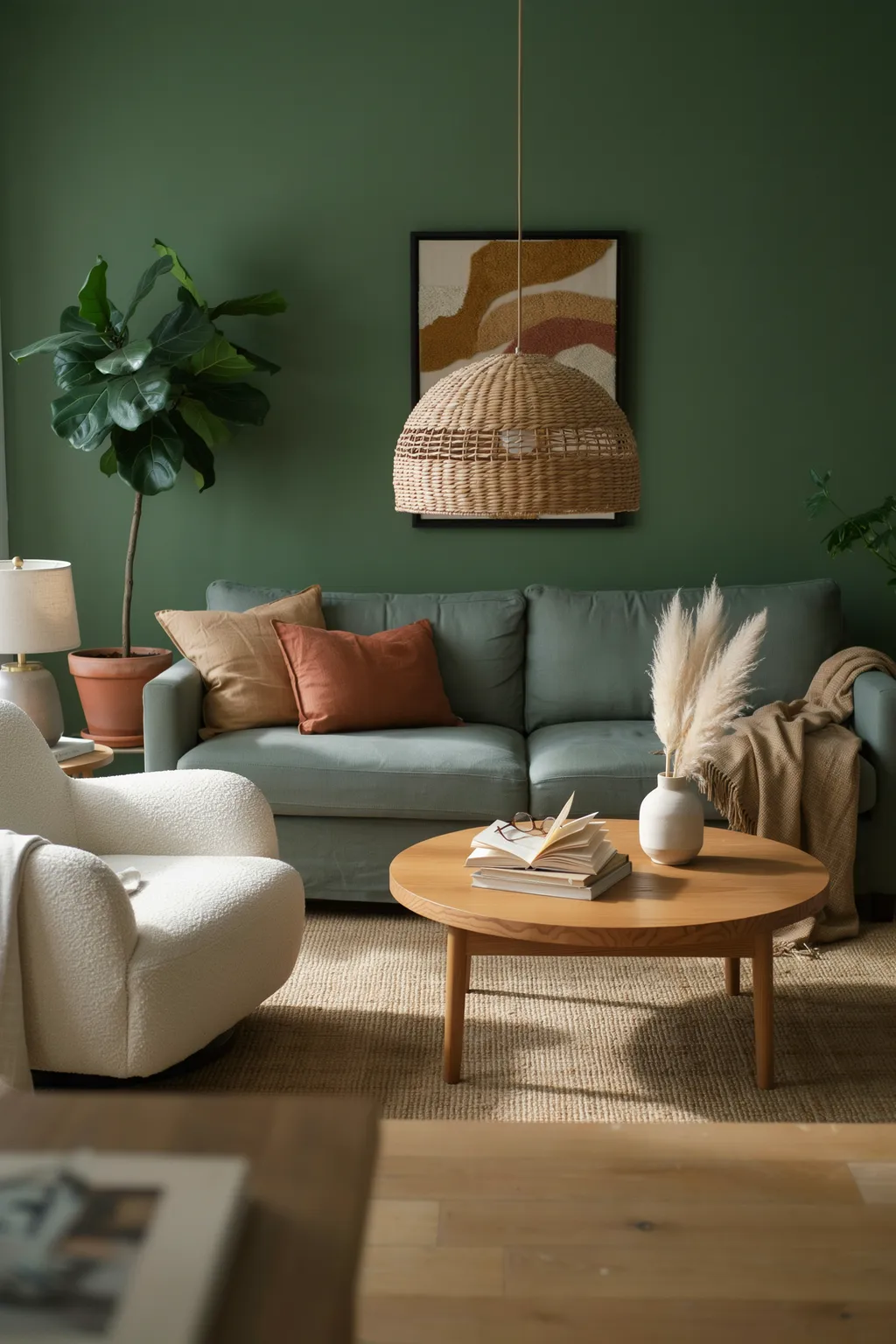
Earthy green only works if something in the room has real texture.
Pair it with a boucle chair, a jute rug, or a linen throw, anything with visible weave, so the wall does not read as a flat block of color next to smooth furniture. Beige and warm brown accessories keep the palette grounded. This combination suits a relaxed, lived in living room more than a formal one, and it hides everyday clutter better than a brighter shade would.
15. Green Walls With Black or Brass Metal Accents
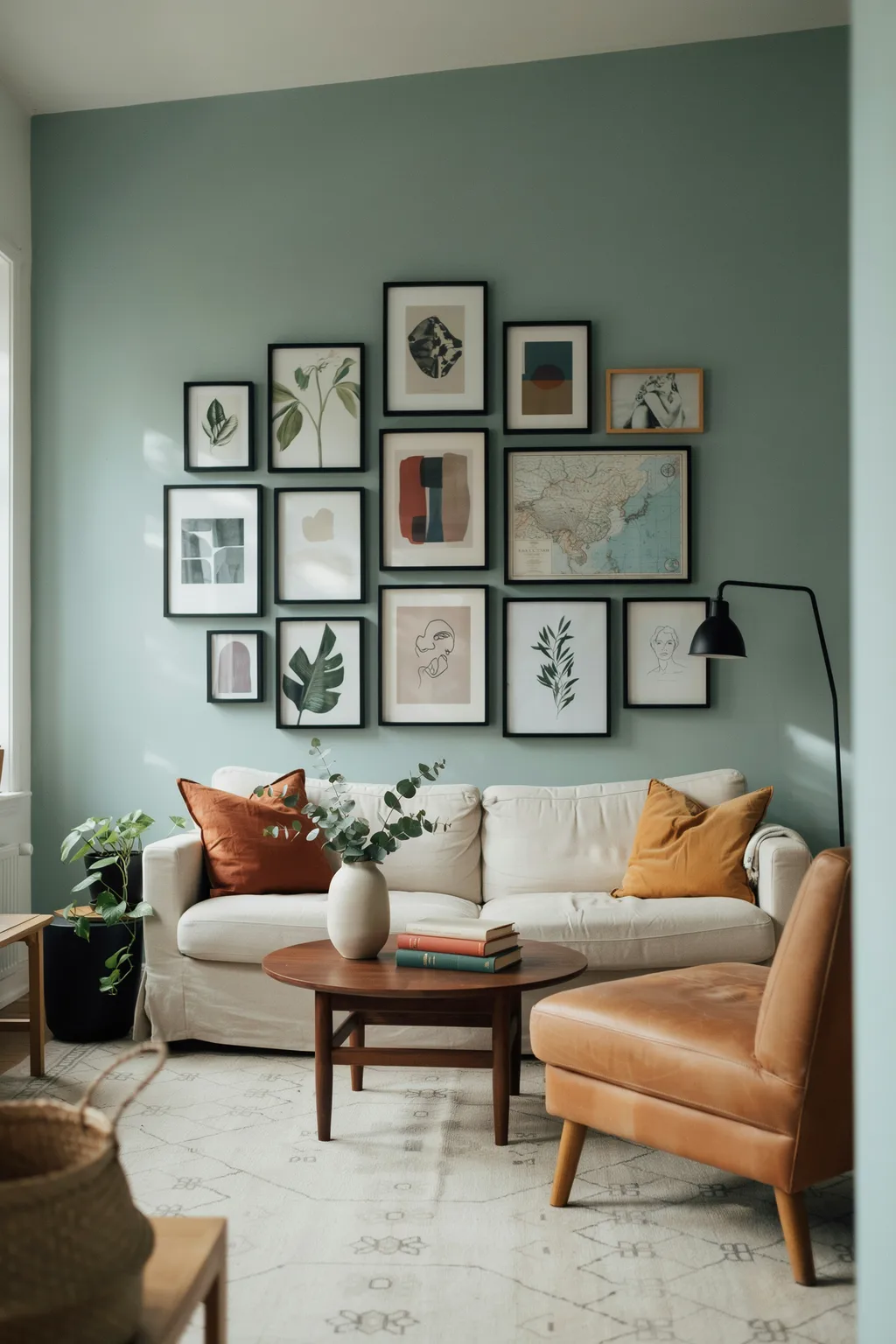
Black metal accents make a green wall feel current, brass makes the same wall feel warmer and more traditional.
Black window frames, a black floor lamp, or black picture frames sharpen the edges of a softer green like sage or mint. Brass or gold hardware does the opposite, it softens a deeper green like forest or emerald and reads more classic. Mixing both metals in the same room usually looks unplanned, so if there is one habit worth carrying across all these green wall living room ideas, it is picking one lane and staying in it for this wall.
Choose one metal tone for this wall, black or brass.
Match it to the green’s depth, black for lighter greens, brass for deeper ones.
Repeat that same metal in at least two other spots in the room.
Conclusion
A green wall living room ideas list only helps if you end up with a wall that fits your actual room, not just a shade that looked good in a photo. Start with your light, then pick a green that flatters it, and let the metal, wood, and fabric choices around it do the rest of the work.
Small changes, a trim color, a plant, a shift from matte to satin, change how a green wall reads more than people expect. Save this list for whenever you are standing in the paint aisle deciding between three shades that all look the same on the little card.