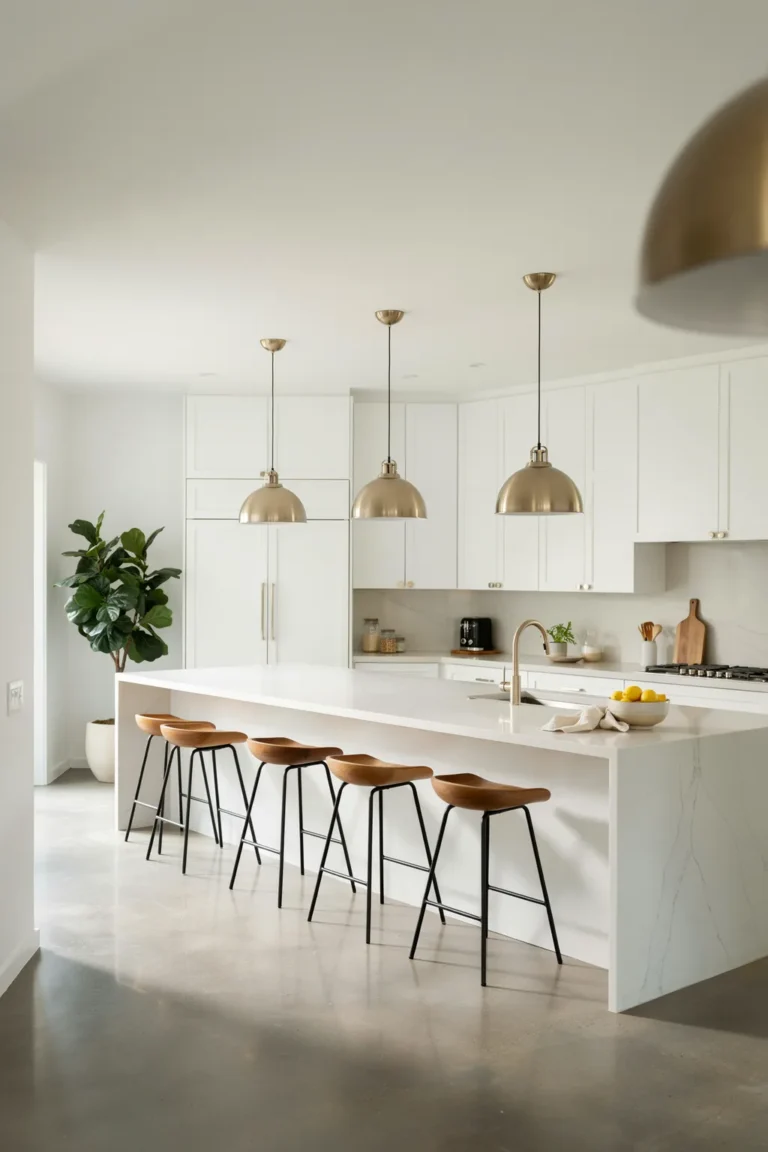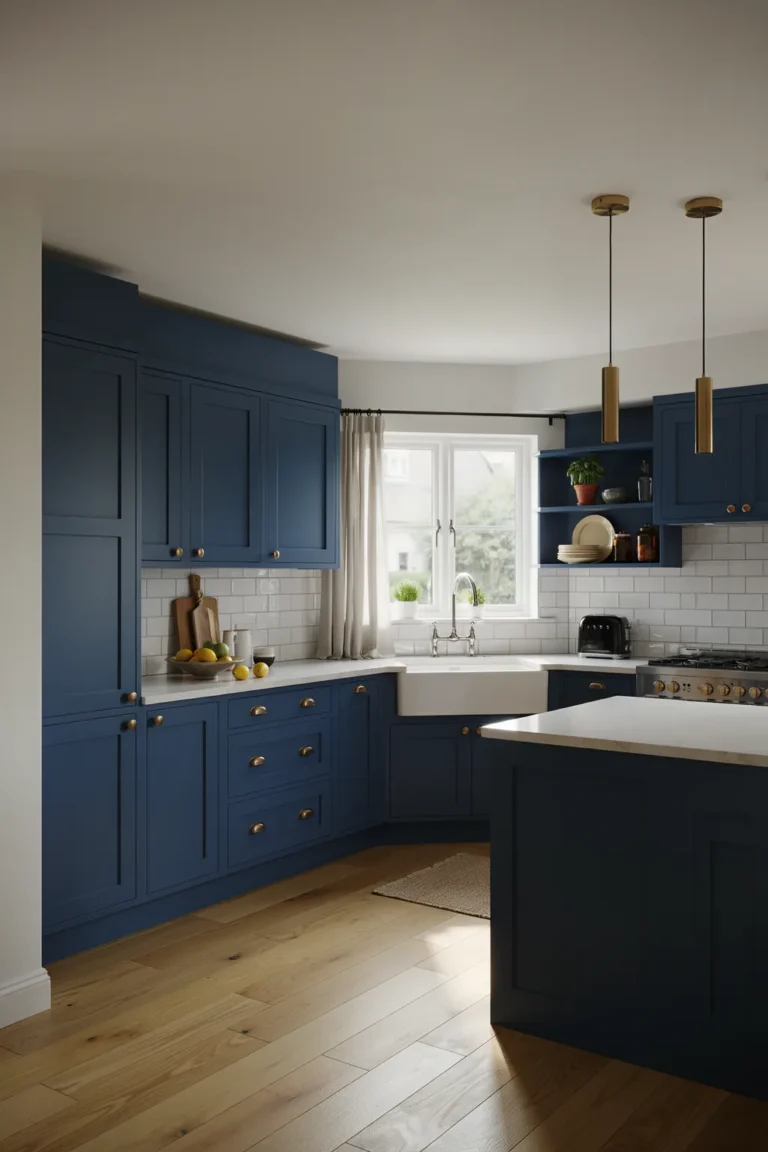
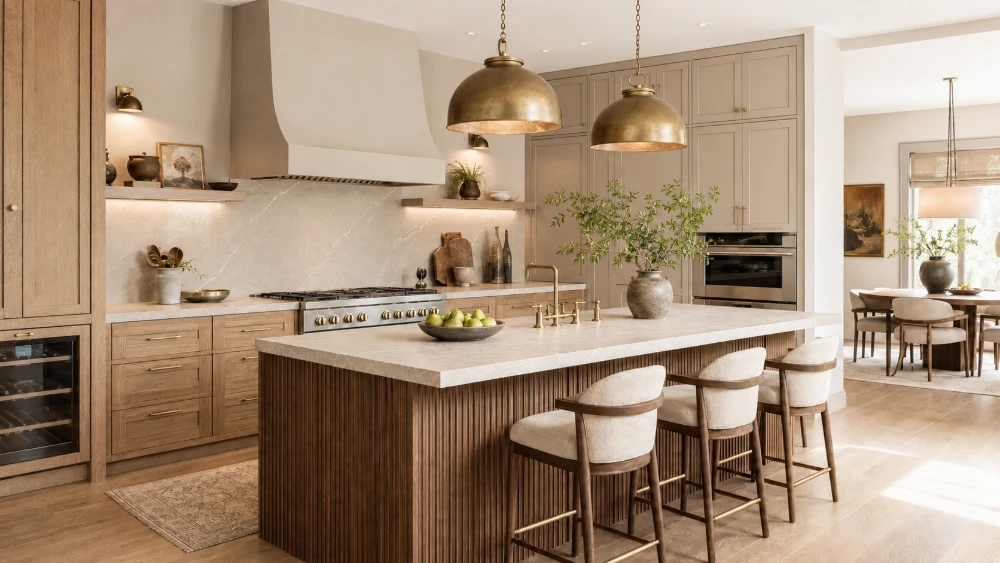
13 Kitchen Trends for 2026 That Age Well
The kitchen I grew up in had a burn ring on the laminate counter beside the stove, where somebody once set a hot pan down without thinking. Nobody ever fixed it. Thirty years on, that counter was still there, still working, still wearing the ring.
I think about that mark whenever kitchen trends come up, because the kitchen is the one room where the choices are expensive, semi-permanent, and made in a hurry. You pick a countertop material in a showroom in about forty minutes, under bad lighting, with a contractor waiting on an answer.
So this list is built around a different question than most. Not what is popular right now, but what still looks right in ten years and survives actual cooking in between.
Each of the thirteen gets the same treatment: what the trend really is, how it costs against the alternatives, how it holds up to heat and acid and fingerprints, and whether it is going to date. Three of them cost almost nothing. One you can finish this weekend with a screwdriver.
1. Matte and Textured Finishes Instead of High Gloss
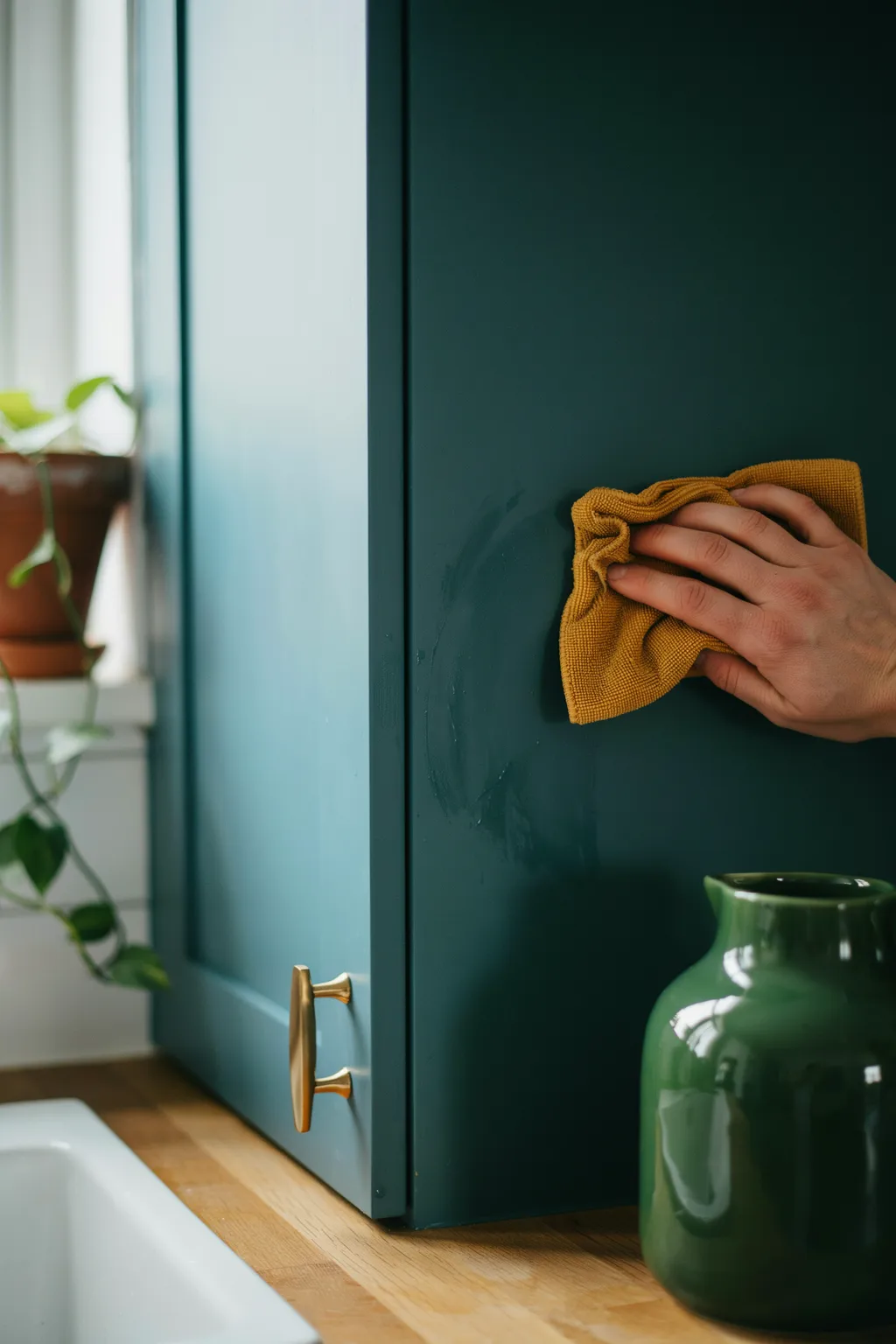
Gloss is on its way out, and the reason is as practical as it is stylistic. This is where the 2026 kitchen trends really begin, because the finish decides how the whole room reads under light.
High-gloss cabinet doors and polished stone behave like mirrors. They throw every downlight straight back at you and they report fingerprints, water spots, and dust with total honesty. Matte and honed surfaces scatter light instead, which is why a matte kitchen both photographs calmer and feels calmer to stand in.
There is a trade the showrooms rarely mention. Matte and textured surfaces hold grease. A matte door beside the hob, or honed marble next to the stove, will show a greasy handprint that gloss would have shrugged off, and it needs a degreaser rather than a wipe.
Treat it as a placement decision rather than a whole-kitchen one.
Upper cabinets and any door away from the cooking zone.
Island sides and end panels, where hands rarely land greasy.
Hoods, shelving, and plaster-look walls, which never get touched.
The run either side of the hob, which takes the most oil spatter.
Drawer fronts under the prep counter, the ones opened with wet hands.
Anywhere at toddler height. Matte holds sticky prints; gloss releases them.
2. Warm Earthy Color, and the One Place to Keep White
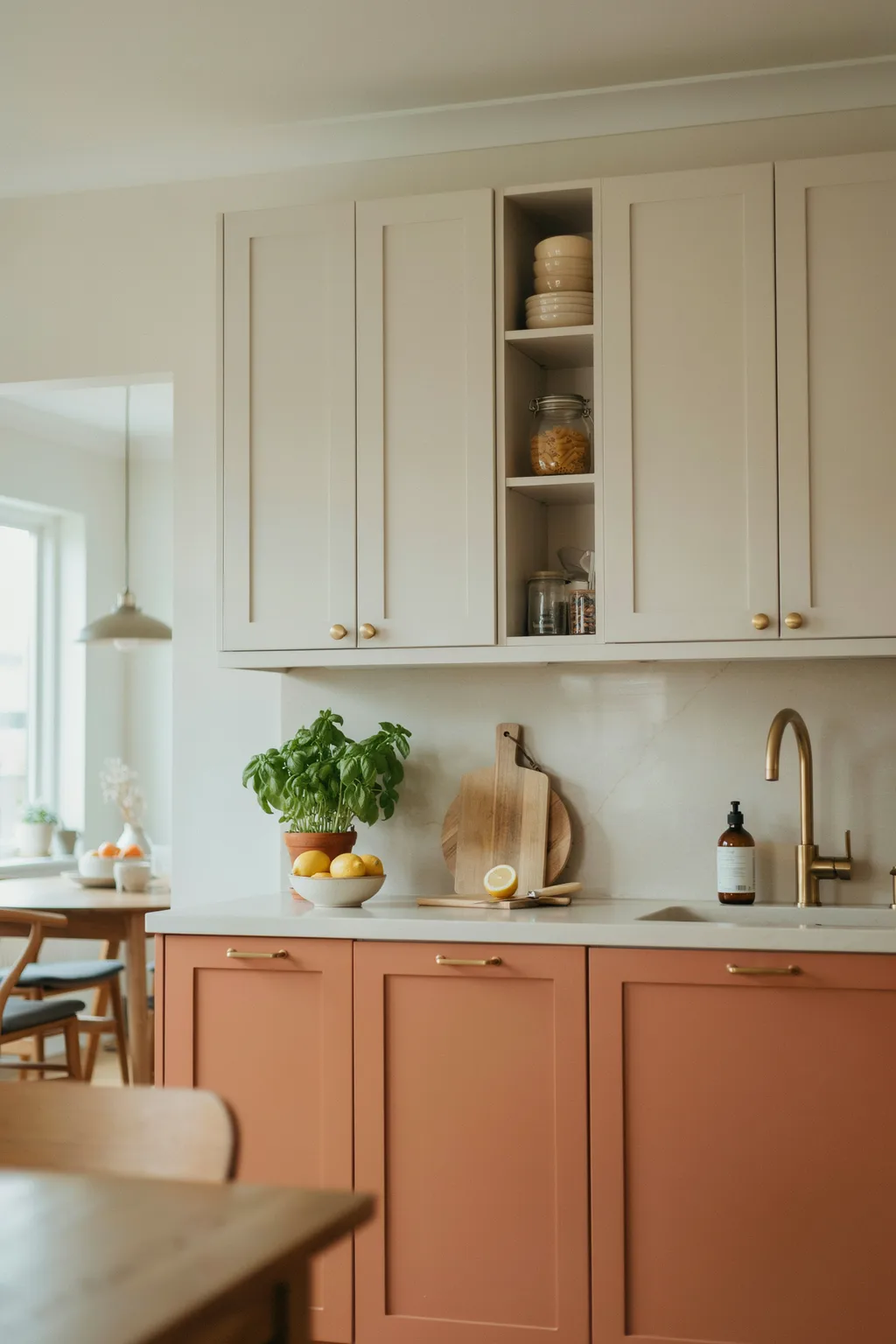
All-white kitchens are not dead. They stopped being the automatic answer, which is a different thing.
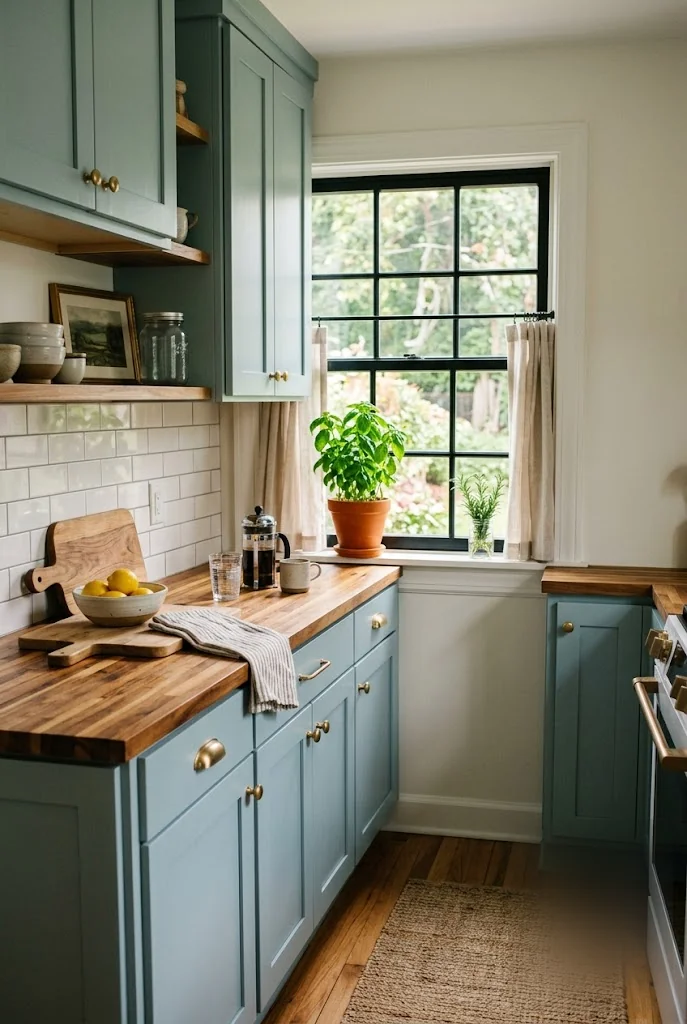
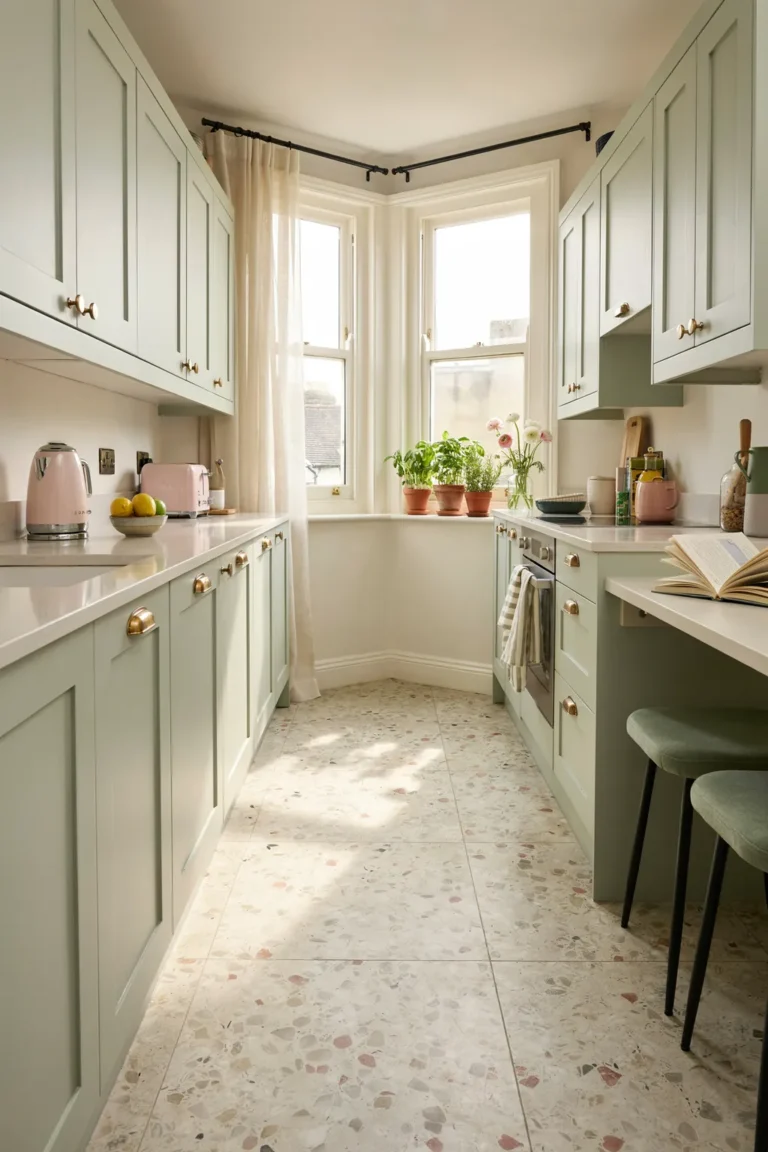
The colors moving in sit in the muted earth range: sage, olive, clay, mushroom, oat. They read warmer than the grey decade that preceded them, they hide daily life better than white, and they sit comfortably beside wood, which is the other thing happening in kitchens right now. Color is the most visible of the current kitchen trends and by some distance the easiest to overdo.
Where it goes wrong is committing everything at once. Cabinets, walls, and island all in the same saturated shade turns the room into a box.
Put the color on the lower cabinets or the island, keep the uppers and the walls light, and the room stays open while still reading as colored.
💡 Quick Tip
Keep the work surface itself light, whatever you do with the cabinets. A dark counter looks superb in photographs and is genuinely harder to work on: crumbs vanish into it, every water droplet and dust speck shows, and chopping under cabinet lighting gets noticeably harder. Colour the doors, not the surface you actually use.
3. Natural Wood Cabinets, and How to Dodge the Orange-Oak Trap
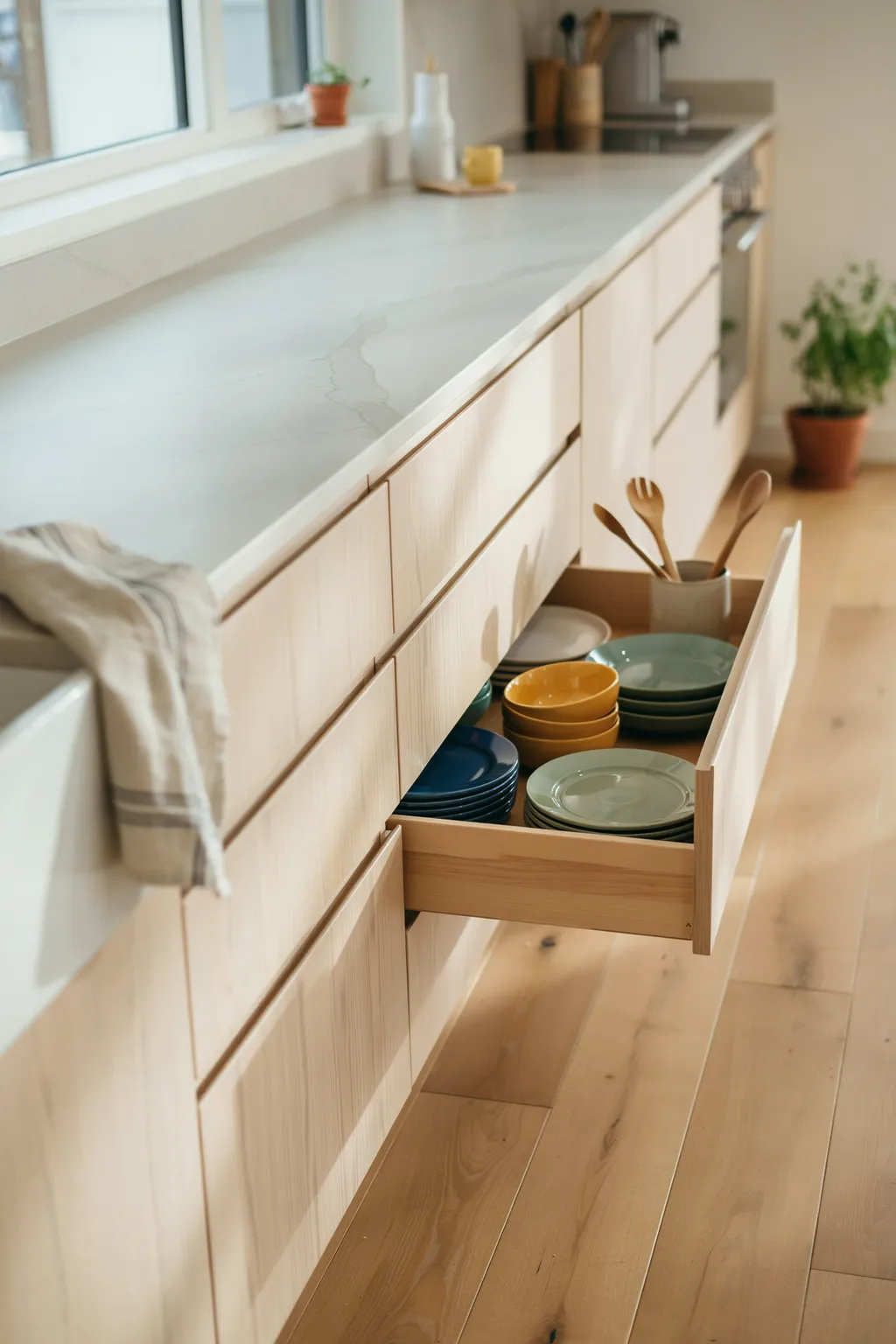
Wood is back, and it is worth remembering that the wrong wood is exactly what drove everybody to paint their cabinets white twenty years ago. It is also the most durable of the current kitchen trends, in both senses of the word.
The culprit was orange. Golden oak from the nineties, honey maple, and anything sealed with a warm amber stain drifts further orange as the finish ages and the light hits it. That is what dated. Wood itself never did.
White oak is doing the work now, usually rift or quarter sawn, with a clear or lightly whitewashed finish. Walnut covers the darker end of the range.
If you already own oak cabinets, a toner or a light re-stain can pull the orange out without replacing a single door. That is a fraction of the cost of new cabinetry and the single highest-return thing on this list.
Strong yellow-orange undertone that deepens as the lacquer ages. Fights every cool colour in the room and pins the kitchen to the decade it was installed.
Neutral to faintly grey-brown, with the grain still visible. Works beside warm and cool colours alike, and reads as material rather than as a style choice.
4. Quartz for the Counters You Actually Cook On
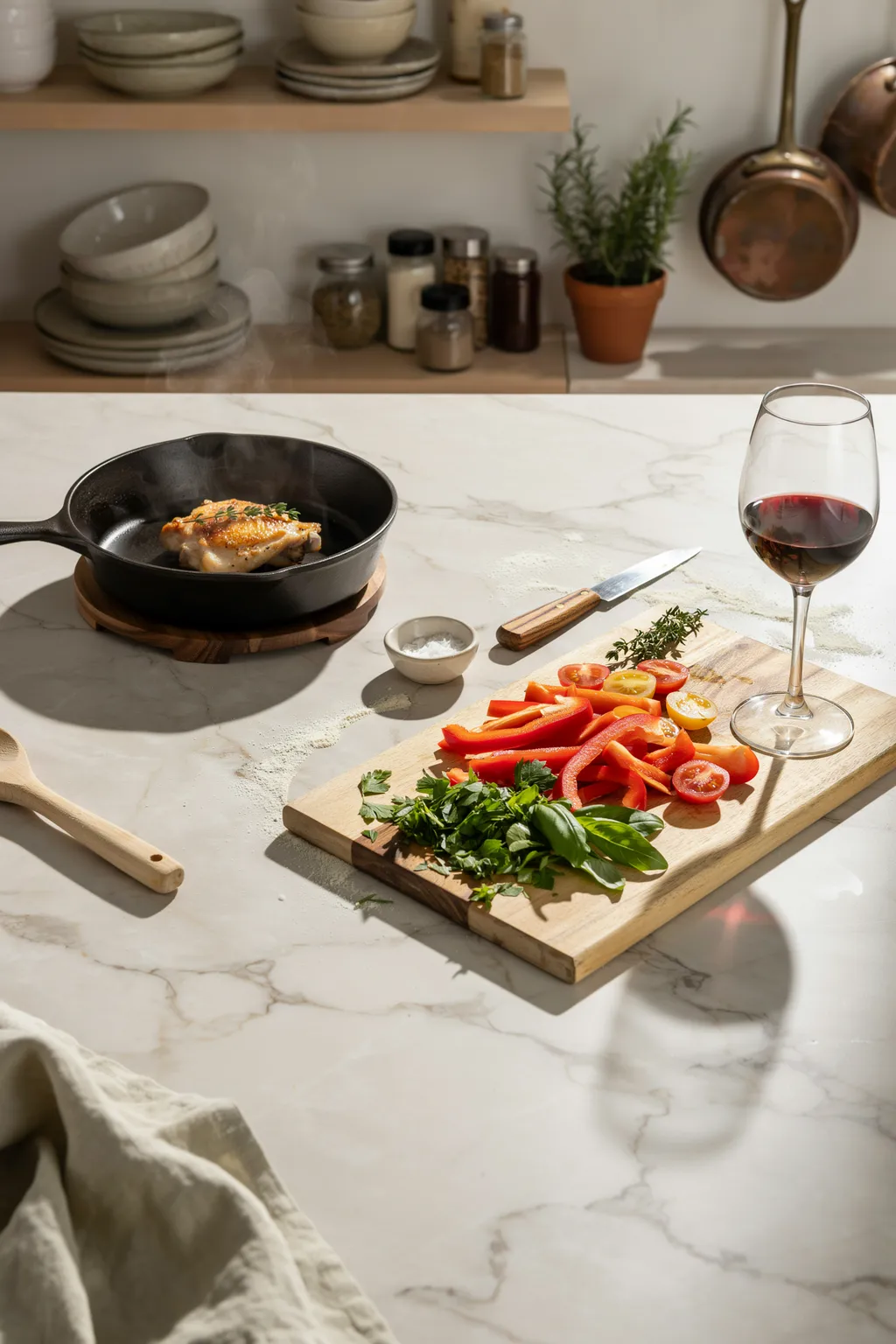
Quartz remains the sensible answer for the stretches of counter that take a beating.
It is engineered rather than quarried: ground stone bound together with resin. That resin is why it is non-porous, why it never needs sealing, and why it resists staining from wine and oil in a way that natural stone does not.
The same resin is its one genuine weakness. A pan lifted straight off the burner can scorch or discolor quartz, and that mark does not come out. Granite would have ignored the same pan entirely. So a trivet by the hob is not a precaution, it is a requirement.
Matte and honed quartz finishes are widely available now, which is what lets it sit comfortably alongside everything else on this list.
| Material | How it actually behaves |
|---|---|
| Quartz engineered | Non-porous, never needs sealing, shrugs off acid and stains. Can scorch under a hot pan, and the damage is permanent. |
| Marble natural | Etches from lemon, vinegar, wine, and most sprays. Handles heat well. Needs sealing. The most beautiful and the most demanding. |
| Granite natural | Hardest of the three on heat and scratches. Needs periodic sealing. Went out of fashion, which means it is often the best value right now. |
| Butcher block wood | Cheapest by a distance and repairable by sanding. Needs oiling, and hates standing water, so keep it away from the sink. |
5. Natural Stone, Placed Where It Can Behave
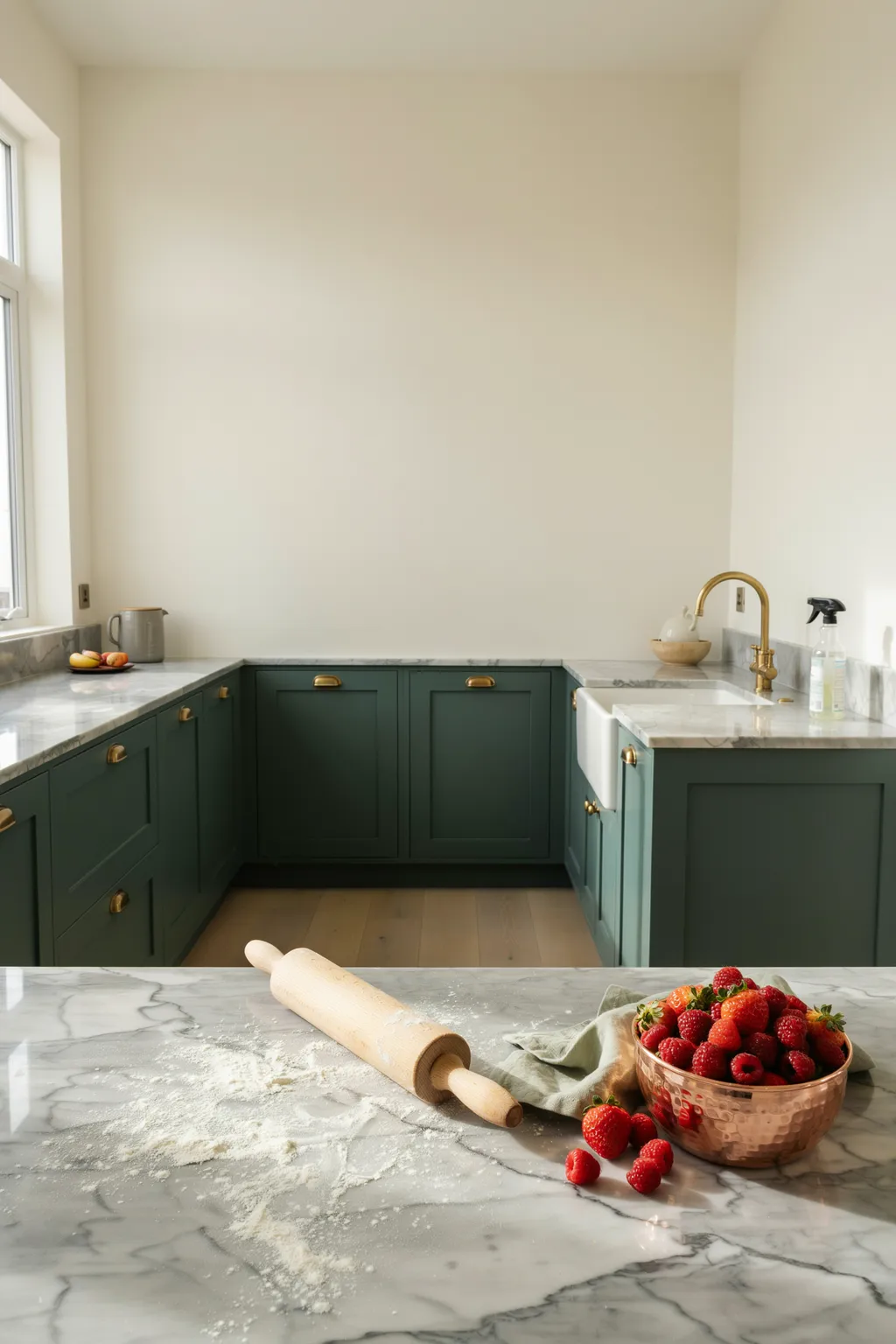
Marble is less a durability problem than a placement problem. Natural stone runs through most kitchen trends coverage without a single word about acid, which is the thing that actually ruins it.
Acid etches it. Lemon juice, vinegar, wine, tomato, and the majority of household cleaning sprays leave a dull patch where the polish has been eaten away. It is not a stain, it does not wipe off, and on a polished slab it catches the light from across the room.
None of that means avoid it. It means put it where acid never lands. A marble baking counter, or a marble island that does not host the coffee machine, will still look beautiful in twenty years. A marble run beside the sink, the citrus, and the spray bottle will not.
Honed marble hides etching far better than polished, because the surface starts out low-sheen.
Put natural stone where food is made, not where food is cleaned up. The sink run and the coffee corner are where acid and cleaning spray live, and they are the two places marble will not survive looking new.
6. A Stone Slab Backsplash Instead of Tile
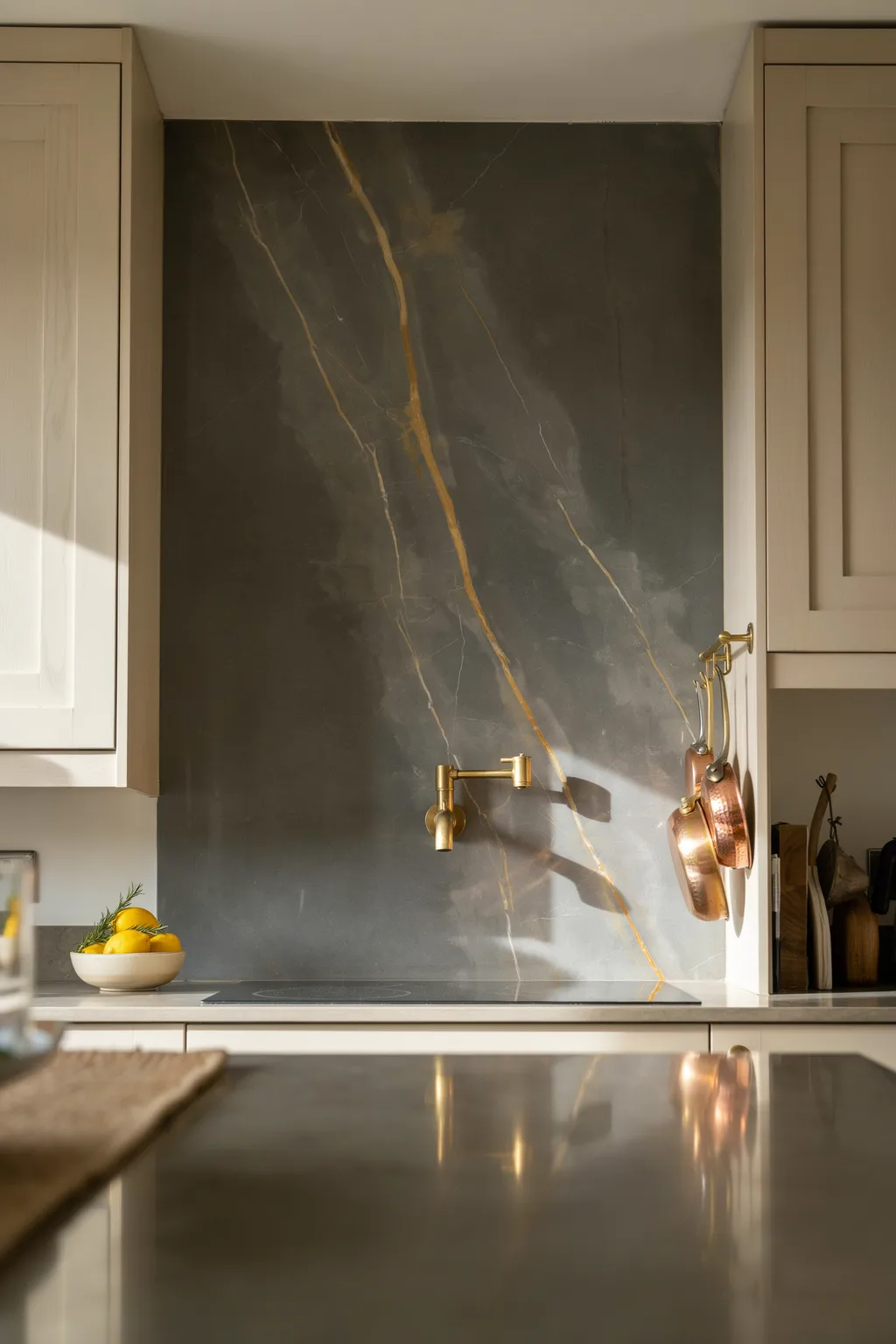
Grout lines behind a hob are the least pleasant surface in a kitchen to keep clean.
A slab backsplash removes them entirely. It is the same stone as the counter, cut and run up the wall, usually to the underside of the wall cabinets or all the way to the ceiling behind the hood. One surface, no joints, wiped in a single pass. Slab backsplashes are among the newer kitchen trends and carry the widest price swing of anything here.
It is not cheap. You are buying more of the most expensive material in the room, and a full-height run behind a hob eats a surprising amount of slab.
The offsetting advantage is that it often comes off the same slab as your counter, so the veining runs unbroken from worktop up the wall. That continuity is most of the effect.
Ask the fabricator these before you commit
7. Engineered Wood Flooring Over Tile Underfoot

Kitchen floors get chosen with the eyes and then lived on with the feet.
That gap is why engineered wood keeps winning here. It is warmer underfoot than tile, quieter to walk on, and considerably more forgiving when a glass goes over. The plywood core beneath the veneer handles the humidity swings of a kitchen far better than solid hardwood, which cups and gaps as the seasons turn. Flooring is where kitchen trends move slowest, which is a mercy given what it costs to change.
One limit worth knowing before you buy. The real wood layer on top is thin, often only a few millimetres, which is enough to sand and refinish once or perhaps twice. Solid hardwood takes many more. Thicker wear layers cost more and earn it if you intend to stay put.
8. The Sink Is Doing Far More Work Than It Used To
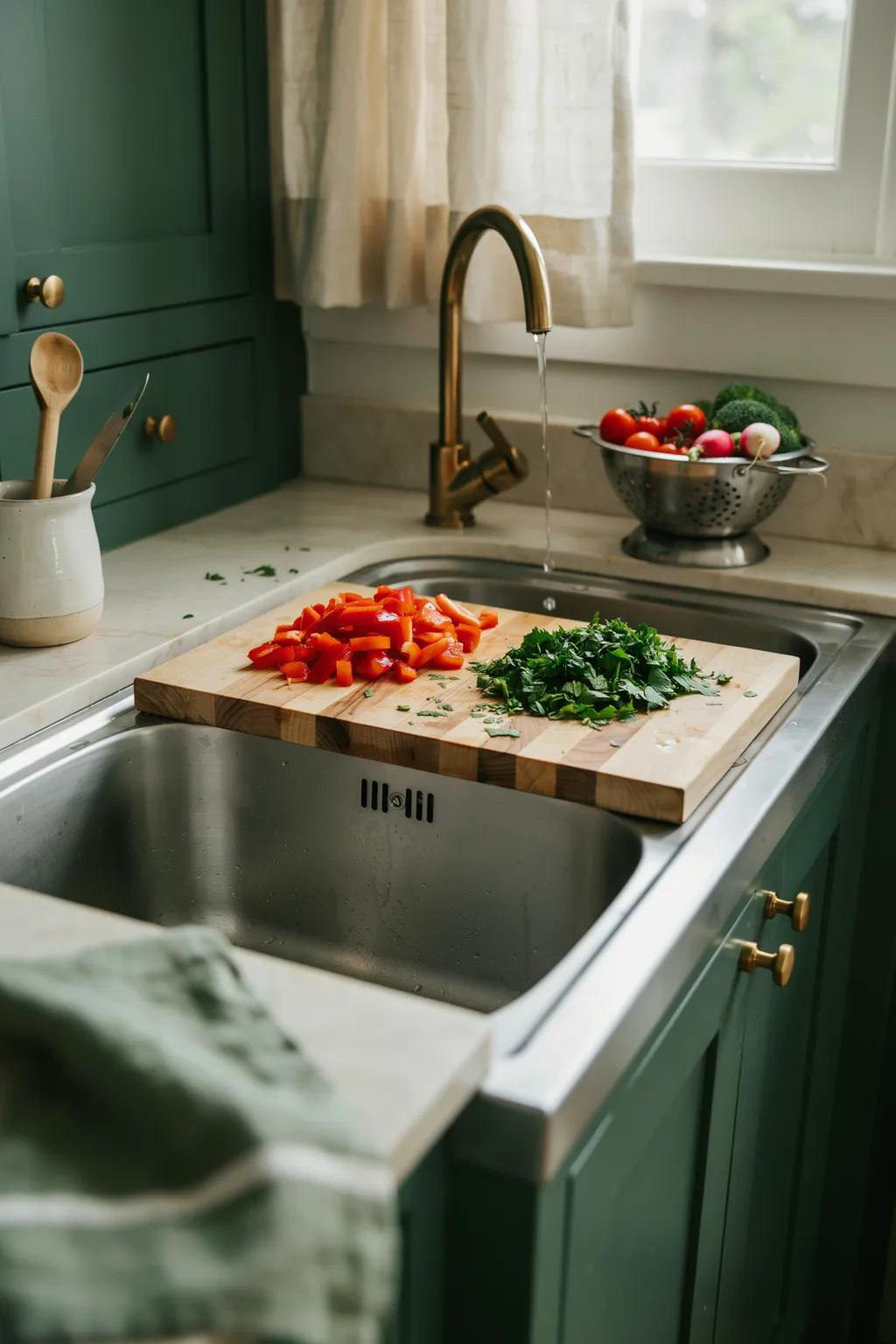
The sink is the most-used object in the room and routinely the least considered one.
Workstation sinks are the shift worth paying attention to. A ledge is machined into the basin walls so cutting boards, colanders, and drying racks slide across the top of the bowl. Prep happens over the sink rather than beside it, which in a small kitchen is the difference between cooking comfortably and constantly shuffling things around.
Go deeper than instinct suggests, around 9 to 10 inches, so a roasting tray sits below the rim and out of sight.
Single bowl has overtaken double for most households, because dishwashers absorbed the rinsing job and a large single bowl fits the sheet pans a divided one never could.
- ▸An integrated ledge. The one feature that genuinely changes how you cook. Everything else on this list is comfort.
- ▸Tight-radius corners. Squared-off internal corners give you more usable basin. Slightly harder to wipe, worth it.
- ▸Sound-deadening pads underneath. The difference between a stainless sink that clangs and one that thuds.
- ▸An offset drain. Moves the plumbing to the back of the cabinet and gives you usable storage underneath.
- ▸16-gauge stainless if you go stainless. Thinner gauges dent and drum. Fireclay and composite both scratch less but chip harder.
9. One Sculptural Light Instead of Three Small Ones
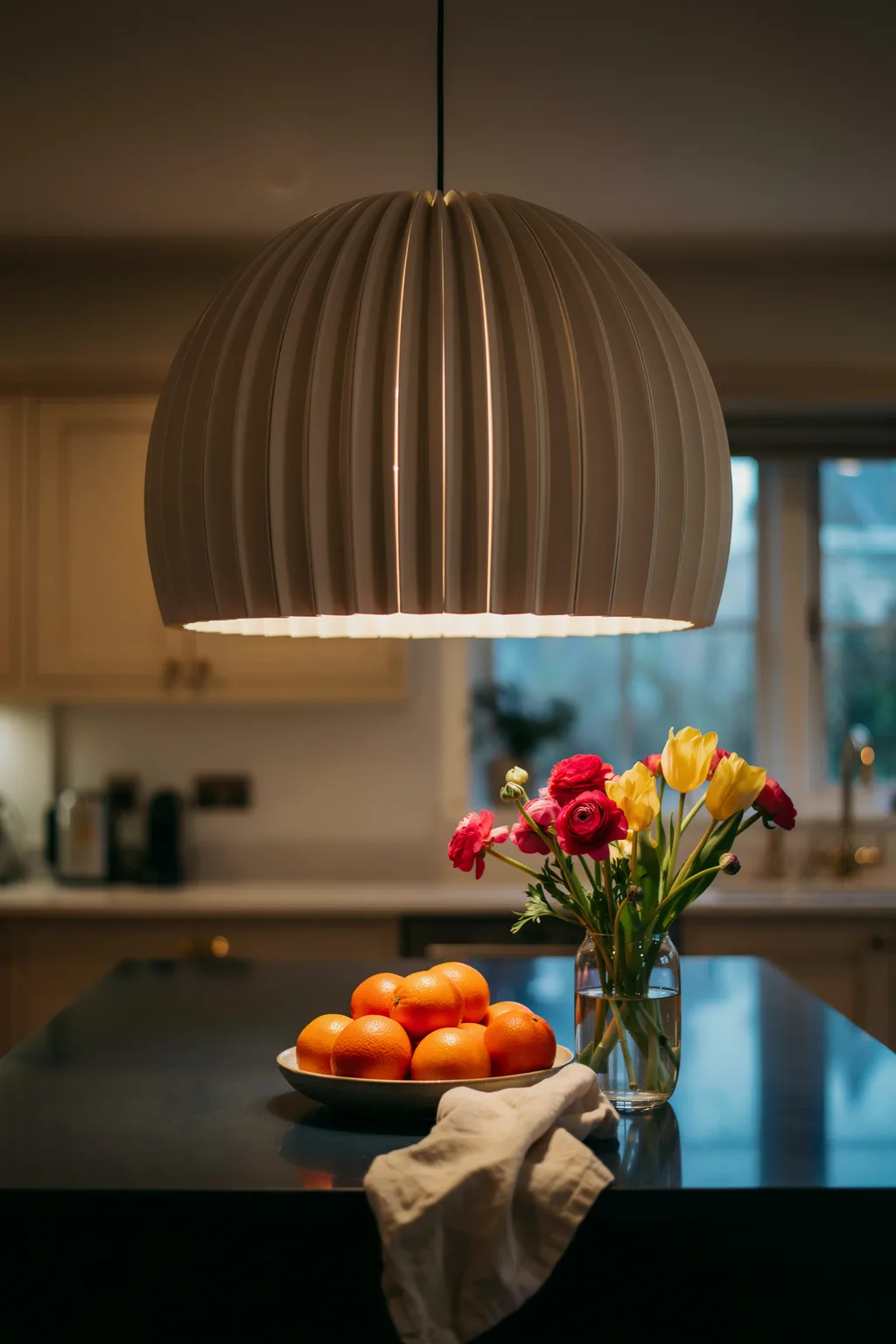
Three matching mini pendants in a row above an island was the default for a decade, and it now dates a kitchen about as precisely as a granite bullnose edge.
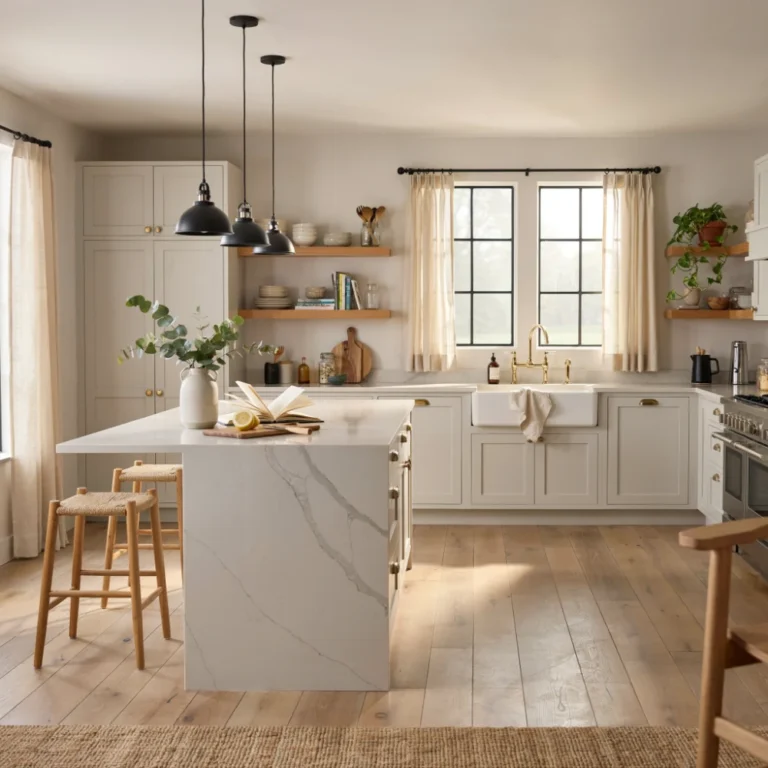
One larger sculptural fixture has taken over. A single wide linear light, a substantial plaster or paper shade, or two oversized pendants where there used to be three small ones. Lighting is where kitchen trends surface first, because it is the cheapest thing in the room to change your mind about.
The reasoning is compositional rather than fashionable. Three small objects chop up the sightline across an island. One large object anchors it, and the kitchen stops looking busy above waist height.
Hang it high enough that people across the island can still see each other.
10. Islands Sized for How the Room Is Actually Used
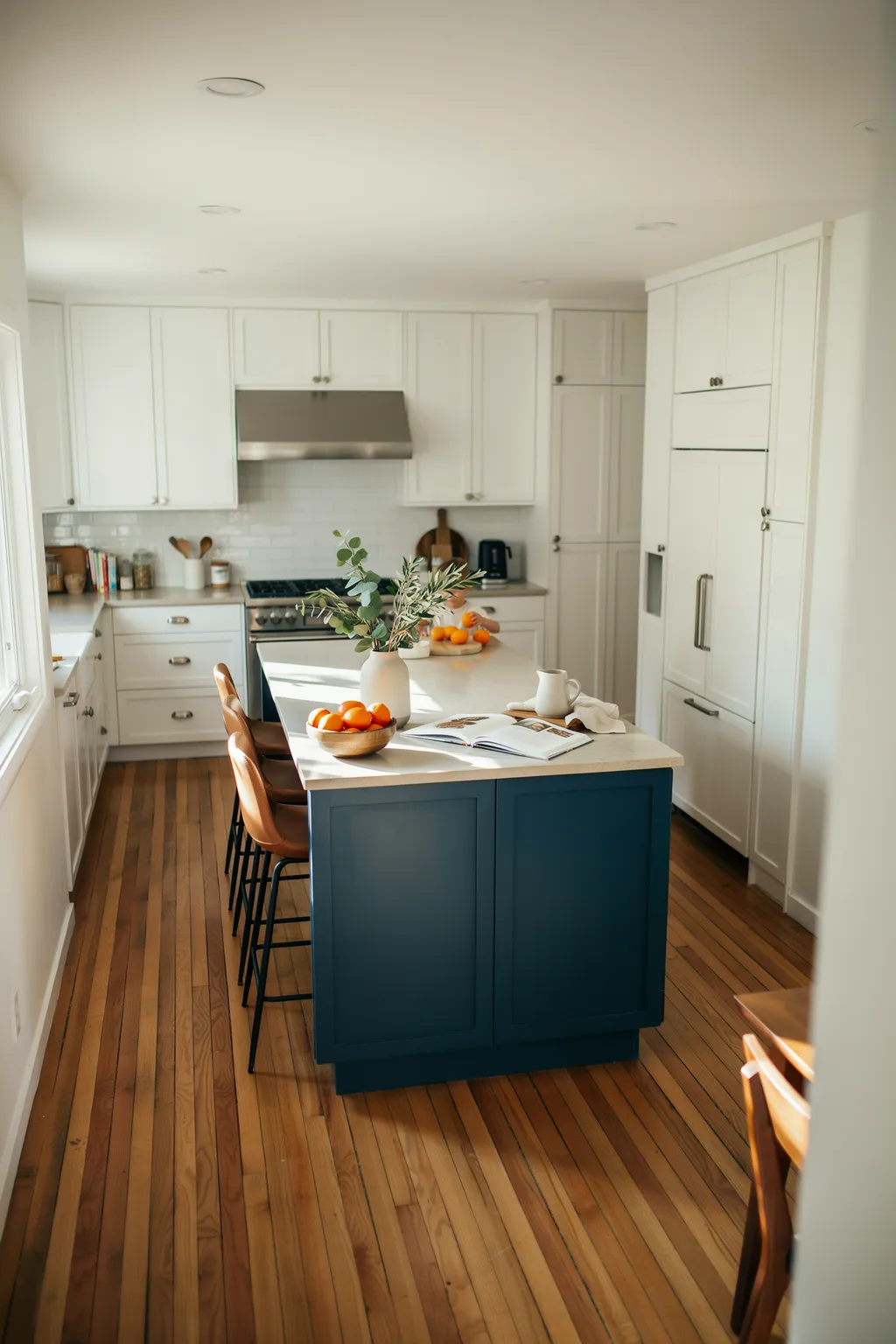
An island is a clearance problem before it is ever a design one.
The most common regret in a new kitchen is an island that is genuinely beautiful and slightly too large for the room around it. Once it is installed, the walkways are what you live with permanently, and no amount of styling fixes them. Islands anchor most kitchen trends lists while the expensive mistakes hide in the gaps around them.
The National Kitchen and Bath Association publishes the planning guidelines the industry works to, covering work aisles, seating clearances, and landing space in far more detail than a showroom will volunteer. Worth reading before you sign off a layout.
The short version: 42 inches of aisle for one cook, 48 if two people work in there at once, and 24 inches of counter width per seated person.
Measure the room, then subtract the aisles first. Take 42 to 48 in off each side that people walk down. Whatever rectangle survives is the largest island the room can hold.
Decide what the island does before sizing it. Seating needs 15 in of knee depth under the overhang. A sink or hob in it needs landing space either side. Storage only needs the box.
Tape it out on the floor and live with it a week. Painter’s tape, actual size. You will discover the dishwasher door problem before it costs anything to fix.
11. Curved Edges, and Which Curves Will Date
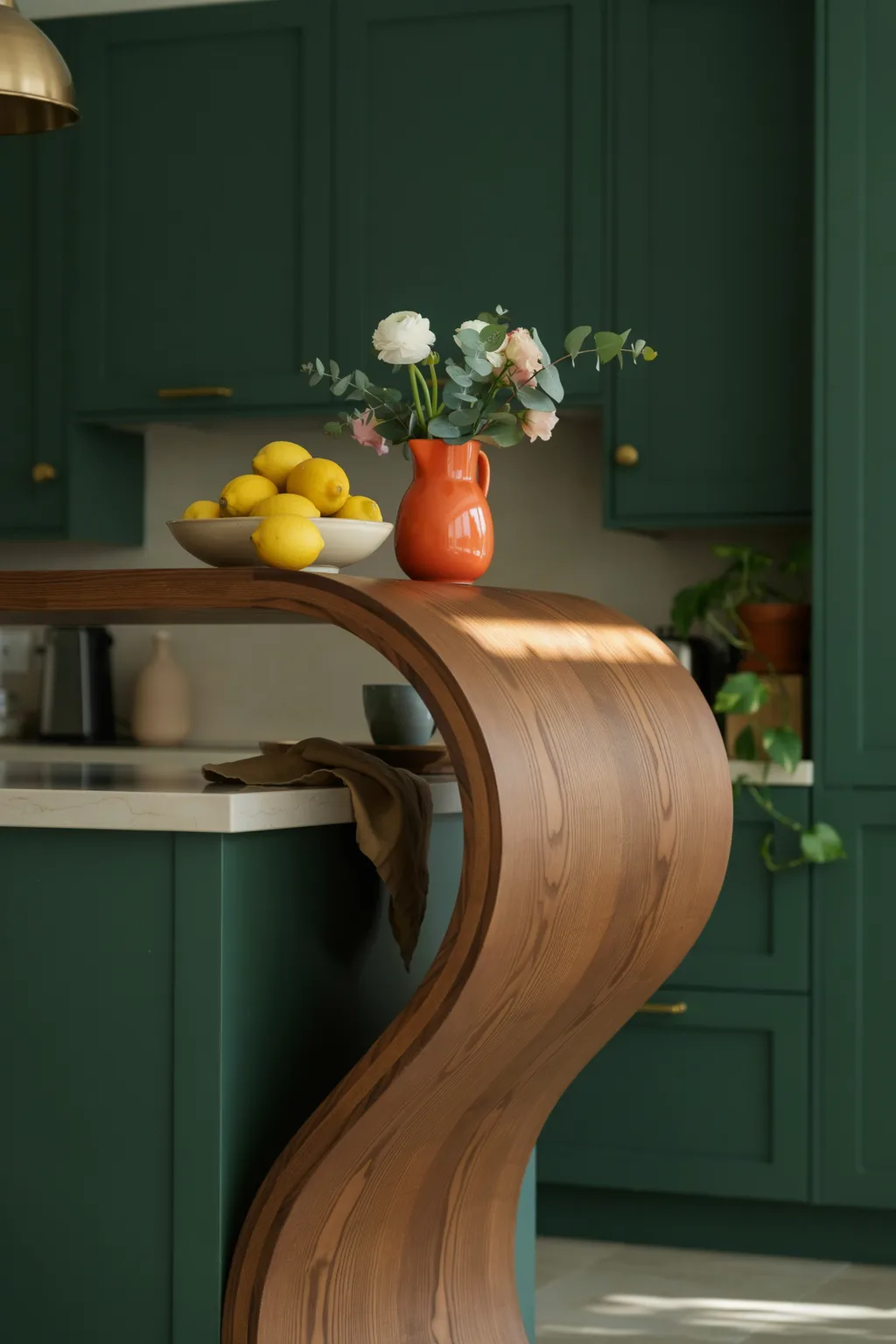
Curves are the most fashion-driven item on this list, which is precisely why they are worth sorting carefully.
Some of the current curve work is structural, and it will last. A rounded island end that stops a hip bruise in a tight walkway. A softened counter corner in a house with small children. An arched opening between kitchen and dining. Shapes that solve a problem tend to survive the decade that produced them.
The rest is decoration applied to a flat surface. Fluted and reeded cabinet fronts and arched cabinet doors are having a very strong moment, and of all the kitchen trends here they are the likeliest to read as clearly 2020s in the way raised-panel golden oak reads as 1990s.
Put curves where they earn something.
A rounded island end where the walkway is tight. It is a safety fix that happens to look good.
An arched doorway or pass-through. Architectural, so it reads as part of the house.
A softened counter corner or a curved banquette. Both solve a real circulation problem.
Fluting on every cabinet front in the room. Lovely on one island, exhausting everywhere.
Arched cabinet doors throughout. Expensive, unmistakably of this moment, and hard to undo.
Fluting is also a dust trap. Every groove needs a brush, not a cloth.
12. Hardware as the Cheapest Visible Upgrade
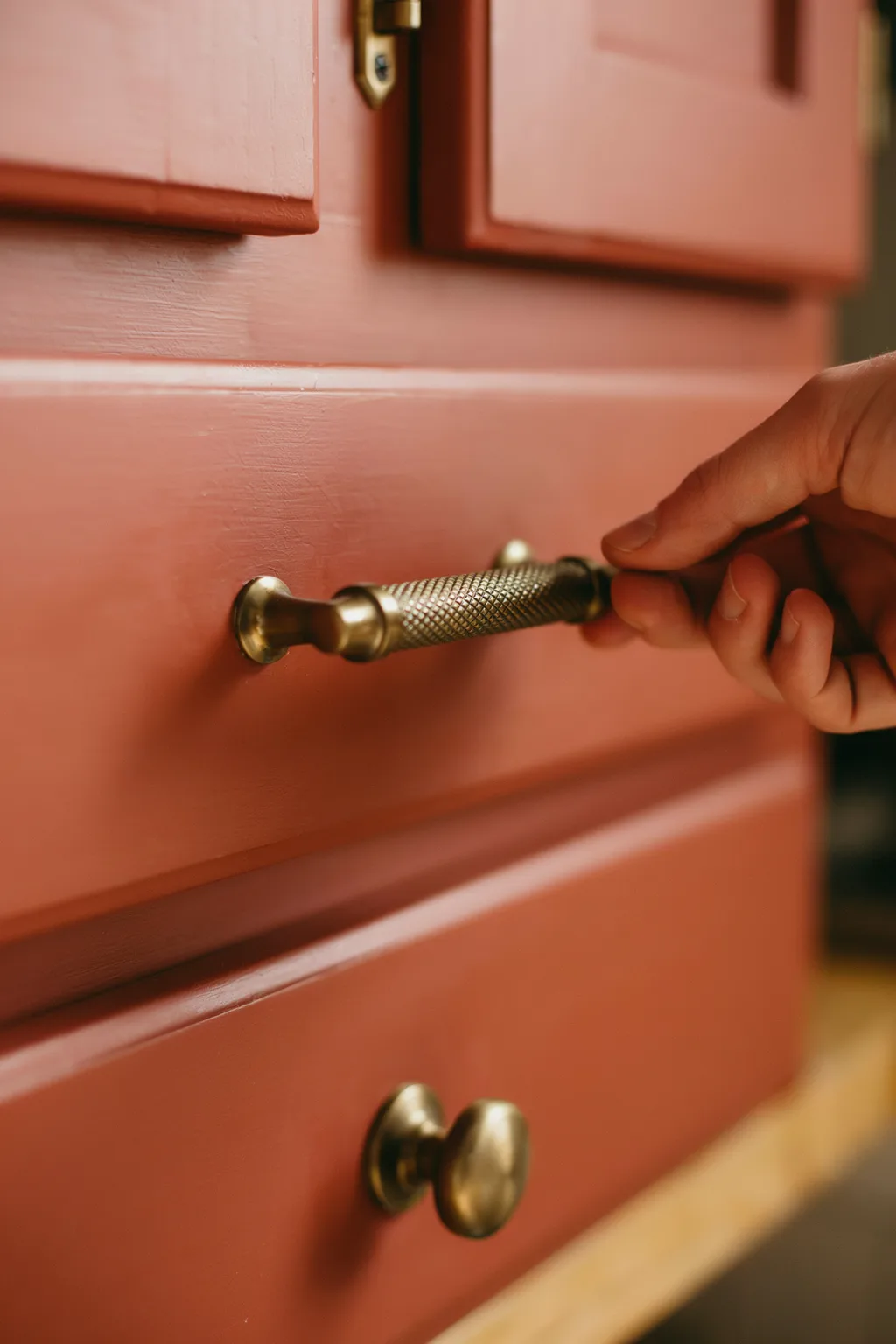
Hardware is the cheapest visible change available in a kitchen, by a wide margin.
Handles and knobs are jewelry for cabinetry, and this is the one entry on the whole list a renter can do, reverse, and take along. An afternoon, a screwdriver, and the original hardware kept in a labelled bag for move-out day. It is also the only one of these kitchen trends you can finish before dinner.
The direction is bigger, warmer, and more sculptural. Unlacquered brass that patinas with handling, aged bronze, knurled or fluted grips, and long pulls on drawers in place of small knobs.
Mixing is acceptable now, within reason. Knobs on doors and pulls on drawers remains a pairing that always reads correctly.
⚠️ Watch Out
Measure your existing hole spacing centre to centre before ordering anything. Pulls come in fixed centres, and 3 inches and 96 mm are close enough to look identical online while being genuinely different holes. Get it wrong and you are filling and re-drilling every drawer front in the kitchen. If you rent, this is also the difference between a reversible change and damage.
13. Appliances That Disappear Into the Cabinetry
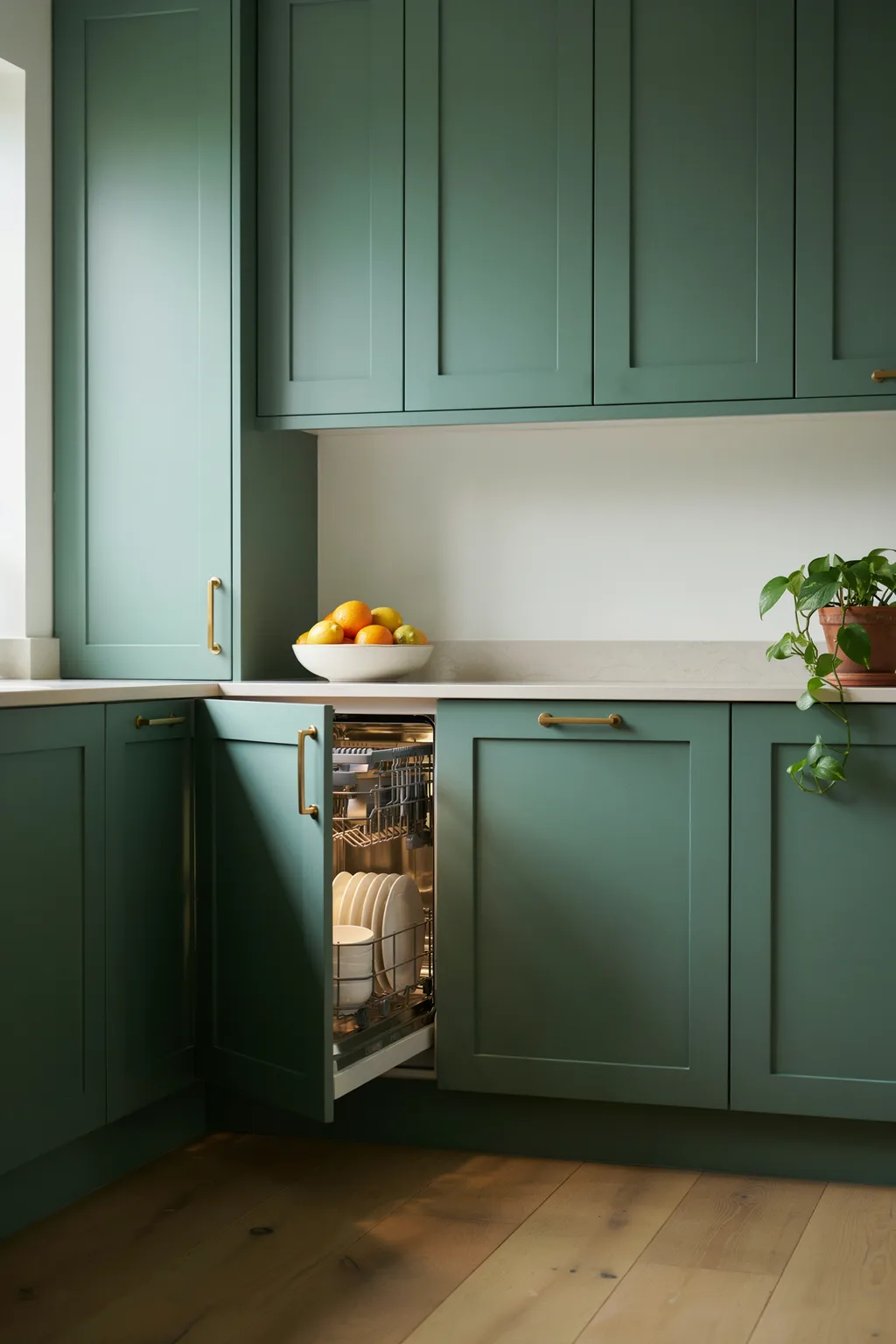
Integrated appliances buy you a calmer room and charge you something real in exchange. The kitchen trends that hide the machinery are also the ones that read most expensive from the doorway.
Panel-ready fridges and dishwashers wear a cabinet door, so the run of cabinetry continues unbroken and the kitchen reads as furniture rather than as an appliance showroom. Pair that with a hidden pantry or a second prep area behind a door and you have the whole idea of a kitchen that does not announce itself as one.
Two honest costs. Panel-ready models run meaningfully above their freestanding equivalents, and the custom door is an additional line on the quote. And when one eventually fails, replacing it means matching the exact dimensions and hinge pattern, or paying a joiner for a new door.
Worth doing on the fridge and dishwasher. Rarely worth it on the oven.
Stainless fridge, stainless dishwasher, stainless microwave. Three large reflective rectangles competing with each other, and the eye counts appliances before it sees the room.
Two big rectangles disappear into the cabinet run. The hob and oven stay visible, which is honest, and you have spent the money only where it changes the view.
Bringing It Together
A kitchen is the most expensive room in a house to get wrong, and most of the regret traces back to a handful of decisions made quickly under a showroom light with somebody waiting for an answer.
If you take three things from this list, keep the work surface light, put natural stone where acid never lands, and tape out the island on the floor before anyone builds it. Those three prevent the mistakes that cannot be undone afterward.
The kitchen trends that age well are the ones solving a problem. The ones that date are the ones applied to a surface. That single test does most of the sorting for you.
Cheapest first, if the budget is real
Save this to your kitchen board so the measurements are with you the day you are standing in the showroom deciding.