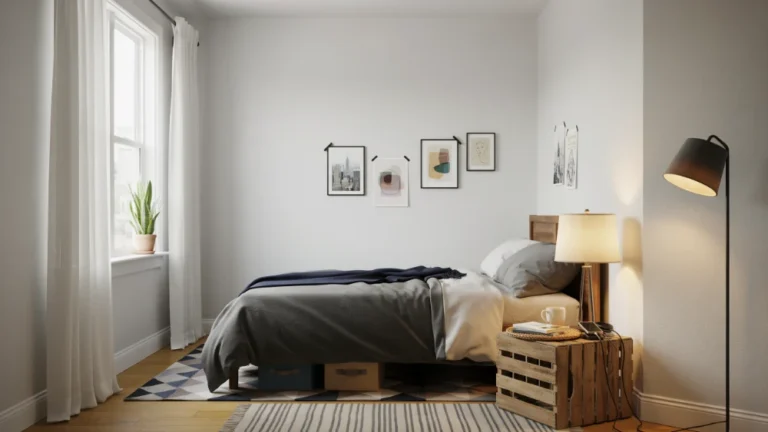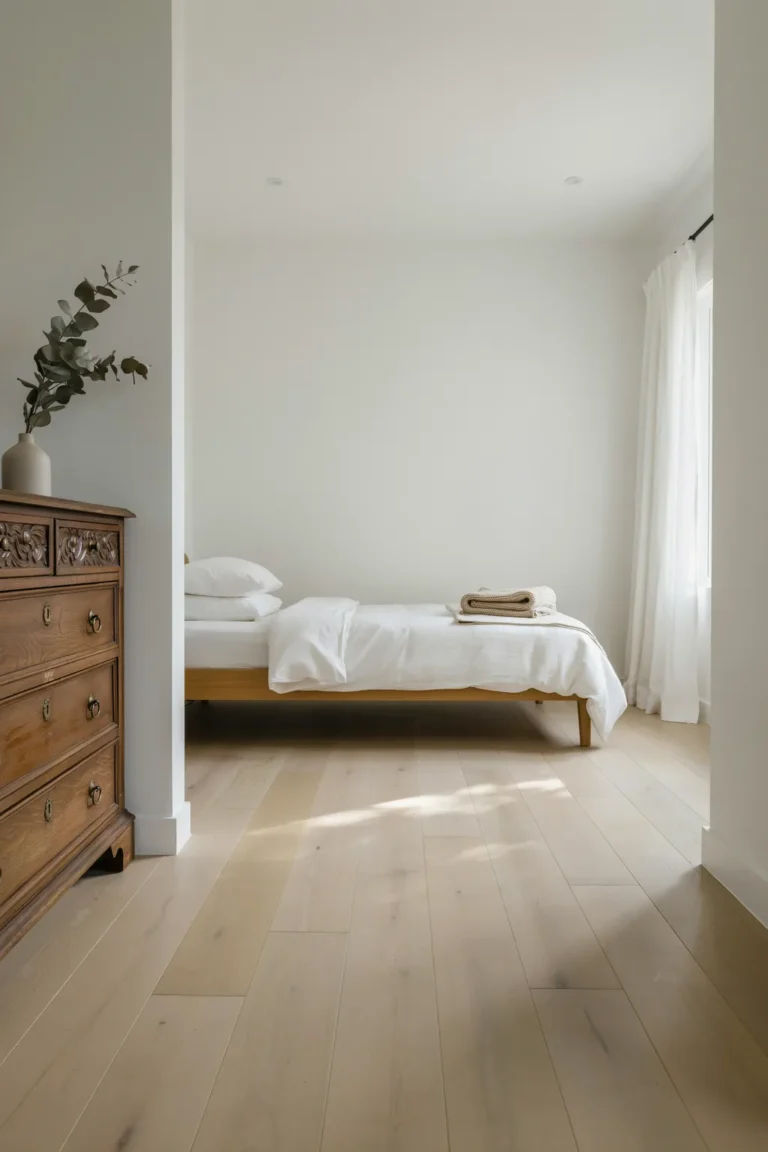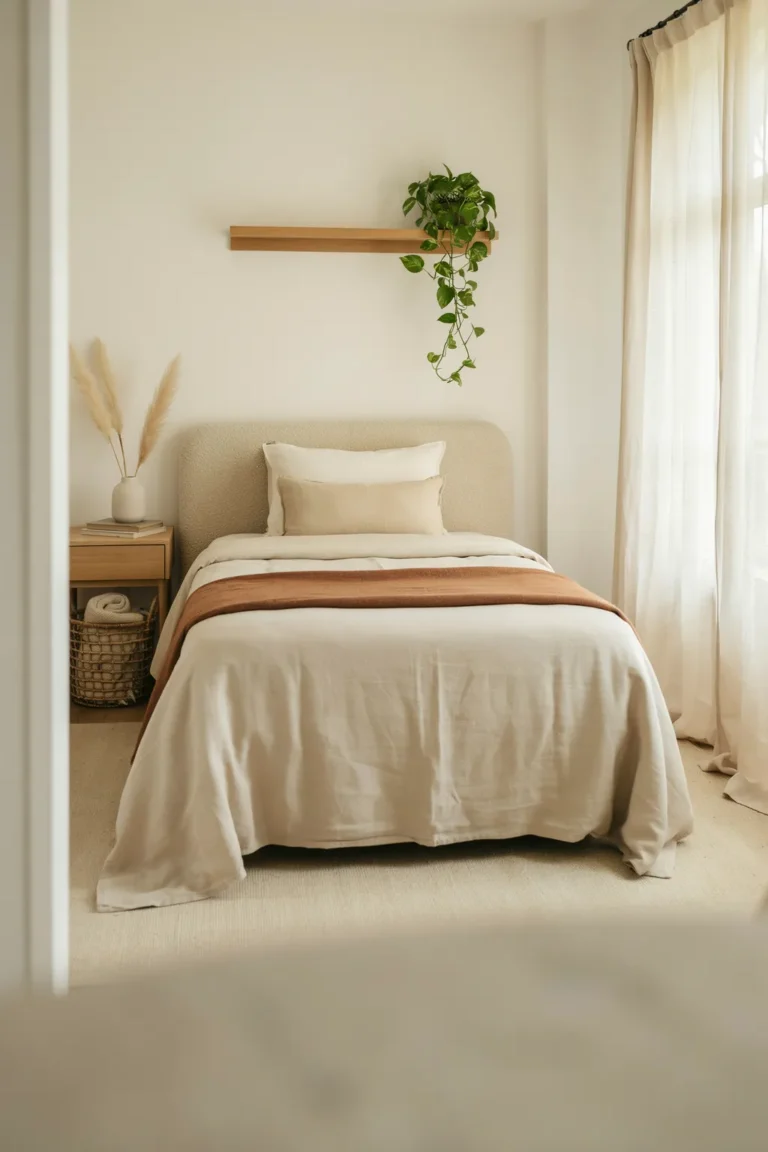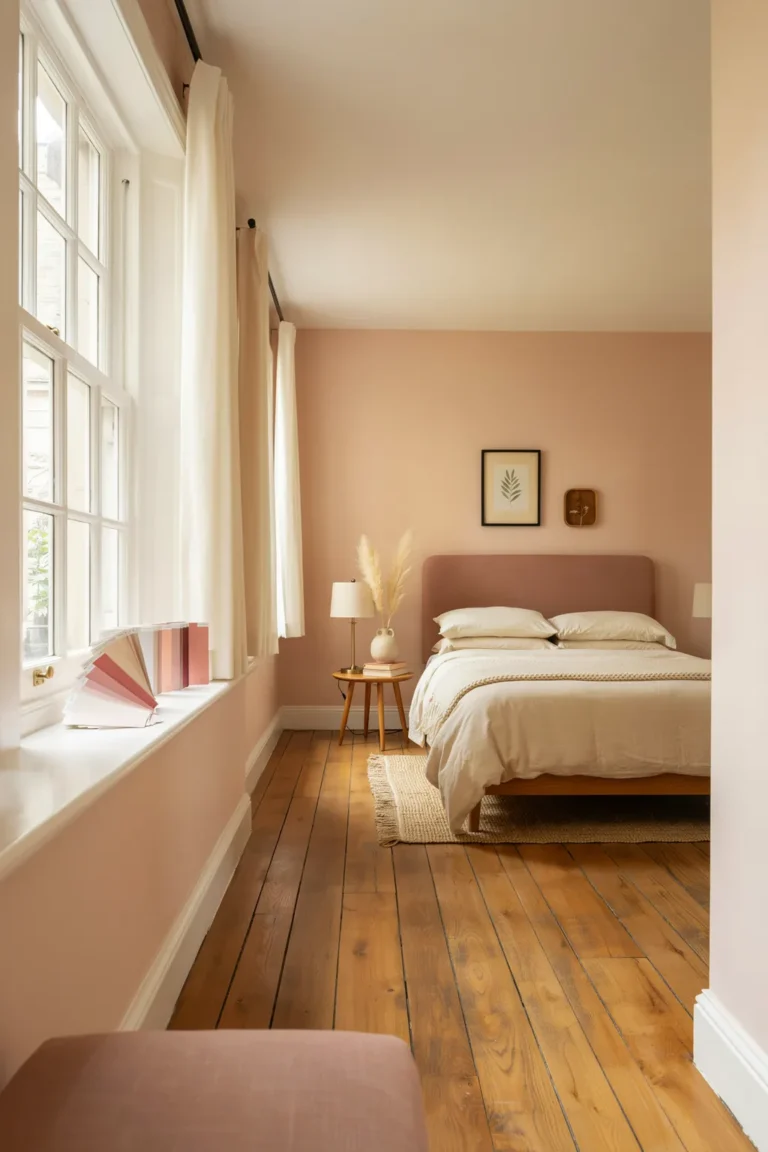
18 Very Small Bedroom Ideas That Actually Make Room
Small bedrooms have a bad reputation, and most of it is undeserved. The problem is rarely the square footage. It’s the habits that come from decorating a normal sized room and shrinking everything down to fit: the centered bed, the matching furniture set, the assumption that white paint solves everything. None of that was built for a room this size.
What actually works is different. It means using the floor space you have instead of blocking it, choosing furniture that does two jobs instead of one, and letting go of a few habits that quietly make a small room feel even smaller.
These eighteen very small bedroom ideas come from real, lived-in rooms, not staged showrooms. Some take twenty minutes and a can of paint. A few are worth planning around your next furniture purchase. All of them are things you can actually do, whether you’re renting or you own the place and are finally ready to fix the room that’s felt off for years.
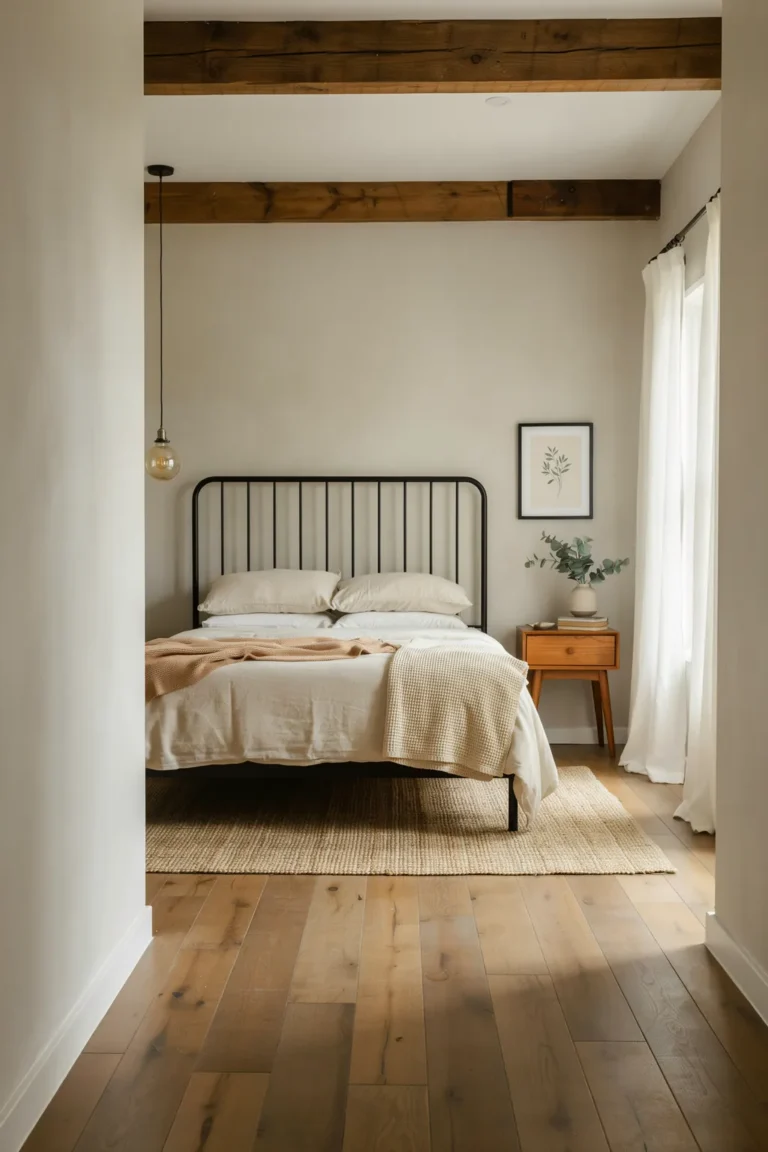
1. Pick a Bed Frame with Built-In Storage Drawers
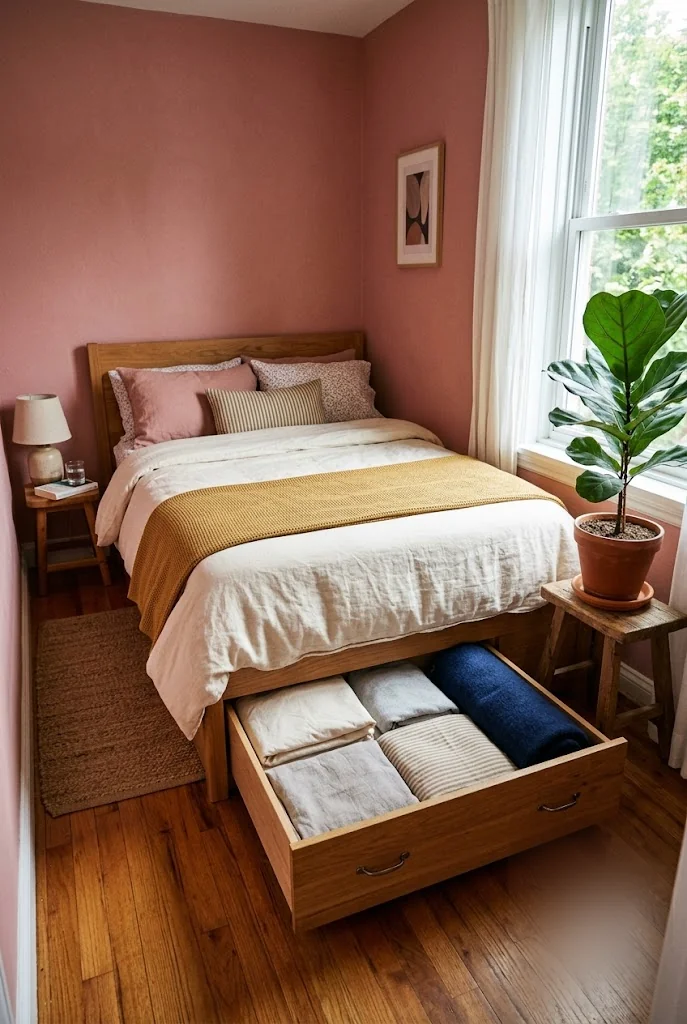
The bed already takes up the most floor space in a small room, so it might as well work harder than just holding a mattress. A frame with a built-in drawer at the foot, or slim drawers along the side, swallows a full load of extra bedding, an out of season blanket, even shoes, without adding a single new piece of furniture. Skip anything with a flimsy plastic track, since a wood drawer on real runners holds up to years of daily use. Measure the drawer depth before you buy if you’re storing bulky items like winter coats, since not every “storage bed” actually fits much.
A plain bed frame with nothing built in, plus a separate dresser eating another six square feet of floor.
The same bed with a built-in drawer pulled open, holding folded linens and a spare blanket, no dresser required.
2. Float the Shelf, the Lamp, and the Desk to Keep the Floor Clear
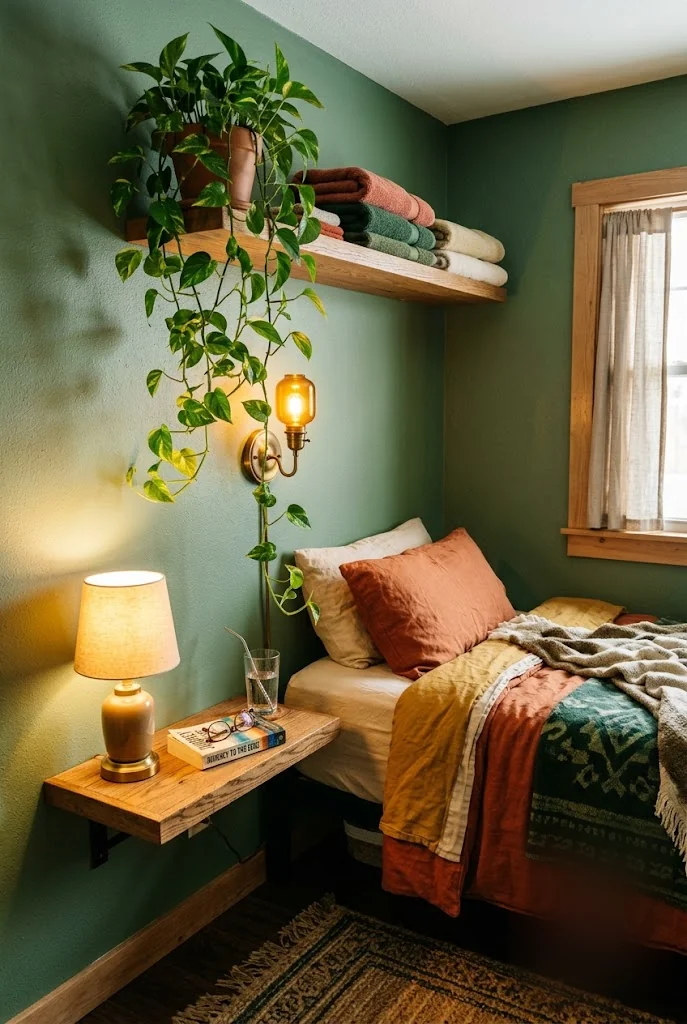
A clear floor reads as more square footage than it actually is, and the fastest way to get one is to stop putting legs on everything. Swap the bedside table for a floating shelf mounted at bed height, wide enough for a lamp, a book, and a glass of water. Add a second shelf higher up for towels or things you don’t need daily. Choose a wall-mounted sconce over a table lamp wherever you can, since every fixture you lift off the floor is one less obstacle to walk around. A trailing plant on the top shelf softens the hard edges without taking up any floor space of its own.
What to float first
3. Paint a Fitted Wardrobe to Match the Wall So It Disappears
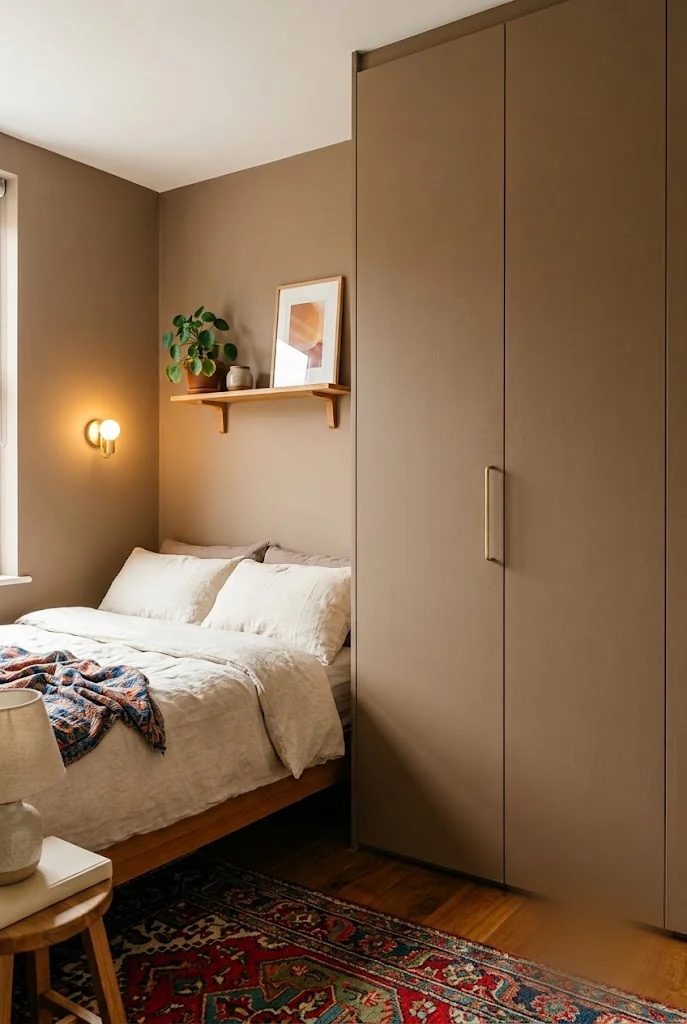
Most fitted wardrobes ship in whatever wood tone or white finish the showroom had on hand, not the color already on your wall, and that mismatch is what makes them read as a box bolted onto the room. Paint a floor-to-ceiling wardrobe the exact same color as the wall around it, and the line between furniture and architecture disappears. The room reads as one continuous space instead of a bedroom with a cabinet stuck to the side. Keep hardware simple, one slim brass or matte black handle per door, so the wardrobe doesn’t fight the wall for attention. Take the paint all the way to the ceiling trim so no white gap gives it away.
💡 Quick Tip
Prime the wardrobe doors before painting, especially if they are laminate. Skip it and the color wears unevenly within months of opening and closing them.
4. Give Your Bed a Few Inches of Air Underneath
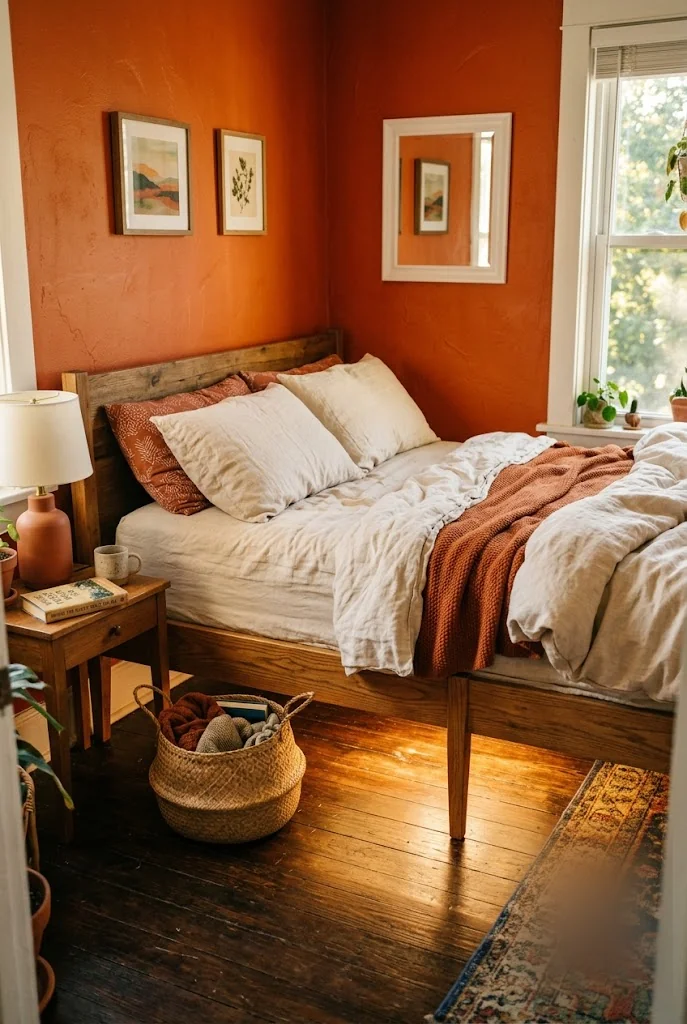
Four inches of visible floor under the bed frame does more for a small room than almost any other single change on this list. A divan or platform base that sits flush with the floor splits the room into two zones, above the bed and below it, which makes the whole space read as more cut up than it actually is. Slender legs let light and floor run underneath instead, so your eye reads one continuous surface from wall to wall. The legs themselves don’t need to be fancy. The gap they create is doing all the work, and it’s one of the cheapest very small bedroom ideas on this whole list.
A few inches of visible floor under the bed frame reads as more space than the same room with a flush base ever will.
5. Push the Bed Into the Corner Instead of Centering It
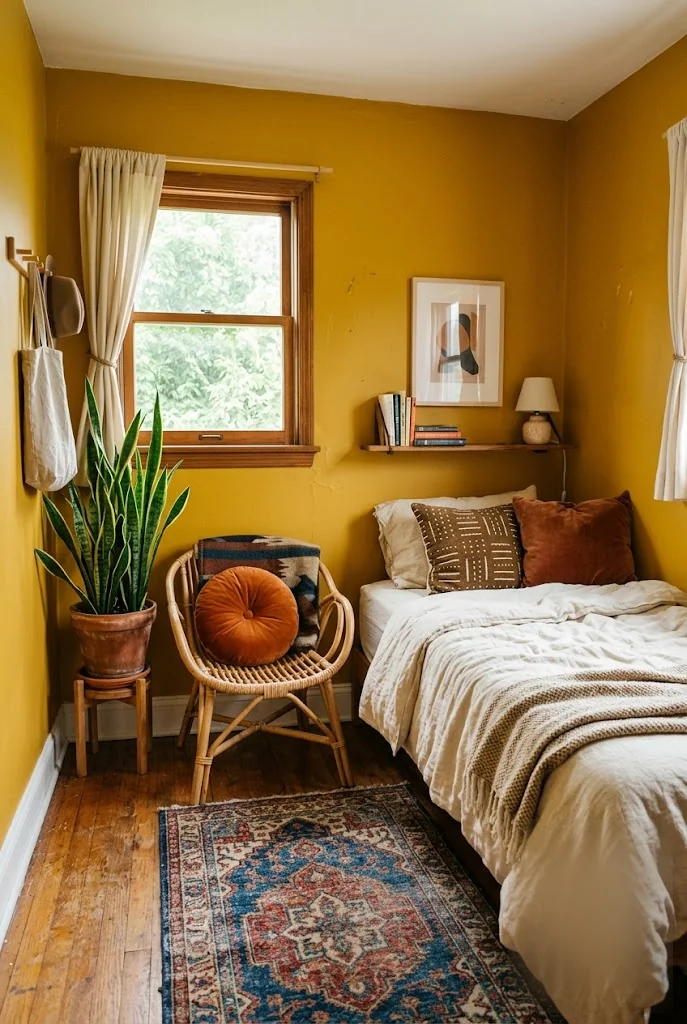
Centering a bed on the main wall keeps a walkway on both sides that a small room usually doesn’t need, especially for a single sleeper or a room that isn’t shared nightly. Push the frame into the corner against the longest wall instead, and the floor space you get back is real, enough for a small chair, a stack of books, or nothing at all if an open floor is the actual goal. The trade-off is honest: one side of the bed loses easy access, so this works best for a single sleeper, a kid’s room, or a guest room that doesn’t see daily use.
Push the bed into the corner or against the longest wall.
Use the floor you gain for a chair, storage, or open space.
Centering the bed and keeping a walkway on both sides.
Best avoided if you are a single sleeper or the room isn’t shared nightly.
6. Carry the Wall Color Straight Onto the Ceiling
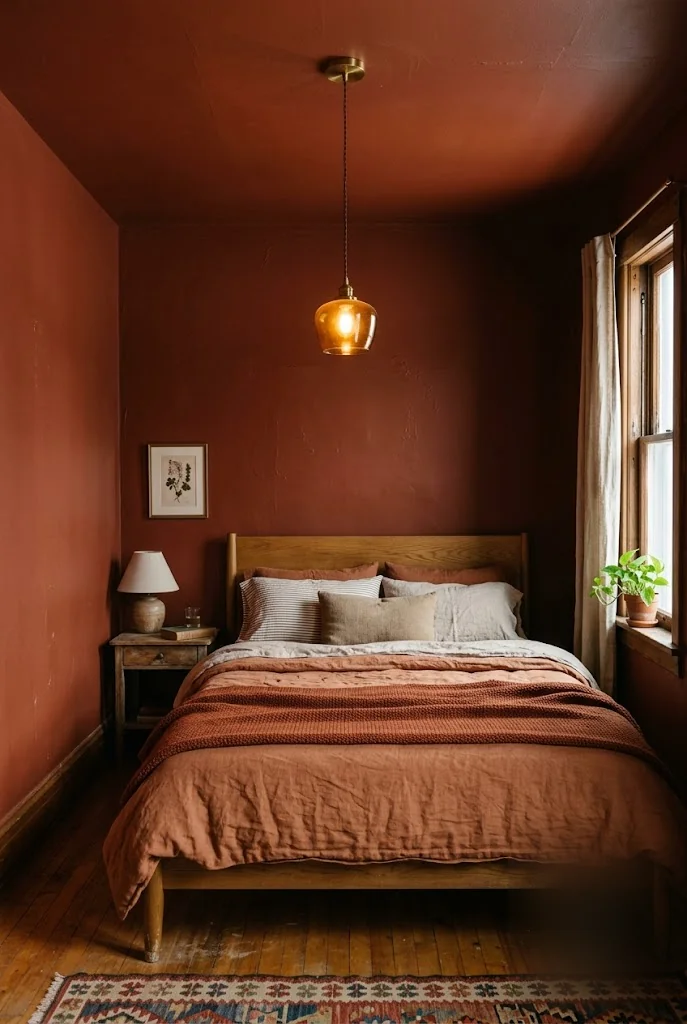
A white ceiling in a small room acts like a lid, a hard stop the eye hits every time it looks up. Painting the ceiling the exact same color as the walls removes that stop completely. The trick works with almost any color, but it reads best with a mid-tone or a deeper shade rather than something pale, since a pale ceiling just becomes a slightly different white. Use the same finish as the walls, flat or matte, so the ceiling doesn’t pick up extra shine that draws attention back to it. One gallon covers most small bedroom ceilings, so it’s a cheap change to test before committing further.
💡 Quick Tip
Ask for the ceiling in the same sheen as the walls, not standard flat ceiling paint. Matching sheen is what keeps the color feeling seamless instead of like two different whites.
7. Skip the Default White and Go Moody Instead
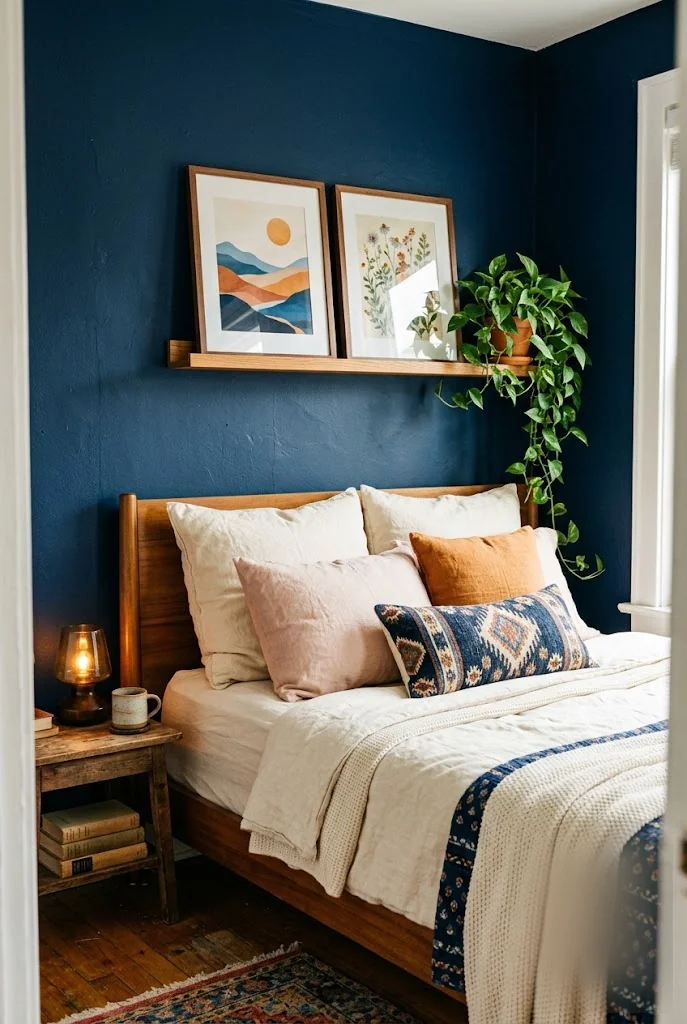
The advice to paint a small room white gets repeated so often it starts to sound like a rule instead of a suggestion, but it comes with a real cost. White shows every scuff, every shadow, every uneven patch job, and small rooms already have plenty of those corners. A deep, saturated color hides that instead of highlighting it, and it gives the room a sense of depth that flat white never manages. Keep the layered pieces, the pillows, the throw, the art, on the lighter side so they read clearly against the dark backdrop. The wall does the heavy lifting. Everything else just needs to stand out against it.
A plain white wall that shows every scuff and flattens the room instead of giving it depth.
The same wall in deep navy, with cream and blush pillows standing out clearly against the dark backdrop.
8. Layer One Color Family Instead of Mixing a Dozen
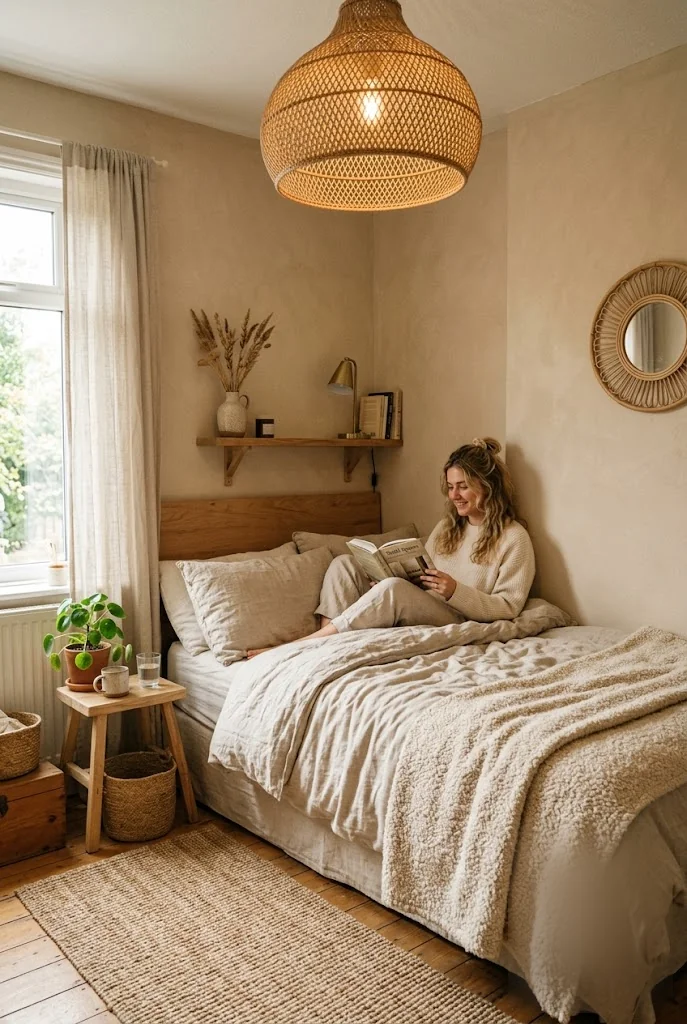
Someone curled up against a stack of pillows on a bed layered in linen, boucle, and jute doesn’t register the room as busy, even though there’s texture everywhere. That’s the trick of a monochromatic palette. Every piece lives in the same warm, neutral family, so the eye never hits a hard color boundary the way it does in a room mixing five different tones. The room ends up feeling calmer and larger than it actually measures. Pick pieces mostly by texture within that one color family, not by pattern.
- ▸Linen bedding in a soft neutral shade.
- ▸A boucle or knit throw in the same warm family.
- ▸A jute or sisal rug instead of a patterned one.
- ▸A rattan or wood pendant light to match.
9. Let Daylight In During the Day, Then Fake It at Night
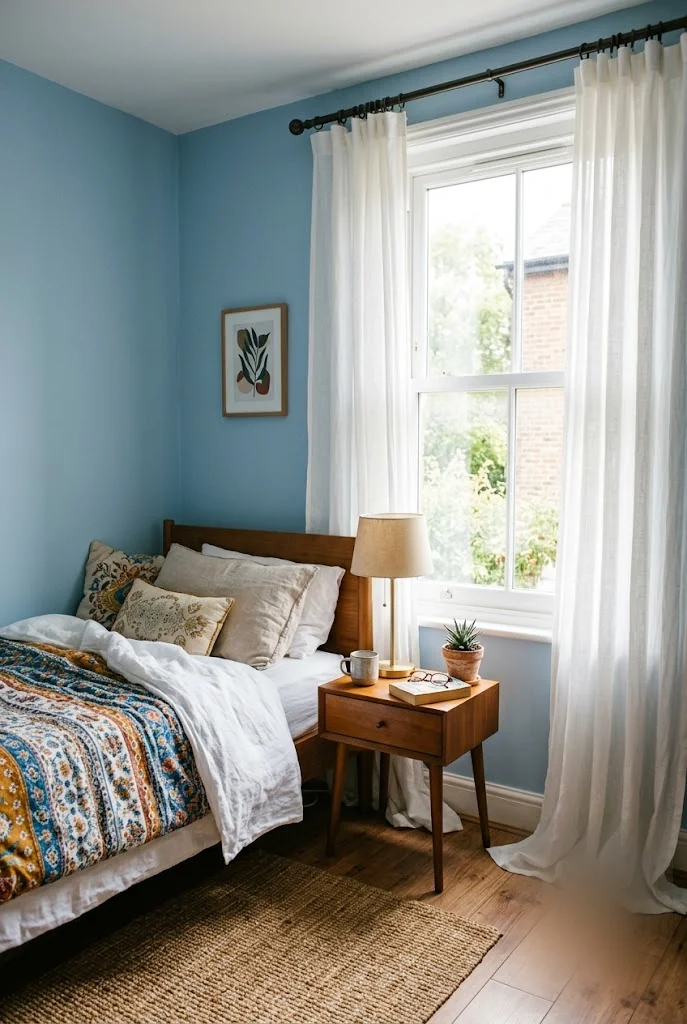
Mount the curtain pole as high as the ceiling allows, not directly above the window frame, and hang curtains that reach the floor even if the window itself is small. That vertical stretch of fabric pulls the eye upward and makes the whole wall feel taller. During the day, keep the curtains sheer enough to let real light through instead of blocking it. Once the sun goes down, a small bedside lamp does the work the window can’t, so the room doesn’t go from bright to flat the moment daylight fades. It’s a small pairing, but it’s one of the more practical very small bedroom ideas for a room that only gets light from one window.
Mount the curtain pole close to the ceiling, above the window frame.
Hang floor-length curtains in a sheer or lightweight fabric.
Add a warm bedside lamp for once the daylight fades.
10. Lean a Large Mirror Where It Actually Earns Its Keep
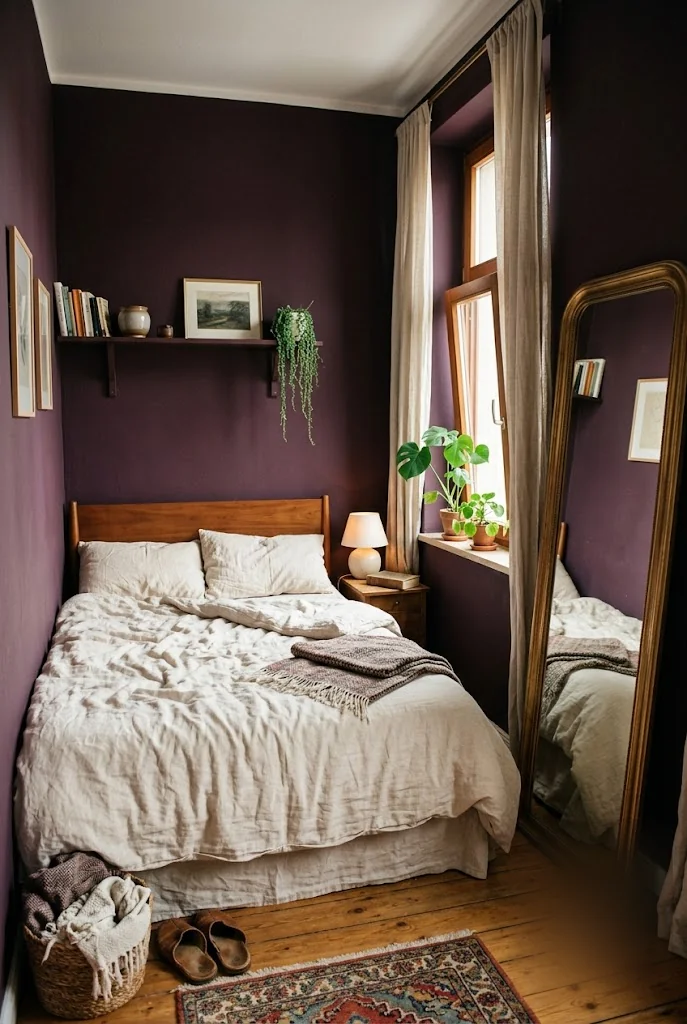
A mirror hung without any thought about what it reflects can do more harm than good, since it just doubles whatever clutter or mess sits across from it. Lean a large floor mirror along a narrow side wall instead, angled so it catches the window and pulls a second source of light into the room. Keep it out of direct line with the bed. Facing a mirror head-on from bed can feel unsettling rather than calming, and it rarely reflects anything worth looking at twice. A simple wood or brass frame keeps the piece from competing with the wall color behind it.
Lean it along a narrow wall, angled to catch the window.
Choose a simple wood or brass frame that won’t compete with the wall.
Hanging it directly facing the bed.
Positioning it to reflect a cluttered wall instead of the window.
11. Turn the Space Under Your Bed Into Real Storage, Not a Junk Pile
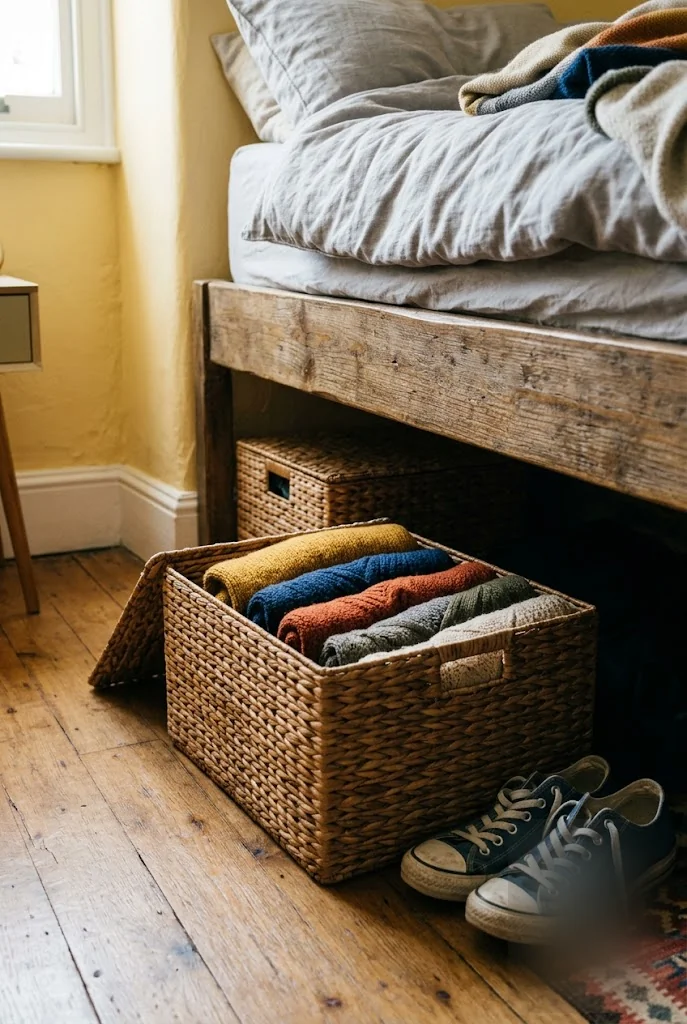
Most people shove things under the bed and call it storage, but a pile of mismatched bags and box lids stuffed in at different heights gets forgotten fast, and half of it never comes back out. Flat, lidded bins that slide in and out easily work far better than loose bags, since you can actually see and reach what’s inside without dragging out three other things first. Vacuum bags shrink bulky items like winter coats and spare duvets down to almost nothing, which matters if your bed frame sits low to the ground. A pair of bed risers adds a few extra inches of clearance if you need it.
What actually fits under a low bed
12. Build Shelving All the Way to the Ceiling, Not Just Eye Level
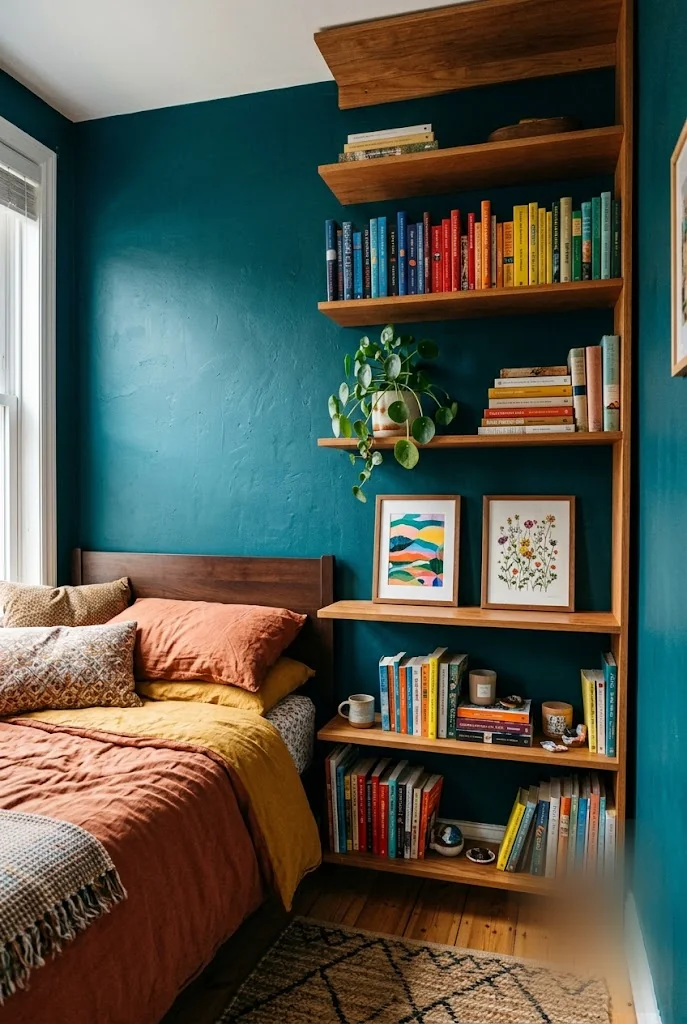
Books standing upright next to a stack lying flat, a single plant reaching past the top shelf, two small framed prints leaned rather than centered, none of it symmetrical, all of it deliberate. That’s what makes floor-to-ceiling shelving read as styled instead of stuffed. Going vertical instead of stopping at eye level roughly doubles your storage without touching the floor plan, and it pulls the eye upward, which makes the ceiling feel higher than it is. Leave real gaps between groupings. A shelf packed edge to edge looks like overflow, not a display.
13. Swap the Bulky Nightstand for a Slim Floating Shelf
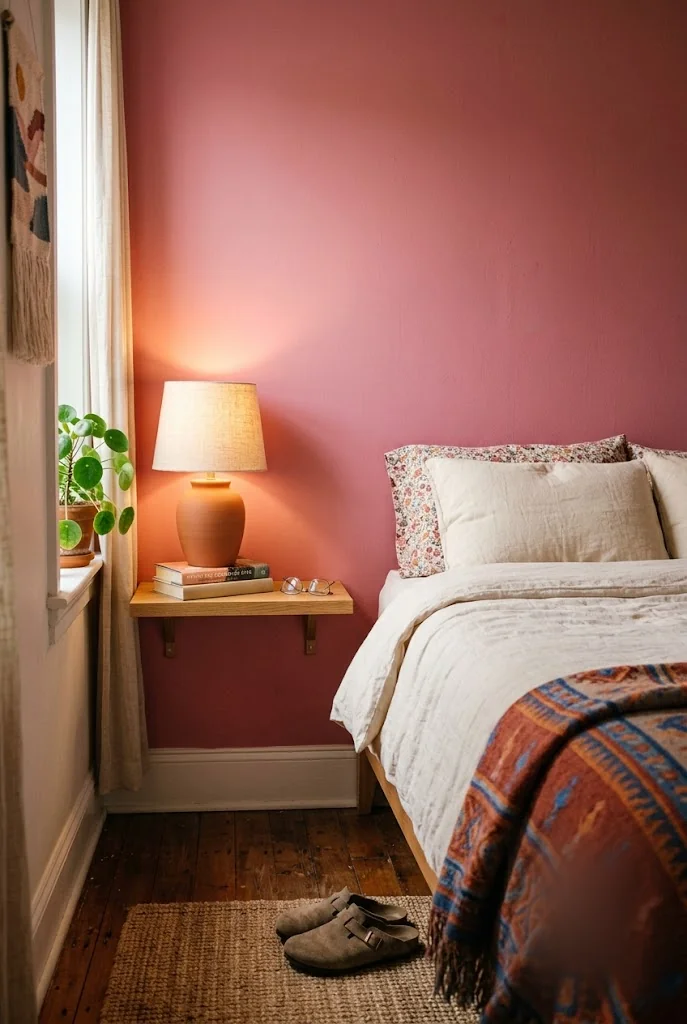
A traditional nightstand with four legs and a drawer takes up more floor space than most people realize, and in a genuinely small room, that space is worth more than the drawer. A slim floating shelf mounted at the same height holds exactly what you actually reach for at night: a lamp, a book, a glass of water. Nothing else really needs to live there. The floor underneath stays completely clear, which matters more the smaller the room gets, and it’s one of the simplest very small bedroom ideas to try without buying anything new.
💡 Quick Tip
If you genuinely need drawer storage, look for a slim wall-mounted unit with one shallow drawer instead of a full nightstand. It gives you a place for small items without the footprint.
14. Hang Curtains From the Ceiling Instead of the Window Frame
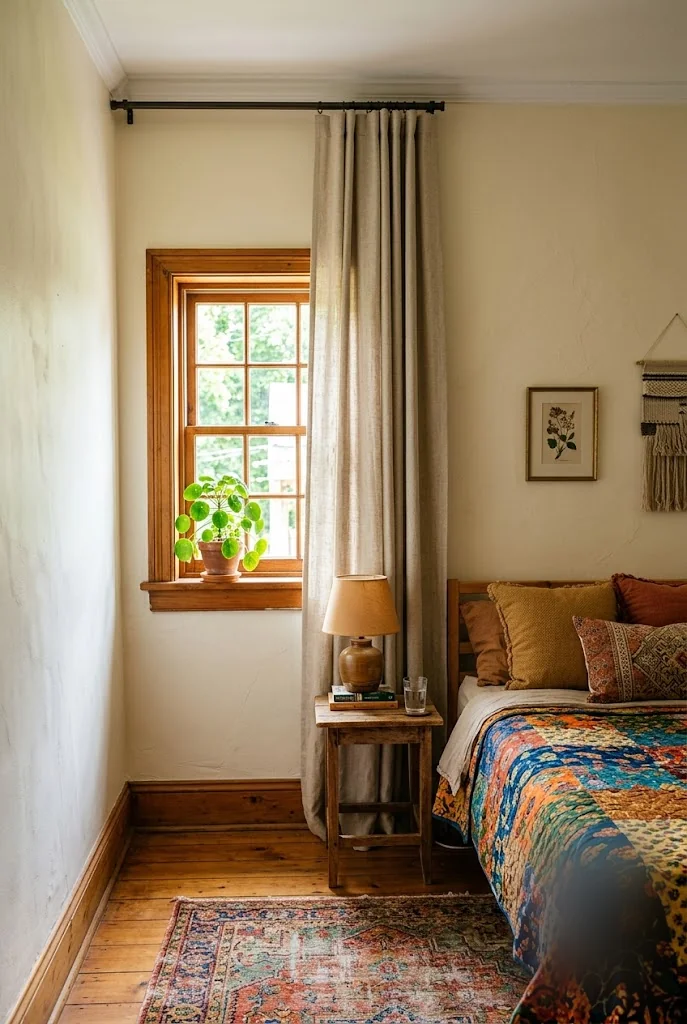
A curtain hung directly above the window frame stops the eye at the same height as the window itself, which is usually lower than most people think. Mounted close to the ceiling instead, that same curtain stretches the wall into one long vertical line from cornice to floor, and the window it frames reads as bigger than it is. The difference costs nothing extra, since it’s the same curtain and the same rod, just moved higher up the wall and hung with a bit more fabric to fill the extra length.
| Mounted at the Window Frame | Mounted Near the Ceiling |
|---|---|
| Stops the eye at the actual window height. | Pulls the eye up the full wall, window included. |
| Reads as a small window with curtains. | Reads as a tall window, regardless of actual size. |
15. Keep the Floor as Open as You Possibly Can
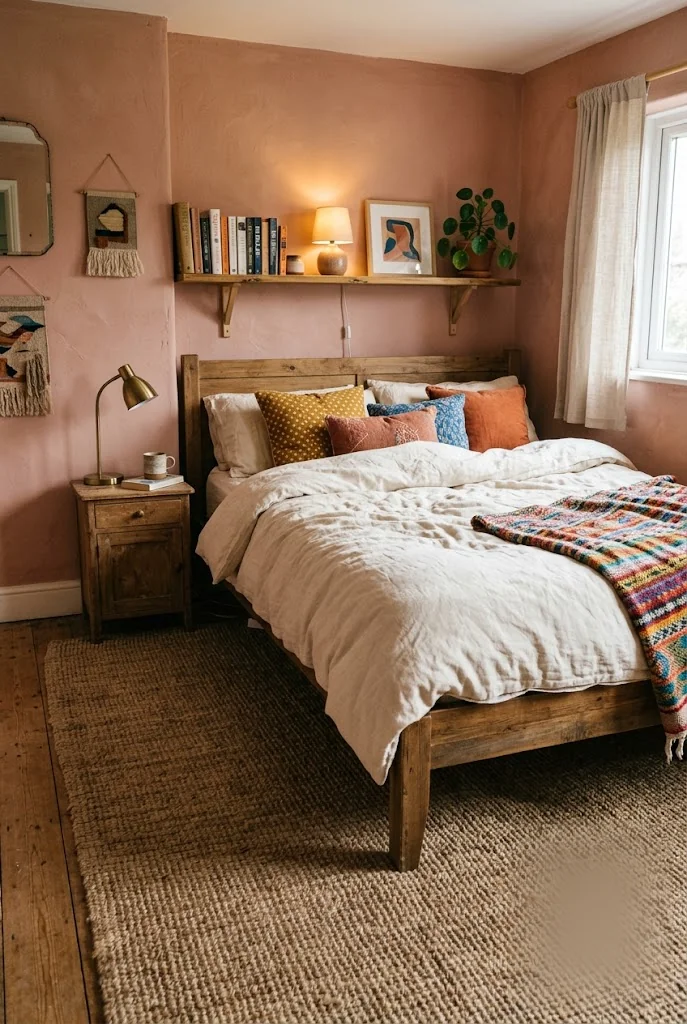
An empty stretch of floor does more for how spacious a small bedroom feels than almost any single piece of furniture you could add to it. Swap a floor lamp for a wall sconce. Move out any chair that’s only holding a pile of clothes, since it stopped being furniture the day that happened. If you want a rug, size up rather than down, and let it extend under the front legs of the bed instead of floating in the middle of the room, where a small rug just looks like it got left behind.
- ▸Swap a floor lamp for a wall-mounted sconce.
- ▸Remove any chair that’s only holding clothes.
- ▸Size a rug up so it tucks under the bed’s front legs.
16. Reach for Texture Before You Reach for More Stuff
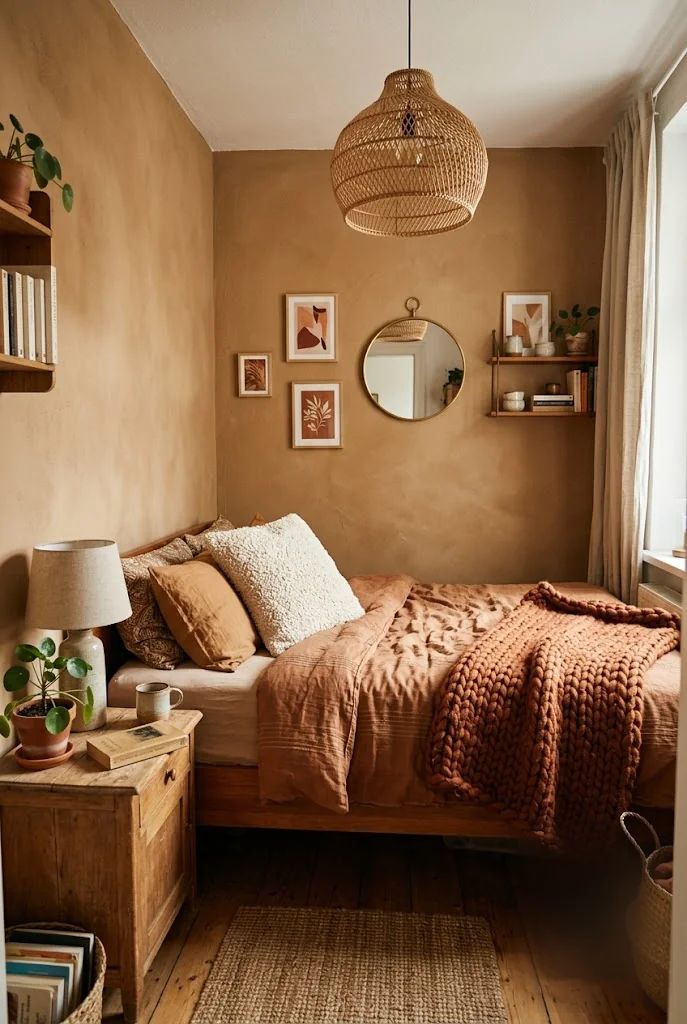
A chunky knit throw at the foot of the bed, a boucle cushion against a plain duvet, a woven rattan pendant overhead: none of it shouts for attention, but together it keeps a small room from feeling flat or cold. Texture adds depth without adding visual noise the way more objects or more colors would. Run your hand over two pieces before you buy them. If they feel the same, smooth ceramic next to smooth glass, they’ll read as flat together no matter how different they look. Vary what things feel like, not just what they look like, and keep the color palette simple enough to let that texture actually show.
17. Light the Room for 9 PM, Not Just 7 AM
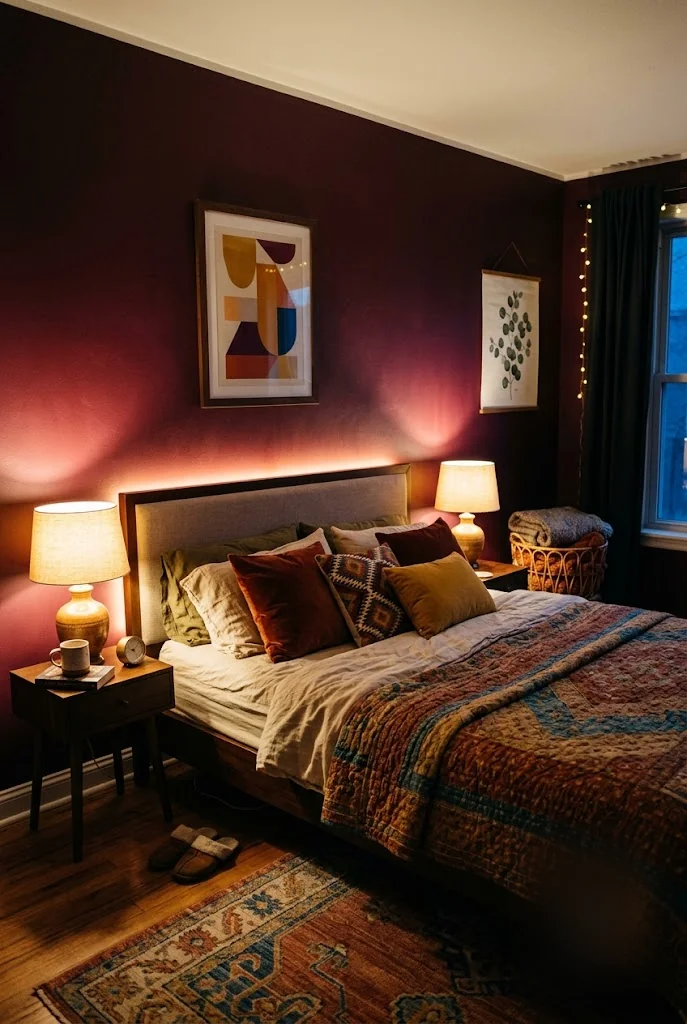
By nine at night, a single overhead bulb turns a small bedroom into something closer to a waiting room than a place to actually unwind. Layer the light instead. A warm lamp on each side of the bed, a soft LED strip tucked behind the headboard, everything set to warm white around 2700K instead of the cooler tone daylight bulbs give off, one of the small technical details that separates good very small bedroom ideas from ones that just look nice in a photo.
Turn the overhead light off entirely once evening hits and let the smaller sources do the work. The difference between a room lit for getting dressed and a room lit for winding down comes down to this layering, not the size of the space.
A room lit only by one overhead bulb never feels restful, no matter how good it looks during the day.
18. Edit Down to One Big Piece of Art and One Big Plant
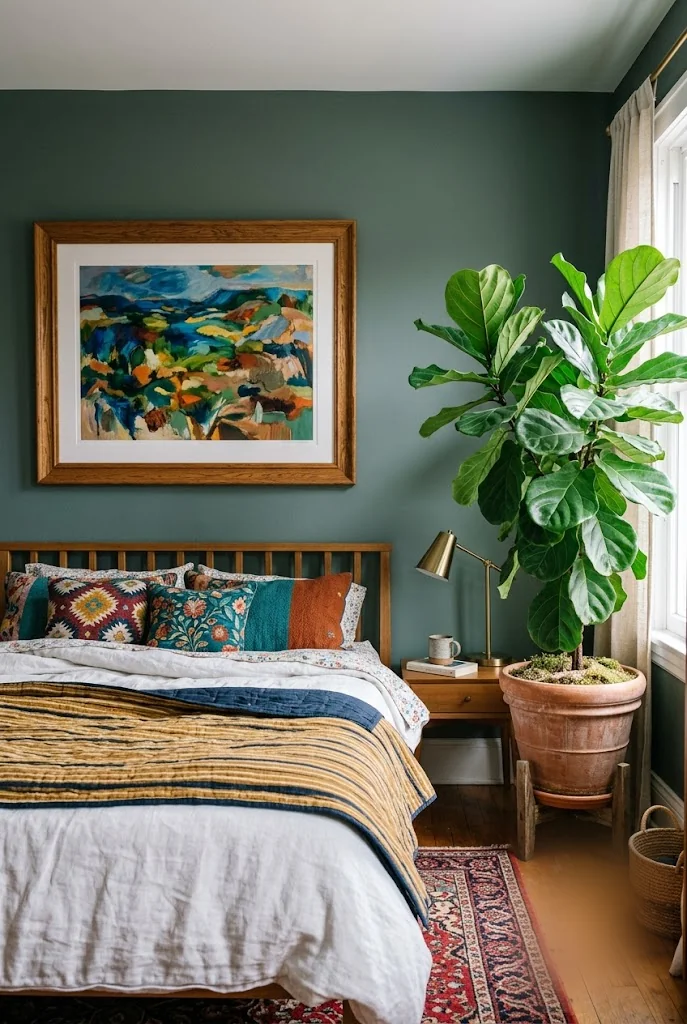
Choose one piece of art large enough to actually hold the wall, hung at eye level, and stop there. A single big print does more for a small bedroom than a gallery wall of five smaller ones ever will, since the smaller pieces just compete with each other for a wall that doesn’t have room to spare. Add one substantial plant, something like a fiddle leaf fig, rather than three small ones scattered around. Then walk away. The editing isn’t a one-time task either. Revisit the room every few months and take out anything that’s stopped earning its spot.
One large piece of art, hung properly at eye level.
One substantial plant instead of several small ones.
A gallery wall of small frames competing for space.
Several tiny plants scattered without a clear focal point.
Conclusion
None of these eighteen ideas needed a bigger room, just a different way of using the one you already have. A bed with a few inches of air underneath. A wardrobe painted to disappear. A rug big enough to anchor the space instead of interrupting it. Start with whatever feels easiest to try this weekend, not the one that looks most dramatic in a photo. Small changes compound faster than one big renovation ever will.
There are a lot of very small bedroom ideas out there, but the ones that actually work are the ones you’ll follow through on. Save this list and come back to it the next time the room starts to feel cramped again.